Zoho CRM is a popular tool designed to help businesses better serve their customers and grow relationships. But it's not the perfect fit for every team. Complex setup, a complicated interface, and a confusing pricing structure are just some pain points that lead teams to seek better alternatives.
In this guide, we'll explore the 12 best Zoho CRM alternatives to help you find the right tool for your team's needs.
Best Zoho CRM alternatives
Here are the top three Zoho CRM alternatives from the twelve we tested and reviewed.
Cut your CRM costs by 70% today with Lark
Why teams look for Zoho CRM alternatives
Despite receiving positive reviews, Zoho CRM has obvious drawbacks that you can't ignore. Here are the top issues real users on G2 report about the Zoho CRM: - A steep learning curve with advanced features that can be challenging to use initially.
- Integration tasks take too long, especially when setting up third-party tools, and important notifications aren't coming through.
- Limited features, particularly in the mobile app.
- Poor customer support on platform issues that should be straightforward.
During our research, we also noticed a considerable drawback. While Zoho CRM's official pricing page makes no mention of it (and for good reason), businesses on the free plan get only 1 GB of data storage across the entire organization. If you're willing to pay for lower-tier plans, you still only get 1 GB, but with a measly 512 MB per user. While it's true you can purchase 5 GB more for $4.60 every month, should you have to? We see this as a major red flag when comparing the storage offered by the CRMs we've tested.
Top 12 Zoho CRM alternatives
1. Lark: Best overall Zoho CRM alternative
is a powerful Zoho CRM alternative that elevates how teams collaborate. With AI-powered workflows, no-code customization, and intelligent automation, Lark offers a modern, efficient, and highly collaborative CRM experience for growing teams. Lark is a that brings all the tools your business needs into one seamless ecosystem, which means you can streamline every aspect of customer relationship management and daily workflows in one platform.
From tracking leads to managing client communication and automating follow-ups, Lark supports your entire sales journey with an all-in-one CRM that adapts to your business needs. Watch the demo to learn more.
Pros
- Powerful no-code customization: Build a tailored CRM system without technical expertise. This is a key advantage over Zoho CRM's often complex setup. You can easily to perfectly match their sales funnels, lead management processes, or customer support needs.
- AI-native integration: Built-in AI tools automatically , acting as a smart assistant for your sales team. This saves valuable time by eliminating manual processes and improving data accuracy. AI can also and generate personalized questions for client calls, helping sales reps prepare and engage more effectively.
- Real-time, customizable dashboards: Create dashboards that provide real-time insights into your sales performance, team performance, and other key metrics. This live data visualization helps your team make data-driven decisions quickly and efficiently.
- Seamless all-in-one ecosystem: Centralize your entire workflow by combining tools like its , , , , , and in one superapp that eliminates the need for multiple tools, saving time and cutting costs associated with paying for multiple tools, saving time and cutting costs associated with paying for multiple tools.
- Designed for the frontline: Sales agents and have access to the highly rated Lark mobile app, which lets them manage their CRM workflows, update lead progress in real time, and communicate instantly via chat, email, and video calls, no matter where they are.
- Cost-effective and scalable: Lark offers a generous free plan, making it an accessible, feature-rich Zoho CRM alternative for smaller teams. Lark's paid plans provide advanced features and scale affordably as your business grows.
Cons
- Learning curve for advanced features: While the core CRM functions are intuitive, unlocking the full potential of its integrated tools may require some initial exploration on Lark's .
Why Lark is a great Zoho CRM alternative
Lark outperforms Zoho CRM because it's an all-in-one platform, rather than a fragmented tool. CRM, project management, chat, meetings, docs, approvals, performance management, and more are in one place. This consolidation eliminates app-switching fatigue and empowers teams to build a fully customizable, zero-code CRM that adapts instantly to their unique sales processes without the steep learning curve.
Pricing
- Starter plan: that includes 11 powerful tools for up to 20 users. It also comes with 100GB of storage space, 1000 automation runs, AI translations, and more. No credit card needed.
- Basic plan: (billed annually) for up to 500 users. It includes everything in Starter and unlimited message history, 5TB of storage space, 1,000 automation runs, and more. Some users may need to to purchase this plan.
- Pro plan: (billed annually) for up to 500 users. It includes everything in Basic plus group calling for up to 500 attendees, 15TB of storage space, 50,000 automation runs, and more.
- Enterprise plan: for custom pricing. Supports unlimited users and includes even more automation runs and advanced security, compliance, and management features.
For small teams with simple communication needs

18 months message history
1000 Base automation runs/month
2000 rows per table in Base
Most POPULAR
For companies with comprehensive collaboration and management needs
Unlimited message history
500-participant video meetings
50k Base automation runs/month
20k rows per table in Base
For large companies with advanced security and organizational management needs
Get a personalized demo and pricing
Unlimited message history
500-participant video meetings
15 TB storage + 30 GB storage/user
500k Base automation runs/month
50k Base automation runs/month
Most POPULAR
For companies with comprehensive collaboration and management needs
Unlimited message history
500-participant video meetings
50k Base automation runs/month
20k rows per table in Base
2. Insightly: Best CRM for service-based businesses
Insightly is a versatile tailored for small and medium-sized businesses (SMBs), offering a unique blend of customer tracking and project management capabilities. Its value lies in helping businesses not only track leads and manage sales funnels but also oversee project progress in a single platform. This dual-purpose feature makes Insightly a great choice for service-based businesses or teams juggling between client accounts and project deadlines.
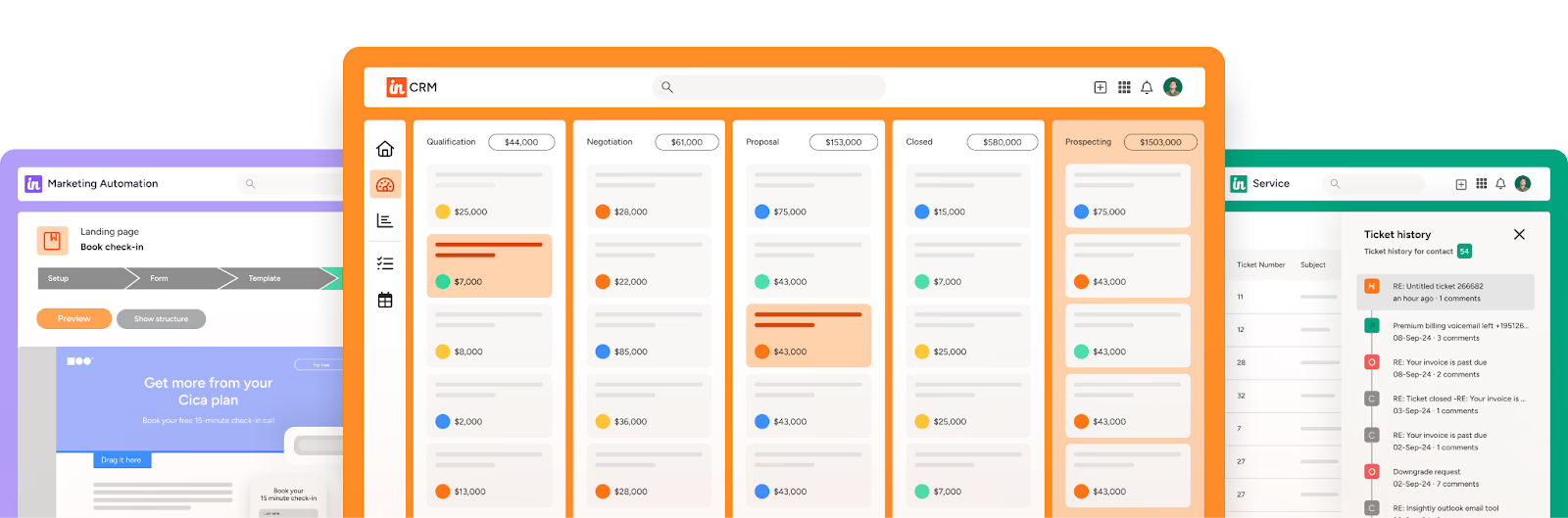
Image source: insightly.com
Pros
- CRM and project management integration: Insightly allows users to seamlessly manage sales pipelines while tracking project tasks and deadlines, making it ideal for teams where customer interactions and project workflows are closely connected.
- User-friendly interface: The intuitive design makes it accessible for new users, helping SMBs adopt the platform without the need for extensive technical training.
Cons
- Expensive onboarding and support: Many users rely on costly onboarding and support plans, making it harder to fully utilize without extra investment.
- Performance issues: Slow loading times and unreliable sales reports negatively impact user experience.
Why Insightly is a great Zoho CRM alternative
Insightly is a strong alternative for service businesses because it converts won opportunities directly into managed projects without the disconnect found in Zoho's separate 'CRM' vs. 'Projects' apps. By merging the sales pipeline with post-sale delivery into a single, fluid interface, Insightly ensures project managers have immediate context for client deliverables without having to navigate Zoho's fragmented ecosystem.
Pricing
- Plus plan: $29/user/month (billed annually)
- Professional plan: $49/user/month (billed annually)
- Enterprise plan: $99/user/month (billed annually)
3. Microsoft Dynamics 365 Sales: Best CRM for Microsoft users
Microsoft Dynamics 365 Sales is an advanced CRM solution that combines sales automation, AI-driven insights, and advanced analytics tools to help businesses optimize their sales processes and client interactions. As part of the Microsoft ecosystem, it integrates seamlessly with tools like Teams and Outlook, making it an excellent choice for businesses already using Microsoft products. Dynamics 365 Sales is particularly suited for larger enterprises or businesses seeking advanced automation and data-driven decision-making capabilities.
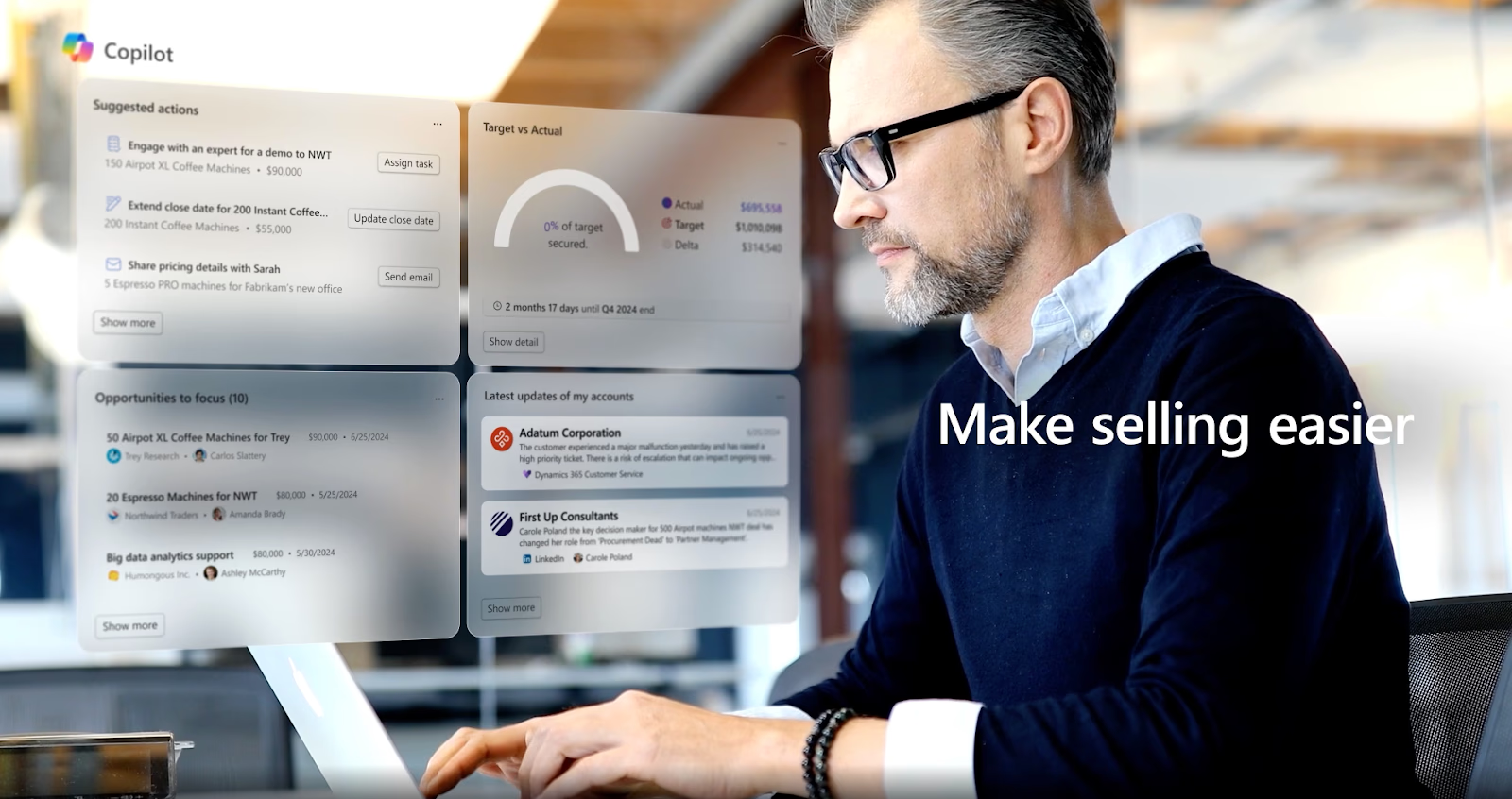
Image source: microsoft.com
Pros
- Seamless integration with Microsoft ecosystem: Works effortlessly with Microsoft Teams, Outlook, and other Microsoft 365 tools, ensuring smooth collaboration and productivity.
- AI-powered tools and insights: Includes AI-driven features like intelligent assistants and chatbots to automate customer interactions and provide actionable insights for sales teams.
- Scalability for enterprises: Designed to support the needs of growing businesses and large enterprises with customizable workflows and advanced reporting tools.
Cons
- High pricing for smaller businesses: With plans starting at $65/user/month (billed annually), the cost may be prohibitive for small businesses or startups with limited budgets.
- Onboarding challenges: Despite in-app training resources, the onboarding process can still feel complex for teams unfamiliar with Microsoft’s ecosystem.
Why Microsoft Dynamics 365 Sales is a great Zoho CRM alternative
For teams deeply embedded in the Microsoft ecosystem, Dynamics 365 offers a level of native interoperability—viewing live customer data directly inside Outlook and Teams—that Zoho's third-party plugins simply cannot match. It eliminates the friction of syncing data between your email server and CRM, providing a seamless, enterprise-grade environment where your documents and customer records live in the same secure cloud.
Pricing:
- Paid plans: Start at $65/user/month (billed annually).
- Free trial: A 30-day free trial is available.
4. Salesforce: Best CRM for large entperises
A household name in the business world, Salesforce is the most popular CRM on the market today. Its flexibility allows enterprises to tailor workflows, dashboards, and reports to their unique processes, while advanced AI tools help teams forecast sales, identify opportunities, and streamline repetitive tasks. Known for its robust customization options and extensive integrations, Salesforce is an ideal choice for any large enterprise seeking a Zoho CRM alternative.
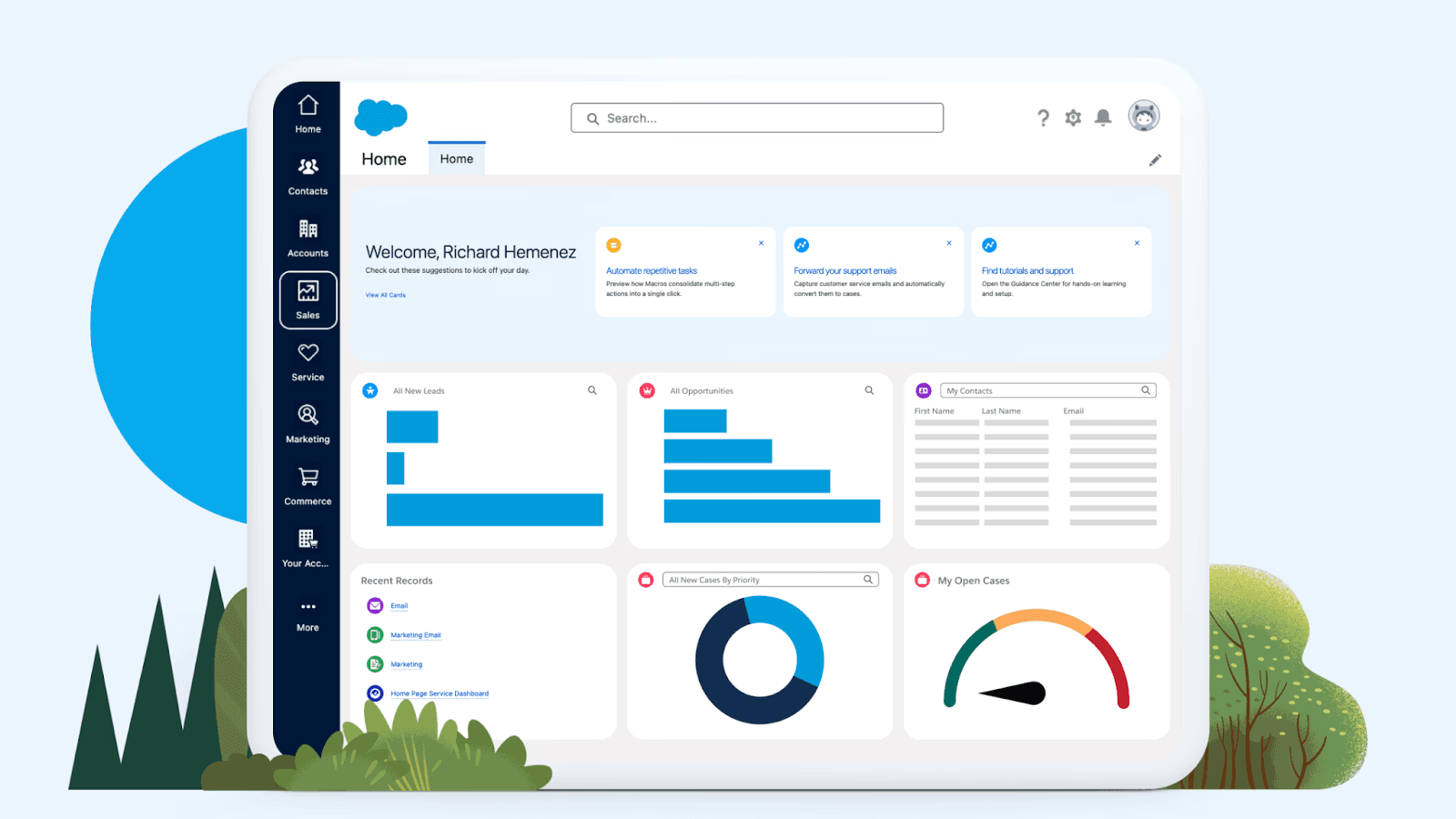
Image source: salesforce.com
Pros
- Extensive customization: Salesforce allows deep configuration across workflows and dashboards, making it suitable for complex enterprise processes.
- Large integration ecosystem: With thousands of apps in the Salesforce marketplace, it connects easily with marketing, analytics, finance, and other enterprise tools.
- Enterprise-grade scalability: Designed to support large teams and high data volumes without performance issues.
Cons
- High total cost of ownership: Costs increase quickly as you add modules, automations, and integrations, making it expensive for businesses seeking a cheap Zoho CRM alternative.
- Ongoing maintenance: Many businesses need dedicated admins or consultants to manage updates, customizations, and integrations.
Why Salesforce is a great Zoho CRM alternative
Salesforce remains the gold standard for large enterprises because its virtually limitless architecture can handle complex data hierarchies and massive record volumes that often slow down or break Zoho CRM’s infrastructure. Unlike Zoho, which is optimized for SMBs, Salesforce offers a robust governance framework and a vast developer ecosystem, ensuring that global organizations never hit a 'ceiling' on what they can build or automate.
Pricing:
- Salesforce pricing varies depending on which product you choose. However, its CRM Starter Suite costs $25 per user, per month.
5. monday CRM: Best CRM with project management features
Powered by monday.com’s Work OS, monday CRM is a flexible, no-code Customer Relationship Management tool designed for visual thinkers. Instead of forcing you into a rigid sales pipeline, monday CRM lets you build custom deal boards, automate routine tasks, and link sales directly to project workflows, giving you full control over how your team works.
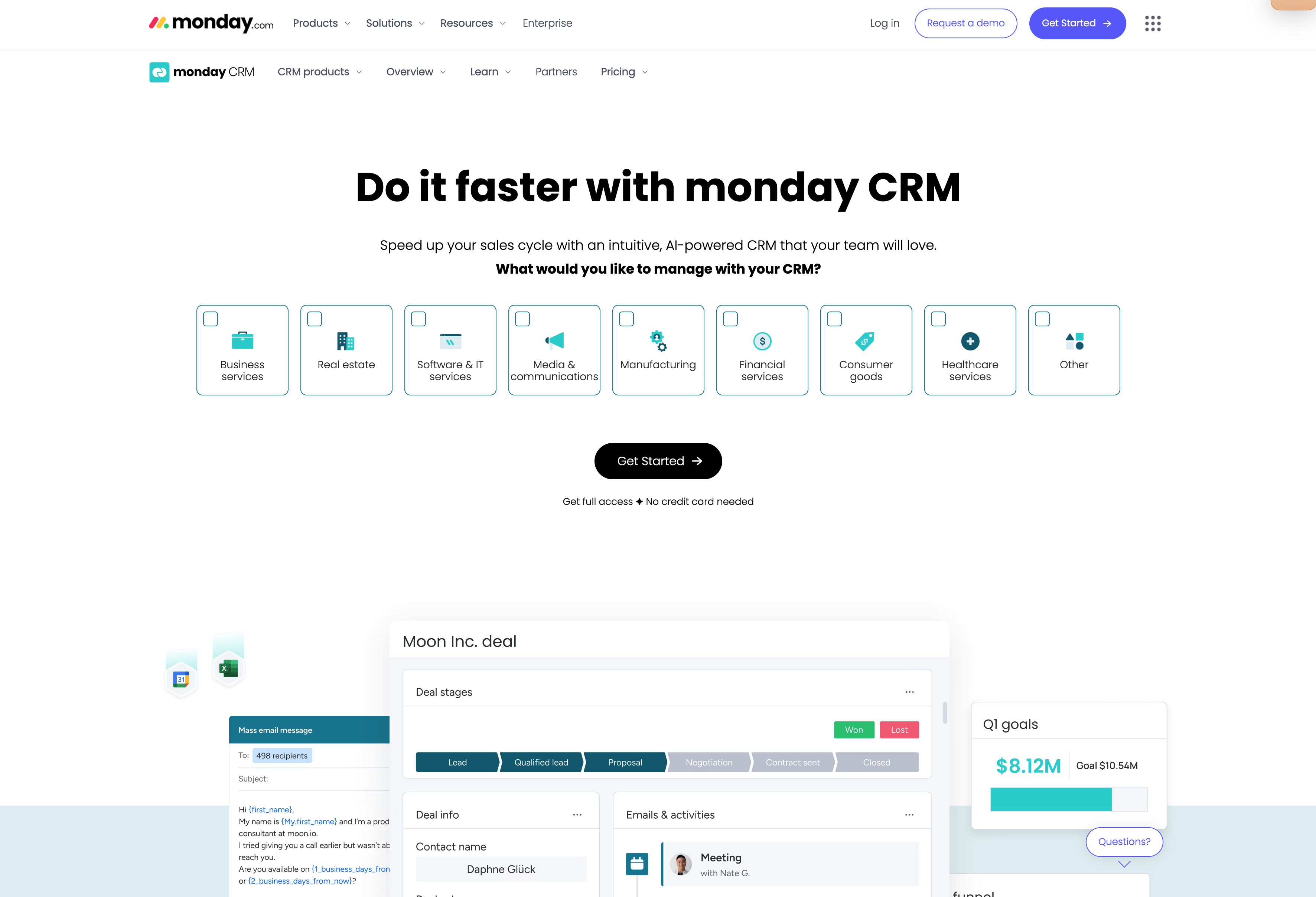
Image source: monday.com
Pros
- Customizable pipelines: Create deal boards that reflect the way your team thinks, with customizable stages and intuitive layouts.
- Built-in email capabilities: Sync your Gmail or Outlook, send mass emails, track responses, and even generate email drafts with AI.
- Seamless handoff to project teams: When a deal closes, you can instantly spin up a project or onboarding board, keeping all the context and workflow in one place.
Cons
- Premium features are gated: You’ll need to pay for Pro or Enterprise to unlock advanced capabilities like predictive lead scoring and high-volume automations.
- Not built for heavy enterprise-level reporting: For very large or data-heavy businesses, the platform’s analytics might not match heavyweight, enterprise CRMs.
Why monday CRM is a great Zoho CRM alternative
Monday CRM replaces Zoho's traditional, text-heavy database with a highly visual, flexible workspace that treats customer deals as actionable projects rather than just static records. Its drag-and-drop interface allows teams to manage the work surrounding a sale—marketing assets, onboarding checklists, and legal reviews—far more intuitively than Zoho's rigid module structure.
Pricing
- A 2-seat free plan is available.
- Monday pricing starts at $9 per seat/month.
6. HubSpot: Best CRM for free sales and marketing tools
HubSpot is a comprehensive software suite designed to help businesses of all sizes streamline their marketing, sales, and customer service efforts. Known for its intuitive design and robust free plan, HubSpot provides businesses with the tools they need to nurture client connections, optimize workflows, and drive growth. Its modular design, featuring Marketing Hub, Sales Hub, and Service Hub, allows teams to collaborate effectively while centralizing customer data and activity tracking.
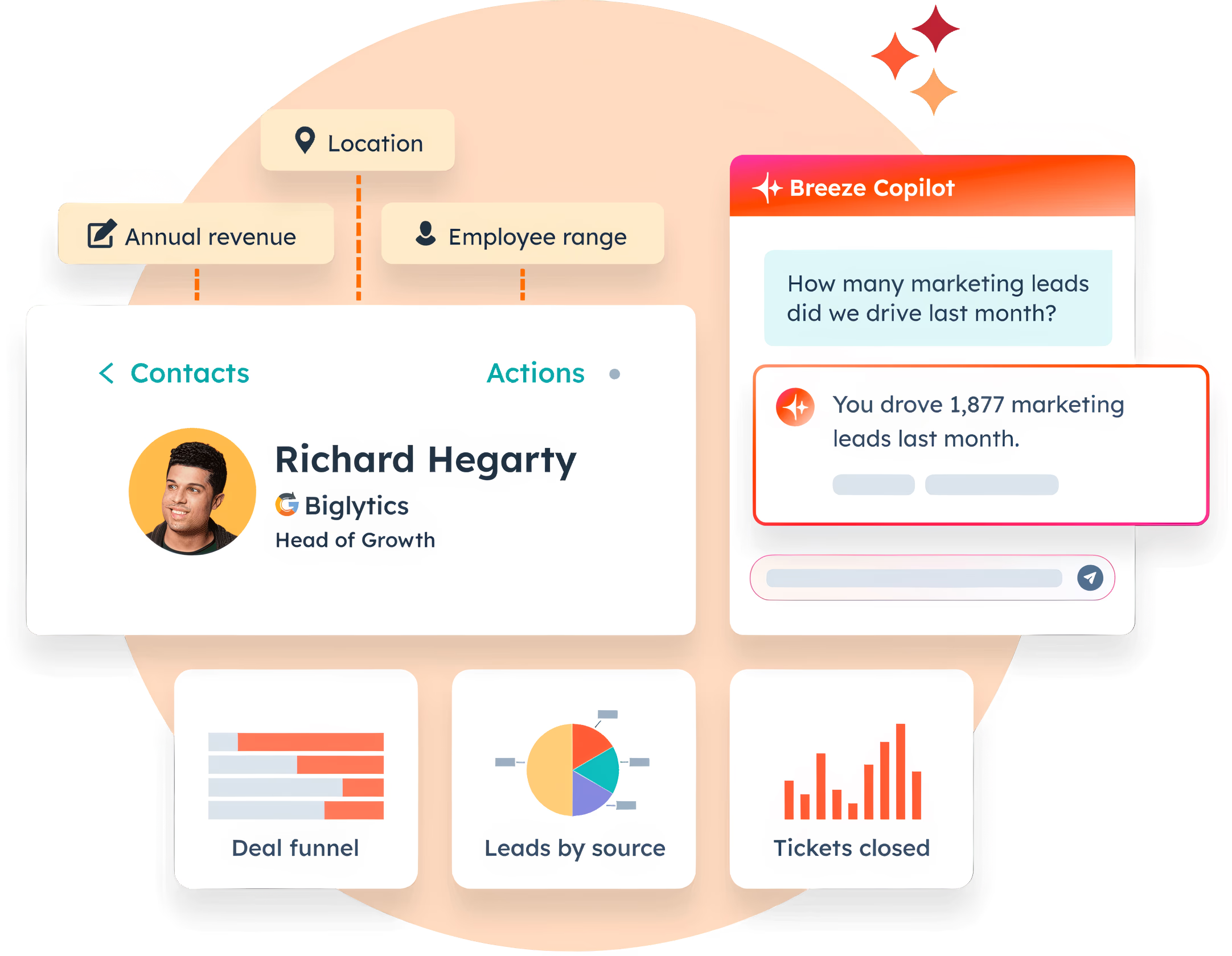
Image source: hubspot.com
Pros
- User-friendly and intuitive: Its clean and easy-to-navigate interface allows teams to quickly adopt the platform with minimal training or technical expertise.
- Integrated modules for collaboration: With Marketing Hub, Sales Hub, and Service Hub working together, HubSpot creates a unified platform for managing all client touchpoints.
Cons
- Costs can escalate with advanced features: While the free version is robust, businesses requiring advanced marketing tools, custom reporting, or deeper automation may find the pricing steep as they scale.
Why HubSpot CRM is a great Zoho CRM alternative
HubSpot offers a far more usable 'forever free' entry point than Zoho, giving you a fully unified sales and marketing hub rather than disjointed modules that require complex setup.
Pricing:
- Free plan: Offers essential CRM tools at no cost.
- Starter Plan: Begins at $15/seat/month (billed annually), designed for small teams seeking scalable solutions.
7. Pipedrive: Best CRM for visual sales pipeline management
Pipedrive is a sales-focused CRM designed to help small and medium-sized teams streamline their sales processes and close deals more efficiently. Built around an activity-based sales model, Pipedrive emphasizes simplicity and usability, making it ideal for sales professionals who want a clear, visual overview of their pipeline. With its intuitive interface and automated reminders, Pipedrive ensures teams stay organized, prioritize opportunities, and focus on the tasks that drive results.
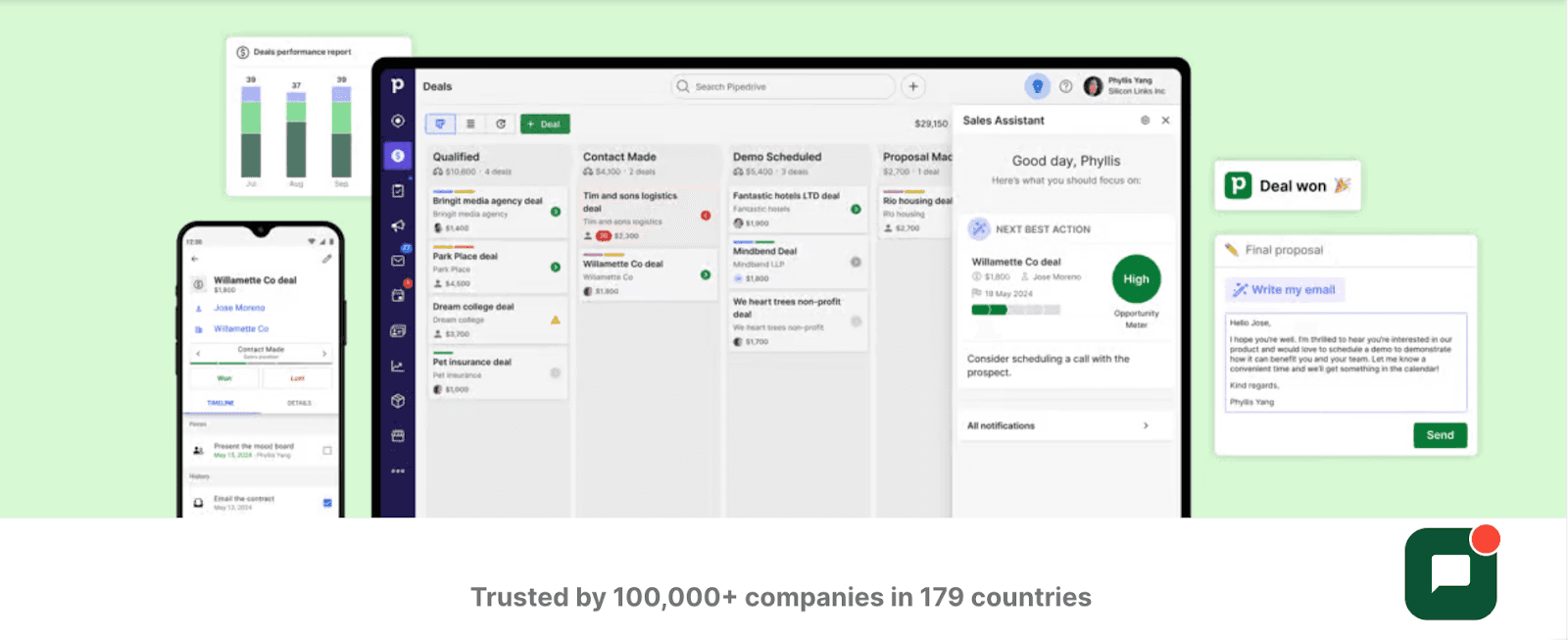
Image source: pipedrive.com
Pros
- Visual sales pipeline: Offers a clear and interactive view of the sales cycle, allowing teams to track deals at every stage and make informed decisions.
- User-friendly interface: Designed with simplicity in mind, Pipedrive is easy to navigate, even for users with minimal CRM experience.
Cons
- Limited customer support options in lower-tier plans.
Why Pipedrive is a great Zoho CRM alternative
Pipedrive removes the clutter of Zoho's features to focus entirely on one thing: a laser-focused, visual sales pipeline that salespeople actually enjoy using. By prioritizing deal velocity and activity-based selling over complex data entry, Pipedrive reduces the administrative burden that may plague Zoho users.
Pricing:
- Essentials plan: $14/user/month (billed annually).
- Advanced plan: $39/user/month (billed annually).
- Professional plan: $49/user/month (billed annually).
8. Freshsales: Best CRM for teams already using Freshworks products
Freshsales, part of the Freshworks suite, is a user-friendly CRM designed to simplify sales processes for small and medium-sized businesses. With AI-powered tools like lead scoring and sales forecasting, Freshsales helps teams prioritize opportunities and streamline workflows. Its seamless integration with other Freshworks products, such as Freshdesk and Freshservice, makes it an excellent choice for businesses already using the Freshworks ecosystem.
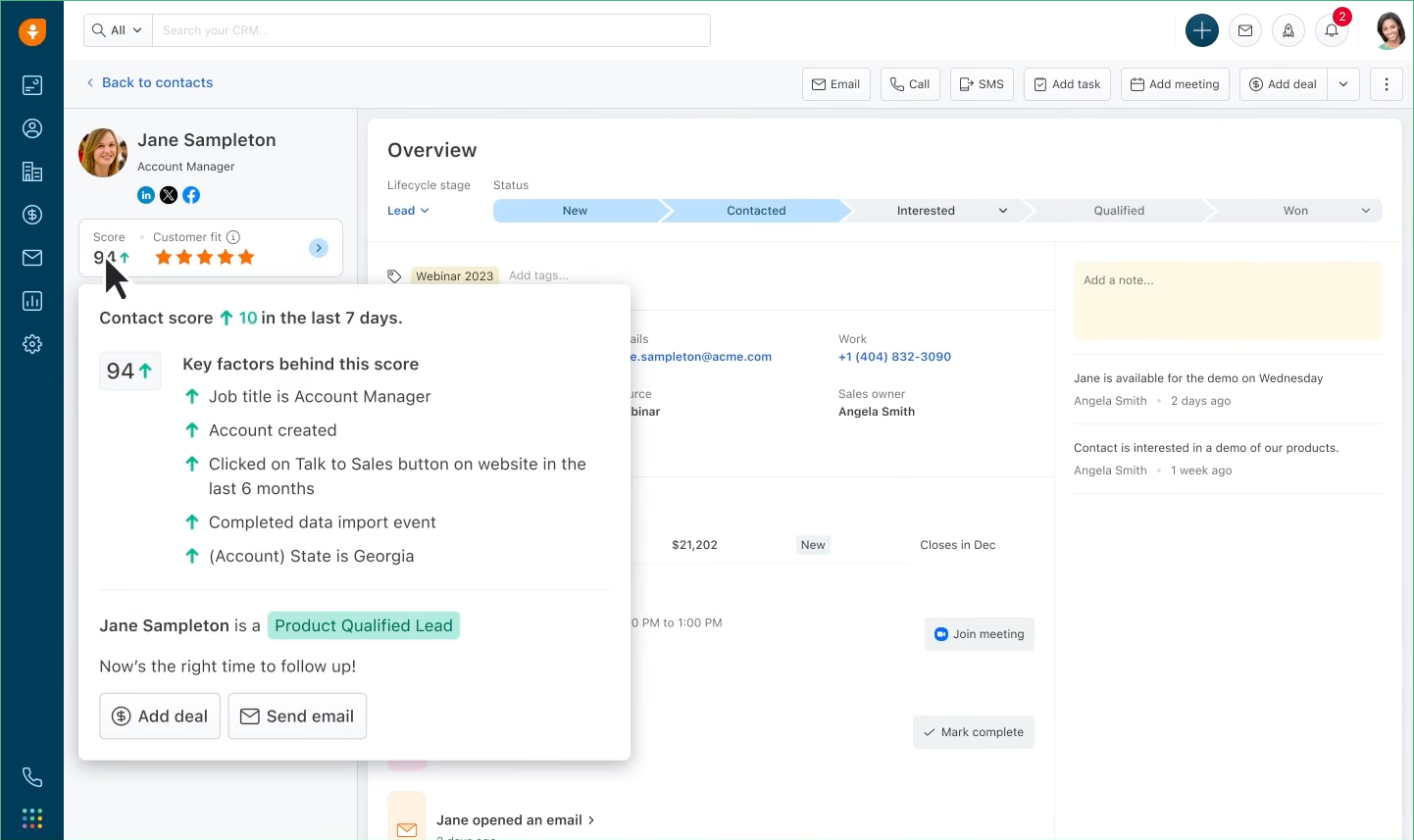
Image source: freshworks.com
Pros
- AI-powered lead management: Features like Freddy AI provide lead scoring and actionable sales insights to help teams focus on high-value opportunities.
- Integration with Freshworks tools: Works seamlessly with other Freshworks products, enabling businesses to manage sales, customer support, and IT operations in a unified platform.
Cons
- Limited customization options: Advanced users may find the platform’s customization capabilities insufficient for complex workflows or unique business needs.
Why Freshsales is a great Zoho CRM alternative
Freshsales is the logical choice for teams using Freshdesk, offering a unified 'Customer-for-Life' cloud where support tickets and sales deals share a single, coherent data stream without the clunky integration setup required between Zoho Desk and Zoho CRM.
Pricing
- Growth plan: $9/user/month (billed annually)
- Pro plan: $39/user/month (billed annually)
- Enterprise plan: $59/user/month (billed annually)
9. SAP: Best CRM for complex, large scale operations
SAP CRM is an enterprise-grade solution built to handle the complexities of large organizations. As part of the wider SAP Business Suite, it offers advanced tools for managing customer relationships across sales, marketing, service, and analytics. With capabilities like AI-driven insights and industry-specific customizations, SAP enables businesses to optimize workflows, enhance customer engagement, and make data-driven decisions. Its scalability and integration with other SAP tools make it an ideal choice for large enterprises needing a Zoho CRM alternative.
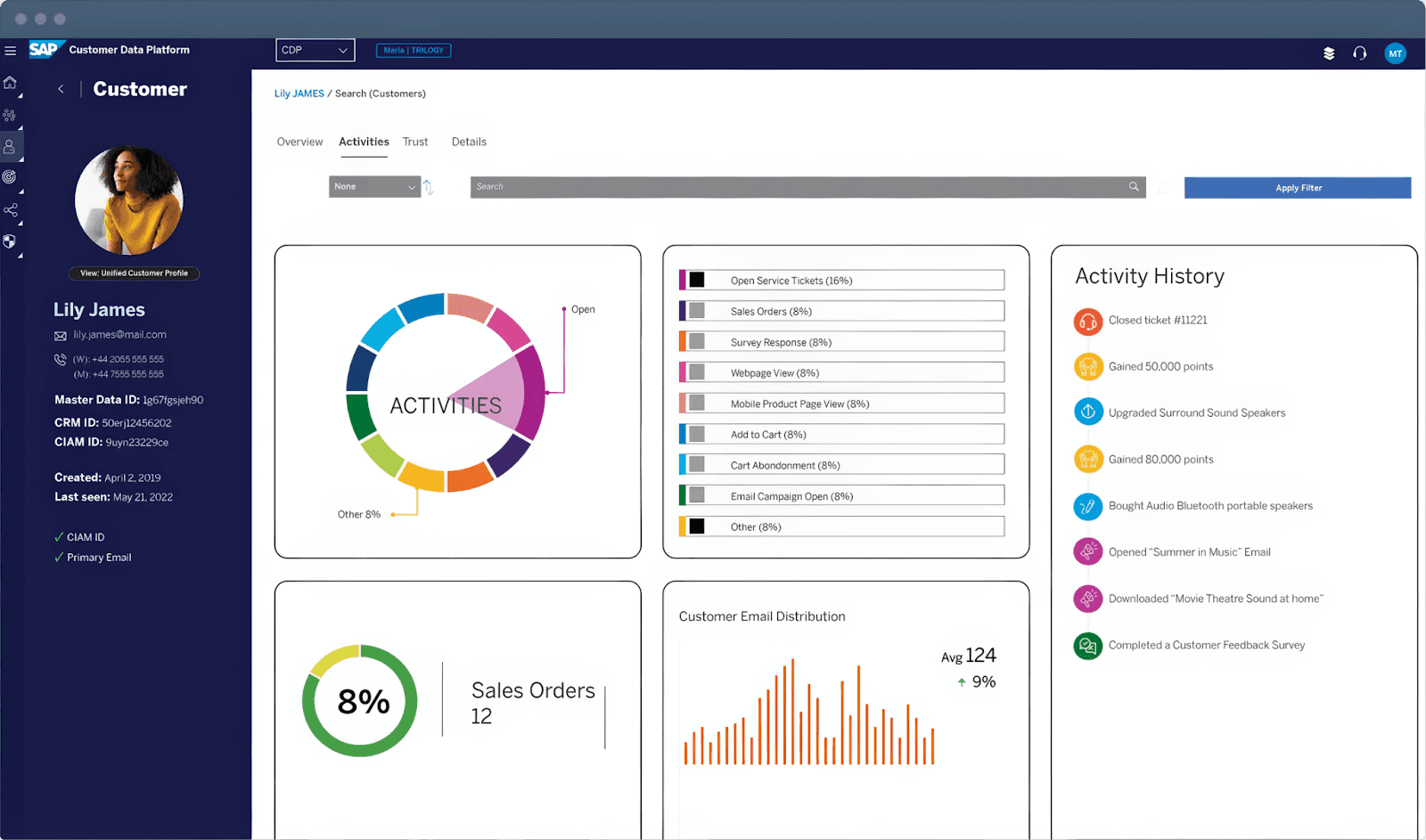
Image source: sap.com
Pros
- Scalable for large enterprises: Designed to handle the needs of growing organizations with extensive customization and the ability to support large-scale operations.
- Comprehensive sub-modules: Includes specialized modules for sales, marketing, service, analytics, and Hybris (for e-commerce and marketing needs).
Cons
- Complex implementation: Setting up and maintaining SAP CRM can be time-consuming and require significant expertise, making it a challenging option for businesses without dedicated IT resources.
Why SAP is a great Zoho CRM alternative
SAP provides the heavy-duty backbone required for complex global supply chains and manufacturing operations, offering deep ERP integration that Zoho's lightweight architecture cannot support.
Pricing
- Custom pricing: Pricing is tailored to each business based on its size, requirements, and desired functionality. Interested organizations need to contact SAP for a detailed quote.
10. Zendesk Sell: Best CRM for customer service teams
Zendesk Sell is a CRM software offered by Zendesk, designed to help businesses improve customer support efficiency, reduce churn, and increase customer satisfaction. It is ideal for customer service-focused businesses aiming to streamline operations and deliver exceptional customer experiences.
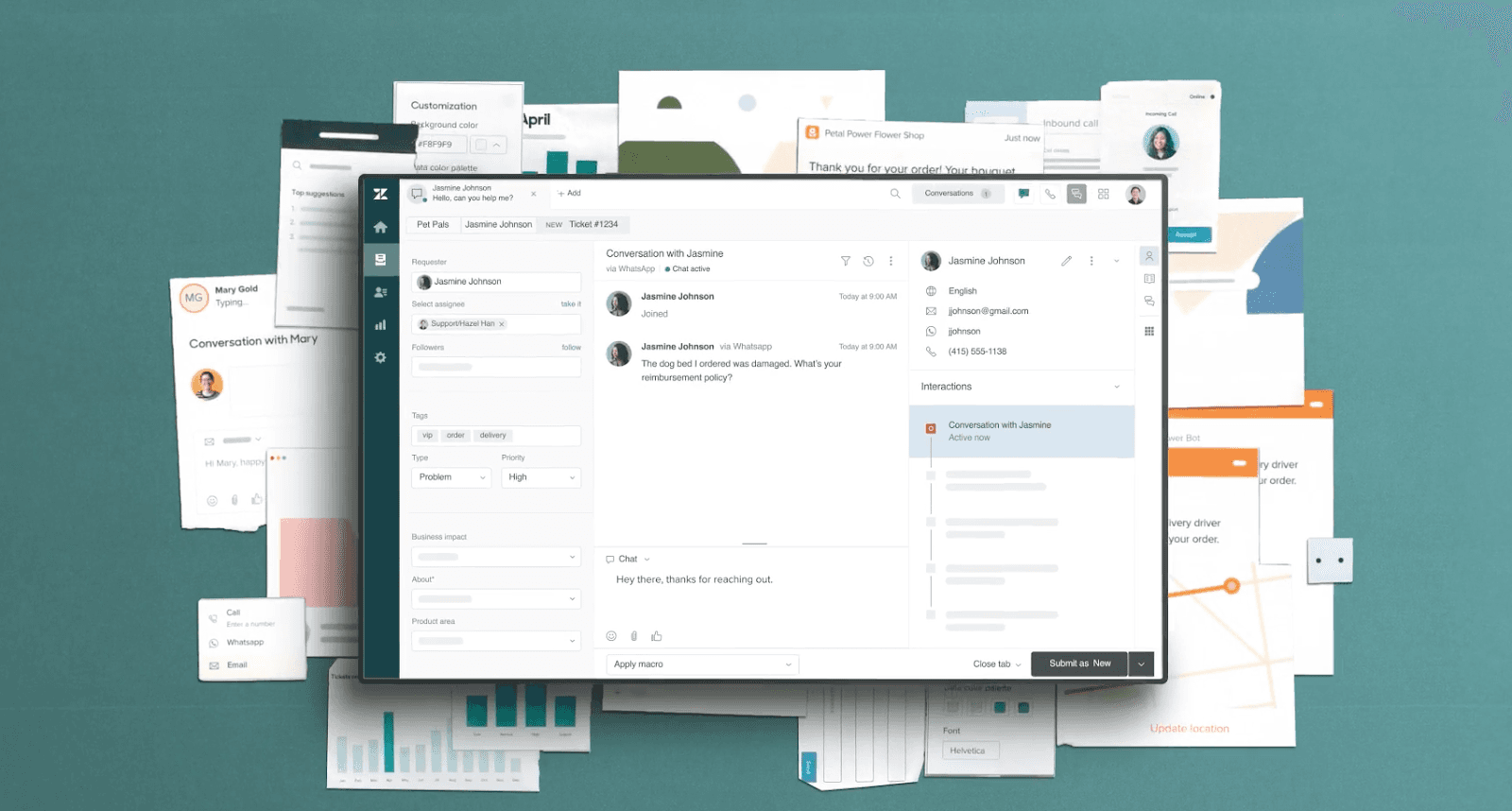
Image source: zendesk.com
Pros
- Exceptional scalability: Designed to support growing businesses, offering solutions for startups as well as large enterprises with complex support needs.
- Easy-to-use interface: Offers an intuitive and straightforward design, making it simple for support teams to adopt and use effectively without extensive training.
Cons
- Pricing can add up with add-ons: While base plans are affordable, costs can increase significantly when add-ons or upgrades are required.
Why Zendesk Sell is a great Zoho CRM alternative
Zendesk Sell bridges the gap between sales and support far more effectively than Zoho CRM by placing sales tools directly alongside an industry-leading support ticketing system. This deep integration ensures that every sales conversation is informed by active support issues, allowing service-led growth teams to upsell with full context.
Pricing
- Sell Team: $19/agent/month (billed annually)
- Sell Growth: $55/agent/month (billed annually)
- Sell Professional: $115/agent/month (billed annually)
11. Keap: Best CRM for sales and marketing automation
Keap (formerly Infusionsoft) is a CRM solution specifically tailored for small businesses, combining sales automation, email marketing, and customer management in an easy-to-use platform. Designed with automation as its core strength, Keap helps businesses simplify workflows, nurture leads, and improve customer relationships. With features like appointment scheduling, payment processing, and campaign management, Keap is ideal for small teams looking to streamline their operations and grow their business efficiently.
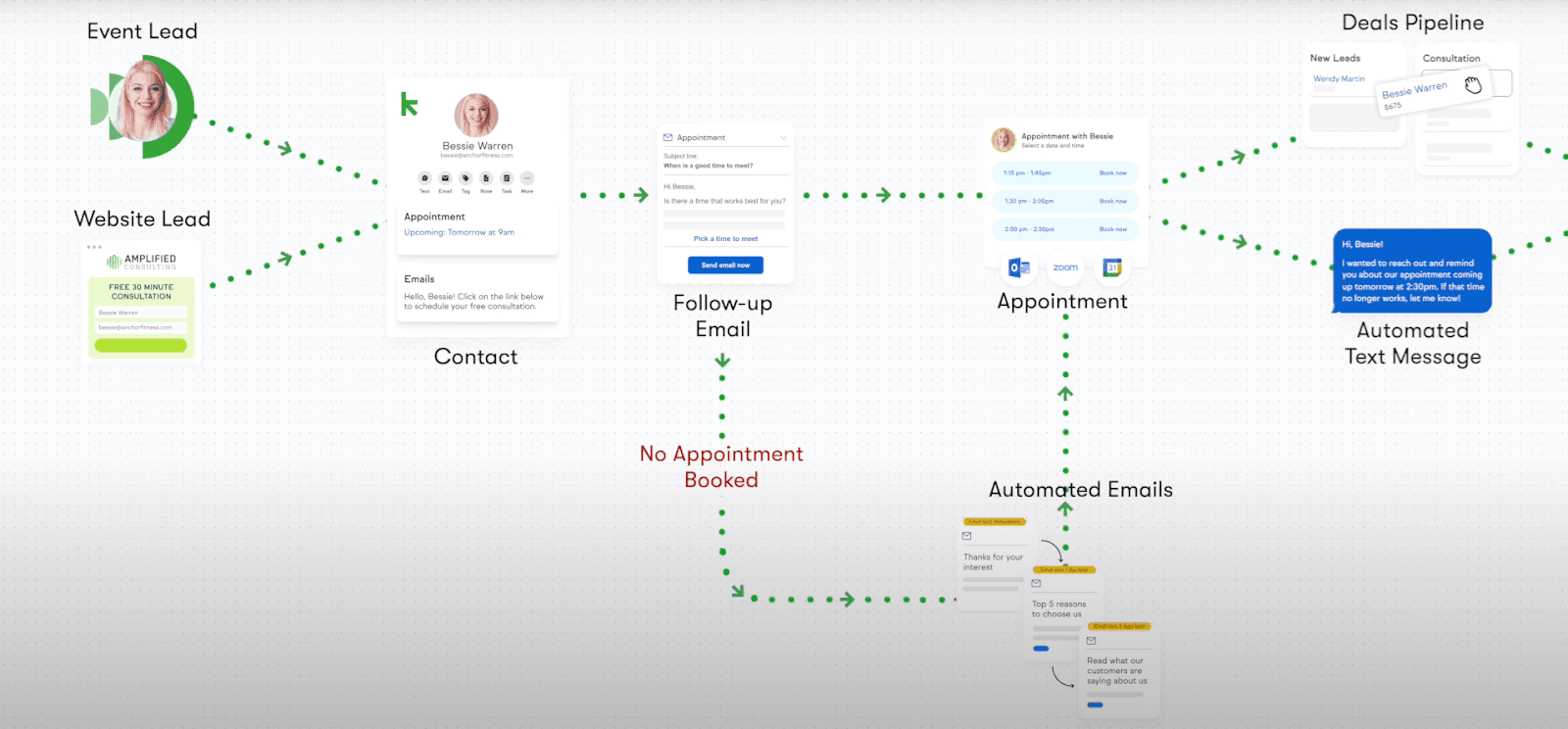
Image source: keap.com
Pros
- Powerful automation features: Simplifies tasks like email marketing, customer follow-ups, lead nurturing, and workflows, helping teams save time and boost efficiency.
- E-commerce capabilities: Includes features to set up online stores, manage inventory, and process customer payments, integrating billing and sales operations.
Cons
- Higher pricing compared to competitors: The platform’s pricing can be steep for small businesses, especially for advanced features like e-commerce or expanded contact lists.
Why Keap is a great Zoho CRM alternative
Keap distinguishes itself from Zoho by combining CRM and advanced marketing automation into a single, purpose-built tool for small business growth, rather than forcing you to connect separate apps like Zoho CRM and Zoho Campaigns.
Pricing
- Paid plan starts at $249 per month for two users (billed annually)
12. SugarCRM: Best CRM for on-premise and cloud customization
SugarCRM is a versatile and highly customizable CRM platform designed to help businesses streamline their sales, marketing, and customer service processes. Its robust tools enable teams to efficiently manage leads, track opportunities, resolve customer inquiries, and run marketing campaigns, all while offering in-depth analytics to facilitate data-driven decision-making.
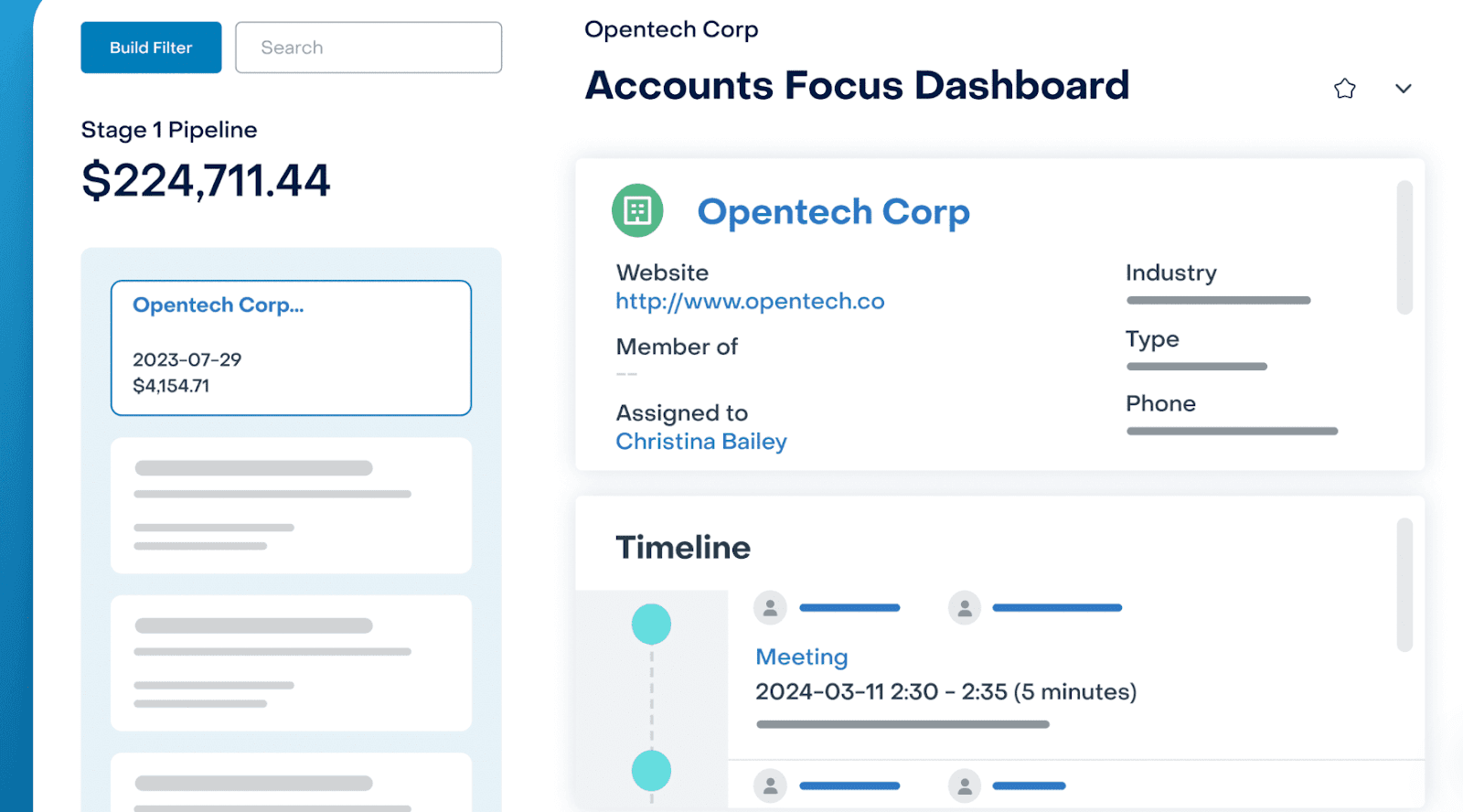
Image source: sugarcrm.com
Pros
- Highly customizable: Offers flexible workflows and dashboards that can be tailored to fit the exact needs of businesses without requiring extensive coding or third-party adjustments.
- Effective case management: Provides tools to track and resolve customer service inquiries efficiently, enhancing overall customer satisfaction.
Cons
- Complex interface for beginners: The wide range of features and customization options can make the platform harder to navigate for smaller teams or new users.
Why SugarCRM is a great Zoho CRM alternative
SugarCRM offers a unique advantage over Zoho's strictly SaaS model by providing the flexibility to deploy on-premise or in a private cloud, giving you total control over your data security and compliance. Furthermore, its open-source roots allow for deep, code-level customization that goes beyond Zoho's proprietary constraints.
Pricing
- Paid plans start at $19/user/month (billed annually).
How to choose a Zoho CRM alternative
Choosing goes beyond picking the most popular option. To make the best choice, you need to align the platform’s features, pricing, and usability with your specific goals and requirements. Here’s a step-by-step guide to ensure you find the perfect fit.
Identify your business size and needs
The first step in selecting a CRM is to define the size and nature of your business, as different tools cater to different types of organizations.
- Startups vs. enterprises: typically benefit from simple, cost-effective solutions with minimal setup and easy onboarding. On the other hand, enterprises may require CRMs with advanced features, scalability, and integration with other enterprise-grade tools.
- Sales-focused vs. customer service-focused: If your primary need is boosting sales, prioritize CRMs with robust lead tracking, deal management, and sales automation. However, if you’re more focused on improving customer service, look for tools that offer 360-degree customer views, customer communication tracking, and support ticketing systems. A flexible platform like Lark can even be customized using Lark Base to build a dedicated customer support tracker that integrates directly with team chats.
By identifying your team's priorities, you can quickly narrow down your options and focus on CRMs that address your core requirements.
Set a budget
Your budget plays a critical role in determining which CRM is feasible for your business. When considering costs, remember to account for more than just the subscription price:
- Setup costs: Some CRMs may require additional expenses for implementation or consulting.
- Add-ons and upgrades: Keep an eye on "hidden" costs for necessary features that may not be included in the base plan, such as advanced analytics or integrations with other platforms.
- Long-term scalability: Opt for a CRM with pricing that allows for future growth so you can expand the tool’s capacity as your business scales. Look for transparent pricing structures that eliminate surprises.
Evaluate features
When comparing CRM options, pay close attention to the features they offer. The most effective tools will support your business’s unique goals while enhancing team productivity. Consider these essential capabilities:
- Automation: Automating repetitive tasks like email follow-ups, data entry, and task assignments saves time and reduces manual errors.
- Collaboration: Look for tools with built-in messaging, team dashboards, and task-sharing capabilities to keep your entire team aligned. For instance, Lark enables teams to discuss a deal in a dedicated chat group, co-edit the proposal in a shared document, and update the deal status in the CRM—all without switching apps.
- Analytics: CRMs with strong reporting and analytics help you gain actionable insights into customer behavior, sales pipelines, and team performance.
- Customization: A flexible CRM should let you tailor workflows, dashboards, and data fields to match your processes.
Evaluate these features against your business priorities to decide which CRMs add the most value to your operations.
Test before committing
Before making a final decision, take the time to test the CRM to ensure it delivers on expectations. Many platforms offer free trials, demo versions, or live walkthroughs to help you assess their usability and functionality.
- Free trials and plans: These let you explore the tool in real-world scenarios with your own data and workflows. Most CRMs either offer a or a trial.
- Demos: A guided tour from a sales representative can give you insights into features you might not explore on your own.
During this trial phase, pay attention to how intuitive the interface feels, how well the tool fits into your existing processes, and how responsive the customer support team is. Testing a CRM before committing can prevent costly mistakes and ensure a smoother adoption process for your team.
Lark: The ultimate Zoho CRM alternative
When it comes to finding the perfect Zoho CRM alternative, Lark stands out amongst the rest. Here's why we think you should consider Lark as your next CRM solution.
A truly all-in-one CRM solution
Zoho CRM is one tool among many you might use, whereas Lark and its CRM solution provide a comprehensive workspace that combines managing customer relationships with , , and . This eliminates the need to switch between scattered tools, improving efficiency and saving high costs.
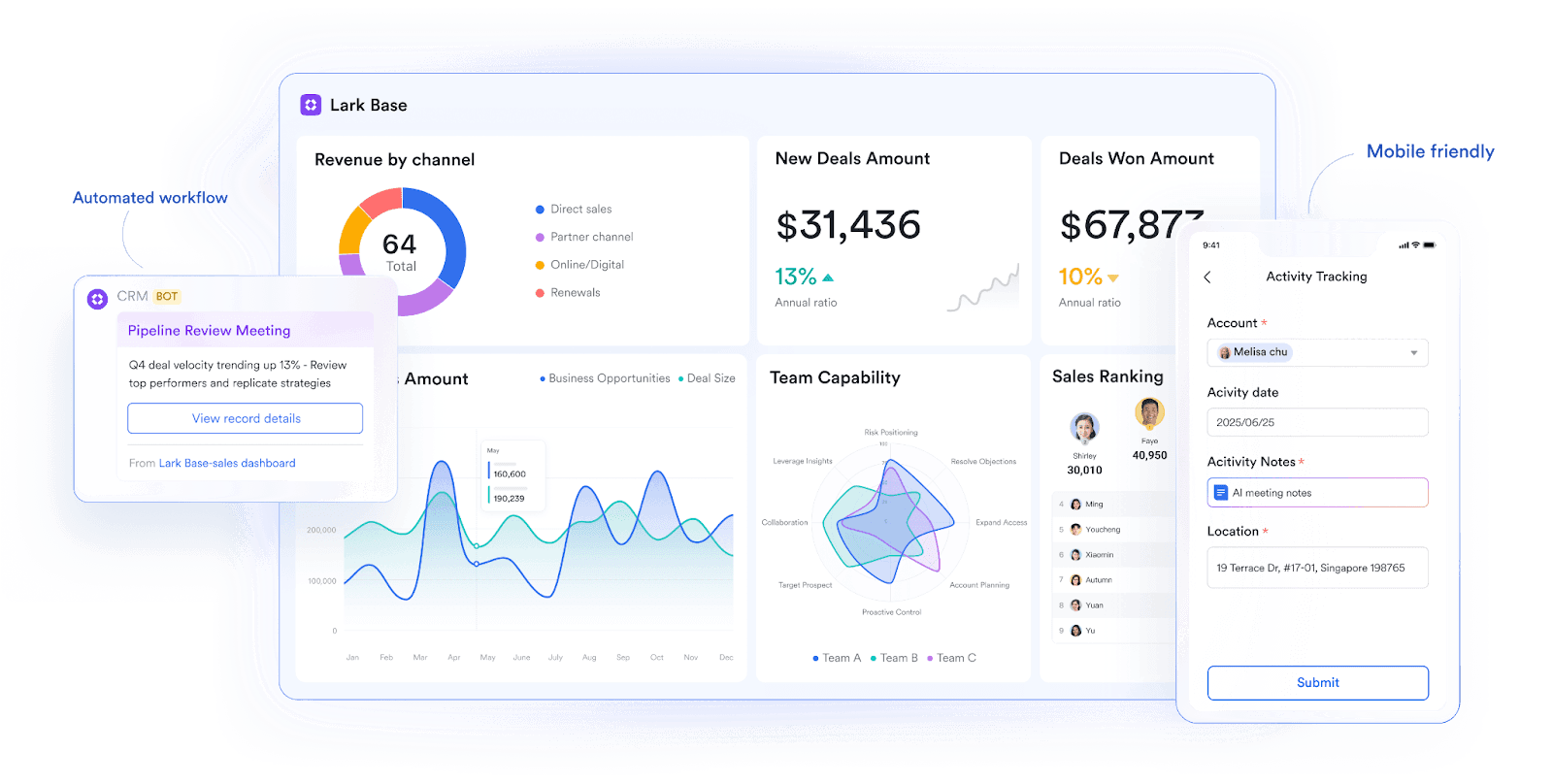
Your team can track customer interactions, discuss next steps, schedule follow-ups, and co-edit proposals, all without ever leaving the platform. This integration makes your CRM a natural part of the daily workflow, boosting adoption and productivity.
Effortless no-code customization
Customization is essential in a CRM, but not all businesses have the resources for complex configurations. That’s where Lark shines. With its user-friendly, no-code customization, businesses can build a tailored CRM solution that meets their specific needs—without needing developers. This directly addresses a common pain point with Zoho CRM, which can be complicated to set up.
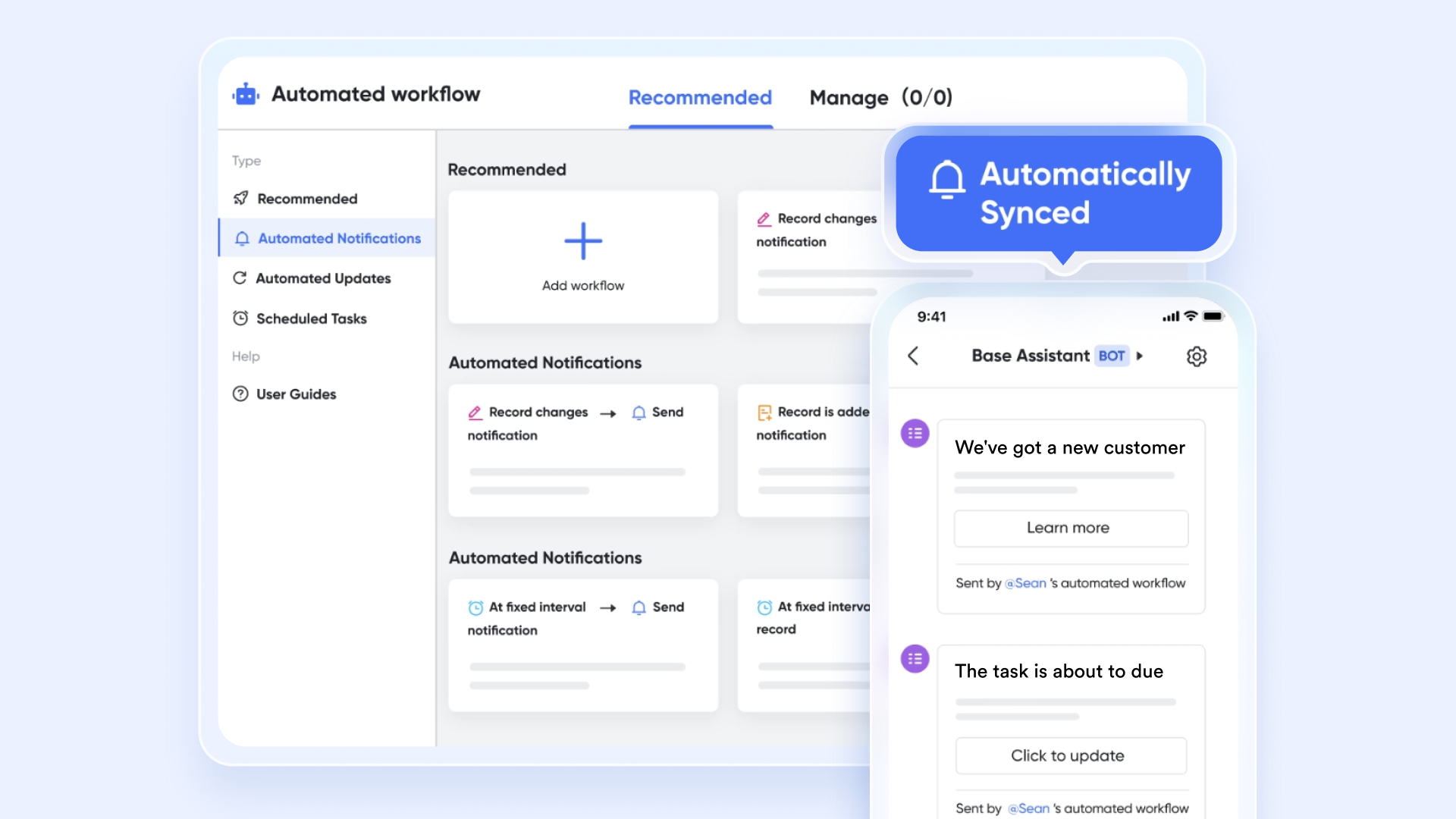
You and your team can easily create custom data fields, , and dashboards to align with your processes. This flexibility ensures you can focus on what works for your business, rather than being forced into a rigid structure. Next-generation AI
across Lark is not just an add-on; it's deeply integrated throughout the platform. It provides more comprehensive support than many alternatives by automating tasks like lead management, generating data-driven insights, and even offering real-time translation in over 18 languages.
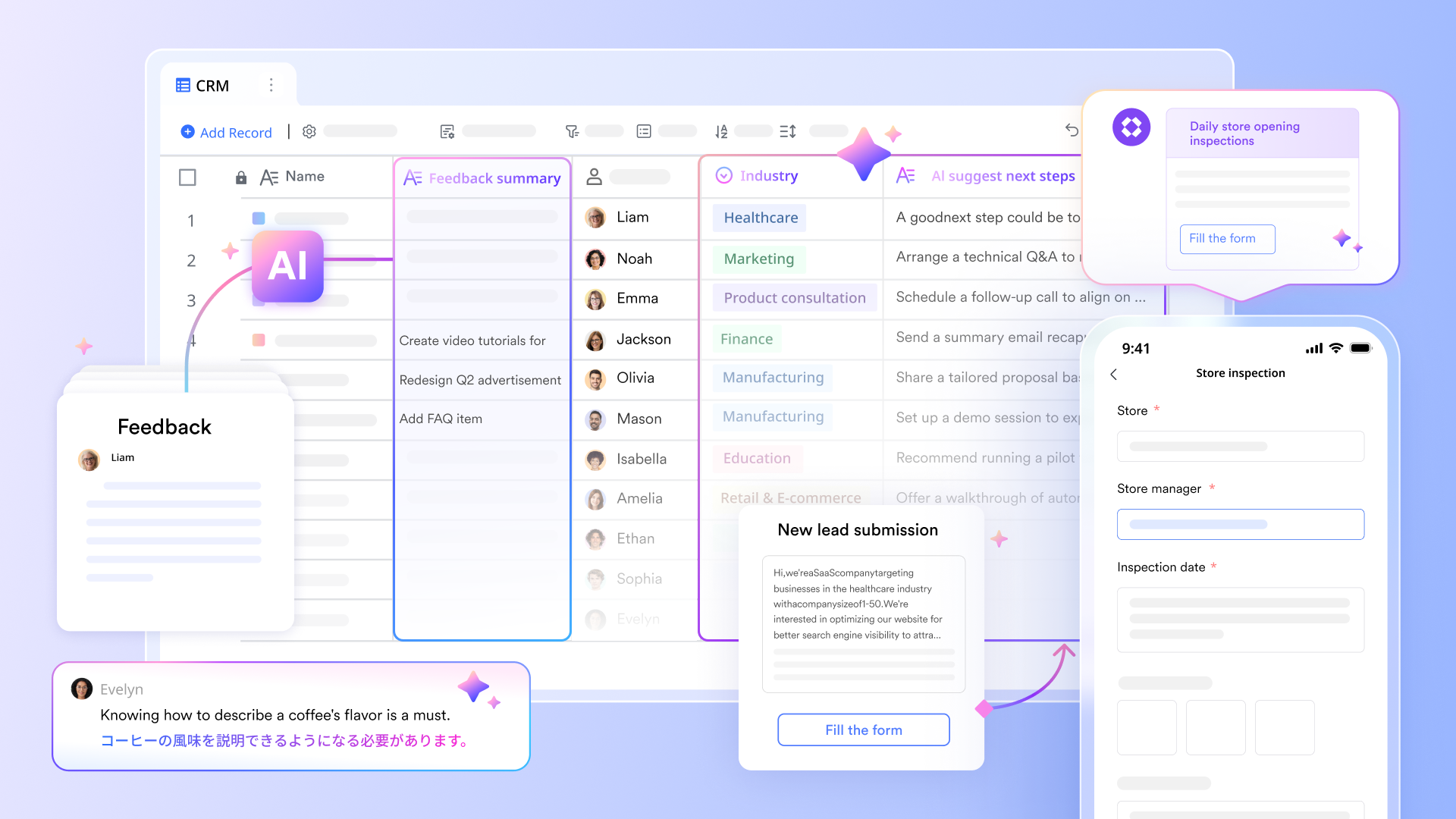
For example, AI can automatically summarize video meetings with clients, create transcripts, and enrich lead data. This empowers your team to work smarter, not harder, and make better-informed decisions.
Affordable and great value
For small businesses or startups, cost is a critical factor. The Lark superapp offers a far more cost-effective entry point than Zoho CRM. Lark's Starter plan is free for up to 20 users and includes 11 powerful products, whereas Zoho's free plan is limited to just 3 users and only includes basic tools.
For growing businesses, Lark's paid plans are affordable and transparent, providing a scalable solution without the high costs often associated with traditional CRMs. Although there isn't an official calculator to compare costs, Lark's shows you how much you can save by switching to Lark. For example, by switching from Slack, Google Workspace, and Monday to Lark's all-in-one platform, a company of 100 employees can save a total cost of at least $23,400 per year.
How many employees work at your company?
Which tools do you use?
Estimates are for reference only, contact us for an official quote
Calculate savings
Lark Enterprisecan replace and surpass at least 4 of your existing business tools. With 1000 employees, your company could save at least $390,000 per year by using Lark.
Calculate again
How to migrate from Zoho CRM to Lark
Migrating your sales operations from Zoho CRM might feel daunting, but with a solid plan, you can make the switch smoothly.
Here is how you successfully migrate to Lark after you
- Extract your data from Zoho CRM: Begin by exporting your existing records from Zoho’s various modules. You will need to download your Leads, Contacts, Accounts, and Deals as individual CSV or Excel files. Be sure to include any custom fields you’ve created over the years so nothing gets left behind.
- Audit and scrub your spreadsheets: Before bringing data into Lark, take the opportunity to perform some data hygiene. Delete duplicate entries, standardize your formatting, and remove outdated records. Ensure your column headers are clear, as these will become the field names in your new Lark Base.
- Set up Lark Base: Before you upload a single file, open in the Lark app and design your CRM architecture. Create a new base and set up your tables (e.g., one for "Clients," one for "Opportunities"). Define your field types—such as dropdowns for deal stages or date fields for deadlines—and set up your Kanban or Gantt views to match your team’s preferred workflow.
- Import data: Use Lark Base’s import feature to bring your cleaned data into your new tables. Remember to check your Zoho exports to the right fields you created in Lark Base to ensure every phone number, email, and deal value lands in the correct spot.
- Establish relationships and permissions: Once the data is in, leverage the relational power of Lark Base. Use "Link" fields to connect your contacts to their respective companies or deals. At this stage, you should also configure permissions to ensure that sensitive sales data is only editable by the right team members.
- Onboard your team and activate workflows: Finally, introduce your team to the new system. Show them how to trigger automated alerts when a deal stage changes in the Base. Run a few tests to ensure your automations work, and encourage the team to start collaborating directly within the records using inline comments.
Migrations can be tricky, which is why Lark’s team is ready to help you make a smooth switch.
Conclusion
Zoho CRM alternatives come in different shapes and sizes, and choosing the best one for your business requires careful planning. Whether you prioritize the advanced enterprise analytics of Microsoft Dynamics, the sales-focused simplicity of Pipedrive, or the inbound marketing power of HubSpot, there’s a solution out there to help your business thrive.
For seamless collaboration, no-code flexibility, and affordability, Lark is the superior choice. Lark goes beyond traditional CRMs to merge your customer data directly with the chat, video, and documentation tools your team uses every day. This turns your CRM into a dynamic, centralized engine for your entire business—making Lark the smartest move for modern teams.
Explore the #1 Zoho CRM alternative now
FAQs
What is Zoho CRM?
Zoho CRM is a CRM platform designed to align your sales, marketing, and customer support teams. Trusted by organizations worldwide, it acts as a central hub that streamlines internal processes and policies. By consolidating these functions, Zoho CRM aims to help businesses convert more leads, enhance customer engagement, and drive consistent revenue growth.
Who are Zoho CRM competitors?
Zoho CRM's main competitors include HubSpot, Salesforce, Pipedrive, and Microsoft Dynamics 365. Each serves different needs, from inbound marketing to enterprise-level sales. For businesses seeking a more collaborative and integrated approach, Lark emerges as a strong modern alternative, combining CRM with excellent communication tools in one platform.
Is Zoho CRM actually free?
Yes, Zoho CRM offers a free edition, but it is limited to three users and has basic features. While suitable for very small teams or individuals, most growing businesses will need to upgrade to a paid plan. In contrast, other Zoho CRM alternatives like Lark offer a more generous free plan for up to 20 users.
Is Zoho the best CRM?
Whether Zoho is the "best" CRM is subjective and depends on your specific needs. It is a powerful platform with extensive features, but its complexity and user interface can be significant drawbacks for some teams. The best CRM is one that aligns with your company’s workflow, budget, and the overall user experience.
What is the best CRM platform?
The best CRM platform is the one that best fits your business goals. For sales-driven teams, Pipedrive is excellent. For marketing automation, HubSpot is a leader. However, for businesses that prioritize teamwork, flexibility, and affordability, Lark is the best choice for its all-in-one collaborative workspace and no-code customization.
Related reading