Building a large-scale project requires more than just structural integrity; it demands a commitment to the land on which it sits. A construction environmental management plan is the backbone of this commitment, serving as a live blueprint for mitigating ecological impact. Without a structured approach to environmental management in construction, teams risk heavy fines, project delays, and irreversible damage to local ecosystems.
This guide explores how to transition from a static paper document to a dynamic, site-level strategy. By integrating modern digital workflows, contractors can ensure that compliance isn't just a box-ticking exercise but a core part of the daily operational heartbeat on-site.
What is a construction environmental management plan?
A construction environmental management plan (CEMP) is a that details how a project will manage its environmental impacts during the construction phase. It is not merely a statement of intent; it is a practical, site-specific manual.
Whether you are working on a construction, environmental, and social management plan for a massive or a targeted construction environmental protection plan for a smaller build, the purpose remains the same: to bridge the gap between environmental theory and site reality. It outlines exactly what needs to be done, who is doing it, and how it will be monitored to satisfy both regulatory bodies and local communities.
5 objectives of a construction environmental management plan
The primary goal of an environmental plan for construction site operations is to create a . The core objectives typically include:
- Compliance: Ensuring the project adheres to local and national environmental legislation, avoiding legal disputes.
- Pollution prevention: Implementing specific barriers and protocols to prevent sediment, chemicals, or waste from entering local waterways or air.
- Resource efficiency: Managing waste and water usage to reduce the overall carbon footprint of the build.
- Stakeholder trust: Demonstrating to clients and the public that the project is being handled with ecological sensitivity.
- Risk management: Identifying potential "showstoppers"—such as discovering protected species—and having a pre-defined plan to handle them without halting progress.
4 key components of a construction environmental plan
For a construction site environmental management plan to be effective, it cannot be a generic template. It must be tailored to the .
- Environmental controls and mitigation measures: Once risks are identified, you need a construction and environmental management plan that lists the "how." This includes physical controls (such as silt fences and bunded fuel tanks) and procedural controls (such as restricted work hours for noise-intensive activities).
- Roles, responsibilities, and governance: Environmental management fails when "everyone" is in charge, which often means "no one" is. Your environmental management plan for a building construction project must identify specific individuals responsible for daily checks, emergency response, and liaison with environmental agencies.
- Monitoring, inspections, and reporting: A construction environment management plan is only as good as its data. are required to verify that controls are working. This involves water quality testing, noise monitoring, and documented site walks.
- Training and site awareness: All workers entering the site should complete environmental induction. They need to understand the environmental plan for construction specifics, such as where the spill kits are located and which areas of the site are ecologically "no-go" zones.
Ready to bring your environmental strategy to life?
Action Time: Turning plans into daily site action with Lark
A construction environmental management plan often fails when a static PDF is buried in an . To be effective, environmental management in construction must be integrated into the tools your team uses every hour. acts as a digital nervous system for your site, ensuring that the high-level goals of your environmental and social management plan for the construction project are translated into clear, accountable actions.
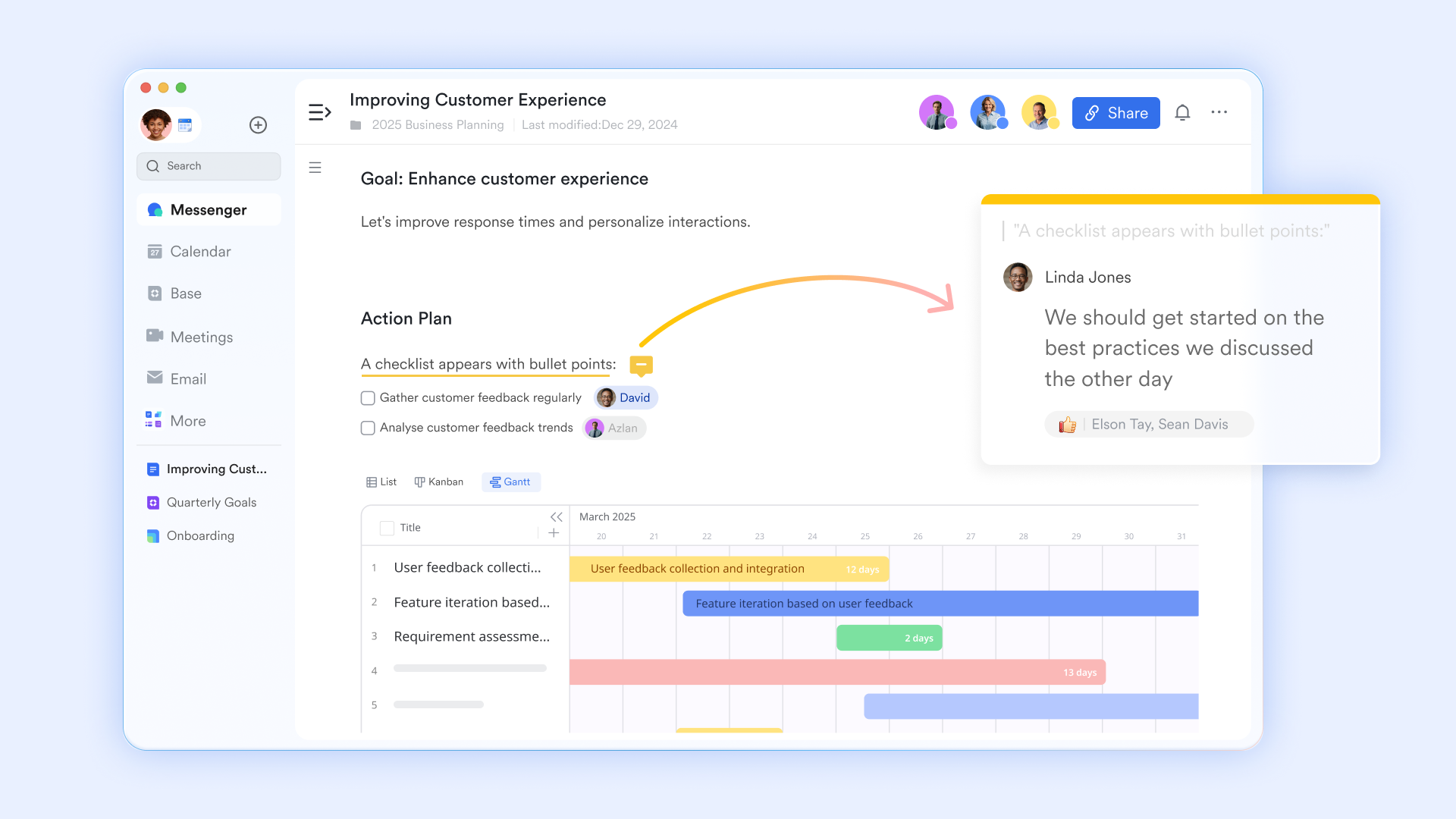
Maintaining a single, live CEMP
Version control is a major risk when managing a construction environment management plan. ensures that everyone from the project director to the site foreman is looking at the same version of the truth. With the "" function, updates to local regulations or site conditions can be made in real time. Because these documents are mobile-responsive, field workers can access the environmental plan for construction-site specifics—such as spill-response protocols—without having to return to the office trailer.
Structuring environmental risks and corrective actions
Traditional spreadsheets struggle to handle the complexity of a construction environmental and social management plan. functions as a centralized database where you can map every environmental risk to a specific control measure. By using the "Form" function, site inspectors can log environmental breaches directly from their phones. Once a form is submitted, the "" function can instantly trigger an alert to the environmental officer, ensuring that corrective actions are taken before a minor leak becomes a major compliance issue. 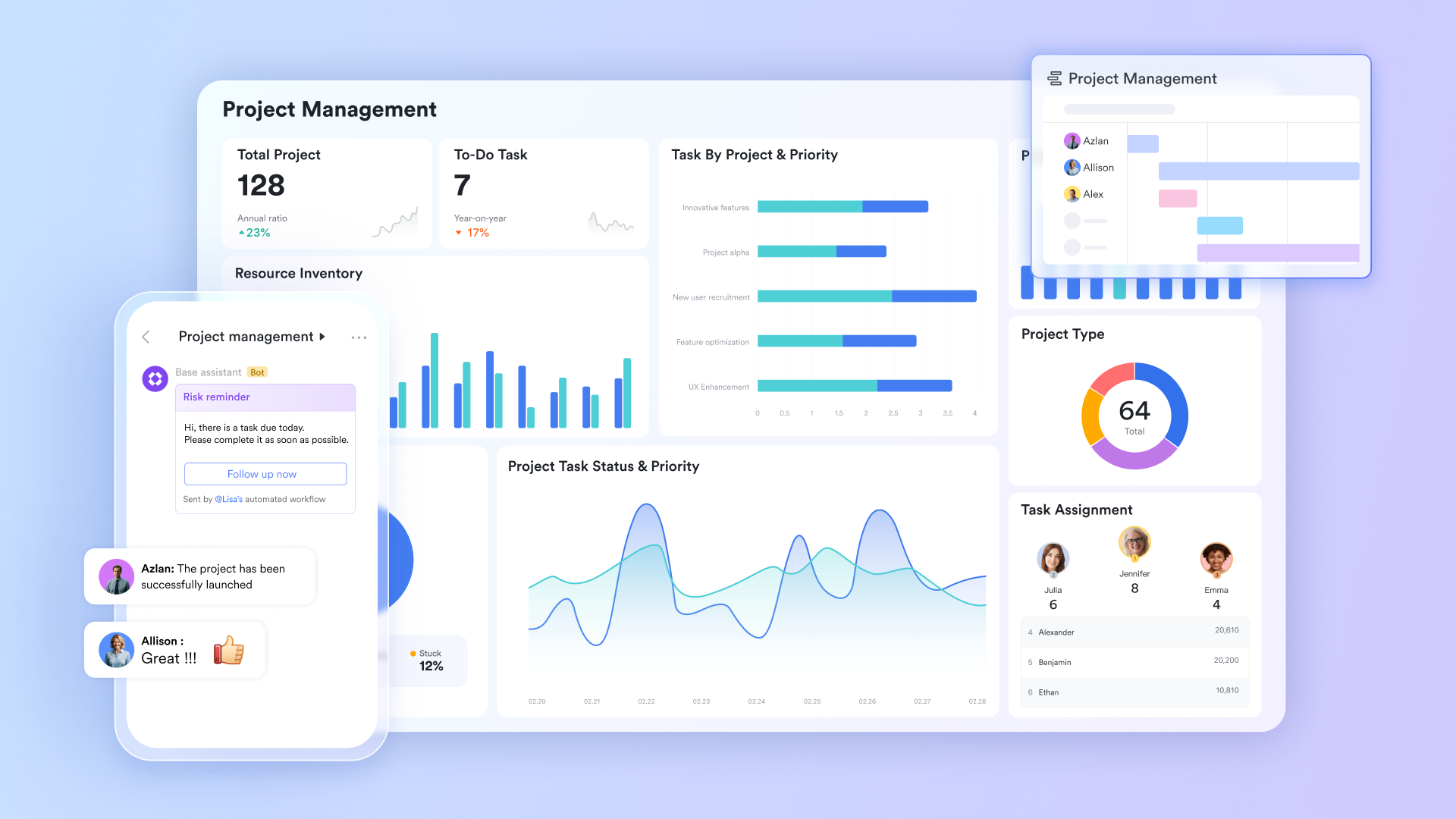
Assigning mitigation and tracking follow-ups
Environmental management is built on "follow-through." When an audit identifies a gap in your construction environmental protection plan, Lark Tasks ensures it doesn't fall through the cracks. Using the "task assignment" function, managers can turn an audit finding into a ticket with a strict deadline. The "recurring task" function is also well-suited for sediment pond inspections or noise-monitor calibration, creating a clear audit trail for regulators. 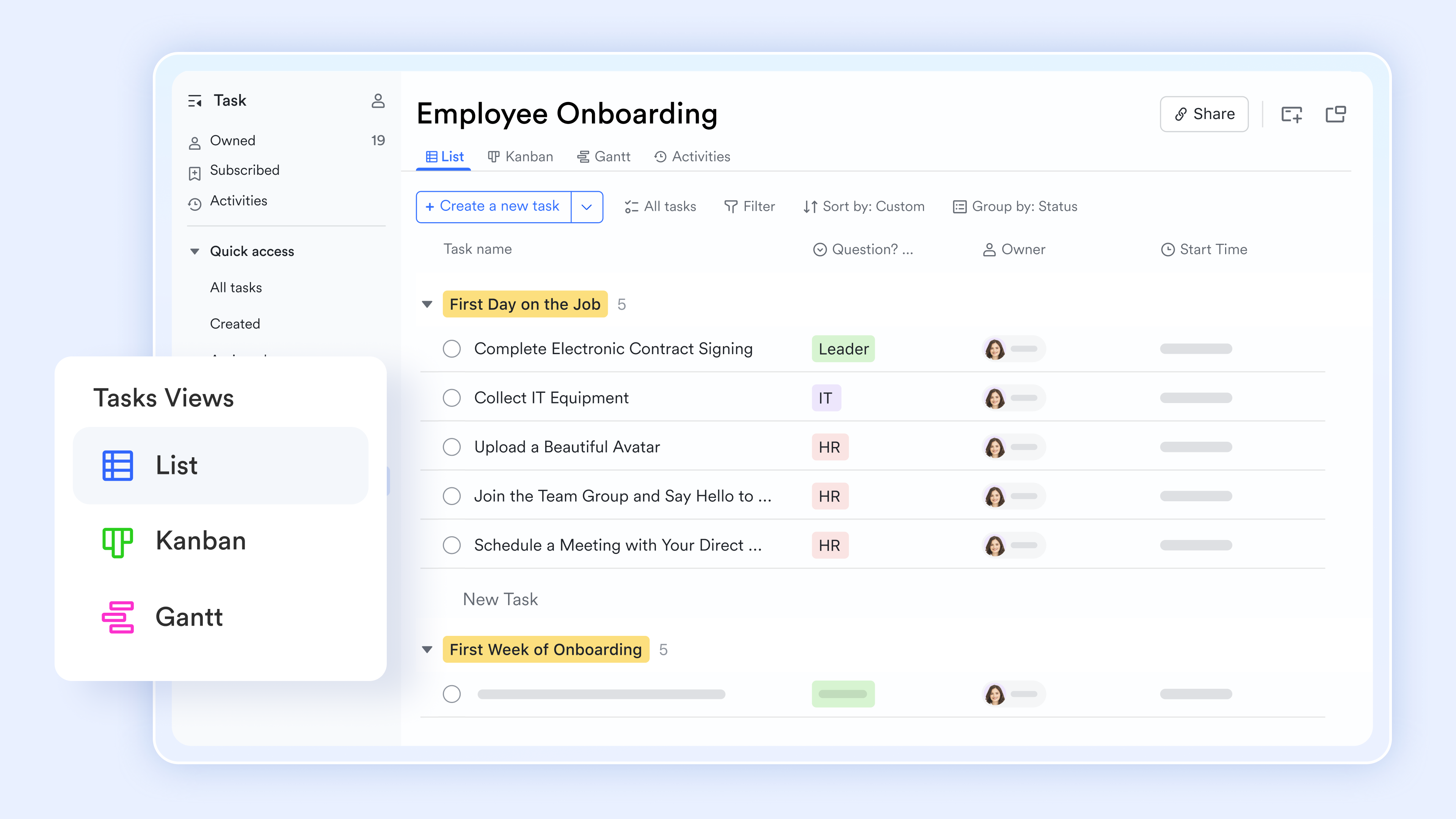
Real-time site communication and incident reporting
In the event of an environmental emergency, such as a chemical spill, every second counts. uses "topic groups" to separate emergency environmental alerts from general site chatter. This ensures that the environmental management on construction sites remains responsive. The "announcement" function allows site leads to instantly push critical weather warnings (such as incoming storms that may affect silt fences) to the entire crew, ensuring the construction environmental plan is proactively adjusted. 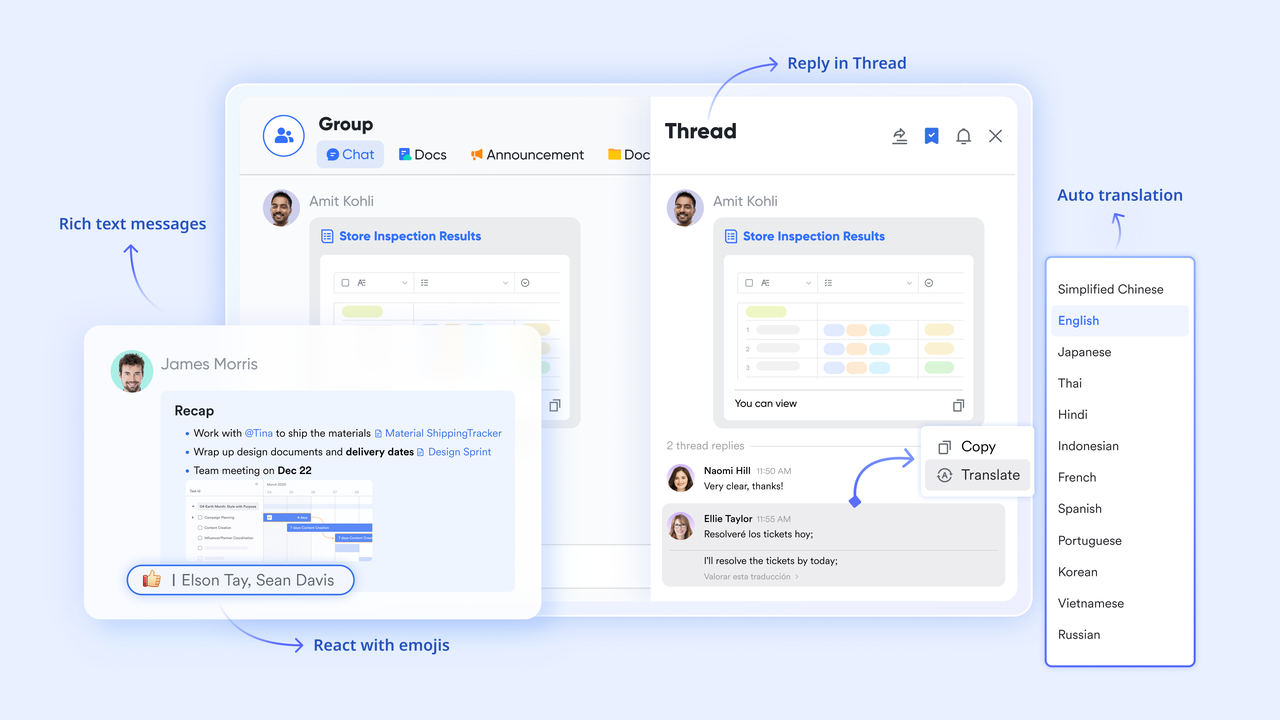
Documenting environmental audits and review meetings
Compliance often comes down to what was said and decided during briefings. records your weekly environmental review meetings and uses the "" function to create a searchable record of discussions. If a regulator asks why a certain mitigation step was changed, you can search the transcript to find the exact decision point. This function ensures that your construction project plan is fully transparent and documented for legal and safety audits.

:
- Starter plan: Free forever plan that includes 11 powerful tools for up to 20 users. It also includes 100GB of storage, 1000 automation runs, AI translation, and more.
- Pro plan: $12/user/month (billed annually) for up to 500 users. It includes everything in Starter plus group calling for up to 500 attendees, 15TB of storage, 50,000 automation runs, and more.
- Enterprise plan: for custom pricing. Supports unlimited users and includes even more automation runs and advanced security, compliance, and management features.
For small teams with simple communication needs

18 months message history
1000 Base automation runs/month
2000 rows per table in Base
Most POPULAR
For companies with comprehensive collaboration and management needs
Unlimited message history
500-participant video meetings
50k Base automation runs/month
20k rows per table in Base
For large companies with advanced security and organizational management needs
Get a personalized demo and pricing
Unlimited message history
500-participant video meetings
15 TB storage + 30 GB storage/user
500k Base automation runs/month
50k Base automation runs/month
Most POPULAR
For companies with comprehensive collaboration and management needs
Unlimited message history
500-participant video meetings
50k Base automation runs/month
20k rows per table in Base
Ready-to-use construction management templates
These construction management templates help teams plan, track, and manage projects more efficiently. Each template is designed to support real construction workflows, making it easier to stay organized and maintain control from planning through execution.
Action plan for construction template
The action plan for construction template provides a structured way to break down project goals into clear, actionable steps. Teams can define responsibilities, deadlines, and priorities for each task, ensuring nothing falls through the cracks. It’s especially useful for coordinating crews, managing site activities, and maintaining accountability throughout the project lifecycle.
Construction Gantt chart template
This construction Gantt chart template helps teams plan, schedule, and track project timelines with clarity. It visualizes tasks, durations, and dependencies across different construction phases, making it easier to spot overlaps and delays. Project managers can adjust timelines as work progresses and keep stakeholders aligned on milestones and delivery dates.
Construction contract template
This construction contract template offers a standardized framework for documenting , responsibilities, timelines, and payment terms. It helps reduce misunderstandings between clients, contractors, and subcontractors by clearly outlining expectations. Teams can customize sections to fit specific project requirements while maintaining consistency and professionalism across agreements.
Construction daily report template
The construction daily report template simplifies tracking on-site progress, labor, materials, and issues on a day-by-day basis. Site managers can record completed work, delays, safety observations, and weather conditions in one place. These reports create a reliable project record that supports transparency, communication, and better decision-making.
Contractor estimate template
This contractor estimate template helps contractors prepare clear and detailed cost estimates for construction projects. It organizes labor, materials, and other expenses into a structured format that’s easy to review and adjust. By presenting estimates transparently, teams can improve client trust and reduce back-and-forth during the bidding process.
Construction budget template
The construction budget template enables teams to plan, track, and control project costs from start to finish. It helps monitor planned versus actual spending across categories such as labor, materials, and equipment. With better cost visibility, project managers can identify overruns early and make informed adjustments to stay on budget.
Common mistakes in construction environmental management plans
In the high-stakes environment of a job site, even a minor oversight in your construction environmental management plan can lead to litigation, environmental damage, or a total project shutdown. Recognizing these pitfalls is the first step; having the right digital infrastructure to prevent them is the second.
Here are the most common mistakes in environmental management on construction sites, along with how Lark provides a structural solution for each.
The "Paper binder" syndrome
Many firms treat their construction environmental plan as a static document that sits in a dusty binder in the site office.
- The mistake: Field crews rarely walk back to the office to check a 200-page , leading to accidental breaches of "no-go" zones.
- How Lark helps: By hosting your construction ecological management plan in Lark Docs, it becomes a mobile-first resource. Workers can access specific mitigation protocols or maps directly from their phones at the exact point of work.
Ambiguous ownership of mitigation tasks
A common failure in environmental management in construction is assuming that "someone" is monitoring silt fences or noise monitors.
- The mistake: Without assigned names and deadlines, critical inspections are skipped, especially during busy project phases.
- How Lark helps: Using Lark Tasks, you can convert your construction site environmental management plan requirements into scheduled, recurring to-dos. You can assign a specific inspector to a "Weekly Water Quality Check" to ensure accountability through automated reminders and .
Lagging incident reporting
When a spill or environmental hazard occurs, the speed of communication determines the severity of the impact.
- The mistake: Relying on phone calls or fragmented emails often results in the environmental officer receiving information hours too late to contain the damage.
- How Lark helps: Lark Messenger allows you to create dedicated "topic groups" for environmental emergencies. Using the "quick reporting" function, a worker can snap a photo of a leak and tag the response team instantly, ensuring the construction environmental protection plan is activated in seconds, not hours.
Poor version control on site revisions
Construction sites are dynamic, and an environmental plan for construction site operations must evolve as the project progresses from excavation to topping out.
- The mistake: Subcontractors working off an outdated version of the construction and environmental management plan might use restricted chemicals or enter protected areas that were recently updated.
- How Lark helps: Lark Docs ensures "version truth." When the environmental lead updates a protocol, the change is instantly visible to everyone. You can also use the "history" function to see who has viewed the latest version, ensuring the entire crew is aligned.
Lack of data-driven auditing
Regulators don't just want to know you have a plan; they want proof that you've followed it.
- The mistake: Scrambling to find paper inspection logs or lost emails when an auditor arrives.
- How Lark helps: Lark Base acts as a for all your environmental and social management plans for construction data. Every inspection, sensor reading, and corrective action is logged into a searchable database. You can generate an audit-ready report in one click, demonstrating your commitment to compliance with the construction environment management plan.
Conclusion
A construction environmental management plan is most effective when it operates as a living framework rather than a one-time . From identifying site-specific risks and defining mitigation measures to assigning clear ownership and maintaining accurate records, every element of a CEMP contributes to protecting both the environment and the project's long-term success. By embedding environmental controls into daily workflows, teams can respond more quickly to incidents, maintain regulatory compliance, and build trust with surrounding communities.
This is where adds practical value—by connecting documentation, communication, task tracking, and approvals in one shared workspace. It helps ensure that environmental goals remain visible and actionable throughout every phase of construction. If you're ready to move beyond static plans and create a more transparent, accountable, and responsive approach to site management, explore how Lark can support your environmental strategy from planning through close-out.
Drive better project results with Lark today
FAQs
What is required in a CEMP?
A construction environmental management plan must include a site-specific , mitigation measures, a defined team structure, and an emergency response plan. Using Lark Base, firms can digitize these requirements into a live dashboard, ensuring risk assessments are updated in real time as site conditions change, rather than remaining static in a document.
What is the difference between CMP and CEMP?
A construction management plan (CMP) focuses on the broad logistics of the build, such as site access and timing. A construction environmental management plan (CEMP) is a specialized document focused exclusively on mitigating the project's impact on the natural and .
What are the 4 main types of construction?
The four main types are residential, institutional/commercial, specialized industrial, and infrastructure/heavy civil construction. Each requires a unique environmental plan for construction site management. Lark's flexible architecture allows project leads to build custom Lark Docs templates tailored to the specific regulatory needs of each construction type, from urban noise limits to rural habitat protection.
What are the 7 stages of construction?
The typical stages are: 1. Design, 2. Procurement, 3. Pre-construction, 4. Earthworks, 5. Structural, 6. Finishing, and 7. Close-out. The construction environmental plan must be implemented throughout all phases. With Lark Minutes, teams can record and transcribe environmental briefings at every stage, ensuring that "lessons learned" during earthworks are automatically documented and searchable for the close-out and commissioning phase.
Related reading