Project requirements are the crucial specifications that outline what a project aims to achieve and the functionalities it must deliver for success. They've become a foundational element in project management, determining not just the scope and goals, but also the alignment with stakeholder expectations. However, defining these requirements can be challenging. Poorly articulated or ambiguous requirements often lead to scope creep, miscommunication, and ultimately project failure.
In this article, I'll provide practical strategies and tools for effectively gathering and managing project requirements. This includes techniques to engage stakeholders and utilize resources like Lark for collaboration and documentation, ensuring clarity throughout the project lifecycle.
How to define project requirements?
Project requirements are essential specifications that clearly , functionalities, and expectations a project must fulfill to succeed. Effectively identifying and managing these requirements helps ensure that stakeholder needs are met, project objectives are aligned, and potential challenges are addressed proactively. By defining what must be accomplished, project requirements serve as a foundation for planning, execution, and evaluation, ultimately leading to a project's successful completion.
A project is initiated to solve a business need, and documenting requirements at is essential for clarity and alignment among stakeholders. Properly documenting requirements ensures clarity, prevents misunderstandings, and facilitates communication within the team. Requirements must be documented in language that is unambiguous, specific, and measurable, and project requirements must be SMART (Specific, Measurable, Achievable, Relevant, Time-bound).
Explore effective methods for managing requirements
Types of project requirements
Understanding the various types of project requirements is essential for . Each type serves a distinct purpose and contributes to defining the project's scope, ensuring that all stakeholder needs are addressed and the project's objectives are met. Below, we explore the primary types of project requirements in detail.
- Business requirements: Business requirements articulate the high-level needs of an organization that trigger the initiation of a project. Business requirements define what the organization aims to achieve or needs after project completion, describing the desired changes in capabilities. These often relate to overarching business goals, such as improving efficiency, increasing revenue, or enhancing .
- Stakeholder requirements: Stakeholders encompass anyone with a vested interest in the project's outcome, including customers, team members, suppliers, and management. Capturing diverse stakeholder needs is crucial because their input can significantly impact the project's direction and acceptance. Listening to and integrating these needs helps build consensus and ensures that the project meets expectations.
- Solution requirements: Solution requirements define the specific characteristics that the must possess to satisfy both business and stakeholder needs. Solution requirements are directly derived from business and stakeholder requirements, highlighting the importance of aligning project goals with stakeholder needs and organizational objectives.
- Functional requirements: Functional requirements detail specific features or functions that the product or service must deliver. They describe the behaviors, tasks, and operations that the system should perform, serving as a blueprint for how the product will operate in practice.
- Non-functional requirements: Non-functional requirements focus on the performance attributes of the system, including usability, reliability, and security. Non-functional requirements vary by type of project and industry, typically including performance, usability, reliability, and security. These requirements are equally important as they help set the standards for product quality and user experience, ultimately influencing the project's success.
- Transition requirements: Transition requirements outline the temporary capabilities necessary for moving from the existing state to the desired future state. This includes elements such as data migration, training for users, and . Addressing these requirements ensures seamless project rollout and operational continuity.
Other requirement types
- Audit requirements: These encompass compliance-related needs that ensure accountability and traceability throughout the project lifecycle.
- Security requirements: Specifications that ensure the protection of data and resources, safeguarding against potential threats.
- Information movement requirements: Detailed guidelines regarding how data should flow between systems, ensuring efficient communication and processing.
- Reporting requirements: Expectations concerning the format, frequency, and content of reports generated throughout projects.
- Information integrity requirements: Standards and guidelines tailored to guarantee the validity and accuracy of data handled by the system.
Mapping requirements to specific business processes is important to ensure clarity, traceability, and alignment of solutions with actual business activities.
Understanding and clearly defining these types of project requirements is fundamental to project success. They provide a comprehensive framework that guides teams in delivering outcomes aligned with and stakeholder expectations, ultimately enhancing project quality and effectiveness.
Curious about how to collect different requirements?
Process of gathering project requirements effectively
To ensure the success of any project, gathering project requirements effectively is critical. The project requirements process is a structured series of steps designed to identify and gather requirements systematically. The requirements management process, which includes activities like stakeholder interviews, documentation, and team reviews, is essential for aligning requirements with project objectives. Systematically identifying project requirements through techniques such as , team discussions, and thorough review processes is crucial for project success. By following a structured approach to requirements gathering, project teams can minimize misunderstandings and pave the way for smoother project execution.
Planning phase
The first step is project initiation, which includes defining the , purpose, and securing authorization through a project charter. During project initiation, the requirements management process begins and involves reviewing technical documents and the company strategy to ensure alignment with organizational goals. The project requirements management plan defines how requirements will be analyzed, documented, and managed, as well as how the project will be executed, monitored, controlled, and closed.
Engaging stakeholders
Effective engagement with stakeholders is crucial for successful requirements gathering. Identifying all stakeholders involved and maintaining a stakeholder register—a list of all individuals invested in the project and their expectations—is essential. Stakeholders must be involved in the project from the outset, and project stakeholders must understand and be aligned with the boundaries of the project effort before the first requirement statement is ever written. The Project Management Institute recognizes inaccurate requirements gathering as a leading cause of project failure and advocates early and thorough to define clear requirements and avoid costly changes later.
Collecting and gathering requirements
During this phase, it is essential to gather input from various stakeholders systematically. Using requirements gathering tools and techniques helps project teams gather requirements efficiently and collaboratively. This can include soliciting feedback through surveys, interviews, or focus groups.
Common gathering techniques include brainstorming (bringing stakeholders together to discuss problems and solutions), interviews (one-to-one engagement with stakeholders), questionnaires (collecting feedback from large or anonymous groups), prototypes (providing working models for testing and feedback), workshops (mapping the 'As-Is' state with key stakeholders), the Delphi Technique (building consensus through anonymous input), context diagrams (outlining user interactions and system responses), and observing end-users in their daily tasks to gather technical requirements.
Identifying and writing project requirements
Identifying and writing project requirements stands as both an art and a science, and a foundational step that's challenging yet rewarding in the project management journey. This phase brings together the project team, team members, and key stakeholders in a collaborative dance that's methodical but energizing, ensuring that every need and expectation finds its place from the very beginning.
Documenting project requirements
Requirements must be documented in language that is unambiguous, specific, and measurable to ensure all stakeholders have a shared understanding. The project requirements document consolidates all final requirements in a clear, concise manner and serves as a great option for the project. Quality requirements should be clearly defined and articulated with measurable standards to support project success and meet stakeholder expectations. The documentation of project requirements forms an essential baseline upon which the development of the , schedule, and ultimate cost is founded; poor documentation can lead to project failure.
Managing project requirements
The final step involves effectively managing project requirements throughout the by implementing a structured requirements management process. Managing requirements includes developing a project requirements management plan, which defines how the project is executed, monitored, controlled, and closed. It is essential to maintain flexibility in documentation to accommodate changes as the project evolves, but changes to requirements can lead to cost escalation and project delays, and extensive rework may be needed if the project veers too far from stakeholder expectations. Regular reviews and updates of the requirements should be conducted, ensuring they align with any shifts in project scope or stakeholder needs.
By following these steps, project teams can enhance their ability to gather and manage requirements effectively, leading to clearer objectives and a higher likelihood of project success. Each phase plays an important role in laying a strong foundation for the project's future development and .
Gather and manage project requirements effectively
Techniques for requirements gathering
is a fundamental aspect of successful project management. Using a combination of requirements gathering techniques and requirements gathering tools is essential to efficiently gather requirements and ensure all stakeholder needs are captured. There are several techniques available for collecting project requirements, each suited to different contexts and stakeholder needs.
Interviews: One-on-one discussions are a commonly used technique for gathering insights. They allow deep dives into specific stakeholder needs, encouraging open dialogue and nuanced understanding. However, the downside is that interviews can be time-consuming and may not capture the broader opinion spectrum if conducted with only a few individuals.
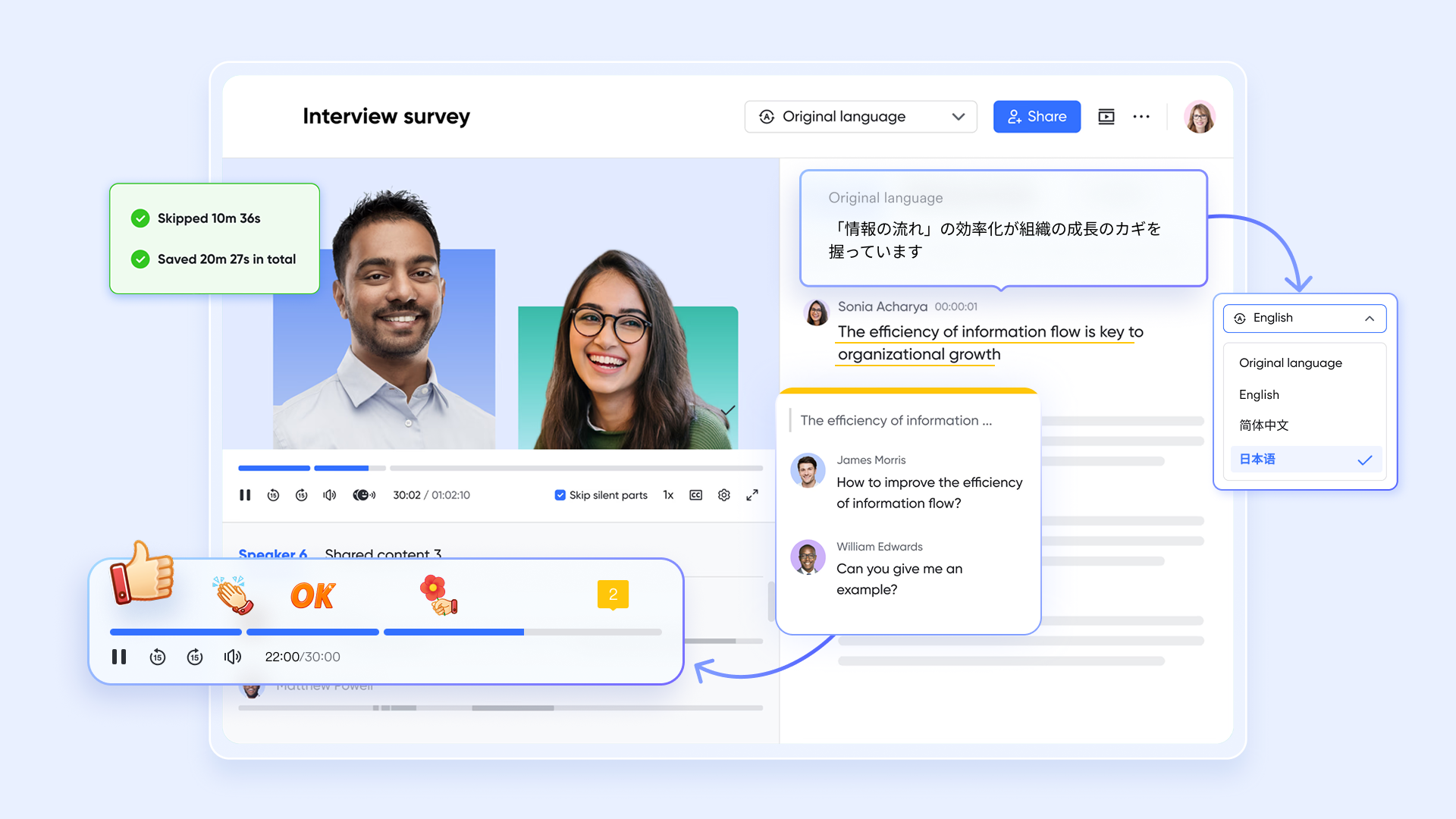
Surveys and questionnaires: These tools are effective for gathering input from a larger audience. When designing surveys, it is crucial to craft clear and concise questions that accurately capture relevant data. Multiple-choice and open-ended questions can both be beneficial. While surveys can reach many stakeholders, they may lack the depth of understanding achieved through direct interaction. They are particularly useful when there is a need to quantify stakeholder opinions or gather feedback on specific aspects of a project.
Focus groups: Group discussions, or focus groups, provide a platform for diverse stakeholder opinions to emerge. This technique encourages brainstorming and , allowing participants to build on each other's ideas. It can uncover insights that might not surface in individual interviews. However, managing dynamics within the group can be challenging, as certain voices may dominate the conversation while others go unheard.
Joint Application Design (JAD) sessions: JAD sessions are highly structured meetings that bring together stakeholders and project teams to collaboratively define requirements. This technique fosters and ensures alignment among diverse parties. While JAD sessions can be highly productive, they require careful facilitation to keep discussions focused and on track.
By understanding and applying these requirements gathering techniques thoughtfully and leveraging requirements gathering tools, project teams can enhance their efficiency in collecting project requirements. This leads to projects that successfully meet the needs of stakeholders and achieve desired outcomes.
Boosting project requirements management effectively with Lark
provides a suite of powerful tools that enhance project management, particularly in the context of project requirements management, serving well as a .
Project planning and scope management
offers multiple views for visualizing project data, including grid, Kanban, and Gantt chart formats, and the customizable fields in Lark Base enable teams to tailor their views based on specific project metrics, ensuring clarity and focus. Its flexibility allows project managers to define project scope effectively, assign tasks to team members, and visualize timelines and plan projects before the first step. 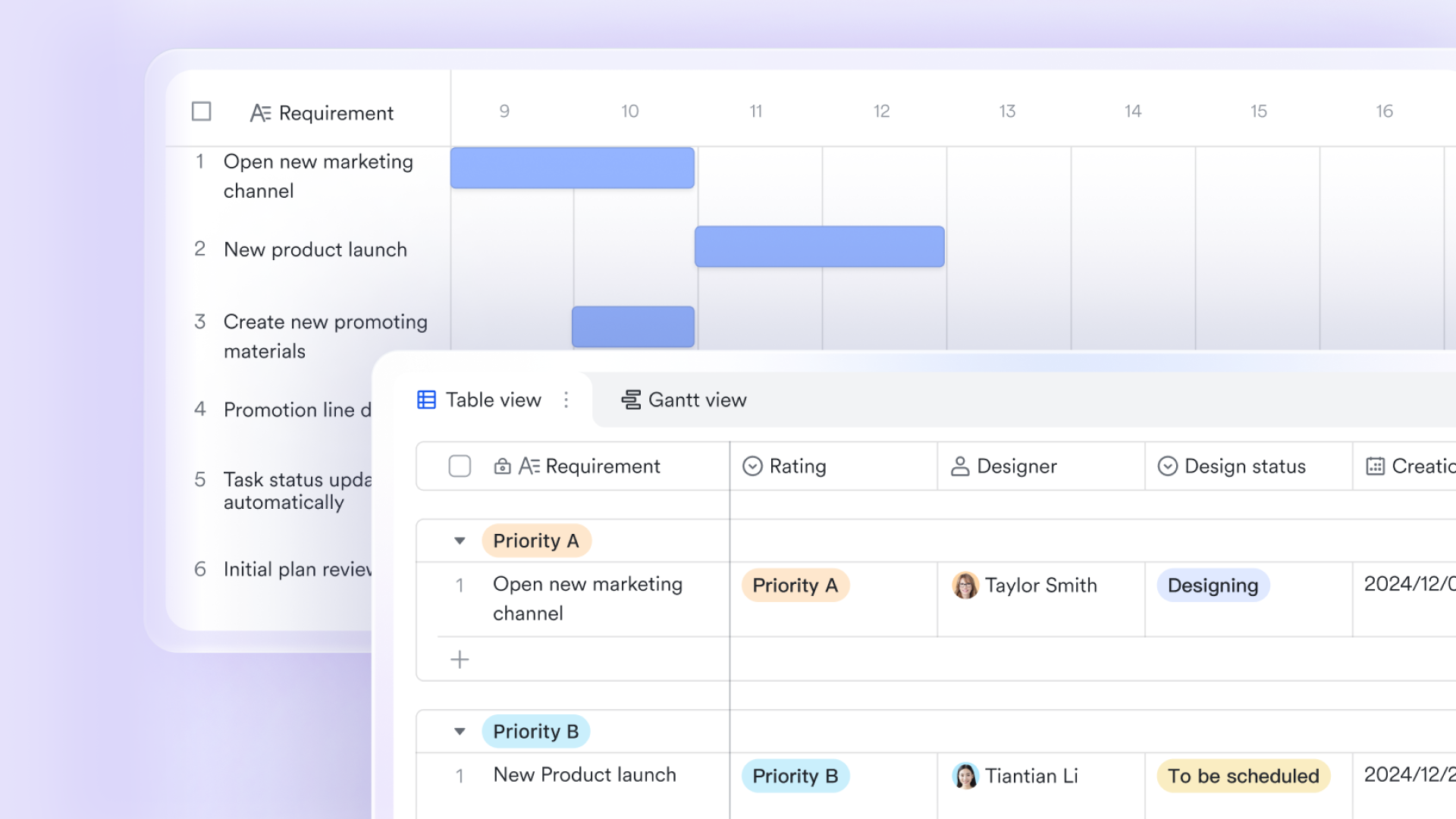
Stakeholder engagement and management
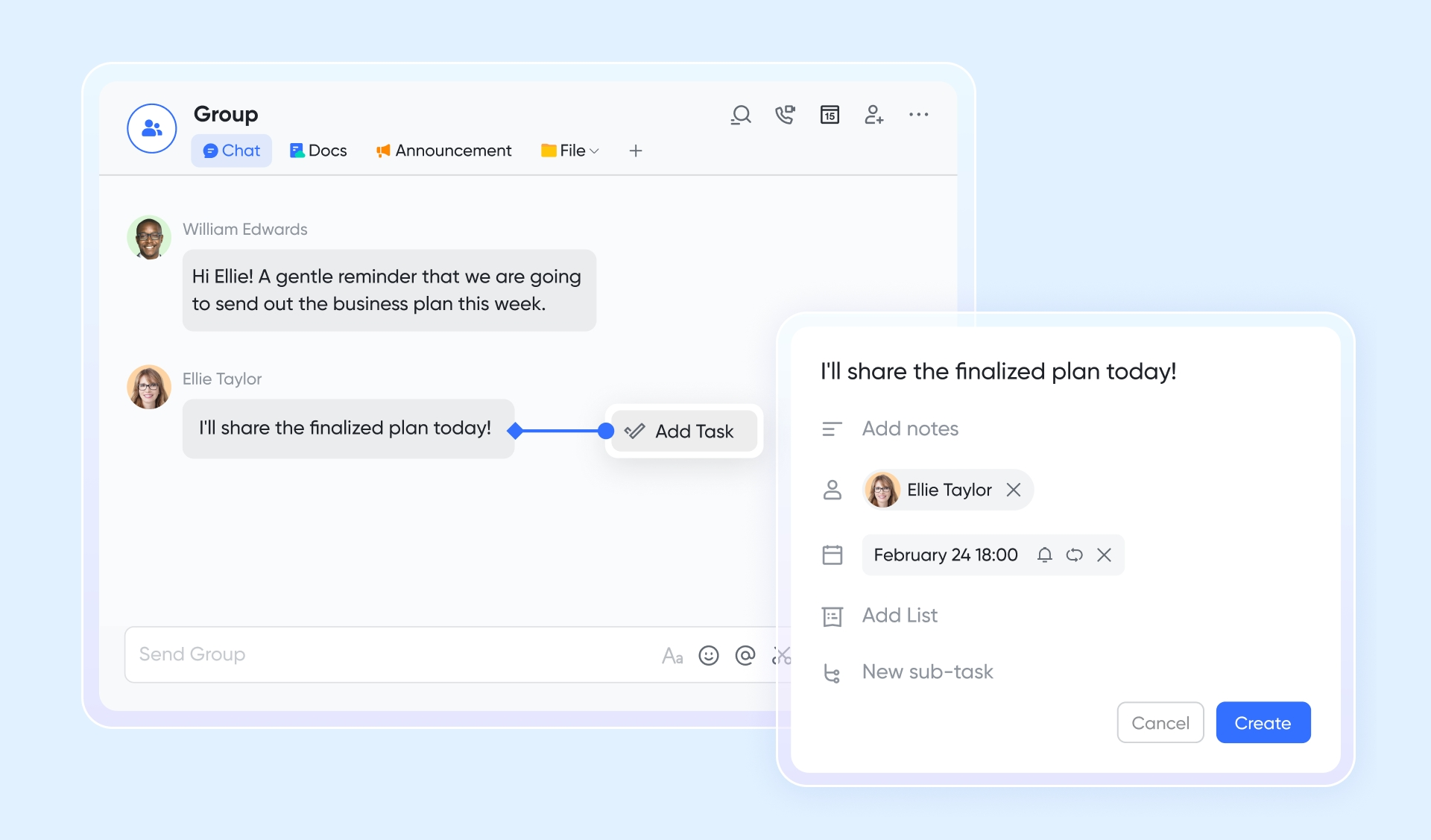
Communication is seamless within , which supports instant messaging and real-time discussions with every stakeholder. Stakeholders can engage in continuous dialogue, share insights, and ask questions easily. facilitates more formal discussions through virtual meetings, allowing for screen sharing and presentations via Magic Share, which enhances engagement and ensures all stakeholders are on the same page; can generate insights automatically with one simple click, simplifying discussions concerning requirements. 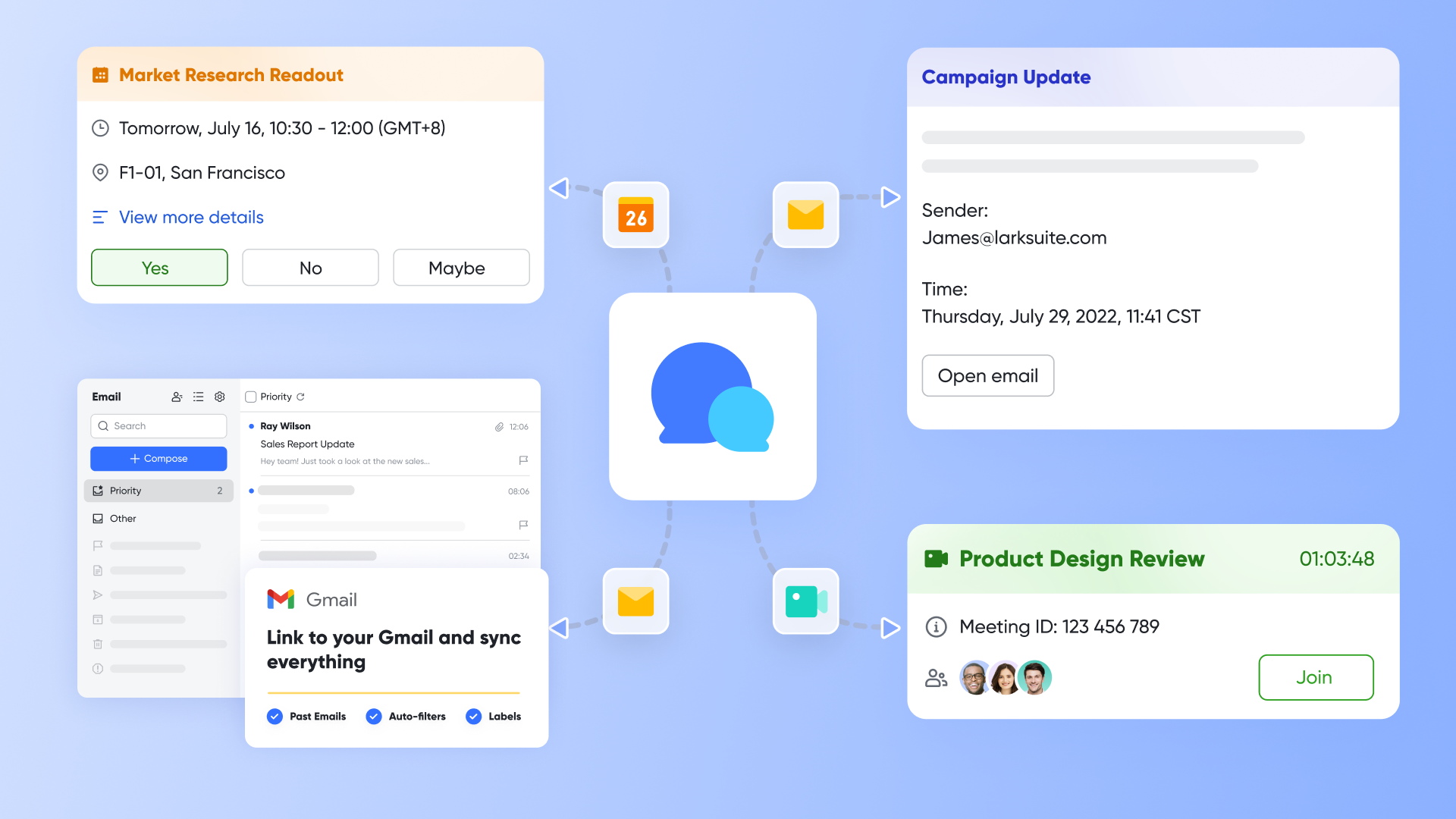
Unified workplace for collecting and gathering requirements
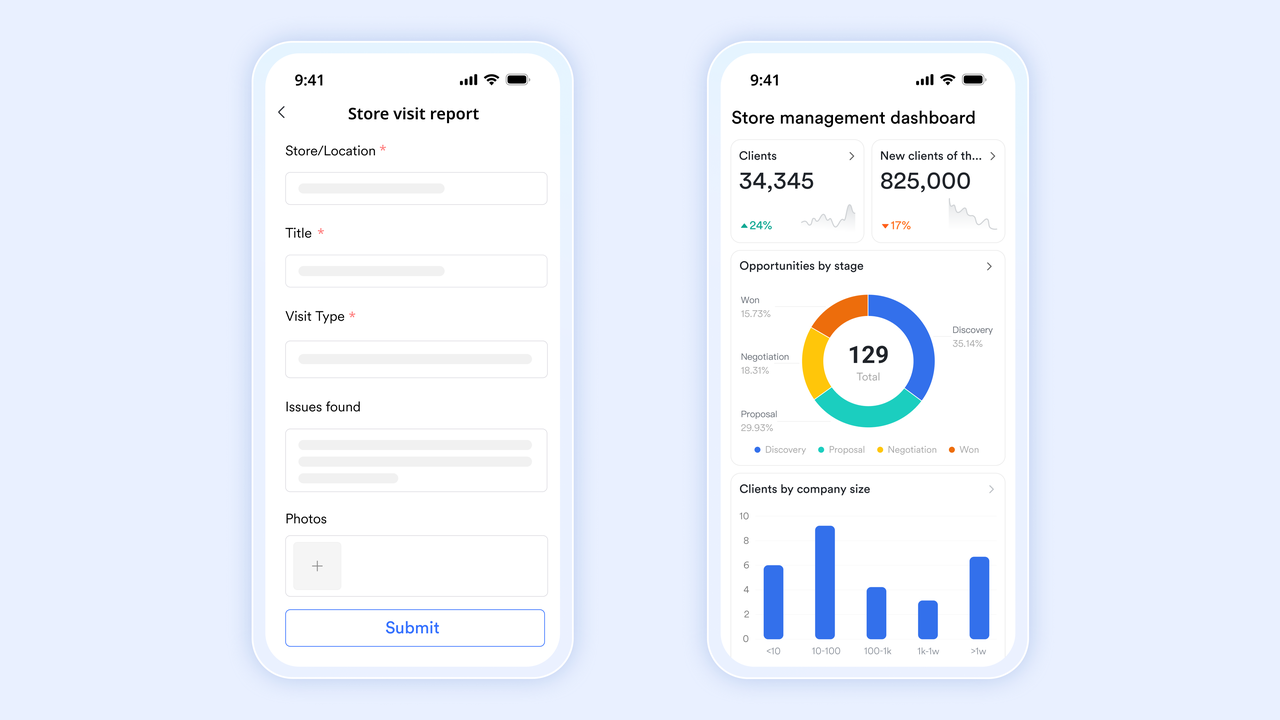
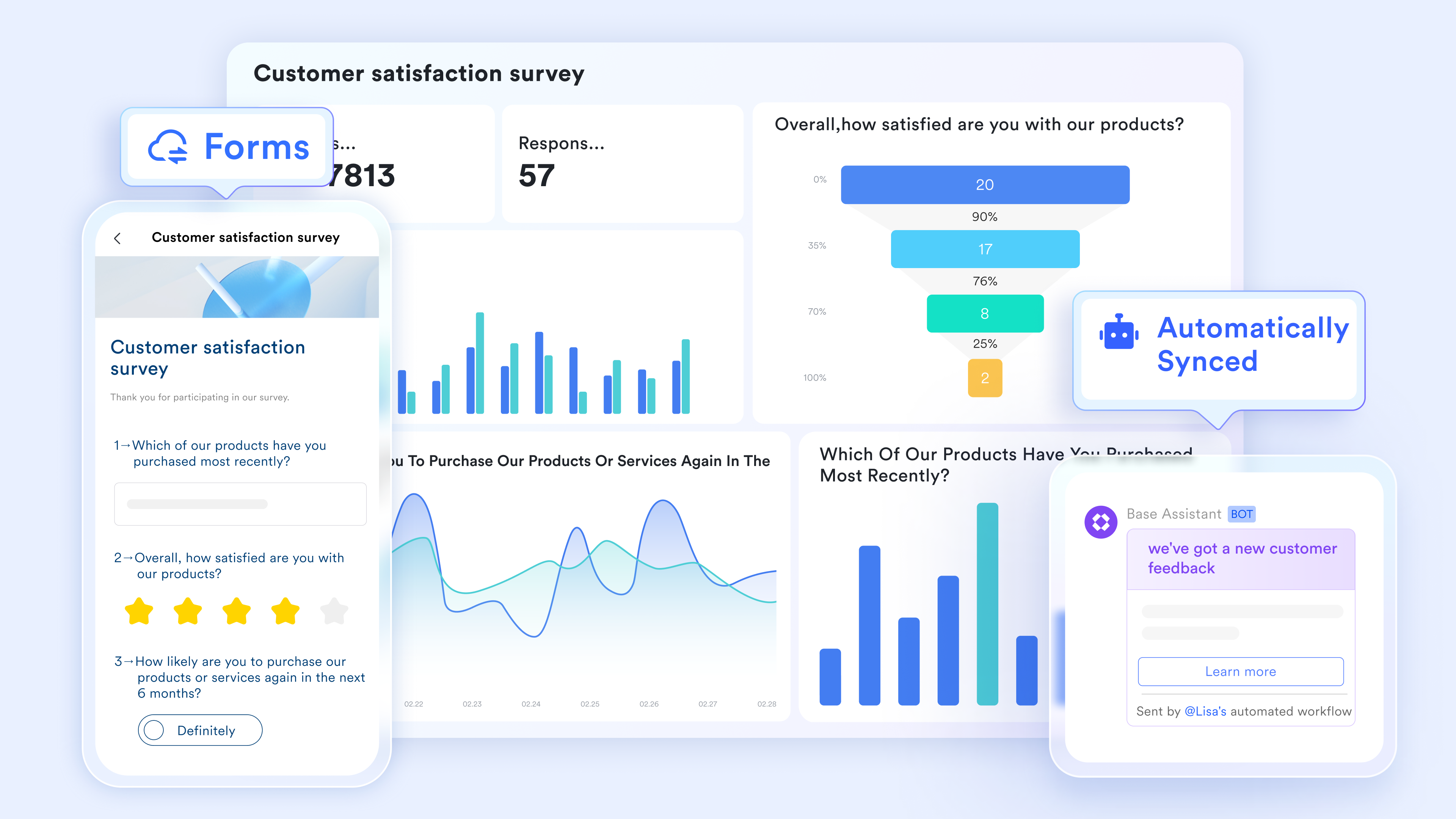
Users can create customized or Lark Base's Form view to gather various requirements directly from stakeholders. This functionality allows teams to collect feedback, specifications, and other inputs efficiently: All submitted requirements can be synchronized into Lark Base, providing a centralized repository for tracking and , thus avoiding dispersion and ensuring comprehensive oversight.
Centralized documentation for project management
allows teams to collaboratively create in real-time and manage , with features like the @mention function and permissions management to control access. Version history enables tracking changes over time. Additionally, documents can seamlessly embed various formats of information, including tables from Lark Base and Sheets, or visual MindNotes, which help in accurately describing and detailing project requirements. 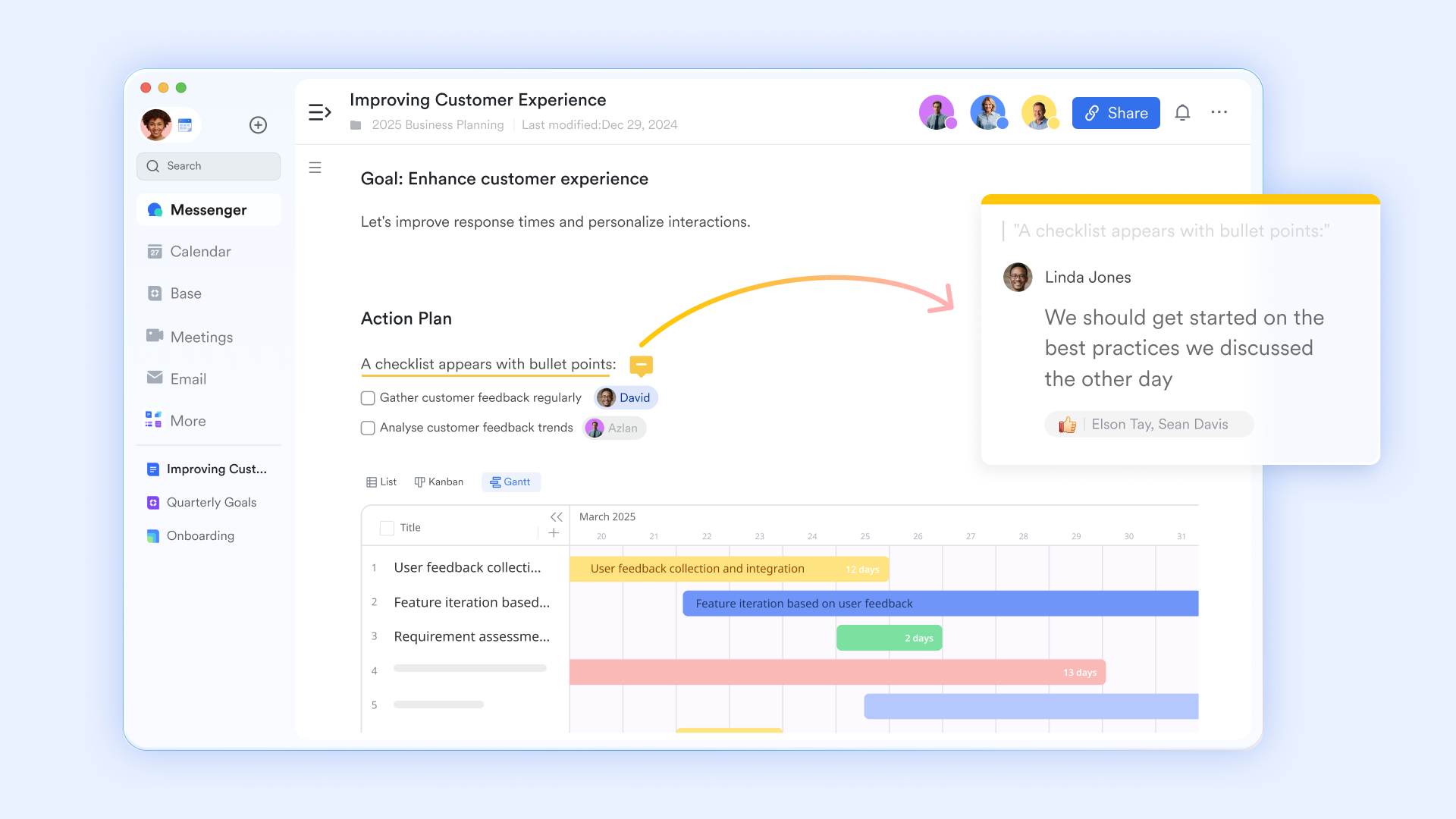
Requirement solution and management with efficiency
Lark Base's enable teams to streamline processes related to requirement tracking and issue resolution. This feature allows for automatic notifications and task assignments based on specific triggers, reducing manual overhead. In addition, Lark Tasks supports effective task allocation for requirement implementation, presenting tasks in both Gantt and Kanban views to clearly and progress, improving accountability and performance tracking. 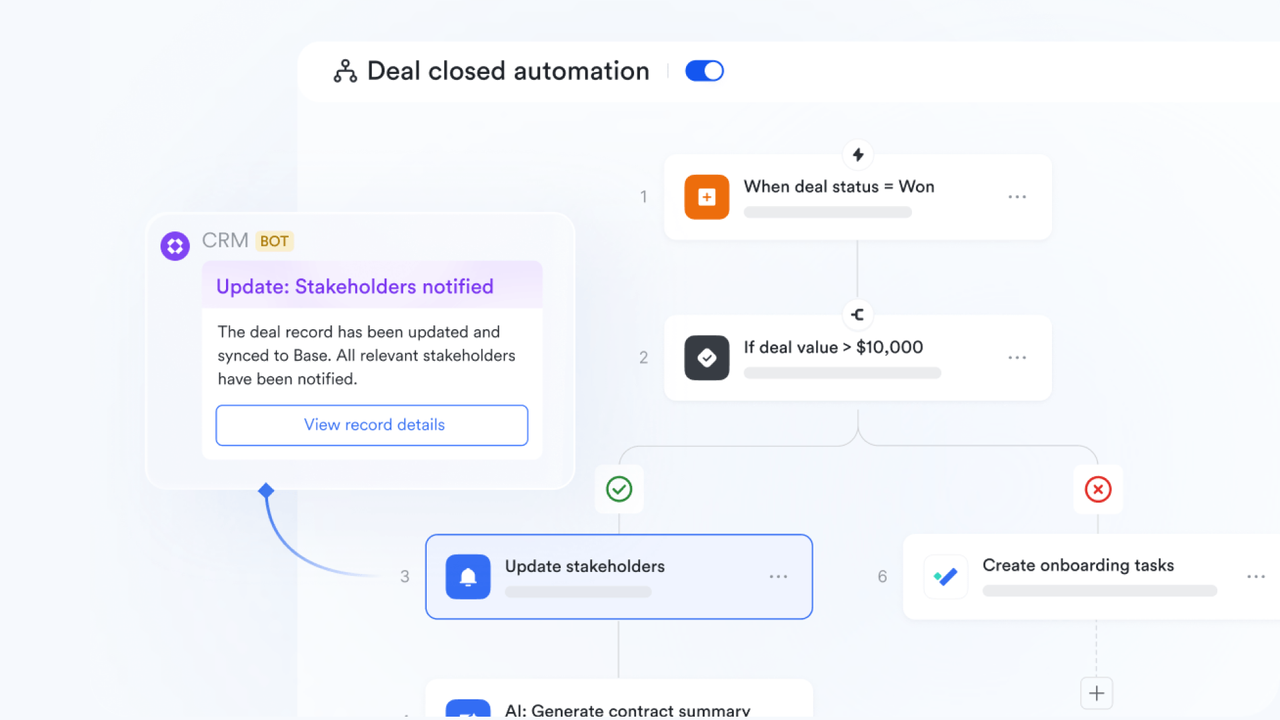
By leveraging these features, Lark provides a holistic platform for managing project requirements efficiently. From planning and engaging stakeholders to documenting and automating processes, Lark ensures that teams are equipped to handle every aspect of project management seamlessly, ultimately leading to successful project outcomes.
For small teams with simple communication needs

18 months message history
1000 Base automation runs/month
2000 rows per table in Base
Most POPULAR
For companies with comprehensive collaboration and management needs
Unlimited message history
500-participant video meetings
50k Base automation runs/month
20k rows per table in Base
For large companies with advanced security and organizational management needs
Get a personalized demo and pricing
Unlimited message history
500-participant video meetings
15 TB storage + 30 GB storage/user
500k Base automation runs/month
50k Base automation runs/month
Most POPULAR
For companies with comprehensive collaboration and management needs
Unlimited message history
500-participant video meetings
50k Base automation runs/month
20k rows per table in Base
Project requirements templates and frameworks
Having clear and structured is essential for ensuring consistency and accuracy in capturing what a project needs to deliver. Creating a comprehensive project requirements document (PRD) during the early stages of a project is crucial, as it consolidates and communicates all requirements clearly and accessibly to align team members and stakeholders throughout the project lifecycle. The documentation of project requirements forms an essential baseline upon which the development of the project scope, schedule, and ultimate cost is founded.
: The BRD outlines the high-level business needs that drive the project. This document details what the project is expected to deliver from a business perspective, aligning with organizational goals and stakeholder expectations.
Functional requirements document (FRD): The FRD specifies the functionalities that the system or product must provide. It serves as a comprehensive guide for developers, defining what users require the software or system to do.
User story templates: User stories are brief, clear descriptions of a feature from the perspective of the end user. Using templates for user stories helps teams understand user requirements and , aligning them with user needs.
: This type of document outlines the specific technical requirements needed for developer projects, such as Java project requirements, including coding standards, frameworks, libraries, and any specific environmental conditions necessary for successful implementation.
Construction requirements document: The construction requirements document details the needs specific to , including compliance with safety regulations, material specifications, project timelines, stakeholder roles, and construction project manager requirements.
In addition to templates, various frameworks can guide the requirements gathering process:
Agile methodology approach to requirements: prioritize iterative development and consistent collaboration with stakeholders. In agile projects, requirements are gathered incrementally through short cycles called sprints, with an emphasis on iterative requirements gathering and continuous stakeholder feedback. By encouraging regular input from stakeholders, Agile promotes an environment where requirements can evolve, ensuring that the final product continues to align with user expectations.
The for prioritizing requirements: SCRUM is a specific Agile methodology that organizes work into time-boxed iterations known as sprints to effectively prioritize requirements based on stakeholder value. It employs a product backlog, which is a dynamic list of requirements that the team continuously revisits and reprioritizes as the project progresses.
Waterfall methodology for collecting requirements: The follows a linear and sequential approach for gathering requirements, emphasizing a structured progression through well-defined phases. In this model, all stakeholder requirements are typically collected at the project's outset, which is critical for ensuring thorough documentation during the early stages.
Common challenges and best practices in requirements gathering
Despite having structured templates and frameworks, several common challenges can arise during the requirements gathering process. Inaccurate requirements gathering is a leading cause of project failure, as poor front-end work and inadequate stakeholder elicitation can result in missed needs that surface later as costly changes or overlooked necessities.
- Miscommunication: Misunderstandings between stakeholders and project teams can lead to incomplete or incorrect requirements. To mitigate this risk, it is vital to maintain regular communication and to encourage clarifying questions during discussions. I find that actively summarizing points of agreement at the end of meetings can help ensure all parties are aligned, reducing the chances of misinterpretation.
- Stakeholder disengagement: Stakeholders who are not adequately involved or who express limited interest can lead to critical insights being overlooked. Engaging stakeholders through interactive techniques, such as workshops and feedback sessions, can promote active participation and encourage deeper input. I recommend employing visual aids and to make these sessions more engaging and productive.
To overcome these challenges, I recommend implementing the following strategies:
- Utilizing conflict resolution techniques: When conflicts arise regarding requirements, employing active listening and mediation can help reconcile differing opinions and foster a collaborative environment. It is important to address disagreements early on and seek common ground to ensure alignment moving forward.
- Encouraging participatory engagement: Creating opportunities for stakeholders to contribute their insights ensures that a variety of perspectives are considered. This not only enriches the requirements but also builds a sense of ownership among stakeholders, enhancing their commitment to the project's success.
Flexibility and adaptability in of requirements are crucial throughout the project lifecycle. As new information becomes available or stakeholder needs evolve, having a system in place to quickly adjust requirements will enhance the project's chances of success. Embracing a dynamic approach allows project teams to respond effectively to changes while maintaining alignment with overall project goals, ultimately leading to a more successful outcome.
Embrace smooth requirement management easily
Conclusion
Effective project requirements are crucial for achieving project goals while minimizing risks associated with miscommunication and oversight. By implementing the best practices discussed, such as fostering stakeholder engagement and maintaining flexibility, project managers can significantly enhance their success. I encourage you to share your own experiences and insights regarding project requirements in the comments below, as collective sharing fosters community learning and improvement.
Additionally, consider utilizing like , which combines various collaboration features such as document sharing, scheduling, and communication in one platform. Lark can streamline your requirements gathering process, making it more efficient and collaborative, ultimately contributing to better project outcomes.
FAQs
What are project requirements examples?
Project requirements are specific conditions or capabilities that a project must satisfy. Here are some examples across different categories:
- Functional requirements: "The platform must allow users to submit feedback through an online form."
- Non-functional requirements: "The system must be accessible on mobile devices and compliant with WCAG 2.1 standards."
- Business requirements: "The application must reduce customer service response time by 30% after implementation."
- User requirements: "Users should be able to customize their dashboard to display relevant metrics."
These examples reflect the various facets of project requirements tailored to guide development effectively.
What are the types of requirements?
Project requirements can be categorized into several types:
- Business requirements: High-level needs that outline project goals.
- Functional requirements: Detailed features and functions the project must provide, explaining how specific tasks should be performed.
- Non-functional requirements: Criteria that define how a system performs its functions, such as performance metrics and usability.
- User requirements: Needs expressed from the users' perspective, detailing how they will interact with the system.
What is the difference between project requirements and deliverables?
Project requirements refer to the specifications and features that a project must fulfill to meet stakeholder expectations. In contrast, deliverables are the tangible outcomes or products resulting from the project's completion. For example, if a requirement states that an application must be user-friendly, a deliverable could be the completed application that has been tested and deemed user-friendly.
How can Lark help with gathering project requirements?
Lark enhances the requirements gathering process by providing an integrated platform for collaboration. Its features, such as document sharing, real-time messaging, and video conferencing, facilitate continuous communication among project stakeholders. This makes it easier to capture and address requirements efficiently, ensuring that all voices are heard and included in the project planning.
Related reading