














What Is Scope in Project Management: Practices and Tool

Ryan Tanner
Product Marketing Specialist
Sep 8, 2026
Ryan Tanner
Sep 8, 2026

16 min read


Every successful project begins with a clear understanding of what needs to be done, and what doesn't. That's where scope comes in. But what is scope in project management, and why does it matter so much? Scope defines the boundaries, deliverables, and expectations that keep projects on track. Without it, even well-planned initiatives can drift off course, wasting time and resources. In this guide, we'll break down what project scope means, why it's crucial for success, and how Lark helps teams plan, track, and control project boundaries more effectively.

What is the scope of project management?
In simple terms, project scope defines the complete work required to deliver a successful outcome. It sets clear boundaries by identifying what's included and excluded from the project. So, what is the scope in project management? It's the roadmap that outlines objectives, deliverables, timelines, tasks, and resources needed to achieve results. A well-defined scope prevents confusion, ensures accountability, and helps teams stay aligned on goals.
A scope statement in project management documents these details formally, serving as a reference point throughout the project lifecycle. It defines the "what," "how," and "when" of project execution. In short, the scope in project management ensures that every stakeholder shares the same understanding of the project's purpose, priorities, and limitations, keeping work focused and measurable from start to finish.
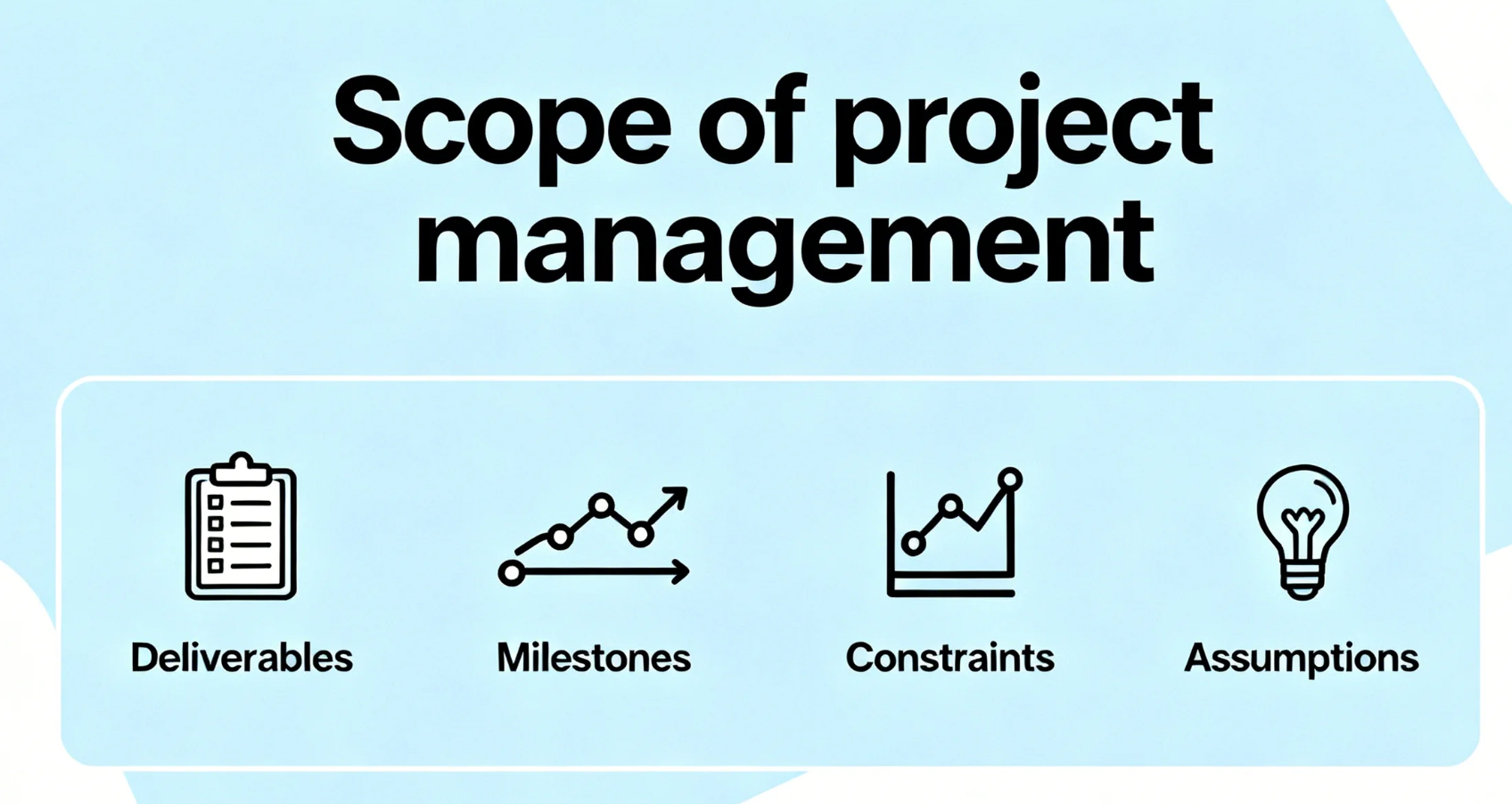
Image source: unsplash.com
Components of project scope
To truly understand what project scope is in project management, it's important to break it down into its core components. These elements define the structure, purpose, and limits of a project, ensuring every stakeholder shares the same understanding of what will and won't be delivered.
Objectives:
These are the specific goals your project aims to achieve. Objectives give direction and help measure success, keeping the team aligned on the desired outcomes. A well-written objective transforms broad ideas into clear, actionable targets everyone can work toward.
Deliverables:
Deliverables are the tangible results or outputs produced by the project, such as reports, designs, or completed features. Each deliverable represents progress toward achieving objectives. Defining them upfront ensures accountability and provides clear benchmarks for evaluating completion.
Tasks:
Tasks are the individual activities required to produce each deliverable. They translate high-level plans into manageable actions. When organized effectively, tasks create structure, making it easier to track progress, assign responsibilities, and maintain scope control.
Deadlines & milestones:
Deadlines set time boundaries for each task, while milestones mark key points of achievement along the project timeline. Together, they help teams measure progress and ensure deliverables are completed on schedule, keeping projects moving steadily toward completion.
Resources:
Resources include the people, project management tools, and budgets needed to execute the project successfully. Allocating resources effectively prevents overloads and ensures the right expertise and equipment are available at each phase of the project.
Constraints:
Constraints are the limits within which the project must operate, such as time, cost, or quality restrictions. Recognizing these early helps teams make realistic plans and prioritize tasks without exceeding capacity or expectations.
Exclusions:
Exclusions clarify what's not included in the project's scope. This prevents misunderstandings and scope creep by explicitly stating which tasks, features, or deliverables fall outside the agreed boundaries. In short, understanding each of these elements helps teams define what the scope in project management truly entails, setting the foundation for accurate planning, efficient execution, and controlled delivery.
Note the silent project killer: Scope creep
Even the most carefully planned projects can fall victim to scope creep, when new tasks, features, or requirements slip in without proper evaluation or approval. So, what is scope creep in project management? It's the gradual expansion of a project's scope beyond its original objectives, often without corresponding changes to time, budget, or resources.
This usually happens when stakeholder requests aren't managed systematically, or when teams make informal adjustments to "just add a little more." While intentions are good, scope change in project management that isn't controlled can lead to missed deadlines, cost overruns, and team burnout.
Understanding what scope creep in project management looks like and spotting it early is essential for maintaining control. Successful project managers rely on clear documentation, approval workflows, and visibility tools to prevent small changes from snowballing into major setbacks.
Further the process: Manage scope changes effectively
In any project, change is inevitable, but how it's handled determines success or chaos. So, what is a scope change in project management? It's the process of modifying a project's defined scope, whether by adding new tasks, adjusting deliverables, or revising timelines. Managing these changes systematically helps teams stay aligned, avoid scope creep, and maintain project control.
- Identify and document requested change: When a new idea, requirement, or feature arises, capture it immediately. Documenting every change request ensures that no adjustments are made informally or forgotten later. This creates transparency and provides a clear record for future decisions.
- Evaluate its impact on time, cost, and quality: Each proposed change should be assessed carefully. Teams must analyze how the modification affects schedules, budgets, and deliverable quality before proceeding. This step prevents overcommitment and helps prioritize high-impact updates only.
- Get stakeholder approval before implementation: No change should move forward without official approval. Sharing impact assessments with stakeholders ensures that decision-makers understand trade-offs and agree on the next steps, keeping accountability and communication open.
- Update project records accordingly: Once approved, the scope baseline, timelines, and task lists should be updated across all project documentation. Keeping records synchronized prevents confusion and ensures that every team member is working from the latest version of the project plan.
By managing scope changes in this structured way, teams maintain control, protect their timelines, and preserve the integrity of what scope in project management is the foundation that keeps projects stable and successful.
Action time: Use Lark to simplify project scope management
Managing project scope isn't just about defining what needs to be done: it's about maintaining visibility and control as work progresses. Lark brings structure and clarity to every stage of scope management, allowing teams to plan, execute, and monitor deliverables within one connected workspace. Here's how each Lark feature plays a role in simplifying scope management:
Lark Base & built-in tables: Structure and visibility for complex projects
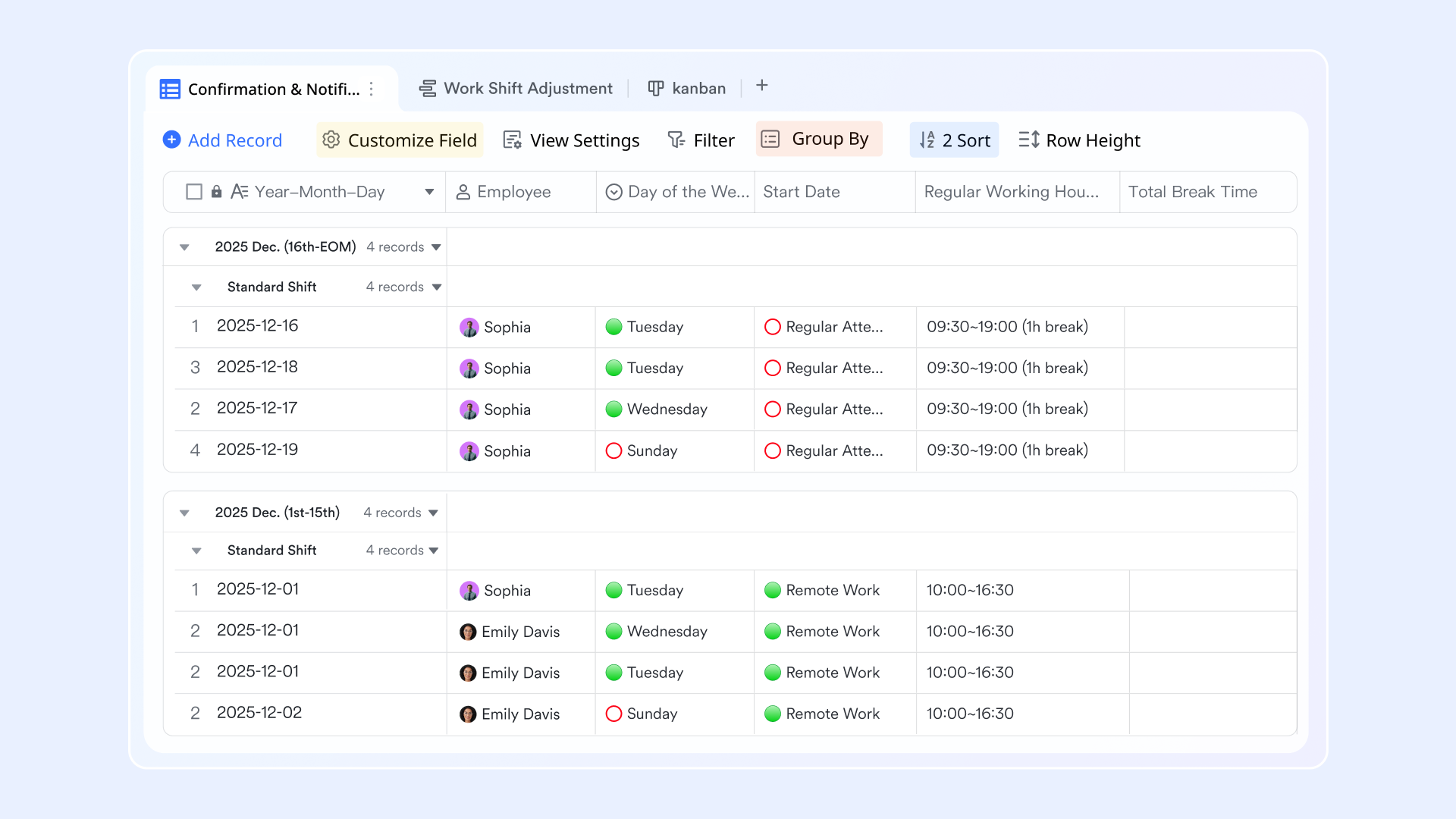
Lark Base serves as the foundation for defining, tracking, and analyzing project scope. Teams can create multiple tables to organize information by scope components, such as deliverables, milestones, resources, or departments. Each table can represent a specific dimension of the project, such as:
- Deliverables table: lists each output, assigned owner, and delivery status.
- Task breakdown table: tracks dependencies, due dates, and responsible teams.
- Budget table: logs resource allocation and cost updates.
This multi-table approach helps prevent confusion and ensures that everyone has a single source of truth for project data. Because everything is linked, updates made in one table automatically reflect related views, reducing errors and improving accuracy.
Dashboards in Lark Base: Clear and powerful monitor tools
Dashboards in Lark Base offer powerful visibility and control that help put project scope management into practice. With customizable progress charts, you can monitor goal completion and track how individual tasks or milestones align with the broader scope and deadlines. By drawing data from multiple sources and showing resource allocation and key milestones via metrics blocks, area charts, and ranking blocks, you get a clear view of what's in scope, what's at risk, and where to focus next.

Automations in Lark Base: Streamline daily routine & automatic reminder
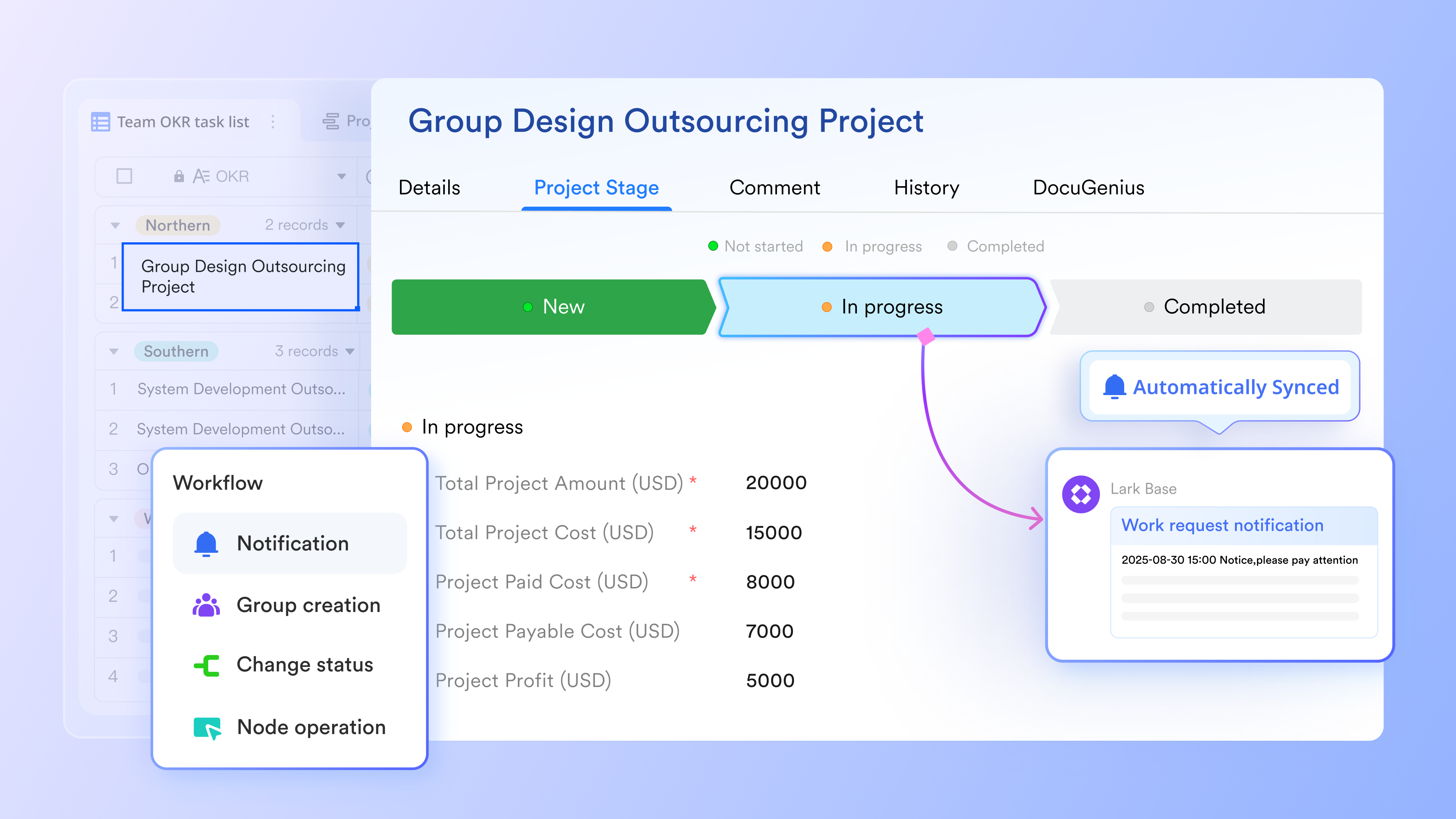
Lark Base automations help keep project scope under control by automatically sending dashboards and reports to stakeholders at scheduled times or when key milestones are reached. With the configuration of the rules, automated reminders ensure team members stay on top of updates, task deadlines, and resource changes. Workflows can move tasks through stages or create follow-ups automatically, reducing manual hand-offs and preventing scope creep. Role-based visibility lets managers see the full project picture while team members focus on their relevant tasks, keeping responsibilities clear and aligned.
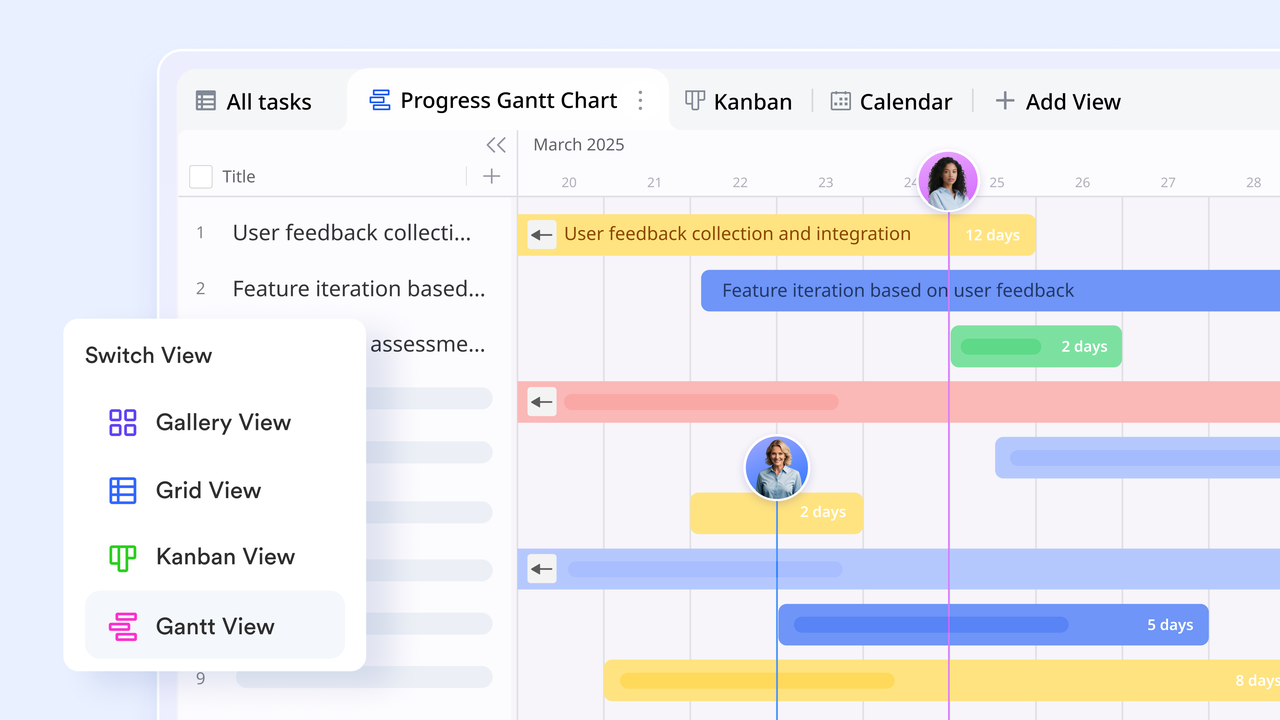
Multiple views in Lark Base: Visualize and adapt project scope dynamically
- Kanban view: Ideal for tracking progress across stages (e.g., "To Do," "In Progress," "Completed"). This visual layout helps teams instantly see which deliverables are moving and which are stuck.
- Gantt view: Perfect for understanding timelines, dependencies, and overlaps. It helps project managers adjust task durations, monitor critical paths, and ensure that scope elements stay aligned with deadlines.
- Grid view: Displays data in rows and columns, making it ideal for editing and reviewing large tables of records quickly and clearly in Lark Base.
- Gallery view: Presents each record as a card or tile with visuals, which is great for browsing image-rich items or summarizing records when layout and snapshot content matter.
Switching between these views enables teams to analyze the same project scope from different perspectives, ensuring that planning, scheduling, and execution remain in sync.
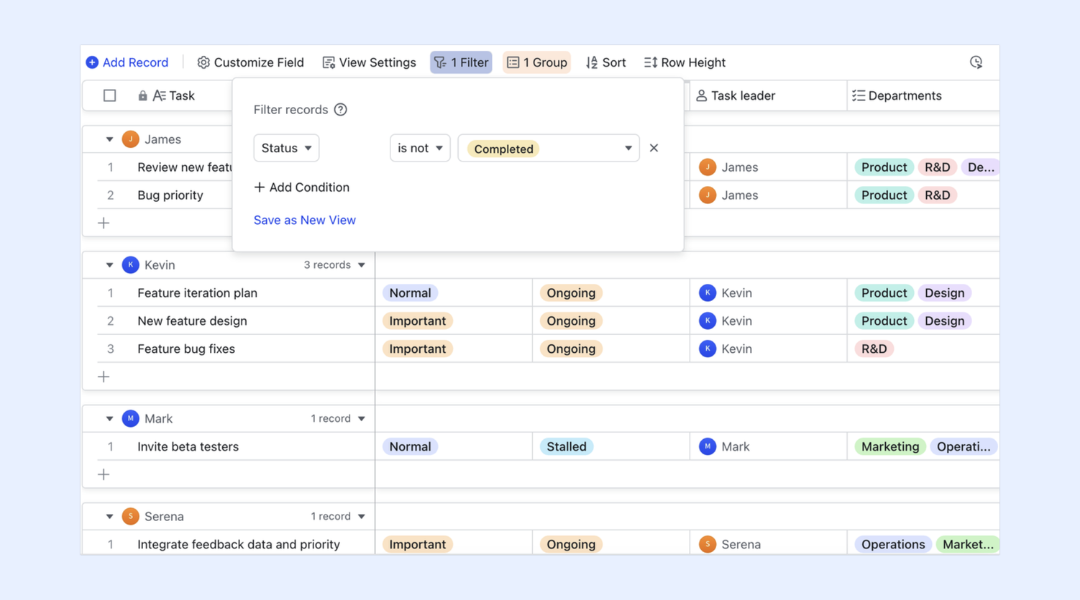
Group and filter in Lark Base: Real-time control and focus
As projects scale, tracking hundreds of moving pieces can become overwhelming. Lark Base's group and filter tools allow project managers to instantly view only what matters most. For instance:
- Filter tasks by owner to see individual workloads.
- Group deliverables by status to identify delays or bottlenecks.
- Filter by department or phase to align progress across teams.
This functionality makes it easy to spot issues early and take corrective action, essential for maintaining project scope and preventing overruns. For cross-department projects, filters ensure every stakeholder sees the most relevant view of the scope without being overwhelmed by unnecessary details.
- Starter plan: Free forever plan that includes 11 powerful tools for up to 20 users. It also comes with 100GB of storage, 1000 automation runs, AI translations, and more.
- Basic plan: $6/user/month (billed annually) for up to 500 users. It includes everything in Starter plus group calling for up to 500 attendees, 5TB of storage, 1000 automation runs, and more.
- Pro plan: $12/user/month (billed annually) for up to 500 users. It includes everything in Basic plus group calling for up to 500 attendees, 15TB of storage, 50,000 automation runs, and more.
- Enterprise plan: Contact sales for custom pricing. Supports unlimited users and includes even more automation runs and advanced security, compliance, and management features.
Why scope matters for project success
A clearly defined project scope is the foundation of every successful project. It sets expectations, aligns teams, and ensures that work stays within agreed boundaries. Without it, even the best teams can struggle with unclear goals or shifting priorities. So, why does scope matter in project management? Because it provides structure, guiding every decision on time, budget, and deliverables.
Strong scope management also helps prevent scope creep in project management, where uncontrolled changes or extra tasks push projects off track. By establishing a defined scope baseline, teams can objectively evaluate scope changes in project management, weighing the impact on costs, timelines, and resources before proceeding.
In essence, project scope gives teams a shared direction and control mechanism, helping them deliver results efficiently, meet stakeholder expectations, and protect project quality from start to finish.
Avoiding gold plating in scope management
Gold plating happens when team members add features or improvements beyond the agreed project scope, often with good intentions but with unintended consequences. It can delay timelines, inflate budgets, and create inconsistencies in deliverables. Here's how to prevent it effectively:
- Define clear acceptance criteria: Document exactly what "done" looks like for each deliverable in your scope statement. This keeps everyone aligned on what must be delivered and what's out of bounds.
- Use a scope baseline for reference: Maintain an approved baseline in Lark Base to compare any new requests or ideas against the original plan before making changes.
- Formalize change requests: Route all new features or design suggestions through Lark Approval to evaluate their impact on timeline, cost, and objectives before implementation.
- Communicate purpose and boundaries clearly: Use Lark Messenger or Docs to remind the team of the project's defined goals and deliverables. Reinforcing "why" helps avoid unnecessary add-ons.
- Track progress visually: Monitor project activities in Lark Base or Gantt View to ensure work aligns with approved scope and milestones, not unplanned extras.
- Reward adherence to scope: Recognize teams for delivering within boundaries and on time. Celebrate focus and efficiency instead of "going above scope."
- Review deliverables against requirements: Conduct milestone reviews using Lark Meetings or Docs to verify that outputs match the original scope before final approval or client delivery.
Conclusion
Defining and managing scope is what keeps projects clear, efficient, and goal-driven. It prevents confusion, controls costs, and ensures every deliverable aligns with stakeholder expectations. From understanding what scope is in project management to preventing scope creep and managing changes, clear boundaries make all the difference. With Lark, teams can turn scope management into a living, collaborative process, tracking objectives, deliverables, and updates in real time. The result is transparency, accountability, and stronger project outcomes from start to finish.
FAQs
What's the difference between project scope and product scope?
Project scope defines the work required to deliver a project successfully, including tasks, timelines, and resources. Product scope focuses on the features and functions of the final product itself. In short, project scope is about how the work gets done, while product scope defines what will be delivered.
How do you write a project scope statement?
A project scope statement outlines objectives, deliverables, tasks, constraints, and exclusions. It clearly defines the scope of project management by setting boundaries and success criteria. Use structured templates or tools like Lark Docs and Lark Base to document and share this statement, ensuring all stakeholders agree before execution begins.
What causes scope creep in project management?
Scope creep in project management occurs when new tasks or requirements are added without adjusting time, cost, or resources. Common causes include unclear objectives, informal change requests, and poor communication. Prevent it by documenting the scope clearly, using change control workflows, and maintaining visibility through collaborative tools like Lark Base.
What is a scope baseline, and why is it important?
A scope baseline is the approved version of the project's scope statement, work breakdown structure, and schedule. It serves as a reference point to measure progress and evaluate scope change in project management. Maintaining an updated baseline helps teams stay aligned, manage risks, and ensure all changes are tracked and approved.
How can teams monitor project scope in real time?
Teams can monitor project scope in real time using connected tools that track deliverables, timelines, and updates dynamically. Lark Base and Lark Sheets enable live visibility, progress dashboards, and linked data views. This real-time insight helps managers detect issues early, prevent scope creep, and ensure every task stays within the defined project scope.
Related reading
Table of contents
Start using Lark today

Manage all your work in one place
Boost team efficiency by 10x
Save up to 70% on software costs
Table of contents
Start using Lark today
Manage all your work in one place
Boost team efficiency by 10x
Save up to 70% on software costs



2026 Lark Technologies Pte. Ltd.
Headquartered in Singapore with offices worldwide.






Explore: