A project rarely fails because of poor execution alone. Most failures begin much earlier, at the moment when goals are unclear, responsibilities are vague, and assumptions go unchallenged. This is exactly where the project initiation document plays its most critical role.
A project initiation document provides the first shared understanding of why a project exists, what success looks like, and how decisions will be made. When created thoughtfully, it becomes a living reference that guides every phase of delivery. Modern teams are gradually rethinking how this document is created and maintained, with platforms like Lark emerging later as enablers rather than starting points.
What is a project initiation document?
A project initiation document is a formal document that defines the purpose, scope, and structure of a begins. It brings together key information such as objectives, deliverables, constraints, risks, and governance in one authoritative source. This project initiation document definition helps teams align early and avoid misunderstandings once work is underway. Many organizations rely on a project initiation document template to ensure consistency, especially when working across multiple teams or departments.
In practice, the project initiation document (PID) acts as a reference point throughout the . When questions arise about scope, priorities, or accountability, teams return to the PID project initiation document for clarity. A well-written project initiation document example demonstrates how assumptions, responsibilities, and success criteria are clearly documented. This reduces reliance on informal agreements and supports more confident decision-making.
Why the project initiation document is your project's DNA
The project initiation document is often described as a project's DNA because it captures the fundamental characteristics that define how the work should unfold. It records the project's intent, boundaries, and governance structure in a way that remains stable even as execution details evolve. Without this foundation, teams risk drifting away from the original goals and misinterpreting expectations. This is why a strong project initiation document checklist is critical for long-term alignment.
As the project progresses, the PID continues to guide decisions during tradeoffs, changes, and risk discussions. It ensures that every adjustment can be evaluated against the original business case and success criteria. When teams compare the project initiation document vs , the PID often provides deeper operational clarity. By serving as a living reference rather than a static file, the project initiation document keeps the project's core identity intact from start to finish.
Ready to initiate a project with complete clarity?
How to create a project initiation document
Creating a project initiation document (PID) is about building a foundation that prevents scope creep and budget blowouts. Following these five steps ensures your document moves from a bureaucratic requirement to a strategic asset.
Step 1: Define the business case and project goals
The first section of your PID must answer "Why are we doing this?" and "What does success look like?" You should clearly state the problem the project solves and the expected ROI. Use the SMART criteria (Specific, Measurable, Achievable, Relevant, Time-bound) to define your objectives, so there is no ambiguity during the final handover.
Step 2: Define the scope and deliverables
This is where you draw the "boundary line" for your project. Detail exactly what will be produced (deliverables) and, just as importantly, what is out of scope. By explicitly listing what the project won't do, you protect your team from "hidden" requests later in the lifecycle.
Step 3: Identify stakeholders and the
A project is only as strong as its governance. Use this step to list everyone involved, from executive sponsors to end-users. Clearly define who is Responsible, Accountable, Consulted, and Informed. In Lark Base, you can automate this by assigning these roles to specific team members, ensuring they receive automatic updates when milestones are reached.
Step 4: Conduct a risk and resource assessment
Identify potential "project killers" early. This includes technical constraints, budget limitations, and personnel availability. This is the stage where you should refer to a document checklist to ensure you haven't missed critical dependencies like third-party API access or hardware lead times.
Step 5: Establish the project timeline and budget
Finally, lay out the high-level roadmap. You don't need a daily task list yet, but you do need major milestones and a total cost estimate. Instead of a static table in a project initiation document template, use a Lark Gantt Chart. This allows stakeholders to see a that updates automatically as tasks are linked, providing a much clearer picture of project health than a flat document ever could.
Meet Lark: The next-gen alternative to the traditional PID
Traditional project initiation documents were designed for static in a world of slower change. Today, projects are controlled quickly, stakeholders expect visibility, and decisions cannot wait for emailed attachments or outdated versions. A next-generation PID must be collaborative, traceable, and connected to execution. This is where redefines how teams create, manage, and govern project initiation documents, turning them into living systems rather than frozen files.
Clear stakeholder ownership is built directly into the PID
Managing stakeholders in spreadsheets quickly becomes unmanageable. With , teams can structure stakeholder data with custom fields and records, map RACI roles across multiple views such as Kanban or , and track influence and project processes via dashboards in real time. Automated notifications ensure key approvers are alerted at the right moment, reducing missed reviews. This approach strengthens governance and makes the PID project initiation document actionable rather than informational. 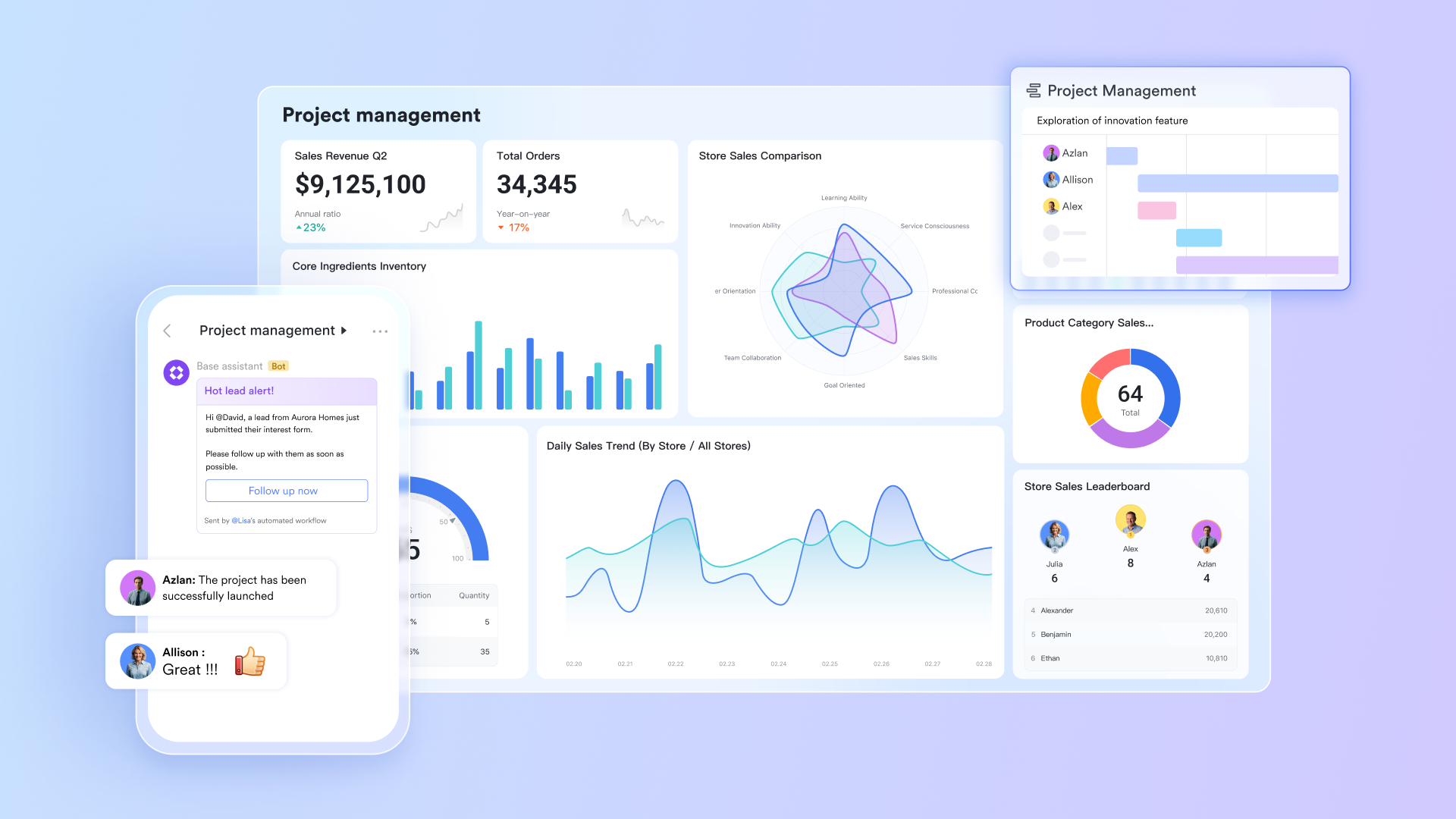
PID documentation that stays current and traceable
Lark turns PID from a static file into a living governance system using , ensuring your project foundation remains searchable and traceable throughout its lifecycle. By leveraging @mentions for real-time cross-functional collaboration and embedding live Base tables, teams can replace outdated spreadsheets with a dynamic workspace that reflects actual progress. Beyond just centralizing information, Lark Docs allows project managers to embed interactive elements—from question polls for quick decision-making to mind maps for brainstorming sessions—directly into the PID. 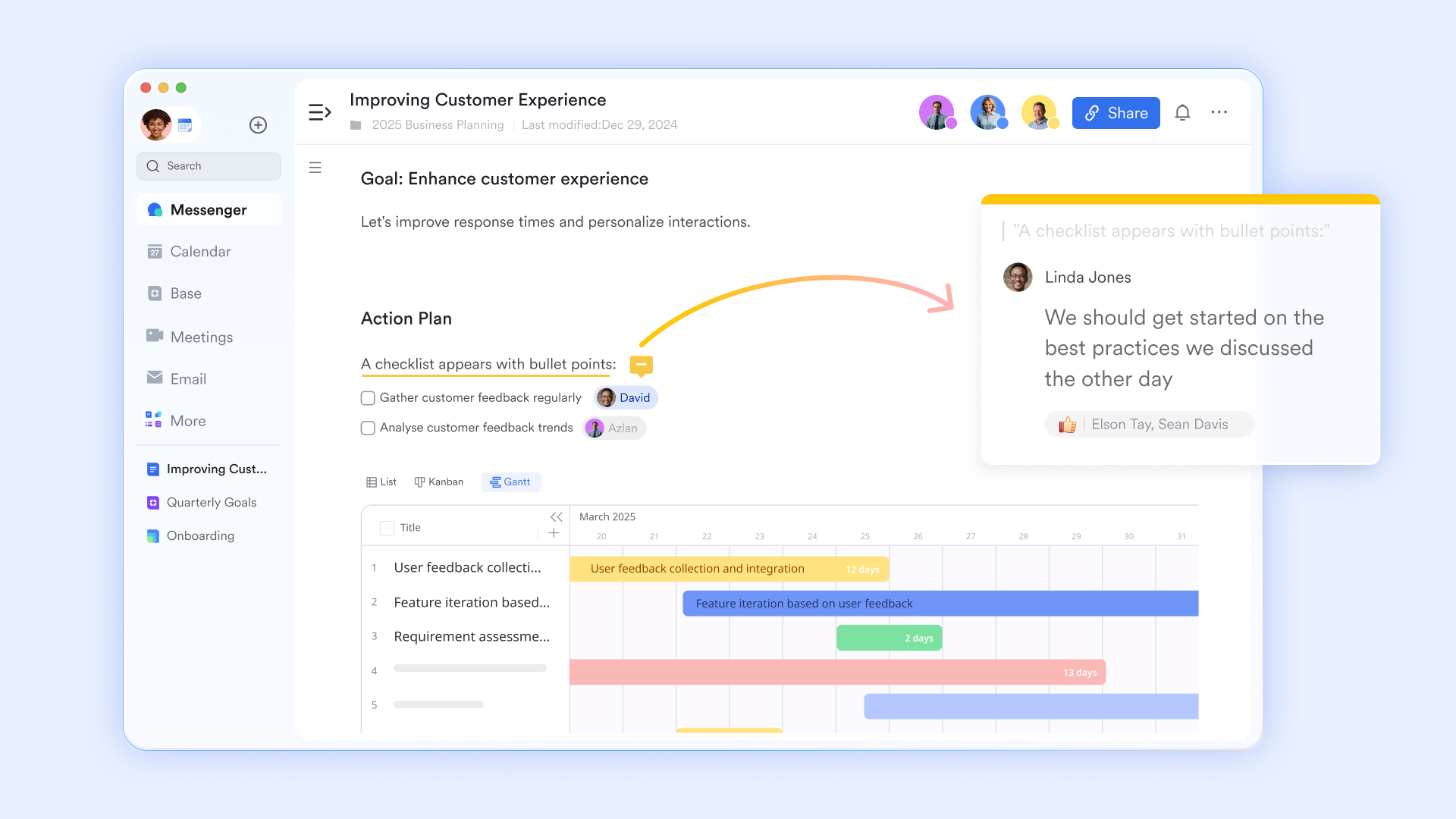
Inclusive project kickoffs with shared PID visibility
Global teams often struggle with kickoff meetings due to time zones and language barriers. help with online conferencing, record meetings, real-time translation, and to reduce manual note-taking. With Magic Share, participants can interact with the project initiation document during the meeting itself. This ensures alignment from day one and allows stakeholders to revisit discussions long after the meeting ends. 
Faster project initiation through structured approvals
Approval delays often slow project starts more than planning itself. replaces manual follow-ups with structured, automated workflows. Once the project initiation document is ready, it can be routed sequentially to sponsors, finance, and legal with full visibility into status. This ensures governance requirements are met without delaying momentum and keeps the project initiation document checklist enforceable in practice. 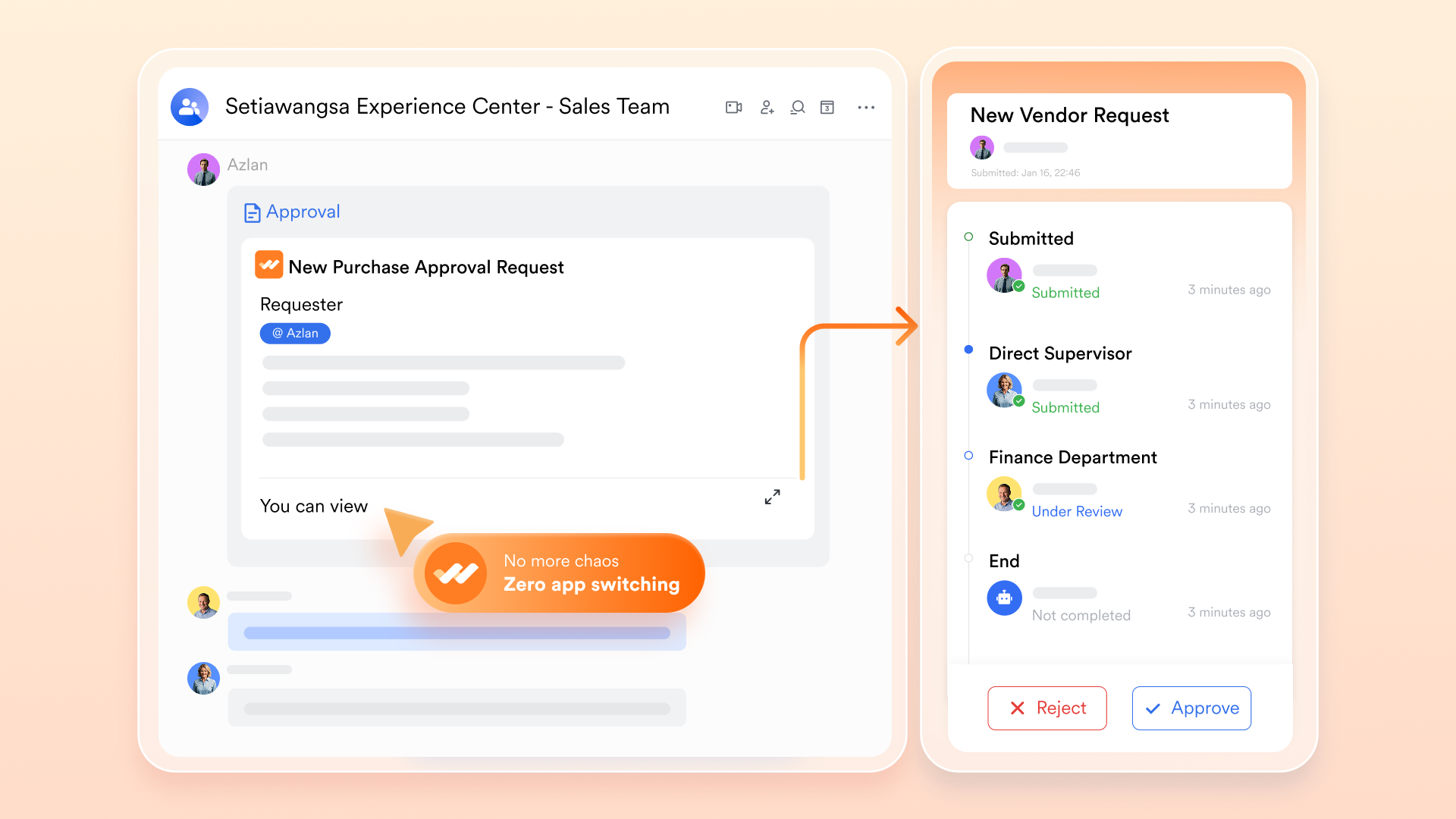
:
- Starter plan: Free forever plan that includes 11 powerful tools for up to 20 users. It also comes with 100GB of storage, 1000 automation runs, AI translations, and more.
- Pro plan: $12/user/month (billed annually) for up to 500 users. It includes everything in Starter plus group calling for up to 500 attendees, 15TB of storage, 50,000 automation runs, and more.
- Enterprise plan: for custom pricing. Supports unlimited users and includes even more automation runs and advanced security, compliance, and management features.
For small teams with simple communication needs

18 months message history
1000 Base automation runs/month
2000 rows per table in Base
Most POPULAR
For companies with comprehensive collaboration and management needs
Unlimited message history
500-participant video meetings
50k Base automation runs/month
20k rows per table in Base
For large companies with advanced security and organizational management needs
Get a personalized demo and pricing
Unlimited message history
500-participant video meetings
15 TB storage + 30 GB storage/user
500k Base automation runs/month
50k Base automation runs/month
Most POPULAR
For companies with comprehensive collaboration and management needs
Unlimited message history
500-participant video meetings
50k Base automation runs/month
20k rows per table in Base
Project initiation document templates
Choosing the right project initiation document template has a direct impact on how clearly a project is defined and how well it stays aligned during execution. Traditional Word-based templates offer familiarity, but they often struggle to keep up with changing assumptions, approvals, and collaboration needs. transform the project initiation document (PID) from a static file into a living workspace, making it easier to adapt, track, and govern projects as they evolve.
Project introduction template
A project introduction template is often the first step in formalizing a new initiative. It captures high-level context such as objectives, background, and success criteria in a structured format. Compared to a project initiation document template Word file, this modern version is easier to update and share across teams. It works well as a lightweight PID project initiation document template for early alignment.
Project planning and implementation template
This template expands beyond definition into execution readiness. It connects goals, scope, and timelines in one structured view, helping teams move smoothly from planning to action. Unlike static Word documents, it allows ongoing updates as assumptions change. Many teams use it as a practical project initiation document, for example, when projects require clear follow-through.
Technical application document template
The technical application document template is designed for initiatives with significant technical complexity. It documents architectural decisions, dependencies, and technical constraints early in the lifecycle. Compared to a simple project initiation document example, this template adds depth without sacrificing clarity. It is especially useful when bridging business requirements and .
4x4 risk assessment template
Risk is often underrepresented in traditional PID documents. The 4x4 provides a structured way to identify, prioritize, and mitigate risks from the start. By integrating risk analysis directly into the PID project initiation document, teams avoid treating risk as an afterthought. This approach strengthens governance and decision-making.
Project management template
A project management template brings together scope, milestones, roles, and tracking in one place. It helps teams maintain continuity between the project initiation document (PID) and day-to-day execution. Unlike isolated Word files, this template supports ongoing visibility and accountability. It is well-suited for initiatives simultaneously.
Project charter template
The is closely related to the PID but focuses more on authorization and high-level governance. When comparing the project initiation document vs project charter, the charter often establishes approval, while the PID drives execution clarity. Using a modern charter template alongside a PID ensures alignment between authority and delivery.
Key factors of a successful PID
A high-impact project initiation document goes beyond basic documentation and becomes a practical guide for decision-making throughout delivery. It brings structure, clarity, and accountability into one shared reference that teams can rely on as the . Using a project initiation document checklist ensures that no critical element is missed and that the PID project initiation document remains useful long after approval.
Project basics & context
The project basics and context section establishes the foundation of the entire project initiation document. It captures the core identity of the initiative, explains why it exists, and defines how success will be measured. A clear starting context ensures that everyone involved understands the purpose and direction from the outset.
- Project name & ID: The project name and ID provide a clear, searchable reference that links the initiative across systems and reports. Consistent naming avoids confusion when multiple efforts run in parallel. This element is foundational in every project initiation document template.
- Business case: The explains why the project exists and what problem it solves. A concise summary keeps the team aligned with strategic intent. This clarity strengthens the project initiation document definition and supports stakeholder buy-in.
- Success criteria: Success criteria define how outcomes will be measured and validated. Clear KPIs prevent subjective judgments at closure. Including them early makes the project initiation document example easier to evaluate objectively.
- Definition of done: The definition of done establishes what completion looks like. It removes ambiguity around delivery expectations. This helps prevent disputes and rework at the end of the project.
Scope & boundaries
The scope and boundaries section defines exactlyand where its limits lie. By clearly documenting inclusions, exclusions, and constraints, this part of the PID protects teams from scope creep and shifting expectations. It ensures that execution remains aligned with agreed objectives throughout the lifecycle.
- In-scope deliverables: In-scope deliverables list every tangible output expected from the project. This detail protects teams from misunderstandings about responsibilities. A strong PID project initiation document always makes deliverables explicit.
- Out-of-scope list: Out-of-scope items clearly state what the project will not include. This is one of the most effective ways to prevent scope creep. Many simple project initiation fail because exclusions are not documented.
- Constraints: Constraints outline fixed limits such as deadlines, budgets, or technology choices. These boundaries shape planning and execution decisions. Declaring them early supports realistic expectations.
- Assumptions: Assumptions capture conditions believed to be true at the start of the project. Documenting them allows teams to revisit and validate as work progresses. This keeps the project initiation document (PID) grounded in reality.
Governance & resources
Governance and resources outline how decisions will be made and who is responsible for delivering the work. This section brings structure to accountability by defining roles, stakeholders, and communication flows. Strong governance within the project initiation document (PID) prevents confusion and supports timely escalation when needed.
- RACI matrix: A defines who is "Responsible," "Accountable," "Consulted," and "Informed." This clarity prevents decision bottlenecks and ownership conflicts. It is a critical component of any project initiation document template.
- Project team: Listing the project team identifies who will execute the work. This includes internal staff and external partners. Clear visibility supports better coordination and capacity planning.
- Stakeholder map: The stakeholder map identifies individuals or groups who must approve key milestones. Knowing who has authority reduces delays. This strengthens governance throughout the lifecycle.
- Communication plan: A defines how often updates are shared and through which channels. Regular communication builds trust and transparency. It ensures the PID remains relevant beyond initiation.
Risk & financial management
and financial management focus on identifying potential threats and setting realistic budget expectations early. This section helps teams anticipate uncertainty rather than react to it later. By documenting risks, costs, and contingencies, the PID becomes a tool for proactive control instead of damage control.
- Initial risk log: The risk log identifies the most critical threats to success and outlines mitigation strategies. Early risk awareness enables proactive action. This is a core element of a robust project initiation .
- Estimated budget: The estimated budget provides a high-level view of expected costs. Breaking it down into major categories improves understanding. This supports financial governance from the outset.
- Contingency plan: A contingency plan allocates a buffer for uncertainty. Including this allowance increases resilience against unforeseen challenges. It also improves stakeholder confidence in the estimate.
Roadmap & controls
The roadmap and controls section provides a high-level view of how the project will progress and how changes will be managed. It defines key milestones, approval processes, and tolerance levels for deviation. This structure ensures that the project remains flexible while still operating within clearly defined boundaries.
- High-level milestone schedule: Milestones outline major phases and delivery checkpoints. They provide direction without overloading the team with detail. This balance supports adaptability during execution.
- Change control process: The change defines how scope changes are requested and approved. Clear workflows prevent informal commitments. This protects the integrity of the project initiation document vs. the project charter.
- Project tolerances: Project tolerances define acceptable limits for budget and schedule variance. When thresholds are exceeded, escalation is triggered. This ensures issues are addressed before they become critical.
Common mistakes teams make with project initiation documents
Even well-intentioned teams can undermine the value of a project initiation document through how it is created and used. When the PID is treated as paperwork rather than a decision-making tool, it quickly loses relevance. Recognizing these common mistakes helps teams turn the project initiation document into a practical guide that supports clarity, alignment, and control throughout execution.
- Treating the PID as a formality: Many teams create the PID solely to satisfy a governance requirement and never reference it again. When this happens, the document has no influence on real decisions or tradeoffs. A PID should guide discussions, approvals, and changes, not sit unused after sign-off. Treating it as a living reference preserves its value.
- Writing too much and deciding too little: Overly long PIDs often contain excessive background information but lack clear decisions. This creates the illusion of thorough planning without real direction. A strong project initiation document prioritizes clarity over volume. Clear choices about scope, ownership, and success matter more than lengthy descriptions.
- Freezing assumptions instead of revisiting them: Assumptions made during initiation are rarely all correct. Teams that fail to revisit their due to outdated information. A good PID encourages assumptions to be reviewed and updated as new evidence emerges. This keeps the document aligned with reality rather than initial guesses.
- Disconnecting the PID from execution: When execution tools and daily work are separate from the PID, alignment breaks down. Decisions made during initiation are forgotten or ignored as the . The project initiation document should remain visible and relevant throughout execution. Keeping it connected to real work ensures intent and action stay aligned.
Set a strong foundation for your project from day 1
Conclusion
A project initiation document is most effective when it is treated as a strategic foundation rather than a procedural requirement. It brings clarity to purpose, scope, ownership, and success criteria at the very start of the project, reducing ambiguity before execution begins. Teams that invest time in creating a thoughtful PID experience have fewer conflicts, clearer decision-making, and stronger alignment . When used correctly, the PID becomes a reference point that anchors discussions and guides the project through uncertainty.
As projects grow more dynamic, the expectations placed on initiation documents also evolve. Static documents struggle to keep pace with changing assumptions, approvals, and execution realities. This is why many teams are gradually shifting toward connected ways of working, where the PID remains visible and relevant beyond sign-off. Over time, platforms like naturally support this shift by helping teams keep planning, governance, and execution aligned in one shared environment.
FAQs
Is a PID the same as a PMP?
No, a PID and a PMP serve different purposes in project management. The PID focuses on defining the project's intent, scope, governance, and success criteria at initiation. A PMP, on the other hand, details how the project will be executed, monitored, and controlled. The PID comes first and informs the PMP. As teams mature, tools like Lark help keep both documents connected and consistent.
What is the difference between a project brief and a PID?
A project brief is usually a short, high-level overview used to propose an idea or gain initial interest. A PID is more detailed and formal, establishing authority, governance, and boundaries. While a brief explains what is being proposed, the PID explains how it will be governed and delivered. Many teams start with a brief and evolve it into a PID using such as Lark.
What KPIs should be defined during project initiation?
KPIs defined during initiation should reflect business value, delivery outcomes, and quality expectations. Common examples include timeline , budget variance, customer satisfaction, and adoption metrics. Clear KPIs prevent subjective evaluations later in the project. Keeping these metrics visible over time becomes easier when the PID lives in a shared workspace like Lark.
How do failed projects typically misuse PIDs?
Failed projects often create a PID once and never revisit it. Assumptions remain unchallenged, scope drifts, and decisions lose alignment with original intent. In many cases, the PID is disconnected from execution entirely. Treating the PID as a living reference, supported by tools such as Lark, helps prevent this breakdown.
What is the significance of project initiation documents in project management?
The project initiation document establishes a common understanding before work begins, which is critical for long-term success. It aligns stakeholders, defines , and sets clear boundaries. Without it, projects rely on informal agreements that often fail under pressure. Modern teams increasingly rely on platforms like Lark to ensure the PID remains relevant throughout the project lifecycle.
Related reading





























