


CRM and Supply Chain Management: Meaning, Benefits & How They Work Together

Ryan Tanner
Product Marketing Specialist
Aug 5, 2026
Ryan Tanner
Aug 5, 2026

16 min read


Organizations today work to improve customer experience while ensuring accurate product delivery across markets. CRM (customer relationship management) and supply chain management often function separately, with one focused on customer communication and the other on inventory planning, vendor coordination, and logistics tasks. When they are not aligned, forecasting becomes unreliable, communication weakens, and delivery performance drops, even if product quality and pricing are strong.
Companies are now connecting both functions through shared CRM to supply insights, real-time tracking, and digital workflow collaboration so that every department works with the same information. Modern platforms support this alignment, and Lark appears gradually as one such connected workspace.

What is CRM in supply chain management?
Customer relationship management in supply chain refers to using customer data, communication records, and service histories to plan, execute, and improve product delivery and fulfillment performance. It connects customer expectations with real operational activity, so supply chain teams can understand demand patterns, service priorities, delivery preferences, and potential risks before they happen. Instead of reacting only after an issue occurs, teams can use customer information to plan capacity, inventory, shipment routes, and service levels. This approach also ensures that customer-facing teams do not make promises that warehouse or logistics teams cannot meet. Modern CRM systems help share real-time information on orders, delivery progress, and service requests so that every team works toward the same customer outcome.
Why CRM matters in supply chain management
CRM matters in supply chain management because customer behavior and communication insights influence all downstream operational decisions. When information is shared before execution begins, teams can prepare accurately and avoid reactive work. This improves coordination, reduces cost, and increases trust between departments. It also improves the final delivery experience for customers.
- Better demand forecasting: Accurate forecasting depends on historical purchase behavior, seasonal trends, communication records, and customer preferences. CRM supply insights allow analysts and planners to understand what customers value, what quantities they might request, and during which timelines. This reduces inventory risks such as overstock and shortage while preparing the supply chain for both steady and uncertain orders. With correct sales forecasting, business cost efficiency improves and customer satisfaction remains stable.
- Smoother order fulfillment: Order fulfillment becomes difficult when sales records, delivery expectations, and warehouse readiness are not aligned. CRM in logistics and supply chain management provides a single record of customer requirements that teams can follow, which improves task clarity. Warehouse and logistics professionals receive correct details early, which prevents repeat instructions and reduces fulfillment changes. Smooth fulfillment also increases trust between sales and operations because both work with the same information.
- Improved communication between sales, operations, and suppliers: Communication problems happen when updates are lost across separate platforms or manual notes. CRM software helps store communication history that can be accessed by both operational and customer-facing teams. This makes each conversation traceable, reduces confusion when multiple stakeholders are involved, and improves supplier coordination. Better communication ensures that planning becomes faster and every department can make informed decisions.
- Faster issue resolution: When customer complaints, returns, delays, and quality issues are stored inside CRM supply records, operational teams can react with better context. The service team does not need to repeat questions or gather missing information. Detailed records help operations identify the main cause quickly and propose a better solution. Faster resolution builds stronger relationships and reduces customer churn.
- Increased customer satisfaction and retention: Customer satisfaction improves when promises are matched with reality and follow-ups are handled with care. CRM supply insights support personalized service and help internal teams maintain a consistent delivery experience across all orders. When customers feel heard, valued, and updated during every step, their loyalty increases. This reduces dependence on constant new client acquisition and helps build a stable business growth cycle.
Key components of CRM in supply chain management
The key components define the structure required to connect CRM supply information with operational planning workflows. These elements ensure that data flows consistently across teams and remains usable for decision-making. When each component functions properly, organizations benefit from improved traceability and planning accuracy. It forms the foundation for long-term operational maturity.
- Customer insights and segmentation: Segmentation helps companies categorize customers based on volume, frequency, location, industry, or service complexity. CRM software allows flexible segmentation so that supply chain planning becomes specific to customer groups rather than generic. Insights help define priority rules, shipment slots, and service speed expectations. When segmentation is accurate, order scheduling becomes much easier and faster.
- Sales pipeline visibility: Pipeline visibility gives supply chain managers early warning about potential large orders or seasonal peaks. CRM in logistics and supply chain management helps operational teams prepare capacity before final purchase confirmation. Visibility reduces internal pressure caused by sudden orders that require urgent planning. Consistent tracking supports a better workforce and resource allocation.
- Service request handling: Service request history reveals patterns that may affect product quality, packaging, or delivery processes. This information helps supply chain teams modify procedures and prevent repeated problems. CRM software records help standardize response methods, maintain documentation, and clarify accountability across support and operations. This leads to structured customer care and improved operational standards.
- Communication history tracking: Provides full visibility into what has been discussed, promised, changed, or escalated. This avoids cases where different representatives give conflicting answers to the same customer. Communication tracking inside CRM supply systems also prevents repeated questions and encourages factual decision-making. It offers fewer service gaps and faster alignment during urgent cases.
- Delivery and order status transparency: Ensures customers and internal teams always know the current stage of an order and what actions remain. Real-time updates reduce anxiety, frequent follow-ups, and unnecessary calls. Transparent progress views also help team leads manage workloads and identify potential obstacles early. This creates a predictable and accountable service cycle.
- Feedback loops to logistics and operations: Feedback loops allow supply chain managers to receive structured improvement suggestions from real customers. These inputs can relate to packaging, delivery route, delivery timing, communication experience, or after-service quality. CRM in logistics and supply chain management ensures such feedback is accessible for continuous improvement. Over time, this becomes a data asset for smart operational planning.
Challenges in aligning CRM and supply chain management
Challenges arise when both functions use isolated systems and communication channels. These issues impact planning quality, service timelines, and decision-making clarity. Identifying challenges helps leaders focus on improvement priorities rather than short-term fixes. It enables organizations to build a scalable operational model.
- Data silos: When different teams use isolated systems, data does not flow in real time, which creates misinformation. Data silos lead to inconsistent messaging, duplicated effort, and delays in planning decisions. Teams must operate using shared platforms to achieve record clarity. Removing silos supports objective decision-making.
- Communication delays: When updates move through multiple channels or personal communication, important details may be missed or misunderstood. CRM in logistics and supply chain management reduces communication delay by storing updates inside shared records. This helps stakeholders respond quickly with relevant actions. Delays become smaller and trust becomes stronger.
- Manual tracking: Manual tracking through spreadsheets and note-based methods cannot scale during growth periods. Manual data methods increase the probability of human error and outdated records. CRM software helps maintain up-to-date data and eliminates repetitive data entry. Automated and structured tracking becomes essential for operational success.
- Inconsistent forecasting: Forecasting becomes difficult when only historical order records are used without behavioral or communication insights. CRM supply intelligence adds pattern data, preference history, and future potential indicators. This leads to more reliable planning and resource allocation. Forecasting becomes factual and customer-aligned.
- Limited real-time visibility: Real time visibility helps teams detect fixes before they become service issues. When visibility is limited, supervisors must request updates repeatedly and wait for a response. Better visibility increases control and strengthens accountability. Real-time access becomes a necessity rather than a preference.
How technology brings CRM and SCM (supply chain management) together
Technology creates a unified environment where customer insights, operational data, and workflow activities remain connected. Modern tools enable real-time access, mobile updates, automated work cycles, and shared dashboards. This reduces dependency on manual processes and improves response time. Digital methods support future-ready business operations.
- Cloud platforms: Cloud systems allow users to access records, messages, files, and dashboards from any internet-connected device. Cloud platforms remove dependency on location-based servers or office terminals. This supports remote work, field-based work, and hybrid operations. Cloud access improves business continuity.
- Real-time dashboards: Dashboards present accurate information on stock levels, order status, supplier performance, and service tickets. Managers use dashboards to detect early risk and allocate resources. Dashboards also support leadership analysis and review cycles. Real-time reporting improves decision reliability.
- Unified communication: Unified communication tools combine chat, files, tasks, meetings, and shared data in one digital space. This removes confusion caused by separate apps and message forwarding. Unified communication helps maintain context and store conversations permanently. This improves traceability and collaboration.
- Automated workflows: Automation rules help assign tasks, update statuses, send alerts, and create reminders without human action. Automated workflows reduce manual involvement and prevent missed steps. Workflow automation creates controlled progress across multiple departments. Teams save time and increase consistency.
- Mobile access for logistics teams: Logistics employees move across warehouses, checkpoints, and field locations, which requires portable communication. Mobile access enables real-time status updates and evidence-based reporting. This reduces delays caused by end-of-day updates. Mobile-connected teams increase operational responsiveness.
Action time: Use Lark to streamline CRM and supply chain alignment
Lark strengthens the connection between CRM activities and supply chain operations by giving all teams sales, operations, logistics, warehouse, procurement, and support a single workspace where customer commitments, operational tasks, and delivery project timelines stay perfectly synchronized.
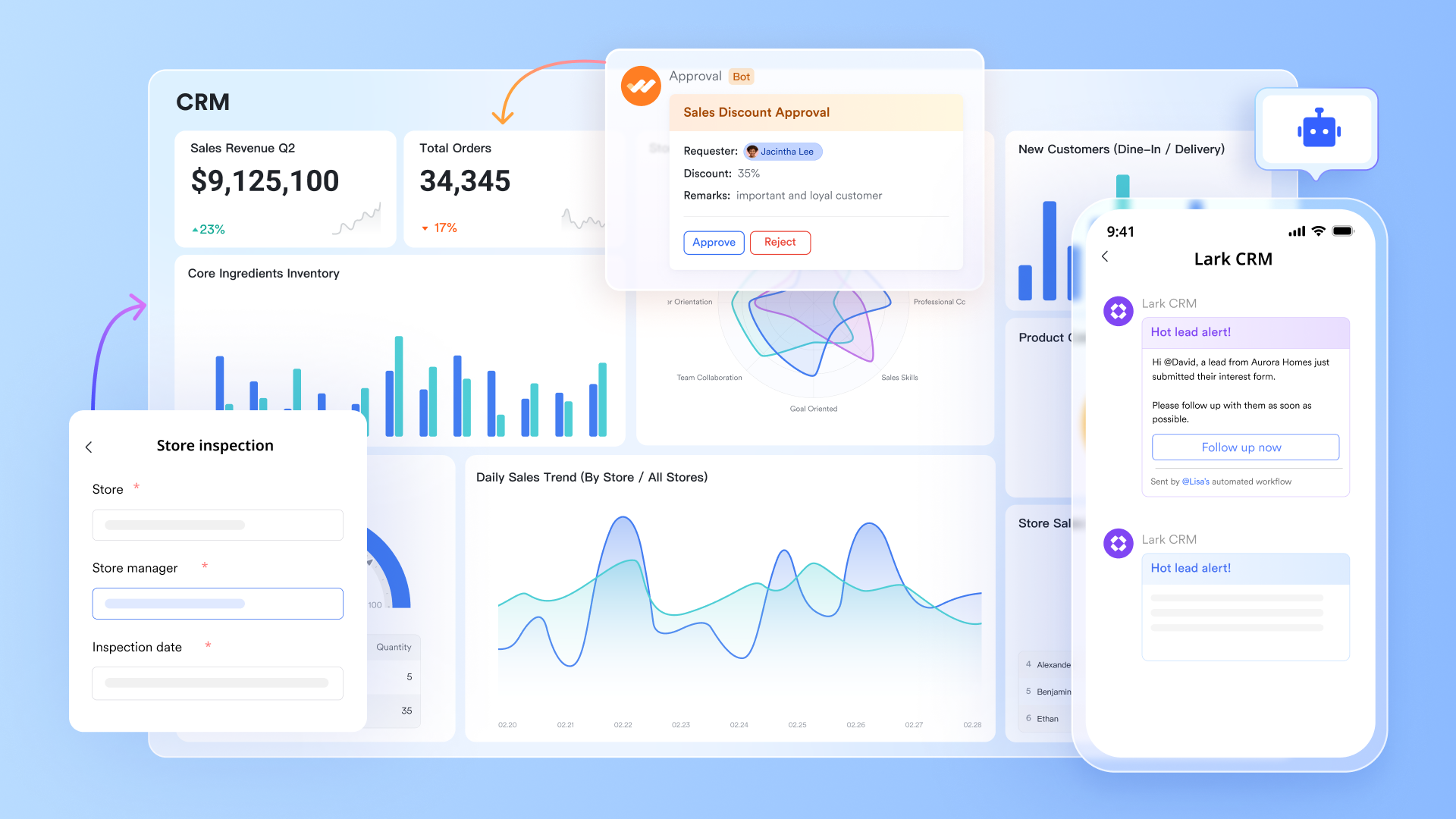
Lark Base brings customer and operational data together
Lark Base allows you to track customers, orders, inventory movements, vendor details, and logistics tasks in structured tables that stay continuously updated. Two-way links ensure order details remain tied to fulfillment tasks, shipment records, and customer requests, helping both sales and supply chain teams work from the same accurate dataset. Kanban and Gantt views make it easy to visualize where each order stands and how it moves through fulfillment stages.
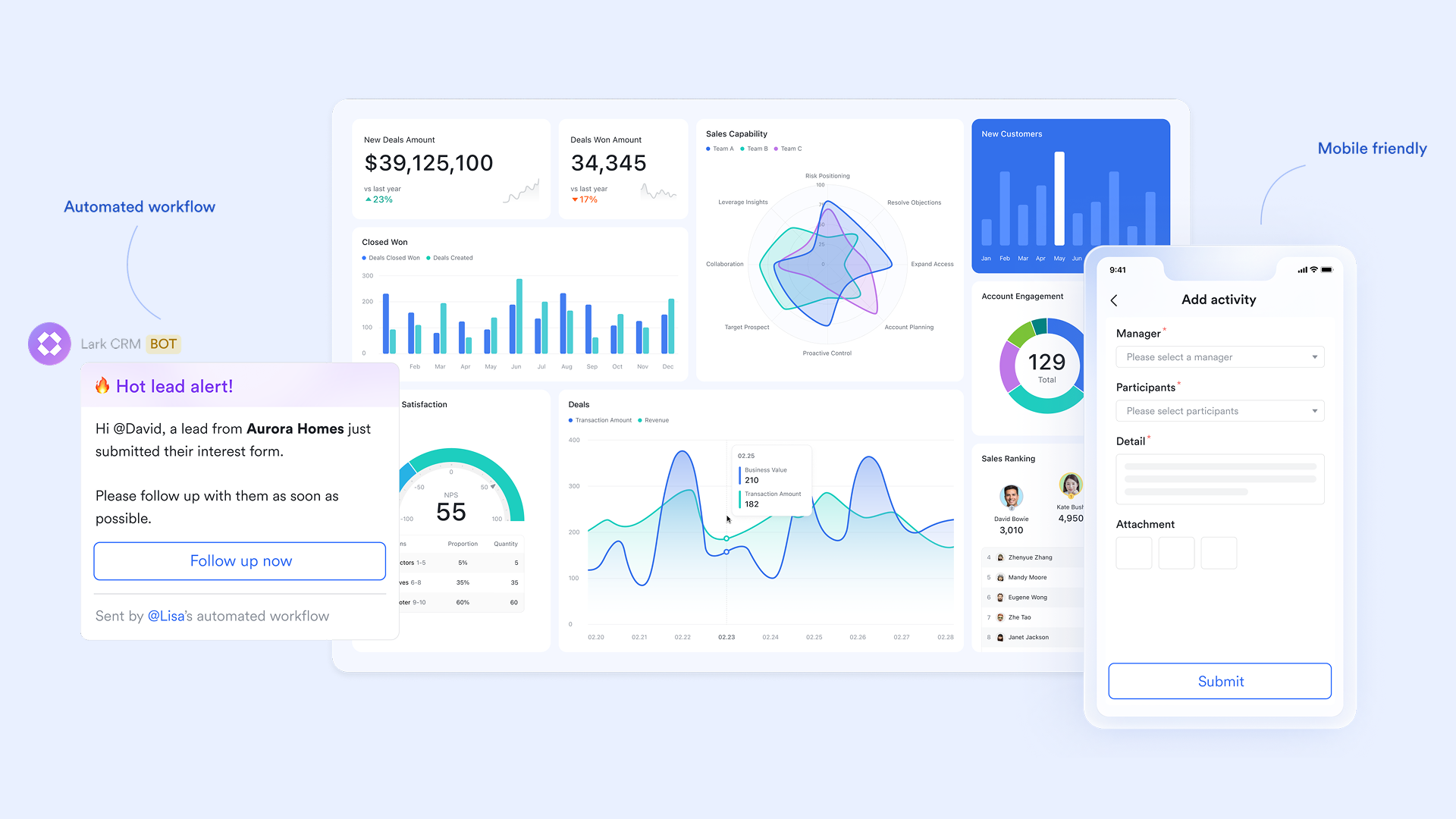
Lark Messenger keeps communication contextual and instant
Instead of scattered email threads or separate chat platforms, Lark Messenger ties conversations directly to customer records, shipment tasks, or base tables. Sales can share urgent customer updates, and operations can instantly confirm feasibility or ETA changes. Teams can from a relevant customer or order data from Base directly in conversations, keeping context clear. Real-time translation and specialized group chat reduce lag, prevent misalignment, and ensure fast resolution when exceptions occur.
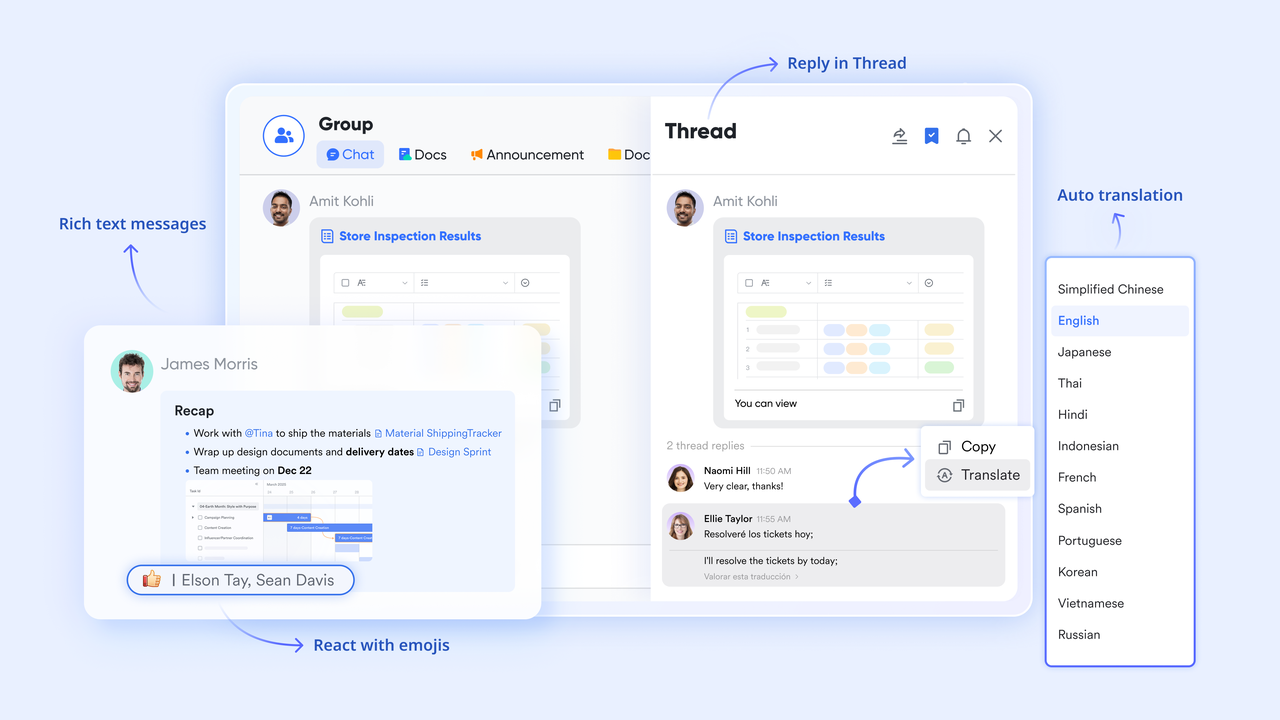
Lark Calendar connects schedules across departments
Lark Calendar helps teams align dispatch dates, delivery windows, planning meetings, customer calls, and internal reviews all within a shared scheduling environment. You can create public or private calendars, invite people across departments, and set permissions to control who can view or make changes. With recurring events, reminders, and notifications, teams stay on track with regular meetings or key milestones.
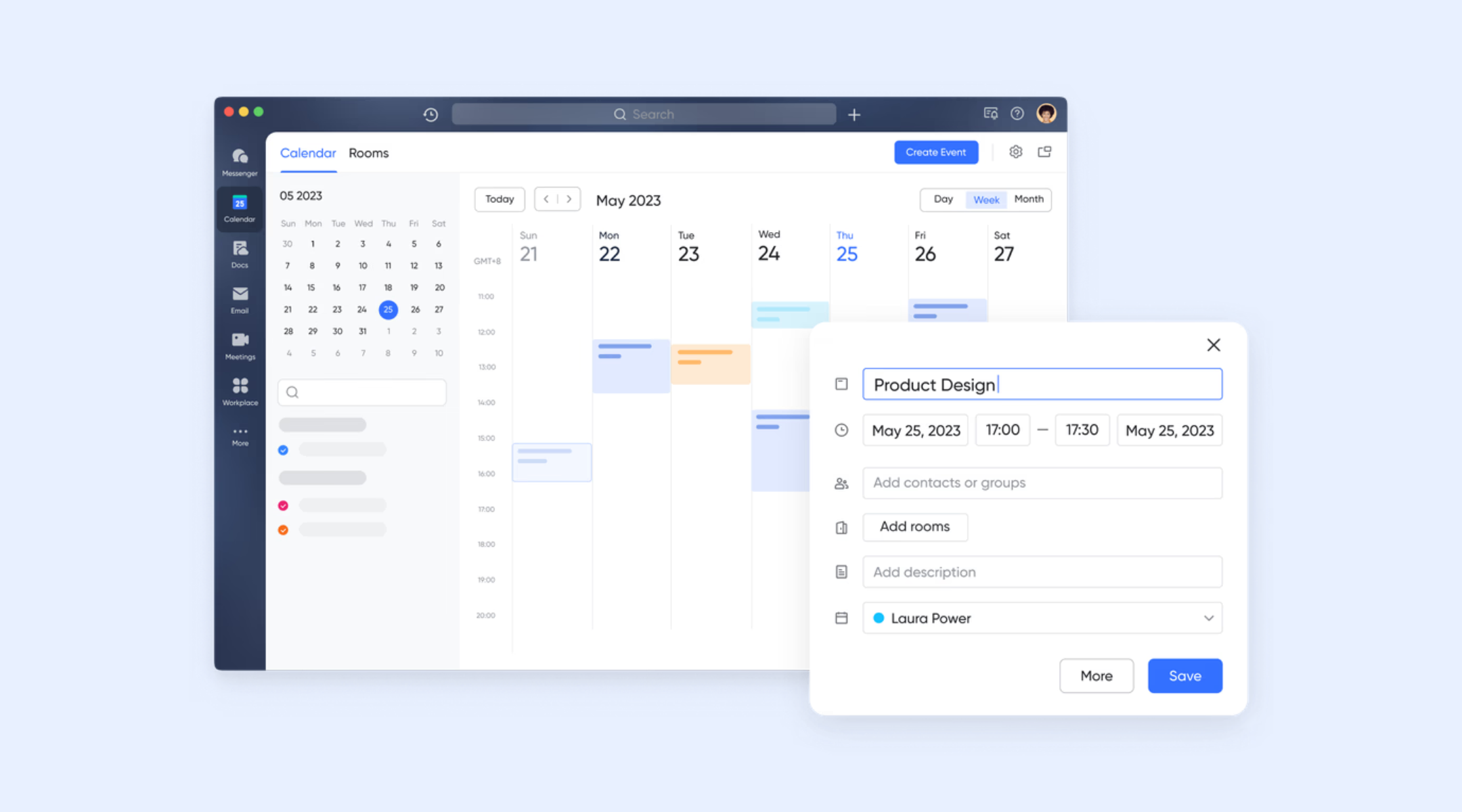
Lark Tasks assign tasks and marks accountability across the supply chain
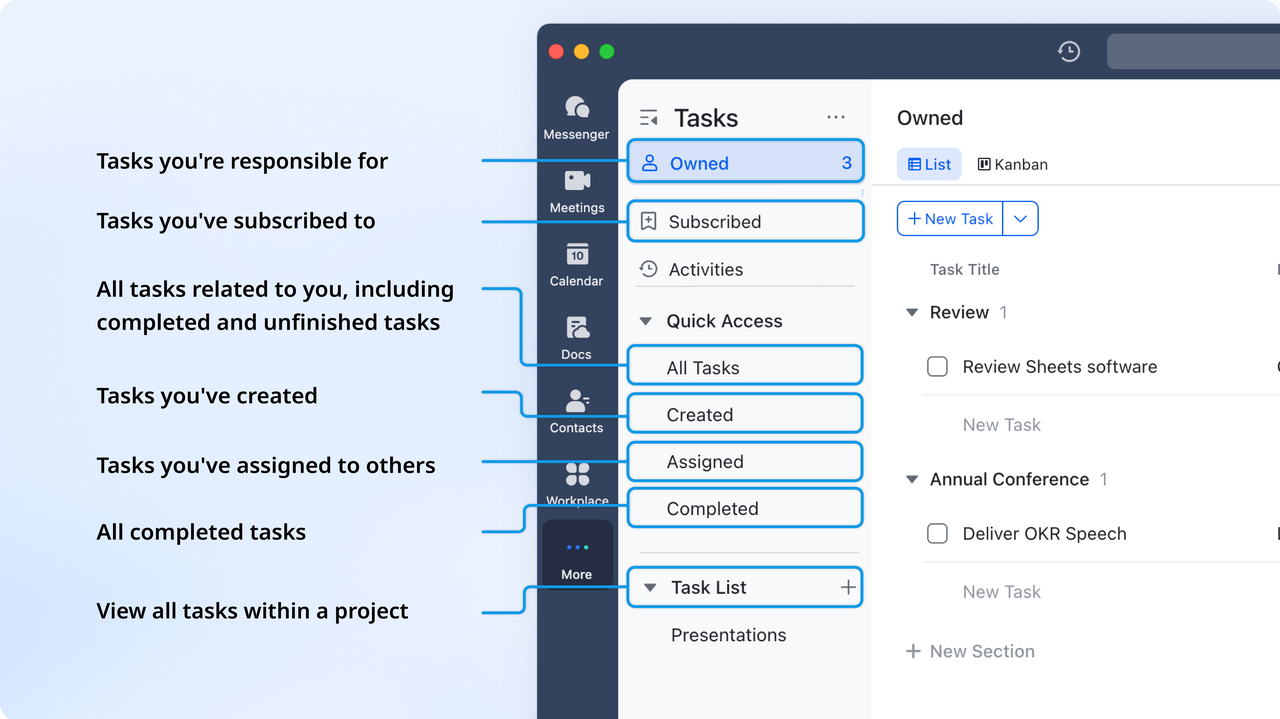
Lark Tasks gives teams a powerful way to manage work by assigning clear owners, deadlines, and reminders across the entire order-to-delivery process. You can set a start date and a due date for each task, making it easy to stage tasks like order processing, quality checks, packaging, and dispatch. You can also add reminders so people are alerted before tasks are due. Tasks support sub-tasks and grouping, helping you break down big operational steps into more manageable pieces.
Lark Docs stores process documents, SOPs, and customer files
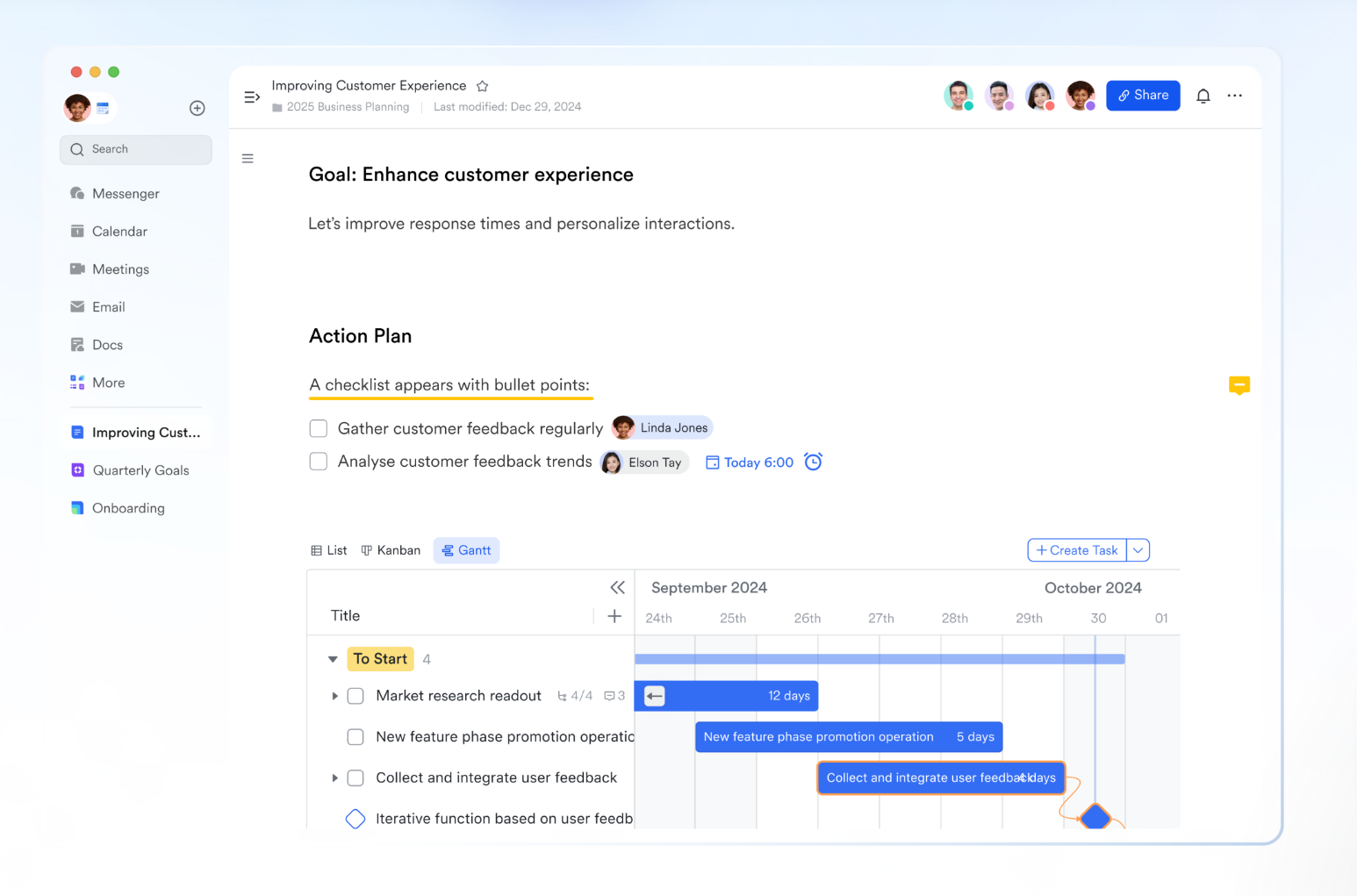
Lark Docs serves as a collaborative document platform space for contracts, shipment instructions, customer guidance, SOPs, and process guidelines. Because Docs support a variety of content types—including rich text, sheets, mindNotes, and embedded bases—your documentation can pull in live data directly. You can even embed tasks inside your Docs, so you don't just describe processes—you link them to actionable work. Real-time collaboration enables multiple team members to co-edit, leave comments, and @-mention others, thereby accelerating feedback cycles.
Lark Meetings improves cross-team alignment
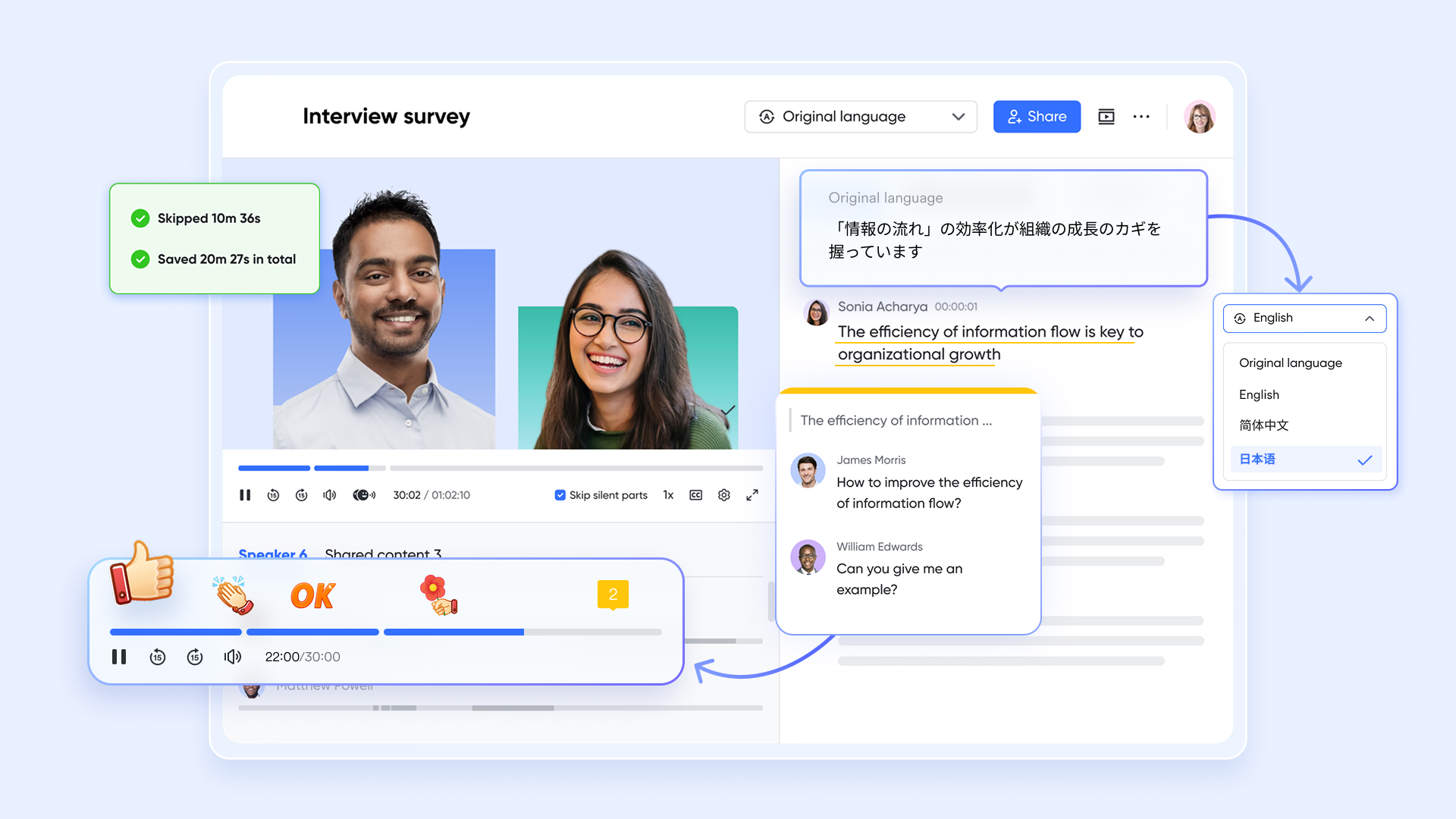
Lark Meetings allows sales, logistics, and operations teams to run daily stand ups, order status reviews, and planning discussions without switching tools. Meetings can generate automatic AI summaries and transcripts, which helps teams capture key decisions, follow ups, and context even if some members are unable to attend. Real time translated subtitles help global teams understand conversations clearly and avoid misunderstandings caused by language differences. Participants can also open and edit shared documents, tables, and project items during the meeting so that discussions stay connected to real data instead of verbal notes.
Lark Approval streamlines critical checkpoints
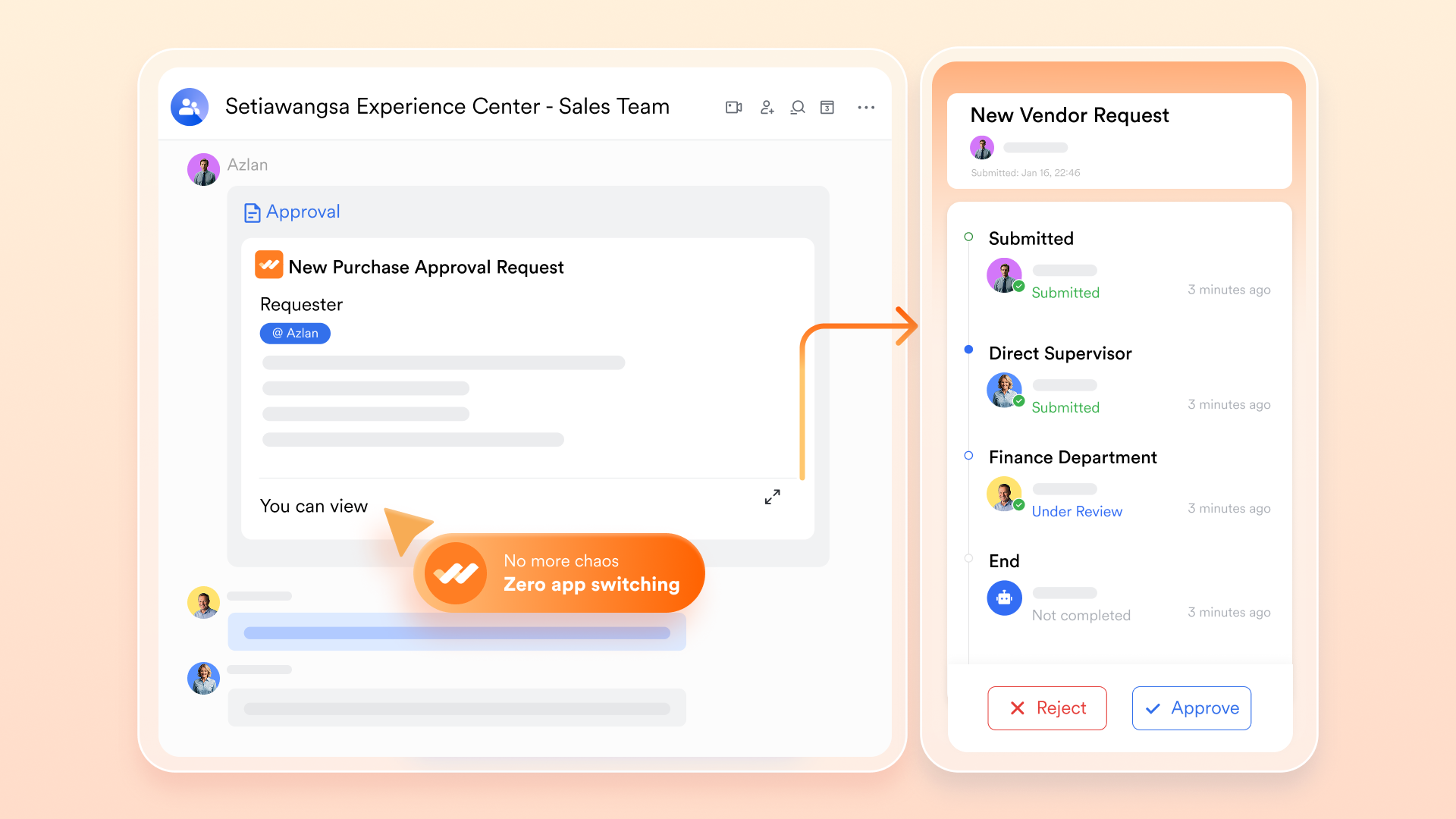
Lark Approval helps streamline key decisions like price changes, order amendments, special freight requests, and discounts by making them fast, traceable, and structured. You can define custom approval forms and multi-step workflows with automatic routing and conditional rules. Approvers get notified in real time, and their decisions approve, reject, or comment are logged into a full audit trail. With configurable roles and escalation rules, workflows can adapt to your organization's hierarchy, and automated reminders ensure no request stalls.
- Starter plan: Free forever plan that includes 11 powerful tools for up to 20 users. It also comes with 100GB of storage, 1000 automation runs, AI translations, and more.
- Pro plan: $12/user/month (billed annually) for up to 500 users. It includes everything in Starter plus group calling for up to 500 attendees, 15TB of storage, 50,000 automation runs, and more.
- Enterprise plan: Contact sales for custom pricing. Supports unlimited users and includes even more automation runs and advanced security, compliance, and management features.
Bonus know-how: CRM vs SCM vs ERP: What's the difference?
CRM (customer relationship management) and SCM (Supply Chain Management) are often confused because both are required for customer success, but handle different responsibilities. SCM & ERP(Enterprise Resource Planning) platforms handle internal resource planning, while CRM software focuses on communication and relationship building. Some research papers explain the concept known as integration of ERP, SCM, and CRM as a long-term approach for unified digital ecosystems.
How CRM and SCM work together
CRM and supply chain management work best when customer insights and operational information flow in a continuous cycle. Both systems support different stages but depend on shared information for planning, execution, and service improvement. When supply data is visible to supply chain teams early, preparation becomes accurate and risks become easier to manage. This alignment reduces confusion and turns the business into a predictable service delivery system.
- Step-by-step supply chain loop: Lead to opportunity to order represents the phase in which early customer requirements and expectations are captured in CRM software before confirmation. This information helps operations assess the likelihood of meeting deadlines and stock levels, so sales teams don't make unrealistic promises. When this loop functions correctly, teams prepare for confirmed demand rather than unpredictable workloads. It also helps build responsible communication behavior across departments. Order processing to fulfilment involves stock reservation, packaging, vendor coordination, documentation, and dispatch planning using data captured earlier.
- Where CRM enhances each stage: CRM software gives teams verified customer information and communication history, reducing misunderstanding between sales and operational departments. Requirements are not guessed because the data is stored in one place, improving planning accuracy during lead and opportunity stages. CRM supply records also ensure correct order instructions move to the warehouse and logistics teams, which reduces rework and strengthens fulfillment.
- How shared data reduces delays and mismatches: Shared data prevents delays caused by unclear communication, missing instructions, or manual message forwarding because every department can view accurate and updated information in one place using CRM software. This reduces cross-team errors and improves workflow reliability across operations. Real-time visibility supports faster decision-making inside internal supply chain management without waiting for scheduled meetings or manual status checks.
How to choose the right CRM + SCM solution
Choosing the right solution requires evaluating collaboration needs, workflow complexity, and reporting expectations. A suitable platform must support both strategic planning and daily execution. Selecting a flexible and data-friendly tool ensures long-term value. The right choice improves business continuity and growth capacity.
- Data visibility: A chosen tool must provide transparent access to updated data without manual reporting. Visibility removes confusion and improves trust between teams. Decision makers react faster and more accurately. It supports predictive and preventive planning.
- Ease of use: Tools must be easy to learn so that adoption does not require long-term training. Large and small teams operate better when tools are intuitive. Employee acceptance increases the success rate and returns on investment. Practical ease matters more than features.
- Flexibility for different teams: Business teams such as sales, warehouse, delivery, procurement, and finance all use different work styles. Flexible tools allow personalization and configuration without coding. Flexibility ensures long term scalability across complex workflows. Adaptability becomes a competitive advantage.
- Workflow depth: End to end workflow depth must include planning, processing, documentation, tasking, tracking, and reporting. Deep workflow support removes dependency on additional systems. It creates integrated work behavior with controlled outcomes. Depth improves maturity and efficiency.
- Reporting strength: Reporting should provide actionable insights rather than raw data. Strong reporting supports leadership and operational clarity. Reports help detect performance trends and resource utilization. Reliable reporting builds accountability.
- Collaboration features: Collaboration connects people, tools, and data in one organized environment. Collaboration features reduce repeated discussions and avoid missing actions. It increases shared responsibility and team alignment. Collaboration strength ensures a sustainable teamwork culture.
Conclusion
CRM and supply chain management are deeply connected because customer promises influence operational planning and execution capability. When CRM supply systems link customer expectations with warehouse, procurement, and logistics planning, businesses achieve higher forecasting accuracy, reliable delivery timelines, and better long-term relationships. CRM in logistics and supply chain management provides a structured approach for recording conversations, tracking requests, and guiding service decisions based on complete data instead of assumptions.
Lark supports this working style by offering a shared digital workspace that connects messages, tasks, records, and documentation without switching tools. Companies that develop such unified processes gain better efficiency, continuity, and customer loyalty. This combination becomes a strategic advantage for organizations that want to build strong and reliable service outcomes.
FAQs
How does CRM help improve demand forecasting in supply chains?
CRM in logistics and supply chain management helps organizations understand customer demand patterns, seasonal behavior, purchase frequency, and product preferences with data driven accuracy. Forecasting becomes more reliable when based on communication records, historical transactions, and verified insights rather than guesswork. Inventory and manpower planning becomes easier because teams work with predictable demand signals. Platforms like Lark can support this process by helping teams access shared records and real time updates.
Can CRM be used to manage supplier relationships?
Yes, CRM software can store supplier communication history, delivery quality records, contract details, and escalation notes to review vendor performance fairly. This supports CRM and SCM collaboration because procurement teams track valuable information for ongoing decision making. Procurement planning becomes accurate when supplier performance trends are visible in a shared workspace. Lark can slowly support this by offering structured data management and traceable communication across teams.
How does CRM support after sales service in supply chain operations?
CRM supply data stores delivery information, service messages, return history, and complaint records so support teams can respond without repeated questioning. After sales, care becomes faster because employees operate using verified facts rather than assumptions or memory based recall. This reduces frustration and increases consistency in service quality. Lark can gradually support this by organizing messages, tasks, and documents in one connected environment.
Do CRM and SCM systems help reduce operational costs?
Yes, CRM vs SCM alignment reduces unnecessary rework, emergency shipping expenses, inventory wastage, and miscommunication that increases operational effort. When forecasting improves, organizations avoid overstocking and shortage based losses, which reduces cost significantly. Staffing, scheduling, and delivery planning also achieve better control with accurate data. Lark can help teams adopt shared digital workflows that reduce manual processing time.
Is CRM useful for internal supply chain management teams?
Yes, CRM supports internal supply chain management by giving teams visibility into customer expectations without waiting for manual updates or repeated clarifications. Shared information improves planning confidence and reduces risk caused by assumptions. Data supported decisions strengthen coordination between sales, warehouse, logistics, and procurement departments. Lark can slowly add value by connecting communication, tracking, and data access in a unified workspace.
Related reading
Table of contents
Start using Lark today

Manage all your work in one place
Boost team efficiency by 10x
Save up to 70% on software costs
Table of contents
Start using Lark today
Manage all your work in one place
Boost team efficiency by 10x
Save up to 70% on software costs
Keep reading









2026 Lark Technologies Pte. Ltd.
Headquartered in Singapore with offices worldwide.






Explore: