














Procurement Management: Process, Strategies, and Best Practices

Ryan Tanner
Product Marketing Specialist
Sep 18, 2026
Ryan Tanner
Sep 18, 2026

15 min read


Procurement management is the strategic process of acquiring the goods and services a business or project needs to operate effectively. It involves everything from identifying requirements and selecting suppliers to managing contracts, monitoring performance, and ensuring timely delivery. A well-structured procurement system helps organizations reduce costs, avoid supply disruptions, and maintain quality standards across every purchase. Today, procurement goes beyond simple buying, it combines data analytics, automation, and collaboration tools to improve visibility and efficiency across the supply chain. Let us explore further in the post!

What is procurement management?
Procurement management is the structured process of planning, sourcing, acquiring, and managing the goods and services an organization or project requires. A well-defined procurement management process helps teams ensure every purchase meets quality, cost, and timeline expectations. It typically includes stages like planning procurement needs, selecting vendors, negotiating contracts, managing purchases, and evaluating supplier performance. Modern procurement management systems and procurement management software streamline these steps by automating workflows, tracking supplier data, and providing real-time visibility into spending.
In project management, project procurement management ensures that materials, services, and contracts align with project goals and schedules. Effective procurement also involves contract management in procurement, supplier collaboration, and performance tracking. By adopting digital procurement and supply chain management solutions, organizations can improve transparency, reduce costs, and build stronger vendor relationships that support sustainable, long-term business success.
Image source: unsplash.com
Key stages of the procurement management process
The procurement management process includes several key stages that ensure organizations acquire goods and services efficiently, cost-effectively, and in alignment with business goals. Each stage contributes to better planning, execution, and supplier collaboration throughout the procurement lifecycle.
- Planning procurement: Identify requirements, budgets, and sourcing strategies. Teams determine what to buy, when to buy, and how to source effectively. This stage sets the foundation for a structured and transparent procurement management process.
- Supplier selection: Evaluate and shortlist vendors through quotations, bids, or proposals. Selection is based on cost, quality, delivery capability, and reliability. A procurement management system simplifies vendor comparisons and ensures data-driven decisions.
- Contract negotiation: Define terms, pricing, deliverables, and performance metrics. Strong contract management in procurement helps minimise risks, improve clarity, and establish long-term supplier accountability.
- Purchase and implementation: Issue purchase orders and monitor supplier execution. Teams oversee deliveries, quality, and payments, ensuring smooth operations. Procurement management software can automate tracking and reduce manual effort.
- Performance evaluation: Assess supplier reliability, responsiveness, and compliance with contracts. Continuous procurement and supplier management enhances vendor relationships and ensures consistent quality standards.
- Closure and reporting: Review procurement outcomes, analyze spending, and record lessons learned. This final phase supports better procurement and contract management in future projects through improved visibility and accountability.
Types of procurement management
The types of procurement management vary based on the nature of goods or services being acquired and how they support business operations or projects. Understanding these categories helps organisations design better sourcing strategies, manage budgets effectively, and align purchasing with operational goals.
- Direct procurement: This involves purchasing raw materials, components, or goods directly linked to production or service delivery. It plays a critical role in manufacturing and supply chain efficiency, as timely procurement directly affects output quality and delivery schedules.
- Indirect procurement: This focuses on acquiring items that support internal operations, such as software, office equipment, or maintenance services. While not tied to production, effective procurement management systems ensure cost control and smooth business functioning.
- Service procurement: This type covers contracting third-party vendors, consultants, or service providers. Strong contract management in procurement ensures service quality, performance tracking, and value optimization. It’s common in IT, HR, and facility management.
- Project procurement: This relates to purchases tied to specific project milestones or deliverables. Project procurement management ensures that resources, materials, and vendor services are delivered on time and within budget to support successful project execution.
Building efficient procurement systems
Creating an efficient procurement system requires strategic planning, consistent processes, and transparent communication across departments. The following principles help organizations streamline their procurement operations and reduce inefficiencies:
- Centralize all procurement data: Maintain a single, organized database for supplier details, contracts, and purchase records. Centralization ensures easy access to accurate information across departments. It also reduces data duplication and improves consistency in decision-making.
- Standardize approval workflows: Implement clear, automated procedures for purchase requests, vendor evaluations, and contract sign-offs. Standardization eliminates confusion, speeds up approvals, and ensures accountability. This improves compliance and keeps procurement operations transparent.
- Promote cross-department collaboration: Encourage collaboration between procurement, finance, and operations teams through shared dashboards and real-time visibility. This alignment helps track budgets and order progress effectively. As a result, decision-making becomes faster and more coordinated.
- Strengthen supplier relationships: Foster long-term partnerships through open communication and fair negotiations. Regular engagement and performance reviews build mutual trust. Strong supplier relationships help ensure reliability, better pricing, and consistent quality.
- Track procurement performance: Continuously monitor key metrics like lead times, cost variances, and supplier reliability. Data insights reveal bottlenecks and improvement opportunities. This ongoing evaluation helps refine procurement strategies for better outcomes.
- Encourage data-driven decisions: Leverage analytics and trend insights instead of manual estimation. Data-driven procurement management enhances spending control and demand forecasting. It supports proactive decision-making and more efficient resource allocation.
- Prioritize transparency and compliance: Maintain clear audit trails, documentation, and real-time reporting. Transparency ensures adherence to internal policies and external regulations. Strong procurement and contract management practices safeguard accountability and trust across the organization.
Action time: Use Lark to manage procurement with full control
Procurement management involves multiple moving parts—from tracking inventory and managing supplier data to monitoring purchase orders and ensuring timely delivery. Lark simplifies every step of this process through its connected tools, especially Lark Base, which serves as a central hub for inventory, vendor, and order management.
Tables & views in Lark Base: Manage orders and delivery timelines efficiently
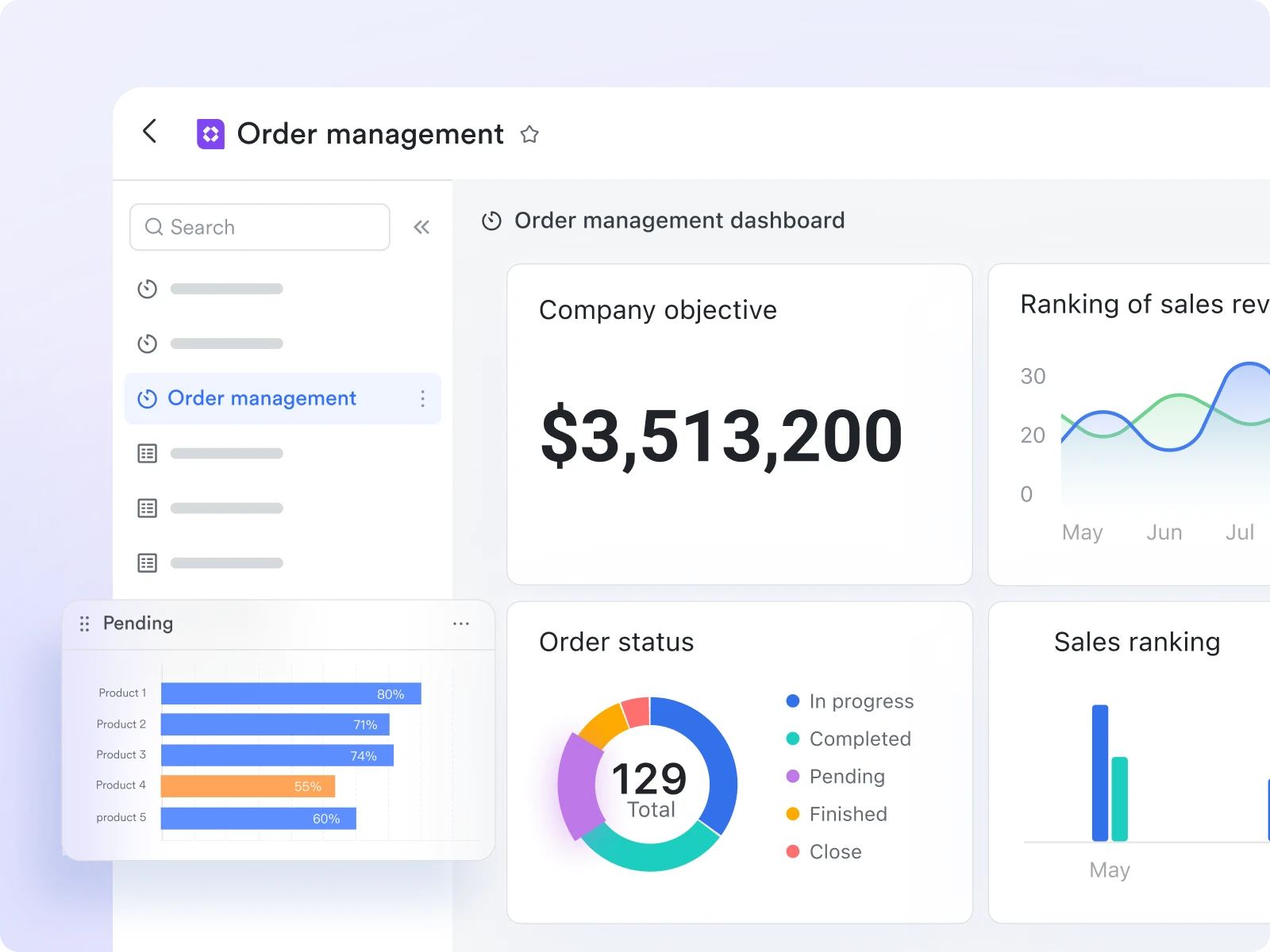
Every order can be tracked from initiation to fulfillment within Lark Base. Teams can view details such as order number, item description, quantity, assigned sales representative, price, customer name, and order date—all in one place. Views like Gantt views or Kanban boards help visualize delivery timelines, while automated status updates keep everyone informed about shipment progress.
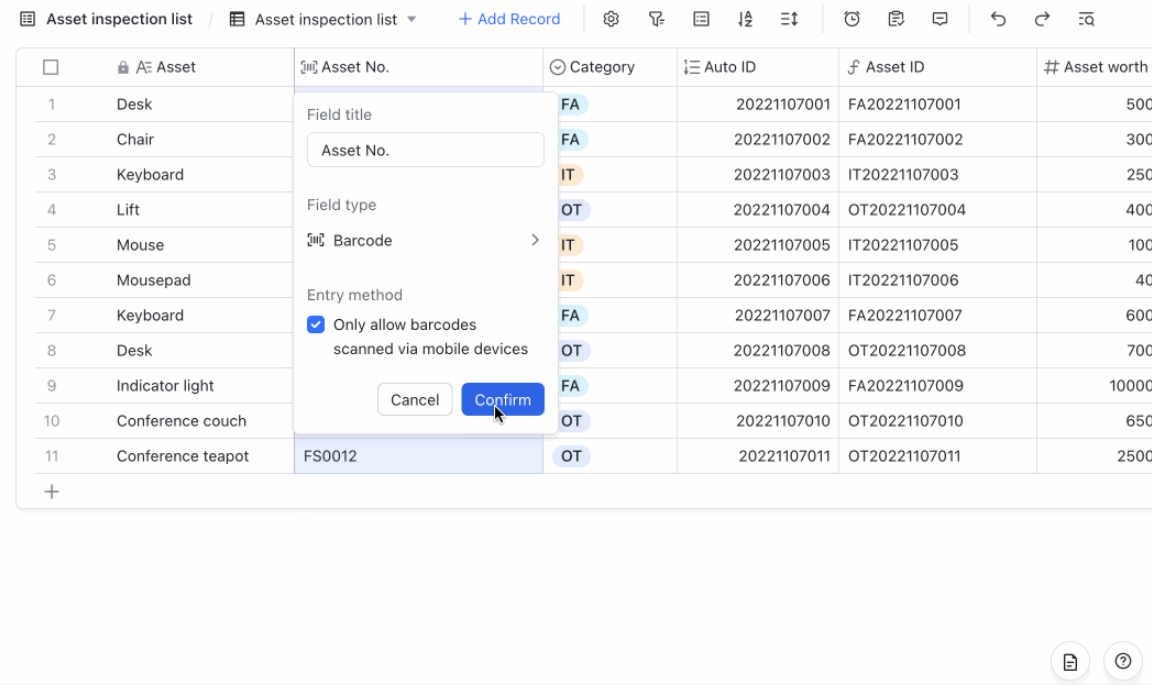
Barcode in Lark Base: Quickly catalog and update products
The built-in barcode scanning feature in Lark Base makes it easy to catalog products and update stock details without manual entry. This helps teams maintain up-to-date inventory information and minimize data discrepancies during order processing.
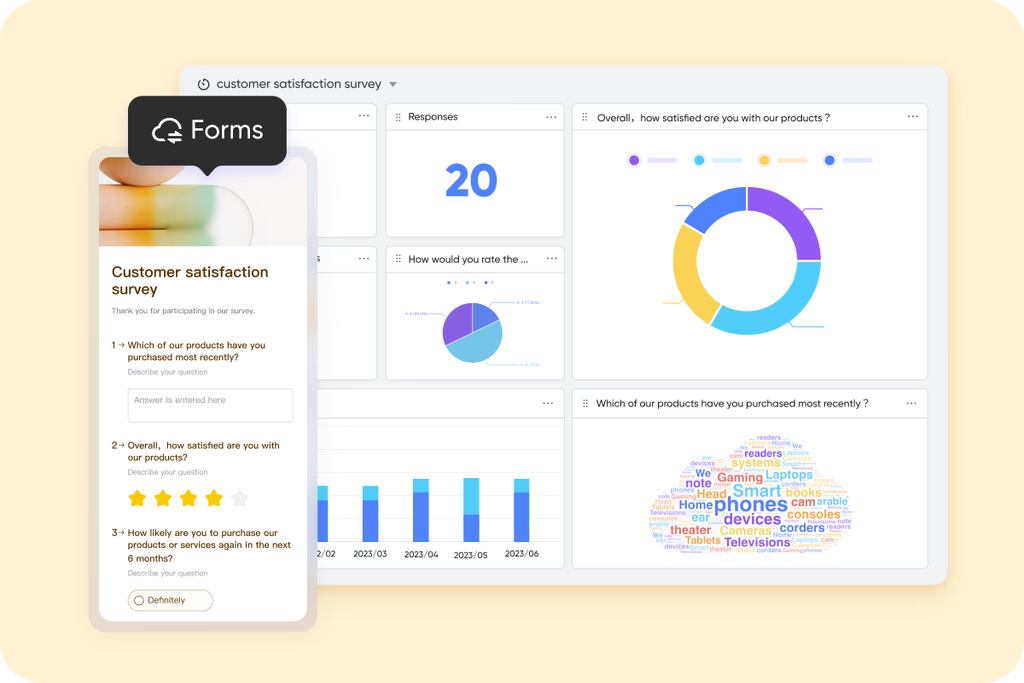
Lark Forms: Simplify product submissions and restocking requests
Using Lark Forms, teams can create shareable forms for product submissions or restock requests. When a form is submitted, the data automatically syncs with Lark Base, reducing administrative effort and keeping procurement pipelines organized. Automated alerts can also notify team members when inventory levels drop below a set threshold, helping prevent stockouts.
Templates in Lark: Streamline inventory and order tracking
Lark offers a gallery of templates that lets teams track inventory levels, product details, and order histories in one structured view. You can monitor stock quantities in real time by product type, category, or location, ensuring that procurement decisions are always backed by accurate data.
- Starter plan: Free forever plan that includes 11 powerful tools for up to 20 users. It also comes with 100GB of storage, 1000 automation runs, AI translations, and more.
- Basic plan: $6/user/month (billed annually) for up to 500 users. Includes everything in Starter plus unlimited message history, 5TB storage, 1,000 automation runs, and more. Some users may need to contact sales to purchase.
- Pro plan: $12/user/month (billed annually) for up to 500 users. It includes everything in Starter plus group calling for up to 500 attendees, 15TB of storage, 50,000 automation runs, and more.
- Enterprise plan: Contact sales for custom pricing. Supports unlimited users and includes even more automation runs and advanced security, compliance, and management features.
Free procurement management templates to get started
Getting started with procurement management is easier when you have the right project management tools and templates in place. Ready-made templates help teams organize supplier data, track purchase orders, and monitor performance with minimal setup. They also ensure consistency and accuracy across every procurement process. Explore these free procurement management templates from Lark to simplify your sourcing, purchasing, and reporting workflows from day one.
Procurement management template
Procurement is a critical function in any organization, and managing it effectively can be a daunting task. This Procurement management template is designed to simplify the process by providing a comprehensive platform for managing all aspects of procurement. It includes features for supplier management, material management, purchase order tracking, inventory management, and more. With this template, you can easily search for specific items, view and manage your warehouse inventory, and keep track of your suppliers and their contact information.
Action plan for procurement template
The action plan for procurement template is designed to help you streamline your procurement process and ensure that all necessary steps are taken to successfully procure goods or services. It includes a list of action items, their priorities, due dates, start dates, responsibilities, required resources, desired outcomes, and any remarks or additional notes. This template serves as a comprehensive guide for managing the procurement process from start to finish, ensuring that all tasks are completed on time and within budget.
Procurement supplier performance review template
The Supplier performance review template for Procurement Managers is a comprehensive tool designed to assess and analyze the performance of different suppliers across key categories. By evaluating factors such as quality rating, delivery timeliness, cost effectiveness, service support, overall satisfaction, and recommendation, procurement managers can make informed decisions about which suppliers to continue working with and which ones may need improvement or replacement. This template provides a structured approach to supplier evaluation and helps streamline the procurement process.
Procurement, sales, and inventory system for chain stores
This template is a comprehensive system designed to manage procurement, sales, and inventory for chain stores. It includes sections for procurement management, sales management, inventory management, product management, and store management. The template allows you to track purchase lists, purchase dates, purchase quantities, purchased goods, and store details. It also includes features for adding records, customizing fields, filtering, grouping, sorting, and conditional coloring.
Procurement performance template
Procurement performance metrics are crucial for evaluating the effectiveness and efficiency of your procurement processes. This template allows you to track key metrics such as cost reduction, supplier lead time, purchase order cycle time, contract compliance rate, supplier defect rate, on-time delivery, procurement ROI, and supplier risk management. By monitoring these metrics, you can identify areas for improvement, optimize your procurement strategies, and drive cost savings for your organization.
Executive procurement dashboard template
Procurement data is crucial for any organization to track spending, supplier performance, cost savings, and compliance rates. This procurement dashboard template allows executives to visualize and analyze key procurement metrics in a user-friendly format. From total spend to compliance rates, this template provides a comprehensive overview of the procurement process.
Purchase order management template
Start seamless purchase order management immediately with a template designed to simplify your purchase order process. Easily create, manage, and print orders, utilising customizable templates. Enhance efficiency in tracking purchase orders, ensuring accuracy from creation to completion.
Compliance procurement policy template
Managing procurement policies and compliance can be a daunting task, especially when dealing with multiple vendors and departments. This template helps compliance officers track expenditure, review compliance status, and ensure that all procurement activities align with the organization's policies and regulations.
Best practices in procurement management
Implementing best practices helps organizations maintain control, efficiency, and compliance throughout the procurement lifecycle. Here are some widely recognized procurement best practices every team should follow:
- Adopt a clear procurement policy: Define guidelines for approvals, sourcing, vendor evaluation, and documentation to ensure consistency and transparency.
- Embrace automation: Use procurement management software to automate repetitive tasks such as purchase approvals, invoice tracking, and supplier performance reviews.
- Enhance supplier diversity: Build a diverse supplier base to reduce dependency on a few vendors and encourage innovation and competitive pricing.
- Conduct regular audits: Schedule periodic reviews to assess process compliance, spending accuracy, and contract performance.
- Promote sustainability: Integrate sustainability and ethical sourcing principles into procurement strategies to strengthen brand reputation.
- Train your procurement team: Keep teams updated with the latest procurement tools, negotiation techniques, and compliance standards.
By embedding these practices into everyday operations, organizations can achieve greater transparency, cost efficiency, and stronger supplier partnerships.
Conclusion
Effective procurement management is essential for achieving operational efficiency, cost savings, and strong supplier relationships. By streamlining every stage from planning and sourcing to contract management and performance evaluation, organisations can ensure transparency and accountability across all purchases.
Modern procurement management systems and tools like Lark make it easier to centralise supplier data, automate approvals, and monitor spending in real time. Whether managing direct, indirect, or project procurement, digital solutions empower teams to make smarter, data-driven decisions. Ultimately, strong procurement management supports business growth, risk reduction, and long-term value creation.
FAQs
How does automation improve procurement management?
Automation streamlines repetitive procurement tasks like approvals, purchase order creation, and invoice matching. It reduces human errors, shortens cycle times, and ensures real-time updates across departments. This leads to faster decision-making, improved compliance, and higher operational efficiency.
What is the role of risk management in procurement?
Risk management helps identify, assess, and mitigate potential disruptions in the supply chain. It covers areas like supplier reliability, price fluctuations, and contract compliance. Effective procurement risk management safeguards operations, ensures continuity, and minimizes financial or reputational losses.
What are the benefits of digital procurement management systems?
Digital systems centralize supplier data, automate workflows, and provide full visibility into spending and performance. They enable better forecasting, improved collaboration, and stronger compliance. Ultimately, procurement management software enhances efficiency and drives smarter purchasing decisions.
Can Lark support procurement reporting and analytics?
Yes, Lark supports real-time reporting and analytics within tools like Lark Base. Teams can track spending, supplier performance, and process efficiency through customizable dashboards. This helps organizations make data-driven procurement decisions and continuously optimize their strategies.
Related reading
Table of contents
Start using Lark today

Manage all your work in one place
Boost team efficiency by 10x
Save up to 70% on software costs
Table of contents
Start using Lark today
Manage all your work in one place
Boost team efficiency by 10x
Save up to 70% on software costs
Keep reading







2026 Lark Technologies Pte. Ltd.
Headquartered in Singapore with offices worldwide.






Explore: