Imagine a quarterly planning meeting where dozens of project proposals compete for attention. Each idea has merit, yet budgets, people, and time are clearly limited. Some leaders push for strategic initiatives, others advocate for urgent operational fixes, and teams wait for direction. In situations like this, relying on instinct alone often leads to frustration and misalignment. Project scoring offers a more structured way forward. By applying clear criteria and consistent evaluation logic, organizations can compare initiatives fairly and make decisions they can explain with confidence. The sections below focus on three practical areas users care most about: the main types of project scoring models, how to build one step by step, and the common mistakes that can quietly undermine even well‑designed scoring efforts.
What is project scoring in project management?
Project scoring is a structured method for evaluating, comparing, and prioritizing projects based on predefined criteria. In , it is often implemented through a project scoring model or a project scoring matrix, where each proposed project is assessed against factors such as strategic alignment, value, effort, and risk.
Unlike simple ranking—where projects are ordered based on intuition or informal discussion—a scoring model in project management assigns scores to each criterion and aggregates them into an overall priority score. This makes trade‑offs explicit and allows teams to explain why one project ranks higher than another.
Project scoring also differs from gut‑feel decisions in important ways. Gut‑feel prioritization may work in very small teams or short‑term situations, but it does not scale well. As portfolios grow, subjective decision‑making often leads to inconsistency, frustration, and a lack of trust. A scoring approach introduces consistency while still leaving room for discussion and judgment.
Within (PPM), project scoring plays a central role. It helps organizations evaluate initiatives across departments, balance short‑term wins with long‑term strategy, and ensure limited resources are invested in the most meaningful work. In this context, project scoring supports project prioritization, portfolio reviews, and ongoing decision‑making rather than acting as a one‑time exercise.
Eager to start project scoring in PM now?
Why project scoring matters for modern organizations
Modern organizations operate in environments defined by change, uncertainty, and competing priorities. Without a clear prioritization approach, even well‑intentioned teams can struggle to focus on the right work.
Poor prioritization comes at a cost. Teams may spend months that create limited impact, while more strategic initiatives are delayed or abandoned. Decision‑making becomes reactive instead of intentional, and resources are spread too thin across too many initiatives.
When organizations lack a structured scoring approach, several failure patterns tend to appear:
- Political decisions often dominate prioritization discussions. Projects backed by influential stakeholders move forward, regardless of strategic value, while less visible but important work is postponed.
- Overloaded teams attempt to deliver too many projects at once. This reduces quality, increases burnout, and ultimately slows down delivery.
- Misalignment with strategy becomes common. Projects may sound useful in isolation but fail to support broader organizational goals.
Project scoring directly addresses these challenges. By applying a consistent project prioritization scoring model, organizations create a shared language for discussing value, effort, and risk. Scoring does not remove debate; instead, it channels discussion into a more constructive and transparent form.
When implemented well, project scoring supports:
- Transparency, because stakeholders can see how and why decisions are made.
- Alignment, because scoring criteria reflect strategic priorities rather than individual preferences.
- Better , because teams can focus on fewer, higher‑impact projects instead of attempting everything at once.
In this sense, project scoring is not just a tool—it is a discipline that strengthens decision quality over time.
Core components of an effective project scoring model
A strong scoring approach does not require complexity, but it does require clarity. Whether you are building a scoring model for project selection or refining an existing one, several core components consistently make the difference between a useful model and a frustrating one.
Clear and measurable scoring criteria
The foundation of any project scoring and ranking process is well‑defined criteria. These criteria should reflect what truly matters to the organization and be understandable to everyone involved in scoring. Common criteria include:
- Strategic alignment, which assesses how closely a project supports organizational goals or key initiatives. This ensures that high‑scoring projects move the strategy forward, not just local interests.
- Business value or , which considers the potential benefits a project may deliver. While exact financial data is not always available, teams can still evaluate relative value in a structured way.
- Cost and effort, which look at the resources required to deliver the project. This helps balance ambitious ideas with practical capacity constraints.
- Risk and uncertainty, which account for technical complexity, dependencies, or external factors that could affect delivery.
- Resource availability, which reflects whether the right skills and people are realistically available within the desired timeframe.
Clear criteria reduce ambiguity. When scorers interpret criteria differently, the resulting scores lose meaning. Taking time to define what each criterion means in practice is essential for consistency.
Weighted importance of criteria
Not all evaluation criteria carry the same importance. A project that strongly supports long‑term strategy may deserve higher priority than one focused only on short‑term efficiency, depending on organizational goals. Weighting helps make these differences explicit. A weighted scoring model project management approach assigns different weights to criteria to reflect their relative importance:
- During periods of transformation, strategic alignment may be weighted more heavily than cost or effort.
- In resource‑constrained periods, feasibility and effort may receive greater emphasis.
- In risk‑sensitive environments, uncertainty and dependencies may carry additional weight.
Using a weighted scoring model for project selection makes trade‑offs visible and intentional. Instead of debating priorities on a case‑by‑case basis, weighting embeds strategic intent directly into the model. This also makes it easier to explain decisions to stakeholders, because the logic behind prioritization is transparent.
Consistent scoring scales
Scoring scales convert judgment into comparable values so projects can be evaluated consistently. These scales can be qualitative, quantitative, or a combination of both. Common approaches include:
- Qualitative scales, such as "low," "medium," and "high," work well when precise data is unavailable.
- Quantitative scales, using numerical ranges, are common in a scoring model in project management because they support aggregation and comparison.
Consistency matters more than precision. A frequent pitfall is false precision—using overly detailed numbers that imply accuracy beyond what the information supports. To avoid this:
- Use simple, clearly defined scales.
- Ensure all scorers interpret scale levels in the same way.
- Focus on relative differences between projects rather than exact scores.
A well‑designed project scoring matrix balances structure with practicality, enabling teams to evaluate projects efficiently without overanalyzing every detail.
Benefits of scoring models in project selection
Clearer and more objective decision‑making
- Scoring models provide a structured way to compare projects using shared criteria.
- A consistent scoring model in reduces reliance on intuition and personal influence.
- Teams can focus discussions on evidence and assumptions rather than opinions.
Stronger alignment with strategy
- Strategic priorities are embedded directly into the evaluation criteria and weights.
- A weighted scoring model for project selection helps ensure that high‑ranking projects support long‑term goals, not just short‑term gains.
- Decision rationale becomes and defend.
Improved fairness and transparency
- All projects are assessed using the same standards, which reduces bias.
- A clear project scoring matrix makes trade‑offs visible and understandable to stakeholders.
- Transparency builds trust, even when some projects are deprioritized.
Greater efficiency and scalability
- Scoring models reduce repetitive debates by creating a repeatable process.
- Teams can refine inputs over time instead of restarting prioritization discussions.
- This supports consistent project scoring and ranking as portfolios grow and evolve.
Experience all these benefits in an all-in-one tool
Types of project scoring models explained
Not all project scoring approaches are created equal. Different organizations, teams, and decision contexts require different levels of structure. Understanding the main types of project scoring models helps you choose an approach that supports decision‑making rather than adding unnecessary complexity.
Simple scoring models
Simple scoring models are often the first step organizations take when moving away from informal or intuition‑based prioritization. These models typically evaluate projects against a short list of criteria, using equal weights or no explicit weighting at all. Their main advantage is accessibility: - Teams can quickly understand how scores are assigned.
- Scoring sessions tend to move faster and require less facilitation.
- The model is easy to introduce with minimal training or setup.
However, simplicity has clear limitations. When all criteria are treated as equally important, the model may fail to reflect real strategic trade‑offs. For example, a low‑effort project with modest value may rank higher than a strategically critical initiative that requires greater investment. In these situations, project scoring and ranking can feel misleading rather than helpful. Simple scoring works best when the decision context is narrow:
- Small or early‑stage teams
- Initial idea screening or backlog grooming
As portfolios grow more complex, organizations typically need a more nuanced scoring model in project management to handle competing priorities and resource constraints.
Weighted scoring models
Weighted scoring models are the most widely used form of project scoring, particularly in medium to large organizations. A weighted scoring model for project selection assigns different importance levels to each criterion, reflecting what matters most at a given point in time.
This approach is popular because it mirrors how decisions are actually made. In real discussions, factors such as strategic alignment, value, risk, and effort rarely carry equal weight. A weighted scoring model makes these preferences explicit rather than leaving them implied. The underlying logic is straightforward:
- Projects are scored against each criterion.
- Each score is multiplied by the criterion's assigned weight.
- The weighted scores are combined into an overall project score.
While the calculation itself is simple, the real value lies in the conversations around criteria and weights. These discussions clarify priorities, surface disagreements early, and reveal hidden assumptions that might otherwise go unchallenged. For example:
- In transformation‑focused organizations, strategic alignment may dominate the scoring.
- During resource‑constrained periods, feasibility and effort may receive greater emphasis.
This flexibility explains why weighted models are widely used across business initiatives and IT project scoring, where technical complexity, dependencies, and risk must be carefully balanced.
Popular prioritization frameworks
In addition to custom scoring models, many teams use established prioritization frameworks as part of their project scoring approach. These frameworks can complement or inspire a broader scoring model, especially when teams want a shared reference point. Commonly used frameworks include:
- RICE, which evaluates reach, impact, confidence, and effort, is frequently used in product and innovation contexts.
- WSJF, which emphasizes the cost of delay relative to job size and is commonly applied in lean and agile environments.
- ICE, which prioritizes ideas based on impact, confidence, and ease, offers a lightweight structure for early evaluation.
- MoSCoW, which categorizes work into must‑have, should‑have, could‑have, and won't-have items, is useful for scope discussions rather than detailed ranking.
These frameworks are not mutually exclusive with other approaches. Many organizations adapt elements of them into a broader scoring model for project selection. The key is understanding what each framework emphasizes and ensuring it aligns with your specific decision‑making needs.
How to build a project scoring model step by step
Designing a project scoring model does not require advanced mathematics, but it does require discipline and clarity. The following steps provide a practical path for building a model that supports consistent decisions.
Step 1: Define your decision context
Before choosing criteria or weights, clarify the context in which the model will be used. Is the goal to prioritize projects across the entire organization, or to help a single team decide what to work on next?
At the portfolio level, a scoring matrix helps leaders compare initiatives across departments and balance strategic themes. At the team level, the model may focus more on delivery constraints and near‑term impact. Defining the audience also matters. A model built for executives may emphasize strategy and value, while one designed for delivery teams may focus on effort and risk.
Clarity at this stage prevents frustration later. When people understand what decisions the model is meant to support, they are more likely to trust and use it.
Step 2: Select and define scoring criteria
Criteria selection is where many models succeed or fail. Effective criteria are specific, relevant, and clearly defined. Vague labels like "importance" or "benefit" invite inconsistent interpretation and weaken the model.
Each criterion should be described in practical terms. For example, strategic alignment might be defined as how directly a project supports stated organizational priorities. Effort might include not just development work but also coordination and .
Aligning criteria with strategy is essential. If the criteria do not reflect what leadership actually cares about, the resulting scores will feel disconnected from real decisions. A well‑designed project scoring matrix acts as a translation layer between strategy and execution.
Step 3: Assign weights to criteria
Once the criteria are defined, weights translate priorities into the model. There are many techniques for assigning weights, from facilitated workshops to pairwise comparisons. Regardless of the method, the goal is not mathematical perfection but shared understanding.
Common pitfalls include overcomplicating weighting schemes or avoiding difficult trade‑offs. If everything feels important, the model loses focus. Explicit weighting forces prioritization and surfaces disagreements early, when they are easier to address. Weights should also be revisited over time. Changes in strategy, market conditions, or capacity may justify adjustments. A flexible approach keeps the project prioritization scoring model relevant.
Step 4: Score projects consistently
Consistency in scoring is critical. Different scorers may interpret criteria differently, leading to unreliable results. Calibration sessions help address this issue by aligning expectations before scoring begins.
During calibration, teams discuss sample projects and agree on what different score levels mean in practice. This reduces bias and improves comparability. While subjectivity cannot be eliminated, it can be managed through shared understanding.
In contexts like scoring, where technical complexity varies widely, calibration is especially important. It ensures that scores reflect relative differences rather than individual optimism or caution.
Step 5: Calculate and interpret project scores
After scoring, the final numbers often attract the most attention. It is important to remember what scores mean and what they do not. Scores indicate relative priority based on the chosen criteria and weights at a specific point in time.
They are not precise predictions, nor should they replace judgment. A scoring model in may show two projects with similar scores, prompting discussion rather than a definitive answer. Used well, scores guide conversation and highlight trade‑offs.
Interpreting results thoughtfully helps teams avoid treating the model as an unquestionable authority. The strongest decisions combine structured scoring with informed judgment.
Common mistakes in project scoring and matching solutions
Even well‑intentioned project scoring efforts can fall short if common pitfalls are overlooked. Identifying these mistakes —and addressing them directly—helps organizations get lasting value from project scoring.
Treating project scoring as a one‑time exercise
When scoring models are created and then left unchanged, they quickly lose relevance as priorities, risks, and resources evolve.
How to avoid it: Schedule regular review cycles to revisit scores, criteria, and assumptions so the model reflects current reality.
Overengineering the scoring model
Too many criteria or overly complex calculations slow decision‑making and discourage adoption across teams.
How to avoid it: Start with a small set of and refine the model only when additional complexity delivers clear decision value.
Ignoring the qualitative context behind the scores
Numbers alone cannot capture nuances such as stakeholder readiness, organizational change impact, or regulatory constraints.
How to avoid it: Pair quantitative scores with brief qualitative explanations that document key assumptions, risks, and considerations.
Letting scores replace human judgment
Treating scores as absolute truths can lead to rigid decisions that overlook important context.
How to avoid it: Use project scoring as an input to discussion, not the final decision, and encourage informed judgment alongside the numbers.
Failing to revisit underlying assumptions
Strategies shift, risks change, and capacity constraints evolve, but outdated assumptions weaken trust in the model.
How to avoid it: Periodically reassess criteria definitions and weights to ensure the scoring model in project management remains aligned with organizational priorities.
By pairing each common mistake with a clear solution, teams can use project scoring to bring structure and confidence to prioritization—while preserving the human judgment that ultimately makes decisions effective.
Eager to avoid mistakes in project scoring?
How Lark supports project scoring in real organizations
Once teams understand the value of a scoring model in project management, a new set of challenges emerges. Scores are calculated, but they quickly become outdated. Context gets lost between meetings. Stakeholders question decisions because they cannot see the reasoning behind them. These issues are not caused by the scoring logic itself, but by how it is managed over time.
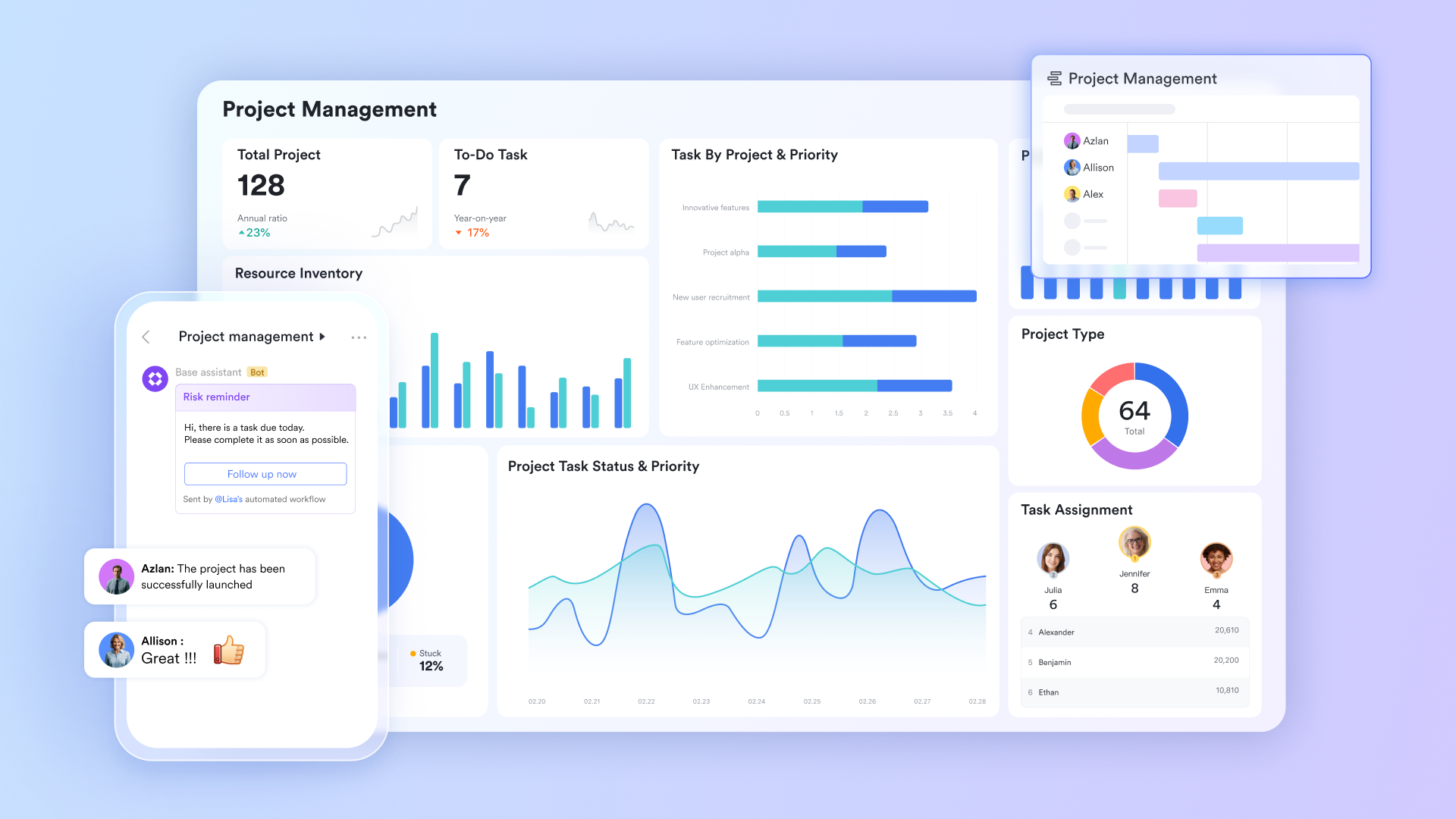
This is where matter. should be viewed as an enabler that helps organizations operationalize project scoring, not as the focus of the process. The real goal is to make project scoring visible, explainable, and connected to action.
Centralized project records with Lark Base
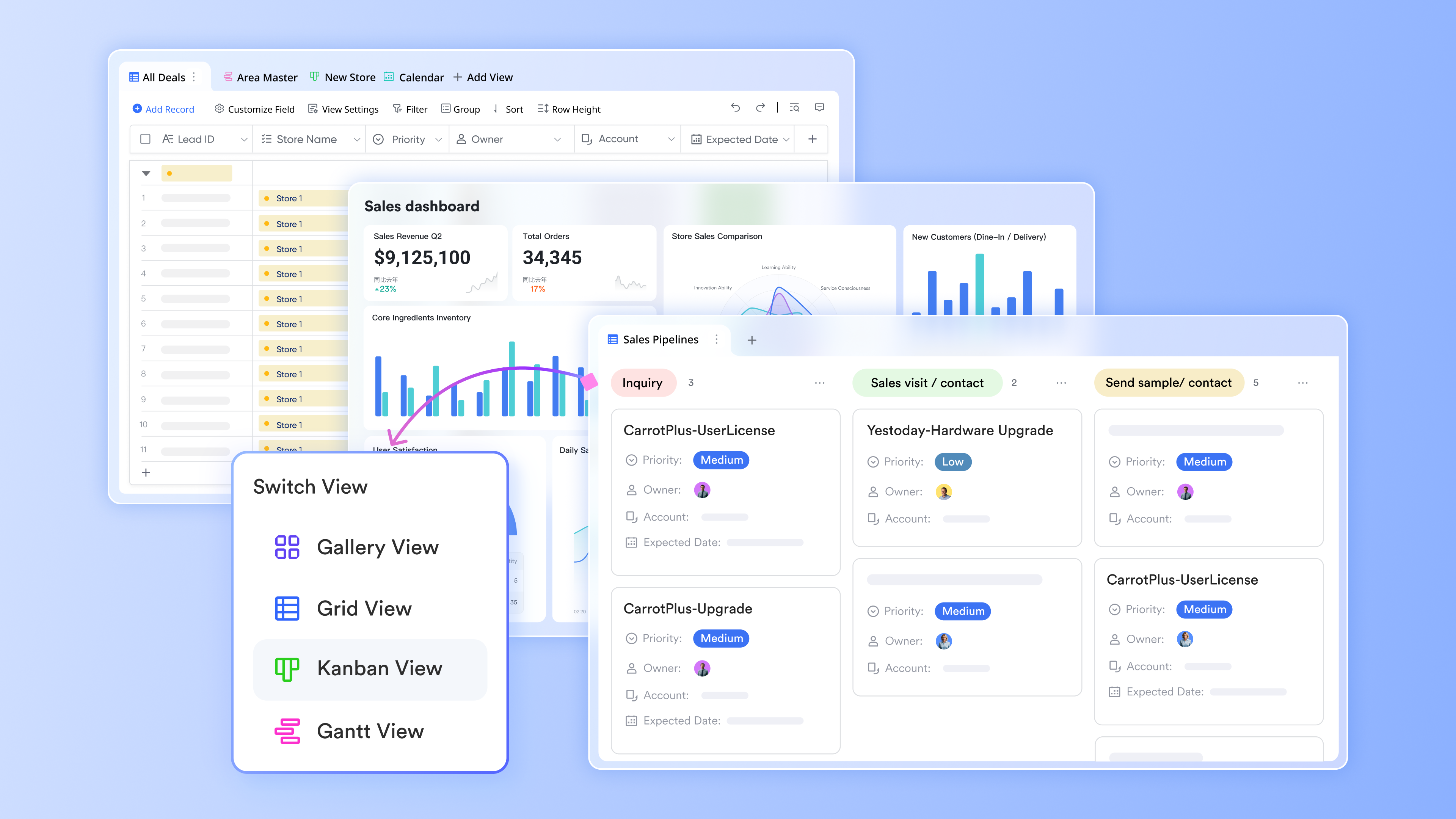
Many teams start project scoring in spreadsheets, but these quickly become fragmented and outdated. Projects are treated as static rows, and context is lost as soon as priorities shift. With , each project becomes a structured record rather than a spreadsheet entry:
- Clearly defined fields for scoring criteria, weights, assumptions, and status
- Consistent definitions that support a shared project prioritization scoring model
- One centralized source of truth accessible to all stakeholders
This structure makes it easier to maintain an accurate project scoring matrix and ensures that scoring logic is applied consistently across teams.
Automated score updates with workflow and formulas
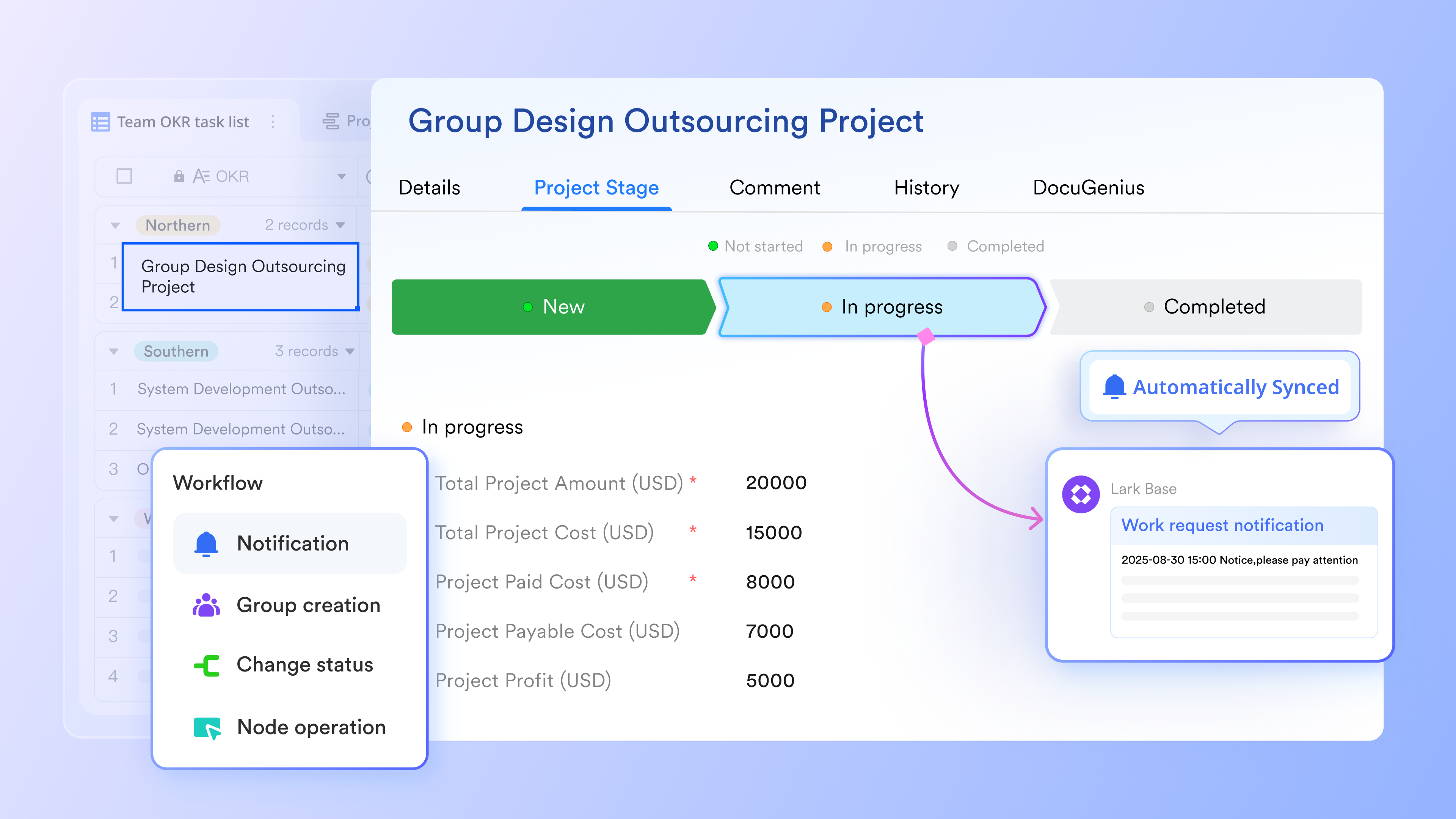
A common failure in project scoring is treating it as a one‑time exercise. When assumptions change, teams often rebuild models manually—or don't update them at all. enhances project scoring through automated workflows:
- Automated score updates: When inputs or assumptions change, scores are recalculated instantly, ensuring that the latest information informs decisions.
- Dynamic prioritization: The system keeps weighted scoring models current, eliminating the need for manual rework and minimizing the risk of human error.
- Consistency and reliability: Real-time updates allow teams to make informed choices based on accurate data, reinforcing project scoring as an ongoing, responsive decision-support process.
This automation transforms project scoring from a static ranking system into a dynamic tool that evolves with organizational needs, fostering agility and clarity in decision-making.
Multiple views for different stakeholders
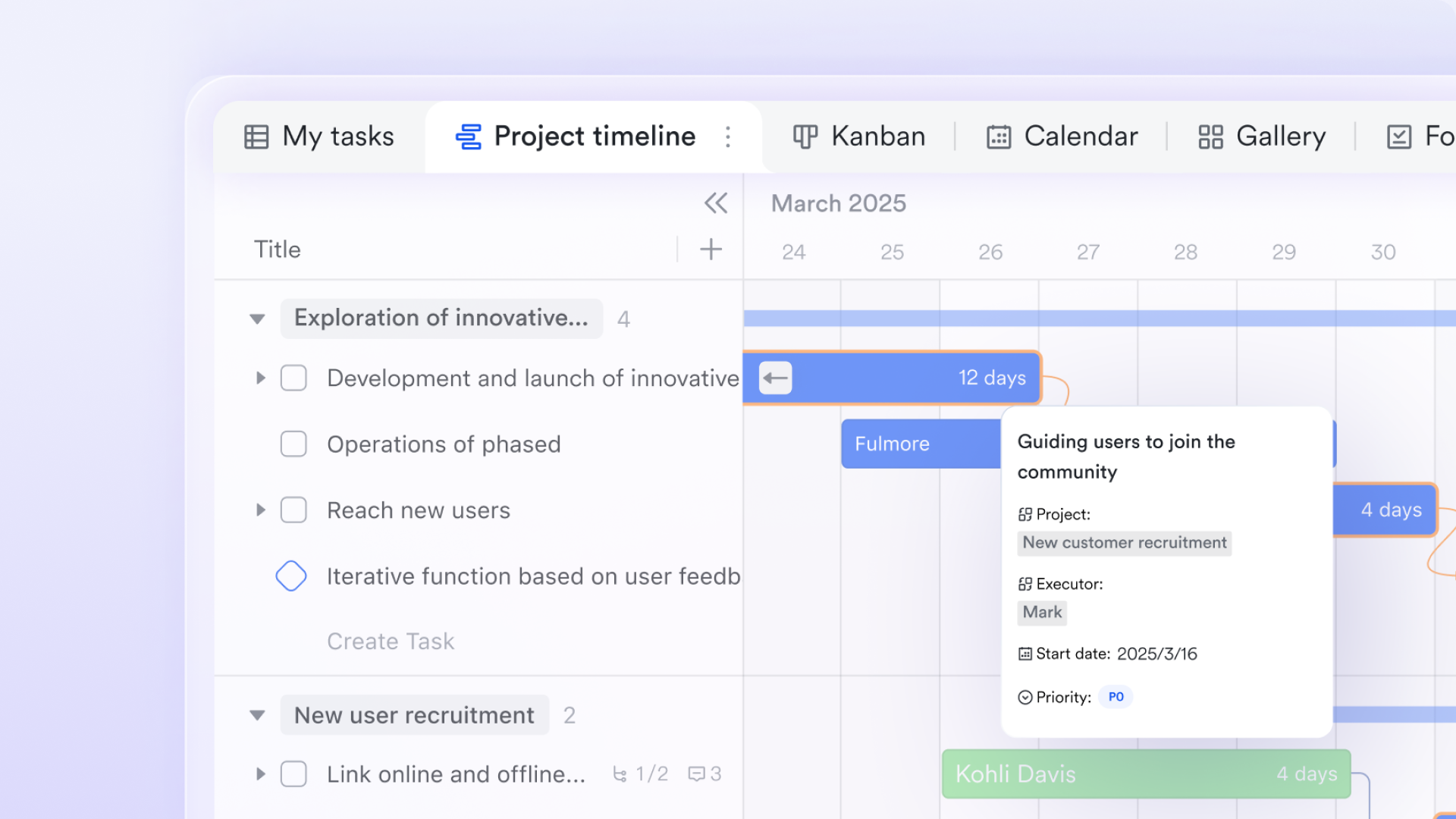
Different roles need different ways to engage with project scoring:
- Executives may focus on strategic alignment and portfolio balance
- Delivery teams may prioritize feasibility, dependencies, and risk
supports multiple views of the same data, such as table, , or timeline views. This allows each group to interact with project scores at the level that matters to them—without duplicating data or breaking alignment. Historical tracking of score changes also makes it easier to understand how and why priorities evolved over time, strengthening trust in the scoring process.
Documented scoring rationale with Lark Docs
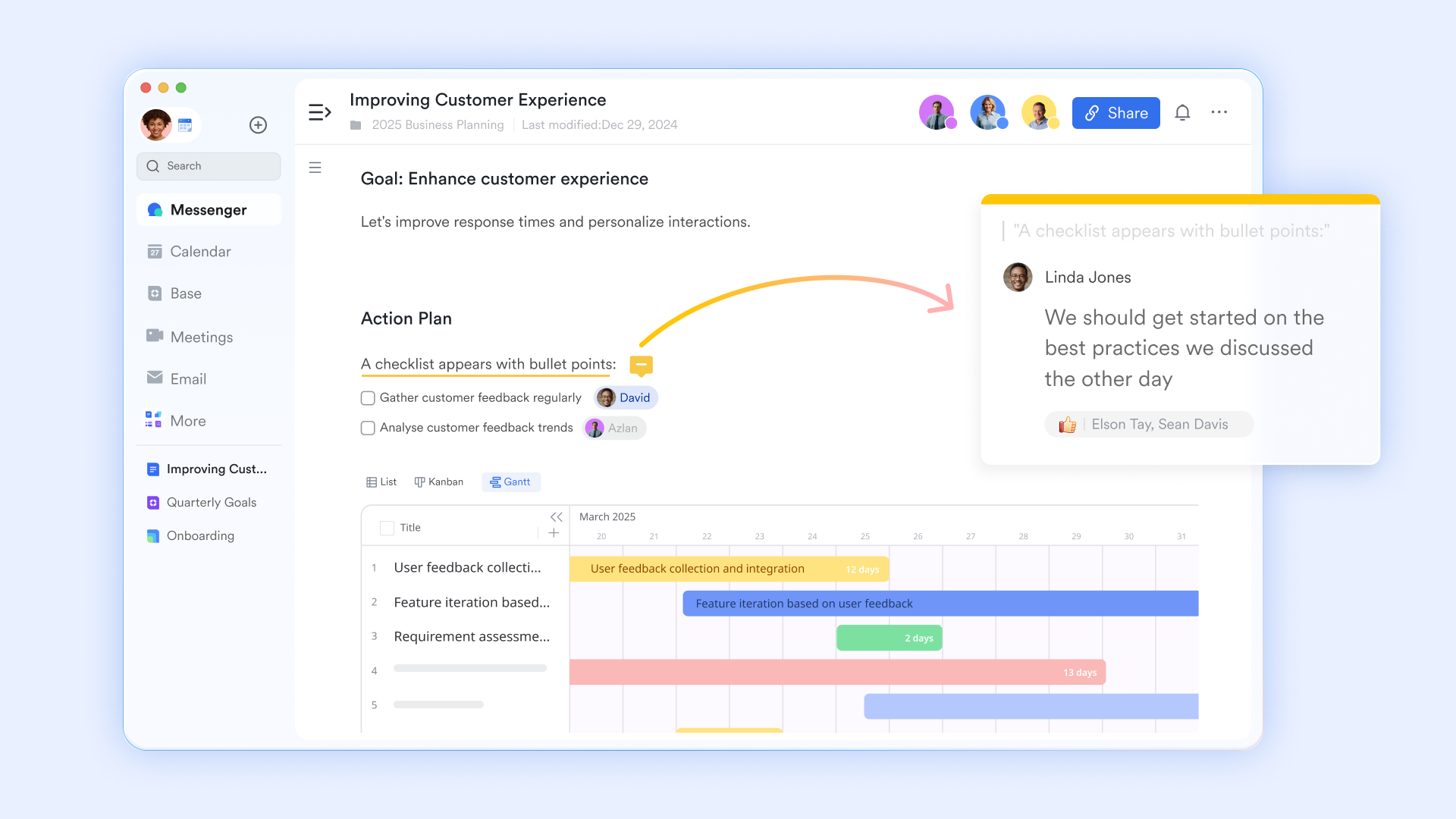
Project scores alone rarely answer the question, "Why did this project rank higher?" Behind every number are assumptions, trade‑offs, and qualitative judgments.
With , teams can:
- Document the rationale behind scores and weights
- Capture uncertainties, risks, and qualitative context
- Link explanations directly to project records in Base
This qualitative layer complements quantitative scoring and makes a weighted scoring model project management approach easier to understand, defend, and improve.
Project scoring as a living system
Together, these capabilities help organizations operationalize project scoring:
- Visible: Scores, assumptions, and decisions are easy to see
- Explainable: Context and rationale are documented and shared
- Action‑oriented: Prioritization directly influences execution
Rather than replacing judgment, Lark supports better judgment—making project scoring a practical, trusted part of everyday decision‑making.
:
- Starter plan: Free forever plan with 11 powerful tools for up to 20 users, 100GB storage, 1,000 automation runs, AI translations, and more. No credit card needed.
- Pro plan: $12/user/month (billed annually) for up to 500 users. Includes everything in Starter plus group calling for up to 500 attendees, 15TB storage, 50,000 automation runs, and more.
- Enterprise plan: for custom pricing. Supports unlimited users and includes advanced automation, security, compliance, and management features.
For small teams with simple communication needs

18 months message history
1000 Base automation runs/month
2000 rows per table in Base
Most POPULAR
For companies with comprehensive collaboration and management needs
Unlimited message history
500-participant video meetings
50k Base automation runs/month
20k rows per table in Base
For large companies with advanced security and organizational management needs
Get a personalized demo and pricing
Unlimited message history
500-participant video meetings
15 TB storage + 30 GB storage/user
500k Base automation runs/month
50k Base automation runs/month
Most POPULAR
For companies with comprehensive collaboration and management needs
Unlimited message history
500-participant video meetings
50k Base automation runs/month
20k rows per table in Base
How to evaluate whether your project scoring model is working
Implementing project scoring is only the first step. Its real value lies in whether it consistently improves decision‑making.
A healthy project scoring system shows clear signals:
- Decision discussions are more focused because teams share a common evaluation framework.
- Stakeholders can explain why projects were prioritized or deferred, even when they disagree.
- Fewer projects compete for attention at the same time, reducing overload and improving delivery focus.
Evaluation should go beyond the final score:
- Consistent use of criteria across teams suggests alignment.
- Frequent overrides or exceptions may indicate the model does not reflect real priorities.
- How teams discuss scores often reveals more than the numbers themselves.
Strong scoring models improve through feedback and review:
- Teams regularly reflect on what worked and what didn't after each prioritization cycle.
- Criteria, weights, and assumptions are adjusted as strategy, capacity, or conditions change.
Ultimately, project scoring succeeds when it improves —not when it produces perfect calculations. When teams feel aligned, confident, and transparent in their choices, the model is doing its job.
Conclusion
Project scoring is best understood as a decision-support tool, not a formula that replaces judgment. Whether an organization uses a simple framework or a more structured project prioritization scoring model, the purpose remains the same: to make trade-offs visible and decisions explainable. Starting simple is often the most effective approach. As teams gain experience, they can refine criteria, adjust weights, and improve how scores are used. Over time, project scoring becomes part of how the organization thinks, not just how it calculates.
Tools like support this journey by making project scoring easier to maintain, easier to explain, and easier to connect to action. When combined with thoughtful design and regular reflection, project scoring brings clarity, alignment, and transparency to one of the most challenging aspects of modern work: Deciding what truly deserves attention.
Uncover Lark's project scoring assistance
FAQs
What is project scoring?
Project scoring is a structured decision‑making approach that evaluates projects against defined criteria, such as value, effort, risk, and strategic alignment, to objectively compare, rank, and prioritize initiatives.
What are the 5 levels of priority?
A common five‑level priority scale includes critical, high, medium, low, and optional. It helps teams distinguish urgent, high‑impact work from initiatives that can be delayed or deprioritized.
What is the 1 3 9 scoring method?
The 1‑3‑9 scoring method is a simple prioritization technique where 1 means low impact, 3 means medium impact, and 9 means high impact, emphasizing meaningful differences between options.
What is a project score?
A project score is the combined result of evaluating a project across multiple criteria, often using a scoring model, to represent its relative priority compared with other projects.
Why do spreadsheets often fail in project scoring?
Spreadsheets are static and hard to maintain at scale. As priorities change, formulas break, context is lost, and collaboration becomes difficult, which can undermine trust in scoring results.
Related reading