














Agile Principles Explained: A Practical Guide

Ryan Tanner
Product Marketing Specialist
Sep 18, 2026
Ryan Tanner
Sep 18, 2026

21 min read


Agile principles form the backbone of the Agile Manifesto, offering practical guidance for how teams can deliver value in a fast-changing world. Instead of rigid processes and heavy documentation, they emphasize people, collaboration, and working results that create real impact. These principles serve as a compass, guiding teams to stay focused on customers while adapting to shifting priorities and challenges.
There are 12 key principles at the heart of the Agile Manifesto, each designed to shape decision-making and daily practices. From software development to project management and modern cross-functional teamwork, these principles continue to guide how organizations innovate, collaborate, and thrive. Today, digital platforms like Lark make it easier for teams to put these principles into practice—by unifying communication, planning, and collaboration into one seamless workspace.

What are agile principles?
Agile principles are the guiding practices that bring the Agile Manifesto to life. When the manifesto was introduced in 2001, it outlined four core values: individuals and interactions, working software, customer collaboration, and responding to change. These values express the mindset, but principles explain how to apply that mindset in everyday work. Think of values as the "why" and principles as the "how."
For example, while Agile values emphasize collaboration, a principle may highlight the need for face-to-face communication to achieve it. This makes principles more actionable and practical for teams. If you have ever wondered: What is the first agile principle? The answer lies in these 12 principles that detail how to deliver value continuously, adapt quickly, and keep customers at the center of product development.
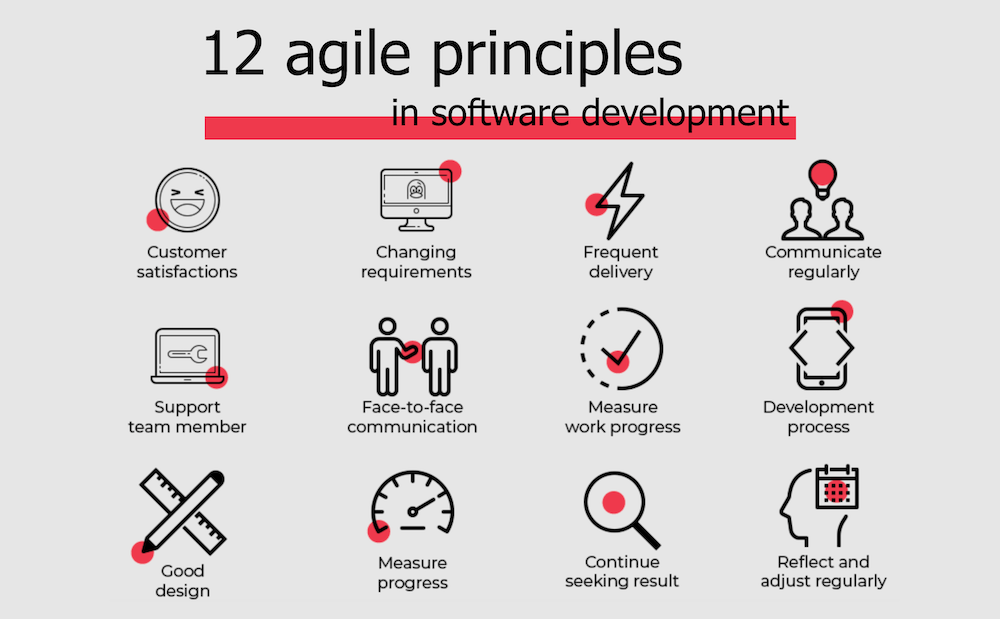
Image source: designveloper.com
The 12 principles of agile explained
The 12 principles of the Agile Manifesto guide teams in creating flexible, collaborative, and customer-focused work environments. They act as practical extensions of the four Agile values, ensuring that teams not only understand the philosophy but also know how to put it into action. These principles remain essential for building products that can adapt quickly to evolving customer needs and market conditions.
If you've ever asked what the first agile principle is, it's all about prioritizing customer satisfaction through the early and continuous delivery of valuable software. This principle sets the tone for the rest, reminding teams that real value comes from serving customers consistently. Below, we walk through all 12 principles with real-world context—helping you recognize which of the following is an agile manifesto principle and how it applies in practice.
Principle 1: Customer satisfaction through early and continuous delivery
The first agile principle emphasizes that satisfying the customer is the highest priority. Teams achieve this by delivering valuable features frequently rather than saving everything for a massive release. For example, instead of a yearly launch, a team might release a small update every two weeks. This not only builds trust but also gives customers a chance to provide feedback early in the process. Continuous delivery ensures that the product evolves in line with customer expectations.
Principle 2: Welcome changing requirements, even late in development
Agile views change as a competitive advantage rather than a disruption. When a new, high-priority feature request arrives, even close to launch, teams consider it to keep the product relevant. For example, a fintech team might add a new compliance feature after regulations shift just before release. This adaptability ensures the product remains useful and competitive.
Principle 3: Deliver working software frequently
Progress in agile is demonstrated by functional outputs, not just plans or documents. Teams aim to release usable increments every sprint, ensuring stakeholders see tangible results. For example, a mobile app team might ship a working login flow in the first sprint, followed by incremental improvements over subsequent sprints. These frequent deliveries reduce risk and allow feedback to shape the product continuously.
Principle 4: Business people and developers must work together daily
Agile eliminates silos by encouraging constant collaboration between business and technical roles. Daily interactions ensure priorities are clear and problems are solved quickly. For example, a product manager and developer might review requirements together each morning to confirm alignment. This reduces miscommunication and keeps everyone working toward shared goals.
Principle 5: Build projects around motivated individuals
Success depends on empowering and trusting team members. Agile leaders provide the support and environment necessary for individuals to thrive and succeed. For example, giving developers autonomy to choose technical approaches fosters ownership. Motivated people contribute creative solutions and higher-quality work, which drives better outcomes overall.
Principle 6: Face-to-face conversation is the most effective way to communicate
Agile prioritizes direct conversation over lengthy documentation. Whether in-person or virtual, real-time discussions resolve questions quickly and reduce confusion. For example, a short daily stand-up is often more effective than a long email chain. These face-to-face interactions strengthen team cohesion and speed up decision-making.
Principle 7: Working software is the primary measure of progress
Documentation and reports are secondary to delivering something that actually works. A usable product increment shows stakeholders that progress is real. For example, launching a beta version of an app demonstrates more value than presenting a project plan. This principle ensures that energy is focused on outcomes that customers can interact with directly.
Principle 8: Agile processes promote sustainable development
Agile encourages teams to work at a pace they can maintain indefinitely. This avoids burnout and preserves quality over the long term. For example, a software company might balance release cycles so developers don't face repeated periods of overtime. A steady rhythm allows teams to innovate consistently without exhaustion.
Principle 9: Continuous attention to technical excellence enhances agility
Clean code and strong design practices make it easier to adapt to change. Agile teams invest in refactoring, testing, and automation regularly. For example, refactoring a messy module early prevents costly problems later. By prioritizing technical excellence, teams remain nimble and can evolve products without being slowed down by technical debt.
Principle 10: Simplicity—the art of maximizing the amount of work not done—is essential
Agile teams aim to deliver what matters most instead of overcomplicating solutions. Simplicity speeds delivery and reduces wasted effort. For example, a team might build a streamlined version of a payment feature that solves the core problem, rather than adding extras customers don't need. This focus ensures maximum value with minimal complexity.
Principle 11: The best architectures, requirements, and designs emerge from self-organizing teams
Agile trusts teams to manage themselves and make decisions based on their expertise. This autonomy fosters creativity and accountability. For example, a self-organizing team might decide on the most efficient way to divide sprint tasks without manager intervention. Such independence often leads to innovative and practical solutions.
Principle 12: At regular intervals, teams reflect and adjust
Continuous improvement is central to agile practice. Teams hold retrospectives every sprint to review successes, challenges, and opportunities to improve. For example, a team might decide to change its stand-up format after noticing meetings drag on too long. This principle—one which of the following is an agile manifesto principle—keeps teams learning and evolving with each cycle.
What is not a principle of the agile model?
Agile often gets misinterpreted, and it's important to clear up misconceptions. While the Agile Manifesto outlines 12 guiding principles, many practices that teams still associate with Agile don't actually belong there. For example, strict documentation, rigid planning, or following processes at the expense of outcomes are not part of Agile thinking. In fact, Agile was created to challenge such traditional approaches by promoting adaptability, collaboration, and delivering working solutions quickly.
A common confusion arises when teams ask what is not a principle of agile development. The answer lies in remembering that Agile principles focus on flexibility, customer value, and continuous improvement. Anything that enforces unnecessary rigidity—like prioritizing tools over people or adhering to plans without room for change—falls outside the spirit of Agile and should not be mistaken as a principle.
Agile principles in practice: Scrum, Kanban, and beyond
Agile principles aren't just abstract ideas—they come alive through frameworks that teams use every day. Whether it's Scrum with its structured sprints, Kanban with its focus on flow, or other approaches like XP and Lean, each framework puts Agile's philosophy into practical action. Let's explore how some of the most popular methods reflect the 12 Agile principles.
How Scrum reflects Agile principles
Scrum is one of the most widely used Agile frameworks, designed to help teams solve complex problems while delivering value continuously. It does this through defined roles, events, and artifacts—all of which tie directly back to Agile principles.
- Sprints: Scrum divides work into time-boxed iterations (called sprints) that last a month or less. Each sprint ends with a potentially shippable product increment, reflecting the principles of early and frequent delivery of working solutions.
- Daily Scrums: These short, focused stand-up meetings embody Agile's call for face-to-face communication and continuous collaboration. They help teams stay transparent, resolve blockers quickly, and maintain momentum.
- Feedback loops: Scrum builds feedback into its process. Sprint Reviews give stakeholders a chance to see progress and provide input, while Sprint Retrospectives allow teams to reflect and improve their ways of working. Together, they support customer collaboration and continuous improvement.
- Self-organizing teams: Scrum teams are self-managing—they decide how to achieve their goals without micromanagement. This aligns with the principle that the best architectures and solutions emerge from empowered, self-organizing groups.
How Kanban reflects Agile principles
Unlike Scrum's sprint-based approach, Kanban is built around continuous flow. It's highly visual and flexible, making it easy to see work in motion while staying true to Agile values.
- Flow: Tasks move smoothly from "To Do" to "Done" without fixed timeboxes. This supports the principle of frequent delivery, as value can be released as soon as work is complete.
- Limiting Work in Progress (WIP): By setting limits on how much work can be in progress at one time, Kanban prevents overload and highlights bottlenecks. This reinforces Agile's principles of sustainable development and technical excellence by ensuring focus and quality.
- Visualization: The Kanban board provides a clear, real-time picture of the workflow. This transparency encourages open communication and makes it easier to adapt to change, as everyone can see what's happening at a glance.
Other frameworks that map to principles
Scrum and Kanban may dominate the Agile conversation, but they're not the only ways to put Agile principles into practice. Several other frameworks bring different strengths:
- Extreme Programming (XP): XP emphasizes technical excellence through practices like pair programming and test-driven development. This directly supports the principle of continuous attention to quality and good design.
- Lean Software Development: Lean applies the principle of simplicity by maximizing the amount of work not done. It eliminates waste such as unnecessary meetings, unused documentation, or duplicate effort, allowing teams to deliver value faster.
- Scaled Agile Framework (SAFe): For enterprises managing dozens of teams, SAFe provides a structured way to scale Agile principles. Concepts like Agile Release Trains help synchronize multiple teams around shared business goals, ensuring alignment while still enabling continuous delivery.
Lark and agile principles in action
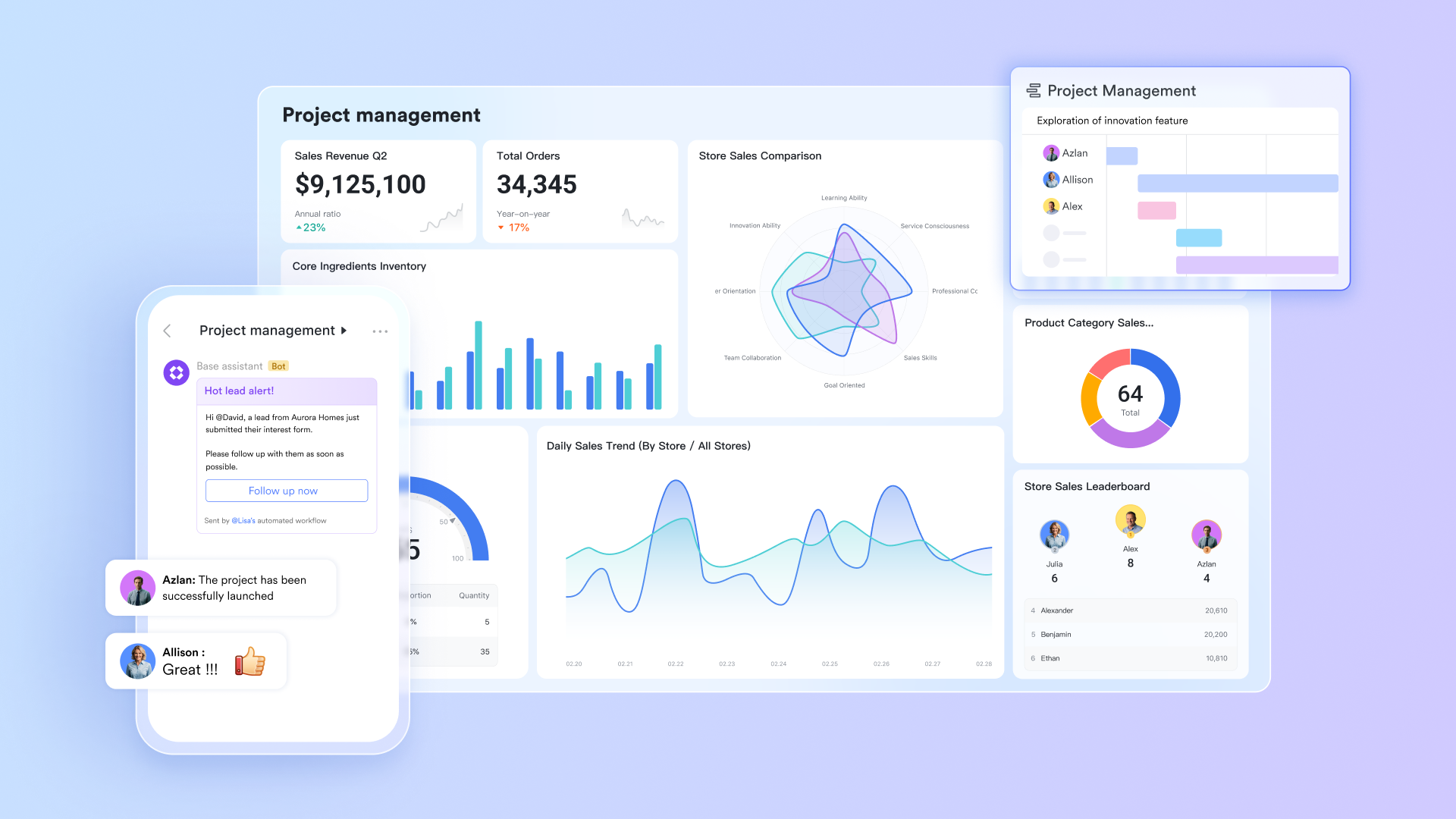
Agile principles emphasize communication, collaboration, and adaptability—and this is precisely where Lark shines. While agile values people over tools, the right platform can amplify interactions and remove friction. Lark brings messaging, meetings, documents, and project boards into one place, helping teams stay focused on delivering value instead of juggling multiple apps. This alignment makes Lark a natural fit for organizations that want to live agile principles every day.
- Lark Messenger & Meetings: Foster real-time collaboration and agile communication
Agile highlights the importance of face-to-face conversations, and Lark enables this even for distributed teams. With video meetings and chat in one space, teams can run stand-ups, sprint reviews, and retrospectives seamlessly. Real-time messaging ensures that blockers are raised quickly and decisions are made without delay. This supports the agile goal of clear, human-centered communication that drives progress.

- Lark Base: Visualize progress and maintain a sustainable pace
Transparency and adaptability are at the heart of agile practices, and Lark Base reflects both. Teams can manage product backlogs, sprint boards, and tasks on customizable dashboards that fit Scrum, Kanban, or hybrid workflows. Everyone has a real-time view of progress, making it easier to spot bottlenecks and adapt quickly when priorities shift. This flexibility keeps teams aligned and responsive in fast-changing environments.
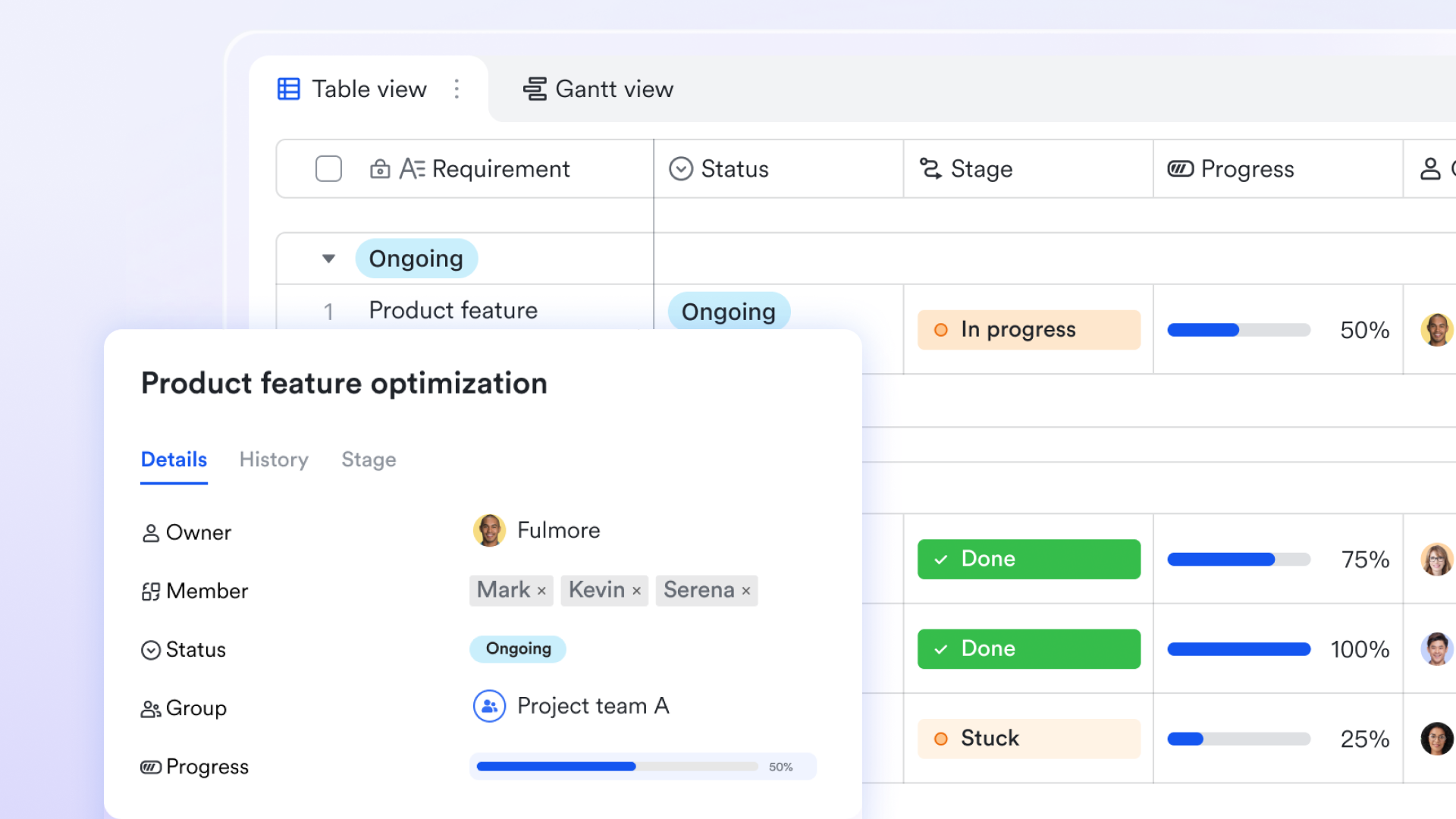
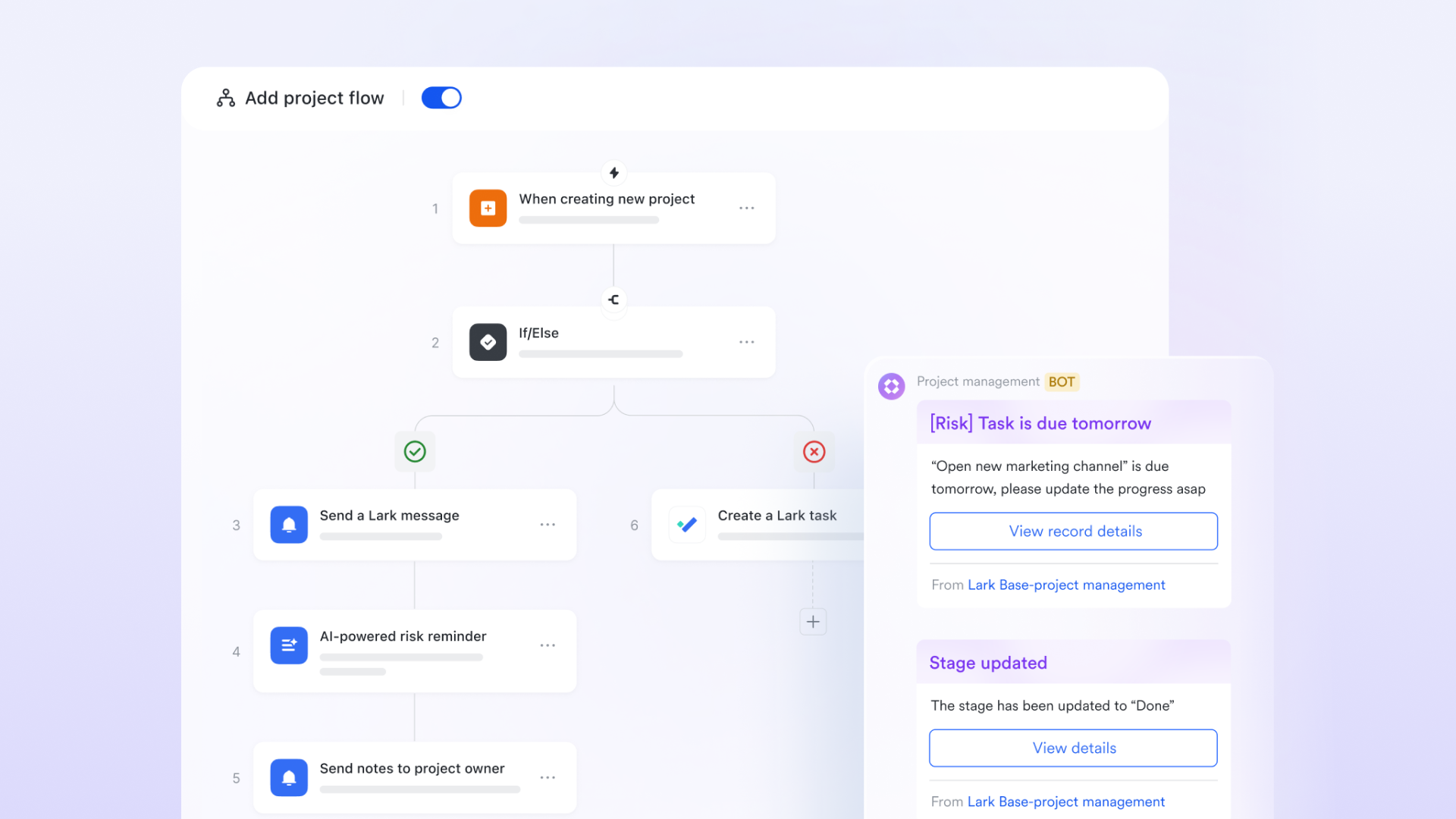
Sustainable pace is another agile principle, and Lark Base supports this through powerful automation. Repetitive tasks like sending reminders, updating statuses, or routing approvals can be automated, freeing teams to focus on strategic work. This not only reduces manual workload but also prevents burnout by helping teams maintain a consistent, long-term rhythm. Automation ensures agility doesn't come at the expense of well-being.
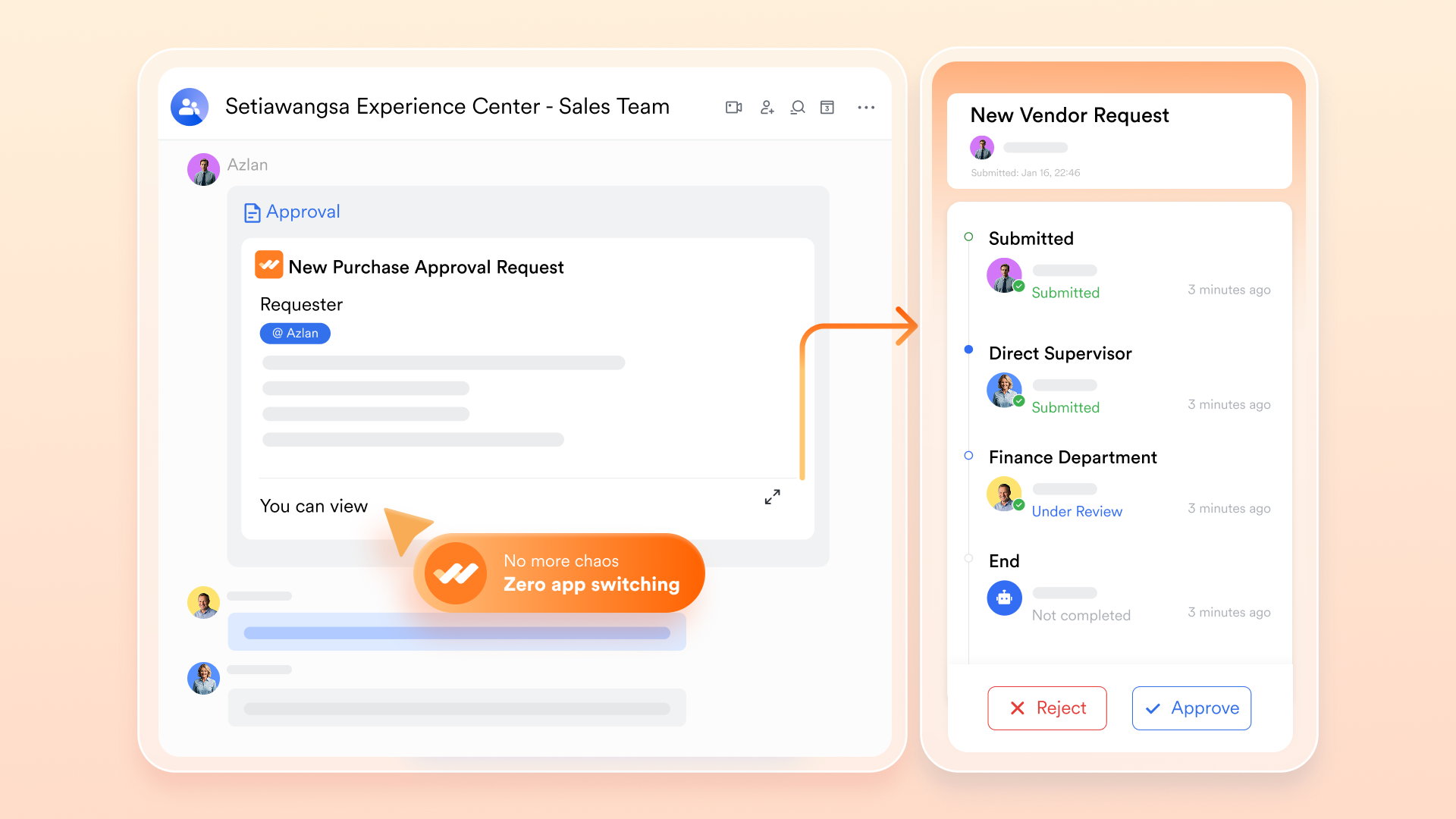
- Lark Approval: Accelerate decision-making for continuous delivery
Agile thrives on continuous delivery, and Lark Approval removes common bottlenecks that slow teams down. By and streamlining sign-offs, it ensures decisions happen quickly and projects move forward without unnecessary waiting. This prevents wasted time and aligns with Agile's focus on eliminating delays. Teams can deliver value faster while maintaining accountability and structure.
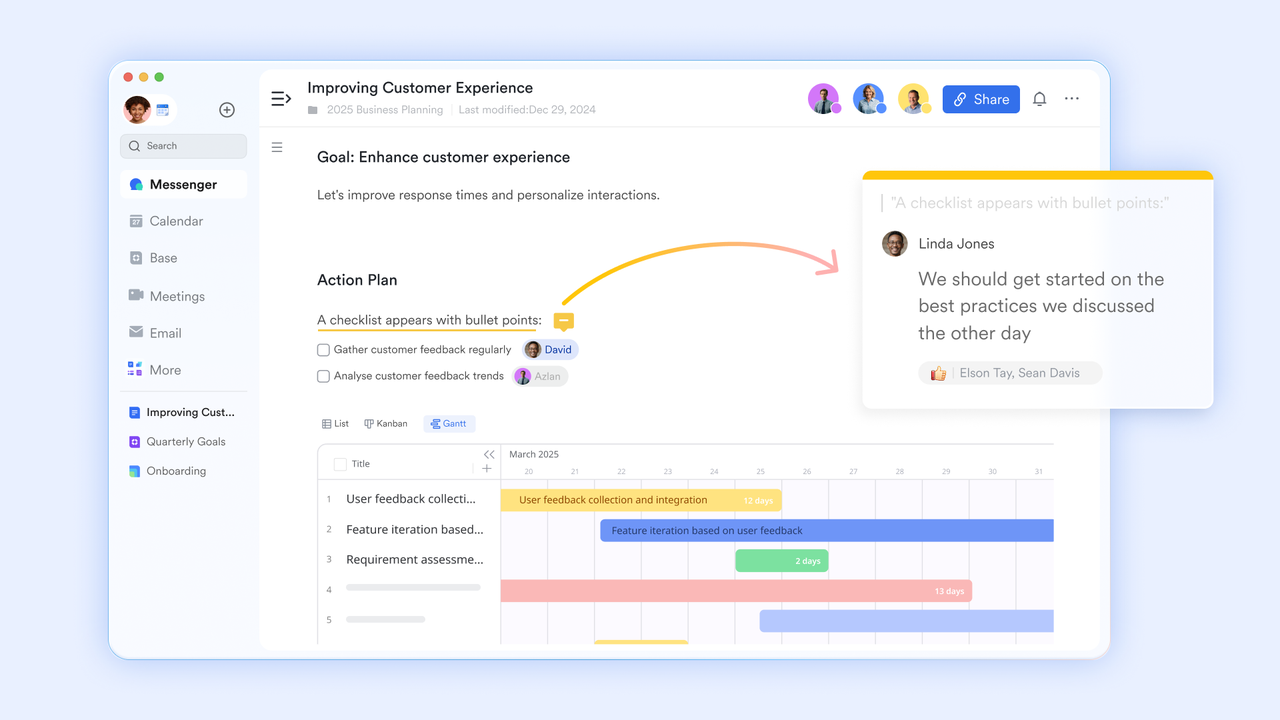
- Lark Docs & Wiki: Simplify documentation and knowledge sharing
Agile emphasizes working results over heavy documentation, but teams still need lightweight, applicable knowledge sharing. Lark Docs & Wiki offers a collaborative workspace where teams can co-edit documents, create roadmaps, and establish best practices. This ensures that information is always up-to-date and accessible, without the burden of maintaining separate, static files. It balances the need for clarity with Agile's principle of simplicity.
Lark's all-in-one platform embodies agile ways of working by fostering collaboration, transparency, and adaptability. By bringing communication, project management, AI knowledge sharing, and automation into a single workspace, it enables teams to move quickly and respond to change without friction. Most importantly, it allows organizations to focus on people and outcomes, which is the very essence of agile principles.
- Starter plan: Free forever plan that includes 11 powerful tools for up to 20 users. It also comes with 100GB of storage, 1000 automation runs, AI translations, and more.
- Pro plan: $12/user/month (billed annually) for up to 500 users. It includes everything in Starter plus group calling for up to 500 attendees, 15TB of storage, 50,000 automation runs, and more.
- Enterprise plan: Contact sales for custom pricing. Supports unlimited users and includes even more automation runs and advanced security, compliance, and management features.
A short table showing how Lark helps
Reasons to follow: Why do agile principles matter in today's teams
Work today moves fast. Long planning cycles and rigid processes often slow teams down. Agile principles give teams a better way—helping them adapt quickly, deliver value often, and stay focused on what customers really need. The result isn't just faster projects, but stronger teamwork and lasting customer trust. Here are the benefits of applying agile principles:
- Faster delivery: Agile principles encourage breaking work into smaller increments, which helps teams deliver usable results sooner rather than waiting for a big launch. This not only reduces the risk of failure but also gives customers something valuable much earlier in the process. With frequent deliveries, teams can maintain momentum and showcase steady progress that builds confidence among stakeholders.
- Higher adaptability: Change is inevitable—whether it's shifting customer needs, market trends, or internal priorities. Agile principles give teams the flexibility to pivot quickly without derailing the entire project. Instead of resisting change, they welcome it, ensuring the product remains relevant and competitive in a constantly evolving landscape.
- Customer satisfaction: At the heart of agile principles is the focus on the customer. By involving customers regularly and delivering value continuously, teams create products that actually meet real-world needs. This ongoing collaboration builds trust and ensures customers feel heard and supported, leading to higher satisfaction and stronger long-term relationships.
- Better teamwork and communication: Agile thrives on collaboration, making teamwork more effective and communication more transparent. Daily stand-ups, retrospectives, and open feedback loops ensure that issues are addressed quickly and successes are shared. This fosters a sense of ownership, accountability, and cohesion across teams, which strengthens overall performance and morale.
Agile principles don't just improve how projects run—they change how teams work together. By focusing on adaptability, value, and collaboration, Agile creates teams that are more resilient and customer-focused. For today's fast-paced environment, that's a real competitive edge.
Common challenges in applying agile principles
Agile principles sound straightforward, but putting them into practice can be tricky. Many organizations face roadblocks that slow down adoption and limit the actual benefits of agility. Here are some of the most common challenges teams encounter:
- Resistance to change: One of the biggest hurdles is cultural resistance. Teams and leaders who are used to traditional, top-down project management often struggle with Agile's emphasis on collaboration and flexibility. Even modern project management tools cannot overcome this alone—change can feel uncomfortable, and without buy-in from leadership and team members, Agile practices risk becoming surface-level rituals rather than meaningful shifts.
- Misunderstanding Agile as "no planning": Another common misconception is that Agile means working with no plan at all. In reality, Agile promotes adaptive planning—where plans exist but can evolve as new information emerges. Teams that misinterpret this principle may fall into chaos, skipping crucial steps like setting priorities or defining sprint goals. The result is confusion instead of agility.
- Teams focusing on process over principles: Sometimes teams become so caught up in ceremonies, boards, and checklists that they lose sight of the bigger picture. Agile wasn't designed to enforce rigid processes; it was designed to deliver value to customers. When process becomes the end goal, teams risk "going through the motions" without embodying the principles of collaboration, adaptability, and customer focus.
- Lack of proper tools to support collaboration: Agile thrives on visibility, quick feedback, and seamless communication. Without the right tools—like digital boards, shared workspaces, or instant messaging platforms—collaboration breaks down, especially in distributed teams. This lack of support can turn Agile into a frustrating exercise, making it harder to track progress, share updates, or maintain transparency across the team.
Conclusion
The 12 agile principles are more than a checklist—they're a mindset that empowers teams to adapt, innovate, and deliver meaningful results in fast-changing environments. While frameworks like Scrum or Kanban make these principles actionable, it's the principles themselves that serve as a compass, guiding decision-making and teamwork at every step.
Agile isn't about rigid processes or ceremonies—it's about focusing on people, collaboration, and delivering value continuously. By truly understanding and applying the principles, teams can unlock faster delivery, stronger adaptability, and deeper customer satisfaction.
For modern teams, the right platform can make living these principles much easier. Lark brings messaging, tasks, docs, and automation into one seamless workspace, helping teams cut friction, stay aligned, and focus on outcomes. It's not just a tool—it's a way to bring agile principles to life every single day.
FAQs
How do agile principles differ from agile values?
Agile values outline the core philosophy—such as prioritizing individuals and interactions over processes and tools—while agile principles explain how to put those values into practice. Think of values as the "why" and principles as the "how." Together, they ensure teams stay focused on collaboration, adaptability, and delivering real value.
Can agile principles be applied outside software development?
Absolutely. While Agile began in software, its principles apply to any team that needs flexibility and collaboration. Marketing, HR, product design, and even operations teams use agile principles to improve transparency, accelerate delivery, and adapt to changing priorities.
Do agile principles replace traditional project management methods?
Not necessarily—they offer a different mindset. Traditional project management relies heavily on upfront planning, while agile principles promote adaptive planning and continuous feedback. Many organizations now use hybrid approaches, blending agile practices with traditional structures to suit their unique needs.
What is the hardest agile principle for teams to adopt?
Many teams struggle most with embracing change late in the process. Traditional methods view late changes as disruptive, but Agile treats them as opportunities to improve. Shifting this mindset requires cultural buy-in and tools that make quick adjustments seamless.
How does Lark support agile ceremonies like stand-ups or retrospectives?
Lark makes agile ceremonies simple by unifying chat, video meetings, tasks, and docs in one platform. Teams can run daily stand-ups via Messenger or Meetings, track sprint progress with Tasks, and capture retrospective notes in Docs or Wiki. This reduces tool-switching and ensures ceremonies stay focused and efficient.
Related reading
Table of contents
Start using Lark today

Manage all your work in one place
Boost team efficiency by 10x
Save up to 70% on software costs
Table of contents
Start using Lark today
Manage all your work in one place
Boost team efficiency by 10x
Save up to 70% on software costs
Keep reading







2026 Lark Technologies Pte. Ltd.
Headquartered in Singapore with offices worldwide.






Explore: