














The Complete Guide to Campaign Management in 2026

Fecilia Clarke
Solutions Marketing Specialist
Sep 18, 2026
Fecilia Clarke
Sep 18, 2026

22 min read


Modern marketing teams face a constant challenge: managing multiple campaigns across different channels while keeping everyone aligned. Traditional methods using spreadsheets and email chains often create more confusion than clarity. This operational friction, marked by constant context switching and information silos, drains valuable time and focus. This is where strategic campaign management creates real impact — by bringing order to complexity and turning marketing ideas into measurable results.
The right approach to campaign management does more than just organize tasks. It creates a seamless workflow where planning, execution, and analysis work together seamlessly. With the following platforms designed for collaboration, marketing teams can finally break free from tool fatigue and focus on what matters — driving growth.
1. Lark: All-in-one suite integrating chat, docs, and project management.
2. Teamwork.com: Project management for client-facing teams.
3. Trello: Visual tool using cards and boards.
4. Monday.com: Customizable Work OS for workflows.
5. HubSpot: Integrated CRM platform for marketing and sales.
6. Salesforce: Enterprise CRM for sales and marketing.
7. ActiveCampaign: Automation platform for customer experience.
8. Planable: Collaboration for content review and approval.
What is campaign management?
Campaign management represents the end-to-end process of planning, executing, and analyzing marketing initiatives. Think of it as the central nervous system for your marketing efforts - coordinating every element from initial concept to performance reporting. It's what separates random marketing activities from strategic, results-driven campaigns. Unlike simple task management, campaign management encompasses the entire lifecycle from audience identification through performance analysis and optimization.
The discipline involves coordinating multiple moving parts: creative development, channel selection, budget allocation, timeline management, and performance tracking. Successful campaign management leverages project management tools to ensure that all these elements work together harmoniously toward common business objectives. For example, a product launch campaign might involve email sequences, social media promotions, content marketing, and advertising - all needing precise coordination across different teams and timelines.
Unlike general project management, campaign management focuses specifically on marketing objectives and customer journeys. It connects tactical execution to strategic goals, ensuring every campaign element contributes to broader business outcomes. Today's approach has evolved beyond managing separate channels to creating unified customer experiences across all touchpoints. Modern platforms like Lark facilitate this holistic approach by providing a unified workspace where marketing teams can manage everything from high-level strategy to daily execution tasks.

Why campaign management matters
- The high cost of disorganized marketing
Without structured campaign management, marketing efforts often descend into chaos that undermines their potential. Resources scatter across misaligned activities, messaging becomes inconsistent across different channels, and demonstrating marketing's true impact grows increasingly difficult. Marketing teams find themselves constantly reacting to emergencies rather than executing a coordinated strategy. This disorganization manifests in missed deadlines, duplicated efforts, and campaigns that fail to resonate with their intended audiences. The fundamental challenge isn't a lack of ideas or effort, but the absence of a framework that transforms individual activities into cohesive, results-driven initiatives.
- Aligns teams around shared objectives
Effective campaign management creates a unifying force that brings multiple departments together toward common goals. It establishes clear visibility into responsibilities and timelines, ensuring everyone understands their role in the campaign's success. This alignment is particularly crucial for initiatives requiring coordination between creative teams, digital marketers, sales departments, and external agencies. Platforms like Lark facilitate this cohesion by providing shared workspaces where objectives remain visible and progress is transparent. When teams operate from a single source of truth, silos break down and collective focus sharpens on delivering meaningful business outcomes.
- Prevents resource drain and organizational chaos
Poor campaign management creates significant hidden costs that extend beyond budget overruns. Teams waste valuable time searching for assets, reconciling conflicting feedback, and attending unproductive status meetings. The constant context switching between disconnected tools and platforms fragments attention and reduces productive work time. This operational chaos not only diminishes marketing effectiveness but also leads to team burnout and frustration. Implementing a structured approach through unified platforms like Lark eliminates these inefficiencies by creating organized workflows where information flows smoothly and everyone operates with clarity and purpose.
- Maintains brand consistency and customer trust
Inconsistent messaging across channels confuses customers and dilutes brand equity. When campaign management lacks coordination, customers receive mixed signals that undermine brand credibility and trust. A disciplined approach ensures every touchpoint - from social media and email to advertising and content - reinforces the same core message and brand identity. This consistency is crucial in today's fragmented media landscape where customers interact with brands across multiple platforms and devices. Centralized campaign management maintains this coherence by providing visibility into all customer-facing communications and ensuring alignment with brand guidelines.
Benefits of strategic campaign management
- Dramatically improves team efficiency and focus
Strategic campaign management transforms how marketing teams operate by eliminating redundant tasks and streamlining workflows. Teams experience significant reductions in time spent on administrative coordination, status updates, and searching for information across disparate systems. This efficiency gain allows marketers to redirect their energy toward high-value creative and strategic work. The centralized nature of modern campaign management platforms creates natural workflows that prevent duplicate efforts and ensure every team member understands their priorities and responsibilities.
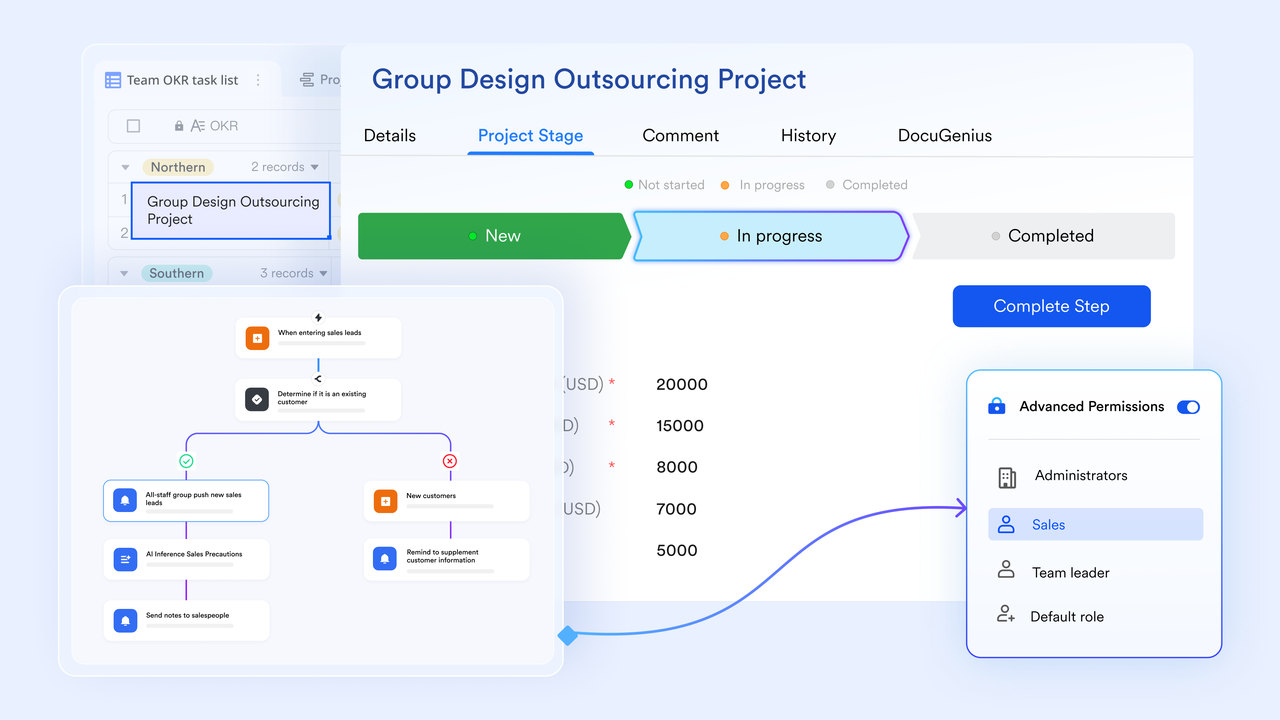
- Builds consistent brand experiences across all touchpoints
Centralized campaign management ensures customers receive a unified brand message regardless of how they interact with your organization. From email communications and social media posts to advertising and content marketing, every touchpoint reinforces the same core messaging and brand identity. This consistency is crucial for building customer trust and strengthening brand recognition over time. When campaigns are managed through integrated platforms, marketing teams can maintain visibility across all channels and ensure all customer-facing communications align with brand guidelines and campaign objectives.
- Enables true marketing agility and faster adaptation
With clear visibility into campaign performance and progress, marketing teams can pivot quickly based on real-time results and market feedback. This adaptability ensures marketing resources consistently drive maximum impact by focusing on what works and rapidly adjusting what doesn't. Agile campaign management practices allow organizations to respond effectively to emerging opportunities and competitive threats without being locked into rigid, long-term plans. The result is faster time-to-market for new initiatives and better overall responsiveness to changing market conditions.
- Strengthens cross-functional collaboration and alignment
Effective campaign management breaks down organizational silos by creating shared objectives and transparent workflows across departments. Marketing, sales, creative, and product teams can coordinate their efforts around common goals with clear visibility into dependencies and timelines. This alignment ensures all stakeholders move in the same direction and understand how their contributions support broader business objectives. Platforms that facilitate real-time collaboration further enhance this benefit by providing spaces where team members can work together seamlessly, regardless of physical location.
Platforms like Lark are engineered to turn these strategic benefits into tangible results. Its integrated workspace centralizes all campaign elements—from content creation in Docs to cross-team coordination in Messenger—ensuring brand consistency and breaking down collaboration barriers. This unified approach, combined with real-time progress tracking in Base and Calendar, provides the clarity and agility needed to adapt strategies swiftly and maintain a competitive edge.
Best campaign management tools in 2026
The marketing technology landscape offers numerous options for campaign management. Understanding the strengths and focus areas of different tools helps identify the best fit for specific needs. The ideal choice depends on organizational size, campaign complexity, integration requirements, and team workflow preferences.
1. Lark: All-in-one suite integrating chat, docs, and project management
Lark stands out as an all-in-one productivity platform that seamlessly connects campaign management components. Lark Base serves as the campaign command center, housing briefs, calendars, and performance data in interconnected tables. Lark Docs enables collaborative content creation with tasks assignable directly within documents. Lark Messenger keeps team communication contextual, while Lark Calendar provides visual timeline tracking. This integrated approach eliminates tool switching and creates a fluid campaign management experience. The platform's strength lies in its unified environment that connects strategic planning with daily execution, making it ideal for teams seeking to consolidate their marketing technology stack while enhancing collaboration.
📊 Lark Base: The central command center for campaign data
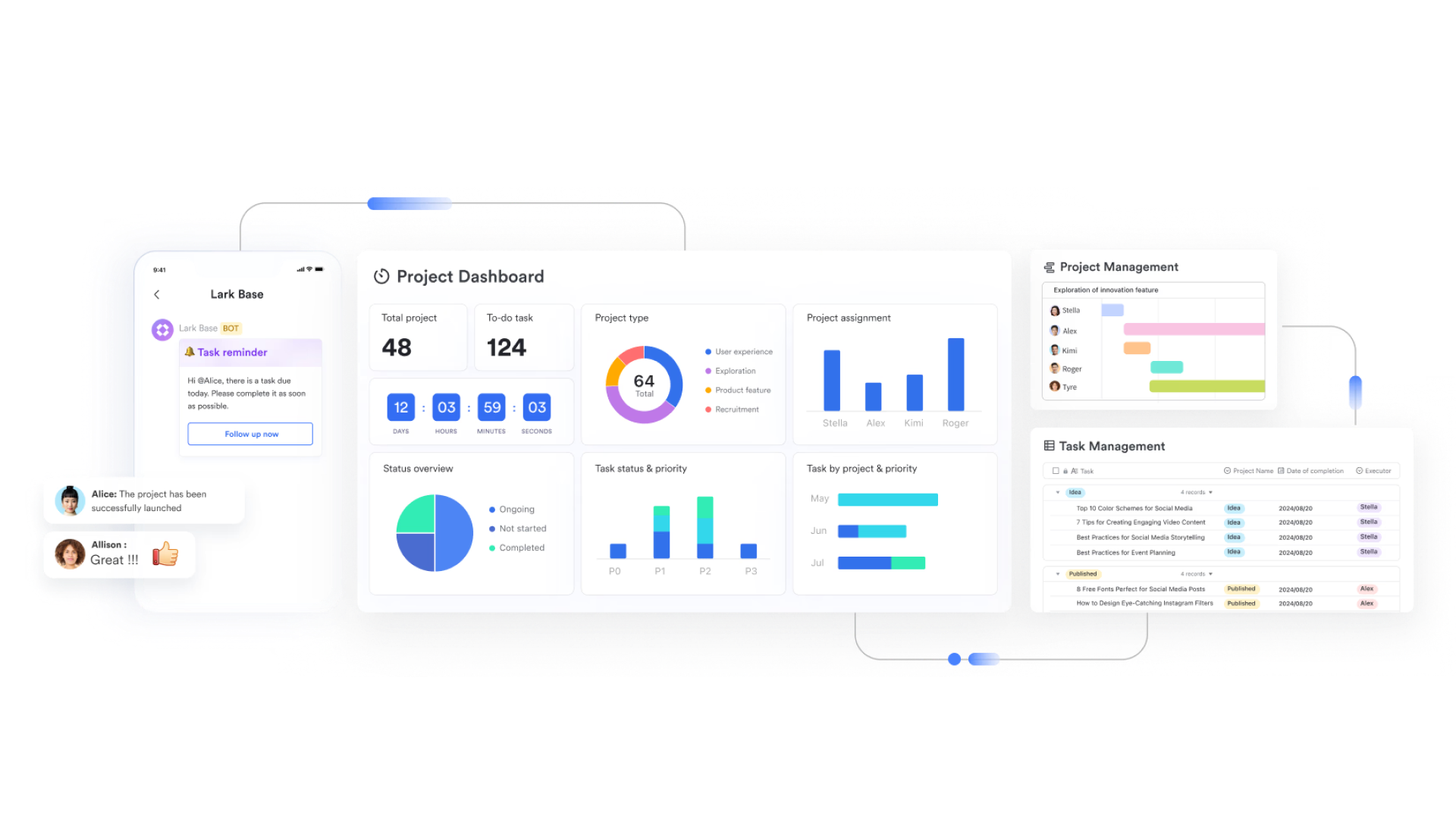
- Unified campaign information management: Lark Base serves as a highly customizable database. You can create dedicated forms for each marketing campaign to centrally manage all related information, such as lead lists, content schedules, budget expenditures, and KPI data. This ensures campaign information is no longer scattered across multiple Excel files or employee computers.
- Multi-dimensional views for tracking progress: Base supports various views like Grid, Kanban, Gantt, and Calendar. This means you can use the Kanban view to visually display the approval status of various content assets (Not Started, In Design, In Review, Published), use the Gantt Chart view to manage the entire campaign timeline and task dependencies, ensuring key milestones are not delayed, and use the Calendar view to quickly identify all content scheduled for release on a specific day.
- Data visualization & automation: You can visualize campaign data from Base (e.g., lead count, ad spend, engagement rate) using charts. Furthermore, Base's automated workflows can handle repetitive tasks. For example, when a new lead submits information via a campaign form, it can automatically notify the responsible person in a group chat, enabling rapid follow-up.
📝 Lark Docs: The seamlessly collaborative content pipeline
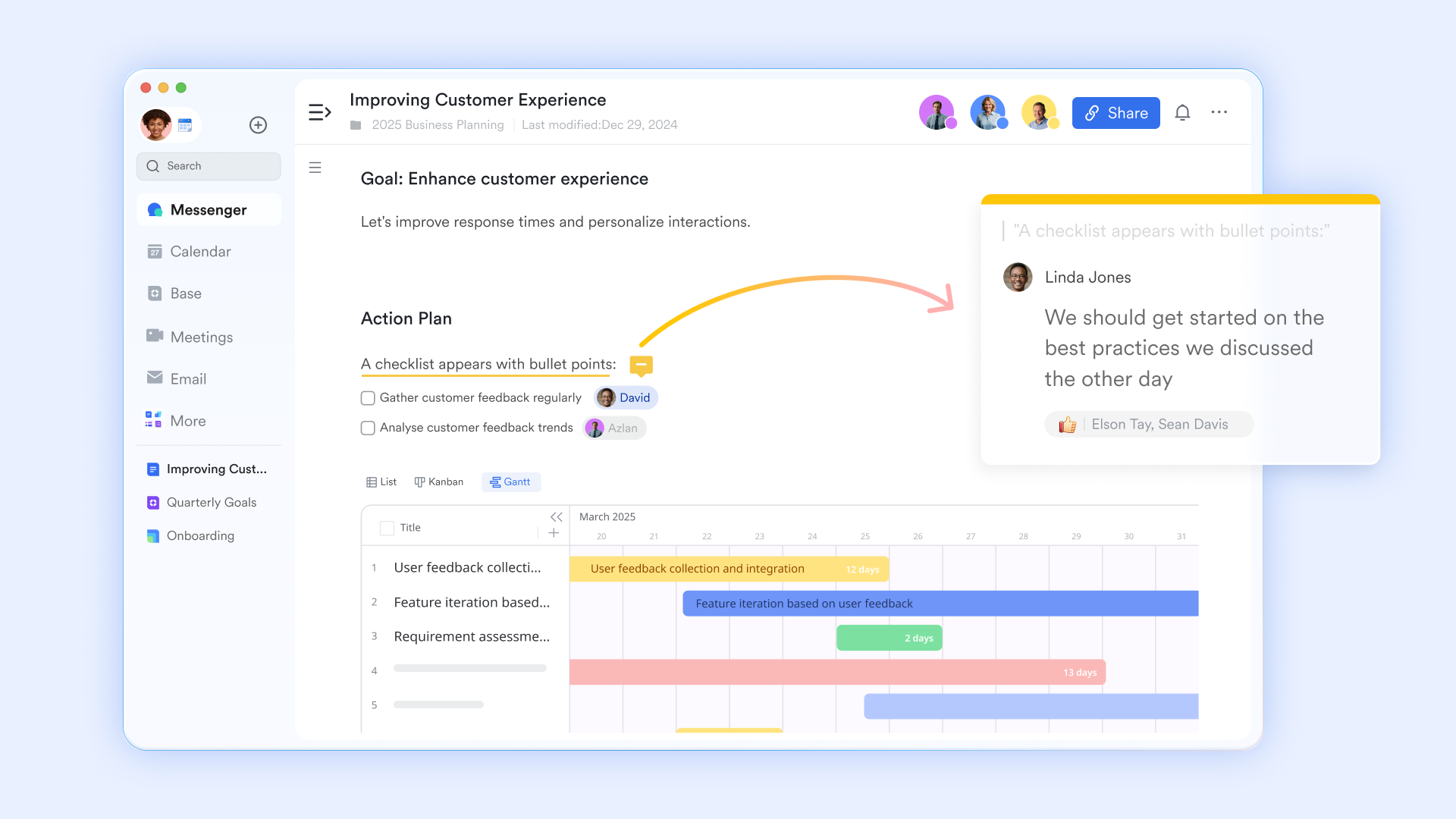
- Real-time co-creation & review: Lark Docs allows team members to collaborate in real-time within the same document, jointly writing campaign copy or planning strategies. Everyone can simultaneously edit, comment, and @mention colleagues. All feedback and revisions are concentrated in one document, avoiding the chaos of repeatedly emailing different versions.
- Version history & permission control: Docs automatically saves version history. You can always see who made what changes and when, making it easy to track content iterations. Simultaneously, granular permission settings ensure sensitive campaign plans are only circulated within a specific scope, safeguarding information security.
- Seamless integration of content & tasks: You can directly create Lark Tasks within a campaign planning Doc and assign them to colleagues with deadlines. This ensures that action items finalized within the document automatically enter team members' task lists, guaranteeing that deliverables like copywriting and design are not overlooked.
🗓️ Lark Calendar: The timeline for your team & campaigns
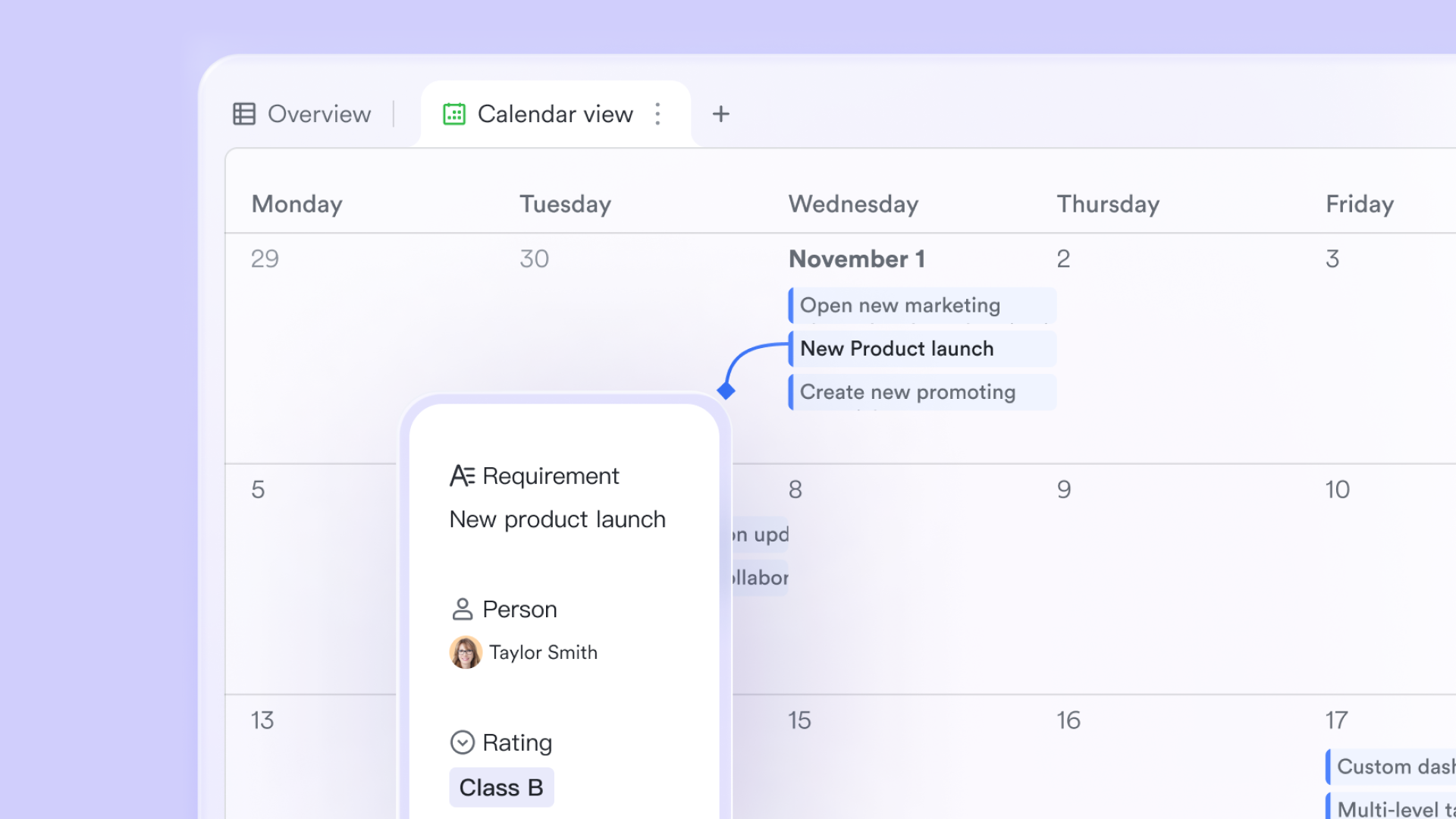
- Visual campaign timeline: Create important marketing campaign milestones — like ad launches, content publishes, or live events—directly in Lark Calendar. This provides the entire team with a clear, panoramic view of the campaign schedule.
- Automatic task syncing: When you set deadlines for campaign tasks in Lark Task, these tasks automatically appear on Lark Calendar. This allows team members to not only manage meetings but also visually see their work assignments on the calendar, helping them plan their time effectively.
- Efficient internal & external scheduling: Through Calendar, you can send meeting invitations directly to both internal and external partners. Recipients can receive and respond to invites via email, even without a Lark account. You can also generate a dedicated booking page link, making it easy for partners (e.g., KOLs, media) to schedule meetings directly during your free slots, simplifying communication overhead.
💬 Lark Messenger: The contextual communication hub
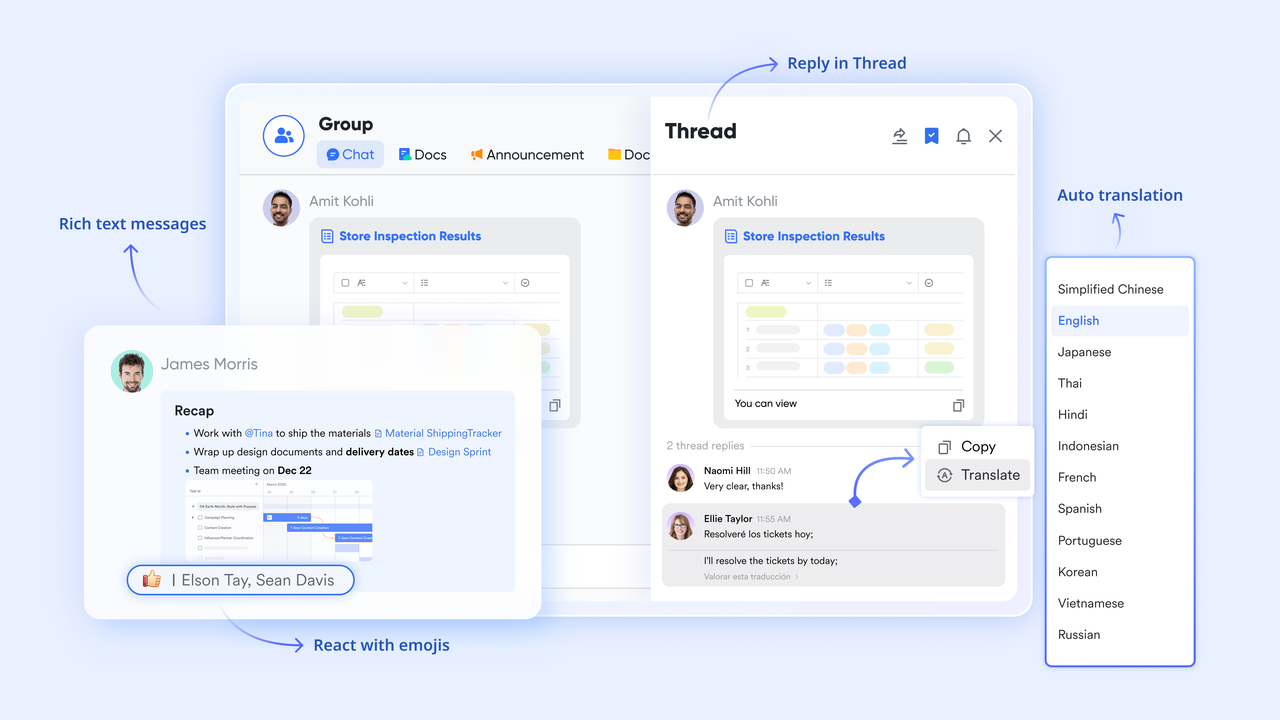
- Dedicated group chats for campaigns: Create separate group chats for each marketing campaign, bringing together all relevant members from marketing, sales, design, etc. All campaign-related discussions, decisions, and file sharing are concentrated within the group chat, ensuring information parity.
- Seamless context integration: Within group chats, you can directly share Lark Docs, Calendar events, or Base records. When colleagues see a shared campaign document in the chat, they can open and collaborate on it with one click—no need to switch between apps searching for files. Communication and collaboration blend naturally.
- Quick response & action: When encountering unexpected issues or needing quick decisions, use shortcuts to create tasks or schedule impromptu meetings. For example, if an urgent task is identified during a discussion, it can immediately be converted into a Lark Task within the chat, assigned to an owner with a deadline, ensuring discussion outcomes translate into action.
✅ Lark Tasks: The execution engine that penetrates processes
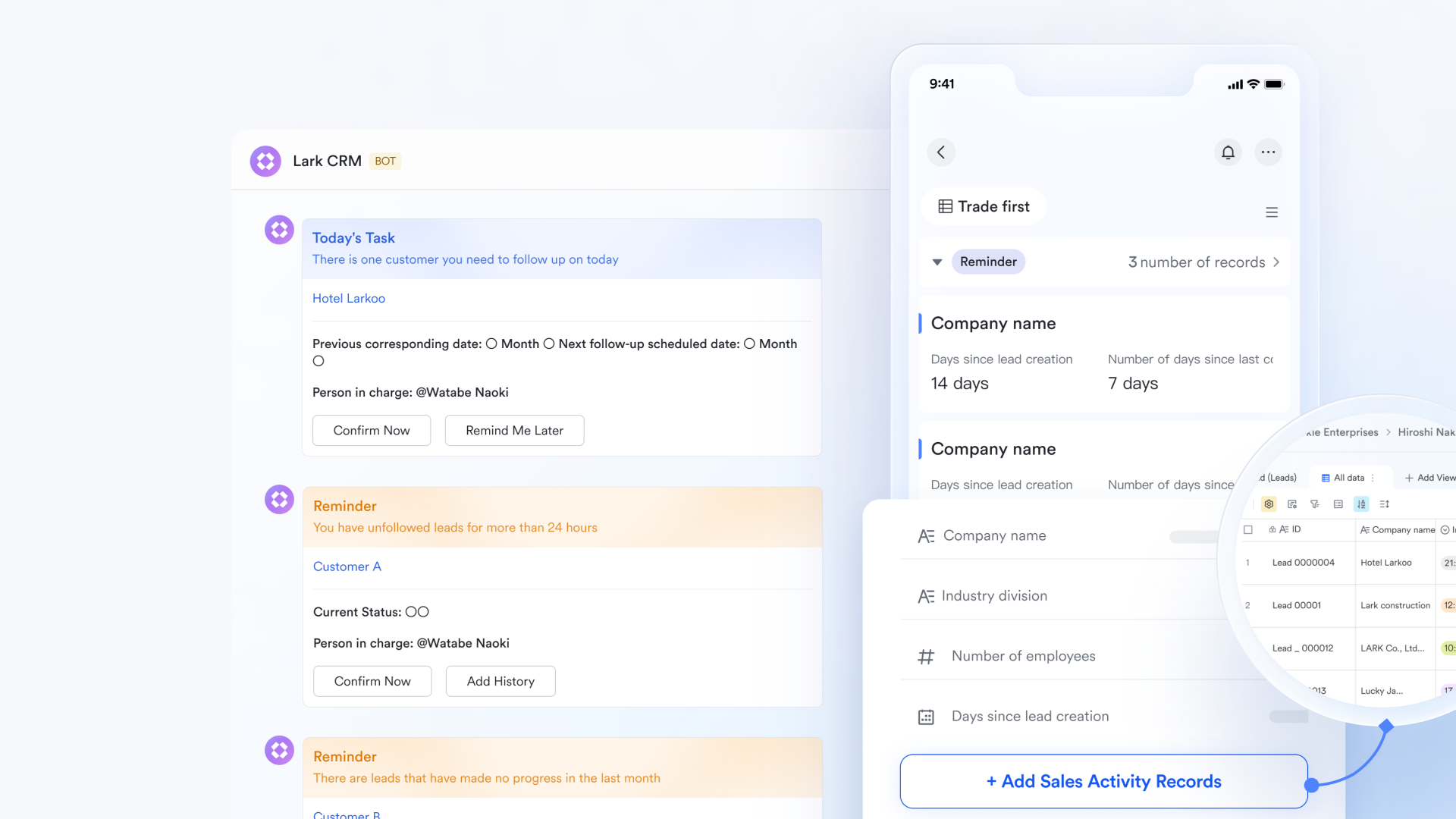
- Breaking down & assigning campaign tasks: During the planning phase, use Lark Tasks to break down grand campaign goals into specific, actionable tasks. Clearly assign them to owners and set deadlines. This ensures every team member understands their responsibilities.
- Cross-functional collaboration & progress tracking: For tasks requiring multi-departmental collaboration (e.g., Design provides assets, Marketing handles placement), dependencies can be established via Tasks. Both managers and individuals can view the progress of all tasks in a unified view, identifying bottlenecks and intervening promptly.
- Alignment with goals: Lark Tasks supports direct linking with Base and team Objectives and Key Results (OKRs). This means you can clearly see how each executing task contributes to a specific campaign metric or even a larger team goal, ensuring execution stays aligned with strategic direction.
Pricing:
- Free plan: Includes 11 powerful products, supporting up to 20 users, 100 GB storage, 1,000 automation runs and unlimited AI translation in chats, docs and email.
- Paid plans: Starts at $12/user/month, supporting up to 500 users. Includes unlimited message history, 50,000 automated Base workflow executions per month.
- Enterprise plan: Custom pricing.
2. Teamwork.com: Project management for client-facing teams
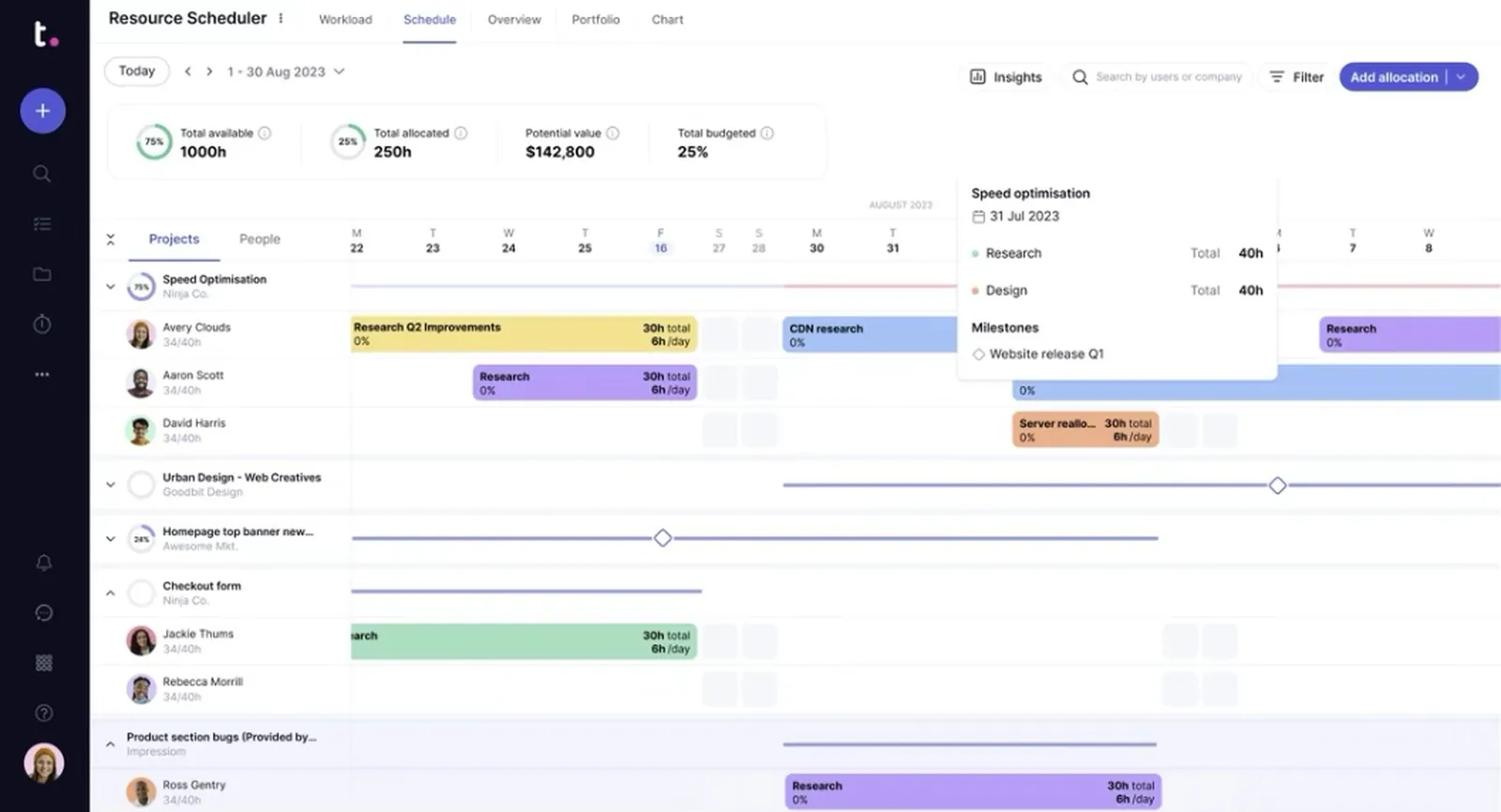
Teamwork.com provides comprehensive project management solutions specifically designed for client-facing teams and agencies that need to manage multiple client projects simultaneously. The platform offers robust features for tracking billable hours, managing client communications, and monitoring project profitability. Its intuitive interface and client collaboration features make it particularly valuable for agencies that need to maintain transparency with their clients while managing complex project deliverables.
Key features:
- Time tracking with billable hours functionality
- Client access and collaboration capabilities
- Gantt charts for project timeline visualization
- Customizable project templates
- Budget tracking and invoicing tools
- Task dependencies and milestone tracking
Limitations:
- Steep learning curve for new team members
- Advanced features require premium subscription tiers
- Mobile application offers limited functionality compared to desktop
3. Trello: Visual tool using cards and boards
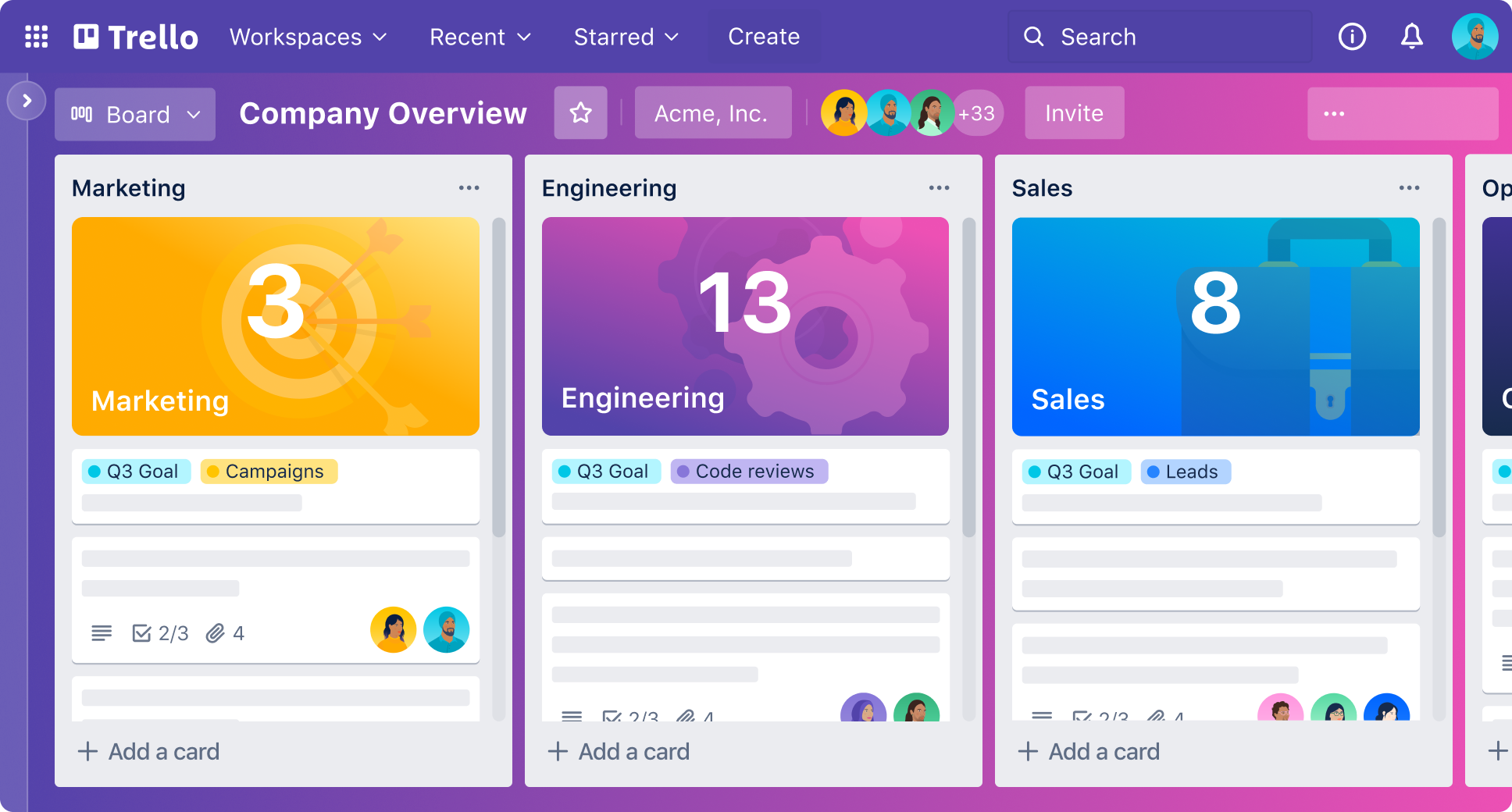
Trello offers a visual, card-based approach to task management using the Kanban methodology, making it ideal for teams that prefer simple, flexible organization systems. Its drag-and-drop interface and minimal learning curve make it accessible for teams of all technical levels. The platform's power-up system allows for gradual feature expansion as team needs evolve, providing a gentle onboarding path for organizations new to digital project management.
Key features:
- Intuitive Kanban board organization
- Customizable cards with checklists and due dates
- Visual project tracking
- Simple automation with Butler
- Mobile app for on-the-go access
- Integration with popular apps through Power-Ups
Limitations:
- Lacks native time tracking capabilities
- Limited reporting and analytics features
- Becomes unwieldy for complex, multi-phase projects
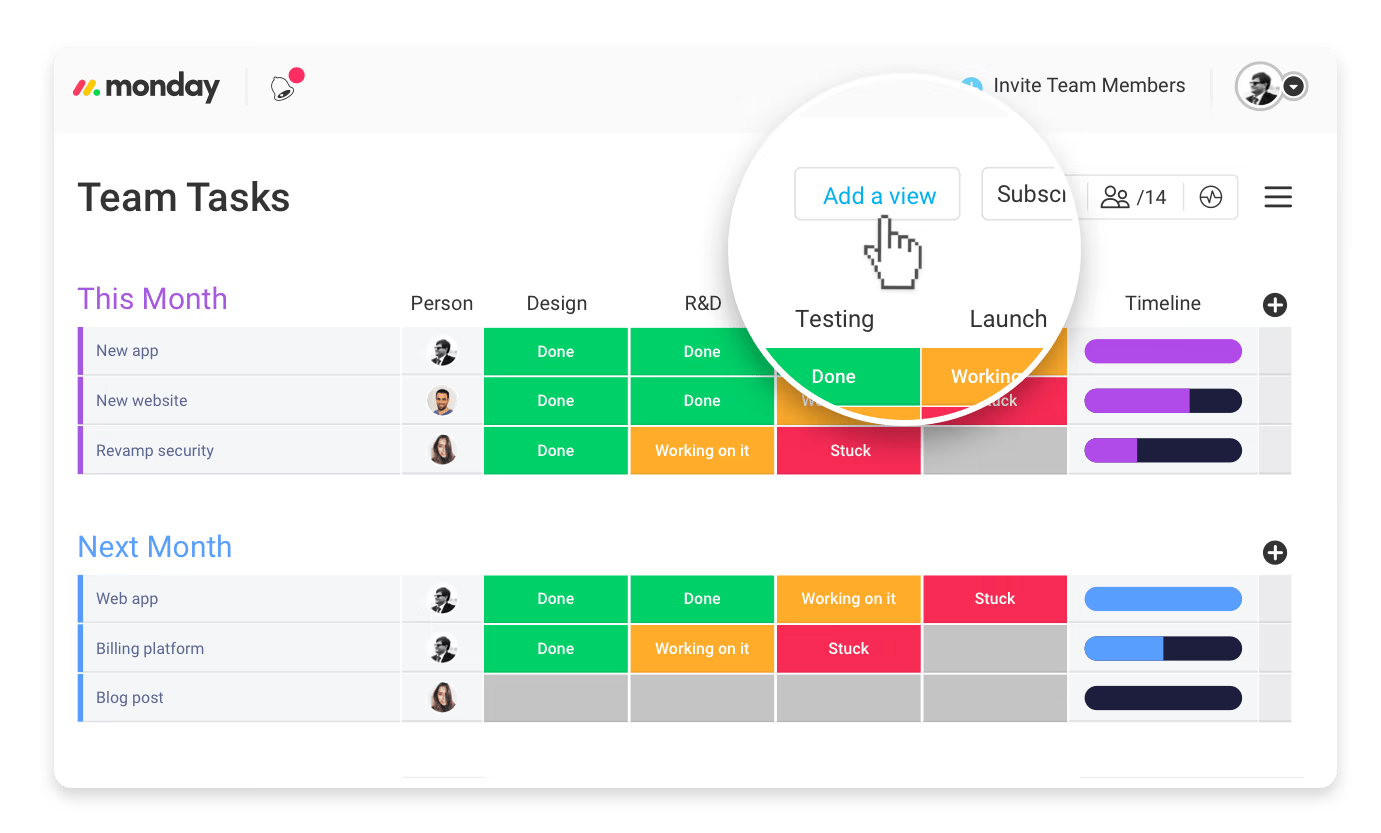
4. Monday.com: Customizable Work OS for workflows
Monday.com delivers a highly customizable Work Operating System that adapts to various workflow needs across different departments. The platform's strength lies in its visual interface and automation capabilities that help teams streamline their processes. With over 200 templates specifically designed for marketing, sales, project management, and other functions, teams can quickly implement workflows that match their existing processes.
Key features:
- Customizable workflow templates
- Visual project tracking dashboards
- Automation and integration capabilities
- Time tracking and reporting features
- Multiple view options (Kanban, calendar, timeline)
- Cross-team collaboration tools
Limitations:
- Complex initial setup demands significant time investment
- Pricing structure becomes costly with team expansion
- Steep learning curve for non-technical users
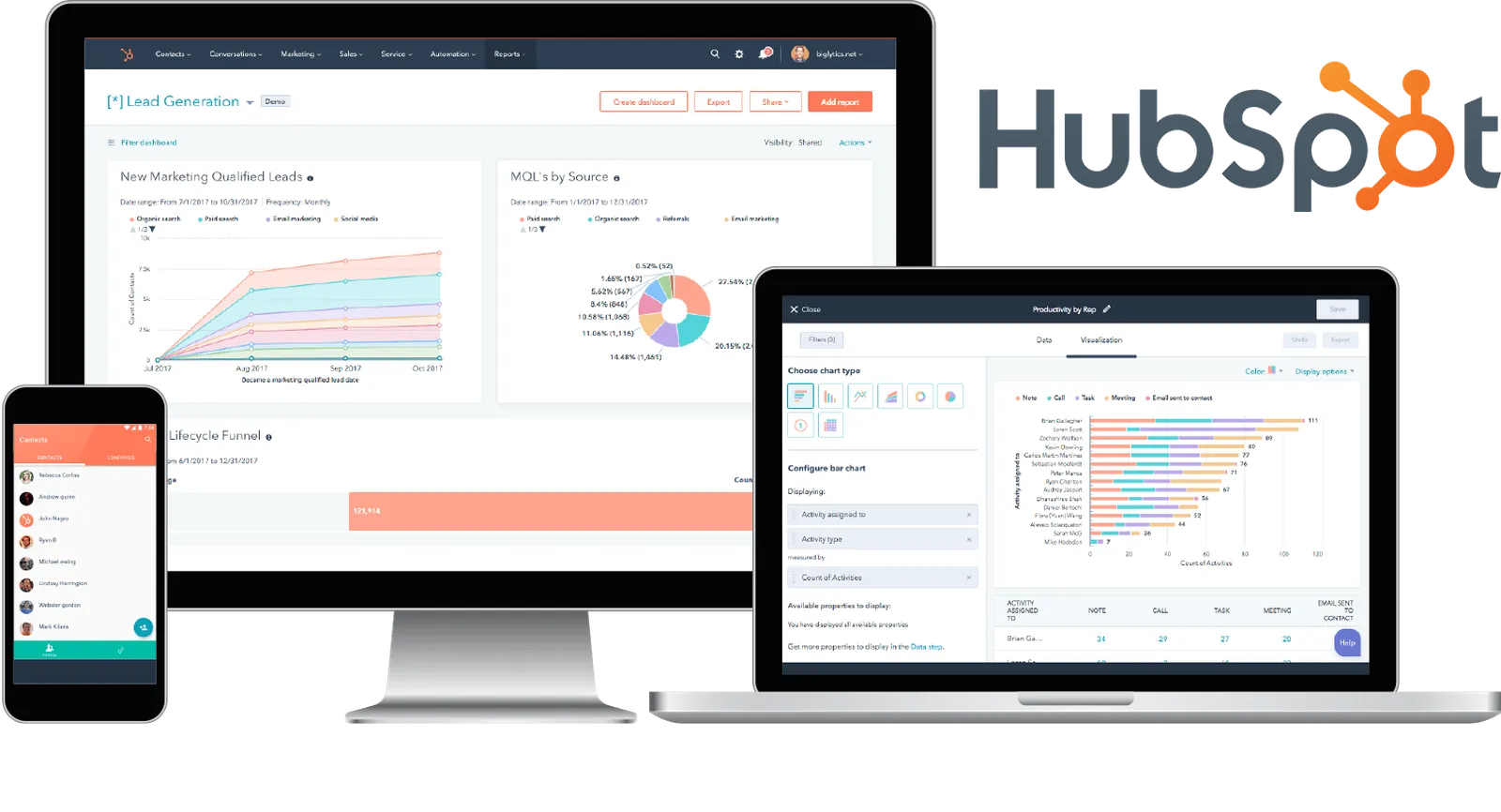
5. HubSpot: Integrated CRM platform for marketing and sales
HubSpot offers an all-in-one marketing, sales, and service platform with powerful CRM integration that helps businesses manage customer relationships throughout the entire lifecycle. The platform excels at connecting marketing activities to sales outcomes, providing clear visibility into how campaigns impact revenue. Its free tools and scalable pricing make it accessible for businesses at different growth stages.
Key features:
- Marketing automation and email marketing
- CRM with contact management
- Lead scoring and tracking
- Analytics and reporting dashboard
- Social media management tools
- Content management system
Limitations:
- Limited native project management capabilities
- Implementation requires considerable technical configuration
- Advanced features necessitate higher pricing tiers
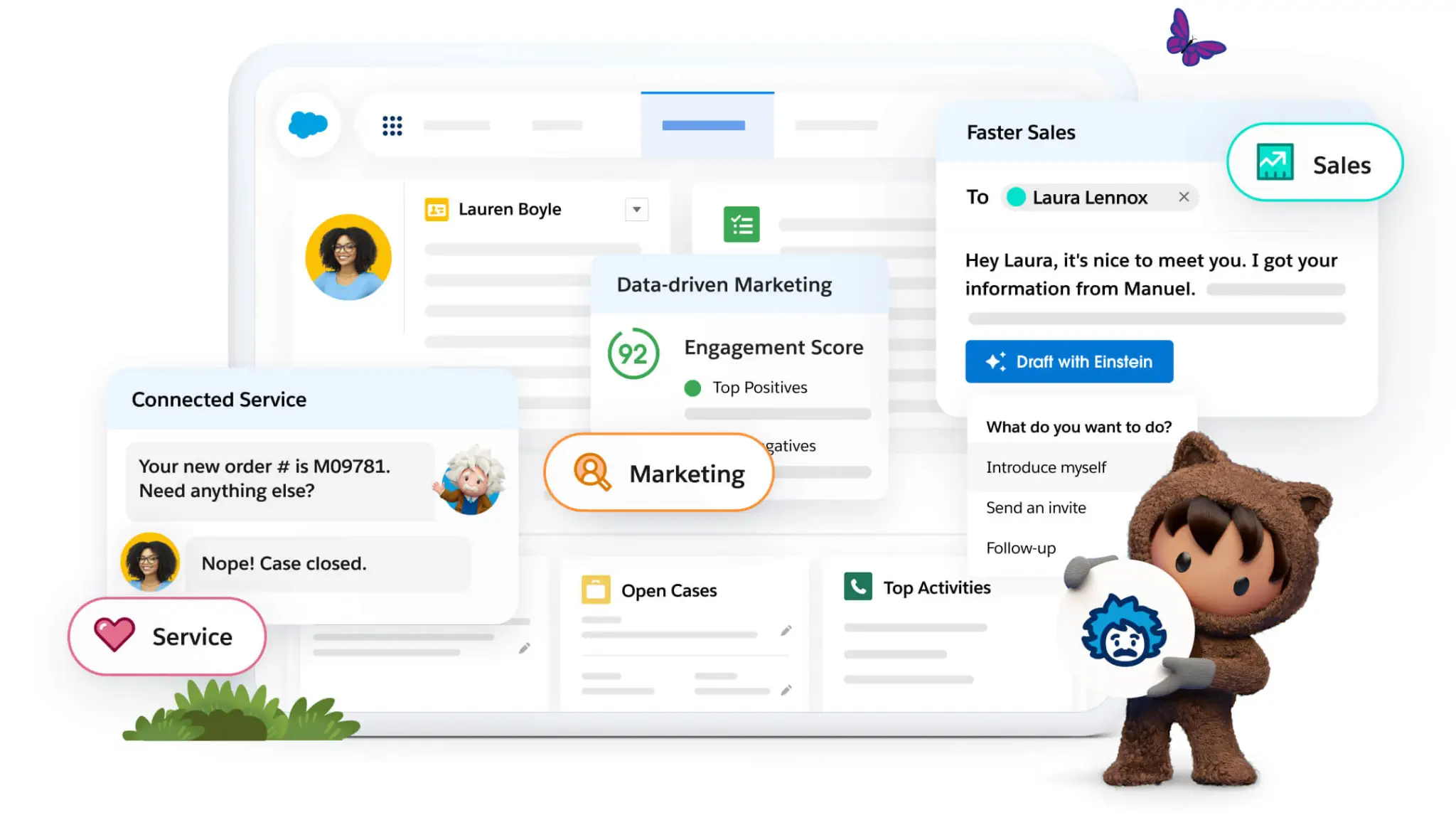
6. Salesforce: Enterprise CRM for sales and marketing
Salesforce provides enterprise-level CRM solutions with extensive customization options for large organizations managing complex customer relationships. The platform's cloud-based ecosystem supports sales, service, marketing, and analytics through integrated applications. Its AppExchange marketplace offers thousands of third-party applications that extend platform functionality for specific industry needs.
Key features:
- Comprehensive sales and marketing automation
- Advanced analytics and AI insights
- Customizable dashboards and reports
- Mobile optimization
- Extensive third-party integrations
- Scalable enterprise solutions
Limitations:
- Demands dedicated administrative resources
- Total cost of ownership is substantially high
- Implementation process is complex and time-consuming
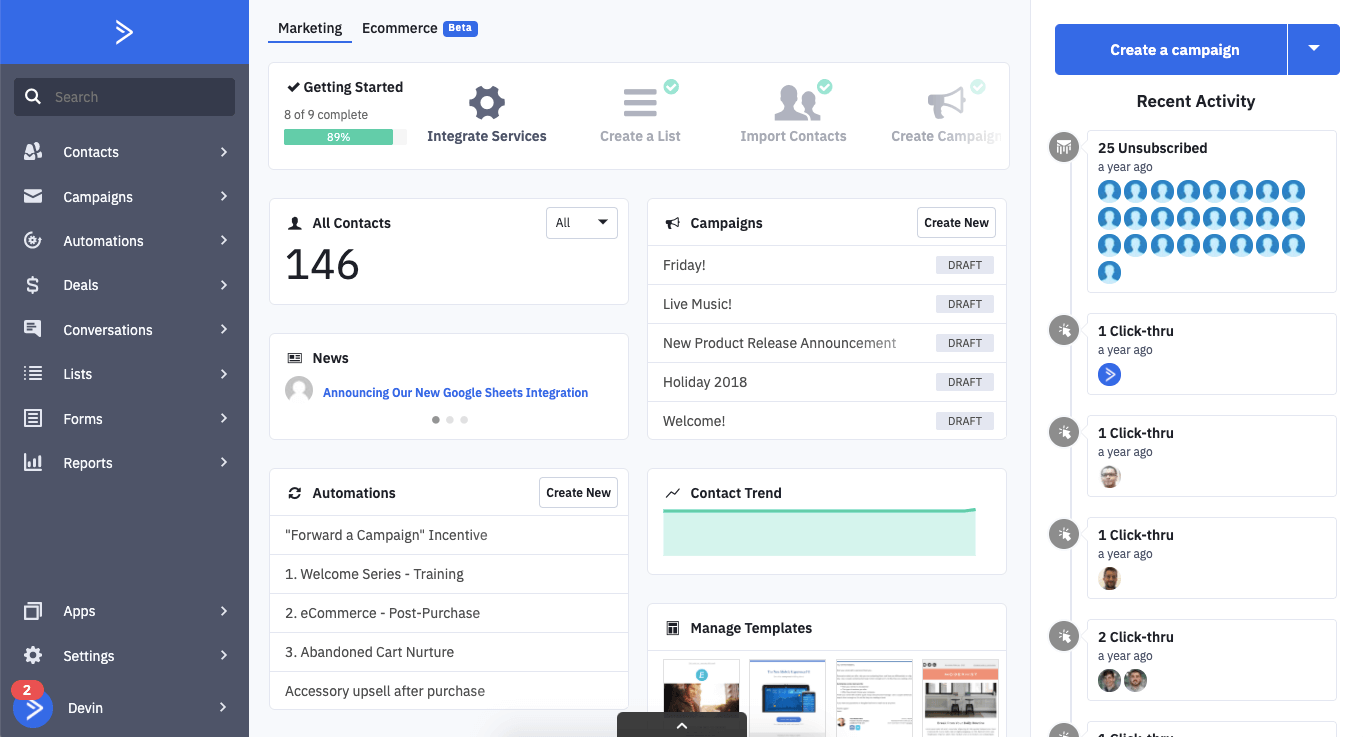
7. ActiveCampaign: Automation platform for customer experience
ActiveCampaign specializes in marketing automation and email marketing for growing businesses that need sophisticated customer engagement tools. The platform combines marketing automation, CRM, and machine learning to help businesses create personalized customer experiences. Its focus on automation makes it particularly valuable for teams looking to scale their marketing efforts efficiently.
Key features:
- Marketing automation with visual customer journey mapping
- Email marketing with segmentation
- CRM with contact scoring
- Machine learning predictions
- Site tracking and event tracking
- Split automation and testing
Limitations:
- Limited project management functionality
- Automation setup requires technical expertise
- Integration options with other platforms are restricted
8. Planable: Collaboration for content review and approval
Planable provides a collaborative content review and approval platform specifically designed for marketing teams that need to streamline their content creation processes. The platform's visual interface and approval workflows help teams manage content calendars, social media posts, and marketing campaigns with clear version control and feedback systems.

Key features:
- Visual content calendar and planning
- Four-view content preview (feed, calendar, list, and grid)
- Approval workflows and version control
- Real-time collaboration and commenting
- Social media scheduling integrations
- Brand consistency tools
Limitations:
- Scope is limited to content collaboration functions
- Lacks comprehensive project management features
- Reporting and analytics capabilities are basic
How to choose your campaign management tool
Selecting the right platform is crucial for campaign success. Look beyond basic features to find a solution that truly enhances your team's workflow and drives results. Here are the key considerations to guide your evaluation:
- Evaluate integration capabilities: Prioritize platforms that unify communication, task management, and document collaboration in a single environment. The ideal tool should eliminate context switching by automatically syncing data across functions, giving you a complete picture of campaign performance without manual consolidation.
- Assess customization flexibility: Choose software that adapts to your unique processes rather than forcing you into rigid workflows. Look for customizable fields, views, and automation rules that can scale with your campaign complexity while maintaining your established approval processes and reporting requirements.
- Verify collaboration features: Ensure the platform supports real-time co-editing, contextual comments, and presence indicators. These capabilities keep distributed teams aligned, accelerate review cycles, and preserve decision context across different time zones and locations.
- Analyze reporting capabilities: Look for tools that transform raw data into actionable insights through automated reporting and visual dashboards. The best solutions offer customizable KPIs, predictive analytics, and easy-to-interpret visualizations that demonstrate campaign value to stakeholders.
- Check mobile functionality: Confirm the platform provides full-featured mobile apps with instant synchronization. This maintains campaign momentum for remote team members and ensures critical updates are accessible regardless of location or device.
- Review automation options: Seek out workflow automation that handles routine tasks while maintaining creative flexibility. Template libraries should accelerate campaign setup without limiting your ability to customize approaches for different audiences or channels.
- Confirm security protocols: Ensure the platform offers granular access controls that protect sensitive campaign data while enabling appropriate collaboration. The security model should adapt to your organizational structure and compliance requirements as you grow.
Campaign management process in 6 steps
Successful campaigns follow a logical progression from idea to analysis. This six-step framework provides a reliable structure for managing campaigns of any scale or complexity. Each phase builds upon the previous one, creating a comprehensive approach that ensures no critical elements are overlooked during planning and execution.
Step 1: Planning and goal setting
Every successful campaign starts with clear objectives and a solid plan. Specific, measurable goals replace vague aspirations, providing direction for all subsequent activities. This phase establishes budgets, timelines, and key stakeholders. Effective planning involves conducting situation analysis, defining target outcomes, identifying constraints, and developing contingency plans. Using Lark Docs for collaborative brief creation ensures everyone starts with shared understanding and clear expectations. The planning phase typically consumes 20-30% of the total campaign timeline but lays the foundation for all subsequent activities.
Step 2: Audience analysis and segmentation
Understanding the target audience transforms generic campaigns into personalized experiences. Detailed buyer personas capture pain points, motivations, and channel preferences. This knowledge enables precise segmentation and tailored messaging. Effective segmentation goes beyond basic demographics to include behavioral patterns, psychographic characteristics, and engagement history. Centralizing this information in Lark Base keeps audience insights accessible to everyone involved in campaign execution. Advanced teams create dynamic audience segments that update automatically based on real-time engagement data and behavioral triggers.
Step 3: Strategy and messaging development
This stage bridges planning and execution by defining how to reach the audience and what to communicate. Channel selection, messaging frameworks, and content requirements all take shape here. The collaborative nature of Lark Docs proves invaluable for refining messaging and gathering feedback in real-time. Strategy development includes determining the optimal marketing mix, crafting compelling value propositions, developing creative concepts, and establishing measurement frameworks. This phase transforms abstract goals into concrete action plans with clear creative direction and channel strategies.
Step 4: Execution and team coordination
Turning plans into action requires precise coordination across teams and disciplines. Clear task ownership and deadlines prevent bottlenecks and ensure smooth progress. Lark Tasks integrated with team calendars creates visibility into deliverables and dependencies, while Lark Messenger keeps communication focused and actionable. Execution involves coordinating creative production, platform setups, legal reviews, and quality assurance processes. Successful execution requires maintaining campaign momentum while adapting to unforeseen challenges and opportunities that inevitably arise during implementation.
Step 5: Launch and performance monitoring
Going live marks the beginning of close performance monitoring. Tracking key metrics from launch provides immediate insight into campaign resonance and identifies any needed adjustments. Having instant access to team members through Lark Messenger enables quick resolution of any launch-related issues. Monitoring involves tracking both leading indicators (engagement rates, click-through rates) and lagging indicators (conversion rates, ROI). Establishing clear monitoring protocols and escalation paths ensures issues get addressed promptly while opportunities get capitalized quickly.
Step 6: Analysis and optimization
The final phase focuses on extracting learnings and demonstrating impact. Performance data gets analyzed against initial goals, revealing successes and improvement opportunities. These insights inform future campaigns, creating a cycle of continuous improvement. Lark's centralized environment makes it easy to document and share these learnings across the organization. Comprehensive analysis includes assessing financial performance, audience response, creative effectiveness, and channel efficiency. The most successful teams institutionalize these learnings through standardized post-campaign reviews and knowledge sharing practices.
By integrating these six campaign steps within Lark's unified platform, teams eliminate workflow friction and accelerate time-to-results. From initial planning in Docs to performance analysis in Base, Lark creates a seamless operational rhythm that keeps campaigns moving forward efficiently.
Conclusion
Effective campaign management has evolved from basic task tracking to a strategic capability that separates high-performing marketing teams from the rest. While established processes are crucial, the right tools determine whether campaigns run smoothly or stumble through coordination chaos.
Modern platforms like Lark transform this complexity into competitive advantage by unifying planning, execution, and analysis in one connected workspace. This integration eliminates the friction of switching between applications and provides the clarity teams need to adapt quickly and deliver consistent results.
As marketing continues to shift toward personalized, real-time engagement, mastering campaign management becomes increasingly vital for sustainable growth. The journey toward more impactful campaigns starts with choosing tools that enhance rather than hinder collaboration.
FAQs
What is meant by campaign management?
Campaign management is the end-to-end process of planning, executing, tracking, and analyzing a marketing initiative. It ensures all activities, from audience targeting to channel selection, are strategically aligned to achieve specific business goals, moving beyond simple tasks to coordinated, data-driven execution.
What is the role of a campaign manager?
A campaign manager orchestrates the entire marketing campaign lifecycle. They define strategy, coordinate cross-functional teams, manage budgets and timelines, and monitor performance to optimize results and ensure the campaign delivers on its objectives efficiently.
How to do campaign management?
Effective campaign management follows a structured process: plan goals and audience, develop strategy, coordinate execution, launch, monitor performance, and analyze results. Utilizing an integrated platform like Lark streamlines these steps, keeping teams aligned and agile from start to finish.
What is a campaign management system?
A campaign management system is a software platform that helps teams plan, execute, and analyze marketing campaigns. It centralizes workflows, communication, and data—like Lark does—to provide visibility and control, turning complex projects into manageable, measurable processes.
Related reading
Table of contents
Start using Lark today

Manage all your work in one place
Boost team efficiency by 10x
Save up to 70% on software costs
Table of contents
Start using Lark today
Manage all your work in one place
Boost team efficiency by 10x
Save up to 70% on software costs
Keep reading








2026 Lark Technologies Pte. Ltd.
Headquartered in Singapore with offices worldwide.






Explore: