Every day, critical deals are delayed, and vendor payments are stalled simply because a crucial agreement is buried in an email thread or lost across a disjointed tech stack. The days of relying on manual legal drafting, such as emailing static Word documents back and forth for redlining, are rapidly coming to an end. Today, agile businesses are shifting toward automated, end-to-end workflows to keep operations moving without friction. By implementing contract automation software, organizations can transform static documents into active, intelligent operational engines. The purpose of this guide is to help legal, procurement, sales, and finance leaders evaluate the market and choose the right platform to eliminate approval bottlenecks and connect legal terms directly to downstream financial operations.
What is contract automation software?
At its core, modern contract automation goes far beyond mere document storage. Often referred to as Contract Lifecycle Management (CLM), this technology acts as a digital nervous system for your agreements. Rather than functioning as a passive filing cabinet where PDFs go to die, a robust CLM platform actively manages how a business creates, negotiates, signs, and tracks legal documents.
Modern contract automation relies on three core capabilities to streamline operations:
- AI-powered drafting: This feature standardizes legal language and automatically highlights risky clauses during the negotiation phase.
- Metadata extraction: Intelligent systems automatically pull critical dates, pricing tiers, and compliance obligations from unstructured text, allowing teams to search and report on their commitments.
- Intelligent workflow routing: The software ensures the right stakeholder sees the document at exactly the right time based on conditional logic, eliminating the need to manually chase down signatures.
Why standalone CLM tools might be slowing your team down
As contract volumes grow, the standard corporate reflex is to purchase a heavy, dedicated enterprise CLM platform. However, this often introduces a new operational bottleneck: app fatigue.
Buying a highly specialized legal tool frequently creates another disconnected data silo. While the legal department might love the advanced redlining features, sales representatives and finance managers often resist logging into yet another separate system just to submit a request or approve a standard vendor agreement.
When cross-functional teams refuse to adopt a standalone tool, the entire process breaks down. The most effective way to scale contract management is not by adding another niche application to your tech stack, but by unifying contract approvals within and the daily team messaging and collaboration platform your company already uses. When a contract approval pings a sales director directly in their primary chat interface, adoption rates soar, cycle times shrink, and cross-departmental visibility improves instantly.
Manage contracts easily with Lark
Beyond legal: Connecting contract automation to financial workflows
A contract is not finished the moment it gets signed. In reality, a signature is just the beginning of a complex financial relationship. If your legal repository is isolated from your accounting workflow software, your finance team is forced to manually re-enter payment terms and renewal dates, creating a massive risk for human error and overpayment.
Consider a standard vendor onboarding scenario when a procurement manager signs a new supplier agreement; that finalized contract should automatically trigger downstream financial processes. By connecting your legal repository directly to AP automation software and dedicated invoice approval software, the approved contract establishes the baseline rules for invoice-processing automation. Later, when the vendor submits their first bill, your accounts payable automation software can instantly cross-reference the incoming invoice against the original contract terms, automatically flagging any unexpected rate hikes or unauthorized fees before the payment is ever released.
The exact same logic applies to your revenue generation cycle. When a sales team closes a deal, the signed client contract must flow seamlessly into your accounts receivable software and, ideally, connect with . Similarly, businesses that require deeper visibility into contract data and AI-powered contract lifecycle management often use solutions like to organize agreements, automate legal workflows, and improve collaboration between legal, finance, and operations teams. This ensures that billing schedules are activated immediately, allowing your accounts receivable automation systems to generate and send accurate invoices without requiring the finance team to manually hunt down the finalized contract terms across different departments.
Top 7 contract automation software solutions for 2026
Evaluating software requires balancing features, usability, and your specific organizational scale. Below is a comparative overview of the top platforms leading the market this year.
1. Lark: The unified workspace with powerful approval flows
is an all-in-one super app that brings messaging, video calls, document collaboration, file sharing, project management, approvals, and AI-powered workflows into a single platform. For organizations suffering from app fatigue, Lark eliminates the need to buy a disjointed, standalone contract management tool by embedding secure data storage and automated routing directly into the interface your team already uses every day.
Deep dive
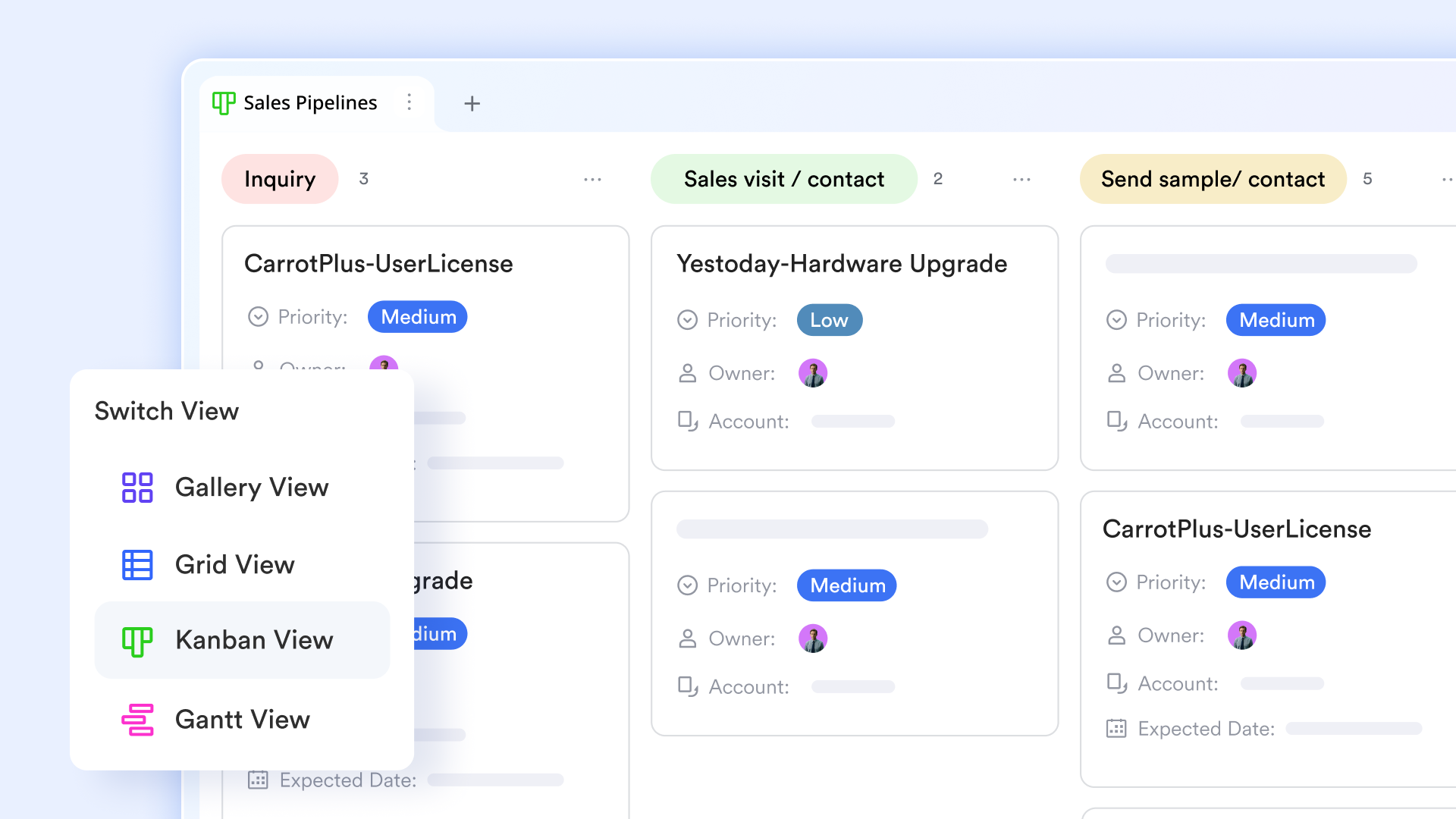
- Centralized contract database: Tracking contract lifecycles in isolated spreadsheets leads to missed renewals. acts as a highly structured, relational database where legal and finance teams can track vendor profiles, active agreements, and payment schedules. Built-in automation can trigger alerts when a contract is 30 days away from expiration.
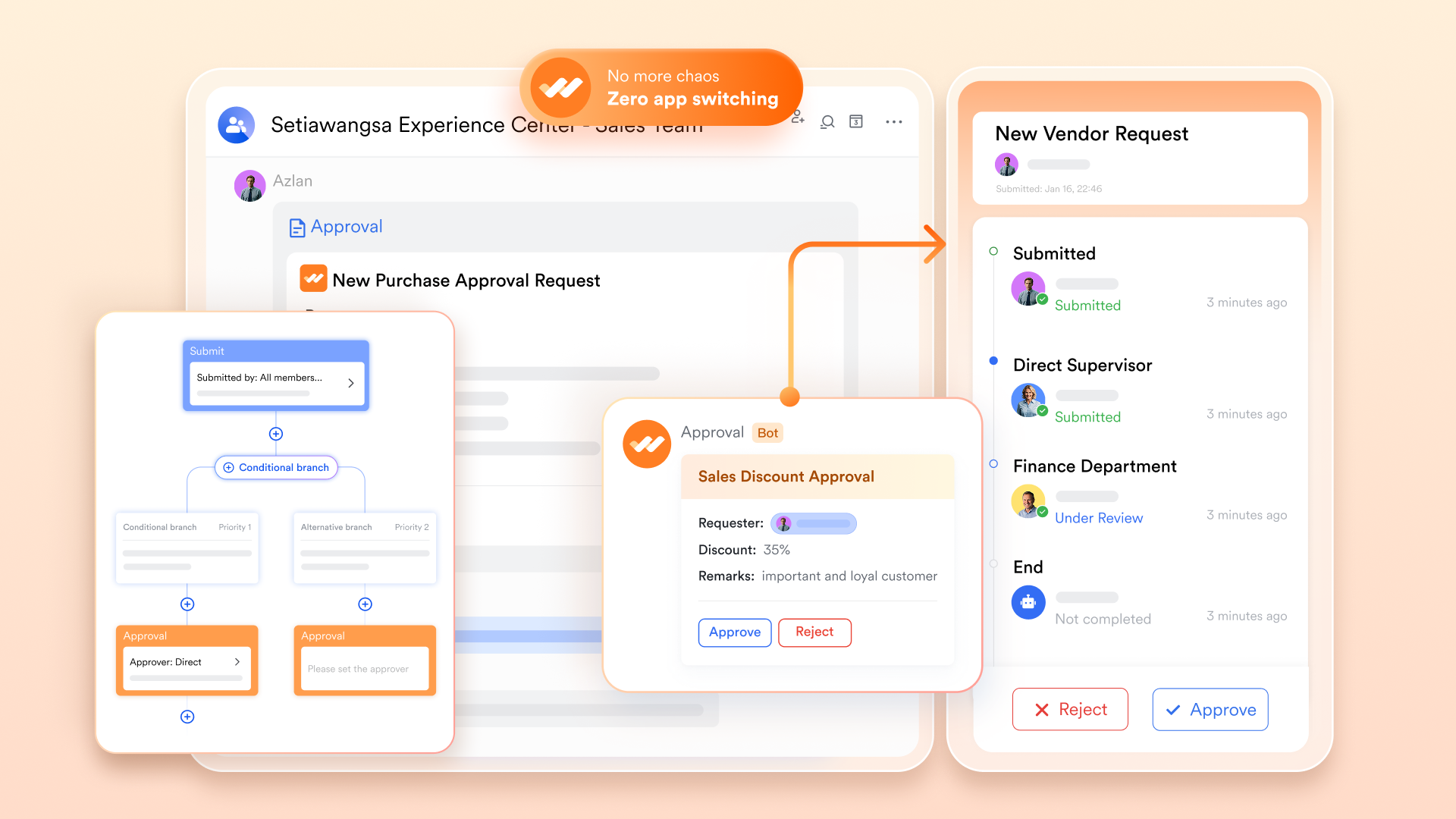
- Automated approval routing: Contract bottlenecks usually happen when requests get buried in an inbox. With , operations managers can design customized, multi-step workflows. A finalized vendor contract triggers an automatic approval card directly in the approver's chat, allowing executives to review and authorize agreements with a single tap on their mobile device.
- Real-time collaborative drafting: Legacy word processors create version control nightmares during contract negotiations. Using , internal teams and external stakeholders can co-edit legal terms, leave contextual inline comments, and track revision history in real time within a secure, cloud-native environment.
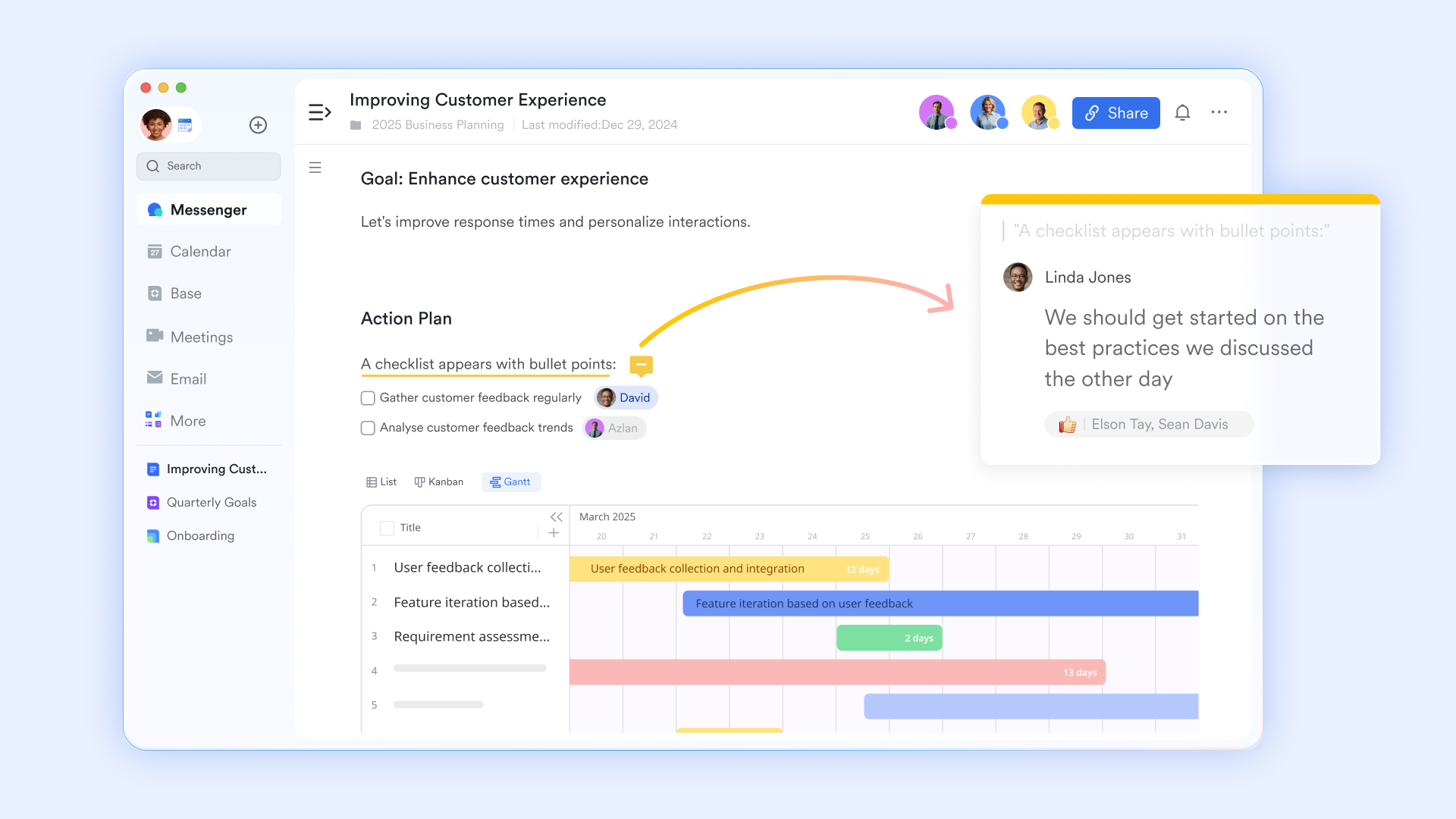
- Contextual team communication: When a contract stalls due to a pricing disagreement, sending formal emails slows deal velocity. Lark brings the contract directly into the team chat, allowing sales reps and legal counsel to jump on a quick built-in video call to resolve the issue instantly without leaving the platform.
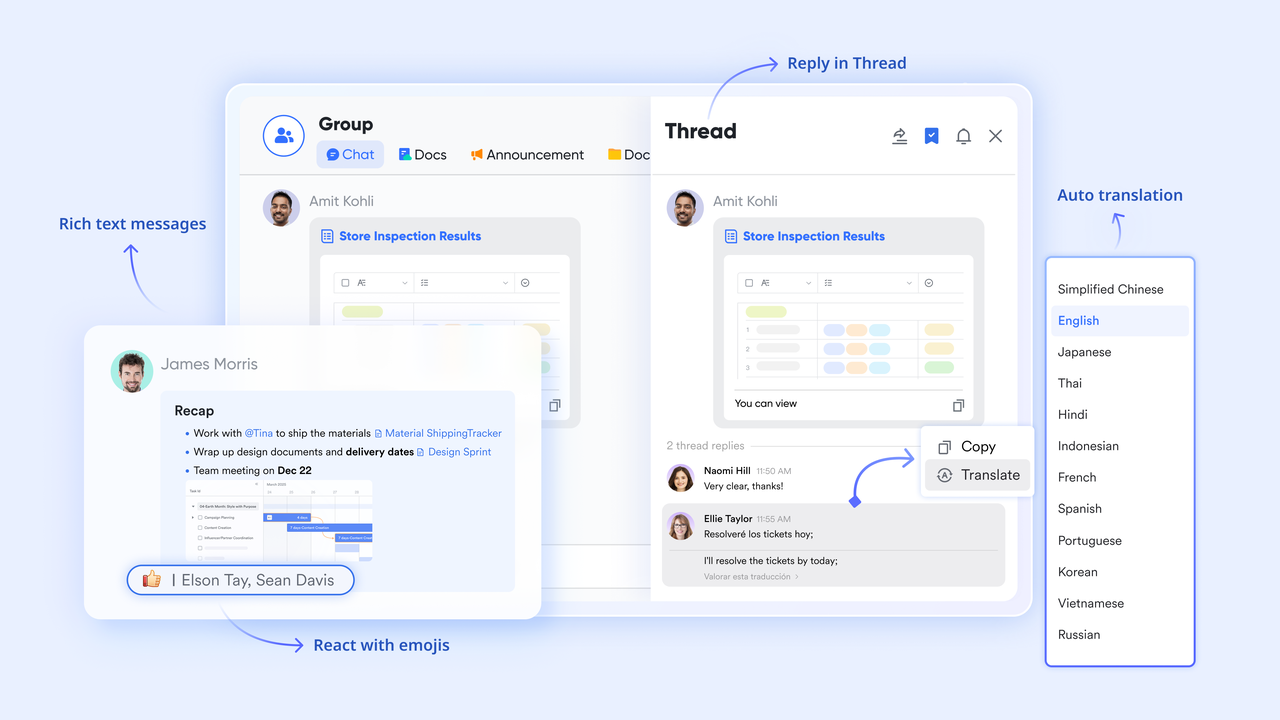
Pros
- It consolidates contract workflows, document drafting, and team communication into a single, unified interface.
- The customizable database and approval systems easily scale to support highly complex, multi-departmental operations.
- It offers an incredibly generous free tier that includes powerful automation runs and robust storage.
Cons
- Because the platform is incredibly feature-rich and replaces multiple standalone apps, new users might experience a slight learning curve during initial setup. However, the interface is highly user-friendly, and there are extensive tutorial resources in the and on YouTube to ensure teams can onboard quickly and smoothly.
:
- Starter plan: Free forever plan that includes 11 powerful tools for up to 20 users. It also comes with 100GB of storage, 1000 automation runs, AI translations, and more.
- Basic plan: $6/user/month (billed annually) for up to 500 users. It includes everything in Starter plus group calling for up to 500 attendees, 5TB of storage, 1000 automation runs, and more. For more details, please .
- Pro plan: $12/user/month (billed annually) for up to 500 users. It includes everything in Basic plus group calling for up to 500 attendees, 15TB of storage, 50,000 automation runs, and more.
- Enterprise plan: for custom pricing. Supports unlimited users and includes even more automation runs and advanced security, compliance, and management features.
For small teams with simple communication needs

18 months message history
1000 Base automation runs/month
2000 rows per table in Base
Most POPULAR
For companies with comprehensive collaboration and management needs
Unlimited message history
500-participant video meetings
50k Base automation runs/month
20k rows per table in Base
For large companies with advanced security and organizational management needs
Get a personalized demo and pricing
Unlimited message history
500-participant video meetings
15 TB storage + 30 GB storage/user
500k Base automation runs/month
50k Base automation runs/month
Most POPULAR
For companies with comprehensive collaboration and management needs
Unlimited message history
500-participant video meetings
50k Base automation runs/month
20k rows per table in Base
2. Juro: AI-native contract drafting
Juro positions itself as an intelligent contract automation platform designed primarily to help legal, sales, and HR teams create, negotiate, and sign contracts at scale. It emphasizes usability and velocity over bloated enterprise feature lists.
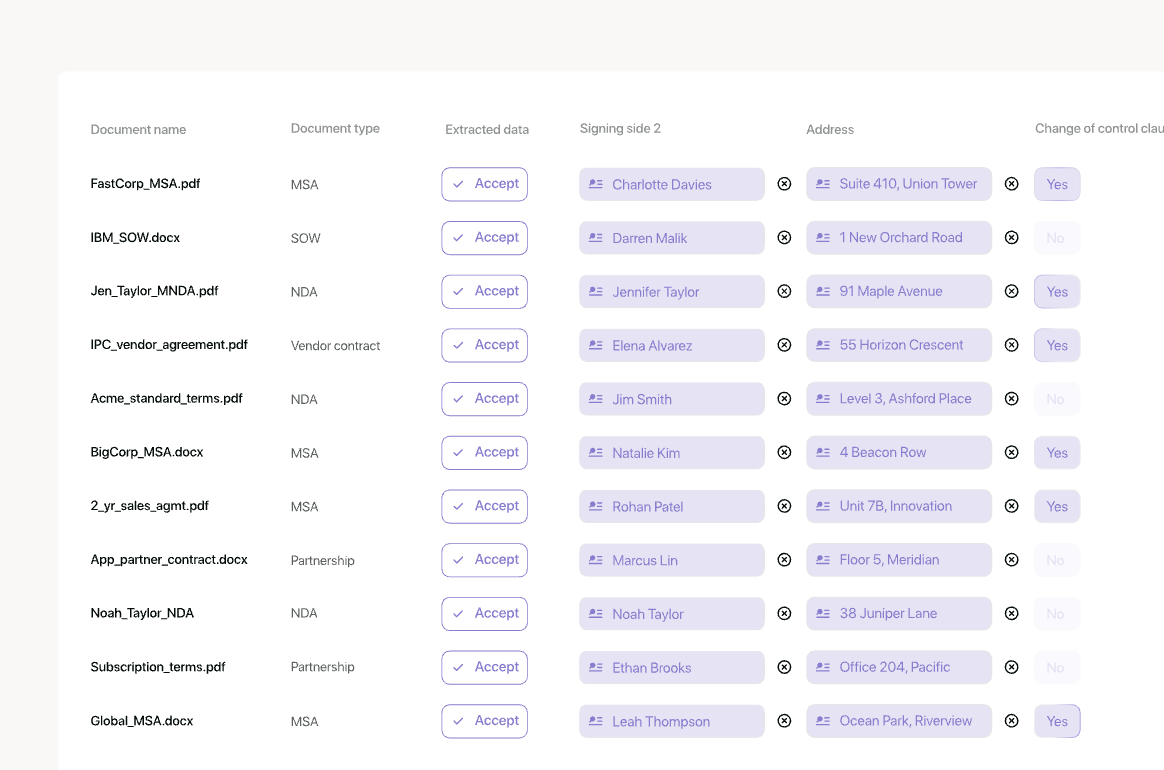
Image source: juro.com
Deep dive
Juro focuses heavily on the pre-signature phase of the contract lifecycle. It allows commercial teams to self-serve routine contracts using pre-approved legal templates. Its AI capabilities assist in drafting clauses and summarizing complex legal jargon, drastically reducing the administrative burden on the core legal team. By keeping the entire drafting, negotiation, and e-signature process within one browser-based environment, Juro helps businesses close deals faster.
Pros
- The AI-powered drafting assistant accelerates the creation of standard commercial agreements.
- The browser-based negotiation feature eliminates the need to export documents to Word.
- It provides excellent usability and a clean interface that non-legal teams can easily navigate.
Cons
- It lacks deep, native financial integrations for post-signature accounts payable workflows.
- The platform may not offer the extreme customization required by highly regulated global enterprises.
Pricing
Juro does not publish exact pricing on its website; interested buyers must contact their sales team for a custom quote based on organization size and required features.
3. Sirion: Complex enterprise governance
Sirion is a heavy-duty, enterprise-grade platform designed for large, global organizations that manage immense volumes of highly complex contracts and require strict regulatory compliance oversight.
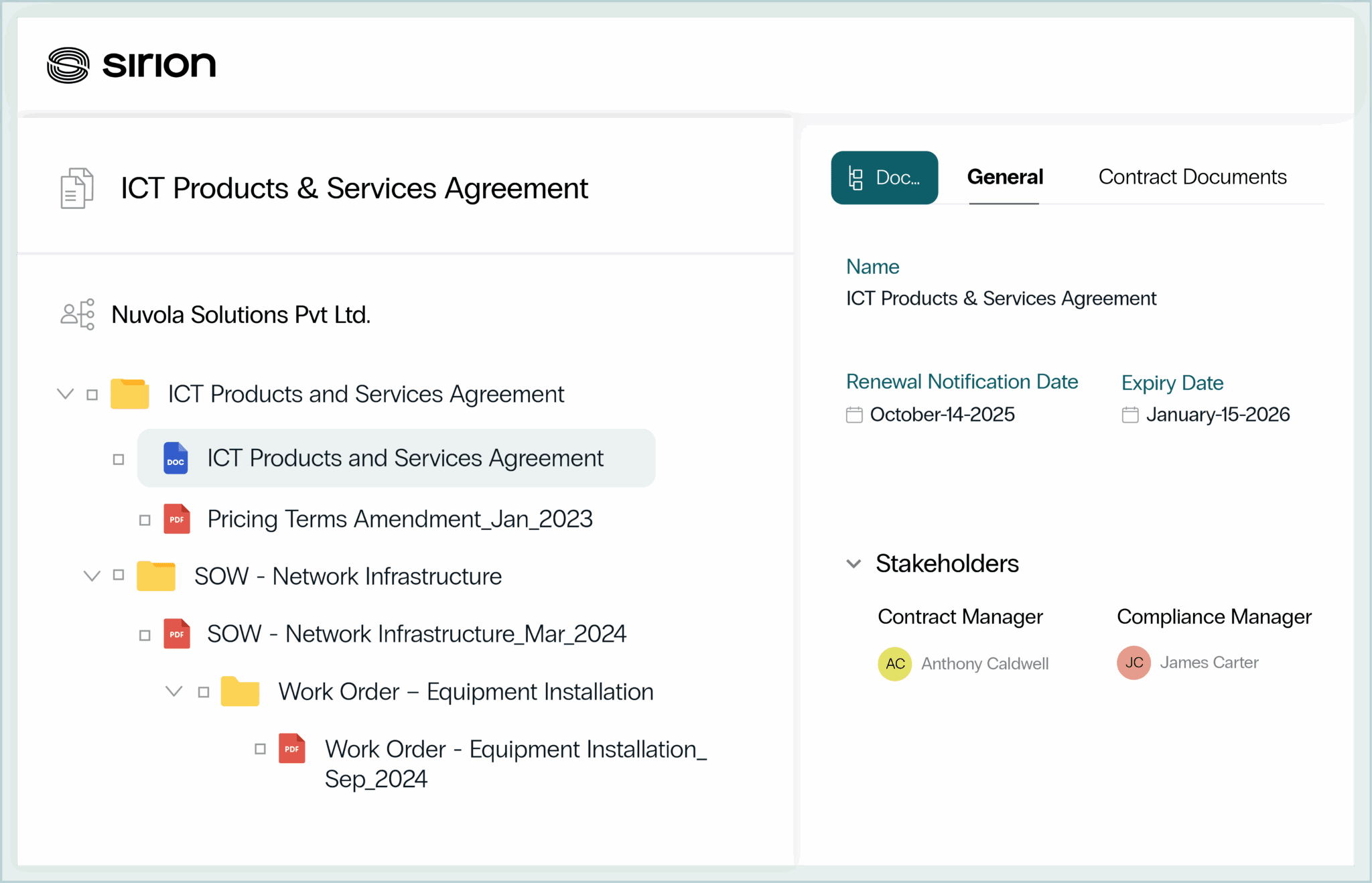
Image source: sirion.com
Deep dive
Sirion goes far beyond basic document storage by offering advanced post-signature obligation management. Its AI engine excels at extracting metadata from thousands of legacy contracts, allowing large procurement and legal teams to analyze their global risk exposure instantly. The software connects deeply with enterprise ERP systems, ensuring that vendor performance and financial obligations are tracked against the original negotiated terms.
Pros
- It offers unmatched AI capabilities for deep metadata extraction and risk analysis.
- The robust obligation management tools ensure vendors actually deliver on negotiated terms.
- It integrates seamlessly with legacy enterprise resource planning systems.
Cons
- The implementation timeline can be extensive and resource-heavy for organizations.
- The platform is generally too complex and expensive for mid-market or growing companies.
Pricing
Sirion operates on an enterprise sales model and does not publicly disclose pricing; prospective clients must request a customized proposal.
4. Ironclad: Dedicated legal operations
Ironclad is a highly popular contract lifecycle management tool built specifically to empower legal teams, offering a highly collaborative environment for complex negotiations and legal operations.
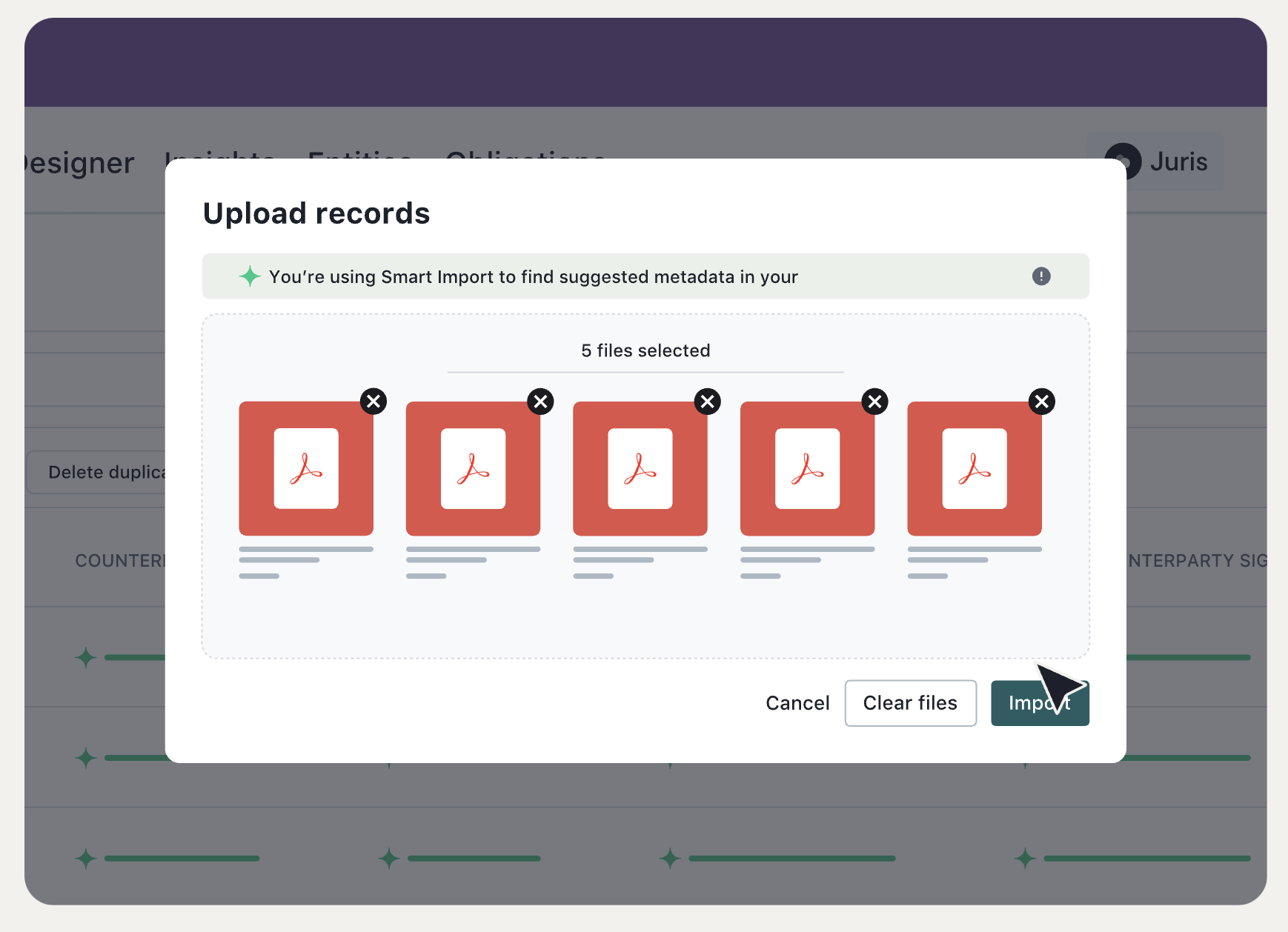
Image source: ironclad.com
Deep dive
Ironclad's core strength is its Workflow Designer, a visual interface that allows legal operations professionals to map out complex contract routing rules without writing any code. It handles the entire lifecycle, from the initial intake request from a sales rep to the final executed signature. The platform integrates well with Salesforce, allowing revenue teams to initiate contracts directly from their CRM while legal maintains full control over the underlying templates.
Pros
- The visual workflow builder makes it easy to design custom routing and approval rules.
- Strong CRM integrations keep sales teams working in their preferred environment.
- It provides robust analytics and reporting on legal turnaround times and bottlenecks.
Cons
- Adding external collaborators to the negotiation process can sometimes be clunky.
- It acts as another standalone application that requires its own specific login and training.
Pricing
Ironclad requires businesses to contact their sales team for specific pricing tiers based on contract volume and feature requirements.
5. Esker: Specialized source-to-pay workflows
Esker approaches contract management through the lens of procurement and finance, embedding contract automation directly into the broader source-to-pay lifecycle.
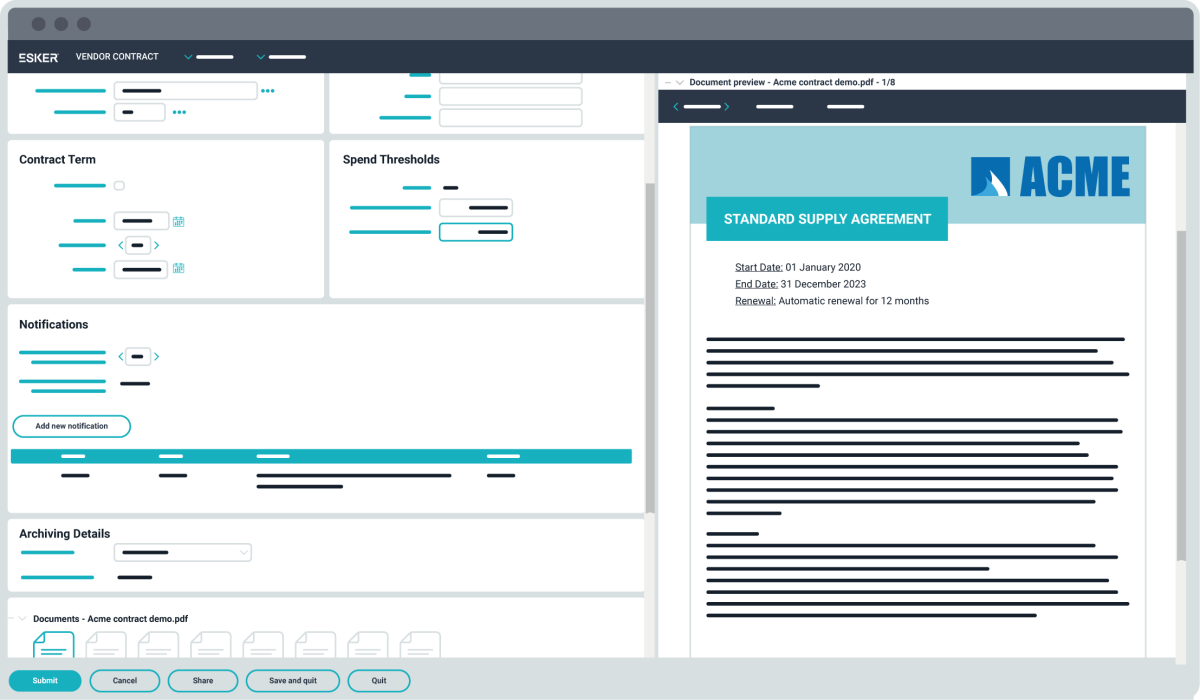
Image source: esker.com
Deep dive
Esker focuses on the operational reality that contracts dictate financial outcomes. Its software is specifically tailored to link vendor agreements directly with accounts payable processes. When a contract is finalized in Esker, its stipulations—such as early payment discounts or specific billing cycles—are automatically synchronized with the invoice processing system. This ensures extreme accuracy in payments and helps procurement teams foster better supplier relationships through transparent compliance.
Pros
- It flawlessly connects legal agreements with downstream accounts payable workflows.
- The platform significantly reduces the risk of vendor overpayment through automated compliance checks.
- It centralizes supplier communication and contract data in one secure repository.
Cons
- The user interface is heavily skewed toward procurement, which may alienate sales teams.
- It is a specialized suite rather than a general-purpose team productivity tool.
Pricing
Esker provides custom pricing quotes based on the specific modules required and the volume of documents processed annually.
6. DocuSign CLM: Integrated e-signature ecosystems
DocuSign CLM expands upon the company's famous electronic signature capabilities to provide a complete lifecycle management tool designed to automate document generation and track post-signature obligations.
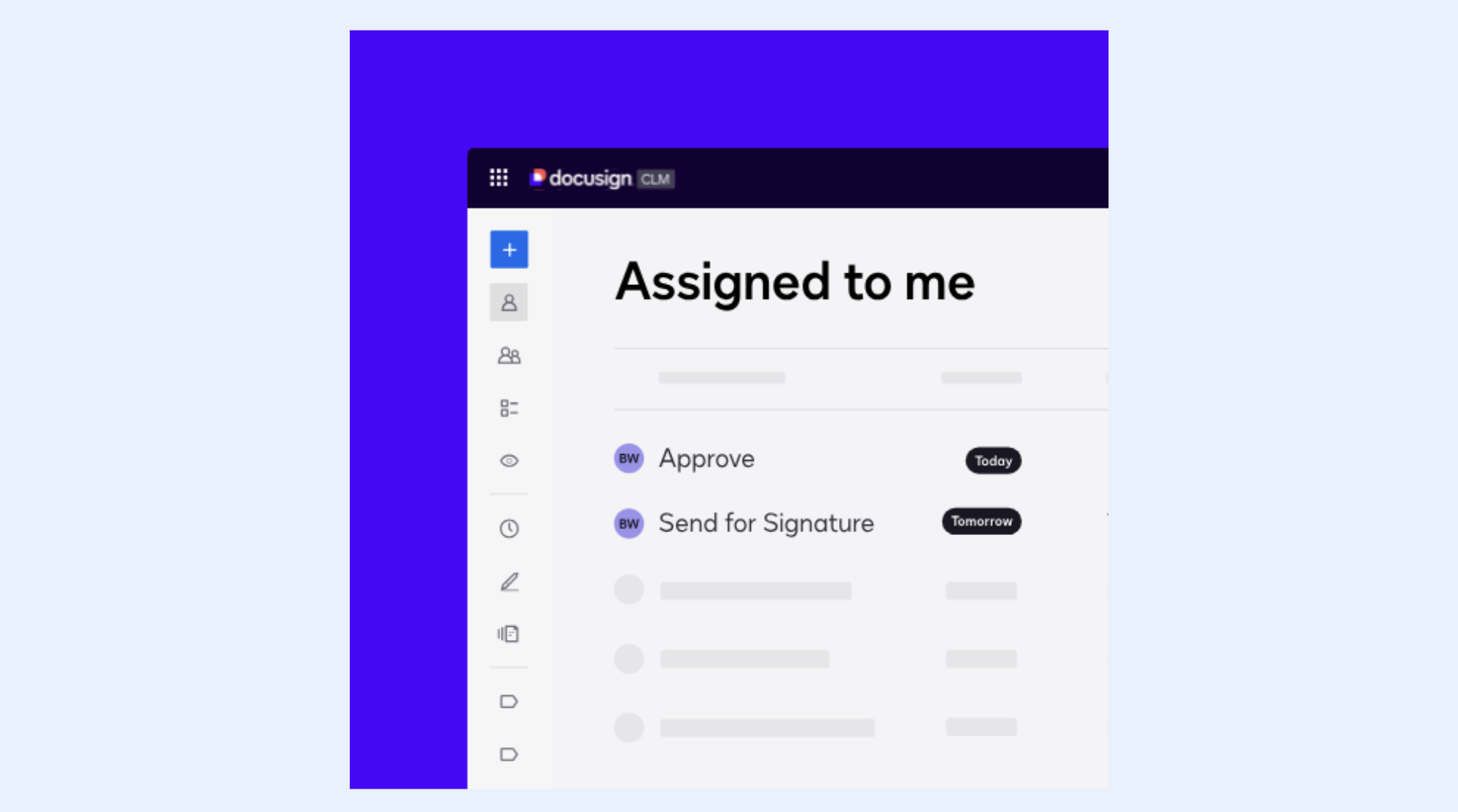
Image source: docusign.com
Deep dive
For organizations already heavily reliant on DocuSign for executing agreements, transitioning to their full CLM product is a natural progression. The software excels at document generation, allowing teams to pull data directly from CRMs like Salesforce to auto-populate complex sales contracts. Once the document is generated, it flows seamlessly through internal approval workflows before landing in the client's inbox for a frictionless signing experience.
Pros
- It provides a deeply integrated, frictionless transition from contract drafting to final e-signature.
- The software offers robust pre-built connectors for major CRM systems to keep sales teams moving.
- It features strong document generation capabilities to automate the creation of standard agreements.
Cons
- The platform can feel somewhat bloated for smaller teams that only need basic document routing.
- Customer support and implementation times can occasionally lag due to the massive scale of their enterprise operations.
Pricing
DocuSign CLM pricing is not publicly listed; buyers must contact their sales department for a customized quote based on expected document volume and user count.
7. Icertis: Global risk management and ERP integration
Icertis Contract Intelligence (ICI) is a top-tier enterprise platform built to turn static contracts into strategic business assets through aggressive AI metadata tracking and deep integrations with global accounting systems.
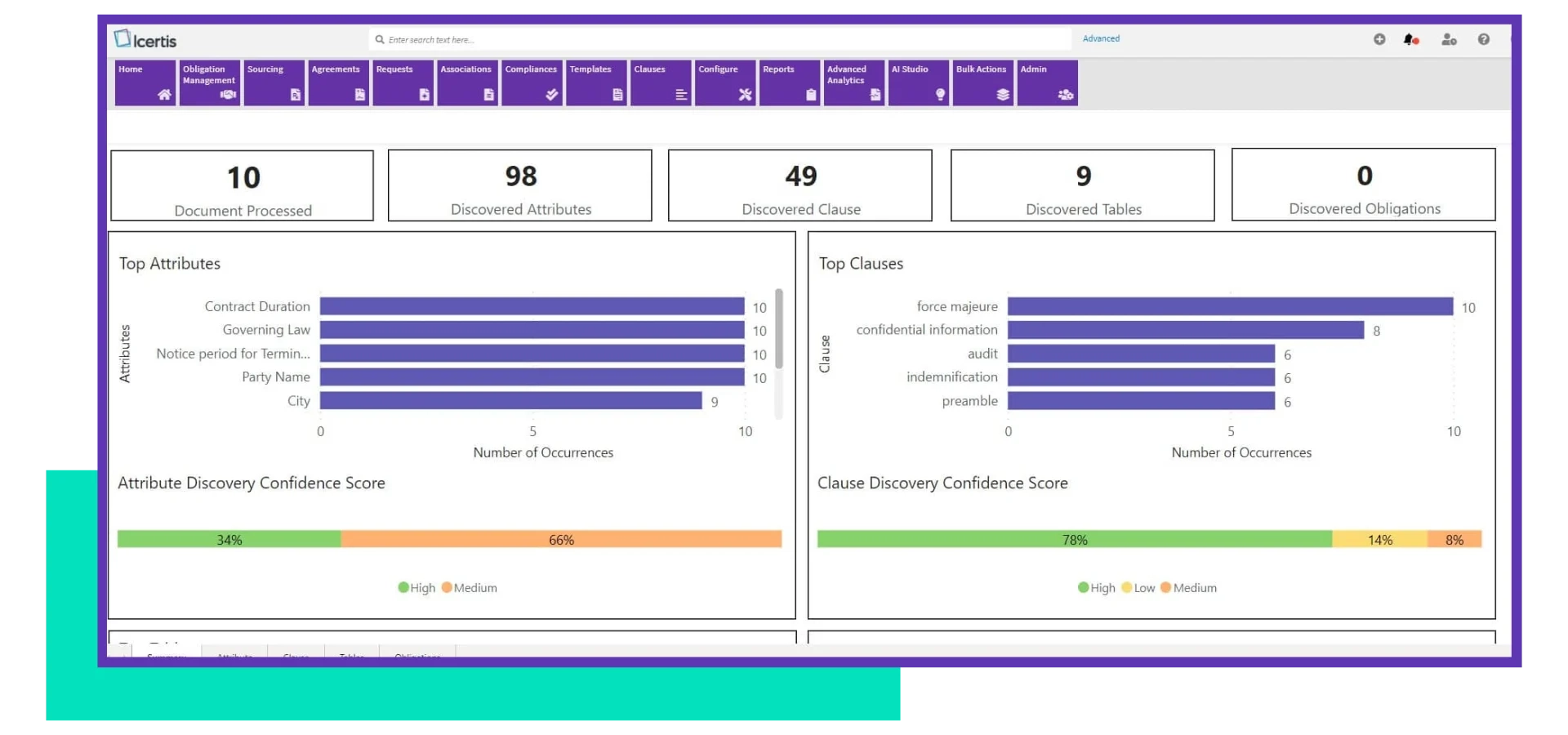
Image source: icertis.com
Deep dive
Icertis is engineered for massive scale. Its artificial intelligence engine continuously analyzes active contracts against changing global compliance standards, instantly flagging potential risk exposure across supply chains. Rather than operating in a silo, Icertis is designed to be deeply embedded into platforms like SAP and Microsoft Dynamics, ensuring that every legal clause is tied directly to a trackable financial outcome or performance metric.
Pros
- It offers unparalleled risk management capabilities by analyzing clauses against global compliance standards.
- The system features deep, native integrations with major enterprise ERP platforms.
- Its advanced AI automatically identifies deviations from standard playbooks during complex negotiations.
Cons
- The total cost of ownership and extended implementation cycles make it unsuitable for growing SMEs.
- The highly complex user interface requires extensive training and change management for non-legal employees.
Pricing
Icertis operates entirely on an enterprise sales model and does not publish its pricing tiers, requiring organizations to undergo a custom consultation.
How to launch your first automated contract workflow
Deploying new software can be daunting. To ensure a smooth transition and high adoption rates across your organization, follow these actionable steps.
1. Map your existing bottlenecks: Before configuring any software, document your current process. Identify exactly where contracts get stuck. Is it during the legal review, or is it sitting in a VP's email inbox waiting for financial approval?
2. Standardize your templates: Automation relies on consistency. Work with your legal team to create standardized, pre-approved templates for high-volume agreements like NDAs and standard vendor MSAs.
3. Build a central database: Use a structured database to catalog all active contracts. Ensure you include custom fields for expiration dates, primary stakeholders, and financial values.
4. Configure basic routing rules: Start small. Set up an for just one type of contract. For example, route all software purchases under $5,000 directly to the department head via a chat notification, bypassing legal entirely.
5. Connect to financial operations: Ensure your contract database feeds directly into your AP or AR tracking systems so the finance team is immediately notified when a new financial obligation is legally executed, and consider how will tie into these downstream processes.
Keep every agreement organized and visible with Lark
Conclusion
Contract automation software is no longer a luxury reserved for massive enterprises; it is a structural necessity for any growing legal or finance team. By shifting away from manual data entry, you protect your organization from costly human errors, accelerate your sales cycles, and build a scalable foundation for compliance. Stop wasting hours chasing lost versions in email threads or cross-referencing spreadsheets. When you give your team unified workflow tools, you give them the time and clarity to focus on strategic growth. Solutions like make this process easier by combining contract tracking, team communication, automation, and document collaboration in one place.
Start building a better contract management process
FAQs
What is the difference between CRM and contract management?
A Customer Relationship Management (CRM) system tracks sales leads, prospect interactions, and revenue pipelines. Contract management software handles the actual legal execution, redlining, approval routing, and post-signature obligation tracking of the specific agreement.
Do I need technical expertise to use contract management software?
Modern platforms utilize no-code visual workflow builders and intuitive user interfaces. While setting up complex integrations might require IT support, daily operations like drafting, approving, and searching for contracts can be handled easily by business users without coding knowledge.
Can contract management software integrate with our existing financial tools?
Yes. High-quality contract platforms offer APIs or direct integrations with accounting and enterprise resource planning systems, ensuring that contract payment terms, renewal dates, and pricing structures automatically feed into accounts payable and receivable workflows.
Related reading