














Your Definitive Guide to Choosing The Right Customer Retention Software

Fecilia Clarke
Solutions Marketing Specialist
Sep 18, 2026
Fecilia Clarke
Sep 18, 2026

17 min read


We know that losing a customer feels like a major setback. It’s not just about the lost revenue; it’s about the time, effort, and resources your support team and sales staff invested in building that relationship. This reactive loop keeps teams busy but prevents them from focusing on what truly matters: creating value and building lasting customer relationships.
What if you could shift your focus from constantly acquiring new customers to intentionally retaining your existing customers? Imagine patching those leaks and transforming your client base into loyal advocates for your brand. This is where customer retention software becomes a game-changer. It moves your business from a state of reactive firefighting to one of proactive, strategic growth. It's a powerful category of customer retention solutions designed to help you understand, engage, and delight your customers at every stage of their journey, ensuring they choose to stay with you for the long haul.
Key takeaways: Top 8 customer retention software in 2026
1. Lark: The collaborative hub unifying data and workflows for proactive retention
2. HubSpot Service Hub: Integrated service tools within the HubSpot CRM ecosystem
3. Zendesk: The comprehensive platform for omnichannel customer service
4. Gainsight: The enterprise-grade platform for customer success and health monitoring
5. Custify: The intuitive customer success software designed for B2B SaaS
6. Gong: AI-powered conversation intelligence for revenue and retention teams
7. Contentsquare: Digital experience analytics for deep user behavior insights
8. CustomerGauge: The Account Experience (AX) platform linking feedback to revenue

What is customer retention software?
Customer retention software is a specialized category of tools designed to help businesses proactively keep and grow their existing customer base. At its core, this software centralizes all customer data—including purchase history, support tickets, product usage, and communication logs—into a single, unified view. This eliminates information silos between departments and provides a complete picture of the entire customer journey. By having all this information in one place, teams can move beyond guesswork and start making data-driven decisions.
The primary goal of this software is to enable businesses to improve customer retention by identifying potential issues before they lead to churn. It achieves this through features like customer health scoring, which automatically flags at-risk accounts based on behavioral data. It also includes tools to gather customer feedback and measure customer sentiment, allowing you to understand what you’re doing right and where you need to improve. Ultimately, it’s about transforming your approach from reactive problem-solving to proactive relationship-building.
The best customer retention software helps companies automate and scale their engagement efforts. Using automated workflows, you can create personalized marketing campaigns or trigger timely interventions, such as a check-in from a customer success manager when a user’s engagement drops. This ensures that every customer receives the right level of attention at the right time, fostering customer loyalty and increasing their customer lifetime value. It's the engine that powers a modern customer retention strategy, turning satisfied customers into lifelong advocates.
Why focusing on customer retention is your best growth strategy
It’s a well-established truth in business that acquiring a new customer is significantly more expensive than retaining existing customers. While new logos are exciting, the real engine of sustainable growth lies in the customer loyalty you cultivate. They represent a powerful, often untapped, source of predictable revenue and organic expansion. The best customer retention strategy recognizes that by focusing your energy here, you’re not just saving on marketing and sales costs; you’re investing in a more stable and profitable future for your business.
The return on investment from loyalty extends far beyond your balance sheet. A small improvement in customer retention rates can lead to a significant increase in profits and overall customer lifetime value. Loyal repeat customers tend to spend more over time, are more likely to try your new products, and become invaluable sources of referrals that keep customers coming back. They are the foundation of a strong brand reputation, providing the positive word-of-mouth that marketing campaigns simply can't buy. This creates a stable revenue base, which is critical for long-term business planning, innovation, and healthier business processes.
Top 8 customer retention platforms in 2026
We've evaluated the landscape to bring you a list of the leading solutions that help businesses of all sizes improve customer retention and build loyalty. Each of these customer retention software tools offers a unique approach, from comprehensive customer success platforms to specialized communication hubs.
1. Lark: The collaborative hub unifying data and workflows for proactive retention
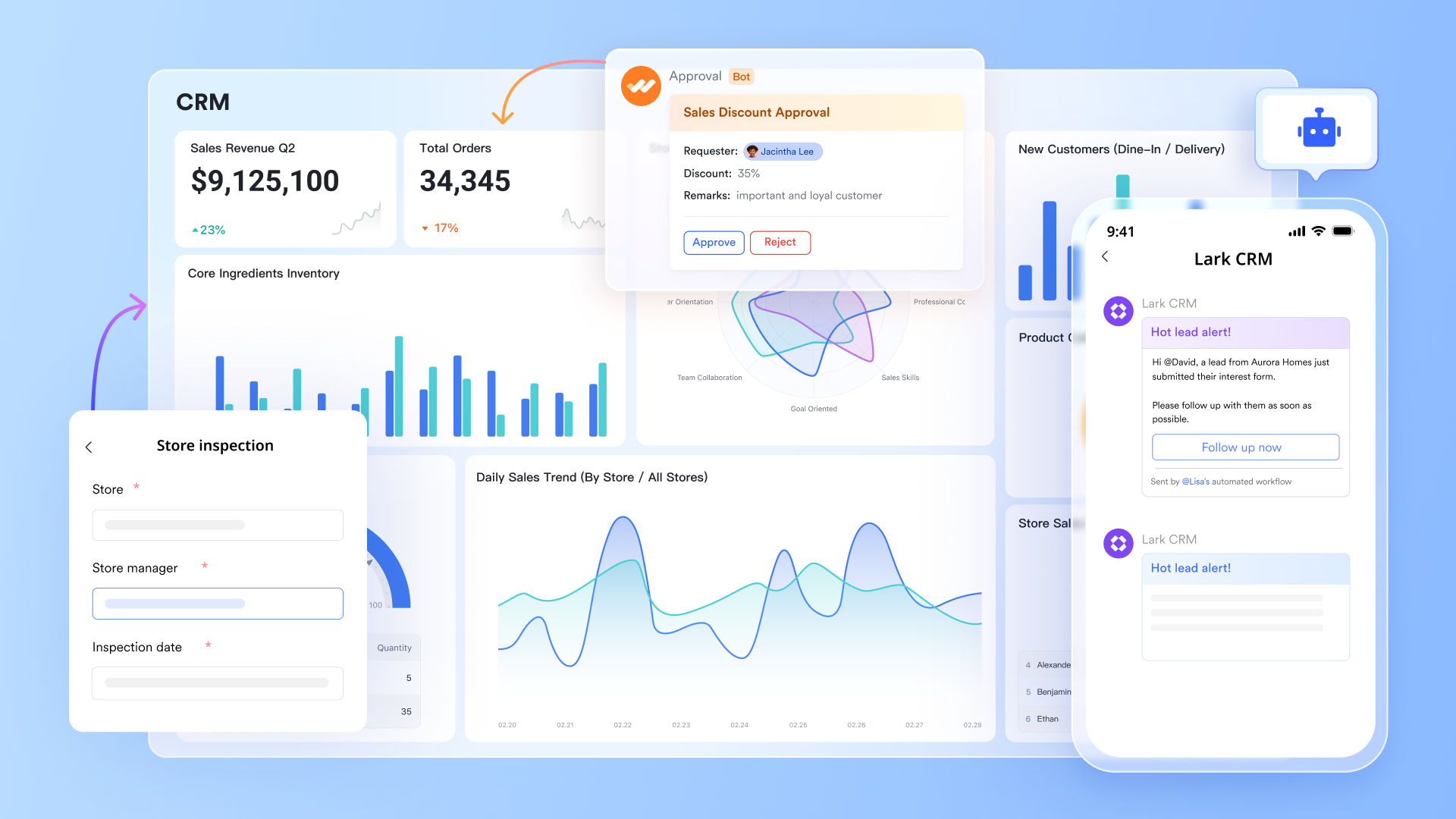
Overview:
Lark is an all-in-one collaboration suite that uniquely functions as the central nervous system for your entire customer retention management software strategy. Unlike point solutions, Lark brings together team communication, customer data, and automated workflows into one seamless platform.
This allows you to create a "Customer Health Command Center" where cross-functional teams can proactively monitor accounts, collaborate on solutions for at-risk customers, and automate engagement playbooks. By connecting your people and your data, Lark empowers you to move from simply tracking metrics to taking decisive, collaborative action that builds lasting loyalty, leading to more satisfied customers and driving growth.
Key features:
- Customized CRM database: Create centralized and dynamic customer health dashboards, renewal trackers, and feedback repositories. You can track customer purchases, log interactions, and build a complete view of purchase history to understand the customer journey. This serves as the single source of truth for all customer success initiatives.
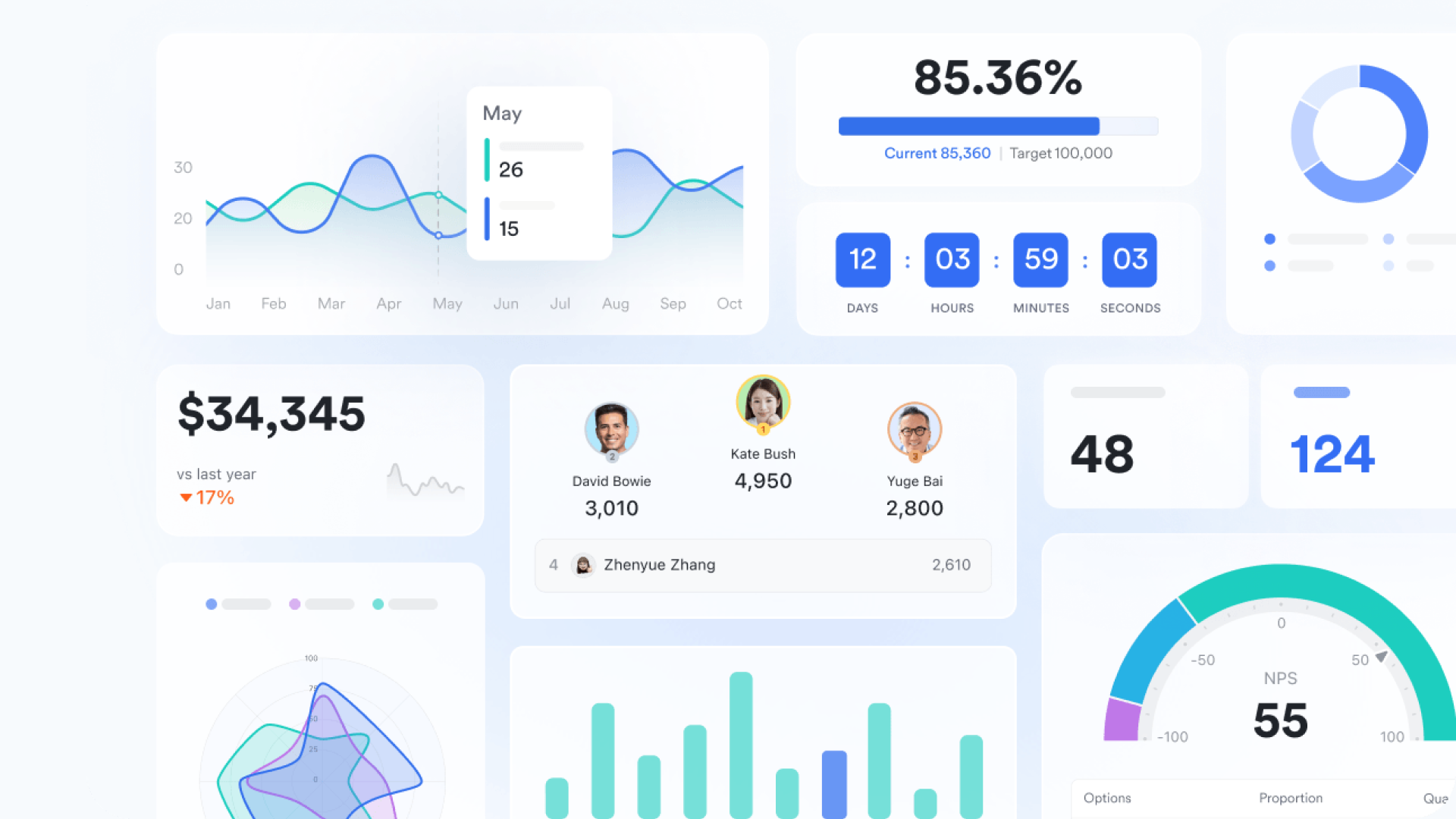
- Powerful workflows: Design automated workflows for retention playbooks and proactive outreach. Trigger actions based on data to send personalized messaging, assign tasks to CSMs, or initiate targeted strategies to encourage customers to deepen their engagement, ultimately improving customer satisfaction.
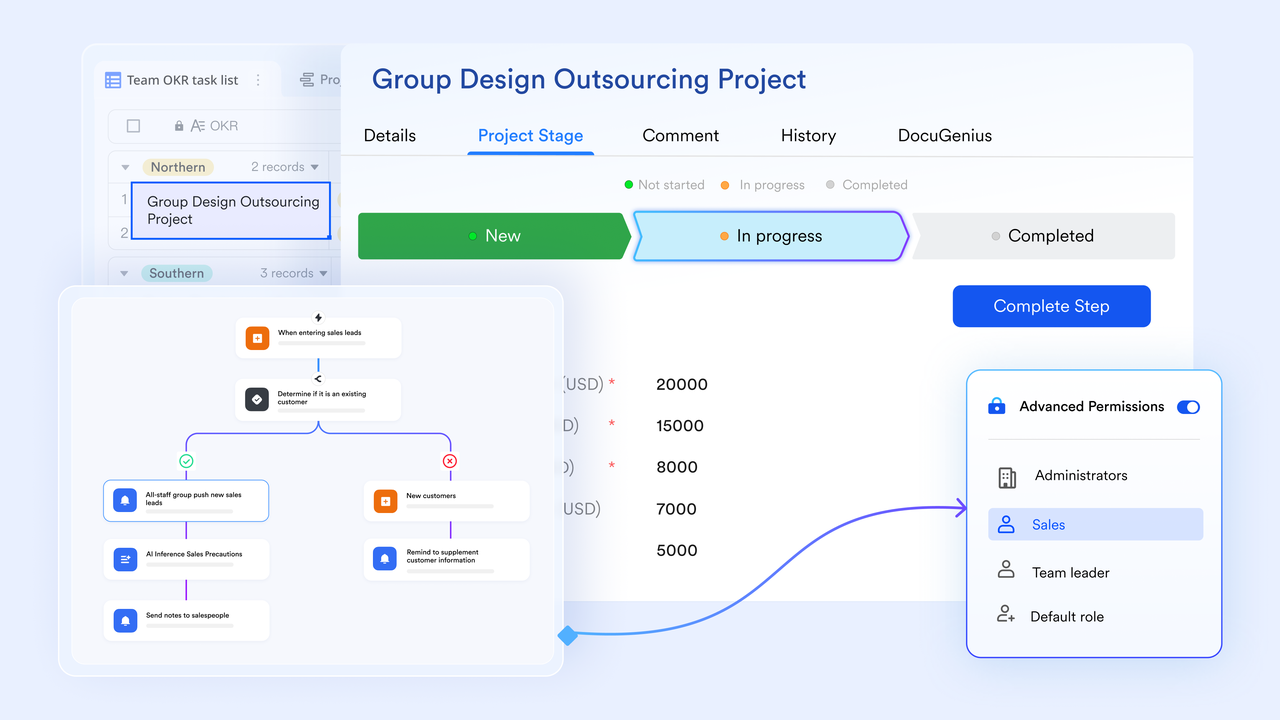
- AI-powered customer management: Get instant summaries and action items from customer calls. This feature helps capture customer sentiment and ensures no churn risk or upsell opportunity is ever missed, turning conversations into actionable intelligence that helps you meet customer expectations.
- Seamless team communication: Unify all team CRM discussions in one searchable hub. This provides complete context for your team, allowing you to review every interaction from initial inquiry to ongoing support, giving you a full picture of the relationship.
- Rich template resources: Lark offers various customer relationship management templates. Each team could find their best fit in this huge template library.
- Free plan: Includes 11 powerful products, supporting up to 20 users, 100 GB storage, 1,000 automation runs and unlimited AI translation in chats, docs and email.
- Paid plans: Starts at $12/user/month, supporting up to 500 users. Includes unlimited message history, 50,000 automated Base workflow executions per month.
- Enterprise plan: Custom pricing.
2. HubSpot Service Hub: Integrated service tools within the HubSpot CRM ecosystem
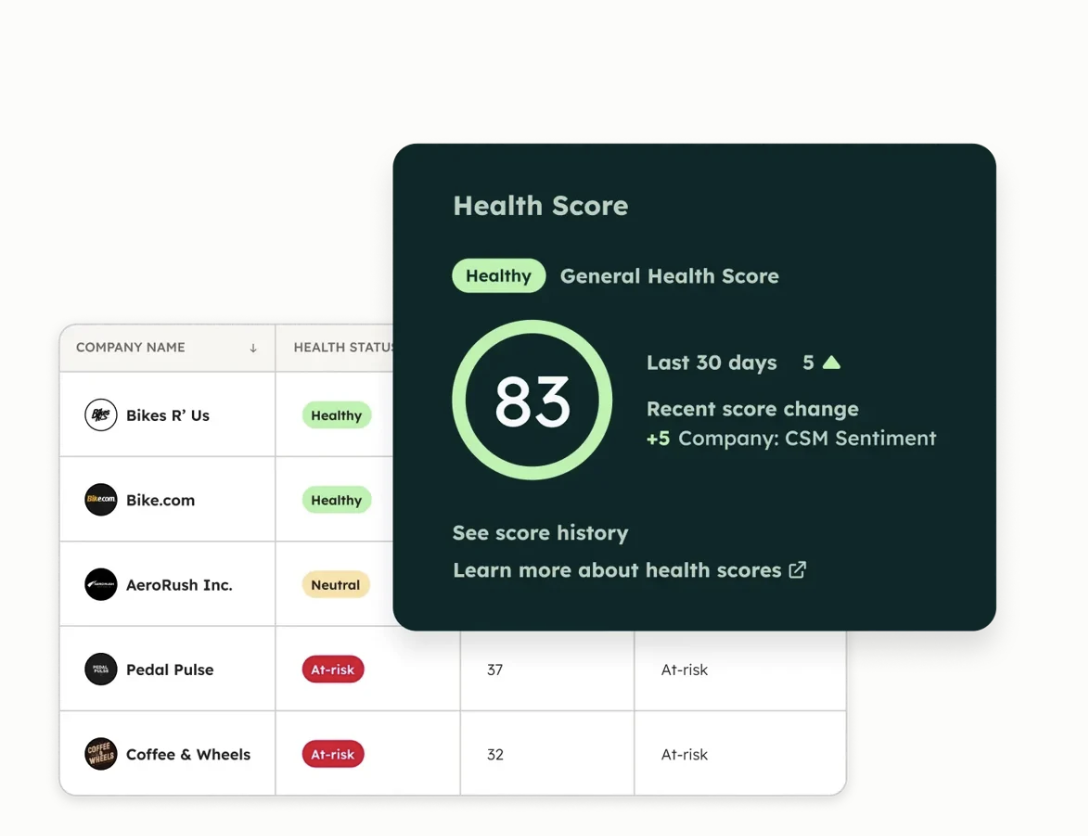
Image source: hubspot.com
Overview: HubSpot Service Hub is part of the broader HubSpot crm software, making it an excellent choice for businesses already invested in their ecosystem. It combines a robust ticketing system with customer feedback surveys, a knowledge base, and reporting dashboards. Its deep integration with Marketing Hub and Sales Hub allows for a complete view of the customer lifecycle, from lead to advocate.
Key features:
- Help desk & ticketing: A shared inbox and help desk automation to efficiently manage and resolve customer issues, which is fundamental to maintaining a positive customer experience.
- Feedback surveys: Easily create and deploy NPS, CSAT, and custom feedback surveys to gauge customer sentiment and satisfaction across the entire journey.
- Knowledge base: Build a comprehensive self-service knowledge base, empowering customers to find answers on their own and reducing the burden on your support team.
- Reporting & analytics: Access detailed reports on service performance and key metrics, allowing you to make data-driven decisions to boost customer retention.
Pricing:
HubSpot offers a free tools tier with limited functionality. Paid plans start at $9/user/month.
3. Zendesk: The comprehensive platform for omnichannel customer service
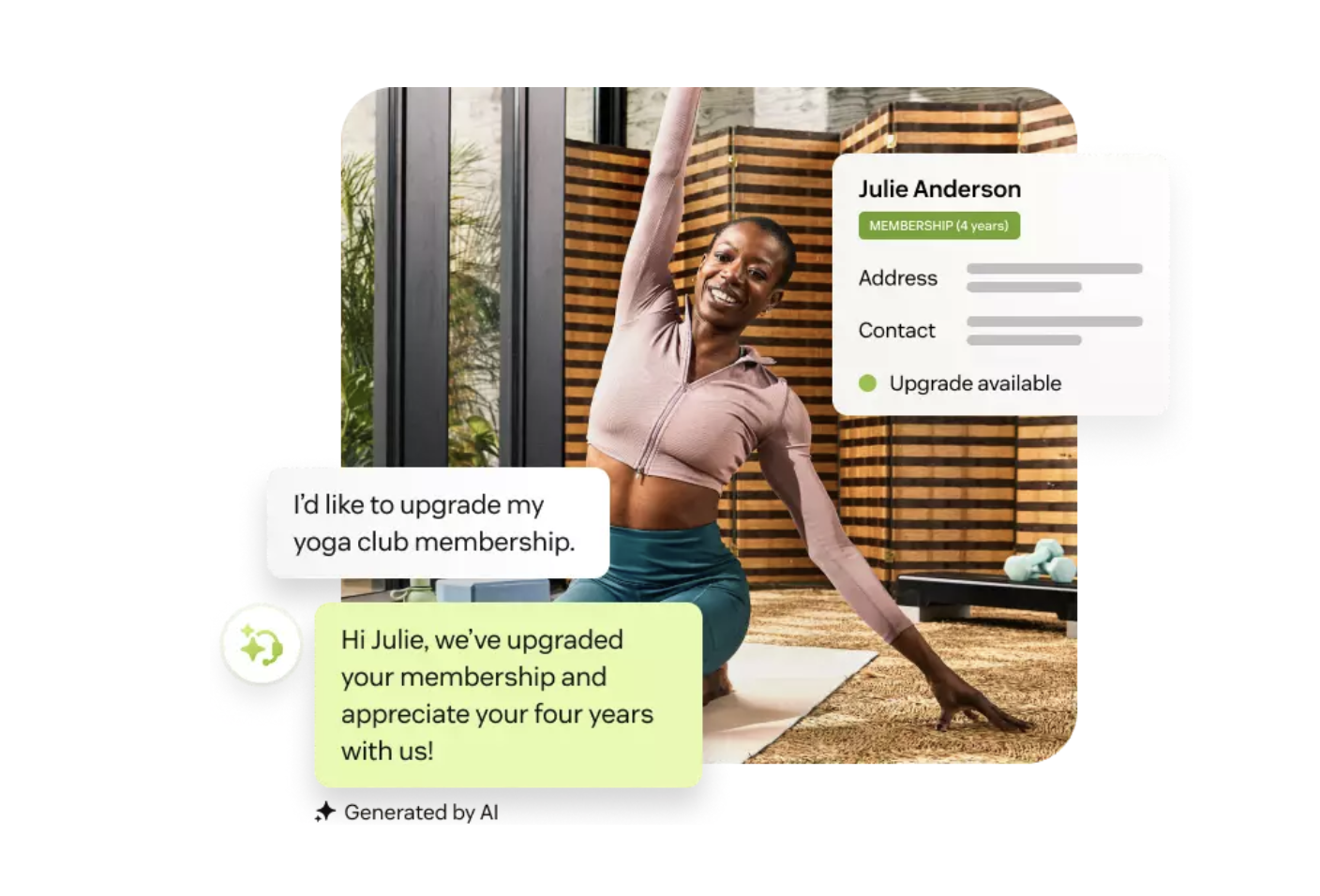
Image source: zendesk.com
Overview: A leader in the customer service space, Zendesk provides a comprehensive suite of tools designed to manage customer interactions at scale. While best known for its powerful ticketing system, Zendesk has expanded to include a CRM, analytics, and community forums. It excels at helping support teams provide fast, reliable service across multiple channels, a cornerstone of any effort to increase customer retention.
Key features:
- Omnichannel support: Engage with customers seamlessly across email, chat, voice, and social media from a single, unified agent workspace to meet them wherever they are.
- AI-powered automation: Utilize AI-powered bots and automations to provide instant answers to common questions, freeing up your agents to handle more complex issues.
- Help center & forums: An integrated help center and community forums foster a self-service community, allowing customers to help themselves and each other.
- Advanced analytics: Leverage robust reporting on team performance and customer satisfaction to get a clear picture of your support operations and identify areas for improvement.
Pricing: Zendesk offers various plans for service and sales, with foundational tiers for small teams and more advanced Suite plans that bundle multiple products.
4. Gainsight: The enterprise-grade platform for customer success and health monitoring
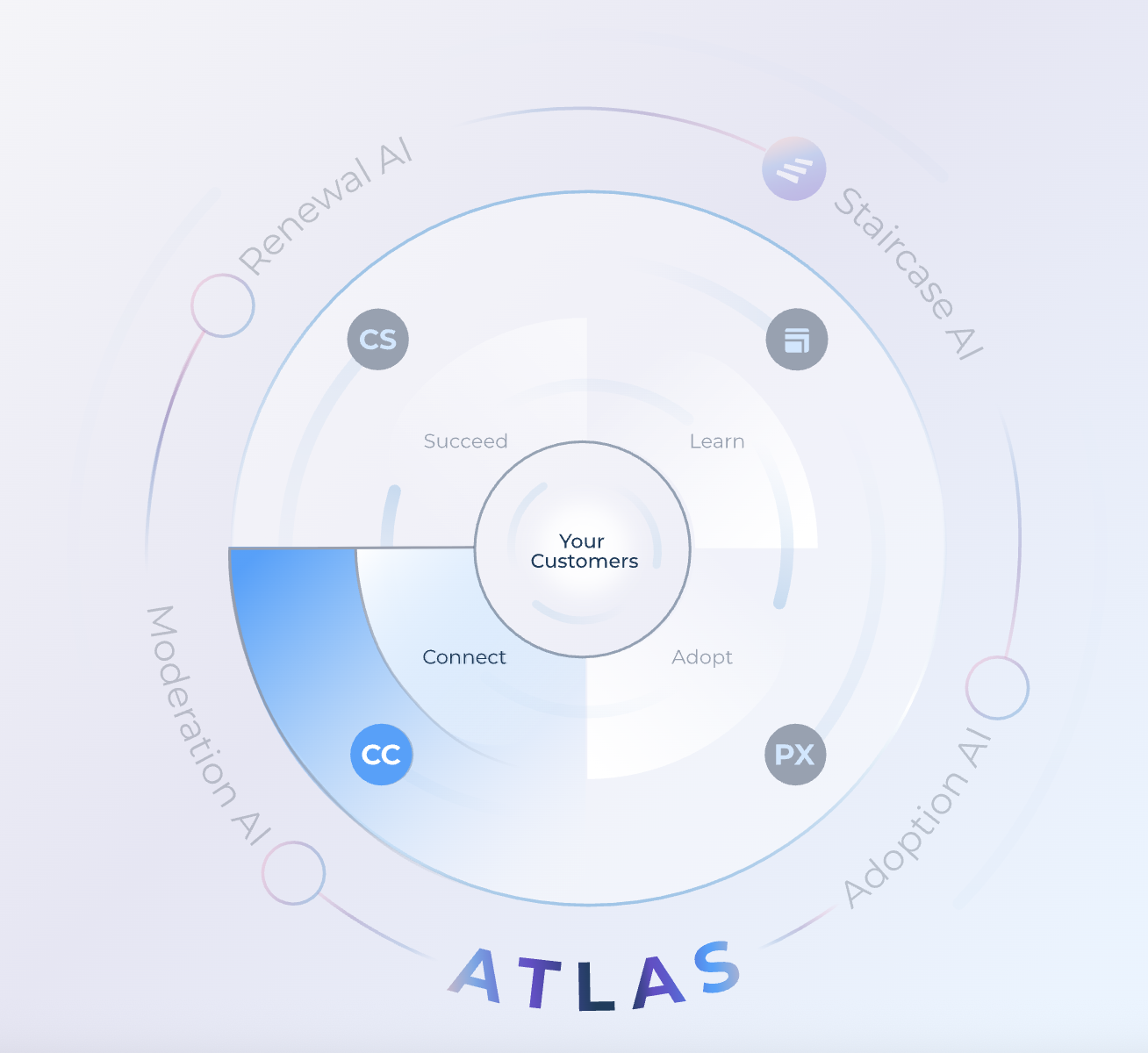
Image source: gainsight.com
Overview: Gainsight is a comprehensive Customer Success platform built for B2B companies. It’s designed to provide a 360-degree view of customer health by aggregating data from various sources. The platform helps CSMs manage their portfolios, automate playbooks, and prove the impact of their work, making it one of the most powerful customer retention platforms available for enterprises.
Key features:
- Customer health scoring: Create a configurable, multi-dimensional health score to get a real-time, objective measure of customer health and risk.
- Journey orchestrator: Design and automate email outreach campaigns and multi-step playbooks to guide customers through onboarding, adoption, and renewal.
- Product experience (PX): Gain deep valuable insights into how customers are using your product with in-app engagements, guides, and product usage analytics.
- Robust analytics: Build detailed reports and dashboards for Quarterly Business Reviews (QBRs), demonstrating value and aligning on future goals with customers.
Pricing: Gainsight's pricing is customized for enterprise clients and is not publicly listed. It is generally considered a premium solution.
5. Custify: The intuitive customer success software designed for B2B SaaS
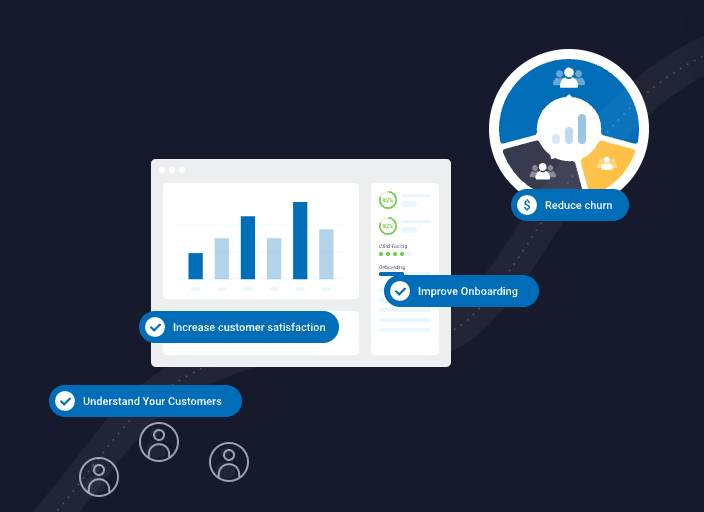
Image source: custify.com
Overview: Custify is a customer success platform designed for B2B SaaS companies, aiming to be more intuitive and faster to implement than some larger enterprise solutions. It integrates with your existing tools to create a holistic view of customer health and automates many of the routine tasks that CSMs handle, allowing them to focus on high-value interactions.
Key features:
- Customizable KPIs: Define and track key performance indicators and health scores that are specific to your business and customer lifecycle stages.
- Automated playbooks: Set up automated playbooks that trigger tasks, emails, or alerts based on customer segments, lifecycle stages, or health changes.
- Task management: A built-in task management system helps CSMs stay organized and ensures that all necessary actions for an account are tracked and completed.
- Growth dashboards: Easily identify upsell and cross-sell opportunities by monitoring feature adoption and customer growth signals, helping you expand existing accounts.
Pricing: Custify offers tiered pricing based on the number of customers you manage, with plans starting for startups and scaling up to enterprise levels.
6. Gong: AI-powered conversation intelligence for revenue and retention teams
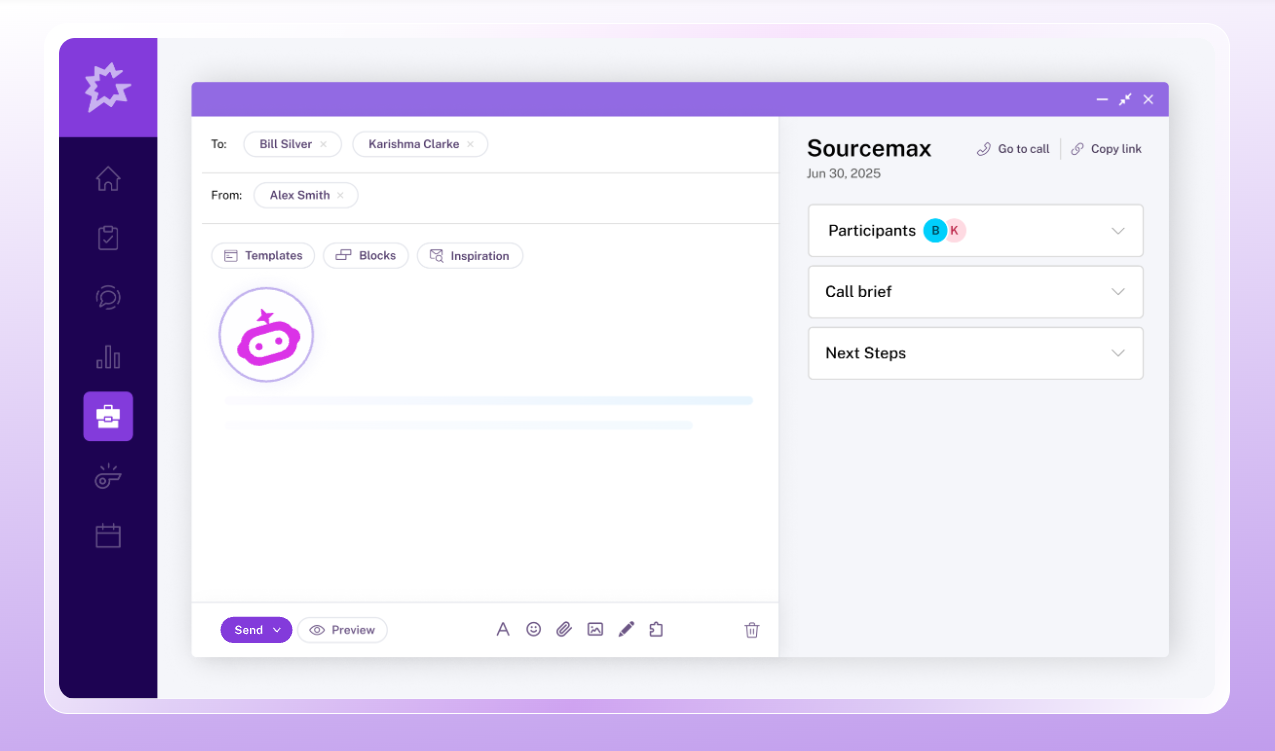
Image source: gong.io
Overview: Gong is a revenue intelligence platform that uses AI to analyze customer-facing conversations from calls, emails, and meetings. While not a traditional CSM platform, it’s a powerful retention tool because it reveals what’s really happening in your customer interactions. It helps teams understand customer sentiment, identify churn risks, and replicate what your best reps are doing to retain accounts.
Key features:
- Conversation analysis: Automatically records, transcribes, and analyzes every sales and customer call, surfacing key topics, questions, and sentiment.
- Topic & trend Tracking: Monitor the usage of specific keywords (like competitor mentions or feature requests) across all conversations to identify market trends.
- Deal Intelligence: Provides warnings for deals at risk based on communication patterns, helping teams get ahead of potential issues before they escalate.
- Collaboration Tools: Share call snippets and provide contextual feedback to team members, enabling faster coaching and knowledge sharing.
Pricing: Gong's pricing is customized and typically based on the number of users. It is positioned as a premium solution for revenue teams.
7. Contentsquare: Digital experience analytics for deep user behavior insights
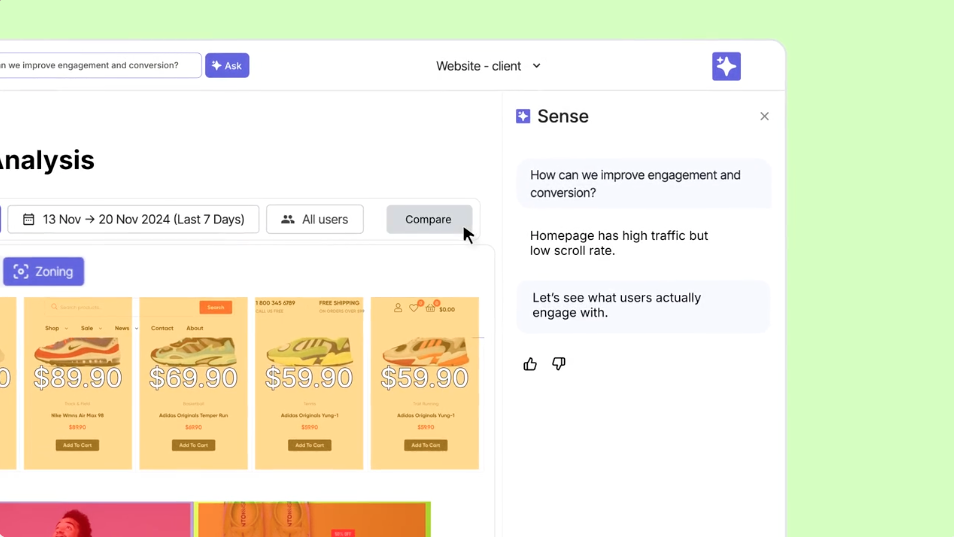
Image source: contentsquare.com
Overview: Contentsquare is a digital experience analytics platform that helps you understand how users behave on your website and in your app. For retention, it’s incredibly valuable for identifying points of friction in the customer journey that could lead to churn. By visualizing user paths and engagement, you can optimize the user experience and improve product adoption.
Key features:
- Customer journey analysis: Visually map the complete paths users take on your site or app, from entry to exit, to understand their behavior flow.
- Heatmaps & session replays: Use zone-based heatmaps to see where users click and scroll, and watch individual session replays to diagnose specific usability issues.
- Struggle analysis: Automatically identifies signs of user frustration, such as rage clicks or repeated scrolling, helping you prioritize UX improvements.
- AI-powered insights: An AI engine proactively surfaces insights and recommendations, telling you where to focus your optimization efforts for the biggest impact.
Pricing: Contentsquare pricing is available upon request and is geared toward mid-market and enterprise companies.
8. CustomerGauge: The Account Experience (AX) platform linking feedback to revenue
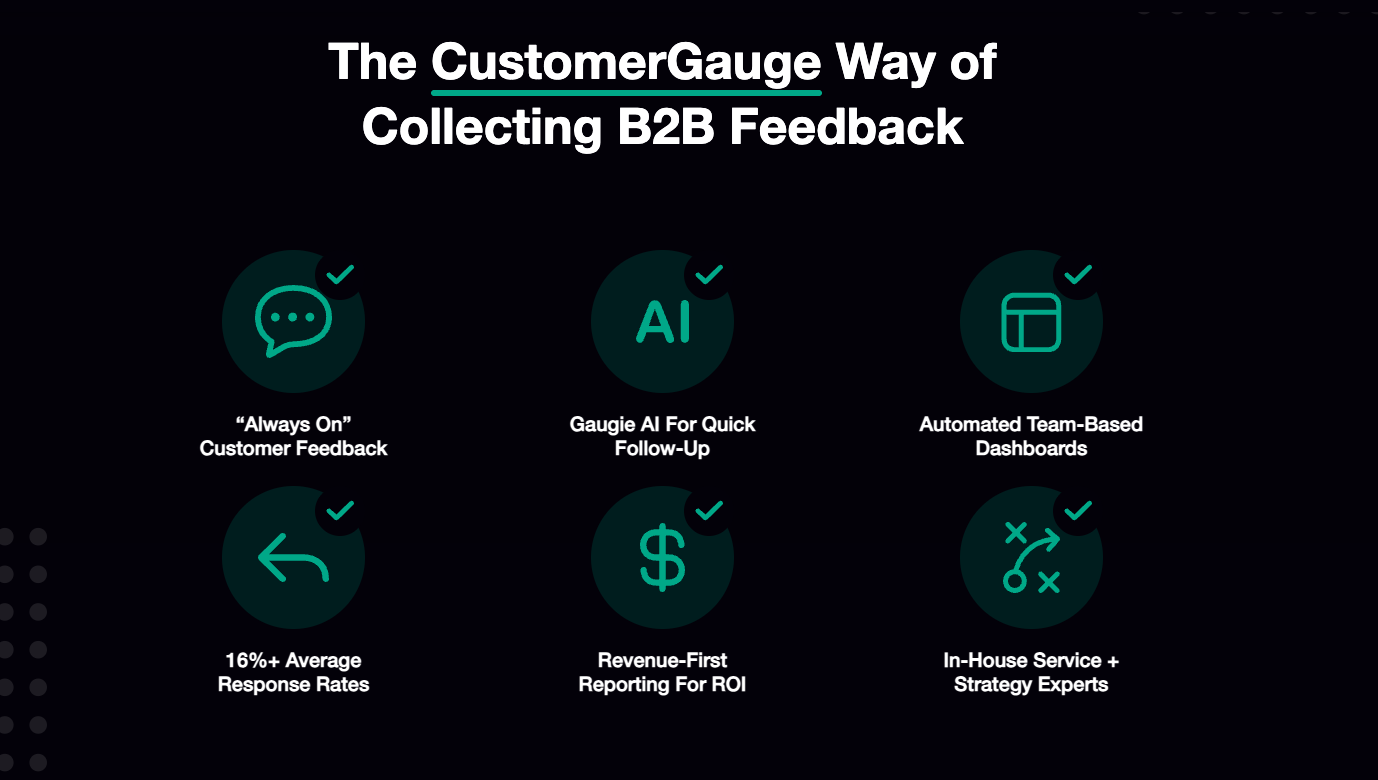
Image source: customergauge.com
Overview: CustomerGauge combines customer feedback with account data to drive retention and growth, a methodology they call "Account Experience." The platform is built around the NPS framework but links feedback directly to revenue. This allows businesses to prioritize follow-ups based on financial impact and identify which actions actually reduce churn, making it a powerful tool for B2B companies focused on repeat purchases.
Key features:
- Feedback distribution: Deploy and manage NPS, CSAT, and Customer Effort Score (CES) surveys across various channels like email and SMS.
- Automated workflows: Set up rules to automate follow-up actions, ensuring you "close the loop" on all feedback, especially from detractors.
- Revenue-based reporting: Link loyalty metrics directly to financial data, allowing you to see the revenue impact of at-risk accounts and promoters.
- Risk & opportunity alerts: Automatically flag accounts that are at risk of churning or show signs of being ready for an upsell, based on feedback and account data.
Pricing: CustomerGauge provides customized quotes based on the scope of the program and company size.
How to choose the right customer retention software for your business
Navigating the crowded market for this software can feel overwhelming, but finding the right customer retention software becomes much clearer when you focus on your specific business needs. The goal isn't to find a platform with the longest feature list, but one that solves your most pressing challenges and integrates smoothly into your team's existing workflow. Before you start comparing options, we recommend outlining what you want to achieve. Are you focused on improving onboarding, reducing support tickets, or using predictive analytics to get ahead of churn? Your answer will guide your selection.
Look for key features and capabilities that align with a proactive strategy.
A platform should offer more than just a contact database. It must excel at customer relationship management, providing essential features like customer health scoring for a quick indicator of account status. It should also have robust tools to gather feedback, like a dedicated customer feedback tool for NPS and CSAT surveys. Most importantly, look for powerful automation that allows you to build workflows and trigger actions based on behavior, turning customer insights into timely engagement and helping you retain customers effectively.
Next, consider how the software will fit into your existing technology stack.
A new tool should reduce complexity, not add to it. The most effective platforms offer seamless, deep integration with the systems your team already uses every day, such as your CRM, help desk, and communication tools. This ensures data flows freely between platforms, maintaining that single source of truth about all customer interactions and preventing your team from having to constantly switch between different applications to get their work done. This integration is crucial for streamlining your sales processes.
Finally, think about scalability and pricing.
The software you choose today should be able to support your growth tomorrow. Whether you’re a small startup or a growing enterprise, the platform should scale with you without requiring a complete overhaul. Be sure to understand the pricing model—whether it's per user, per contact, or tiered—and consider the total lifetime value of the investment. A solution that empowers your entire team to collaborate on retention offers a far greater return than one siloed within a single department, helping your businesses reduce customer churn more efficiently.
Try a proactive customer retention software strategy in Lark
While having the right tools is important, true retention success comes from building a proactive and collaborative culture. We believe the key isn't just another dashboard; it's about connecting your team's daily work directly to customer outcomes. The best customer retention strategy is one that’s embedded in the tools your team already uses. Here’s how you can use Lark to build a powerful retention engine that runs seamlessly within your organization, transforming how you work together to keep customers happy.
Create your customer health command center in Lark Base
The first step is to establish a single source of truth. Using Lark Base, you can build a "Customer Health Command Center" that becomes the central hub for all your retention efforts. You can configure it to track essential metrics like health scores, renewal dates, and recent support ticket volume. This isn't a static spreadsheet; it's a living, dynamic database that gives every team member—from CSMs to executives—a real-time, at-a-glance view of account health, helping you monitor key metrics effectively.
Automate proactive retention playbooks
Once your data is centralized in Base, you can customize workflows to automate your retention playbooks. This is where insights turn into action. For example, you can design a workflow where, if a customer's health score in your Base drops from "Green" to "Yellow," it automatically triggers a series of messages and informs all the stakeholders. This proactive automation ensures that you’re always ahead of potential problems, executing targeted strategies flawlessly.
Foster cross-functional collaboration on at-risk accounts
When a key customer is at risk, success rarely depends on one person. It requires a coordinated effort from Sales, Support, Product, and Success. Instead of fragmented email chains, you can create a dedicated "At-Risk Account" group in Lark Messenger. Here, a CSM can pin the customer's Lark Base record for full context, share AI-summarized minutes from a tough call, and tag product managers to investigate issues. This creates a focused command center for saving the account, ensuring rapid, transparent problem-solving, and demonstrating to your customer that their success is your entire team’s priority.
👇👇Watch the video below and see how Lark empowers your CRM:
Conclusion
Investing in customer retention is no longer just a defensive move—it's the most powerful offensive strategy for building sustainable, long-term growth. The right customer retention software provides the foundational data and insights, but a truly successful program is brought to life by a collaborative culture where every team member is empowered to contribute to the customer's success. This shift from siloed data to shared action is what separates thriving businesses from those that are merely surviving.
Lark provides the unified platform to not only manage your customer data but also to empower your teams to act on it together, seamlessly. By embedding your retention strategy into the same place where your team collaborates, communicates, and manages their work every day, you create a powerful, unified engine for growth. This approach turns retention from a departmental task into a company-wide mission.
FAQs
What is customer retention software?
Customer retention software is a category of tools that helps businesses keep their existing customers satisfied and loyal. It centralizes customer data, automates engagement, and provides analytics to proactively identify at-risk accounts. By using features like health scoring and feedback surveys, teams can reduce churn, improve satisfaction, and increase customer lifetime value, turning retention into a reliable growth engine.
What is the difference between CRC and CAC?
CAC (Customer Acquisition Cost) is the total expense of acquiring a new customer, including marketing and sales efforts. In contrast, CRC (Customer Retention Cost) is the expense of keeping an existing customer, covering costs for customer success, support, and loyalty programs. While CAC focuses on growth through new business, CRC emphasizes profitability by maximizing the value of current relationships.
What is CX and CRM software?
CRM (Customer Relationship Management) software is primarily used to manage and track interactions with prospects and customers, focusing on sales pipelines and contact data. CX (Customer Experience) software is broader, aiming to manage and improve every touchpoint a customer has with your brand across their entire journey. While a CRM manages the relationship, CX software optimizes the overall experience.
What is the 80/20 rule in customer retention?
The 80/20 rule, or Pareto Principle, suggests that approximately 80% of a company’s revenue often comes from just 20% of its loyal, existing customers. This principle highlights the immense value of focusing your retention efforts on your most valuable clients. By identifying and nurturing this core group, businesses can drive efficient and sustainable growth with greater predictability.
Related reading
Table of contents
Start using Lark today

Manage all your work in one place
Boost team efficiency by 10x
Save up to 70% on software costs
Table of contents
Start using Lark today
Manage all your work in one place
Boost team efficiency by 10x
Save up to 70% on software costs
Keep reading








2026 Lark Technologies Pte. Ltd.
Headquartered in Singapore with offices worldwide.






Explore: