














Email Sequences: From Email Creation to Sale Conversion

Ryan Tanner
Product Marketing Specialist
Sep 18, 2026
Ryan Tanner
Sep 18, 2026

14 min read


Crafting effective email sequences is one of the most reliable ways to engage audiences and guide them through the customer journey. From nurturing leads to re-engaging past customers, a well-planned sequence ensures every message feels timely and relevant. By combining personalization, automation, and strategic timing, teams can turn email communication into a consistent growth engine.
In this guide, we'll explore what email sequences are, how they work, and proven practices for creating messages that truly convert. Towards the end, we'll also examine how modern workspaces facilitate planning and collaboration around email campaigns, making the process more streamlined.

What is an email sequence?
An email sequence is a series of pre-scheduled, automated emails designed to nurture leads, engage customers, or guide them toward a specific action—such as signing up, purchasing, or re-engaging. Each email in the sequence is strategically timed and tailored to match the recipient's stage in the customer journey. For instance, new subscribers might receive a welcome series introducing the brand, while potential buyers receive educational or promotional content that leads to conversion. Unlike one-off campaigns, email sequences utilize automation and personalization to deliver consistent communication with minimal manual effort.
They can be triggered by user behavior (like sign-ups, downloads, or inactivity) and refined using analytics to boost open and click rates. When crafted thoughtfully, email sequences strengthen relationships, save time, and drive measurable results, making them a cornerstone of successful email marketing strategies.
Image source: unsplash.com
Why email sequences are essential for business growth
Email sequences play a vital role in scaling customer communication while maintaining personalization and consistency. They help businesses engage prospects, build trust, and convert leads efficiently through automated, data-driven outreach.
- Build trust and nurture relationships automatically: Send personalized, value-driven messages that speak directly to customer needs and challenges. Over time, this consistent communication builds credibility and emotional connection. It keeps your brand top of mind and fosters lasting loyalty.
- Save time through automation and personalization: Automate repetitive tasks like follow-ups and reminders without losing the human touch. Once workflows are set, they run seamlessly in the background. This allows teams to focus more on strategy, content, and innovation.
- Ensure consistent communication across every stage of the funnel: Maintain engagement from the first touchpoint to conversion and beyond. Automated sequences ensure no lead or customer gets overlooked. This consistency strengthens relationships and supports a smooth customer journey.
- Support lead scoring and segmentation for targeted outreach: Identify high-potential leads based on engagement and behavior. Segment your audience by interest, location, or intent to deliver more relevant emails. This precision improves targeting and boosts response rates.
- Improve conversion rates through timely follow-ups and re-engagement flows: Use triggers to send emails exactly when customers are most likely to act. Timely follow-ups revive inactive leads and close sales faster. Re-engagement campaigns help win back interest and sustain momentum.
Types of email sequences and when to use them
Email sequence type | Purpose | Ideal for |
Welcome sequence | Introduce your brand and set expectations | New subscribers or sign-ups |
Onboarding sequence | Educate and guide users through setup | SaaS and product-based companies |
Lead nurturing sequence | Build trust through valuable content | Marketing and sales teams |
Sales outreach sequence | Convert prospects into customers | Outbound sales reps and SDRs |
Follow-up sequence | Reconnect after meetings, demos, or inactivity | Sales and account managers |
Re-engagement sequence | Win back dormant users | Email marketers or CRM managers |
Post-purchase sequence | Encourage upsells and feedback | E-commerce and service providers |
Key elements of high-performing email sequences
This is especially true for sales outreach sequences, where the best cold email software can help teams personalize messages, manage follow-ups, and track engagement more effectively. When used strategically, these tools support relevance and timing without replacing the thoughtful planning behind a strong email sequence. Building powerful email sequences isn't just about sending messages—it's about sending the right messages at the right time. High-performing sequences combine personalization, structure, and analytics to keep your audience engaged while driving consistent conversions.
- Personalization: Go beyond using first names tailor your emails based on user actions, preferences, and behavior. Personalized emails feel more relevant, leading to higher open and click-through rates. This helps foster stronger relationships and trust with your audience.
- Segmentation: Not all subscribers have the same needs. Segment your audience by factors like demographics, purchase history, or engagement level. This allows you to send targeted messages that resonate with each group and increase response rates.
- Timing: The success of an email often depends on when it's received. Schedule messages strategically to match your audience's activity patterns and avoid overloading them. Proper spacing keeps engagement high and prevents fatigue.
- Value-first approach: Provide genuine value before asking for action. Share insights, guides, or tips that solve real problems for your audience. When recipients see your emails as helpful rather than promotional, conversions naturally follow.
- Clear CTA: Every email should have one clear goal whether it's signing up, booking a demo, or reading a blog. A strong, visible CTA directs readers toward that next step without confusion or distraction.
- Testing: Experimentation helps you discover what works best for your audience. Test subject lines, tone, images, and send times to refine your approach. Continuous testing ensures steady improvement and keeps your campaigns fresh.
- Automation tracking: Track key metrics like open rates, click-throughs, and conversions in real time. Use this data to adjust frequency, content, or targeting. Analytics turn your sequences from guesswork into a well-optimized performance machine.
Action time: Use Lark to manage email sequences smartly
Most email automation tools are designed for sending, but the real challenge lies in how teams plan, create, align, and refine their sequences before launch. That's where Lark stands apart. By combining collaboration, data organization, and workflow automation in one workspace, Lark ensures that every stage of your email sequence, from content creation to performance tracking, happens smoothly and transparently across teams. Here's how each Lark feature supports seamless email workflow execution:
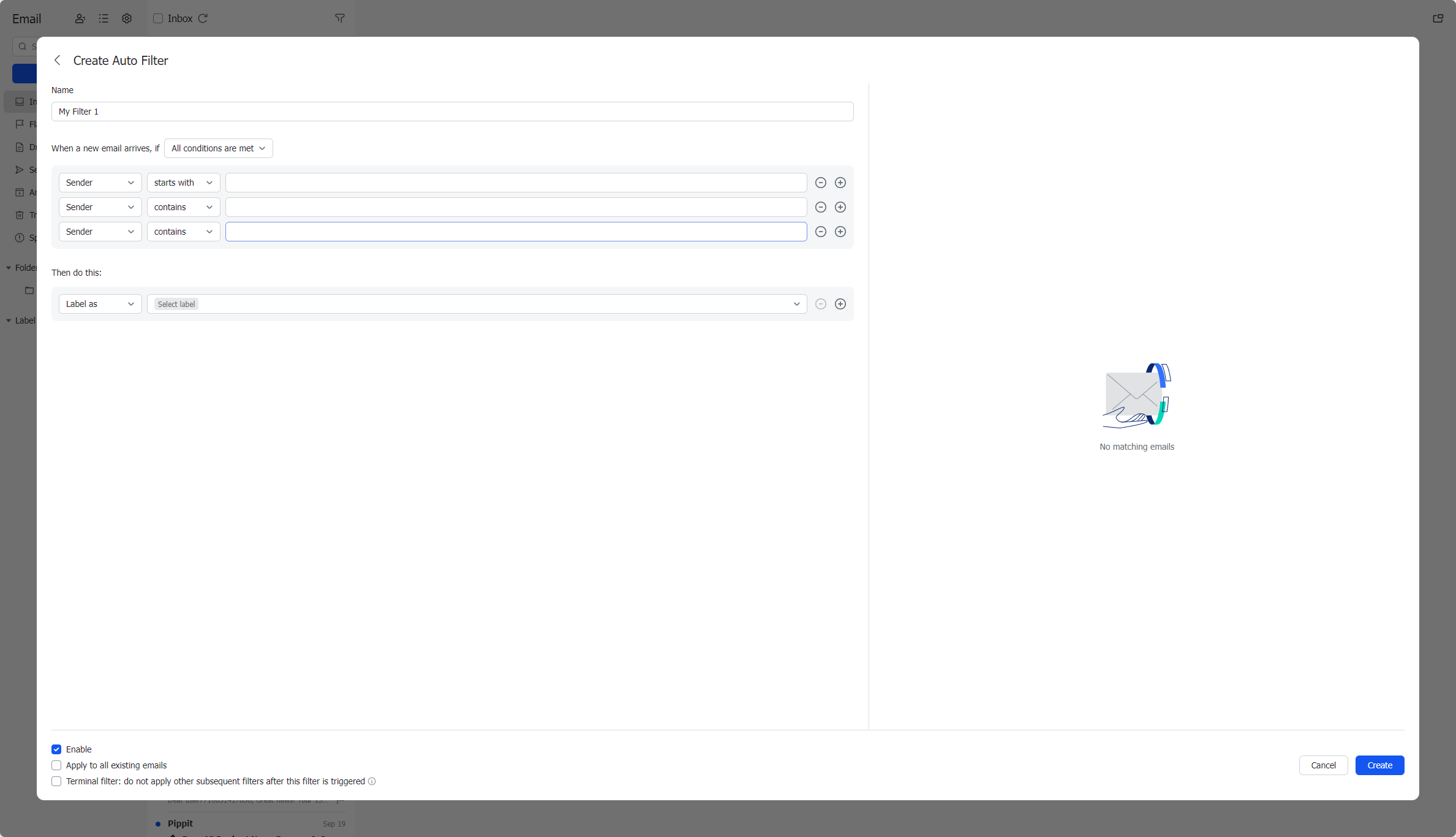
Organize emails automatically with smart filters: Lark Mail auto-filter feature helps teams stay organized by sorting incoming emails based on customizable rules. Messages can be automatically labeled, moved to folders, or routed to group chats for faster visibility. This auto-filter reduces the time spent managing inbox clutter while ensuring important updates are always prioritized. With tailored filters, teams maintain a clean, structured workflow across communication channels. It's a simple yet powerful way to streamline daily email management.
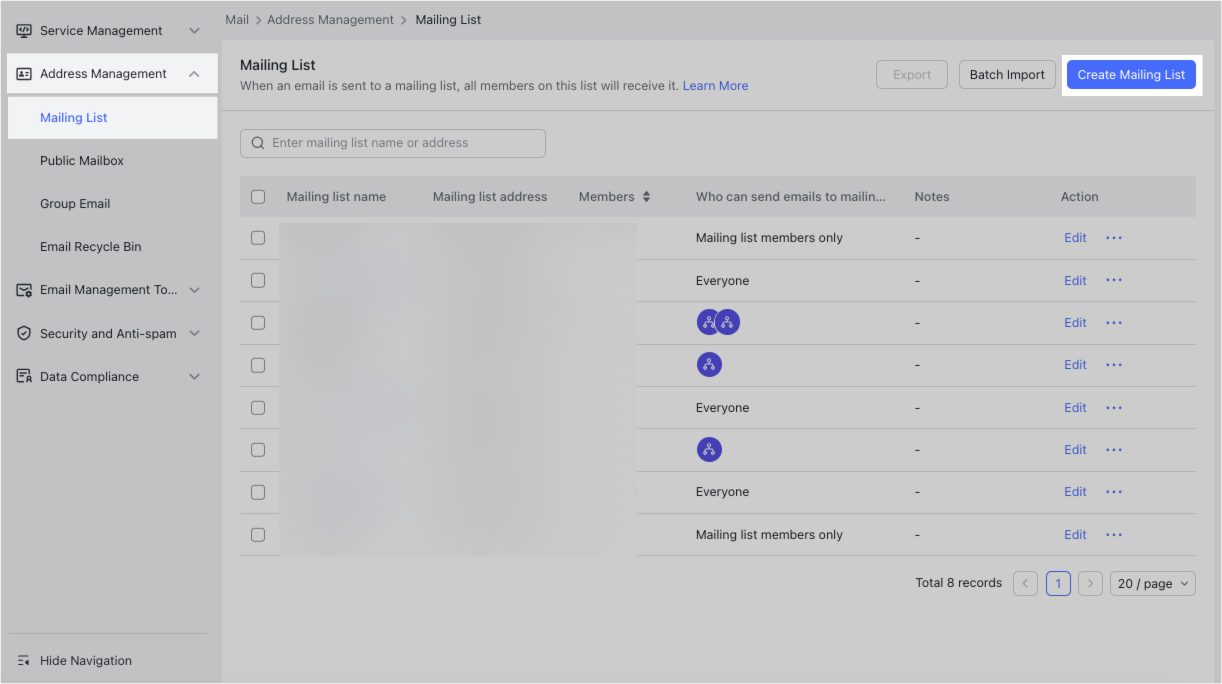
Separately sending group email with a mailing list: Mailing lists in Lark Mail allow teams to send emails to a group of contacts through a single address, making it easier to manage campaigns or CRM email sequences. Authorized users can control who can send messages to each list, maintaining consistency and security. This feature simplifies follow-ups, ensuring every step of the sequence reaches the right audience. Combined with Lark's scheduling and collaboration tools, it helps teams execute coordinated, timely outreach effortlessly.
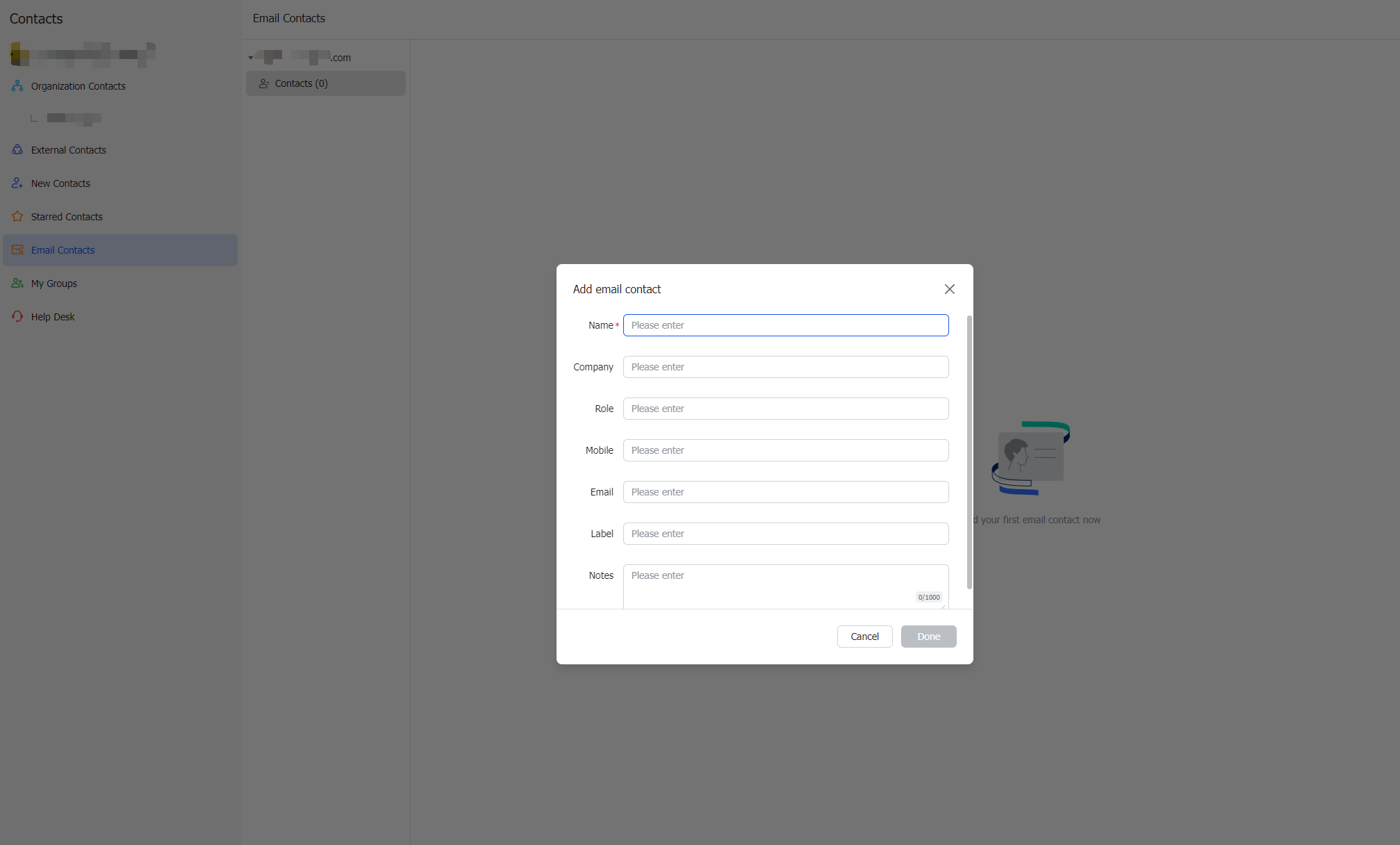
Manage email contacts in order: Contact management in Lark Mail provides a centralized way to organize and access customer and lead information, streamlining CRM email sequences. Users can save, edit, and group contacts for targeted communication, ensuring each step of an email campaign reaches the right audience. By selecting recipients directly from contact lists, teams avoid manual entry and maintain accuracy across follow-ups. Combined with mailing lists and scheduled sending, Lark Mail enables efficient, structured, and personalized outreach.
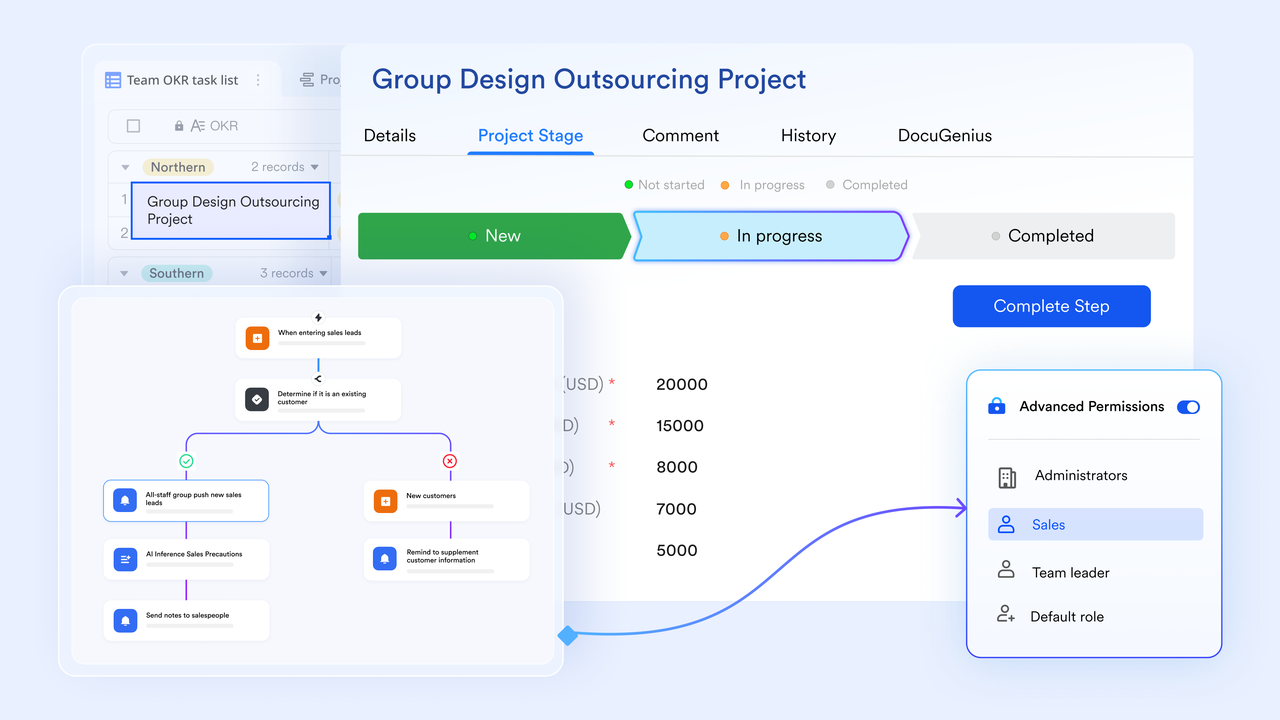
Connect emails to actions with automated workflows: Lark Base brings automation into the email process by linking communication to task execution. Teams can add button fields to trigger workflows such as sending a follow-up email, creating a group, or notifying a member in Messenger. These triggers eliminate repetitive tasks and connect emails with real-time actions. Automation ensures that responses, updates, and next steps happen without manual tracking. It's an advanced way to connect communication with productivity across the workspace.
- Starter plan: Free forever plan that includes 11 powerful tools for up to 20 users. It also comes with 100GB of storage, 1000 automation runs, AI translations, and more.
- Basic plan: $6/user/month (billed annually) for up to 500 users. Includes everything in Starter plus unlimited message history, 5TB storage, 1,000 automation runs, and more. Some users may need to contact sales to purchase.
- Pro plan: $12/user/month (billed annually) for up to 500 users. It includes everything in Starter plus group calling for up to 500 attendees, 15TB of storage, 50,000 automation runs, and more.
- Enterprise plan: Contact sales for custom pricing. Supports unlimited users and includes even more automation runs and advanced security, compliance, and management features.
Fast-tracks: Use Lark's templates to manage your campaigns
Designing and managing email campaigns becomes far easier with ready-to-use templates that eliminate guesswork and speed up execution. Lark offers a variety of customizable templates built for different marketing needs, from email planning to automation workflows. These templates help teams stay organized, consistent, and focused on results. With Lark, you can plan, collaborate, and launch campaigns faster than ever.
Email template
Email templates are a time-saving tool for businesses and individuals who frequently send out emails for different occasions. With Lark's email template feature, you can create personalized templates for various occasions such as welcome emails, monthly newsletters, service feedback requests, holiday greetings, event invitations, product launches, technical support closings, and subscription renewals. Each template can be customized with specific subject lines, body text, call-to-action buttons, and signatures. For growing teams running multiple campaigns, having proper email signature management in place ensures brand consistency across every department while maintaining updated contact details and visual identity in every sequence.
Seasonal email campaign template for email campaign managers
Seasonal email campaigns are a great way to connect with your audience and drive engagement. This template provides a structured approach to planning and executing email campaigns for various seasons and events throughout the year. From crafting compelling subject lines to designing visually appealing emails, this template covers all aspects of creating successful seasonal email campaigns.
Marketing automation workflow setup
Marketing automation is crucial for tech companies looking to streamline their marketing efforts and improve efficiency. This template provides a step-by-step guide on how to set up and execute a marketing automation workflow tailored specifically for tech companies. From sending welcome emails to segmenting leads and scoring them based on engagement levels, this template covers all essential actions to drive successful marketing campaigns.
AI prompts for cold email ideas
In the world of business, cold emailing can be an effective way to reach out to potential clients or partners. Artificial intelligence can play a significant role in assisting individuals with generating captivating and impactful cold email content. Here are some AI prompts to help you brainstorm ideas for your next cold email campaign.
Newsletter
Newsletters are a powerful tool for businesses and organizations to communicate with their audience. However, creating a professional newsletter can be time-consuming and challenging. That's why we've created this newsletter template to make the process easier and more efficient. With Lark's intuitive features and customizable options, you can create stunning newsletters that engage your readers and deliver your message effectively.
Best practices for creating effective email sequences
Building effective email sequences requires a thoughtful balance between automation, personalization, and strategic collaboration. By following proven best practices, teams can create campaigns that feel personal, deliver value, and drive measurable business results.
- Start with a clear goal: Define the exact purpose of your sequence before crafting content. Whether it's onboarding new users, nurturing leads, or re-engaging past customers, clarity helps shape the right tone, structure, and call-to-action for each email.
- Keep tone consistent with your brand voice: Consistency builds recognition and trust. Ensure your messaging style is friendly, professional, or inspirational and remains aligned with your overall brand identity across every touchpoint in the sequence.
- Automate follow-ups while maintaining human authenticity: Automation saves time, but human warmth drives genuine connection. Use personalized subject lines, conversational tone, and relevant content to make every automated email feel genuine and thoughtful.
- Use analytics to improve sequence performance: Continuously track open rates, click-throughs, and conversions to identify what works. Refine your approach using A/B tests on timing, content, and design to steadily enhance engagement and ROI.
- Aligning marketing and sales teams using a shared workspace like Lark: Collaboration is key to effective sequencing. With tools like Lark, both teams can plan, review, and optimize email campaigns in real time. Lark's collaborated Docs, Base, and Tasks ensure every message aligns with your overall strategy, reducing miscommunication and accelerating execution.
Conclusion
Effective email sequences are the backbone of successful customer communication and long-term engagement. When designed with purpose and supported by automation, they nurture leads, build trust, and drive measurable growth at every stage of the customer journey. The key lies in blending personalization with collaboration ensuring every message is timely, relevant, and aligned with business goals. With Lark's all-in-one workspace, marketing and sales teams can plan, create, review, and track sequences seamlessly. From drafting content in Docs to managing campaigns in Base and streamlining approvals, Lark brings every part of the workflow together. The result is faster coordination, smarter execution, and email campaigns that convert consistently. Start creating powerful, results-driven sequences with Lark today.
FAQs
What's the difference between automated email sequences and drip campaigns?
Automated email sequences are behavior-based, triggered by specific user actions or milestones. Drip campaigns, on the other hand, send emails at fixed intervals regardless of user behavior. Sequences offer more personalization and dynamic engagement.
How long should an effective email sequence be?
An ideal email sequence typically includes 4–8 emails spaced over one to three weeks. The length depends on your goal: nurturing, onboarding, or re-engaging users. Focus on maintaining value and relevance throughout the flow.
Can email sequences be used for customer retention, not just sales?
Yes. Retention-focused sequences keep customers engaged post-purchase through tips, updates, and personalized offers. They help strengthen loyalty, reduce churn, and encourage repeat business over time.
How do you measure the success of an email sequence?
Track key metrics like open rate, click-through rate, conversion rate, and unsubscribe rate. Use A/B testing and engagement analytics to identify what resonates most with your audience.
How does Lark improve collaboration for email marketing teams?
Lark centralizes planning, content creation, and performance tracking in one workspace. Teams can co-edit email drafts, assign tasks, review approvals, and share feedback instantly ensuring faster, more aligned campaigns.
Related reading
Table of contents
Start using Lark today

Manage all your work in one place
Boost team efficiency by 10x
Save up to 70% on software costs
Table of contents
Start using Lark today
Manage all your work in one place
Boost team efficiency by 10x
Save up to 70% on software costs
Keep reading







2026 Lark Technologies Pte. Ltd.
Headquartered in Singapore with offices worldwide.






Explore: