














Stop Choosing Between East and West. The Advantage Is in the Mix.

Jessica O
Product Demand Generation Specialist
Sep 18, 2026
Jessica O
Sep 18, 2026

7 min read


For decades, the safe move in Southeast Asia was simple. Sell to the wealthy Western markets. Adopt the tools the West built to do it. Treat "global" and "Western" as the same word.
That playbook built the last generation of regional winners. It will not build the next one.
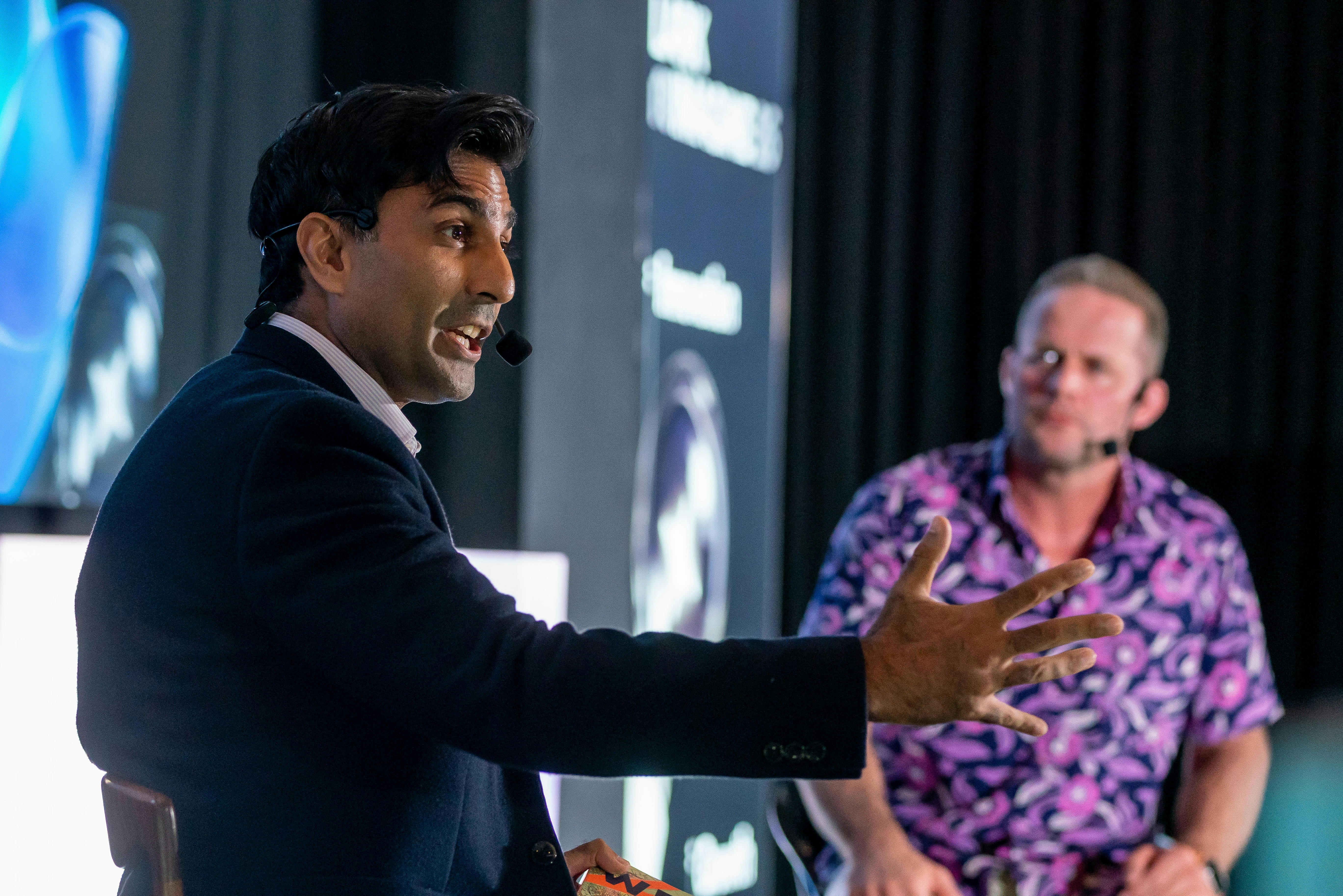
At Lark Reimagine 2026, economist Dr. Frederick Kliem and geopolitical advisor Dr. Samir Puri, author of Westlessness, mapped why. The world is not swapping one dominant power for another. It is gaining several centers of gravity at once, economic, technological, cultural, all operating in the same market. And the organizations still calibrated to a single center are solving for a world that no longer exists.
Missed the session? Watch the full conversation here:
The reference point you built around is shrinking
In 1950, nearly a third of the world's people lived in Western countries. By Puri's analysis, that share falls to around 12% by 2050, driven by differing birth rates across the world. Asia Pacific already generates 60% of global growth in purchasing-power terms.
This is not the end of Western influence. As Puri put it, "it's not the end of the west, but... there will probably be less of the west." The single standard you defaulted to, the Western one, is becoming one option among many. His warning to the room was about a specific failure of imagination: assuming the way things are arranged today is how they will stay. They won't, and nobody can tell you the shape of what's next. "Anyone who tells you what 2050 looks like today is lying, cuz nobody knows."
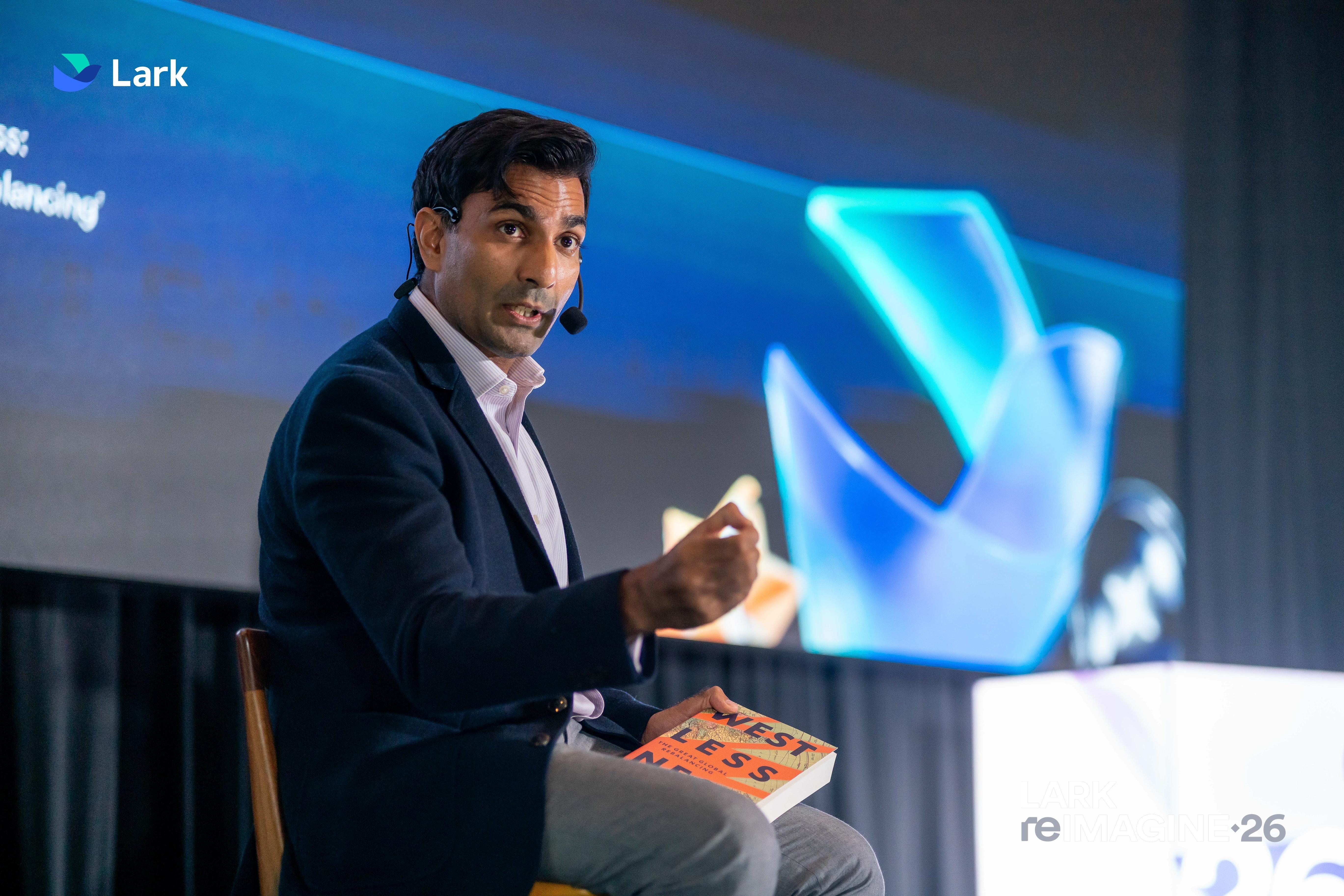
The mistake is not having the wrong forecast. It is building your strategy as if the current arrangement is permanent.
Waiting for clarity is the most expensive thing you can do
When the ground shifts, the instinct is to hold position until the picture resolves. That instinct is fatal here, because the picture is not going to resolve.
Kliem and Puri read the present differently. One sees breakdown, weakening trade rules, institutions losing their authority. The other sees a more diverse and open world coming. But both arrived at the same instruction. This is a transition with no starting pistol and no finish line. Nothing will announce that the new order has arrived and it is safe to commit.
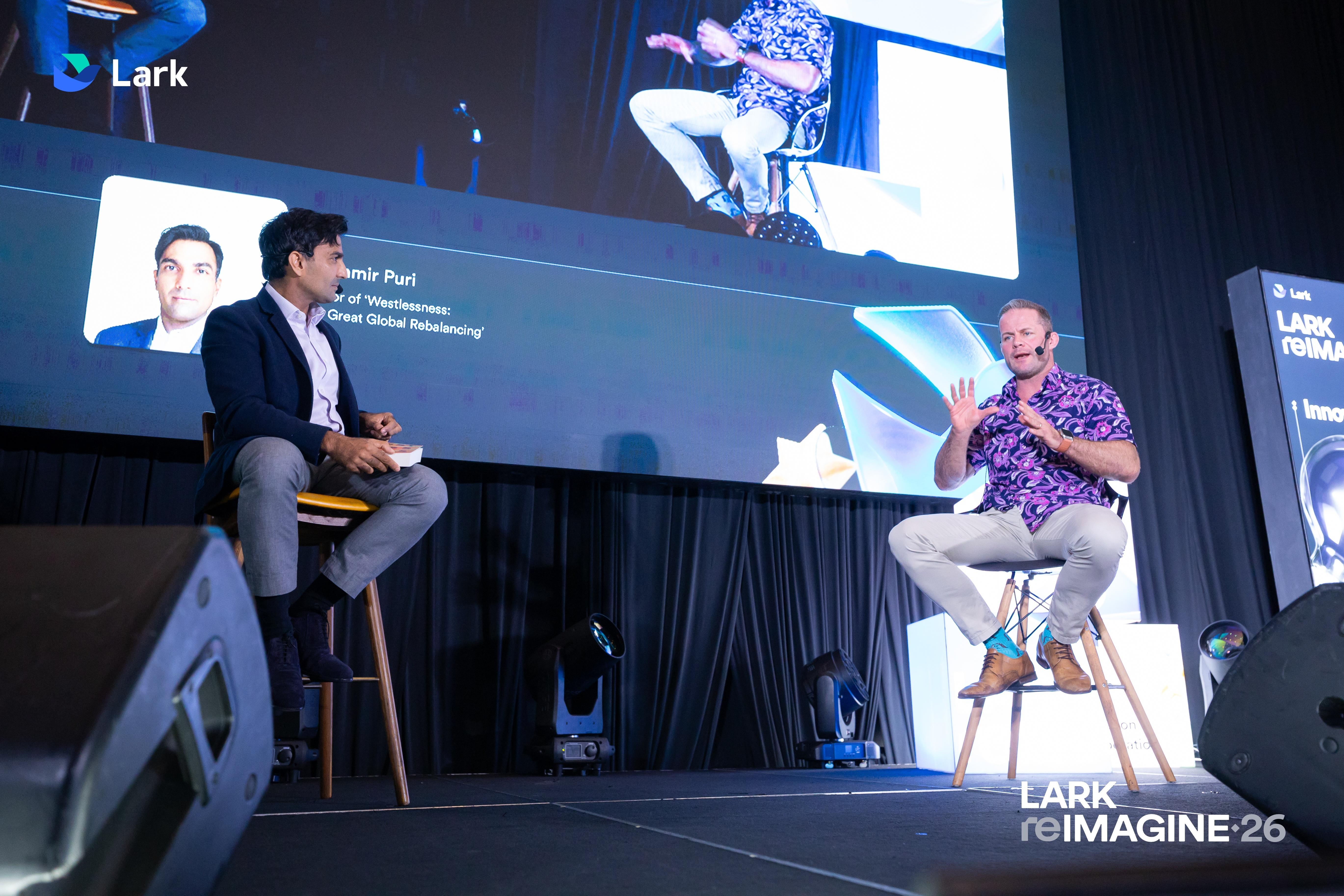
So waiting is not caution. It is a decision to move last, in a market where competitors are already building for where things are going. Inertia is not a neutral position. It is ground conceded.
The choice you think you're being forced into is the wrong one
Under pressure, the reflex is to pick a side. American technology or Chinese. One supply chain or the other. The framing itself is that you must choose.
You don't. Puri's sharpest point was that the new world is a buffet, not a binary. "You can actually pick and choose and mix and match." Picture a Gulf state a decade from now: Chinese-built robotaxis running on a tax system powered by European software. Different origins, one working system. The advantage does not go to whoever picks the right side. It goes to whoever stops asking where a solution comes from and asks only whether it fits.
For an organization in this region, that is liberation, not a loss. The pressure to align is real. The binary behind it is false.
The capital is moving toward you. Your business may not be pointed at it.
Here are the numbers that should reset your planning. China's outward FDI stock sits below 20% of GDP. The United States is around 40%. Japan, close to 45%. As Kliem put it, "if you think China has invested plenty in this region so far, you ain't see nothing yet." Far more capital is coming, from more directions than before.
And the newer trade agreements forming across the non-Western world increasingly cover services trade, something most US and EU deals leave out. For the services businesses many of you run, that is a direct, structural opening.
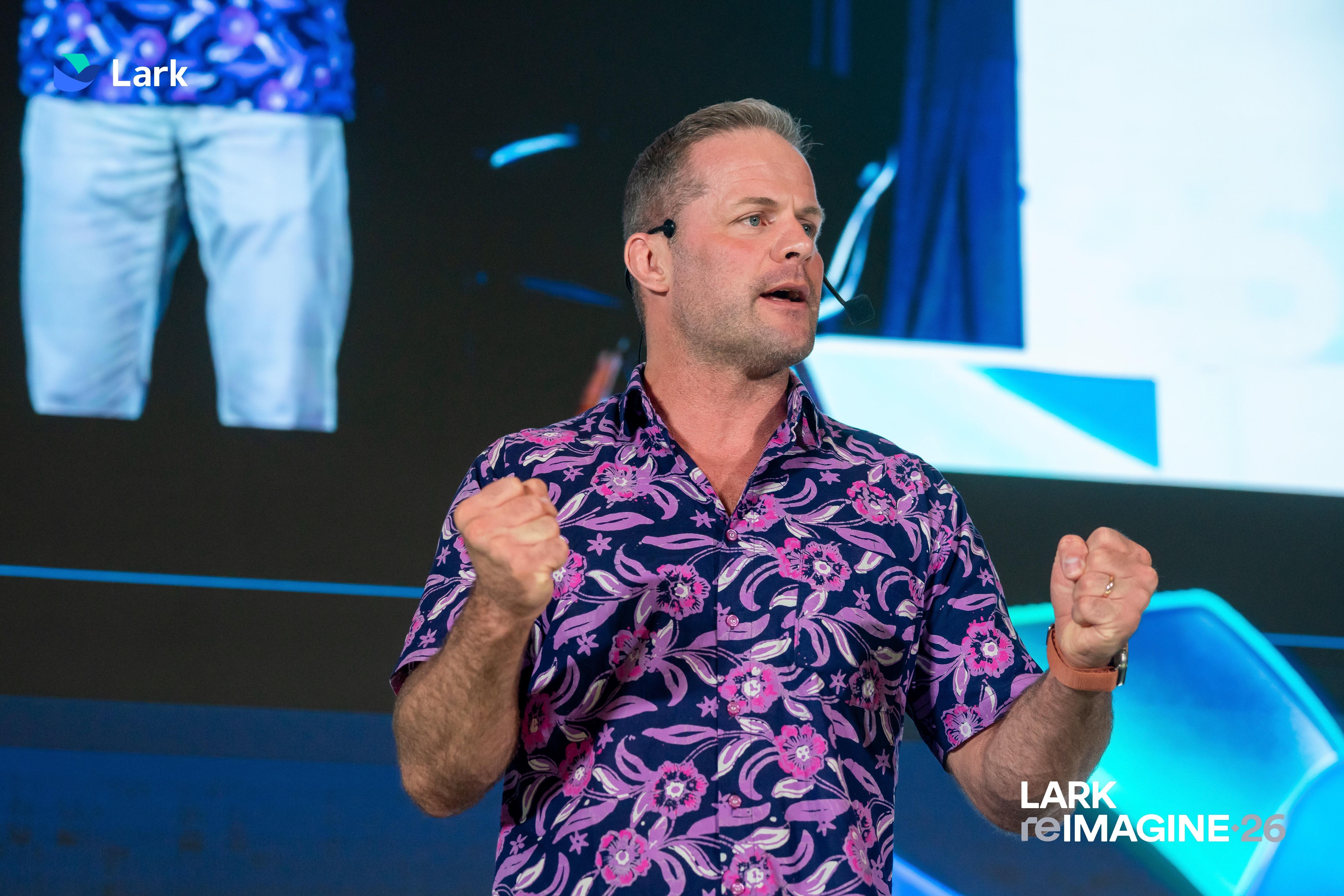
But there is a gap the region has not closed. As Kliem put it plainly, "within ASEAN, still we do very little trade with each other." The growth model is wired for external demand, selling to buyers across the world while the fastest-rising middle class sits next door. Most organizations are still organized to chase the market where the money has been, not where it is going.
What this actually changes
The conclusion is one line. The assumption that "built elsewhere" means "built better" has expired. That changes what you build, what you buy, and who you sell to.
For years the default was to inherit a tool designed for another market and force it to fit. That logic only held while there was one center to inherit from. There isn't anymore, and for the first time, the capital, the technology, and the operating models purpose-built for this region exist here. APAC is no longer borrowing infrastructure designed for someone else's reality.
History shows how fast this turns. When Nintendo first brought Donkey Kong to the US in the 1980s, it had to set up an American front just to be taken seriously, because a product from Asia was treated as a threat, not a peer. Forty years on, that is reversed. Solutions built in this region now match and often beat the ones built elsewhere, because they are made by people who understand the conditions firsthand: the languages, the pace, the way organizations here actually operate. That is the principle we build Lark on, technology shaped for how teams in this region actually work, not adapted from a tool made for somewhere else.
So the question is no longer which side to align with. It is sharper than that. Are you still selling mainly into a market growing slower than the one next door? Are you running your tools because they fit, or because they were once the default? And are you waiting for a clarity that is never going to arrive?
The next generation of winners is being decided now
Puri left the room with an image worth keeping. To track a plane across the sky, you cannot aim at where it is. You have to aim at where it is going.
The organizations that lead Southeast Asia's next decade are making that adjustment now, while they still have the luxury of doing it on their own terms. The ones that wait will do it later, under pressure they could have seen coming, in a market that did not slow down for them.
The old instincts were aimed at where the world was. The next decade belongs to whoever aims at where it's going.

Table of contents
Start using Lark today

Manage all your work in one place
Boost team efficiency by 10x
Save up to 70% on software costs
Table of contents
Start using Lark today
Manage all your work in one place
Boost team efficiency by 10x
Save up to 70% on software costs
Keep reading

When Anyone Can Be the One Who Fixes It
People who had never written a line of code. Teams whose jobs had nothing to do with technology. But when Mr D.I.Y. asked its employees "what would you fix if you could?", 33 teams across 14 departments built real, working solutions. What happened next quietly changed how an entire organization thinks about innovation.



2026 Lark Technologies Pte. Ltd.
Headquartered in Singapore with offices worldwide.






Explore: