














Sales Funnel: Process, Tools & Optimization Guide

Ryan Tanner
Product Marketing Specialist
Sep 8, 2026
Ryan Tanner
Sep 8, 2026

21 min read


In sales and marketing, understanding the sales funnel is essential for driving predictable growth. From awareness to conversion, every stage represents a customer's journey and every team's opportunity to influence it. Effective funnel management combines data visibility, process automation, and collaboration, ensuring every lead is tracked, every deal progresses, and every decision is informed by insight.
In this guide, we explore the key stages of a sales funnel, introduce the best sales funnel tools like Lark, Salesforce, Karta, Pipedrive, HubSpot etc. Check the list below and find more details:
1. Lark: All-in-one funnel collaboration workspace
2. Salesforce Sales Cloud: Enterprise CRM with funnel analytics
3. ClickFunnels: Drag-and-drop landing-page funnel builder
4. Kartra: Complete marketing and sales funnel platform
5. Pipedrive: Visual CRM for deal-stage management
6. GetResponse: Funnel builder with email automation
7. ActiveCampaign: Automation-driven funnel marketing system
8. HubSpot Sales Hub: Unified CRM and funnel tracking suite
9. ConvertFlow: Funnel personalization for websites and CTAs
10. Systeme.io: Budget-friendly funnel and email solution

What is a sales funnel?
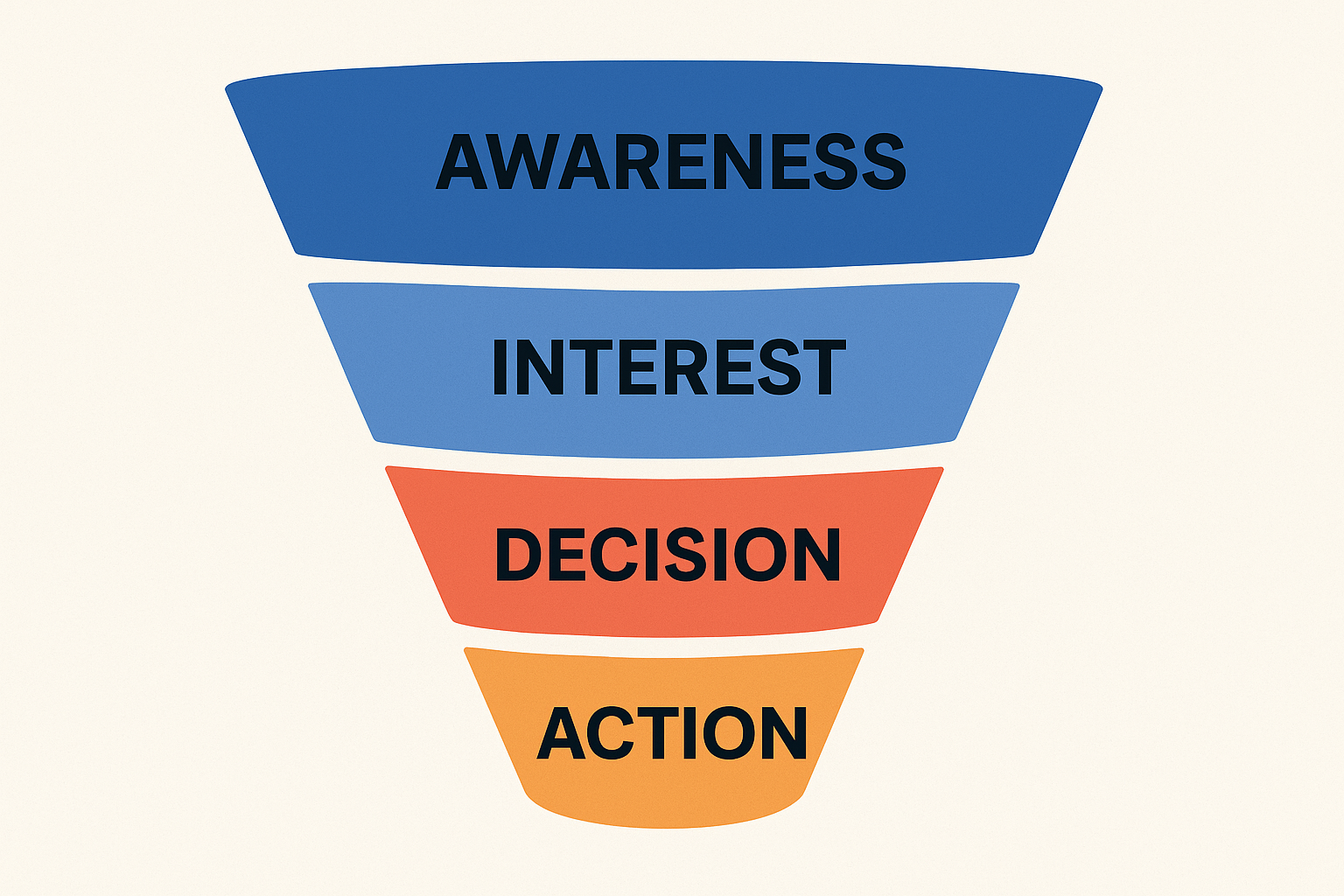
A sales funnel is a structured framework that maps how prospects move from initial awareness to final purchase. It helps sales and marketing teams visualize the customer journey, identify drop-off points, and allocate resources effectively.
At its core, the funnel illustrates conversion flow from a large pool of potential leads at the top to a smaller group of loyal customers at the bottom.
A well-defined funnel enables:
- Lead qualification: Distinguishing high-intent leads from casual prospects.
- Forecasting accuracy: Understanding where deals stand and predicting revenue.
- Process optimization: Spotting inefficiencies in lead handling or communication.
Funnel management software simplifies these processes by offering tracking, automation, analytics, and team collaboration, which are key components for modern sales organizations.
Key stages of the sales funnel
A complete sales funnel is typically divided into three core stages:
- Top of Funnel (TOFU): At this stage, the goal is to attract attention and generate leads. Prospects discover your brand through marketing channels such as SEO, social media, or paid campaigns.
Example: An e-commerce brand drives visitors through content marketing and social ads. Metrics like website traffic, click-through rates, and new lead count define TOFU success.
- Middle of Funnel (MOFU): Here, potential customers begin evaluating solutions. It's where lead nurturing happens through personalized emails, webinars, and product demos.
Example: A SaaS company nurtures trial users by onboarding emails and feature walkthroughs. Metrics like lead score, MQL-to-SQL conversion, and demo attendance are tracked.
- Bottom of Funnel (BOFU): In the final stage, the goal is conversion. Teams handle pricing discussions, contracts, and post-sale customer onboarding.
Example: A consulting firm closes deals after proposal presentations and follow-up calls. Metrics include win rate, time-to-close, and retention rate.
- Tools & Metrics Across the Funnel
- TOFU: CRM + Marketing automation (lead source tracking, ad attribution).
- MOFU: Lead scoring, email sequences, and demo scheduling tools.
- BOFU: Contract management, approvals, and deal forecasting dashboards.
Sales funnel management tools every team should know
1. Lark: All-in-one funnel collaboration workspace
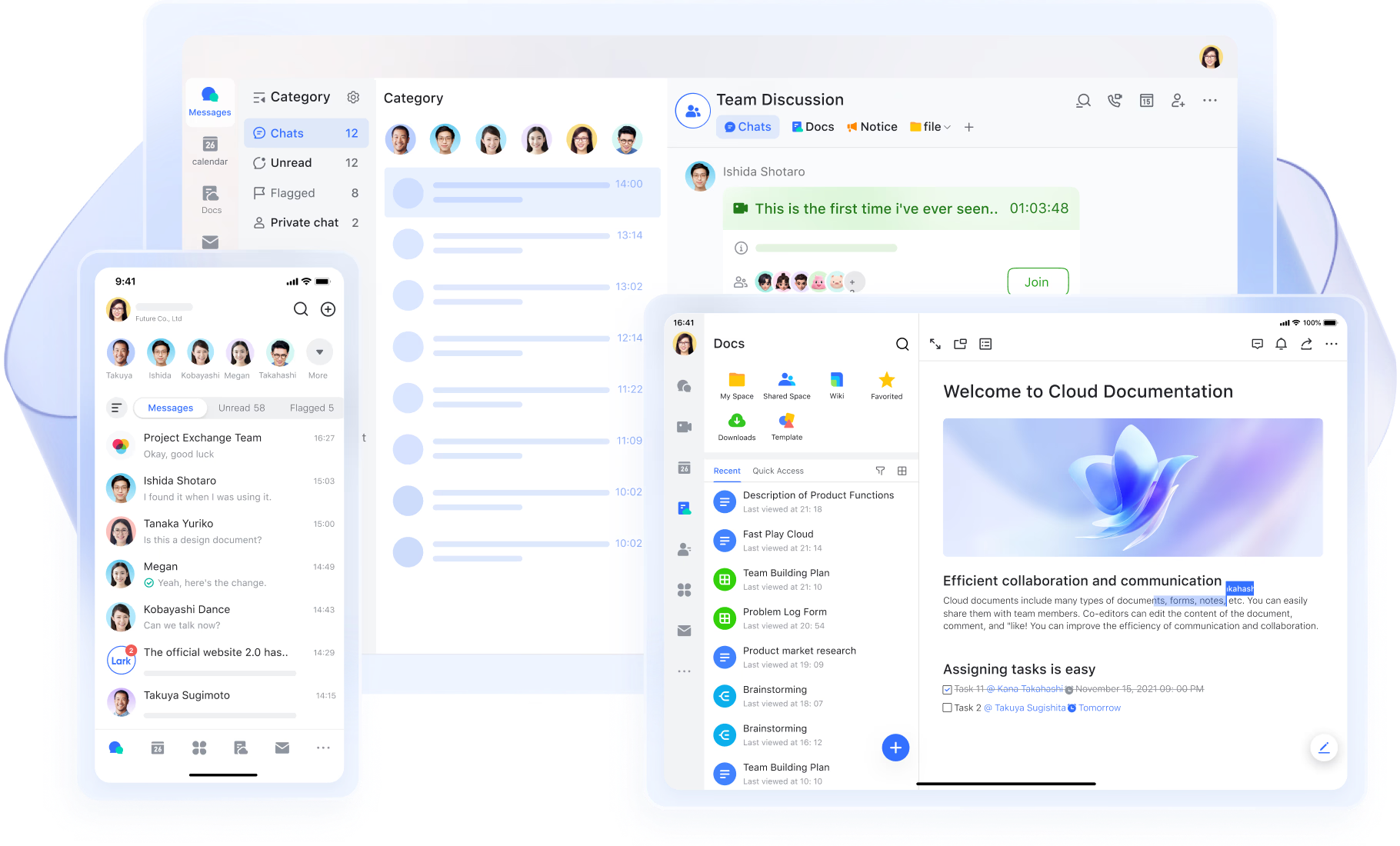
As a superapp for productivity, Lark unifies communication, data, and automation to help sales teams build, visualize, and manage funnels in one place. With built-in tools like Base, Messenger, Approval, Docs, and Sheets, Lark transforms static funnel tracking into a live, collaborative experience.
Features:
Lark Base: Visual funnel stage database
Lark Base is a flexible, visual database builder where you model your funnel as live data. You can create tables for leads, accounts, and deals; present those tables as lists, Kanban boards (deal stages), calendars (expected close dates), or custom dashboards. Base supports custom fields (lead source, score, owner, stage, deal value), filters, and views so stakeholders see the exact lens they need. Crucially for funnels, Base allows you to add automation rules when a field changes (e.g., 'stage → proposal') the system can create Tasks, send Messenger notifications, or populate an Approval form automatically.
How it maps to the funnel:
- Model TOFU → MOFU → BOFU as Kanban columns or status fields.
- Track per-lead metadata (source, UTM, score) to analyze which channels feed the funnel.
- Use dashboards to visualize conversion rates between stages and pipeline value by stage.
Practical example: A SaaS team builds a leads base table with fields: Source, Lead score, Owner, Stage, Demo date, Expected value. When a marketing lead's score exceeds 70, an automation rule in Base changes Stage → Qualified and:
- Posts a summary message on the SDR Team Messenger channel with the lead link.
- Adds the record to the Sales Pipeline dashboard for managers to review.
Lark Messenger: Contextual sales collaboration
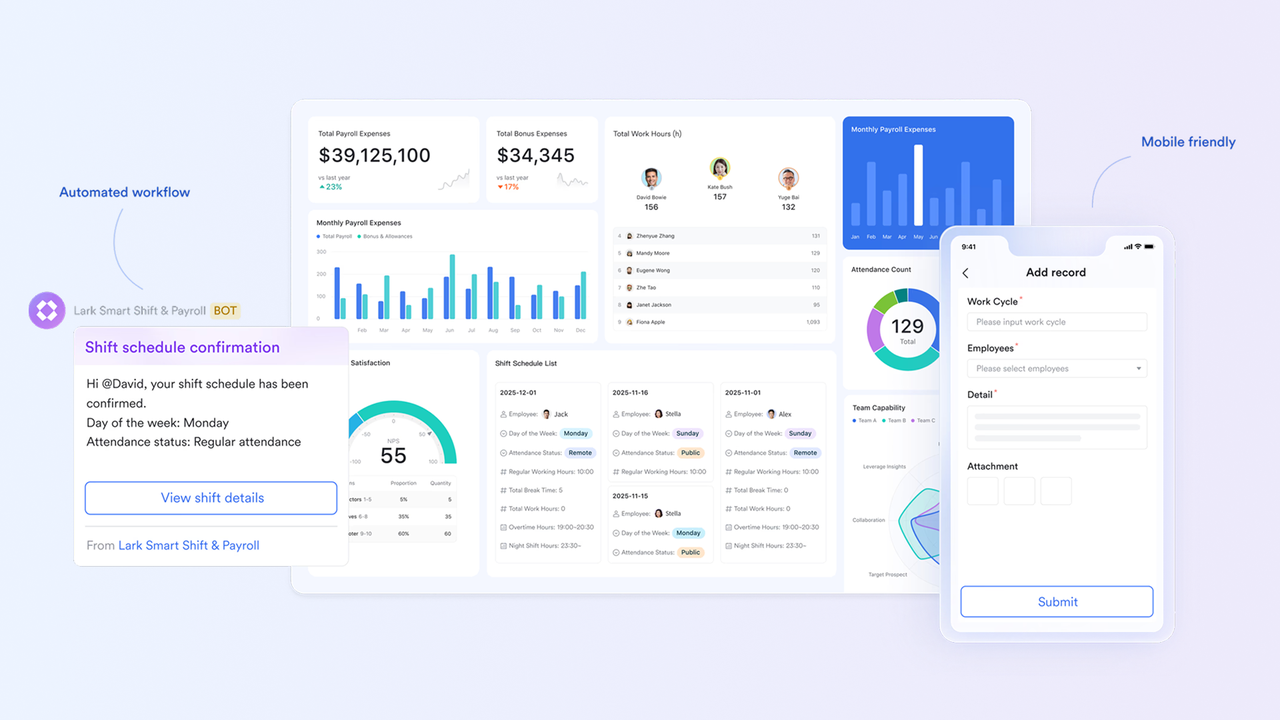
Lark Messenger is the contextual chat layer where conversations, decisions, and documents live together. It supports one-to-one chats, group channels, threaded replies, mentions, file attachments, and pinned messages. You can drop a Doc, Sheet, or a Base record link into a chat so the conversation is directly tied to live funnel data. Messenger also surfaces notifications from Base, Tasks, and Approval so teams see relevant events in real time.
How it maps to the funnel:
- Communicate about inbound leads, escalate warm prospects, and capture negotiation context without email.
- Keep trail of approvals, pricing clarifications, or product questions adjacent to the deal record.
Practical example: Practical example: A rep posts in the Deal#245 Messenger thread: "Client asks if custom reporting is possible — see updated proposal." They attach the proposal Doc and @mention product support for input. After confirming feasibility, the rep updates the "Special Terms Required" field in the Base pipeline record.
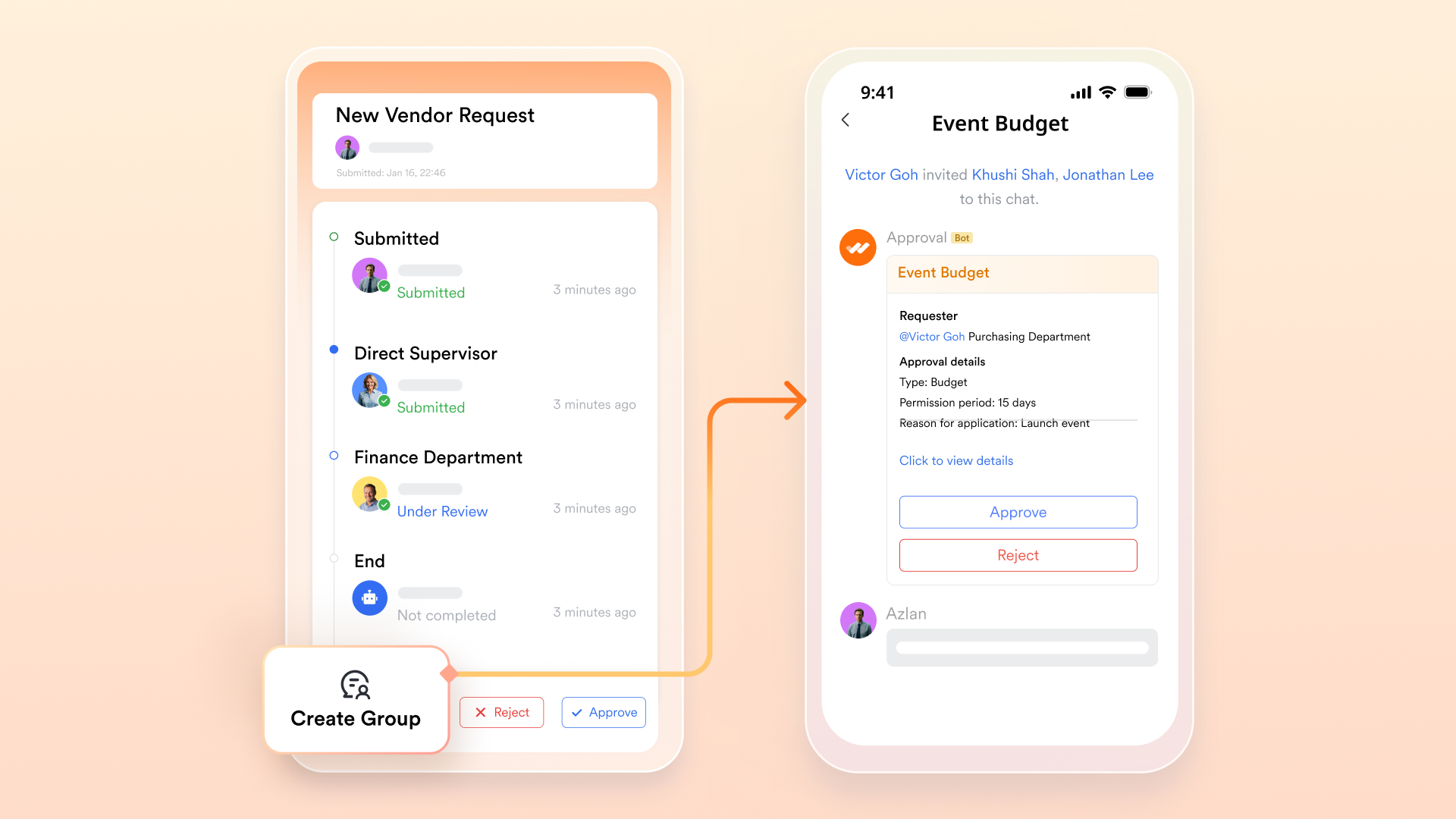
Lark Approval: Fast, auditable deal approvals
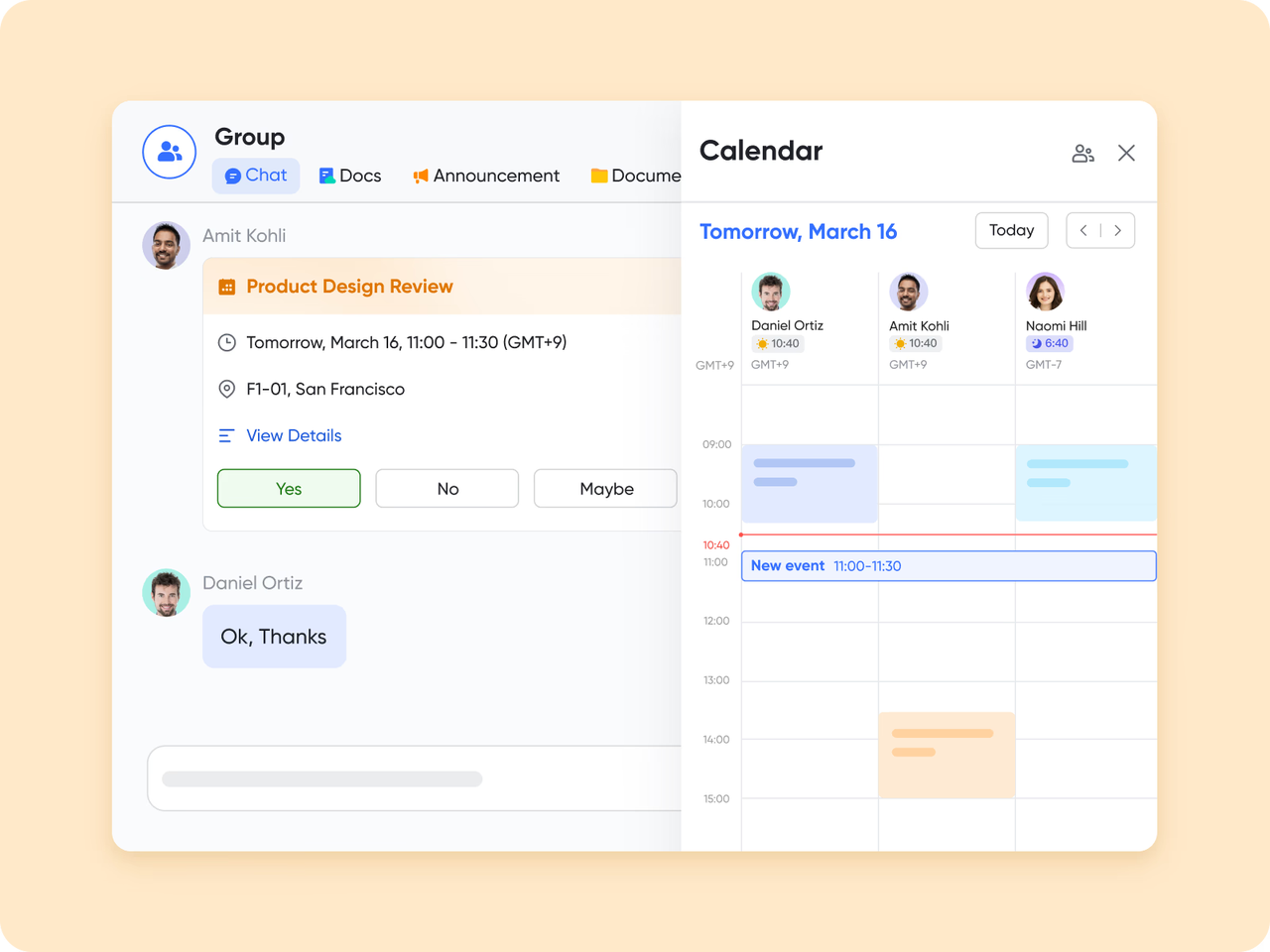
Lark Approval creates structured request forms and multi-step sign-off workflows. Forms capture required fields (deal ID, discount percentage, margin impact) and route approvals through predefined approvers (team lead → finance → head of sales). Approvals appear in approvers' queues and can include comments; completion triggers notifications and can update Base records or create tasks.
How it maps to the funnel:
- Speed up discount approvals, special contract terms, or campaign spend sign-offs preventing deal delays at BOFU.
- Maintain an auditable trail for compliance and post-mortem analysis.
Practical example: A rep submits a 'Discount Request' Approval form with supporting Docs. Finance reviews, adds margin notes, and approves. On final approval Lark automatically updates the deal status in Base to 'Discount approved' and notifies the rep in Messenger. The approval timestamp and comments are stored for future audits.
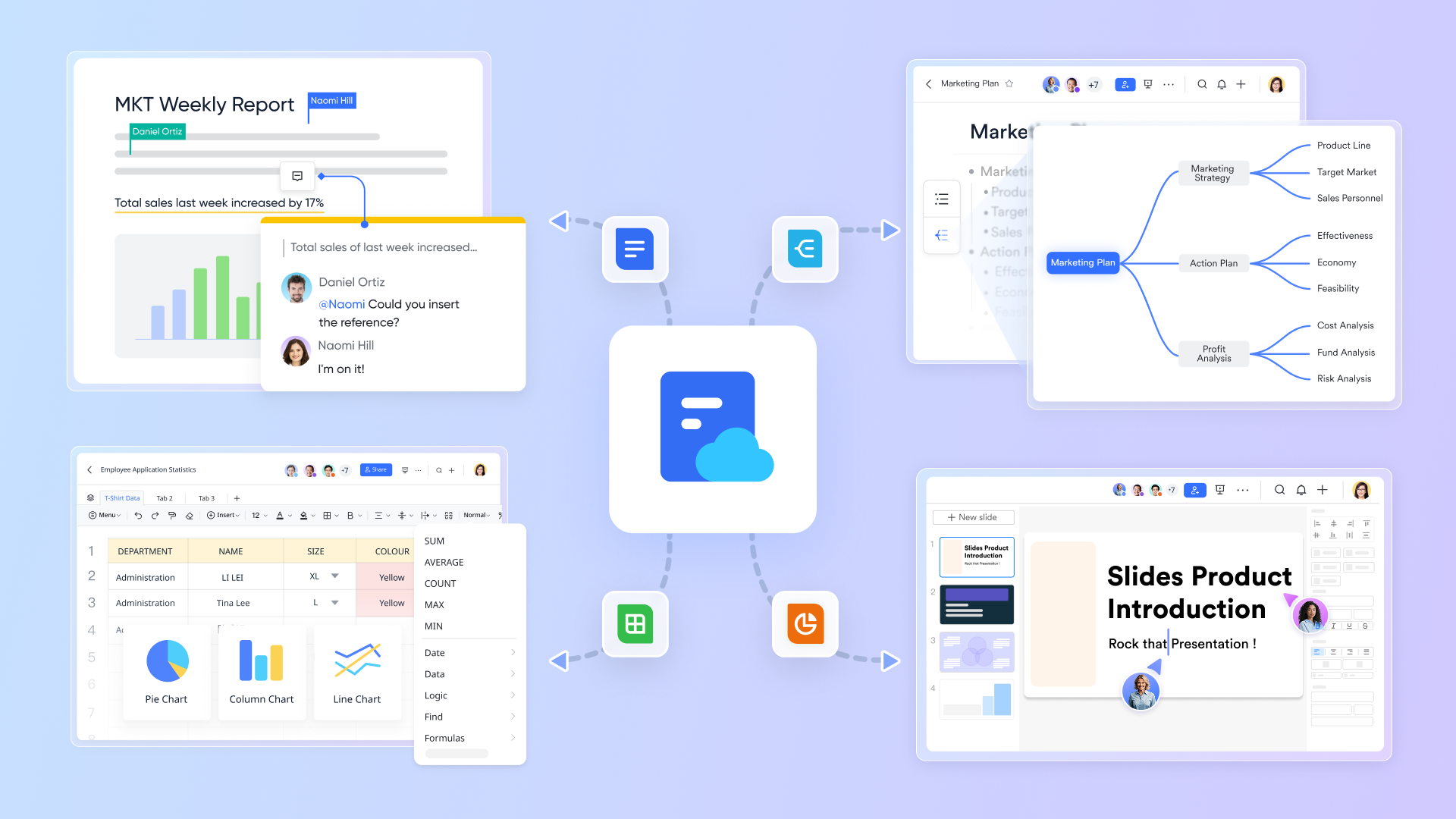
Lark Docs & Sheets: Live funnel reports and assets
Lark Docs and Lark Sheets are live, collaboratively editable files. Sheets supports formulas, pivoting, and named ranges to power forecasts and KPI roll-ups; Docs are ideal for standardized proposals, meeting agendas, and playbooks. Both support comments, mentions, and version history. You can embed Sheets into dashboards or link Docs to Base records and Tasks for a unified content-to-process experience.
How it maps to the funnel:
- Store templated email sequences, proposal templates, and playbooks in Docs.
- Maintain a live forecast or pipeline report in Sheets that managers and reps review together.
Practical example: Sales ops maintains a "Quarterly Forecast" Sheet with per-rep pipeline totals and weighted revenue formulas. Regional managers open the Sheet in the weekly review, add comments against specific accounts, and the meeting notes Doc records action items. Because the Sheet is live, any change from the rep or ops reflects immediately.
Pros:
- Unified collaboration and workflow platform: Combines communication, data management, automation, and reporting in one workspace.
- Real-time funnel visibility: Lark Base and Dashboards give teams instant insights into lead progression and conversion metrics.
- Automation at every stage: Trigger tasks, messages, and approvals automatically as funnel data changes.
- Cross-functional alignment: Marketing, sales, and operations collaborate seamlessly through Docs, Sheets, and Messenger.
- Scalable and cost-efficient: The free Starter plan supports up to 20 users with automation and AI features, ideal for SMBs and growing teams.
Cons:
- Requires setup expertise for beginners.
- Starter plan: Free forever plan that includes 11 powerful tools for up to 20 users. It also comes with 100GB of storage, 1000 automation runs, AI translations, and more.
- Pro plan: $12/user/month (billed annually) for up to 500 users. It includes everything in Starter plus group calling for up to 500 attendees, 15TB of storage, 50,000 automation runs, and more.
- Enterprise plan: Contact sales for custom pricing. Supports unlimited users and includes even more automation runs and advanced security, compliance, and management features.
2. Salesforce Sales Cloud: Enterprise CRM with funnel analytics
Salesforce Sales Cloud is a powerful enterprise CRM built for large, data-driven organizations. It offers deep funnel analytics, automation, and AI forecasting to optimize every deal stage. With robust scalability and thousands of integrations, Salesforce delivers unmatched control over pipeline performance.
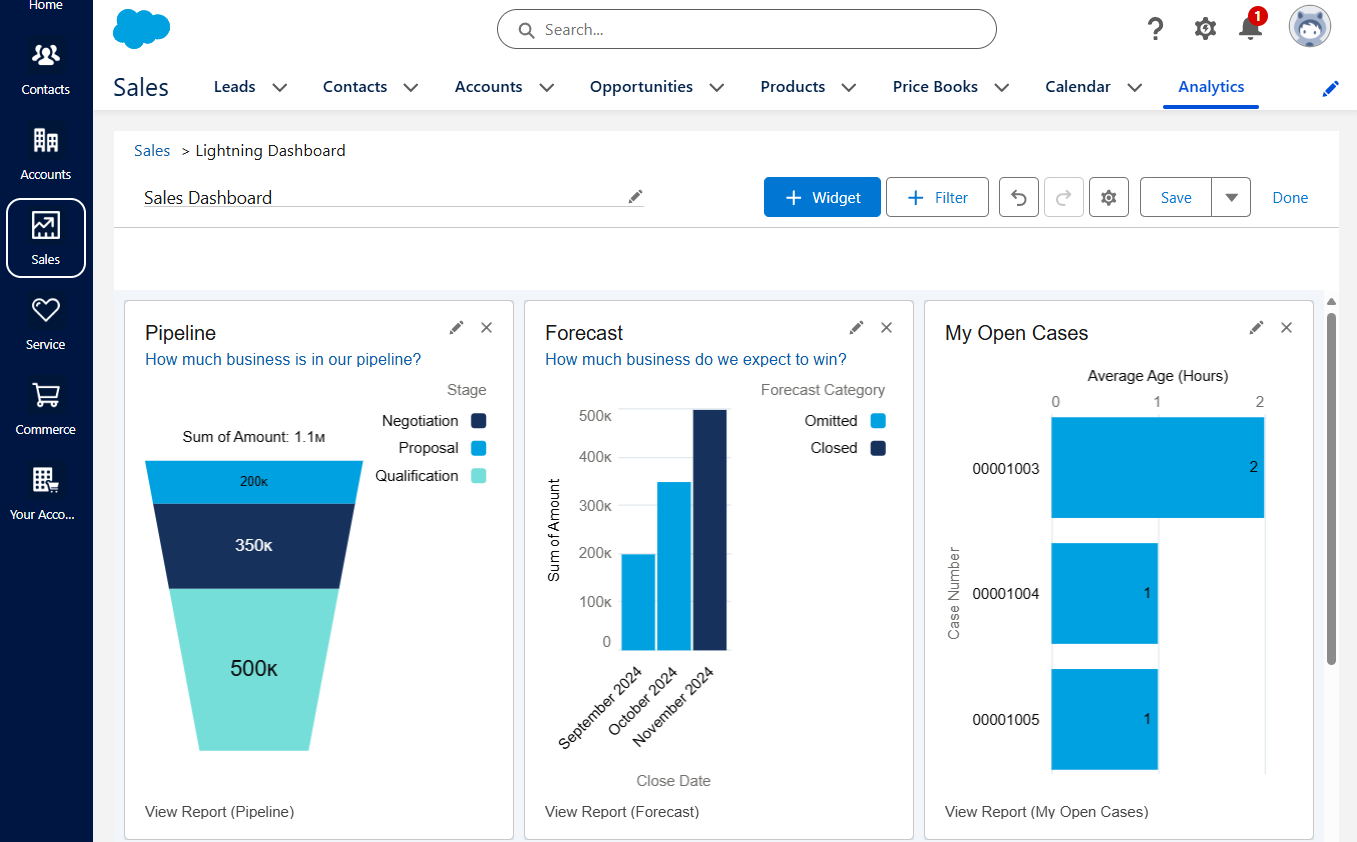
Image source: salesforce.com
Features:
- AI-powered Insights (Einstein): Predict deal closures and suggest next best actions.
- Forecast management: Real-time revenue predictions with scenario modeling.
- Customizable pipelines: Create tailored funnel stages for industries and teams.
- Extensive integrations: Works with 3,000+ apps in Salesforce AppExchange.
Pros:
- Deep analytics and advanced forecasting capabilities.
- Scalable architecture suitable for global enterprises.
- Strong community and partner ecosystem.
- Reliable security and compliance for large-scale deployments.
Cons:
- Complex setup for small or mid-sized teams.
- High licensing cost compared to SMB tools.
- May require dedicated admin support for customization.
Pricing: Starts at $25/user/month (Essentials); enterprise pricing available.
3. ClickFunnels: Drag-and-drop landing-page funnel builder
ClickFunnels enables marketers to design high-converting landing pages and funnels without coding. Its drag-and-drop builder and ready-made templates simplify lead generation, upselling, and campaign launches. Perfect for entrepreneurs, it helps convert clicks into revenue fast.
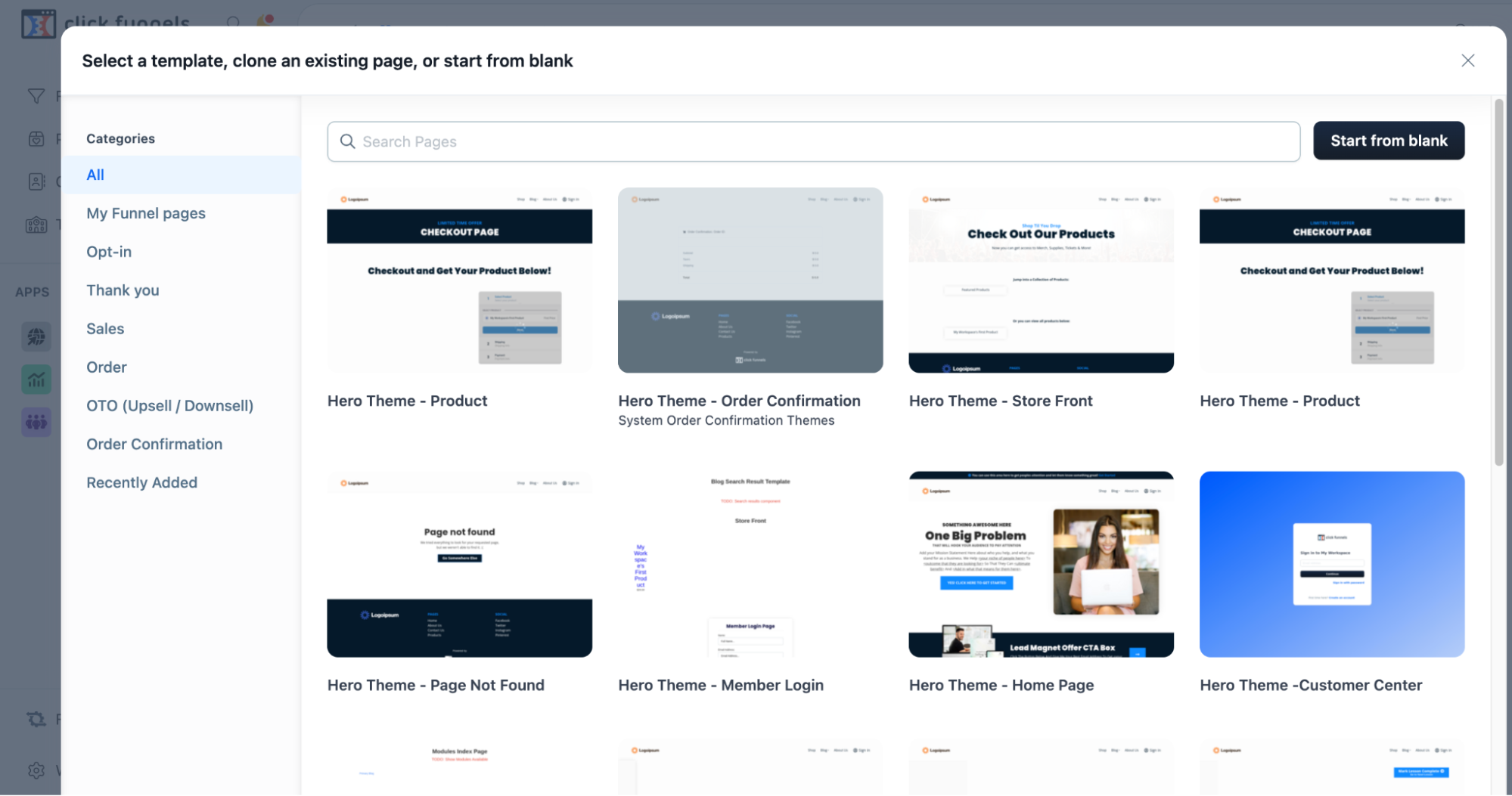
Image source: Clickfunnels.com
Features:
- Smart funnel templates: Ready-made designs for lead capture, sales, and upsells.
- A/B testing: Optimize page elements and CTAs.
- Email sequences: Automate follow-up funnels.
- Analytics dashboard: Real-time performance metrics.
- Payment integrations: Stripe, PayPal, and CRM syncs.
Pros:
- Intuitive drag-and-drop funnel builder.
- Designed for high conversion rates.
- Perfect for marketing and eCommerce teams.
- Excellent onboarding tutorials and community.
- No coding required.
Cons:
- Limited CRM and data management capabilities.
- Costly at higher tiers for large teams.
- Design templates can feel restrictive for custom branding.
Pricing: From $147/month; 14-day trial available.
4. Kartra: Complete marketing and sales funnel platform
Kartra integrates marketing, funnel management, and online business automation into a single ecosystem. It covers every step of the customer journey, from lead generation to course hosting and email automation. Designed for creators and digital marketers, Kartra eliminates the need for multiple standalone apps.
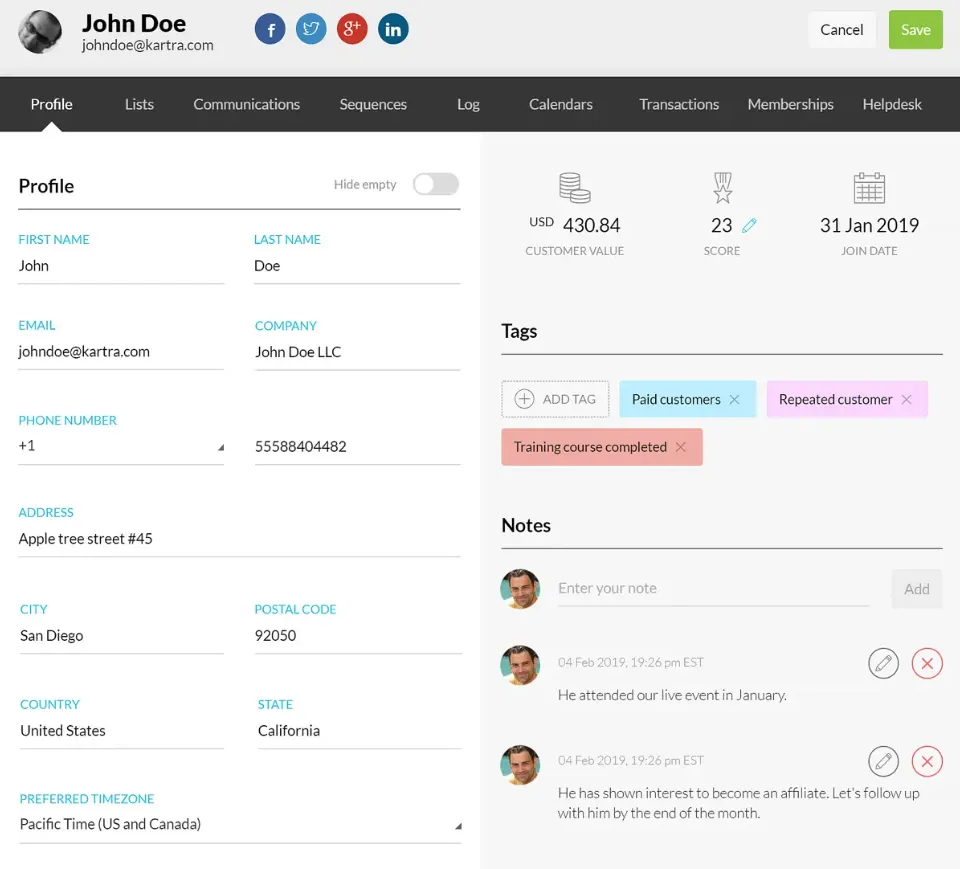
Image source: zendesk.com
Features:
- Email & automation builder: Create complex workflows visually.
- Video hosting with CTAs: Engage leads through interactive content.
- Membership portal: Host courses and gated content.
- Affiliate management: Built-in tracking and payout management.
- Landing page templates: High-converting predesigned layouts.
Pros:
- Combines multiple tools in one integrated system.
- Reduces subscription costs for marketers.
- Excellent for selling courses or memberships.
- Strong analytics and tagging system.
- Built-in payment and affiliate options.
Cons:
- Learning curve for new users.
- Interface is less modern than competitors.
- Limited third-party integrations.
Pricing: Starts at $99/month for 2,500 leads.
5. Pipedrive: Visual CRM for deal-stage management
Pipedrive offers a highly visual CRM for tracking and managing deals through every funnel stage. Its drag-and-drop interface simplifies sales workflows and keeps teams focused on priorities. Best for small to mid-sized businesses, Pipedrive helps streamline selling without overwhelming complexity.
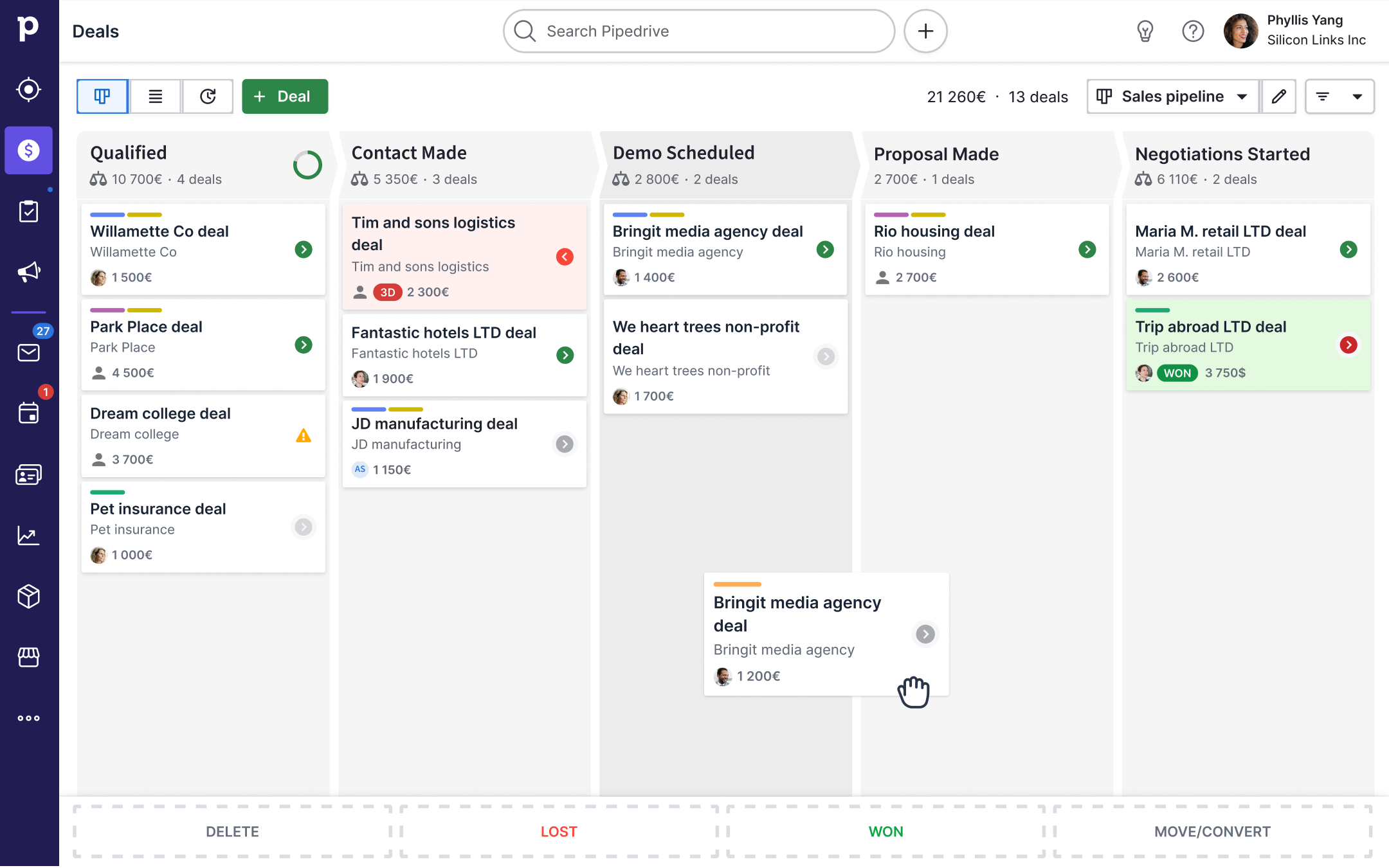
Image source: Pipedrive.com
Features:
- Visual pipelines: Easily manage leads and opportunities.
- Email & calendar sync: Integrates directly with Gmail or Outlook.
- Revenue forecasting: Predict pipeline value and closing trends.
- Deal automation: Automate task creation and follow-ups.
- Activity tracking: Measure performance and conversion efficiency.
Pros:
- User-friendly, visual interface.
- Quick onboarding for teams.
- Strong mobile app support.
- Affordable for SMBs.
- Great visibility for pipeline coaching.
Cons:
- Lacks advanced marketing automation.
- Reporting is basic in entry tiers.
- Limited customization options for enterprises.
Pricing: From $14.90/user/month.
6. GetResponse: Funnel builder with email automation
GetResponse blends funnel creation, email automation, and webinar hosting into a single solution. It enables marketers to generate leads, nurture them, and convert efficiently through integrated campaigns. Its all-in-one nature makes it ideal for small businesses and solopreneurs.
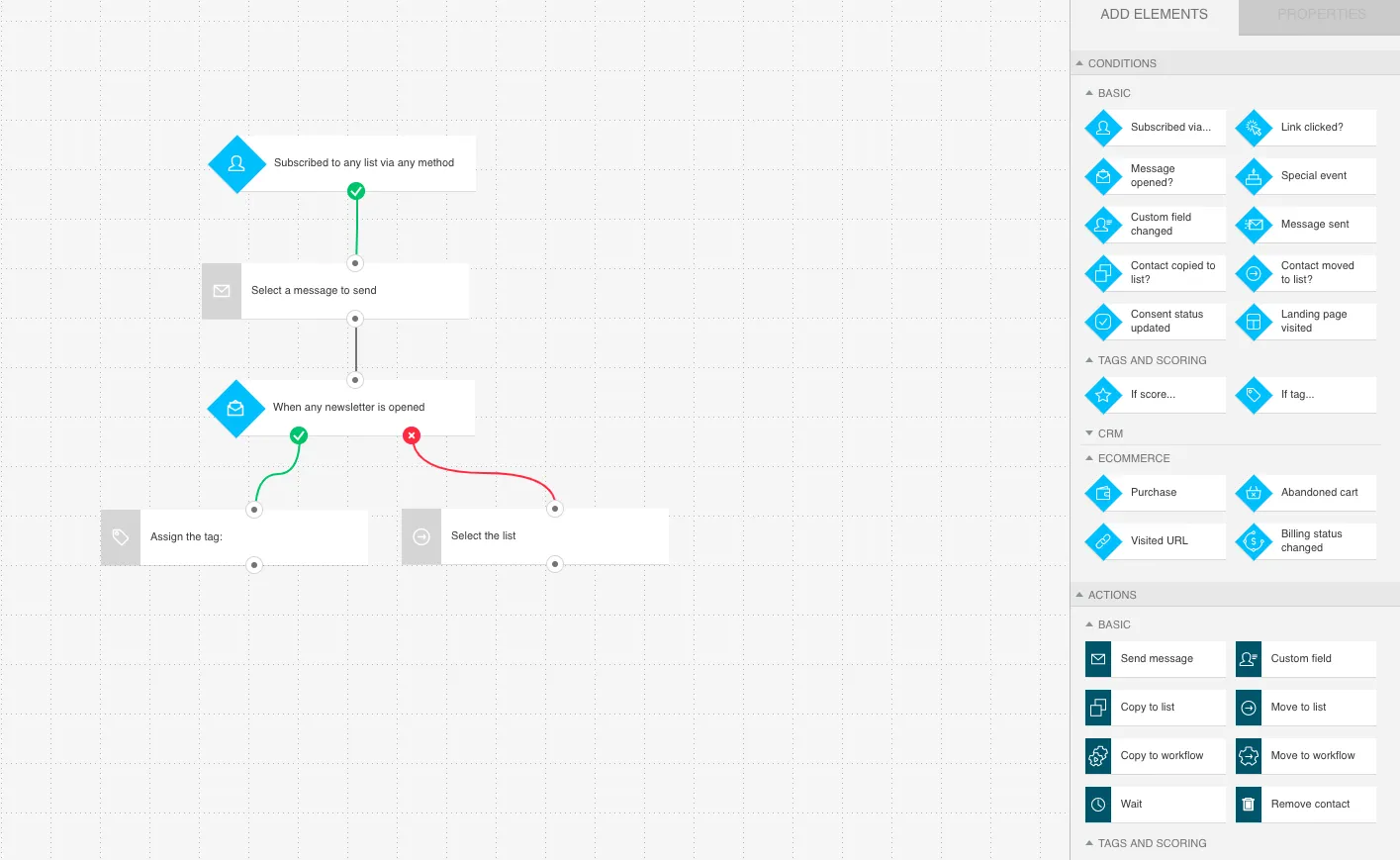
Image source: getresponse.com
Features:
- Prebuilt conversion funnels: Launch campaigns in minutes.
- Webinar integration: Host events within the platform.
- Landing page builder: Mobile-optimized templates.
- AI email creator: Auto-generates email content.
- Performance dashboard: Tracks engagement metrics and ROI.
Pros:
- Combines funnels, automation, and webinars.
- Cost-effective for small teams.
- Easy campaign setup and management.
- Excellent email deliverability rates.
- Comprehensive reporting for performance.
Cons:
- CRM tools are minimal.
- Limited scalability for large organizations.
- Fewer integrations than enterprise CRMs.
Pricing: Free tier available; paid plans start at $19/month.
7. ActiveCampaign: Automation-driven funnel marketing system
ActiveCampaign unites CRM, marketing automation, and personalization for smarter customer engagement. It's designed for businesses that want precision and automation in their sales funnel. With its visual flow builder, ActiveCampaign enables tailored communication that boosts conversions.
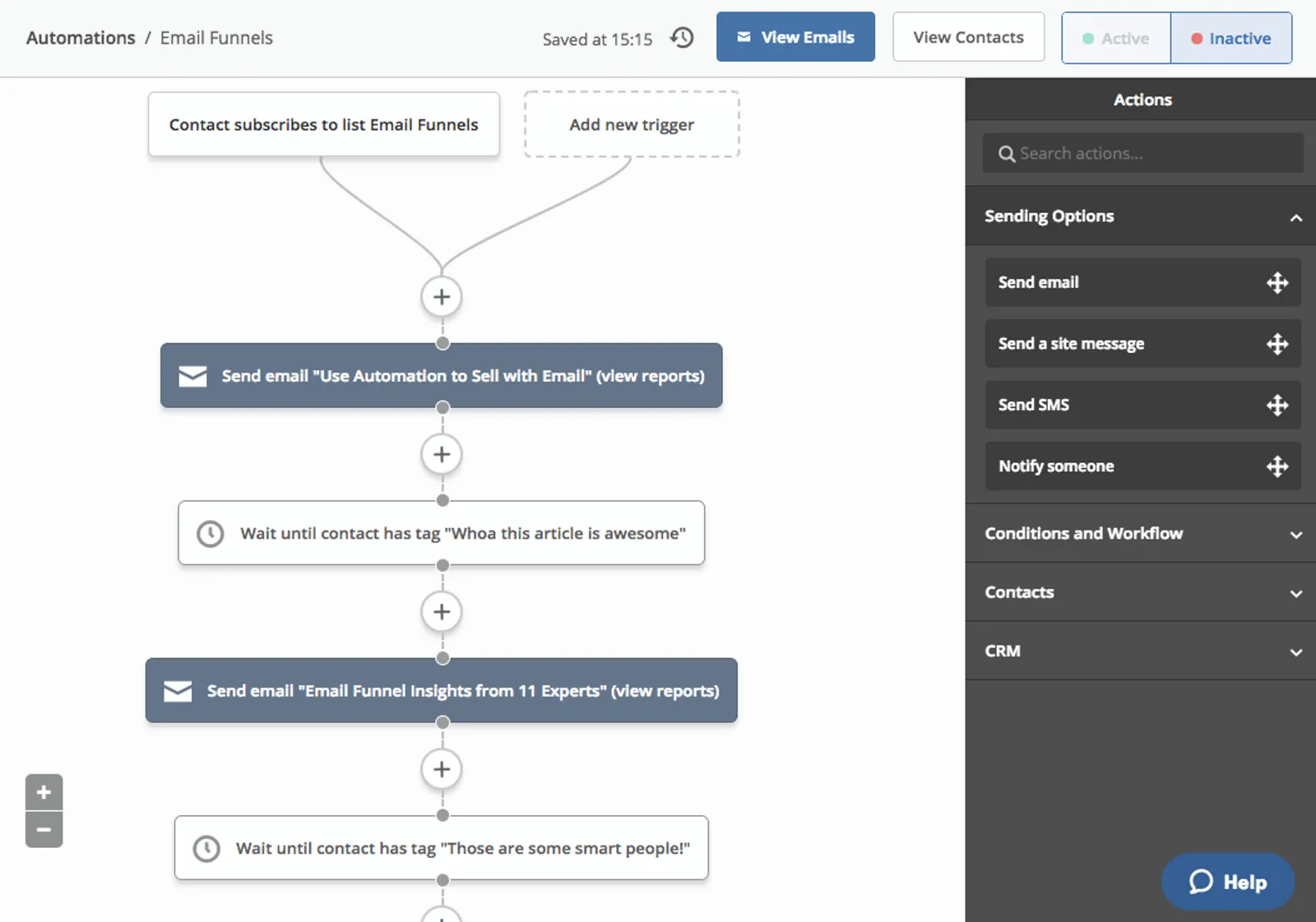
Image source: activecampaign.com
Features:
- Customer journey builder: Visual automation across touchpoints.
- Lead scoring: Identify high-value leads automatically.
- Predictive sending: AI-optimized delivery timing.
- CRM integration: Unified view of contacts and deals.
- Omnichannel messaging: Manage email, SMS, and chat workflows.
Pros:
- Deep automation and personalization features.
- Integrates with 900+ tools.
- Excellent lead management flexibility.
- Reliable deliverability and engagement tracking.
- Suitable for SMBs and scaling companies.
Cons:
- Initial setup can be complex.
- Pricing increases with contact volume.
- Limited visual funnel reporting.
Pricing: From $49/month (Marketing + CRM bundle).
8. HubSpot Sales Hub: Unified CRM and funnel tracking suite
HubSpot Sales Hub provides an intuitive, all-in-one CRM designed for teams seeking simplicity and efficiency. It aligns marketing, sales, and service workflows to enhance funnel visibility. With strong automation and analytics, HubSpot supports everything from prospecting to post-sale engagement.
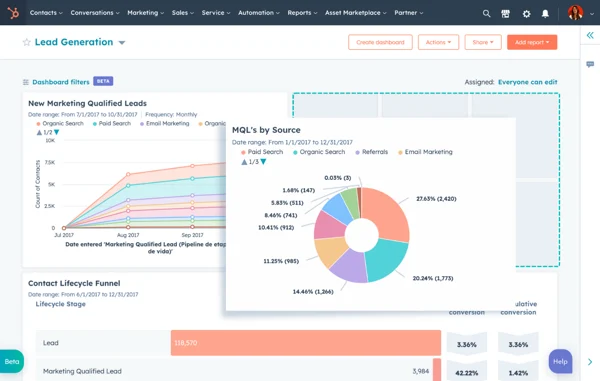
Image source: hubspot.com
Features:
- Pipeline visualization: Manage deals in real time.
- Email sequences: Automate personalized outreach.
- Sales playbooks: Standardize scripts and processes.
- AI recommendations: Identify next steps for deals.
- Reporting dashboards: Track team and individual KPIs.
Pros:
- Excellent free tier for small teams.
- Easy to use with minimal training.
- Seamless integration with HubSpot Marketing Hub.
- Strong automation and templates.
- Detailed insights with real-time alerts.
Cons:
- Advanced automation locked in paid tiers.
- Add-ons can increase costs quickly.
- Custom reports limited to free plan
Pricing: Free CRM available; paid tiers start at $18/month/user.
9. ConvertFlow: Funnel personalization for websites and CTAs
ConvertFlow lets marketers personalize on-site funnels using dynamic calls-to-action and audience targeting. It helps convert visitors by displaying relevant CTAs based on their behavior and source. Ideal for top-of-funnel optimization, ConvertFlow is a fast, no-code solution for boosting conversions.
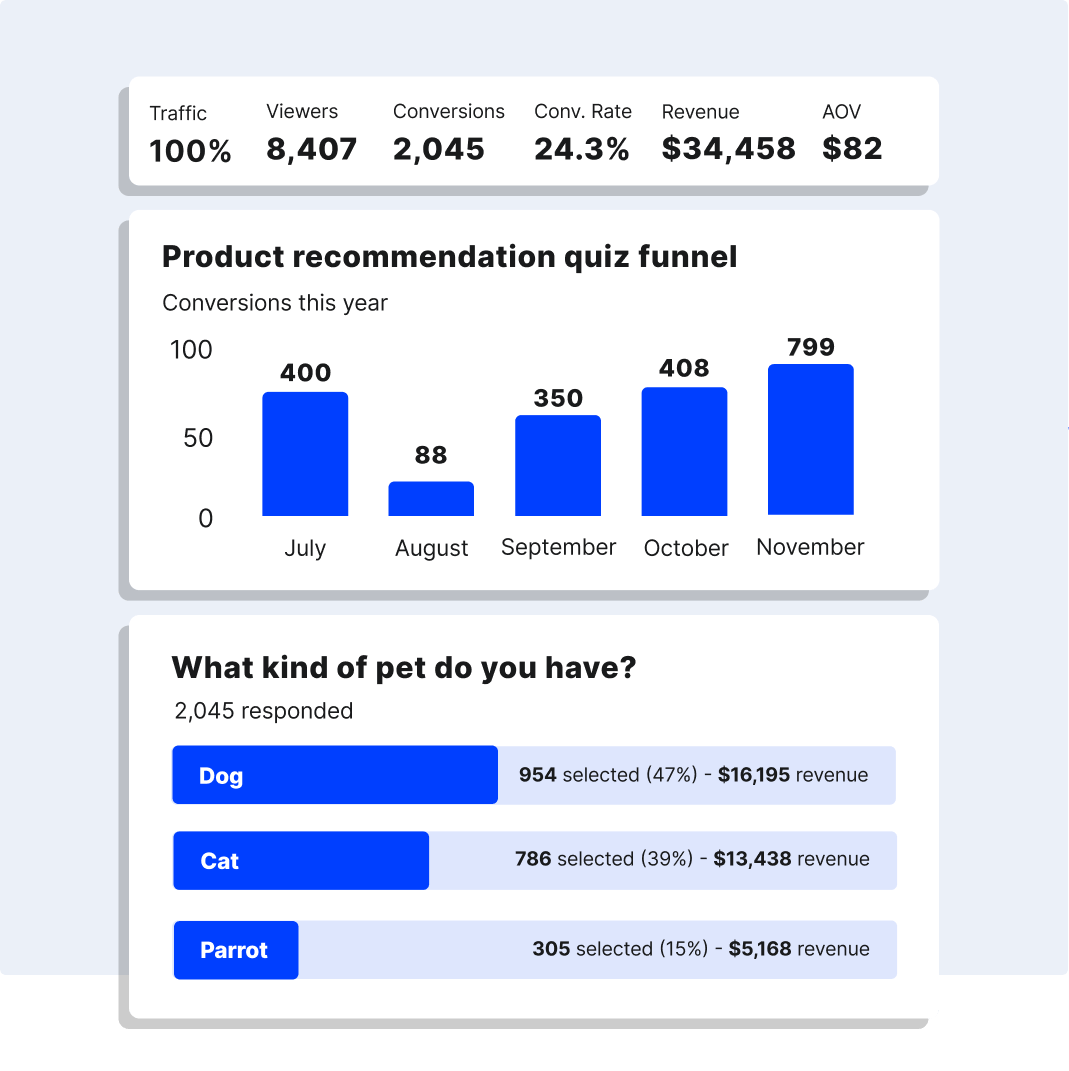
Image source: convertflow.com
Features:
- Dynamic CTAs: Personalized popups and forms.
- Segmentation rules: Target audiences by traffic source or behavior.
- Multi-step campaigns: Build guided opt-in sequences.
- Integrations: Sync with CRMs like HubSpot and ESPs like Mailchimp.
- Performance analytics: Real-time funnel and conversion tracking.
Pros:
- Increases conversions through personalization.
- Easy to deploy without coding.
- Works with major CRM and marketing tools.
- Lightweight and responsive widgets.
- Great UI for campaign testing.
Cons:
- Focused mainly on lead capture, not deal management.
- Free plan limited in features.
- Fewer analytics compared to enterprise software.
Pricing: Starts at $99/month.
10. Systeme.io: Budget-friendly funnel and email solution
Systeme.io provides a simple, affordable way to create and manage sales funnels, automate marketing, and sell digital products. It combines email, affiliate, and course management tools in one interface. Perfect for solopreneurs, it simplifies online business operations end-to-end.
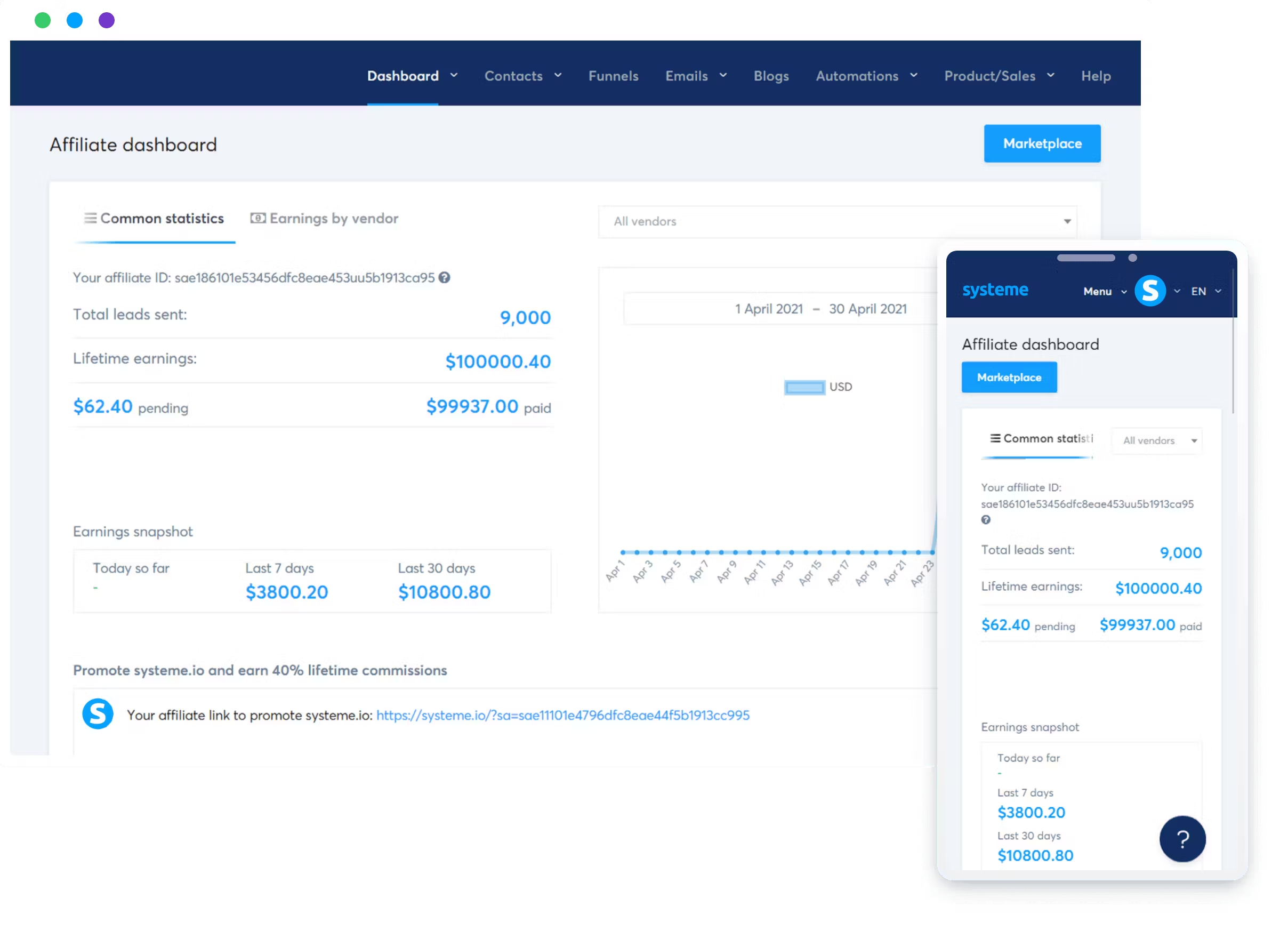
Image source: systeme.io
Features:
- All-in-one funnel builder: Includes pages, emails, and payments.
- Affiliate program: Manage partners and commissions.
- Course hosting: Deliver paid online content easily.
- Automation rules: Trigger follow-ups and tagging actions.
- Sales dashboard: Track revenue and funnel performance.
Pros:
- Excellent value for individuals and startups.
- Straightforward and beginner-friendly UI.
- Includes affiliate and membership tools.
- Free plan supports basic automation.
- Ideal for creators and coaches.
Cons:
- Limited customization and analytics depth.
- Not suitable for complex multi-team funnels.
- Basic integration ecosystem.
Pricing: Free plan available; paid tiers start at $27/month.
Best practices for managing a high-performing sales funnel
Building a high-performing sales funnel requires more than just tracking leads; it demands visibility, agility, and continuous optimization. By following these best practices, teams can improve conversion efficiency, reduce drop-offs, and drive consistent revenue growth.
- Ensure visibility across stages: Use dashboards to understand how leads move through TOFU, MOFU, and BOFU. Track conversion ratios and deal velocity to identify bottlenecks.
- Use data & analytics: Analytics tools to measure drop-off points and optimize each stage. Funnel metrics such as lead conversion, deal value, and cycle time guide strategic improvements.
- Automate repetitive tasks: Implement automation for lead assignments, follow-ups, and idle-lead alerts. Automation saves time and ensures no lead is overlooked
- Align teams: Encourage both teams to share data and use the same CRM or collaboration platform. Unified communication ensures consistent messaging and improved hand-offs.
- Regular review & iteration: A funnel isn't static it is to review performance monthly, assess campaign impact, and update your playbooks to reflect market shifts and new insights.
Conclusion
A well-structured sales funnel is the backbone of predictable growth and guiding leads from awareness to conversion through measurable, repeatable stages. Modern funnel management depends on visibility, automation, and cross-functional alignment, ensuring that every opportunity progresses smoothly and no lead is left behind. By leveraging the right tools, teams can transform scattered sales processes into data-driven, collaborative systems that accelerate performance.
Among today's solutions, Lark stands out by bringing communication, analytics, and automation together in a single workspace. From tracking leads in Lark Base to managing approvals, reports, and discussions in real time, it empowers teams to move faster and close smarter.
FAQs
What's the difference between a sales funnel and a sales pipeline?
A sales funnel represents the customer journey from awareness to purchase, while a pipeline focuses on internal sales processes and deal progress. The funnel measures conversion rates; the pipeline tracks deal movement. With tools like Lark Base, teams can visualize both perspectives, in one view aligning customer touchpoints with operational milestones for greater clarity.
How do you analyze and optimize your sales funnel performance?
Track metrics like lead conversion rate, stage duration, and win rate. Use dashboards and automation tools to pinpoint drop-offs and optimize lead progression. Using platforms like Lark Base and Sheets, businesses can build live dashboards that automatically update with real-time funnel data, making optimization faster and data-backed.
How can automation improve sales funnel management?
Automation reduces manual effort by routing leads, sending alerts, and updating records automatically, ensuring consistent follow-up and faster conversions. With built-in automation engine of Lark's, teams can trigger workflows from lead qualification to approval requests automatically, keeping funnels active and efficient.
What role does content play in a sales funnel?
Content nurtures prospects by offering relevant insights at every stage blogs for awareness, case studies for evaluation, and proposals at decision points. Using tools like Lark Docs, teams can co-create, store, and share sales assets centrally, ensuring all stakeholders use the latest, approved content across campaigns.
How can teams collaborate effectively across the sales funnel?
Using platforms like Lark, teams can connect communication, approvals, and data in one space improve visibility, accountability, and decision-making.
Related reading
Table of contents
Start using Lark today

Manage all your work in one place
Boost team efficiency by 10x
Save up to 70% on software costs
Table of contents
Start using Lark today
Manage all your work in one place
Boost team efficiency by 10x
Save up to 70% on software costs
Keep reading









2026 Lark Technologies Pte. Ltd.
Headquartered in Singapore with offices worldwide.






Explore: