














9 Sales Prospecting Tools to Boost Lead Conversion

Ryan Tanner
Product Marketing Specialist
Sep 18, 2026
Ryan Tanner
Sep 18, 2026

18 min read


Sales prospecting is the foundation of every successful sales strategy, but traditional manual methods are often slow, inconsistent, and difficult to scale. In a fast-changing environment where buyer attention is limited and competition is increasing, sales teams need smarter tools to identify, track, and engage potential customers effectively.
AI-driven workspaces such as Lark make this process more efficient and connected by combining automation, data, and collaboration in one place. With intelligent workflows and centralized communication, teams can focus less on repetitive tasks and more on building meaningful relationships that move prospects closer to conversion.
Here is list of top 9 sales prospecting tools:
1. Lark: All-in-one AI sales workspace
2. HubSpot Sales Hub: CRM and sales automation platform
3. ZoomInfo: B2B lead database and data enrichment tool
4. Artisan: AI-powered outbound sales and lead generation platform
5. Apollo.io: Prospecting and outreach automation platform
6. Salesloft: Multi-channel sales engagement solution
7. Outreach.io: Enterprise sales automation and analytics tool
8. Clay: AI-powered data enrichment and lead builder
9. LinkedIn Sales Navigator: Social selling and lead discovery tool

What is sales prospecting?
Sales prospecting is the process of identifying and qualifying potential customers who are most likely to purchase a company's product or service. It involves researching, reaching out to, and engaging individuals or organisations that match your ideal customer profile (ICP). Unlike lead generation, which focuses on collecting contact information, sales prospecting is more targeted and intentional. It's about finding leads with real buying potential and nurturing them toward conversion.
In both B2B and B2C contexts, the objective remains consistent: to discover quality prospects, build meaningful relationships, and convert interest into sales opportunities. Modern sales prospecting goes beyond cold calls and generic emails; it leverages AI tools, data insights, and personalised outreach to ensure every interaction is relevant and timely. By combining strategy, automation, and genuine communication, sales teams can turn prospecting into a repeatable, scalable process that continuously fuels business growth.
Image source: unsplash.com
The modern sales prospecting process
Successful sales prospecting today relies on structure, automation, and collaboration. Rather than relying on cold lists or manual tracking, modern teams use data-driven methods and AI-powered tools to identify, engage, and convert high-quality leads efficiently. Here's how the process unfolds step by step:
Step 1: Define your ideal customer profile (ICP)
Outline the characteristics of your most valuable customer industry, size, pain points, and buying behavior—to focus your outreach.
Step 2: Source and collect leads through multiple channels
Use tools, social platforms, and referrals to gather prospects who match your ICP across various online and offline sources. Teams often broaden this pool by pulling firmographic records from an external company database that aggregates millions of organizations across the market.
Step 3: Qualify and score leads based on engagement and fit
Evaluate prospects by analyzing their interest level, readiness to buy, and overall alignment with your offering.
Step 4: Personalize outreach with relevant content
Craft tailored messages, leveraging AI insights to make your outreach contextual, timely, and valuable to each prospect.
Step 5: Nurture through consistent follow-ups
Stay connected with prospects through scheduled follow-ups, sharing relevant updates, and maintaining ongoing communication.
Step 6: Convert qualified leads into pipeline opportunities
Move engaged prospects into your sales pipeline, preparing them for handoff to account managers or closers.
Step 7: Review performance and refine your strategy
Analyze results regularly to identify what works, optimize your messaging, and adjust tactics for continuous improvement.
Proven sales prospecting techniques that works
Modern sales prospecting blends strategy, personalization, and automation to connect with prospects more effectively. These techniques help sales teams build stronger relationships, stay consistent, and use data to focus on what truly drives conversions.
- Use social selling to build credibility before outreach: Engage with your target audience on platforms like LinkedIn by sharing insights and joining conversations. This builds recognition and trust, making your outreach more genuine and effective.
- Personalize cold emails using AI suggestions and CRM data: Leverage AI tools to tailor messages based on prospect data, interests, or pain points. Personalised outreach demonstrates relevance and significantly improves response rates.
- Automate reminders and follow-ups to maintain consistency: Automation ensures every lead receives timely follow-ups, helping teams stay organized. In Lark Base, triggers can automatically assign next actions or reminders to keep momentum going.
- Track interactions across chat, email, and calls for better insights: Keep all prospect communication visible in one system to avoid duplication and confusion. Lark connects chats, notes, and tasks, so teams have complete context at every stage.
- Use data analytics to focus on high-value prospects first: Identify and prioritize the leads most likely to convert using performance insights. Lark dashboards visualize engagement and progress, allowing reps to focus effort where it matters most.
With Lark Base, teams can create a live prospecting database and automate next steps using task triggers and AI reminders ensuring no opportunity slips through the cracks.
Comparison of top 9 sales prospecting tools
Top 9 sales prospecting tools you should check out
1. Lark: All-in-one AI sales workspace
Lark is a unified, AI-powered sales workspace designed to simplify prospecting, collaboration, and deal management. It combines CRM tools, automation, and real-time communication in one place, allowing teams to find and engage leads faster. With built-in AI assistance and customizable workflows, Lark helps sales teams stay organized, responsive, and data-driven throughout the prospecting process.
Key features:
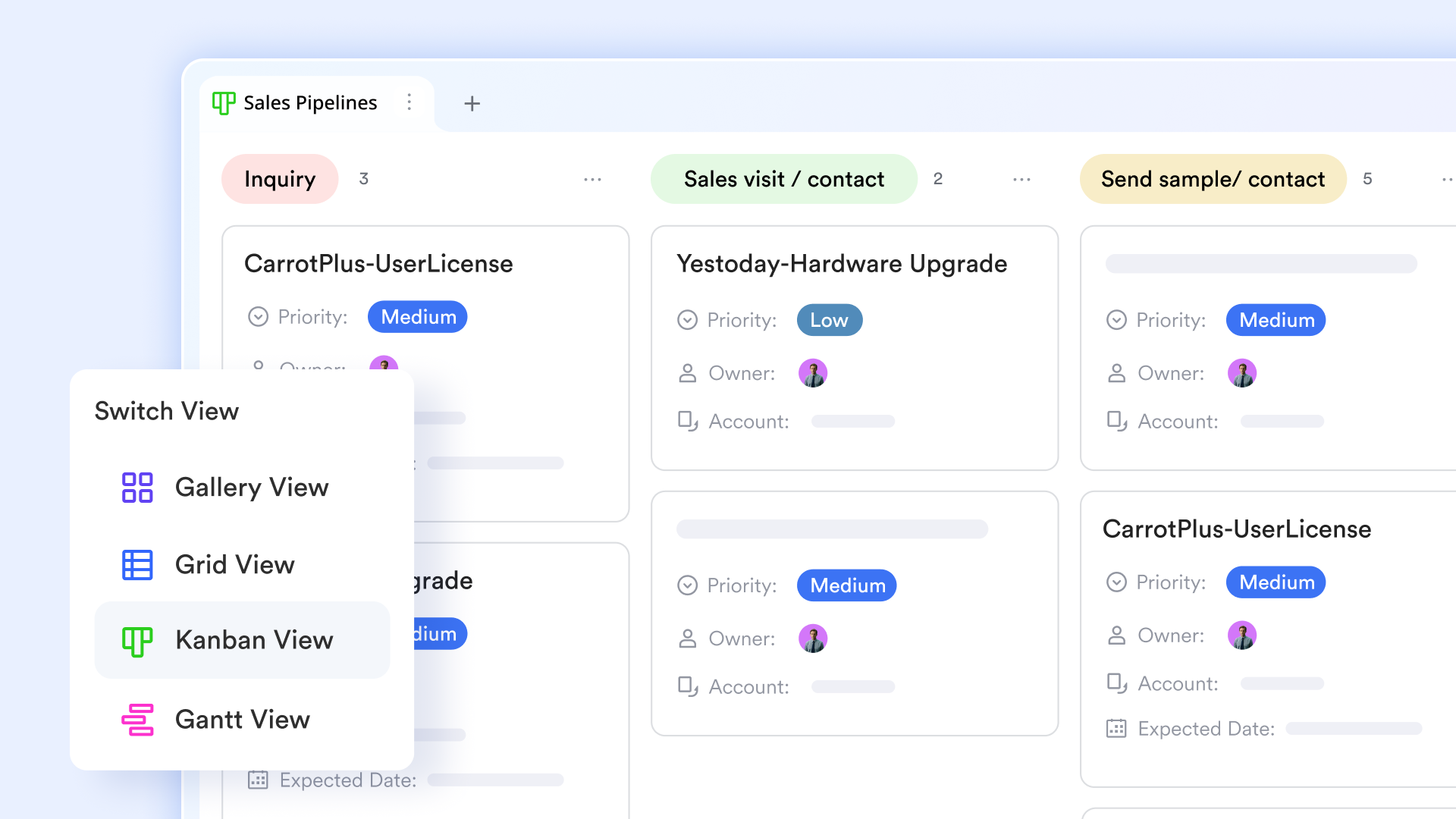
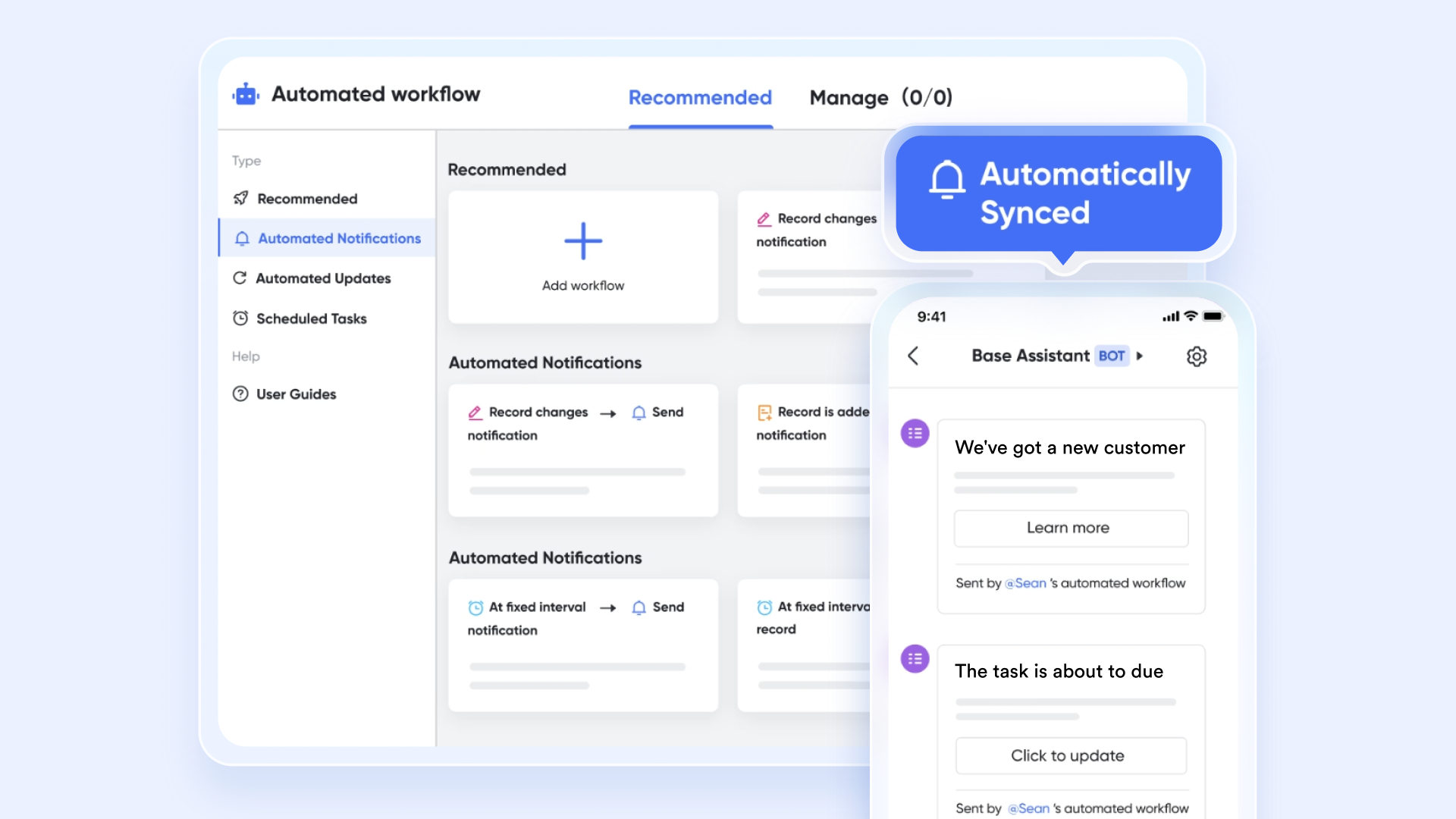
- Client & pipeline management: Lark Base helps sales teams organise client data in a structured grid view for easy sorting and tracking. The Kanban view visually represents deal stages such as contacted → negotiation → contract review. Automated notifications and follow-up reminders keep teams proactive and aligned. Templates like the sales tracker streamline setup and reduce manual work. Together, these tools enhance visibility and maintain a smooth, consistent sales pipeline.
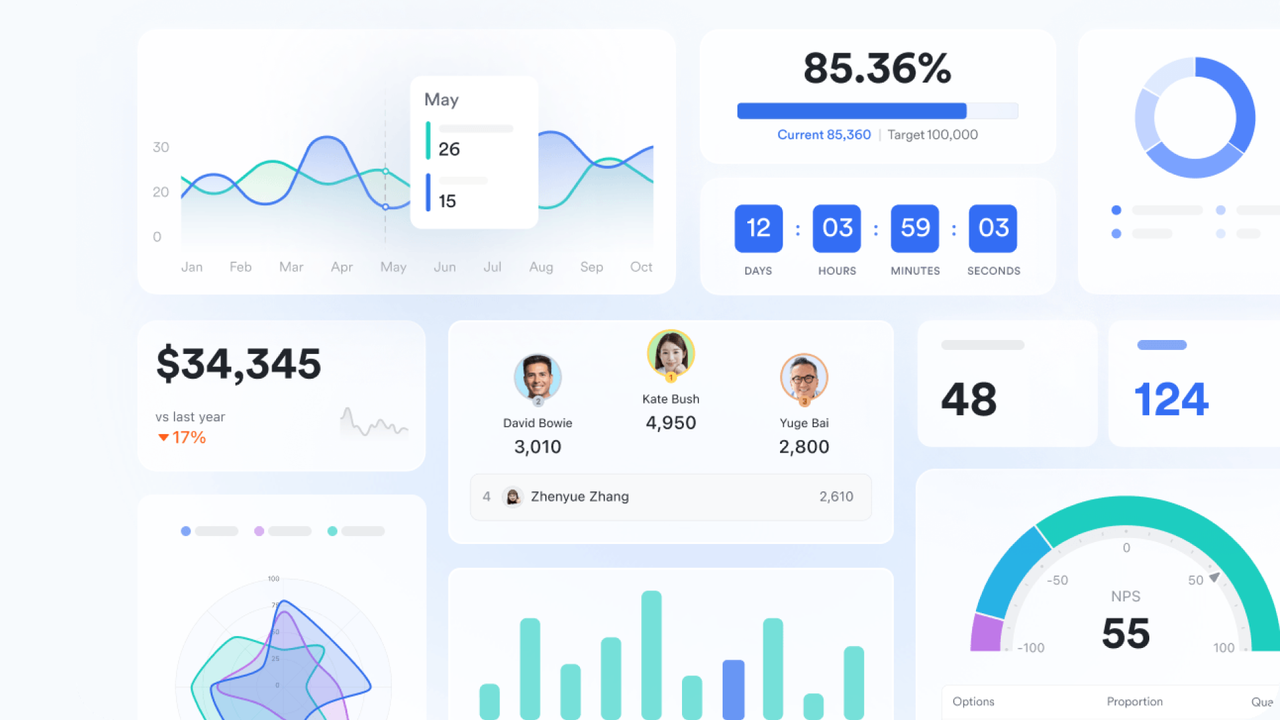
- Sales performance insights: Lark dashboards provide a complete, real-time overview of key sales metrics like revenue, profit, and order trends. Managers can monitor performance across regions, products, and teams in one shared space. The data syncs automatically from Lark Base, ensuring reports are always current. This transparency supports faster decision-making and better strategic planning. By centralising insights, Lark empowers teams to act on data, not guesswork.
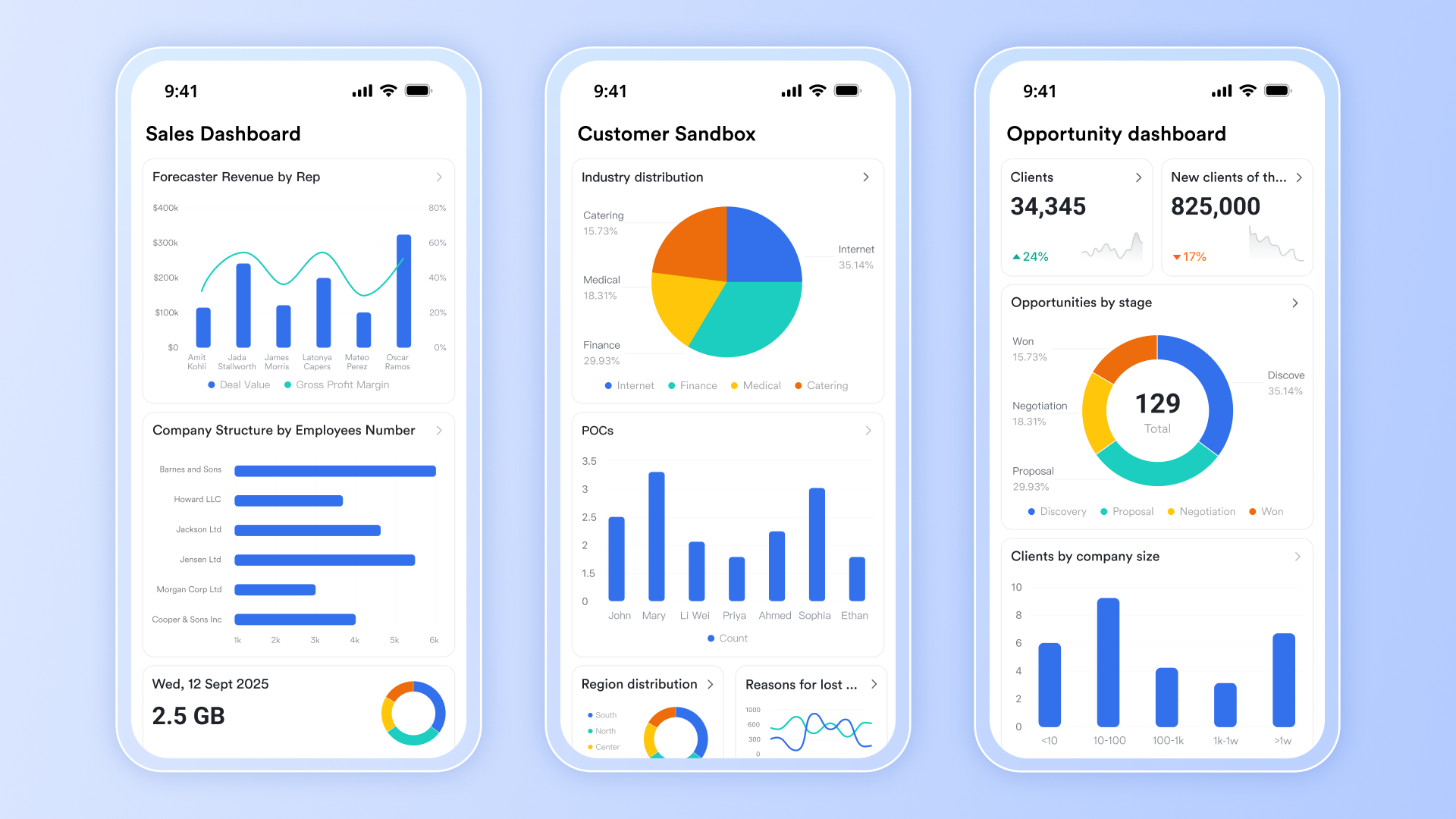
- Mobile-first store and CRM operations: With Lark work mini-apps, sales and field teams can manage CRM data, store performance, and inventory directly from mobile devices. Updates to deals or customer activity sync instantly with headquarters. Lark Messenger and Lark Tasks allow seamless collaboration and coordination between on-site and remote teams. Field reps can access client details and log interactions anytime, anywhere. This mobile-first approach boosts agility and real-time responsiveness in fast-paced sales environments.
- AI-powered sales assistance: Lark's built-in AI assistant and DeepSeek AI accelerate communication by drafting follow-ups and suggesting next steps automatically. Lark's AI Meeting Notes automatically generate key points and to-do lists after meetings, helping teams quickly capture follow-ups and next steps. Sales reps can generate personalized messages and reminders with just a few clicks. These intelligent tools reduce manual effort and speed up response times. As a result, teams stay focused on relationship-building and closing deals faster.
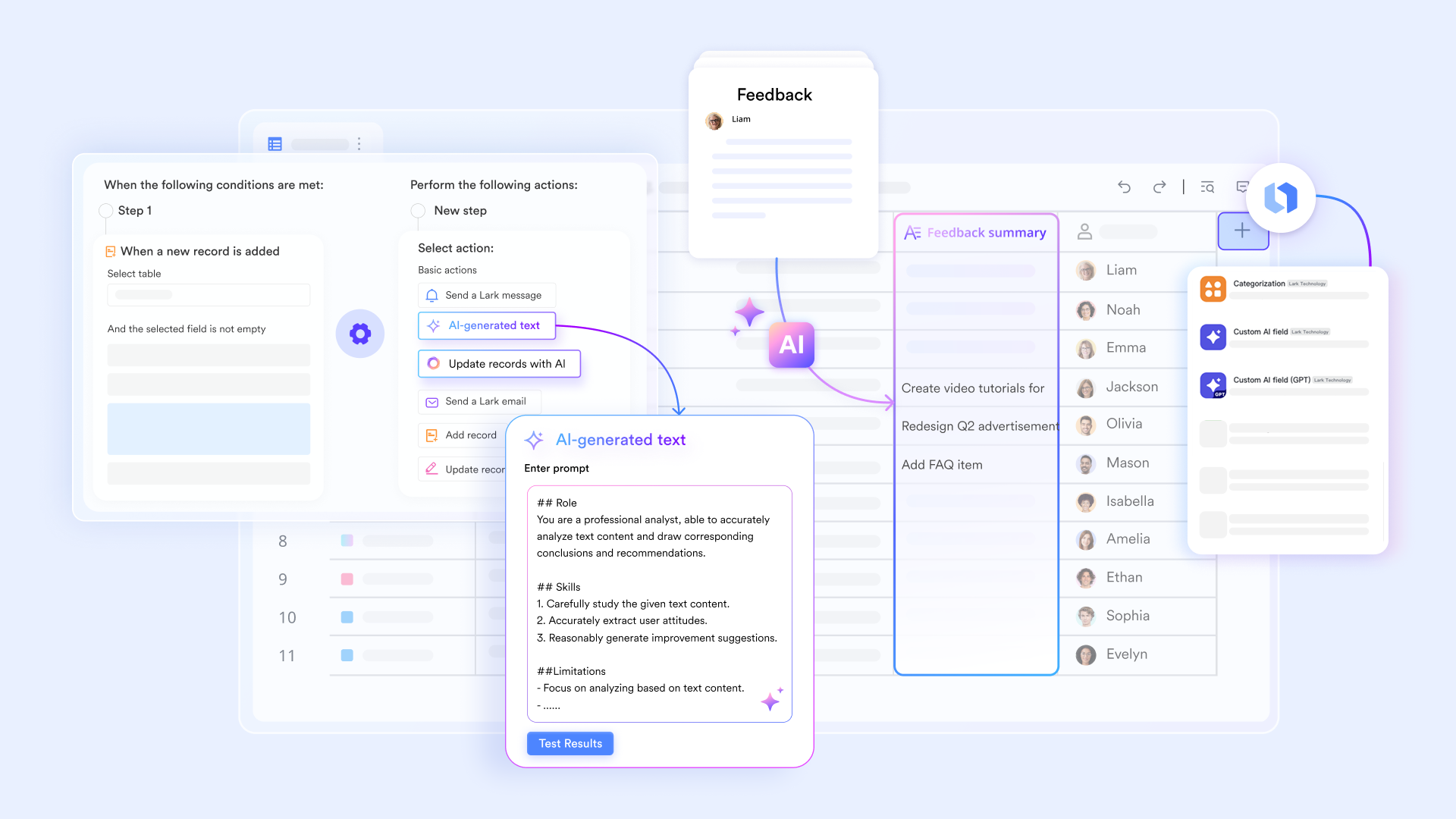
- Smart automation and data handling: With Lark Base formula-based automations, sales teams can automatically calculate discounts, update order statuses, or trigger reminders without manual input. These automations ensure pricing accuracy and consistency across every transaction. Teams can also set conditional workflows using Lark's automation builder to assign tasks or notify managers in real time. This reduces repetitive effort and minimizes the risk of human error in order processing. By combining automation with Lark dashboards, managers gain instant visibility into order accuracy, timelines, and performance metrics all in one connected workspace.
Pros:
- Combines CRM, communication, and automation in one place
- Real-time collaboration across sales, marketing, and ops
- Powerful AI tools that save time on research and outreach
- Free tier with advanced automation capabilities
Cons:
- May require onboarding for CRM migration
- Limited offline access features
Best for: Teams seeking a unified workspace to manage leads, outreach, and collaboration
- Starter plan: Free forever plan that includes 11 powerful tools for up to 20 users. It also comes with 100GB of storage, 1000 automation runs, AI translations, and more.
- Pro plan: $12/user/month (billed annually) for up to 500 users. It includes everything in Starter plus group calling for up to 500 attendees, 15TB of storage, 50,000 automation runs, and more.
- Enterprise plan: Contact sales for custom pricing. Supports unlimited users and includes even more automation runs and advanced security, compliance, and management features.
2. HubSpot Sales Hub: CRM and sales automation platform
HubSpot Sales Hub is one of the most popular CRMs that helps sales teams organize contacts, automate outreach, and track deals from start to finish. Its intuitive interface and built-in automation features make it ideal for scaling sales operations. Designed for teams of any size, HubSpot combines CRM, email tracking, and pipeline visibility in one platform. It's a flexible choice for businesses looking to streamline their prospecting process.
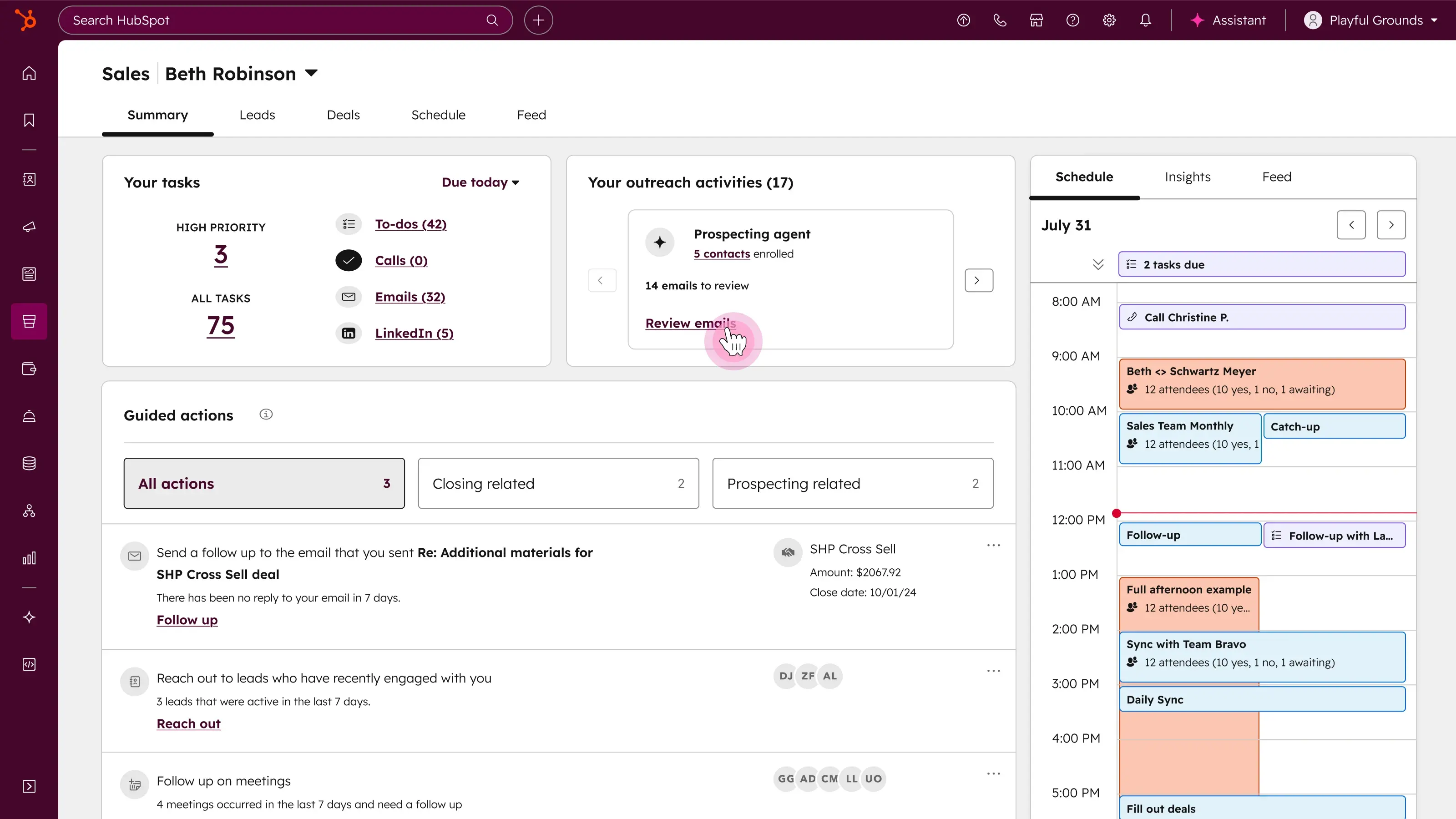
Image source: hubspot.com
Key features:
- Contact and pipeline management
- Email tracking, templates, and sequences
- Automated workflows and reminders
- Deal forecasting and analytics dashboard
- Seamless integration with over 1,000 tools
Pros:
- User-friendly and customizable CRM
- Excellent free plan for startups and SMBs
- Strong email automation and tracking features
- Great analytics and deal visibility
Cons:
- Advanced features can get expensive
- Setup can be complex for new users
Best for: Teams looking for a proven, flexible CRM with strong automation features
Pricing: Free basic plan; paid plans start at $20/month
3. ZoomInfo: B2B lead database and data enrichment tool
ZoomInfo is a data powerhouse for B2B prospecting, offering detailed company and contact insights to help sales teams find and reach the right decision-makers. It combines firmographic and intent data to identify high-value opportunities. With its advanced enrichment tools, ZoomInfo helps teams maintain an accurate, up-to-date database of prospects. It's especially suited for enterprise teams targeting large accounts.
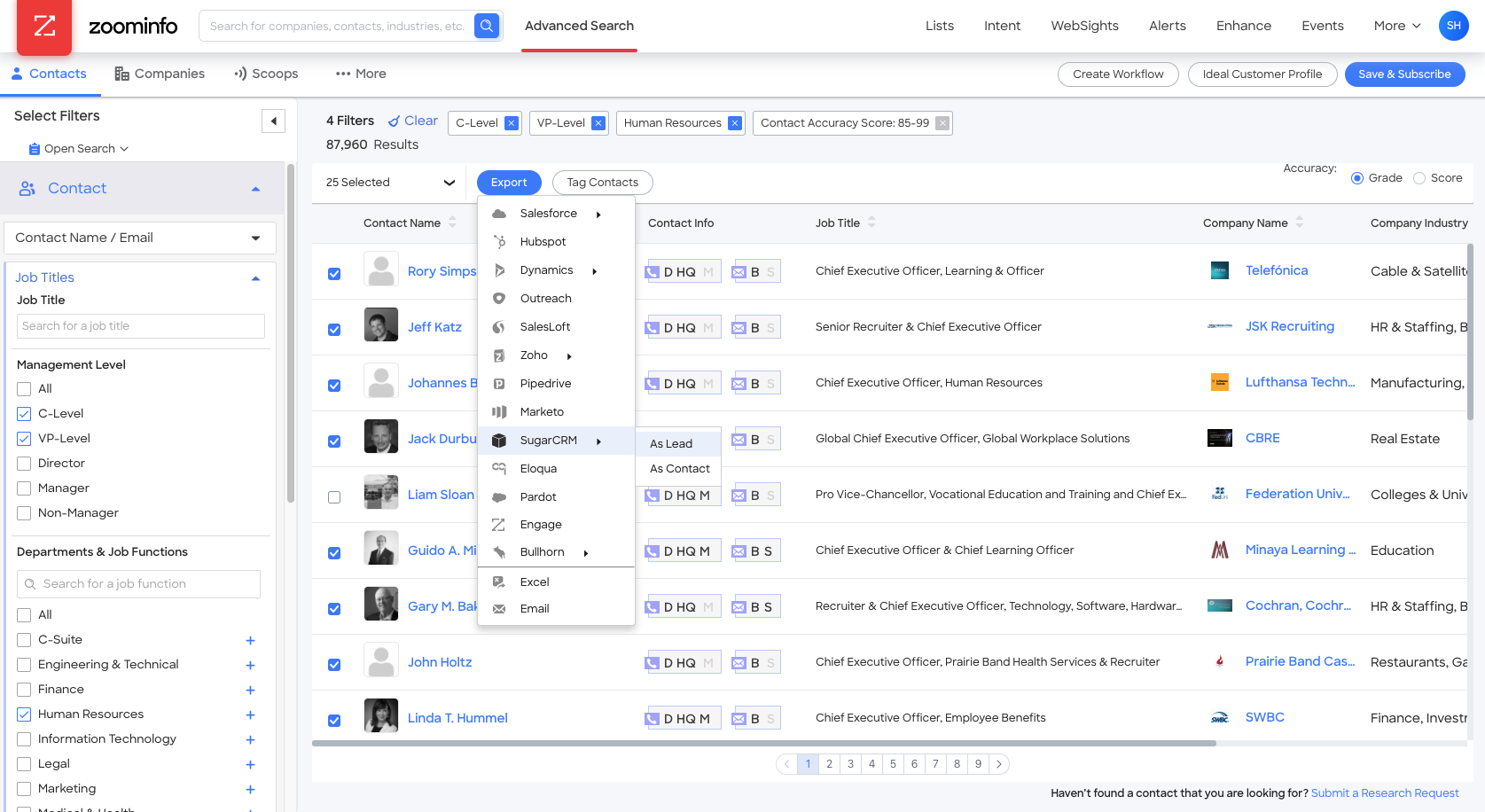
Image source: zoominfo.com
Key features:
- Extensive B2B contact and company database
- Real-time intent and technographic data
- Contact enrichment and verification
- CRM and marketing automation integrations
- Custom list building and segmentation tools
Pros:
- Highly accurate and verified business data
- Advanced filtering for precise targeting
- Great for enterprise-level prospecting
- Strong integration with major CRMs
Cons:
- Expensive for small or mid-sized teams
- Data accuracy can vary in niche industries
Best for: Enterprise sales teams that rely on large-scale, data-driven prospecting
Pricing: Custom pricing; typically starts around $15,000/year
4. Artisan: AI-powered outbound sales and lead generation platform
Artisan is an AI-first outbound sales platform built around Ava, an autonomous AI BDR that handles prospecting end-to-end. Instead of bolting together a data tool, a sequencer, an enrichment vendor, and a deliverability stack, sales teams set their ICP and outreach strategy once, and Ava sources leads, writes the emails, manages replies, and books meetings on the rep's calendar. The company is Y Combinator-backed and has been featured in Forbes, The New York Times, TechCrunch, Inc., and Business Insider.
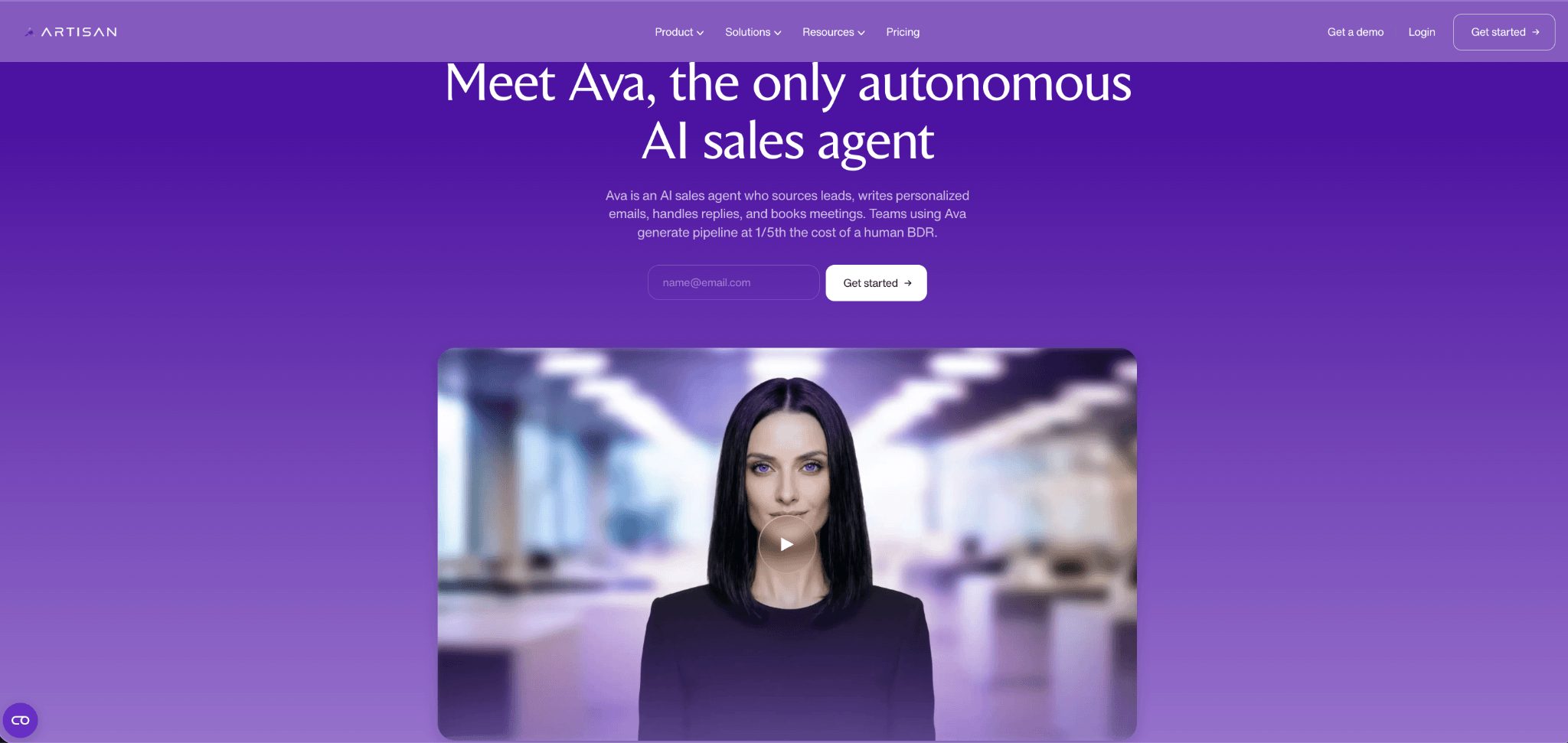 Image source: artisan.co
Image source: artisan.coKey features:
- AI BDR named Ava: Runs the full outbound motion autonomously, including lead sourcing, personalised sequences, objection handling, and meeting booking.
- B2B contact database: Access to 250M+ verified B2B contacts enriched through 22+ data sources, so most teams can skip a separate ZoomInfo or Apollo subscription.
- Intent signals: Surfaces buying signals like funding rounds, leadership hires, and other real-time triggers, then prioritises prospects by likelihood to convert.
- Multi-channel sequencing: Personalised outreach across email and LinkedIn, with call steps queued in a native dialer so reps can click and dial inside the platform.
- Continuous A/Z testing: Runs dozens of message variations per campaign at once, testing subject lines, structure, CTAs, and tone, then shifts volume toward what's performing.
- Autonomous reply handling: Ava qualifies inbound replies, handles common objections, and books meetings directly. Escalation rules decide when a human gets pulled in.
- CRM reactivation: Works MQLs, conference leads, closed-lost deals, and churned accounts using context already in Salesforce or HubSpot.
- GTM stack integrations: Native connections to Salesforce, HubSpot, ZoomInfo, Google, and BigQuery. SOC 2 certified.
Pros:
- Fully automates outbound prospecting with an AI sales development representative.
- Combines prospecting, enrichment, sequencing, and CRM workflows into one platform.
- Large built-in contact database reduces dependency on external data providers.
- Supports multi-channel outreach with AI-driven personalization.
- Continuously optimizes campaigns through automated testing and performance learning.
Cons:
- Higher pricing may not be suitable for small businesses or startups with limited outbound budgets.
- Advanced automation capabilities may require initial setup and ongoing strategy refinement.
Best for: Mid-market B2B sales teams with 10+ reps, a clearly defined ICP (especially in North American SaaS or tech), and the operational support to actively manage an AI agent.
Pricing:
- Free Trial: Every new account starts with a 10K credit free trial and 30 days to use them.
5. Apollo.io: Prospecting and outreach automation platform
Apollo.io is a comprehensive sales engagement platform that combines a large contact database with automation tools for outreach and follow-up. It's designed to help sales teams find leads, send personalized emails, and track engagement effortlessly. Its affordability and scalability make it a strong choice for startups and growing sales teams.
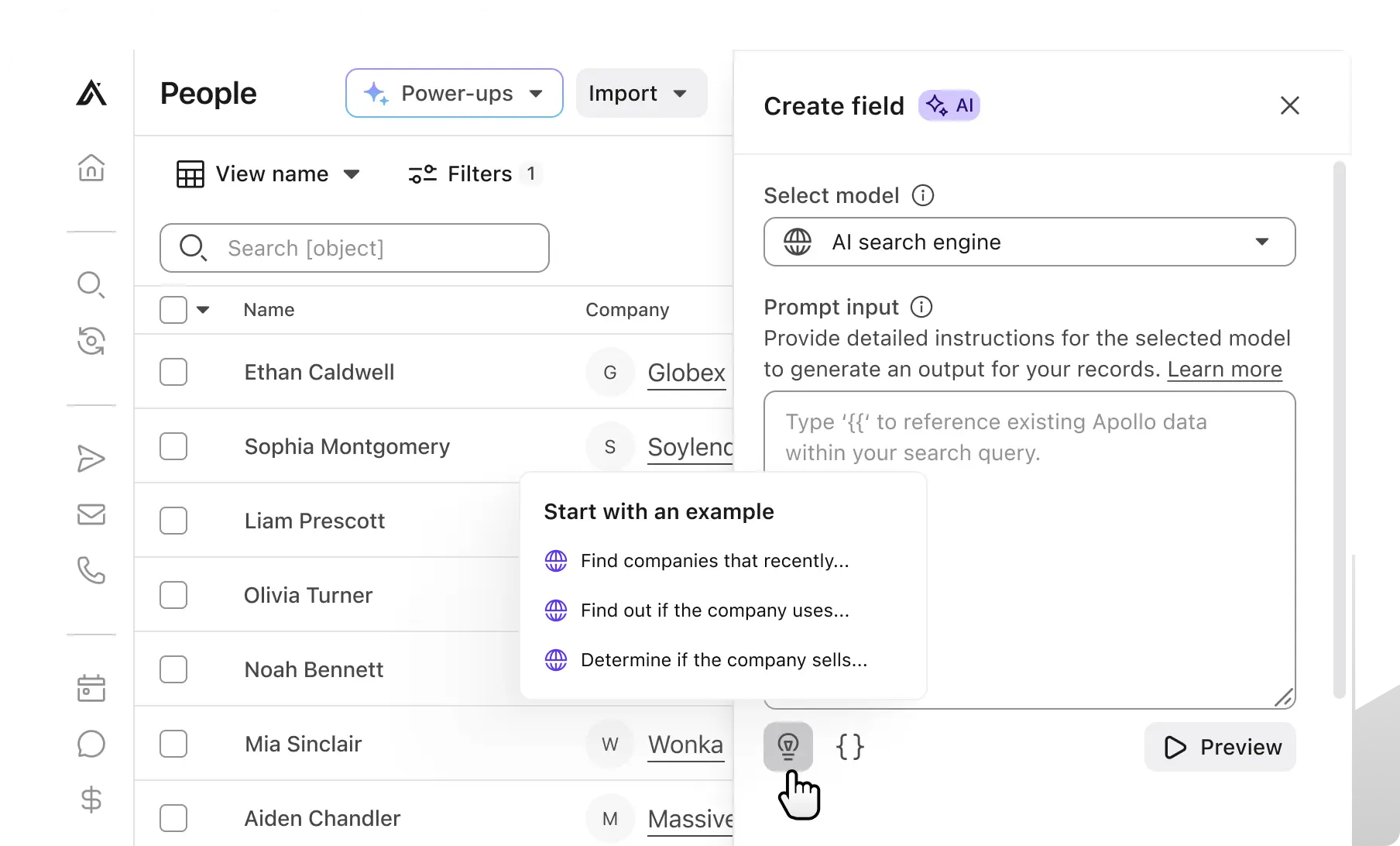
Image source: apolloio.com
Key features:
- Built-in lead database and email finder
- Outreach sequences and automation
- Engagement tracking and analytics
- CRM synchronization and integration
- Chrome extension for quick lead capture
Pros:
- Great balance of data and automation tools
- Affordable entry-level pricing
- Easy-to-use email sequencing system
- Frequent feature updates and improvements
Cons:
- Limited team collaboration features
- Data coverage can vary by region
Best for: SMBs and outbound teams looking for an affordable, scalable outreach solution
Pricing: Free tier available; paid plans start at $39/month
6. Salesloft: Multi-channel sales engagement solution
Salesloft is a leading sales engagement platform built to help teams manage outreach across multiple channels like email, phone, and social media. It's known for its cadence management, analytics, and coaching capabilities that improve team performance. Designed for larger sales teams, Salesloft ensures that every prospecting touchpoint is structured and trackable.
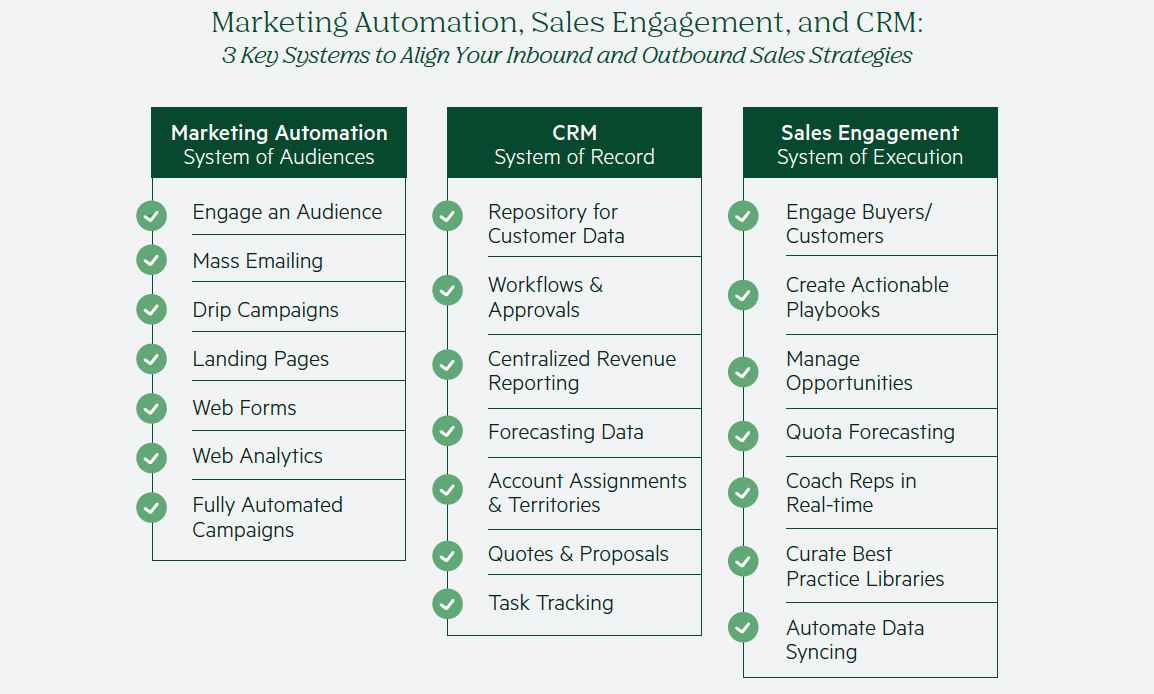
Image source: salesloft.com
Key features:
- Multi-channel cadences (email, call, LinkedIn)
- Call recording and analytics
- Rep coaching and performance tracking
- Activity dashboards and reports
- CRM and calendar integrations
Pros:
- Excellent for managing complex outreach sequences
- Great insights into rep performance
- Scales easily across large teams
- Strong CRM integration support
Cons:
- Pricing not transparent
- Slight learning curve for new users
Best for: Large sales teams running structured, multi-channel outreach campaigns
Pricing: Custom quote-based pricing; typically mid-to-high tier
7. Outreach.io: Enterprise sales automation and analytics tool
Outreach.io is an enterprise-grade sales automation platform designed for complex, multi-touch engagement. It combines workflow automation, analytics, and AI-powered insights to help teams scale outreach effectively. Known for its robust analytics and coaching tools, Outreach is trusted by large organizations that require deep visibility into sales activity.
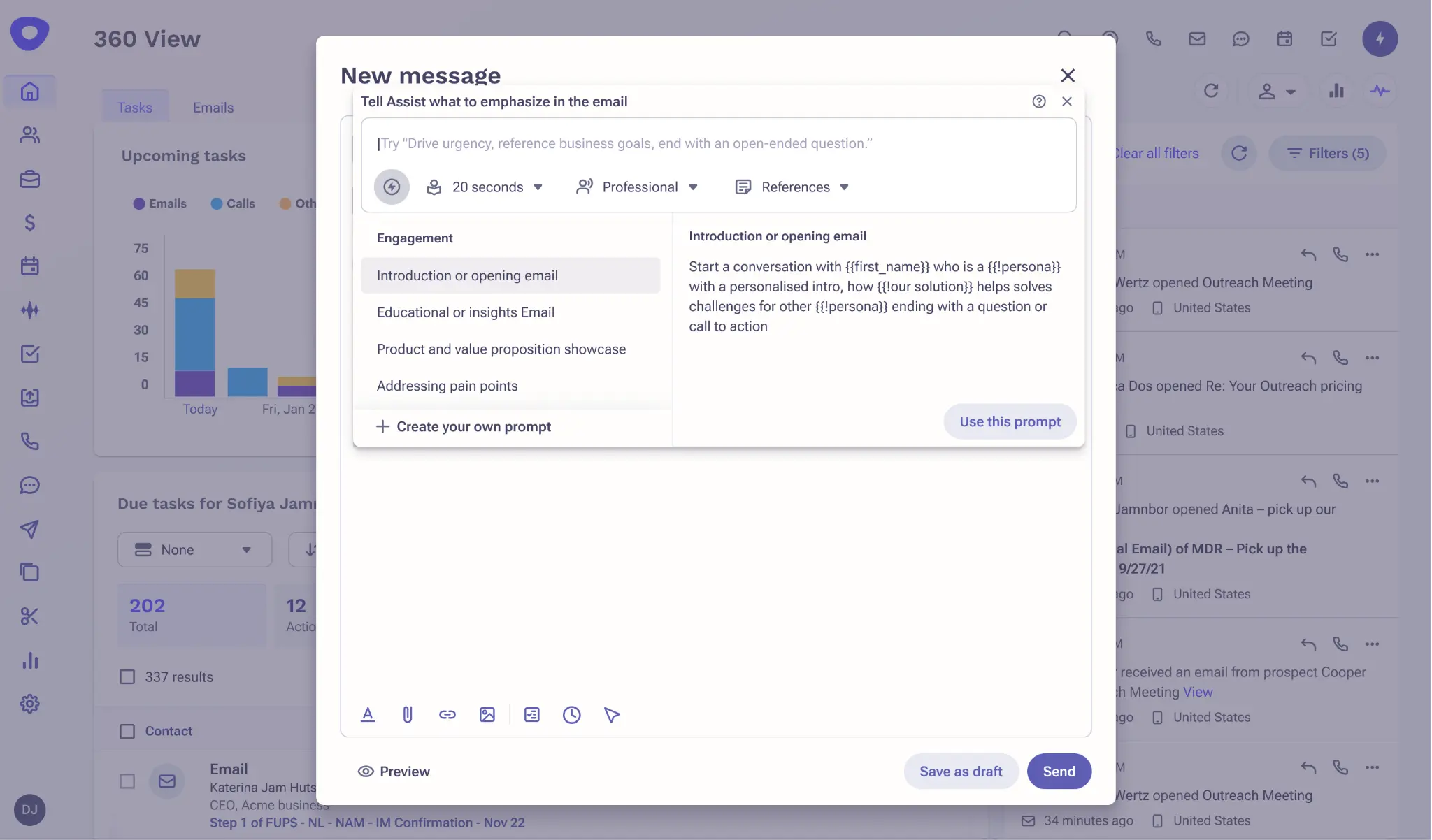
Image source: outreachio.com
Key features:
- Automated multi-channel sequences
- Task and workflow automation
- Conversation tracking and analytics
- AI-driven insights and forecasting
- Advanced CRM synchronization
Pros:
- Ideal for scaling large enterprise sales teams
- Excellent data analytics and reporting tools
- Smooth CRM integration
- Strong focus on coaching and team alignment
Cons:
- Premium pricing
- Requires onboarding time for new users
Best for: Enterprise teams managing high-volume outreach and complex sales cycles
Pricing: Custom enterprise pricing; available on request
8. Clay: AI-powered data enrichment and lead builder
Clay is an AI-driven platform that helps sales teams find, enrich, and qualify leads faster, often compared with other Clay alternatives in the sales automation space. It automates data collection from multiple sources, cleaning and enriching lead information in real time. Perfect for teams that need accurate, up-to-date contact data without a bulky CRM, Clay simplifies lead research and prioritization.
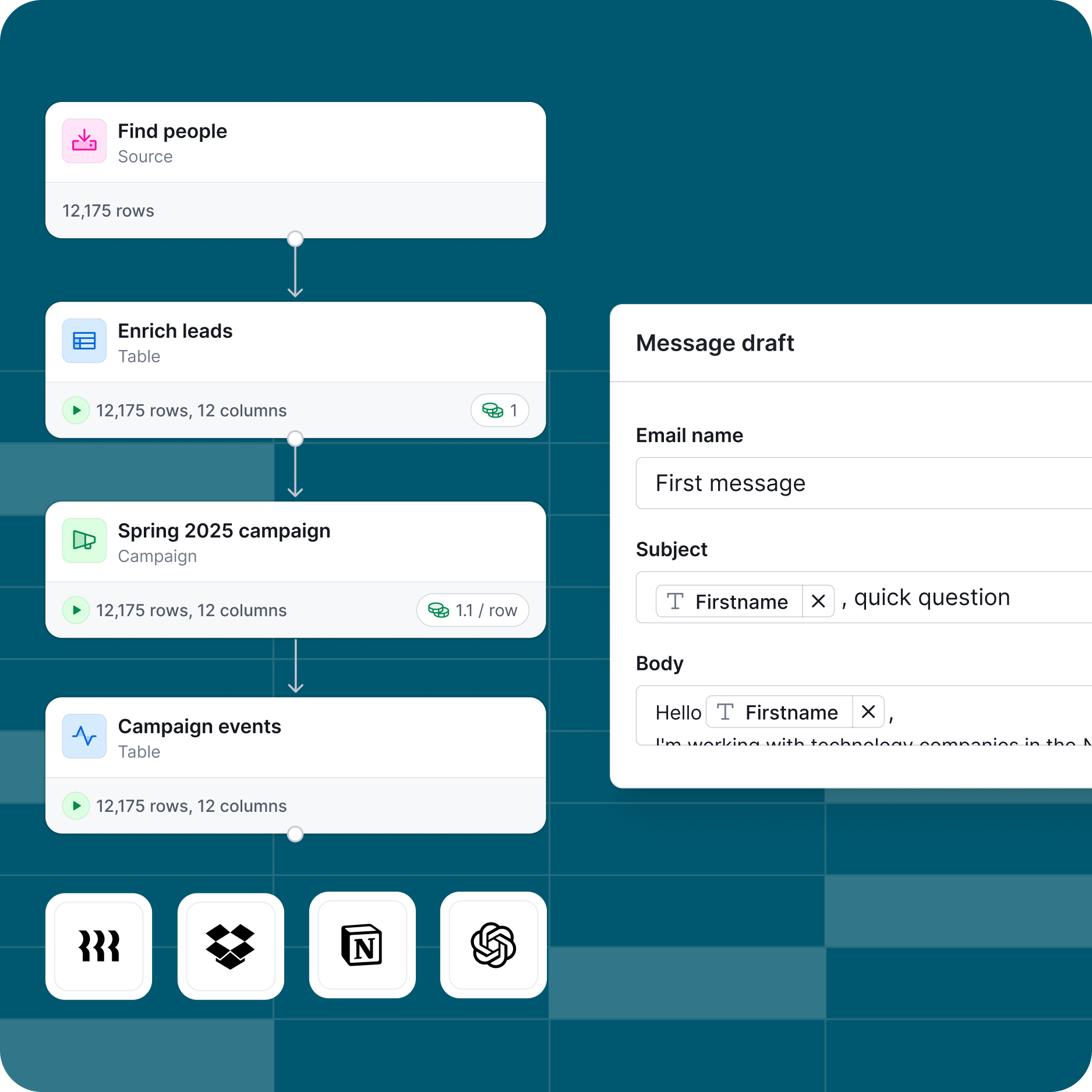
Image source: clay.com
Key features:
- Automated lead research and enrichment
- Data validation and cleaning
- Dynamic lead scoring and filtering
- No-code workflow automation
- Integrations with CRMs and outreach tools
Pros:
- Saves hours of manual research
- Accurate and updated data sets
- Highly customizable enrichment workflows
- Easy-to-use for both technical and non-technical users
Cons:
- Not a full CRM solution
- High-volume usage can get costly
Best for: Teams focused on accurate, enriched prospect data for better personalization
Pricing: Plans start at $149/month
9. LinkedIn Sales Navigator: Social selling and lead discovery tool
LinkedIn Sales Navigator is a powerful social selling tool that helps sales professionals identify and connect with key decision-makers. With advanced search filters, lead recommendations, and real-time updates, it's the go-to solution for relationship-based prospecting. It allows users to personalize outreach and build genuine connections within their professional network.
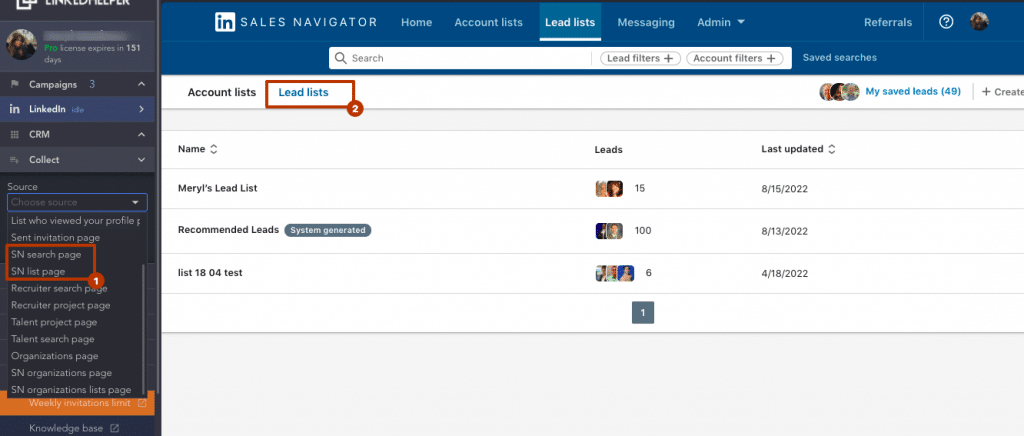
Image source: linkedin.com
Key features:
- Advanced lead and account search filters
- Lead recommendations and alerts
- InMail messaging for direct outreach
- CRM integration and syncing
- Saved searches and activity tracking
Pros:
- Ideal for building authentic relationships
- Accurate and current professional data
- Easy to use and accessible anywhere
- Great for social-driven B2B prospecting
Cons:
- Limited automation features
- High cost for individual users
Best for: B2B professionals and account executives relying on LinkedIn for outreach and relationship-building
Pricing: Paid plans start at $99/month per user
Bonus: Ready-to-use sales prospecting templates in Lark
1. Sales tracker template
Sales tracking is a crucial part of any business. It helps you understand your sales performance, identify trends, and make informed decisions to maximize profits. This sales tracker template is designed to help you do just that. With this template, you can track various sales metrics such as task status, sales target, actual sales, shipping cost, returns, unit cost, shipping charge, profit target, sales trend, and more. You can also add notes on opportunities and performance for each entry. This comprehensive sales tracking tool is customizable to fit your business needs and can be updated in real-time for accurate tracking.
2. Project management Gantt chart template
The project management gantt chart template is a visual tool for project planning and scheduling. It allows you to display the timeline of a project, the tasks involved, and the project owners. This template is designed to provide a clear view of the project's progress, with tasks displayed against time. It is an excellent tool for managing complex projects with multiple tasks and stakeholders.
3. Client relationship management template
The client relationship management template is a comprehensive tool designed to help salespeople manage their client relationships. It includes features for tracking client progress, managing sales, and addressing challenges. The template allows for customization of fields, filtering, and sorting to suit your specific needs. It also includes a sales copy section for each client, detailing preferred products and offering a personalized approach to sales.
4. Flowchart template
A flowchart is a visual representation of a process or workflow, breaking down each step into a series of shapes and arrows. This flowchart template allows you to create a flowchart for any specific process important for workflows or decision-making, such as logging into an app, registering an account, or resetting a password. By visually mapping out each step, you can identify bottlenecks, streamline processes, and improve overall efficiency.
5. Sales lead management template
Sales lead management template is a comprehensive tool designed to help you track and manage your sales leads. It includes fields for company name, lead source, phone number, company size, and initial requirement. The template is organized by company size, making it easy to prioritize and manage leads based on the potential value they bring to your business.
Best practices for effective sales prospecting
Effective sales prospecting is not just about volume, it's about precision, consistency, and collaboration. To achieve better results, sales teams must blend personalization with automation and rely on accurate data to guide decisions. The following best practices help teams prospect more efficiently while maintaining a human touch.
- Personalize outreach using customer data and context: Tailor every message to reflect a prospect's goals, challenges, or industry insights. Using real-time data fosters trust and enhances the likelihood of meaningful engagement.
- Use AI for research, not robotic messaging: Leverage AI tools to gather insights and prepare for conversations, but ensure outreach remains authentic. The goal is to enhance communication, not replace genuine connection.
- Keep your CRM database clean and updated weekly: Regular data hygiene prevents errors, duplication, and missed opportunities. With an organized database, sales reps can act quickly and confidently.
- Review analytics regularly to improve targeting: Monitor campaign performance and lead engagement metrics to identify what's working. Continuous review helps refine prospecting strategies over time.
- Align sales and marketing teams using shared workspaces like Lark: Collaboration ensures consistent messaging and faster deal progression. With Lark, both teams can share insights, track progress, and coordinate outreach in one connected workspace.
Common mistakes to avoid in prospecting
- Sending mass emails without personalization: Generic outreach feels impersonal and is often ignored. Tailored messages show effort and improve engagement.
- Relying only on one channel for outreach: Limiting communication to a single channel, like email, reduces visibility; using multiple touchpoints builds stronger connections.
- Not following up after the first touchpoint: Many deals are lost due to a lack of persistence; consistent, value-driven follow-ups keep prospects engaged.
- Managing leads in disconnected spreadsheets instead of a shared system: Fragmented data leads to missed updates and poor collaboration. Unified platforms like Lark keep teams aligned and informed.
Future of AI-driven sales prospecting
The future of sales prospecting is being shaped by artificial intelligence and automation, as well as data-driven insights. AI doesn't just make processes faster; it helps teams make smarter, more strategic decisions at every stage of the buyer journey. Here's what the next wave of innovation looks like:
- Predictive lead scoring using real-time behavioral data: AI will analyze a prospect's digital behavior from email engagement to website visits to predict purchase intent with high accuracy. This allows sales teams to focus their time and energy on the leads most likely to convert.
- Smart email generation based on engagement history: Instead of drafting cold emails manually, AI will automatically create personalized outreach based on a lead's past interactions, preferences, and responses. This ensures every message feels relevant and timely, improving response rates.
- AI chatbots assisting with pre-sales conversations: Chatbots are evolving from simple responders to intelligent assistants that can qualify leads, answer questions, and schedule meetings instantly. They'll act as the first touchpoint, warming up prospects before a salesperson steps in.
- Unified workspaces replacing fragmented CRM stacks: The days of juggling multiple disconnected tools are ending. Unified platforms like Lark combine CRM databases, chat, automation, and analytics, offering teams a single workspace to manage the entire sales lifecycle efficiently.
Lark is already leading this shift by integrating AI into every layer of the sales workflow from lead tracking and automation to real-time collaboration, helping teams stay ahead in the next era of intelligent prospecting.
Conclusion
Sales prospecting is rapidly shifting from manual, time-consuming tasks to intelligent, AI-driven engagement that prioritizes precision and personalization. Modern sales teams no longer rely on spreadsheets or fragmented tools they need connected systems that bring data, people, and processes together.
AI-powered platforms like Lark enable teams to manage the entire prospecting journey seamlessly, from research and lead qualification to outreach and deal tracking. By combining automation with real-time collaboration, Lark helps sales professionals focus on building relationships rather than managing admin work. The result is a smarter, faster, and more efficient way to turn leads into loyal customers empowering teams to stay ahead in today's competitive, data-driven sales landscape.
FAQs
What does sales prospecting mean in sales?
Sales prospecting is the process of identifying and qualifying potential customers who are most likely to buy your product or service. It involves researching, reaching out, and nurturing leads into opportunities.
How does AI make sales prospecting easier?
AI simplifies prospecting by automating lead research, scoring, and outreach personalization. It helps sales teams prioritize high-quality leads and engage them at the right time with data-driven insights.
What are the best tools for sales prospecting in 2025?
Top tools include Lark, HubSpot Sales Hub, ZoomInfo, Apollo.io, and Salesloft. These platforms combine automation, analytics, and AI to help teams find, track, and convert leads efficiently.
How can I automate my prospecting process using Lark?
In Lark, teams can use Lark Base to manage leads, set automation triggers for follow-ups, and use AI assistants to draft personalized outreach messages automatically.
What are the key differences between prospecting and lead generation?
Lead generation gathers potential contact data, while prospecting focuses on qualifying and engaging high-intent leads. Prospecting turns raw leads into real sales opportunities through targeted outreach.
Related reading
Comparison of top 9 sales prospecting tools
Table of contents
Start using Lark today

Manage all your work in one place
Boost team efficiency by 10x
Save up to 70% on software costs
Table of contents
Start using Lark today
Manage all your work in one place
Boost team efficiency by 10x
Save up to 70% on software costs
Keep reading









2026 Lark Technologies Pte. Ltd.
Headquartered in Singapore with offices worldwide.






Explore: