Managing stock is no longer just about knowing what is available on a shelf. As businesses grow, stock accuracy directly affects cash flow, customer satisfaction, and operational stability. Manual tracking methods and disconnected tools often fail to keep up with real-world movement, leading to shortages, overstocking, and delayed decisions. As a business grows, manual inventory management becomes unsustainable, necessitating more advanced stock control systems.
A stock control system provides a structured way to monitor stock levels, movement, and usage across locations. From retail stores to warehouses, businesses increasingly rely on digital stock management system tools to replace spreadsheets and manual checks. Over time, flexible platforms like Lark are gradually adopted to support modern stock workflows without rigid legacy constraints. Adopting a modern stock control system can provide a competitive edge by improving productivity and market position.
What is a stock control system in simple words
A stock control system is a method used by businesses to track the quantity, location, and movement of stock. It records when items are received, sold, returned, or adjusted, helping ensure that inventory data reflects reality. Whether implemented as a digital tool or a structured process, a stock control system provides visibility into available stock at any given time. Many businesses rely on a stock inventory system to replace manual checks and reduce human error.
In practical terms, a stock control system works as the backbone of day-to-day operations. It supports accurate record-keeping and helps teams understand how stock flows through the business. By selecting the , companies can move beyond basic counts to more advanced setups integrated with purchasing. Many stock control systems also integrate with accounting software to streamline invoicing and financial operations. Regardless of complexity, the goal is consistent and reliable stock data to drive .
What is the purpose of a stock control system
The primary purpose of a stock control system is to maintain the right balance between stock availability and operational efficiency. It helps businesses prevent stockouts that interrupt sales while also avoiding excess inventory that ties up capital. Excess stock can lead to increased holding costs, wasted resources, and reduced profitability, making it crucial to optimize stock levels. By monitoring stock levels continuously, businesses can make informed purchasing and replenishment decisions. Understanding what is the purpose of a stock control system is essential for improving overall inventory performance.
is particularly valuable because it reduces reliance on manual processes. Even a simple stock maintenance system can improve accuracy and consistency. For larger operations, an system enables faster updates and better forecasting. In every case, the purpose remains focused on control, visibility, and smarter decision-making. An effective stock control system is essential for managing inventory accurately, meeting customer demand, and maintaining warehouse efficiency. Businesses can further improve stock control by training staff and optimizing inventory management practices to prevent overstocking or understocking.
Want a smarter way to control and track your stock?
Differences between: Stock management system vs stock control system
A stock management system typically refers to the broader set of activities involved in planning, ordering, and managing inventory across the business. It may include supplier management, demand forecasting, and . In comparison, a stock control system focuses specifically on tracking quantities and movements of stock. Understanding the difference between a stock management system vs stock control system helps clarify tool selection.
While a stock inventory management system may include both planning and control features, not all stock control systems or forecasting. A stock inventory system is often used at the operational level to ensure counts are accurate. Some businesses use a periodic inventory system, which involves manually counting stock at set intervals, while others use a perpetual inventory system that relies on real-time tracking with specialized software. Businesses that understand this distinction can select systems that match their operational needs without unnecessary complexity.
4 types of stock control systems used today
Businesses use different types of stock control systems depending on their size, industry, and operational complexity. While the core goal remains accurate stock tracking, the tools and processes vary widely. From basic manual methods to advanced digital platforms, each approach offers distinct advantages and limitations. Understanding these types helps organizations choose a stock control system that aligns with their current needs and future growth.
- Manual and spreadsheet-based systems: A manual system involves recording inventory data by hand in stock books or using spreadsheets. Manual and spreadsheet-based systems are among the most common entry-level stock control approaches. They rely on tools like paper logs or spreadsheet files to record stock movements and balances. This type of stock inventory system is inexpensive and easy to set up, making it attractive for very small businesses. However, it is highly dependent on manual updates, which directly impact as transaction volumes grow. Errors and delays become more frequent, forcing staff to spend time on reconciliation rather than fulfillment, ultimately limiting scalability and preventing teams from operating at their full potential. Manual systems often struggle to meet the needs of growing businesses.
- Automated stock control systems: Automated stock control systems use software to update inventory levels automatically as transactions occur. These systems reduce manual data entry and improve accuracy by syncing stock changes in real time. Automated workflows streamline inventory control and location management, reducing the need for manual intervention and increasing operational efficiency. An automated stock control system is especially useful for businesses handling higher volumes or multiple sales channels. It supports faster replenishment decisions and better reporting. Over time, automation helps reduce operational workload and improve consistency.
- EPOS stock control systems: EPOS stock control systems integrate inventory tracking directly with point-of-sale transactions. Each sale automatically updates stock levels, ensuring accurate counts without extra effort. This type of epos stock control system is widely used in retail and hospitality environments. It provides immediate visibility into fast-moving items and sales trends. EPOS-based systems help businesses respond quickly to demand changes.
- Warehouse stock control systems: Warehouse stock control systems are designed for environments with large inventories and complex storage layouts. These systems are built to handle complex inventory and complex inventory needs, especially where large volumes and intricate stock requirements are present. They track stock across bins, zones, and locations within a warehouse, and can use radio frequency identification (RFID) technology to track entire batches of items, making them especially effective for managing complex inventory. A warehouse stock control system supports processes such as picking, packing, and cycle counting. Tracking raw materials for manufacturing and tracking inventory in real time are also key features. For industries like food and beverage, specialized helps manage expiration dates and strict replenishment cycles.
From all appearances, software solutions help warehouse managers control stock across multiple warehouses, improving operational efficiency and visibility.
Find the right stock control system for you
Different approaches to stock control
Stock control, or inventory control, is at the heart of . Businesses use a variety of stock control methods to ensure they have enough stock to meet customer demand without tying up unnecessary capital in excess inventory. The right approach depends on the nature of the business, the type of products, and the pace of sales, but all methods share the goal of maintaining optimal stock levels and supporting data-driven decision making.
Some of the most popular stock control methods include:
- Just-in-Time (JIT): This method aims to keep inventory levels as low as possible by ordering new stock only when it's needed. JIT helps reduce storage costs and minimizes waste, but requires a highly responsive supply chain and accurate to avoid stockouts.
- Just-in-Case (JIC): In contrast to JIT, the just-in-case approach involves keeping extra stock on hand as a safety net against unexpected spikes in demand or supply chain disruptions. While this method reduces the risk of running out of stock, it can increase holding costs and tie up cash.
- First-In, First-Out (FIFO): FIFO ensures that the oldest stock items are sold or used first, which is especially important for perishable goods or products with expiration dates. This method helps prevent losses due to spoilage or obsolescence.
- Economic Order Quantity (EOQ): EOQ is a data-driven method that calculates the ideal order quantity to minimize total inventory costs, balancing order frequency with holding costs. It's particularly useful for businesses with steady demand and predictable supply chains.
- Vendor-Managed Inventory (VMI): With VMI, suppliers take responsibility for managing stock levels at the customer's location. This requires strong collaboration and real-time data sharing via tools like Lark, which provides shared folders.
- Batch control: This method tracks inventory in batches, making it easier to manage products with specific production dates, lot numbers, or quality requirements. Batch control is essential for industries like food, pharmaceuticals, and manufacturing.
A good stock control system should support these different stock control methods, allowing businesses to track inventory levels in real time, , and generate accurate inventory data. By combining the right approach with a reliable inventory control system and continuous maintenance, businesses can achieve effective stock control, reduce costs, and consistently meet customer demand.
How businesses use stock control systems in practice
Stock control systems are not theoretical tools embedded in daily operations across industries. From tracking incoming goods to managing replenishment and audits, businesses rely on structured stock control workflows to maintain accuracy and efficiency. Understanding how these systems are used in real scenarios helps clarify their practical value beyond basic inventory counting.
- Day-to-day inventory tracking and replenishment: Businesses use a stock control system to monitor incoming and outgoing stock in real time. Each sale, return, or transfer updates inventory records, reducing reliance on manual checks. This ensures stock availability aligns with actual demand and supports timely replenishment decisions. Over time, accurate tracking improves operational predictability.
- Demand planning and purchasing coordination: A stock inventory management system helps businesses analyze historical usage patterns to forecast future needs. The rely on this data to plan orders more accurately and avoid last-minute procurement. Better coordination reduces emergency purchases and supplier delays. This use case directly supports cost control and supplier relationships.
- Multi-location stock visibility: Businesses operating across stores or warehouses use stock control systems to maintain a unified view of inventory. Centralized visibility allows teams to redistribute stock between locations based on demand. This prevents overstocking in one location while another runs short. A warehouse stock control system is especially valuable in distributed operations.
- Audit readiness and : Stock control systems maintain consistent records that support audits and compliance requirements. Businesses can track adjustments, write-offs, and discrepancies with clear timestamps. This transparency reduces risk during financial reviews. Reliable audit trails strengthen internal controls.
Here is the updated blog post with a new section on practical use cases, illustrating how different industries apply these systems to solve real-world challenges.
Real-world use cases for stock control systems
To see the true value of a stock control system, it helps to look at how different sectors apply these functions to their unique operational hurdles.
Retail: Omni-channel syncing
A modern boutique selling both in-store and online uses an EPOS-integrated stock control system. When a customer buys a jacket at the physical register, the system instantly updates the online store's inventory. This prevents a "double-sell" where an online customer orders an item that just walked out the front door, maintaining customer trust and reducing manual reconciliation.
Food & beverage: Expiry and FEFO management
For businesses dealing with perishables, like a café or grocery wholesaler, stock control is about more than quantity—it's about timing. These businesses use FEFO (First Expired, First Out) tracking. The system alerts staff to use batches nearing their expiration date first. This significantly reduces food waste and ensures that customers always receive the freshest possible product.
Manufacturing: Just-in-Time (JIT) production
A small electronics manufacturer uses an to manage raw components. Instead of keeping thousands of expensive microchips on a shelf (tying up cash), the system tracks the production schedule. As stock reaches a "Minimum Threshold," it triggers an automatic reorder so parts arrive just as the assembly line needs them, optimizing both warehouse space and cash flow.
Healthcare: Critical supplies tracking
In a clinical setting, a stock maintenance system tracks high-value medical supplies and surgical kits. By using Barcode scanning, nurses can instantly log used items to a specific patient or department. This ensures that life-saving equipment is never out of stock and provides an airtight audit trail for insurance and regulatory compliance. Why traditional stock control tools struggle with change
As businesses evolve, stock control requirements become more complex and dynamic. Traditional tools that once worked well often fail to adapt to increased volume, multiple locations, or faster . Understanding why these tools struggle with change highlights the need for more flexible and responsive stock control systems in modern operations.
- Limited scalability as operations grow: Traditional stock control tools were designed for stable, low-volume environments. As businesses expand product lines or locations, these tools become difficult to manage. Performance and accuracy decline under increased complexity. Scalability is a major limitation.
- Poor support for real-time data updates: Legacy systems and spreadsheets often rely on delayed updates. This creates gaps between physical stock and system records. In fast-moving environments, delayed data leads to incorrect decisions. Real-time visibility is essential for modern stock control.
- Inflexibility in adapting workflows: Traditional tools are difficult to customize as processes change. Adding new sales channels or fulfillment models requires workarounds. This rigidity slows response to market changes. Flexible systems are better suited for evolving operations.
- Disconnected data and communication silos: Older stock control tools often operate in isolation from other business systems. This creates communication gaps between teams. Without shared visibility, issues escalate slowly. reduce these silos and improve coordination.
Need a stock system that adapts to your business?
New option: How Lark supports modern stock control workflows
Modern stock control workflows require more than . Businesses need real-time visibility, consistent processes, and fast coordination across teams and locations. As inventory moves faster and operations become more distributed, disconnected systems create blind spots and delays. This is where fits naturally, bringing data, documentation, communication, and automation into a single environment that supports flexible and scalable stock control.
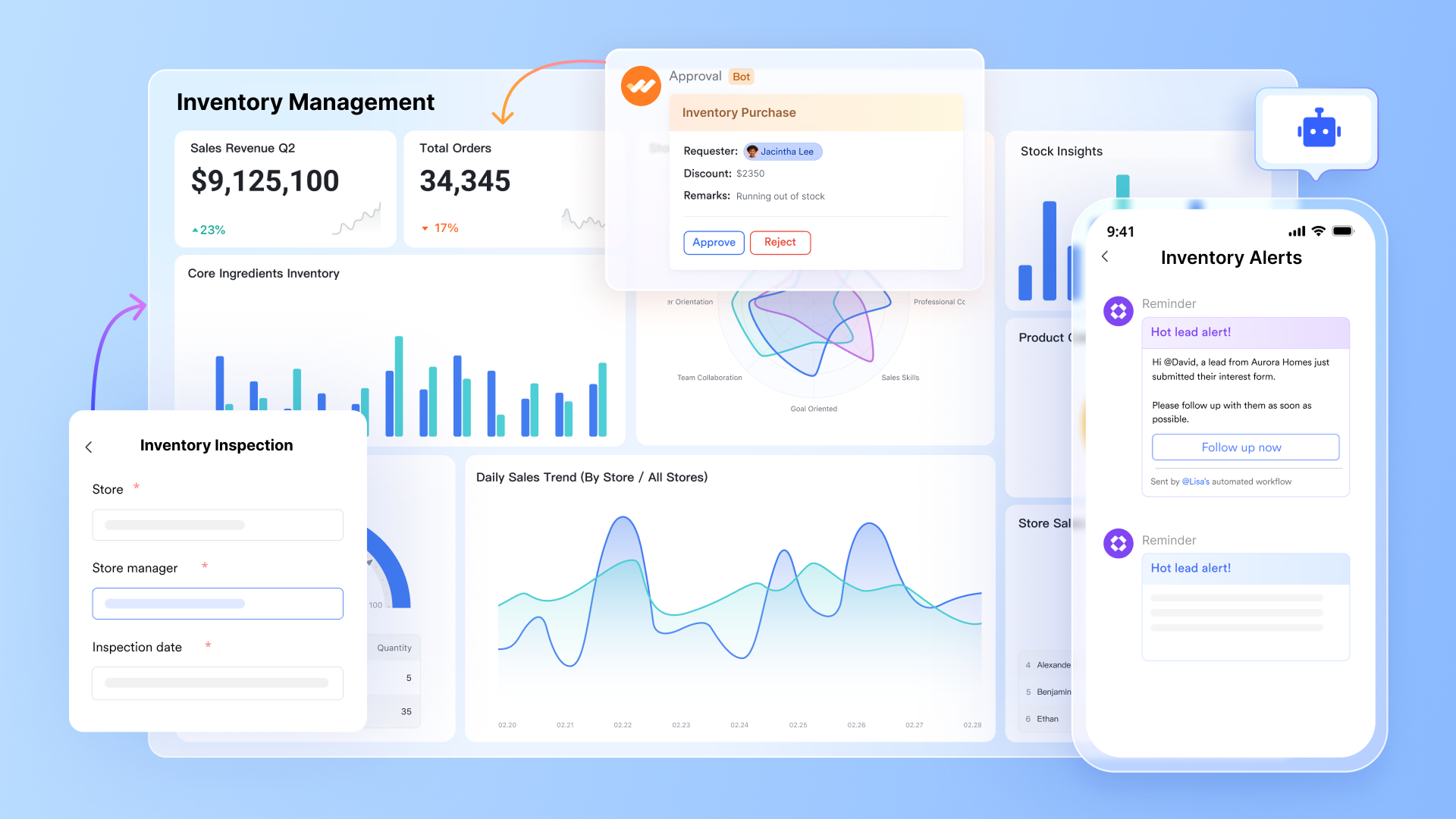
Structured stock control console
streamlines stock control with its structured fields and multiple views. Using Link and Lookup fields to connect product catalogs with real-time inbound and outbound logs, it supports stock levels update automatically across the system. Formula fields further enhance accuracy by calculating remaining inventory and triggering automated alerts when items fall below safety thresholds. To maintain operational clarity, Kanban views allow managers to track the status of restock orders, while Gallery views provide a visual reference for SKU identification. 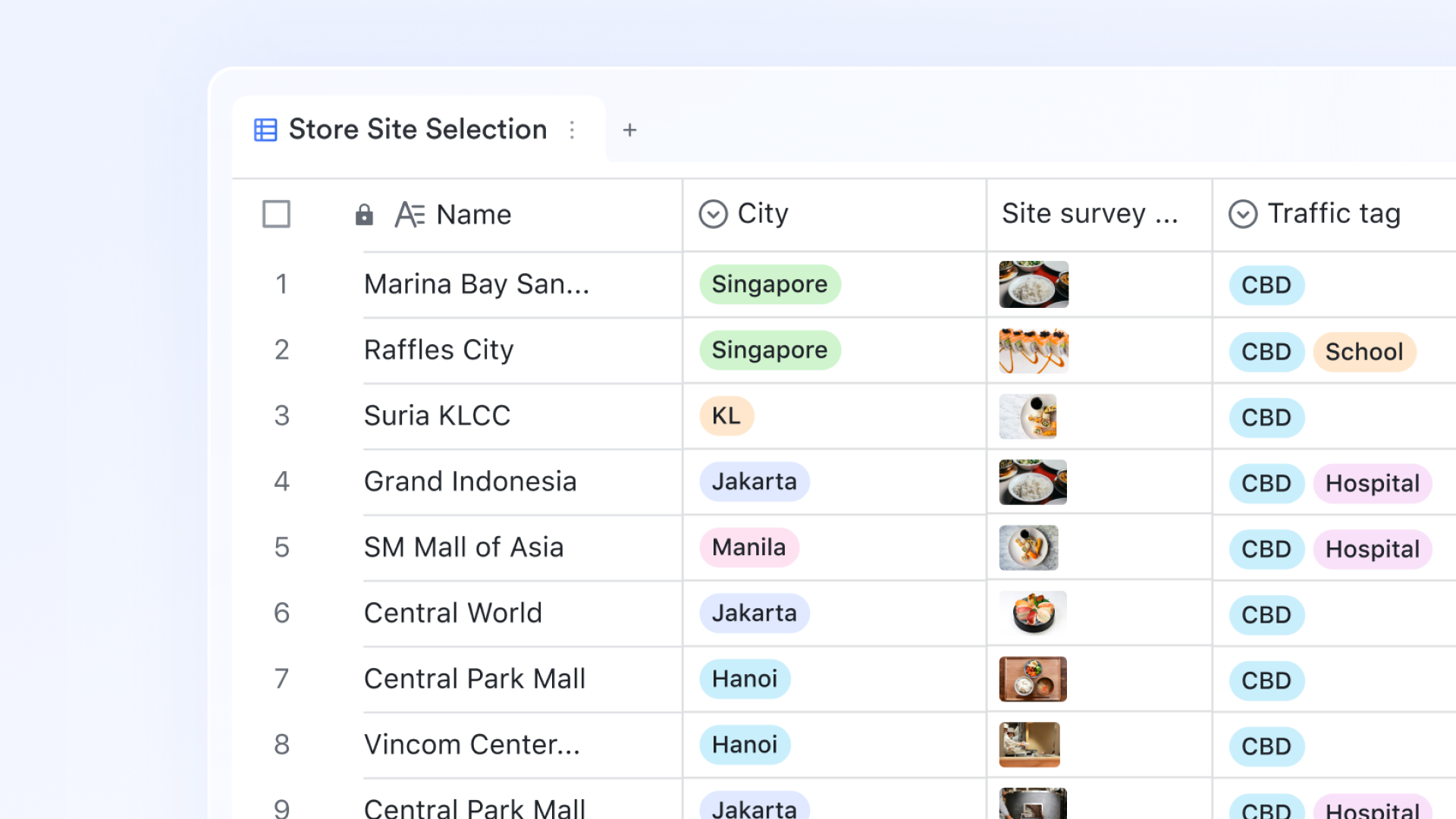
A real-time dashboard with AI analysis
Lark Base dashboards empower warehouse managers by visualizing real-time metrics through 36 block types, including metrics, ranking, and progress charts. By embedding functional view blocks and button blocks, the dashboard acts as a central control center to oversee fulfillment processes and trigger automations instantly. Additionally, smart analysis uses AI power to simplify complex data into actionable insights for stakeholders. With advanced permissions, you ensure that every team member sees only the relevant data, maintaining operational security at scale. 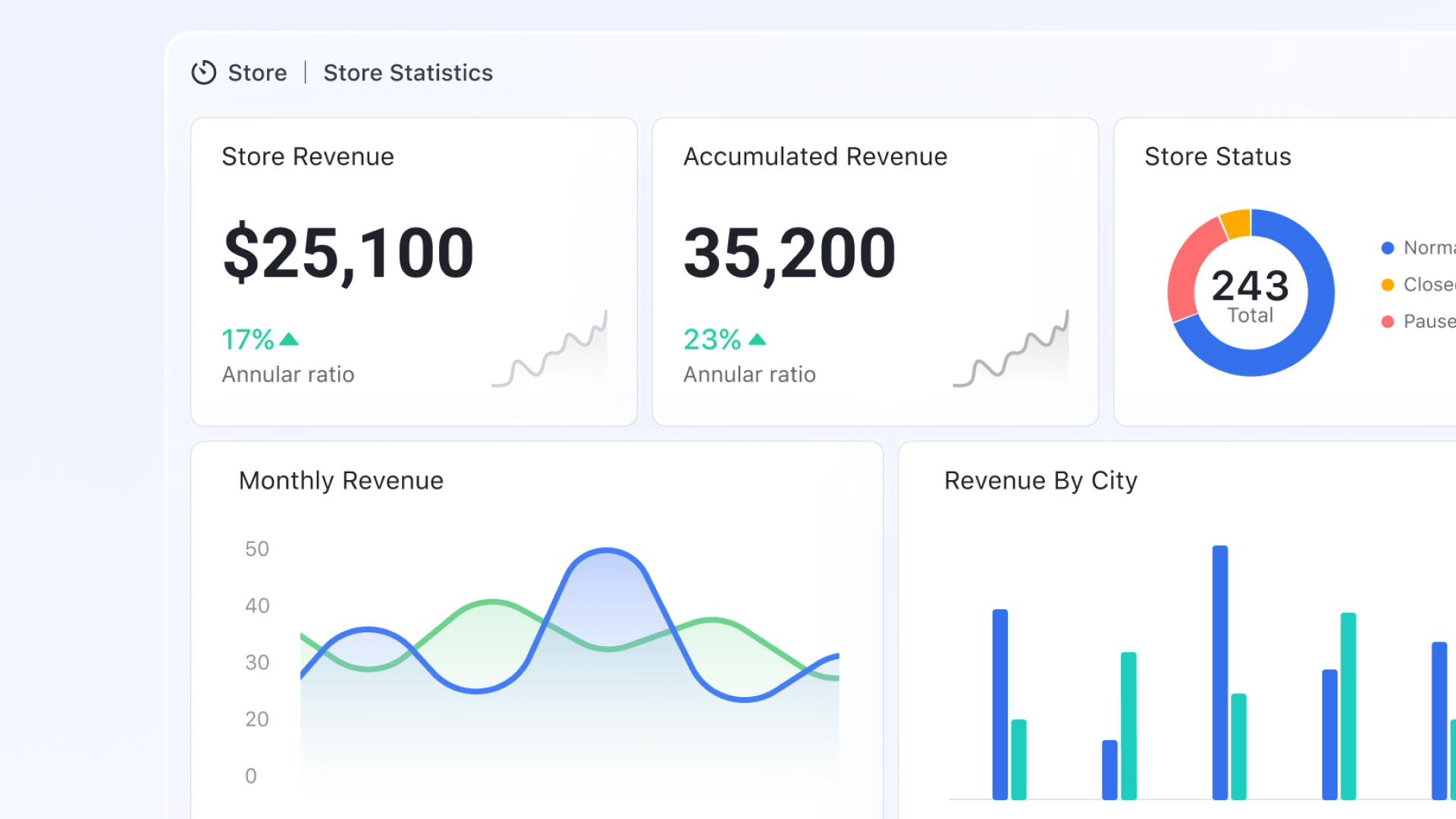
Automated workflows for replenishment alerts
To prevent stockouts, you can configure workflow automations using "IF/Else" nodes to monitor inventory thresholds constantly. When the formula-calculated stock level falls below a pre-defined safety margin, the system automatically triggers a high-priority notification to the procurement team. These alerts can be sent via , complete with a button that links directly to the purchase order form. This proactive loop ensures restocking occurs before an item is depleted, protecting your cash flow and maintaining high customer satisfaction. 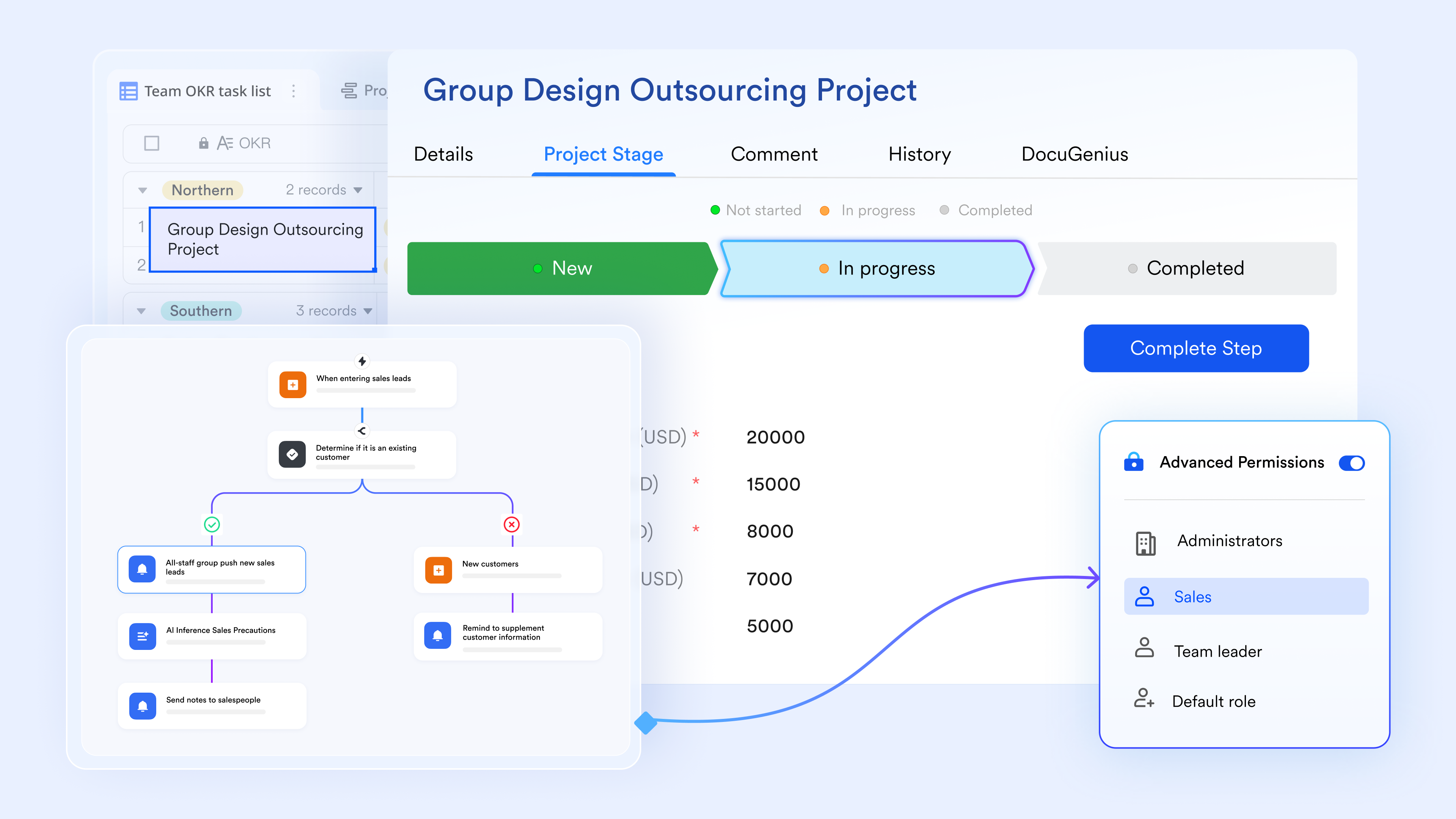
Streamlined approval and requests process
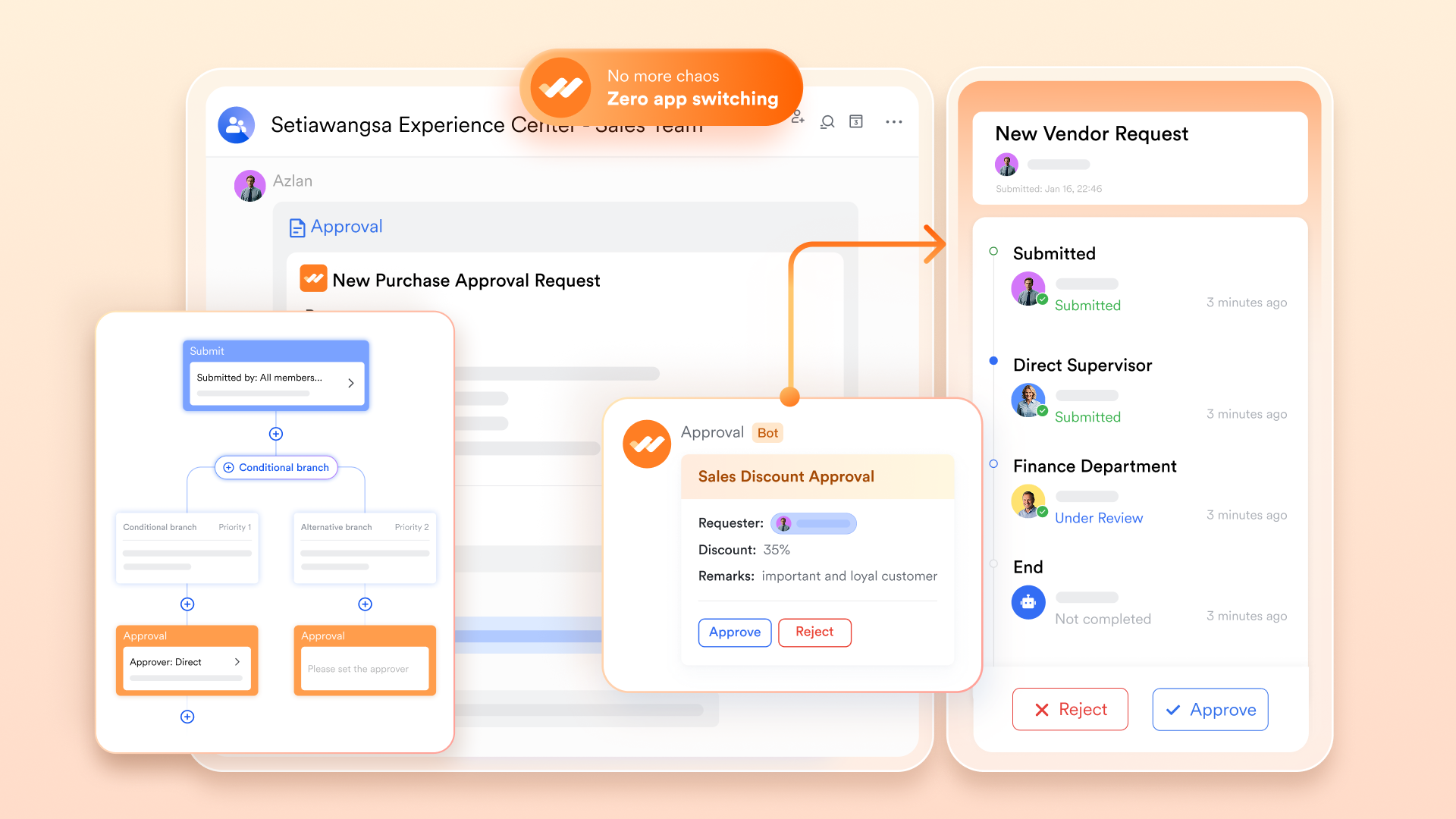
Lark Base connects warehouse stock control to , streamlining high-stakes requests like inventory releases. By syncing finalized approval data directly into the Base, the system ensures real-time record updates while eliminating the risks of manual entry. With pre-built templates, managers can quickly fill in conditional branches in the approval process—for example, a request for a high-value asset might automatically route to a senior director. With clear, trackable audit logs, it enhances accountability and operational security for your entire inventory lifecycle.
:
- Starter plan: Free forever plan that includes 11 powerful tools for up to 20 users. It also comes with 100GB of storage, 1000 automation runs, AI translations, and more.
- Pro plan: $12/user/month (billed annually) for up to 500 users. It includes everything in Starter plus group calling for up to 500 attendees, 15TB of storage, 50,000 automation runs, and more.
- Enterprise plan: for custom pricing. Supports unlimited users and includes even more automation runs and advanced security, compliance, and management features.
For small teams with simple communication needs

18 months message history
1000 Base automation runs/month
2000 rows per table in Base
Most POPULAR
For companies with comprehensive collaboration and management needs
Unlimited message history
500-participant video meetings
50k Base automation runs/month
20k rows per table in Base
For large companies with advanced security and organizational management needs
Get a personalized demo and pricing
Unlimited message history
500-participant video meetings
15 TB storage + 30 GB storage/user
500k Base automation runs/month
50k Base automation runs/month
Most POPULAR
For companies with comprehensive collaboration and management needs
Unlimited message history
500-participant video meetings
50k Base automation runs/month
20k rows per table in Base
Common mistakes businesses make with stock control
Despite having stock control systems in place, many businesses still struggle with inventory accuracy and efficiency. These challenges often stem from process gaps, poor adoption, or reliance on outdated methods. Identifying common mistakes helps organizations avoid preventable issues that lead to stock discrepancies, operational delays, and financial losses.
- Over-reliance on manual updates and spreadsheets: Many businesses continue using manual or stock control long after operations outgrow them. This leads to delayed updates, data inconsistencies, and human error. Manual systems struggle to scale with transaction volume. Eventually, inaccuracies impact sales and customer satisfaction.
- Lack of process discipline and ownership: A stock control system is only effective when consistently used. Businesses often fail to define who is responsible for updates and reviews. Inconsistent usage results in unreliable data. Clear ownership and process discipline are essential for accuracy.
- Ignoring system insights and reports: Some businesses collect inventory data but fail to act on it. Reports highlighting slow-moving or fast-selling items are overlooked. Without using insights, the stock management system becomes reactive instead of strategic. are critical for long-term improvement.
- Delaying upgrades until problems escalate: Businesses often postpone upgrading their stock control system until errors become costly. This reactive approach increases operational . Early investment in scalable tools prevents disruptions. Proactive planning supports smoother growth.
Choosing the right stock control system for your business
Selecting the right stock control system is a strategic decision that affects daily operations, financial health, and long-term scalability. With many tools available, businesses must evaluate their needs carefully rather than choosing based on features alone. Understanding operational requirements, inventory behavior, and future growth plans helps ensure the selected system supports accurate tracking and efficient workflows as the business evolves.
- Business size and operational complexity: The scale of your operations plays a major role in selecting a stock control system. may only need basic tracking, while larger organizations require multi-location visibility and automation. Choosing a system that matches current complexity prevents overinvestment or underperformance. Scalability should be considered early to support future growth.
- Type of inventory and movement frequency: Different products move at different speeds and require different controls. Fast-moving consumer goods benefit from real-time updates, while slower items may not need constant tracking. Understanding inventory behavior helps determine whether a simple stock maintenance system or an automated stock control system is more appropriate. Movement frequency directly impacts system requirements.
- Integration with existing tools and processes: A stock control system should work smoothly with sales, purchasing, and accounting processes. Systems that operate in isolation create silos and manual reconciliation work. Integration reduces duplication and improves accuracy. Compatibility with current workflows is essential for adoption.
- Ease of use and team adoption: Even the most advanced stock control system fails if teams do not use it consistently. Interfaces should be intuitive and require minimal training. Clear workflows encourage accurate data entry and regular usage. Adoption is just as important as features.
- Reporting and visibility needs: Decision-making depends on clear and timely insights. A strong stock control system provides reports on stock levels, movement trends, and potential risks. Visibility helps businesses respond faster and plan better. Reporting capabilities should match management needs.
- Flexibility to adapt to change: Business needs evolve due to growth, new sales channels, or changing demand. A rigid system can become a constraint rather than a support. Flexible stock control systems adapt to process changes without heavy reconfiguration. This flexibility protects long-term investment.
Enhance your stock control with Lark today
Conclusion
A stock control system has become an essential operational foundation rather than a supporting back-office tool. As inventory volumes increase and customer expectations rise, businesses must maintain accurate stock data to avoid shortages, excess holding costs, and fulfillment delays. Structured stock control systems provide visibility into inventory movement, enhance consistency across teams, and support more informed purchasing and . When implemented correctly, they help businesses maintain a balance between demand, supply, and cash flow.
As operations grow more dynamic, static tools struggle to reflect real-world inventory activity. Businesses are increasingly seeking flexible systems that integrate data, workflows, and communication in a single platform. Over time, platforms like support this shift by enabling adaptable stock control workflows that evolve with changing operational needs, without forcing teams into rigid processes.
FAQs
What are the 4 types of inventory management systems?
The four common types include manual inventory systems, periodic inventory systems, perpetual inventory systems, and automated inventory systems. Each differs in how frequently stock data is updated and how much manual effort is required. Businesses often transition from simpler systems to more automated ones as volume increases. Tools like Lark help support this transition by enabling structured, continuously updated inventory records.
What is the best method for stock control?
The best method depends on inventory volume, movement speed, and operational complexity. Manual methods may work for small setups, while automated stock control systems are better for growing businesses. Real-time tracking generally offers the highest accuracy. Over time, flexible platforms such as Lark help businesses apply the right level of control without overcomplicating workflows.
How do businesses handle damaged or expired stock digitally?
Businesses typically log damaged or expired stock as adjustments within their stock control system. This includes tagging items, recording reasons, and updating available quantities. improve audit trails and accountability. Platforms like Lark make it easier to centralize these updates and share visibility across teams.
What roles should have access to stock control data?
Access should be based on responsibility rather than hierarchy. Operations staff need updated access, while finance and management often require reporting visibility. Limiting permissions helps maintain. Systems like Lark allow businesses to control access while keeping information transparent.
How does stock control impact cash flow management?
Effective stock control reduces excess inventory and prevents capital from being tied up unnecessarily. Accurate data supports better purchasing decisions and demand planning. This improves liquidity and reduces . Over time, solutions like Lark help connect stock data with broader operational insights, supporting healthier cash flow management.
Related reading