


Guide to AI Powered Advertising: How to Run Campaigns without Tool Sprawl

Fecilia Clarke
Solutions Marketing Specialist
Aug 5, 2026
Fecilia Clarke
Aug 5, 2026

21 min read


Running digital campaigns has become a constant struggle against fragmented systems. While AI powered advertising promised to make campaign execution easier, many teams find themselves buried under dozens of disconnected single-purpose platforms. Instead of optimizing bids, managers spend their days copy-pasting assets between generators, chat rooms, and ad managers. It does not have to be this way. In this guide, we evaluate the best tools on the market and explain how to coordinate your entire campaign pipeline in one unified, collaborative environment.
At a glance: Best tools for campaign coordination and optimization
Before exploring the details, here is a quick overview of the top tools we analyzed and where they deliver the most value for your campaign operations:
1. Warmly: Best for signal-based B2B buyer intent ad targeting.
2. Albert: Best for autonomous cross-channel campaign optimization.
3. AdCreative: Best for rapid generation of conversion-focused banners and graphics.
4. StackAdapt: Best for programmatic, contextual-first display campaigns.
5. Pencil: Best for predictive performance video and image creation.
6. Madgicx: Best for Facebook and Instagram ad automation.
7. Jacquard: Best for brand-compliant enterprise marketing copy.
8. Birch: Best for automated multichannel ad rules.
Beyond Tool Sprawl:
While specialized tools handle media buying or asset generation, Lark provides the ultimate campaign orchestration platform—seamlessly unifying real-time team collaboration, creative asset management, and strategy alignment with native AI.

What is AI-powered advertising?
At its core, AI-powered advertising represents a shift from static, manual setup to adaptive, automated campaign execution. Instead of requiring a media buyer to manually adjust keyword lists, write dozens of individual headlines, and select target demographics once a week, modern systems use machine learning and natural language processing to adjust campaign parameters in real time.
These algorithms analyze millions of data points—including user behavior, contextual topics, search intent, and historical engagement—and instantly modify bids and ad layouts to match. Rather than relying on third-party identity tracking, which faces ongoing regulations, modern systems increasingly look at what a user is actively engaging with in the moment.
To see this in action, let us look at a simple scenario:
Imagine an outerwear retailer launching a campaign. Instead of spending weeks manually guessing which websites to place banners on, the brand uses contextual analysis tools to evaluate page-level themes, language, and sentiment across thousands of active travel blogs. The moment a cold weather front is discussed on a popular blog, the system dynamically generates a winter coat ad relevant to that specific location, coordinates the bid, and serves the banner—all in milliseconds.
Because these operations run continuously, your team's role shifts from execution to strategic direction. Managing keywords and creative assets is just like managing any other product launch. Utilizing structured project management tools helps keep campaign phases aligned, ensuring that human strategy guides the automated machinery.
What are the benefits of AI-powered advertising?
Deploying artificial intelligence in your ad strategy offers clear operational advantages that improve both return on ad spend and team efficiency. Rather than acting as a simple replacement for human effort, machine learning serves as an operational assistant that processes data at a speed and scale that is impossible for teams to handle manually.
More precise contextual targeting
With the steady decline of cookie tracking and the rise of strict data privacy regulations, advertisers cannot rely solely on third-party demographic data. AI solves this by evaluating page-level themes, language, and sentiment in real time. This allows brands to place ads based on what users are actively reading at that exact moment, rather than who they are.
Better decision-making through predictive modeling
Media budgets are under constant pressure. Predictive analytics evaluates millions of historical and real-time signals to forecast campaign performance—such as optimal bid values, conversion likelihood, and potential engagement—before a single dollar is spent. This shifts bidding from a reactive process to a predictive one, helping teams allocate media spend where it will drive the best results.
High-speed creative variation
Generating creative variations across ad copy, images, and videos is traditionally a massive bottleneck. Generative AI allows teams to produce hundreds of visual and text variants in minutes. When paired with dynamic creative optimization (DCO) technology, platforms can assemble these elements automatically based on audience response, achieving significantly higher click-through rates and lowering click costs.
Automated bidding and budget protection
Modern native advertising networks (such as Google Performance Max and Meta Advantage+) process over 70 million signals per auction to adjust bids in milliseconds. This level of automation protects media budgets by instantly shifting funds away from underperforming campaigns. At the same time, machine learning algorithms continuously scan traffic patterns to block bot activity, fraudulent clicks, and invalid conversions.
However, these benefits introduce a new challenge. While native networks have automated bidding, marketing managers now face an overwhelming volume of AI-generated assets that must be structured, reviewed, and approved to maintain brand compliance. When your creative assets and feedback are scattered across disconnected chat rooms and folders, campaign launch times stall.
To protect your campaigns from these delays, you must coordinate your campaign operations. Standardizing on automated workflows allows you to link your creative database directly to your project trackers. By storing all campaign assets and metadata in a centralized system like Lark Base, you can instantly see which creative variations are live, pending review, or scheduled for a refresh.
How we evaluated the best AI-powered digital advertising tools
With thousands of ad tech solutions on the market, finding the right AI-powered advertising platforms requires a clear evaluation framework. When we tested and reviewed the top systems for this guide, we focused on three core operational areas rather than just looking at flashy features:
1. Channel alignment: The tool must support the exact channels your audience uses, whether that is Google Search, Meta social feeds, B2B LinkedIn targeting, or programmatic native networks.
2. Control and governance: The system should not be a "black box." It must provide full transparency into why bidding or targeting decisions are made, allowing marketing managers to adjust parameters easily.
3. Collaborative integration: The platform must fit into your broader campaign workflow. If a tool generates 50 variations but forces your team to manually download, rename, and upload them across different systems, it creates more operational overhead than it saves.
Our evaluation focused heavily on execution efficiency. This is why we prioritize tools that fit cleanly with your team's resource management software and collaborative cloud docs, allowing you to run fast campaigns without losing control of your brand standards.
Top 8 AI-powered digital advertising tools to optimize your media mix
Evaluating different platforms requires looking beyond high-level feature sets. While native networks have automated bidding, managing your media mix is all about having a unified cockpit where your team can collaborate, plan creative variations, and protect your brand standard. Here is our review of the nine best AI marketing tools on the market today.
Campaign optimization tools: comparative analysis
Managing your digital ad campaigns requires selecting platforms that match your specific operational needs. To help you evaluate your options, we compared the nine AI-powered advertising platforms across core operational dimensions:
1. Warmly: For B2B buyer intent ad targeting
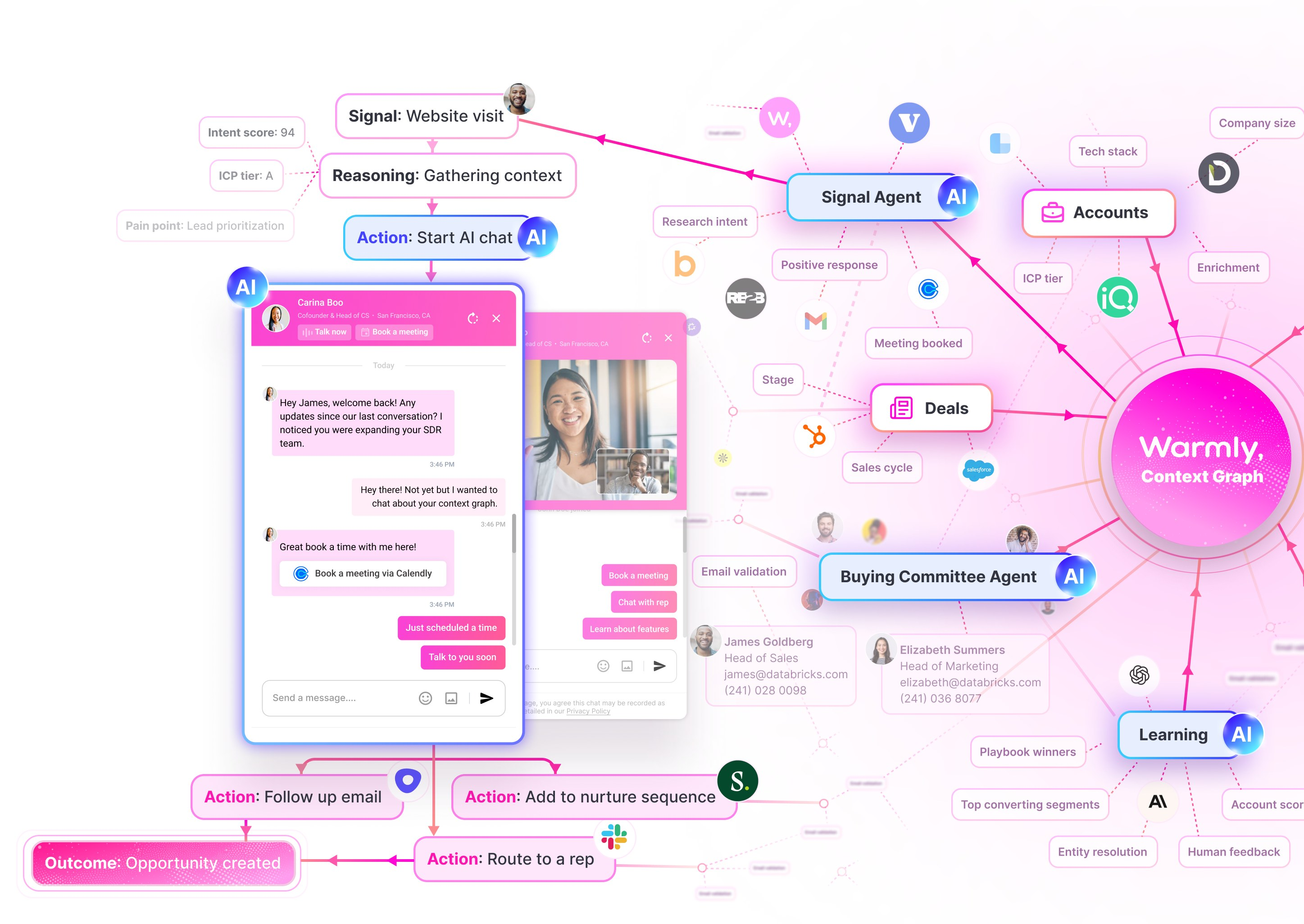
Image source: warmly.ai
If you run B2B campaigns, you know how hard it is to reach accounts that are actively in-market. Warmly targets prospective buyers using signal-based intent signals. It de-anonymizes website visitors, tracks their offsite research behaviors, and syncs those segments directly to your active ad audiences.
- It de-anonymizes anonymous B2B website traffic to identify the companies exploring your product pages.
- It tracks offsite research intent using third-party databases like Bombora.
- It automatically syncs high-intent accounts with LinkedIn Campaign Manager ad sets.
- It customizes on-site landing page experiences with tailored offers based on visitor traffic source.
- It coordinates automated outbound follow-ups via integrated email and LinkedIn engagement agents.
Why replace traditional static B2B lists with Warmly:
Traditional B2B targeting relies on static, outdated company lists that often miss buyers who are actively researching your category. Warmly shifts your strategy to real-time intent signals. By identifying when accounts are actively visiting your website or researching competitors and instantly pushing them into your active ad campaigns, you reach prospective buyers at the exact moment they are looking to solve a problem, maximizing media efficiency.
Pros
- Real-Time De-anonymization: Accurately identifies B2B accounts and specific decision-makers visiting your website in real time.
- Direct Ad Syncing: Instantly pushes identified high-intent account lists into LinkedIn and Meta custom audiences to automate warm retargeting.
- Combined Identification & Engagement: Integrates visitor de-anonymization with automated chat and outbound email playbooks in a single platform.
Cons
- Premium Pricing: The high entry cost makes it less suitable for early-stage startups or businesses with low monthly website traffic.
- Rep Dependency: To maximize the value of live chat de-anonymization, sales representatives must be available in real time to engage visitors.
Pricing
- AI Web-Deanonymization: Starting at $10,000 / year (annual)
- Inbound Chat: Starting at $20,000 / year (annual)
- AI Inbound Autopilot: Starting at $30,000 / year (annual)
- AI TAM Agent: Starting at $15,000 / year (annual)
2. Albert: For autonomous cross-channel campaign optimization
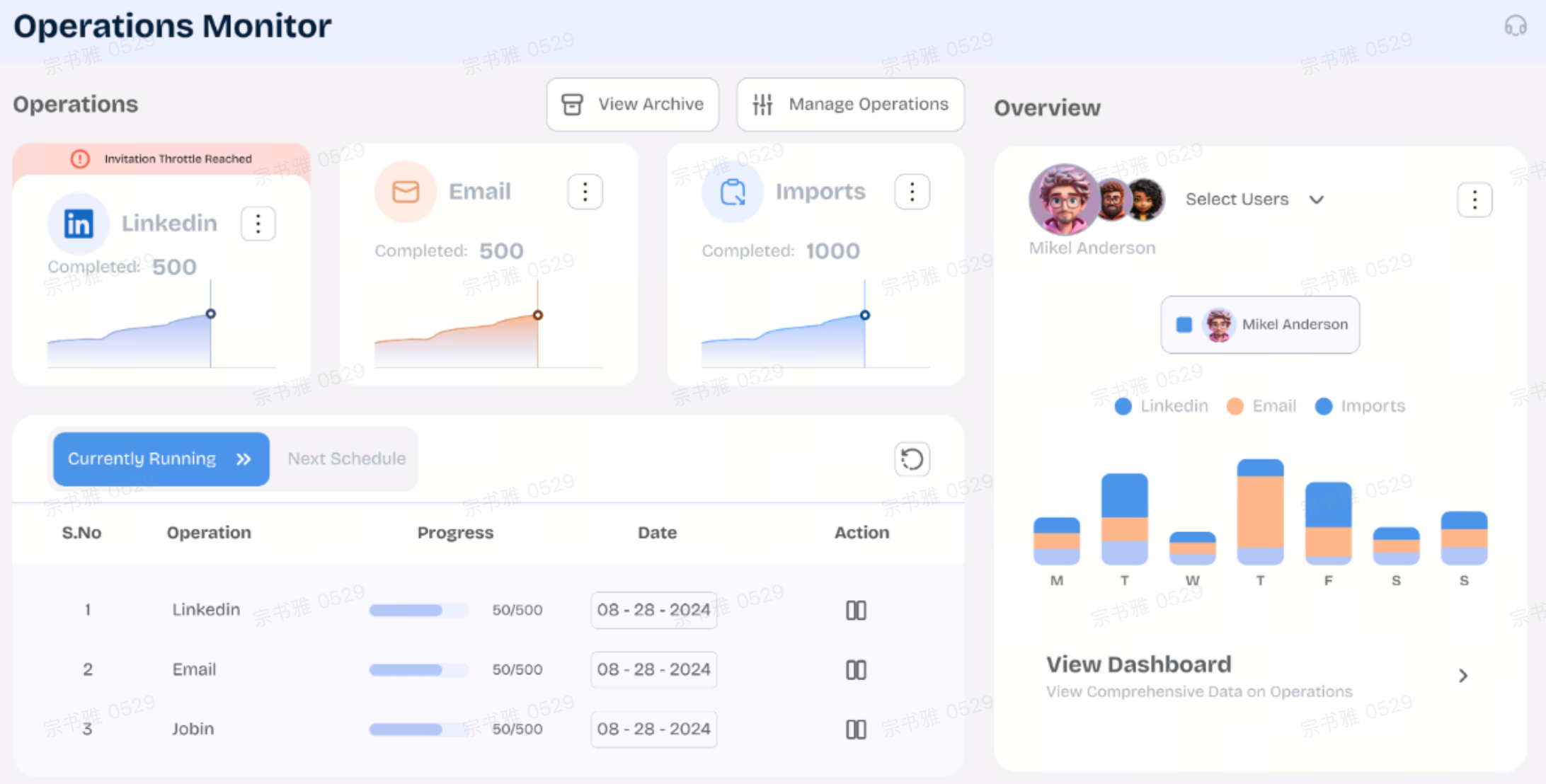
Image source: softwareadvice.com
Albert is designed for mid-to-large enterprise brands that need to manage digital ad budgets across multiple networks without manual adjustments. The platform acts as an autonomous pilot, continuously shifting budgets, adjusting bids, and personalizing ad delivery across search and social channels.
- It manages campaign bidding autonomously across search, social, and programmatic display platforms.
- It adjusts keyword bids and media pacing in real time to maximize overall ROI.
- It runs continuous multivariate tests to identify high-converting ad variations.
- It personalizes and segments campaign assets for micro-audiences at scale.
- It provides real-time cross-channel performance analytics and spending recommendations.
Why replace manual media buying with Albert:
Manual media buying forces your team to spend hours adjusting keyword bids, shifting budgets between channels, and tracking media pacing across search and social ad managers. Albert handles these repetitive tasks autonomously. By executing thousands of micro-bidding adjustments every hour based on live conversion data, the platform ensures your budget is spent in the most efficient channels without requiring manual intervention, allowing your marketers to focus on creative storytelling.
Pros
- Fully Autonomous Media Buying: Continuously scales bids, pauses poor-performing ad sets, and shifts budgets across channels 24/7 without manual intervention.
- Massive Data Processing: Analyzes millions of post-click and post-view conversion signals faster and more granularly than human buyers can.
- True Cross-Channel Coordination: Coordinates campaign budgets cohesively across Google, Meta, Bing, and programmatic display networks under a single goal.
Cons
- Reduced Manual Control: Can be frustrating for hands-on media buyers who prefer manual adjustments; acts as a "black box" optimization engine.
- Complex Implementation: Requires a substantial historical conversion data footprint and a high media spend to successfully train the machine learning models.
Pricing
- Enterprise Custom Subscription: Pricing is customized based on your digital marketing spend, channels managed, and business goals. Custom quotes require contacting the sales team directly.
3. AdCreative: For high-volume banner and graphic generation
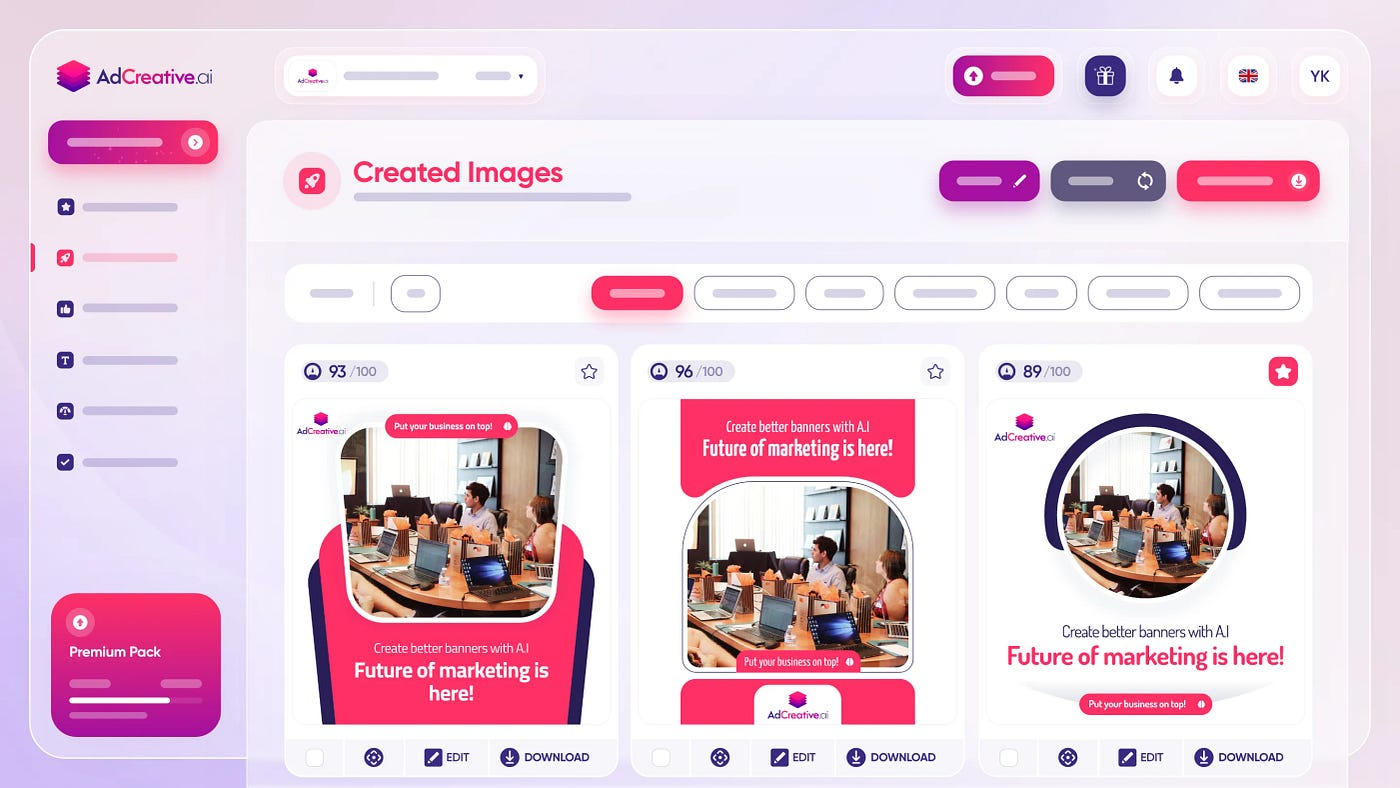
Image source: medium.com
If your team struggles to produce enough graphic variations for paid social, AdCreative is an excellent fit. The platform uses machine learning to generate banner ads, social media posts, and ad copy in seconds, ensuring your visual assets perform well before you launch.
- It generates conversion-focused banner designs and ad variations using machine learning.
- It scores visual assets before campaigns go live using predictive performance algorithms.
- It produces platform-ready assets in various dimensions for social media networks.
- It generates ad copywriting and headlines tailored to targeted buyer personas.
- It offers direct access to a library containing over 100 million royalty-free images.
Why replace manual graphic design with AdCreative:
Traditional creative workflows create a massive bottleneck when teams have to manually resize, export, and adapt banners for various formats. AdCreative automates this production process. By generating hundreds of high-quality, on-brand graphic variations in seconds, the platform allows you to run high-volume creative tests across social networks, avoiding the ad fatigue that typically drives up customer acquisition costs.
Pros
- Rapid Asset Generation: Creates hundreds of visual banner layouts, text options, and size variations in under five minutes.
- Predictive AI Scoring: Pre-evaluates creative assets using an ad spend database, scoring their likelihood of conversion with 90%+ accuracy.
- Seamless Ad Integrations: Directly syncs with Google, Facebook, and LinkedIn ad managers for immediate campaign publishing.
Cons
- Design Repetitiveness: Automated templates can start looking visually similar across different campaigns if brand assets are not heavily customized.
- Limited Video Customization: Primarily optimized for static display ads; its video generation and user-generated content (UGC) capabilities are relatively basic.
Pricing
- Starter Plans: $20/month (billed annually).
- Professional Plans: $125/month (billed annually).
- Ultimate Plans: $500/month (billed annually).
4. StackAdapt: For programmatic contextual-first display ads
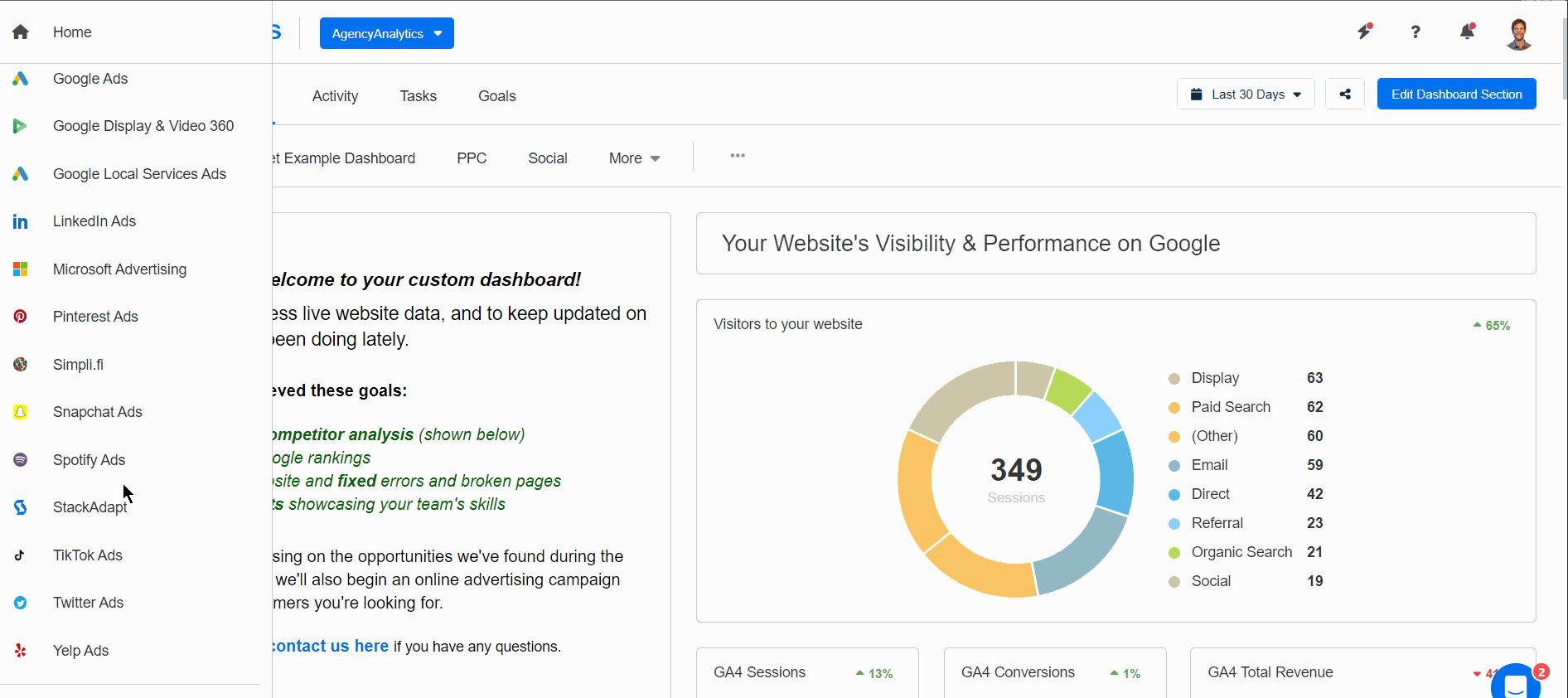
Image source: agencyanalytics.com
StackAdapt is an AI-powered programmatic demand-side platform (DSP). It excels at contextual-first targeting, letting you place display, native, video, and connected TV ads based on what users are actively reading rather than relying on invasive tracking cookies.
- It analyzes page-level language, themes, and sentiment using Page Context AI.
- It delivers programmatic display, native, audio, and connected TV ads across massive networks.
- It coordinates self-serve dynamic creative optimization using real-time product feeds.
- It runs automated contextual targeting that complies fully with modern data privacy regulations.
- It provides detailed cross-channel campaign attribution reports and performance metrics.
Why replace traditional programmatic buying with StackAdapt:
Traditional programmatic platforms rely heavily on third-party cookie databases that are facing cookie deprecation and data privacy barriers. StackAdapt prioritizes contextual relevance. By using machine learning to analyze the page-level context of a website in real time, the platform places your ads alongside highly relevant editorial content, driving stronger brand recall and higher click-through rates while maintaining absolute data privacy.
Pros
- No Minimum Spend Barrier: Unlike standard DSPs that require hefty monthly minimums, StackAdapt allows self-serve campaigns with zero minimum commitment.
- Privacy-First Page Context AI: Highly sophisticated, cookieless contextual targeting that analyzes actual webpage semantics in real time.
- Broad Channel Coverage: Delivers programmatic campaigns across display, native, video, Connected TV (CTV), digital audio, and in-game ads.
Cons
- Platform Learning Curve: The self-serve interface offers a vast array of advanced settings, making onboarding complex for junior marketers.
- Margin Markup Structure: Platform markup and data fees are bundled directly into the media CPM/CPC, which can result in less transparent cost breakouts.
Pricing
- Self-Serve/Dynamic Pricing: No minimum ad spend is required. Campaign billing operates dynamically based on actual media spend and programmatic bid CPM/CPC rates. Custom managed services are available for larger spend tiers.
5. Pencil: For predictive performance video ad generation
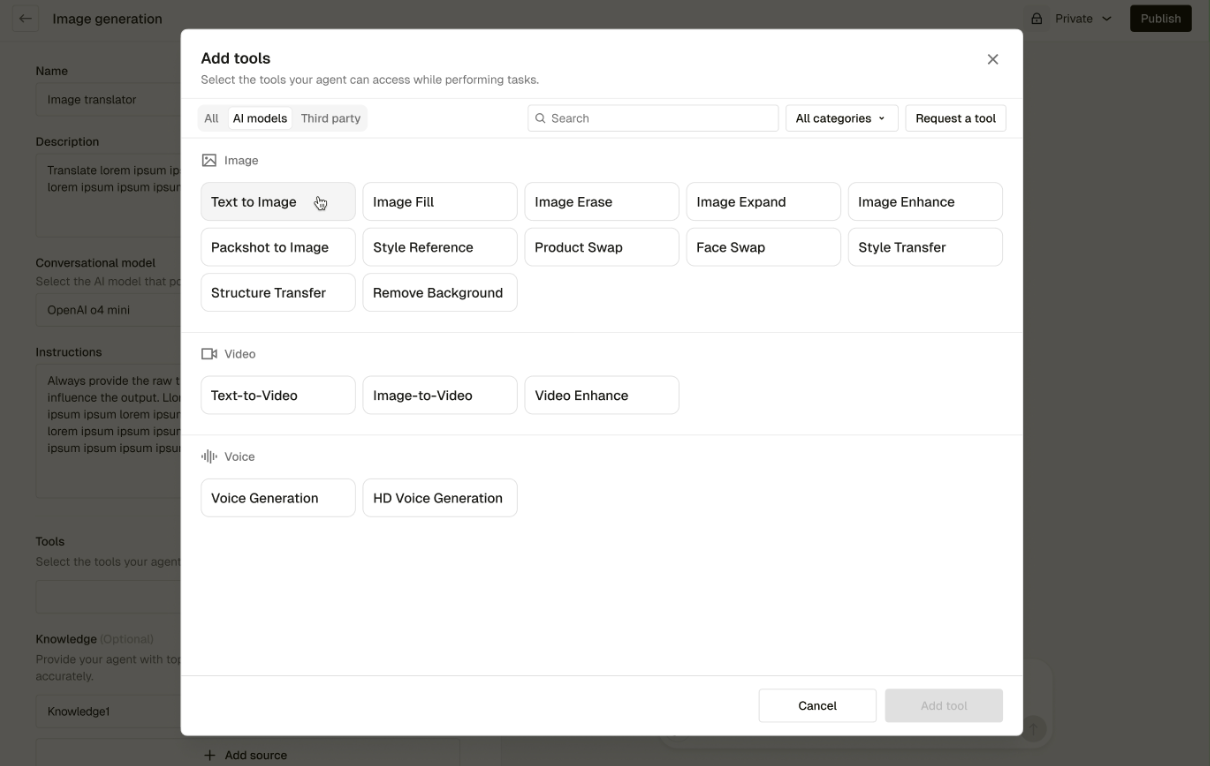
Image source: trypencil.com
Video continues to drive the highest engagement on channels like TikTok and Instagram Reels. Pencil uses generative AI to help brands quickly build, iterate, and optimize high-converting video ads, using predictive metrics to forecast success before you spend budget.
- It generates video and image ad variants from text prompts and product images.
- It forecasts ad performance pre-launch using predictive media models.
- It runs bulk creative generation based on product catalog feeds and SKUs.
- It provides real-time audience and performance analytics inside a unified dashboard.
- It offers collaborative asset approval tools for internal marketing teams.
Why replace traditional video production with Pencil:
Producing video ads is historically slow, expensive, and limited by designer throughput. Pencil shifts video creation to software-driven automation. By using generative models to assemble short-form video variations from a single product image or text description, the platform lets you test countless hooks and visual angles, helping you identify what resonates with your target audience at a fraction of traditional production costs.
Pros
- Predictive Success Scoring: Pre-scores newly generated video variations based on over $1B in historical ad spend data to predict campaign success.
- E-commerce Product Feed Integration: Directly hooks into Shopify and dynamic catalogs to generate automated variation batches based on SKU data.
- Fast Video Generation: Generates engaging text, image layouts, and short-form video ads in minutes using pre-approved templates and prompt assets.
Cons
- Asset Quality Dependency: Output is highly dependent on having high-resolution, professional product photography and clear brand guides to avoid AI distortions.
- Usage-Based Quotas: Quotas are consumed both by generating new assets and by active ads delivered, requiring careful credit monitoring.
Pricing
- Basic Plan: Starts at $14/month, offering an entry-level tier with limited AI credits for small businesses.
- Growth Plan: Starts at $55/month, adding access to a shared creative strategist, multi-brand workspace management, and expanded creative limits.
- Enterprise Custom: Tailored contracts with custom AI engines, ring-fenced data security, and specialized API integrations.
6. Madgicx: For Facebook and Instagram ad automation
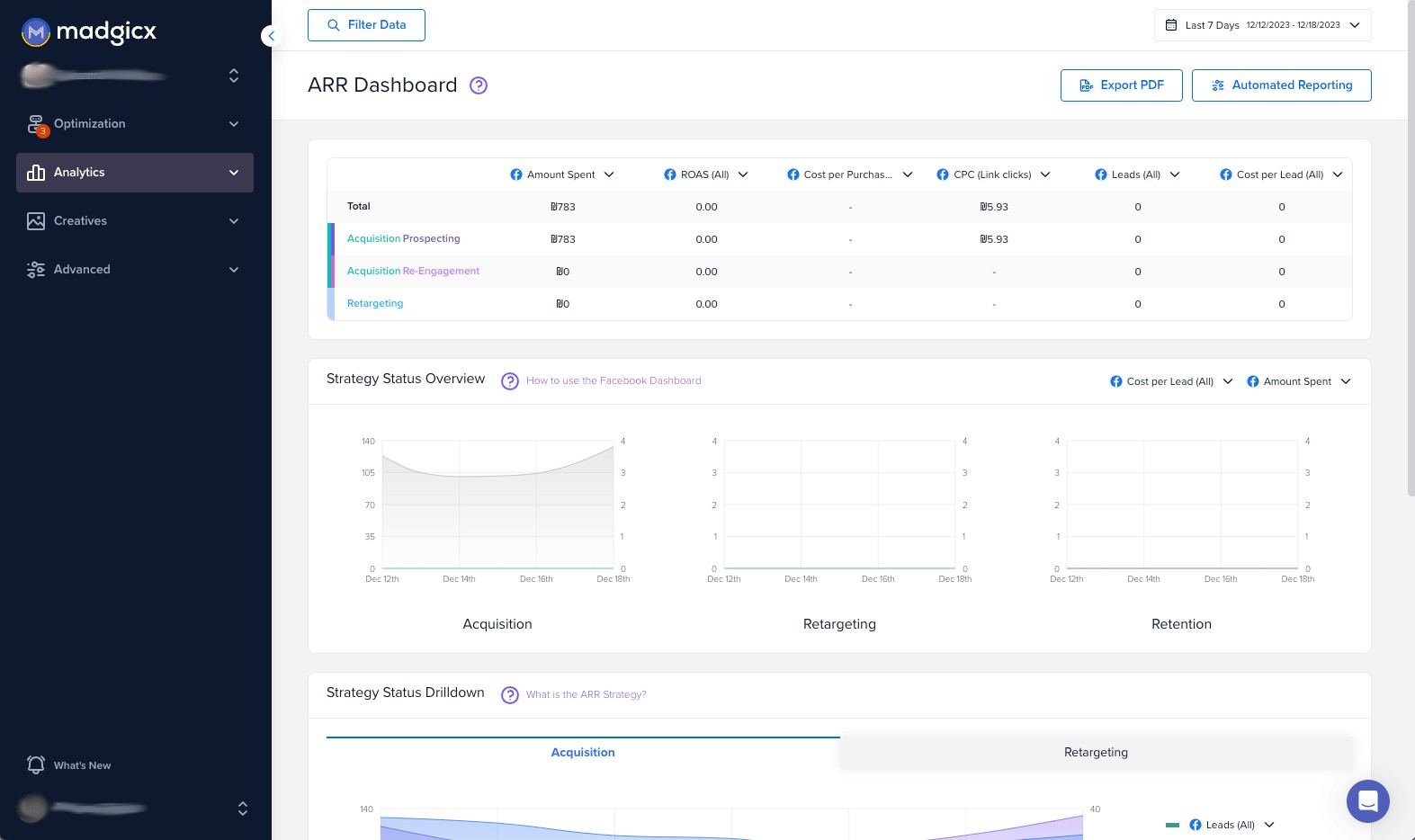
Image source: madgicx.com
If you spend a large portion of your media budget on Meta, Madgicx acts as an intelligent media cockpit. The platform combines budget automation, audience targeting, and creative auditing inside a single dashboard to simplify your ad operations.
- It gives daily bid and budget optimization recommendations using account performance.
- It triggers automated scaling rules and underperformance protection tactics like "Stop Loss."
- It monitors creative fatigue across campaign assets inside an Ads Manager cockpit.
- It builds custom audience cohorts and lookalike segments automatically based on pixel data.
- It generates cross-channel performance reports that connect Meta, Google, and Shopify metrics.
Why replace manual Meta Ads Manager with Madgicx:
Meta's native Ads Manager forces media buyers to continuously check campaigns to pause underperforming ads and scale winners. Madgicx acts as an automated pilot that protects your budget. By using pre-built automated rules to manage campaign bids and budgets based on real-time ROAS targets, the platform ensures your budget is never wasted on fatigued creatives while you are away from your desk.
Pros
- Robust Automated Rules: Pre-configured scaling playbooks, "Stop Loss" budget protection, and hourly bidding checks operate automatically around the clock.
- Creative fatigue analysis: Advanced dashboard audit capabilities analyze visual components, identifying exactly when assets need to be refreshed.
- Omnichannel Reporting Cockpit: Combines Meta, Google, and Shopify tracking in a cohesive data view with automated KPI summaries.
Cons
- Meta-Centric Bias: While Google and TikTok integrations exist, the platform's core automation depth is heavily weighted toward Meta Ads Manager.
- Variable Pricing: Costs rise automatically as monthly ad spend increases, which can feel like an "automation tax" for scaling brands.
Pricing
- Basic Plans: Starts at $32/month or $45/month (depending on billing intervals) for ad budgets under $1,000/month.
- Spend-Tier Scaling: Scales with ad budget, plus optional tracking and optimization add-ons.
7. Jacquard: For brand-compliant enterprise marketing copy
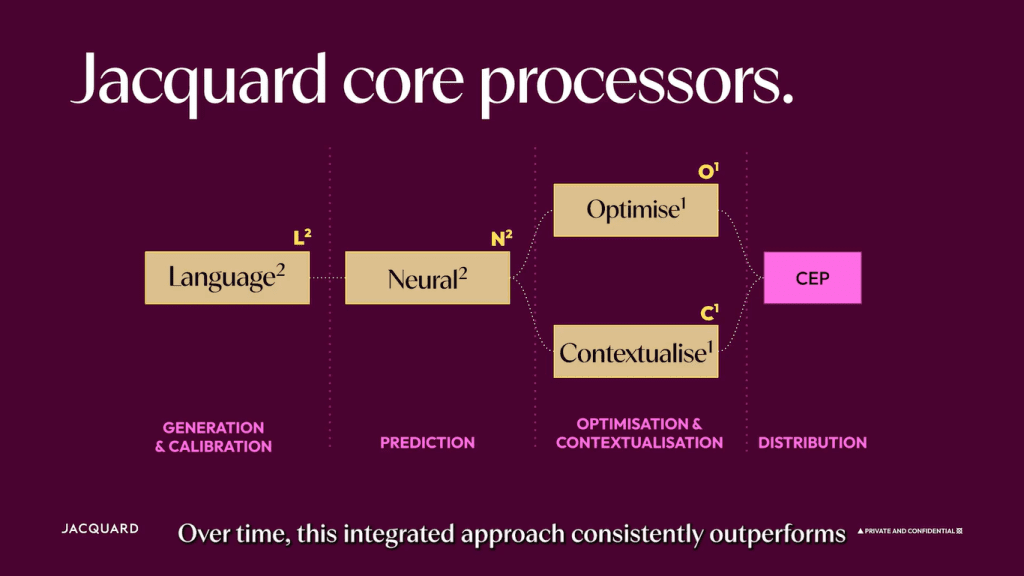
Image source: clixlogix.com
Jacquard specializes in enterprise copy generation. It combines generative natural language systems with strict brand safety guardrails, helping you create thousands of messaging variations for ads, email, and SMS campaigns without risking regulatory errors.
- It generates brand-compliant, structured copy variations using a specialized text engine.
- It predicts copy performance before campaigns launch using predictive language models.
- It customizes copy variants dynamically based on consumer contextual factors.
- It enforces brand standards, rules, and prohibited terms automatically across text formats.
- It runs multivariate copy tests to discover high-converting messaging variations.
Why replace manual copywriting with Jacquard:
Writing dozens of distinct copy variations for multi-channel campaigns takes hours and often results in human error or brand compliance slip-ups. Jacquard coordinates copy production safely. By training models on a decade of messaging data and using deterministic guardrails, the platform generates hundreds of compliant copy variations that match your brand's unique tone, helping you scale personalization without risking regulatory penalties.
Pros
- Calibrated Brand Voice: Governs AI text generation with strict, deterministic rules to ensure absolute compliance with enterprise guidelines.
- Predictive Copy Performance: Uses advanced linguistic analytics to score and rank copy variations before deployment, optimizing email open and CTR rates.
- High-Volume Multilingual Output: Generates up to 2,500 highly personalized messaging variants per creative brief across 17+ languages.
Cons
- Enterprise Cost Barrier: Out of reach for SMBs and startups; pricing structures are exclusively aimed at Fortune 500-level budgets.
- Integration Complexity: Requires a comprehensive setup and onboarding period to train models on the brand's specific tone of voice and industry taxonomy.
Pricing
- Starting Price: Custom pricing (Book a Demo required) .
8. Birch: For automated multichannel ad rules
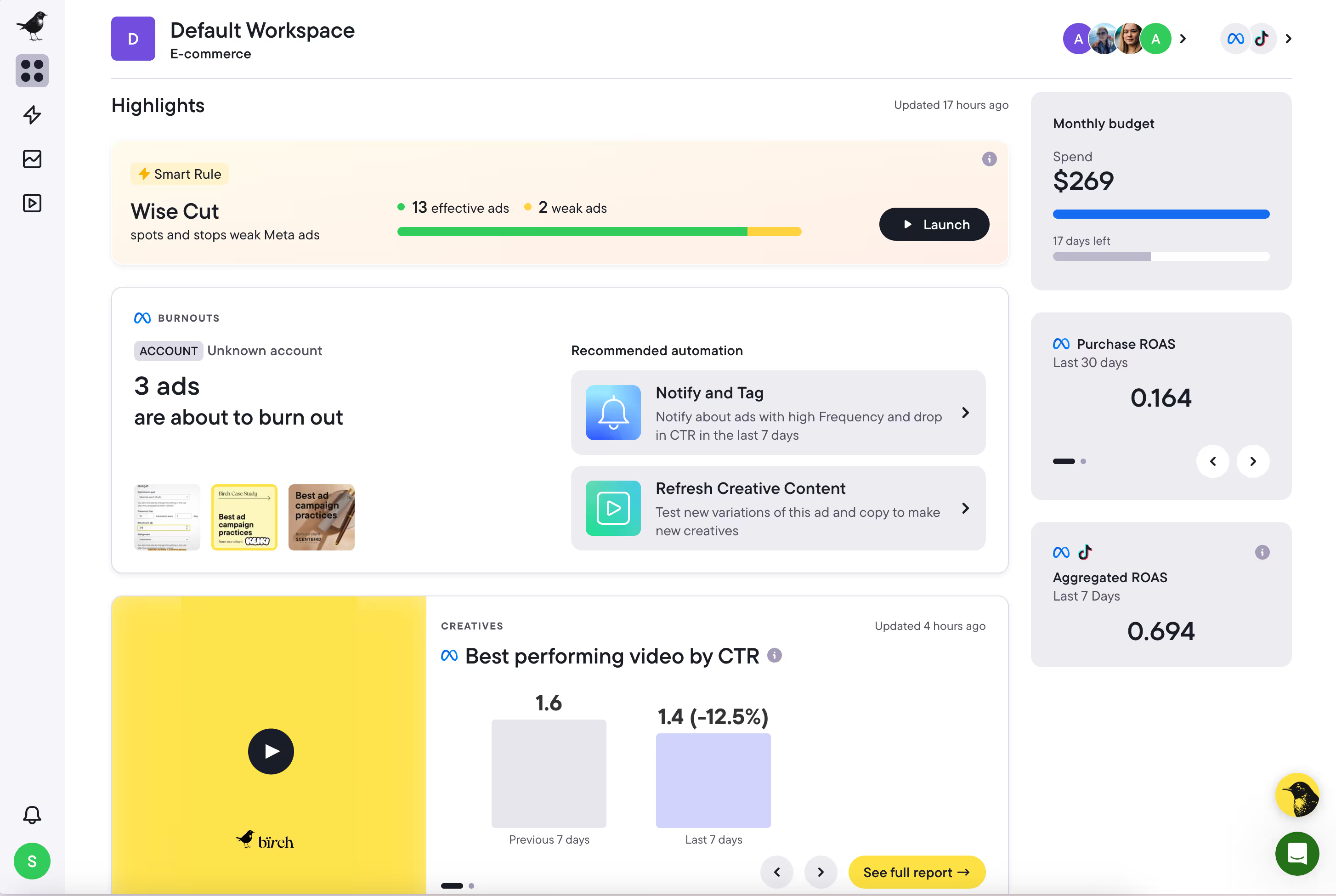
Image source: bir.ch
For agencies and brands running ads across Meta, Google, TikTok, and Snapchat, Birch is an excellent budget automation platform. It allows you to build custom, cross-platform rule engines to manage your media spend based on live metrics.
- It builds custom, condition-based rules to automate bids and pause underperforming ad sets.
- It monitors campaign health across Meta, Google, TikTok, and Snapchat in real time.
- It identifies top-performing ad creatives and identifies creative fatigue automatically.
- It triggers real-time performance notifications via email or Slack.
- It automates post boosting and budget distribution based on social engagement metrics.
Why replace standard platform rules with Birch:
Native ad network rules are siloed and limited to single platforms, making it difficult to coordinate budgets across Meta, Google, and TikTok. Birch unites your automation engine. By letting you write complex, multi-channel automated rules in a single workspace, the platform ensures your budgets are shifted dynamically to your most efficient channels based on overall media performance, saving hours of manual cross-platform tracking.
Pros
- Highly Flexible Rule Logic: Allows the creation of extremely precise, nested "if/then" rules matching custom metrics across Meta, Google, TikTok, and Snapchat.
- Signals Gateway Integration: Includes advanced server-side tracking integrations to maintain budget rule accuracy post-iOS 14 privacy changes.
- Bulk Campaign Management: Enables agencies and multi-brand advertisers to easily copy, duplicate, and execute rules across multiple accounts simultaneously.
Cons
- No Creative Asset Support: Operates strictly as a post-launch campaign management tool; does not provide creative generation or copywriting assistance.
- Pricing Spend Penalties: Because costs scale with your total managed ad spend, the platform can become highly expensive as media campaigns grow.
Pricing
- Essential Plan: Starts at $45/month (billed annually).
- Pro Plan: Starts at $91/month (billed annually).
- Enterprise Plan: custom service
Lark: The Intelligent Orchestration Hub for the Entire Campaign Lifecycle
In the era of AI-powered marketing, media buying has become highly automated, yet marketing teams face unprecedented tool sprawl and "creative governance" chaos. AI generation tools churn out hundreds of ad creatives and copywriting variants daily. When these assets are scattered across disparate single-point tools, chat groups, local drives, and static spreadsheets, it dramatically delays your time-to-market and causes brand compliance and budget management to spin out of control.
While specialized AI tools excel at generating content or running specific ad auctions, they operate in isolation. This fragmented tech stack forces teams to waste valuable time copying, pasting, and manually aligning assets across systems. To truly scale campaign operations, marketing teams don't just need another single-point generator; they need a unified workspace where strategy, assets, execution, and communication coexist under one roof.
Lark is not a dedicated advertising platform or DSP; rather, it serves as the end-to-end intelligent collaboration hub that powers the entire advertising campaign lifecycle. By weaving native AI capabilities into a flexible, no-code architecture, Lark seamlessly connects marketing strategies, creative assets, campaign tracking, and performance data. It transforms fragmented workflows into a cohesive engine, completely eliminating tool fatigue and information silos for modern ad teams.
loading...
Agile creative communication & cross-border synergy: Your central command for rapid decision-making
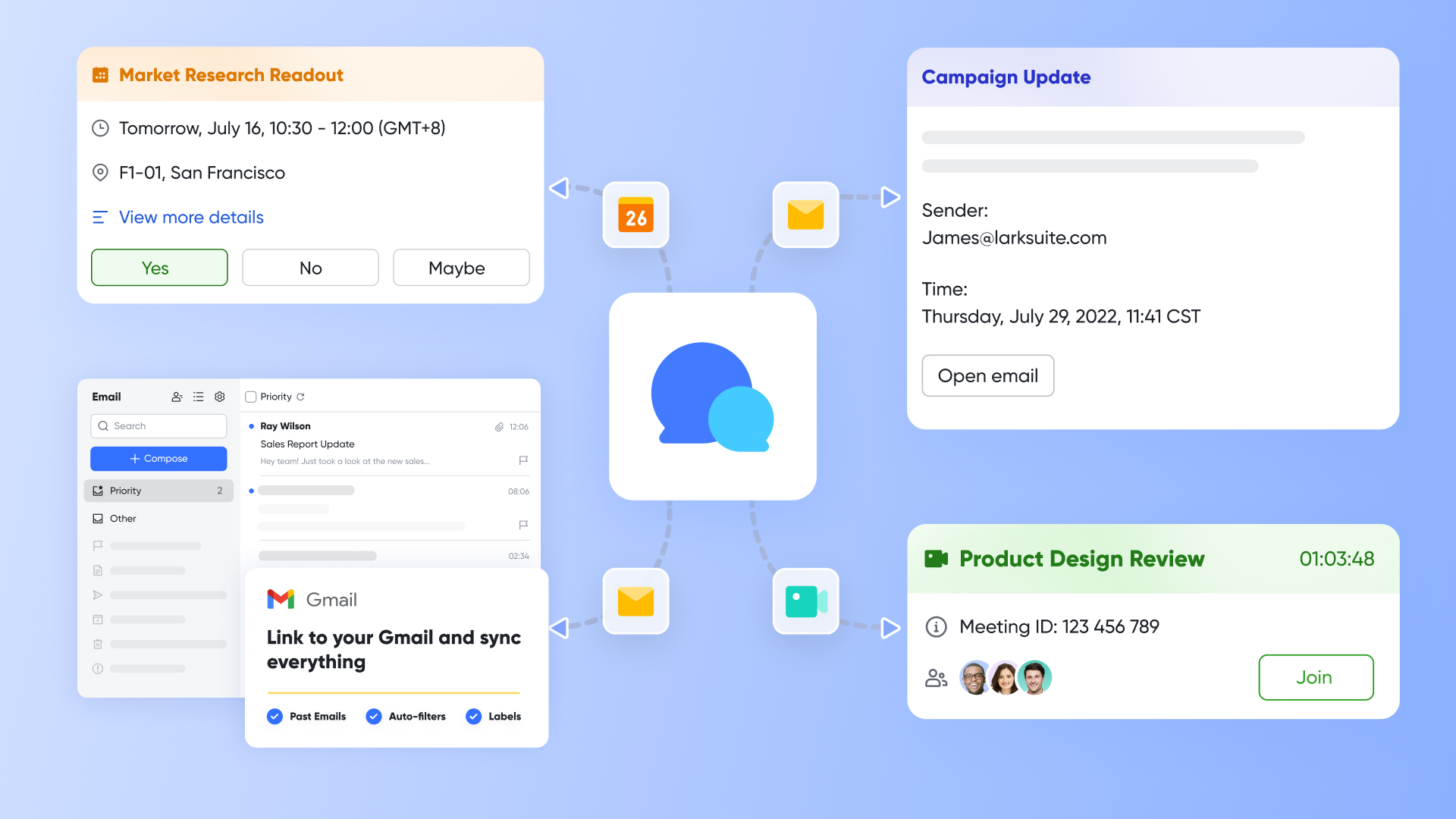
When ad creatives hit the "creative fatigue" wall, real-time, agile team communication is the ultimate tool to salvage campaign click-through rates. Instead of relying on slow email threads and isolated notifications, Lark Messenger serves as the creative nerve center where assets are shaped and decisions are made in real time:
- Deeply Integrated Creative Workflows: Teams no longer need to bounce between chat apps and project management software. AI asset generation tools, performance anomaly alerts, and third-party tracking bots can push rich message cards directly into dedicated project groups. Team members can review assets, update bidding strategies, or trigger lightweight approval workflows directly inside the chat window.
- Frictionless Global Creative Collaboration: In cross-border and multi-market campaigns, marketing teams must collaborate tightly with overseas agencies and local operators. Lark Messenger offers native, highly accurate AI translation for chats and documents, instantly breaking down linguistic barriers and enabling cross-regional creative reviews and sign-offs in seconds.
Campaign tracking & budget dashboards: A centralized cockpit built on Lark Base
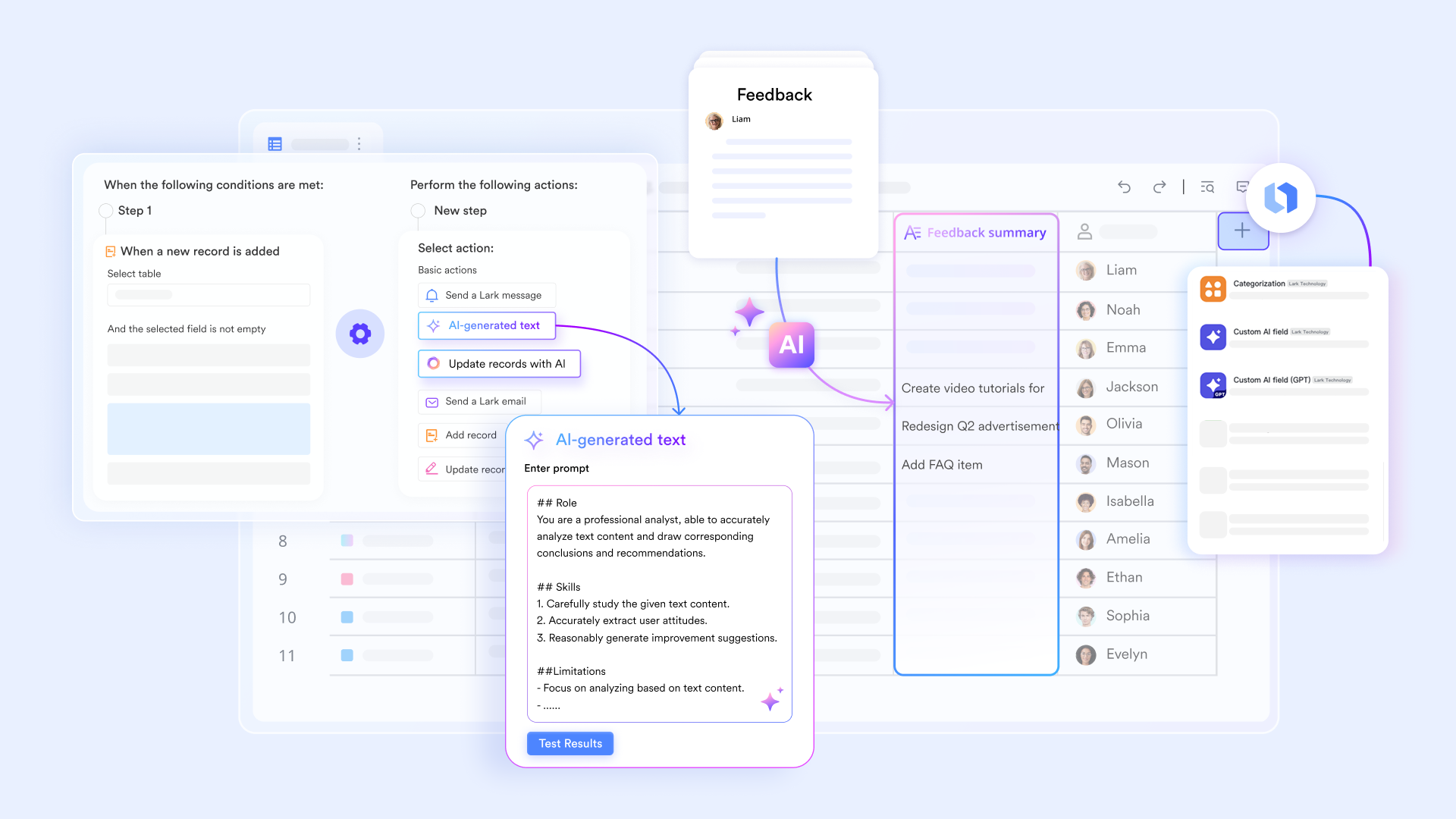
The central pain point of ad operations is aligning massive creative assets with real-time budget data. Through the highly customizable and flexible database capabilities of Lark Base, teams can build a customized advertising campaign cockpit:
- Unified Asset & Performance Tracking: Ditch separate cloud folders for video files and Excel sheets for tracking URLs. You can upload AI-generated copywriting variants, images, and videos directly into Base cells and map them to specific channels, target keywords, and real-time Cost Per Acquisition (CPA), ensuring complete visibility over your marketing assets.
- Native AI-Powered Copy Generation: Leveraging Lark Base's built-in AI capabilities, teams can batch-generate localized ad descriptions and translations tailored to different platform specifications directly inside their database rows.
- Instant Multi-Dimensional Views: Whether designers prefer a Gallery view, media managers need a Gantt chart for project budgeting timelines, or executives require an interactive Dashboard, all data is rendered in real time, keeping your creative and media-buying teams perfectly aligned.
Campaign briefing & brand governance: Building a high-converting creative knowledge base
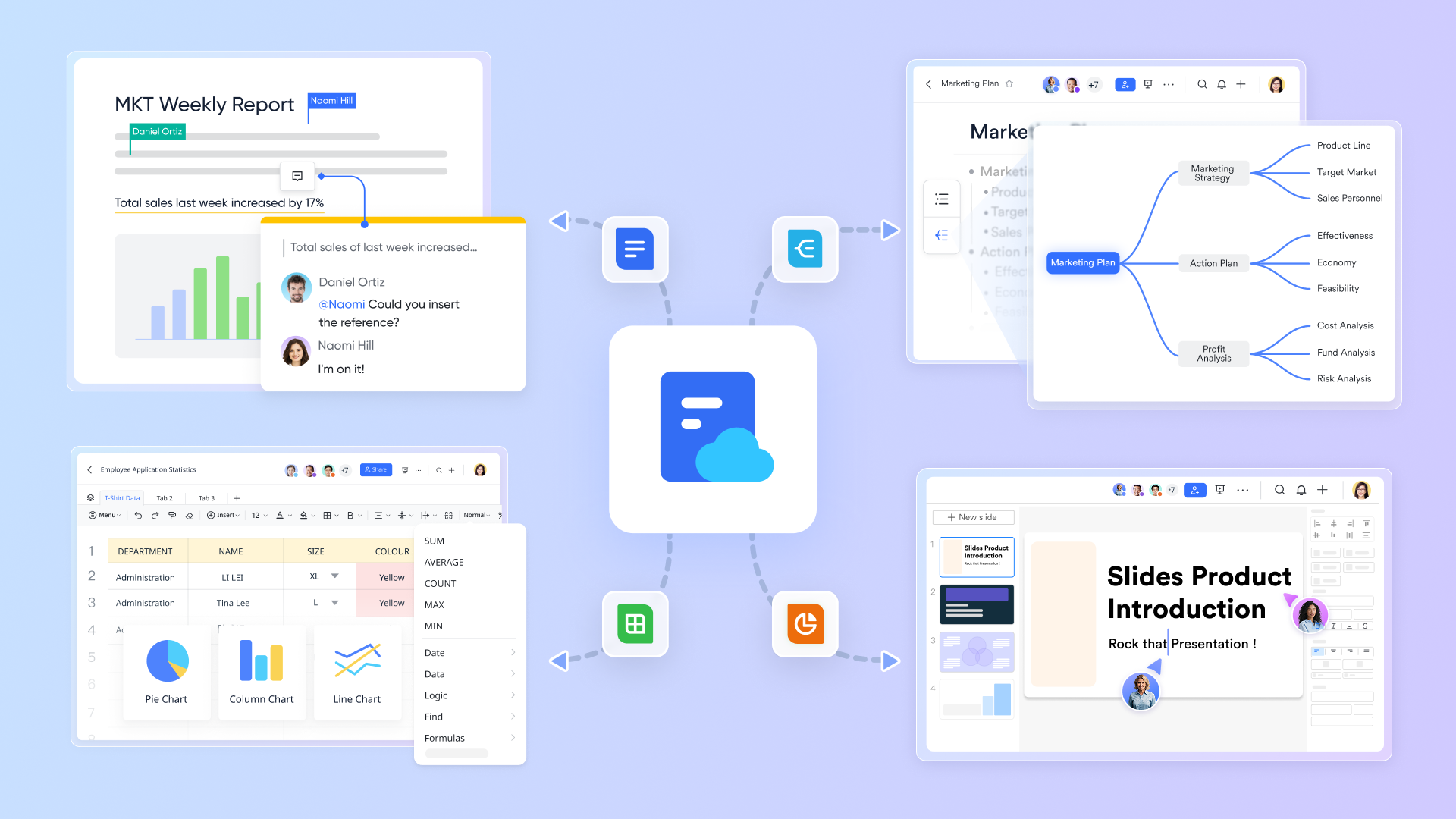
To ensure AI-generated assets remain high-quality and consistent, teams must establish clear creative guidelines and efficient prompt engineering playbooks.
- Collaborative Briefing & Live Data Embedding: Within Lark Docs, strategy teams can co-author Campaign Briefs. Members can embed live, interactive Base dashboards, mention channel leads, and leave inline comments directly on creative mockups. This allows teams to iterate on creatives rapidly without setting up endless project management meetings.
- Prompt Library & SOP Standardization: Use Lark Wiki to centralize high-converting AI prompts, design systems, and agency onboarding playbooks into a single source of truth. Building an enterprise-grade marketing knowledge base ensures that all AI-generated content (AIGC) remains strictly brand-compliant while giving new team members immediate access to proven campaign blueprints.
Why replace traditional fragmented suites with Lark?
When teams run ad campaigns across Google, Meta, and TikTok, they typically waste hours switching between separate chats, storage folders, and spreadsheets. Lark unites these disjointed steps. By integrating project tracking directly with real-time document editing and automated approval paths, Lark eliminates the operational drag that causes creative fatigue and delays launch timelines, allowing your team to move from ideation to activation in minutes.
Pros
- All-in-One Orchestration: Unifies chats, video meetings, cloud databases, wiki knowledge hubs, and automated approvals in a single workspace, eliminating tool fragmentation.
- No-Code Databases: Lark Base provides extremely flexible, collaborative no-code databases to track campaign budgets, assets, and metadata with customized visual dashboards.
- Generous Free Tier: Highly accessible for small teams with a robust free starter plan that includes core communication and database applications.
Cons
- Onboarding Curve: Transitioning a large organization from traditional legacy office suites requires planning and change management. There are just so many features on the platform that it takes some time to try them out. The initial switch from using spreadsheets to Lark Base also took some getting used to, but the help center made it painless.
- Starter plan: Free forever plan that includes 11 powerful tools for up to 20 users. It also comes with 100GB of storage space, 1000 automation runs, AI translations, and more. No credit card needed.
- Pro plan: $12/user/month (billed annually) for up to 500 users. It includes everything in Starter plus group calling for up to 500 attendees, 15TB of storage space, 50,000 automation runs, and more.
- Enterprise plan: Contact sales for custom pricing. Supports unlimited users and includes even more automation runs and advanced security, compliance, and management features.
The silent killer of modern marketing budgets isn't ad spend—it's the cumulative cost of subscription SaaS. Running a campaign with single-point tools means paying separate monthly licenses for Zoom, Slack, Google Workspace, Monday.com, and Notion, quickly adding up to hundreds of dollars per user. As a unified, cloud-based productivity tool, Lark eliminates this overhead by consolidating messaging, video meetings, docs, databases, and custom automation into a single subscription.
Best practices for implementing AI in your marketing strategy
Adopting automated tools without a clear strategy often leads to messy campaigns, wasted media budget, and brand inconsistencies. To make the most of your investments, keep these three operational principles in mind:
Focus on specific business problems first
Do not adopt AI for the sake of the technology itself. Start by identifying the manual bottlenecks that slow down your campaign execution. If your design team is overwhelmed by banner requests, invest in creative generation. If your media buyer spends hours shifting budgets across platforms, focus on budget rules. Utilizing structured resource management software helps you pinpoint where your team's energy is spent, ensuring that you select tools that target real operational problems.
Ensure absolute data quality
Machine learning models are only as good as the data they receive. If your tracking pixels are misfired, or your UTM structures are inconsistent, your automation engines will optimize for the wrong outcomes. Before activating automated bidding, establish strict naming conventions and track your metrics. Integrating your tracking rules into Lark Docs ensures that your entire team and agency partners follow the same data collection procedures.
Blend automation with human oversight
Avoid the temptation to let AI run your campaigns completely without human reviews. Generative models can easily produce generic copy or visuals that fall into the "uncanny valley," distracting users instead of engaging them. Keep your team in the driver's seat. Use AI tools to accelerate brainstorming and asset variation, but ensure that experienced marketing managers retain final creative decision-making and brand curation.
How to get started with AI-powered advertising
Transitioning to automated campaigns does not require overhauling your entire media mix overnight. Follow this structured, step-by-step roadmap to introduce automation into your workflows safely:
Step 1: Audit your campaign tracking
Before testing any optimization tool, verify that your conversion tracking is completely accurate. Ensure that your tracking pixels are firing correctly, and set up enhanced conversion APIs across Google and Meta. This provides your algorithms with clean data to optimize your bids.
Step 2: Set up platform-native automation
Start by enabling native automated bidding strategies, such as Target CPA or Target ROAS, on your existing campaigns. This allows you to experience automated bid adjustments within a controlled environment before moving to fully automated campaign formats.
Step 3: Centralize your creative governance
Before you start generating hundreds of ad variations, build your campaign cockpit. Set up a campaign tracker using Lark Base to store your prompt guidelines and creative resources. Establish your Lark Approval pipelines so your brand compliance team can review, discuss, and sign off on assets before they go live.
Step 4: Run a controlled pilot program
Select one campaign objective—such as testing video hooks for a product launch—and run a controlled pilot using a creative generator like Pencil or AdCreative. Allocate 20% of your media budget to the automated pilot and compare its conversion rate against your manual baseline over a three-week period.
Step 5: Scale your winning strategy
Once your pilot program delivers a stable cost per acquisition, scale your operations. Gradually shift more media budget toward your successful automated campaigns while continuing to feed your systems with fresh, approved creative variations from your central campaign database.
Conclusion
Maximizing your campaign returns in a world of automated bidding is no longer about manual bid management. The real competitive advantage lies in coordinating your campaign operations, managing your creative variations, and securing your brand reviews. By eliminating tool sprawl and centralizing your entire marketing pipeline inside a unified workspace like Lark, you can launch fast, error-free campaigns that deliver consistent returns.
FAQs
What is AI-powered advertising?
AI-powered advertising is the practice of using artificial intelligence technologies—such as machine learning, predictive analytics, and natural language processing—to automate, optimize, and personalize ad delivery, copy generation, and audience targeting.
What is the 30% rule for AI?
In workforce and enterprise management, the 30% rule suggests that AI should automate roughly 30% of repetitive, data-heavy, or rule-based tasks1. Alternatively, in creative domains, it states that AI's contribution should be capped at around 30% to ensure that the remaining 70% relies on human judgment, creativity, and ethics2.
What is an example of AI advertising?
An example of AI advertising is Google's Performance Max or Meta's Advantage+ campaigns, which automatically generate multiple ad creative combinations and dynamically adjust bidding and targeting in real-time to find the highest-performing placements3.
What is the best AI-powered advertising tools for retail?
For retail and e-commerce brands, the best AI-powered advertising tools include:
- AdScale: Automates ad lifecycles and media buying across Google and Meta.
- AdCreative.ai: Generates conversion-focused ad creatives and copy at scale.
- Triple Whale: Centralizes data for multi-channel ad attribution and analytics.
To avoid the chaos of managing these scattered single-point tools, Lark serves as the ultimate all-in-one collaboration hub. Lark seamlessly integrates your strategy, creative assets, and campaign tracking into a unified, AI-powered workspace, eliminating tool sprawl and accelerating your time-to-market.
Is advertising with AI illegal?
No, advertising with AI is not illegal, but it must comply with existing legal frameworks. Advertisers face strict regulations regarding false advertising, deceptive claims, copyright infringement (using unlicensed IP), and data privacy laws when using customer data to train or target models.
How much budget do I need for AI advertising?
Most platforms require sufficient data for their algorithms to optimize effectively. We recommend allocating a minimum monthly ad budget of $1,000 to $5,000, ensuring your campaigns generate at least 15 to 50 conversions per week to train the machine learning models.
Can AI replace human advertisers completely?
No. While automated systems are excellent at processing data, executing bids, and generating creative variations, they lack human intuition, strategic reasoning, and cultural nuance. The most successful campaigns combine the speed of automation with strict human oversight and creative direction.
Related Reading
Table of contents
Start using Lark today

Manage all your work in one place
Boost team efficiency by 10x
Save up to 70% on software costs
Table of contents
Start using Lark today
Manage all your work in one place
Boost team efficiency by 10x
Save up to 70% on software costs
Keep reading







2026 Lark Technologies Pte. Ltd.
Headquartered in Singapore with offices worldwide.






Explore: