Imagine a project manager leading a diverse team on a tight deadline for a high-stakes client launch. The team faces constant changes in requirements and struggles with unclear communication. In this dynamic environment, a structured approach to project management becomes essential. Effective project management strategies not only help teams navigate complexities but also ensure efficient resource allocation and clarity in communication. However, challenges like shifting priorities and tight schedules can complicate matters. By implementing well-defined methodologies and leveraging tools, teams can enhance collaboration and streamline communication, ultimately improving their chances of project success.
What project management strategies are
Project management strategies are the plans and methods employed to achieve project goals while effectively , timelines, and stakeholder expectations. These strategies encompass various methodologies and best practices tailored to the specific needs of each project. They are crucial for providing a structured framework within which project managers can operate, facilitating decision-making and optimizing performance across all phases of a project.
As work environments continue to evolve—especially with the rise of and digital transformation—the nature of project management strategies is also changing. Traditional methods are being supplemented or replaced by innovative approaches that prioritize flexibility, responsiveness, and collaboration. Adapting project management strategies to incorporate advancements in technology and shifts in workplace culture is essential for maintaining competitive advantage.
Significance of effective project management strategies
Effective project management strategies are crucial for several reasons, including ensuring timely delivery, optimizing resource allocation, minimizing risks, and enhancing overall and communication throughout the project lifecycle.
- Achievement of project goals: Clear strategies provide a roadmap for teams to follow, ensuring that project objectives are met on time and within budget.
- Risk management: Well-defined strategies help identify potential risks early in the , allowing teams to implement appropriate risk mitigation strategies. This proactive approach reduces uncertainties and enhances project stability.
- Resource optimization: Effective strategies facilitate efficient resource allocation, ensuring that team members, budgets, and materials are used optimally. This leads to cost savings and improved project efficiency.
- Enhanced communication: Strong project management strategies foster better communication among team members and stakeholders. This clarity minimizes misunderstandings and ensures everyone is aligned on project goals and expectations.
- : By establishing standards and processes, effective strategies help maintain quality throughout the project lifecycle, resulting in deliverables that meet or exceed stakeholder expectations.
In summary, adopting effective project management strategies not only increases the likelihood of project success but also enhances team collaboration, satisfaction, and overall project quality.
Discover how a powerful tool delivers this significance
Key project management strategies to boost efficiency
The choice of a can significantly influence the success of a project. Each methodology offers unique advantages and is suited to different types of projects and team dynamics. Here are some of the most widely recognized methodologies that project managers should consider:
Agile
The emphasizes iterative development and flexibility, making it ideal for projects that require rapid adaptation to changing requirements. Agile seeks to deliver work in small increments, enhancing responsiveness and allowing for continuous improvement based on stakeholder feedback.
Benefits of Agile:
- : Agile promotes a collaborative environment where team members work closely, facilitating more effective communication strategies and ultimately stronger relationships.
- Increased transparency: Through regular updates, team members and stakeholders remain informed, which can help reduce misunderstandings and misalignment.
- Enhanced : The focus on regular feedback ensures that final deliverables better meet client expectations.
Agile is particularly beneficial in software development, marketing campaigns, and any other projects where specifications may change based on customer or stakeholder input.
Learn more about Agile 👉
Scrum
is a framework within the Agile methodology that specifically focuses on managing tasks within a team-based environment. It uses short cycles called , typically lasting two to four weeks, to complete incremental portions of a project.
Specific benefits of Scrum:
- Daily stand-ups: Regular check-in meetings promote transparency and accountability, enhancing communication strategies among team members.
- Focus on deliverables: By breaking projects into manageable parts, Scrum increases team focus and allows for ongoing assessment of progress.
Scrum is widely utilized in software development and product management, where teams must navigate complex requirements and customer feedback.
Learn more about Scum 👉
Kanban
The Kanban method provides a visual approach to managing work and emphasizes continuous delivery and efficiency. By utilizing a , teams can visualize tasks in progress, prioritize pending tasks, and manage workloads effectively.
Key features of Kanban:
- : The use of a Kanban board allows team members to clearly see project status at any given time, which fosters improved project management communication strategies.
- Flexibility: Unlike Scrum, Kanban does not have time-boxed iterations, which allows teams to pull in new work based on their capacity rather than adhering to fixed schedules.
Kanban is effective in environments where requirements frequently change or projects require ongoing prioritization.
Learn more about Kanban 👉
Waterfall
The is a linear approach to project management, characterized by a sequential progression through distinct phases: Initiation, planning, execution, monitoring, and closure. This structured methodology is well-suited for projects with well-defined requirements and outcomes.
Suitability of Waterfall:
- Predictability: Waterfall allows for thorough planning and documentation, making it easier to predict timelines and budgets.
- Ideal for straightforward projects: Projects in sectors such as construction or manufacturing, where requirements are clearly outlined from the beginning, often benefit from this approach.
However, because it is less adaptable to changes, complex projects that may face evolving requirements might struggle under the rigid structure of Waterfall.
Learn more about Waterfall 👉
Lean methodology
The focuses on maximizing value by minimizing waste during the project lifecycle. Inspired by manufacturing principles, Lean emphasizes continuous improvement and efficient resource usage.
Key principles of Lean include:
- Value stream mapping: Identifying and eliminating wasteful practices can lead to improved efficiency.
- Stakeholder focus: Keeping the end customer in focus ensures that every aspect of a project adds value.
Lean is particularly useful in production environments and projects where efficiency is critical.
Learn more about Lean 👉
Six Sigma
Six Sigma is a data-driven approach aimed at improving quality by identifying and removing causes of defects and minimizing variability in processes. This methodology focuses on achieving near-perfect results through a systematic process.
Advantages of Six Sigma:
- Focus on quality: Implementing Six Sigma can lead to significant improvements in product quality and operational efficiency.
- Data analysis: Utilizing data to inform decision-making can lead to more effective project management outcomes.
Six Sigma is commonly applied in , healthcare, and service industries to enhance quality control processes.
Learn more about Six Sigma 👉
Critical path method (CPM)
The Critical Path Method is a used to determine the longest stretch of dependent activities and measure the time required to complete a project. By identifying critical and non-critical tasks, project managers can prioritize their efforts to ensure timely completion.
Benefits of CPM:
- Effective scheduling: By focusing efforts on critical tasks, project managers can avoid delays and ensure timely project delivery.
- Resource optimization: CPM assists in identifying where resources can be reallocated for maximum efficiency.
This methodology is valuable in large, complex projects where multiple tasks are interdependent.
PRINCE2 methodology
PRINCE2 (PRojects IN Controlled Environments) is a structured project management method that emphasizes organization and control throughout the project lifecycle. It provides a clear framework and guidelines for managing projects efficiently.
Key characteristics of PRINCE2:
- Process-driven approach: It divides projects into stages for better management and control.
- Focus on business justification: Ensuring that projects align with organizational goals enhances value and stakeholder satisfaction.
PRINCE2 is widely used in public sector projects in the UK but is versatile enough to be applied across various industries.
Hybrid approaches
Hybrid methodologies combine elements from multiple project management strategies to leverage their strengths while mitigating weaknesses. This approach recognizes that no single methodology is a one-size-fits-all solution, allowing teams to customize their strategies based on the specific demands of their projects.
Benefits of hybrid methodologies:
- Flexibility: Teams can adapt their approaches as project circumstances evolve, drawing on methods like Agile for adaptability and Waterfall for structured phases.
- Enhanced performance: By customizing methodologies, teams can refine their processes to increase efficiency and project success rates.
This adaptability is particularly important in complex projects that require different management styles at various phases.
Unlock effective project management strategies today
Risk management techniques for project managers
is a crucial component of project management that involves systematically identifying, analyzing, and responding to potential risks that could adversely affect project success. By implementing effective project risk management strategies, project managers can significantly minimize the impact of uncertainties and improve overall project efficiency.
Importance of risk management
Proper risk management is vital as it not only safeguards project objectives but also builds stakeholder confidence. Without robust risk management strategies in project management, projects may frequently experience disruptions, resulting in delays and budget overruns, ultimately diminishing stakeholder satisfaction.
Techniques for effective risk management
- Risk identification: Proactively recognize potential risks through brainstorming sessions, stakeholder interviews, and analysis of previous project performance.
- : Meticulously assess the likelihood and impact of identified risks using qualitative techniques, such as probability and impact assessments.
- Risk prioritization: Strategically prioritize risks based on their significance, allowing teams to focus on the most critical threats.
Risk mitigation and response strategies
- Avoidance: Modify the project plan to completely eliminate the risk or its impact.
- Transfer: Effectively shift the risk to a third party, such as through purchasing insurance.
- Mitigation: Implement proactive measures that significantly reduce the probability of risks occurring or lessen their potential impact.
- Acceptance: Accept certain risks and decide to proceed without proactive measures, understanding the consequences.
By continuously monitoring risks throughout the project lifecycle, can adapt their project management risk response strategies to remain agile in the face of emerging challenges, thereby enhancing the effectiveness of their project management communication strategies and overall risk mitigation strategies in project management.
Ready-to-use project management strategy templates
To streamline project management processes, utilizing ready-to-use project management strategy templates can be incredibly beneficial. These templates help standardize practices and ensure that all team members are on the same path.
Project timeline template
A template is a key tool within project management strategies. It outlines the schedule of tasks, milestones, and deliverables, providing a clear visual representation of the project's progress. The template includes fields for task ID, task name, description, start and end dates, duration, responsible party, status, milestones, and dependencies, facilitating effective progress tracking and task management.
This template is especially beneficial for project managers, team leaders, and team members. Project managers can utilize it to monitor project schedules and milestones, ensuring timely completion. Team leaders can assign tasks and track team performance, while team members can refer to the template to understand their responsibilities and deadlines. By implementing this template, teams can , improve efficiency, and increase accountability throughout the project lifecycle.
Project roadmap Gantt chart template
The project roadmap Gantt chart template is a visual tool for project planning and tracking that displays the project timeline, tasks, and responsibilities. It provides a clear overview of by mapping tasks against time. This template includes features like task view, project view, priority view, and status view, along with customizable fields, filters, groups, and sorting options.
This template is ideal for project managers, team leaders, and team members involved in project planning and execution. Project managers can use it to coordinate and track task progress, ensuring timely completion. Team leaders can assign tasks and identify bottlenecks, while team members can track their responsibilities and stay focused on their tasks. Overall, this template enhances communication, , and increases efficiency by providing a clear visual representation of the project timeline.
Project management strategy presentation template
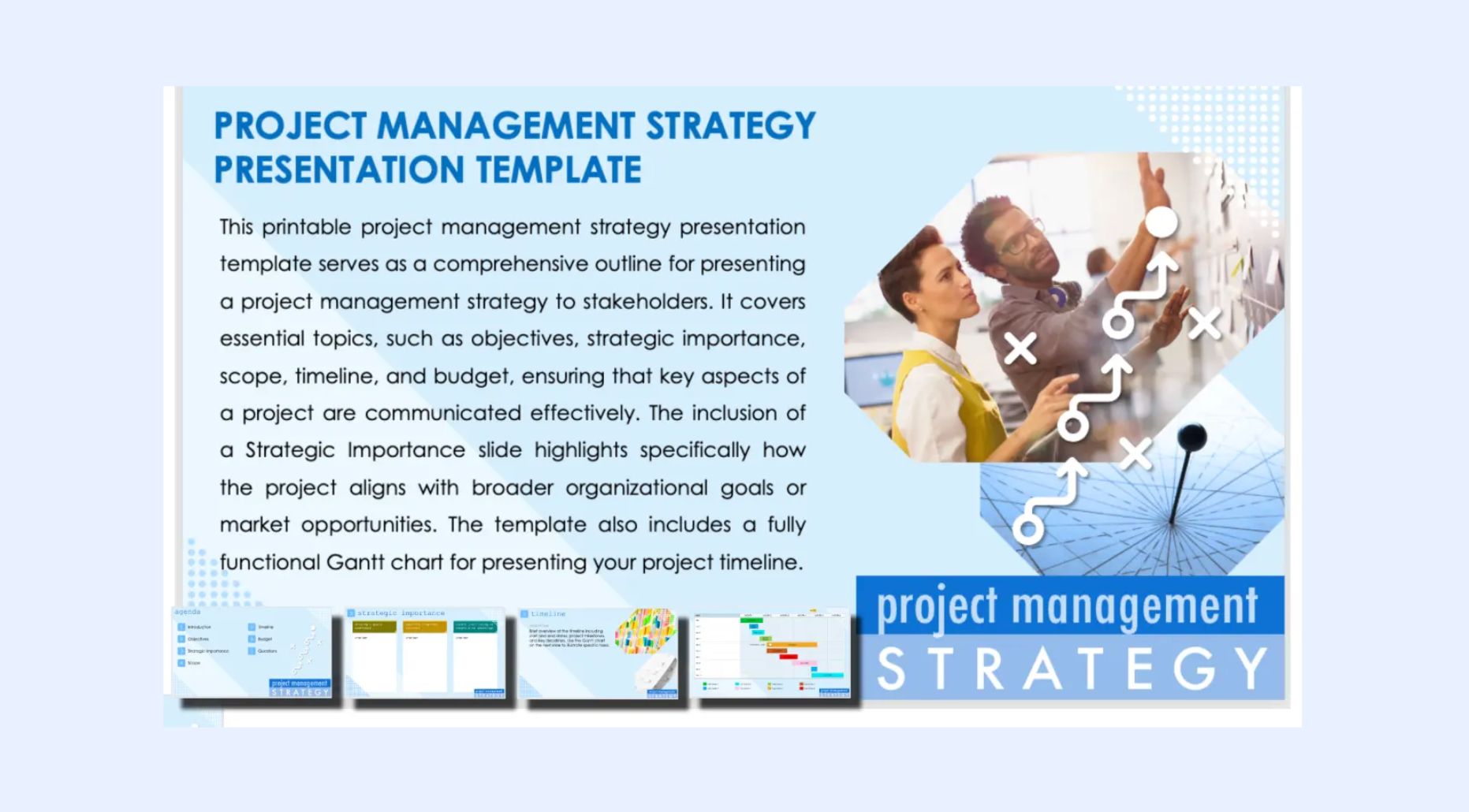
Image source: smartsheet.com
The project management strategy presentation template is designed for effectively presenting a project management strategy to stakeholders. It serves as a comprehensive outline covering objectives, strategic importance, scope, timeline, and budget. It includes a to visually represent the project timeline.
This template is useful for project managers and team leaders when communicating project plans. It ensures that key information is presented clearly and facilitates informed discussions.
However, it can become overly complex and may overwhelm stakeholders if too much information is included. The reliance on static presentations can hinder real-time updates, leading to discrepancies if project details change.
Strategic project plan template
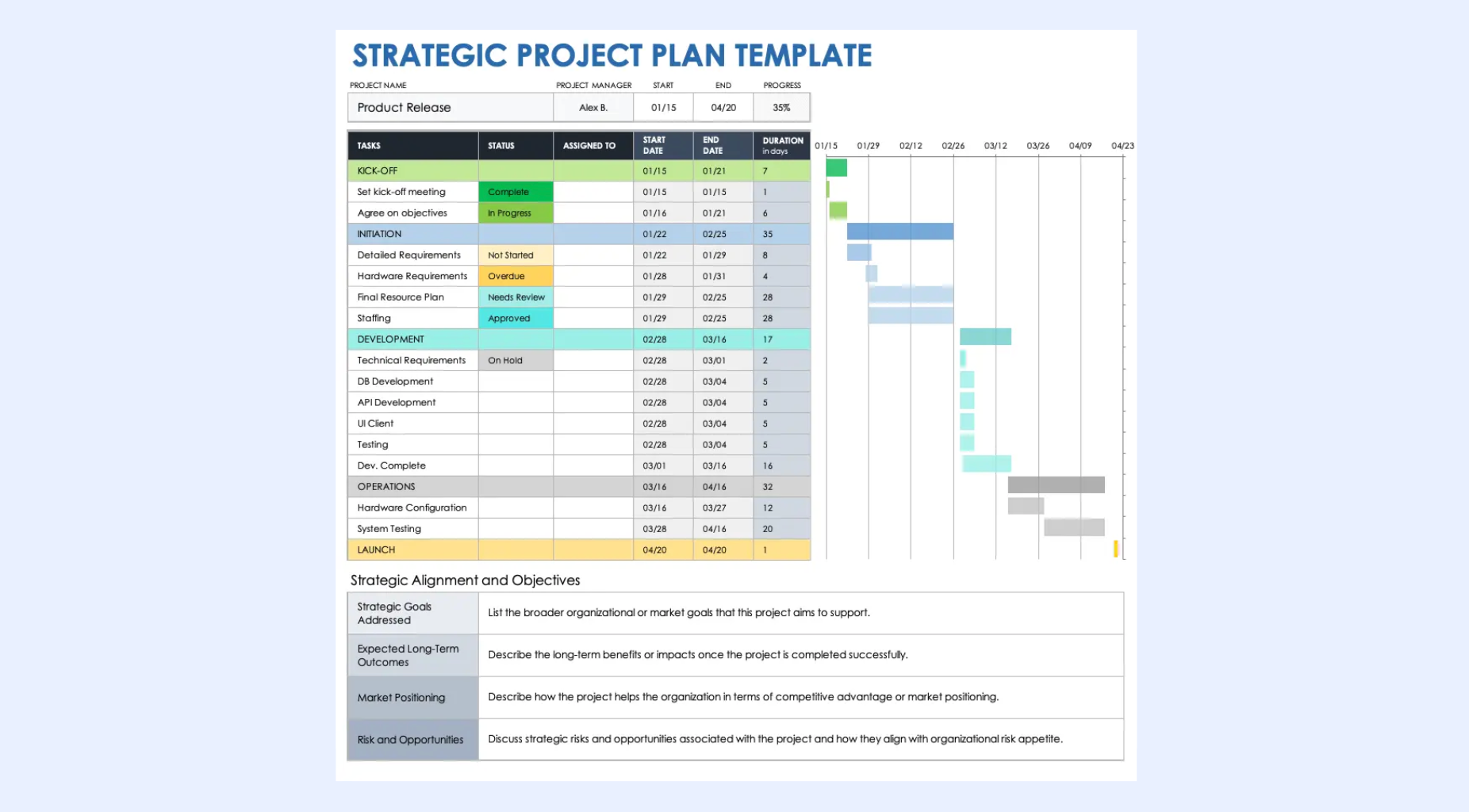
Image source: smartsheet.com
The strategic project plan template integrates a Gantt chart with sections for strategic alignment and objectives, contextualizing the project within broader organizational goals. It outlines the timeline, responsible parties, and status of tasks, enhancing project visibility.
This template is ideal for project managers and teams focused on ensuring strategic alignment. It helps communicate how projects contribute to organizational success.
Nevertheless, it requires constant updates to remain pertinent, which can be time-consuming. The static nature can reduce adaptability in dynamic environments, and teams may struggle with interpretation or customization, limiting its effectiveness in unique contexts.
Try more templates to streamline your PM journey
Adopting project management strategies in Lark
Successful project management hinges on effective planning, communication, and collaboration throughout the entire. , one of the most versatile , not only supports these essential strategies but also provides innovative features that transform standard project management into a dynamic and proactive workflow. Here's how Lark's core functionalities can elevate your project management efforts.
Elevating project management strategies through Lark Base
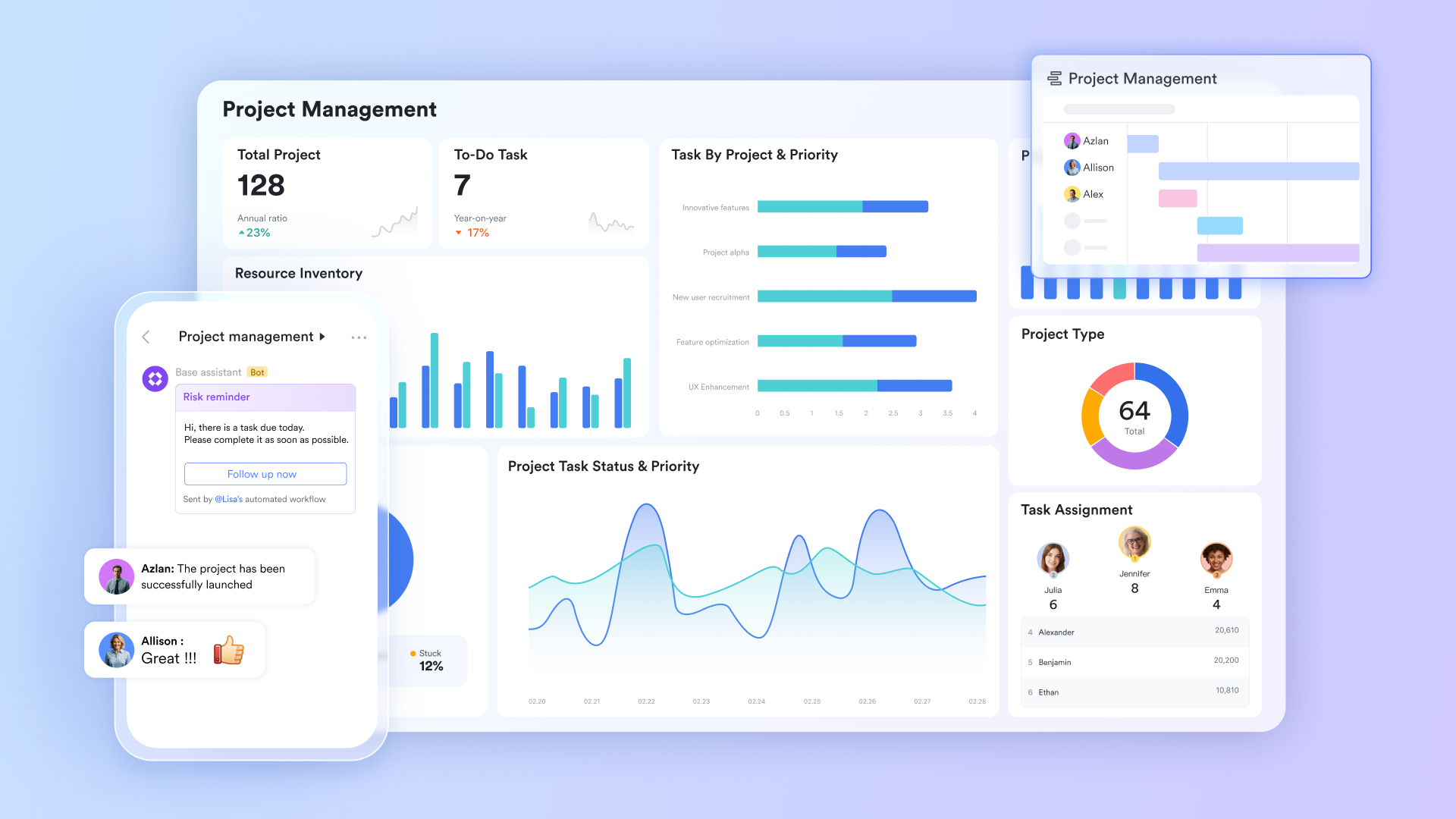
serves as a comprehensive project management solution designed to through efficient task handling, dynamic views, and proactive management. It focuses on and fostering collaboration by combining multiple functionalities that cater to modern project management needs. Below are key features that highlight Lark Base's capabilities:
- Optimized task organization: Managing tasks can be cumbersome, but Lark's capabilities strike the right balance. Users can create customizable task boards, complete with specific fields tailored to their project needs. Critical project elements—such as "Task Name", "Due Date", "Status" ("Not Started", "In Progress", "Completed"), "Assignee", and "Priority"—provide a solid foundation for tracking and accountability. This structured approach ensures that every team member understands their responsibilities and deadlines, promoting a sense of ownership and commitment.
- Flexible viewing options: Lark offers versatile perspectives on project data through various view options. The allows real-time visualization of task progression, helping team members identify bottlenecks in workflows. Meanwhile, the Gantt view displays the project timeline, making it easy to see task dependencies and critical paths. Additional views, like calendar and list, enhance deadline awareness and facilitate task management, ensuring that teams can track their progress from multiple angles and adapt dynamically to project changes.
- for proactive management: Shifting from reactive to proactive project management is essential, and Lark's automation capabilities support this transition. Users can configure alerts and reminders based on specific triggers, such as notifying team members when tasks approach their deadlines. This proactive approach empowers project managers to effectively handle potential risks, ensuring that important tasks are completed on time and that any issues are addressed promptly. By streamlining these workflows, Lark helps teams maintain focus and drive projects forward efficiently.
- Comprehensive project dashboards: Lark's dashboard functionality consolidates critical project metrics—such as task completion rates and timelines—into a single accessible view. This real-time data aggregation ensures that project leaders are informed about overall project health and can quickly identify areas requiring immediate attention. By maintaining an up-to-date overview of the project, teams can ensure alignment with their objectives and timelines, facilitating better decision-making and .
Seamless communication through Lark Messenger
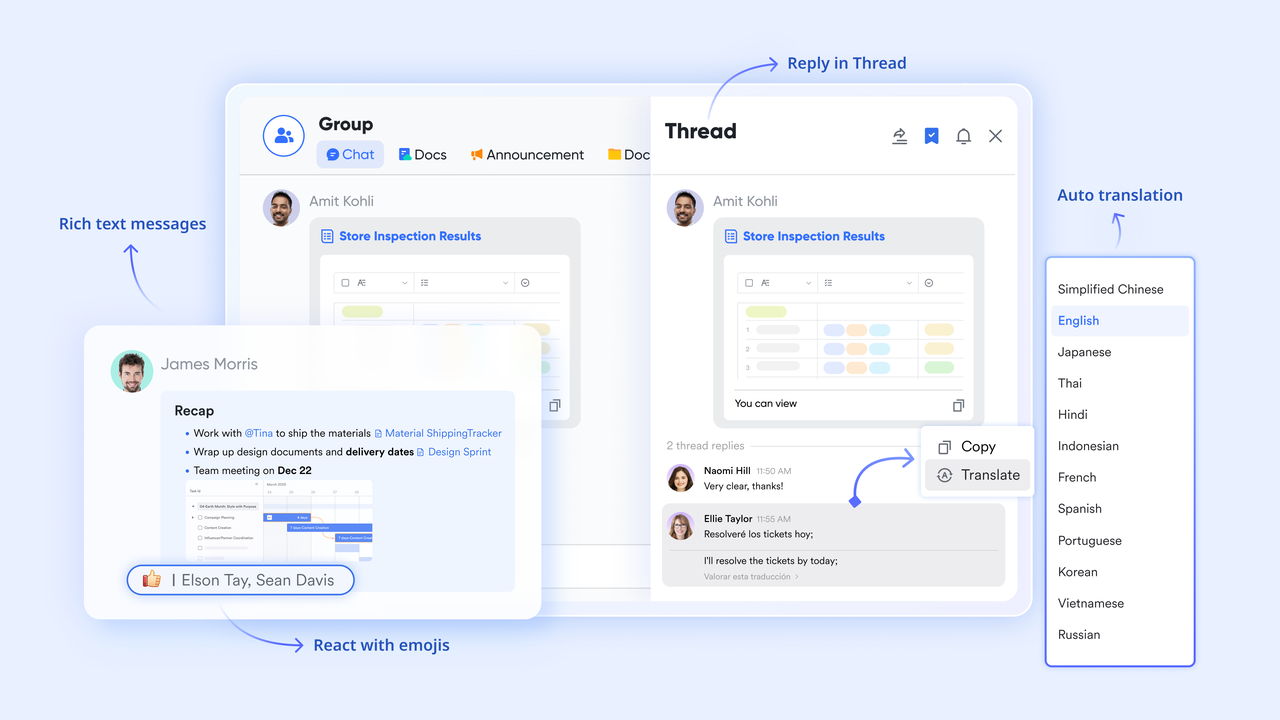
Effective communication is essential for the success of any project. significantly enhances this communication by allowing updates from clients to be effortlessly shared within the relevant project chat. This keeps discussions focused and organized, enabling quick task assignments and informed decision-making. By minimizing potential delays, Lark ensures that project momentum is maintained. Furthermore, Lark's align all team members, fostering a collaborative environment that drives productivity and enhances project outcomes.
Unified document management through Lark Docs
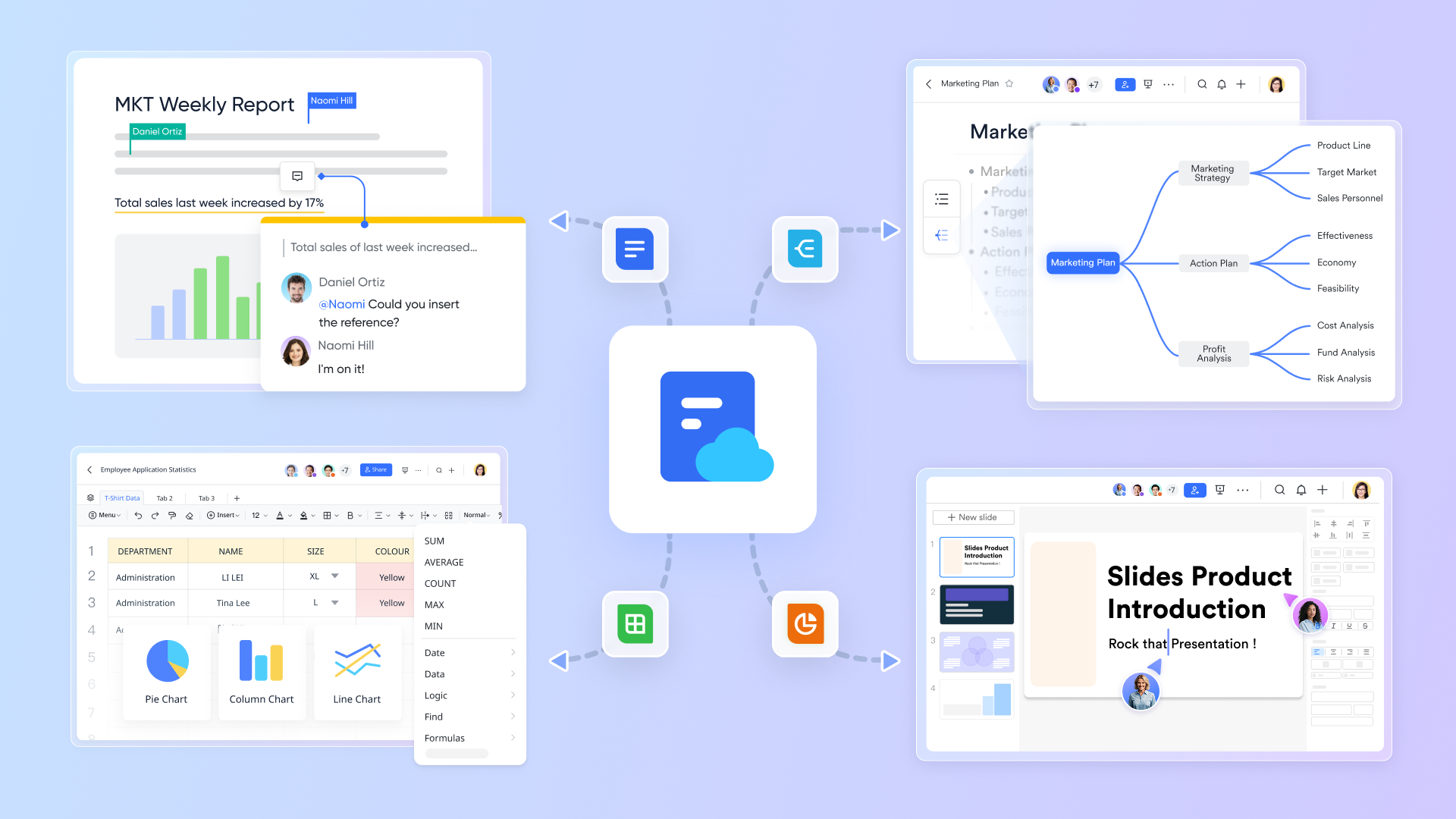
acts as a central repository for all project-related information, eliminating confusion caused by scattered files. This unified platform allows teams to co-edit documents in real-time, leveraging features such as a table of contents, comment threads, and @mentions to facilitate streamlined feedback and revisions. By providing a single source of truth, Lark Docs ensures that everyone has access to the most up-to-date information, significantly reducing errors and miscommunication. This enhanced capability is crucial for effective project management, as it supports collaboration and decision-making at every stage of the project lifecycle.
:
- Starter plan: Free forever plan with 11 powerful tools for up to 20 users, 100GB storage, 1,000 automation runs, AI translations, and more. No credit card needed.
- Pro plan: $12/user/month (billed annually) for up to 500 users. Includes everything in Starter plus group calling for up to 500 attendees, 15TB storage, 50,000 automation runs, and more.
- Enterprise plan: for custom pricing. Supports unlimited users and includes advanced automation, security, compliance, and management features.
For small teams with simple communication needs

18 months message history
1000 Base automation runs/month
2000 rows per table in Base
Most POPULAR
For companies with comprehensive collaboration and management needs
Unlimited message history
500-participant video meetings
50k Base automation runs/month
20k rows per table in Base
For large companies with advanced security and organizational management needs
Get a personalized demo and pricing
Unlimited message history
500-participant video meetings
15 TB storage + 30 GB storage/user
500k Base automation runs/month
50k Base automation runs/month
Most POPULAR
For companies with comprehensive collaboration and management needs
Unlimited message history
500-participant video meetings
50k Base automation runs/month
20k rows per table in Base
How to identify the right project management strategy
Identifying the appropriate project management strategy is a critical step in ensuring a project's success. With numerous methodologies available, choosing the right one requires careful consideration of various factors. Below, I outline several essential steps to guide this decision-making process:
- Understand project goals and objectives: Before selecting a methodology, it's vital to clarify the specific goals and . This includes understanding the desired outcomes, timelines, and budget constraints. A clear understanding of these elements will help determine which strategy aligns best with the project's requirements.
- Evaluate team dynamics: The composition of the project team plays an important role in the choice of strategy. Assessing the team's experience, skillsets, and working styles can inform whether a more flexible approach like Agile is suitable or if a structured methodology like Waterfall may be more effective. Teams experienced in collaborative environments may benefit from an Agile framework that emphasizes iterative development, while those with strict timelines and predefined deliverables may prefer Waterfall.
- Analyze the complexity of the project: Projects come in various complexities. High-complexity projects may require more adaptive methodologies that can accommodate changing requirements and the need for frequent adjustments. In contrast, simpler projects might function better under more defined methodologies with clear guidelines and expected outcomes.
- Consider stakeholder involvement: The level of expected during the project lifecycle should also be factored into the decision. Certain methodologies, like Agile, emphasize ongoing stakeholder feedback and involvement, while others may operate more independently, delivering results at specified intervals.
- Risk assessment: Evaluate the potential risks associated with each methodology. Understanding the risks inherent in various project management strategies can direct the selection towards those that provide robust strategies. For example, if you anticipate high uncertainty or changes during the project, an Agile approach may offer better risk response strategies in project management compared to traditional methods.
- Future adaptability: As projects progress, it may become necessary to pivot or adapt strategies based on lessons learned or shifts in the business environment. Choosing a methodology that allows for this flexibility can be beneficial in the long term.
By thoroughly evaluating these factors, project managers can select the project management strategy that best suits their team and project demands. This thoughtful approach ensures that the risk mitigation strategies in project management are effectively aligned, paving the way for successful project execution.
Conclusion
In summary, adopting the right project management strategies is essential for overcoming challenges and achieving project success. Tools like Lark provide crucial support by offering customizable workflows and enhancing communication, which are key components in effective project management. Understanding how to identify the right project management strategy involves evaluating project goals, team dynamics, project complexity, stakeholder involvement, and potential risks.
Ultimately, implementing well-chosen strategies and leveraging modern tools like can make a significant difference in how effectively teams handle project challenges and meet their objectives. Emphasizing clear communication and robust risk management will not only enhance project outcomes but also foster a collaborative environment where all team members contribute to shared success. Establishing strong project management practices today will prepare teams for the uncertainties of tomorrow.
Lift your project management strategies to new heights
FAQs
What are the 7 strategies of project management?
The seven strategies of project management include: defining clear goals, establishing a robust project plan, effective communication, risk management, stakeholder engagement, continuous monitoring, and promoting teamwork. These strategies ensure that projects are completed on time, within scope, and meet quality standards.
What are the 5 C's of project management?
The 5 C's of project management are:
- Clarify goals: Define clear project objectives.
- Communicate effectively: Maintain open lines of communication.
- Coordinate resources: Ensure proper allocation and management of resources.
- Control progress: Monitor project milestones and performance.
- Collaborate: Foster teamwork and stakeholder involvement.
What is a project management strategy?
A project management strategy is a plan that outlines how a project will be executed and controlled. It encompasses methodologies, frameworks, and approaches tailored to meet specific project goals and manage resources effectively.
What are the 5 fundamentals of project management?
The five fundamentals of project management are:
- Scope management: Defining and overseeing project boundaries.
- Time management: Scheduling and adhering to timelines.
- Cost management: Budgeting and controlling expenses.
- Quality management: Ensuring deliverables meet established standards.
- Risk management: Identifying and mitigating potential issues.
What challenges do teams face when using traditional project management tools?
Traditional tools often have rigid structures and can lack flexibility, making it hard to adapt to changes. Lark's customizable workflows provide better adaptability, proving beneficial for teams needing agility in their project management processes.
Related reading