In today's competitive talent market, the journey from identifying a need to welcoming a new team member is more intricate than ever. Recruiters and HR professionals face the constant challenge of sifting through countless applications, coordinating interviews, and ensuring a positive candidate experience, all while maintaining compliance. This is where Automated Tracking Systems, or ATS, become indispensable. Far from being just a resume filter, modern ATS platforms are evolving into sophisticated tools designed to streamline the entire hiring process. This guide aims to demystify the world of ATS, offering a comparative look at leading solutions to help you make an informed decision for your organization's unique recruitment needs. We'll explore how these systems can transform your hiring strategy, making it more efficient, effective, and candidate-friendly.
What exactly is an automated tracking system (ATS)?
An Automated Tracking System (ATS) is a software application that manages the recruitment and hiring process. Think of it as a central hub for all your hiring activities, designed to automate and organize every stage from job posting to candidate onboarding. At its core, an ATS helps recruiters efficiently sort through a large volume of applications, identify qualified candidates, and manage communication throughout the hiring funnel. It moves beyond simple database management, leveraging technology to make recruitment more proactive and data-driven.
For instance, consider a scenario where your company receives hundreds of applications for a single open position. Manually reviewing each resume and cover letter is not only time-consuming but also prone to human error. An ATS can automatically parse resumes, extract key information, and even rank candidates based on predefined criteria, significantly reducing the initial screening workload. This frees up your recruitment team to focus on more strategic tasks, like engaging with promising candidates and refining broader . While systems like also track and organize, an ATS is specifically tailored to the nuances of talent acquisition, focusing on human capital rather than physical goods. It's a specialized tool for a specialized process.
Why companies rely on automated tracking systems
In sectors like retail, effective ATS usage underpins , but the same principles apply across most industries.
Companies today rely on ATS for a multitude of reasons that extend far beyond simple administrative relief. These systems are strategic investments that directly impact a company's ability to attract, hire, and retain top talent. One primary benefit is improved efficiency and reduced time-to-hire. By automating repetitive tasks like resume screening, interview scheduling, and background check initiation, an ATS drastically cuts down the time it takes to fill a position. This speed is crucial in a competitive market where top candidates are often quickly snatched up.
Another critical advantage is an enhanced candidate experience. While some might perceive ATS as impersonal, modern systems are designed to foster better communication and transparency. Candidates can track their application status, receive automated updates, and easily submit necessary documents, leading to a more positive interaction with your brand. For example, imagine a candidate applying for a role and receiving regular, personalized updates on their application's progress, including timely invitations for interviews. This proactive communication, facilitated by an ATS, makes them feel valued and informed, even if they aren't ultimately selected. Furthermore, ATS helps ensure compliance with hiring regulations by documenting every step of the recruitment process, from consent forms to equal opportunity considerations, mitigating potential legal risks. Ultimately, an ATS transforms an often chaotic and manual process into a structured, data-driven, and compliant operation, allowing companies to make smarter hiring decisions.
Key features to look for in an ATS
When evaluating an ATS, a suite of robust features is paramount to ensuring it meets your organization's specific recruitment needs. Beyond basic resume storage, a powerful ATS offers functionalities that streamline every stage of the hiring journey.
- Candidate sourcing and management: Look for features that allow you to post job openings to multiple job boards and social media platforms simultaneously, as well as tools for building and nurturing a talent pipeline. An integrated within the ATS can help track interactions and engage with potential candidates for future roles.
- Resume parsing and screening: Advanced ATS leverage AI and machine learning to accurately extract information from resumes, identify keywords, and even score candidates based on job requirements. This significantly reduces manual review time and helps surface the most qualified applicants efficiently.
- Interview scheduling and collaboration tools: The ability to automate interview scheduling, send calendar invitations, and gather feedback from interviewers directly within the system is crucial. Look for collaborative features that allow hiring teams to communicate, share notes, and make informed decisions together.
- Communication automation: An effective ATS automates routine communications, such as application confirmations, interview reminders, and rejection emails. This ensures candidates are always informed and frees up recruiters from repetitive administrative tasks.
- Reporting and analytics: Data-driven insights are vital for optimizing recruitment strategies. A good ATS provides comprehensive reports on metrics like time-to-hire, cost-per-hire, source of hire, and candidate diversity, enabling continuous improvement of your recruitment funnel.
- Integration capabilities: Consider how well the ATS integrates with your existing HR tech stack, including HRIS (Human Resources Information Systems), payroll software, and background check providers. Strong integrations ensure a unified data flow and prevent data silos.
Discover a new way to support structured team hiring
Top 9 automated tracking systems on the market today
Selecting the right Automated tracking system can significantly impact your recruitment success. We've analyzed the market to bring you a comprehensive overview of the top 9 ATS solutions available, highlighting their strengths, key features, and pricing models.
1. Lark: An all-in-one productivity powerhouse
The verdict: Lark is ideal for growing SMEs to large enterprises, especially remote/hybrid teams seeking to consolidate their fragmented tool stacks into a unified workspace. It stands out by integrating core collaboration, communication, and automation tools, eliminating the need for multiple subscriptions and improving overall workflow efficiency.
Deep dive:
Web forms for candidate sourcing
Instead of manually entering data, recruiters use the Form view function in . This allows you to create a public-facing job application link where candidates upload their resumes and details. Once submitted, the "Form to record" function automatically creates a new profile in your , eliminating manual data entry and ensuring every applicant is captured instantly. 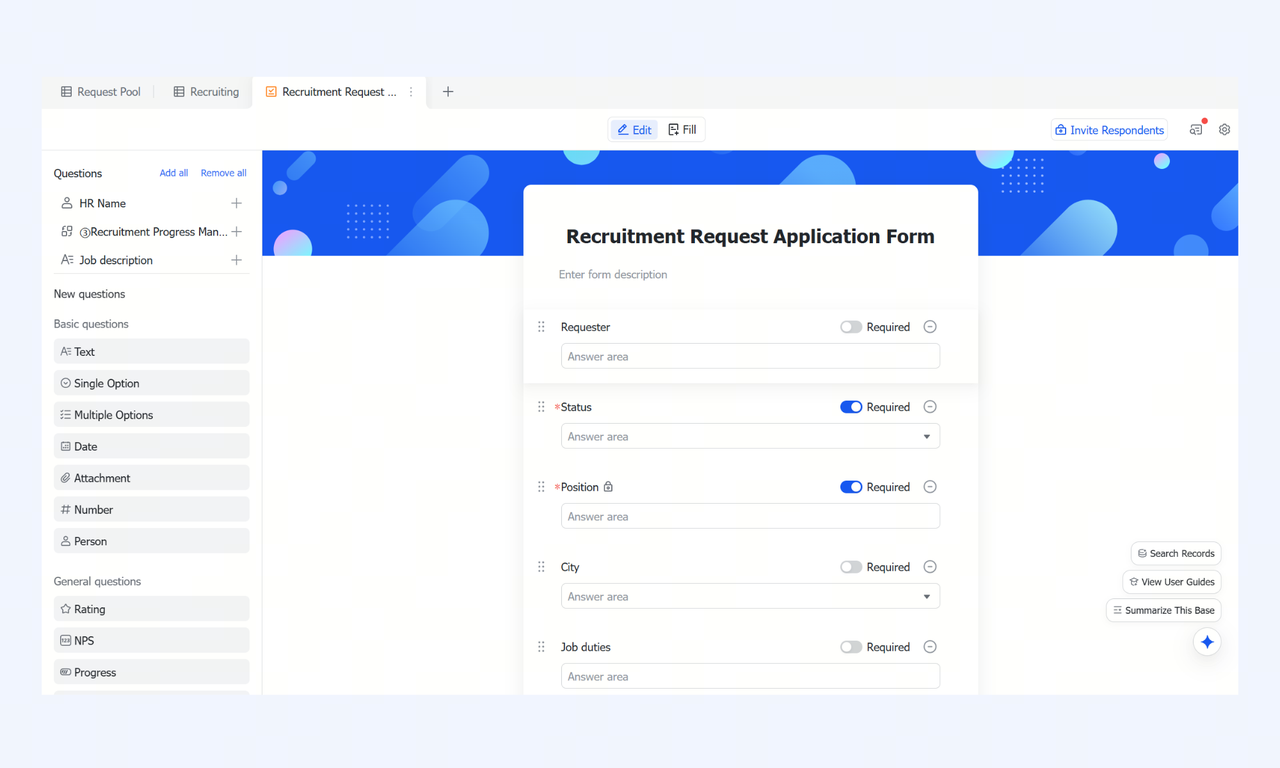
Resume parsing and attachment fields
Managing large volumes of CVs is handled through attachment fields in Lark Base. This function allows you to store multiple file versions (PDF and Word) directly in a candidate's record. By using the Gallery view, recruiters can visually scan resume thumbnails and use the global search function to find specific keywords across all , making it easy to filter for specific skills like "Java" or "Product Design." 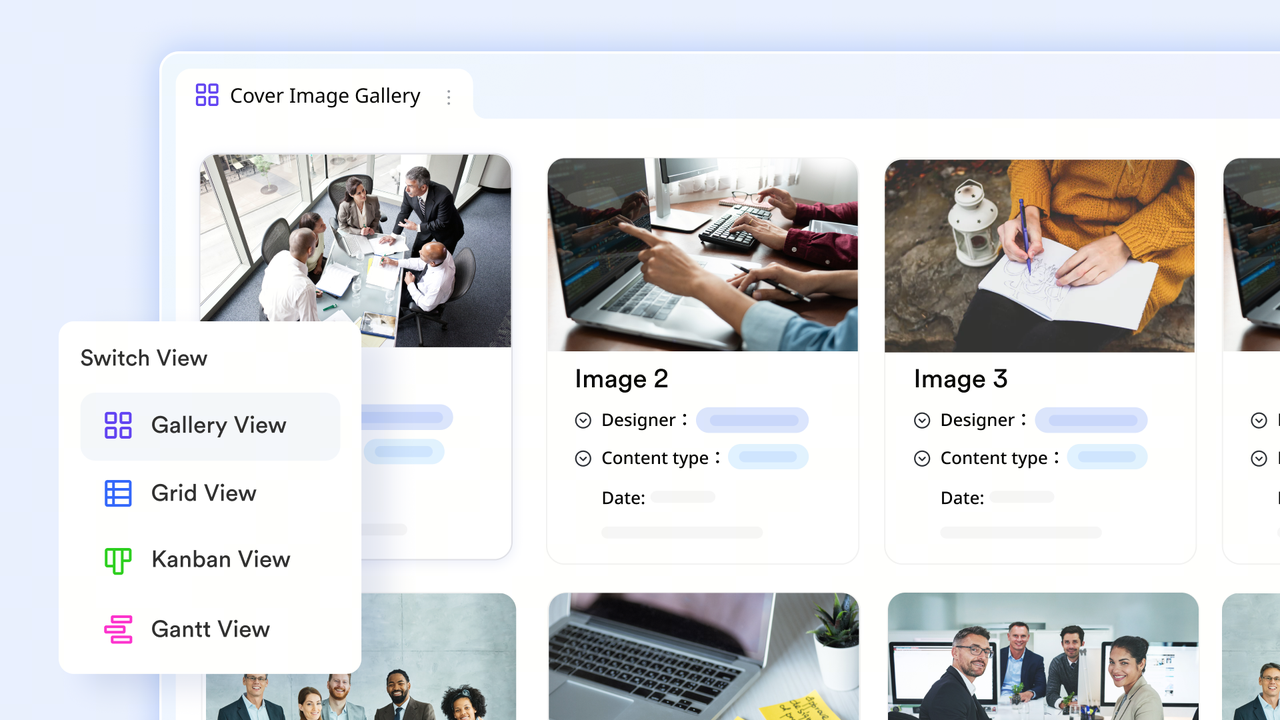
Real-time dashboard provides data trends and insights
The dashboard in Lark Base lets you add various blocks to visualize the current data trends. For an ATS, you can use a funnel chart to visualize your "Candidate Conversion Rate" (from Initial Screen to Offer) or a bar chart to track "Source Effectiveness" (e.g., LinkedIn vs. Referrals). These blocks update in real-time as your team moves candidates through the pipeline, providing instant visibility into hiring progress. 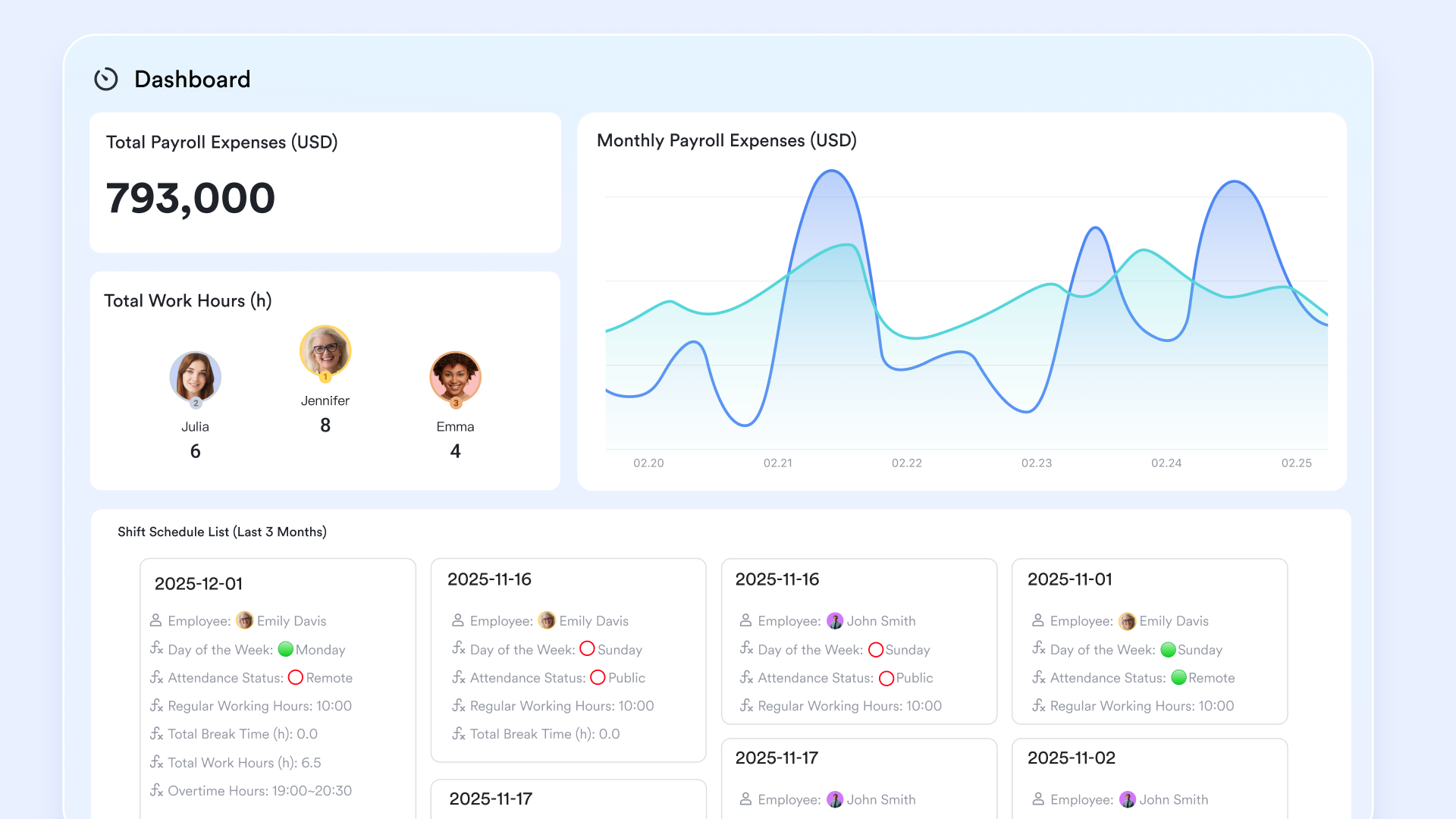
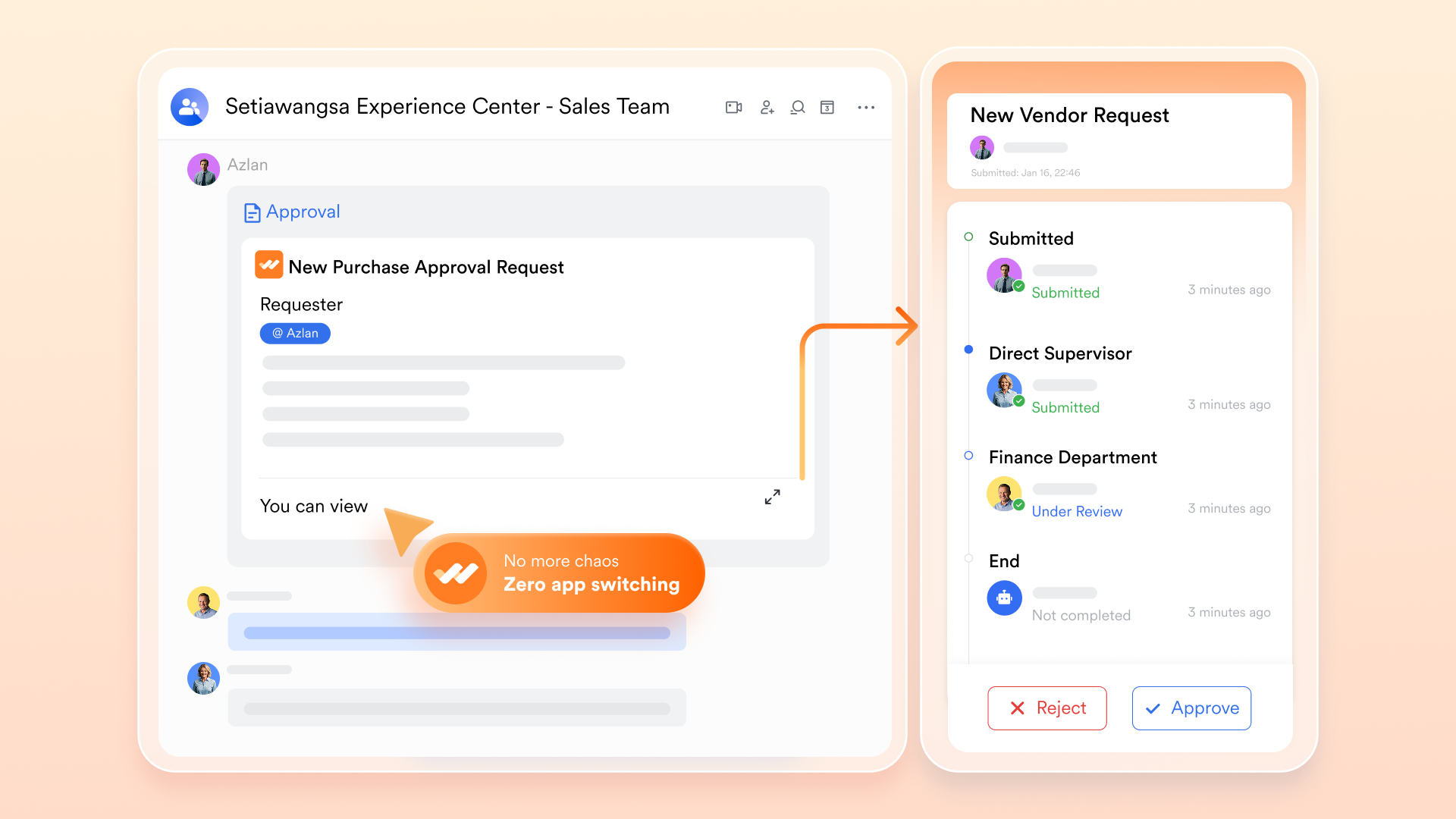
Multi-stage approval flows
Hiring requires strict oversight before an offer is extended. allows you to build custom approval flows for "Headcount requests" or "Offer approvals." Using conditional logic, an offer can be automatically routed to the department head if it's within budget, or escalated to the CFO if it exceeds it. This ensures all hires are vetted through the correct chain of command directly via Lark Messenger.
External collaborator permissions
Recruitment often involves external headhunters or agencies. Lark's advanced permissions feature lets you invite external collaborators to a specific Base or folder with restricted access. You can set permissions so an agency can "Add" new candidates but cannot "View" or "Edit" the internal interview scores or salary discussions of other applicants, maintaining strict data privacy. 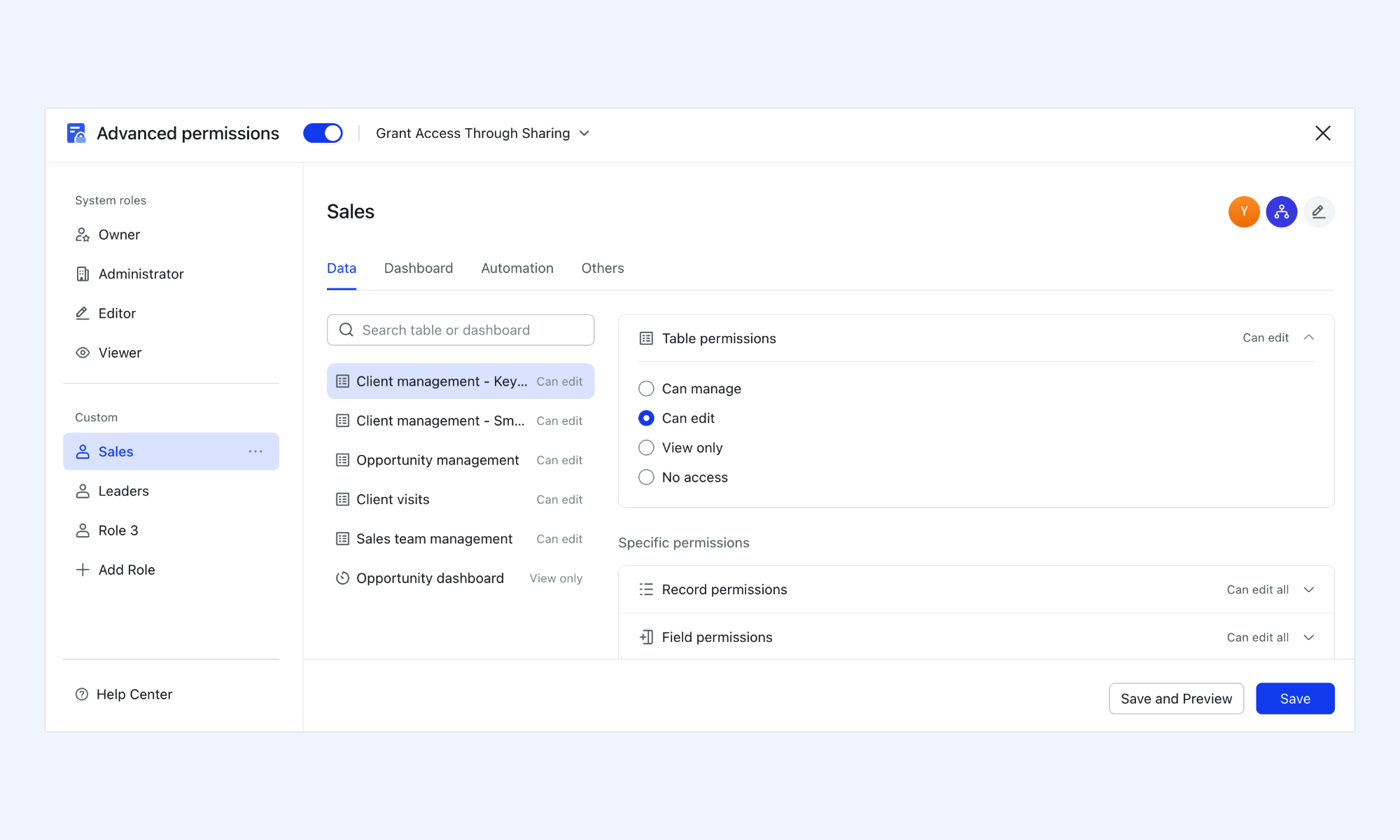
Pros:
- Integrated communication and collaboration: Lark brings messaging, video meetings, cloud-native documents, and more into a single platform, eliminating the need to switch between different tools.
- Powerful workflow automation: Use to create custom hiring workflows, from offer approvals to onboarding tasks, enhancing efficiency and reducing manual errors.
- Scalable and cost-efficient: Lark offers a robust free plan for up to 20 users and competitive pricing for larger teams, providing advanced features at a lower total cost of ownership compared to piecemeal solutions.
Cons:
- Extensive feature set: While Lark's comprehensive feature set offers immense value, new users might experience a slight learning curve to fully explore and utilize all its integrated capabilities. However, its intuitive interface, extensive help center, and numerous online tutorials are designed to facilitate rapid onboarding and feature adoption.
:
- Starter plan: Free forever plan that includes 11 powerful tools for up to 20 users. It also includes 100GB of storage, 1,000 automation runs, AI translations, and more.
- Basic plan: $6/user/month (billed annually) for up to 500 users. It includes everything in Starter plus group calling for up to 500 attendees, 5TB of storage, 1000 automation runs, and more. For more details, please .
- Pro plan: $12/user/month (billed annually) for up to 500 users. It includes everything in Basic, plus group calling for up to 500 attendees, 15 TB of storage, 50,000 automation runs, and more.
- Enterprise plan: for custom pricing. Supports unlimited users and includes even more automation runs and advanced security, compliance, and management features.
For small teams with simple communication needs

18 months message history
1000 Base automation runs/month
2000 rows per table in Base
Most POPULAR
For companies with comprehensive collaboration and management needs
Unlimited message history
500-participant video meetings
50k Base automation runs/month
20k rows per table in Base
For large companies with advanced security and organizational management needs
Get a personalized demo and pricing
Unlimited message history
500-participant video meetings
15 TB storage + 30 GB storage/user
500k Base automation runs/month
50k Base automation runs/month
Most POPULAR
For companies with comprehensive collaboration and management needs
Unlimited message history
500-participant video meetings
50k Base automation runs/month
20k rows per table in Base
2. Breezy: Smart recruiting automation
The verdict: Breezy is a strong choice for businesses of all sizes looking for a comprehensive and user-friendly ATS that prioritizes automation and collaboration in the hiring process.
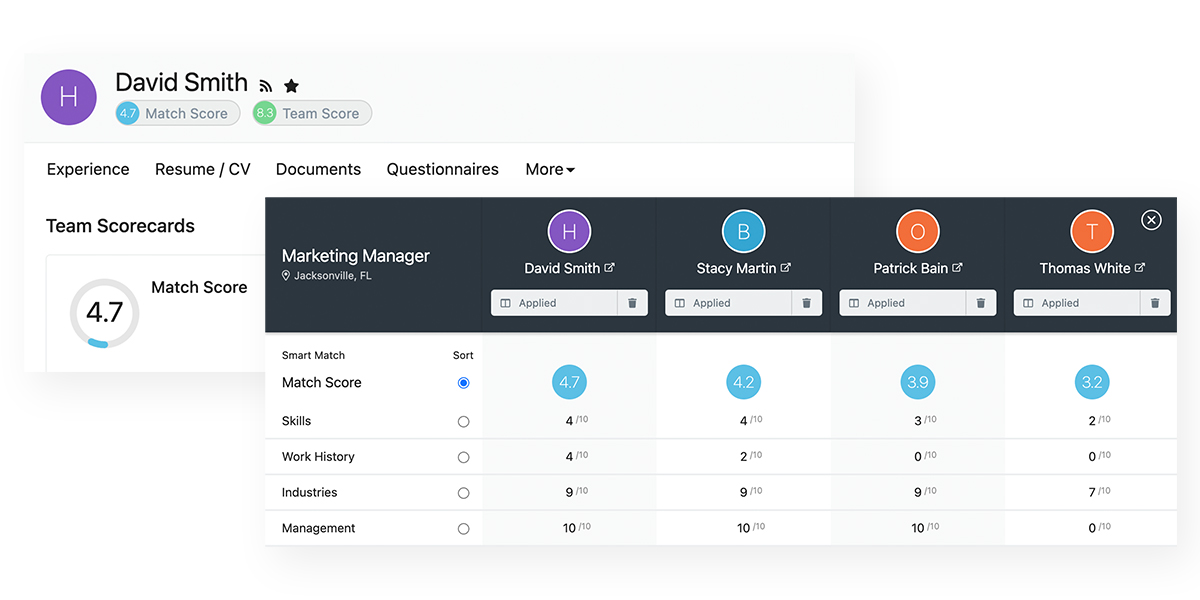
Image source: breezy.hr
Deep dive:
Breezy stands out with its intuitive interface and powerful automation features designed to simplify every aspect of recruitment. From creating engaging career pages to automating candidate outreach, Breezy aims to reduce the manual effort involved in hiring. Its drag-and-drop pipeline management allows recruiters to easily visualize and move candidates through different stages, providing a clear overview of the hiring process. This visual approach helps teams quickly identify bottlenecks and manage their talent pool more effectively.
The platform also excels in collaborative hiring, offering features like team scorecards, private notes, and seamless integration with video conferencing tools. This ensures that all members of the hiring team can contribute feedback, discuss candidates, and make collective decisions in a centralized environment. For a small business with a growing hiring need, Breezy's ability to automate initial candidate screening and streamline communication can be a game-changer, allowing them to compete for talent more effectively without a large recruitment team.
Pros:
- User-friendly interface: Easy-to-use visual pipeline management simplifies tracking candidates.
- Robust automation: Powerful automation capabilities reduce repetitive administrative tasks.
- Strong collaboration: Seamless collaboration features enable effective team hiring.
Cons:
- Pricing scalability: Pricing can become a significant consideration for very small teams with tight budgets.
- Advanced customization: Some advanced customization options might require a deeper dive into the platform's settings.
Pricing:
- Bootstrap plan: $0/month.
- Startup plan: $157/month.
- Growth plan: $273/month.
- Business plan: $439/month.
3. Teamtailor: The employer branding ATS
The verdict: Teamtailor is best suited for organizations that want to heavily focus on their employer brand and create an exceptional candidate experience, making it particularly effective for attracting passive candidates.

Image source: teamtailor.com
Deep dive:
Teamtailor positions itself as more than just an ATS; it's a platform designed to enhance your employer brand and attract talent through engaging career sites and seamless candidate communication. It empowers companies to build beautiful, customizable career pages that reflect their culture and values, effectively turning their recruitment efforts into a marketing campaign. This focus on branding helps companies stand out in a crowded job market and draw in candidates who are a strong cultural fit.
Beyond employer branding, Teamtailor offers a comprehensive set of recruitment tools, including candidate management, automated workflows, and reporting. Its automation features allow recruiters to set up triggers for various actions, such as sending personalized emails based on a candidate's stage in the pipeline or inviting them to specific events. This combination of strong branding and intelligent automation creates a highly personalized and positive experience for candidates, which is increasingly important in today's talent landscape.
Pros:
- Employer branding focus: Exceptional tools for building and managing a compelling employer brand.
- Automated workflows: Streamlined candidate communication and engagement through automated workflows.
- Candidate experience: Strong emphasis on candidate experience helps attract and retain top talent.
Cons:
- Customization complexity: Some users might find the extensive branding customization options require an initial investment of time.
- Pricing transparency: The pricing structure may be less transparent upfront compared to some competitors.
Pricing:
- Standard plan: Custom Pricing.
- Enterprise plan: Custom Pricing.
4. Manatal: AI-powered recruitment and sourcing
The verdict: Manatal is an excellent choice for businesses looking to leverage artificial intelligence for more efficient candidate sourcing, screening, and overall recruitment process optimization.
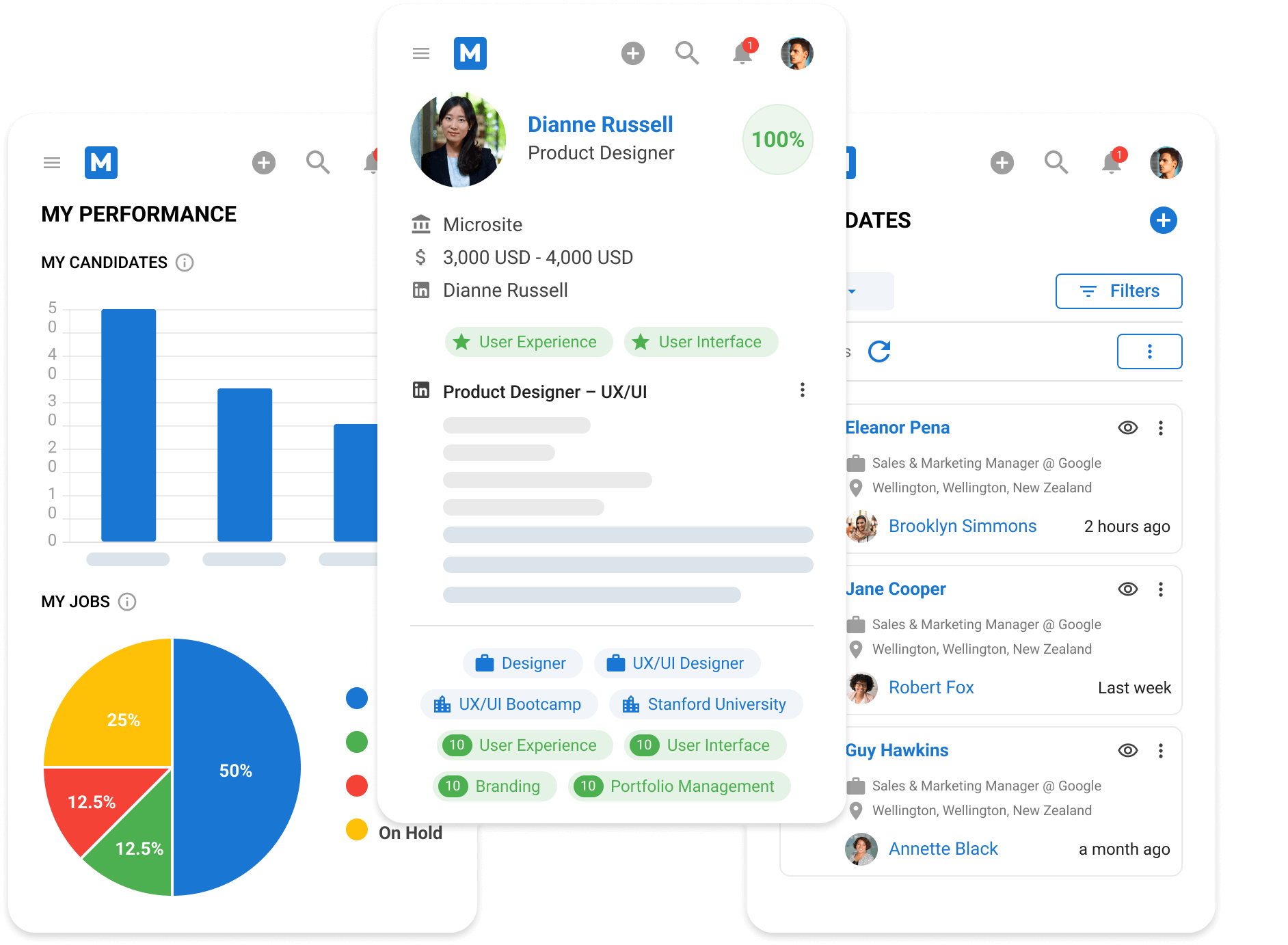
Image source: manatal.com
Deep dive:
Manatal differentiates itself through its advanced AI capabilities, specifically designed to accelerate candidate sourcing and screening. Its AI engine can analyze vast databases of resumes and online profiles, identify suitable candidates, and even rank them based on predefined criteria and job descriptions. This significantly reduces the time recruiters spend on manual search and initial vetting, allowing them to focus on engaging with the most promising talent. The platform's AI also provides intelligent recommendations for similar candidates and skill matches, expanding the talent pool beyond traditional search methods.
In addition to its AI prowess, Manatal offers a full suite of ATS features, including customizable pipelines, interview scheduling, and collaborative hiring tools. Recruiters can easily manage candidate communication, track progress, and generate insightful reports to optimize their strategies. For a busy HR department struggling with a high volume of applications, Manatal's AI-driven approach can provide a significant competitive advantage by quickly surfacing the best candidates and streamlining the entire recruitment lifecycle.
Pros:
- AI-driven sourcing: Advanced AI engine for efficient candidate sourcing and intelligent matching.
- Streamlined screening: Enhanced candidate screening and management capabilities.
- Comprehensive features: Full suite of ATS features with a focus on ease of use.
Cons:
- AI reliance: Reliance on AI might require a degree of trust and understanding from recruitment teams.
- Feature richness: Smaller organizations might find the advanced features to be more than they initially need.
Pricing:
- Professional plan: $15/user/month (billed annually).
- Enterprise plan: $35/user/month (billed annually).
- Enterprise Plus plan: $55/user/month (billed annually).
5. Greenhouse: The enterprise-grade ATS
The verdict: Greenhouse is a robust ATS best suited for mid-sized to large enterprises with complex hiring needs that require highly customizable workflows, extensive reporting, and seamless integration with a broad range of HR tools.
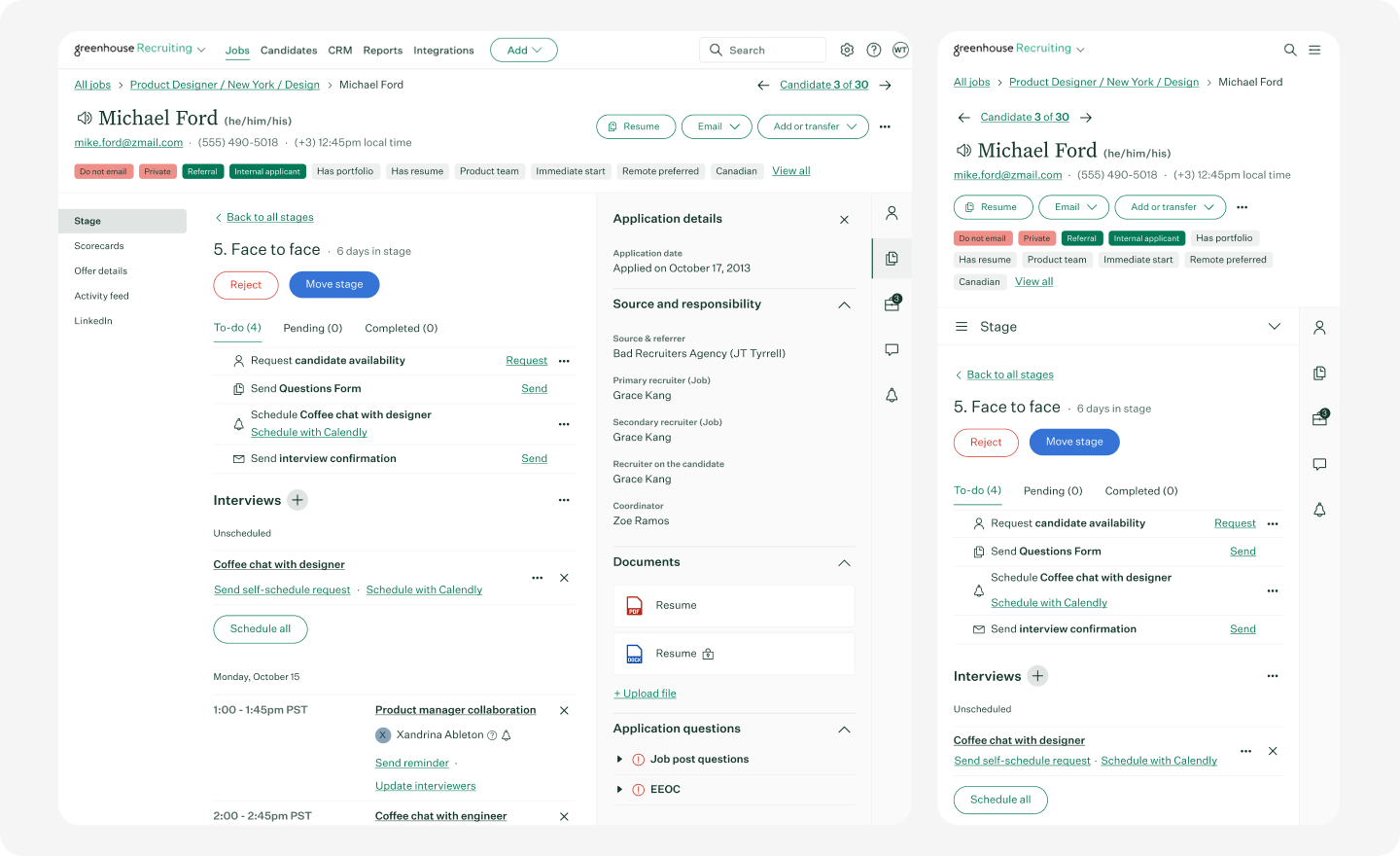
Image source: greenhouse.com
Deep dive:
Greenhouse is widely recognized for its comprehensive features and adaptability, making it a favorite among larger organizations with sophisticated recruitment processes. Its strength lies in its ability to create highly customized hiring workflows, allowing companies to tailor every step of their recruitment process to their unique requirements. This flexibility is invaluable for enterprises that have distinct departmental needs or specific compliance standards to meet. The platform offers robust tools for candidate management, interview kit creation, and structured hiring, ensuring fairness and consistency across all recruitment activities.
Moreover, Greenhouse excels in providing powerful analytics and reporting capabilities. It offers in-depth insights into every stage of the hiring funnel, allowing HR leaders to identify bottlenecks, measure team performance, and make data-driven decisions to optimize their talent acquisition strategy. Its extensive integration marketplace also ensures that it can connect seamlessly with a wide array of HRIS, payroll, and other talent management systems, creating a unified ecosystem for human resources.
Pros:
- Customizable workflows: Highly customizable workflows cater to complex and specific hiring needs.
- Powerful analytics: Robust reporting and analytics provide deep insights into recruitment performance.
- Extensive integrations: Broad integration marketplace ensures compatibility with existing HR tech stacks.
Cons:
- Learning curve: The comprehensive feature set can lead to a steeper learning curve for new users.
- Enterprise-focused pricing: Pricing is typically geared towards larger enterprises, making it less accessible for very small businesses.
Pricing:
- Standard plan: Custom Pricing.
- Enterprise plan: Custom Pricing.
6. Workable: Best for ease of use
The verdict: Workable is a strong contender for small to mid-sized businesses seeking an intuitive, user-friendly ATS that simplifies the hiring process and integrates essential recruitment tools into a single platform.
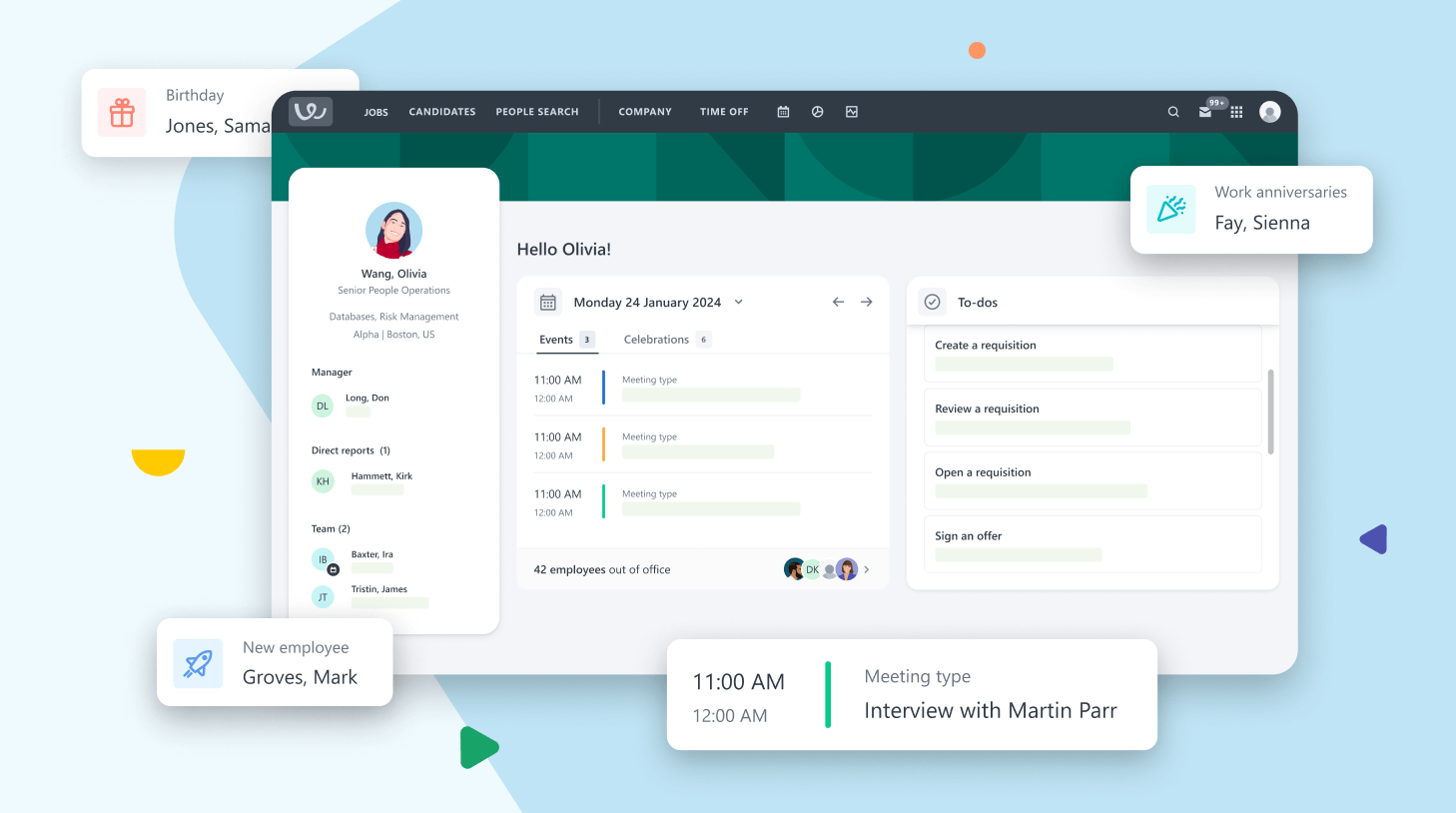
Image source: workable.com
Deep dive:
Workable prides itself on being one of the easiest ATS platforms to set up and use, allowing HR teams to get started with live job postings in a matter of hours. Its clear interface and straightforward navigation reduce the learning curve, making it accessible even for those new to applicant tracking systems. A standout feature is its no-code careers page builder, which enables companies to quickly create branded, mobile-friendly career sites without requiring any technical expertise. This focus on simplicity ensures that companies can project a professional image and attract candidates efficiently.
Beyond its ease of use, Workable offers a comprehensive set of recruitment tools, including AI-powered candidate screening with match scores, video interviews, and anonymized screening to reduce bias. Its candidate self-scheduling feature is particularly beneficial, allowing candidates to book interview slots directly, which eliminates the tedious back-and-forth communication that often delays the hiring process. Workable's integrated approach to sourcing, screening, and managing candidates, combined with its user-friendly design, makes it an excellent solution for businesses looking to optimize their recruitment efforts without significant IT overhead.
Pros:
- Rapid setup: Teams can quickly set up and start using the platform with minimal effort.
- Intuitive interface: A user-friendly design make it easy for new users to navigate and utilize features.
- AI-powered screening: Artificial intelligence assists in candidate matching and reduces manual review time.
Cons:
- Customization limits: Some users report limited customization options for deep search filters.
- Feature costs: Premium features like texting and advanced assessments may incur additional costs.
Pricing:
- Starter plan: $169/month.
- Standard plan: $299/month.
- Premier plan: $599/month.
8. BambooHR: Best for automated offers and analytics
The verdict: BambooHR is ideal for small to mid-sized businesses that need a people-first HR platform with integrated hiring tools, excelling in automating offer letters and providing insightful hiring analytics.
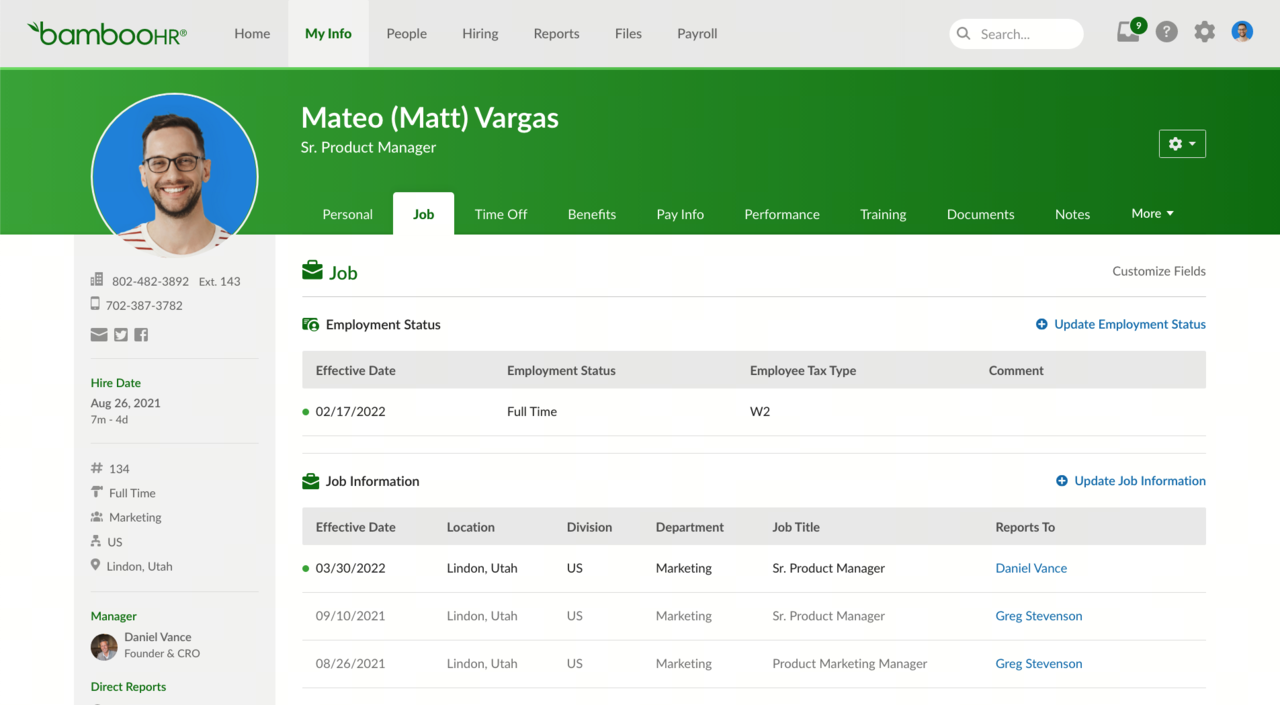
Image source: bamboohr.com
Deep dive:
BambooHR offers a comprehensive HR platform that seamlessly integrates applicant tracking with broader HR functionalities. This makes it particularly effective for companies that want to manage the entire employee lifecycle, from hiring to onboarding and beyond, within a single system. Its strength in automated offers is notable; recruiters can generate offer letters using pre-built templates and send them for e-signature directly from the platform, streamlining the final stages of hiring. This automation not only saves time but also ensures consistency and professionalism in candidate communication.
The platform also provides valuable hiring analytics, offering clear insights into key metrics like time-to-hire and candidate source effectiveness. This data helps organizations understand where candidates are coming from, how long it takes to move them through the pipeline, and where improvements can be made. By connecting ATS data directly with employee records, BambooHR eliminates manual data re-entry, further enhancing efficiency. For a growing company focused on optimizing its HR processes from end-to-end, BambooHR provides a robust and integrated solution.
Pros:
- Clear analytics: Provides insightful analytics on candidate sources and hiring funnel performance.
- Automated offer letters: Features automated offer letters with built-in e-signature tools.
- Integrated HR platform: ATS is connected to onboarding tools for hired candidates, reducing manual entry.
Cons:
- Analytics tiering: Some advanced analytics features may only be available in higher pricing tiers.
- Reporting dashboards could benefit from more export options for data flexibility.
Pricing:
- Small business plan: Starting at $250/month.
- Core plan: Custom Pricing.
- Pro plan: Custom Pricing.
9. Deel HR: Best with built-in immigration support
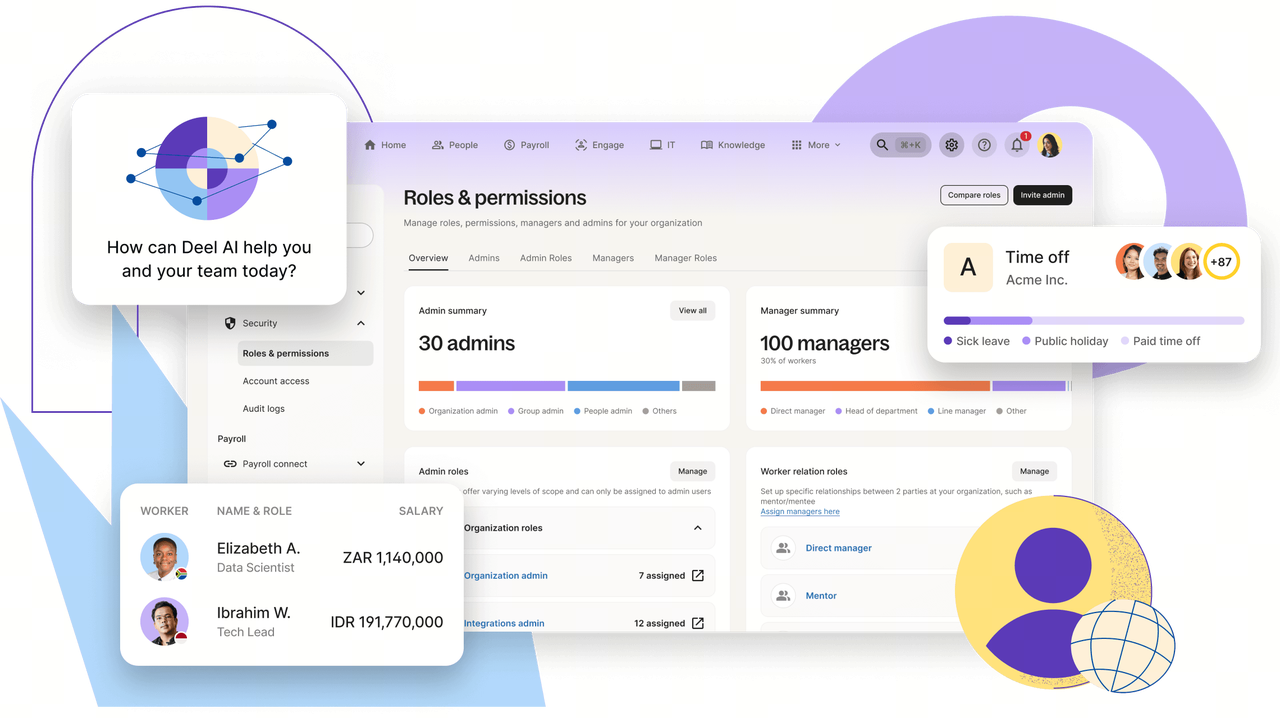
The verdict: Deel HR is an excellent choice for global businesses and talent teams that require an ATS with robust international hiring capabilities, especially those needing integrated immigration support and compliance for hiring across multiple countries.
Deep dive:
Deel HR differentiates itself by uniquely addressing the complexities of global hiring, particularly with its built-in immigration support. This feature allows recruiters to trigger free visa eligibility assessments directly within the platform, providing cost breakdowns and required documents within a short timeframe. Deel’s immigration experts then handle the visa sponsorship and application process across numerous countries, removing a significant administrative burden and ensuring compliance with local laws. This makes it an invaluable tool for companies looking to expand their talent pool internationally without navigating complex legal and logistical hurdles manually.
Beyond immigration support, Deel HR offers AI-powered candidate sourcing, background checks, and localized contract generation, ensuring that every aspect of the international hiring process is streamlined and compliant. The platform also includes workforce planning tools that leverage real-time hiring data, enabling companies to forecast headcount and costs more accurately. For organizations with a global footprint or ambitions, Deel HR provides a comprehensive and specialized solution that simplifies hiring across borders, allowing them to effectively manage diverse talent acquisition needs.
Pros:
- Integrated immigration support: Streamlines visa assessments and sponsorship across many countries.
- Global compliance: Ensures localized contract generation and automated compliance alerts for international hiring.
- Workforce planning: Offers real-time workforce data for accurate headcount and cost forecasting.
Cons:
- Reporting granularity: Reporting features are less granular compared to some specialized ATS platforms.
- Sourcing limitations: May lack some advanced candidate sourcing tools found in dedicated sourcing platforms.
Pricing:
- Contractor plan: $49/contractor/month.
- EOR Standard plan: $599/employee/month.
- EOR Enterprise plan: $899/employee/month.
10. ClearCo: Best for streamlined hiring automation
The verdict: ClearCo is a strong fit for mid-sized to enterprise HR teams that need a structured and scalable recruiting process, excelling in automating handoffs and providing real-time insights across multiple roles and departments.
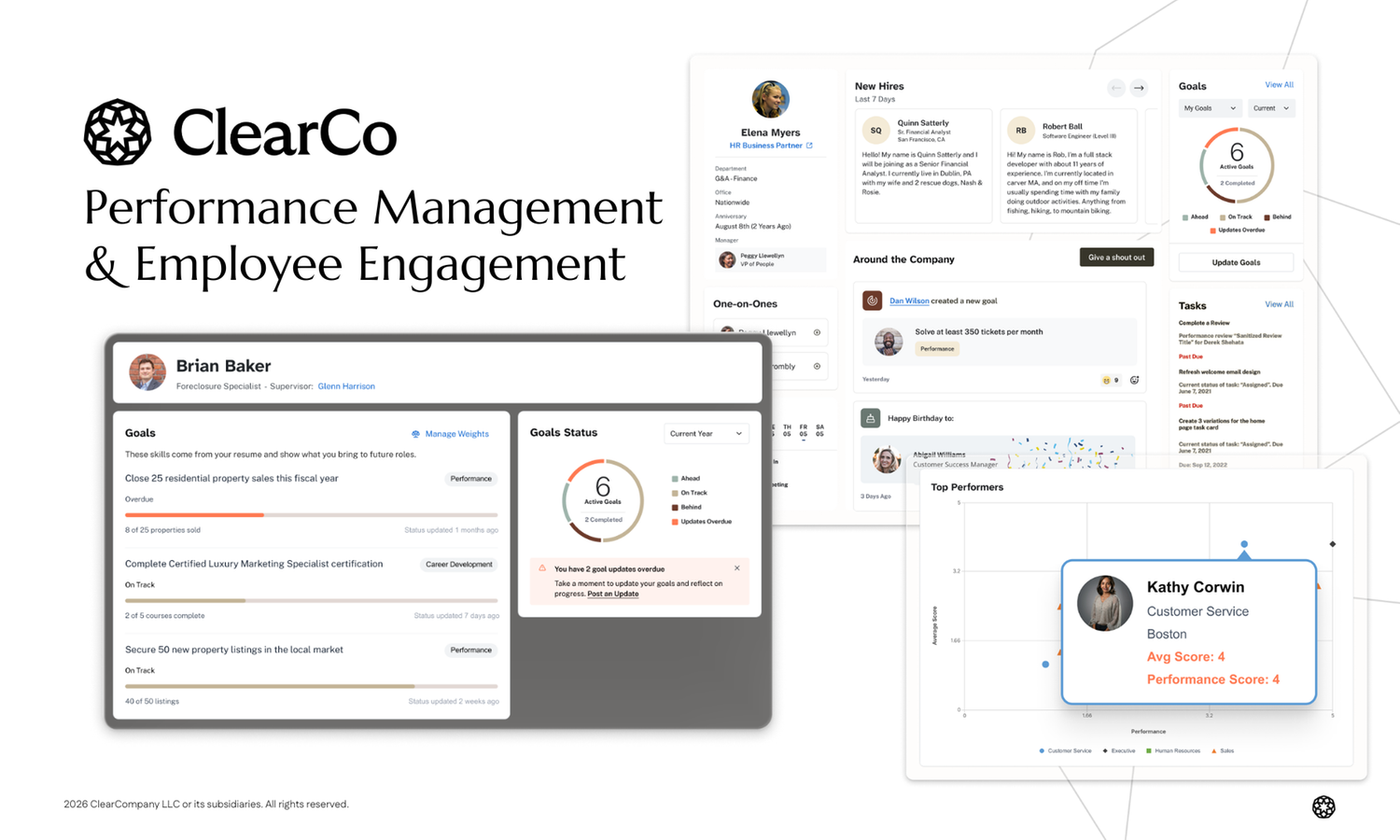
Image source: clearco.com
Deep dive:
ClearCo (also known as ClearCompany) specializes in streamlined hiring automation, making it an excellent choice for organizations looking to reduce the friction points and delays inherent in complex recruitment processes. Its hiring workflows feature is particularly effective, tracking candidates across stages, assigning clear owners to each step, and automating approvals. This ensures that nothing stalls between recruiters and hiring managers, accelerating the overall time-to-hire. The platform's built-in offer creation and e-signature tools further cut down on administrative back-and-forth during the final stages of recruitment.
ClearCo also leverages AI-assisted interviews to capture key moments from conversations automatically, allowing hiring teams to remain focused during interviews and compare candidates more consistently afterward. Liveboards provide real-time recruiting metrics across roles, teams, and pipeline stages, empowering HR leaders with immediate insights to optimize their strategies. With features like structured evaluation using interview guides and scorecards, and two-way text messaging for direct candidate communication, ClearCo provides a robust solution for achieving highly efficient and data-driven recruitment.
Pros:
- Real-time insights: Provide real-time dashboards that can be queried using natural language.
- Mobile candidate engagement: Reaches candidates by mobile texting and offers QR-enabled applications.
- Automated sourcing: Automates candidate sourcing from a large global talent pool.
Cons:
- Support responsiveness: Some users report slower support responses and account setup complexity.
- Report customization: Advanced report customization options are somewhat limited compared to highly specialized analytics tools.
Pricing:
- Standard plan: Custom pricing.
- Enterprise plan: Custom pricing.
The evolving role of ATS: Beyond applicant tracking
The landscape of talent acquisition is constantly shifting, and with it, the role of the Automated Tracking System. Modern ATSs are no longer just passive repositories for resumes; they are transforming into dynamic platforms that integrate deeply with broader HR and business ecosystems. This evolution reflects a strategic shift from simply tracking applicants to actively building talent pipelines and optimizing the entire employee lifecycle.
Integrating with the broader HR ecosystem
One significant trend is the increasing integration with other HR technologies. ATS are now designed to seamlessly connect with HRIS (Human Resources Information Systems) for employee data management, payroll systems for efficient onboarding, and performance management tools for long-term talent development. This interconnectedness creates a unified data flow, breaking down silos and providing a holistic view of talent within an organization. For example, once a candidate is hired through an ATS, their data can automatically populate the HRIS, initiating onboarding workflows and payroll setup, eliminating redundant data entry and reducing errors. This not only streamlines administrative tasks but also provides HR with comprehensive data for strategic workforce planning.
Leveraging AI and machine learning for predictive insights
Furthermore, the rise of artificial intelligence (AI) and machine learning (ML) is profoundly impacting ATS capabilities. AI-powered features are moving beyond basic resume parsing to , helping identify ideal candidates based on success patterns within an organization, reducing bias through anonymized screening, and even automating personalized candidate communication. We are seeing ATS evolve into intelligent talent intelligence platforms, offering proactive insights rather than reactive data.
From reactive tracking to proactive talent intelligence
This means an ATS can suggest top candidates before they even apply, integrate with , identify potential flight risks among current employees, and recommend skill development programs to close talent gaps. These advancements empower organizations to make more informed, data-driven decisions throughout the entire talent journey, ensuring they not only find the right people but also nurture and retain them effectively.
Find a practical solution for streamlined hiring workflows
Conclusion
The evolution of automated tracking systems has profoundly reshaped the landscape of modern recruitment. Far from being a mere administrative tool, today's ATS platforms are strategic assets that empower organizations to navigate the complexities of talent acquisition with greater efficiency, precision, and compliance. By automating repetitive tasks, enhancing candidate experiences, and providing data-driven insights, these systems enable HR professionals to transition from administrative duties to more strategic talent engagement.
The journey to finding the right ATS involves a careful consideration of your organization's size, specific needs, and budget, coupled with a thorough evaluation of features, integration capabilities, and vendor support. If your organization is looking for a collaborative, end-to-end workspace that connects hiring with communication and documentation, you can explore how supports recruitment workflows and team coordination in one place.
Discover a new way to support structured team hiring
FAQs
What is the most commonly used ATS?
There isn't one single "most commonly used" ATS, as popularity varies greatly by company size and industry. However, widely recognized and frequently adopted platforms include Workday, Greenhouse, Taleo (Oracle), and SAP SuccessFactors. For mid-market and SMBs, platforms like Breezy and Workable are also very popular.
How much does an ATS usually cost?
The cost of an ATS can vary significantly, ranging from free basic plans (often for a limited number of users or features) to several thousand dollars per month for enterprise-level solutions. Pricing typically depends on factors like the number of users, open job postings, features included, and whether it's billed monthly or annually. Many providers offer custom quotes based on specific organizational needs.
Why is my resume getting rejected by ATS?
Your resume isn't "rejected" by an ATS in the human sense. Instead, it gets filtered out if it doesn't contain the keywords or match the criteria that the recruiter has set for the job. Common reasons include missing relevant keywords from the job description, using complex formatting or graphics that confuse the ATS, or submitting it in a file format that the system cannot properly parse.
Are automated tracking systems impersonal?
While ATS automates aspects of the hiring process, modern systems are designed to enhance, not replace, the human element. Many ATS include features for personalized candidate communication, feedback loops, and tools that help recruiters spend more time engaging with candidates rather than on administrative tasks. The perception of impersonality often stems from poorly optimized resumes or a lack of understanding of how these systems function.
Can a small business benefit from an ATS?
Absolutely. Small businesses can benefit immensely from an ATS by automating repetitive tasks, improving candidate organization, ensuring compliance, and providing access to a wider talent pool. Many ATS providers offer affordable plans or even free tiers specifically designed to meet the needs and budgets of smaller organizations.
Related reading