














CRM Data Simplified: How Clean, Connected Customer Data Drives Growth

Ryan Tanner
Product Marketing Specialist
Sep 18, 2026
Ryan Tanner
Sep 18, 2026

13 min read


Behind every successful business decision is reliable, high-quality CRM data. When customer information is clean, complete, and connected, teams can make smarter, faster choices that drive growth. Yet, many organizations struggle with fragmented systems and inconsistent records that undermine trust in their data.
This guide explores what CRM data is, why it's vital for customer-first strategies, and how teams can enhance data quality through best practices for cleansing, enrichment, and management. You'll also see how Lark, a modern collaboration platform, helps businesses organize, analyze, and act on CRM insights more efficiently without the complexity of traditional tools.

What is CRM data, and why does it matter
CRM data refers to all the information a business gathers about its customers, including contact details, communication history, purchase behavior, and engagement across channels. It's the foundation of every effective customer relationship management system, providing a centralized view of who your customers are and how they interact with your brand.
The primary purpose of CRM data is to give sales, marketing, and customer service teams a 360-degree view of each customer's journey. With accurate and complete data, teams can personalize communication, predict customer needs, and identify growth opportunities that improve retention and satisfaction.
However, maintaining high-quality CRM data isn't easy. Many businesses struggle with inaccurate records, duplicate entries, and fragmented systems that store data in silos. These issues lead to wasted time, poor reporting, and missed opportunities. Strong data management practices are essential to turn CRM data into actionable insights that truly support business growth.
Image source: unsplash.com
Turning chaos into clarity with CRM data management
Effective CRM data management turns scattered information into a single, reliable source of truth. The first step is to build a unified database by standardizing formats, defining data ownership, and establishing clear governance rules. This ensures every team follows the same structure when entering or updating customer information, reducing errors and confusion.
Next, businesses should regularly audit and cleanse CRM data to remove duplicates, fix inaccuracies, and update inactive contacts. Scheduled quality checks keep databases current and trustworthy, helping teams make decisions based on accurate insights.
Finally, enriching CRM data with external information such as firmographics or behavioral signals deepens understanding of customers and sharpens segmentation. When teams have clean, complete, and enriched data, they can deliver more relevant outreach and identify opportunities faster. Strong CRM data management transforms disorganized records into actionable intelligence that supports better collaboration, strategy, and growth.
Make your CRM data work harder, not just cleaner
Keeping your CRM data clean is essential, but true value comes when that data actively drives decisions and results. A well-maintained CRM shouldn't just store customer information; it should reveal insights, uncover patterns, and guide smarter actions. By turning raw data into meaningful analytics, reports, and performance dashboards, teams can better understand customer behavior, improve marketing strategies, and boost revenue. This section explores how businesses can move beyond basic data hygiene to make their CRM a dynamic engine for growth and smarter decision-making.
- Move from static lists to actionable insights with CRM data analytics: Instead of treating CRM data as static contact lists, businesses should use analytics to uncover hidden patterns and trends. Analyze engagement levels, customer behaviors, and sales performance to identify what drives conversions. These insights help teams predict outcomes and prioritize high-value opportunities. Turning raw data into actionable intelligence allows for smarter, faster decisions. It transforms CRM from a record-keeping tool into a strategic growth engine.
- Generate reports that highlight engagement and revenue trends: Detailed CRM reports reveal meaningful insights into lead conversion rates, retention levels, and revenue growth. For example, learning how to generate reports from CRM data in the USA can help teams localize strategies and ensure compliance. These reports give visibility into team performance and campaign effectiveness. By visualizing key metrics, leaders can spot gaps and opportunities faster. Consistent reporting turns data into measurable business value.
- Monitor CRM data quality and integrity regularly: Maintaining clean data isn't a one-time task, it requires ongoing attention. Dashboards and automated audits help track data completeness, identify duplicates, and flag inconsistencies in real time. Regular monitoring ensures that decisions are based on accurate and reliable information. It also promotes transparency and accountability across teams. Continuous data quality management ensures that CRM systems remain trustworthy and high-performing.
Build smarter customer relationships with Lark CRM
Managing CRM data is easier when everything from collection to analysis happens in one connected workspace. Lark CRM brings together tools that streamline how teams collect, clean, and collaborate on customer information. Each feature helps turn CRM management from a manual process into a seamless, insight-driven workflow.
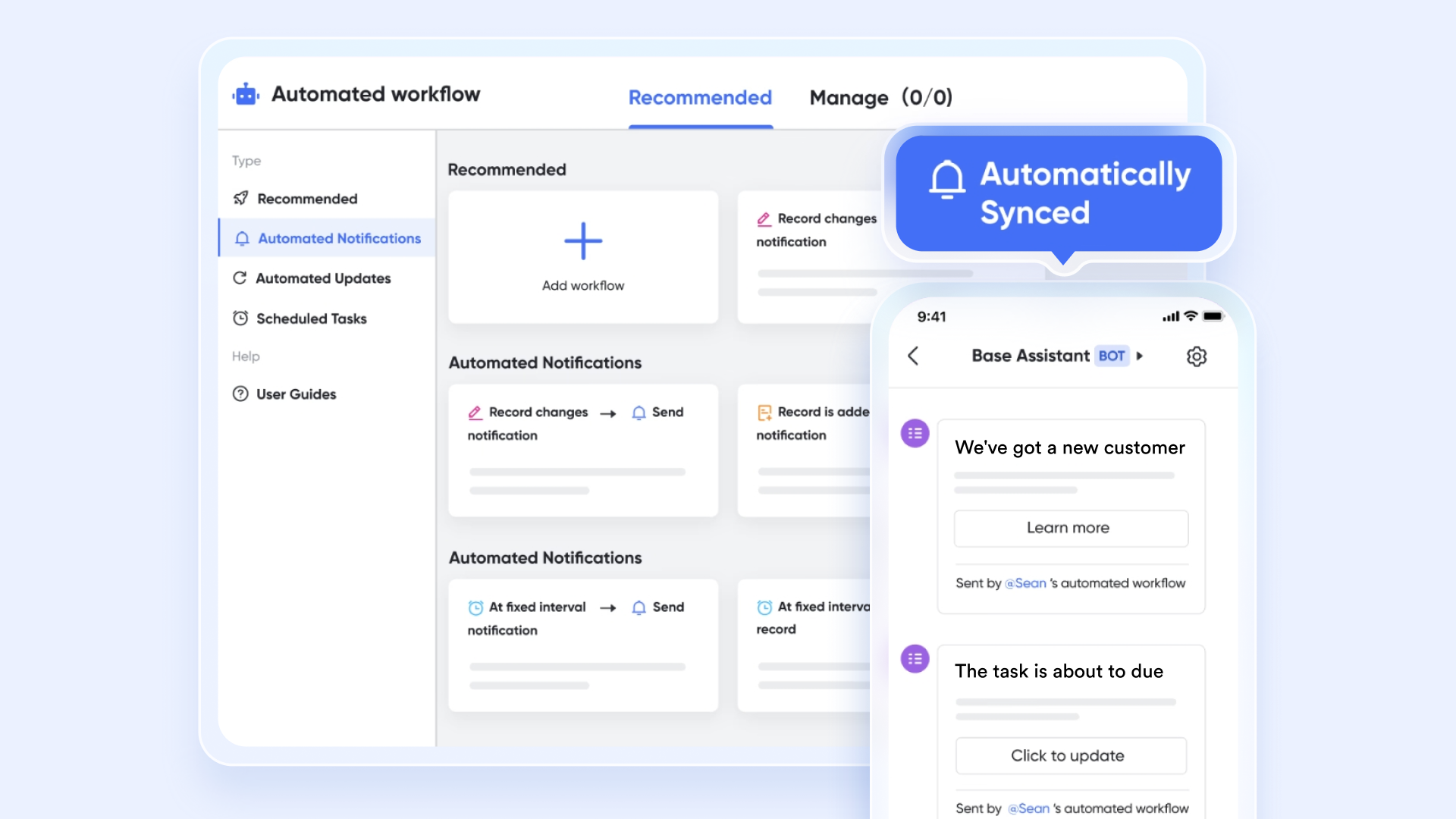
- Manage and automate CRM records with Lark Base: Lark Base serves as the foundation of your CRM system, allowing teams to organize and visualize customer records through tables, Kanban boards, or calendar views. It automates updates, data entry, and duplicate detection using workflow triggers, ensuring accuracy without manual checks. With everything centralized, teams always have real-time access to clean, complete data.
- Example: A sales team uses Lark Base to automatically update deal stages when a prospect moves from "negotiation" to "closed won," saving hours of manual input.
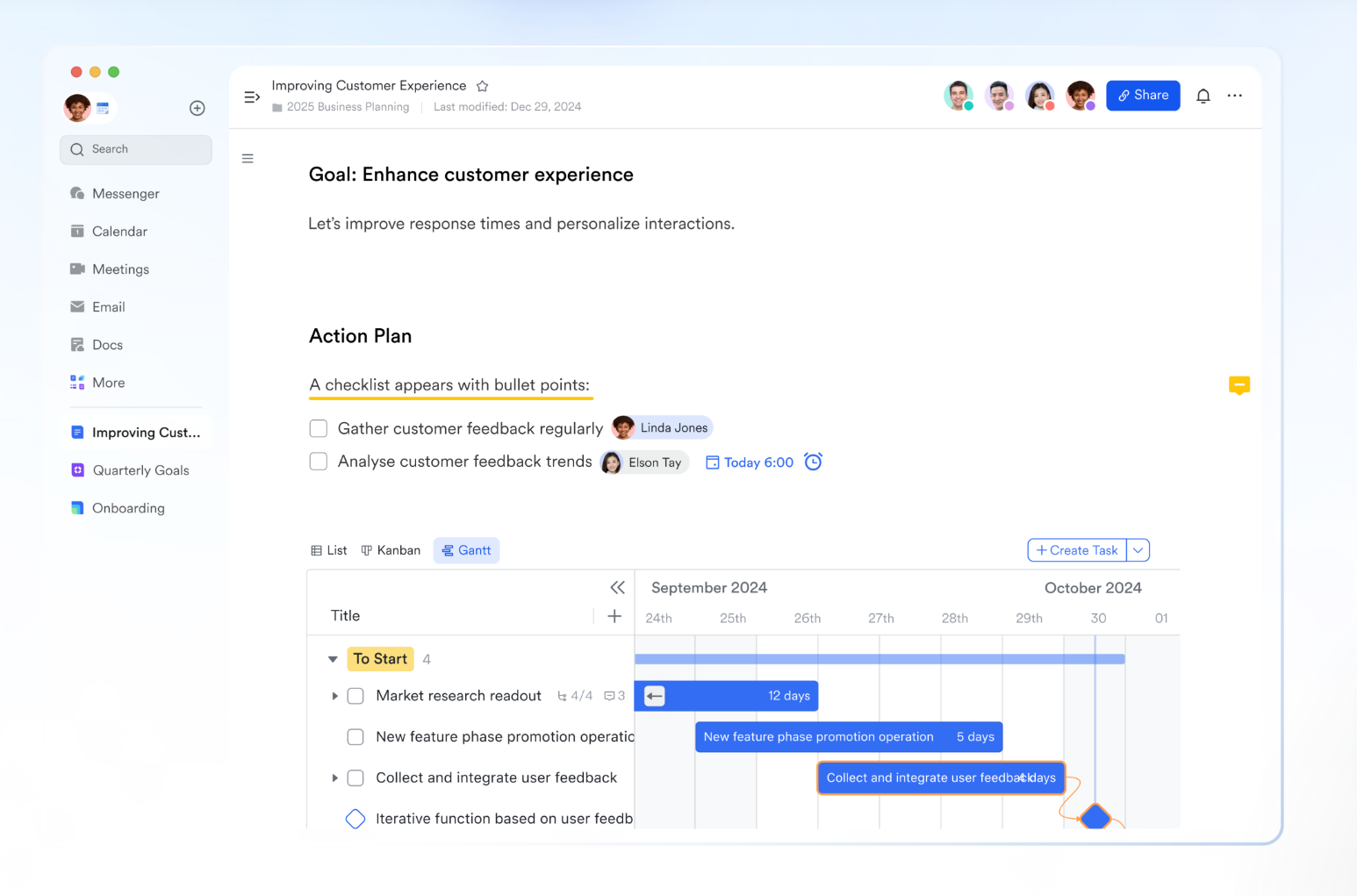
- Document CRM processes and policies in Lark Docs: Lark Docs is where teams co-create and maintain CRM documentation from data governance policies to audit procedures. Real-time editing and commenting make collaboration effortless, while version history ensures transparency in approvals and updates. Teams can quickly revise guidelines as workflows evolve, ensuring alignment across departments. The result is a well-documented, easily accessible CRM playbook.
- Example: A marketing team maintains a shared Lark Doc outlining naming conventions and data-entry rules for new leads to ensure consistent database input.
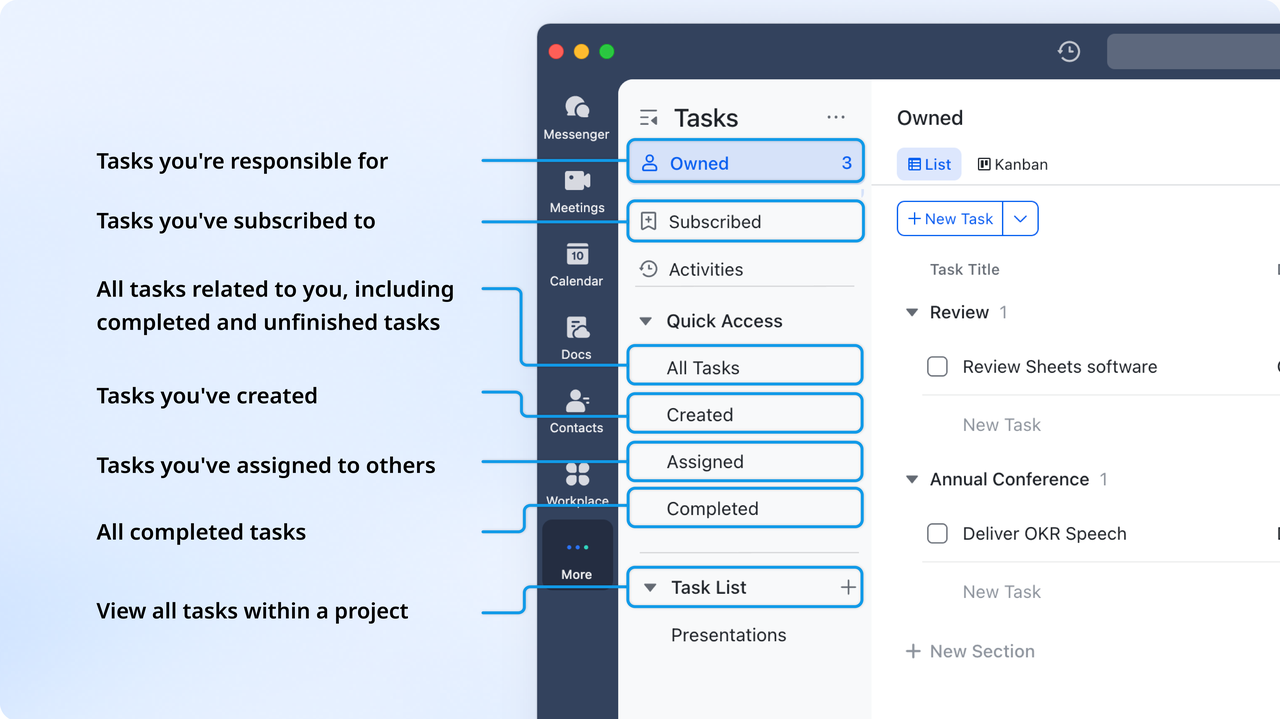
- Assign and track CRM projects in Lark Tasks: Lark Tasks streamlines task assignment, ensuring that every CRM-related activity, such as data cleaning or system migration, has clear ownership and deadlines. Managers can monitor progress, set priorities, and send reminders in one dashboard. Real-time updates keep everyone on track and accountable. This creates an efficient, organized system for managing ongoing CRM maintenance.
- Example: A CRM manager assigns weekly data validation checks to specific team members in Lark Tasks, ensuring the database stays accurate.
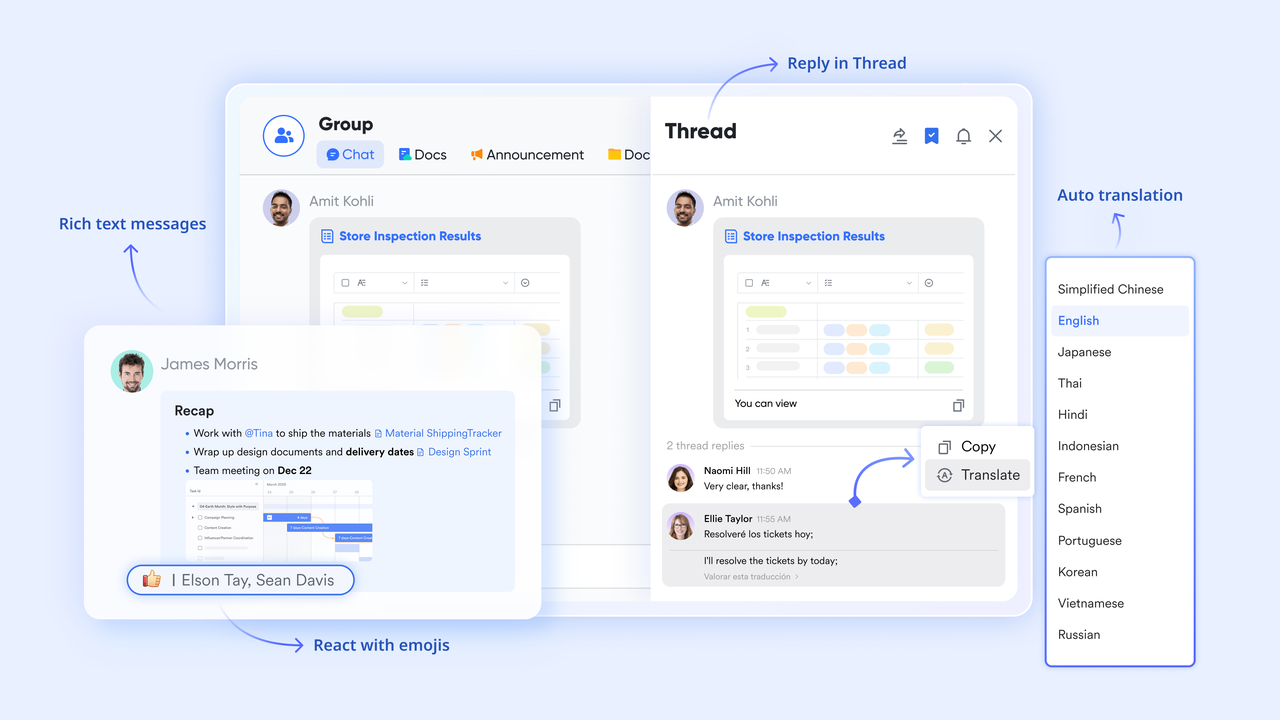
- Collaborate in real time with Lark Messenger: Lark Messenger supports instant group communication about CRM, allowing teams to discuss data issues, share updates, or clarify records within project-based threads. This eliminates the need to switch between chat apps and CRM tools. Conversations stay contextual, fostering faster decision-making and collaboration.
- Example: A sales rep flags a duplicate client record in Messenger and tags the data admin, who fixes it immediately within Lark Base.
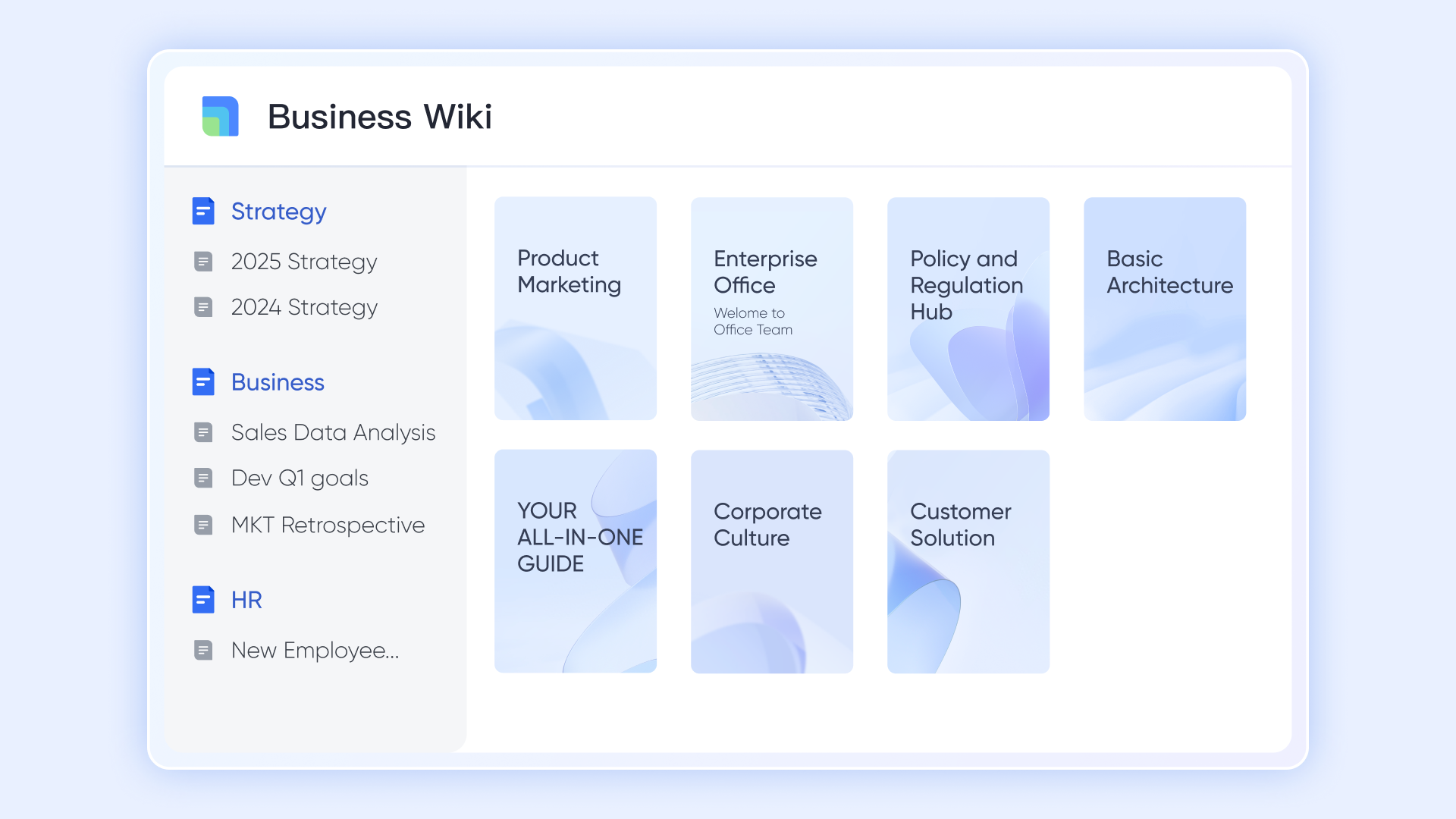
- Document CRM knowledge and best practices with Lark Wiki: Lark Wiki serves as a centralized hub for storing CRM-related insights, process templates, and team learnings. It helps capture valuable institutional knowledge so everyone can access updated playbooks, policies, and optimization strategies. By maintaining a shared knowledge base, teams ensure consistency and alignment across departments.
- Example: After analyzing customer churn data, a support team records their successful re-engagement strategy in Lark Wiki, creating a reference guide for future campaigns
- Starter plan: Free forever plan that includes 11 powerful tools for up to 20 users. It also comes with 100GB of storage, 1000 automation runs, AI translations, and more.
- Pro plan: $12/user/month (billed annually) for up to 500 users. It includes everything in Starter plus group calling for up to 500 attendees, 15TB of storage, 50,000 automation runs, and more.
- Enterprise plan: Contact sales for custom pricing. Supports unlimited users and includes even more automation runs and advanced security, compliance, and management features.
Key advantages of using a CRM database
A CRM database is much more than a contact list. It's the central hub for managing relationships, tracking performance, and improving customer experiences. By bringing all customer information together, it helps teams work smarter, collaborate better, and make informed decisions. Here's how a well-structured CRM database empowers your business to grow efficiently and sustainably.
- Organizes customer relationships and sales pipelines: A CRM database centralizes every piece of customer information from initial inquiries to closed deals. It helps teams manage leads, track interactions, and monitor sales progress in one place. Automated reminders ensure no follow-up or opportunity is missed. Sales reps gain complete visibility into the customer journey, improving efficiency and response times. This organization strengthens relationships and boosts conversion rates.
- Enhances collaboration across sales, marketing, and support teams: When data is scattered across tools, teams struggle to stay aligned. A CRM database creates a single source of truth, allowing departments to share updates, insights, and goals seamlessly. Sales can see marketing's campaign results, while support can access customer history instantly. This alignment ensures consistent communication and a unified customer experience. Collaboration becomes faster, clearer, and more results-driven.
- Enables detailed analytics and customer insight generation: Modern CRM systems turn data into actionable insights. Teams can analyze sales performance, customer behavior, and campaign results through customizable reports and dashboards. These insights highlight trends, predict opportunities, and identify improvement areas. By understanding what drives customer engagement and loyalty, businesses can make better strategic decisions. In short, analytics transform CRM data from simple records into powerful intelligence.
With Lark's collaborative workspace, teams can take these advantages even further sharing CRM updates, visualizing dashboards, and tracking performance in real time. Everyone stays informed and connected, ensuring data-driven decisions lead to stronger customer relationships and sustainable growth.
Building a CRM data strategy that lasts
A strong CRM data strategy is the backbone of effective customer relationship management. It ensures that data remains accurate, accessible, and actionable as your business scales. To build a sustainable strategy, teams must combine structure, analysis, and collaboration to turn raw information into meaningful insights that drive growth. Below are three essential pillars that help create a CRM data framework built to last.
- Combine governance, analytics, and collaboration into one framework: A lasting CRM strategy starts with uniting governance, analytics, and collaboration into a single, repeatable process. Governance defines how data is collected, validated, and updated to maintain quality and consistency. Analytics turns clean data into insights that highlight patterns, opportunities, and risks. Collaboration ensures teams across sales, marketing, and support stay aligned, working from the same reliable information. Together, these elements create a CRM foundation that supports confident decision-making.
- Compare Customer Data Platform (CDP) vs CRM to choose what fits best: Understanding the difference between a CRM and a CDP helps businesses pick the right tool for their growth stage. A CRM focuses on managing customer relationships and tracking direct interactions, making it ideal for sales and service teams. A CDP, on the other hand, consolidates behavioural and transactional data from multiple sources, offering a 360-degree customer view. Choosing the right system or combining both ensures your organisation balances operational efficiency with deep data insight.
- Leverage insights to personalize campaigns and improve retention: Once your CRM data is structured and reliable, the next step is to put it to use. Analyze customer patterns to tailor campaigns, strengthen retention, and deliver more personalized experiences. Clean and enriched data helps teams target the right audience with the right message at the right time. When used strategically, CRM insights don't just improve engagement, they drive long-term loyalty and business growth.
The future of CRM data
The future of CRM data lies in keeping it clean, connected, and ready for AI-driven insights. Artificial intelligence and predictive analytics can only perform as well as the data they rely on, meaning accuracy, completeness, and consistency are critical. Businesses that invest in proper data hygiene, enrichment, and automation will find their CRM systems evolving seamlessly in tandem with their growth. Clean data ensures reliable forecasts, while enrichment adds depth that sharpens personalization and targeting.
Automation, meanwhile, keeps information fresh and synchronised across teams and tools, reducing manual work and human error. With modern solutions like Lark, teams can go beyond merely storing CRM data to actively using it, connecting communication, analytics, and workflows in one workspace. This connected, intelligent approach transforms CRM data into a living asset that fuels innovation, efficiency, and smarter customer engagement in an increasingly data-driven world.
Conclusion
Building and managing a CRM database goes beyond storing customer information; it's about transforming data into meaningful, lasting relationships. With Lark, teams can streamline this entire process within one unified workspace that connects communication, collaboration, and data insights. From data migration to ongoing optimization, every step becomes faster, more organized, and less manual.
Lark's collaborative tools, including Base, Docs, Tasks, and Messenger, help teams maintain clean data, track progress, and make informed decisions in real time. This connected approach ensures transparency, accountability, and a complete view of every customer interaction. By simplifying CRM management, Lark empowers businesses to focus less on administrative work and more on building relationships that drive growth. The result is smarter, cleaner, and more efficient customer management.
FAQs
How often should I cleanse my CRM data
Cleansing your CRM data every six months helps maintain accuracy and reliability. Monthly or quarterly mini-audits catch smaller errors early. Regular updates prevent duplicates, outdated contacts, and missing details, keeping your CRM trustworthy.
What's the difference between a CRM and a Customer Data Platform (CDP)?
A CRM manages relationships and sales interactions, while a CDP unifies behavioral and transactional data from multiple sources. CRMs support daily engagement, whereas CDPs provide deeper analytics and segmentation. Together, they give a complete customer view.
How can I improve CRM data quality?
Define clear data entry rules and ownership, and use automation to detect duplicates or missing fields. Schedule regular audits and enrich records with verified external data. Consistent maintenance ensures cleaner, more reliable insights.
Why is CRM data enrichment important?
Data enrichment fills gaps and adds context like industry or behavior insights. It helps segment audiences, personalize outreach, and improve targeting accuracy. Enriched CRM data makes campaigns smarter and more effective.
What are the risks of poor CRM data management?
Poorly managed CRM data leads to bad decisions, wasted time, and lost opportunities. Errors like duplicates or outdated contacts hurt reporting and customer trust. Clean, consistent data keeps teams aligned and productive.
Related reading
Table of contents
Start using Lark today

Manage all your work in one place
Boost team efficiency by 10x
Save up to 70% on software costs
Table of contents
Start using Lark today
Manage all your work in one place
Boost team efficiency by 10x
Save up to 70% on software costs
Keep reading









2026 Lark Technologies Pte. Ltd.
Headquartered in Singapore with offices worldwide.






Explore: