















23 min read


The automotive industry is evolving rapidly as customers rely on online research, brand comparisons, and digital communication before visiting a dealership. To build lasting relationships and maintain competitiveness, dealerships require a connected system that unites customer data, team collaboration, and sales processes. A CRM for the automotive industry provides this foundation—enabling streamlined lead tracking, automated follow-ups, and personalized service experiences.
This guide reviews the top CRM platforms including Lark and others for automotive businesses, their features, pricing, and suitability for different dealership needs.Here is the list of tools:
1. Lark: Best for teamwork and cross-location collaboration
2. HubSpot CRM: Ideal for growing dealerships leveraging integrated marketing
3. Salesforce Automotive: Maximum customization for enterprise scalability
4. VinSolutions: DMS-driven platform for unified customer profiles
5. CDK Global: The leader in regulatory compliance and security
6. DealerSocket: Powerhouse for inventory management and analytics
7. AutoRaptor: Fast setup and mobile-friendly for small, independent dealers
8. ELEAD: Streamlined lead routing with an easy-to-use interface
9. Spyne: AI-powered engagement for digital-first sales teams
10. DriveCentric: Modern multichannel communication with AI chatbot support

What is automotive CRM?
An automotive CRM is a customer relationship management system specifically designed for car dealerships, service centers, and auto groups. Unlike generic CRMs, it manages the entire vehicle sales and service lifecycle—from capturing leads across channels to scheduling test drives and tracking service appointments—while combing with dealership management systems (DMS).
The value of this vertical specialization lies in its deep understanding of automotive workflows. It helps sales teams manage multi-step buying processes, connects marketing campaigns with customer data, and supports after-sales engagement like maintenance reminders or trade-in offers—all tailored to dealership operations.
Modern automotive CRMs are also evolving rapidly. Key trends include AI-powered automation, real-time analytics, mobile accessibility, and seamless collaboration with digital advertising and social media platforms—helping dealerships respond faster, personalize experiences, and build stronger, data-driven relationships with every customer.
Image source: unsplash.com
Why the automotive industry needs CRM now
- Car buyers now research across multiple websites, social media, and messaging channels before making a purchase decision. They expect consistent communication and quick responses no matter where they engage, which makes it essential for dealerships to maintain a unified digital presence.
- Sales cycles have become longer and more fragmented as buyers take time to compare models, pricing, and financing options. A structured follow-up system through a CRM ensures every lead is nurtured properly, keeping potential customers engaged until they are ready to buy.
- CRMs bring together scattered data from calls, emails, websites, and in-person visits into a single, organized platform. This unified view helps sales and service teams collaborate efficiently and make data-driven decisions based on complete customer information.
- With real-time notifications and automation, CRMs help sales teams respond instantly to inquiries and capture leads before competitors do. This responsiveness reduces the risk of missed opportunities and strengthens the dealership's reputation for excellent customer service.
- After the sale, CRMs continue to add value by tracking customer history, scheduling maintenance reminders, and identifying upsell or trade-in opportunities. These insights help build stronger relationships and increase lifetime customer value.
- Using a CRM positions the dealership as technologically advanced and customer-oriented. By offering quick, personalized, and seamless experiences, the brand gains credibility and stands out in a market driven by digital convenience and customer satisfaction.
Comparision table: Top 10 CRM platforms for automotive industry
Key benefits of CRM for automotive businesses
- Centralizes all customer and lead data in one system, giving sales and support teams instant access to accurate, updated information.
- Captures leads automatically from websites, social media, classifieds, and messaging apps, then assigns them to the right sales representatives for timely responses.
- Automates repetitive communications such as test drive reminders, follow-up emails, service alerts, and customer surveys to maintain consistent engagement.
- Collects customer feedback and generates online reviews automatically after purchases or service visits, helping improve reputation and trust.
- Produces detailed performance reports for salespersons, teams, campaigns, and inventory, enabling data-driven decision-making.
- Personalizes offers, messages, and recommendations based on customer profiles and past interactions to boost satisfaction and loyalty.
The hidden costs of not adopting CRM
Without a CRM, dealerships often struggle with disorganized data, missed opportunities, and inefficient manual processes. Leads coming from multiple channels—such as phone calls, emails, or social media—can easily slip through the cracks without a structured tracking system. Sales teams waste time on repetitive administrative tasks, follow-ups are inconsistent, and customer records are often incomplete or outdated. This lack of visibility makes it difficult for managers to monitor performance or identify where sales are lost.
Over time, these inefficiencies directly impact business outcomes. Missed leads translate into lost revenue, while poor communication and delayed responses damage customer satisfaction and trust. Inconsistent service experiences can harm the dealership's reputation and reduce repeat business. Without a CRM's automation and data insights, dealerships risk falling behind competitors who deliver faster, more personalized, and digitally connected customer experiences.
Top 10 CRM platforms for the automotive industry
1. Lark: A smart CRM platform with streamlined sales and teamwork
Lark is a collaboration-first CRM platform built to unify communication, data management, and workflow automation for automotive dealerships and groups. It goes beyond the traditional CRM model by combining sales tracking with powerful teamwork tools.
Dealerships can manage customer interactions, monitor team performance, and automate repetitive processes—all within one easy-to-use platform. By combining chat, meetings, documents, and analytics, Lark helps automotive teams save time, stay connected across locations, and deliver consistent customer experiences that drive long-term loyalty.
Key features:
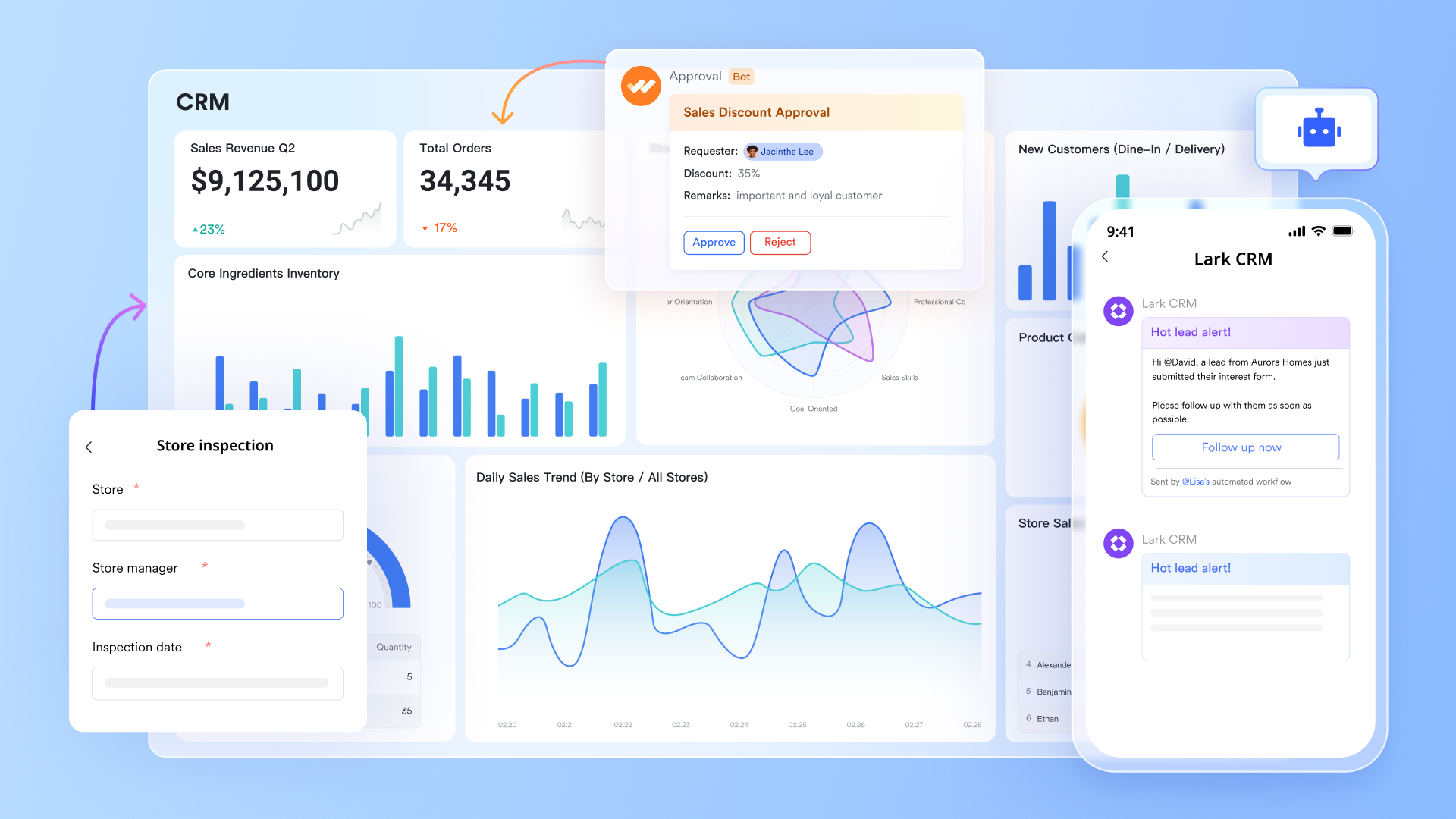
- Automated workflows for lead and sales tracking: With Lark Base, dealerships can automate routine sales processes such as capturing leads, assigning them to the right salesperson, or sending test drive confirmations. Automation ensures that no inquiry is missed and follow-ups happen on time. It also supports conditional workflows—like triggering alerts when a hot lead hasn't been contacted within a set period—helping teams stay proactive and responsive.
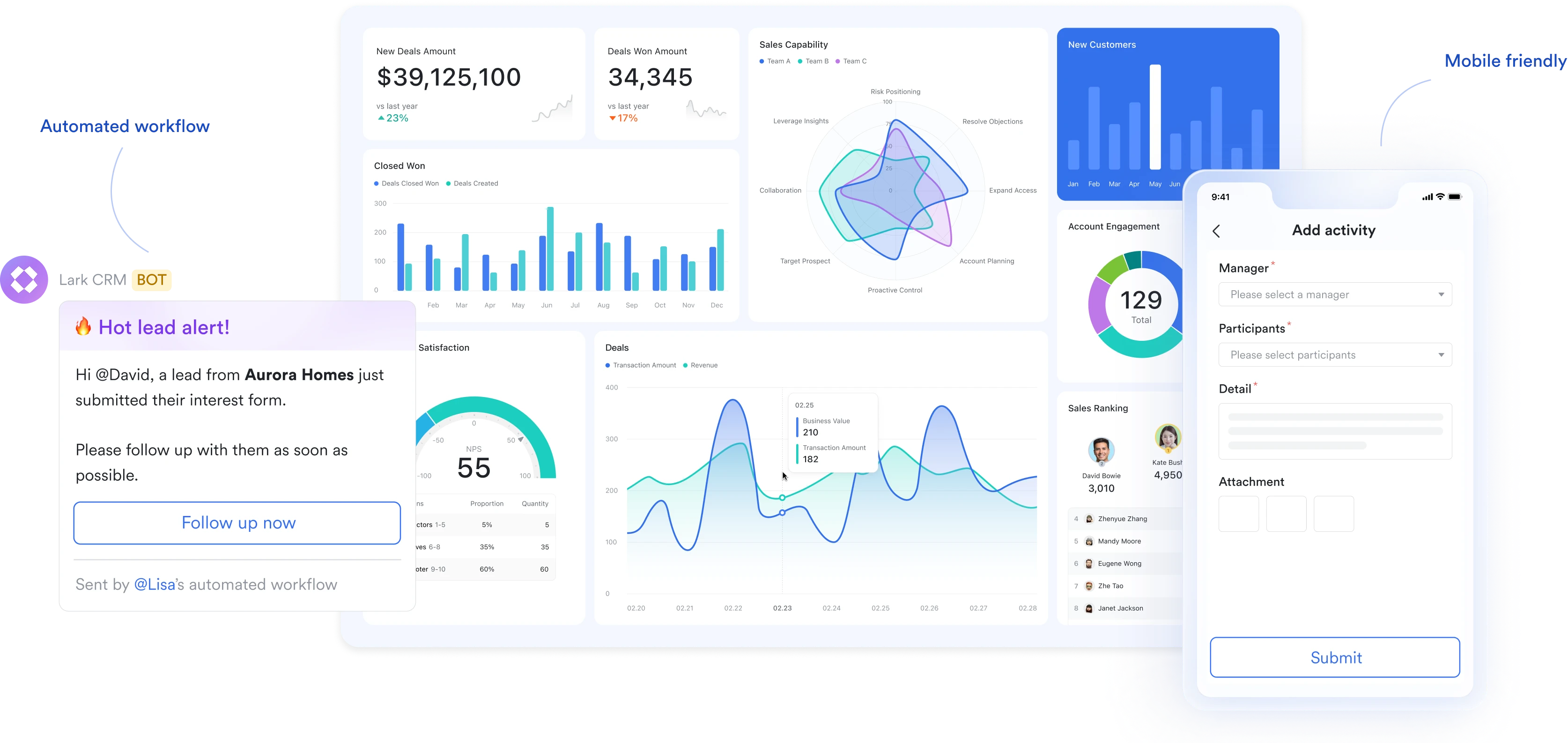
- Real-time analytics dashboard: Lark Base provides a dynamic, visual dashboard that tracks sales performance, lead progress, and team productivity in real time. Managers can easily view pipeline status, monitor campaign results, and evaluate salesperson performance. Lark AI in Base can generate intelligent summaries and insights from your data, including dealership data, to support faster, evidence-based decisions with accurate, up-to-date analytics.
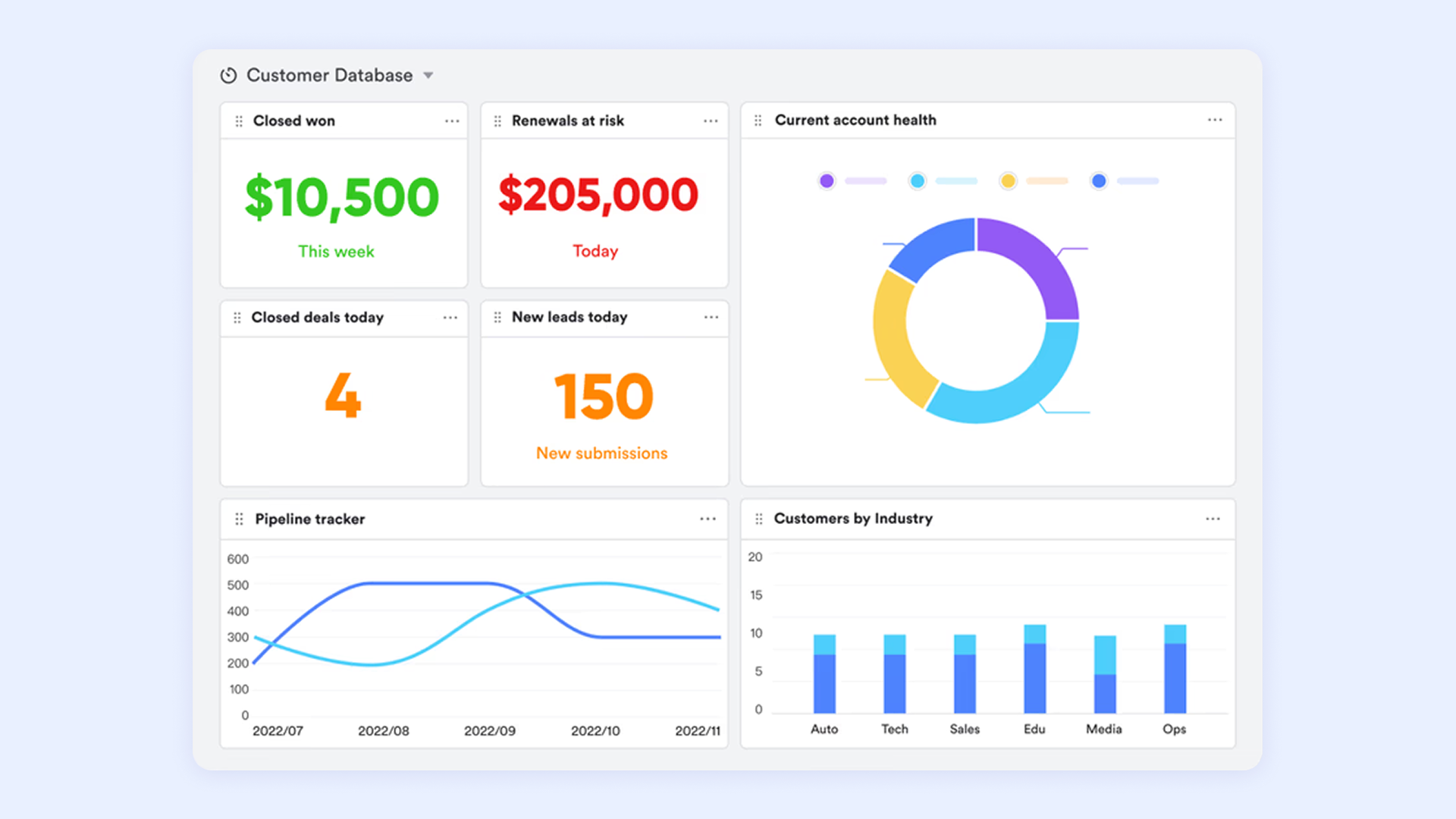
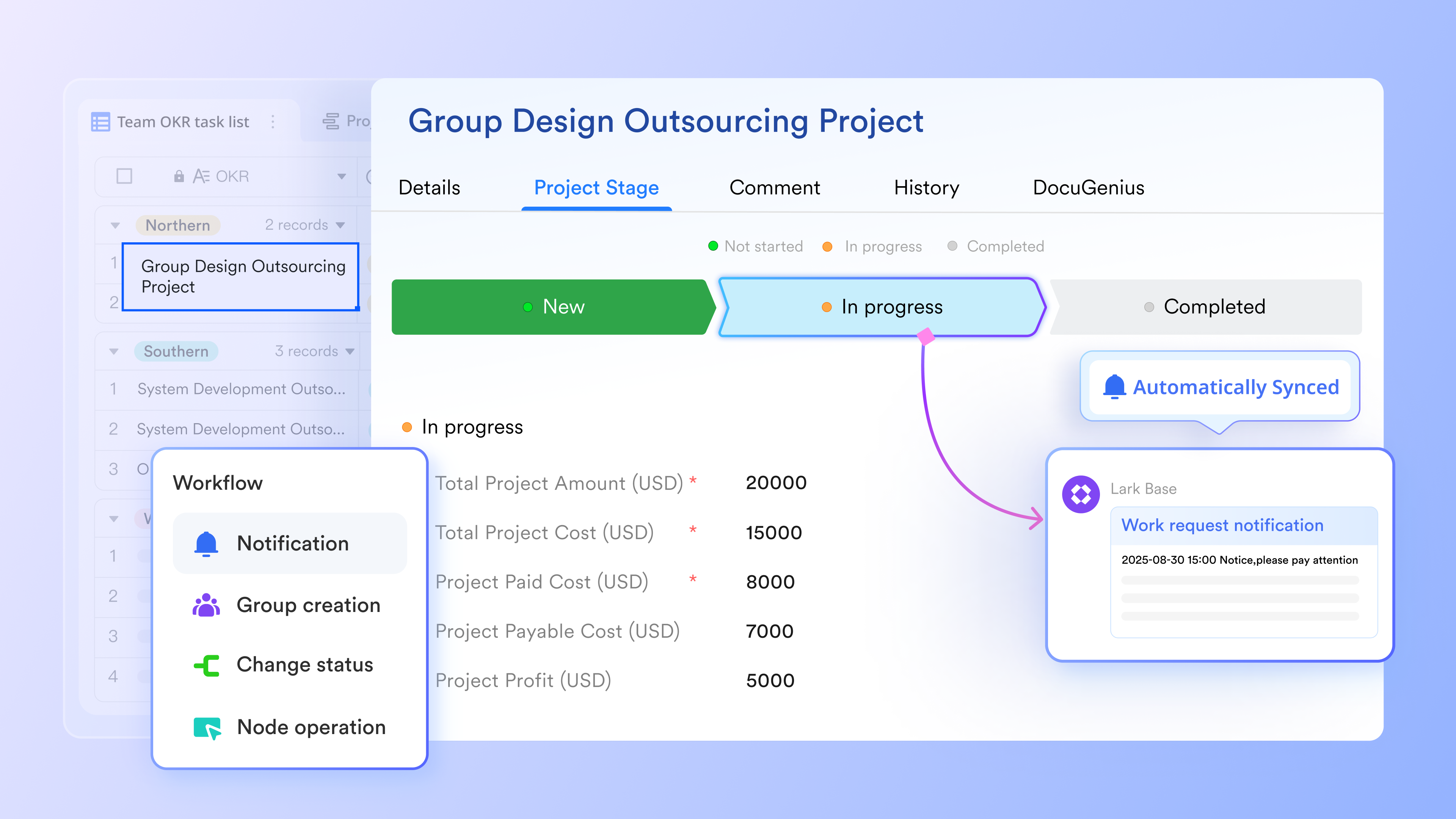
- Automated notifications for smarter CRM management: Lark enables teams to streamline their workflows with powerful automated notification features. Notifications can be triggered when new records are added or updated in Base—such as alerting financial approvers about reimbursement requests or informing applicants when their submissions are approved. Teams can set up reminders for due dates, send targeted updates to specific members, and customize the timing and frequency of alerts, such as weekly progress summaries. Automated messages can also compile feedback or deliver daily and weekly reports.
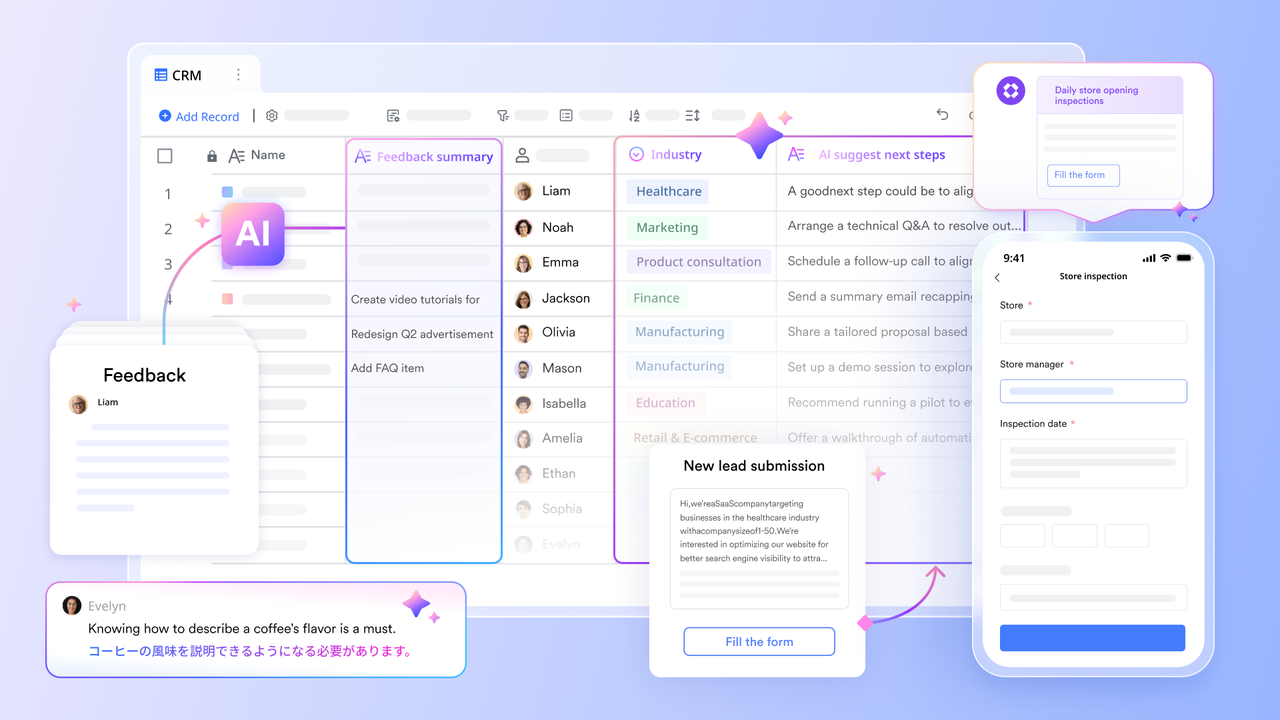
- AI field shortcuts boost your data arrangement & use: With the AI field shortcuts feature in Lark Base, dealership CRM workflows become faster and more intelligent. These shortcuts allow you to automatically translate text, classify data, and summarize information right within your Base tables, reducing the need for manual processing. You can set up specialized AI-fields tailored to your CRM setup—such as converting customer notes into categories, generating brief summaries of interactions for sales teams, or standardizing multi-lingual entries across locations.
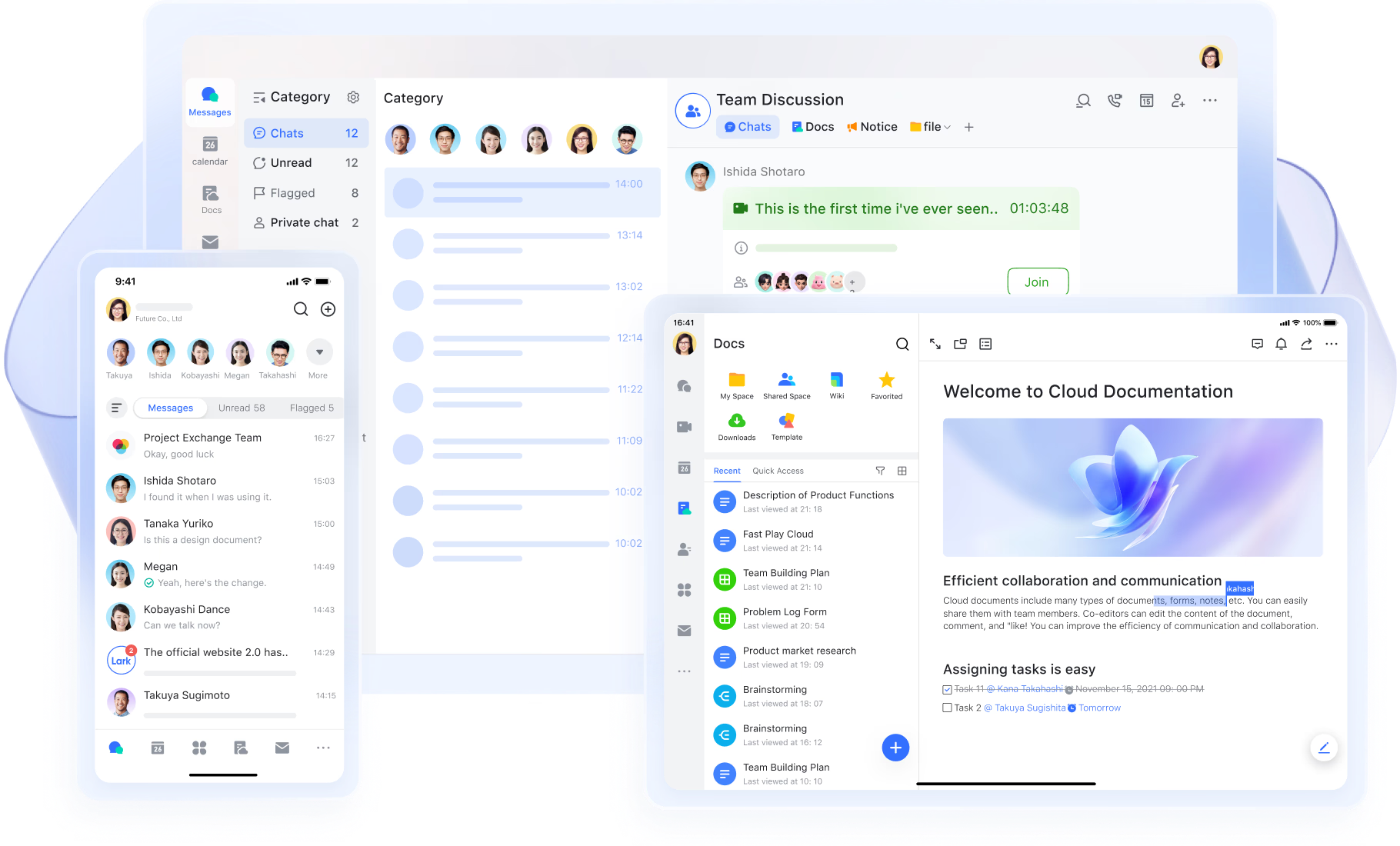
- Team chat, Lark Docs, and Lark Meetings in one platform: Lark brings all communication and collaboration tools under one roof. Teams can chat instantly, share files, co-edit sales proposals, and host virtual meetings directly within the platform. This eliminates the need to juggle between multiple apps and ensures that sales, service, and management stay aligned. Dealerships can also create dedicated channels for leads, clients, or campaigns, making coordination simple and transparent.
Pros:
- Combines CRM, communication, and project tools in a single ecosystem
- Boosts collaboration and efficiency across multi-location teams
- Offers customizable workflows, reports, and automation triggers
- Collaborates smoothly with email, calendars, and third-party apps for seamless operation
Cons:
- May require onboarding and adjustment time for teams new to digital tools
Best for: Lark is ideal for collaborative teams—especially those in fast-paced environments—who, who need to unify communication, social media CRM, and workflow automation in a single, user-friendly interface.
- Starter plan: Free forever plan that includes 11 powerful tools for up to 20 users. It also comes with 100GB of storage, 1000 automation runs, AI translations, and more.
- Pro plan: $12/user/month (billed annually) for up to 500 users. It includes everything in Starter plus group calling for up to 500 attendees, 15TB of storage, 50,000 automation runs, and more.
- Enterprise plan: Contact sales for custom pricing. Supports unlimited users and includes even more automation runs and advanced security, compliance, and management features.
2. HubSpot CRM: Smart, scalable sales
HubSpot offers a flexible and intuitive CRM that connects marketing, sales, and customer service in one easy-to-use platform. Its free plan makes it ideal for growing dealerships starting their digital journey. The system automates lead management, enhances customer communication, and provides insights to boost conversions. It's a popular choice among automotive businesses for its simplicity and scalability.
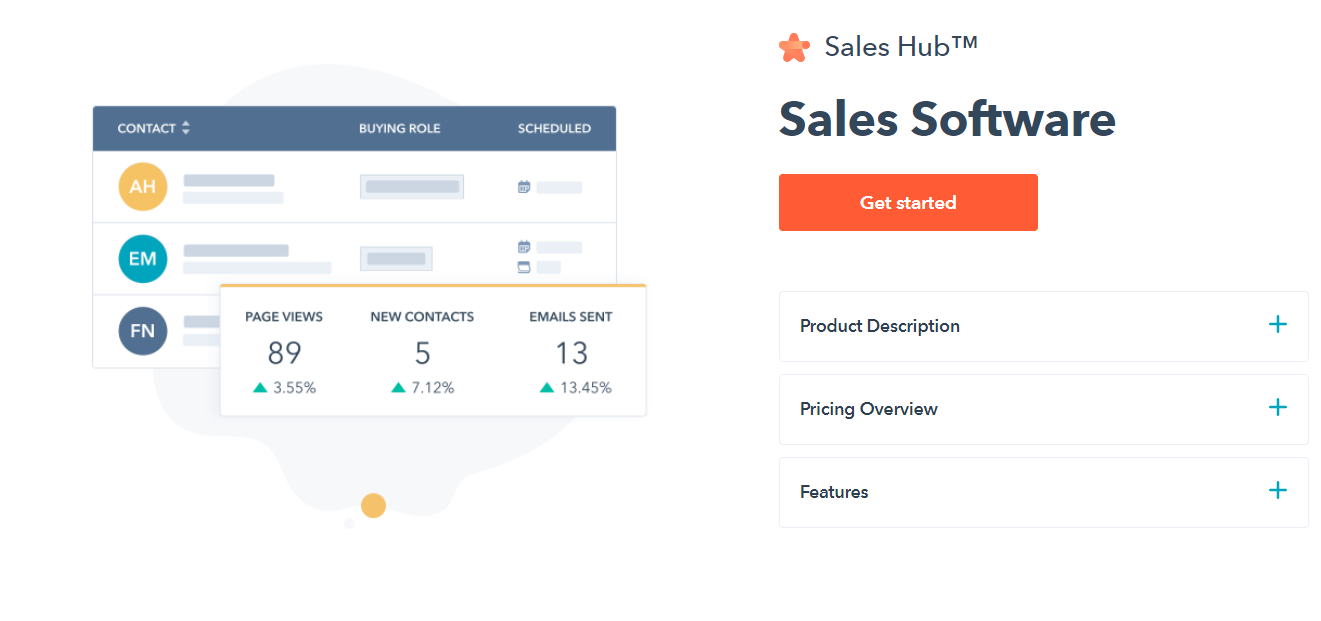
Image source: hubspot.com
Key features:
- Unified sales, marketing, and service dashboard
- Automated lead tracking and deal updates
- Built-in email, ad, and social media tools
- Custom reports and analytics
- Free CRM with upgrade options
Pros:
- User-friendly and quick to implement
- Strong marketing and sales alignment
- Free tier suitable for startups and small teams
- Great integration with third-party tools
Cons:
- Advanced automation available only in higher plans
- Add-ons can increase overall cost
Pricing:
- Free Plan: Basic CRM tools included
- Starter: $45/month
- Professional: $450/month
- Enterprise: Custom pricing
3. Salesforce: Robust solution for dealerships
Salesforce Automotive Cloud is a powerful and highly customizable CRM built to serve large dealerships and automotive groups. It connects customer data, sales operations, and service interactions across every channel. With AI-driven insights and automation, Salesforce helps teams manage complex workflows efficiently while personalizing every customer touchpoint. Its scalability makes it a trusted choice for enterprise-level automotive businesses seeking deep integration and long-term growth.
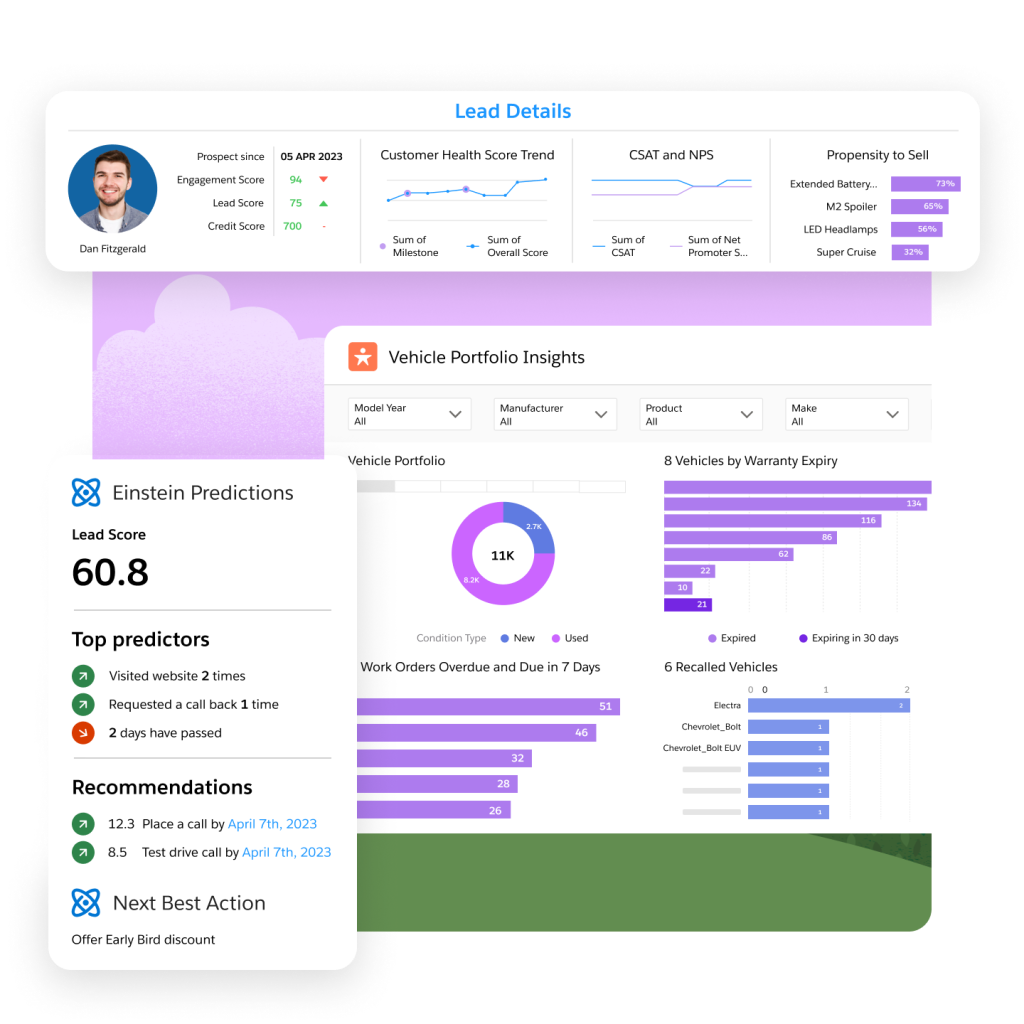
Image source: salesforce.com
Key features:
- AI-powered lead scoring and predictive analytics
- Omnichannel communication across phone, email, and social
- Deep integration with DMS and ERP systems
- Configurable dashboards for real-time performance tracking
- Scalable automation for large dealer networks
Pros:
- Highly customizable to fit complex dealership workflows
- Robust automation and analytics tools
- Integrates seamlessly with enterprise software ecosystems
- Scalable for multi-location and global operations
Cons:
- Requires technical setup and onboarding support
- Pricing can be high for small or independent dealers
Pricing:
- Starter Plan: From $25/user/month
- Professional: From $80/user/month
- Enterprise: Custom pricing based on requirements
4. VinSolutions: 360° view for dealers
VinSolutions is a comprehensive automotive CRM that integrates deeply with dealership management systems (DMS) to give teams a complete view of every customer. It connects sales, service, and marketing data into one platform, allowing dealerships to deliver consistent and personalized experiences. Designed specifically for automotive workflows, VinSolutions helps streamline lead management, improve customer retention, and increase overall operational efficiency.
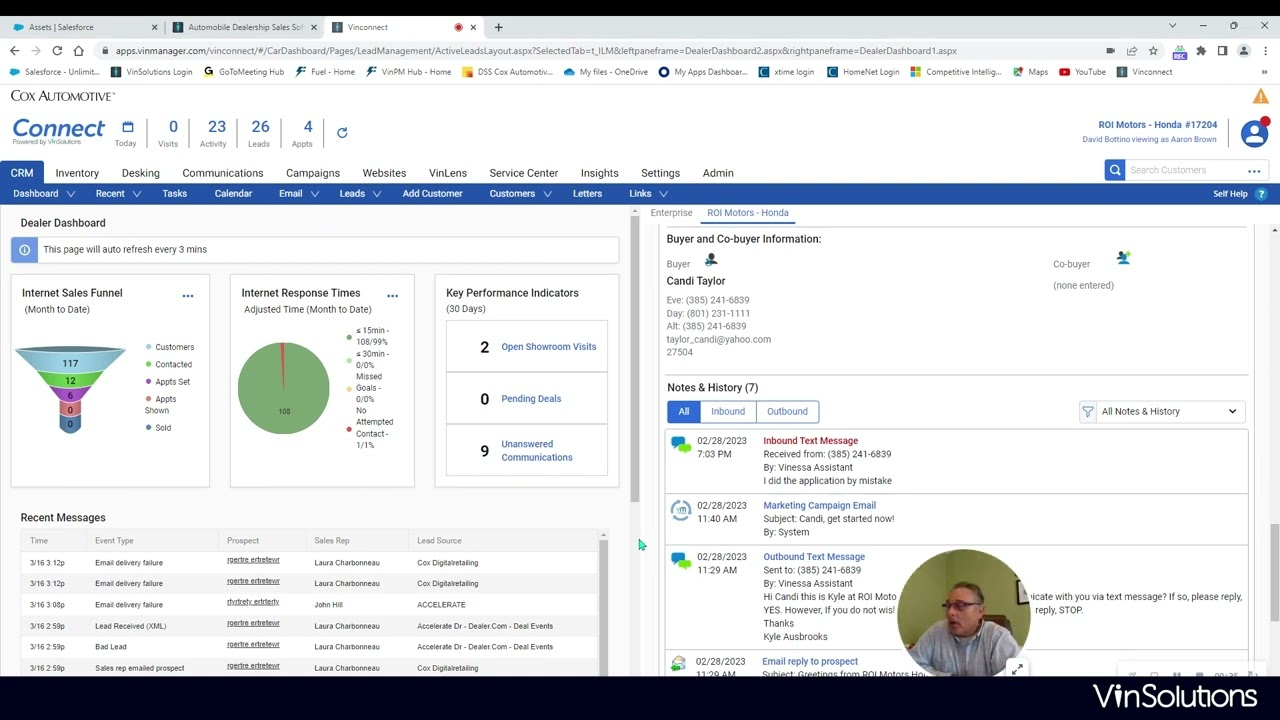
Image source: vinsolutions.com
Key features:
- Full DMS integration for unified customer and vehicle data
- Centralized dashboard with 360° customer profiles
- Automated lead nurturing and follow-up tools
- Service scheduling and maintenance reminders
- Advanced reporting and analytics for dealership performance
Pros:
- Deep integration with dealership systems for data accuracy
- Strong customer lifecycle tracking from lead to loyalty
- Excellent reporting and analytics capabilities
- Scalable for both single and multi-rooftop dealerships
Cons:
- Interface can feel dated compared to newer CRMs
- Pricing and setup may be higher for smaller businesses
Pricing:
- Custom pricing based on dealership size and requirements
- Typically available upon consultation through VinSolutions' sales team
5. CDK Global: An Enterprise dealership tool
CDK Global is an enterprise-focused CRM and DMS platform built for large, multi-location automotive groups. Known for its reliability, compliance, and scalability, it centralizes dealership operations—connecting sales, service, and customer data into one secure ecosystem. CDK helps dealerships improve efficiency, ensure data integrity, and deliver consistent, high-quality customer experiences across multiple branches and brands.
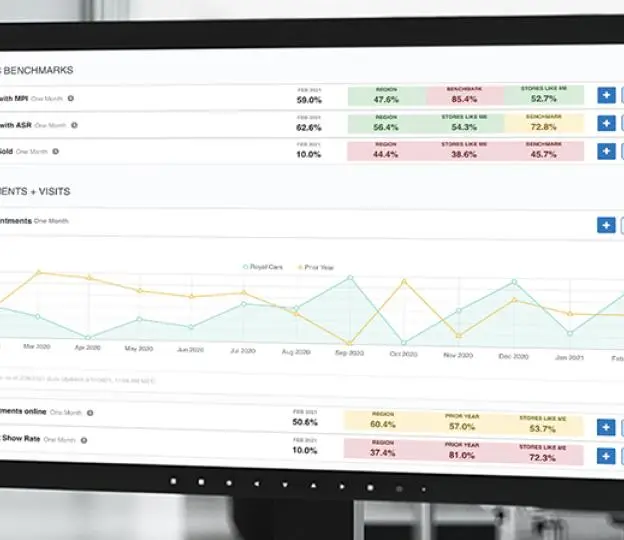
Image source: cdkglobal.com
Key features:
- Seamless integration with dealership management systems (DMS)
- Advanced data protection and compliance tools
- Real-time performance analytics and reporting
- Centralized customer and inventory management
- Scalable platform suitable for multi-location operations
Pros:
- Trusted enterprise solution with strong data security
- Comprehensive compliance and governance features
- Deep DMS and OEM integration for unified workflows
- Excellent scalability for large dealer networks
Cons:
- Less flexibility for smaller or independent dealerships
- Implementation and customization may require IT support
Pricing:
- Standard Plan: Starts around $30/user/month
- Enterprise Packages: Custom pricing available for large, multi-branch dealerships
6. DealerSocket: Optimize dealership operations
DealerSocket is a robust automotive CRM platform designed to streamline every aspect of dealership management from sales and marketing to inventory and service. It empowers teams to track leads efficiently, automate compliance workflows, and gain insights into customer behavior through advanced analytics. Built specifically for dealerships, DealerSocket enhances coordination between departments, ensuring a smooth, data-driven sales process and improves customer satisfaction.
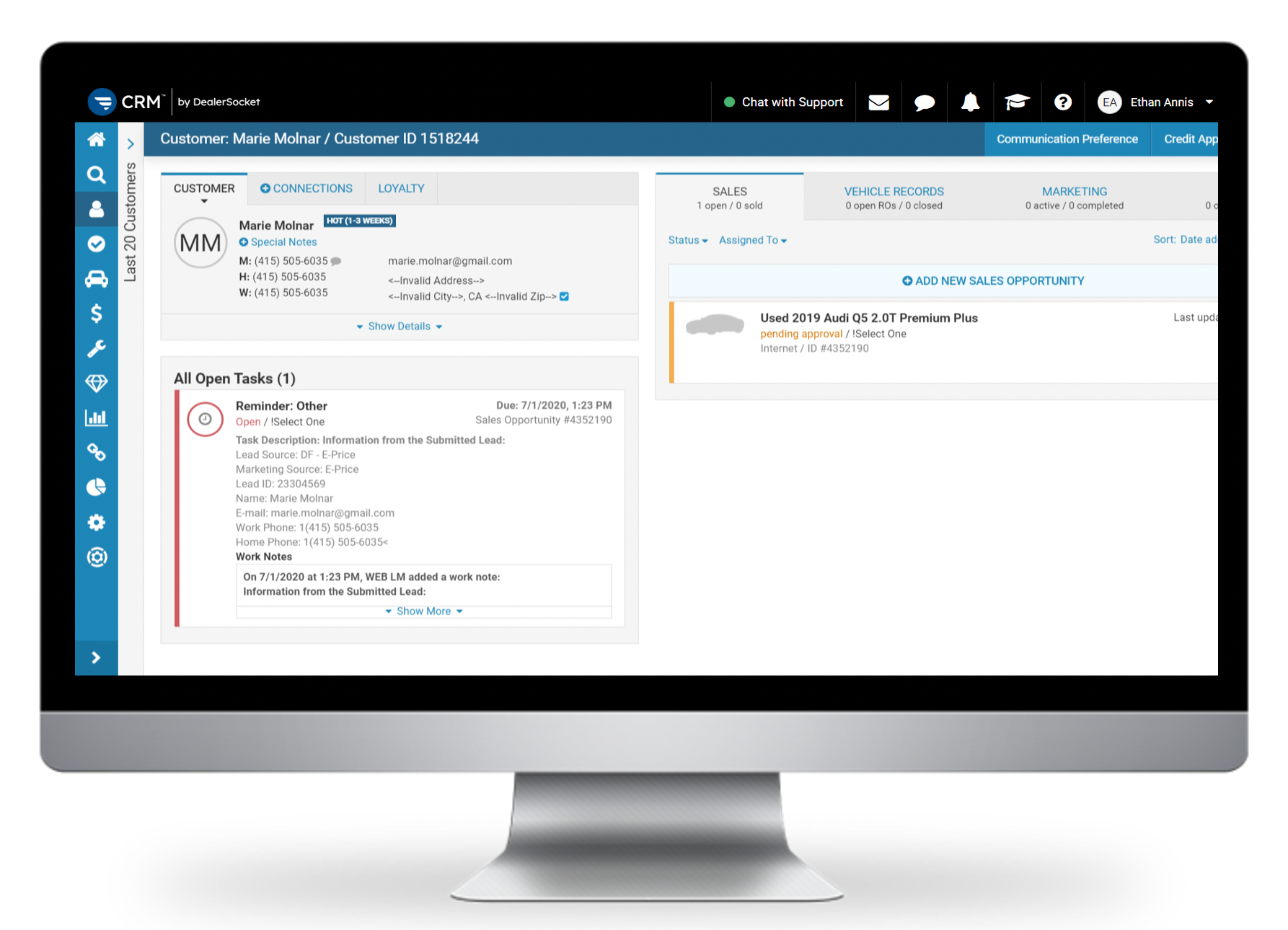
Image source: dealersocket.com
Key features:
- Comprehensive inventory and lead management tools
- Automated compliance tracking and reporting
- Integrated marketing and campaign management
- Real-time sales performance dashboards
- Service scheduling and follow-up automation
Pros:
- Strong reporting and analytics for performance monitoring
- Seamless DMS integration for data synchronization
- Built-in compliance features ideal for regulated markets
- Excellent scalability for multi-site dealership networks
Cons:
- Interface can be complex for new users
- Requires training to unlock full functionality
Pricing:
- Base Plan: From $20/user/month
- Enterprise: Custom pricing available based on dealership size and configuration
7. AutoRaptor: Simple tools for small dealers
AutoRaptor is a lightweight, easy-to-use CRM created for small and independent dealerships that want a fast, efficient way to manage leads and customer interactions. Its mobile-friendly design and quick setup make it an ideal choice for teams with limited technical resources. AutoRaptor focuses on streamlining communication, automating follow-ups, and keeping every sales opportunity organized, helping smaller dealers compete effectively in a digital-first market.
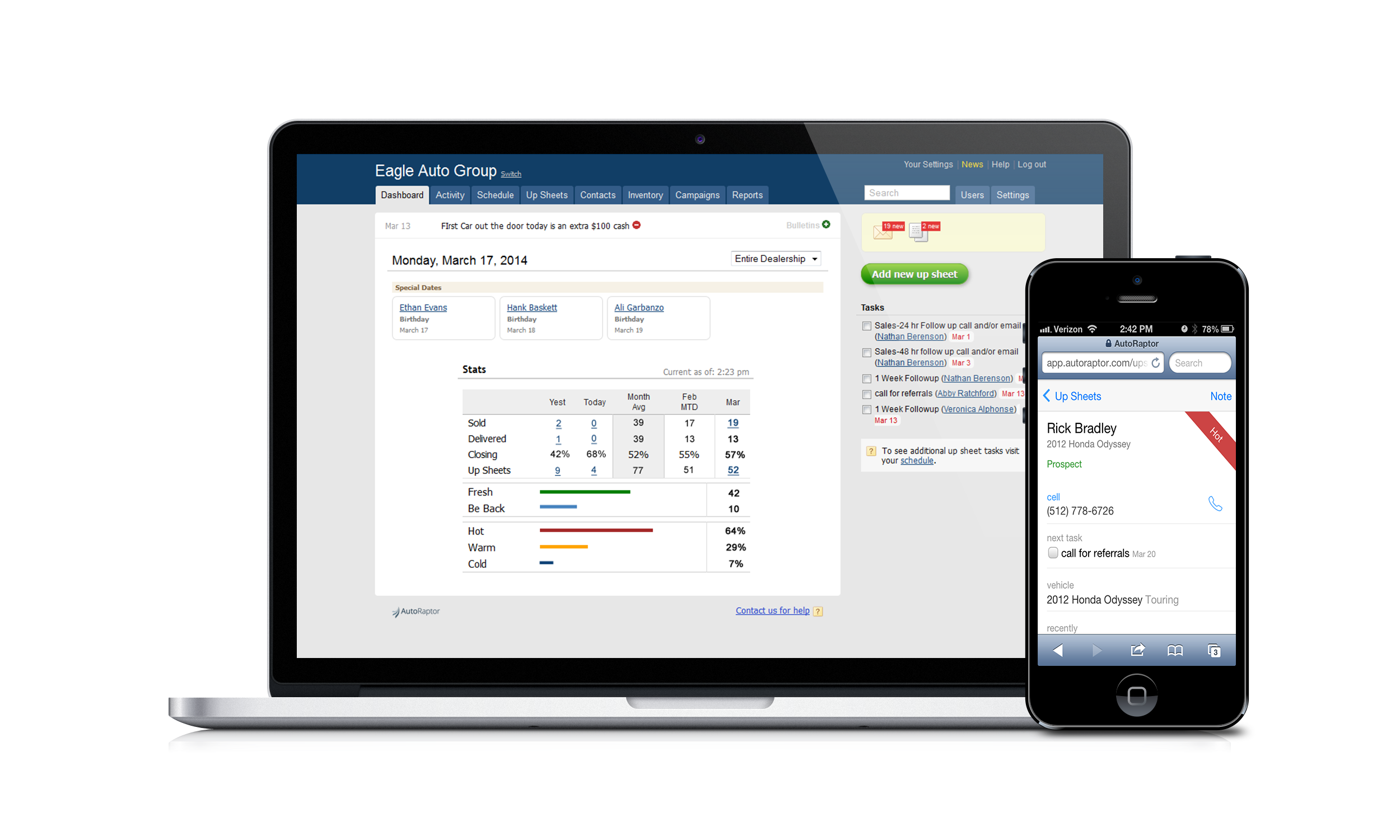
Image source: autoraptor.com
Key features:
- Mobile app for lead tracking and customer updates on the go
- Automatic lead capture from web forms and social media
- Text and email automation for quick follow-ups
- Centralized dashboard to monitor sales activities
- Reporting tools for tracking performance and conversions
Pros:
- Simple and intuitive interface, easy for small teams to adopt
- Fast implementation with minimal setup requirements
- Effective automation for text and email communication
- Strong mobile accessibility for on-the-go sales teams
Cons:
- Limited advanced analytics and customization options
- Not ideal for large or multi-location dealerships
Pricing:
- Standard Plan: Starts at $45/user/month
- Custom Plans: Available for dealerships with unique workflow or integration needs
8. ProMax CRM: Complete lead and sales management for dealerships
ProMax CRM is an all-in-one dealership solution designed to streamline lead management, compliance, and sales tracking for both franchise and independent dealers. Known for its intuitive interface and strong reporting tools, ProMax helps dealerships manage customer data, credit applications, inventory, and marketing in one place. With its built-in compliance features and integrations with major DMS systems, ProMax ensures smooth, efficient, and legally sound dealership operations.
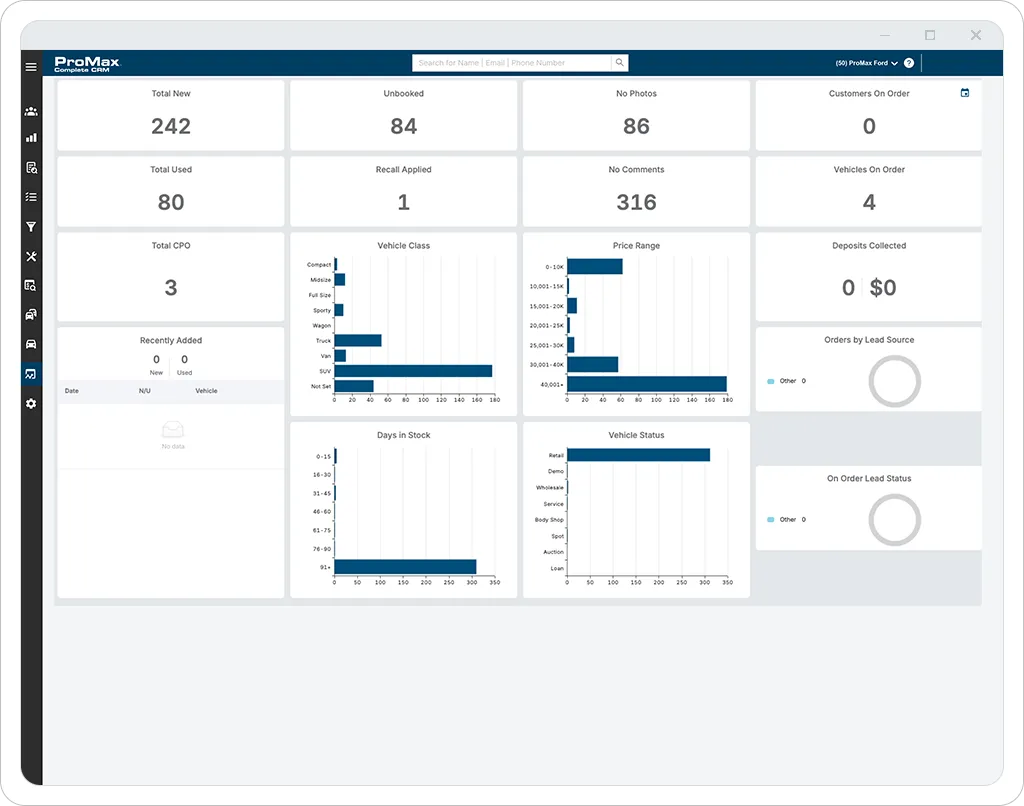
Image source: promax.com
Key features:
- Complete lead management system with automated follow-ups and reminders
- Integrated credit application processing and compliance management
- Real-time performance reporting and sales analytics dashboard
- Marketing automation tools for email, SMS, and direct mail campaigns
- Integration with inventory, website, and third-party lead sources
Pros:
- Robust compliance and credit management tools built specifically for dealerships
- Highly customizable reporting and dashboards for different departments
- Excellent customer support and onboarding assistance
- Integrates easily with DMS, website, and lead providers for seamless data flow
Cons:
- Interface may feel slightly dated compared to newer CRMs
- Requires setup time to customize advanced automation features
Pricing:
- Basic Plan: Starts at around $60/user/month with core CRM features
- Professional Plan: Custom pricing available based on users, add-ons, and integrations
9. Spyne: Next-gen digital automotive sales
Spyne is a next-generation automotive CRM that blends AI technology with digital sales automation. It's built for dealerships that prioritize online engagement, helping teams manage leads from websites, social media, and classified platforms seamlessly. By using artificial intelligence for lead nurturing, image processing, and content generation, Spyne enables dealerships to accelerate their digital sales performance and offer personalized customer experiences at scale.
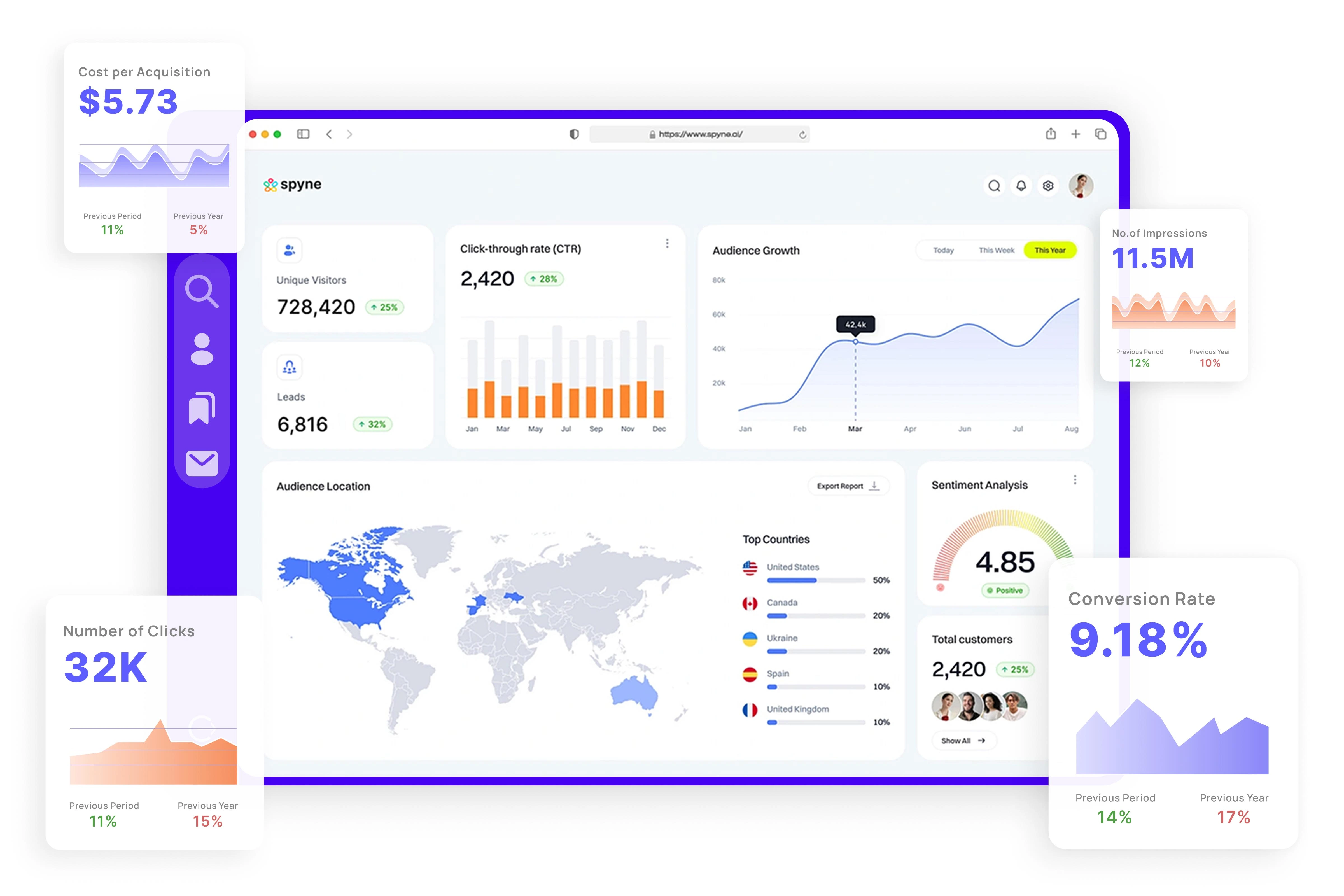
Image source: spyne.ai
Key features:
- AI-powered customer engagement and lead nurturing tools
- Automatic lead capture from web, chat, and social platforms
- Integrated photo and content AI for vehicle listings
- Smart analytics and reporting for campaign optimization
- Cloud-based platform with mobile accessibility
Pros:
- Strong AI-driven automation for lead and content management
- Ideal for digital-first dealerships focused on online conversions
- Seamless social media and ad platform integrations
- Great performance tracking and data insights
Cons:
- Smaller vendor compared to global CRM providers
- Advanced AI tools may require additional setup or training
Pricing:
- Standard Plan: Starts at $49/user/month
- Enterprise Plan: Custom pricing available based on automation and integration needs
10. DriveCentric: Interactive customer communication
DriveCentric is a customer engagement–focused CRM built for dealerships that want to modernize how they communicate and build relationships. It combines AI chat, video messaging, and multi-channel communication to create more personal, interactive connections with buyers. Designed for the digital era, DriveCentric helps sales teams respond faster, maintain transparency, and keep customers engaged throughout the entire buying journey. Its intuitive interface and automation tools make it especially popular with tech-savvy automotive retailers.
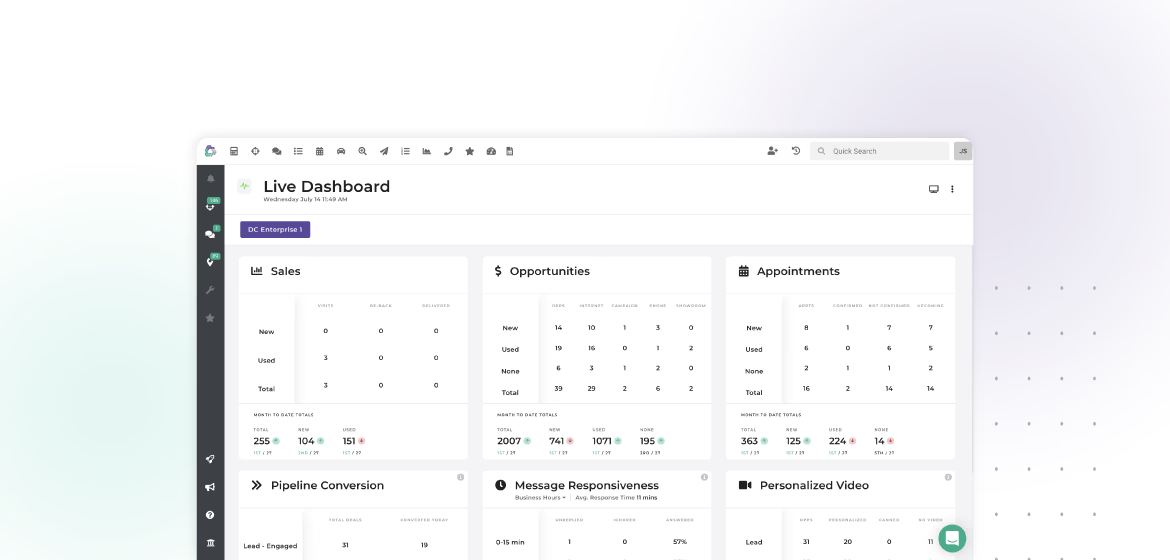
Image source: drivecentric.com
Key features:
- AI-powered chatbots for instant lead response and qualification
- Multi-channel communication via text, email, and video chat
- Centralized dashboard for managing conversations and deals
- Real-time analytics and engagement tracking
- Cloud-based access with mobile functionality
Pros:
- Exceptional engagement tools that improve customer relationships
- User-friendly and visually modern interface
- Strong communication tracking and response analytics
- Effective for dealerships focused on digital and remote sales
Cons:
- Limited automation for large-scale workflows
- May not integrate as deeply with some DMS platforms
Pricing:
- Base Plan: Starts at $30/user/month
- Custom Plans: Available for larger teams and enterprise dealerships with additional feature needs
How to choose the best CRM for your dealership
- Assess ease of use: Evaluate the interface and usability of each CRM within the automotive industry to ensure non-technical staff can navigate smoothly and adopt the system quickly.
- Check integration capabilities: Confirm the CRM integrates seamlessly with essential dealership systems such as accounting, inventory, marketing tools, and review platforms to ensure smooth data flow.
- Analyze pricing structures: Review pricing carefully—whether per-user, per-location, or enterprise-based—to select a cost-effective solution that scales with dealership growth.
- Evaluate vendor support: Assess the vendor's onboarding process, customer support quality, and industry reputation, as these factors directly impact long-term success and implementation ease.
- Prioritize mobile and cloud access: Choose mobile-friendly, cloud-based CRM software so sales teams can access data, track leads, and close deals on the go.
- Ensure security and compliance: Verify that the platform meets security and compliance standards, safeguarding sensitive customer data, including financial and vehicle information.
- Select for efficiency and collaboration: Picking the right automotive CRM improves operational efficiency, enhances team collaboration, and strengthens customer relationships across all dealership functions.
Bouns tips: Step-by-step CRM adoption roadmap with Lark
Implementing a CRM for the automotive industry requires thoughtful planning and execution. Dealerships must align technology with people and processes to ensure a smooth transition. The following steps outline a clear roadmap for successful CRM adoption that drives measurable results.
Step 1: Set clear goals for CRM adoption
Start by defining your dealership's objectives and expected outcomes such as improving lead tracking, automating approvals, or enhancing collaboration between sales and service teams. Evaluate whether Lark's official blocks and layouts fit your business needs. Setting these goals ensures that your CRM setup is purposeful, scalable, and aligned with your organization's growth strategy.
Step 2: Build a client database using Lark Base
Use Lark Base to create a centralized customer database that stores contact details, purchase history, and communication records. Organize leads through the Kanban view to visualize sales progress and automate workflow updates. This structured system improves visibility across departments and ensures every lead receives timely attention.
Step 3: Sync approval processes and contract management
Combine Lark Approval to streamline the approval of deals, contracts, and financing requests. By automating approval workflows, teams can process lead follow-ups faster, maintain consistency, and minimize manual delays. This integration ensures smooth collaboration between sales, finance, and management.
Step 4: Use Lark Forms to collect customer feedback
Create feedback forms in Lark Forms to gather insights after test drives, vehicle purchases, or service visits. The collected data helps assess customer satisfaction and identify opportunities for improvement. Continuous feedback loops strengthen customer loyalty and support data-driven decision-making.
Step 5: Create to-do lists for team onboarding and adoption
Use Lark's To-Do and task management tools to guide teams through the CRM onboarding process. Assign tasks, set reminders, and track implementation milestones. This ensures that every team member understands their responsibilities, improving CRM adoption rates and ensuring smooth operations from day one.
Conclusion
Adopting a CRM for the automotive industry is a transformative step toward building a customer-first, data-driven dealership. By centralizing customer information, automating sales workflows, and improving follow-ups, dealerships can create seamless experiences that strengthen loyalty and boost conversions. Starting with a pilot phase—testing features, customizing workflows, and refining processes, helps ensure long-term success. Platforms like Lark make this transition easier by combining CRM functionality with team communication, document sharing, and automation tools in one space. With the right CRM and social media integration, dealerships can enhance customer satisfaction, increase revenue, and operate with greater efficiency. In the digital era, solutions like Lark empower automotive businesses to stay connected, responsive, and future-ready.
FAQs
How long does it take to fully implement an automotive CRM system?
Implementation typically takes 4 to 8 weeks, depending on data volume, system complexity, and the size of the dealership. Cloud-based CRMs like Lark can be set up faster with minimal IT involvement.
Can automotive CRMs sync with existing dealership management systems (DMS)?
Yes, most automotive CRM systems integrate seamlessly with DMS platforms, ensuring unified data across sales, inventory, and service operations. This helps maintain accuracy and improve workflow efficiency.
Do CRM platforms help improve online reviews and ratings?
Absolutely. CRMs automate post-sale follow-ups and review requests, encouraging satisfied customers to share feedback online. This enhances the dealership's reputation and supports stronger local visibility.
Is my customer data safe with a cloud-based automotive CRM?
Yes, top providers like Lark use advanced encryption, role-based permissions, and compliance standards to secure customer data. Cloud hosting ensures regular backups and reliable access control.
Are there mobile apps for sales reps and managers on the go?
Yes, leading CRMs such as Lark, AutoRaptor, and DriveCentric offer mobile apps for real-time updates. These apps allow teams to manage leads, view analytics, and communicate from anywhere.
Related reading
Table of contents
Start using Lark today

Manage all your work in one place
Boost team efficiency by 10x
Save up to 70% on software costs
Table of contents
Start using Lark today
Manage all your work in one place
Boost team efficiency by 10x
Save up to 70% on software costs
Keep reading









2026 Lark Technologies Pte. Ltd.
Headquartered in Singapore with offices worldwide.






Explore: