














Unlock Business Growth: A Practical Guide to Mastering CRM Metrics

Fecilia Clarke
Solutions Marketing Specialist
Sep 18, 2026
Fecilia Clarke
Sep 18, 2026

17 min read


Are you truly maximizing your customer relationships for sales growth and overall business success? It’s a question every business owner and manager should be asking. Nowadays, simply having a CRM system isn't enough. The real power lies in understanding and leveraging your CRM metrics. These key CRM metrics provide invaluable insights into your business performance, sales efficiency, and customer satisfaction, informing your sales and marketing strategies and the overall effectiveness of your customer relationship management. Let's explore how to harness the power of CRM analytics.
In this guide, I'll walk you through the essential aspects of CRM metrics. We'll define what they are, why they're crucial, and which ones you should be tracking CRM metrics. More importantly, I'll share actionable insights on how to use these metrics to drive meaningful improvements in your business. To make your work more effective, I will also show how CRM tools and collaboration tools like Lark can streamline the sales process, fostering better teamwork and more informed decision-making. You'll also learn how to improve customer satisfaction by truly understanding customer expectations.

What exactly are CRM metrics anyway?
At its core, CRM metrics are quantifiable data points that help you track and evaluate the performance of your customer relationship management strategies. It's easy to confuse the term with key performance indicators, which are the measures for evaluating the success of an organization in line with strategic goals. These metrics provide insights into various aspects of your customer interactions, sales efforts, and marketing campaigns performance. They help you quantify the effectiveness of your sales and marketing efforts, enabling you to make data-driven decisions.
Think of CRM metrics as the vital signs of your customer relationships. Just as a doctor monitors a patient's vital signs to assess their health, businesses track CRM metrics to gauge the health of their customer relationships. By monitoring these metrics closely, you can identify areas of strength and weakness, and take corrective action to improve your overall performance. In essence, understanding CRM metrics is crucial for optimizing your customer relationship management and achieving business success CRM metrics. By analyzing these data points, we can better understand customer behavior and create marketing strategies that resonate.
Why CRM metrics are your secret weapon for business growth
So, why should you care about CRM metrics? Because they're essential for driving sustainable sales growth and overall business performance. These metrics empower you to make informed decisions, improve customer relationships, increase sales efficiency, enhance marketing efforts, and optimize resource allocation. Let’s dive in.
With these metrics, you can gain a deeper understanding of your customers' needs and behaviors, allowing you to tailor your interactions and provide more personalized customer experience. Improved customer relationships directly translate into increased customer loyalty, higher customer retention rates, and greater customer lifetime value( CLV). They also provide valuable insights into the effectiveness of your sales process, enabling you to identify bottlenecks, improve conversion rates, and shorten the average sales cycle.
CRM metrics are also important in making your marketing campaigns even more effective. By tracking the ROI of your marketing efforts, you can identify which sales and marketing teams' strategies are working and which ones aren't. This allows you to optimize your marketing spend and generate more leads. Ultimately, by aligning your CRM efforts with your overall business goals, you can ensure that every interaction with your customers contributes to your bottom line. This means paying attention to customer inquiries and acting upon actionable insights.
Key CRM metrics to track: A comprehensive overview
Now, let's delve into the specific key CRM metrics that you should be tracking CRM metrics. I’ve broken them down into four main categories: customer acquisition, sales team performance, customer retention, and customer satisfaction. Remember, the specific metrics that are most important to you will depend on your business goals and industry. It's important to choose the right CRM metrics that align with your objectives and provide the most relevant insights into your performance.
Customer acquisition metrics
These metrics focus on how effectively you're attracting and acquiring new customers. Tracking these metrics allows you to optimize your marketing and sales efforts to acquire new customers efficiently. They include customer acquisition cost cac, lead conversion rate, and marketing campaigns ROI. Understanding how many customers you are acquiring is a core element of business growth.
- Customer acquisition cost (Cac): This metric measures the total cost of acquiring a new customers. To calculate customer acquisition cost cac, divide your total marketing and sales efforts expenses by the number of customers acquired during a specific period. Optimizing customer acquisition cost cac involves improving your marketing strategies efficiency, targeting the right audience, and streamlining your sales funnel.
- Lead conversion rate: This metric measures the percentage of leads that convert into paying customers. To calculate lead conversion rate, divide the number of customers by the number of leads, then multiply by 100. Improving lead conversion rate involves nurturing leads with relevant content, providing personalized offers, and ensuring a seamless sales process.
- Marketing campaign ROI: This metric measures the effectiveness of your marketing campaigns in terms of customer acquisition. To calculate marketing campaigns' ROI, subtract the cost of the campaign from the average revenue generated by the campaign, then divide by the cost of the campaign, and multiply by 100. Optimizing marketing campaigns ROI involves targeting the right audience, crafting compelling messaging, and continuously testing and refining your campaigns. The right CRM data and CRM analytics are essential to maximize the ROI.
Sales performance metrics
These metrics provide insights into the efficiency and effectiveness of your sales team. Sales performance metrics allow you to identify top performers, address areas of weakness, and optimize your sales process for maximum results. The most important ones are sales conversion rate, average deal size, sales cycle length, and opportunity win rate, all of which contribute significantly to sales success.
- Sales conversion rate: This metric tracks the percentage of leads that convert into paying customers. To calculate sales conversion rate, divide the number of customers by the number of leads, then multiply by 100. Improving sales conversion rate involves providing sales and marketing teams with the training and resources they need to succeed, streamlining the sales pipeline stages, and implementing effective sales strategies.
- Average deal size: Analyzing the average revenue value of closed deals. To calculate average deal size, divide the total revenue generated by the number of deals closed. Increasing average deal size involves upselling and cross-selling to existing customers, targeting larger accounts, and negotiating effectively.
- Sales cycle length: This metric monitors the time it takes to close a deal. To calculate average sales cycle length, measure the time from initial contact to deal closure for each customer and calculate the average. Shortening sales cycle length involves streamlining the sales funnel, providing sales efforts with the tools and resources they need to succeed, and automating tasks.
- Opportunity win rate: This metric measures the success rate of converting opportunities into sales. To calculate opportunity win rate, divide the number of opportunities won by the total number of opportunities, then multiply by 100. Improving opportunity win rate involves qualifying leads effectively, understanding customer needs, and presenting compelling solutions.
Customer retention metrics
These metrics measure your ability to retain customers. Customer retention metrics are crucial for long-term business success, as it's generally more cost-effective to retain customers than to acquire new customers. Some metrics to keep in mind are customer retention rate, customer churn rate, and customer lifetime value. Focusing on existing customers is a proven recipe for success.
- Customer retention rate: This metric calculates the percentage of customers retained over a specific period. To calculate customer retention rate, subtract the number of new customers acquired from the total number of customers at the end of the period, divide by the number of customers at the beginning of the period, and multiply by 100. Improving customer retention rate involves providing excellent customer experience, building strong customer relationships, and offering valuable products and services. It also relates to customer loyalty.
- Customer churn rate: This metric tracks the rate at which customers discontinue using a product or service. To calculate customer churn rate, divide the number of customers lost during a specific period by the number of customers at the beginning of the period, and multiply by 100. Reducing customer churn rate involves identifying the reasons why customers are leaving, addressing their concerns, and improving the overall customer experience.
- Customer lifetime value (Clv): This metric predicts the total average revenue a customer will generate throughout their customer lifetime relationship with the business. To calculate customer lifetime value clv, multiply the average purchase value by the average number of purchases per year, and then multiply by the average customer lifespan. Increasing customer lifetime value clv involves providing excellent customer experience, building strong customer relationships, and offering valuable products and services. Understanding the average customer and their habits is essential.
Customer satisfaction metrics
These metrics gauge how satisfied your customers are with your products, services, and overall customer experience. Customer satisfaction metrics provide valuable insights into customer perceptions and help you identify areas for improvement. Essential metrics include net promoter score, customer satisfaction, and customer effort score. The ultimate goal is to improve customer satisfaction.
- Net promoter score (Nps): This metric measures customer loyalty and advocacy. Net promoter score nps is typically measured using a survey that asks customers how likely they are to recommend your business to others on a scale of 0 to 10. Improving net promoter score nps involves addressing customer inquiries, providing excellent customer experience, and building strong customer relationships.
- Customer satisfaction score: This metric assesses customer satisfaction with specific interactions or services. Customer satisfaction is typically measured using a survey that asks customers to rate their satisfaction on a scale of 1 to 5. Improving customer satisfaction involves providing excellent customer experience, resolving customer issues promptly, and continuously improving customer experience.
- Customer effort score: This metric evaluates the ease with which customers can resolve their issues. Customer effort score is typically measured using a survey that asks customers to rate the level of effort required to resolve their issue on a scale of 1 to 7. Reducing Customer Effort Score involves streamlining processes, providing clear and concise information, and empowering customers to self-serve.
How Lark streamlines your CRM metrics tracking
Now, let's explore how Lark, a powerful collaboration platform, can transform the way you analyze CRM metrics, track, and act upon your CRM data. Lark empowers your sales and marketing teams to stay connected, organized, and informed, enabling more effective data-driven decisions. As a comprehensive collaboration solution that significantly enhances customer engagement, Lark translates robust CRM capabilities directly into measurable business outcomes. Here's how Lark streamlines your CRM metrics tracking:
- Customizable real-time dashboards: Create custom dashboards in Lark Base, a flexible no-code solution that allows you to tailor fields, views, and permissions to your exact needs. Visualize critical metrics like sales pipeline stages and customer satisfaction scores on live dashboards that are also fully accessible through Lark's mobile-friendly experience, so you can track performance from anywhere.
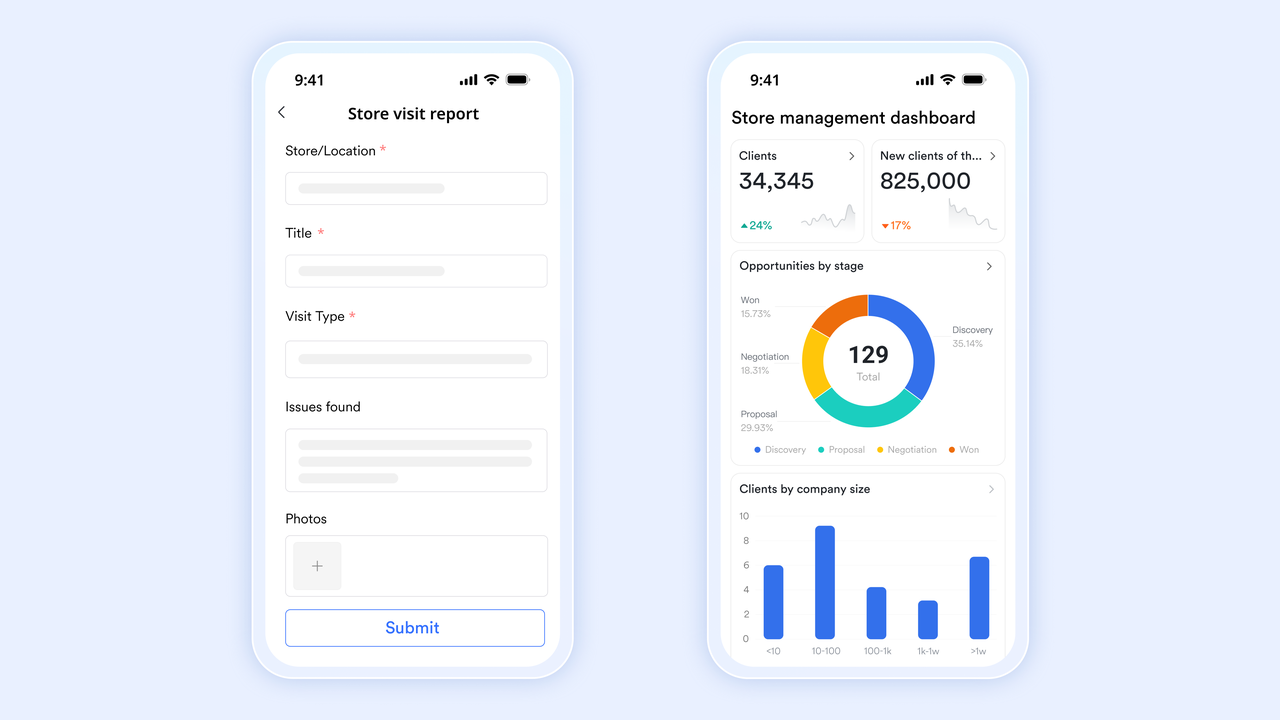
- Collaborative metric analysis: Embed dynamic CRM data charts directly into Lark Docs to facilitate real-time collaborative analysis. Kickstart your setup with rich pre-built template resources, fostering transparency and ensuring your entire team is aligned on performance trends and strategic responses without starting from scratch.
- Contextual discussions: Share specific CRM metrics and insights directly within Lark Messenger channels to spark focused discussions. This enables rapid team responses to emerging trends or potential issues, ensuring efficient communication and decision-making whether at your desk or on the go.
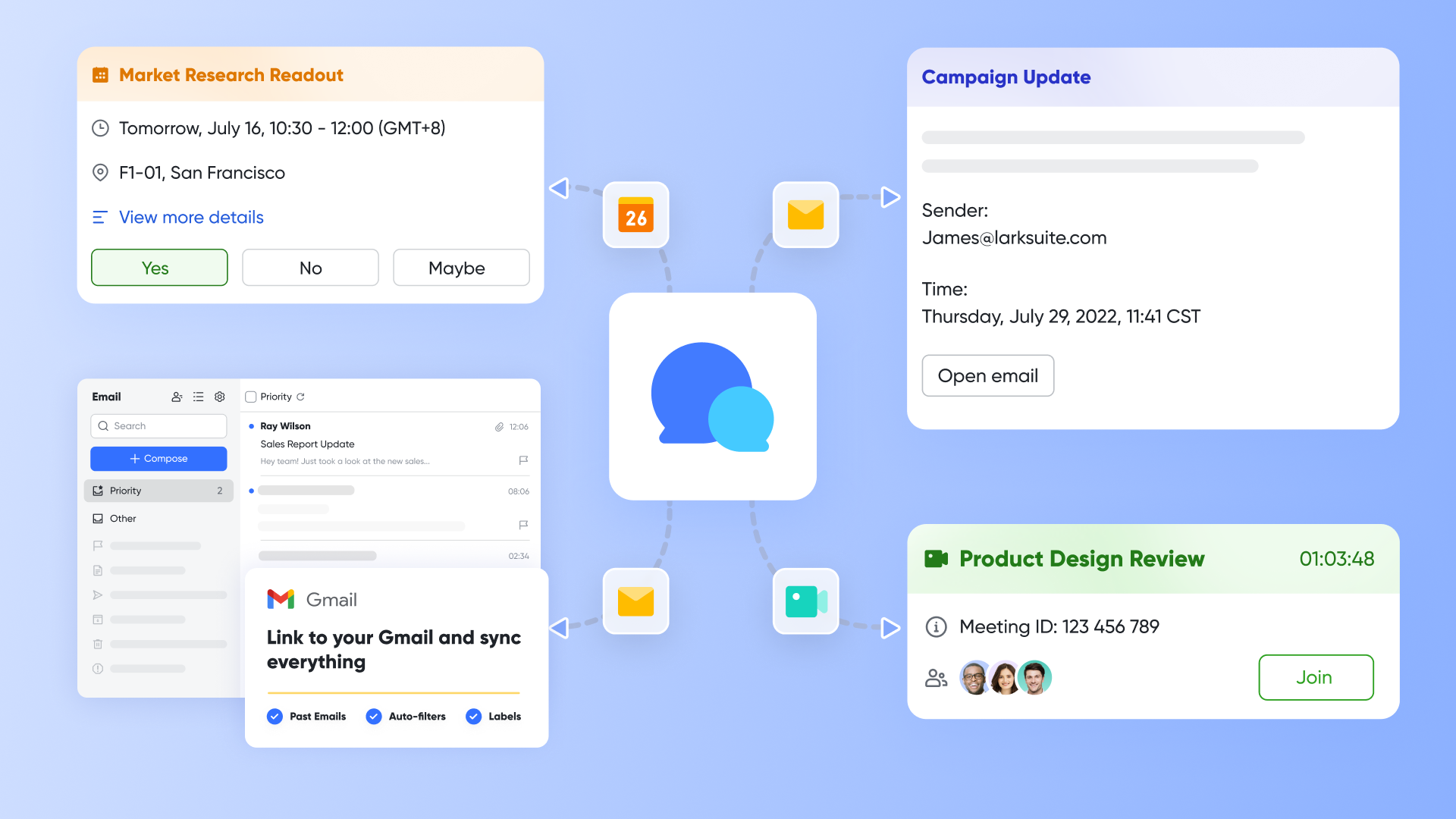
- AI-powered insights: Go beyond simple tracking with AI assistance that not only summarizes meetings but also helps generate comprehensive account profiles and prepare call scripts. This enriches your CRM data, providing your team with deeper insights and improving the quality of customer interactions.

- Powerful automated workflows: Utilize powerful automations in Lark Base to eliminate repetitive tasks like data capture and streamline your entire sales process. These no-code workflows reduce manual work, improve data quality, and help ensure consistent adherence to predefined performance thresholds, freeing your team to focus on closing deals.
Actionable strategies to boost your CRM metrics
Now that you understand the importance of tracking CRM metrics, let's discuss some actionable tips for improving your performance. These sales strategies will help you optimize your CRM system, enhance customer relationships, and drive sustainable business performance and sales growth. This section dives into some of the more important strategies and actionable approaches.
First and foremost, ensure your CRM data is clean, accurate, and up-to-date. Inaccurate data points can lead to flawed insights and misguided decisions. Regularly audit your data, remove duplicates, and correct errors. Second, align your key CRM metrics with your overall business goals. Identify the metrics that are most relevant to your goals and focus your sales efforts on tracking and improving them.
Establish a routine for analyzing CRM metrics and reviewing your metrics. Schedule regular meetings to discuss sales pipeline performance, identify trends, and develop action plans. Don't just track your metrics; use the insights you gain to refine your sales and marketing strategies. Continuously experiment with different approaches, test new ideas, and measure the results. Ensure everyone on your sales team understands the importance of CRM metrics and how to use them to improve their performance. All of that would help to improve sales success
Conclusion
Tracking CRM metrics is no longer optional; it's essential for thriving in today's competitive landscape. By understanding and leveraging these metrics, you can make informed decisions, improve customer relationships, and drive sustainable business performance and sales growth. You can also use these metrics for predictive analytics. The importance of tracking CRM metrics simply cannot be overstated. With the right CRM tools and sales strategies, you can unlock the full potential of your CRM data and achieve remarkable results. More than that, with a better understanding of customer value and the tools to increase it, you can create a system that generates net new revenue.
So, take the first step today. Identify your most critical metrics, set up robust tracking systems with powerful tools like Lark, and empower your sales team and marketing efforts with the insights they need to excel. Use predictive analytics to anticipate future trends, and consistently strive to improve customer satisfaction and foster customer loyalty. The path to sustained growth and profitability starts with a deep understanding of your CRM data and a commitment to using that data to drive positive change. Unlock the power of crm metrics, and watch your business thrive.
FAQs
What is a CRM metric?
A CRM metric is a quantifiable measure used to track and assess the performance of customer relationship management activities. These data points provide critical insights into sales, marketing, and service effectiveness, helping businesses optimize strategies and improve customer relationships.
Which is an example of a CRM metric?
A key example is Customer Lifetime Value (CLV). This metric forecasts the total net profit a company can expect from a single customer over their entire relationship. It helps businesses prioritize long-term customer retention efforts over short-term acquisition gains.
What are the 7 C's of CRM?
The 7 C's of CRM is a strategic framework for successful implementation. It consists of: Customer, Culture, Organization, Process, Technology, Content, and Context. This model helps businesses align all essential components to build and maintain effective customer relationships.
What are KPIs for CRM?
CRM Key Performance Indicators (KPIs) are specific, crucial metrics chosen to measure the success of CRM goals. Examples include customer retention rate, lead conversion rate, and average sales cycle length. They provide actionable insights for refining strategies and boosting performance.
Related reading
Table of contents
Start using Lark today

Manage all your work in one place
Boost team efficiency by 10x
Save up to 70% on software costs
Table of contents
Start using Lark today
Manage all your work in one place
Boost team efficiency by 10x
Save up to 70% on software costs
Keep reading









2026 Lark Technologies Pte. Ltd.
Headquartered in Singapore with offices worldwide.






Explore: