














Reimagine Public Service: Your Ultimate Guide to Government CRM

Fecilia Clarke
Solutions Marketing Specialist
Sep 3, 2026
Fecilia Clarke
Sep 3, 2026

15 min read


We’ve all been there. On one hand, there’s the experience of waiting in long lines, being transferred from department to department, and resubmitting the same information on different paper forms—a process that feels inefficient and impersonal. On the other hand, there’s the experience of resolving an issue with a single online request, receiving timely updates via text, and feeling genuinely heard and helped. The difference between these two scenarios often comes down to one critical element: the technology powering the public agency, specifically its approach to customer relationship management.
This raises a central question for leaders in government agencies today: How can your organization build lasting trust and deliver the responsive, digital-first government services that modern citizens not only desire but expect? The answer lies in fundamentally transforming how you manage your most important relationships. This guide is designed to be your definitive resource on government CRM systems. We will explore what a CRM for government is, the challenges it solves, key features to look for, a look at top market solutions, and how to choose a trusted partner for your digital transformation journey.
Key takeaways: Top 9 government CRMs at a glance
- Lark: An all-in-one, cost-effective platform that combines a no-code database with collaboration tools for maximum flexibility.
- Salesforce Government Cloud: A premium, enterprise-grade solution focused on high security, compliance, and extensive customization.
- Creatio: An AI-native, no-code platform for modernizing citizen services
- Microsoft Dynamics 365: A comprehensive CRM that offers deep, native integration with the entire Microsoft software ecosystem.
- Oracle Public Sector: A powerful, large-scale suite that excels at unifying CRM with back-office ERP and financial systems.
- Granicus govService: A specialized platform for local governments focused on citizen engagement through web portals and communications.
- Accela: A purpose-built "GovTech" solution designed specifically for complex regulatory workflows like permitting and licensing.
- CivicPlus: A unified solution for municipalities that integrates CRM with website management and mass notification capabilities.
- GovPilot: A cloud-native platform for local governments that automates workflows and enhances transparency with a public-facing GIS map.

What is a government CRM, exactly?
First, let's set the record straight. When we discuss a CRM in a public sector context, we aren’t talking about a tool for driving sales. Instead, it’s better to think of it as a platform for managing citizen relationships. Its primary goal is to strategically manage and vastly improve the relationship and interactions between government organizations and their constituents. At its heart, it’s a philosophy of putting the citizen at the center of every process and decision, enabled by the right technology. A modern CRM platform makes this philosophy a reality.
Its key functions include centralizing citizen information, tracking citizen service requests from start to finish, and automating communication to keep people informed. It also provides powerful analytics on service performance, giving leaders a clear view of what’s working and what isn’t. This represents a strategic shift from a siloed, paper-based past to a unified, citizen-centric future. By creating a single source of truth for every interaction—from simple citizen inquiries to complex case management scenarios—the system helps provide consistent, informed, and equitable service delivery to everyone.
The evolving role of a modern government CRM
The adoption of a modern CRM system is about more than just digitizing existing business processes; it signifies a fundamental change in how government operations are managed. The role of this technology has evolved far beyond simple record-keeping, becoming a dynamic engine for proactive citizen engagement and data-driven decision making. By embracing this evolution, agencies can not only enhance efficiency but also rebuild the foundation of public trust. A modern government CRM is the backbone of a more responsive, transparent, and collaborative public service, especially for local and federal agencies.
From reactive records to proactive relationships
This technology marks a crucial evolution from a reactive posture to a proactive one. Traditionally, government systems were designed to simply log complaints or process applications as they arrived. A modern CRM, however, enables proactive outreach and personalized communication. Imagine being able to automatically notify residents in a specific neighborhood about upcoming road work, or sending personalized reminders about expiring car registrations. This shift from passively waiting for service requests to actively providing information builds goodwill and makes citizens feel like valued partners, strengthening citizen relationships.
Breaking down silos for seamless citizen service
One of the most significant transformations a CRM software brings is its ability to break down departmental silos. In many agencies, citizen data is fragmented across dozens of disconnected, existing systems. A unified CRM platform creates a 360-degree view of each constituent, allowing different departments to collaborate seamlessly. When every employee has access to the same complete and up-to-date information through a centralized platform, the agency can provide holistic, consistent service instead of passing citizens from one office to another in a frustrating loop, thereby helping to streamline operations.
Empowering leaders with real-time insights
Furthermore, a modern government CRM is a powerhouse for data-driven decisions. Intuitive dashboards with robust reporting capabilities provide agency leaders with the clear, real-time insights needed for informed decision-making. Are resolution times increasing? Is one department struggling with a backlog? By answering these questions with data, leaders can allocate budgets more effectively, identify service gaps, and transparently measure citizen satisfaction. This data becomes the foundation for continuous improvement, ensuring that resources are always directed where they are needed most to improve operational efficiency.
Critical challenges in government CRM adoption and solutions
While the benefits are clear, the path to successful CRM implementation is often paved with challenges unique to public sector organizations. From navigating legacy systems to ensuring data security and managing organizational change, these hurdles can seem daunting. However, by anticipating them and adopting the right strategies, agencies can overcome these obstacles and unlock the full potential of their digital transformation. Recognizing these challenges is the first step toward building a resilient and effective implementation plan.
Challenge 1: Overcoming data silos and legacy systems
One of the most persistent roadblocks is the existing technological landscape. Decades of procuring different systems have left many agencies with a tangled web of fragmented data. The complexity cuts both ways: vendors navigating public sector procurement face an equally steep learning curve before they can meaningfully compete for agency contracts.Information is trapped in outdated, non-integrated existing government systems, making a unified citizen view feel like an impossible dream. This not only creates internal inefficiencies but also results in a disjointed experience for constituents who have to navigate the maze of different communication channels and even government websites.
The solution lies in adopting a modern, flexible platform designed for connectivity. Instead of a rigid system that demands you rip and replace everything, look for a solution that can serve as a central hub. A powerful, customizable database tool can consolidate information from various sources into a single source of truth. Furthermore, platforms with strong integration capabilities can act as a bridge, enabling seamless integration with your existing infrastructure to pull in necessary data without requiring a complete overhaul from day one. This approach allows for a phased, manageable transition toward a more unified system.
Challenge 2: Ensuring ironclad security and compliance
Public trust is a government’s most valuable asset, and protecting sensitive citizen data is non-negotiable. The need for robust data security and data protection is paramount. Agencies must navigate a complex web of compliance requirements, including strict compliance requirements for data handling and public records management. Any CRM solution must be secure by design and also ensure compliance with all relevant legal standards, a core tenet of regulatory compliance.
When evaluating potential partners, it is critical to prioritize vendors with a proven and transparent security framework. Look for a commitment to global security and compliance capabilities, backed by certifications and regular audits. Key features to demand include end-to-end encryption for data both in transit and at rest, granular access controls to ensure employees can only see the information they need, and clear data residency options that allow you to store data in specific geographic locations. A proactive and transparent approach to security is a baseline requirement.
Challenge 3: Managing change and driving user adoption
Perhaps the most underestimated challenge is the human element. Public sector employees are often accustomed to long-standing government processes, and introducing new technology can be met with resistance. If a new CRM is seen as complex or cumbersome, user adoption will falter. A system that isn't used is a wasted investment. A smooth implementation plan must therefore include a strong focus on change management, supported by comprehensive training and readily available training resources.
The key to solving this is to choose an intuitive platform that simplifies work. A user-friendly interface is essential. A unified platform that combines daily work tools—like chat, video meetings, documents, and databases—into a single application drastically reduces the learning curve. When the CRM’s functions are embedded in the tools employees already use, adoption feels natural. The initial setup should be straightforward, and the vendor should provide excellent ongoing support to ensure long-term success.
Must-have features for a modern government CRM solution
When selecting the right CRM platform, it's easy to get lost in a long list of features. However, a truly effective platform is defined by a core set of capabilities that work together to create a seamless experience for both employees and citizens. These are the essential features that form the foundation of a modern, citizen-centric government. From unified communication to powerful workflow automation and advanced analytics, each component plays a vital role.
A unified citizen communication hub
Citizens expect to manage interactions with their government through a variety of channels. A modern government CRM must manage all these citizen interactions in one place. A system that forces employees to jump between different tools is inefficient. The goal is to create a single, manageable queue for all inquiries, ensuring no request falls through the cracks and every citizen receives a timely, consistent response, helping to maintain transparency.
Customizable case and workflow automation
Many government processes follow a predictable series of steps. Manually managing these workflows is time-consuming. A critical feature of any modern CRM solution is the ability to create automated workflows. Look for a platform that allows you to build custom, no-code workflows for automating business processes. This automation frees up employees to focus on more complex issues that require a human touch and is key to helping streamline processes.
Secure, collaborative knowledge management
Delivering consistent and accurate information is fundamental to good governance. An effective government CRM should include integrated tools for secure, collaborative knowledge management. This means having a central, secure place for all case-related documents and internal policy guides. A shared wiki can serve as a single source of truth for all employees. When everyone has access to the same up-to-date information, it empowers them to answer citizen questions with confidence and accuracy.
Real-time analytics and performance reporting
To truly enhance service delivery, agency leaders need clear visibility into operational performance. A modern CRM solution must provide real-time analytics and easy-to-read performance reporting dashboards. This data allows managers to spot bottlenecks, identify trends, and make informed decisions to optimize resource allocation and improve transparency in government performance.
A comparative look at the top government CRM tools
The market for government technology is vast, and choosing the right CRM partner can be a complex decision. To help you navigate this landscape, here is an objective look at some of the top solutions, highlighting their core offerings and unique features to help you find the best fit for your agency's specific needs, scale, and budget.
1. Lark: An all-in-one suite for flexible, collaborative governance
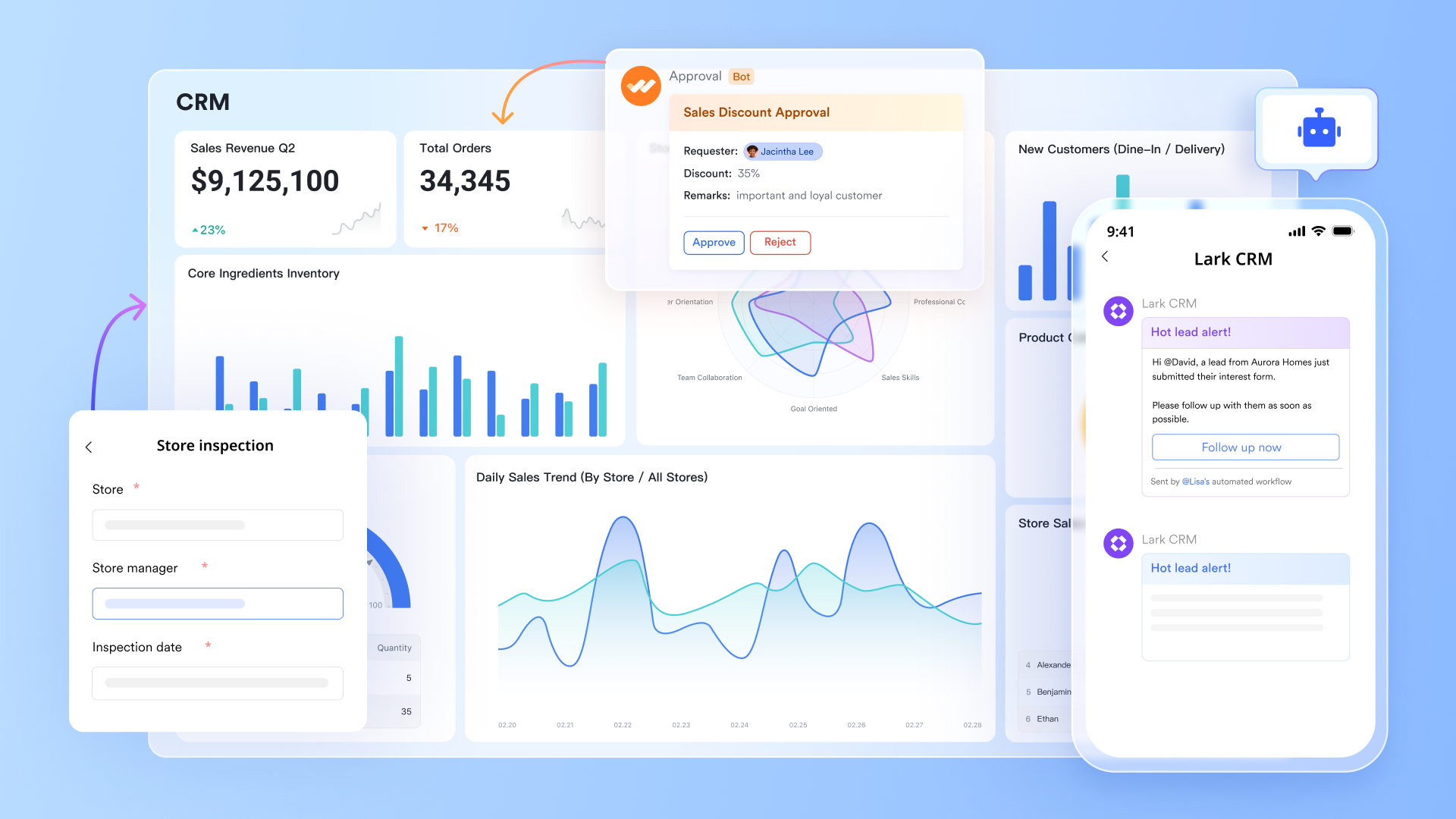
Overview: Lark is an all-in-one collaboration suite that serves as a uniquely flexible and cost-effective government CRM. It stands out by combining a powerful no-code database with built-in communication and automation tools, allowing agencies to build their own ideal solutions from the ground up and drive high user adoption.
Key features:
- No-code customization power: Empowers agencies to build tailored workflows, case management systems, and citizen databases using intuitive drag-and-drop tools, removing dependency on IT departments.
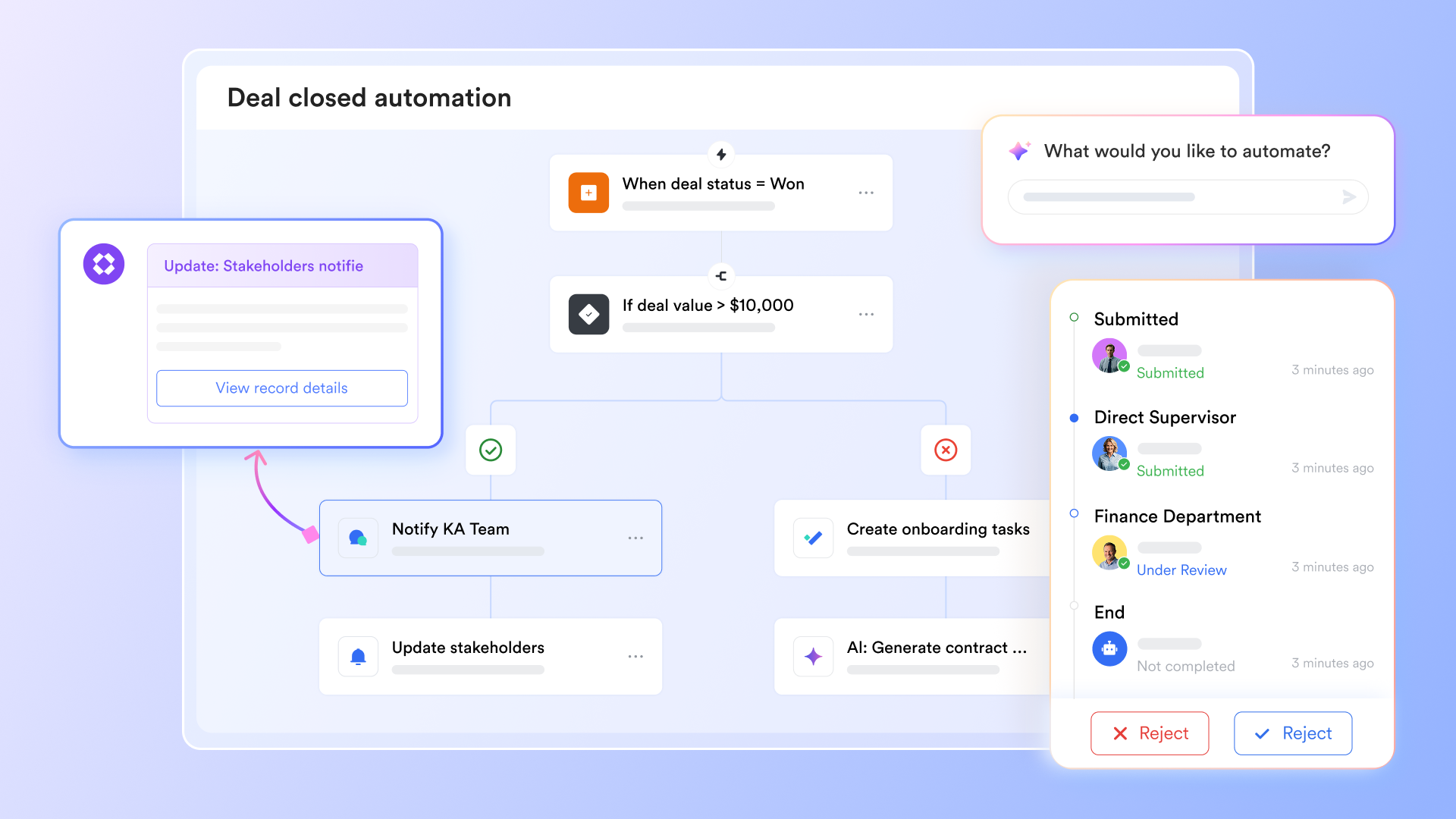
- Automated service workflows: Streamlines citizen requests, permit processing, and internal approvals with triggers and reminders that significantly reduce manual follow-ups and accelerate resolution times.
- Unified collaboration platform: Seamlessly combines communication, project management, and a powerful database in one interface, eliminating the need for public servants to switch between different applications.
- Secure compliance framework: Meets stringent government security standards with end-to-end encryption, comprehensive audit logs, and granular permission controls to protect sensitive citizen data.
- Transparent flexible pricing: Offers a generous free tier and scalable, competitive per-user plans with no hidden fees, making advanced digital features accessible even for agencies with limited budgets.
Pricing:
- Free plan: Includes 11 powerful products, supporting up to 20 users, 100 GB storage, 1,000 automation runs and unlimited AI translation in chats, docs and email.
- Paid plans: Starts at $12/user/month, supporting up to 500 users. Includes unlimited message history, 50,000 automated Base workflow executions per month.
- Enterprise plan: Custom pricing.
2. Salesforce Government Cloud: A high-compliance, enterprise-grade CRM platform
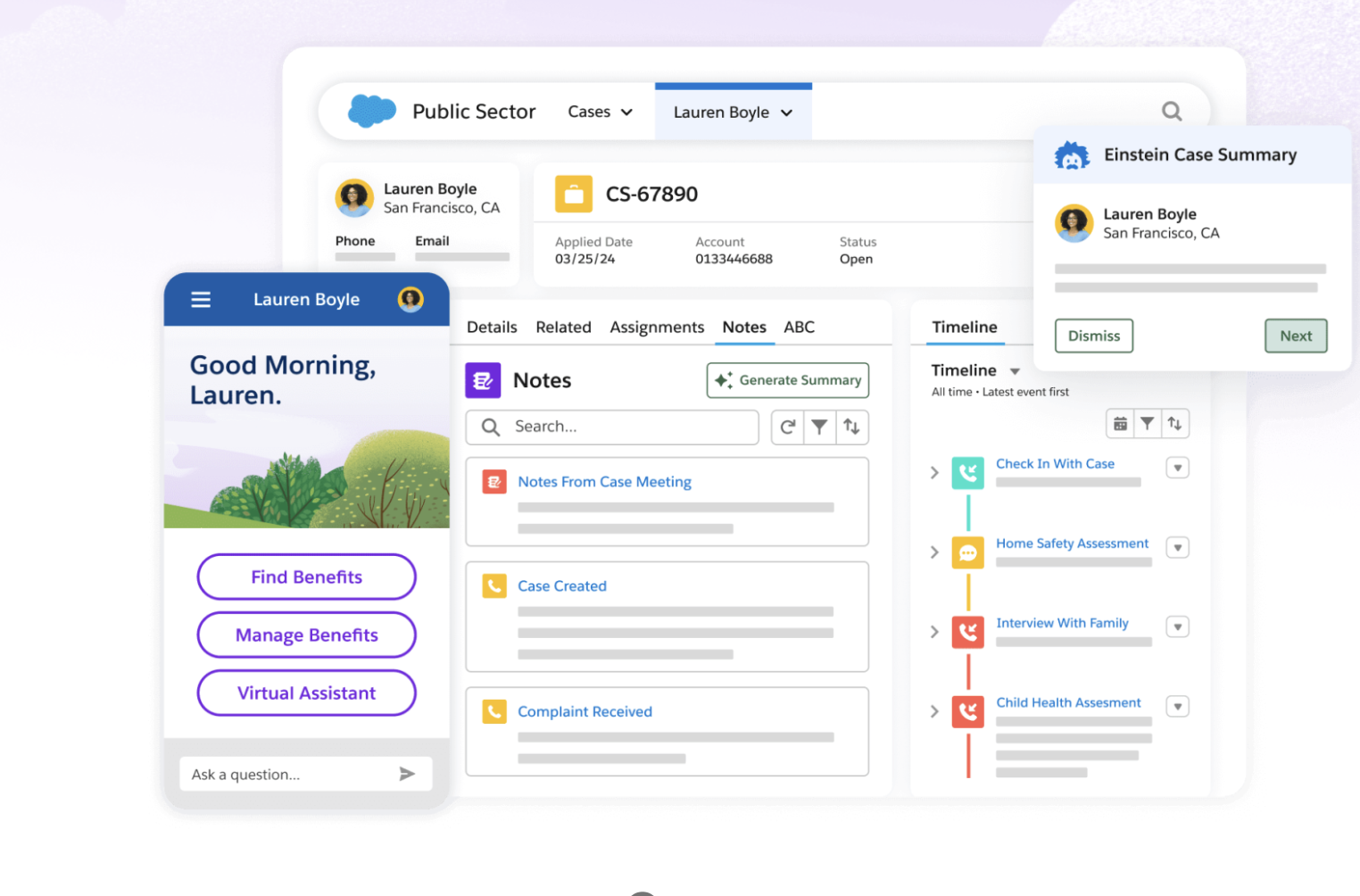
Image source: salesforce.com
Overview: As a market leader, Salesforce offers the Salesforce Government Cloud, a powerful and highly scalable platform. It is a robust solution designed to meet the complex needs of the public sector, with a strong focus on compliance and an extensive ecosystem of third-party apps.
Key features:
- FedRAMP authorized infrastructure: Operates within a secure cloud environment that is certified for U.S. government data, ensuring full compliance with demanding federal security mandates.
- Prebuilt government solutions: Accelerates deployment times with a range of industry-specific templates for case management, licensing, inspections, and constituent engagement.
- Extensive integration ecosystem: Connects with thousands of specialized applications via the AppExchange, allowing for extensions into procurement, finance, and legacy system integration.
- Premium scalable model: Provides virtually unlimited customization and dedicated support through a network of specialized partners, making it ideal for large-scale, transformative government projects.
Pricing: Salesforce operates on a premium pricing model. Costs are quoted on a custom, per-user/month basis, and implementation often requires certified partners.
3. Creatio: An AI-native, no-code platform for modernizing citizen services
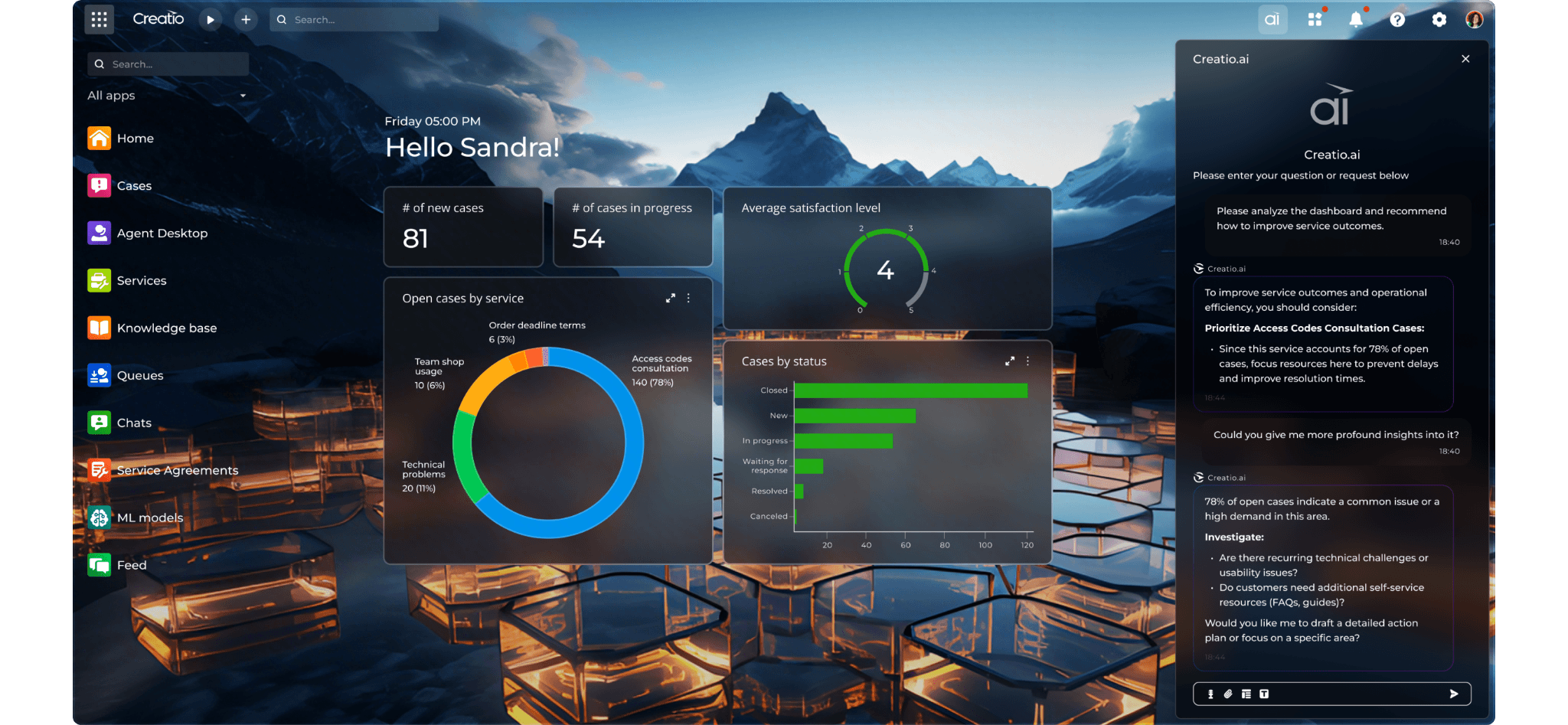
Image source: creatio.com
Overview: Creatio is an AI-native CRM and workflow platform that combines no-code configurability with built-in AI agents, giving public sector agencies a way to modernize citizen services and internal workflows without depending entirely on IT or expensive custom development.
Key features:
- No-code workflow configuration: Lets agency staff build and adjust citizen request forms, case management processes, and approval workflows through drag-and-drop tools, without writing code or waiting on developers.
- AI-powered request handling: Built-in AI agents classify incoming citizen requests, suggest next steps, and flag cases at risk of missing deadlines, reducing manual triage for case workers.
- Unified citizen record: Brings together citizen interactions, service requests, and case history into a single record, so staff across departments see the same up-to-date information instead of working from siloed systems.
- Composable, unlimited-scale pricing: Charges per user with no caps on workflows, applications, or AI agents at the top tier, giving agencies predictable costs as adoption grows across departments.
- Proven public sector deployments: Used by city and municipal governments for citizen request systems, including a 311 service launched in four months across 700 users handling over 1,000 requests per day.
Pricing: Creatio's core platform starts at $40/user/month (Growth plan), with an Enterprise tier at $75/user/month and a custom-priced Unlimited plan for agencies that need unlimited users, AI agents, and workflows. CRM applications (Sales, Marketing, Service) are available at $15/user/month each on top of the core platform.
4. Microsoft Dynamics 365 Government: A deeply integrated solution for the Microsoft ecosystem
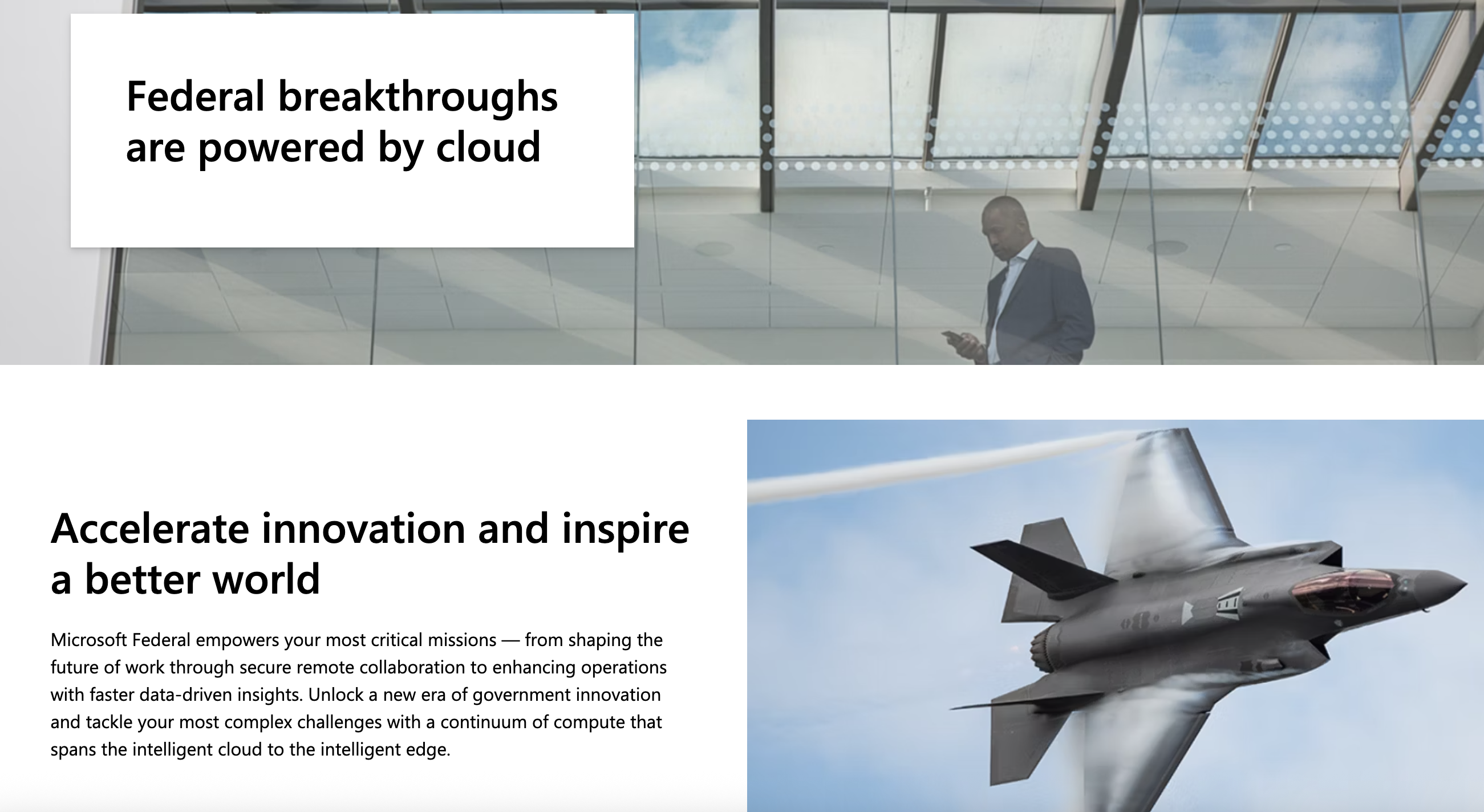
Image source: microsoft.com
Overview: From Microsoft, Dynamics 365 Government is a comprehensive CRM and ERP solution. Its primary strength lies in its seamless, native integration with the broader Microsoft ecosystem, including Microsoft 365, Azure, and Power BI, making it a natural choice for agencies already invested in Microsoft products.
Key features:
- Compliant cloud environments: Available in GCC, GCC High, and DoD cloud options to meet the varying levels of U.S. government security and compliance requirements.
- Seamless Microsoft integration: Syncs natively with Teams, Outlook, and Power Platform, enabling unified collaboration and productivity within the familiar tools that government employees use every day.
- Modular case management: Offers configurable modules for citizen service, field inspections, and program management that allow for real-time data sharing across different agency functions.
- Embedded power BI: Delivers rich, interactive dashboards for performance monitoring, resource allocation, and trend analysis directly within operational workflows.
Pricing: Features a complex, tiered pricing structure based on the specific applications and user roles required. Custom quotes are standard.
5. Oracle Public Sector: An end-to-end suite for unified agency management
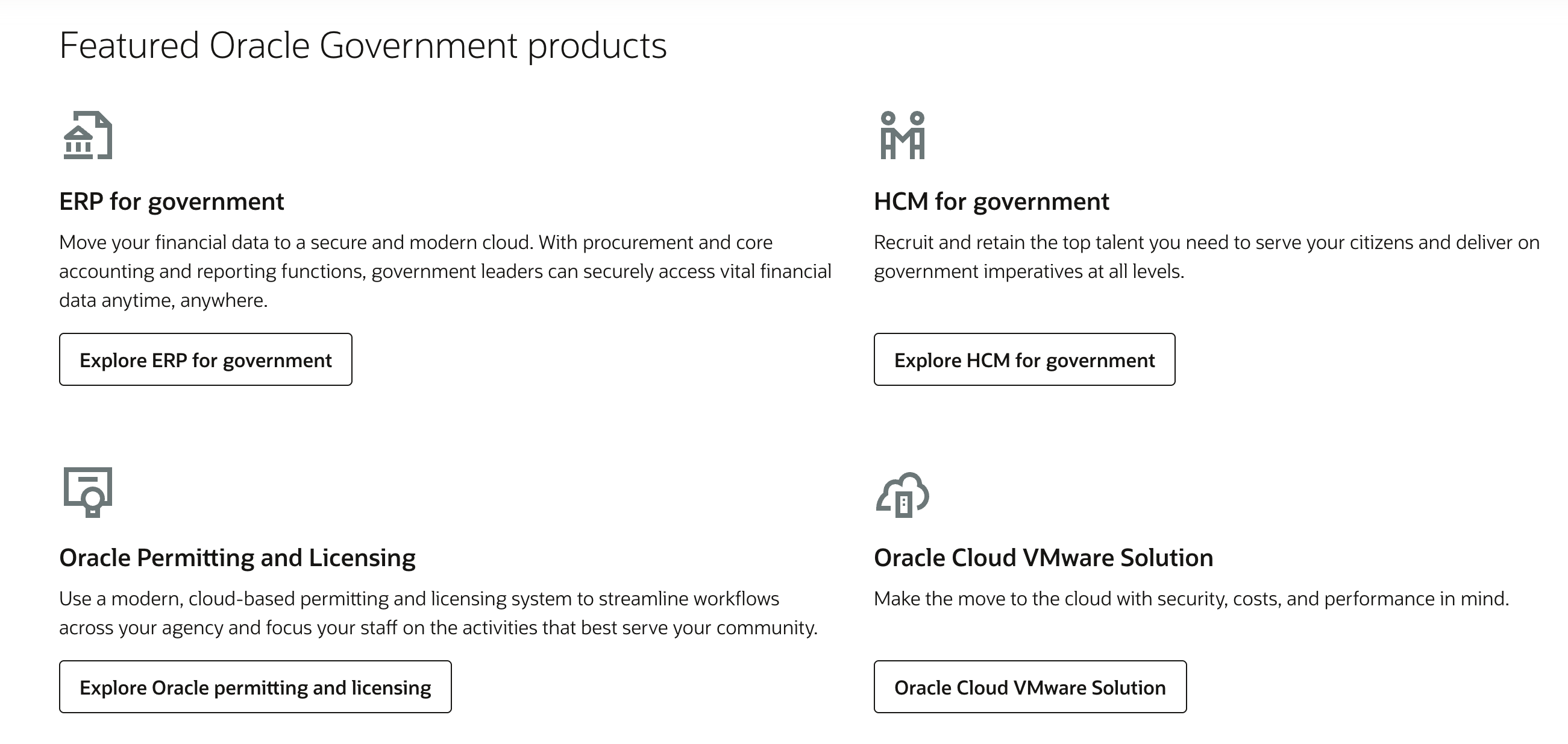
Image source: oracle.com
Overview: Oracle provides a suite of cloud applications for the public sector, with a strong focus on back-office functions like ERP and HCM alongside its CRM capabilities. It is a powerful choice for large government entities needing end-to-end operational management that connects financials and HR with citizen data.
Key features:
- Unified ERP-CRM integration: Combines citizen relationship data directly with financial and HR systems, providing holistic, agency-wide insights and reporting capabilities.
- Enterprise data governance: Provides advanced tools for ensuring data quality, master data management, and cross-departmental consistency in all citizen records and interactions.
- High-volume processing power: Built to scale and handle complex, high-volume workflows for automated approval, grant management, and compliance reporting in large municipalities or state agencies.
- Advanced security controls: Features multilayered data encryption, sophisticated anomaly detection, and robust compliance auditing tools designed for highly sensitive public sector data.
- Comprehensive customization options: Supports extensive tailoring to unique and complex government processes, but this often requires significant implementation resources and specialized expertise.
Pricing: Positioned as an enterprise-level solution, Oracle’s pricing typically involves a significant investment and is provided through custom quotes.
6. Granicus govService: A citizen engagement platform for local government
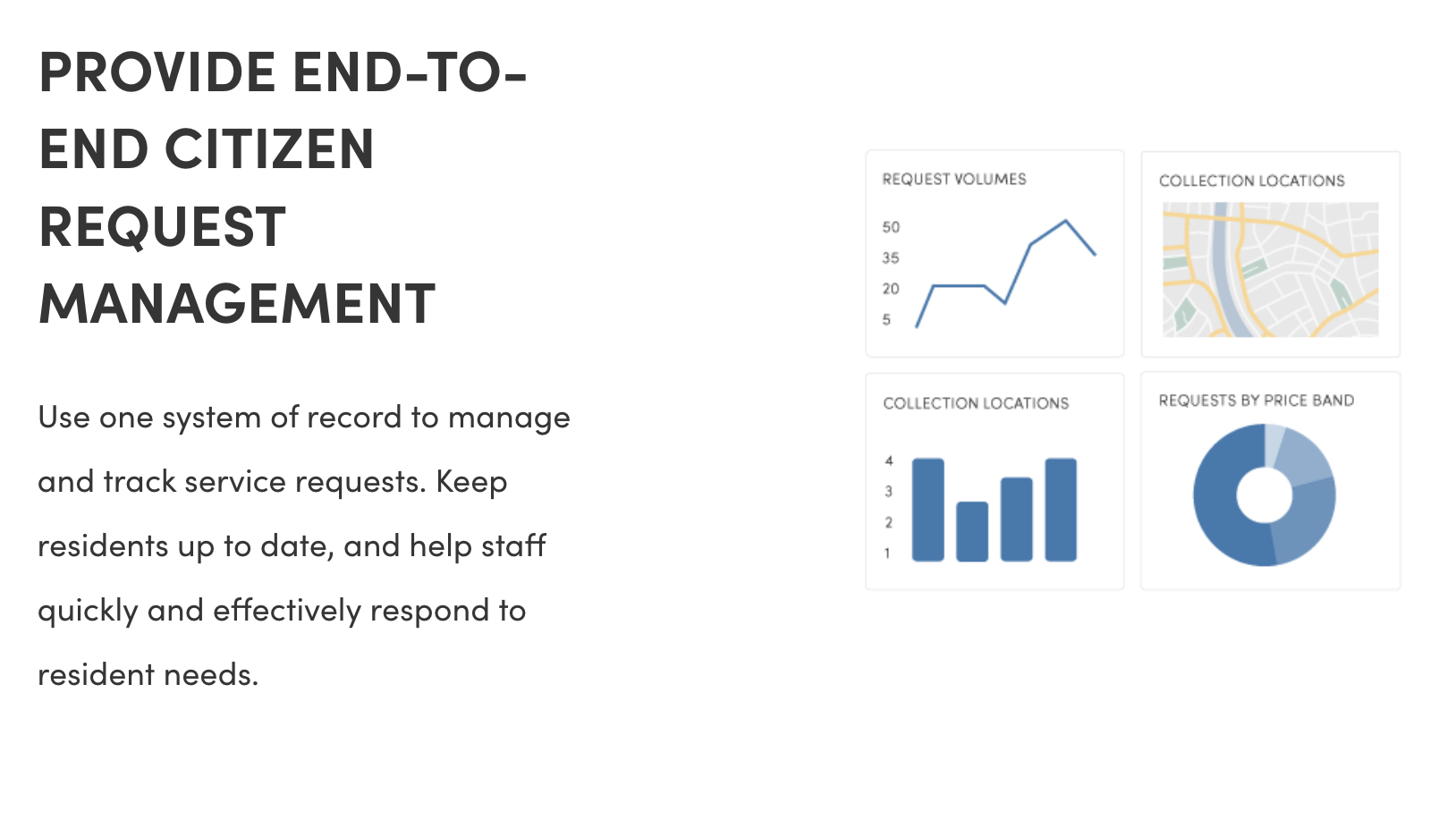
Image source: granius.com
Overview: Granicus offers a platform specifically designed for citizen engagement tools, focusing on service delivery, communications, and website management. It is a popular choice for local and municipal governments aiming to improve their digital storefront and streamline online citizen interactions.
Key features:
- Self-service citizen portal: Enables residents to submit requests, track their status, and pay fees online through branded web and mobile interfaces that are accessible 24/7.
- Automated form workflows: Converts traditional paper forms into smart digital processes with conditional logic, e-signatures, and automatic routing to the correct staff members.
- Multichannel communications hub: Centralizes email, SMS, and social media interactions to ensure consistent messaging and responsive communication across all citizen touchpoints.
- Integrated meeting management: Streamlines public hearings and council meetings with tools for agenda publishing, speaker sign-ups, and live streaming that are integrated with CRM data.
- Subscription-based scaling model: Bases its pricing on the community's population size for flexible budgeting, though this may limit access to advanced features in smaller tiers.
Pricing: Subscription-based, often packaged based on the municipality’s population size and the specific modules selected.
7. Accela: A regulatory-focused platform for permits and inspections
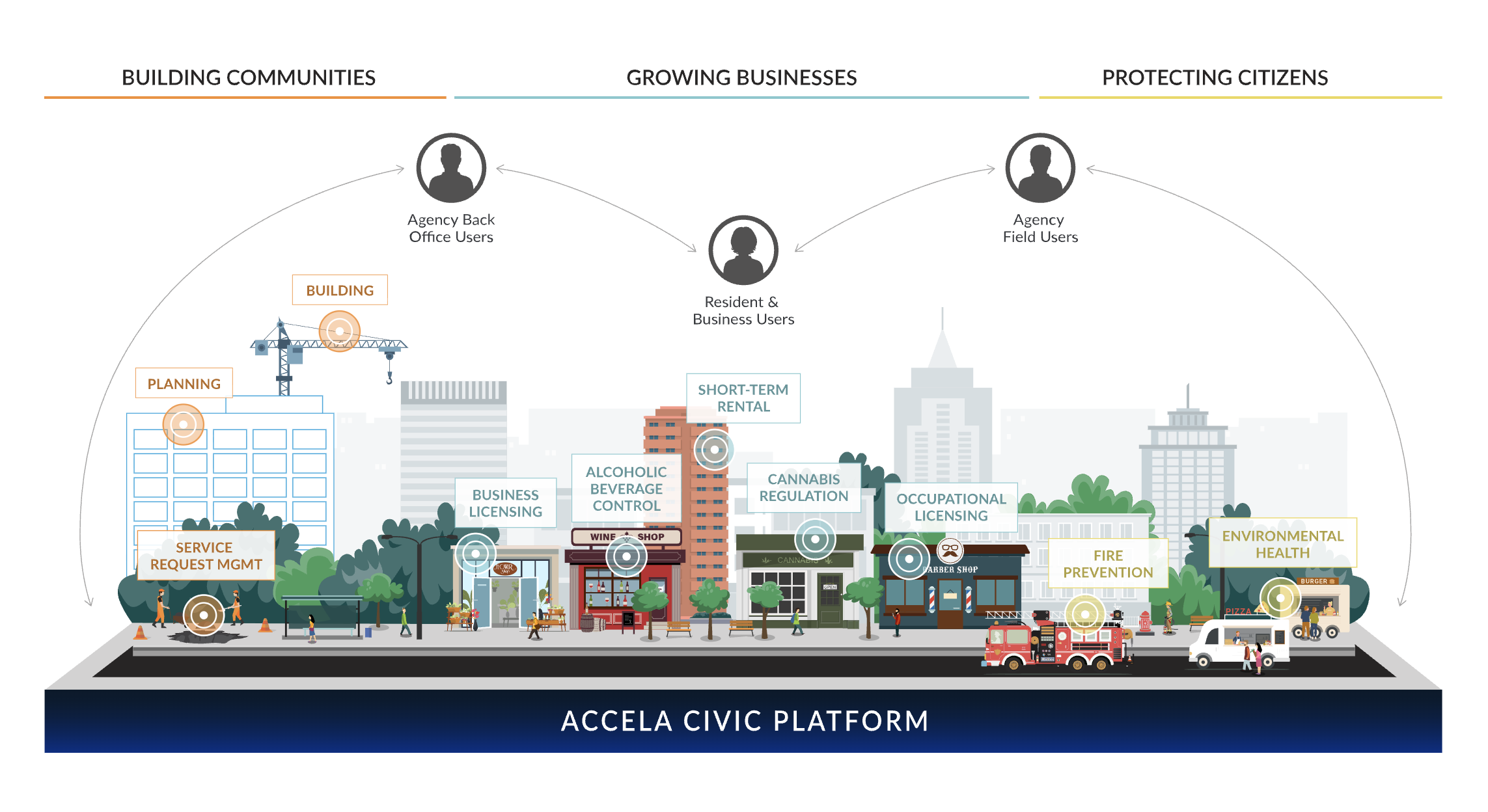
Image source: accela.com
Overview: Accela is a specialized "GovTech" platform focused on regulatory services. It provides cloud-based solutions tailored for complex processes like permitting, licensing, and asset management, making it a strong contender for agencies with those specific operational needs.
Key features:
- Specialized permit automation: Guides complex permitting processes with configurable checklists, automated fee calculations, and rule-based inter-departmental handoffs.
- Mobile inspection tools: Equips field staff with offline-capable mobile apps for conducting site visits, documenting findings with photos, and syncing data back to the central system in real-time.
- Licensing lifecycle manager: Tracks professional and business licenses from initial application to renewal, using automated notifications and compliance rule engines to ensure adherence.
- Public applicant portal: Allows contractors, businesses, and residents to submit plans, pay required fees, and monitor the status of their applications online.
- GIS integration capabilities: Natively maps service requests, assets, and inspection sites to optimize routing for field staff and enable spatial analysis for planning departments.
Pricing: Primarily sold as an enterprise solution with custom pricing based on the specific modules an agency requires.
8. CivicPlus: A unified platform integrating CRM, websites, and notifications
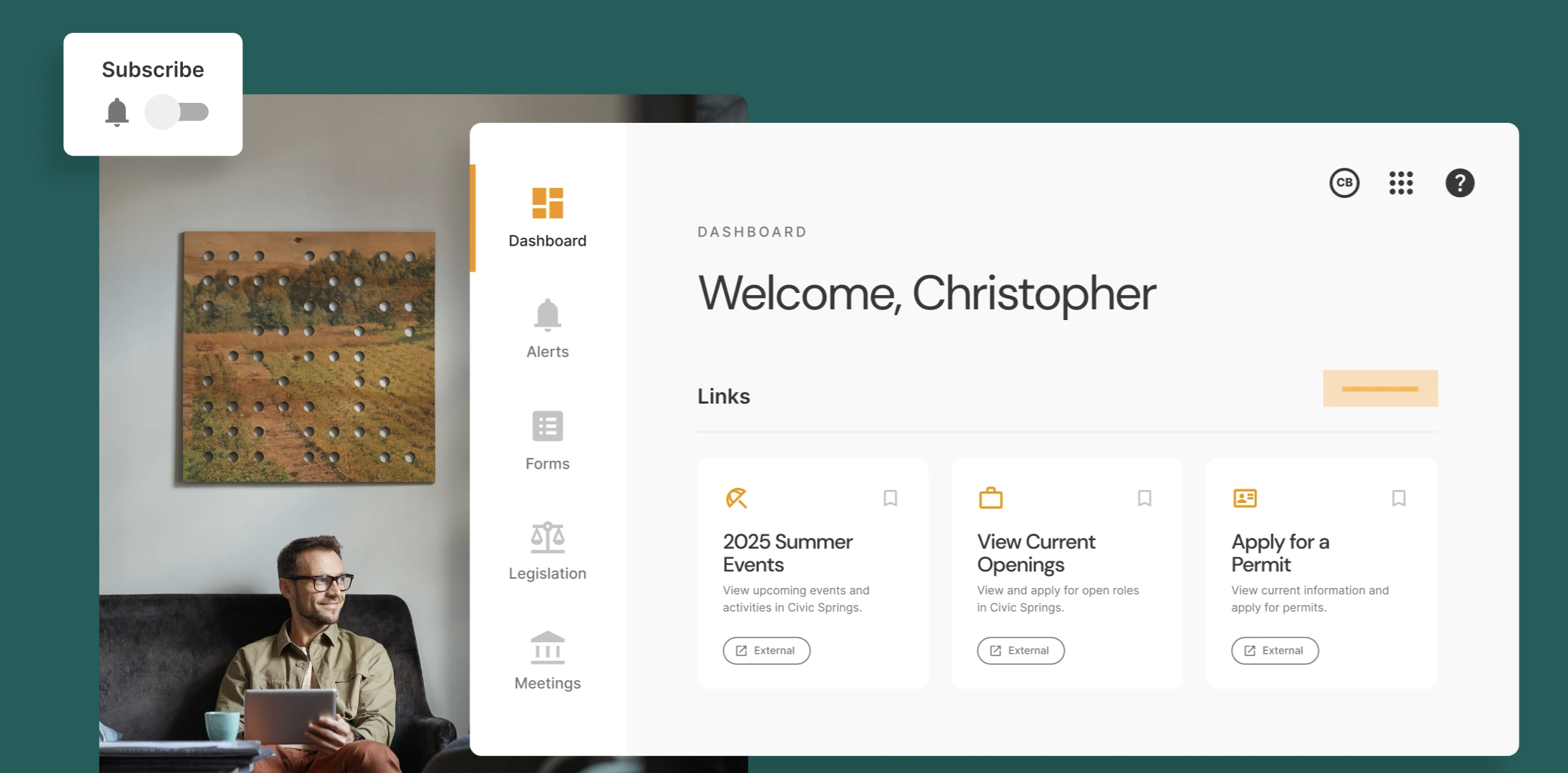
Image source: civicplus.com
Overview: A solution focused on local government, CivicPlus offers a relationship management platform that is part of a broader suite of tools, including website management and mass notifications (CivicReady). It aims to provide a single-vendor solution for a municipality's digital needs.
Key features:
- 311 request management: Logs, tracks, and resolves citizen issues submitted via phone, web, or mobile, with configurable workflows, location mapping, and public-facing status updates.
- Integrated content management: Powers government websites with accessible templates, community feedback mechanisms, and easy-to-use content editing tools for non-technical staff.
- Mass notification system: Broadcasts emergency alerts and routine community announcements via SMS, email, and voice calls, with options for geo-targeting specific neighborhoods.
- Parks and rec tools: Manages facility bookings, program registrations, and online payments for community activities within the same ecosystem used for other citizen services.
- Community engagement analytics: Measures the reach and effectiveness of digital communications through metrics like email open rates, click-through rates, and integrated feedback surveys.
Pricing: Pricing is typically customized for the municipality based on its population and the number of products chosen from their suite.
9. GovPilot: A cloud-based management platform for local governments
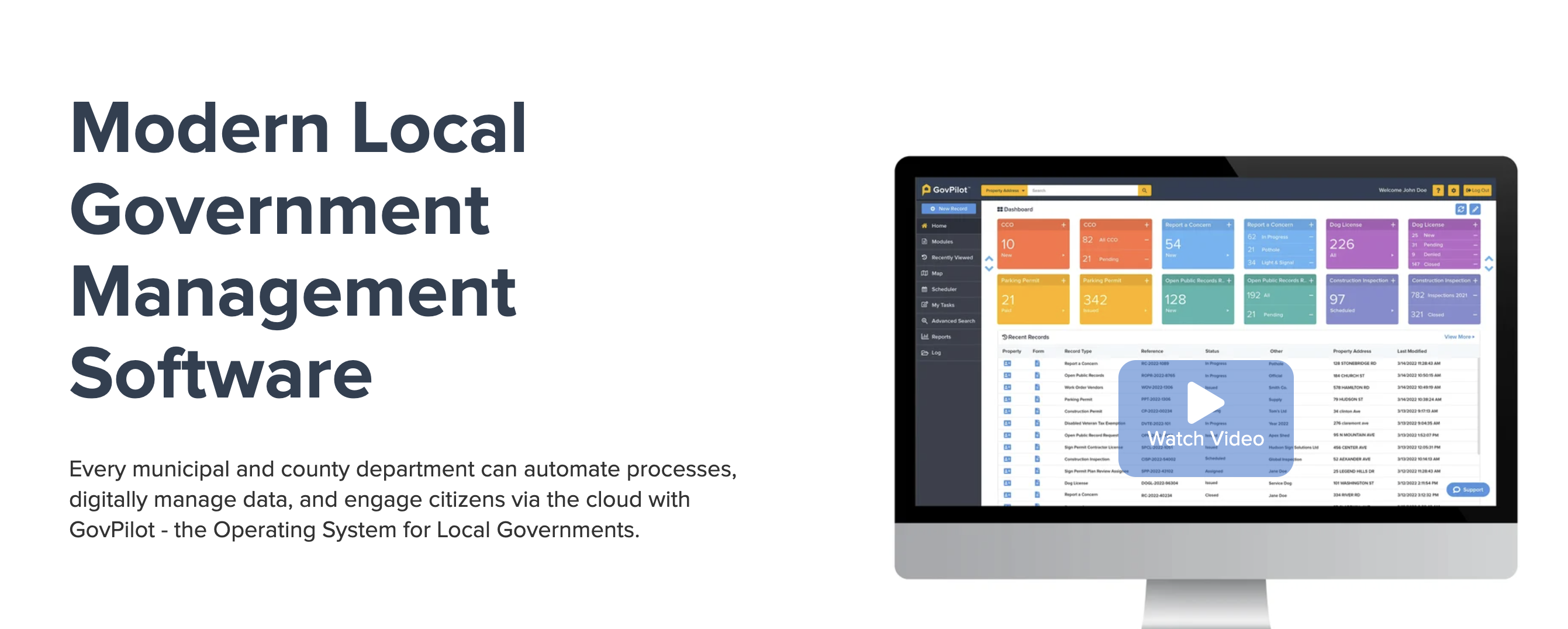
Image source: govpilot.com
Overview: GovPilot is a cloud-native platform specifically engineered for local governments. It provides a unified solution for automating day-to-day operations, moving processes from paper-based forms to digital workflows, and increasing transparency through a public-facing GIS map.
Key features:
- Digital form conversion: Transforms traditional PDF and paper forms into responsive digital versions that citizens can complete and submit from any device, automatically initiating a workflow.
- GIS map integration: Provides a public-facing, interactive map that visually displays government data, such as reported concerns, active permits, and available services, enhancing transparency.
- Automated departmental workflows: Routes digital forms and service requests automatically to the correct department and official, with built-in timers and alerts to prevent bottlenecks.
- Report-a-concern module: Enables citizens to easily report non-emergency issues like potholes or broken streetlights via a mobile app, which automatically captures location data and initiates a work order.
- Cloud-based records management: Securely stores all documents, applications, and communications in a centralized digital repository, simplifying record retrieval and ensuring compliance.
Pricing: GovPilot operates on a subscription-based model. Pricing is customized based on the municipality's population and the specific modules required.
The future of government CRM: AI, automation, and trust
The world of government technology is not standing still. The next wave of innovation promises to make public services even more intelligent and trustworthy. Looking ahead, the evolution of the government CRM will be defined by the practical application of artificial intelligence, the expansion of automation, and an unwavering focus on building transparency.
The rise of practical AI in public service is moving beyond buzzwords. Imagine using AI to instantly summarize hours of public feedback from a town hall meeting into a concise, actionable report. Think of intelligent chatbots that can provide 24/7 answers to common citizen questions, freeing up human agents to handle the most complex and sensitive cases. These are capabilities that are transforming public service today.
At the same time, hyper-automation is set to redefine efficiency. This goes beyond automating single tasks; it’s about connecting multiple systems and automating entire processes. This level of automation frees public servants from repetitive administrative work, allowing them to dedicate their time and expertise to high-value, human-centric services that truly make a difference in their communities.
Ultimately, these technological advancements all serve a single, higher purpose: building a new era of transparency and trust. A unified digital platform creates a clear, auditable trail for every action and decision. When processes are automated and data is centralized, it becomes easier to make government operations more transparent and accountable to the public they serve.
Conclusion
As we've seen, modern government agencies need more than just a traditional CRM; they need a unified, flexible, and collaborative platform. It's about finding a partner that simplifies complexity, fosters teamwork, and provides a clear path to a more responsive and efficient future.
Lark is uniquely positioned to be that partner. Its greatest strength lies in its all-in-one simplicity and incredible value. By combining everything an agency needs—a flexible database, real-time communication, collaborative documents, and powerful automation—into one intuitive and cost-effective solution, Lark eliminates vendor complexity. This unified approach dramatically lowers the barrier to adoption and provides predictable, transparent costs.
Ultimately, effective government is built on effective collaboration. Lark is designed from the ground up to be a digital headquarters that empowers public servants to work together seamlessly. By breaking down silos and fostering a culture of open communication, Lark enables your teams to deliver the exceptional, responsive, and trustworthy service that every citizen deserves.
Ready to build a more connected and responsive government agency? Explore how Lark is empowering the public sector today.
FAQs
What CRM does the government use?
Government agencies don't use a single CRM. They employ a wide variety of solutions, from large enterprise platforms like Salesforce Government Cloud and Microsoft Dynamics 365 to specialized public sector tools like Granicus and Accela, and flexible, all-in-one platforms like Lark.
What are the 4 types of CRM?
The four main types of CRM are:
- Operational: Automates daily tasks in sales, marketing, and service.
- Analytical: Analyzes customer data to provide insights for better decision-making.
- Collaborative: Shares customer information across departments to improve teamwork.
- Strategic: Focuses on developing a customer-centric culture to build long-term relationships.
What does CRM stand for in government contracting?
In government contracting, CRM stands for Customer Relationship Management, but it specifically refers to managing the agency's relationship with its contractors. It involves tracking communication, contract performance, compliance, and fostering a reliable partnership to ensure successful project outcomes.
What does CRM stand for?
CRM stands for Customer Relationship Management. It is a strategy and technology for managing all your company’s relationships and interactions with customers and potential customers, with the ultimate goal of improving business relationships to grow your business.
Related reading
Table of contents
Start using Lark today

Manage all your work in one place
Boost team efficiency by 10x
Save up to 70% on software costs
Table of contents
Start using Lark today
Manage all your work in one place
Boost team efficiency by 10x
Save up to 70% on software costs
Keep reading









2026 Lark Technologies Pte. Ltd.
Headquartered in Singapore with offices worldwide.






Explore: