














How to Start a Project: A Complete Step-by-Step Guide

Fecilia Clarke
Solutions Marketing Specialist
Sep 18, 2026
Fecilia Clarke
Sep 18, 2026

20 min read


The moment a new project lands on a professional's desk is both thrilling and terrifying. The excitement of creating something new mixes with the pressing question of how to start a project when everything feels equally urgent and important. This blend of excitement and trepidation is familiar in the workplace reality, where teams often span cities and information flows through countless channels — making that crucial first step feel particularly complex.
But here's the secret: successful projects aren't born from perfect ideas—they're built on solid foundations. While every project is unique, the ones that succeed consistently share one crucial trait: a strong, methodical beginning. This systematic approach transforms concepts into manageable, actionable plans that teams can execute with confidence and clarity.
What is a project?
Before we dive into the how-to, let's clarify what we mean by "project." At its core, a project is a temporary endeavor undertaken to create a unique product, service, or result. Unlike routine operations — monthly accounting or ongoing customer support — projects have definitive start and end dates, specific objectives, and dedicated resources.
Think of projects as the engines of change and innovation within organizations. They're how strategy comes to life, whether you're launching a new marketing campaign, developing software, constructing a building, or planning a corporate event. The "temporary" nature doesn't necessarily mean short duration; some projects span years. Rather, it means the project has a clear lifecycle — it begins, it runs its course, and it concludes once the objectives are met. With Lark's unified workspace, teams can maintain momentum throughout this lifecycle, from initial brainstorming in Docs to final deliverable tracking in Base.
What makes this structure so crucial is that every project carries elements of uniqueness. Even if you're repeating a similar initiative, you'll face different team dynamics, changed market conditions, or new stakeholder expectations. This inherent uniqueness is exactly why a structured start matters — it provides the framework to navigate uncertainties while maintaining focus on your end goal.

Why a project's start determines everything
Consider this compelling data from the Project Management Institute: poor project initiation and planning are among the top contributors to project failure, often leading to budget overruns, missed deadlines, and unmet objectives. Why does the start phase hold such power over your project's destiny?
Think of your project initiation as the architectural blueprint for constructing a skyscraper. You wouldn't start pouring concrete without detailed designs, soil analysis, and engineering sign-offs. Similarly, launching into execution without a rigorous start is building on shaky ground. Here's what a proper foundation delivers:
- The clarity multiplier: A strong start replaces vague ambitions with crystal-clear objectives. In Lark, teams can co-create project charters in Docs that are instantly accessible to all stakeholders, ensuring every team member aligns with the same strategic direction. This shared clarity prevents the all-too-common realization months into work that different people were building different versions of the same project.
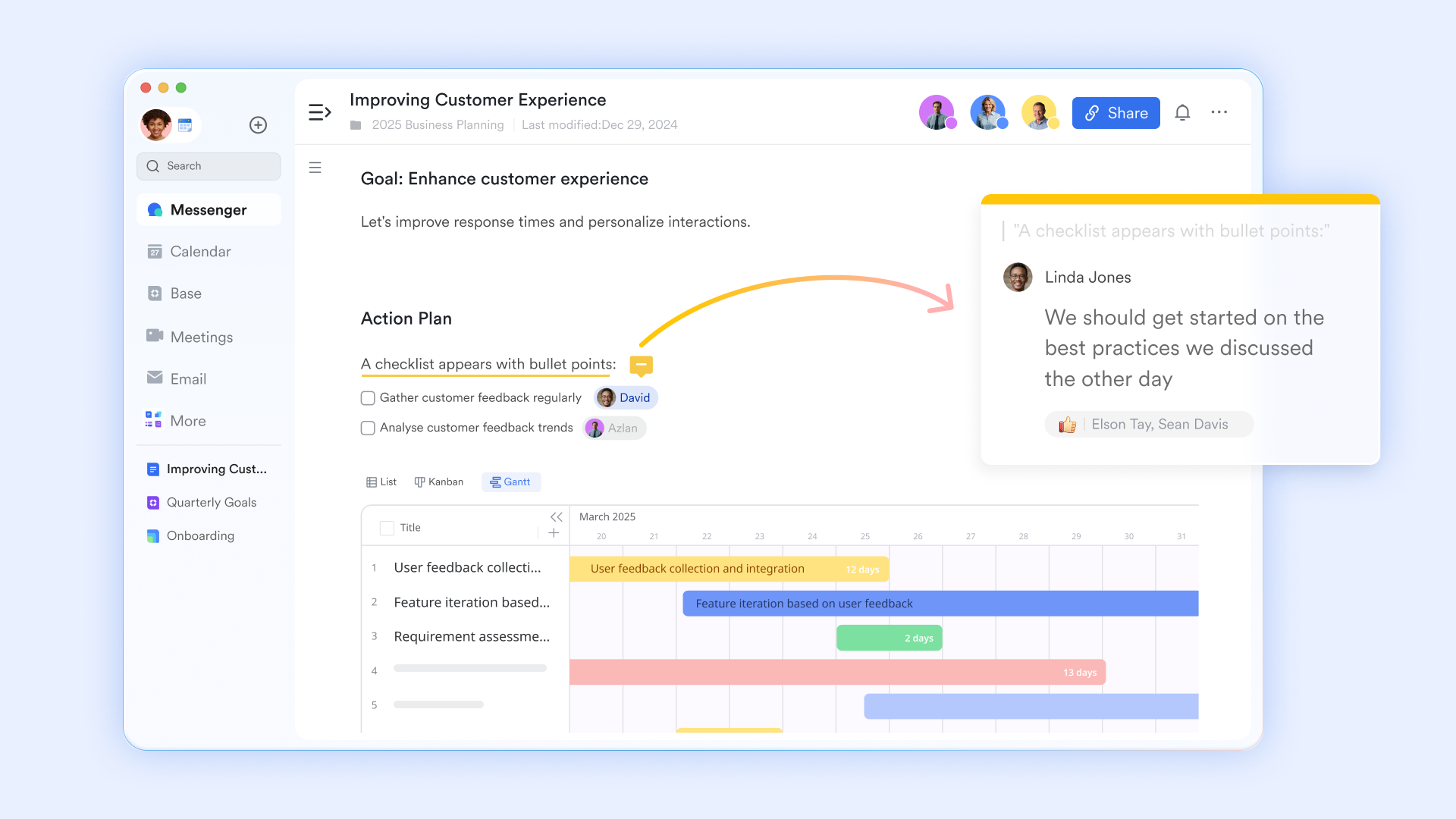
- The buy-in engine: This phase is where you secure critical stakeholder commitment. By using Lark's permission controls and @mention system, you can involve key players early in relevant Docs and Tasks, address concerns proactively while maintaining a clear audit trail of all decisions.
- The risk antidote: Thorough initiation involves identifying potential roadblocks — from resource constraints to technical hurdles—before they become crises. This transforms uncertainty from a looming threat into managed variables, saving immense time, budget, and stress later.
- The momentum creator: A well-executed kickoff generates infectious energy and alignment, transforming individuals into a unified team. This initial momentum becomes the project's immune system, helping it power through the "trough of disillusionment" that often plagues complex work's middle stages.
The time invested in starting correctly represents the highest-return investment you can make in your project's success. It's the difference between proactively steering your project to its destination and reactively fighting fires until resources run dry.
9 essential steps to start a project
Now that we understand why the start matters so profoundly, let's explore how to start a project right. It's crucial to recognize that successful project initiation is not merely about completing tasks in sequence, but about constructing an interconnected and mutually supportive system. The following nine steps will guide you through this process systematically—from concept to launch—ensuring every phase remains solid and reliable. Whether you're embarking on a new product launch, process optimization, or strategic initiative, this framework will provide clear and actionable guidance.
Define the project's purpose and goals
Every successful project begins with a crystal-clear understanding of its fundamental purpose and goals. Before considering tasks or timelines, we must move beyond vague ideas and definitively answer the core question of "why."
Start by asking two essential questions: "What problem are we solving?" and "What does 'done' look like?" This establishes the project's reason for existence and its intended impact. A well-crafted vision statement then serves as the project's North Star — a concise, one-to-two-sentence declaration that encapsulates the ultimate objective and value proposition. For example, instead of "redesign the website," a powerful vision statement would be: "to create an intuitive, accessible website experience that increases customer engagement while reducing support inquiries by 25% within six months."
To transform the vision into an actionable direction, establish SMART goals. These objectives turn ambitions into tangible targets, guide decision-making, and provide clear success metrics throughout the project lifecycle. Ensure every goal is:
- Specific: What exactly do we want to accomplish?
- Measurable: How will we know we've succeeded?
- Achievable: Is this goal realistic with our resources?
- Relevant: Does this align with broader business objectives?
- Time-bound: What is the deadline?
Identify and analyze key stakeholders
Projects exist within ecosystems of influence and interest. Stakeholders encompass all individuals or groups affected by the project's outcome or who can influence its trajectory. This typically includes executives, clients, end-users, team members, and other departments.
A thorough stakeholder analysis prevents oversight that could jeopardize project success. By mapping stakeholders according to their influence and interest levels, project leaders can develop appropriate engagement strategies. This proactive approach ensures critical perspectives are incorporated early, reducing the risk of late-stage objections or requirements changes.
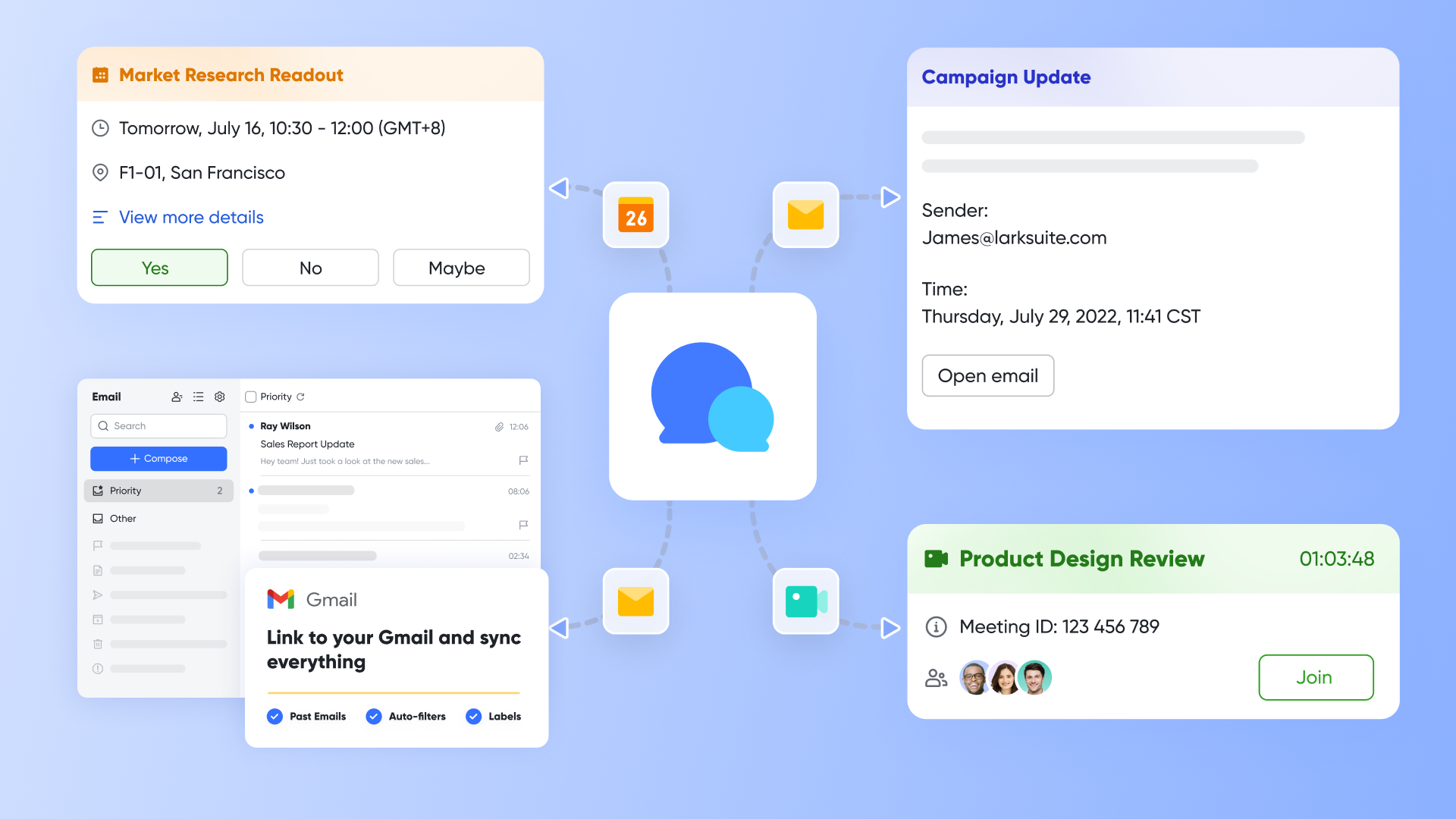
Platforms like Lark create this unified operational environment naturally. With built-in messaging, document collaboration, and calendar features, Lark keeps all stakeholders consistently informed and engaged throughout the initiation process, preserving alignment regardless of team distribution.
Craft the project scope and deliverables
With clear goals established, defining the project's boundaries becomes paramount. The project scope explicitly outlines what will be delivered and, just as importantly, what will not be, thereby preventing scope creep.
A Work Breakdown Structure (WBS) is the primary tool for translating this scope into manageable components. It provides a hierarchical decomposition of the project's deliverables, ensuring comprehensive coverage of all required work and establishing clear boundaries.
The process of creating and using a WBS involves several key steps:
- Decompose deliverables into smallest tasks.
- Define tasks as independent and verifiable.
- Map out a network of task dependencies.
- Set key milestones for major checkpoints.
Choose a project management framework
The project's nature and requirements should inform the selection of an appropriate management framework. Different approaches offer varying levels of flexibility and structure, making certain methodologies better suited to specific project types.
Traditional waterfall methodology follows a linear, sequential path where each phase must be completed before the next begins. This approach works well for projects with fixed requirements and predictable outcomes, such as construction projects or regulatory implementations where changes are costly and documentation is critical.
Agile frameworks, by contrast, employ iterative cycles that accommodate changing requirements through incremental development and regular feedback. Scrum, Kanban, and Extreme Programming (XP) fall under this category and work particularly well for software development, marketing campaigns, and innovation projects where requirements may evolve throughout the project lifecycle.
Hybrid approaches blend elements of both methodologies to suit specific project needs. Many organizations now adopt agile-waterfall hybrids that use waterfall for high-level planning and agile for execution, providing both structure and flexibility.
Framework selection criteria
When selecting a framework, consider these factors:
- Requirements stability: How likely are requirements to change?
- Project complexity: Does the project involve novel technology or approaches?
- Stakeholder availability: How engaged can stakeholders be throughout the project?
- Team experience: Is the team experienced with methodology?
- Organizational culture: Does the methodology fit the organization's working style?
There's no one-size-fits-all answer—the best framework is the one that aligns with your project's specific constraints and opportunities while matching your team's capabilities and preferences.
Assemble the project team and define roles
A project's success ultimately depends on the people executing the work. Identifying the necessary skills and securing appropriate resources represents a critical step in project initiation. The right team composition balances technical expertise, domain knowledge, and collaborative capabilities.
Clearly defining roles and responsibilities prevents confusion and ensures comprehensive coverage of all required tasks. A RACI chart (Responsible, Accountable, Consulted, Informed) serves as an effective tool for clarifying participation levels for each task. This clarity eliminates ambiguity and establishes clear ownership throughout the project lifecycle.
Develop a realistic timeline and budget
Transforming project plans into actionable schedules requires thoughtful estimation and sequencing. Each task identified in the WBS must be assessed for duration, dependencies, and resource requirements. Visual timeline tools like Gantt charts effectively communicate the project schedule while highlighting critical paths and interdependencies.
The project budget naturally emerges from this detailed planning. Accurate cost estimation accounts for labor, materials, software, equipment, and contingency reserves. Realistic timelines and budgets set appropriate expectations and provide benchmarks for measuring project health.
When developing timelines, consider both effort (the actual work hours required) and duration (the calendar time needed). These differ significantly when people work on multiple projects or when dependencies create waiting periods. Use historical data from similar projects to inform estimates, and involve the people who will do the work in the estimation process—they typically have the most accurate understanding of what's required.
Budget development strategies
Develop budgets using multiple estimation techniques:
- Bottom-up estimating: Calculating costs for each work package and rolling them up
- Analogous estimating: Using actual costs from previous similar projects
- Parametric modeling: Using statistical relationships between historical data and other variables
- Three-point estimating: Using optimistic, pessimistic, and most likely scenarios
Include appropriate contingency reserves based on project risk levels, typically ranging from 5-15% of the total budget for low-risk projects to 20-30% for high-risk initiatives. Document assumptions behind all estimates to facilitate later analysis and continuous improvement.
Proactively identify and plan for risks
Forward-thinking project initiation includes anticipating potential challenges. Risk management involves systematically identifying, assessing, and preparing for events that could negatively impact project objectives. This proactive approach transforms uncertainty into managed variables.
A thorough risk assessment considers multiple dimensions:
- Technical risks: Integration complications or performance issues
- Managerial risks: Key personnel changes or communication breakdowns
- Organizational risks: Budget cuts or shifting priorities
- External risks: Market changes or regulatory updates
Conduct a project kickoff meeting
A project kickoff marks the critical transition from planning to execution, serving as the catalyst for unified action. Rather than an information overload, a successful kickoff must achieve three key outcomes: aligning the team's understanding and expectations, fostering a sense of ownership and commitment, and establishing clear collaboration norms and rules.
An effective agenda is structured to drive these outcomes. It typically includes:
- Reviewing the project vision and objectives
- Clarifying roles and responsibilities
- Walking through key plans and milestones
- Agreeing on collaboration tools and communication rhythms.
To maximize efficiency, pre-circulating relevant materials allows the meeting to focus on discussion, clarification, and building consensus, rather than one-way presentation.
Simultaneously, the kickoff should establish the project's operational heartbeat by defining regular sync mechanisms. This includes the frequency and format of progress updates, decision-making and escalation pathways, and clear channels for issue reporting and resolution.
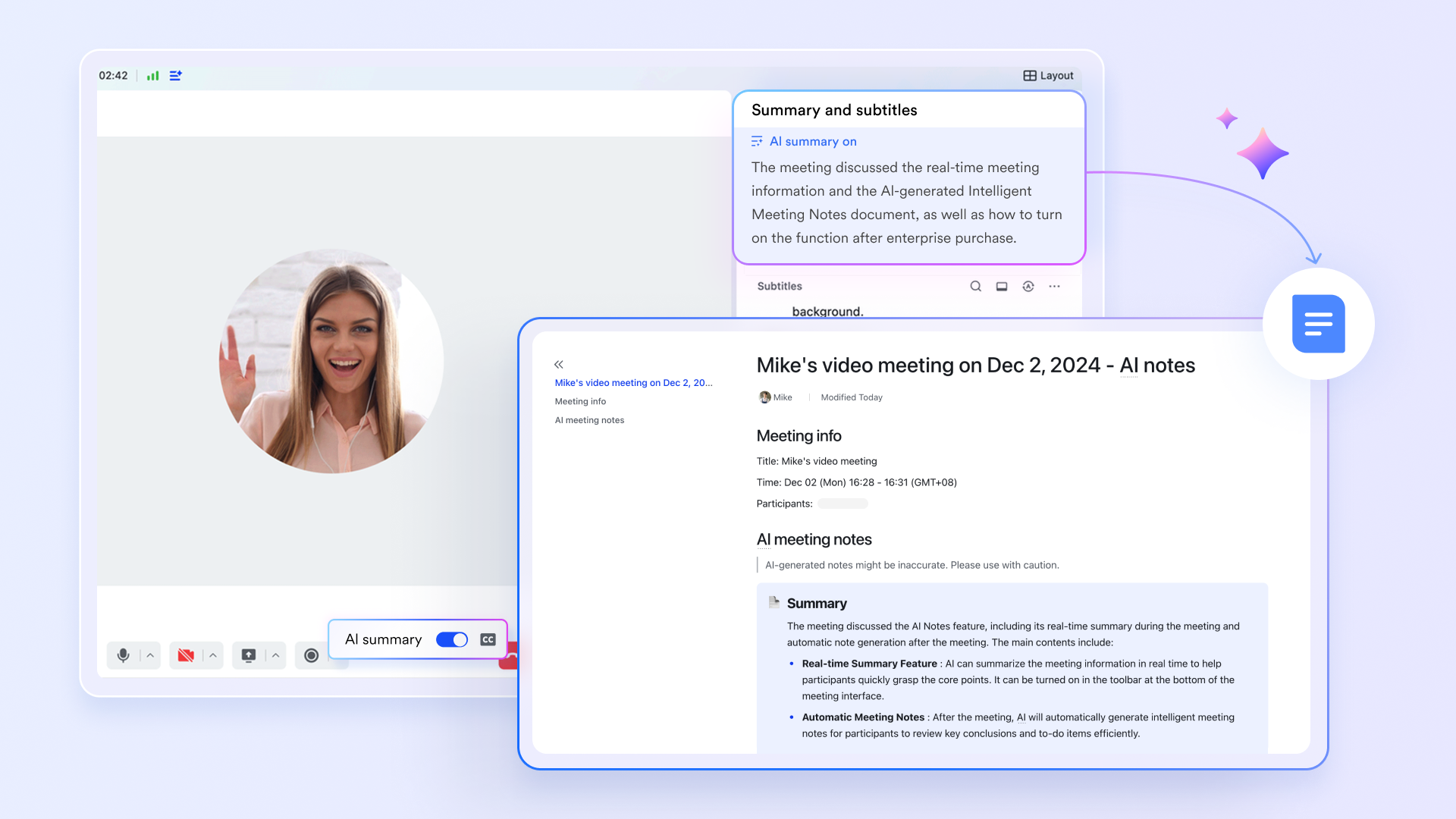
For distributed teams, leveraging video conferencing integrated with collaborative document editing is essential for ensuring full participation. Features like screen sharing and automated meeting minutes help create an inclusive and engaging experience for all attendees, regardless of location, solidifying the shared foundation for project success.
Establish communication and monitoring protocols
Sustaining project momentum requires clear communication channels and consistent progress monitoring. Establishing regular update rhythms, status reporting formats, and decision-making protocols ensures continuous alignment among all participants.
Transparent communication plans define how information will be shared, who needs to receive various types of updates, and through what channels. Regular progress monitoring against established benchmarks allows for early identification of deviations and timely corrective action.
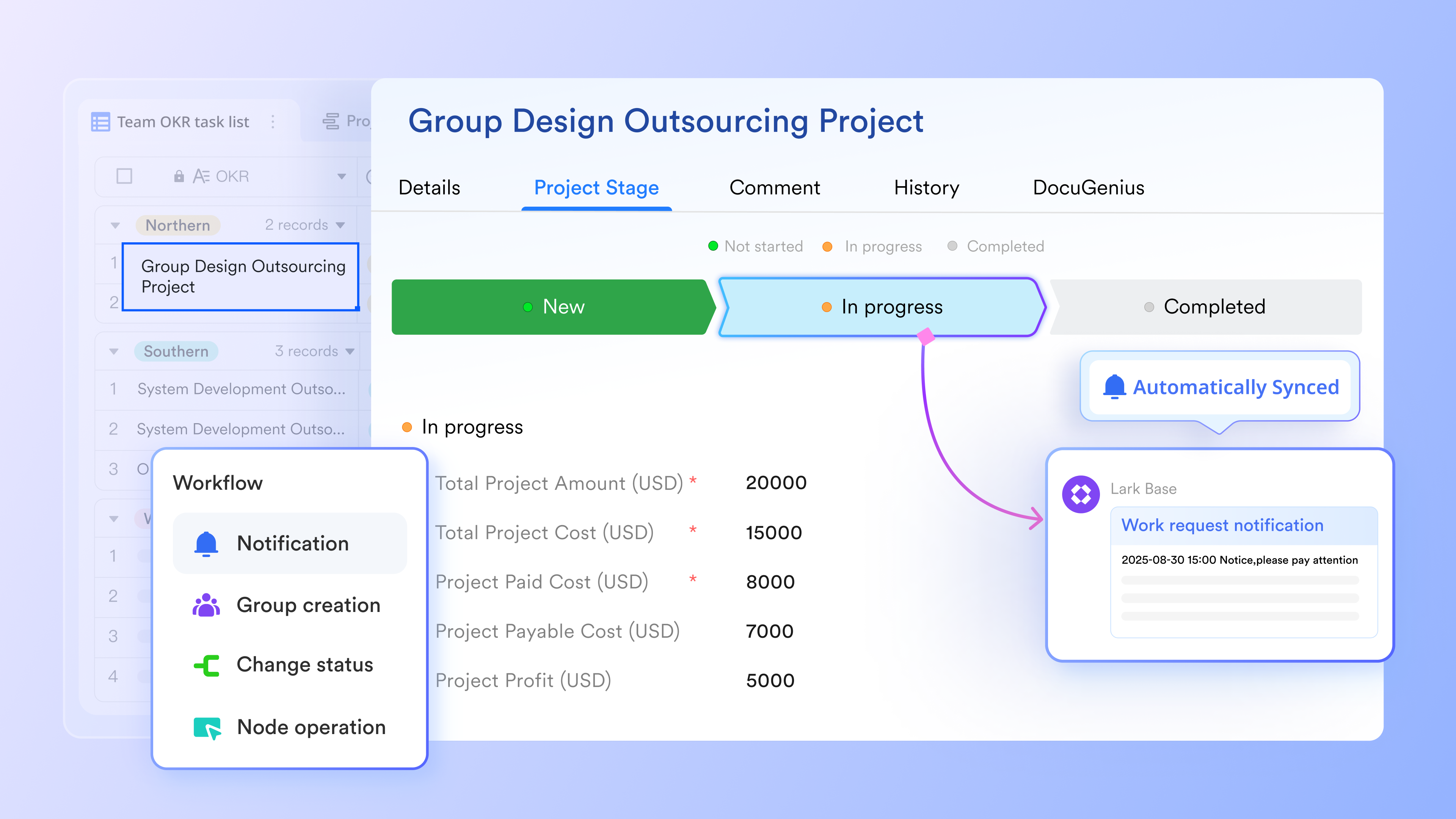
Lark's automated status reports, customizable dashboards, and smart notifications keep stakeholders informed without creating communication overload, while providing real-time visibility into project health.
The most common project starting mistakes
Completing these nine steps provides a detailed roadmap for your project. Yet even the best plans benefit from awareness of common pitfalls. Many projects derail during initiation due to predictable errors. Identifying these traps ensures your carefully crafted plans can be executed successfully.
- Underestimating the importance of stakeholder analysis
One of the most frequent mistakes is failing to properly identify and engage stakeholders early. This often leads to late-stage objections, scope changes, and resistance to project outcomes. The solution lies in creating a comprehensive stakeholder map and developing tailored engagement strategies for each group, ensuring their concerns are addressed from the outset.
- The perils of vague scope definitions
Projects often fail because of poorly defined boundaries. When teams lack clear parameters, scope creep becomes inevitable, leading to budget overruns and missed deadlines. Combat this by creating detailed scope statements with explicit "in-scope" and "out-of-scope" sections, and ensure all stakeholders formally approve these boundaries.
- Overlooking resource constraints
Enthusiasm for a project's goals can sometimes blind teams to practical resource limitations. Before committing to timelines, conduct a thorough resource assessment that considers team capacity, budget constraints, and tool availability. Remember that even the most brilliant plan will fail without adequate resources to execute it.
Signs to ensure your project is properly set up for success
So, how can we objectively determine whether the project initiation phase has successfully navigated past these traps and is truly prepared for success? Merely completing tasks on a checklist isn't enough - we need key metrics to measure our readiness.
- Stakeholder alignment metrics
Successful project initiation demonstrates clear stakeholder buy-in. Measure this through formal sign-offs on key documents, participation in kickoff meetings, and timely responses to requests for information or decisions. High levels of engagement in the early stages typically predict continued support throughout the project.
- Planning artifact quality
The completeness and clarity of your planning documents serve as another success indicator. High-quality charters, scope statements, and project plans are specific, measurable, and approved by all relevant parties. They should provide unambiguous guidance that requires minimal clarification as the project progresses.
- Team readiness assessment
A well-initiated project has a team that understands their roles and responsibilities. Success is evident when team members can articulate project goals, know what's expected of them, and have the tools and information needed to begin work immediately after the kickoff.
Why we should choose a modern project management tool
The success of any project is fundamentally enabled by its supporting tools. Traditional project initiation often revolves around static documents: project charters in Word files, budgets in Excel spreadsheets, timelines in PowerPoint presentations. These isolated deliverables are merely checkboxes to be ticked before kickoff. In the dynamic, distributed collaborative environment, this fragmented approach inevitably leads to information silos, communication gaps, and version control chaos.
Modern project initiation is no longer just a series of isolated tasks to be checked off; it's about building a dynamic, interconnected, and continuously evolving work system. This represents a mindset shift from "form-filling management" to "building a collaborative engine."
Traditional approach vs. Modern methodology
Three pillars of modern project initiation
- From asynchronous communication to immediate execution: Break away from the disconnect where "discussion is discussion, execution is execution." In Lark, creative ideas from team conversations can be easily recorded into documents without switching. This seamless workflow eliminates transition gaps between applications, ensuring no valuable insight gets lost in platform switching and that every decision immediately translates into actionable next steps within the same collaborative environment.
- From stakeholder management to ecosystem integration: Go beyond simply listing stakeholders and establish truly participatory planning. By directly involving key individuals in the planning process and using Lark's like @mentions in documents for real-time feedback, integrate diverse perspectives into the solution design from the outset, laying the foundation for ongoing support.
- From static documents to intelligent project hubs: The WBS should not be a rigid diagram. In Lark Base, the WBS transforms into a visual task network. In modern project management tools, each task can be tracked in real-time, adjusted flexibly, and automatically linked to relevant documents and discussion records, forming a truly actionable and dynamic plan.
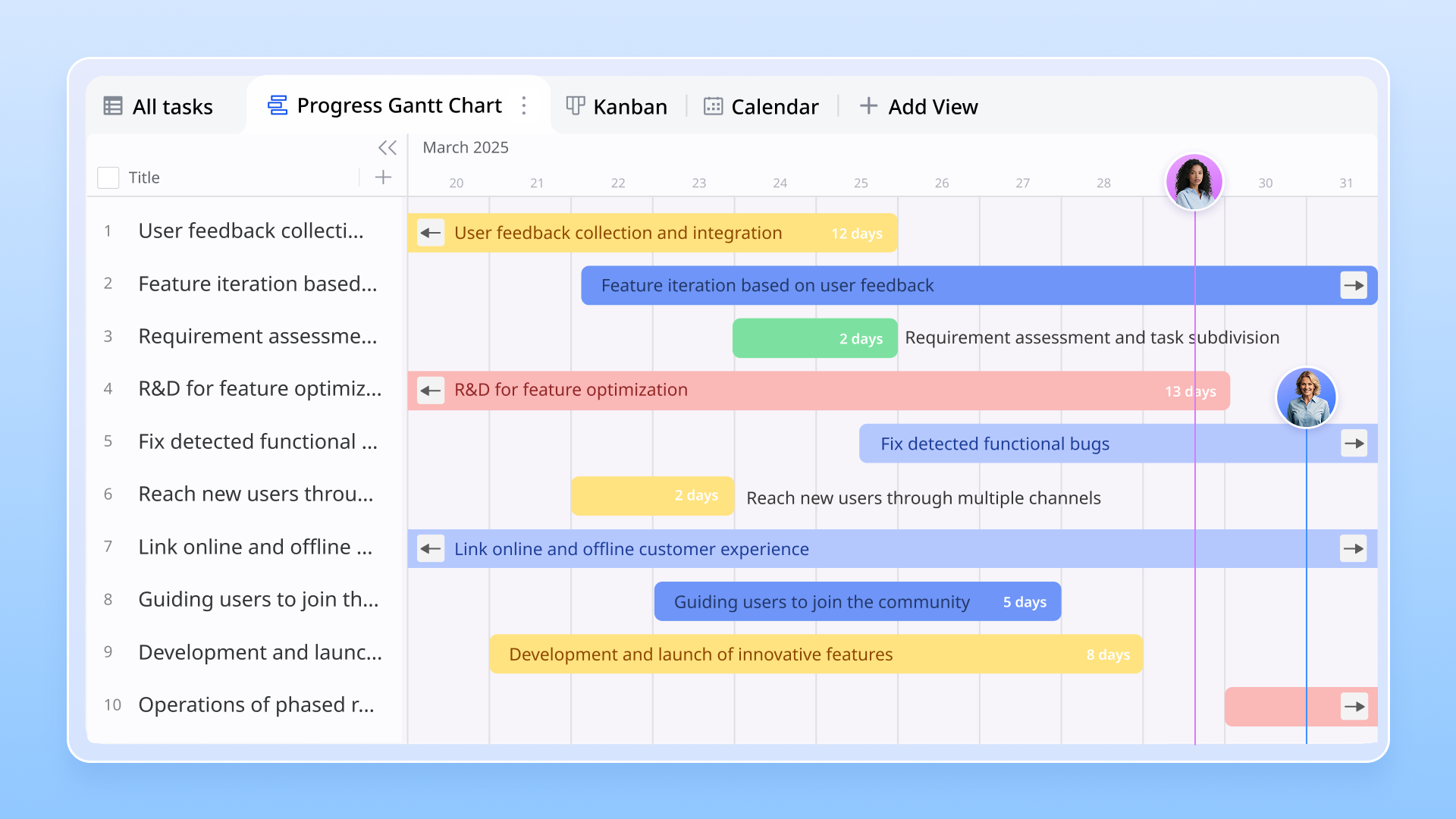
This modern initiation model, supported by an integrated platform, ensures that projects maintain goal alignment, information transparency, and smooth collaboration throughout the entire journey from initial conception to final delivery. It transforms project initiation from a routine procedure into a creative process that injects vitality into the entire project lifecycle.
How Lark empowers a project
The right tool bridges the gap between plan and action. Lark redefines project initiation by combining essential tools into one cohesive environment, eliminating the friction that traditionally slows down project starts.
- Unified workspace for end-to-end project control
Lark creates a single source of truth for your entire project ecosystem. Base serves as your project command center, where tasks, deadlines, and dependencies are visually mapped and automatically updated. The moment a team member completes a predecessor task, successor tasks instantly notify their owners. Docs embedded within tasks keep specifications and context directly accessible, while real-time editing ensures everyone works from the latest version.
- Intelligent views that adapt to your workflow
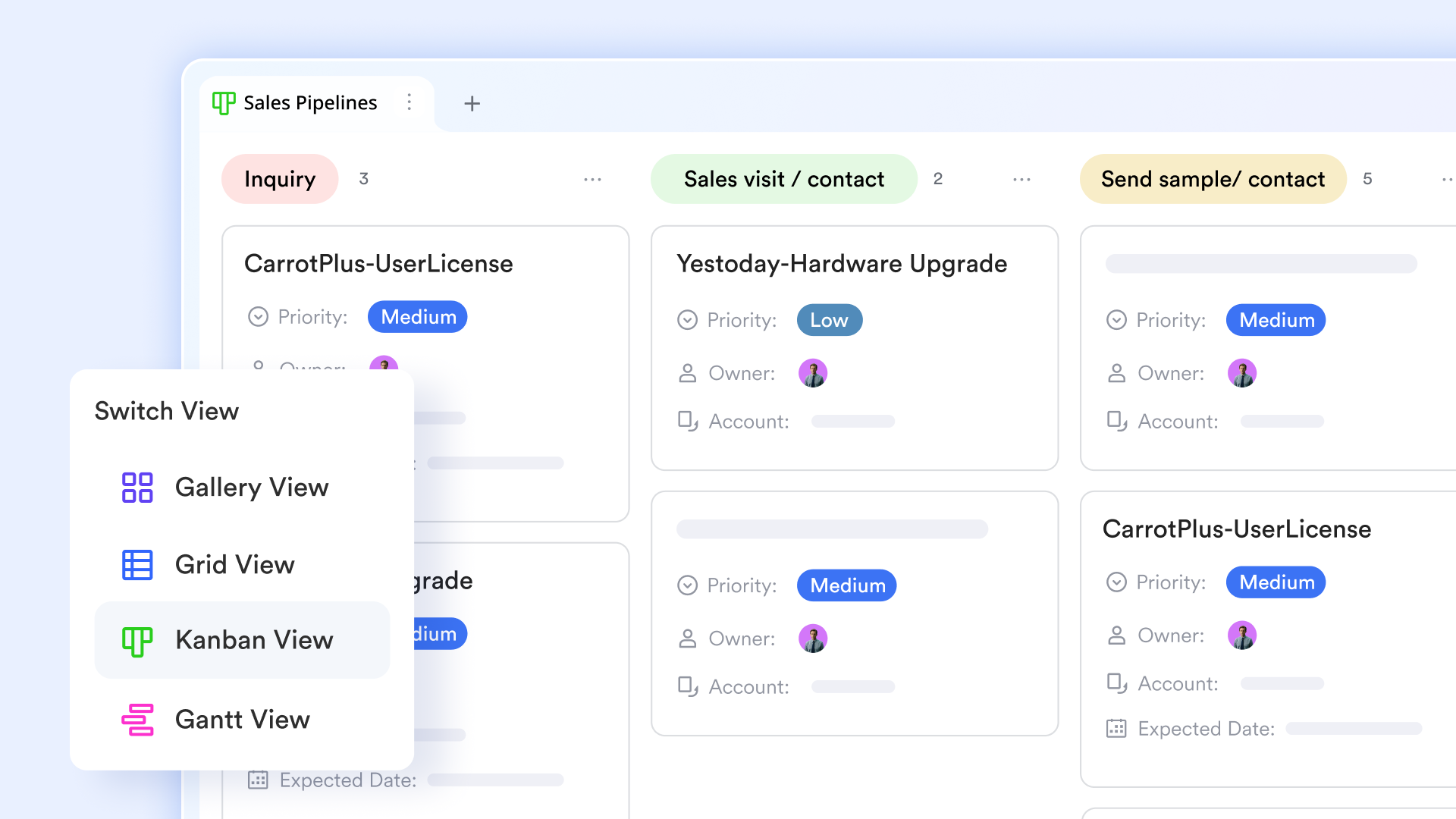
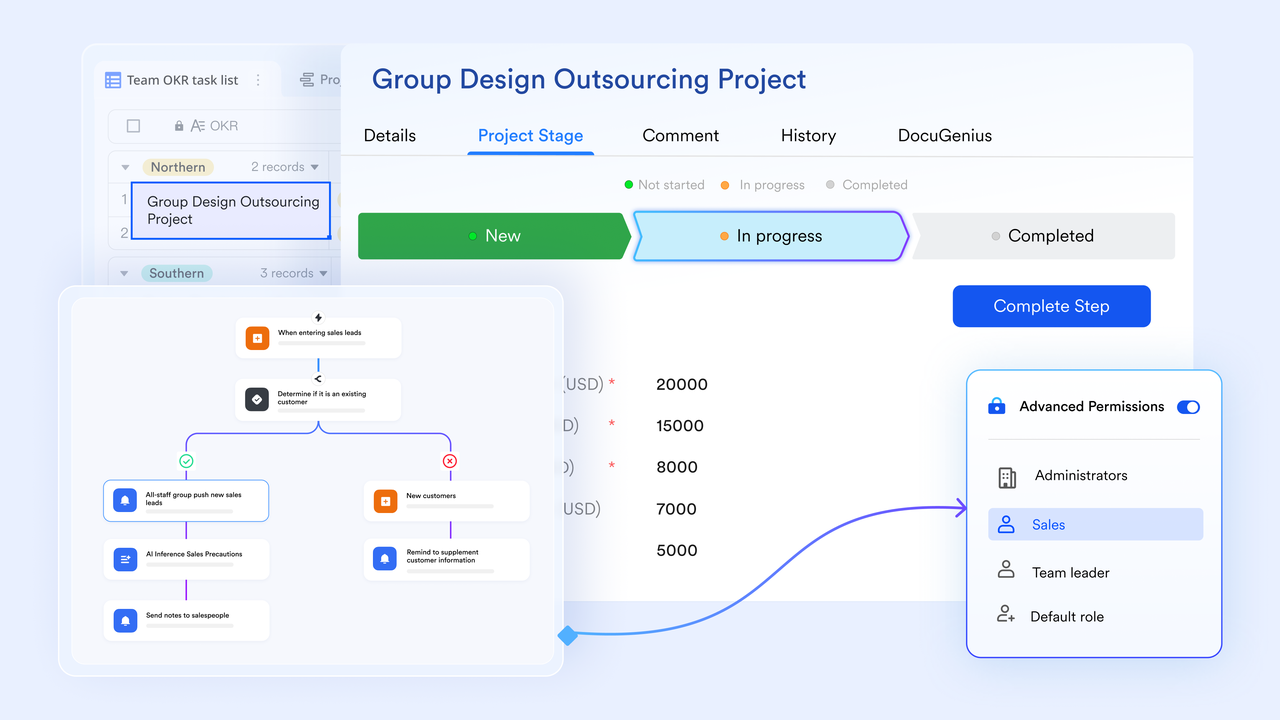
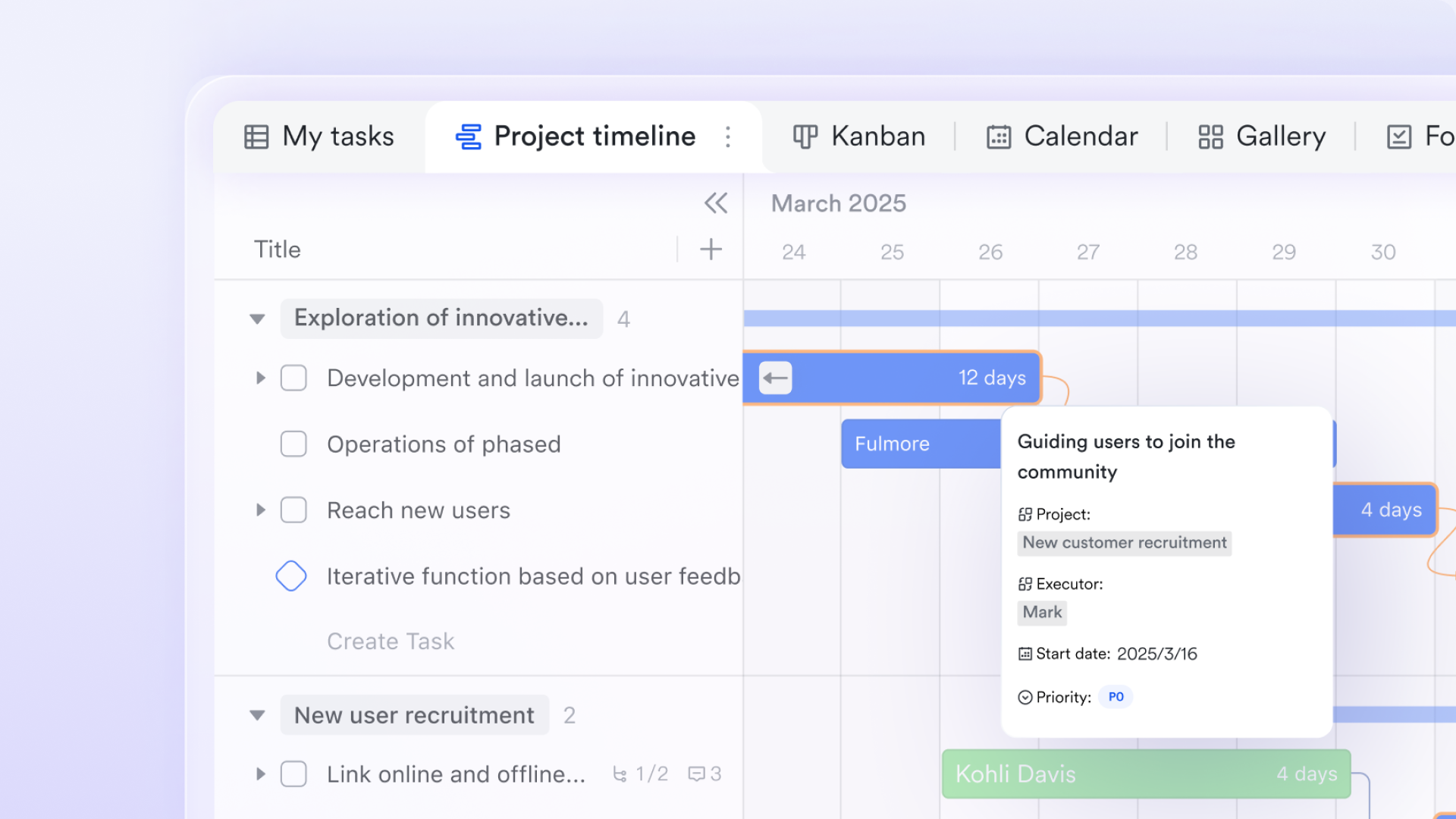
Your team shouldn't have to adapt to rigid tool structures — the tool should adapt to how your team thinks. Lark offers multiple project perspectives: Kanban boards for agile teams managing workflow states, Gantt charts for timeline-focused planning, Calendar views for deadline-driven work, and list views for detailed task management. Switch between perspectives instantly while maintaining the same underlying data structure.
- Built-in collaboration that closes communication gaps
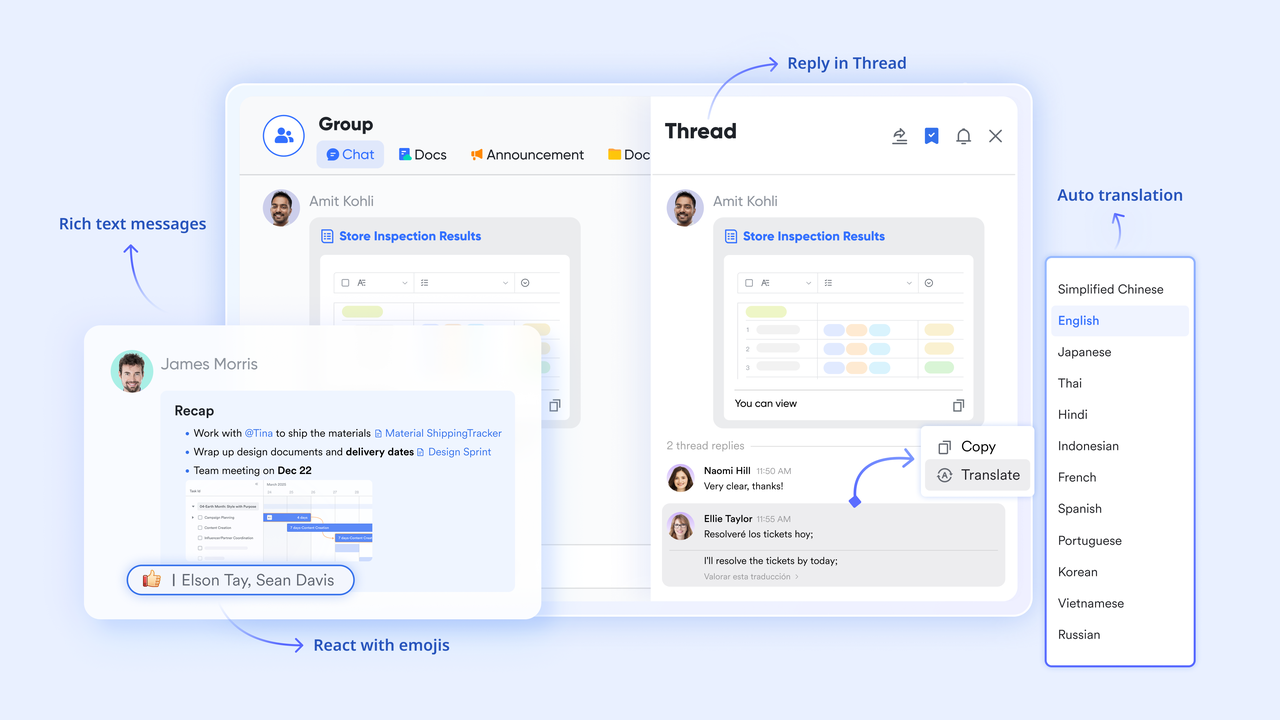
Lark Messenger eliminates the disconnect between discussion and execution. Project conversations happen in dedicated group chats where @mentions ensure the right people engage. Comments on tasks automatically notify assignees, and file sharing happens directly within the conversation thread. Most importantly, decisions made in chats can be instantly converted into tracked action items, ensuring nothing gets lost in translation.
- Real-time visibility into project health
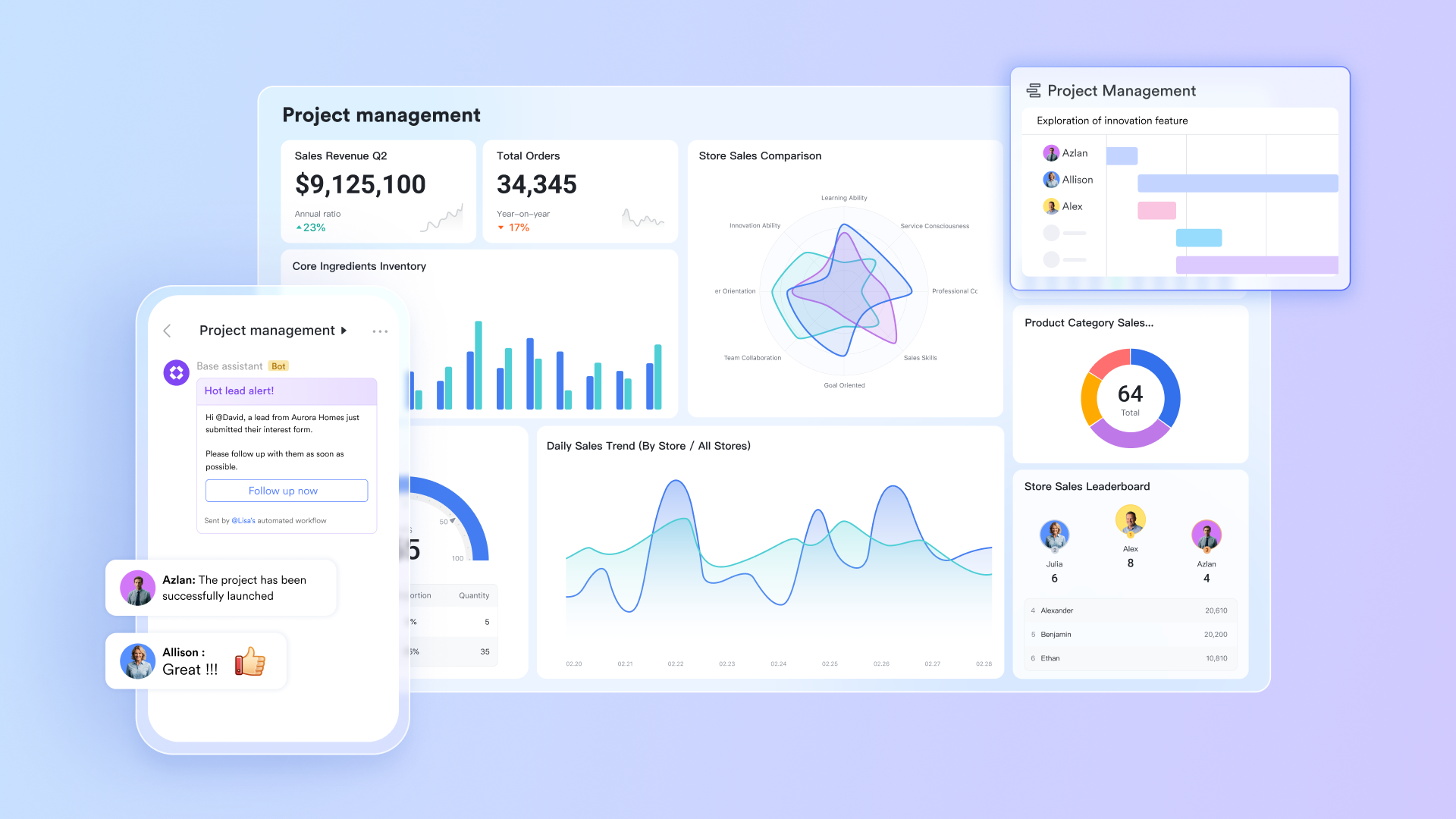
Lark's dashboards provide at-a-glance understanding of project status without manual reporting. Customizable widgets display critical metrics: overdue tasks, milestone progress, team workload distribution, and risk indicators. Automated status reports keep stakeholders informed, while smart alerts flag potential bottlenecks before they impact your timeline.
- Enterprise capability with accessible pricing
Beyond its technical capabilities, Lark delivers enterprise-grade project management at an accessible price point that grows with your organization. For organizations mindful of budget without wanting to compromise on capability, Lark represents both an immediate and long-term smart investment in productivity.
- Free plan: Includes 11 powerful products, supporting up to 20 users, 100 GB storage, 1,000 automation runs and unlimited AI translation in chats, docs and email.
- Paid plans: Starts at $12/user/month, supporting up to 500 users. Includes unlimited message history, 50,000 automated Base workflow executions per month.
- Enterprise plan: Custom pricing.
Conclusion
Mastering the method of how to start a project means turning uncertainty into a clear strategic roadmap and transforming potential risks into manageable variables. These proven steps and methodologies serve not only as the foundation of project management but also as the engine that drives efficient collaboration and strategic achievement.
You now possess a complete toolkit to successfully launch your next project. From defining clear objectives to selecting the right technological tools, each element plays a critical role in building towards exceptional outcomes. Remember, an effective project launch is more than just a beginning — it's the decisive phase that generates momentum and lays the cornerstone of success for the entire project lifecycle. To bring these strategies to life, we invite you to experience Lark's all-in-one workspace, where seamless integration of docs, chat, tasks, and calendars transforms your project launch from planning to execution in one fluid motion.
We look forward to hearing about the results you achieve using these approaches. If you have any insights or questions while implementing these strategies, please feel free to share your experiences.
FAQs
How do you start the beginning of a project?
Begin by defining the project's core purpose. Ask: "What problem are we solving?" and "What does success look like?" Then identify key stakeholders and secure their input. Start with a project charter that documents goals and scope—this becomes your shared reference point for all decisions.
What are the steps of a project?
Projects typically follow five phases: initiation (goals and feasibility), planning (scope and resources), execution (delivering outcomes), monitoring (tracking progress), and closure (completion and lessons). Key steps include setting SMART goals, creating work breakdown structures, and establishing communication protocols.
What's the best way to start a project?
Begin with a structured kickoff that aligns stakeholders on objectives and roles. Use a collaboration platform where goals become tasks and progress is visible to all. The best starts balance thorough preparation with flexibility—creating clear boundaries while allowing adaptation as the project evolves.
How do I introduce my project?
Introduce your project through a compelling narrative connecting the "what" with the "why." Focus on the problem being solved and the envisioned outcome. In your kickoff, cover: project purpose, success criteria, roles, and collaboration methods. A strong introduction creates shared ownership while establishing the framework for success.
Related reading
Table of contents
Start using Lark today

Manage all your work in one place
Boost team efficiency by 10x
Save up to 70% on software costs
Table of contents
Start using Lark today
Manage all your work in one place
Boost team efficiency by 10x
Save up to 70% on software costs
Keep reading








2026 Lark Technologies Pte. Ltd.
Headquartered in Singapore with offices worldwide.






Explore: