














The 12 Best OpenClaw Alternatives for 2026: Unifying AI with Team Productivity
Lark Team
Sep 18, 2026
Lark Team
Sep 18, 2026

15 min read


When autonomous AI agents burst onto the scene, OpenClaw quickly captured our imaginations. The promise of an agent that could act on its own, access local files, and automate complex tasks felt like a glimpse into the future. It was exciting, groundbreaking even. Yet, as the initial buzz settled, many of us, including myself, realized that the reality of using OpenClaw for serious, continuous workloads often fell short. It wasn't enough to simply have a powerful agent; we needed reliability, security, scalability, and, crucially, seamless integration into our existing team workflows.
This article dives deep into the top OpenClaw AI agent alternatives gaining traction in 2026. But we won't stop there. We'll explore why these OpenClaw AI alternatives are better, what to look for, and—most importantly—how to transform these advanced AI agents from experimental tools into indispensable engines of team productivity. Get ready to discover how to move beyond AI agent hype and truly harness their potential within your organization. And here are the three best OpenClaw alternatives for you to have a quick view:
🏅 AnyGen AI Teammate: A paradigm for enterprise-grade AI digital employees
🥈 NanoClaw: Secure agents via container isolation
🥉 PicoClaw: Minimalist, lightning-fast deployment
Why teams are moving beyond OpenClaw
OpenClaw is a pioneering local-first autonomous AI agent framework that lets LLMs directly interact with local operating systems for file and code operations, a flexible design that made it popular for rapid prototyping and experimentation. Yet while it initially sparked excitement with its autonomous capabilities, its transition from experimental tool to production-ready solution has revealed significant shortcomings, pushing teams to seek alternatives.
- Critical security vulnerabilities: OpenClaw's unrestricted local system access creates a "security nightmare," exposing sensitive data, enabling accidental deletions, and failing compliance standards like SOC2. Executing LLM-generated code without robust sandboxing is a severe risk.
- Operational fragility and unreliability: Despite its promise, OpenClaw's multi-tool workflows are prone to failure due to dependency conflicts and OS inconsistencies. This "fragile mess" delivers unpredictable results, making it unsuitable for business-critical operations requiring consistent, reliable performance at scale.
- High engineering overheads and integration difficulties: Scaling OpenClaw beyond prototyping incurs "significant engineering challenges." Its design hinders deep integration with existing enterprise systems and APIs, demanding extensive effort for customization, orchestration, and maintenance far beyond initial setup.
- Maintenance burden & lack of visibility: OpenClaw's "gigantic 430,000 lines of code codebase" makes it a "maintenance nightmare," difficult to audit or extend. Crucially, it lacks robust observability, making debugging and understanding agent behavior almost impossible, impacting operational oversight.

Top 12 alternatives to OpenClaw AI agent in 2026
The landscape of AI agent frameworks has rapidly evolved, providing developers and enterprises with more secure, efficient, and specialized alternatives to OpenClaw. This section delves into a selection of some secure alternatives to OpenClaw AI agents and open source alternatives to OpenClaw AI agent, assessing their core features, user experience, and suitability for various applications, drawing on both the provided documents and general knowledge of the AI agent ecosystem.
1. AnyGen AI Teammate: A paradigm for enterprise-grade AI digital employees
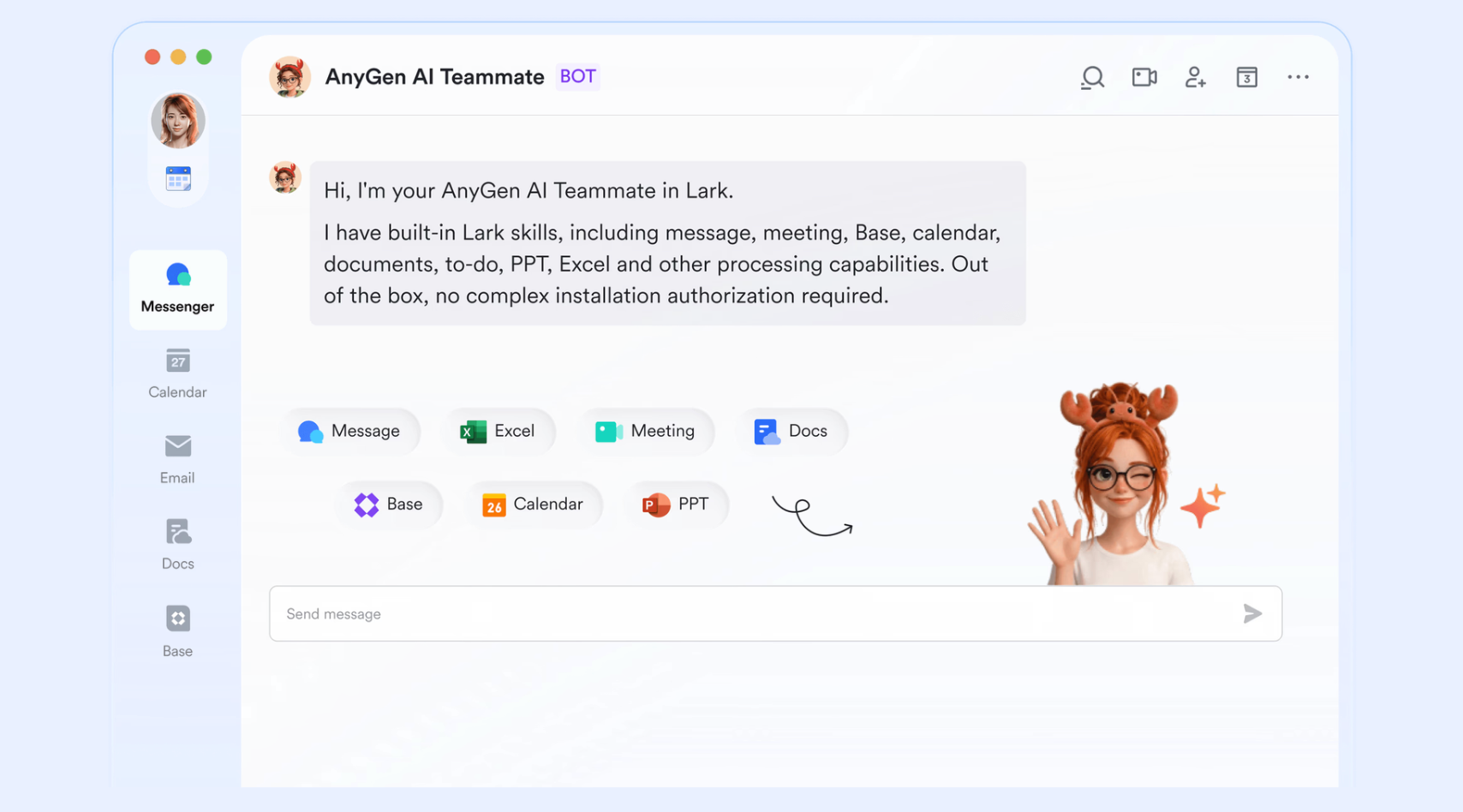
AnyGen AI Teammate is an enterprise-grade digital employee designed to automate repetitive tasks by packaging complex AI into an easy-to-deploy and manage solution. It excels at deeply integrating with internal information flows and business systems, boosting operational efficiency through a unified model of information monitoring, automatic analysis, results generation, and proactive alerting. Equipped with a rich skills library for tasks like summarization, data analysis, and content generation, AnyGen AI Teammate actively identifies risks and drives execution, creating truly intelligent workflows. This makes it a significant leap beyond self-built solutions like OpenClaw, offering superior deployment cycles, lower operational costs, robust enterprise security, out-of-the-box readiness, and no need for dedicated technical personnel.
Pros:
- Out-of-the-box professional skills library: AnyGen AI Teammate comes equipped with a pre-built professional skills library, eliminating the need for businesses to build AI capabilities from scratch. This library covers a range of high-value functions, such as efficient information summarization, which can quickly extract key insights from vast amounts of data; powerful data analysis capabilities, which can uncover hidden trends and insights; and intelligent content generation modules, capable of automatically drafting reports, emails, or marketing copy.
- Autopilot with three proactive work modes: AnyGen AI Teammate's "Autopilot" mode is the core of its intelligence and proactivity, elevating AI agents from passive responders to active managers through its three proactive work modes: monitoring, detection & early warning, and execution promotion. It continuously monitors various information streams and business data within the enterprise, grasping dynamics in real-time. When it identifies potential problems, risks, or opportunities, it can immediately detect them and alert relevant stakeholders, ensuring timely communication. Furthermore, it can, based on preset rules or AI judgment, actively promote the execution of subsequent tasks or processes, achieving true closed-loop automated management.
- Robust enterprise-grade security fences: Directly addressing the security shortcomings of OpenClaw, AnyGen AI Teammate has built an unbreachable enterprise-grade security fence. It ensures that all data is processed only with authorization, strictly controlling AI access to sensitive information, thus eliminating the risk of unauthorized data breaches. Simultaneously, AnyGen AI Teammate offers granular, controllable permission management, allowing businesses to flexibly configure the AI agent's operational boundaries according to different roles and needs. Moreover, the system provides comprehensive audit logs, detailing all actions performed by the AI agent, facilitating traceability and compliance reviews for the enterprise.
- Deep Lark integration for true business context understanding: A core strength of AnyGen AI Teammate as an enterprise-grade digital employee is its deep integration with Lark. For those new to the platform, Lark is an all-in-one super app and digital workspace that unifies messaging, video calls, document collaboration, file sharing, project management, automated approval processes, and AI-powered workflows on a single platform. By connecting deeply with Lark, AnyGen AI Teammate can access and comprehend real-time information, project progress, team communications, and other contextual data within your enterprise. This allows it to make more precise decisions and responses that align better with your specific business situation.
Why AnyGen AI Teammate is OpenClaw's best alternative: The following table breaks down a detailed comparison between OpenClaw (self-hosted) and AnyGen AI Teammate across key dimensions spanning deployment, security, operational costs, and business value, to help you clearly assess their differences for enterprise-grade AI agent adoption.
The verdict: AnyGen AI Teammate embodies the future direction of enterprise-grade AI agent solutions. It comprehensively surpasses the experimental nature of OpenClaw in terms of usability, security, efficiency, and business adaptability. For organizations looking for stable, secure AI digital employees that genuinely deliver business value, AnyGen AI Teammate offers a powerful and reliable platform, making it a smart choice for driving AI-powered organizational transformation.
2. NanoClaw: Secure agents via container isolation
NanoClaw champions security through its fundamental design choice of container isolation. By confining AI agent execution within secure, sandboxed environments, NanoClaw directly addresses the critical security vulnerabilities inherent in OpenClaw's broad local system access. This approach is invaluable for teams handling sensitive data or operating in regulated industries, as it prevents unauthorized access and potential damage to the host system. Its significantly smaller codebase (noted as only 5 files in some analyses) further reduces the attack surface and enhances auditability, providing a controlled and transparent environment for running AI agents, even when interacting with external communication tools like WhatsApp.
Image source: github.com
Pros:
- Robust security through containerization and sandboxing.
- Reduced attack surface and enhanced auditability with a minimal codebase.
- Suitable for sensitive data and compliance-driven environments.
- Provides controlled execution for external tool interactions (e.g., WhatsApp).
Cons:
- May require knowledge of containerization for optimal setup and management.
- Can introduce a slight performance overhead compared to ultra-light, non-containerized agents.
The verdict: NanoClaw is an excellent choice for organizations prioritizing robust security, data privacy, and controlled execution for their AI agents. Its focus on container isolation makes it ideal for regulated industries and sensitive operations where safeguarding data and system integrity is paramount.
3. PicoClaw: Minimalist, lightning-fast deployment
PicoClaw is engineered with a strong emphasis on minimalist design, prioritizing raw speed and ease of deployment. This unbloated architecture allows for extremely rapid setup and execution, making it highly suitable for quick prototyping, iterative development, and specific tasks where low latency and performance are critical. The user experience is geared towards developers who value agility and efficiency, allowing them to spin up and test AI agents with minimal friction. Its design philosophy avoids unnecessary complexity, ensuring that the agent remains lightweight and responsive.
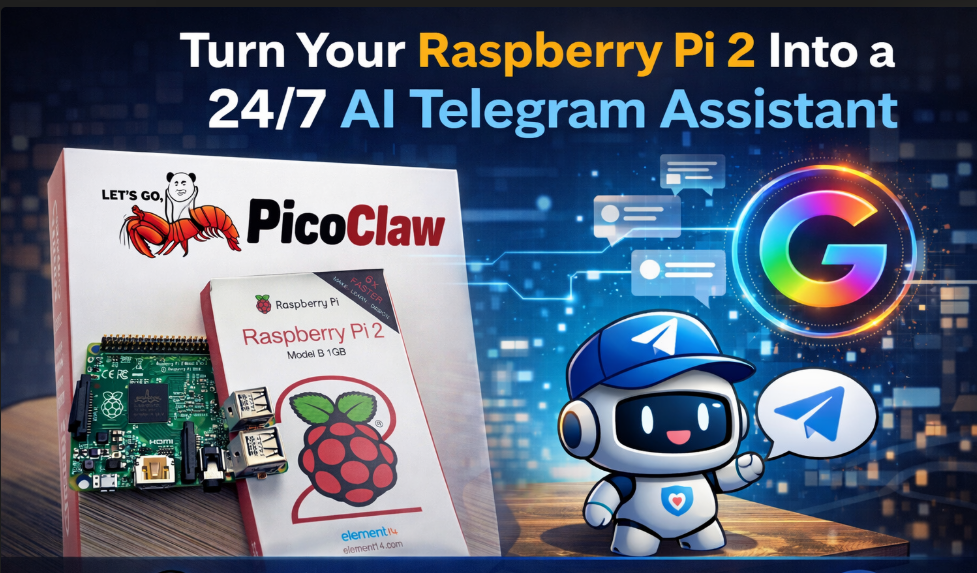
Image source: medium.com
Pros:
- Exceptional speed and responsiveness due to minimalist design.
- Facilitates incredibly easy and quick deployment.
- Ideal for rapid prototyping and high-frequency, low-latency tasks.
- Minimizes resource consumption, making it very efficient.
Cons:
- May lack advanced features or extensibility found in more comprehensive frameworks.
- Documentation and community support might be less extensive than larger projects.
The verdict: PicoClaw is an excellent choice for developers and teams where raw speed, minimalist design, and quick iteration cycles are paramount, making it perfect for performance-critical applications and rapid experimentation without unnecessary overhead.
4. Nanobot: Lightweight Python, persistent memory
Nanobot is an ultra-lightweight AI agent framework implemented in Python, distinguished by its small codebase (around 4,000 lines). This makes it highly comprehensible for developers, facilitating easy customization and extension. A core feature is its persistent memory capabilities, allowing the agent to build and retain context over time. This enables more sophisticated and continuous interactions without losing track of past exchanges or decisions. While it leverages Python's versatility, Nanobot consciously avoids enterprise-grade features to maintain its simplicity and developer-friendly nature, making it ideal for focused, context-aware automation.
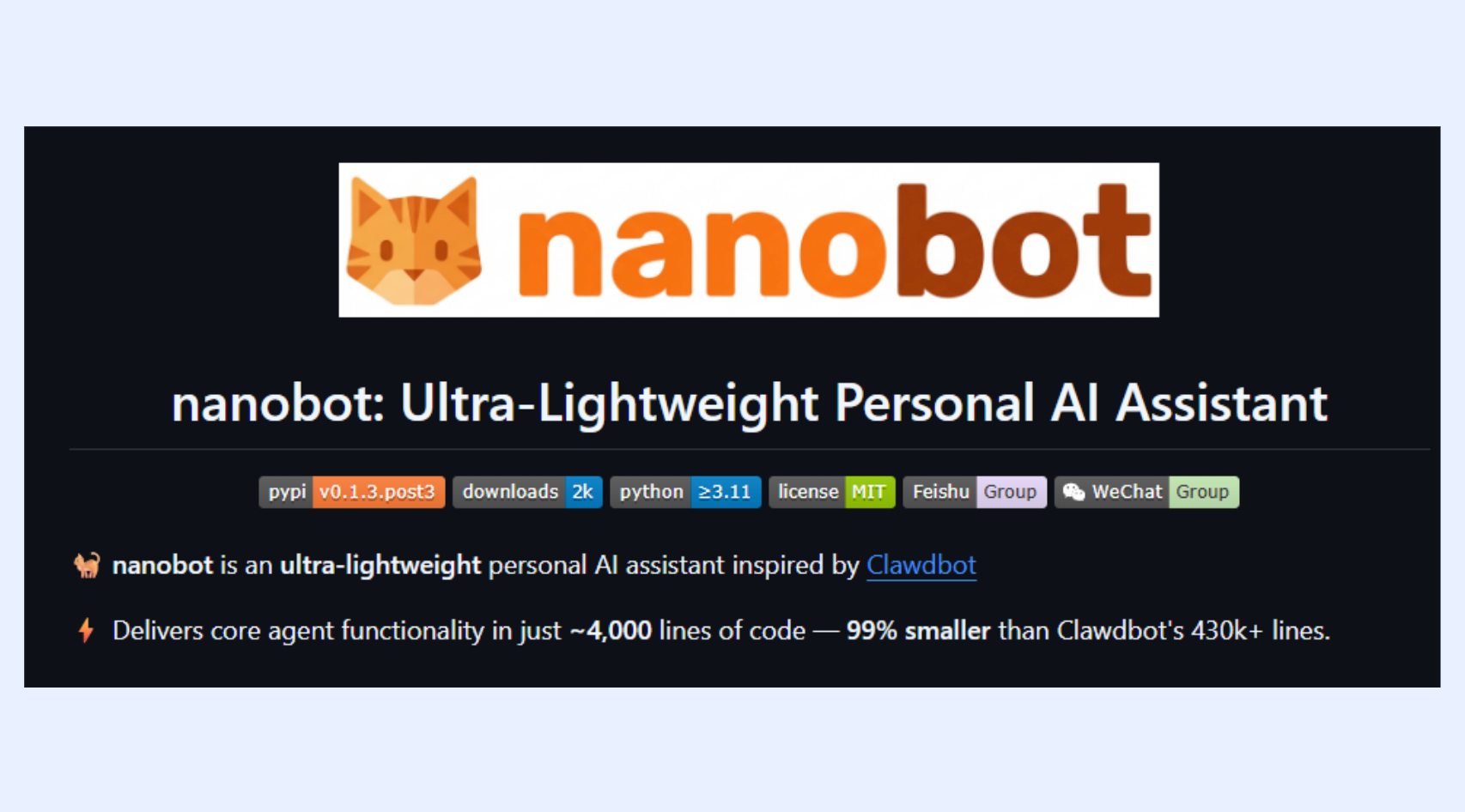
Image source: nanobot.ai
Pros:
- Python-based with a small, highly comprehensible codebase.
- Features persistent memory for enhanced context retention.
- Easy to customize and extend for specific, developer-driven needs.
- Transparent and easy to audit for security-conscious developers.
Cons:
- Lacks enterprise-level features, integrations, and scalability options.
- Not designed for complex, multi-agent orchestration or large-scale deployments.
The verdict: Nanobot is perfectly suited for individual developers or small teams seeking a transparent, highly customizable Python agent with valuable memory capabilities, ideal for focused, context-aware tasks without heavy enterprise overhead.
5. memU: Proactive knowledge graph assistant
memU positions itself as a proactive AI assistant that innovatively builds and maintains a local knowledge graph over time. This unique approach allows memU to continuously learn, organize, and synthesize information, moving beyond simple command execution to genuinely understand and anticipate user needs. Its strength lies in its ability to recall past interactions, access stored information, and provide contextually relevant insights, creating a more intuitive and personalized user experience. memU excels in scenarios requiring long-term memory, information synthesis, and proactive assistance, evolving its intelligence through ongoing data input.
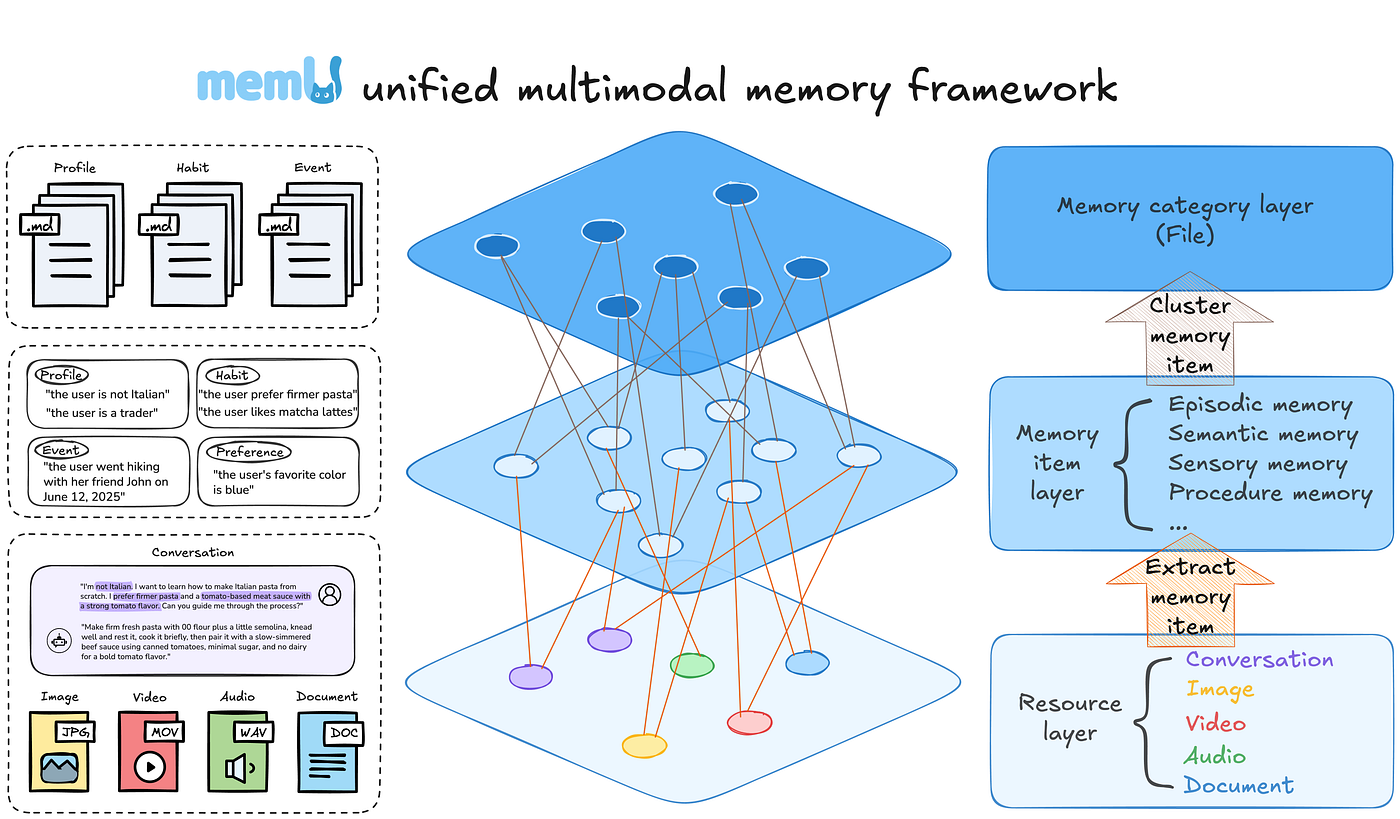
Image source: memu.pro
Pros:
- Builds and maintains a dynamic, local knowledge graph.
- Proactively anticipates user needs through learned context.
- Excels in personalized interaction and long-term memory.
- Focuses on information synthesis and intelligent retrieval, not just execution.
Cons:
- Not primarily designed for direct code execution or complex automated workflows.
- Effectiveness heavily relies on continuous data input to enrich its knowledge base.
The verdict: memU is ideally suited for users seeking a highly intelligent, context-aware personal assistant that continuously learns and provides relevant insights. Its unique ability to build and leverage a knowledge graph makes it stand out for advanced information management, personalized support, and anticipatory assistance.
6. OpenCode: Go-based, multi-LLM for coding
OpenCode is a specialized Go-based coding agent designed for developers who prioritize transparency, performance, and flexibility in their AI tools. As an open-source solution, it provides full control over its functionality, allowing developers to adapt it to their exact needs. It supports multiple Large Language Models (LLMs), offering the flexibility to choose the best model for tasks ranging from code generation and analysis to refactoring and debugging. Its Go foundation ensures high performance and reliability, making it a robust partner for enhancing software development workflows without proprietary constraints.
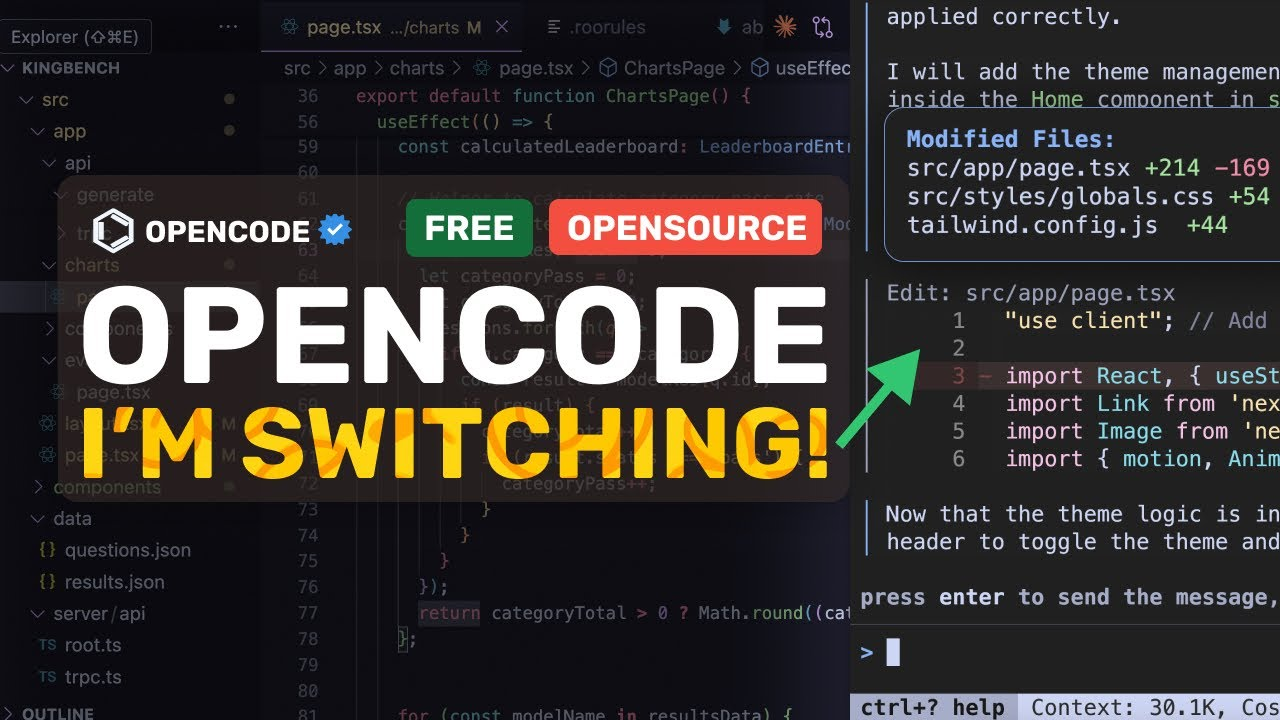
Image source: github.com
Pros:
- Built on Go, ensuring high performance and reliability.
- Supports multiple LLMs for diverse coding tasks and flexibility.
- Open-source for full transparency and deep customization.
- Specializes in code generation, analysis, and refactoring.
Cons:
- Requires developer expertise in Go for advanced customization.
- May have a steeper learning curve for non-Go programmers looking to contribute.
The verdict: OpenCode is an excellent choice for developers and engineering teams seeking a powerful, transparent, and customizable coding agent with diverse LLM support. Its Go foundation and open-source model make it a strong tool for building and managing complex software with AI assistance, empowering developer control.
7. Claude Code: Intelligent generation, code interpretation
Claude Code refers to the advanced code understanding, generation, and interpretation capabilities embedded within Anthropic's Claude family of Large Language Models. While not a standalone agent framework in the traditional sense, it represents a highly sophisticated form of AI for coding tasks. It excels at comprehending complex natural language prompts related to programming, generating accurate and efficient code snippets, identifying and suggesting fixes for bugs, and providing clear explanations of code logic. Its strength lies in its deep understanding of programming paradigms and its powerful reasoning, making it an invaluable tool for developers integrated into various stages of the software development lifecycle.
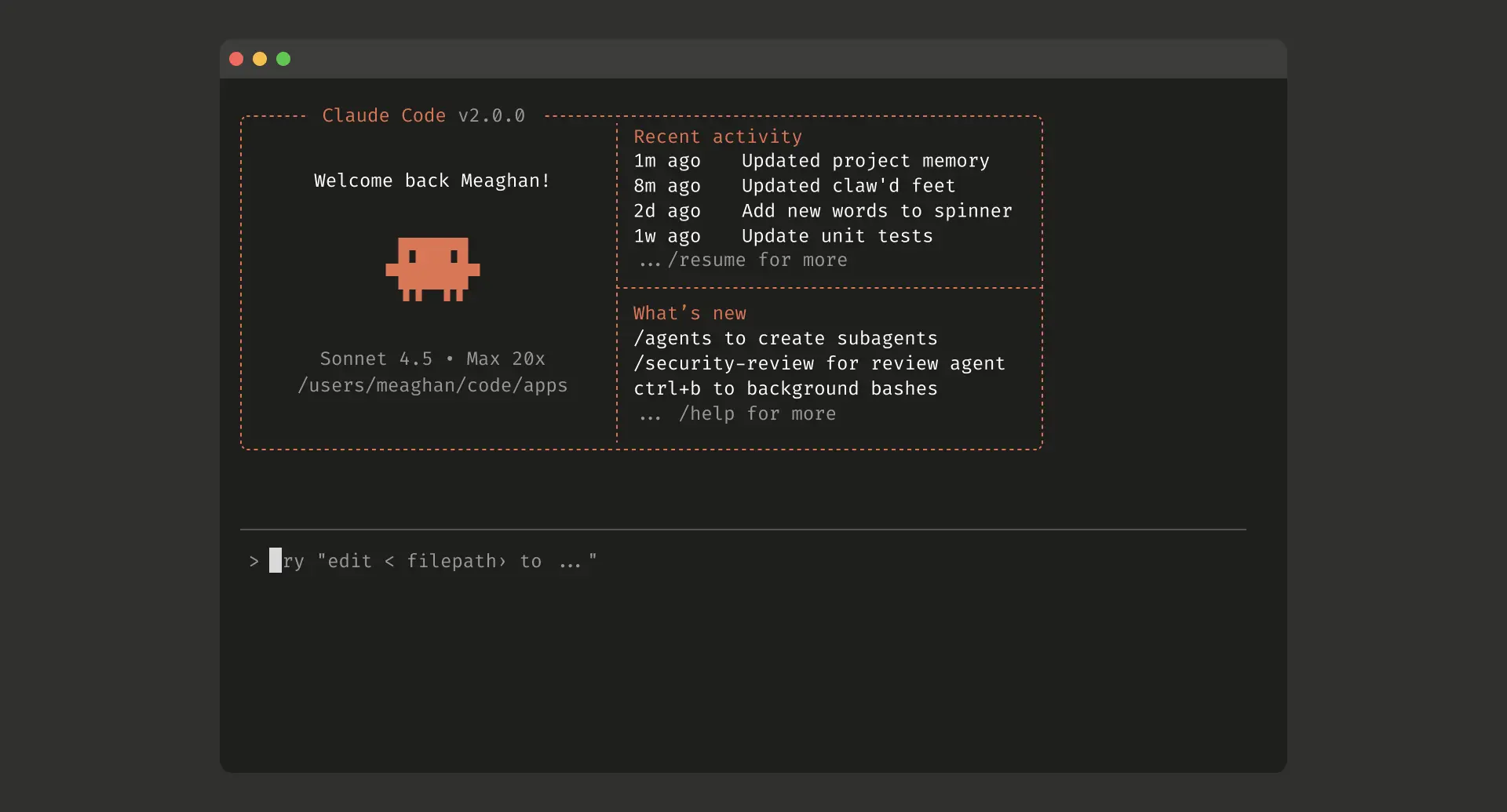
Image source: anthropic.com
Pros:
- Highly intelligent code generation, interpretation, and analysis.
- Excels at debugging, refactoring suggestions, and code explanations.
- Leverages advanced LLM reasoning for superior performance in coding tasks.
- Can be integrated into existing developer workflows for smart assistance.
Cons:
- API-based, incurring usage costs tied to Anthropic's service.
- Offers less low-level framework customization compared to open-source agent frameworks.
The verdict: Claude Code is best for developers and teams needing state-of-the-art AI assistance for complex coding tasks, from idea generation to troubleshooting, powered by advanced LLMs. It stands out for its intelligence and accuracy in programming contexts, offering powerful on-demand coding insights.
8. ZeroClaw: Hyper-minimalist, no-frills agent
ZeroClaw embodies the philosophy of extreme minimalism in AI agent design. It aims to provide the bare essentials for agent functionality, stripped down to its core to achieve unparalleled efficiency and a near-zero resource footprint. This makes it ideal for highly specialized, single-purpose tasks where any overhead is detrimental, or for environments with severe resource constraints, such as edge devices or very simple embedded systems. While its functionality is deliberately limited, its strength lies in its incredible speed, simplicity, and potential for ephemeral, stateless operations, making it extremely lightweight and fast to deploy.
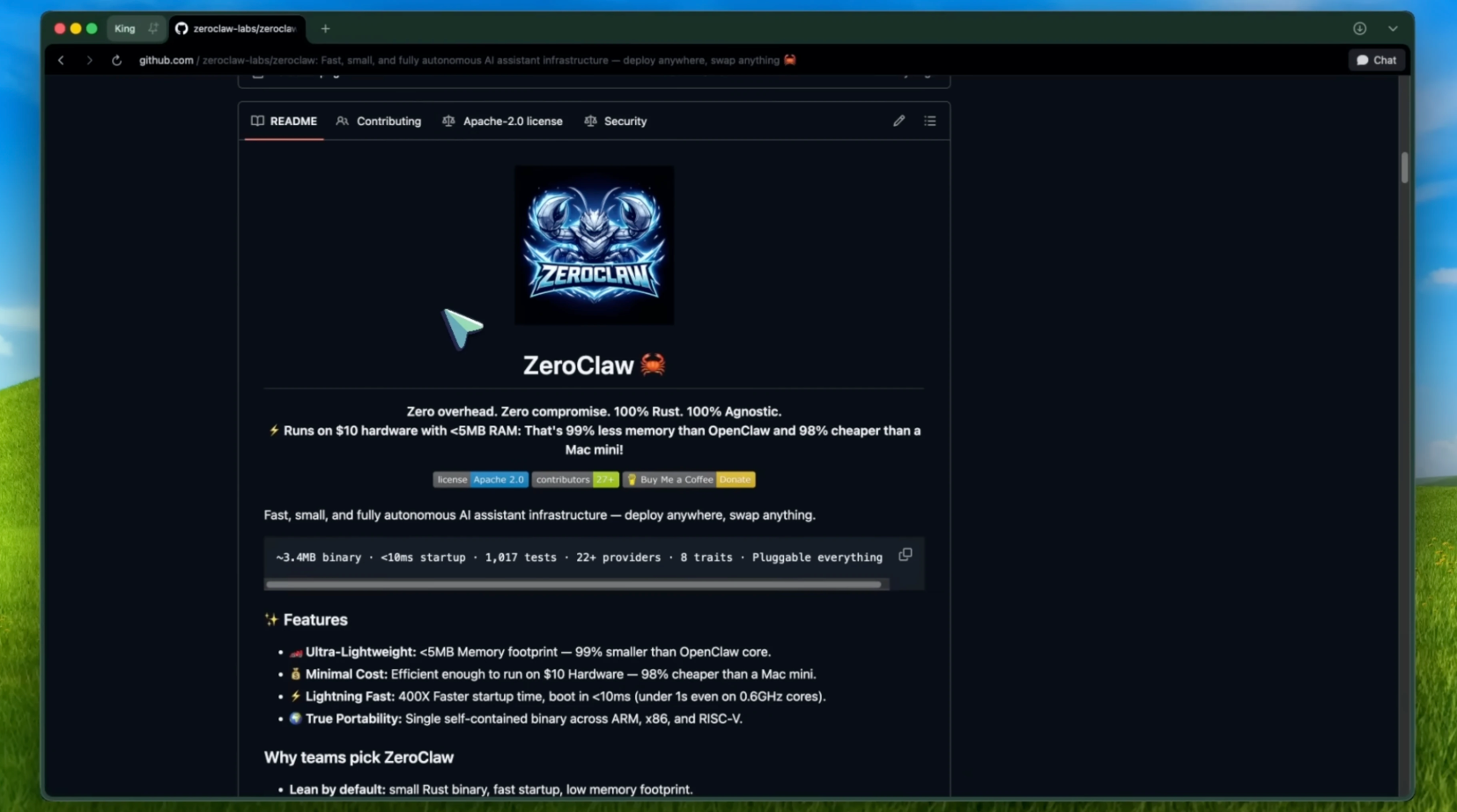
Image source: zeroclaw.net
Pros:
- Extremely low resource footprint, ideal for constrained environments.
- Minimal complexity ensures high efficiency and speed.
- Supports highly specialized, single-purpose agent tasks.
- Potentially offers ephemeral or stateless operations for enhanced privacy or rapid restarts.
Cons:
- Very limited functionality, not suitable for complex, multi-step tasks.
- Challenging to extend or customize beyond its core, minimal design.
The verdict: ZeroClaw is designed for niche applications demanding absolute minimal resources and ephemeral operation, offering unparalleled simplicity and a tiny footprint for highly specialized tasks. It stands out as the ultimate choice for extreme efficiency in very limited environments.
9. Moltworker: Embedded, secure, stable execution
Moltworker (also known as Moltbot in some discussions) from Emergent introduces an innovative approach to AI agents through its "embedded execution" model. This means the agent operates directly within or in very close proximity to the applications and data it interacts with, fundamentally reducing the need for broad system access. This design choice inherently enhances stability, security, and privacy by minimizing the attack surface and potential for unauthorized operations. Moltworker focuses on providing autonomous assistance that integrates seamlessly and reliably into existing systems, significantly lowering the engineering overhead typically associated with custom AI agent deployments and making it highly suitable for production-grade operational assistance.
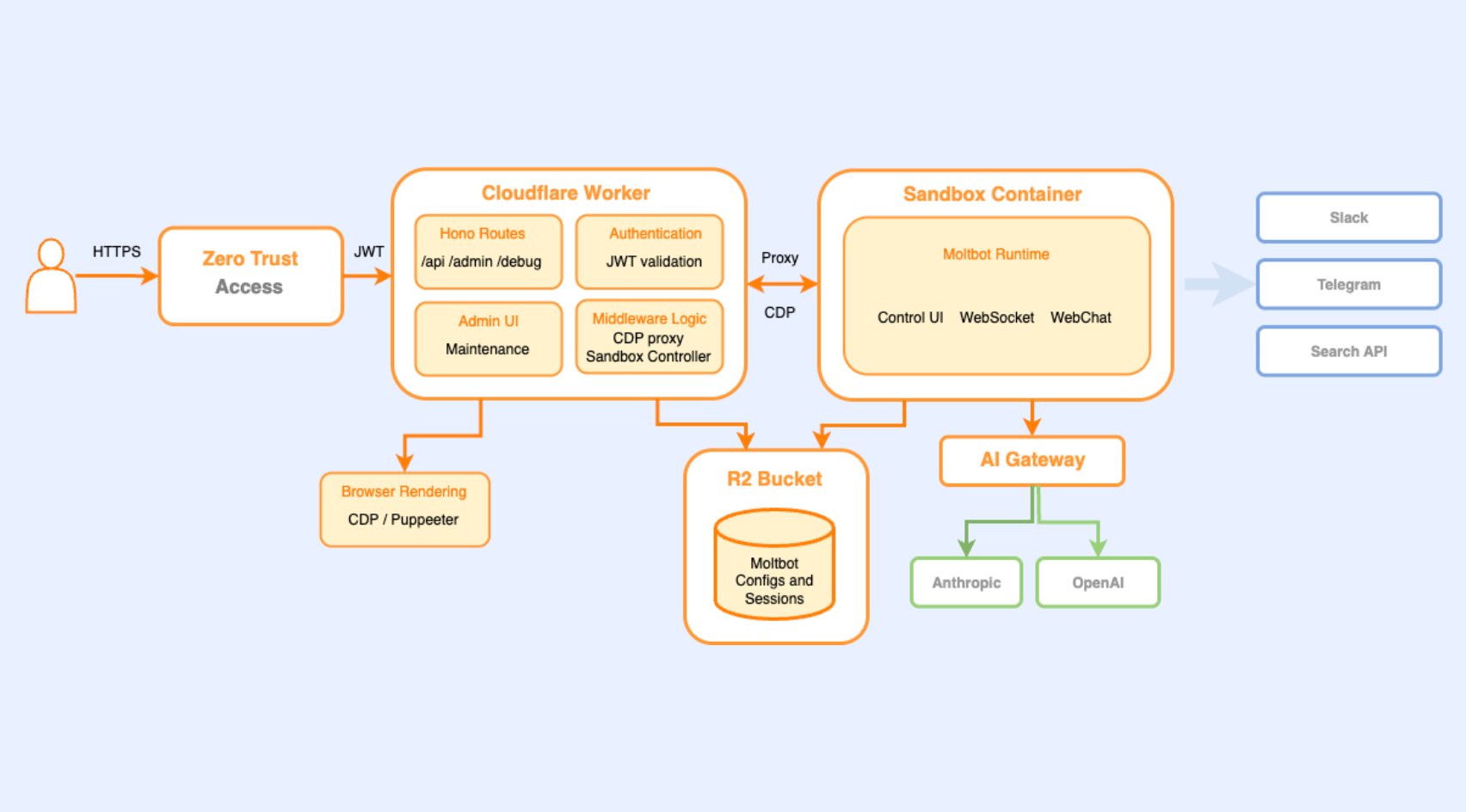
Image source: github.com
Pros:
- Enhanced stability through its embedded execution model.
- Strong security and privacy by avoiding broad local system access.
- Reduces operational burdens and engineering efforts for deployment.
- Facilitates seamless integration into existing applications and workflows.
Cons:
- May require specific API integration points for effective embedded deployment.
- Could offer less general-purpose flexibility compared to frameworks with broader system control.
The verdict: Moltworker is an excellent choice for enterprises seeking highly stable, secure, and deeply integrated autonomous assistants that operate within specific application contexts. Its embedded execution model makes it stand out for production environments demanding reliability, data protection, and reduced operational complexity.
10. NullClaw: Zig-based, ultra-light for edge
NullClaw is a minimalist AI agent framework built using the Zig programming language, renowned for its efficiency and low-level control. Its most striking feature is its incredibly tiny footprint, reported to be as small as 678 KB. This makes NullClaw exceptionally well-suited for resource-constrained environments, such as edge computing devices, IoT systems, or embedded hardware, where every kilobyte and CPU cycle is critical. Despite its minimal size, it supports various messaging protocols, allowing for versatile communication capabilities. NullClaw represents a powerful option for highly optimized, low-overhead AI agent deployments where performance and resource efficiency are paramount.
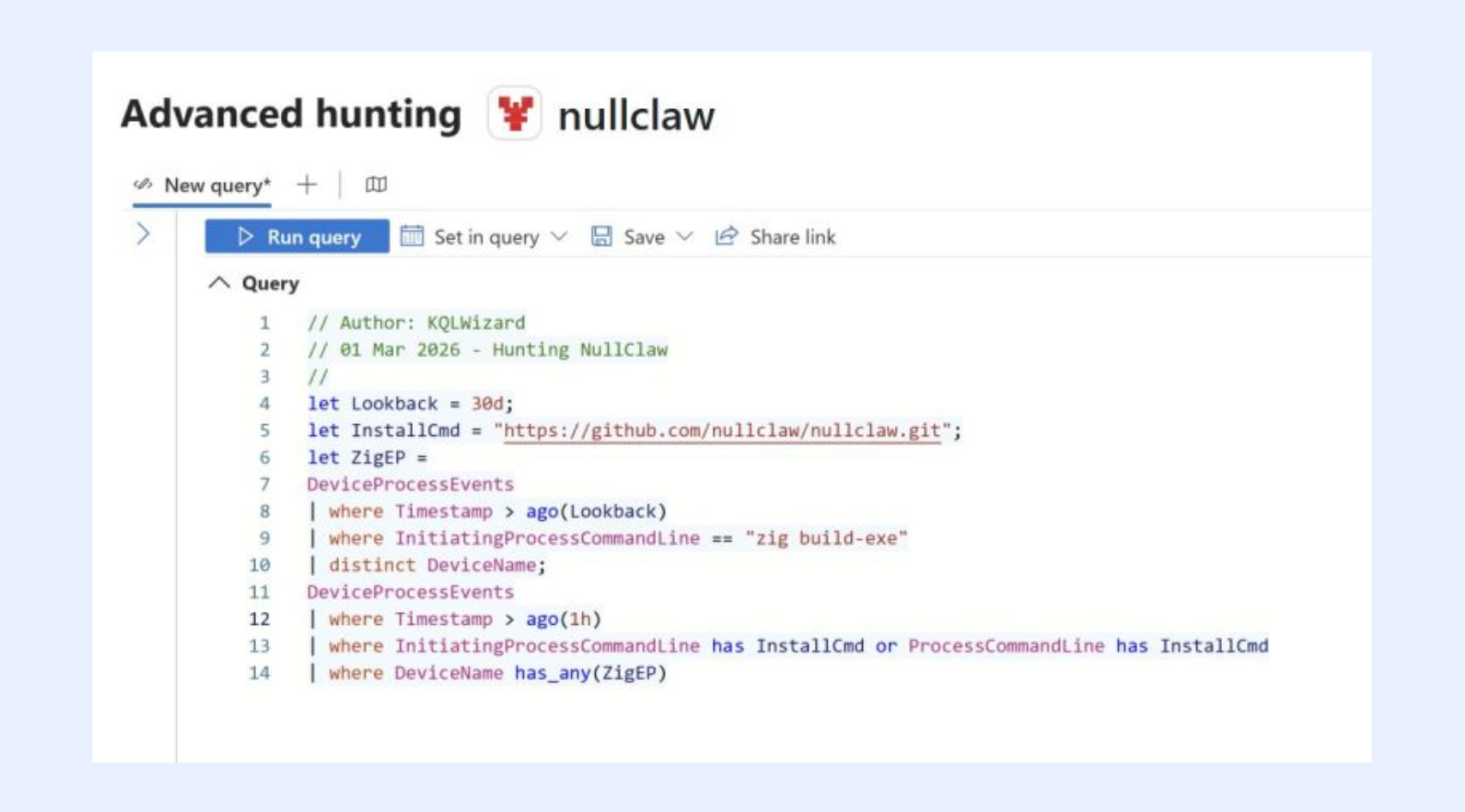
Image source: nullclaw.org
Pros:
- Extremely small footprint (678 KB) for maximum efficiency.
- High performance and resource optimization due to Zig language.
- Ideal for edge computing, IoT, and embedded environments.
- Supports diverse messaging protocols for communication flexibility.
Cons:
- Requires strong knowledge of Zig for deep customization and development.
- May present a steeper learning curve for developers unfamiliar with system-level programming.
The verdict: NullClaw is tailored for advanced developers and specific use cases where extreme resource efficiency, minimal footprint, and precise system-level control are paramount. It stands out for its ability to deploy powerful AI agents in environments where other frameworks would be too demanding or impractical.
11. Anything LLM: Build custom LLM applications
Anything LLM is an open-source full-stack application designed to make it easy to build custom Large Language Model (LLM) applications, particularly focusing on Retrieval-Augmented Generation (RAG). It provides a user-friendly interface for ingesting and managing various data sources, connecting to different LLMs, and creating chatbots or agents that can leverage custom knowledge bases. The platform aims to simplify the development process for creating context-aware AI tools, allowing users to quickly deploy private, secure LLM applications with their own data, moving beyond generic LLM interactions to highly specific, useful agents.
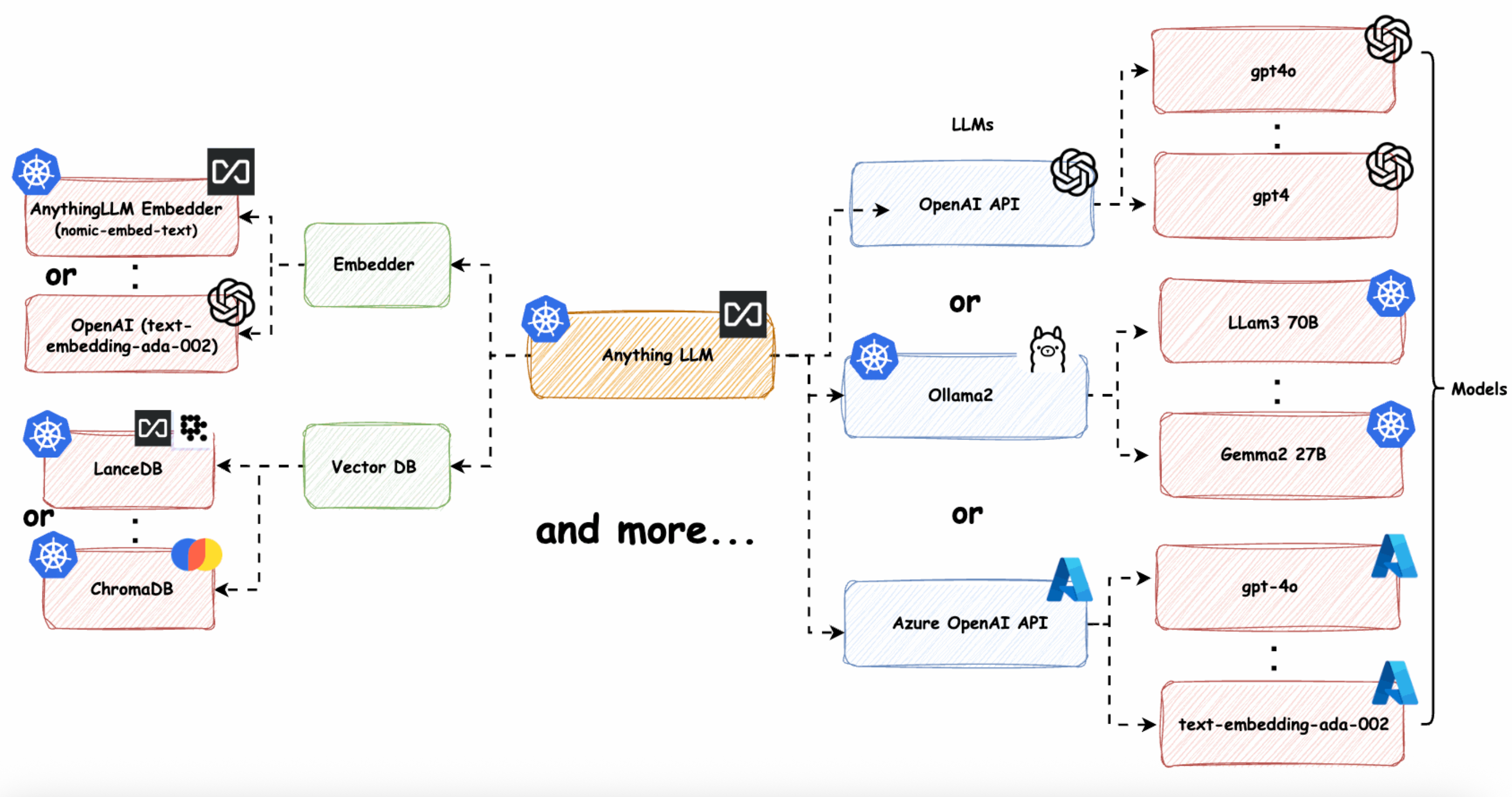
Image source: itnext.io
Pros:
- Simplifies building custom LLM applications with private data (RAG).
- Supports integration with various LLM providers.
- Offers a user-friendly interface for data management and agent creation.
- Open-source and self-hostable for full control and privacy.
Cons:
- Primary focus is on RAG and conversational agents, less on autonomous execution.
- May require custom code for highly complex, multi-step autonomous agent behaviors.
The verdict: Anything LLM is an excellent solution for developers and businesses looking to quickly build custom LLM-powered applications and chatbots with their own data. It provides a robust and user-friendly framework for RAG and context-aware agent creation, making it stand out for secure, private AI applications.
12. TrustClaw: Secure enterprise AI agent platform
TrustClaw is an enterprise-grade AI agent orchestration platform engineered for organizations where security, compliance, and granular control over automated workflows are paramount. It provides a highly sandboxed and auditable framework for deploying, monitoring, and managing autonomous agents, ensuring operations meet stringent corporate and regulatory standards. TrustClaw positions itself as the enterprise solution for mission-critical AI agent deployments, offering peace of mind through stringent security measures and transparency. It's designed for organizations where compliance, data integrity, and auditable AI operations are non-negotiable, directly addressing the trust and governance deficits found in earlier, less controlled frameworks like OpenClaw.
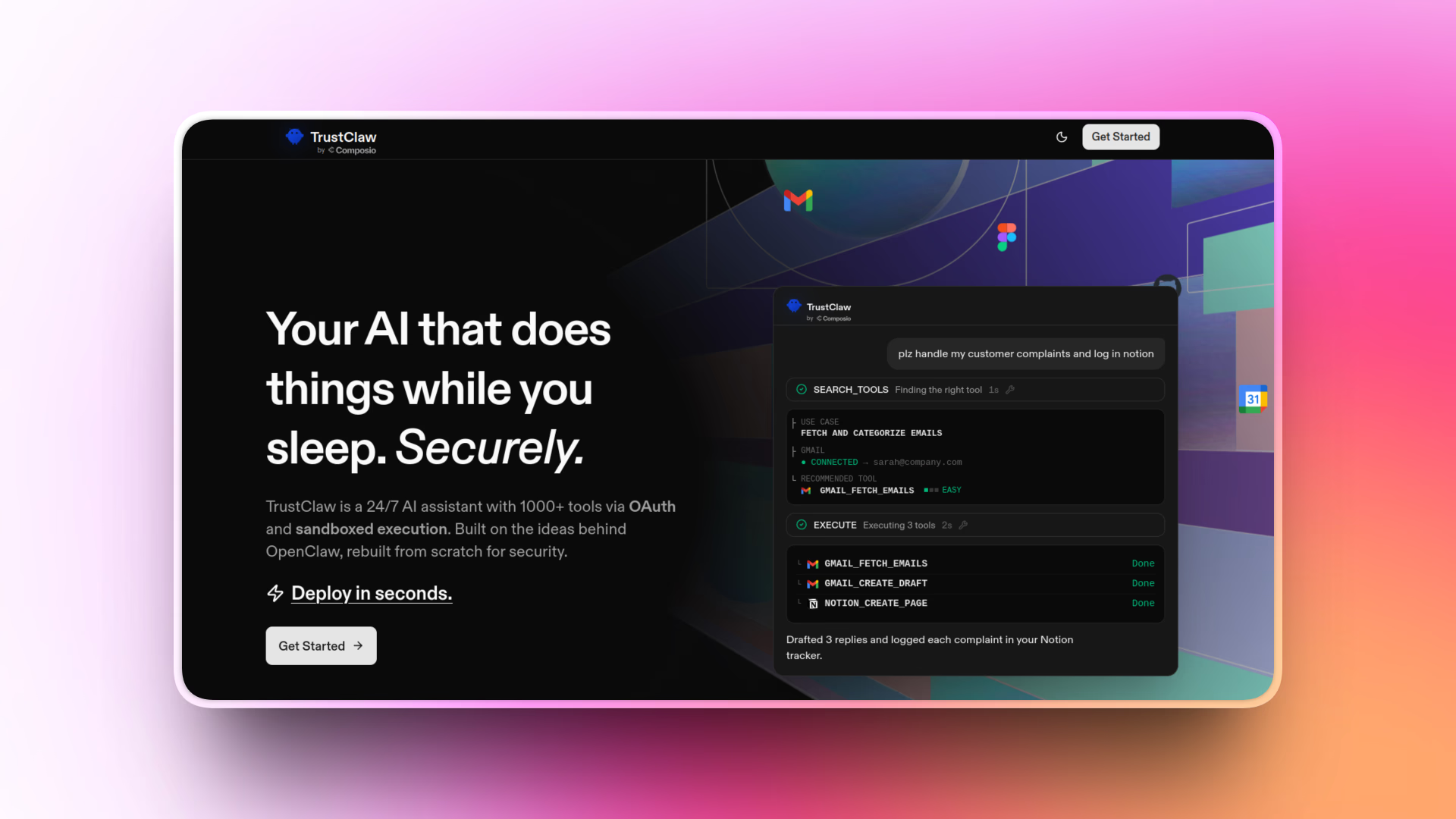
Image source: composio.com
Pros:
- Unrivaled security & compliance, built for highly regulated environments.
- Granular governance & RBAC, with full audit trails for transparency.
- Controlled execution environments, minimizing network attack surfaces.
- Robust API-first integration, seamlessly connecting complex enterprise systems.
Con:
- Steep learning curve and complex setup, requiring specialized IT/security expertise.
- Higher TCO, with premium subscriptions and more internal resources for management.
The verdict:
TrustClaw is best suited for large enterprises, government agencies, or organizations operating in heavily regulated industries that handle extremely sensitive data. For these entities, its uncompromising focus on security, compliance, and control outweighs the initial investment in complexity and cost.
Evaluating OpenClaw alternatives: What to look for
The challenges with OpenClaw highlight the need for a new generation of AI agent frameworks. To choose the right alternative, it's crucial to understand your specific needs and evaluate tools against critical criteria that prioritize production readiness.
- Define your core optimization goal: Clearly identify if your primary need is for Creative Generation (flexible, probabilistic agents for tasks like brainstorming or code refactoring) or Operational Consistency (deterministic agents with strict guardrails for tasks like data entry or compliance reporting). This distinction—whether prioritizing flexibility or auditability—will heavily influence your framework choice.
- Prioritize key technical criteria for production: For secure and reliable deployment, look for robust Sandboxing and Isolation (e.g., containers, micro-VMs) to protect your system; comprehensive Observability (structured logs, traces) for debugging and understanding agent behavior; and strong Governance (RBAC, policy controls, human-in-the-loop approvals) for granular permissions and controlled execution.
- Assess ecosystem and integration capabilities: Evaluate alternatives based on their Multi-LLM Support and ease of Tool Definitions. Crucially, prioritize Native Integrations via APIs and SaaS connectors, as these provide far more stable and maintainable connections to your existing systems than fragile, vision-based UI automation for production-grade reliability.
Migrating from OpenClaw: A strategic transition
Moving beyond OpenClaw is not merely about swapping one framework for another; it's a strategic re-evaluation of your AI agent initiatives, driven by the critical need for production-grade reliability, security, and scalability. The migration process requires careful planning and a clear understanding of your long-term goals.
- Deconstruct and redefine your agent workflows. Identify the core tasks, tool interactions, and decision logic of your existing OpenClaw agents, separating intent from implementation details. This allows for designing more robust, compartmentalized workflows better suited for new, controlled environments.
- Prioritize security, observability, and governance. OpenClaw's vulnerabilities necessitate an alternative with robust sandboxing, comprehensive logging/tracing, and granular governance (RBAC, policy controls, human-in-the-loop approvals). Solutions like AnyGen AI Teammate inherently offer these enterprise-grade security features and controlled operational environments.
- Embrace controlled environments and API-first integration. Shift from OpenClaw's local execution to alternatives leveraging containerized environments or micro-VMs for isolated execution. Prioritize API-first integrations with enterprise systems (CRM software, ERPs) over fragile UI automation for stability and maintainability.
- Focus on specialization and managed platforms. Unlike OpenClaw's broad autonomy, modern alternatives often use managed orchestration platforms or cloud-native services. The key is leveraging platforms that abstract away infrastructure complexities, allowing your team to concentrate on agent logic.
Conclusion
In essence, while OpenClaw pioneered the concept of local-first autonomous AI agents, its inherent limitations in security, operational reliability, and scalability ultimately highlighted the critical need for a more mature approach. The transition away from such frameworks marks a fundamental shift towards AI agent solutions built for the stringent demands of production environments, prioritizing robust security measures, comprehensive observability, granular governance, and seamless API-first integration. For organizations ready to confidently deploy secure, scalable, and controllable AI agents that truly transform operations, AnyGen AI Teammate provides the stable and enterprise-ready foundation you need.
FAQs
Who is OpenClaw competitor?
OpenClaw, often representing a self-built, local-first autonomous AI agent framework, primarily competes with other approaches to developing custom AI solutions. However, due to its inherent limitations in security, operational costs, and scalability, its true competitors are enterprise-grade platforms designed for production environments. AnyGen AI Teammate is a prime example of such a competitor, offering a comprehensive, secure, and ready-to-use digital employee solution that surpasses OpenClaw's capabilities in critical areas like rapid deployment, zero maintenance, and robust security.
What is the best alternative to Clawdbot?
While "Clawdbot" might refer to a specific custom-built bot or a general class of unmanaged AI solutions, the best alternatives are sophisticated, enterprise-ready digital employee platforms that offer enhanced security, scalability, and ease of use. AnyGen AI Teammate stands out as an excellent alternative, providing a stable and secure foundation with out-of-the-box professional skills, minimal maintenance, and rapid deployment, far exceeding the reliability and functional breadth of typical bespoke bot solutions.
What are the key benefits of adopting AI agents in an enterprise setting?
AI agents offer several significant benefits for enterprises. They can automate repetitive and time-consuming tasks, freeing human employees to focus on more strategic work. This often leads to increased operational efficiency, reduced labor costs, and faster processing times. Furthermore, AI agents can provide consistent performance, operate 24/7, and process large volumes of data more accurately than humans, ultimately enhancing productivity and decision-making across various departments.
How do organizations typically measure the ROI of AI agent deployments?
Organizations typically measure the ROI of AI agent deployments by tracking several key metrics. These often include reductions in operational costs (e.g., labor, processing time), improvements in efficiency and throughput, error rate reductions, and increased customer satisfaction. Quantifiable benefits like faster task completion, lower compliance risks, and the ability to reallocate human resources to higher-value activities are also critical indicators.
Related reading
Table of contents
Start using Lark today

Manage all your work in one place
Boost team efficiency by 10x
Save up to 70% on software costs
Table of contents
Start using Lark today
Manage all your work in one place
Boost team efficiency by 10x
Save up to 70% on software costs
Keep reading







2026 Lark Technologies Pte. Ltd.
Headquartered in Singapore with offices worldwide.






Explore: