


12 Pitch Deck Templates and Reliable Platform for Design

Ryan Tanner
Product Marketing Specialist
Aug 5, 2026
Ryan Tanner
Aug 5, 2026

17 min read


Every great startup story begins with a powerful pitch deck template a clear, confident framework that helps founders communicate their vision and win investor trust. Whether you're pitching a new SaaS product, creative agency, or mobile app, your deck must convey your vision, traction, and opportunity in under 10 minutes.
This guide breaks down what makes a strong pitch deck, slide-by-slide, and offers free pitch deck templates to help you start faster. You'll also learn how to refine your storytelling, organize data, and collaborate seamlessly using Lark so your next investor presentation feels sharper, smarter, and more aligned than ever.

What is a pitch deck?
A pitch deck is a short, visual presentation that introduces your business idea to potential investors, partners, or clients. It's usually built using a pitch deck template to ensure a logical, engaging flow of information across 10–15 slides. The goal is to communicate your startup's vision, the problem you're solving, your product's unique value, market opportunity, and traction all in a clear, concise format. A well-structured pitch deck helps you tell your story effectively while keeping investors focused on key metrics and potential returns.
Founders typically use PowerPoint, Canva, or Google Slides pitch deck templates to design their presentations quickly. However, success depends less on design tools and more on how well your story connects data, product, and vision. In short, a pitch deck turns your startup strategy into a compelling narrative that inspires confidence and interest in your venture.
Pitch deck examples for any situation
Explore these eight proven pitch deck examples that showcase how successful startups structured their stories to win over investors and partners. Each example highlights a unique purpose, from early-stage fundraising to client acquisition, offering insights you can apply to your own pitch deck template.
1. Startup pitch deck: The startup pitch deck template is perfect for introducing your big idea to investors. Begin with a powerful problem slide supported by real-world data to build credibility. Include quotes or press mentions to strengthen trust.
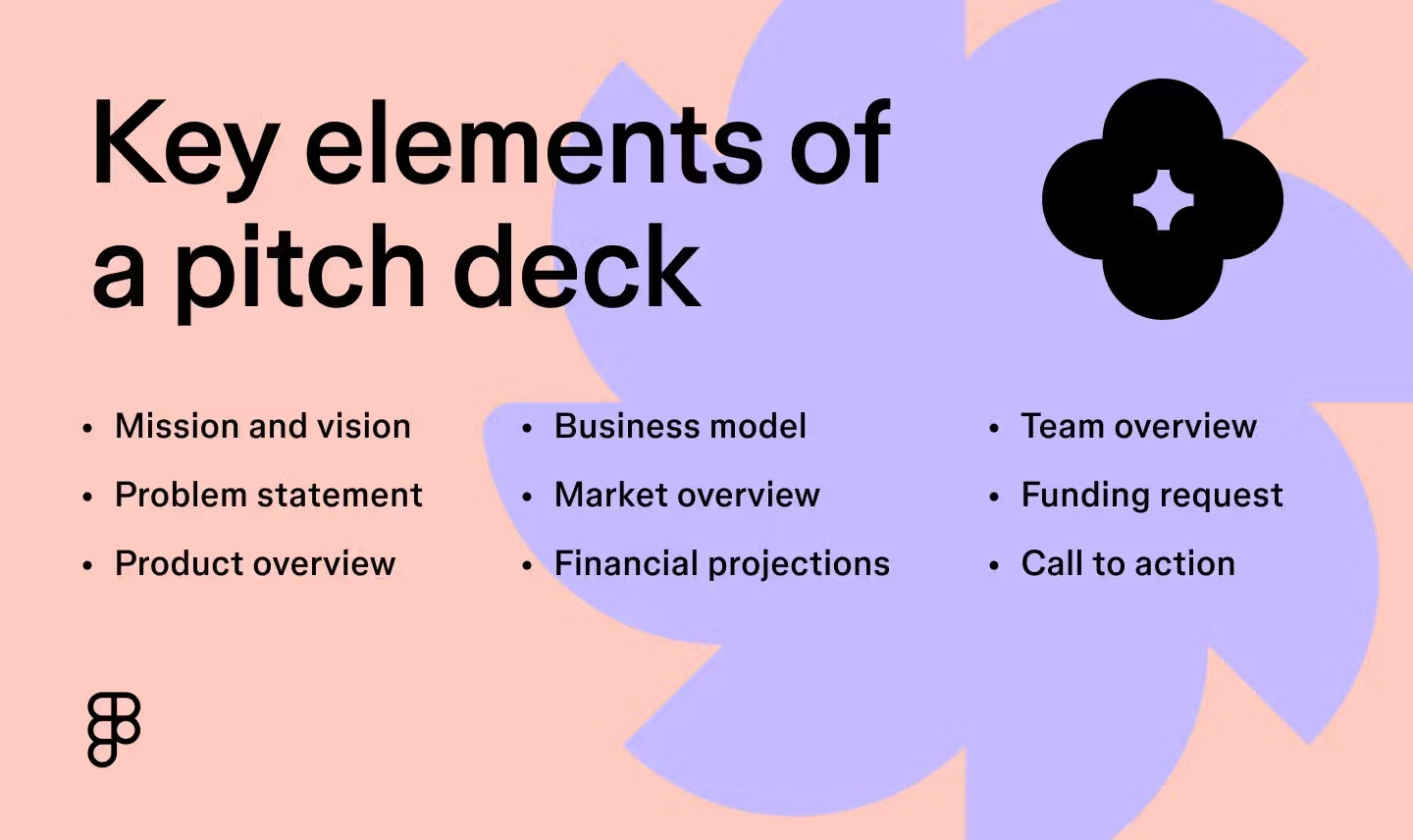
Image source: figma.com
2. Pre-seed pitch deck: Ideal for early-stage startups looking to raise their first round of capital. Focus on showcasing market opportunity and growth potential through data-driven slides. Emphasize what makes your product unique.
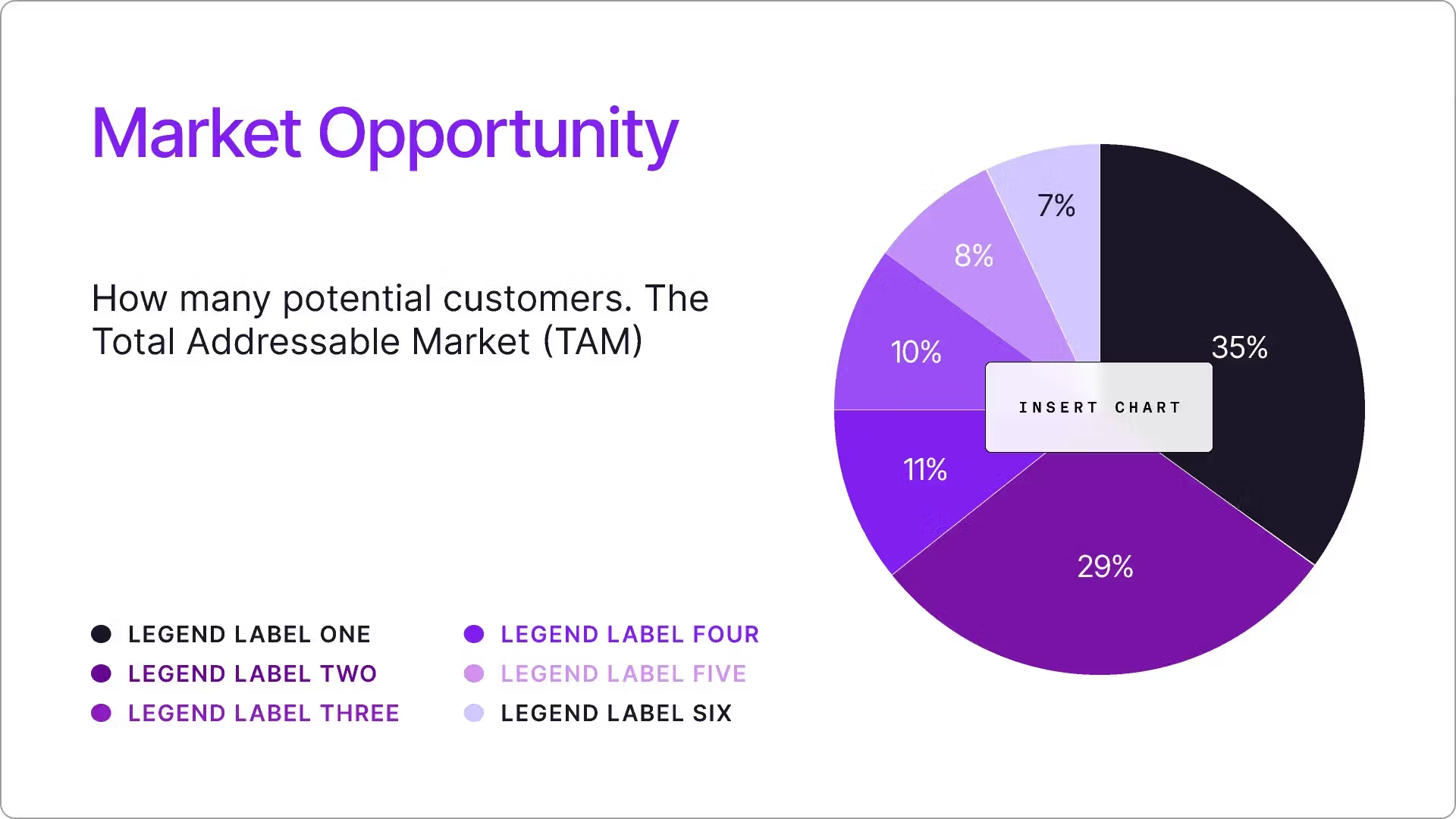
Image source: figma.com
3. Agency pitch deck: An agency pitch deck template helps service-based businesses attract new clients. Start with your team to establish credibility, highlighting experience and unique strengths, then showcase your process with case studies and project outcomes to demonstrate proven results.
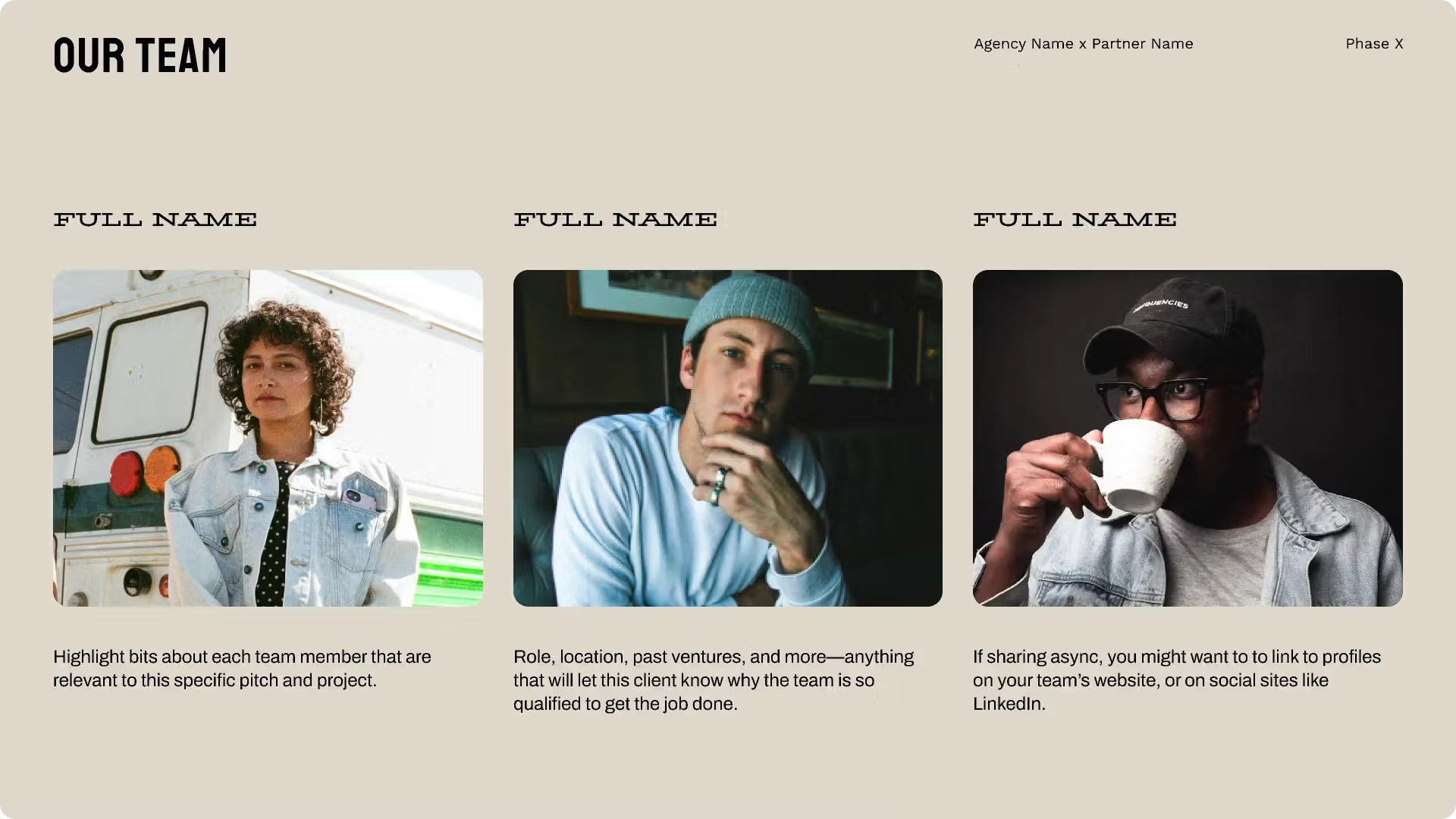
Image source: figma.com
4. Sales pitch deck: This template is designed to win new customers by positioning your product as the perfect solution to their challenges. Begin with a "problem" slide to clearly define the pain points your audience faces, then follow with proof of your solution’s impact through case studies, metrics, or testimonials.
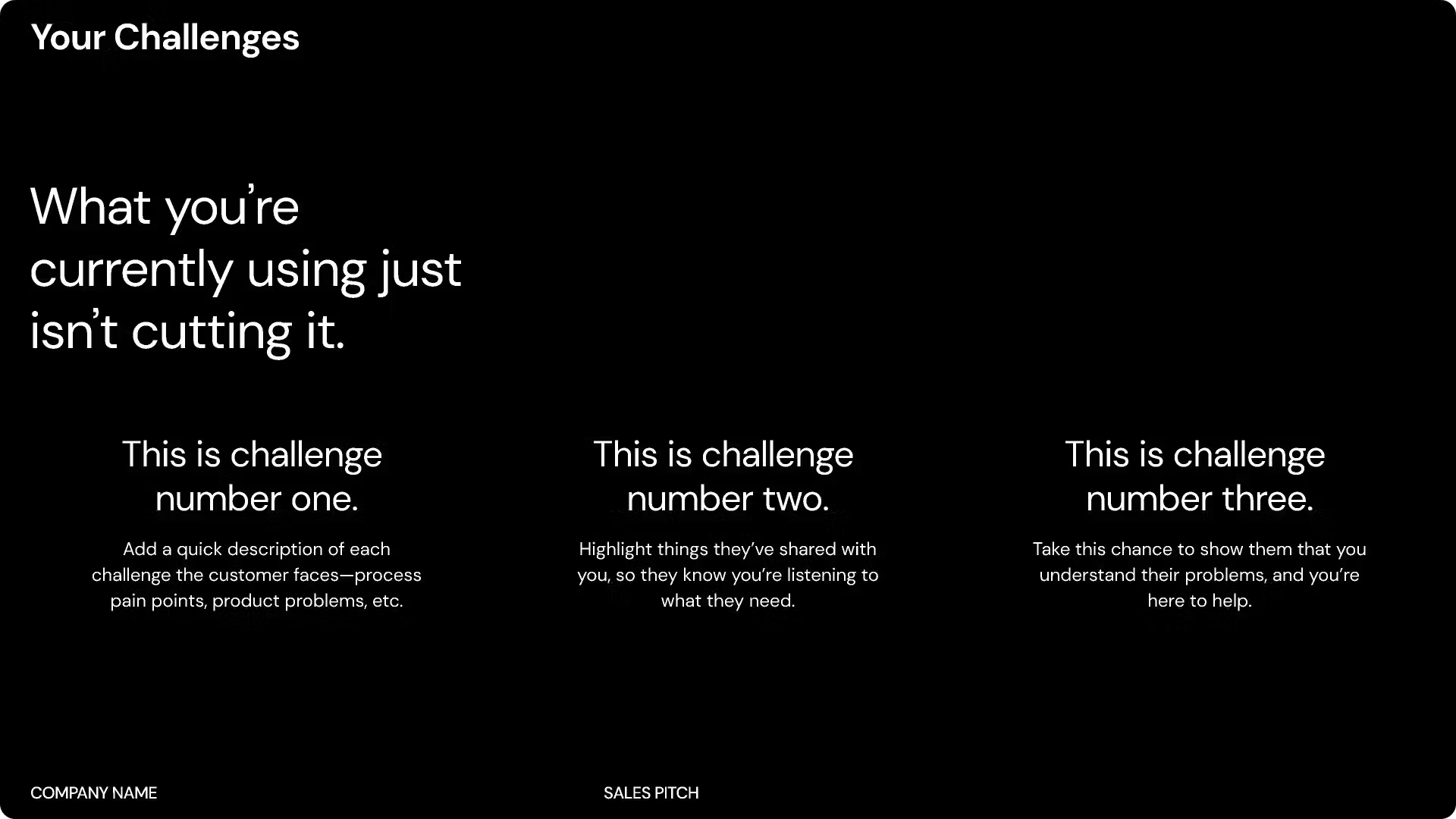
Image source: youtube.com
5. Funding proposal deck: Perfect for early-stage or growth-stage companies seeking new investment. Include strong market, competition, and traction slides to prove momentum, and add key metrics like ARR, AUM, or customer growth to establish credibility. Highlight your team, vision, and product differentiation.
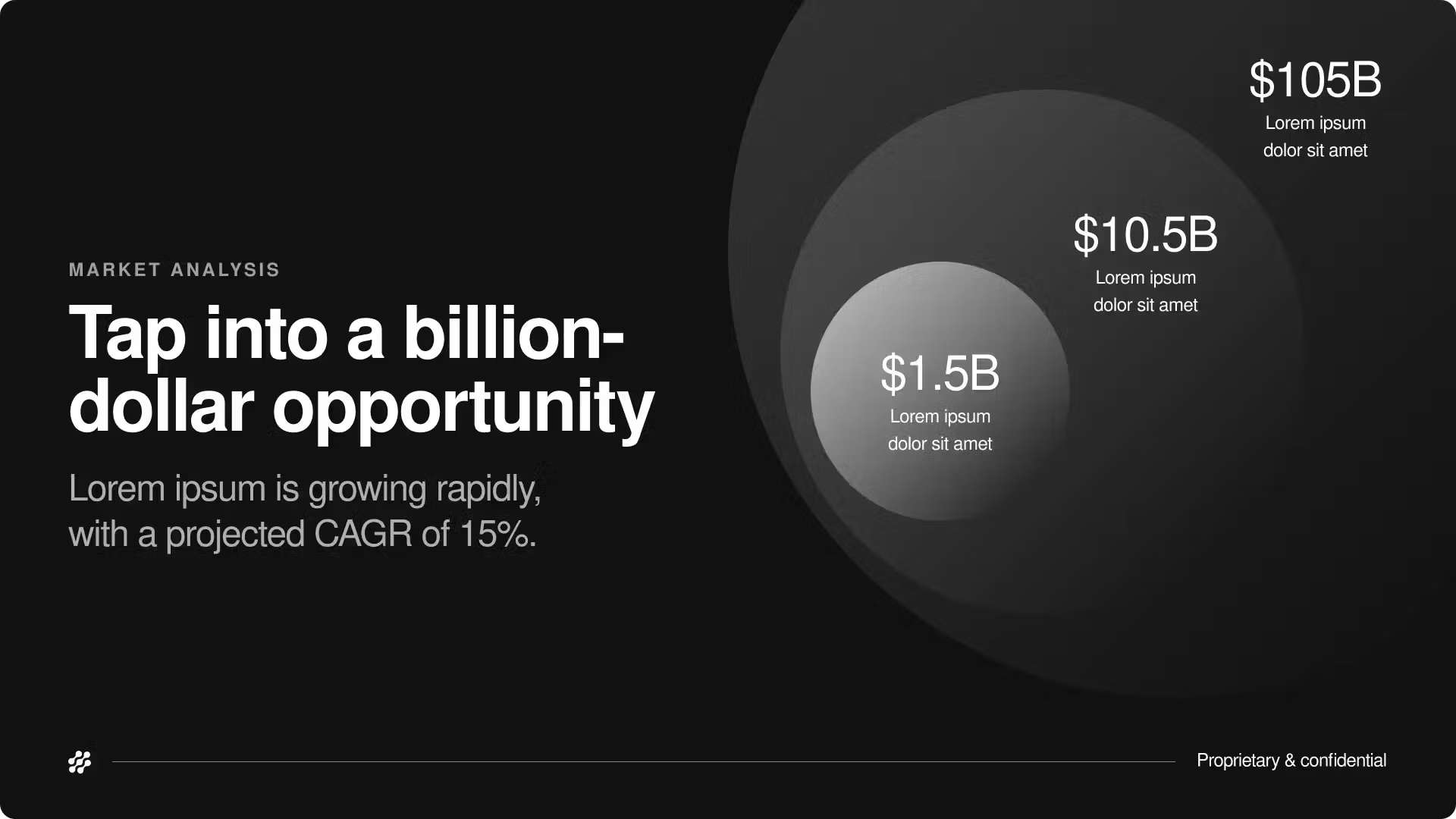
Image source: graphicforfree.com
6. Fintech pitch deck: Use this template to communicate financial value, business model, and growth opportunity. Start with the problem and solution slides, then emphasize your monetization strategy.
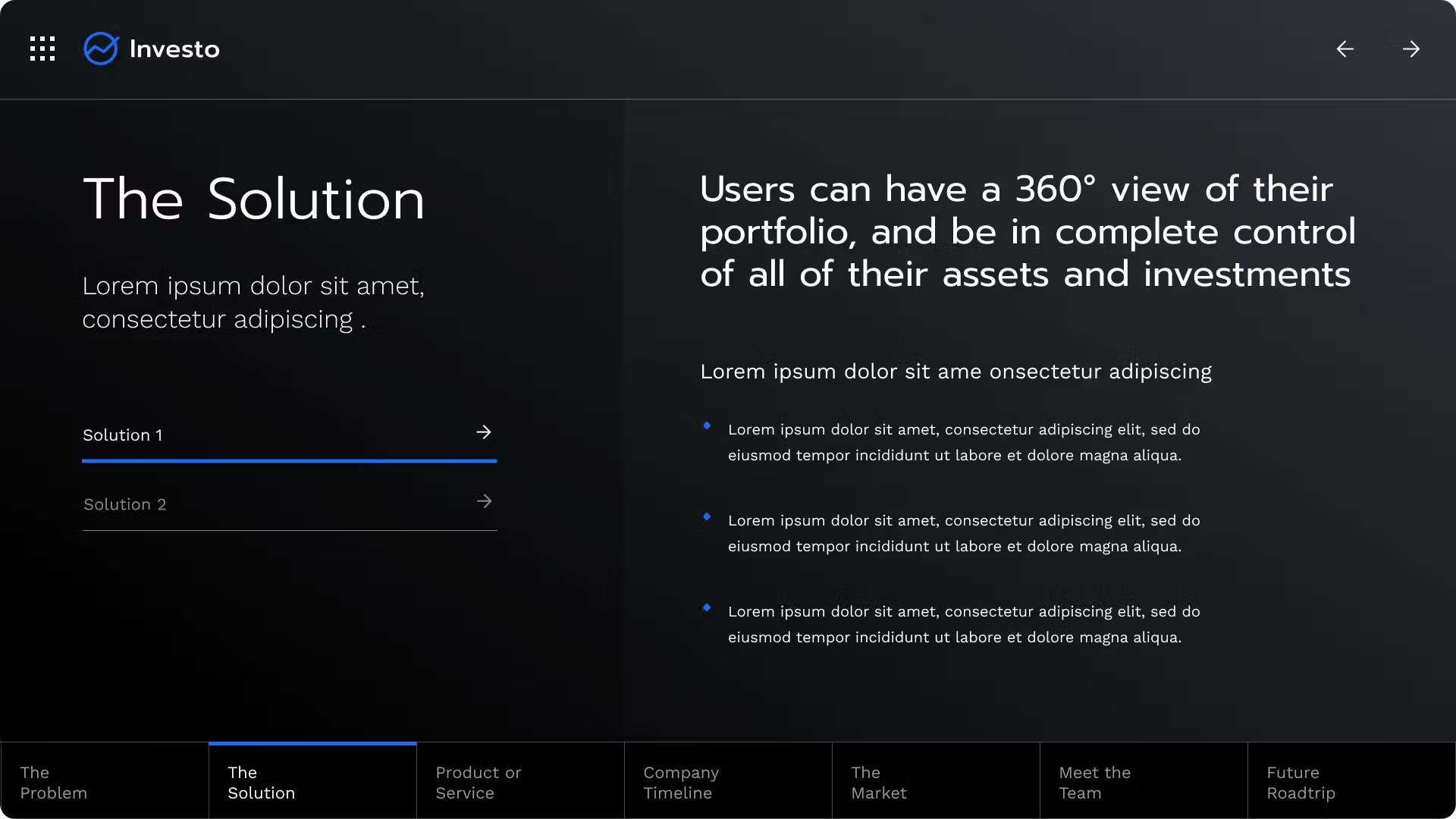
Image source: figma.com
7. Product pitch deck: Tailored for investor meetings, this deck blends storytelling and data to build trust. Use empathy mapping to understand investor needs and tailor your message. Let your product shine by demonstrating how it solves real customer problems , including visuals, prototypes, or demos instead of static screenshots.
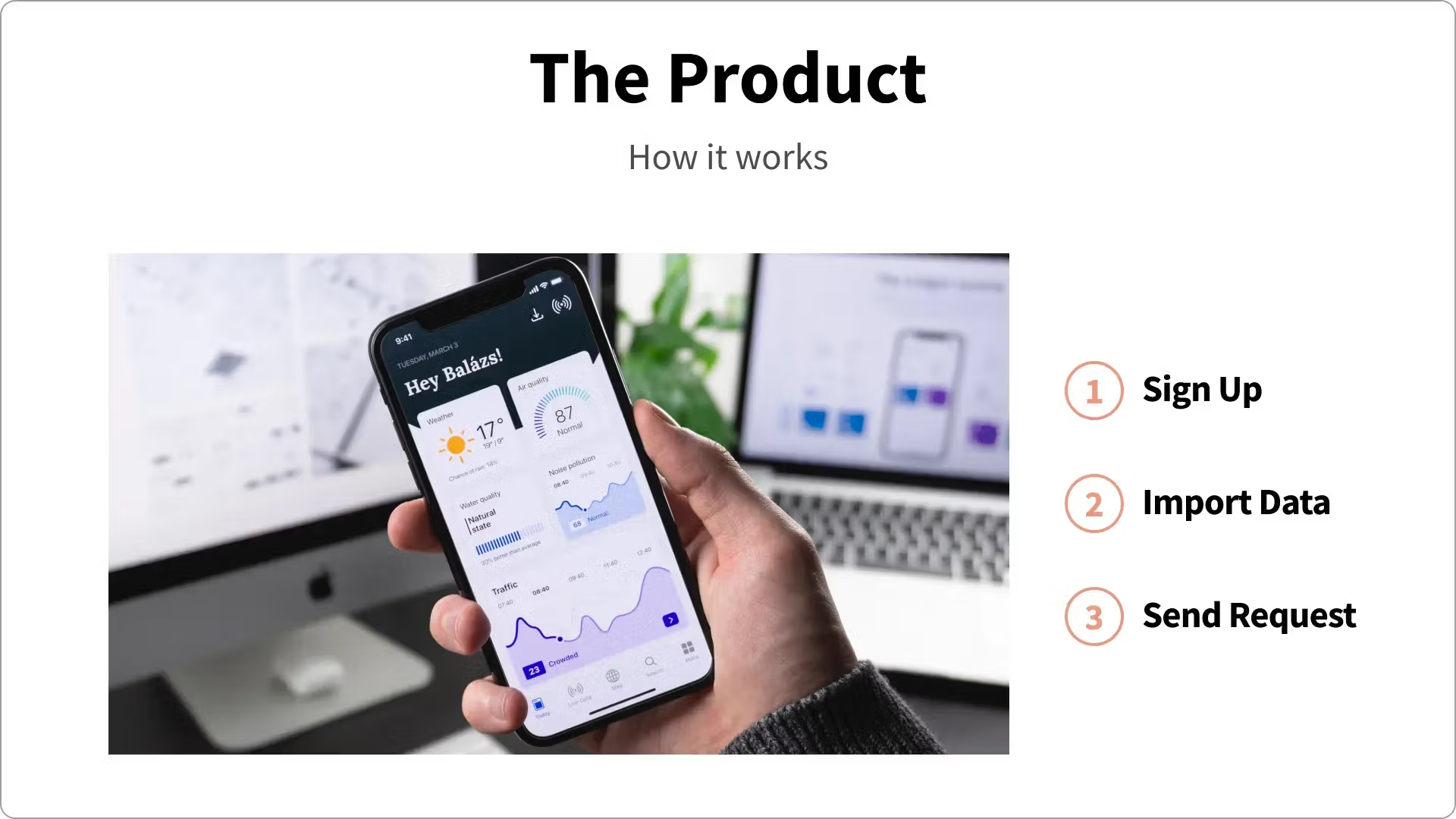
Image source: figma.com
8. Investor pitch deck: Tailored for investor meetings, this deck blends storytelling and data to build trust. Highlight your founding team and key investors to show credibility and experience. Use empathy mapping to understand investor needs and tailor your message. Showcase your company vision, traction, and growth potential.
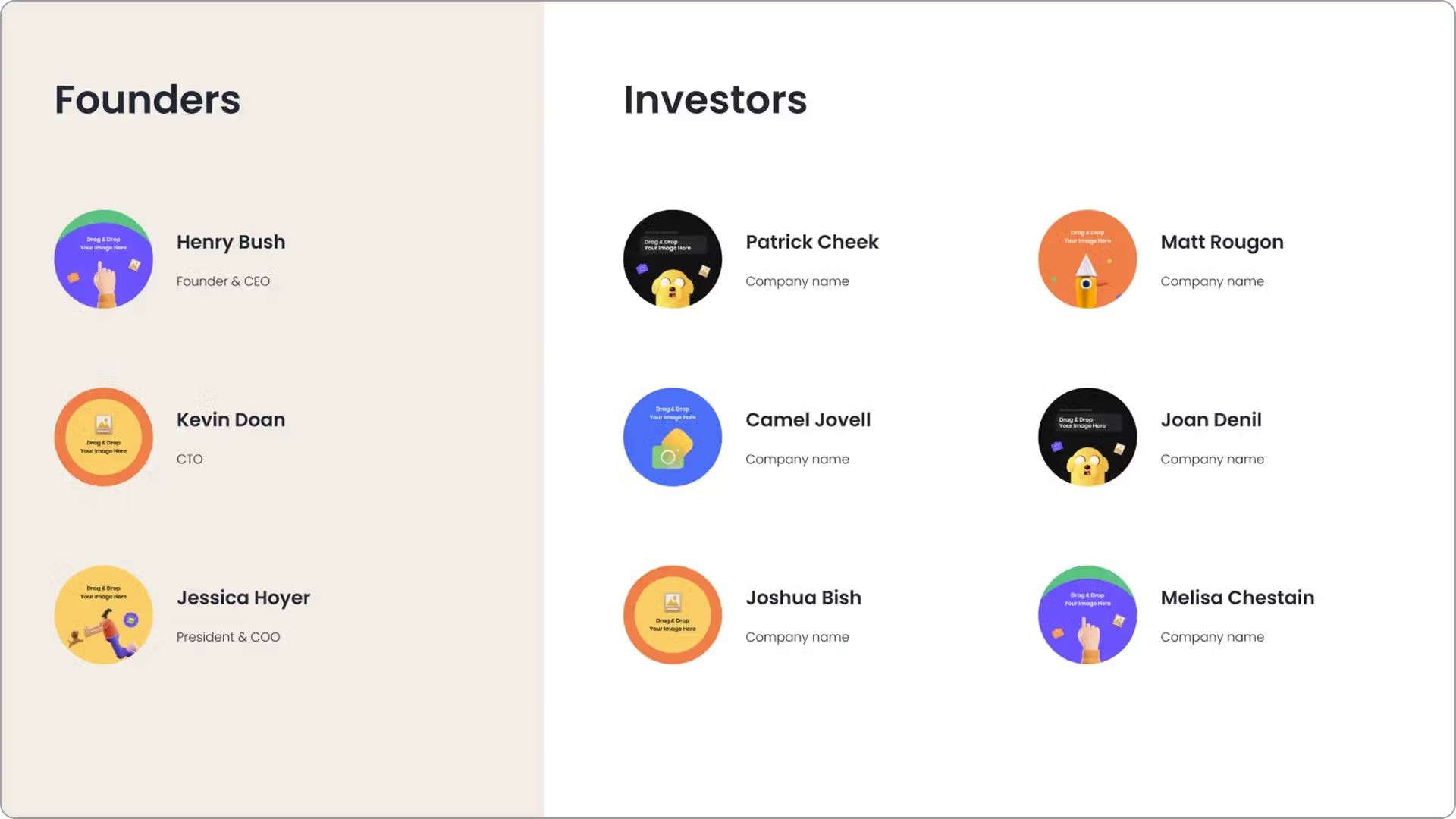
Image source: figma.com
9. Growth‑stage pitch deck: Designed for scaling companies, this deck highlights revenue growth, market expansion, and customer acquisition strategies to build investor confidence. Use charts and metrics to demonstrate traction and future potential.
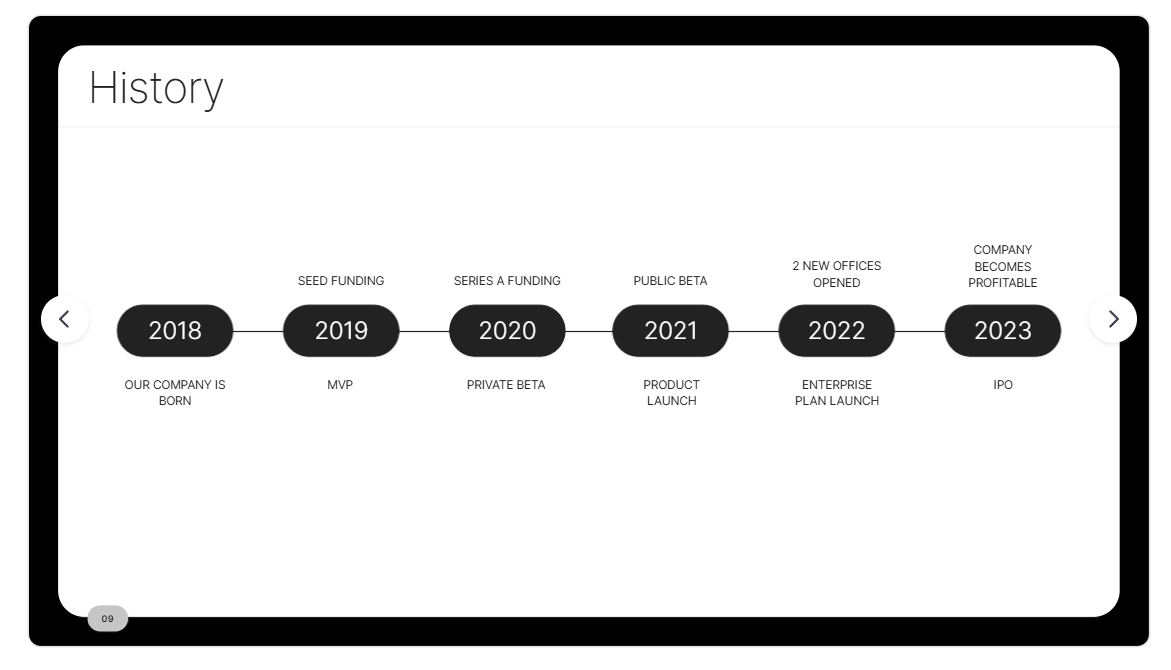
Image source: pitch.com
10. Partnership/collaboration deck: Tailored for pitching strategic partnerships or joint ventures, this deck emphasizes mutual benefits, synergies, and projected outcomes. Start by clearly outlining the shared goals and value each party brings, then showcase case studies or past collaborations to strengthen credibility.

Image source: slidesgo.com
11. Nonprofit/impact pitch deck
Created for NGOs and social enterprises, this deck blends mission storytelling with measurable outcomes to inspire donors or investors. Highlight your funding needs and projected impact to build trust, and showcase success stories, metrics, or case studies that demonstrate real-world results.

Image source: storydoc.com
12. Market research/opportunity deck
Focused on presenting market insights, trends, and opportunity analysis, this deck builds confidence in strategic decision-making. Begin by outlining key market dynamics and growth opportunities, then support your points with visuals,

Image source: slidesgo.com
Boost storytelling: What slides should a compelling pitch deck include
A great pitch deck template follows a clear and consistent story flow that helps investors quickly understand your business potential. Each slide serves a distinct purpose from showing your vision to demonstrating growth and credibility. Here's how to structure it:
- Vision: Set the tone with a bold statement that defines your startup's mission and long-term vision. This slide should make investors believe in the purpose behind your idea.
- Problem: Highlight the pain point or challenge your target customers face. Use real-world examples or data to show why this issue urgently needs solving.
- Solution: Present your product or service as the clear answer to the problem. Explain how it works, what makes it unique, and why it's the right fit for the market.
- Market size + ideal customer: Demonstrate the growth opportunity by showing total market size (TAM, SAM, SOM) and identifying who your ideal users are. A large, well-defined market shows potential for scale.
- Product demo / key features: Show your product in action through visuals, mockups, or live demos. Focus on the top three or four features that make your offering stand out from competitors.
- Business model: Explain how your company makes money. Include revenue streams, pricing model, and customer lifetime value to prove financial sustainability.
- Traction + results (KPIs): Share measurable milestones such as revenue, user growth, retention, or partnerships. This builds investor confidence that your business model works in the real world.
- Go-to-market strategy: Use the Go to Market strategy slides to describe your plan to acquire and retain customers. Include marketing channels, distribution tactics, and partnerships that accelerate growth.
- Competition slide: Compare your startup to existing players using a visual chart or grid. Highlight your unique advantages, whether in technology, pricing, or customer experience.
- Team + expertise: Introduce your founding team and key leaders. Focus on experience, skills, and achievements that prove you can execute your vision effectively.
- Financials + growth forecast: Summarise your revenue projections, cost structure, and key financial milestones. Use charts and visuals to make your numbers easy to digest at a glance.
- Investment ask + roadmap: End with a clear funding request and explain how you'll use the capital to scale. Include both short-term goals and long-term roadmap milestones that show vision and strategy.
Act on your own: Try Lark to build and refine a winning pitch
Investor conversations move fast. Slide updates, new traction data, and shifting narratives must stay aligned across your team. Lark gives founders a single workspace where pitching and preparation happen together, so the deck always reflects the latest thinking.
With Board in Lark, you can visually design your pitch deck using shapes, icons, images, lines, sections, sticky notes, and mind maps to turn complex ideas into clear, compelling visuals. Via live documents and slides, collaborate seamlessly by sharing the board, allowing team members to view, edit, or manage content together. During remote meetings, you can refine your deck with real-time feedback by posting comments, mentioning colleagues, and following collaborators' cursors as they work. With these features, you don't have to choose to switch between your toolkit, but to trust and use Lark as a productive platform.
Key features:
Lark Board: Visual collaboration for slide structure and storytelling
With Board in Lark Docs, you can design your pitch deck using a variety of elements, including shapes, icons, images, lines, sections, sticky notes, and mind maps. Collaborate seamlessly with your team by sharing the board, allowing others to view, edit, or manage the content together. Refine your deck with real-time feedback by posting comments, mentioning team members, and following collaborators' cursors as they work.
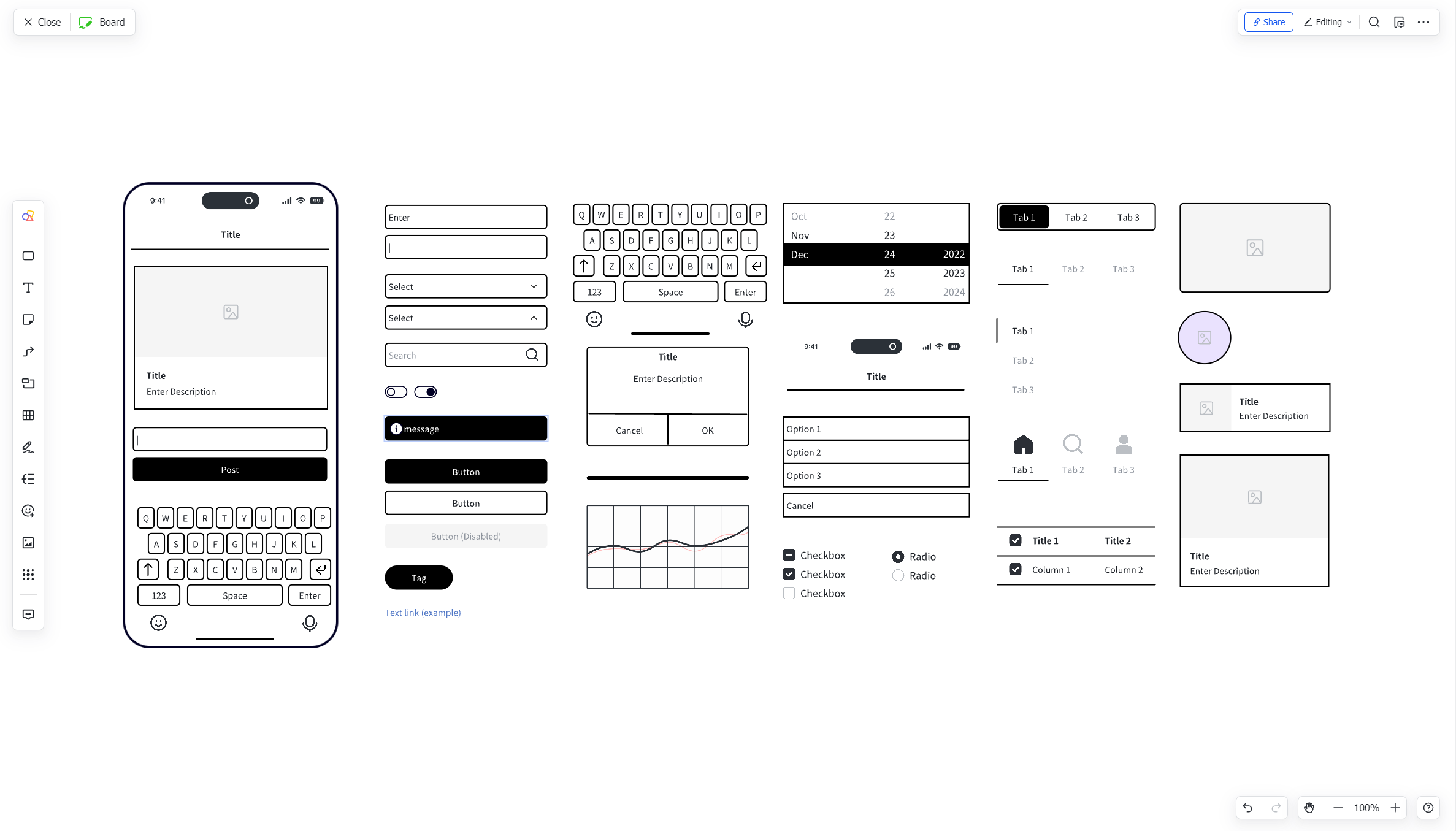
Lark Docs: Build and refine your pitch narrative together
Before slides are designed, the pitch needs a strong story. Lark Docs lets founders and teammates co-write the vision, market thesis, and financial narrative in real time without version chaos. Feedback stays anchored to exact sentences using comments and @mentions, so messaging gets sharper with every iteration. When in a meeting, the same Doc can be opened live for edits or refinements, keeping alignment fast and always current.
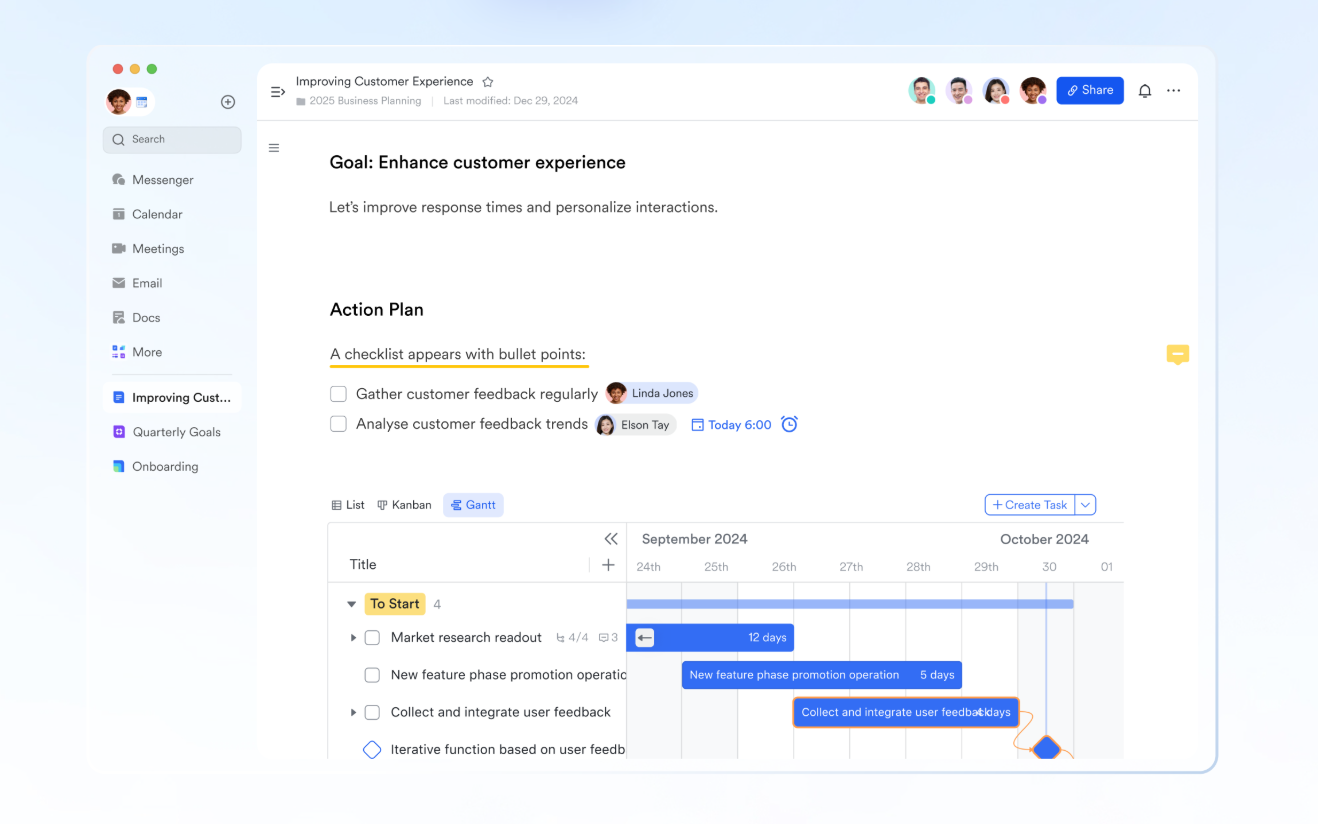
Lark Slides in Lark Docs: Craft and perfect your pitch deck collaboratively
With Lark Slides, teams can collaborate in real time, editing and commenting together seamlessly. Use ready-made templates and design tools to craft professional, investor-ready slides in minutes. Link live data from Lark Sheets to keep your charts up to date automatically. When it's time to present, share securely and present from any device with complete control over permissions.
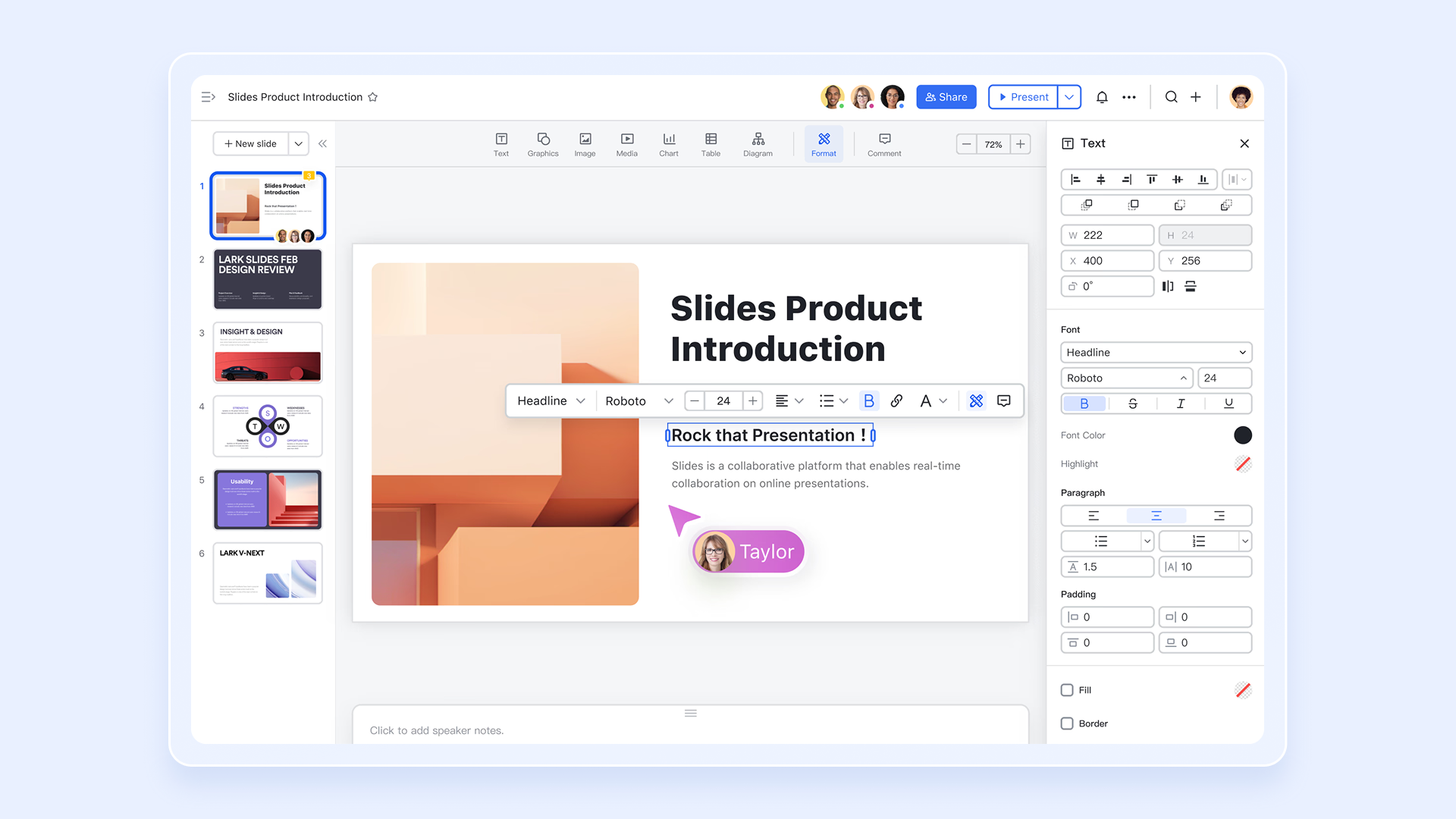
Lark Meetings: Practice, present, and improve the pitch live
Pitch refinement happens through feedback, often in meetings. Lark Meetings allows teams to open Docs or Boards directly in session, review wording, adjust visuals, and resolve comments instantly using Magic Share. No screen-share lag or "I'll email the latest file." As feedback comes in, changes are made on the spot, and teams leave with a tighter storyline and clearer delivery strategy.

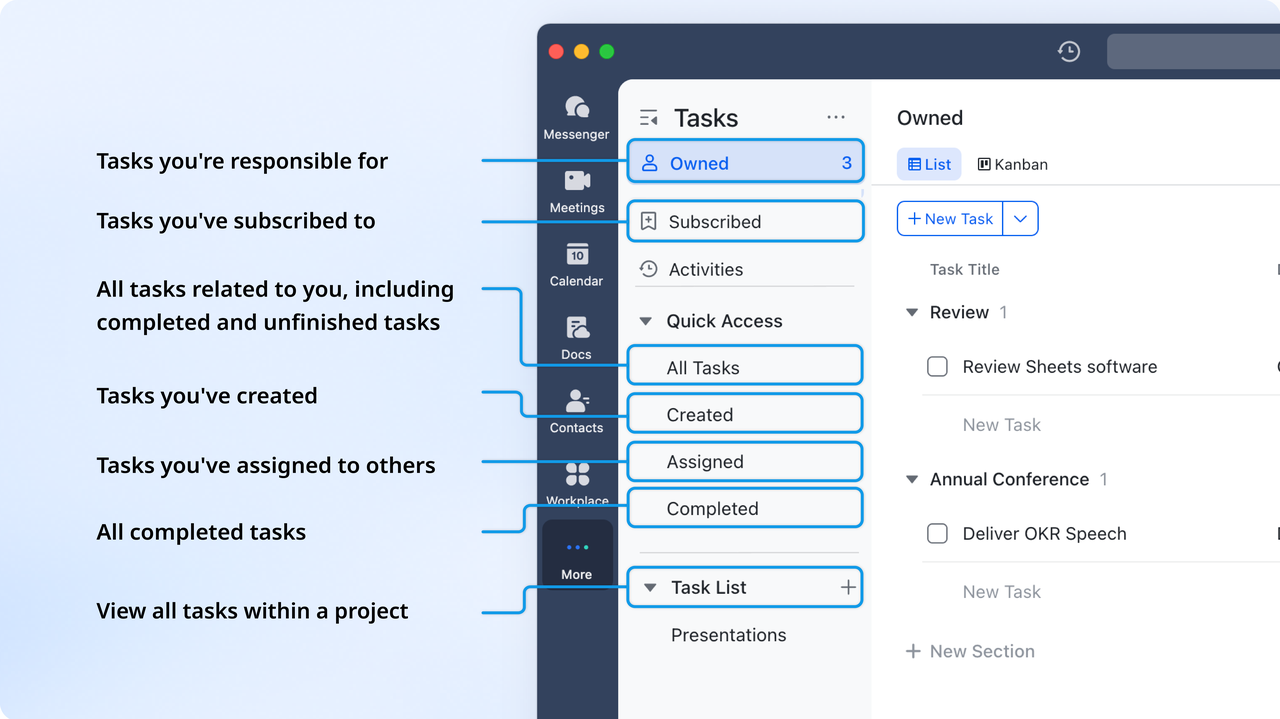
Lark Tasks: Ensure every slide update and follow-up gets done
Fundraising requires fast iterations new charts, updated metrics, customer quotes, and design polish often come with tight deadlines. Lark Tasks turns every improvement request into a clearly owned action item with due dates and reminders. Founders can track progress at a glance, ensuring nothing slips before the investor meeting. When all commitments are visible and accountable, the pitch gets sharper with every review cycle.
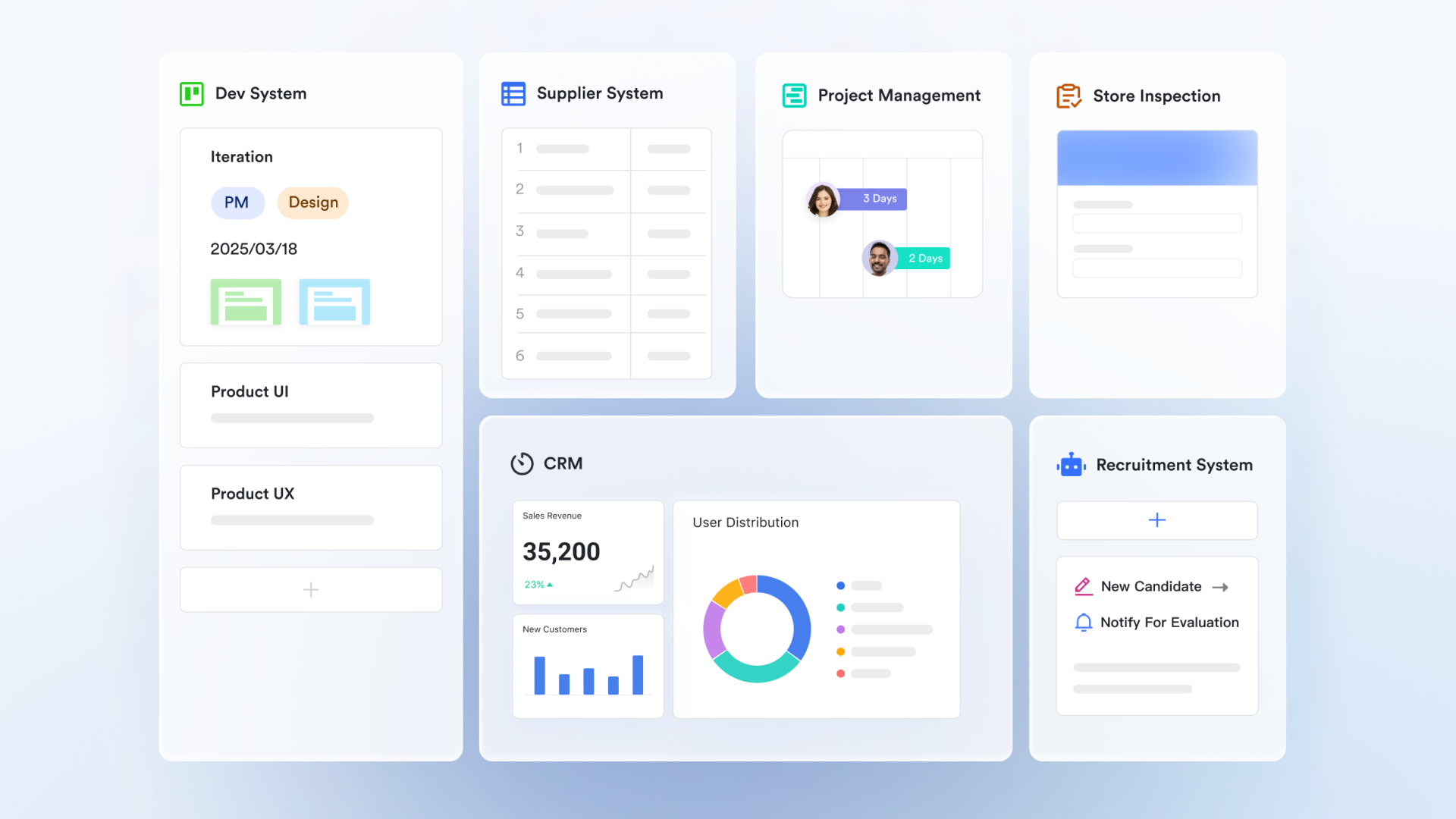
Lark Base: Organise investor pipelines and support data in one place
A winning pitch is rooted in strong proof, traction metrics, competitor benchmarks, customer insights, and financial forecasts. Lark Base keeps all these data sources connected, structured, and easily referenced while updating slides. It also helps manage your investor outreach pipeline, including who you've pitched, feedback received, deal stage, and follow-up actions. When story, data, and pipeline are aligned, founders walk into every pitch with full context and confidence.
- Starter plan: Free forever plan that includes 11 powerful tools for up to 20 users. It also comes with 100GB of storage, 1000 automation runs, AI translations, and more.
- Pro plan: $12/user/month (billed annually) for up to 500 users. It includes everything in Starter plus group calling for up to 500 attendees, 15TB of storage, 50,000 automation runs, and more.
- Enterprise plan: Contact sales for custom pricing. Supports unlimited users and includes even more automation runs and advanced security, compliance, and management features.
Ready-to-use pitch deck templates
Tech startup investment pitch
Crafting a compelling pitch for tech startup investments is crucial to attract potential investors and secure funding for your innovative venture. This template provides a structured framework to showcase your startup's unique value proposition, market potential, and growth strategy in a concise and impactful manner. Whether you're preparing for a pitch competition or seeking funding from angel investors or venture capitalists, this template will help you present your tech startup in the best possible light.
Crypto investment pitch deck
The crypto investment pitch deck template is designed to help you create a compelling presentation for potential investors. From introducing your project to showcasing the team, market overview, problem statement, solution, business model, roadmap, and closing remarks, this template covers all the essential aspects of a successful pitch deck. With detailed sections and placeholders for key content, graphs/images, talking points, action items, and additional notes, you can easily customize this template to suit your project's needs and impress investors.
Project kickoff template
Every successful project begins with a well-structured kickoff. Project kickoff template is designed to help you outline all the essential elements of your project, from objectives and stakeholders to milestones and communication plans. With Lark's advanced features, you can customize this template to suit your project's unique needs, ensuring that everyone on your team is on the same page from day one.
Project roadmap template
A project roadmap is a strategic tool that lays out the vision and direction of your product offering over time. It's a plan that applies to a new product or process, or to an emerging technology. This project roadmap template allows you to track the progress of different features of your project, their status, priority, the team responsible for them, start and end dates, milestones, and dependencies. It's a comprehensive tool that helps you keep track of all the moving parts of your project.
Pitch deck design tips to impress investors
- Use a clear visual hierarchy: Design each slide, so the main message captures attention first. Use bold titles, short bullet points, and focused visuals to emphasise what matters most. A strong hierarchy ensures your pitch deck template communicates clearly at a glance.
- Stick to one consistent design system: Choose a unified style one font family, 2–3 brand colors, and cohesive icons. Consistency builds trust and makes your presentation look polished and intentional. It also strengthens your brand identity across every slide.
- Show, don't tell: Replace long paragraphs with visuals that tell your story faster. Include product screenshots, customer flows, and traction charts for impact. Visual storytelling helps investors understand your idea without reading too much text.
- Keep slides clean and scannable: Limit each slide to a single core message. Use white space to create breathing room and make your deck feel confident and professional. Avoid clutter or excessive text blocks that overwhelm the audience.
- Use data visualization to prove traction: Show growth and success through visuals charts, graphs, or infographics. Highlight key metrics like CAC, LTV, or revenue trends clearly. Visual data gives investors quick insight into your progress and potential.
- Limit animations and transitions: Keep animations smooth, minimal, and purposeful. Use them only when they add clarity or focus attention on key elements. Overuse of effects can distract from your core message and reduce professionalism.
- Design the product story arc: Your slides should follow a logical flow problem, insight, solution, and impact. This keeps your narrative engaging and easy to follow. A story-driven pitch deck template helps investors see both logic and emotion in your pitch.
- Include real customer proof: Back your claims with testimonials, case studies, or client logos. Social proof validates your traction and builds credibility quickly. Authentic feedback or metrics show that your product already delivers value.
- Use contrast for emphasis: Contrast helps key elements stand out. Combine dark backgrounds with bold colors for headlines or data points. Effective contrast guides attention and adds visual energy without overwhelming the design.
- End with a strong ask slide: Finish with a clear funding request and a confident growth plan. Show exactly how the investment will drive results and milestones. Leave a powerful final impression that reinforces trust and clarity.
Conclusion
A great pitch deck template helps you turn complex ideas into a compelling investor story clear, confident, and data-driven. From defining your vision to showcasing traction and financials, every slide plays a role in convincing investors your startup is worth backing. But building and refining that story takes more than design tools; it requires real-time collaboration, feedback, and alignment.
That's where Lark helps teams shine. With Docs, Boards, and Tasks working together, founders can write, design, and update their decks in one workspace. No version chaos, no missed updates just faster, smarter storytelling. Start with a free pitch deck template in Lark and craft a presentation that inspires confidence from the very first slide.
FAQs
Can I make a pitch deck without a designer?
Yes, absolutely. Tools like Canva, Google Slides, or Lark pitch deck templates let you create polished presentations without design skills. Focus on clarity, strong visuals, and storytelling instead of complex graphics.
How many slides should a pitch deck have?
The ideal pitch deck template includes 10–15 slides. This is long enough to tell your story but short enough to hold investor attention. Every slide should deliver value no filler or repetition.
What's the difference between a slide deck and a pitch deck?
A slide deck is any presentation, while a pitch deck specifically aims to attract investors or partners. It focuses on business value, traction, and growth potential rather than general information.
How do I create a competition slide?
Use a simple grid or matrix comparing key competitors across relevant factors like price, features, or market fit. Highlight what sets your startup apart to make your edge instantly visible.
What tools help teams build pitch decks together?
Collaboration tools like Lark, Figma, and Google Slides allow teams to co-edit, review, and refine presentations in real time. Lark adds an extra edge with built-in Docs, Boards, and task tracking.
Related reading
Table of contents
Start using Lark today

Manage all your work in one place
Boost team efficiency by 10x
Save up to 70% on software costs
Table of contents
Start using Lark today
Manage all your work in one place
Boost team efficiency by 10x
Save up to 70% on software costs
Keep reading







2026 Lark Technologies Pte. Ltd.
Headquartered in Singapore with offices worldwide.






Explore: