














Scrum Project Management Methodology: Principles and Practices

Ryan Tanner
Product Marketing Specialist
Sep 18, 2026
Ryan Tanner
Sep 18, 2026

15 min read


The business environment, as we see today, is dependent on agility and collaboration to drive successful project outcomes. The scrum project management methodology enables teams to work iteratively, adapt to changing requirements, and deliver continuous value to stakeholders. By emphasising transparency, accountability, and regular feedback, scrum helps organizations improve both process efficiency and product quality.
With digital collaboration tools like Lark, teams can easily align communication, task tracking, and sprint planning in one space, making the practical application of scrum more streamlined and effective across departments and projects.

What is the scrum project management methodology?
The scrum project management methodology is an agile framework that enables teams to manage complex projects through iterative cycles called sprints. It emphasizes collaboration, flexibility, and continuous improvement to deliver value quickly and efficiently. Unlike traditional project management, scrum focuses on short development cycles, regular feedback, and adaptive planning.
Teams work in defined roles—product owner, scrum master, and the development team—to ensure accountability and transparency. Widely used beyond software development, the scrum methodology in project management helps organizations respond effectively to change while maintaining consistent progress toward their goals.
Core principles of the scrum methodology
At the heart of the scrum project management methodology is a set of guiding principles that shape how teams plan, execute, and refine their work. These principles ensure that projects remain transparent, adaptive, and customer-focused. When applied effectively, they help organizations overcome rigid hierarchies and foster a culture of continuous improvement—a hallmark of modern project management scrum methodology.
- Transparency: Transparency ensures all team members understand project goals, progress, and challenges. In the scrum methodology in project management, clear roles and open communication foster alignment. Using Lark Docs, Wiki, and Base, teams can track and share updates in real time for complete visibility.
- Inspection: Regular inspection helps identify issues early and refine ongoing work. Through daily scrums, sprint reviews, and retrospectives, teams assess progress and adjust accordingly. With Lark Base and Calendar, inspection becomes a continuous, data-driven process.
- Adaptation: Adaptation allows teams to respond quickly to changing priorities and feedback. After each sprint review, adjustments are made to tasks or goals for better outcomes. Lark's collaborative tools enable instant updates, ensuring teams remain agile and aligned.
- Focus on customer value and collaboration: The scrum project management methodology prioritizes customer satisfaction through iterative delivery. Cross-functional collaboration ensures shared ownership of results and product quality. With Lark, teams stay connected and focused on delivering real value every sprint.
How the scrum methodology works step by step
The scrum project management methodology follows a structured, iterative process that promotes adaptability and continuous delivery. Each stage builds upon the last, ensuring that teams plan effectively, communicate openly, and deliver tangible results at the end of every sprint. These steps reflect the rhythm of the project management scrum methodology, turning goals into actionable outcomes.
Step 1: Create and prioritize product backlog
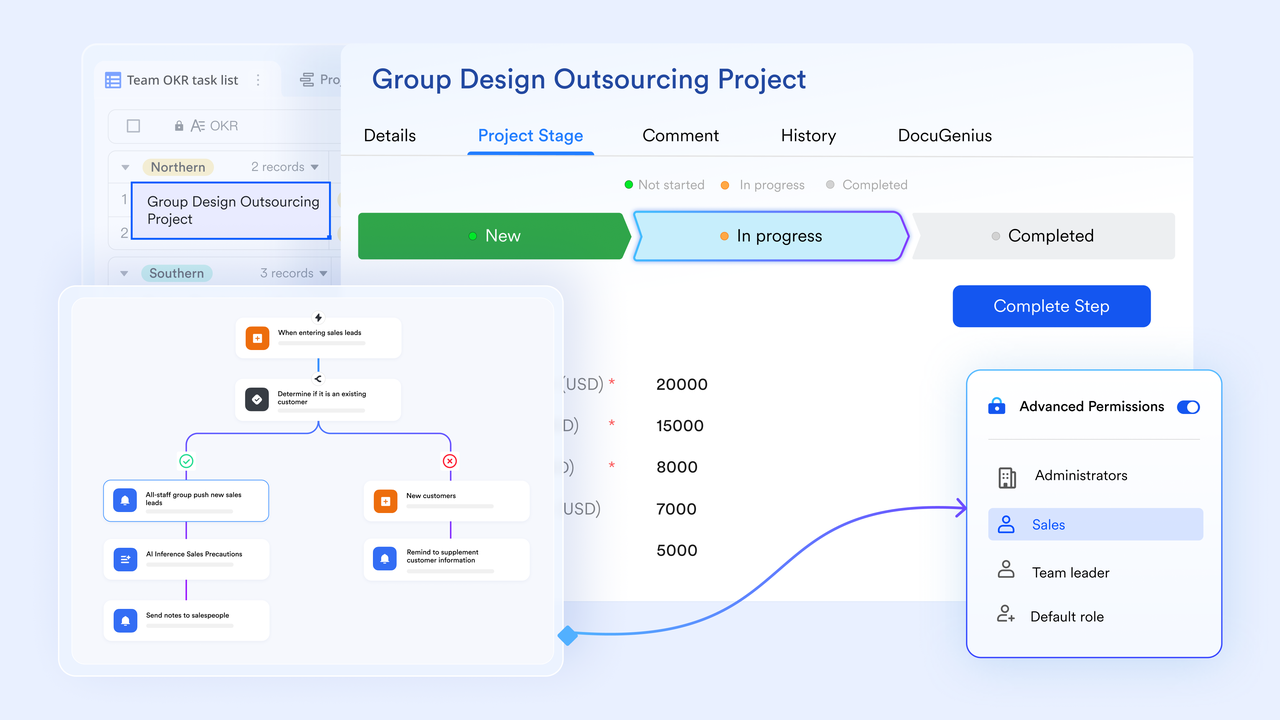
The Product Owner compiles all project requirements, features, and improvements into a product backlog. This dynamic list is prioritized based on business goals and customer value. In Lark Base, teams can easily organise and reorder tasks, keeping the backlog transparent and up to date.
Step 2: Plan the sprint and assign tasks
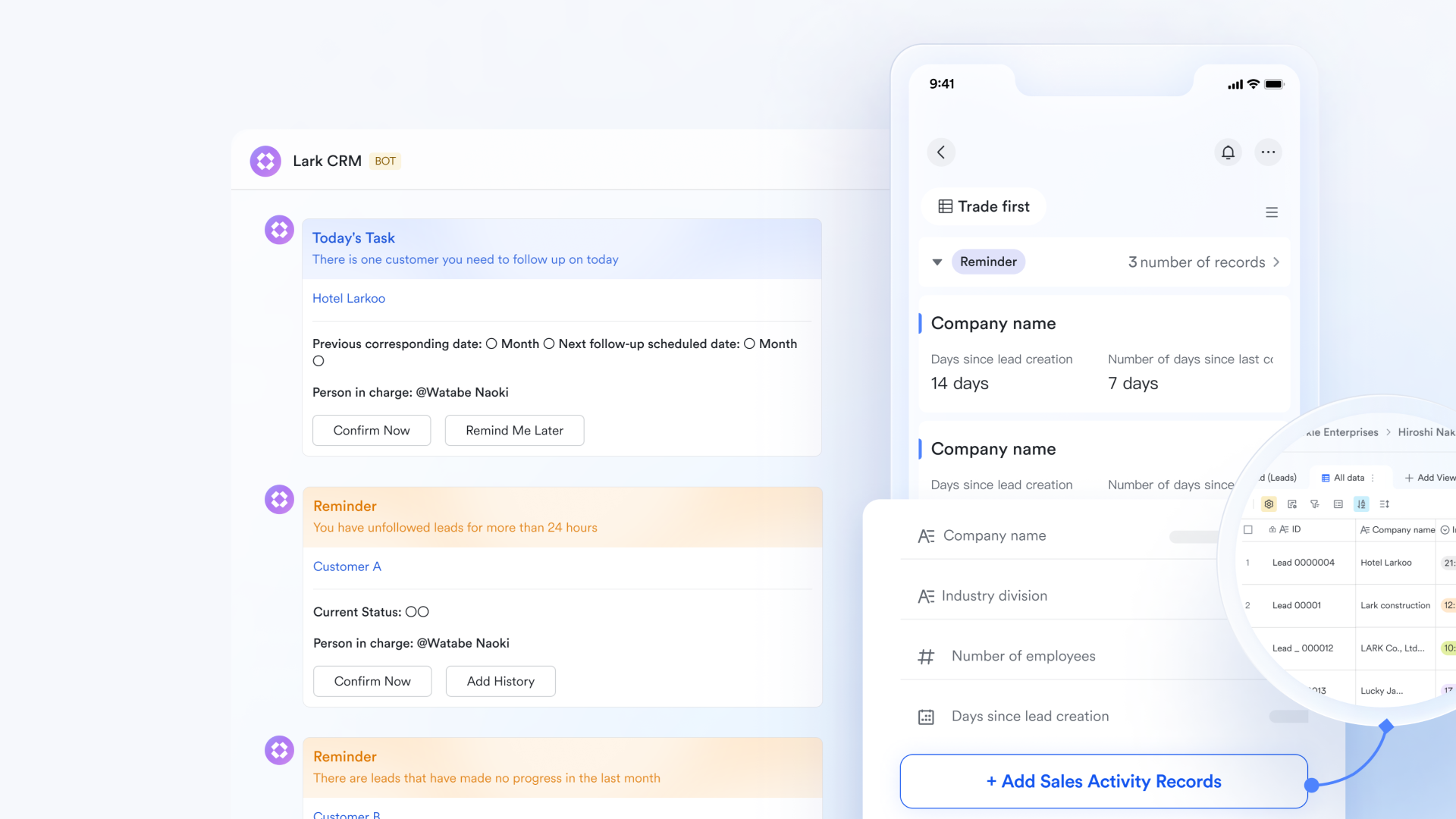
During sprint planning, the team selects top-priority backlog items to complete in the next cycle. Tasks are defined, estimated, and assigned based on team capacity. With Lark Tasks and Calendar, scheduling and responsibility tracking become seamless and visible to everyone.
Step 3: Hold daily scrums for progress updates
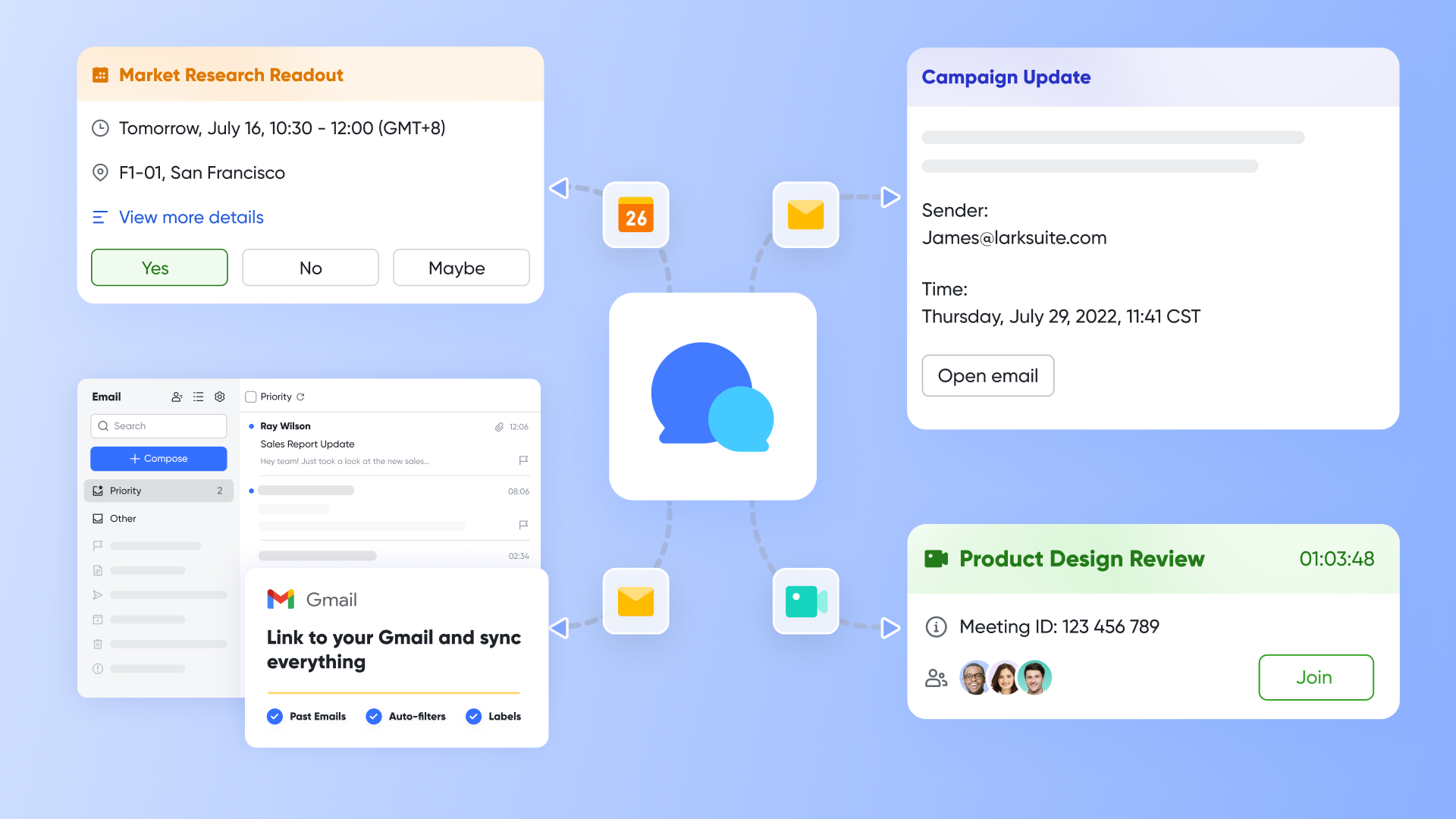
Daily scrums (also known as stand-ups) are brief meetings where team members share updates, challenges, and next steps. These quick check-ins maintain alignment and accountability. Using Lark Messenger and Meetings, teams can hold daily scrums effectively, even across remote or hybrid setups.
Step 4: Deliver increment at the end of sprint
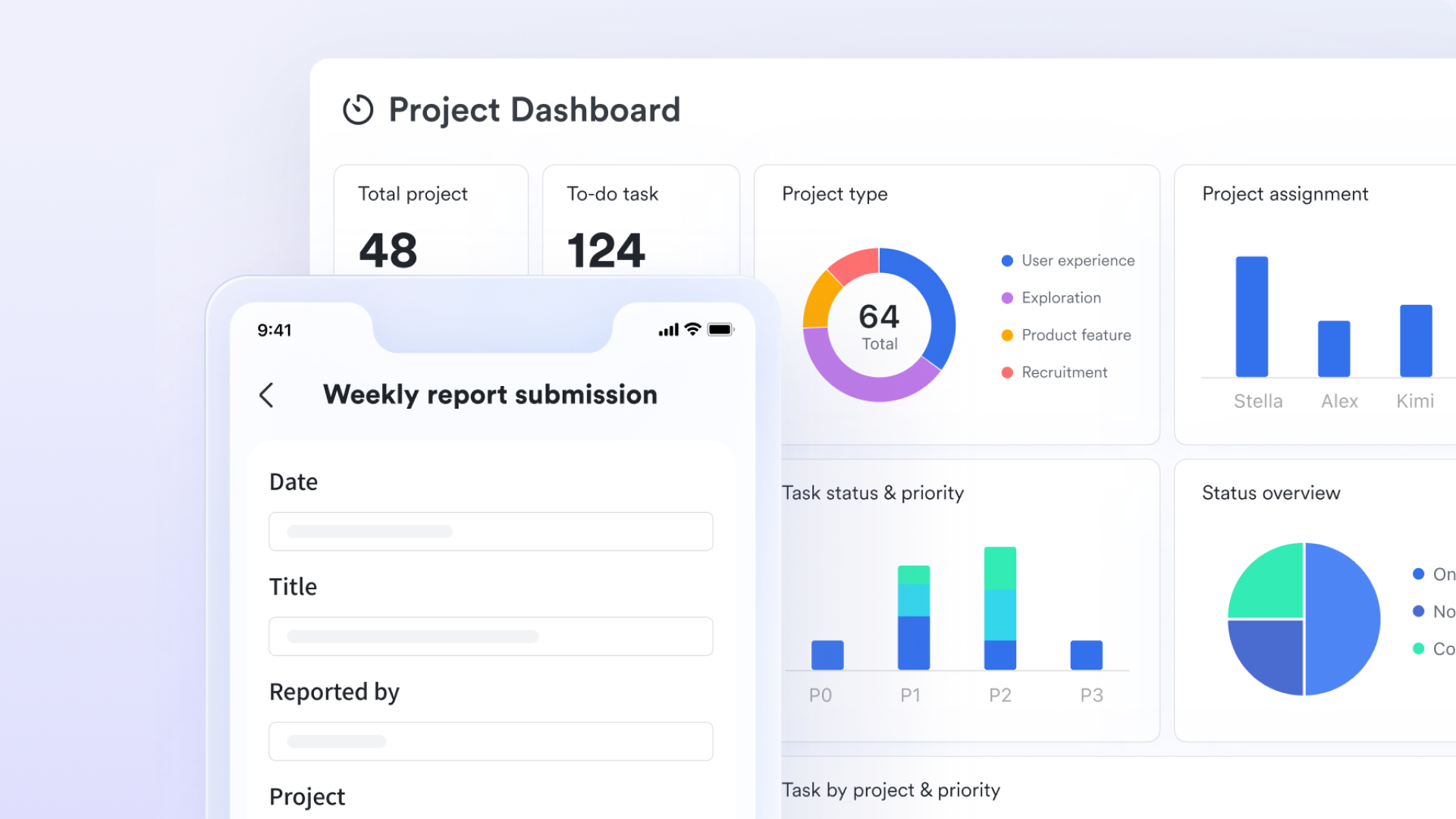
At the end of each sprint, the team delivers a potentially shippable product increment, a working piece that adds real value. This ensures consistent progress and regular validation of work done. In Lark Base, teams can visualize completion rates and report outcomes instantly.
Step 5: Conduct sprint review and retrospective
After delivering the increment, the team holds a sprint review to demonstrate results and gather feedback, followed by a retrospective to reflect on process improvements. These sessions foster learning and transparency. With Lark Docs and Wiki, reflections and insights are recorded for continuous growth.
Roles in scrum methodology
The scrum project management methodology defines clear roles to ensure collaboration, accountability, and alignment throughout the project lifecycle. Each role serves a distinct purpose within the project management scrum methodology, helping teams maintain focus, ownership, and flexibility without relying on traditional hierarchies.
- Product Owner: The product owner manages the product backlog, sets priorities, and represents stakeholder interests. They ensure that every sprint delivers features that create customer value and align with business goals. With Lark Base, Product Owners can easily organize, rank, and update backlog items for complete visibility.
- Scrum Master: The scrum master facilitates team activities, removes roadblocks, and ensures that scrum principles are followed consistently. Acting as a coach rather than a manager, they help the team stay focused and self-organized. Using the Lark Calendar and Messenger, scrum masters can streamline meetings and improve communication flow.
- Development Team: The development team is a cross-functional group responsible for delivering a working product increment at the end of each sprint. Team members collaborate closely, share skills, and take ownership of results. Through Lark Tasks and Docs, they can coordinate work efficiently and document progress transparently.
- Distinction: Unlike traditional project management, where one manager controls planning and execution, scrum distributes responsibilities across all roles. This shared accountability fosters empowerment, faster decision-making, and adaptability—key features of the scrum methodology in project management drive modern team success.
Challenges in applying scrum methodology and how Lark helps overcome
The scrum project management methodology offers agility and adaptability, but implementing it effectively requires more than following the steps. It demands a cultural and structural shift. Teams transitioning from traditional models often face hurdles in maintaining discipline, clarity, and coordination. Recognizing these challenges helps organizations apply the scrum methodology in project management more effectively and avoid common pitfalls.
- Requires cultural adoption across the team: Scrum depends on trust, collaboration, and shared ownership—values that may not exist in every organization's culture. Teams used to hierarchical structures might struggle with self-organization and decision-making. This change requires time, consistent coaching, and leadership support. For example, shifting from "manager approvals" to team-led sprint planning can feel unfamiliar initially.
- May feel chaotic without discipline: While the project management scrum methodology encourages flexibility, too much freedom without structure can lead to confusion. Missing sprint reviews or unclear roles may create overlaps and delays. Teams must maintain disciplined communication and documentation to stay aligned. For instance, skipping daily stand-ups often results in missed dependencies and rework.
- Needs clear backlog management: A well-maintained product backlog is the backbone of effective scrum implementation. Without regular updates or prioritization, teams lose focus on delivering high-value items. Mismanaged backlogs can cause bottlenecks and misaligned objectives. For example, unclear user stories may force developers to make assumptions, affecting sprint outcomes.
- Hard to scale across very large enterprises: Scaling the scrum methodology project management framework across large organizations introduces complexity in coordination and communication. Multiple scrum teams working on interconnected products may struggle with alignment. Challenges arise in synchronizing sprint cycles and managing dependencies. For instance, a delay in one team's deliverables can impact several others downstream.
Manage with ease: Try Lark as your scrum methodology hub
Lark is a platform using project databases, task management, real-time messaging, video meetings, and collaborative documents in one workspace. For teams adopting the scrum project management methodology, these tightly connected project management tools reduce context switching, make artefacts (backlog, sprint boards, docs) single-source-of-truths, and keep communication threaded to work—all of which improve cadence, visibility, and delivery predictability.
Lark Base for Scrum: Streamlining tasks, sprints, and collaboration
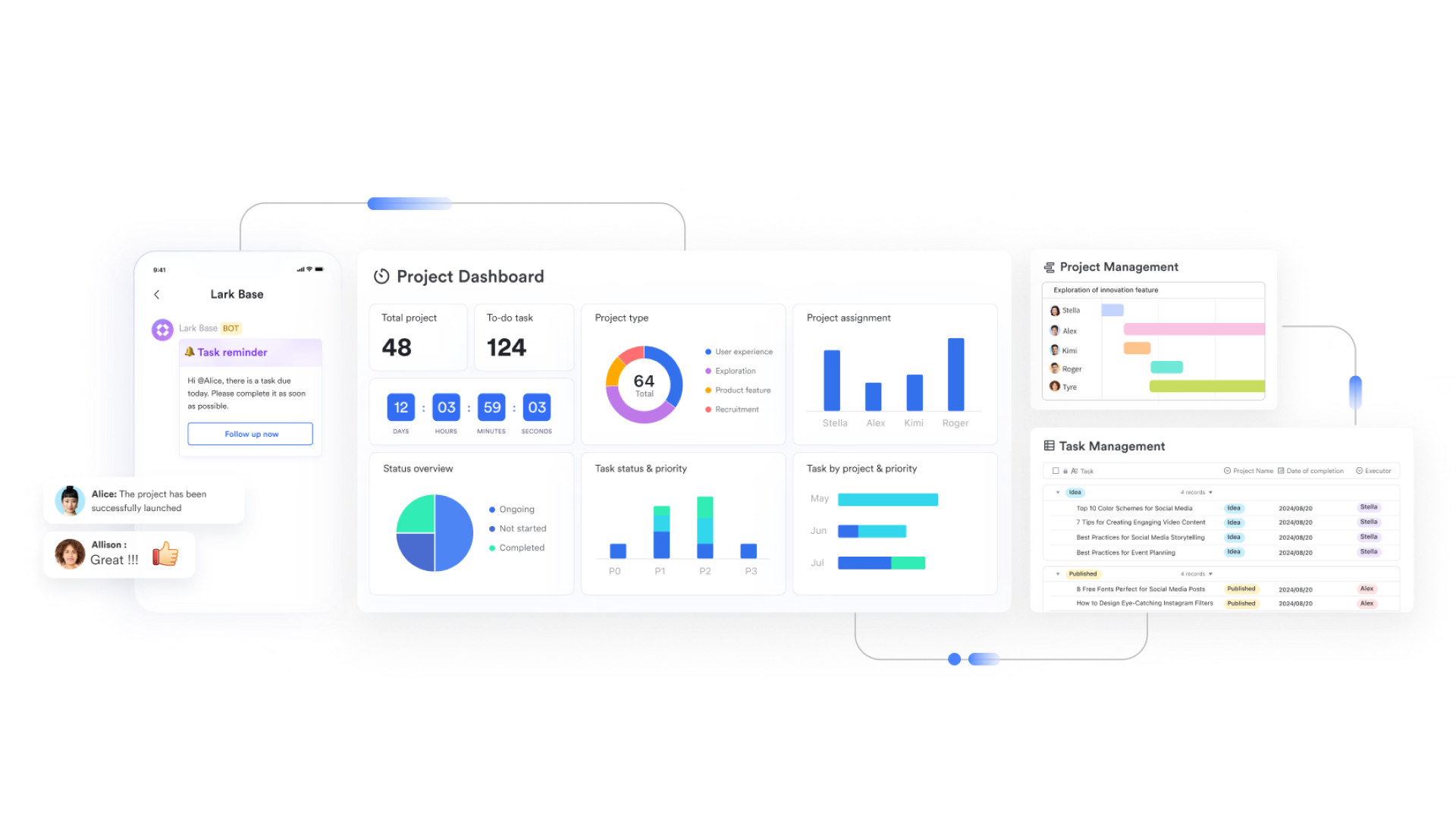
Lark Base acts like a flexible, visual database where you build your product backlog, sprint boards, and custom views (kanban, list, calendar). It stores user stories, acceptance criteria, estimates, owners, dependencies, and status fields in structured records.
Key implications:
- Backlog hygiene: Product owners keep a prioritized backlog in Base; when a new user story arrives, they create a record with priority, effort estimate, and link to related docs. The team can filter by priority/epic to prepare sprint candidates.
- Sprint board and WIP control: During sprint planning, the PO and team move chosen backlog records into a sprint view (kanban). Columns (To Do / In Progress / Blocked / Done) give a live snapshot of sprint health.
- Dependencies & blocking: Add a "blocked by" field and link records—when a blocker is set, automated notifications (or views filtered for blocked items) surface it to the scrum master immediately.
- Reporting & metrics: Use saved views to quickly show sprint burndown, completed story points, or scope changes during sprint reviews.
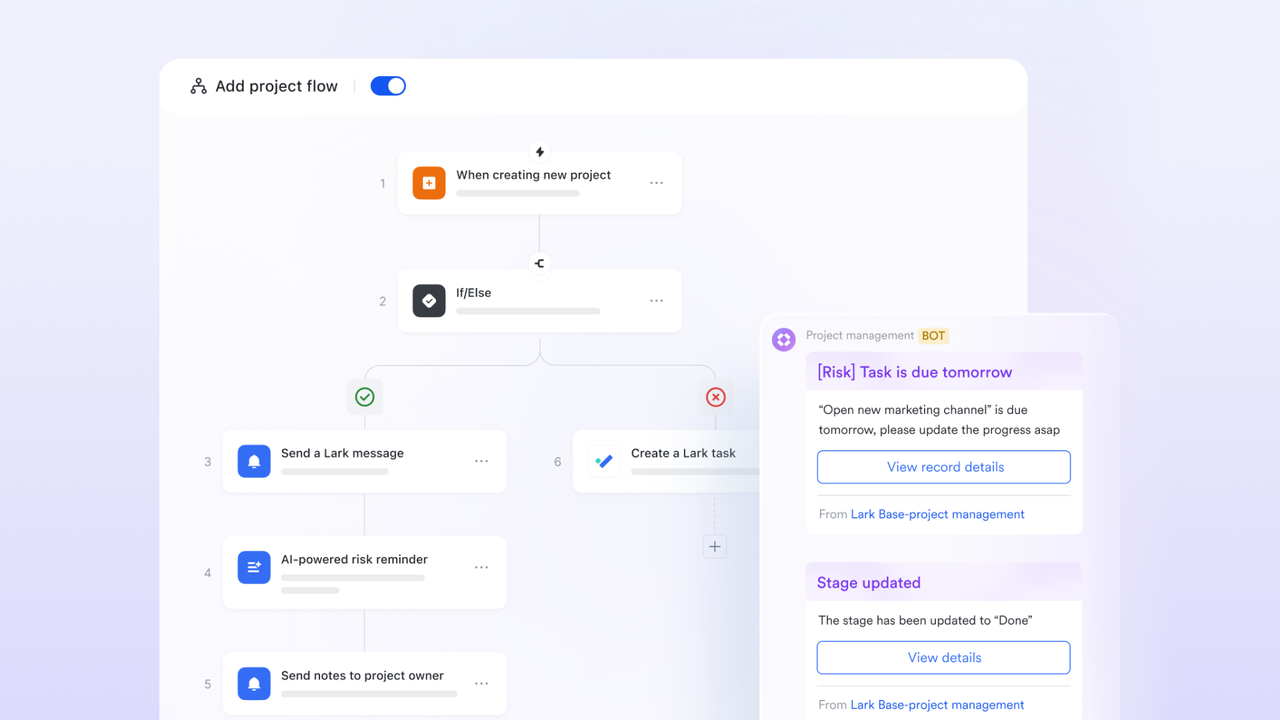
- Automations: Lark's automation reduces manual steps: automatic status changes, notifications when fields change, recurring reminders for stand-ups, or approval flows for deployment. Automation enforces the process without adding overhead.
Lark Tasks + Lark Calendar: Smarter scheduling for scrum teams
Lark Tasks is where team members see assigned work, sub-tasks, and due dates. Calendar ties those tasks to time—sprint start/end, planning meetings, demos. Together, they convert backlog items into timeboxed commitments.
Key implications:
- Capacity planning: Before sprint planning, team members update availability in Calendar; the Scrum Master and PO compare capacity against estimated story points in Base and avoid over-committing.
- Timeboxing ceremonies: Schedule sprint planning, daily stand-ups, reviews, and retros in Calendar and attach the sprint board and agenda. This keeps cadence predictable and reduces meeting churn.
- Owner accountability: When a backlog item is pulled into the sprint, the corresponding Task is created and assigned with sub-tasks (design, dev, QA). Owners update status, so the Scrum Master has an accurate progress view without chasing people.
- Cross-functional coordination: Calendar invites include relevant Docs and Base links, so stakeholders have context before reviews or demos.
Lark Messenger + Lark Meetings: Daily stand-ups, simplified
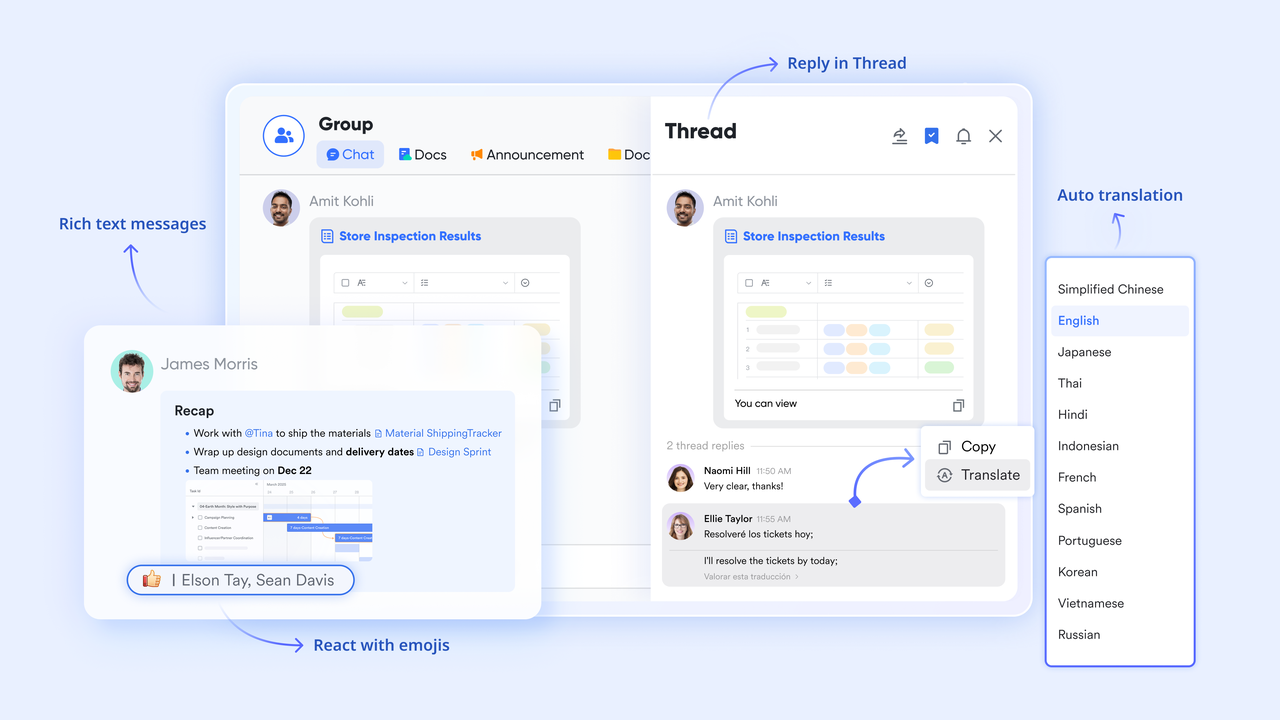
Lark Messenger supports quick async updates, threaded conversations, and channels for teams or epics. Meetings provides scheduled video calls with screen sharing and recording for demos, reviews, or remote retros.
Key implications:
- Daily scrums (hybrid-ready): Teams run a 15-minute daily stand-up by either a short video check-in or a focused Messenger thread where each member posts yesterday/today/blockers. The record of each stand-up stays searchable for new members.
- Sprint reviews & demos: Use Meetings to demo the increment; record the session and attach the recording to the sprint's Base record for stakeholders who couldn't attend. This preserves context and feedback.
- Async stakeholder updates: For distributed stakeholders, post a concise demo summary and key feedback on a channel with links to the increment and backlog items. This reduces meeting overload while keeping engagement.
- Rapid blocker resolution: When someone marks a task blocked, they @mention the relevant person or channel in Messenger; the Scrum Master can triage faster than relying on emails.
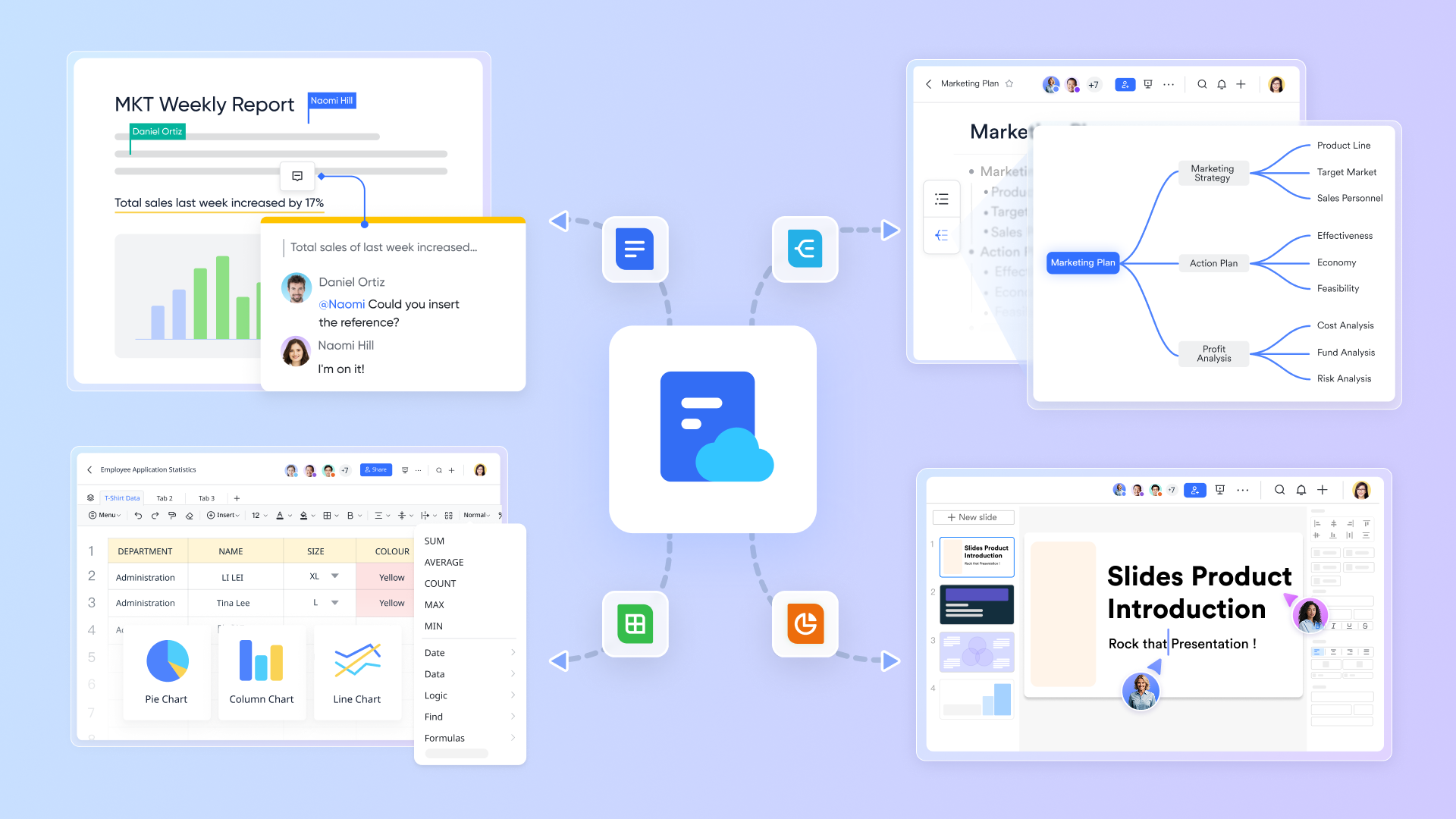
Lark Docs + Lark Wiki: Build your team's scrum knowledge hub
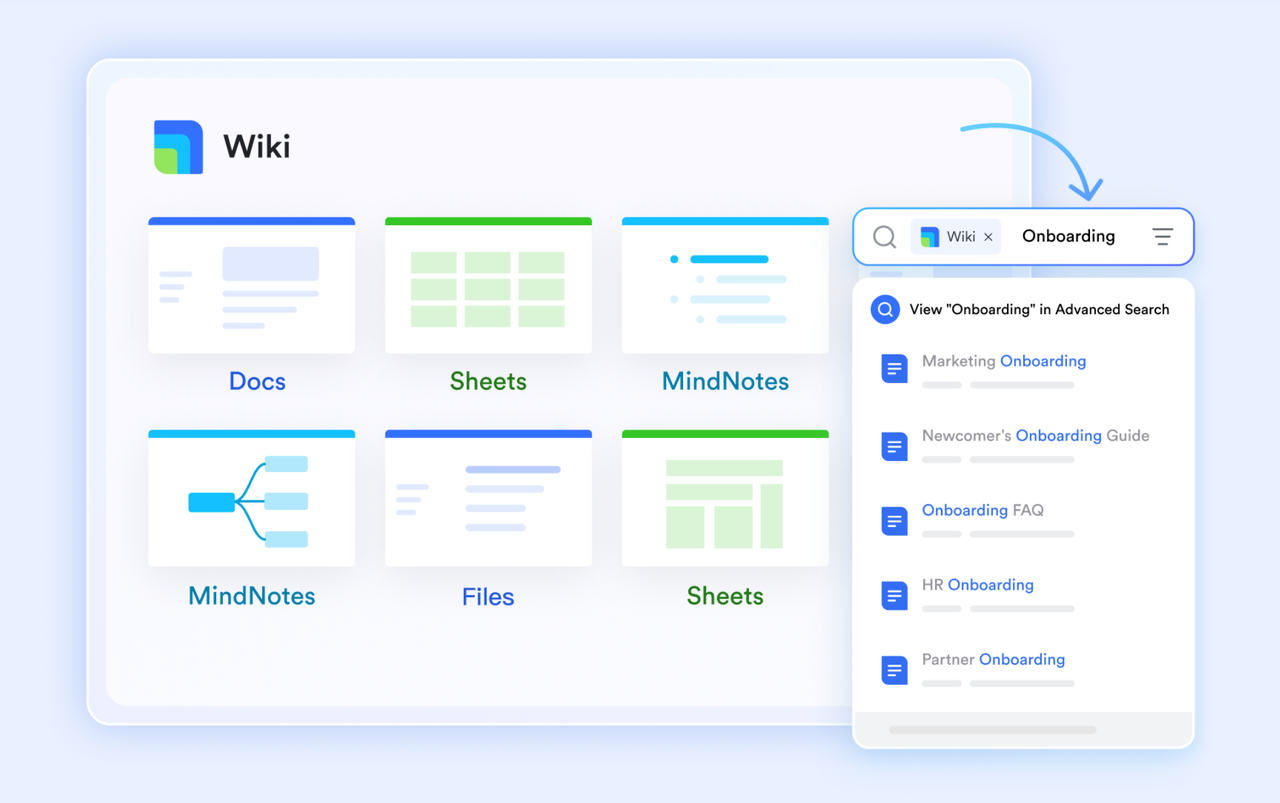
Docs are collaborative, editable artefacts (user research, specs, retrospective notes). Lark Wiki organizes those Docs into a structured knowledge base (definition of done, sprint playbooks, onboarding). Both make tacit knowledge explicit.
Key implications:
- Acceptance criteria & design specs: Attach or embed spec Docs to backlog items in Base. Developers and QA refer to the same living specification, reducing rework.
- Retrospectives & action tracking: Document retro notes, list improvement items, and convert selected action items into Tasks linked to the next sprint’s Base records. Over time, the Wiki surfaces recurring themes (e.g., CI flakiness).
- Onboarding and norms: New team members read the sprint workflow, Definition of Done, and QA checklist in the Wiki—shortening ramp-up time and ensuring consistency.
- Traceability: Decisions and rationales stay attached to work items, so when a stakeholder asks "why did we deprioritize X?" the PO can link to the decision doc.
- Starter plan: Free forever plan that includes 11 powerful tools for up to 20 users. It also comes with 100GB of storage, 1000 automation runs, AI translations, and more.
- Pro plan: $12/user/month (billed annually) for up to 500 users. It includes everything in Starter plus group calling for up to 500 attendees, 15TB of storage, 50,000 automation runs, and more.
- Enterprise plan: Contact sales for custom pricing. Supports unlimited users and includes even more automation runs and advanced security, compliance, and management features.
Advantages of scrum methodology
The scrum project management methodology offers several advantages that make it one of the most effective approaches for modern, fast-paced organizations. By emphasizing collaboration, adaptability, and customer value, the scrum methodology in project management helps teams deliver high-quality outcomes faster. It encourages continuous feedback, promotes ownership, and enables teams to adapt smoothly to evolving goals or challenges.
- Early and continuous delivery of value: The project management scrum methodology focuses on short, iterative sprints that deliver usable increments regularly. This ensures stakeholders see progress early and receive value continuously rather than waiting until the project's end. With tools like Lark Base, teams can track deliverables and share outcomes transparently at every stage.
- Stronger stakeholder engagement: Frequent reviews and open communication are core to the scrum methodology in project management, keeping stakeholders involved throughout the process. Regular feedback sessions foster trust, align expectations, and ensure the final product meets real-world needs. Using Lark Meetings and Messenger, collaboration and engagement remain seamless across teams and clients.
- Faster identification of issues: Daily scrums, sprint reviews, and retrospectives help teams spot issues early, reducing risks and delays. This proactive approach allows for quick course correction and better decision-making. With Lark Base's dashboard and progress tracking, potential problems are visible instantly, ensuring timely resolutions.
- Encourages continuous learning and improvement: The scrum project management methodology promotes a culture of reflection and growth through recurring retrospectives. Teams assess what worked, what didn't, and how to improve next time. Lark Docs and Wiki make it easy to document insights, helping organizations build a continuous learning environment.
- Adaptable to complex or changing requirements: Scrum thrives in dynamic environments where requirements evolve frequently. Its iterative structure allows teams to pivot quickly without losing direction or productivity. Using Lark Base and Tasks, teams can reprioritize work instantly, ensuring the scrum methodology project management process remains flexible and responsive to change.
Conclusion
The scrum project management methodology represents an iterative, customer-centred, and collaborative approach that empowers teams to deliver continuous value. By fostering transparency, adaptability, and shared ownership, scrum helps organizations respond effectively to evolving business needs and stakeholder feedback.
Implementing this framework becomes far smoother with Lark, where backlog management, sprint planning, communication, and documentation come together in one workspace. This unified ecosystem enables teams to stay aligned, track progress in real time, and scale agile practices effortlessly, making the scrum methodology in project management both practical and powerful for today’s dynamic work environments.
FAQs
How is scrum methodology different from Agile?
Agile is a broad philosophy that emphasizes flexibility, collaboration, and customer-centric development, while scrum methodology is a specific framework within Agile that provides structured roles, events, and artifacts. Scrum defines how teams plan, execute, and review work in short, iterative sprints. In essence, all scrum is Agile, but not all Agile practices follow scrum.
What are the roles defined in scrum methodology?
The scrum project management methodology defines three core roles—the Product Owner, Scrum Master, and Development Team. The Product Owner prioritizes work and manages the backlog, while the Scrum Master ensures the process runs smoothly. The Development Team executes the tasks and delivers increments during each sprint.
When should I use scrum methodology vs Waterfall?
Use the scrum methodology in project management when requirements are likely to evolve and frequent feedback is needed, such as in software or product development. The Waterfall model works best for projects with fixed scopes and clear, sequential phases like construction or compliance-based work. Scrum suits dynamic, iterative environments, while Waterfall suits stable, predictable ones.
Can small businesses apply scrum methodology?
Yes, small businesses can greatly benefit from scrum methodology project management because it supports adaptability and rapid feedback cycles. It allows lean teams to prioritize effectively, respond to market changes, and deliver continuous value. Even with fewer resources, scrum helps maintain focus and accountability.
How does scrum methodology help in product development?
The scrum project management methodology accelerates product development by breaking work into smaller, testable increments. Each sprint enables early feedback, reducing risk and aligning outcomes with customer needs. It also fosters collaboration between cross-functional teams, improving product quality and delivery speed.
How does Lark make scrum methodology easier to implement?
Lark unifies tools like Base, Tasks, Calendar, Docs, and Messenger to support every stage of the scrum methodology in project management. Teams can manage backlogs, track sprints, communicate updates, and document learnings all in one place. This setup eliminates silos and streamlines collaboration, making scrum adoption smooth and scalable.
Related reading
Table of contents
Start using Lark today

Manage all your work in one place
Boost team efficiency by 10x
Save up to 70% on software costs
Table of contents
Start using Lark today
Manage all your work in one place
Boost team efficiency by 10x
Save up to 70% on software costs
Keep reading







2026 Lark Technologies Pte. Ltd.
Headquartered in Singapore with offices worldwide.






Explore: