














10 Best 3PL Warehouse Systems to Support Logistics

Ryan Tanner
Product Marketing Specialist
Sep 18, 2026
Ryan Tanner
Sep 18, 2026


Key takeaways: 3PL inventory management system

How a 3PL warehouse management system works
- Receiving and put-away: In a 3PL warehouse system, receiving begins with verifying incoming shipments, scanning items, and matching them to client records. The system assigns optimal storage locations based on item type, turnover rate, and space availability. Put-away instructions guide staff or automation tools to store products quickly while maintaining real-time inventory accuracy.
- Storage, slotting, and inventory control: The WMS categorizes items into designated storage zones and uses slotting logic to position fast-moving SKUs for efficient retrieval. Real-time tracking ensures stock accuracy across multiple clients, reducing shrinkage and misplacements. Automated cycle counts and alerts help maintain inventory health without disrupting daily operations.
- Order processing: When an order is created, the 3PL warehouse system validates inventory, allocates stock, and routes the order to the right warehouse or zone. Automated rules prioritize urgent orders, handle multi-client demand, and prevent stock conflicts. This ensures faster processing while reducing manual decision-making.
- Picking and packing: The system generates optimized pick paths using barcode scanning or RFID to reduce walking time and minimize errors. Pickers follow guided workflows, batch, wave, or zone, depending on the client's needs. Packing instructions ensure accuracy, proper labeling, and the most cost-efficient packaging for shipment.
- Shipping: Carrier integrations enable the system to generate labels, book shipments, and automatically update tracking numbers. The WMS selects the most efficient carrier based on speed, cost, or client preferences. Real-time syncing ensures both warehouse teams and clients have instant visibility into shipment status.
- Billing and reporting: A 3PL warehouse management system automates billing based on storage duration, handling, order volume, and value-added services. This eliminates manual calculation and reduces invoicing errors. Detailed reporting provides insights into performance, SLA compliance, and client-specific activity for transparency and continuous improvement.
Overview snapshot of the 3PL inventory management system
What is the 3PL warehouse management system?
Key features of a 3PL warehouse management system
- Multi-client inventory control: A 3PL warehouse system supports separate inventory rules, SKU lists, and storage allocations for each client. This prevents stock mixing and ensures accurate billing and reporting. Clients can also access their own real-time dashboards without interfering with others.
- Real-time visibility: Warehouse teams gain live insight into stock levels, order status, and operational KPIs. This visibility helps reduce stockouts, identify bottlenecks, and maintain SLA compliance. Clients benefit from instant tracking and transparency across their supply chain.
- Automation and barcode scanning: Automation eliminates repetitive manual tasks like data entry, picking validation, and order updates. Barcode or RFID scanning improves accuracy by verifying every movement within the warehouse. Together, these features reduce errors and increase fulfillment speed.
- Returns (reverse logistics): A 3PL warehouse management system streamlines returns by validating products, updating stock, and processing refurbishments or restocking. Automated workflows ensure returned items follow the correct path based on client rules. This simplifies a typically complex and costly process.
- Billing and contracts: The system automatically calculates charges based on storage, handling, order volume, and value-added services. This reduces billing disputes and ensures accurate monthly invoicing for every client. Contract-based rules allow customized pricing and service terms.
- Carrier integration: Integration with shipping carriers enables automatic label generation, rate comparison, and real-time tracking updates. Orders are seamlessly handed off to carriers without manual steps. This helps reduce delays and improve delivery accuracy for clients.
- Reporting and analytics: Advanced analytics provide insights into inventory turnover, picking performance, demand trends, and SLA metrics. These reports help both warehouse managers and clients make data-driven decisions. Continuous monitoring ensures issues are identified before they impact operations.
Top 10 ecommerce warehouse management software systems
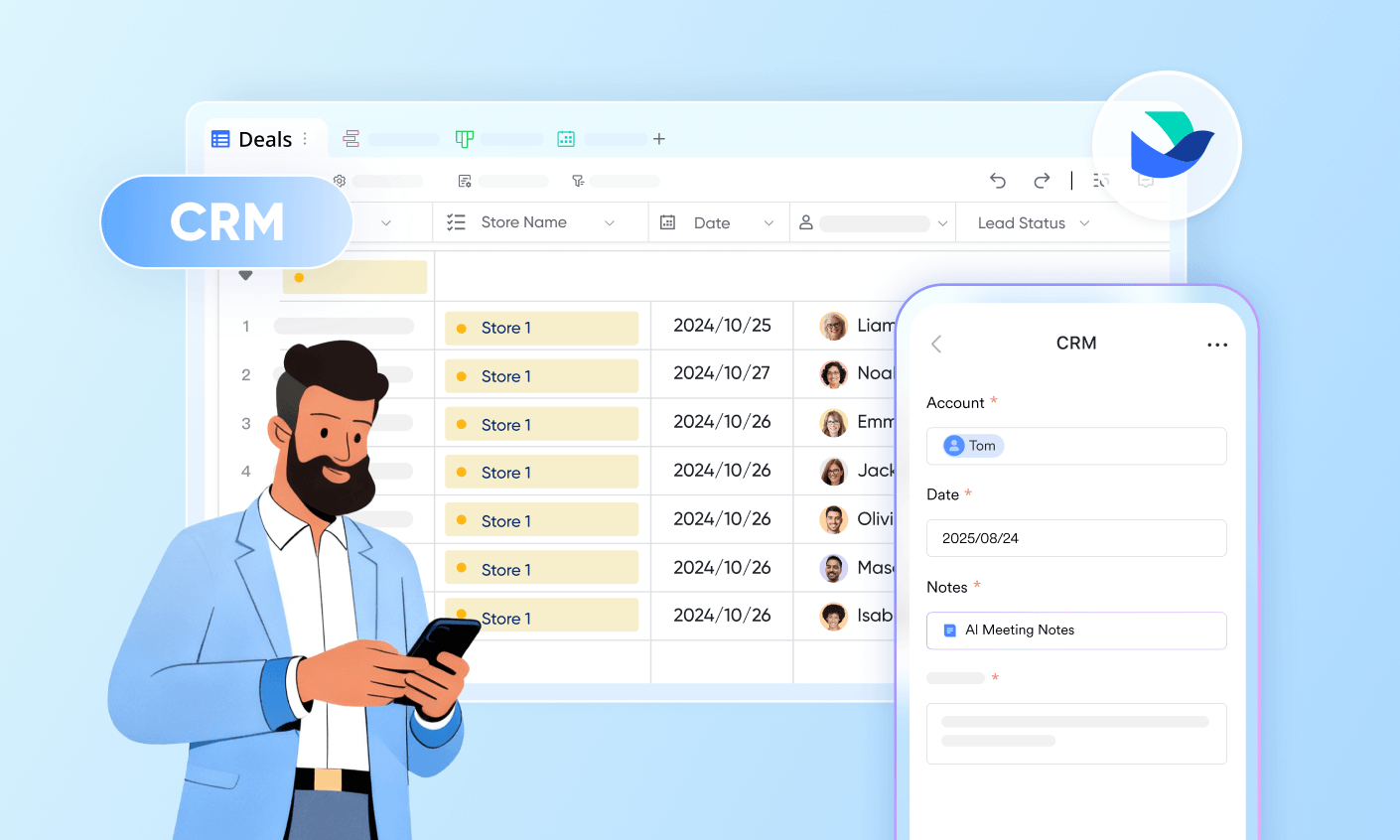
1. Lark: Real-time communication and task management for 3PL workflows
- Starter plan: Free forever plan that includes 11 powerful tools for up to 20 users. It also comes with 100GB of storage, 1000 automation runs, AI translations, and more.
- Basic plan: $6/user/month (billed annually) for up to 500 users. It includes everything in Starter plus group calling for up to 500 attendees, 5TB of storage, 1000 automation runs, and more. For more details, please contact sales.
- Pro plan: $12/user/month (billed annually) for up to 500 users. It includes everything in Basic plus group calling for up to 500 attendees, 15TB of storage, 50,000 automation runs, and more.
- Enterprise plan: Contact sales for custom pricing. Supports unlimited users and includes even more automation runs and advanced security, compliance, and management features.
Starter
For small teams with simple communication needs
$0
/ user / month

Pro
For companies with comprehensive collaboration and management needs
$12
/ user / month
Enterprise
For large companies with advanced security and organizational management needs
Get a personalized demo and pricing
Pro
For companies with comprehensive collaboration and management needs
$12
/ user / month
2. Extensiv: Warehouse & fulfillment software
- Multi-client inventory management: Track inventory for multiple clients across warehouses in real time.
- Order fulfillment automation: Automate picking, packing, and shipping processes to reduce errors and delays.
- Shipping integrations: Connect with major carriers for real-time shipping rates, labels, and tracking updates.
- Analytics & reporting: Access dashboards and reports to monitor warehouse KPIs, client metrics, and operational efficiency.
- Client portal: Provides clients with visibility into their inventory, orders, and fulfillment status without manual updates.
- Ideal for 3PLs handling multiple clients
- Real-time inventory and fulfillment visibility
- Reduces manual errors with automation
- Comprehensive shipping integrations
- May require onboarding support for complex setups
- Limited customization for highly specialized warehouse operations
- Contact Sales
3. Infor WMS: Cloud warehouse management
- Advanced inventory management: Track stock in real time across multiple locations with cycle counting and lot/serial control.
- Order management: Automate picking, packing, and shipping while ensuring order accuracy.
- Labor management: Monitor employee productivity, assign tasks efficiently, and optimize labor allocation.
- Warehouse optimization: Use slotting, wave planning, and task interleaving to maximize throughput.
- Analytics & reporting: Gain insights into warehouse performance, order trends, and bottlenecks to improve efficiency.
- Ideal for enterprise-scale warehouses
- Strong automation for inbound and outbound operations
- Advanced labor and resource management
- Real-time visibility across multiple locations
- It can be complex to implement for smaller warehouses
- Higher cost compared to simpler WMS solutions
- Infor WMS has not provided pricing information for this product or service. Contact Infor WMS to obtain current pricing.
4. Mecalux Easy WMS: Modular warehouse solution
- Modular design: Implement only the necessary features and scale as your warehouse grows.
- Inventory tracking: Monitor stock levels in real time across multiple locations and storage areas.
- Order processing automation: Streamline picking, packing, and shipping to reduce manual errors.
- Multi-site management: Manage warehouses at different locations under a single system.
- Analytics & reporting: Generate reports on inventory, order fulfillment, and warehouse performance for informed decisions.
- Flexible modular system
- Real-time inventory visibility
- Reduces errors in order processing
- Supports multi-warehouse management
- May require training for full utilization
- Custom modules can increase cost
- Mecalux Easy has not provided pricing information for this product or service. Contact Mecalux Easy to obtain current pricing.
5. Logiwa WMS: High-volume ecommerce fulfillment
- Multi-channel order management: Consolidate orders from marketplaces, ecommerce stores, and retailers in a single system.
- Real-time inventory updates: Track stock levels across multiple warehouses and sales channels instantly.
- Barcode scanning & automation: Reduce errors in picking, packing, and shipping with automated workflows.
- Shipping integrations: Connect with major carriers to get real-time shipping labels, tracking, and rate calculations.
- Analytics & reporting: Monitor warehouse performance, order trends, and fulfillment KPIs for informed decisions.
- Ideal for high-volume ecommerce fulfillment
- Reduces manual errors with barcode and automation tools
- Supports multi-channel sales integration
- Real-time inventory visibility
- It may be complex for smaller operations
- Pricing can scale with order volume
- Require quote
6. Odoo WMS: ERP-integrated warehouse
- ERP integration: Connect warehouse operations with sales, procurement, accounting, and CRM in one system.
- Real-time inventory management: Track stock across multiple locations with automated updates.
- Order automation: Streamline picking, packing, and shipping processes to reduce manual errors.
- Barcode and QR code support: Speed up scanning, receiving, and dispatching with accurate item tracking.
- Analytics & reporting: Access dashboards and reports to monitor warehouse performance and KPIs.
- Fully integrated with Odoo ERP modules
- Reduces errors with automated workflows
- Real-time inventory visibility
- Suitable for growing small to mid-sized businesses
- Limited advanced features for massive warehouses
- Implementation may require technical expertise
- Learning Partner: $358
- Official Partner: $1,791
7. NetSuite WMS: Enterprise warehouse platform
- ERP integration: Fully integrates with NetSuite ERP for unified financial, inventory, and order management.
- Real-time inventory tracking: Monitor stock levels, locations, and movements across multiple warehouses.
- Order fulfillment automation: Streamline picking, packing, and shipping with minimal errors.
- Advanced shipping & receiving: Optimize inbound and outbound processes with routing, wave picking, and tracking.
- Analytics & reporting: Gain insights into warehouse performance, order trends, and operational efficiency.
- Ideal for enterprise-scale warehouses
- Seamless ERP integration for end-to-end operations
- Real-time inventory visibility
- Strong automation for fulfillment processes
- Expensive for small to mid-sized businesses
- Implementation can be complex and time-consuming
- Small businesses: $15,000–$25,000/year
- Mid-market companies: $40,000–$80,000/year
- Enterprises: $100,000+/year, especially with multiple subsidiaries and global operations
8. SAP Extended Warehouse Management
- ERP integration: Works seamlessly with SAP ERP and other SAP supply chain solutions for end-to-end visibility.
- Advanced inventory management: Supports lot/serial tracking, stock movements, and multi-warehouse operations.
- Automated order fulfillment: Optimize picking, packing, and shipping processes with task automation.
- Labor management: Monitor workforce performance, assign tasks, and optimize resource allocation.
- Analytics & reporting: Access detailed dashboards to analyze warehouse KPIs, order trends, and efficiency metrics.
- Enterprise-grade solution for complex warehouses
- Strong automation and workflow optimization
- Real-time visibility across multiple sites
- Advanced labor and resource management
- High cost and implementation complexity
- Overkill for small or mid-sized warehouses
- SAP S/4HANA Supply chain for extended warehouse management: Price upon request
- SAP S/4HANA Cloud for extended warehouse management (private edition, extra stack): Price upon request
9. Blue Yonder WMS: AI-powered supply chain and fulfillment
- AI-powered inventory optimization: Predict demand, manage stock levels, and reduce carrying costs with intelligent algorithms.
- Real-time warehouse visibility: Monitor inventory, orders, and workflows across multiple sites.
- Automated picking and packing: Use robotics and automation to streamline order fulfillment and reduce errors.
- Labor and resource management: Assign tasks efficiently, optimize workforce allocation, and track productivity.
- Analytics & reporting: Access dashboards for KPIs, order trends, and operational efficiency to inform decision-making.
- AI-driven optimization improves efficiency
- Ideal for high-volume and complex warehouses
- Real-time visibility across multiple sites
- Strong automation for fulfillment processes
- High cost, more suitable for large enterprises
- Implementation can be complex and resource-intensive
- Contact sales
10. HighJump Körber: Flexible warehouse operations for 3PLs
- Flexible warehouse operations: Manage multiple sites, diverse product types, and complex workflows efficiently.
- Real-time inventory tracking: Monitor stock levels, movements, and allocations across all warehouse locations.
- Automated order fulfillment: Streamline picking, packing, and shipping with minimal manual intervention.
- Labor and task management: Optimize workforce allocation, track productivity, and assign tasks intelligently.
- Analytics & reporting: Access dashboards and reports to monitor KPIs, order trends, and warehouse performance.
- Highly flexible for complex 3PL operations
- Real-time visibility and reporting
- Automation reduces errors and improves efficiency
- Scalable for high-volume warehouses
- It can be expensive for smaller operations
- Implementation requires technical support
- HighJump Körber has not provided pricing information for this product or service. Contact HighJump Körber to obtain current pricing.
Bonus tips: Difference between a WMS and a 3PL warehouse management system
- Scope comparison: A standard WMS is designed to manage a single company's internal inventory and warehouse activities. In contrast, a 3PL warehouse system handles more complex scenarios, including multi-client operations, contract-driven workflows, and billing rules. It also supports higher customization to meet varying client requirements.
- Multi-client vs. single-warehouse: Traditional WMS platforms typically focus on a single organization, with a unified SKU structure and storage model. A 3PL warehouse management system separates inventory, reporting, and permissions for multiple clients simultaneously. This prevents data overlap while enabling each client to have unique workflows and visibility.
- Billing and value-added services: A typical WMS does not include activity-based billing or support for custom services. A 3PL system automates charges for storage, receiving, picking, packing, kitting, and other value-added services. This helps logistics providers invoice accurately and maintain profitability across diverse client agreements.
- Integration needs: Internal WMS systems often require basic integrations with ERP or accounting software. A warehouse management system for 3PL requires more advanced connectivity, including ecommerce platforms, marketplace APIs, shipping carriers, and client-specific systems. These integrations ensure seamless data flow across multiple parties and channels.
Top challenges faced by 3PL warehouses
- Managing multiple clients: 3PL warehouses must handle separate inventories, rules, and workflows for each client without mixing data. This becomes complex when SKU structures, service levels, and processes differ widely. A 3PL warehouse system provides multi-client controls to keep operations organized and compliant.
- Integration with client systems: Clients often use different ecommerce platforms, ERPs, or order systems, creating data silos. Without seamless integrations, order syncing, inventory updates, and shipping confirmations can fail. A 3PL-ready system connects all channels to ensure smooth end-to-end operations.
- Seasonal demand: Holiday seasons, flash sales, and promotional spikes cause unpredictable order volumes. Warehouses must quickly scale their picking, packing, and labor planning. A 3PL warehouse system helps forecast demand and automate workflows to handle rapid surges.
- Inventory accuracy: With thousands of SKUs across multiple clients, stock discrepancies can disrupt fulfillment and damage trust. Manual tracking leads to errors, misplacements, and incorrect counts. Real-time visibility and barcode scanning improve accuracy and reduce shrinkage.
- SLA compliance: Each client may have unique service-level agreements for handling times, delivery speed, or error rates. Missing SLAs can lead to penalties and strained relationships. WMS dashboards and alerts help teams proactively monitor performance and stay compliant.
- Billing complexity: 3PL billing includes storage fees, handling charges, order volume, packaging, and value-added services, all of which vary by client. Manual invoicing leads to disputes and revenue leakage. A 3PL warehouse management system automates billing to ensure accuracy and transparency.
Trends shaping future 3PL warehouse systems
- AI-driven analytics, Intelligence
- AI-powered analytics help warehouses identify bottlenecks, forecast labor, and optimize storage decisions. By processing historical and real-time data, AI uncovers patterns humans often miss. This leads to more thoughtful planning, fewer errors, and more proactive operations.
- Robotics & automation, Autonomy
- Robots such as AMRs, AS/RS, and robotic picking arms streamline repetitive warehouse tasks. They reduce reliance on manual labor, improve picking density, and speed up throughput. Automation also lowers operational costs while improving accuracy and consistency.
- Warehouse visibility platforms, Transparency
- Real-time visibility platforms consolidate inventory, order, dock, and workforce data into a unified dashboard. This helps teams monitor performance, respond to exceptions instantly, and make data-backed decisions. The result is fewer blind spots and smoother warehouse flows.
- Predictive demand planning, Forecasting
- Predictive models analyze trends, seasonality, and sales velocity to anticipate SKU-level demand. This minimizes stockouts, overstocking, and costly rush replenishment cycles. With better predictions, warehouses plan labor and space far more efficiently.
- Omnichannel fulfillment, Flexibility
- Modern fulfillment requires supporting D2C, B2B, marketplace, and retail channels from the same inventory pool. Omnichannel setups ensure faster delivery, fewer stock discrepancies, and seamless customer experiences. Unified workflows also reduce operational complexity for 3PLs and brands.
- Cloud and API-first platforms, Connectivity
- Cloud-native, API-first systems enable faster deployments, easier integrations, and higher scalability. They allow warehouses to connect ERPs, WMS, TMS, marketplaces, and robotics without extensive development. This architecture future-proofs operations and supports rapid business expansion.
Conclusion
FAQs
Can small logistics companies use a 3PL warehouse management system?
What is the implementation time for a 3PL WMS?
Is barcode scanning necessary for a 3PL warehouse system?
Can a 3PL WMS support cross-border fulfillment?
Do 3PL warehouse systems handle reverse logistics and returns?
Related reading

Start using Lark today

Manage all your work in one place
Boost team efficiency by 10x
Save up to 70% on software costs
Start using Lark today
Manage all your work in one place
Boost team efficiency by 10x
Save up to 70% on software costs
Keep reading






2026 Lark Technologies Pte. Ltd.
Headquartered in Singapore with offices worldwide.





