














Top 10 Accounting and Product Management Courses to Build Business Skills

Cecilia Lane
Go-to-Market Associate
Sep 18, 2026
Cecilia Lane
Sep 18, 2026

9 min read


In 2026, demand for product management roles continues to rise, with product manager jobs in the U.S. projected to grow about 10% through 2028, adding tens of thousands of new positions.
At the same time, accounting manager roles are growing rapidly, with employment for accounting managers expected to increase by about 17% over the next decade, outpacing many otherbusiness roles.
These trends highlight strong demand for professionals who can combine product strategy with solid accounting and financial insight, making structured training essential in 2026.
Why do you need to take these courses
In 2026, accounting and product management are no longer "specialist-only" skills—they're core operating capabilities. When teams understand how money moves and how products are built, leaders get faster decisions, cleaner execution, and tighter control. These courses help organizations reduce operational risk, improve ROI, and create a shared language across finance, product, and operations.
Build a shared operating language across functions
Most execution slowdowns are translation problems: finance talks in margins and cash flow, product talks in users and project delivery, and operations talks in capacity and process. Structured learning gives teams common frameworks (metrics, prioritization logic, forecasting concepts) so meetings are about decisions—not debates over definitions.
Make strategy measurable
A strategy is only useful if it can be funded, tracked, and adjusted. Accounting courses strengthen budgeting, cost control, and performance reporting. Product management courses strengthen discovery, prioritization, and outcome-based roadmapping. Together, they create an operating system where leaders can connect initiatives to financial impact and teams can prove progress with clear metrics.
Reduce risk, waste, and decision latency
From a management lens, the expensive failures are predictable: unclear requirements, weak controls, slow approvals, and misaligned incentives. Accounting knowledge improves governance (audit trails, expense discipline, vendor controls). Product knowledge improves execution quality (customer validation, scope control, iterative delivery). The result is fewer costly reworks and faster, higher-confidence decisions.
Improve resource allocation and portfolio discipline
In growth years, teams over-invest; in tight years, teams under-invest or cut the wrong things. These courses help managers evaluate trade-offs with better tools: contribution margin vs. payback periods, opportunity cost vs. strategic fit, and impact vs. effort. That enables stronger portfolio management across multiple initiatives—especially when headcount and budgets are constrained.
Upskill managers into "multidisciplinary operators"
High-performing organizations develop leaders who can operate across domains: they can read a P&L, challenge assumptions in a business case, and still guide product execution. Investing in these courses upgrades managerial bandwidth—reducing reliance on a few experts and making the organization more resilient as it scales.
Create a culture of accountability and continuous improvement
Courses provide more than knowledge—they introduce habits: setting measurable goals, running reviews, documenting decisions, and iterating on process. When adopted across teams, those habits become culture. And culture is what keeps performance consistent when priorities shift, new leaders join, or markets change.

How are these accounting and product management courses selected
- Focus on practical, real-world business skills used in 2026
- Alignment with key workflows in accounting and product roles
- Strong relevance to U.S. and global job market expectations
- Courses offered by reputable platforms or official providers
- Emphasis on hands-on projects, cases, or applied learning
Overview: Best accounting and product management courses for 2026
10 Best Free Courses for Learning Tally and Product Management Basics in 2026
1. TallyPrime Tutorial — Great Learning Academy
Overview
This tally free course with certificate is a practical guide for accounting and finance professionals who need to master modern business management software in 2026.
It focuses on the transition to TallyPrime, teaching learners how to automate accounting, inventory, and compliance tasks to streamline business operations.
- Delivery & duration: Online (self-paced), ~4 hours of video content
- Credentials: Free certificate of completion from Great Learning Academy
- Instructional quality & design: Hands-on tutorial format that walks through software installation, company creation, and real-world voucher entry scenarios
- Support: Access to a global learner community for peer networking and software troubleshooting tips
Key outcomes / strengths
- Navigate the TallyPrime interface and set up company profiles from scratch
- Master Voucher Entry for various business transactions, including sales and purchases
- Manage Inventory and Stock levels with automated tracking features
- Generate essential Financial Reports like Balance Sheets and Profit & Loss statements
- Understand the basics of GST and Taxation within the Tally ecosystem
2. Product Management Foundations — LinkedIn Learning
Overview
This is the definitive primer for US professionals entering the product space. It covers the entire product lifecycle, from initial market research and roadmapping to launch and iteration.
- Delivery & duration: Online (Self-paced), approx. 4 hours
- Credentials: LinkedIn Learning Certificate
- Instructional quality & design: Video-led by active Silicon Valley practitioners focusing on the "Product Mindset" and cross-functional leadership
- Support: Integrated LinkedIn professional network and community Q&A
Key outcomes / strengths
- Master the art of defining "Product-Market Fit"
- Learn to build and communicate high-impact product roadmaps
- Understand how to manage stakeholders across engineering and sales
- Align product features with 2026 user needs and business goals
3. Product Management — Great Learning Academy
Overview
This free product management course is designed for professionals aiming to lead the lifecycle of digital products in 2026.
It bridges the gap between business, technology, and user experience, focusing on how to turn a simple idea into a successful market launch.
- Delivery & duration: Online (self-paced), ~4 hours of video content
- Credentials: Free certificate of completion from Great Learning Academy
- Instructional quality & design: Practical, industry-aligned curriculum covering product strategy, market research, and the essential roles of a modern product manager
- Support: Access to a global learner community for peer networking and sharing product insights
Key outcomes / strengths
- Understand the Product Development Lifecycle from discovery to delivery
- Identify customer needs through effective Market Research and Analysis
- Develop a clear Product Strategy and Roadmap to guide team efforts
- Master the art of Prioritization to balance business goals with user needs
4. Financial Accounting Fundamentals — Coursera (University of Virginia / Private Hybrid)
Overview
While delivered via a platform, this module is stripped of academic fluff to focus on the "Day 1" skills required for corporate bookkeeping and financial analysis.
- Delivery & duration: Online (Self-paced), approx. 12 hours
- Credentials: Professional Certificate of Completion
- Instructional quality & design: High-level interactive labs focusing on recording transactions and finalizing month-end books
- Support: Automated grading and global peer discussion forums
Key outcomes / strengths
- Master the flow of transactions through the General Ledger
- Understand US-standard revenue recognition and expense matching
- Learn to identify "Financial Red Flags" in company reports
- Develop a rigorous foundation for advanced corporate finance
5. Agile Product Owner Sprint — Scrum Alliance (via Agile Academy)
Overview
A high-velocity course focusing on the "Product Owner" role within the Scrum framework. It is essential for US tech and SaaS product management.
- Delivery & duration: Online (Live Virtual), 14 hours over 2–3 days
- Credentials: CSPO Exam Eligibility
- Instructional quality & design: Interactive, live-training format with breakout rooms and simulation-based backlog grooming exercises
- Support: Direct interaction with Certified Scrum Trainers (CSTs)
Key outcomes / strengths
- Master the art of "Backlog Refinement" and prioritization
- Learn to write effective User Stories that drive development
- Maximize the value of the product through iterative feedback
- Bridge the gap between customer requirements and technical delivery
6. Bookkeeping for Small Business — Udemy (QuickBooks Official Partner)
Overview
A practical, "hands-on" sprint for US small business owners and managers. It focuses on using cloud software to automate the accounting cycle.
- Delivery & duration: Online (On-demand), approx. 10 hours
- Credentials: QuickBooks User Foundation Badge
- Instructional quality & design: Over-the-shoulder video style where you set up and manage a fictional business's books in real-time
- Support: Q&A board with instructor responses and downloadable templates
Key outcomes / strengths
- Set up a "Chart of Accounts" tailored to your business model
- Automate invoicing, bill payments, and bank reconciliations
- Manage 2026 US tax compliance and payroll basics
- Generate real-time financial reports to track business growth
7. Product Design & Wireframing — Skillshare
Overview
Focuses on the "UI/UX for PMs" niche. It teaches you how to visually communicate your product ideas to designers and engineers before code is written.
- Delivery & duration: Online (Self-paced), approx. 4 hours
- Credentials: Skillshare Certificate
- Instructional quality & design: Project-centered learning where you build a mobile app wireframe using tools like Figma or Miro
- Support: Peer feedback on projects and instructor-led discussions
Key outcomes / strengths
- Master the art of "Low-Fidelity" wireframing for rapid ideation
- Understand user flow logic and "Visual Hierarchy"
- Learn to speak the language of UX/UI design teams
- Create "Prototypes" to test product concepts with actual users
8. Managerial Accounting Sprint — Simplilearn
Overview
This course focuses on "Internal" accounting, how managers use financial data to set prices, create budgets, and evaluate department performance.
- Delivery & duration: Online (Self-paced), approx. 6 hours
- Credentials: Simplilearn Skillup Certificate
- Instructional quality & design: Short, punchy modules focusing on "Cost-Volume-Profit" (CVP) analysis and variance reporting
- Support: 24/7 technical support and community discussion boards
Key outcomes / strengths
- Master the art of "Budgeting and Forecasting" for your department
- Learn to calculate "Break-Even Points" for new products or services
- Understand how to allocate overhead and direct costs accurately
- Use financial data to drive internal cost-saving initiatives
9. Growth Product Management — Udacity
Overview
A specialized sprint for PMs focused on the "Post-Launch" phase, acquisition, activation, retention, and monetization of US digital products.
- Delivery & duration: Online (Self-paced), approx. 12 hours
- Credentials: Udacity Professional Badge
- Instructional quality & design: Professional-grade projects reviewed by technical mentors focusing on "A/B Testing" and growth loops
- Support: Access to a technical mentor network and peer-to-peer chat
Key outcomes / strengths
- Master the "Pirate Metrics" (AARRR) framework for growth
- Learn to design and run statistically significant A/B tests
- Identify and optimize "User Friction" in the onboarding funnel
- Build sustainable retention loops to increase "Customer Lifetime Value"
10. Financial Statement Analysis — HubSpot Academy
Overview
Focuses on "Revenue Operations" (RevOps), teaching US professionals how to connect accounting data to sales and marketing performance.
- Delivery & duration: Online (Self-paced), approx. 3 hours
- Credentials: HubSpot Professional Certification
- Instructional quality & design: Practical tutorials focusing on the intersection of CRM data and financial reporting
- Support: Global HubSpot community and resource library
Key outcomes / strengths
- Align sales and marketing efforts with financial revenue goals
- Master "Customer Acquisition Cost" (CAC) and ROI calculation
- Use financial statements to identify "Profit Leaks" in the sales funnel
- Build a unified "Revenue Strategy" across the entire organization
How Lark helps teams turn courses into business results
Finishing accounting and product management courses is only half the work—teams still need repeatable workflows to apply new skills at scale. Lark brings documentation, structured data, meetings, and approvals into one connected workspace, so finance and product teams can move from learning to execution without tool sprawl.
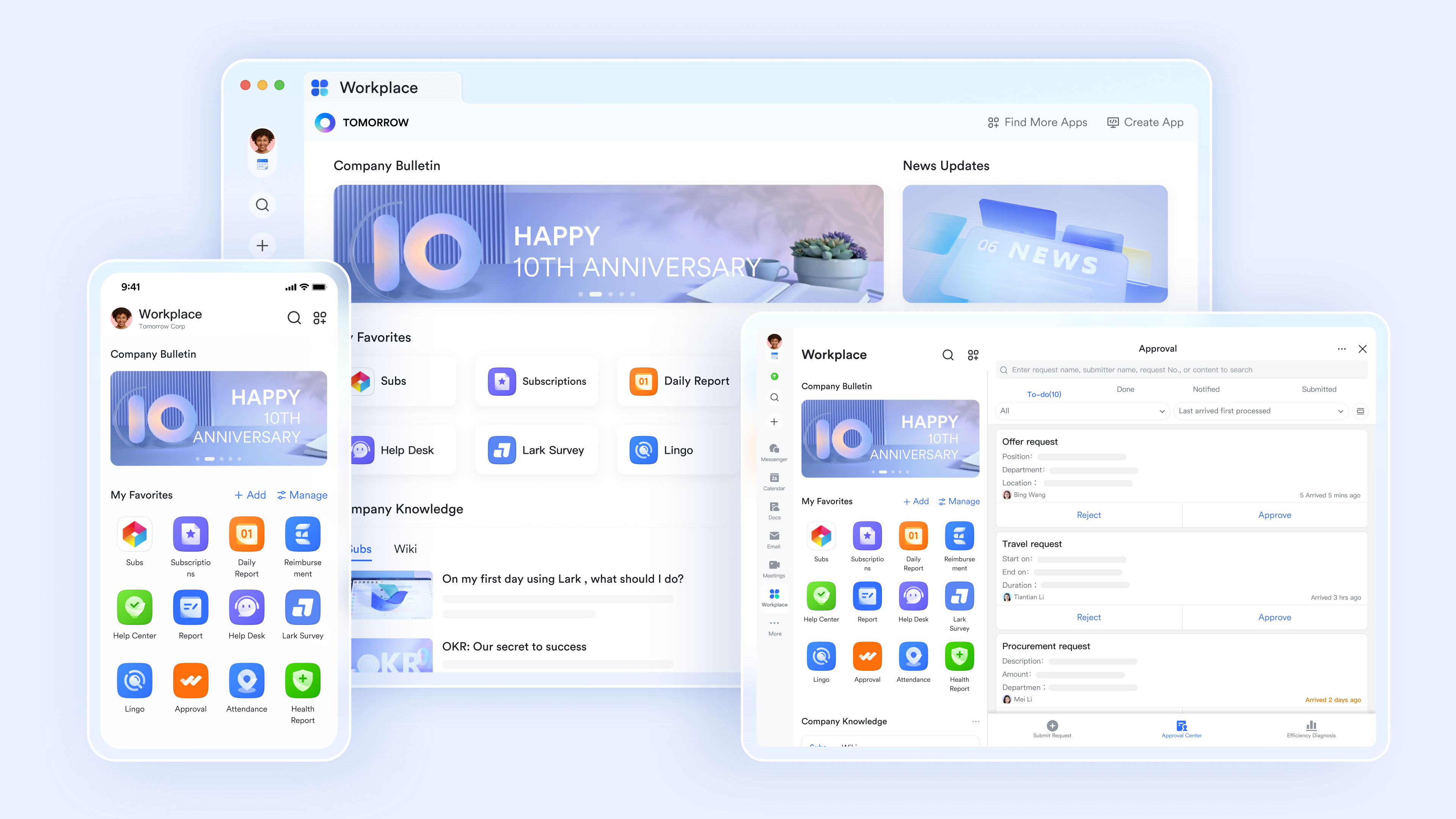
Standardize playbooks and reporting in Lark Docs
Use Lark Docs to turn course frameworks into reusable SOPs: month-end close checklists, budgeting guidelines, PRD templates, and launch retrospectives. Docs supports real-time collaboration with comments and tasks, plus rich content like MindNotes, timelines, Gantt charts, sheets, and diagrams for clearer cross-team alignment. Teams can also use the convert threads in Lark Messenger to Lark Docs, to convert key discussions into documented decisions and use synced blocks to keep recurring sections updated across multiple docs.
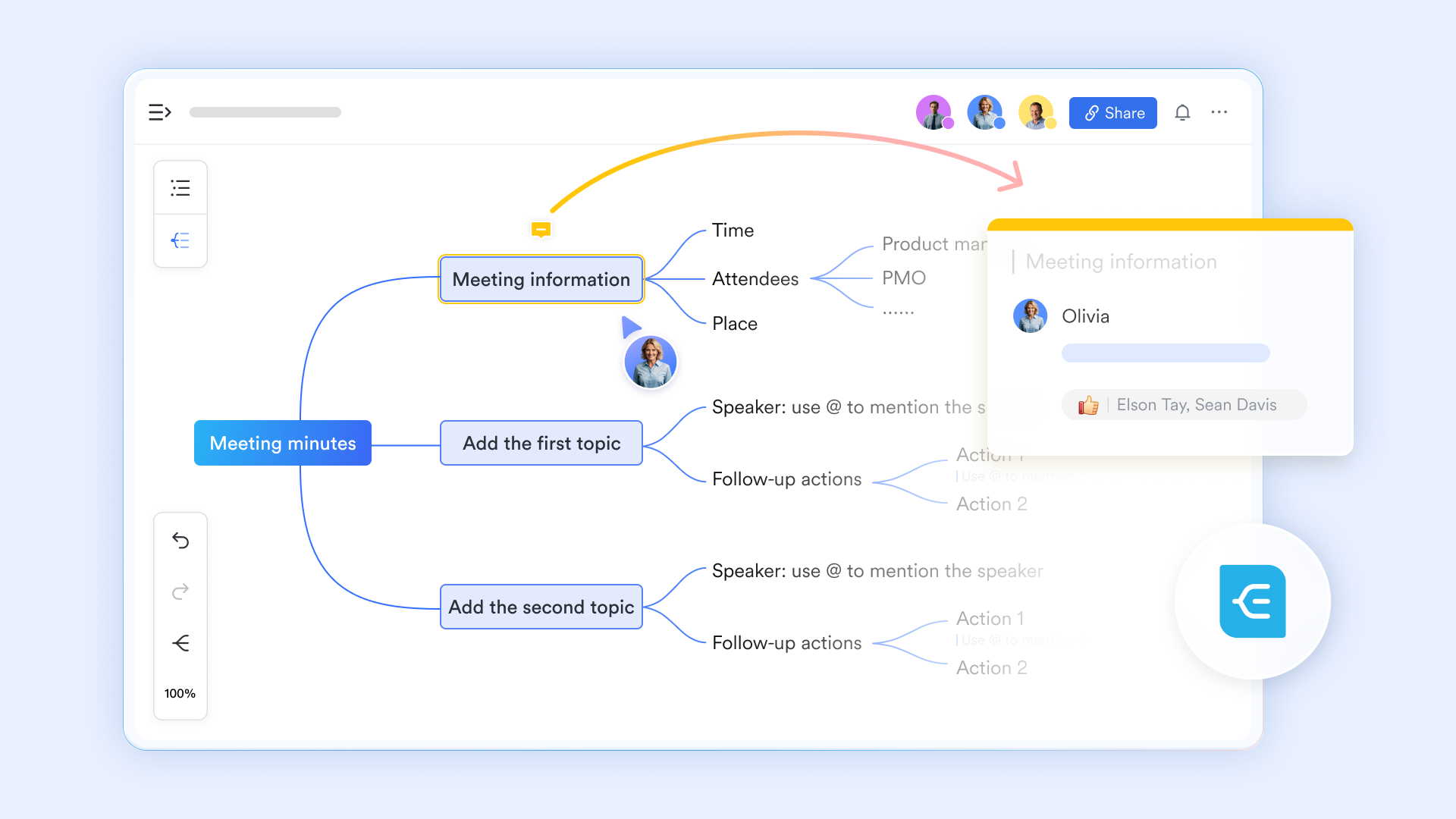
Run projects and dashboards on Lark Base (no-code)
When you want measurable outcomes (cost control, cycle time, roadmap delivery), move tracking into Lark Base—a no-code platform designed to adapt to business workflows. Base supports dashboards (including 20+ chart types that update in real time), granular permissions down to the field level, and multiple views like Grid, Kanban, and Gantt so finance and product teams can see the same data from different angles. It also includes a visual workflow builder (trigger → action → notification) with 100+ pre-built automations, helping teams reduce manual reporting and follow-ups.
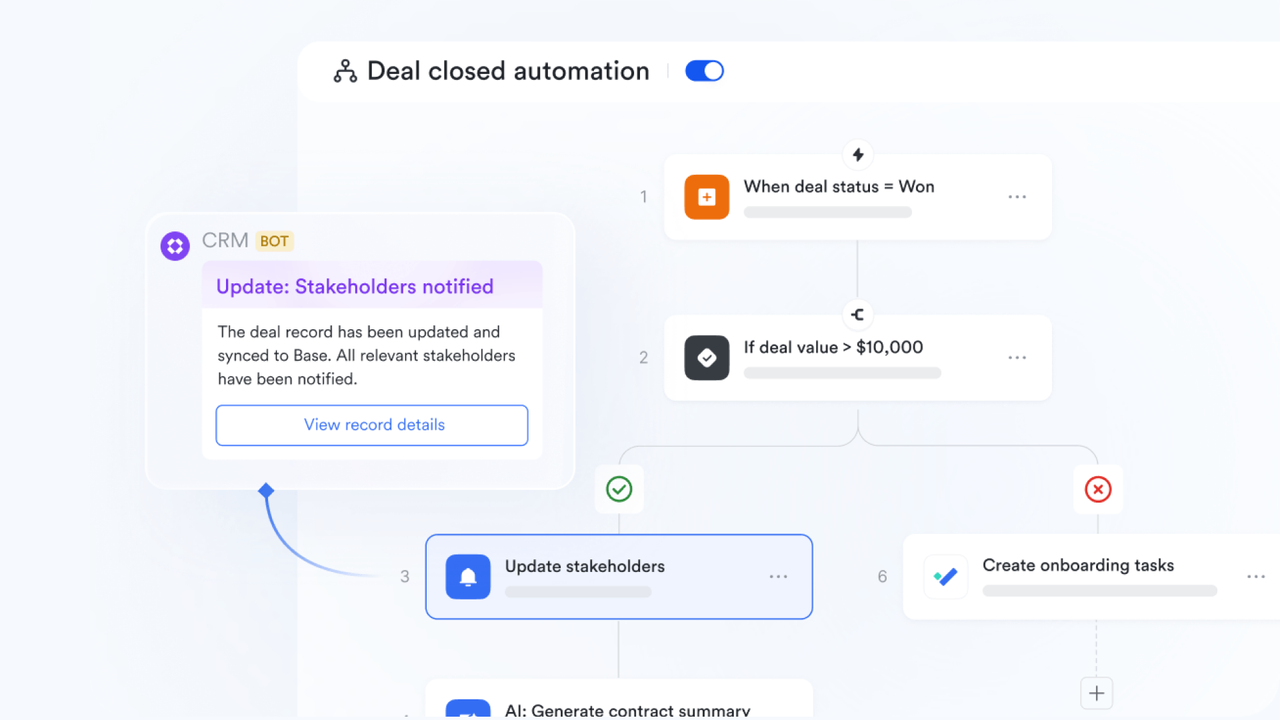
Keep decisions and execution in the same chat with Lark Messenger
Teams lose momentum when decisions happen in chat, but execution lives elsewhere. Lark Messenger is built to be a "productivity hub" where you can share, schedule, meet, assign, and approve without leaving your chat feed—useful for finance approvals, product intake, and cross-functional handoffs. Features like chat tabs & threads help keep stakeholder discussions focused, and real-time auto translation supports global collaboration when finance, product, and operations span multiple languages.
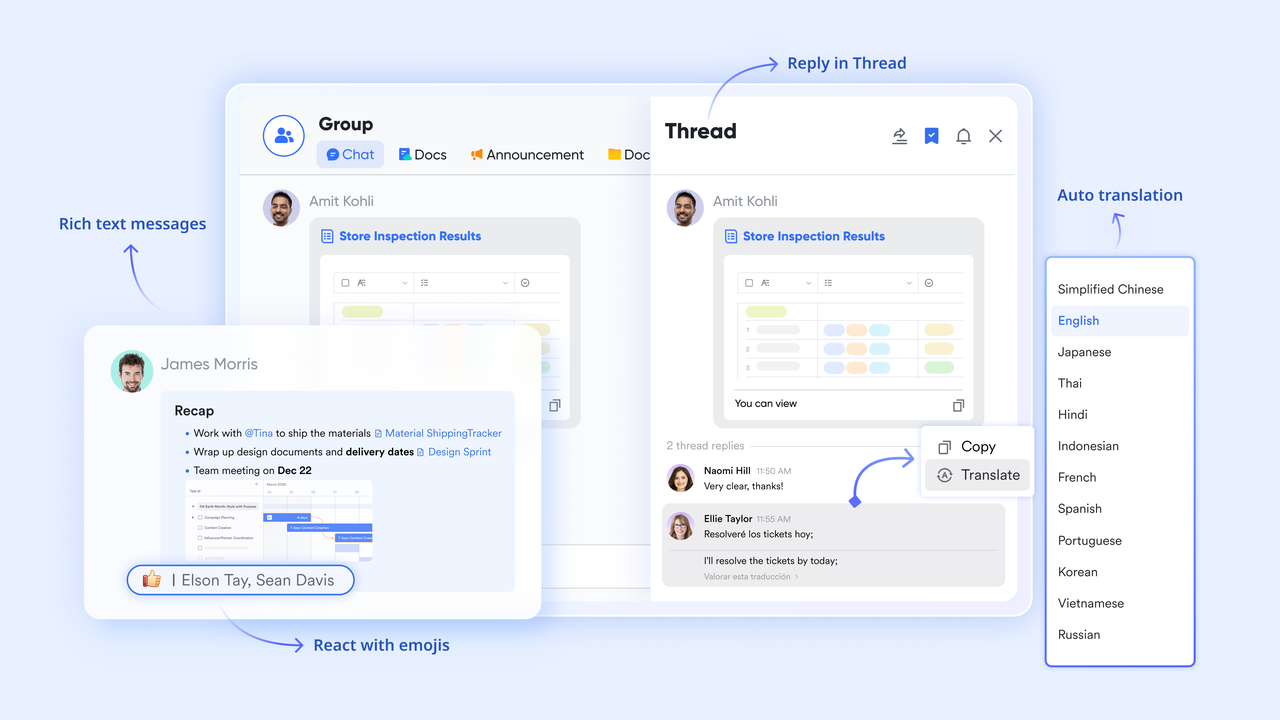
Turn meetings into deliverables with Lark Meetings + Minutes
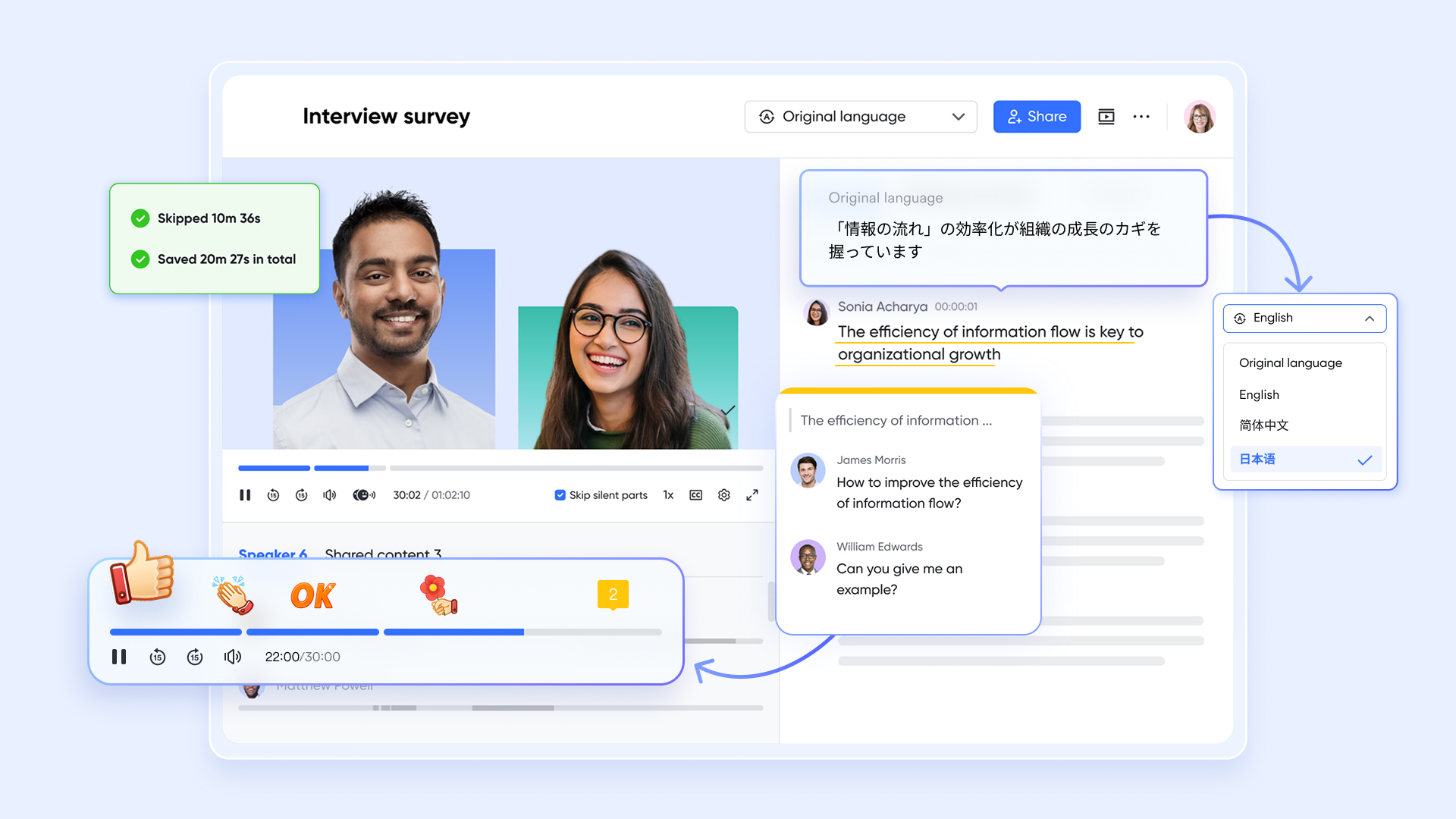
For teams, meetings are only valuable if they generate reusable artifacts: decisions, action items, and alignment. Lark Meetings enables collaboration features like Magic Share, which lets participants share a live doc (not just a screen) so everyone can scroll and edit together during the call. Pair that with Lark Minutes, which automatically transcribes video meetings into searchable transcripts and supports interactive comments on specific parts—so teammates who missed the meeting can catch up asynchronously and still contribute.
Make finance and product governance faster with Lark Approval
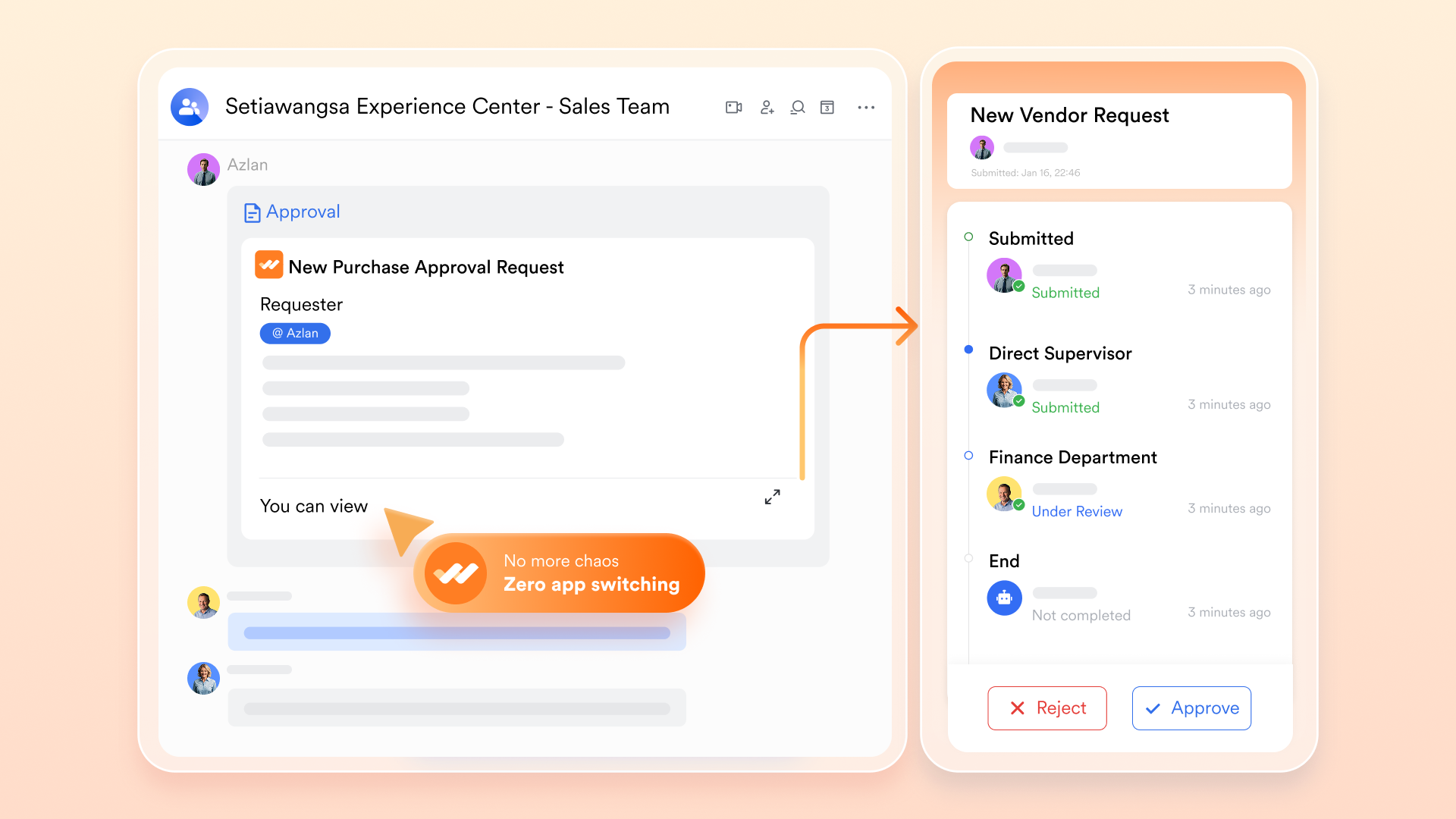
To operationalize what teams learn in accounting (controls, auditability) and product management (decision discipline), you need approvals that are fast and trackable. Lark Approval is an approval hub for automated workflows, with ready-to-use templates and mobile access so decisions happen without bottlenecks. It supports multi-step workflows with logical conditions, plus deadlines, reminders, and auto-escalation rules, and can route reviewers by role, department, or custom criteria. Lark also highlights maintaining context and an audit trail of comments, which helps reduce mistakes in high-stakes processes.
Try Lark's savings calculator: Switching to Lark's Pro plan can lead to significant cost savings— for example, a 100-employee company using Slack, Google Workspace, and Airtable could save approximately $25,200 annually by consolidating their tools with Lark.














How many employees work at your company?
By number of people
1
20
500
5000+
1000
Which tools do you use?

Estimates are for reference only, contact us for an official quote

Conclusion
In 2026, both accounting fundamentals and product management skills are essential pillars of business success.
Professionals who build structured expertise in financial operations and product strategy gain stronger analytical thinking, clearer decision-making, and a competitive edge for leadership roles.
Choosing the right online free courses with certificate is a practical step toward lasting career impact.
FAQs
How long do accounting courses take?
Accounting course length depends on the goal and format. A short online accounting course or bookkeeping class can take 4–8 weeks, while a professional certificate may take 3–6 months part-time. A diploma often takes 1–2 years, and a bachelor’s degree in accounting typically takes 3–4 years. If you’re targeting CPA or ACCA, plan 12–36+ months alongside work.
Where can I learn accounting for free?
You can learn accounting for free through reputable online platforms and university-backed resources. Start with free accounting courses on Coursera or edX (often "audit" mode), plus MIT OpenCourseWare for fundamentals. For practical skills, use YouTube channels focused on bookkeeping, Excel accounting, and financial statements. Combine these with free practice problems and templates, and you’ll build job-ready basics before paying for certification.
What is the best course for product management?
The best product management course depends on your experience level and career goals. Beginners often benefit from structured, hands-on programs that cover product discovery, roadmapping, metrics, and stakeholder management. Look for a product management course with real case studies, a capstone project, and feedback from experienced PMs. If you’re targeting tech companies, choose courses that include analytics, experimentation, and agile delivery.
What are the top 3 skills for a product manager?
The top 3 product manager skills are customer insight, prioritization, and communication. First, strong customer insight helps you define problems, validate needs, and design solutions that users will adopt. Second, prioritization turns endless requests into a focused roadmap using impact, effort, and strategy. Third, communication aligns engineering, design, sales, and leadership—so decisions, trade-offs, and timelines are clear and execution stays fast.
What makes a top 1% product manager?
A top 1% product manager consistently ships outcomes, not just features. They pair deep user understanding with sharp business judgment, using data and qualitative signals to make fast, high-quality decisions. They simplify complexity into a clear strategy, create leverage through teams, and build trust across functions. Most importantly, they learn quickly—running experiments, closing feedback loops, and iterating until the product delivers measurable value.
Related reading
Table of contents
Start using Lark today

Manage all your work in one place
Boost team efficiency by 10x
Save up to 70% on software costs
Table of contents
Start using Lark today
Manage all your work in one place
Boost team efficiency by 10x
Save up to 70% on software costs
Keep reading








2026 Lark Technologies Pte. Ltd.
Headquartered in Singapore with offices worldwide.






Explore: