A product management roadmap is a fundamental tool for translating vision into execution. It serves as the strategic link between a product's long-term goals and the day-to-day work of development teams. More than just a schedule or feature list, an effective roadmap aligns stakeholders, communicates priorities, and adapts to change. This guide explores the essential components of a successful product management roadmap, offering practical insights for creation, communication, and ongoing management.
What is a product management roadmap?
A product management roadmap is a strategic that visually charts the course of a product's evolution. At its heart, it is a living document that answers three critical questions for your organization: Where is our product going? (vision) Why is that direction valuable? (strategy) And what are the major steps we plan to take to get there? (execution).
It is crucial to distinguish a roadmap from other planning artifacts. Unlike a detailed that tracks tasks and rigid deadlines, or a backlog that lists every possible feature, the product roadmap operates at a higher altitude. It focuses on themes, outcomes, and problems to be solved. For instance, instead of listing "Add social login buttons," a strategic roadmap for product management would highlight the theme: "Reduce new user sign-up friction in Q3." This outcome-oriented approach is what separates a modern strategic roadmap from a simple release calendar.
Why are product management roadmaps important?
The importance of a well-crafted roadmap extends far beyond basic . It is the foundational tool that enables effective product leadership by creating alignment, context, and agility. Here are the key reasons why dedicating time to building a product roadmap is non-negotiable:
- They create strategic alignment and buy-in: A single, visible roadmap eliminates conflicting narratives. It aligns executives, engineering, marketing, and sales around a unified set of priorities by visually connecting daily work to company goals. When everyone sees how their contributions fit into the larger picture, it fosters a sense of shared purpose and reduces friction. This alignment is the primary goal of managing a product roadmap effectively.
- They provide context for empowered teams: A roadmap gives your team the "why" behind their work. When an engineer understands that the new API they are building is the first step toward a major platform partnership, they can make better architectural decisions. This context transforms teams from order-takers to strategic partners, boosting motivation, innovation, and the quality of output.
- They facilitate transparent communication: Roadmaps replace endless, repetitive status meetings with a clear, accessible source of truth. They expectations proactively, whether it's leadership seeking assurance on strategic direction or a sales team curious about future capabilities. This transparency builds trust and frees you from constantly answering the question, "What are we working on next?"
Turn this strategic vision into your team's reality
Which teams use product management roadmaps?
A product management roadmap serves as a critical alignment tool for diverse teams across an organization. Each stakeholder group uses it to fulfill specific needs, making it a versatile document for strategic communication.
- Development & : For these teams, the roadmap provides strategic context, connecting technical tasks to business goals and user problems to foster purpose-driven work.
- Executive & leadership teams: Executives use the roadmap to validate that product investments align with company strategy, focusing on outcomes, ROI, and key milestones rather than granular details.
- Sales, marketing & teams: These customer-facing teams rely on the roadmap to plan external communications and internal strategy, using it to manage expectations and highlight future value without committing to firm dates.
- Design, UX & research teams: For design and research, the roadmap is a planning tool for proactive user research and experience design, ensuring their work is integrated early in the strategic process.
In practice, an effective product management roadmap acts as a single source of truth that is adapted and presented differently to resonate with each audience, ensuring organizational alignment towards common strategic objectives.
Before the roadmap: 3 questions to guide roadmap planning
Jumping straight into plotting features on a timeline is a common mistake. The strategic foundation of your roadmap for is laid by first answering three fundamental questions. This disciplined pre-work ensures your roadmap is driven by insight, not just intuition.
What core problem are we solving, and who experiences it?
Every item on your roadmap must trace back to a validated user or business problem. Before anything else, clearly define:
- The user: Which specific persona or segment has this pain point?
- The problem: What is the specific job they are trying to do, and what friction do they face?
- The evidence: What data (support tickets, research interviews, analytics) confirms this is a meaningful problem worth solving? This question grounds your product management roadmap process in user-centric value, preventing it from becoming a wish list of cool features.
How does this initiative align with our top-level business goals?
An initiative might solve a real user problem but still be the wrong thing to do if it doesn't advance your business strategy. For each potential roadmap item, ask:
- Strategic link: Which company does this support (e.g., increase market share, improve retention, open a new revenue stream)?
- Theme alignment: Which broader strategic theme (e.g., "Platform Scalability," "Enterprise Readiness") does it fall under? This alignment test ensures your product manager's roadmap directly contributes to the company's success, making it easier to secure stakeholder buy-in.
What does "winning" look like, and how will we measure it?
Define success in terms of measurable outcomes, not output. Instead of "launch feature X," specify the impact you expect. Consider:
- Outcome metric: What user behavior or business metric should change (e.g., increase activation rate by 15%, reduce support tickets by 20%)?
- Validation: How will we know we successfully solved the problem? What leading indicators will we track?
Answering this upfront creates accountability and transforms your roadmap into a commitment to delivering value, not just shipping software.
Solidify your plan's foundation in one workspace
How to create a product management roadmap
Creating an effective product management roadmap is a process that transforms strategic intent into a clear, communicable plan. It's less about designing a perfect chart and more about facilitating a shared understanding. Here is a practical, step-by-step framework to guide you.
Step 1: Synthesize inputs from diverse sources
Your roadmap's strength comes from the quality of its inputs. Avoid building it in a vacuum by systematically gathering and analyzing information from key streams:
- User insights: Consolidate feedback from support tickets, user interviews, survey data, and product analytics to identify recurring pain points and desires.
- Business & market context: Integrate findings from competitive analysis, market trends, and direct input from sales and marketing on market needs.
- Technical perspective: Consult with engineering on architectural opportunities, tech debt, and feasibility assessments.
- Strategic directives: Align with company and product-level OKRs or strategic goals.
Step 2: Define and prioritize strategic themes
Resist the urge to list features directly. Instead, group potential work into broader strategic themes, such as "Improve User Onboarding" or "Strengthen Platform Security." Themes communicate the why and keep the focus on solving problems, not just shipping code.
Next, prioritize these themes. Use a framework like Value vs. Effort or RICE (Reach, Impact, Confidence, Effort) to objectively compare options. The goal is to sequence work that delivers the highest value for reasonable investment. This prioritization exercise is crucial for a credible product management roadmap process, and it's most effective when done collaboratively. Using a shared tool that , comment on, and contribute to the prioritization criteria in real time can turn a contentious meeting into a transparent, consensus-building activity.
Step 3: Choose the right visualization format
Your roadmap's format should serve its audience and reflect the reality of your work. Common approaches include:
- Now-next-later: Ideal for conveying priorities without overcommitting to distant dates. It emphasizes fluidity and strategic sequencing.
- Goal-oriented roadmap: Structures initiatives under specific, measurable objectives (e.g., "Increase Activation to 30%"). These powerful ties work directly to outcomes.
- Quarter-based timeline: Provides more concrete timing for near-term planning, useful for aligning with business quarters.
For many teams, the most practical product management roadmap tool is a flexible, visual canvas. A platform that allows you to easily switch between a timeline view for leadership and a "now-next-later" view for the product team ensures everyone sees the information most relevant to them without maintaining multiple documents.
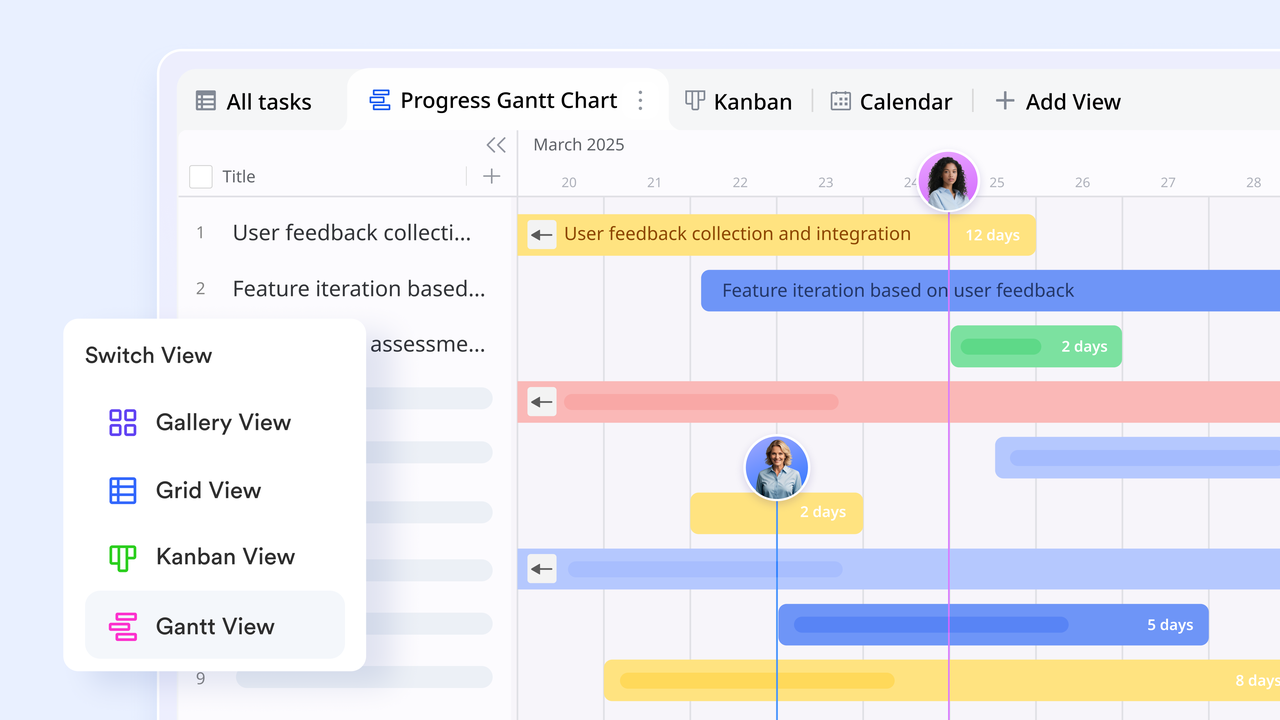
Step 4: Build the narrative context
A grid of boxes and dates is meaningless without a story. For each major theme or initiative, articulate:
- The problem: What user or business issue does this address?
- The expected outcome: How will we measure success? (Link to a metric or goal)
- & dependencies: What do we believe to be true, and what do we rely on?
This narrative is what you communicate with. It turns your roadmap from a project plan into a strategic asset. When presenting, you're not just showing what is coming; you're explaining the reasoning behind the plan.
Step 5: Socialize, validate, and iterate
A roadmap finalized in private is doomed to fail. Socialization is the key to adoption. Share drafts early with small groups of key stakeholders from engineering, design, and leadership. Present the narrative, not just the timeline, and actively seek their feedback.
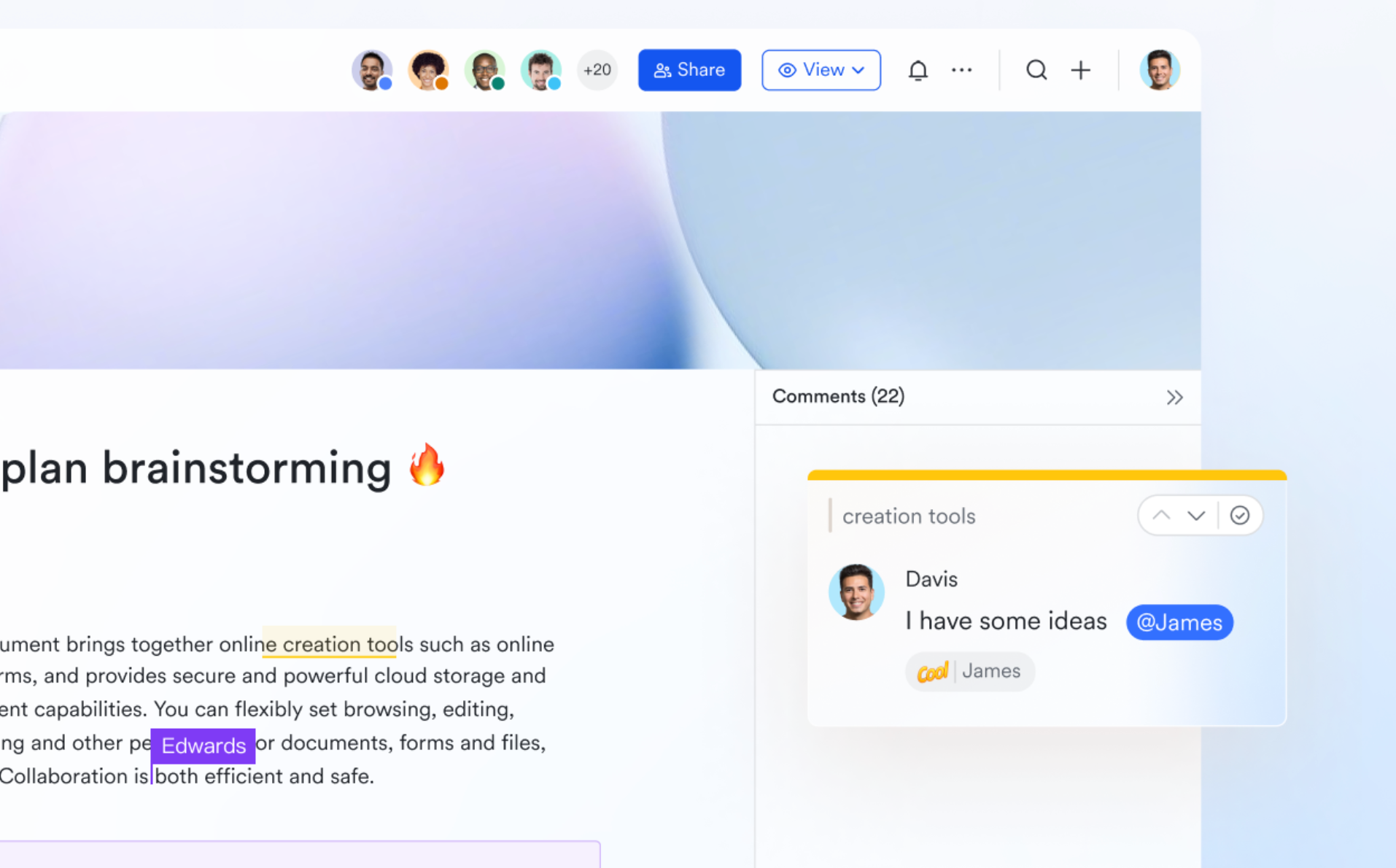
This is where collaboration is tested. Instead of endless email threads, centralize this feedback directly where the roadmap lives. Having stakeholders leave comments on specific items or vote on priorities within the document itself creates a clear audit trail of input and shows that the plan is dynamic and inclusive. This process transforms the roadmap from "my plan" to "our plan," securing the buy-in necessary for successful execution.
Transform your roadmap into a collaborative strategic hub
A product roadmap's true power is unlocked not when it is created, but when it is actively used to align, inform, and drive decisions across your organization. However, this often fails because the tools we use create silos—strategy is disconnected from execution, discussions are lost in threads, and feedback is scattered. Lark's built-in platform bridges these gaps by making your product management roadmap a living, breathing centerpiece of your team's workflow.
Turn vision into a living, connected document
The core of any roadmap item is its rationale and requirements, typically buried in lengthy, static documents that are hard to update and impossible to truly link to ongoing work.
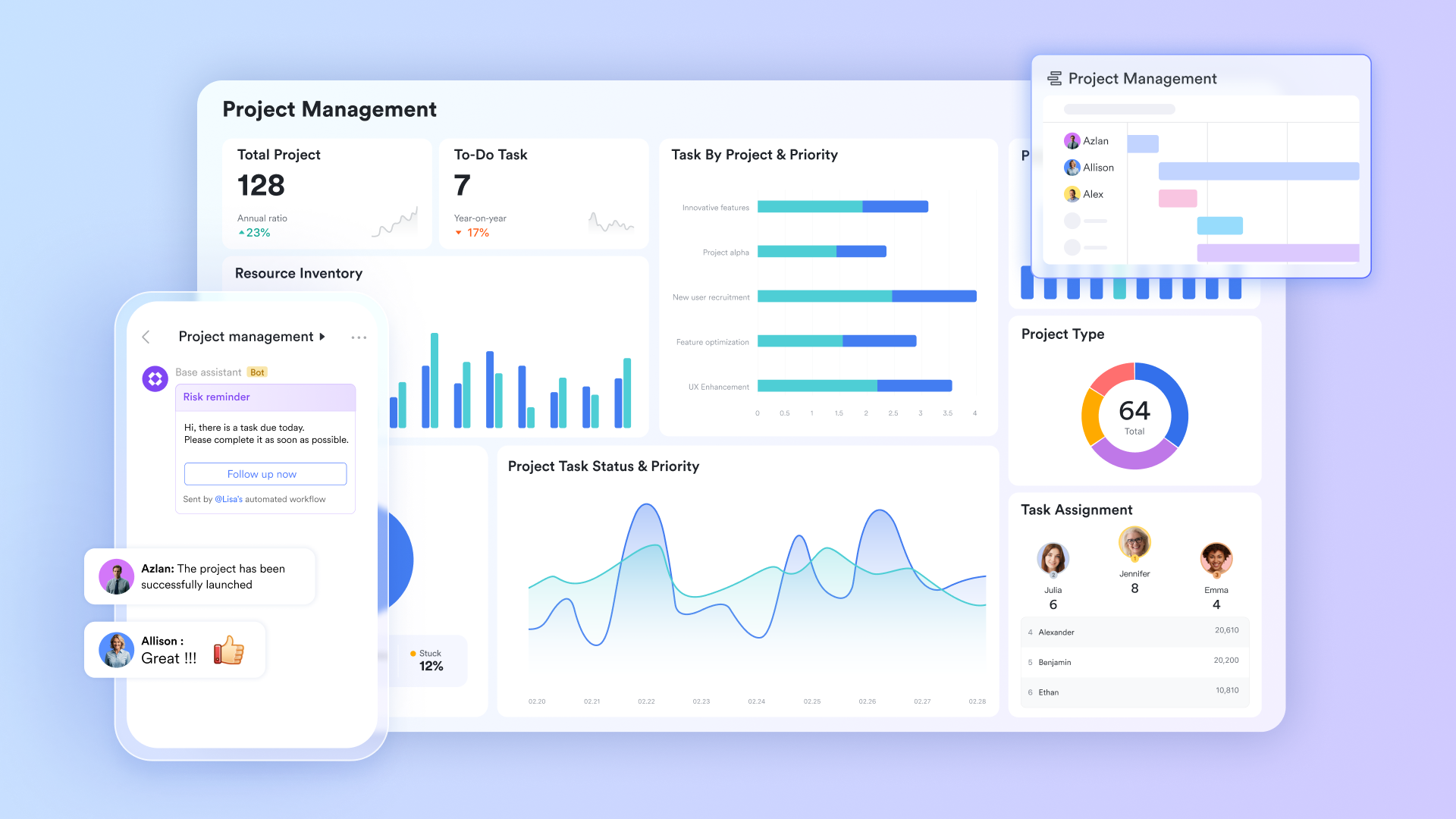
solves this by allowing you to embed the foundational strategy directly into your planning process. You can create a single, master product strategy doc that outlines the vision, goals, and target metrics. Then, you can link your and Sheets to this document. When the strategy evolves, you update the source Base and Sheets, and the linked references across your roadmap materials are automatically signaled as updated. This ensures every initiative on the roadmap for product management is explicitly tied to the latest strategic context, making the "why" instantly accessible and auditable for any stakeholder.
Visualize progress and pivot with flexible clarity
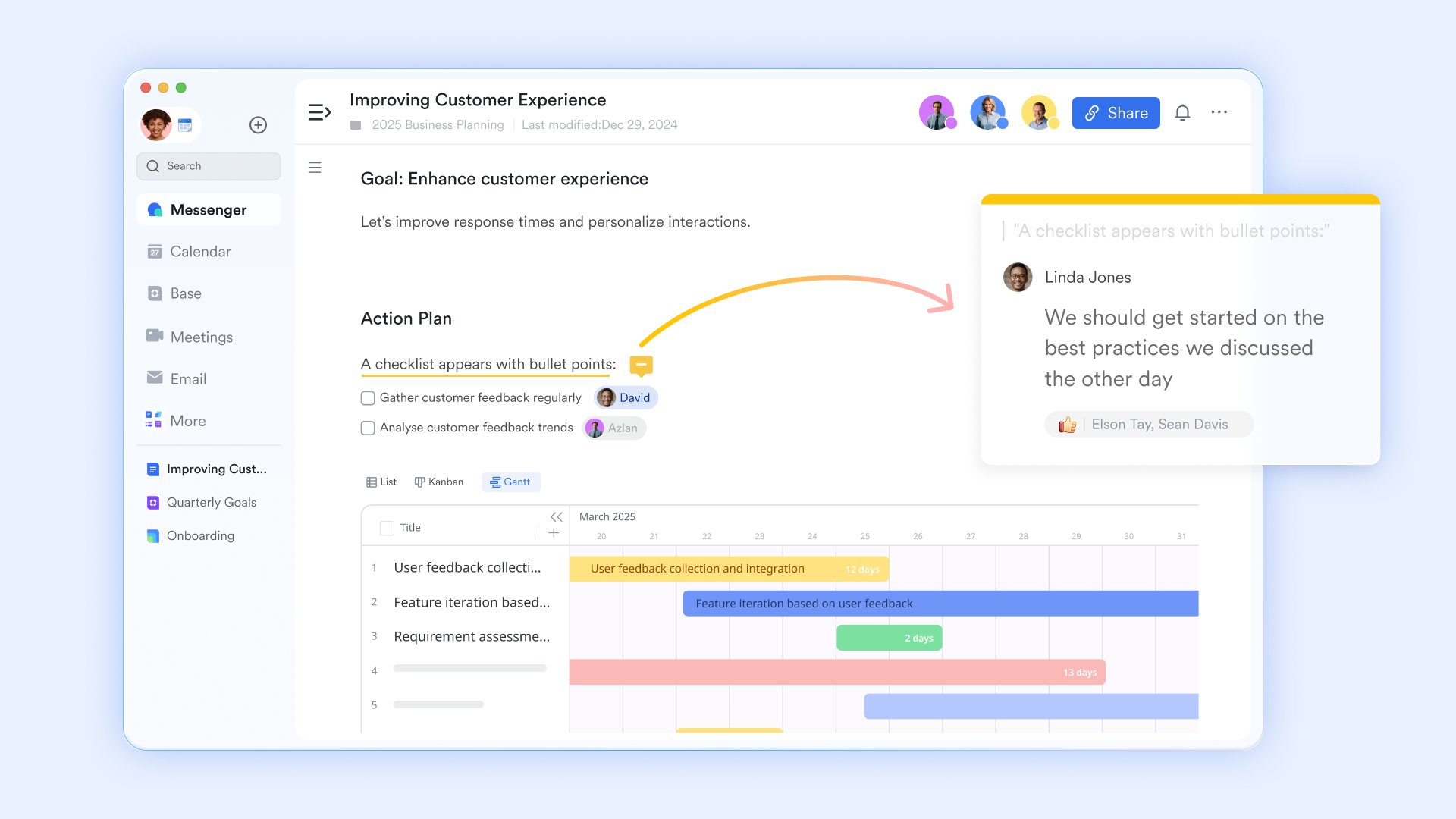
A common pitfall in managing a product roadmap is sticking to a rigid timeline when priorities shift. Teams need a visualization that is flexible, focused on status and priority rather than just dates, and visible to all without complex exports.
Lark Base Kanban view provides this ideal visual layer. You can map your roadmap initiatives onto a Board with columns like "Discovery", "Prioritized", "This Quarter", "In Progress", and "Launched". Each initiative is a card that can contain rich details—owner, linked docs, completion status, and comments. As the market changes, you can drag and drop items between columns in real-time. It transforms the product management roadmap process from a quarterly presentation into a daily operational tool that visually communicates pivots and progress without lengthy meetings or email announcements. 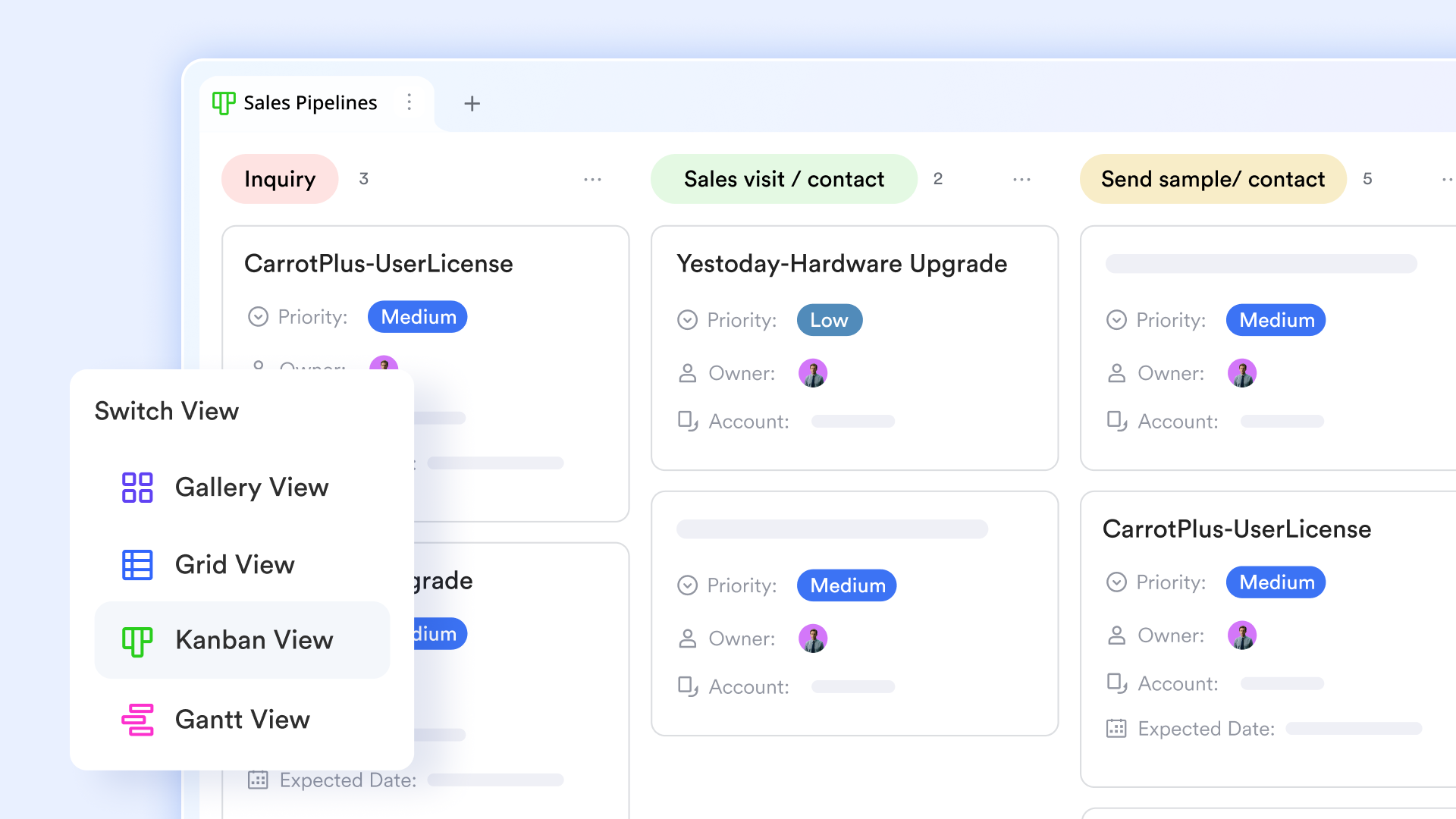
Capture decisions and action items from roadmap reviews
Roadmap review meetings are critical for alignment, but their outcomes—key decisions, debated trade-offs, and new action items—often vanish into personal notes or a separate, soon-forgotten minutes doc. This creates ambiguity and accountability gaps.
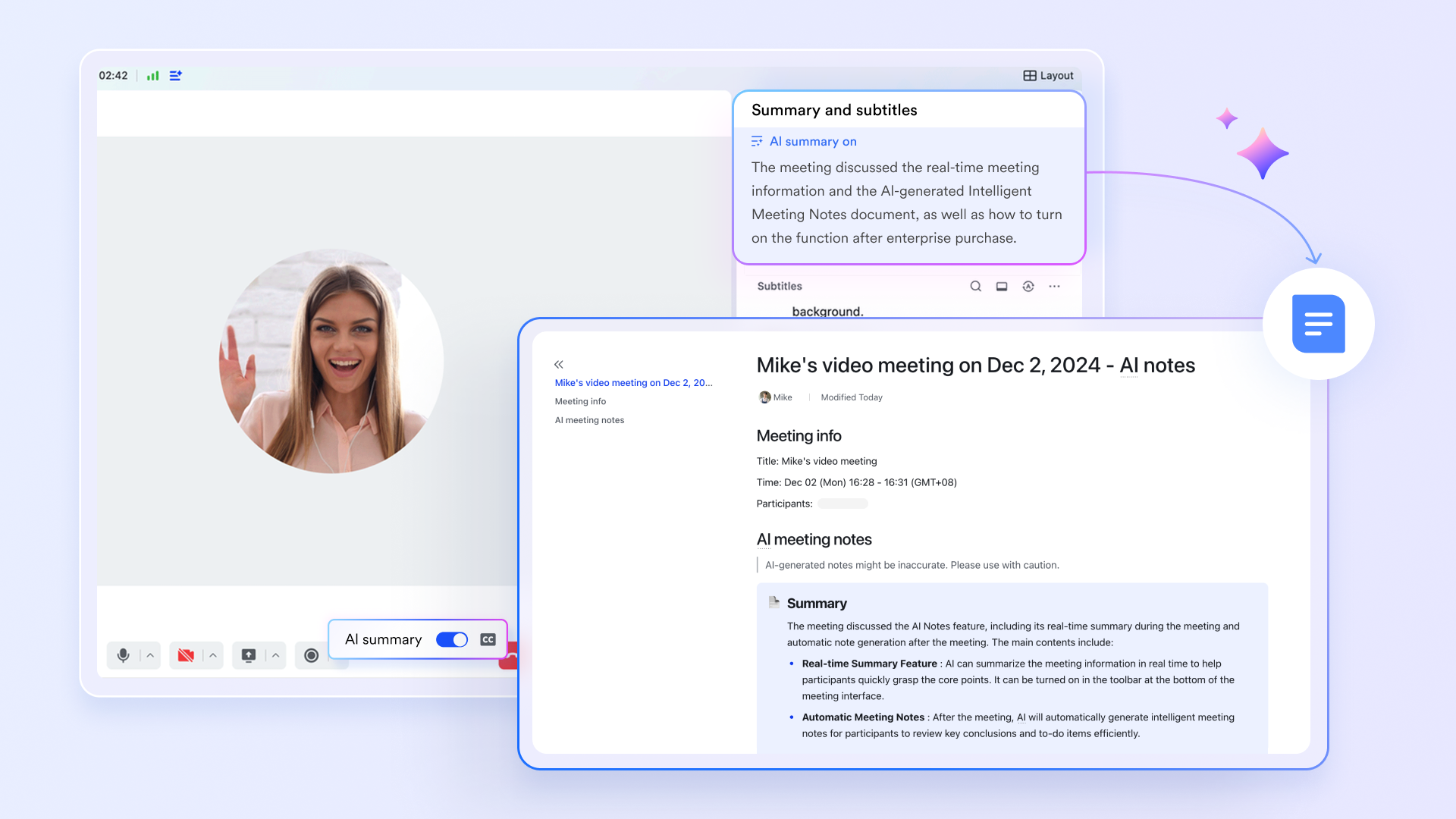
, unified with Lark AI Meeting Notes, automates and elevates this process. When you host a roadmap review in Lark Meetings, automatically generates structured notes. Crucially, it can identify and extract key decisions ("Agreed to delay Feature X to next quarter"), action items ("Anna to refine the TAM analysis by Friday"), and questions raised. These are not just dumped into a doc; you can instantly assign them as Lark Tasks with due dates and owners just with one click.
Facilitate real-time alignment and quick consensus
Roadmaps spark countless micro-conversations: a designer questioning a requirement, an engineer flagging a dependency, a marketer seeking clarification on a launch date. If these happen across disparate tools (email, Slack, other messengers), they become invisible to others and detach from the roadmap itself, leading to information silos.
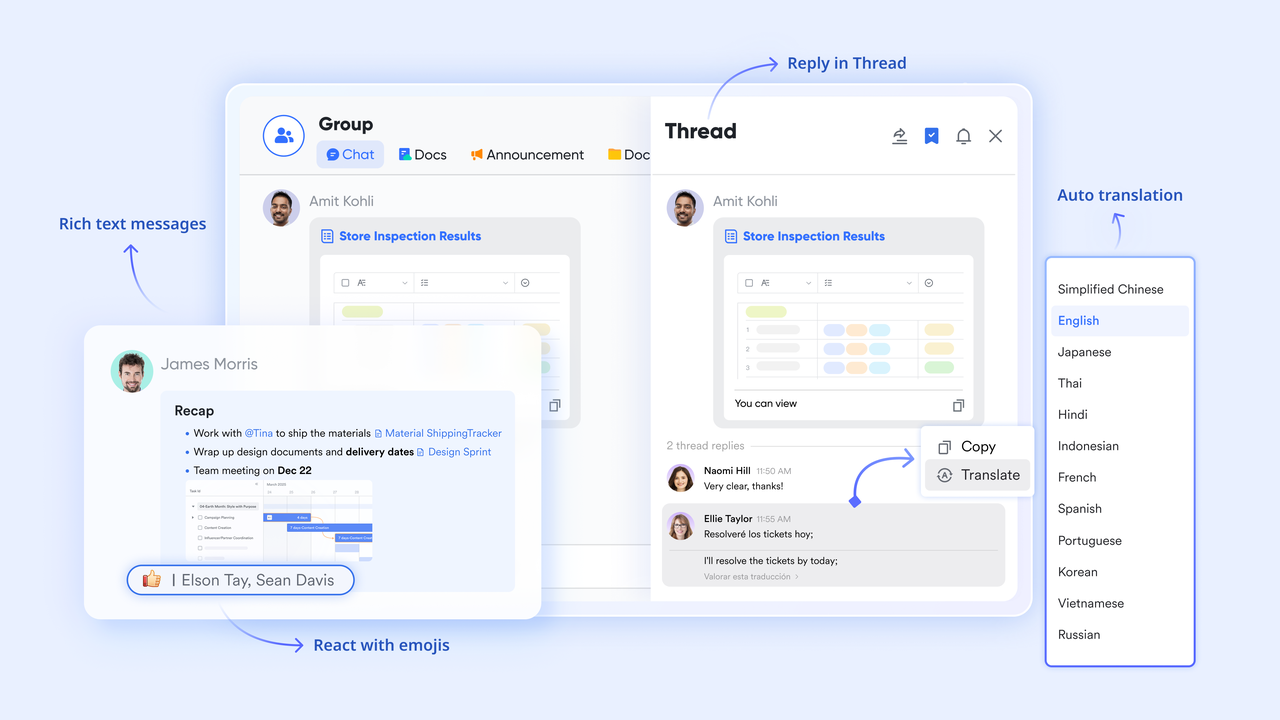
bridges this gap by being natively connected to every other component. You can create a dedicated product roadmap chat group. When you share or docs containing the roadmap into the chat, it's not just a link—it's an interactive preview. Team members can discuss a specific timeline item directly in the chat thread, and those conversations are preserved in context. Quick, asynchronous consensus becomes possible, keeping the entire team aligned in real-time without scheduling ad-hoc meetings, making the product management roadmap a constant topic of collaborative dialogue rather than a periodic review artifact.
for Lark:
- Starter plan: Free forever plan that includes 11 powerful tools for up to 20 users. It also comes with 100GB of storage, 1000 automation runs, AI translations, and more.
- Basic plan: $6/user/month (billed annually) for up to 500 users. It includes everything in Starter plus group calling for up to 500 attendees, 5TB of storage, 1000 automation runs, and more. For more details, please .
- Pro plan: $12/user/month (billed annually) for up to 500 users. It includes everything in Basic plus group calling for up to 500 attendees, 15TB of storage, 50,000 automation runs, and more.
- Enterprise plan: for custom pricing. Supports unlimited users and includes even more automation runs and advanced security, compliance, and management features.
For small teams with simple communication needs

18 months message history
1000 Base automation runs/month
2000 rows per table in Base
Most POPULAR
For companies with comprehensive collaboration and management needs
Unlimited message history
500-participant video meetings
50k Base automation runs/month
20k rows per table in Base
For large companies with advanced security and organizational management needs
Get a personalized demo and pricing
Unlimited message history
500-participant video meetings
15 TB storage + 30 GB storage/user
500k Base automation runs/month
50k Base automation runs/month
Most POPULAR
For companies with comprehensive collaboration and management needs
Unlimited message history
500-participant video meetings
50k Base automation runs/month
20k rows per table in Base
Common roadmap pitfalls and best practices that avoid them
Even with the best intentions, product teams can fall into predictable traps that undermine their roadmap's effectiveness. Recognizing these pitfalls and adopting preventative best practices is key to maintaining a credible and useful strategic plan.
Pitfall 1: The feature factory list
- The trap: The roadmap becomes a backlog of disconnected features and projects, lacking a clear narrative about the user problems or business goals they serve. It prioritizes output over outcome.
- The best practice: Build a theme-based roadmap. Organize every initiative under an outcome-oriented theme, such as "Increase Enterprise User Adoption" or "Reduce Time-to-First-Value." This forces you to articulate the why and ensures every task contributes to a larger, measurable goal.
Pitfall 2: The set-in-stone timeline
- The trap: Treating the roadmap as a fixed commitment with hard deadlines for every item. This creates immense pressure, discourages learning, and breaks stakeholder trust at the first inevitable delay.
- The best practice: Communicate in time horizons, not fixed dates. Use frameworks like "Now, Next, Later" or tie initiatives to broader quarters. Clearly distinguish between near-term, committed work and longer-term, aspirational explorations. This builds in necessary flexibility.
Pitfall 3: The silent document
- The trap: Creating a beautiful roadmap, sharing it once, and then letting it grow stale and irrelevant in a deck or document no one checks. It becomes a relic, not a reference.
- The best practice: Treat your roadmap as a living hub. Integrate it into your team's daily workflow. Use a that can be easily accessed, commented on, and updated. Link it directly to related specs, research, and goals. Schedule brief, regular review sessions to keep it current and top of mind.
Keep your strategy dynamic and aligned with Lark
How to use roadmaps: Tips for product managers
As a product manager, your role extends far beyond creating the roadmap; you are its chief evangelist, curator, and storyteller. Here are key tips to wield it effectively.
- Tell a story, don't just show a timeline: When you present the roadmap, always start with the strategic context. Recap the key user problems and . Then, frame each theme as a chapter in the story of how you'll achieve those goals. This narrative approach helps stakeholders understand the rationale, making them more receptive to the plan itself.
- Use it as your primary decision filter: When a new feature request or an urgent "fire" arises, use your roadmap as a governance tool. Ask: "Does this align with our current strategic themes?" and "What committed initiative would we deprioritize to do this?" This grounds ad-hoc requests in strategic reality and empowers you to say "no" or "not now" with clarity and confidence.
- Schedule regular "roadmap health" checks: Set a recurring cadence (e.g., every 4-6 weeks) to review the roadmap with your core team. Ask: Is our progress aligning with the plan? Have new data or market changes impacted our priorities? This ritual prevents drift and ensures your roadmap adapts to reality, maintaining its relevance as your most trusted planning instrument.
Conclusion
A product management roadmap is far more than a planning document; it is the vital connective tissue between your product's vision and its daily execution. When built collaboratively, centered on outcomes, and communicated as a dynamic story, it becomes your most powerful tool for creating alignment, navigating uncertainty, and driving meaningful value for users and the business.
The journey from a static slide to this dynamic strategic hub requires breaking down the silos that fragment information and conversation. This is where an integrated platform like changes the game. By bringing your goals, documents, conversations, and data into one connected workspace, Lark ensures your roadmap is always alive, informed, and actionable—transforming it from something you present into something your team truly uses.
Transform your team's collaboration and execution
FAQs
What is a roadmap in product management?
A product management roadmap is a strategic communication tool that visually outlines the vision, direction, and progress of a product over time. It focuses on the "why" and the desired outcomes, connecting high-level goals to planned initiatives. Unlike a detailed project plan, it serves to align stakeholders and guide prioritization, acting as a shared source of truth for the entire organization.
What are the 5 C's of product management?
The 5 C's are a strategic framework: Customer (deeply understanding user needs), Company (aligning with business goals and capabilities), Competitors (analyzing the market landscape), Collaborators (working effectively with internal teams and partners), and Context (considering the broader market and environmental factors). Mastering these areas, often facilitated by centralized platforms like Lark that connect customer data, company goals, and team collaboration, ensures balanced and informed product decisions.
What are the 7 stages of product management?
The product management lifecycle typically involves seven key stages: Ideation & Vision, Market Research, Planning & Roadmapping, Development, Testing & Validation, Launch & Marketing, and Post-Launch Analysis & Iteration. This is a cyclical process where feedback from one stage continuously informs and improves the others, ensuring the product evolves to meet user and business needs effectively.
What is the roadmap to become a product manager?
A common path involves: 1) Building foundational knowledge in business, technology, and design; 2) Gaining relevant experience in roles like analyst, engineer, or marketing; 3) Developing core PM skills through side projects or certifications; 4) Securing an Associate or Junior PM position. The key is to cultivate a mix of strategic thinking, execution ability, and stakeholder management, often starting by contributing to product thinking within your current role.
Related reading