














Leading CRM Systems in Higher Education: Top 12 Picks

Ryan Tanner
Product Marketing Specialist
Sep 18, 2026
Ryan Tanner
Sep 18, 2026

21 min read


Universities today need more than just administrative software. They require intelligent systems that streamline admissions, student support, and alumni engagement. CRM in higher education has emerged as a key tool for managing the entire student lifecycle, from prospective inquiries to post-graduation engagement. Institutions face challenges in handling large volumes of student data, maintaining timely communication, and ensuring high retention rates.
Platforms like Lark, Salesforce Education Cloud, and Ellucian CRM provide collaborative solutions that unify communication, document management, and workflow automation, helping academic teams stay organized and efficient. In this guide, we'll explore the top 12 CRM tools for universities, highlighting features, pricing, and suitability for various institutional needs.
1. Lark: Smart CRM with collaboration and admissions simplified
2. Element451: Intelligent CRM for student enrollment
3. Ellucian CRM: Enroll, advise, and analyse
4. Salesforce CRM: Higher education and student lifecycle
5. HubSpot CRM: Education, engagement, and evaluation
6. CRMOne: Higher education CRM for student lifecycle
7. Slate CRM: Higher education admissions and enrollment
8. TargetX: Student engagement and retention CRM
9. Pipedrive CRM: Admissions and student pipelines
10. Zoho CRM: For schools and colleges
11. LeadSquared CRM: For admission management
12. Freshsales CRM: For higher education teams

What is CRM in higher education?
A Customer Relationship Management (CRM) system in higher education is designed to manage interactions with students, alumni, faculty, and prospects. Unlike general CRMs built for corporate sales, higher education CRM software cater to specific institutional needs such as student recruitment, admissions workflows, retention tracking, and alumni engagement.
Stakeholders include prospective students, enrolled students, faculty, staff, admissions officers, and alumni. By centralizing data and streamlining communication, these systems allow institutions to deliver personalized experiences, maintain regulatory compliance, and optimize operations.
Image source: unsplash.com
Importance of CRM in higher education
Implementing a CRM in higher education provides several advantages:
- Student recruitment and admissions workflows: Track inquiries, manage applications, and streamline admissions processes. CRMs help staff automate outreach campaigns and segment prospects efficiently.
- Student retention and support: Identify at-risk students, track academic performance, and coordinate advising interventions. This proactive approach helps improve retention and graduation rates.
- Alumni and donor relations: Maintain long-term engagement, manage donations, and organize events. CRMs consolidate alumni data and communication into one system.
- Administrative efficiency and communication: Automate routine tasks, standardize workflows, and provide easy access to centralized data, enhancing productivity across departments.
How much does a CRM cost in higher education?
CRM pricing varies based on factors like institutional size, modules, customization, and integrations. Typical models include:
- Per user pricing: $12–$50 per user per month, often scaled for large universities.
- Per module pricing: Institutions pay for only selected features like admissions, alumni, or marketing.
- Contract/license-based: Annual or multi-year contracts, often with volume discounts.
Factors affecting cost include the number of students, staff, complexity of integrations with SIS/LMS, and ongoing support requirements.
12 Best CRM tools for higher education
1. Lark: Smart CRM with collaboration and admissions simplified
Managing admissions can be one of the most complex processes for educational institutions, involving applications, document submissions, automated approval, interviews, and ongoing communication between departments. Lark simplifies this entire workflow by bringing collaboration, data management, and decision-making into a single connected workspace. With tools like Lark Base, Lark Approval, Lark Docs, and Lark Messenger, institutions can digitize admissions workflows, reduce delays, and provide a seamless experience for both staff and applicants.
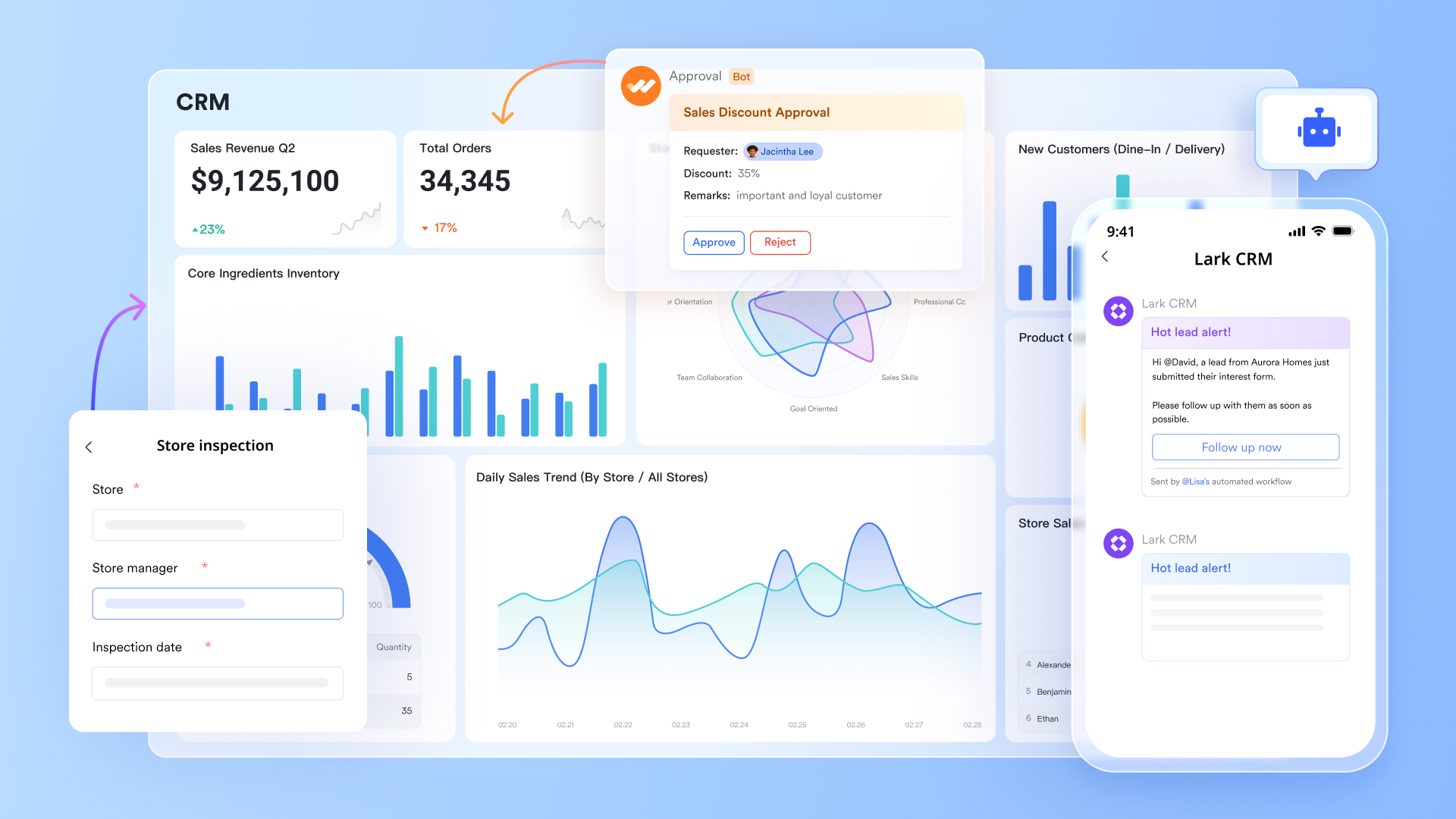
Lark Base: Streamlining applicant tracking and data management
Lark Base acts as the foundation for your admissions system—a flexible, no-code database where schools can manage applicants from inquiry to enrollment. Teams can build custom views (like tables, Kanban, or Gantt) to monitor each stage of the admission pipeline and automate repetitive updates.
Example: An admissions officer can create a Base with columns such as Applicant Name, Program Applied, Application Status, Documents Received, and Interview Date. When a student uploads missing transcripts, the status in Base automatically updates from Pending Documents to Ready for Review, triggering a notification to the assigned reviewer. This ensures no application slips through the cracks and everyone stays informed in real time.
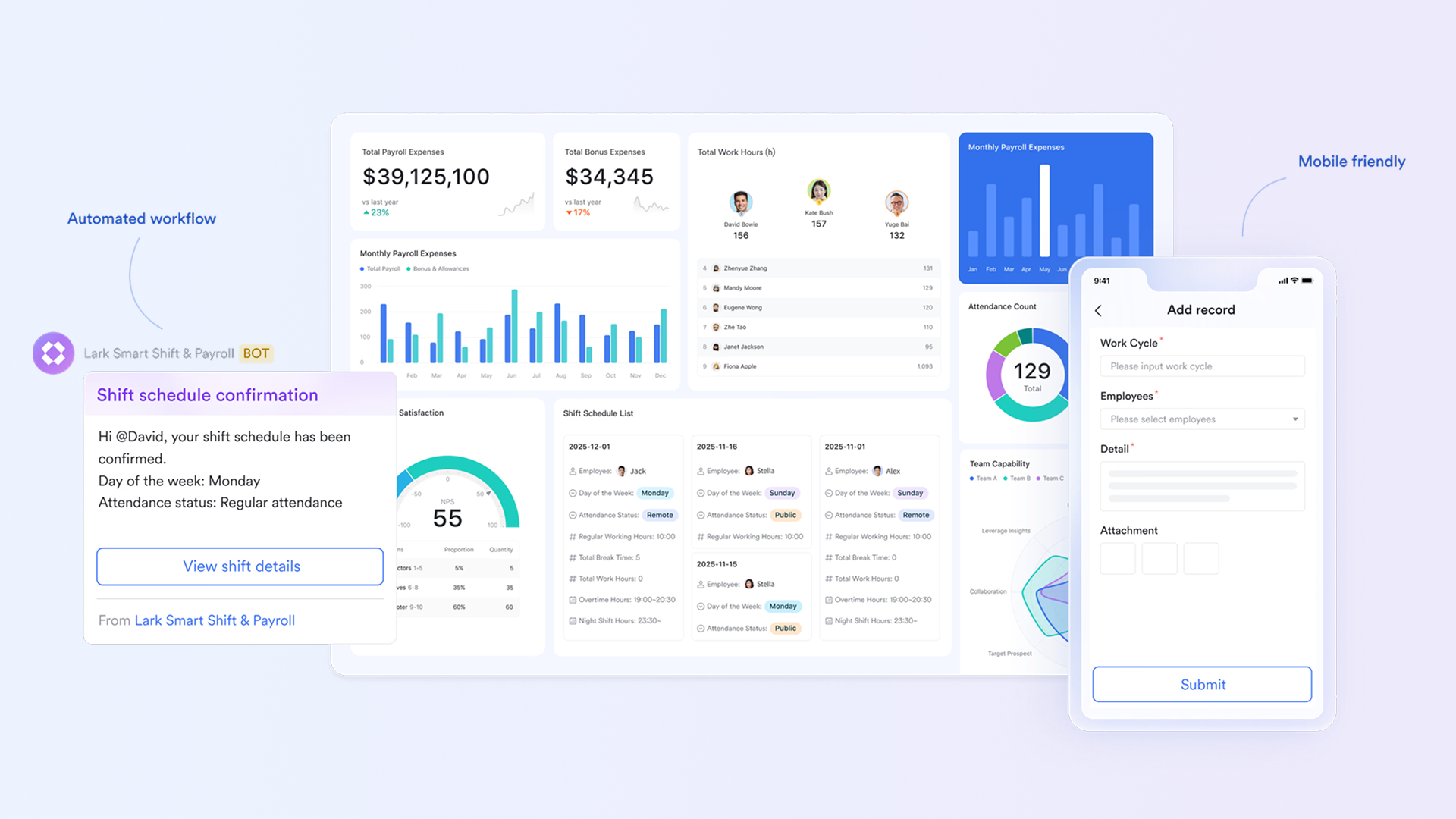
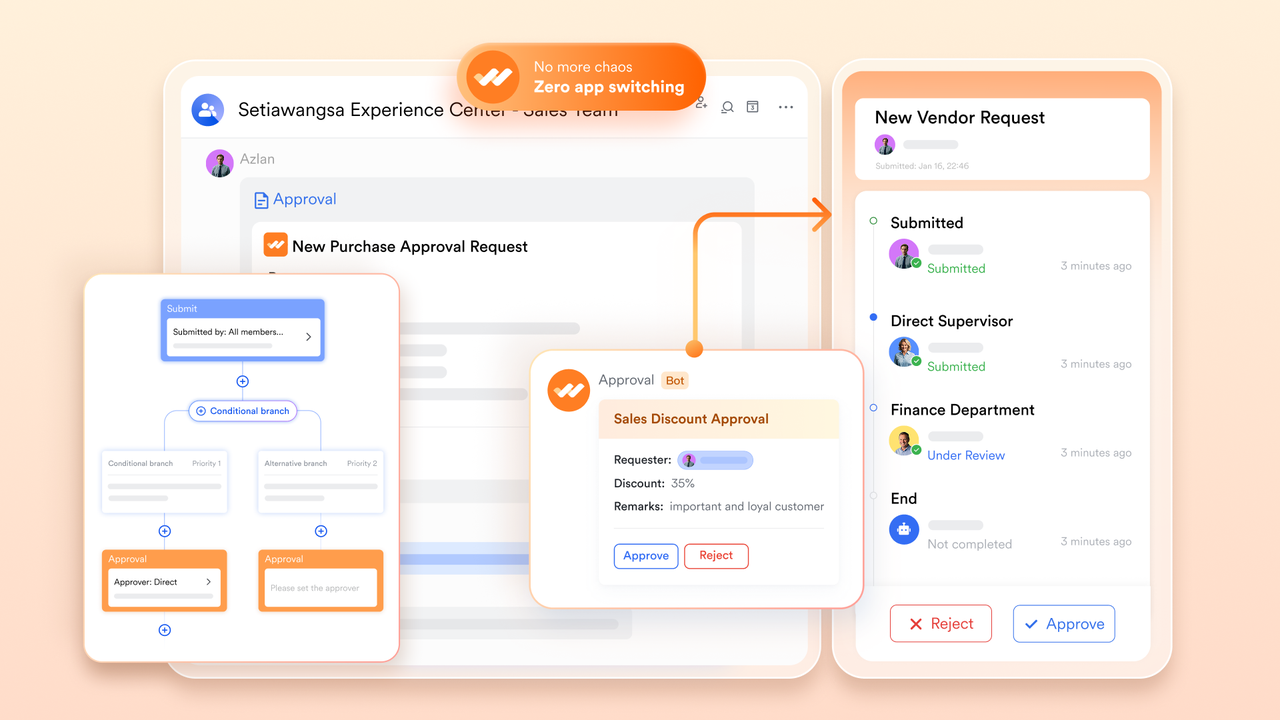
Lark Approval: Faster, traceable admission decisions
Admissions often require multi-step approvals—from verifying eligibility for faculty and committee sign-offs. Lark Approval eliminates the need for long email chains or paperwork by turning these steps into automated, transparent workflows.
Example: When an application is marked Ready for Review in Lark Base, an automated workflow triggers an approval request to the admissions committee. Each member receives a notification in Lark Messenger, reviews the application file, and approves or comments directly. Once all approvals are complete, the decision is logged into Base with timestamps, creating a clear audit trail for compliance.
Lark Docs: Collaborative document preparation and review
Admissions teams often collaborate on brochures, acceptance letters, and interview guides. Lark Docs provides real-time co-editing, commenting, and version tracking so that everyone can contribute efficiently without confusion.
Example: The marketing team drafts the admission offer letter in Lark Docs. At the same time, the admissions director adds a note to update tuition details, while the legal team comments on compliance language. Once finalized, the document can be stored in Lark Wiki or linked directly within Base, ensuring version control and accessibility for all departments.
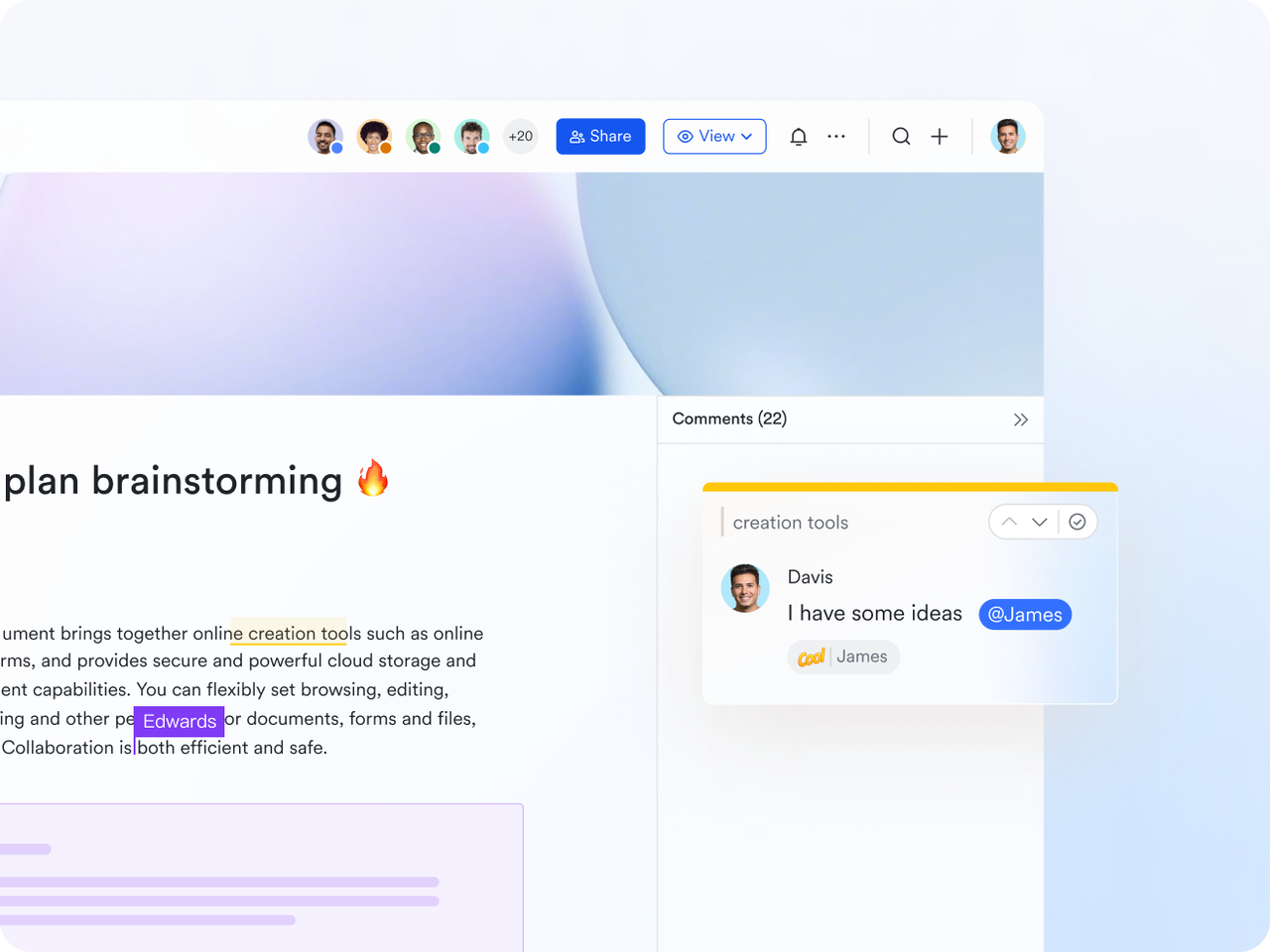
Lark Messenger: Real-time communication and coordination
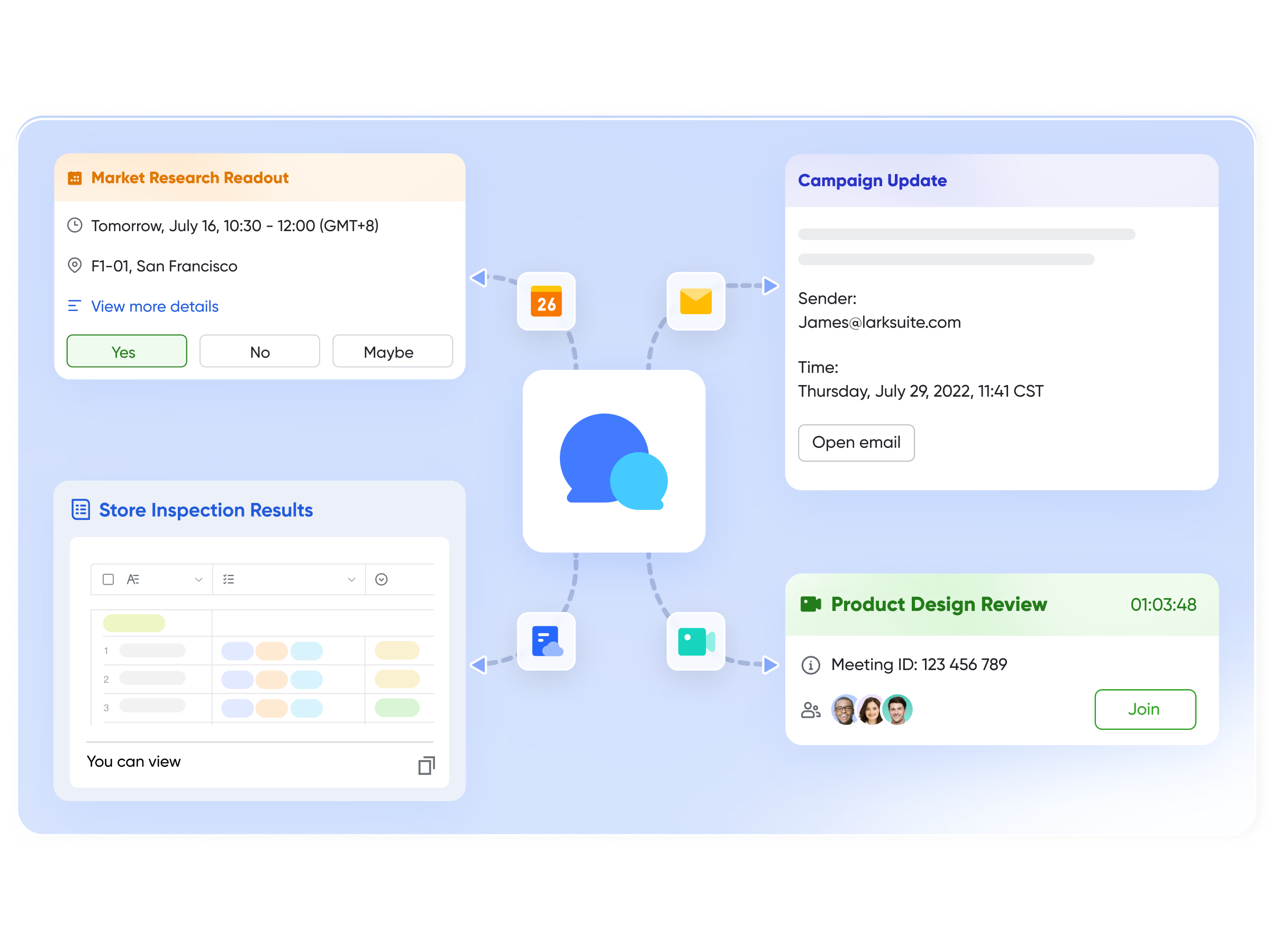
Admissions teams rely heavily on fast communication, especially when managing deadlines, applicant queries, or interview schedules. Lark Messenger keeps everyone connected with organized group chats, topic channels, and message-to-task conversion.
Example: The admissions coordinator creates a chat group for the "MBA 2025 Intake." When an applicant requests to reschedule an interview, the message is converted directly into a Lark Task, assigned to the interviewer, and tracked until completion. This eliminates the need for scattered emails and ensures no request is overlooked.
Lark Calendar: Organizing interviews and key deadlines
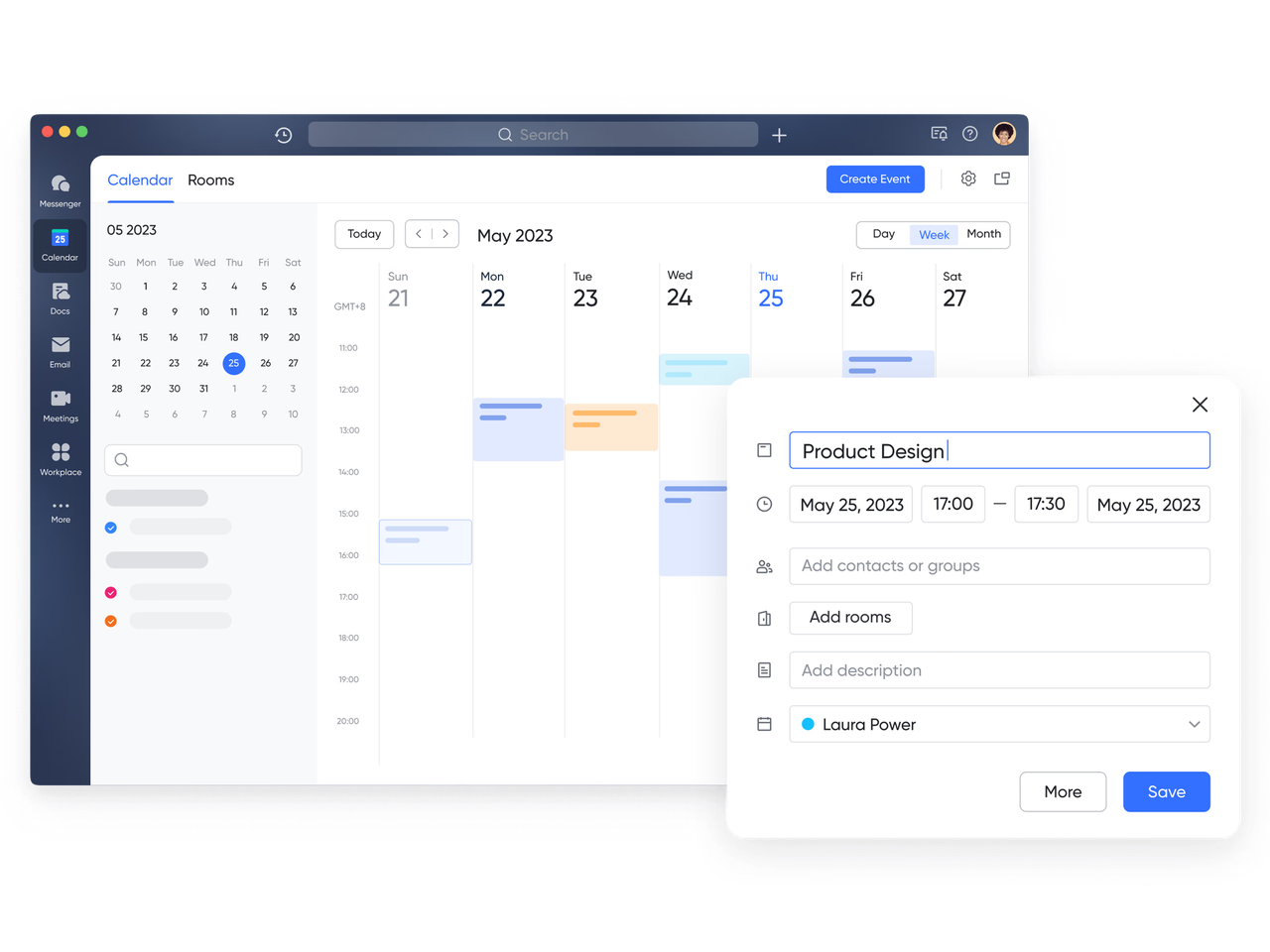
Scheduling multiple interviews and review sessions can quickly become chaotic. Lark Calendar ensures seamless scheduling by showing real-time availability of interviewers and staff.
Example: An admissions officer can schedule a group interview session for shortlisted candidates. The calendar automatically checks for time conflicts, sends invites, and syncs the event with all participants' schedules. The meeting notes or outcomes can later be recorded in Base for transparency.
- Starter plan: Free forever plan that includes 11 powerful tools for up to 20 users. It also comes with 100GB of storage, 1000 automation runs, AI translations, and more.
- Pro plan: $12/user/month (billed annually) for up to 500 users. It includes everything in Starter plus group calling for up to 500 attendees, 15TB of storage, 50,000 automation runs, and more.
- Enterprise plan: Contact sales for custom pricing. Supports unlimited users and includes even more automation runs and advanced security, compliance, and management features.
2. Element451: Intelligent CRM for student enrollment
Element451 is a next-generation CRM focused on recruitment and enrollment management. It uses AI to provide actionable insights, helping institutions identify prospective students who are most likely to enroll and engage. Beyond recruitment, it allows higher education teams to design personalized campaigns that improve student conversion rates and satisfaction. With detailed journey mapping, Element451 ensures each prospective student receives timely, relevant communications tailored to their interests, making it a powerful tool for data-driven admissions teams.
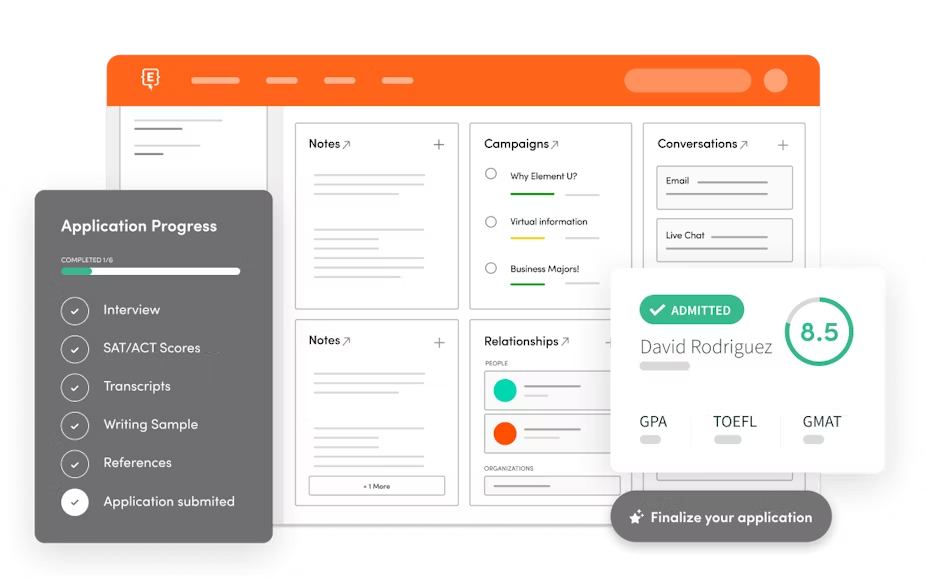
Image source: element451.com
Key features:
- AI-powered student prospect scoring to prioritize engagement.
- Multi-channel communication: email, SMS, and social campaigns.
- Student journey mapping with automated nurture campaigns.
- Integration with SIS, LMS, and reporting dashboards.
- Analytics for conversion rates, enrollment trends, and campaign ROI.
- Customizable workflows for admissions, events, and outreach activities.
Best for: Data-driven admissions offices focused on increasing enrollment through personalized student engagement and automated campaigns.
Pricing: Custom, depending on institution size, features, and modules.
3. Ellucian CRM: Enroll, advise, and analyse
Ellucian CRM is a full-featured platform built specifically for higher education institutions. It centralizes student information and offers tools for recruitment, advising, retention, and alumni relations. The platform is designed to integrate seamlessly with campus management systems, providing a holistic view of each student's journey. Administrators can monitor progress, detect at-risk students, and design intervention strategies using advanced analytics, while advisors can manage communications and scheduling more efficiently.
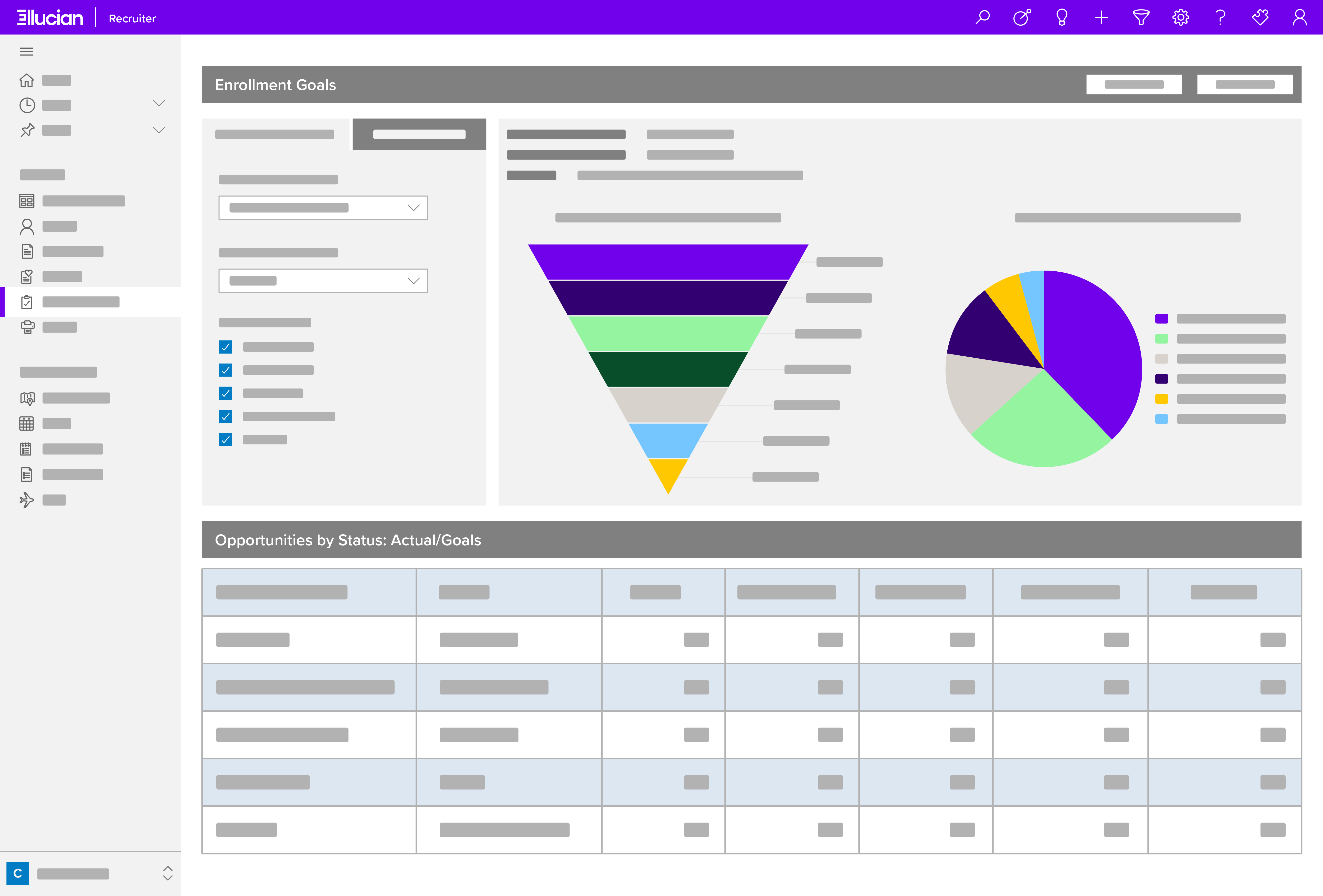
Image source: ellucian.com
Key features:
- Centralized student database with profile management.
- Integration with SIS, LMS, and academic workflows.
- Analytics dashboards for student success and retention trends.
- Automation for admissions follow-ups and student notifications.
- Event management for recruitment and alumni engagement.
- Mobile accessibility for advisors and staff in the field.
Best for: Universities seeking end-to-end campus management with integrated student success analytics.
Pricing: Custom, based on modules and institution size.
4. Salesforce CRM: Higher education and student lifecycle
Salesforce Education Cloud is a highly scalable CRM designed to handle the full student lifecycle, from admissions to alumni relations. Its customization and integration capabilities make it suitable for large universities with complex operations. Salesforce combines predictive analytics, automation, and marketing tools to deliver insights that can improve recruitment, retention, and engagement. Its cloud-based infrastructure allows institutions to unify student data across multiple departments, ensuring a consistent experience for applicants, students, and alumni.
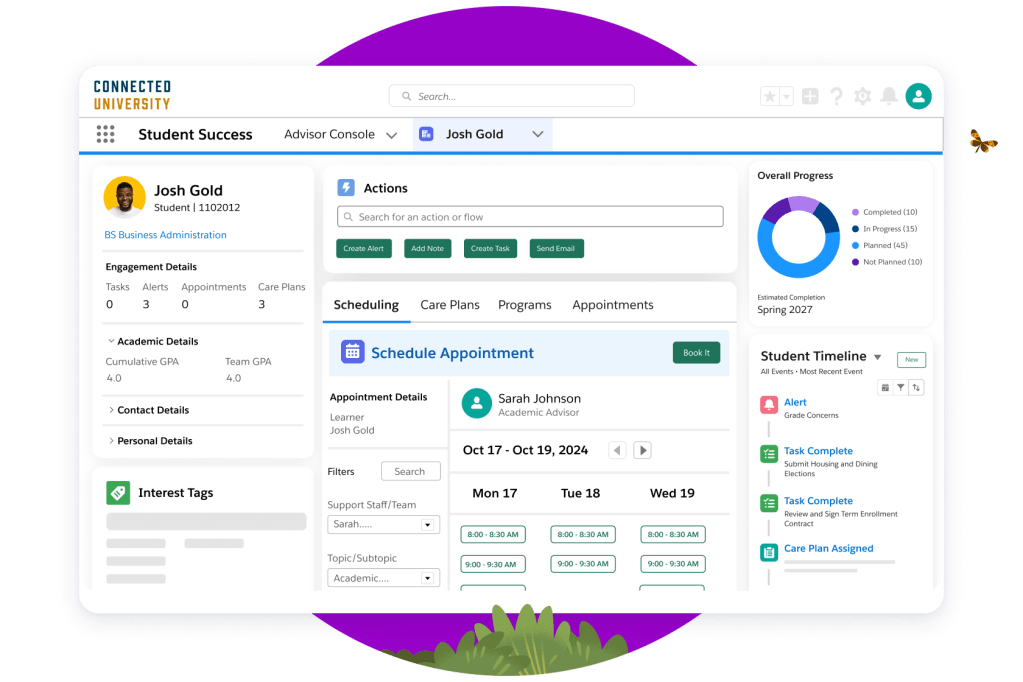
Image source: salesforce.com
Key features:
- Student lifecycle management with pipeline tracking.
- Integration with SIS and campus ERP systems.
- Predictive analytics for enrollment, retention, and fundraising.
- Multi-channel communication: email, SMS, social media.
- Customizable dashboards for admissions, student services, and alumni engagement.
- Automation of workflows, including alerts, approvals, and communications.
Best for: Large universities needing scalable, customizable CRM solutions for all stages of the student journey.
Pricing: Enterprise-level custom pricing depending on size and modules.
5. HubSpot CRM: Education, engagement, and evaluation
HubSpot CRM is known for its marketing automation features and ease of use, making it ideal for student recruitment and engagement campaigns. Universities can manage prospective student interactions, send targeted communications, and track engagement using detailed dashboards. HubSpot's intuitive interface and workflow automation help institutions nurture leads efficiently while integrating data from SIS and other campus systems for better decision-making.
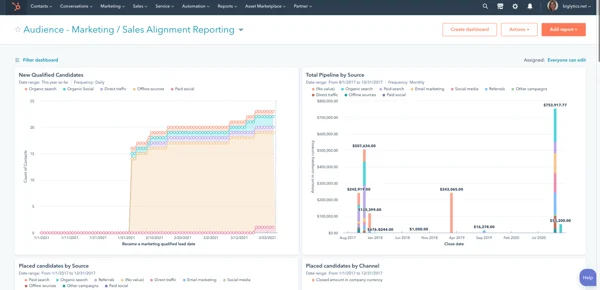
Image source: hubspot.com
Key features:
- Lead management and nurturing for admissions.
- Automated email and SMS campaigns.
- Analytics dashboards for campaign performance and student engagement.
- Integration with SIS, LMS, and other campus platforms.
- Contact segmentation is based on academic programs, interests, and demographics.
Best for: Marketing-driven institutions seeking an easy-to-use CRM for student engagement and recruitment campaigns.
Pricing: Free CRM; Marketing Hub plans start at $45/month.
6. CRMOne: Higher education CRM for student lifecycle
CRMOne is designed for mid-sized institutions requiring an affordable, practical CRM for student lifecycle management. It offers features for admissions, student database management, event coordination, and alumni relations, with integration capabilities for LMS and SIS systems. Its simplicity and usability make it suitable for institutions that prioritize ease of implementation over complex customization.
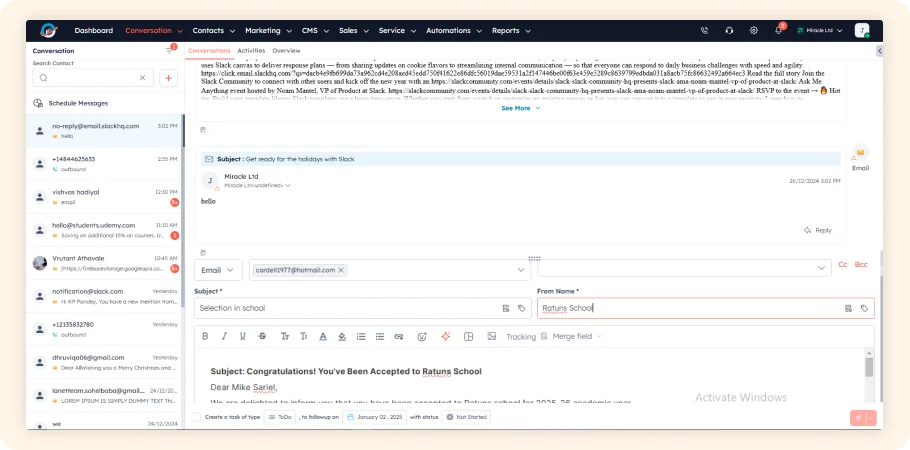
Image source: crmone.com
Key features:
- Admissions tracking and student database management.
- Event scheduling and communication.
- Alumni relations and donor engagement modules.
- Integration with SIS, LMS, and reporting tools.
- Customizable workflows for administrative efficiency.
Best for: Mid-tier colleges and universities seeking a practical, cost-effective CRM solution.
Pricing: Custom, based on institutional needs.
7. Slate CRM: Higher education admissions and enrollment
Slate CRM is built specifically for higher education admissions teams and excels at managing complex recruitment and enrollment workflows. It provides tools to manage applications, forms, and decision releases, while integrating with SIS and other campus management systems. Slate's strength lies in its ability to track each applicant's journey, automate communications, and generate actionable insights for admissions staff, allowing for more personalized engagement and higher conversion rates.
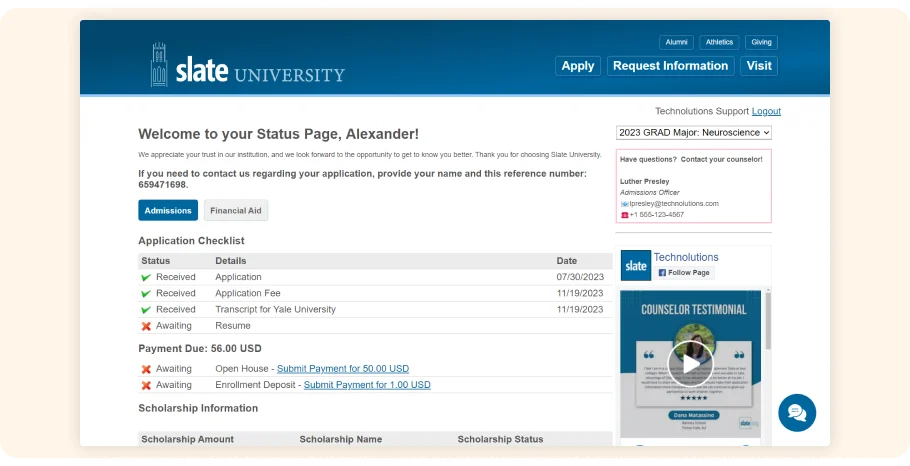
Image source: slate.org
Key features:
- Complete admissions workflow management from inquiry to enrollment.
- Application and form management with automated decision releases.
- Integration with SIS, financial aid, and academic systems.
- Detailed reporting and analytics on applicant trends, conversion rates, and enrollment forecasting.
- Multi-channel communication: email, SMS, and campus portal notifications.
- Event management for virtual and on-campus recruitment events.
Best for: Admissions teams manage high volumes of applicants and complex enrollment workflows.
Pricing: Custom, based on the number of students and modules selected.
8. TargetX: Student engagement and retention CRM
TargetX focuses on improving student engagement, retention, and success. Beyond recruitment, it offers robust tools for student support, including alerts for at-risk students, advising workflow automation, and engagement analytics. It allows universities to proactively identify students who may require additional guidance and deliver personalized interventions, fostering a higher retention rate and stronger student outcomes.
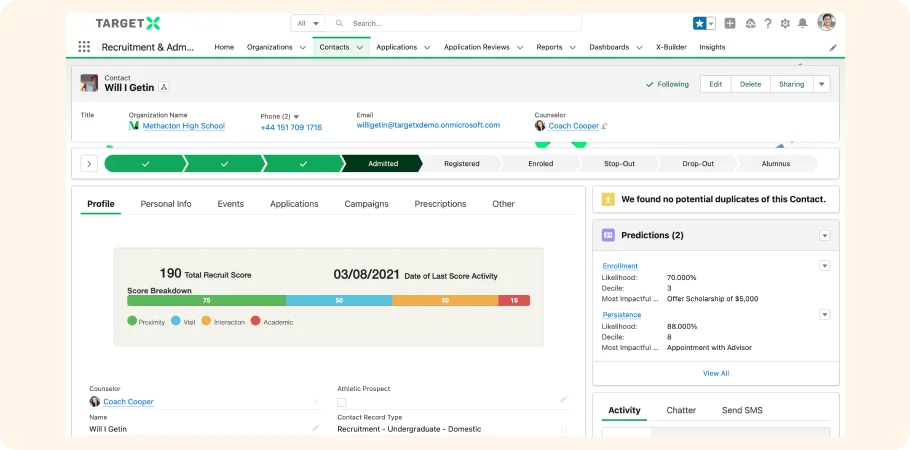
Image source: targetx.com
Key features:
- Recruitment campaign management with automation.
- Alerts for at-risk students and early intervention tracking.
- Advising on workflow automation and scheduling.
- Alumni and donor engagement modules.
- Mobile-friendly access for advisors and student support teams.
- Integrated analytics to track student success and retention trends.
Best for: Institutions focusing on student engagement, retention, and proactive advising.
Pricing: Custom, based on modules and institution size.
9. Pipedrive CRM: Admissions and student pipelines
Pipedrive offers a visually intuitive pipeline management system that simplifies student recruitment and applicant tracking. Its user-friendly interface allows admissions counselors to manage each prospective student effectively, monitor progress through the enrollment funnel, and automate follow-ups. While originally designed for sales teams, Pipedrive adapts well to higher education admissions, particularly for smaller institutions or departments seeking simplicity and efficiency.
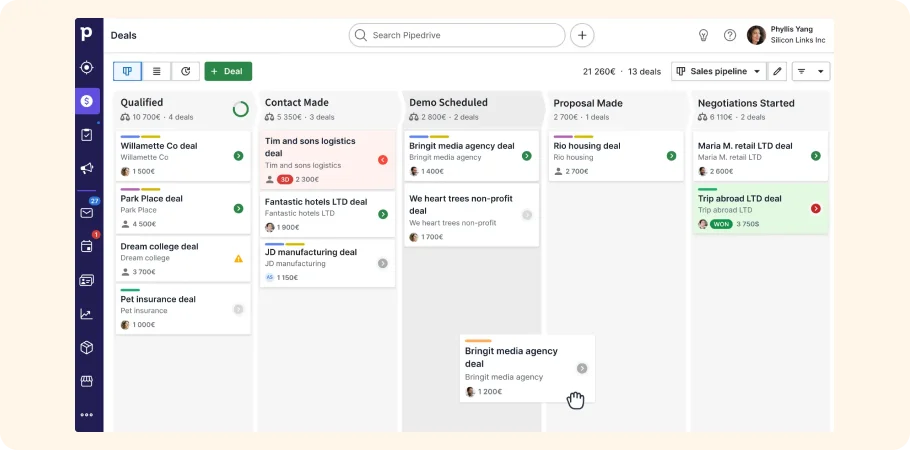
Image source: pipedrive.com
Key features:
- Visual admissions pipelines to track applicants.
- Automated follow-up reminders for counselors.
- Integration with Gmail, calendars, and reporting tools.
- Contact and communication management.
- Task automation for routine administrative workflows.
- Best for: Smaller universities or departments looking for a simple, visual admissions management tool.
Pricing:
- Essential Plan: $14/user/month (billed annually)
- Advanced Plan: $29/user/month
- Professional Plan: $59/user/month
10. Zoho CRM: For schools and colleges
Zoho CRM provides a cloud-based solution for managing student data, communication, and administrative workflows. It is highly customizable, enabling colleges to create modules for admissions, billing, course tracking, and alumni relations. Its affordable pricing and extensive automation options make it suitable for small to medium-sized institutions seeking a balance between functionality and cost-efficiency.
Image source: zoho.com
Key features:
- Multi-channel communication: email, SMS, and social.
- Workflow automation for student lifecycle tasks.
- Customizable modules for admissions, course tracking, and alumni management.
- Reporting dashboards for recruitment, student engagement, and performance metrics.
- Integration with other Zoho apps for finance, HR, and support.
Best for: Small to medium-sized colleges seeking an affordable, customizable CRM solution.
Pricing:
- Free Plan for up to 3 users
- Standard Plan: $14/user/month
- Professional Plan: $23/user/month
- Enterprise Plan: $40/user/month
11. LeadSquared CRM: For admission management
LeadSquared automates lead-to-enrollment workflows and provides comprehensive tracking of student interactions. With multi-channel communication, it allows universities to monitor calls, emails, and WhatsApp messages for a seamless admission experience. Its reporting capabilities help admissions teams evaluate counselor performance, conversion rates, and campaign effectiveness, making it a strong choice for institutions emphasizing lead management and enrollment efficiency.
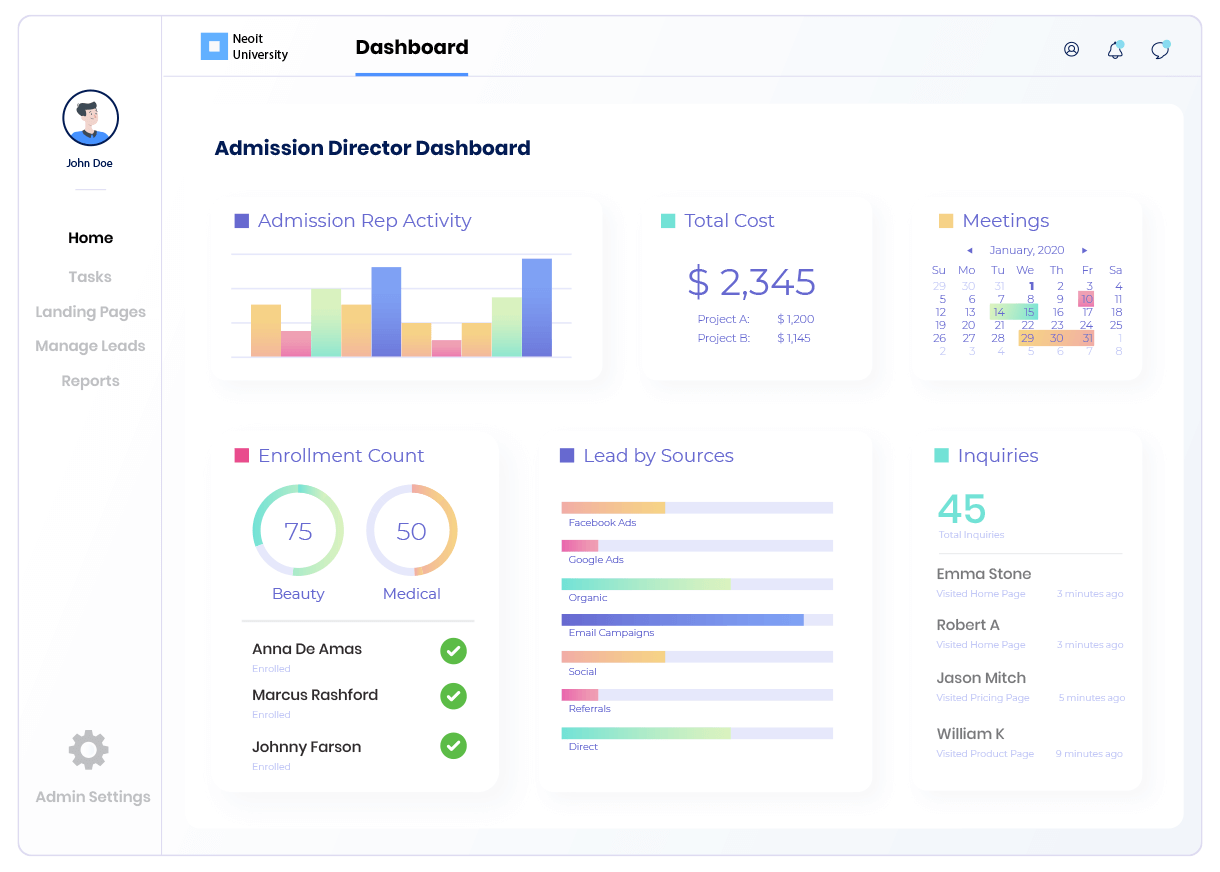
Image source: leadsquared.com
Key features:
- Automates lead capture, nurturing, and conversion to enrollment.
- Multi-channel tracking: calls, emails, SMS, WhatsApp.
- Analytics on counselor performance and recruitment campaigns.
- Workflow automation for follow-ups and event management.
- Integration with SIS and marketing platforms.
Best for: Universities prioritizing automated lead-to-enrollment management and multi-channel communication.
Pricing: Custom; Depending on institution size and modules.
12. Freshsales CRM: For higher education teams
Freshsales (Freshworks CRM) leverages AI for intelligent scoring of prospective students and integrates seamlessly with marketing automation tools for higher education. It provides a 360° view of all student communications, allowing admissions and marketing teams to engage leads more effectively. With AI insights, institutions can identify the most promising applicants, automate routine tasks, and focus on high-impact recruitment and retention strategies.
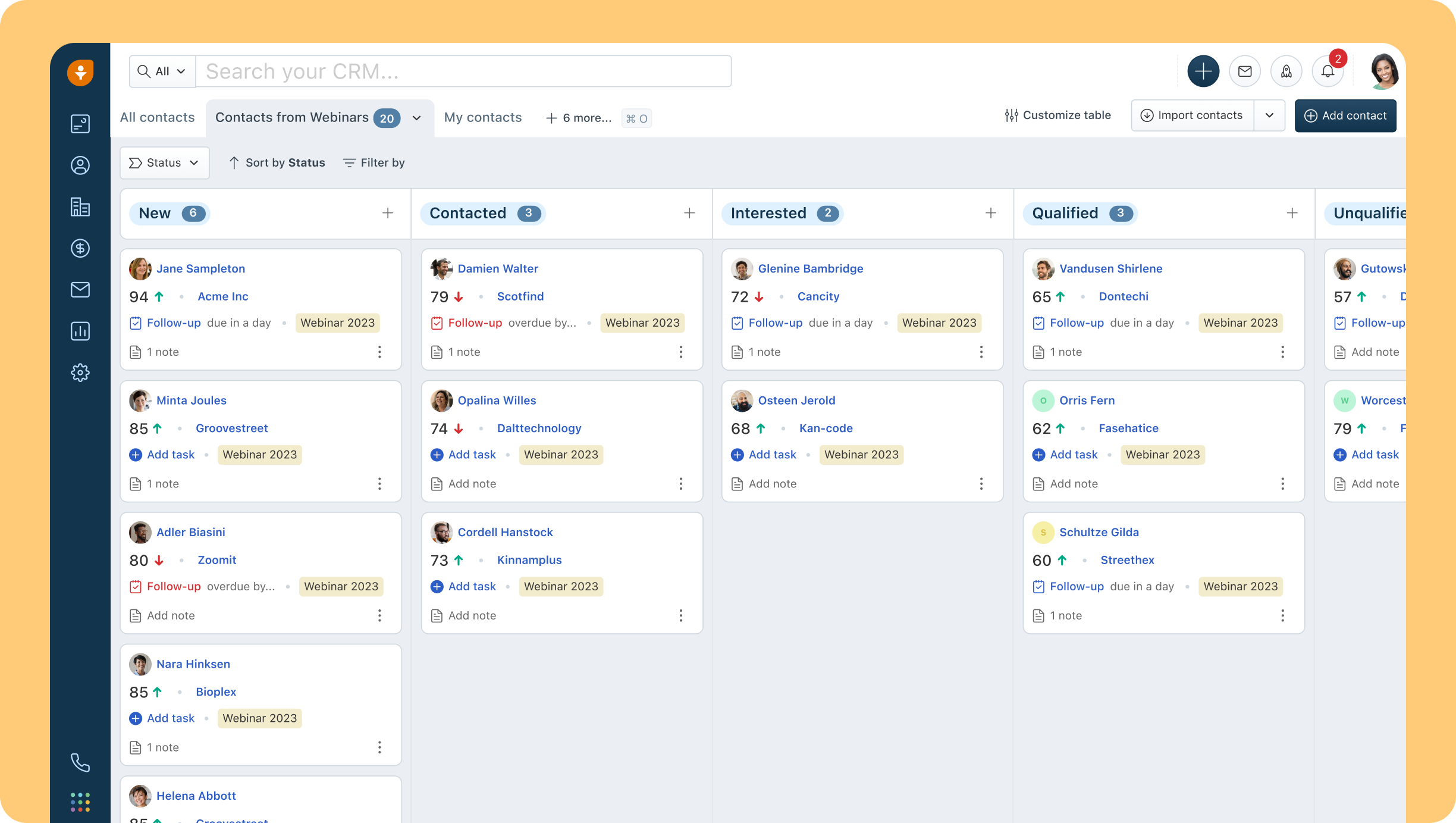
Image source: freshworks.com
Key features:
- AI-based lead scoring for prospective students.
- 360° student communication tracking.
- Integration with marketing automation platforms.
- Automation of routine administrative tasks and follow-ups.
- Reporting dashboards for recruitment and student engagement metrics.
Best for: Universities seeking AI-driven insights to improve student recruitment and engagement.
Pricing:
- Growth Plan: $15/user/month
- Pro Plan: $39/user/month
- Enterprise Plan: $69/user/month
How to pick the right CRM for your institution
Choosing a CRM for higher education is not just about picking software but selecting a strategic partner that will streamline operations, improve student experiences, and provide actionable insights. Here's a comprehensive approach:
- Scalability: Consider your institution's growth in student numbers, departments, and programs. A scalable CRM can accommodate increasing volumes of applicants, enrolled students, and alumni without performance degradation. Modular systems allow you to start with core features and expand as needs evolve.
- User experience: Staff and faculty adoption depends on an intuitive interface. Dashboards, workflow tools, and reporting features should be easy to navigate. Mobile-friendly solutions allow advisors and field staff to access student data on the go.
- Support and training: Evaluate vendor support options: onboarding, training, and technical assistance. Look for platforms offering role-based training sessions tailored for admissions, student services, and alumni teams. For technical staff certifications and professional upskilling, resources such as Exam Labs can support IT teams managing CRM platforms and integrations. Continuous learning resources like webinars, knowledge bases, and community forums enhance adoption.
- Budget and ROI: Compare the total cost of ownership: subscription fees, implementation costs, training, and maintenance. Assess ROI through time saved on administrative tasks, improved admissions conversion, retention rates, and alumni engagement. Cost-efficient platforms like Lark can reduce the need for multiple disparate tools by combining communication, collaboration, and automation.
- Flexibility and customization: Ability to tailor workflows, dashboards, and communication templates to your institution's unique processes. Customizable automation can handle student alerts, event invitations, follow-ups, and reporting. Ensure the CRM can adapt to policy or process changes without requiring a complete overhaul.
- Analytics and insights: Modern finance CRMs offer dashboards that visualize key metrics — recruitment funnels, customer engagement trends, retention, and fundraising pipelines. With tools like Lark Base dashboards, teams can build interactive reports that update dynamically from connected data sources. While fully predictive insight generation may go beyond current CRM scope, reporting tools should support both high-level strategic views and granular operational decision-making.
Challenges and best practices
Implementing a CRM in higher education brings immense potential—but it also comes with operational, technical, and cultural hurdles. Understanding these common challenges and following proven best practices helps institutions maximize adoption and long-term success.
Challenges:
- Adoption and change management: Staff resistance, lack of training, or unclear workflows.
- Data migration and maintenance: Ensuring legacy data integrity, avoiding duplicates, and periodic updates.
- Privacy and compliance: Adhering to FERPA, GDPR, and institutional policies while securing sensitive data.
- Integration complexity: Connecting CRM with SIS, LMS, and other academic systems.
- Measuring success: Difficulty quantifying ROI, tracking recruitment, or retention metrics.
Best practices:
When implementing a CRM in higher education, it's best to start with the core modules and gradually expand functionality as staff become familiar with the system. Providing hands-on training and ongoing support ensures that faculty and administrative teams can use the platform effectively and confidently.
Maintaining clean, updated data is critical for accurate reporting and meaningful insights, while prioritizing platforms with flexible workflows and collaboration tools helps tailor the system to the institution's unique processes. Regularly monitoring adoption and measuring engagement with actionable KPIs ensures the CRM delivers real impact. Platforms like Lark further simplify change management by centralizing communication, automating routine workflows, and keeping all teams aligned throughout the adoption process.
Conclusion
Selecting the right CRM for higher education can transform how institutions manage their operations and interactions. A well-chosen CRM simplifies admissions workflows and student communication, ensuring prospective students and current learners receive timely and personalized information. Beyond recruitment, it plays a vital role in enhancing student retention and engagement by monitoring academic progress, identifying at-risk students, and facilitating timely interventions. Additionally, it supports alumni and donor management, helping institutions maintain long-term relationships and encouraging continued contributions. Modern CRMs also offer powerful automation, mobile access, and collaboration tools, enabling faculty, staff, and administrative teams to work efficiently, stay connected, and manage processes seamlessly across departments.
Platforms like Salesforce provide enterprise-scale features but require higher budgets and complex customization. For institutions seeking a flexible, intuitive, and collaborative solution, Lark stands out by unifying communication, workflows, and data management in one accessible platform. Universities can centralize operations, improve student outcomes, and build connected, student-first ecosystems efficiently.
FAQs
How long does it take to implement a CRM system in a university?
Implementation can range from 4–6 weeks for smaller institutions to 3–6 months for large universities. Factors include data migration, SIS/LMS integration, workflow customization, and staff training. A phased rollout is often recommended to ensure smooth adoption.
Is CRM only useful for student admissions, or can it help in alumni relations too?
Modern higher education CRMs manage alumni engagement, donations, mentorship programs, and event management, maintaining a continuous lifecycle from prospect to alumnus, allowing institutions to nurture long-term relationships.
What kind of training is needed for staff to use a CRM effectively?
Role-specific training for admissions officers, academic advisors, faculty, and administrative staff is essential. Training typically includes hands-on sessions, workflow demonstrations, and ongoing support. Vendor documentation and webinars can also enhance adoption.
How secure is student data in CRM systems?
Enterprise CRMs comply with FERPA, GDPR, and other regional regulations. Security measures include role-based access, multi-factor authentication, encryption, audit trails, and routine security assessments to ensure sensitive student data is protected.
Can a CRM integrate with my existing Learning Management System (LMS)?
Yes. Most modern CRMs offer seamless integration with LMS and SIS platforms, allowing automated data sync for student records, academic performance, attendance, and engagement metrics, reducing duplication and improving workflow efficiency.
Related reading
Table of contents
Start using Lark today

Manage all your work in one place
Boost team efficiency by 10x
Save up to 70% on software costs
Table of contents
Start using Lark today
Manage all your work in one place
Boost team efficiency by 10x
Save up to 70% on software costs
Keep reading









2026 Lark Technologies Pte. Ltd.
Headquartered in Singapore with offices worldwide.






Explore: