














Decomposition in Project Management: Breaking Work into Manageable Success

Ryan Tanner
Product Marketing Specialist
Sep 18, 2026
Ryan Tanner
Sep 18, 2026

13 min read


In decomposition project management, even the most ambitious goals become achievable when broken down into smaller, structured tasks. This process helps teams move from big ideas to actionable steps. With tools like Lark, project managers can easily divide complex projects into manageable components while maintaining clear visibility across every stage.
Decomposition not only improves control over timelines, resources, and responsibilities, but also keeps teams aligned and focused. Whether it's developing software, launching a campaign, or managing daily operations, breaking work into clear, measurable tasks helps teams stay organized and turn big goals into steady, trackable progress.

What is decomposition in project management?
Decomposition in project management is the process of breaking down a project’s deliverables, goals, and work packages into smaller, more manageable components. It’s a structured way to move from a broad, high-level objective to clearly defined tasks that can be executed, tracked, and measured.
In simple terms, decomposition helps transform a complex goal—like “launch a new product”—into distinct, actionable parts such as market research, design, development, testing, and release. Each of these parts can then be further divided into specific tasks with assigned owners, timelines, and dependencies.
This structured breakdown gives project managers and teams a clear understanding of every layer of work involved. It enables more accurate time and cost estimation, clarifies accountability, and reduces the risk of missing critical tasks. Decomposition also creates a logical hierarchy, where every small task connects back to a larger deliverable and ultimately supports the overall project goal.
By using project management tools, teams can visualize this hierarchy across stages—seeing how individual tasks contribute to broader milestones. This clarity helps ensure that no effort is wasted, priorities stay aligned, and progress toward project objectives remains transparent and measurable.
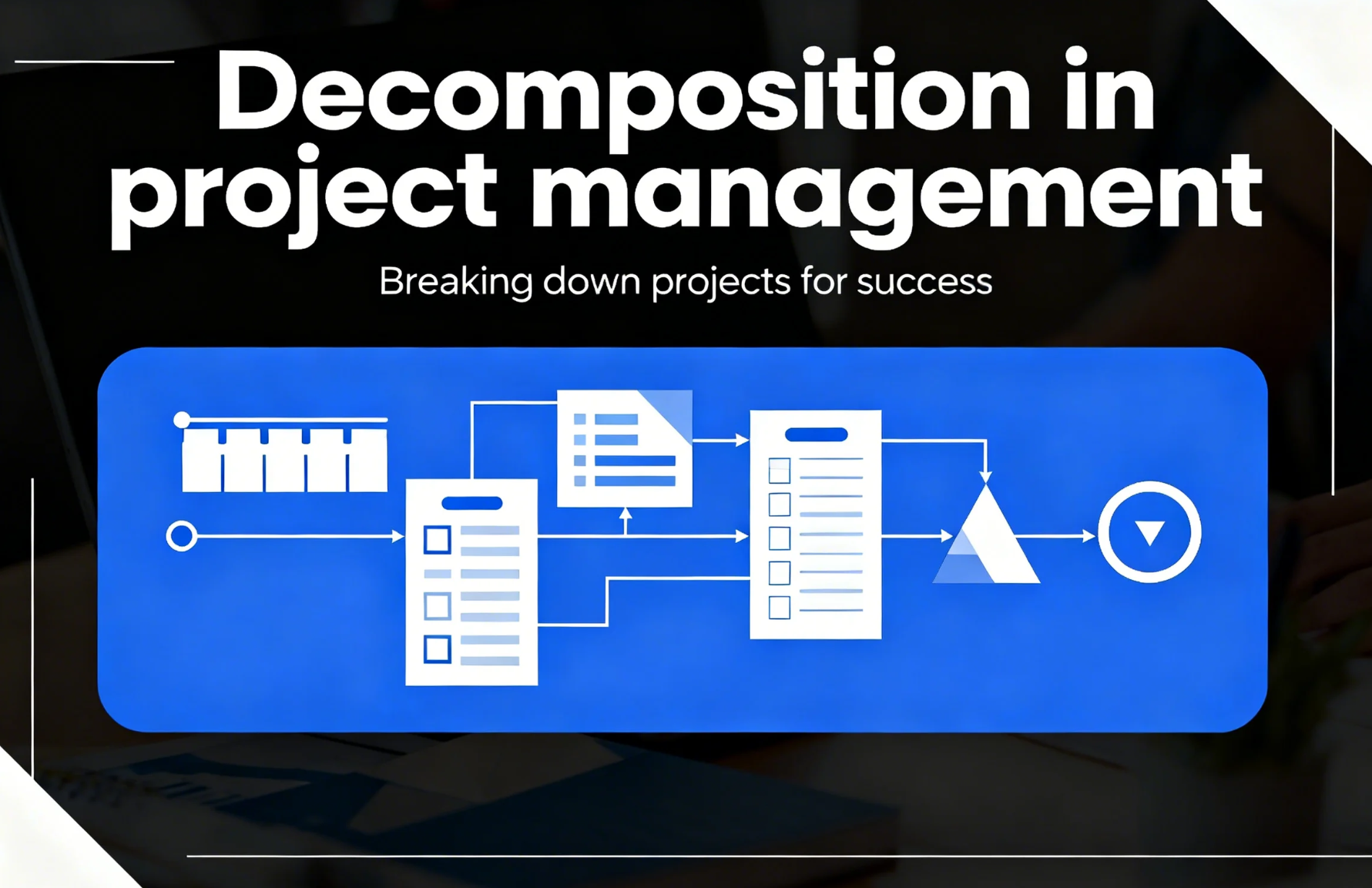
Image source: unsplash.com
How decomposition works in project management
Decomposition follows a structured approach that helps teams move from big-picture goals to detailed action plans. Here's how the process typically works:
- Define the overall goal or deliverable: Start by outlining the main objective—for example, "Develop a new mobile app." This gives everyone a clear vision of what success looks like.
- Identify main deliverables: Break the project into its primary components, such as design, frontend, backend, testing, and release. Each deliverable represents a key phase of the project.
- Break deliverables into sub-tasks: Go deeper by dividing each deliverable into smaller tasks. For instance, under design, you might include UI wireframes, UX flows, and interactive prototypes. These detailed tasks make planning and execution easier.
- Assign ownership and deadlines: Once tasks are defined, allocate responsibilities to specific team members and set realistic deadlines. This ensures accountability and prevents overlap.
- Visualize and track progress: Monitoring progress is essential for keeping the project on track. Teams typically use dashboards or visual boards to see which tasks are in progress, completed, or delayed. Use tools like Lark Base to organize tasks, link dependencies, and monitor progress in real time. Lark's clear dashboards and collaborative features help teams stay aligned and adjust quickly when priorities change.
By following these steps, project managers can turn large, complex initiatives into well-structured plans that are easy to manage and execute efficiently.
Why do you need decomposition for project success
Decomposition is more than just breaking work into pieces—it's the foundation for organized and predictable project execution. When a project is divided into smaller, well-defined tasks, teams gain a clearer sense of direction and responsibility.
- Improved clarity: When projects are decomposed into smaller, detailed tasks, everyone gains visibility into what needs to be done, when it’s due, and how it connects to the broader goal. This transparency eliminates confusion, reduces overlap, and helps teams prioritize work based on impact and dependencies.
- Accurate estimation: Breaking large deliverables into smaller, measurable parts makes it much easier to predict timelines, allocate resources, and set realistic budgets. Each task’s scope is easier to evaluate, helping managers create more precise schedules and reducing the likelihood of missed deadlines or cost overruns.
- Risk reduction: Decomposition exposes potential issues early by allowing managers to view the project in granular detail. When each component is clearly defined, risks such as delays, resource shortages, or dependency conflicts can be identified and mitigated before they escalate into major setbacks.
- Better accountability: With smaller, clearly assigned tasks, it becomes easier to track ownership and ensure follow-through. Team members know exactly what they are responsible for, promoting a sense of accountability and ownership that drives higher quality work and consistent delivery.
- Performance tracking: Monitoring progress across smaller, interconnected tasks provides real-time insights into team performance. Managers can quickly identify bottlenecks, evaluate productivity, and make data-driven adjustments to keep the project aligned with goals and deadlines.
With platforms like Lark, this process becomes even smoother. Teams can use Lark Base to decompose projects into structured boards or Gantt charts, where each task includes assignees, dependencies, and progress indicators. Real-time updates, automated reminders, and collaborative tools like Lark Tasks and Lark Docs ensure every team member stays informed and accountable.
Challenges in implementing decomposition
While decomposition can make projects more manageable, it's not without challenges. Teams often struggle to find the right balance between clarity and complexity.
- Improved clarity: When projects are decomposed into smaller, detailed tasks, everyone gains full visibility into what needs to be done, when it’s due, and how it connects to the broader goal. This transparency eliminates confusion, prevents overlap, and helps prioritize high-impact work.
- Accurate estimation: Smaller, well-scoped tasks make it easier to forecast time, costs, and resources. Teams can assess each task’s complexity, identify dependencies early, and set realistic delivery schedules that improve overall project predictability.
- Risk reduction: By viewing the project at a granular level, potential bottlenecks, resource constraints, or dependency conflicts become easier to spot and resolve. Early detection of risks helps managers take proactive measures to avoid major setbacks.
- Better accountability: When every task has a defined owner, responsibility becomes clear and measurable. This sense of ownership promotes engagement, consistent follow-through, and a stronger performance culture across the team.
- Performance tracking: Decomposed tasks allow managers to monitor progress in real time, identify delays, and adjust plans quickly. Performance insights gathered from smaller milestones make it easier to stay aligned with long-term goals and maintain momentum.
That's where Lark makes a difference—providing a dynamic, connected environment that keeps all your project components in sync. With real-time updates, linked workflows, and centralized communication, Lark helps teams apply decomposition efficiently while staying flexible as projects evolve.
Action time: Use Lark to apply decomposition effectively
Lark provides an all-in-one workspace that helps teams break complex projects into clear, actionable components. Using tools like Lark Base, Tasks, and Docs, you can decompose high-level goals into specific milestones, assign responsibilities, and visualize dependencies in Gantt or Kanban views. Real-time collaboration through Messenger and Meetings ensures every subtask stays aligned with the bigger objective, keeping execution structured, traceable, and efficient.
Lark Base: Visualize and manage decomposed projects
Lark Base turns project decomposition into a visual, collaborative experience. Instead of juggling scattered spreadsheets or static plans, teams can build structured, interconnected workflows that make every layer of a project visible.
- Create hierarchical task structures: Use tables, kanban boards, and custom fields to organize tasks by phase, priority, or owner. This helps visualize how smaller components connect to larger goals.
- Link related deliverables and subtasks: Clearly show the relationship between parent and child tasks, so everyone understands the project's structure at a glance.
- Automate progress updates: When subtasks are completed, top-level progress automatically adjusts, keeping managers informed without manual tracking.
By bringing hierarchy, automation, and real-time visibility together, Lark Base ensures that decomposition stays clear, connected, and easy to manage from start to finish.
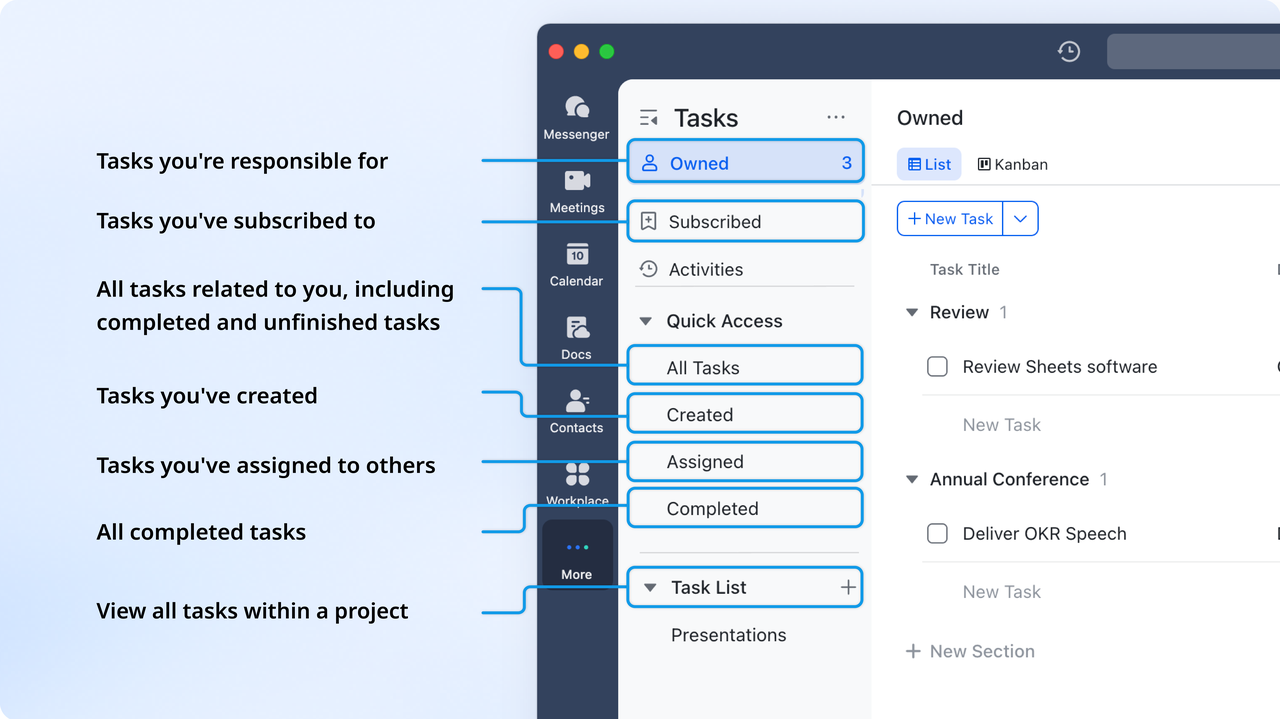
Lark Tasks: Ownership and accountability
Assigning tasks effectively is key to making decomposition work, and Lark Tasks simplifies this process. By breaking larger projects into smaller, actionable tasks, managers can ensure every piece of work has a clear owner.
- Assign tasks to team members: Each decomposed task can be allocated to a specific individual, promoting accountability and reducing confusion.
- Use priorities, labels, and due dates: These tools provide clarity on what needs attention first and help teams stay aligned with project timelines.
- Track progress anytime, anywhere: With Lark's mobile version, team members and managers can view task updates, add comments, and stay informed on the go—ensuring nothing slips through the cracks.
By combining task-level ownership with real-time visibility, Lark Tasks turns decomposition from a planning step into a practical, actionable system for achieving project goals efficiently.
Lark Docs: Plan and document decomposition
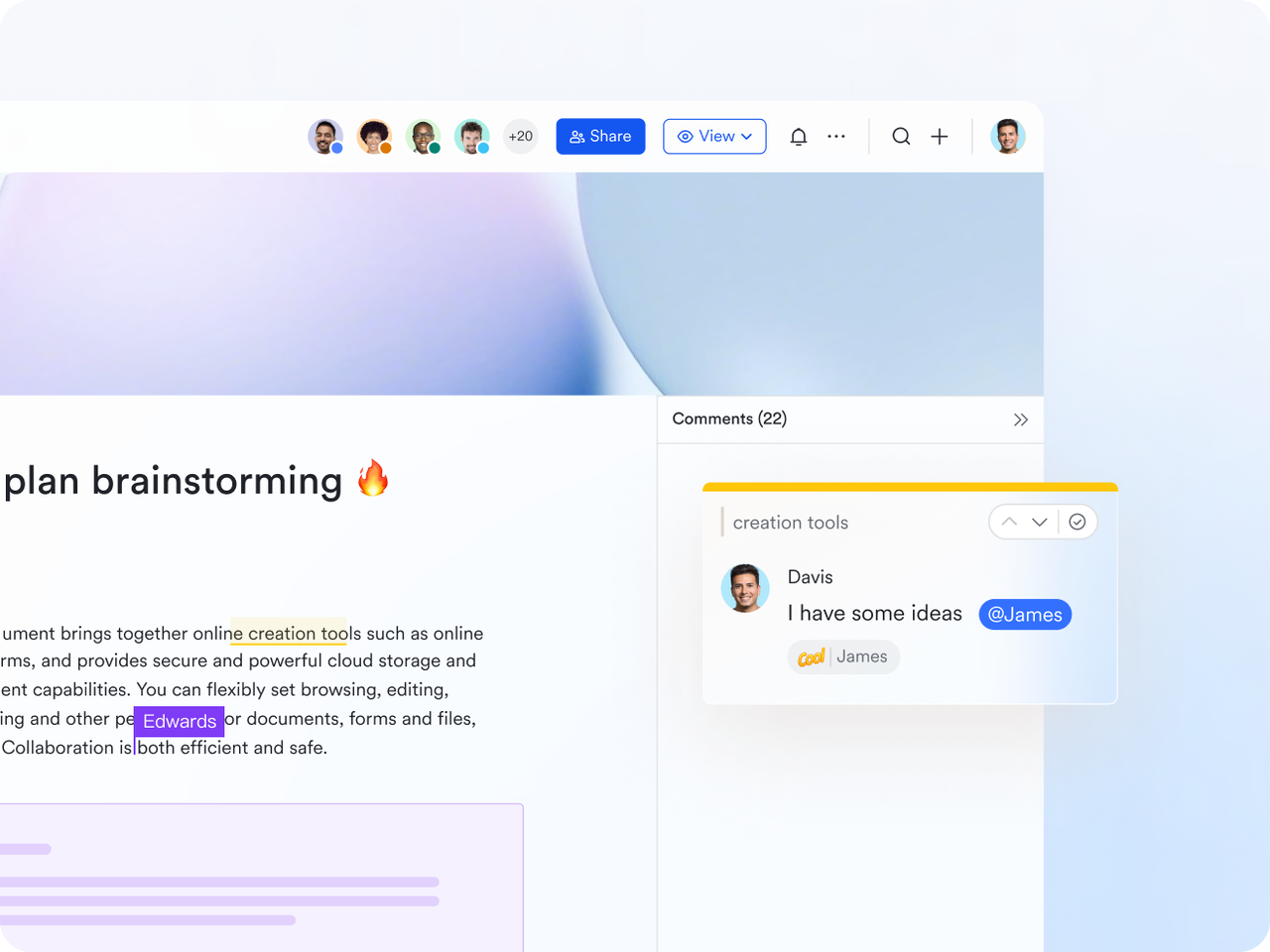
Maintaining clear communication and traceability is critical when managing decomposed projects, and Lark Docs makes it simple. Teams can capture their work breakdown structure (WBS) or full project plan collaboratively in one place, keeping everyone aligned from planning to execution.
- Collaborative planning: Draft, edit, and refine your WBS or project plan with input from the entire team in real time.
- Link to live tasks or base entries: Connect each section of your plan directly to active tasks, ensuring updates and progress are visible across tools.
- Version control and visibility: Track document history and changes, so teams always work from the latest information.
- Centralized knowledge hub: Keep meeting notes, plans, and progress reports together, making it easy to revisit decisions or share updates with stakeholders.
By combining collaborative documentation with seamless connectivity across tools, Lark Docs ensures that decomposition remains transparent, traceable, and accessible to everyone—turning plans into living documents that drive project success.
Lark Messenger & Lark Meetings: Communicate decomposition in real time
Effective communication is essential for ensuring that decomposed tasks are understood and executed correctly. Lark Messenger and Lark Meetings make it easy to keep discussions connected to the work itself.
- Discuss tasks in context: Teams can chat about specific decomposed tasks in dedicated threads or hold quick video meetings to clarify details.
- Convert conversations into action items: Important points from discussions can be turned into tasks instantly, ensuring nothing gets lost.
- Maintain contextual links: All communication stays tied to the relevant tasks or deliverables, making it easy to track decisions and follow-ups.
By keeping messaging and meetings closely connected to the project structure, Lark ensures that every discussion directly contributes to progress and accountability.
- Starter plan: Free forever plan that includes 11 powerful tools for up to 20 users. It also comes with 100GB of storage, 1000 automation runs, AI translations, and more.
- Pro plan: $12/user/month (billed annually) for up to 500 users. It includes everything in Starter plus group calling for up to 500 attendees, 15TB of storage, 50,000 automation runs, and more.
- Enterprise plan: Contact sales for custom pricing. Supports unlimited users and includes even more automation runs and advanced security, compliance, and management features.
Example workflow: Decomposition in Lark
To see decomposition in action, consider a product development team rolling out a new feature. Using Lark, the process becomes structured, collaborative, and easy to track.
- Level 1 goal: "Feature X Launch" defines the overall objective.
- Level 2 deliverables: The project is broken into major phases—research, design, build, test, and deploy.
- Level 3 tasks: Subtasks for each phase are created in Lark Base and assigned to specific owners.
- Tracking progress: Lark Tasks monitors each subtask by sprint, providing real-time visibility of progress.
- Collaboration: Weekly Lark Meetings review progress, while Lark Docs maintain documentation and plan details.
- Automation: Alerts trigger when subtasks are completed, automatically updating milestone progress.
This workflow demonstrates how Lark brings decomposition to life—ensuring goals are clear, responsibilities are defined, and progress is visible at every level.
Conclusion
Decomposition in project management is more than just breaking a project into smaller pieces—it's about creating structure, visibility, and accountability across every stage of work. By organizing deliverables into clear, actionable tasks, teams can plan with greater precision, reduce risks, and track progress with confidence. This approach helps managers stay focused on outcomes while ensuring that every team member understands their role in achieving success.
With platforms like Lark, decomposition becomes even more powerful. Lark connects planning, documentation, and execution in one collaborative workspace, allowing teams to visualize progress, communicate in context, and adjust swiftly as priorities evolve. It transforms decomposition from a static plan into a dynamic system—helping teams deliver complex projects on time, with clarity and alignment.
FAQs
What is decomposition in project management?
Decomposition is the process of breaking down project deliverables and tasks into smaller, manageable components to improve planning, tracking, and execution.
How does decomposition differ from task breakdown?
Task breakdown focuses on splitting individual tasks into steps, while decomposition applies to the entire project, organizing all deliverables and work components hierarchically.
Why is decomposition important for project planning?
It improves clarity, ensures accurate timelines and budgets, reduces risks, and makes accountability and progress tracking easier.
What are some common decomposition techniques?
Popular methods include Work Breakdown Structure (WBS), mind mapping, and phase-based decomposition to organize work logically and hierarchically.
How can Lark help manage decomposed tasks across teams?
Lark provides Base, Tasks, Docs, and Messenger, enabling teams to assign owners, track progress, collaborate in real time, and keep all tasks linked to project goals efficiently.
Related reading
Table of contents
Start using Lark today

Manage all your work in one place
Boost team efficiency by 10x
Save up to 70% on software costs
Table of contents
Start using Lark today
Manage all your work in one place
Boost team efficiency by 10x
Save up to 70% on software costs
Keep reading







2026 Lark Technologies Pte. Ltd.
Headquartered in Singapore with offices worldwide.






Explore: