














How to Improve Project Management Skills: 2026 Action Guide

Cecilia Lane
Go-to-Market Associate
Sep 18, 2026
Cecilia Lane
Sep 18, 2026

20 min read


In today's dynamic business environment, learning how to improve project management skills has become crucial for professional success. The project manager's role has evolved from simple task coordination to strategic leadership, requiring a blend of technical expertise, communication abilities, and digital proficiency. Whether you're advancing your career, transitioning into project management, or enhancing your current role, developing these skills is essential for navigating complex projects and leading distributed teams effectively.
This guide provides practical strategies and actionable advice on how to improve your project management skills, covering everything from fundamental competencies to tool options. You'll discover proven methods to develop both technical and interpersonal abilities that drive project success and career growth in today's competitive landscape.
Key takeaways
- Skills to improve project management skills:
- Creating a personal development plan starts with clear objectives
- Daily skill practice and improvement methods ensure consistent growth
- Effective learning resources provide diverse knowledge acquisition pathways
- Progress measurement techniques help maintain development momentum
- Workplace implementation strategies ensure practical skill integration:
- Toolkit for better project management
1. Lark: The all-in-one collaborative workspace
2. Asana: Work management with AI enhancements
3. ClickUp: Customizable productivity platform
4. Monday.com: Visual workflow automation
5. Teamwork.com: Client-focused project delivery

What are project management skills
Project management skills in 2025 represent a sophisticated blend of traditional competencies and modern capabilities designed to address today's complex business challenges. Understanding what these skills encompass is the first step in learning how to improve your project management skills effectively.
1. Technical and methodological expertise forms the critical foundation
- Project planning: Advanced techniques that accommodate both predictable and unpredictable variables
- Budget management: Skills extending beyond expense tracking to include financial forecasting and resource optimization
- Risk management: Comprehensive approach involving proactive challenge identification and strategic mitigation planning
- Quality assurance: Continuous monitoring process rather than final checkpoint validation
2. Communication and leadership capabilities have become increasingly vital
- Stakeholder management: Expert alignment among diverse parties with potentially conflicting interests
- Team leadership: Focus on inspiration and motivation, especially in remote environments
- Conflict resolution: Advanced techniques for maintaining productive working relationships
- Negotiation: Strategic approach to securing resources and managing expectations
- Presentation: Clear communication of project status and achievements to stakeholders
3. Digital literacy and tool mastery represent essential modern requirements
- Software proficiency: Mastery of project management platforms facilitating collaboration and tracking
- Data analysis: Skills enabling informed decisions based on performance metrics and trends
- Collaboration tools: Familiarity with technologies supporting distributed teamwork across locations
- Automation: Understanding possibilities for streamlining repetitive tasks and improving efficiency
4. Strategic thinking and business alignment complete the comprehensive skill set
- Organizational vision: Seeing beyond immediate goals to understand broader contributions
- Business acumen: Balancing project needs with organizational constraints and opportunities
- Change management: Skills supporting smooth implementation of new processes or technologies
- Adaptability: Adjusting approaches as circumstances evolve in dynamic environments
The integration of these skill areas creates a complete profile of effective project management in today's environment, with each component supporting and enhancing others.
Why improving project management skills matters
Understanding how to improve project management skills is crucial for professional advancement and organizational success in today's competitive landscape. Several compelling factors make this skill development more important than ever before.
The shift to remote and hybrid work models has transformed project execution
- Communication requirements: Enhanced skills for digital interactions replacing face-to-face communication
- Team cohesion: New approaches to maintaining unity and motivation without physical presence
- Technology proficiency: Essential knowledge for effective distributed collaboration
- Cultural awareness: Increased importance across global teams and diverse locations
Technological advancement and AI integration have revolutionized the field
- Automation impact: Routine task handling requiring higher-level oversight and interpretation skills
- AI tools: Valuable insights needing human judgment for strategic decision-making
- Data analytics: Essential skills for making informed decisions based on complex information
- Cybersecurity: Additional management responsibility for protecting sensitive information
Increased project complexity and scale demands sophisticated approaches
- Stakeholder diversity: Multiple parties with varied requirements and expectations
- Global operations: Additional complexity from regulations, cultural differences, and logistics
- Agility requirements: Need for rapid response and adaptation to changing circumstances
- Efficiency optimization: Increasingly valuable skills for resource-constrained environments
Career advancement opportunities directly link to skill development
- Organizational demand: Companies seeking comprehensive technical and leadership skill sets
- Certification expansion: Growing landscape of specialized credentials for different industries
- Leadership positioning: Continuous skill updating for advanced roles and responsibilities
- Industry mobility: Transferable expertise opening opportunities across various sectors
Organizational success and competitiveness depend on effective management
- Business growth: Direct contribution from well-executed projects to organizational development
- Profitability improvement: Efficient resource utilization enhancing financial sustainability
- Risk protection: Mitigation capabilities preventing setbacks and financial losses
- Customer satisfaction: Successful project delivery crucial for maintaining relationships and reputation
The convergence of these factors creates a powerful case for investing in project management skill development, benefiting both individual careers and organizational achievement. Professionals considering an MBA to accelerate their career growth can also benefit from MBA admissions consulting to effectively showcase their project management experience, leadership achievements, and long-term career goals.
How to develop & enhance project management skills
Learning how to improve project management skills requires a structured approach that combines theoretical knowledge with practical application. This comprehensive guide provides actionable strategies that will help you develop both technical expertise and leadership capabilities systematically.
1. Creating a personal development plan starts with clear objectives
- Self-assessment: Begin by evaluating your current strengths and identifying specific areas for improvement through honest reflection and feedback collection from colleagues and team members. Example: Use SWOT analysis to assess your strengths in risk management while identifying weaknesses in stakeholder communication.
- Goal setting: Establish SMART goals that are specific, measurable, achievable, relevant, and time-bound for skill development. Example: "Improve my presentation skills by delivering three successful project status updates to senior leadership within the next two months."
- Resource identification: Research and select appropriate learning materials, courses, and tools that match your learning style. Example: Combine online courses with hands-on tools for better task management proficiency.
- Timeline creation: Develop a realistic schedule with milestones that accommodate your professional and personal commitments. Example: Allocate 30 minutes daily for skill development and schedule bi-weekly progress review sessions.
- Progress tracking: Implement systems to monitor your advancement and make adjustments as needed throughout your journey. Example: Maintain a skills journal to document improvements and challenges in implementing new techniques.
2. Daily skill practice and improvement methods ensure consistent growth
- On-the-job application: Immediately implement new techniques in your current projects to reinforce learning through practical experience. Example: Apply new risk assessment frameworks to your active projects and compare outcomes with previous approaches.
- Micro-learning: Dedicate short, focused sessions daily to specific skill areas rather than infrequent marathon study sessions. Example: Spend 15 minutes each morning learning one new feature of your project management software.
- Role-playing scenarios: Practice difficult conversations and challenging situations through simulation before facing them in reality. Example: Rehearse stakeholder negotiation conversations with a colleague to improve your persuasion techniques.
- Peer feedback: Regularly seek constructive input from colleagues and team members to identify blind spots and improvement opportunities. Example: After team meetings, ask for specific feedback on your facilitation and communication effectiveness.
- Reflection practice: Maintain a learning journal to document successes, challenges, and insights from daily project experiences. Example: Record lessons learned from each project phase to identify patterns and improvement areas.
3. Effective learning resources provide diverse knowledge acquisition pathways
- Online courses: Platforms like Coursera, LinkedIn Learning, and PMI's own training offerings provide structured learning paths with expert instruction. Example: Enroll in "Project Management Foundations" on LinkedIn Learning to build core competencies systematically.
- Professional books: Select titles that combine theoretical foundations with practical applications from recognized industry experts and practitioners. Example: Read "The Project Manager's Guide to Mastering Agile" to understand agile methodologies implementation.
- Community engagement: Join project management forums, local PMI chapters, and online communities for peer learning, support, and networking opportunities. Example: Participate in local chapter events to connect with experienced project managers and learn from their experiences.
- Webinars and workshops: Participate in live events for current insights and opportunities to interact with experienced professionals and ask specific questions. Example: Attend agile methodology webinars to learn about latest best practices and tools.
- Certification programs: Consider formal credentials like PMP, CAPM, or agile certifications that validate your expertise and enhance professional credibility. Example: Pursue PMP certification to demonstrate comprehensive project management knowledge and commitment to professional development.
4. Progress measurement techniques help maintain development momentum
- Skill assessments: Use standardized tools and self-evaluation checklists to measure improvement in specific competency areas and track development. Example: Complete monthly self-assessments using PMI's competency framework to gauge progress in leadership skills.
- Project performance metrics: Track how skill application translates into improved project outcomes, team effectiveness, and stakeholder satisfaction. Example: Monitor project success rates and team productivity metrics after implementing new communication strategies.
- Feedback collection: Regularly gather input from stakeholders, team members, and mentors on your skill development progress and application effectiveness. Example: Conduct quarterly 360-degree feedback sessions to assess improvement in leadership and communication skills.
- Portfolio development: Document successful projects and skill applications as evidence of your growing capabilities and professional achievements. Example: Create a portfolio showcasing projects where you successfully applied new risk management techniques.
- Benchmark comparison: Compare your progress against industry standards and role models to maintain high achievement standards and identify growth areas. Example: Compare your project delivery timelines and budget performance against industry benchmarks.
5. Workplace implementation strategies ensure practical skill integration:
- Pilot projects: Test new skills on smaller initiatives before applying them to major, high-stakes projects to build confidence and refine approaches. Example: Implement new meeting facilitation techniques in team meetings before using them in client presentations.
- Change management: Prepare your team and stakeholders for new approaches and methodologies you intend to implement through clear communication and training. Example: Conduct training sessions to introduce your team to new project tracking tools and methodologies.
- Tool adoption: Gradually introduce new software and techniques while providing adequate training and support to ensure smooth transition and adoption. Example: Phase in new collaboration tools with comprehensive training and ongoing support for team members.
- Success celebration: Recognize and reward yourself and your team for successful implementation of new skills and achieved milestones. Example: Acknowledge team members who effectively adopt new project management practices during team meetings.
- Continuous improvement: Establish feedback loops to refine your approaches based on real-world results, lessons learned, and evolving best practices. Example: Conduct retrospective meetings after project completion to identify improvement opportunities for future initiatives.
By following this structured approach to skill development, you'll create a sustainable path toward mastering how to improve your project management skills. The combination of planning, daily practice, resource utilization, progress tracking, and workplace implementation ensures comprehensive professional growth.
Building your 2026 project management toolkit
1. Lark: The all-in-one collaborative workspace
Lark combines project management, document collaboration, team messaging, and video conferencing in one platform, providing end-to-end management from project planning to execution, solving tool fragmentation issues through a unified platform.
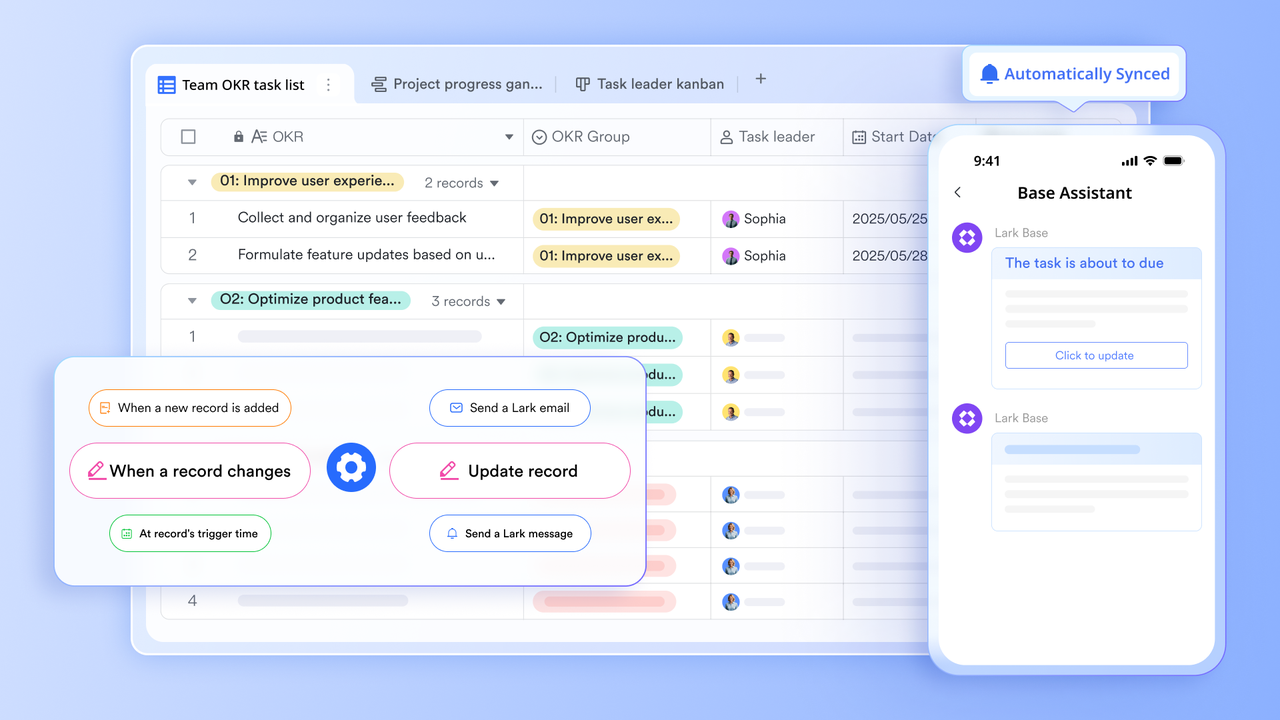
Core Features: Integrates project management, document collaboration, team messaging, and video conferencing
AI Capabilities: Automated meeting summaries, intelligent scheduling, AI-generated text in automations.
Key Functions:
- Dashboard functionality: Visual project management dashboards, one-click import of spreadsheets into interactive dashboards, providing real-time unified project views, supporting multi-dimensional data display including production and sales pipelines
- Automated workflow: No-code automated workflow builder, minute-level task automation setup, intelligent workflows keep projects moving forward, automatic task transition mechanisms (completion automatically triggers next phase)
- Real-time collaboration: Real-time document collaboration supporting brainstorming, drafting, and commenting, eliminating complex document organization requirements
- Knowledge management: Powerful search functionality to locate any document, supports advanced filtering criteria, serves as the ultimate knowledge management tool for teams
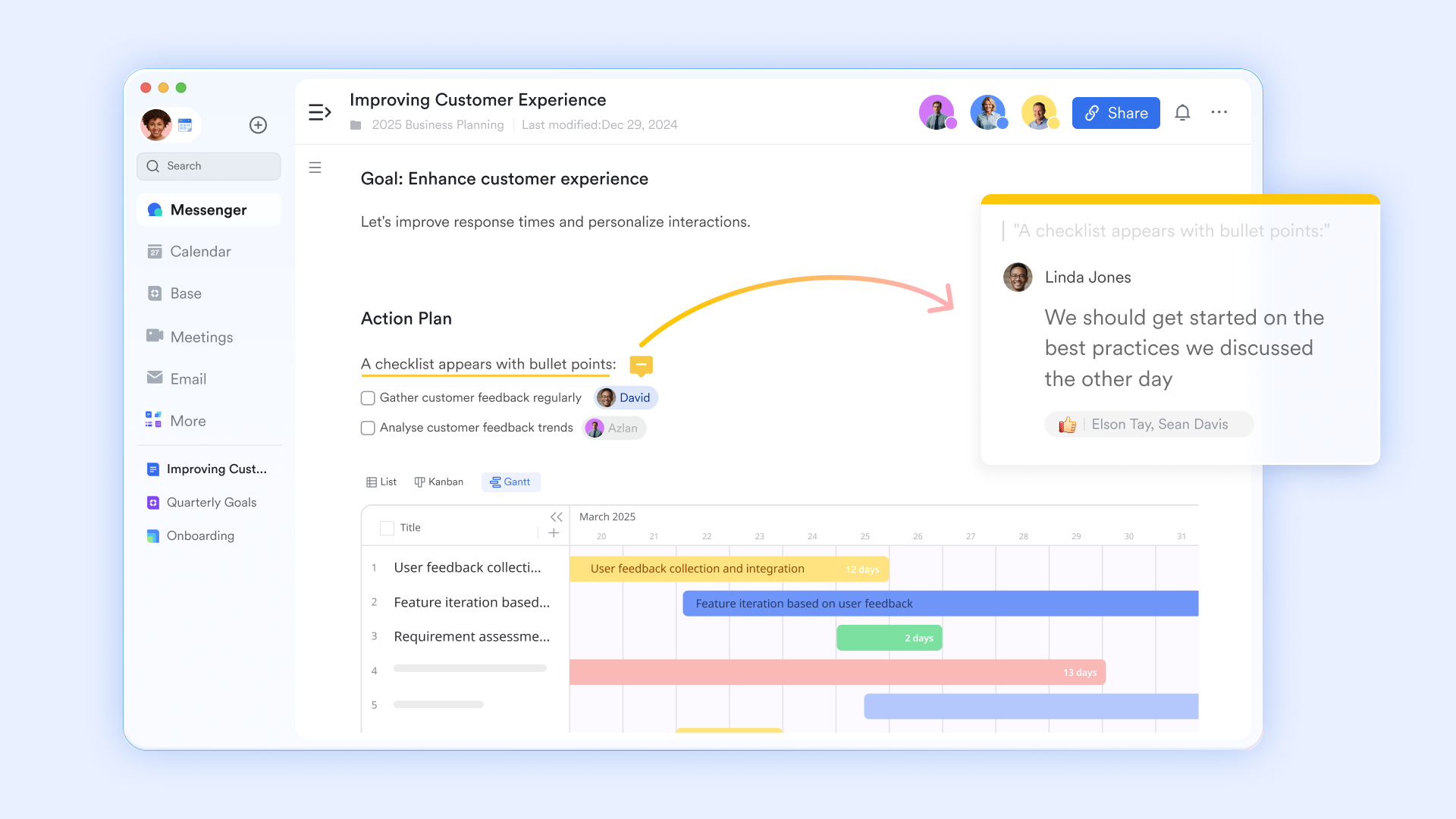
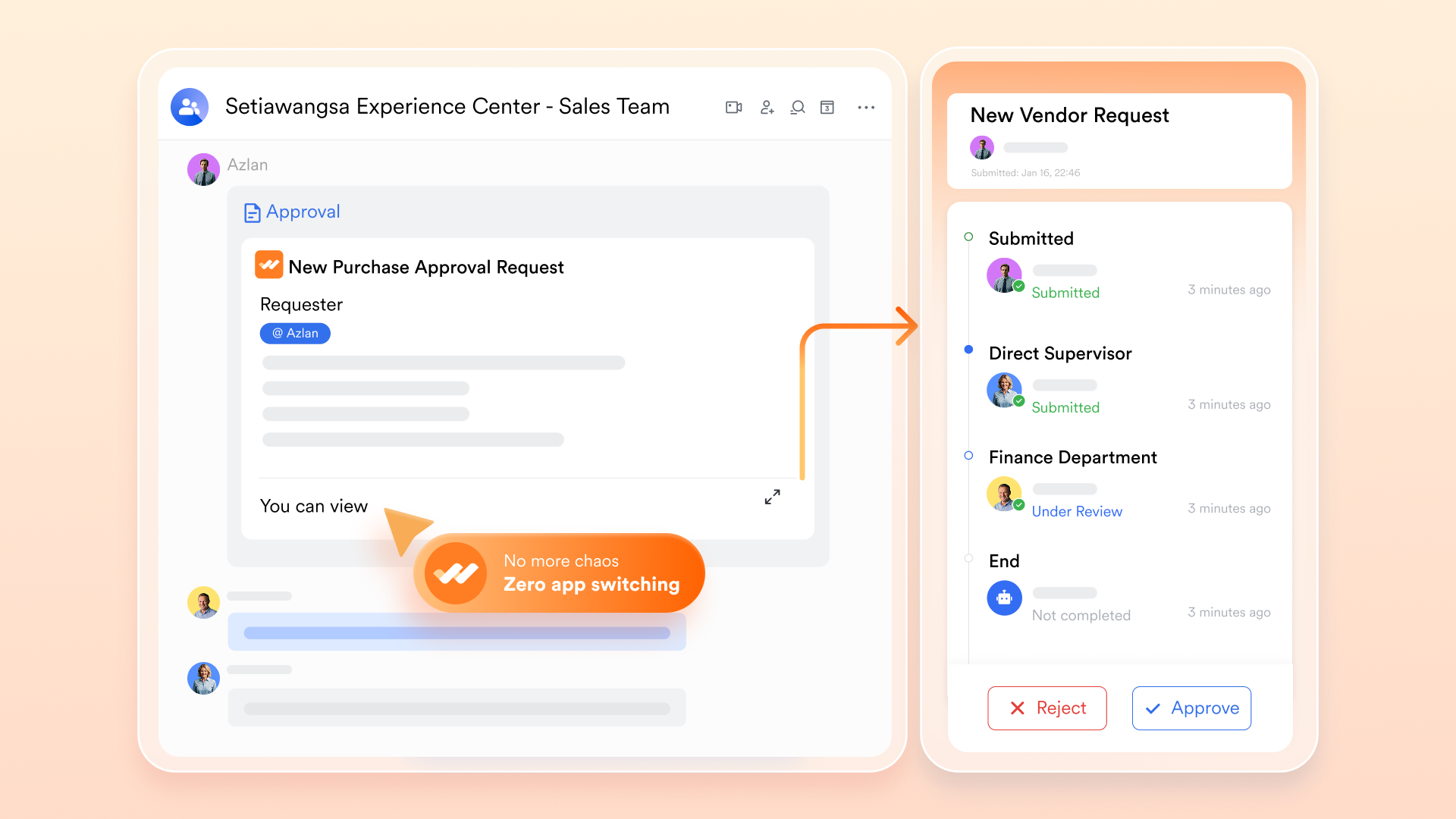
- Integrated communication: Combines chat, meetings, scheduling, and approval functions, solving workplace tool fragmentation issues
- Project communication: Supports project-related discussions, file sharing, and task coordination, maintaining team communication continuity
- Approval processes: Built-in Lark Approval can track functionality, streamlining project decision-making processes
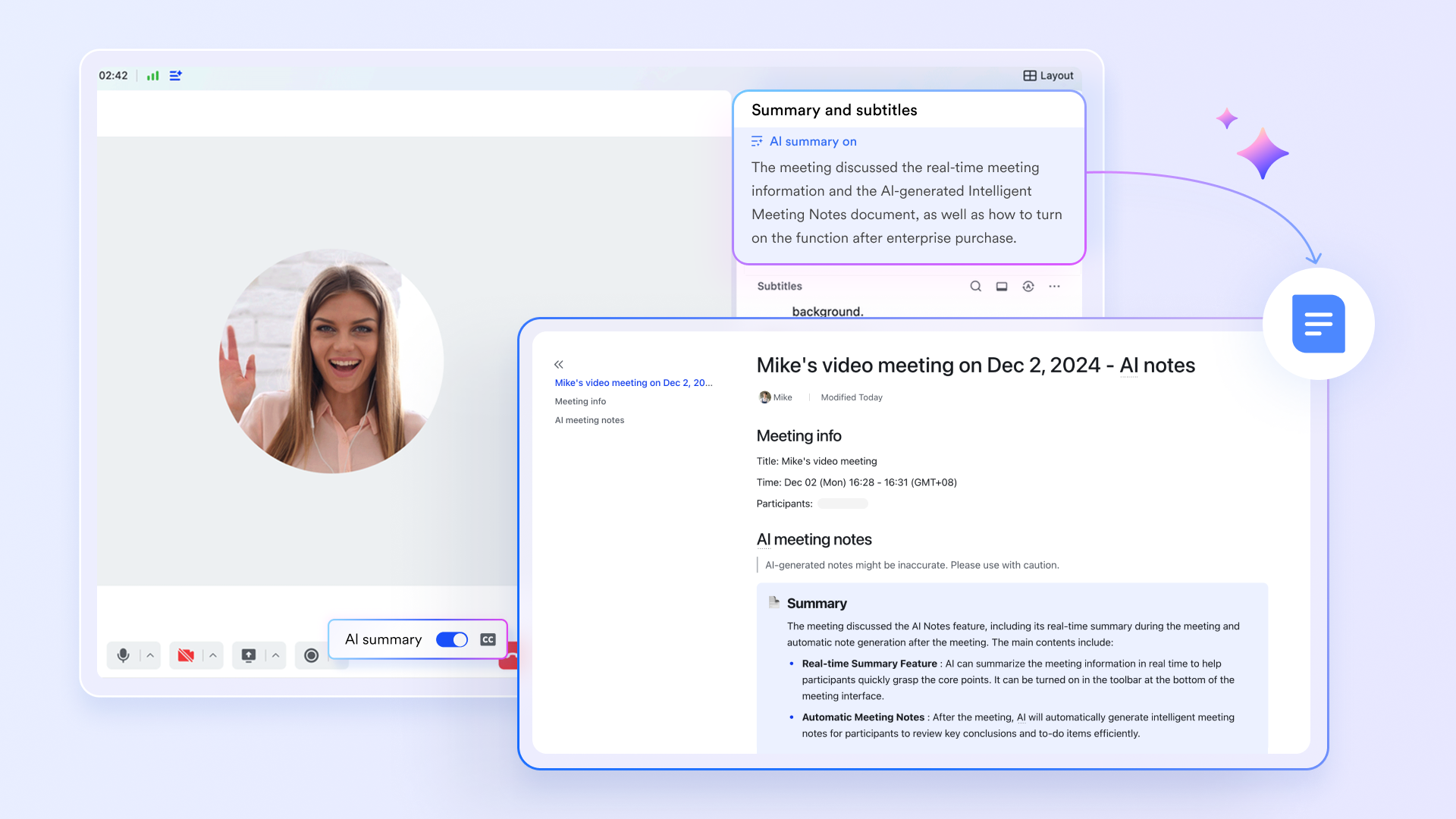
Lark Meetings: Meeting management
- AI Meeting Notes: Automatically generates meeting minutes, capturing key discussion points and action items
- Unlimited collaboration: Real-time document editing and screen sharing during meetings through Magic Share, supporting in-meeting brainstorming and decision recording
Use Case: Medium to large distributed teams requiring comprehensive workflow management
- Starter plan: Free forever plan that includes 11 powerful tools for up to 20 users. It also comes with 100GB of storage, 1000 automation runs, AI translations, and more.
- Basic plan & Pro plan: Competitive pricing plan, providing tools for growing teams, secure partner communication, and no-code workflows.
- Enterprise plan: Contact sales for custom pricing. Supports unlimited users and includes even more automation runs and advanced security, compliance, and management features.
2. Asana: Work management with AI enhancements
Asana provides AI-powered project templates, automated workload balancing, and predictive timeline adjustments. Its natural language task creation and intelligent priority setting make it perfect for workflow optimization.
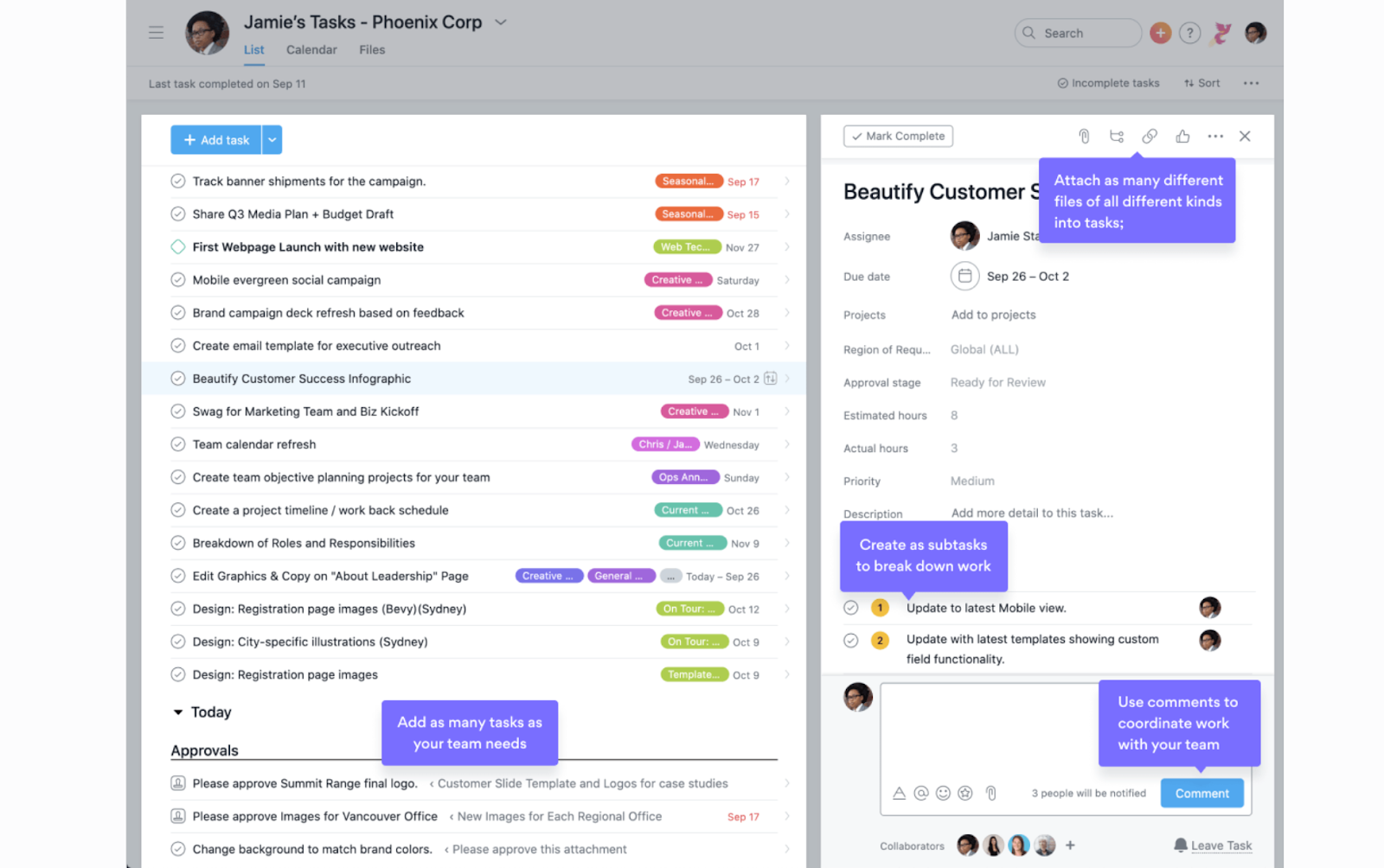
Image source: asana.com
Core Features: AI-driven project templates and automated workload balancing
AI Capabilities: Predictive timeline adjustments, natural language task creation, intelligent priority setting
Key Functions: Timeline view, workload management, goal tracking, automation rules
Use Case: Workflow optimization and complex project management
Pricing:
- Personal: Free basic version
- Starter: $10.99/user/month
- Advanced: $24.99/user/month
- Enterprise: Contact sales
3. ClickUp: Customizable productivity platform
ClickUp offers highly customizable interfaces with AI-powered project insights, goal tracking, and built-in document collaboration. Its automation features help teams identify bottlenecks before they impact timelines.
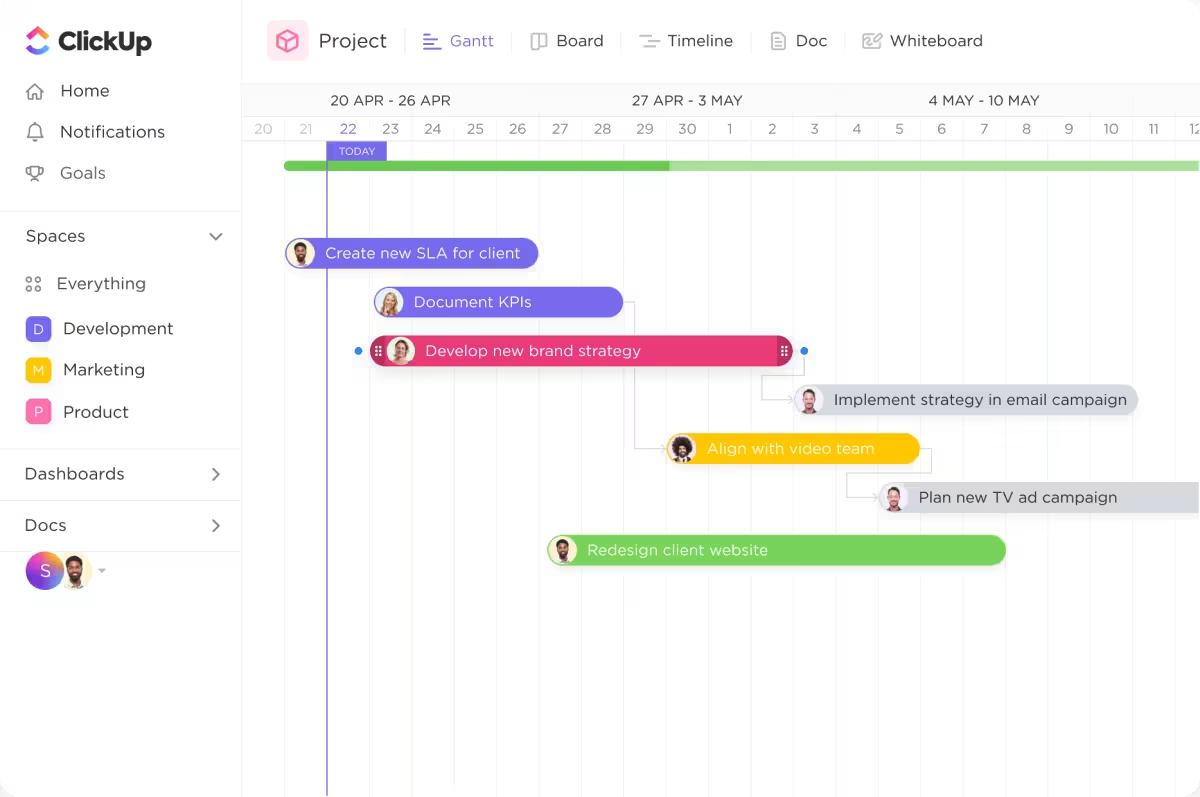
Image source: clickup.com
Core Features: Highly customizable interface and AI-driven project insights
AI Capabilities: Smart goal tracking, predictive bottleneck identification, automated workflows
Key Functions: Built-in document collaboration, multiple view options (list, board, calendar), time tracking
Use Case: Teams requiring high customization and flexible views
Pricing:
- Free: for individuals
- Unlimited: $7/user/month
- Business: $12/user/month,
- Enterprise: Contact sales
4. Monday.com: Visual workflow automation
Monday.com excels in visual project management with advanced automation workflows and AI-powered dashboard creation. It transforms complex processes into intuitive visual workflows for all team types.
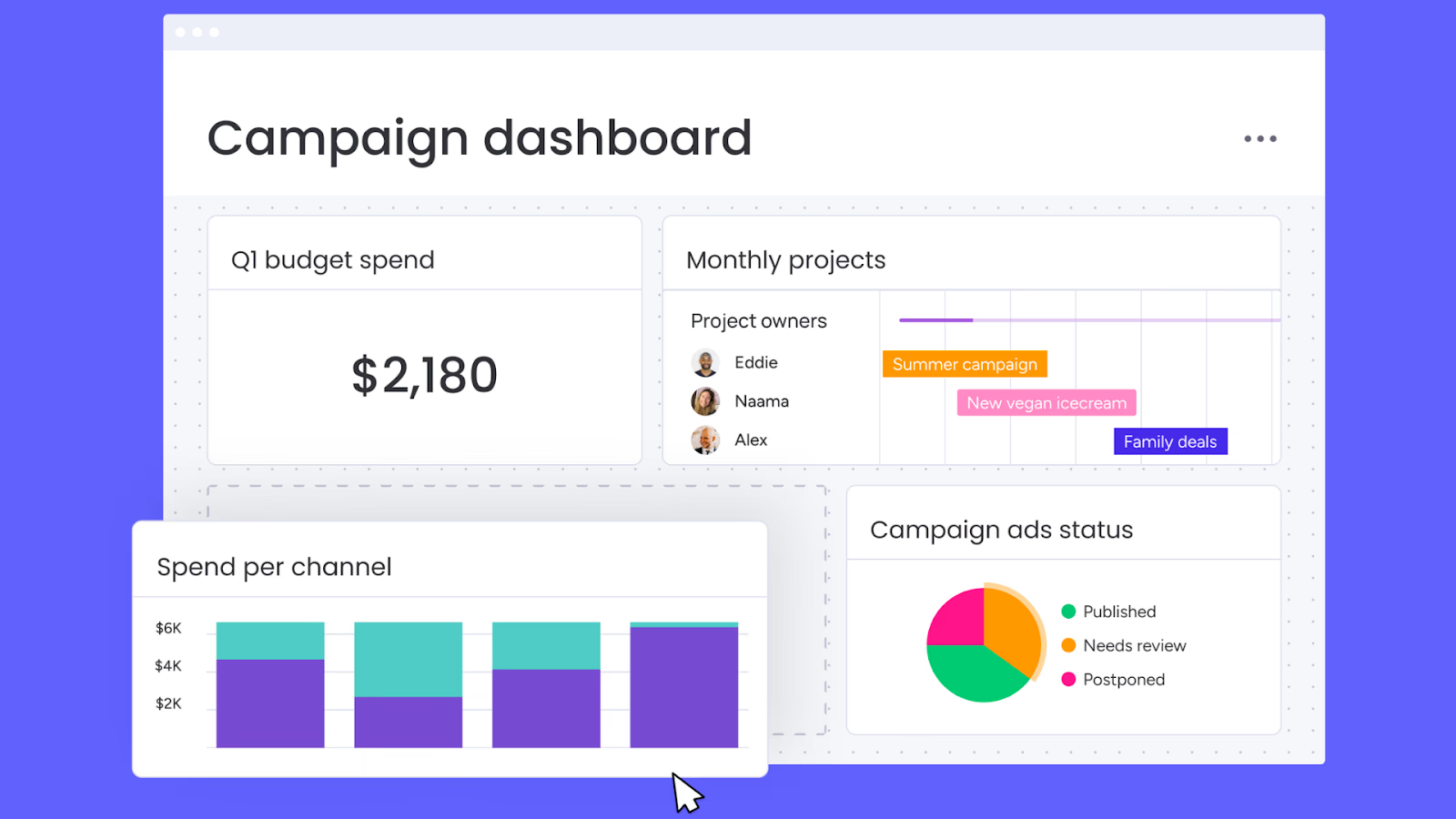
Image source: monday.com
Core Features: Visual project management and advanced automated workflows
AI Capabilities: AI-driven dashboard creation, intelligent process optimization, predictive analytics
Key Functions: Intuitive visual workflows, automation builder, multi-project portfolio management
Use Case: Teams needing to transform complex processes into intuitive visual workflows
Pricing:
- Free: Up to 2 seats
- Basic: $9/user/month
- Standard: $12/user/month
- Pro: $19/user/month
- Enterprise: Contact sales
5. Teamwork.com: Client-focused project delivery
Specializing in client-facing project management, Teamwork.com offers robust time tracking, invoicing, and client portal features with predictive profitability analysis.
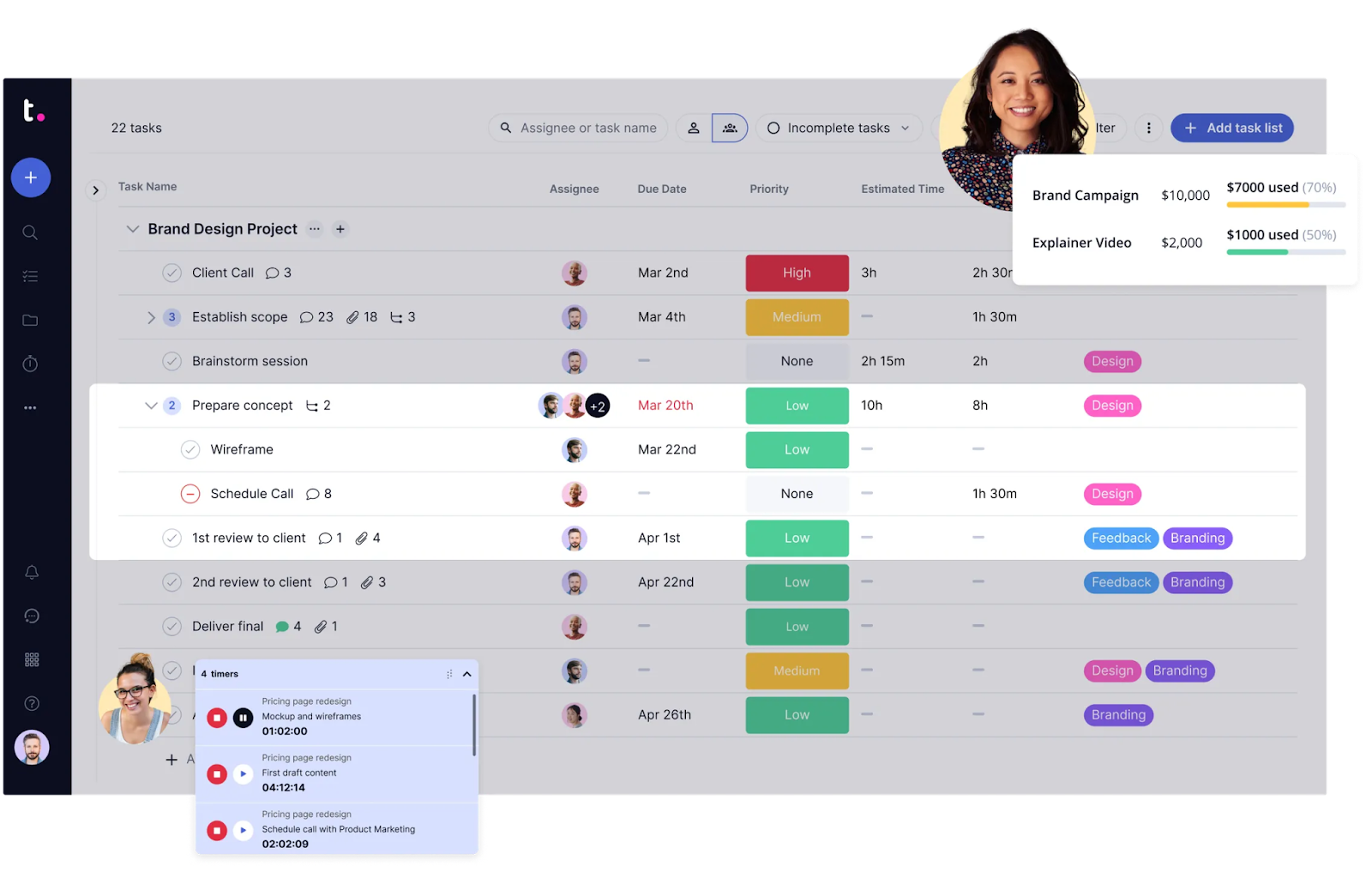
Image source: teamwork.com
Core Features: Specializes in client-facing project management and profitability analysis
AI Capabilities: Predictive profitability analysis, intelligent resource allocation, risk prediction
Key Functions: Robust time tracking, invoicing management, client portal, billing functions
Use Case: Agencies, consulting firms, and other client-service businesses
Pricing:
- Free version available
- Deliver: $10.99/user/month,
- Grow: $19.99/user/month,
- Scale: Contact sales
Tips for effective project management
Mastering project management requires blending proven methodologies with practical insights that work in real-world scenarios. Here are essential tips to elevate your project management effectiveness, drawn from industry best practices and the latest research.
Tip 1: Master the art of strategic planning and scope definition
Effective project management begins with crystal-clear planning that establishes realistic expectations. Develop comprehensive documentation that outlines objectives, deliverables, timelines, and success criteria, ensuring all stakeholders share the same understanding from day one. Implement scope management techniques that prevent "scope creep" while maintaining flexibility for necessary adjustments as projects evolve.
- Key actions: Create detailed project charters, establish clear success metrics, and develop change control processes
- Practical example: Use the SMART criteria (Specific, Measurable, Achievable, Relevant, Time-bound) for all project objectives
- Avoid: Vague requirements and undocumented assumptions that lead to misunderstandings later
Tip 2: Excel in communication and stakeholder engagement
Successful project managers recognize that communication isn't just about sharing information—it's about building understanding across diverse groups. Develop tailored communication strategies for different stakeholder groups, ensuring technical teams receive detailed specifications while executives get high-level progress updates.
Essential communication practices:
- Implement regular status reporting that provides transparency without overwhelming participants
- Foster open dialogue where team members feel comfortable raising concerns
- Master active listening to truly understand stakeholder needs before developing solutions
- Establish feedback loops that continuously improve communication effectiveness
Tip 3: Develop exceptional team leadership and motivation skills
Great project management involves inspiring teams toward exceptional performance rather than simply tracking progress. Build cohesive team cultures that emphasize collaboration and shared ownership of project outcomes. Develop individual relationships to understand team members' strengths and professional aspirations.
Leadership strategies that work:
- Provide regular recognition and celebrate milestones to maintain motivation
- Offer constructive feedback that helps team members grow professionally
- Create development opportunities that align project needs with personal growth goals
- Empower team members with autonomy while providing clear guidance and support
Tip 4: Implement robust time and resource management systems
Efficient resource allocation separates adequate project management from exceptional performance. Implement time management systems that balance urgent tasks with important strategic activities, ensuring consistent progress without sacrificing quality.
Resource optimization techniques:
- Develop forecasting methods that predict needs before they become critical
- Utilize productivity tools that help teams work smarter by eliminating unnecessary steps
- Establish clear priority frameworks that focus efforts on high-impact activities
- Monitor resource utilization rates and adjust allocations based on project phase requirements
Tip 5: Embrace proactive risk management and problem-solving
Transform potential project threats into managed variables through systematic risk management. Develop identification processes that involve entire teams in spotting potential issues early, leveraging diverse perspectives for comprehensive coverage.
Risk management framework:
- Create detailed risk registers with probability and impact assessments
- Develop specific response plans for different risk scenarios
- Implement contingency planning for critical path activities
- Foster cultures that view challenges as opportunities for innovation
Tip 6: Leverage technology effectively without overcomplicating
Select tools that match your team's working style and project requirements rather than adopting technology for technology's sake. Implement integrated systems that connect project management, communication, and documentation platforms.
Technology implementation best practices:
- Provide adequate training to ensure effective tool utilization
- Establish data management protocols for organized and secure information
- Choose scalable solutions that grow with your project needs
- Regularly evaluate tool effectiveness and be willing to adjust as needed
Tip 7: Commit to continuous improvement and learning
View each project as a learning opportunity that contributes to ongoing professional development. Implement post-project reviews that capture lessons learned and identify improvement opportunities for future initiatives.
Continuous learning strategies:
- Maintain personal reflection habits after each major milestone
- Stay current with industry trends through ongoing education
- Create knowledge management systems that preserve institutional learning
- Seek feedback from multiple sources to identify blind spots and growth areas
By implementing these practical tips, you'll develop the comprehensive skill set needed for long-term success in project management while delivering exceptional results on your current projects.
Conclusion
In today's dynamic work environment, improving project management requires a strategic blend of proven methodologies, continuous skill development, and the right technological tools. By implementing structured approaches to planning, communication, risk management, and team leadership, professionals can significantly enhance their project outcomes. The integration of AI-powered tools has further revolutionized how teams collaborate and execute projects efficiently. Choosing the right project management tool is crucial, and excellent tools like Lark can not only significantly enhance team collaboration efficiency and project execution transparency, but also provide intelligent automation and data-driven decision support through built-in AI capabilities.
FAQs
How can project management be improved?
Project management can be enhanced through better communication protocols, implementing risk management strategies, utilizing appropriate technology tools, and establishing clear metrics for measuring success and progress.
How do I develop my project management skills?
Develop project management skills through formal training and certifications, hands-on experience, mentorship programs, continuous learning from industry resources, and practicing specific competencies like stakeholder management and risk assessment.
What are the 5 C's of project management?
The 5 C's are: Conceptualize (define project vision), Charter (formal authorization), Collect (gather requirements), Create (develop deliverables), and Close (finalize and review).
What is the rule of 7 in project management?
The rule of 7 suggests that effective communication becomes significantly more challenging when a project involves more than 7 stakeholders or team members, emphasizing the need for structured communication plans in larger projects.
What are the most important qualities of a successful project manager?
The most critical qualities include strong leadership capabilities, excellent communication skills, effective problem-solving abilities, organizational proficiency, and adaptability to changing project circumstances.
Related reading
Table of contents
Start using Lark today

Manage all your work in one place
Boost team efficiency by 10x
Save up to 70% on software costs
Table of contents
Start using Lark today
Manage all your work in one place
Boost team efficiency by 10x
Save up to 70% on software costs
Keep reading








2026 Lark Technologies Pte. Ltd.
Headquartered in Singapore with offices worldwide.






Explore: