














HubSpot vs Marketo—Which Marketing Platform Works Better for You?

Ryan Tanner
Product Marketing Specialist
Sep 18, 2026
Ryan Tanner
Sep 18, 2026

15 min read


Choosing between HubSpot vs Marketo, it can feel like navigating two different worlds of marketing automation. Both platforms promise to streamline lead management, campaign tracking, and conversion analytics—but they cater to very different types of teams and goals. HubSpot focuses on simplicity and inbound marketing for growing businesses, while Marketo delivers enterprise-level depth and customization.
In this guide, we'll break down their key differences across features, usability, and pricing to help you decide which suits your strategy best. And if your team is exploring a more collaborative approach to marketing and CRM workflows, tools like Lark now offer a modern alternative that connects every stage of the funnel in one place.

HubSpot vs Marketo: Quick comparison table
Understanding HubSpot: Unified inbound marketing suite
HubSpot has become synonymous with inbound marketing because it brings marketing, sales, and customer service together under one roof. Its strength lies in providing teams with a complete system for attracting leads, nurturing relationships, and tracking results—all from a single, connected dashboard. Whether you're building content, managing campaigns, or analyzing conversions, HubSpot simplifies complex processes into intuitive, automated workflows.
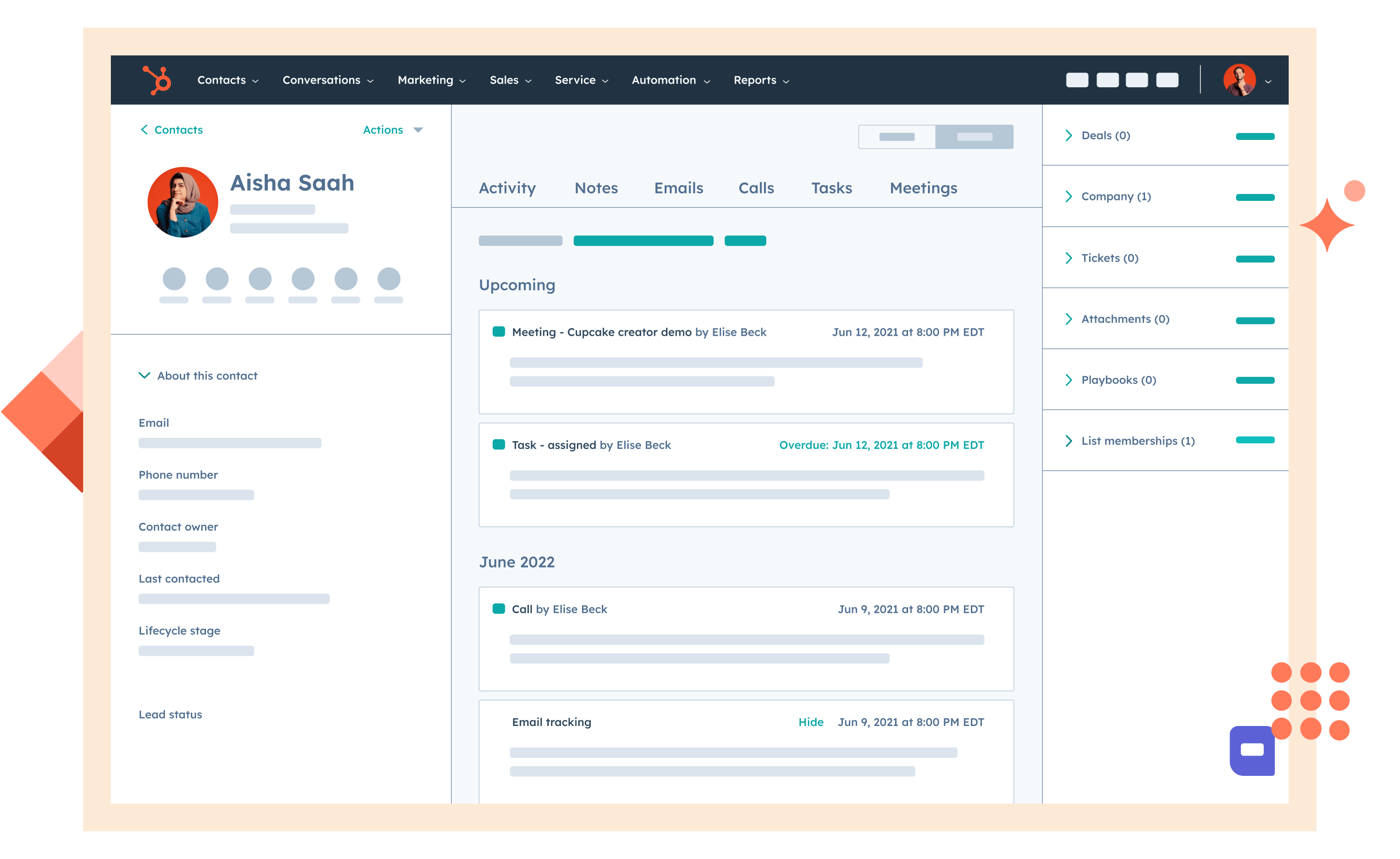
Image source: hubspot.com
Core modules in HubSpot
- Marketing Hub: The Marketing Hub helps businesses attract and nurture leads through email campaigns, landing pages, and automation workflows. It centralizes content creation, lead scoring, and campaign analytics to optimize every step of the buyer journey.
- Sales Hub: This module focuses on pipeline visibility and deal management. Sales teams can track prospects, automate outreach, and forecast revenue—ensuring no opportunity slips through the cracks.
- Service Hub: Built to enhance customer satisfaction, the Service Hub enables businesses to manage support tickets, surveys, and customer feedback loops. It ensures post-sale experiences are as seamless as pre-sale interactions.
- CMS Hub: HubSpot's CMS Hub empowers marketers to build and optimize websites without heavy IT involvement. It offers SEO recommendations, adaptive testing, and content personalization for different audience segments.
- Operations Hub: This hub handles data syncing and automation across tools. It keeps customer information consistent between platforms and eliminates repetitive manual updates, helping teams stay efficient.
Limitations and considerations
- Higher costs as your contact list and tool usage expand
- Limited customization in lower-tier plans
- Dependence on HubSpot's ecosystem for advanced functionality
When HubSpot is the right fit
- Ideal for startups and SMBs focused on inbound lead generation
- Teams seeking intuitive automation with minimal IT setup
- Organizations prioritizing all-in-one simplicity over complex customization
Understanding Marketo: Enterprise automation powerhouse
Marketo, part of Adobe Experience Cloud, is designed for large-scale organizations that demand precision and depth in their marketing automation. It excels in complex B2B environments where multiple touchpoints, long sales cycles, and cross-channel campaigns need to be tracked and optimized. Marketo provides enterprise marketers with powerful tools for lead nurturing, scoring, and analytics—enabling granular control over every customer interaction.
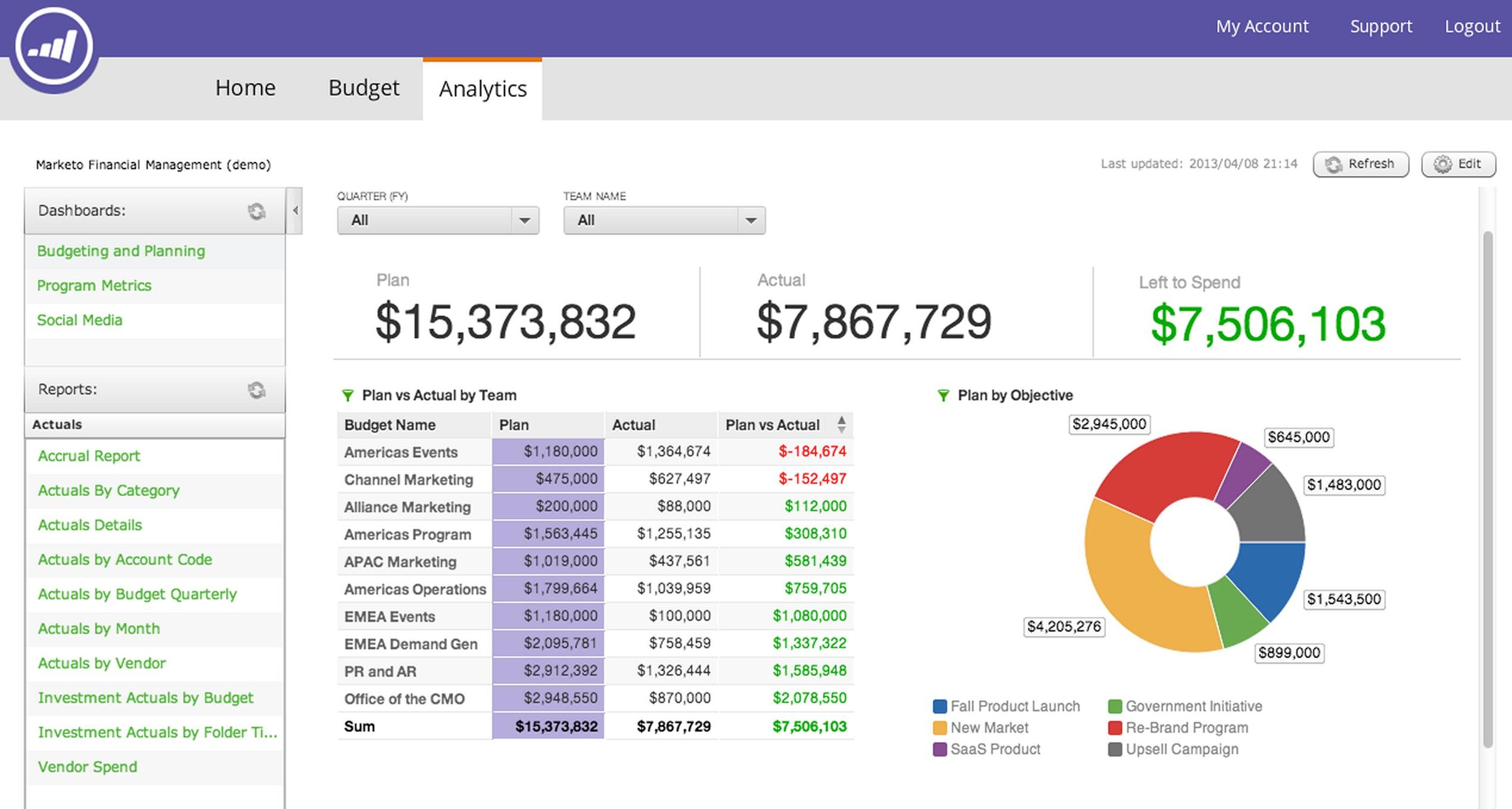
Image source: marketo.com
Core components of Marketo Engage
- Lead Management: Marketo's lead management tools provide deep customization for scoring, segmentation, and nurturing. Marketers can define rules for how leads are scored based on engagement behaviors and automate how those leads progress through campaigns—perfect for multi-stage B2B funnels.
- Email Marketing: Marketo's email automation engine is highly advanced, offering dynamic personalization and multi-step drip campaign sequences. It enables marketers to tailor content to specific audience behaviors and lifecycle stages, creating hyper-targeted experiences that drive higher conversion rates.
- Account-Based Marketing (ABM): Marketo's ABM module helps businesses engage high-value clients through personalized campaigns and coordinated sales outreach. It connects data across channels to ensure marketing and sales teams deliver unified messaging to key decision-makers.
- Analytics and Attribution: For organizations running multi-channel campaigns, Marketo's analytics tools deliver deep visibility into what's driving conversions. Its multi-touch attribution models help marketing leaders understand how each channel contributes to ROI, making it easier to optimize long-term strategies.
- Sales Insight: The Sales Insight feature bridges marketing and sales by sharing engagement data directly with sales teams. Reps can see how leads interact with campaigns and prioritize outreach based on interest and readiness signals—strengthening collaboration across departments.
Limitations and challenges
- Steep learning curve and longer onboarding process
- Heavier setup and maintenance requirements compared to HubSpot
- High total cost of ownership (licenses + implementation + training)
- May be overpowered for smaller organizations or simple use cases
When Marketo is the right fit
- Ideal for enterprise marketing teams managing complex buyer journeys
- Best suited for B2B organizations with established data infrastructure
- Recommended for businesses that need custom automation logic and integration with existing enterprise systems
Pricing comparison: HubSpot vs Marketo
HubSpot vs Marketo: Detailed feature comparison
Both HubSpot and Marketo deliver powerful marketing automation capabilities, but their approaches differ in usability, scalability, and integration depth. Below is a breakdown of how they compare across key functional areas.
- Automation and workflows: HubSpot offers intuitive, drag-and-drop workflow builders that let marketers automate campaigns without technical expertise. It's ideal for small to midsize teams needing speed and simplicity. Marketo, however, provides deeper customization with rule-based logic and conditional triggers—suited for enterprise users who require complex, multi-branch automation.
- CRM and contact management: HubSpot includes a fully native CRM, meaning all lead, contact, and deal data live within the same ecosystem as marketing automation. This makes alignment between marketing and sales effortless. Marketo, on the other hand, relies on integrations—most commonly with Salesforce—which can introduce added setup and syncing complexity but offer more flexibility for enterprises with existing systems.
- Reporting and analytics: HubSpot's analytics emphasize ease and accessibility, offering built-in dashboards that display campaign performance, lead sources, and engagement data in real time. Marketo delivers deeper, multi-touch attribution and revenue modeling, but its advanced reporting tools require more manual configuration and technical knowledge to unlock their full potential.
- Ease of use and onboarding: HubSpot stands out for its user-friendly design and minimal learning curve, making it a popular choice for teams that want to get started quickly. Marketo, by contrast, offers more granular control and flexibility—but demands greater technical involvement and time investment to master.
- Pricing transparency: HubSpot offers clear, publicly listed pricing tiers across its Hubs and bundles, making it easy for businesses to estimate costs upfront. Marketo uses a quote-based pricing model that varies by database size, feature access, and contract terms, which can make budgeting more complex for new adopters.
Afterthought:
While both HubSpot and Marketo focus on marketing automation, neither fully connects campaign data, communication, and content creation in one place. That's where Lark comes in—offering an all-in-one workspace where teams can plan, execute, and measure marketing efforts seamlessly.
How Lark helps marketing and sales teams collaborate efficiently
Both HubSpot and Marketo focus heavily on marketing automation—but where they differ in cost, complexity, and scalability, Lark unifies those same goals in a collaborative, all-in-one workspace. Rather than separating CRM, email marketing, and analytics across multiple systems, Lark enables teams to plan, execute, and track campaigns from one connected environment—bridging marketing and sales in real time.
Lark Base: Manage leads, campaigns, and automation workflows
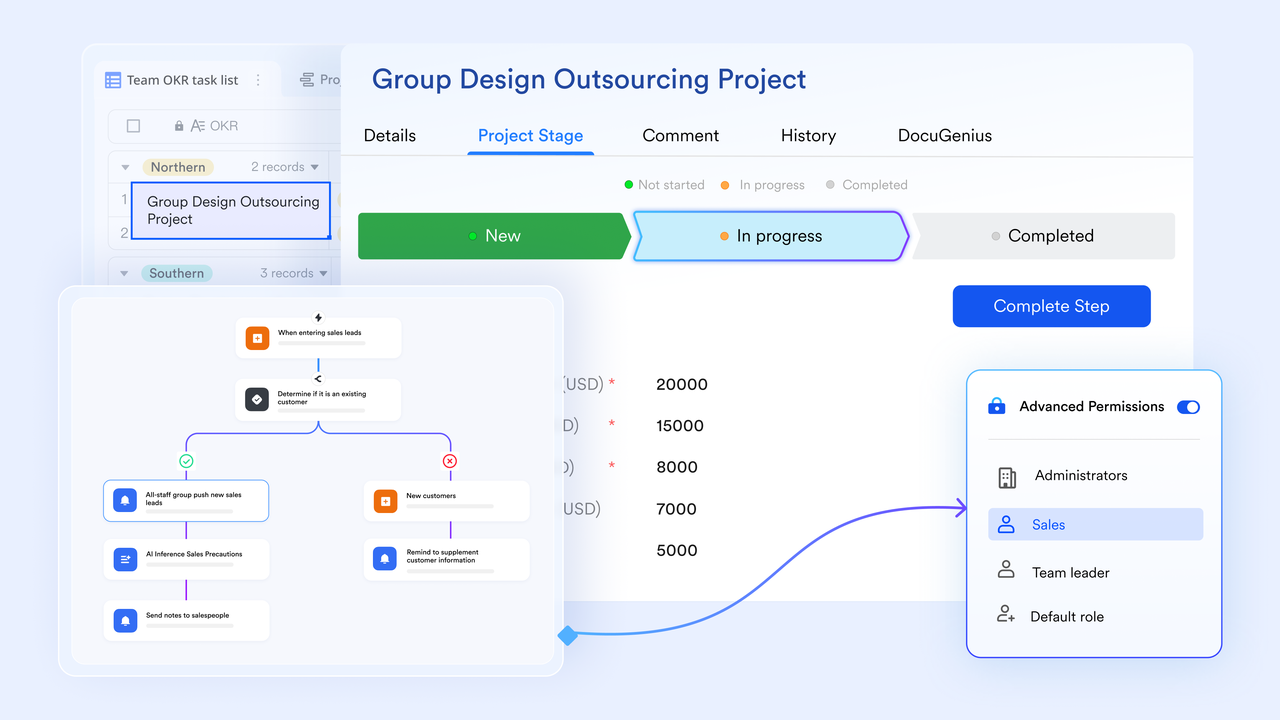
Lark Base acts as the operational hub for your inbound and sales funnels. It allows marketing teams to store, categorize, and automate lead and campaign data—similar to a CRM, but far more flexible and collaborative.
You can design custom tables to track campaigns, audience segments, or deal stages, and set automated workflows to trigger actions as leads move through the funnel.
Example: A marketing team creates a Base for lead management. When a lead engages with three or more campaigns, Base automatically updates their status to “Nurtured” and sends a Messenger notification to the sales rep for follow-up.
Unlike HubSpot or Marketo, which often lock automation behind premium tiers, Lark's automation runs across tools—meaning marketing, content, and sales teams can react to updates instantly, without switching systems.
Lark Docs: Build and share campaign plans in real time
Lark Docs replaces scattered files and email threads with living documents where strategies and campaigns come to life. Teams can co-create content calendars, ad copy, and nurture sequences while commenting, assigning tasks, or linking campaign data directly from Lark Base.
Example: The content marketing team drafts a Q4 email campaign in Docs, where product and sales teams can suggest copy changes or add insights about customer pain points in real time.
While HubSpot provides content tools within its marketing module and Marketo relies on external integrations for collaboration, Lark Docs ensures strategy, execution, and review all happen in one shared space.
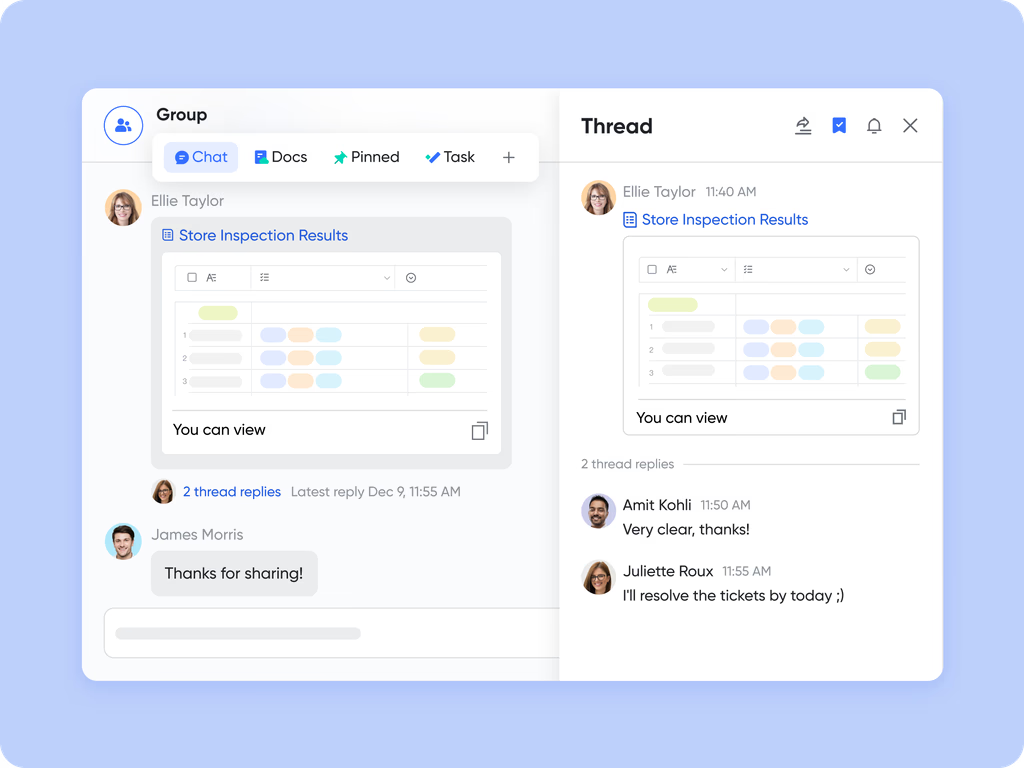
Lark Messenger: Keep campaign discussions contextual
Lark Messenger connects communication directly to your marketing data. Teams can create dedicated channels for campaigns, clients, or performance reviews—and share live updates, dashboards, or Docs right inside the chat.
Example: When a paid campaign exceeds its lead target, the marketing analyst posts the live Base view in the Messenger thread. The team immediately discusses scaling it and assigns new follow-ups without ever leaving the chat.
This eliminates the disjointed handoffs that often happen between marketers and sales teams using HubSpot or Marketo, where collaboration typically happens through email or external chat tools.
Lark Tasks: Assign deliverables and monitor progress
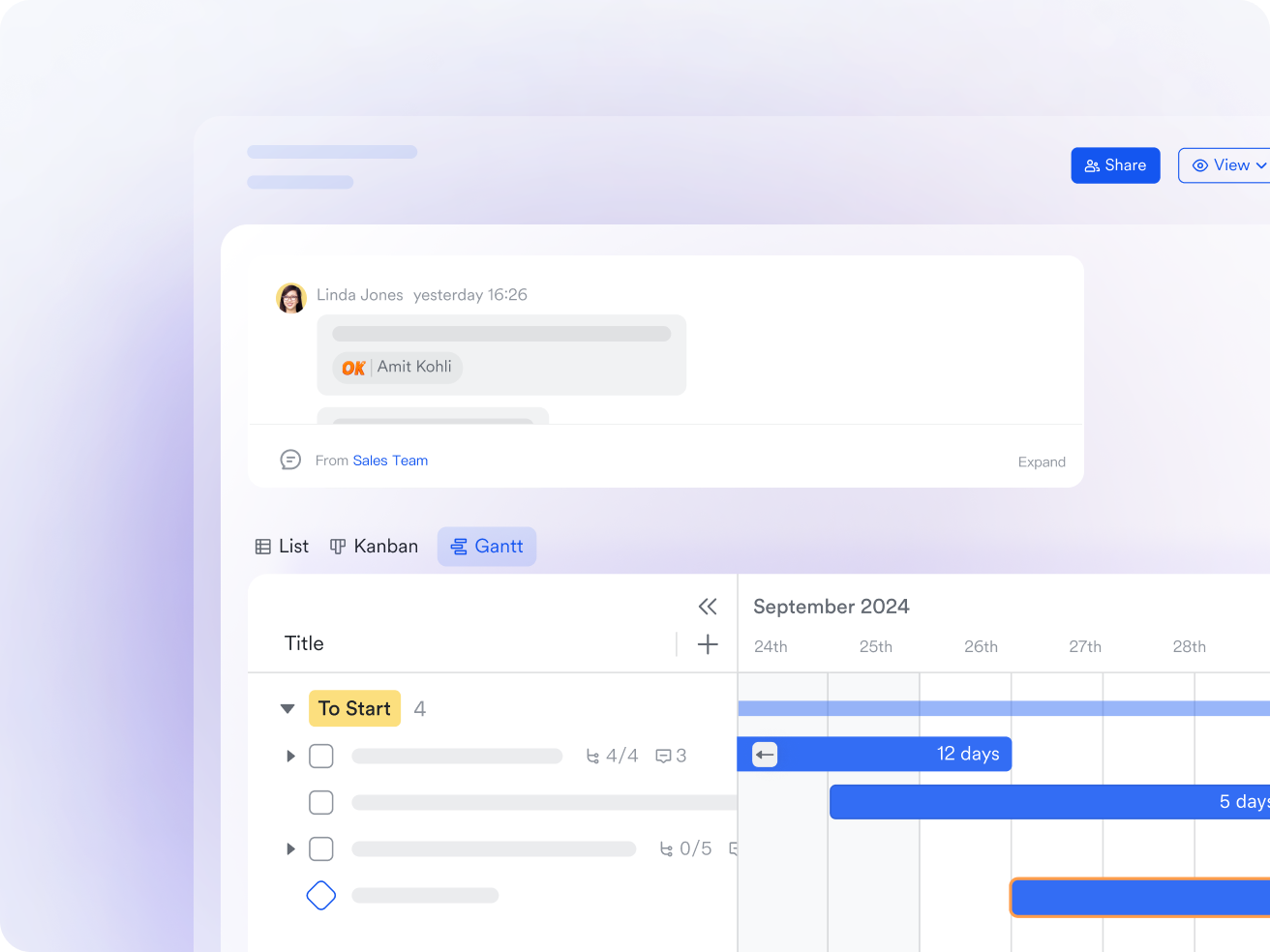
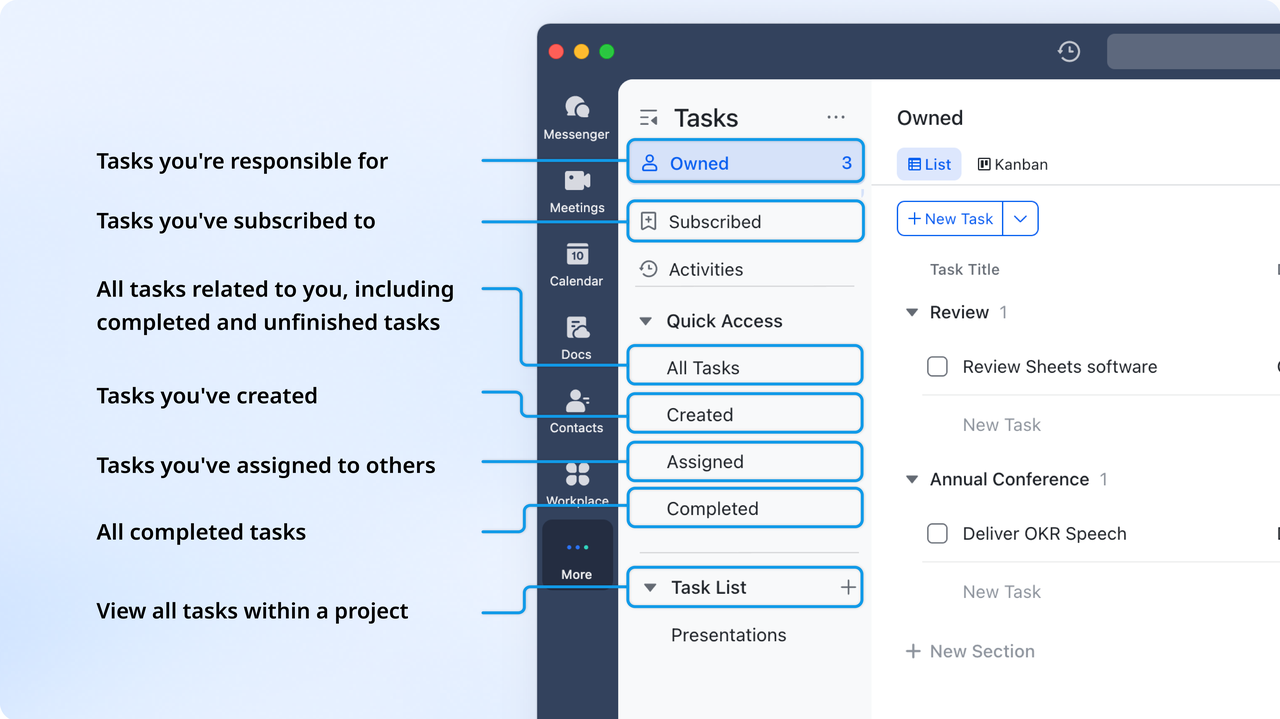
Every campaign has moving parts—design assets, copy reviews, outreach follow-ups, and client approvals. Lark Tasks helps teams organize these steps into clear responsibilities with owners, deadlines, and progress tracking.
Example: A new inbound lead in Lark Base automatically creates a Task for the sales team to schedule a demo. Marketing can track completion status and view updates right from the same workspace.
In comparison, while HubSpot offers task creation tied to CRM records and Marketo provides automated actions, Lark combines both task visibility and communication—so accountability and context stay in sync across departments.
Lark OKR: Streamlined CRM goal in your team
Lark OKR helps teams collaborate more effectively by aligning CRM goals, tracking progress, and maintaining transparency across departments. It enables teams to stay focused on their most important CRM objectives, ensuring that daily efforts contribute to broader strategic goals. Through regular reviews and discussions, Lark OKR keeps everyone engaged and ensures CRM objectives remain on track.
Example: With the Dashboard, managers can easily monitor CRM-related OKRs and track progress in real-time. Team members are also empowered to set and align their own CRM goals, fostering a sense of ownership and accountability.
While HubSpot and Marketo require external integrations or complex configurations to align and track CRM goals, Lark OKR simplifies the process by embedding goal-setting, tracking, and collaboration in one unified workspace.

- Starter plan: Free forever plan that includes 11 powerful tools for up to 20 users. It also comes with 100GB of storage, 1000 automation runs, AI translations, and more.
- Pro plan: $12/user/month (billed annually) for up to 500 users. It includes everything in Starter plus group calling for up to 500 attendees, 15TB of storage, 50,000 automation runs, and more.
- Enterprise plan: Contact sales for custom pricing. Supports unlimited users and includes even more automation runs and advanced security, compliance, and management features.
HubSpot vs Marketo vs Lark: Which platform truly fits your workflow?
Both HubSpot and Marketo have earned their reputations as powerful marketing automation platforms, but they serve different priorities. HubSpot simplifies inbound workflows for small to midsize teams, offering accessible tools and an intuitive interface. Marketo, on the other hand, caters to enterprise-level organizations needing deep customization, complex lead scoring, and multi-channel orchestration.
Yet, both solutions often face the same challenge—siloed collaboration. Marketing creates campaigns, sales follow up, and service teams close the loop, often in separate systems. That's where Lark stands apart. It brings together the capabilities marketers and sales teams need—lead tracking, content collaboration, automation, and communication—all within one unified workspace.
With Lark Base, teams organize leads and campaigns; Lark Docs keeps strategies and plans transparent; Messenger and Tasks ensure accountability and instant follow-through; and Sheets ties performance data back to actions. The result is not just automation but alignment—every campaign, report, and client update connected in real time.
For teams that want CRM-style organizations without enterprise complexity, Lark offers a modern, collaborative approach that turns marketing and sales workflows into a single, agile system. It's not just about managing leads—it's about keeping everyone on the same page, from the first click to lasting customer relationships.
Conclusion
Choosing between HubSpot and Marketo depends largely on your team's size, goals, and technical needs. HubSpot offers simplicity and ease for growing businesses, while Marketo provides depth and flexibility for enterprise-scale marketing. Yet, both tools often separate communication from execution—slowing down collaboration across teams.
That's where Lark redefines the experience. By combining CRM-style organization, real-time messaging, document collaboration, and task accountability, it brings marketing and sales together in one unified workspace. With Lark, every campaign insight turns directly into action—faster, smarter, and more connected.
FAQs
Which tool is better for B2B marketing campaigns?
Marketo is traditionally stronger for complex B2B workflows that involve long nurturing cycles and multiple touchpoints. However, Lark provides a simpler, collaborative way for B2B teams to manage leads, campaigns, and content in one place—ideal for teams seeking both structure and agility.
Can HubSpot or Marketo replace a full CRM system?
HubSpot includes a native CRM suitable for small to midsize teams, while Marketo relies on integrations like Salesforce. Lark, meanwhile, lets teams design CRM-style databases directly within its Base tool—offering flexibility without extra setup or licensing.
Are there any all-in-one alternatives to HubSpot and Marketo?
Yes, modern platforms like Lark combine marketing automation, CRM-style data management, and communication tools under one ecosystem. It eliminates the need for juggling multiple apps, making collaboration faster and data more accessible across departments.
How does Lark help improve marketing collaboration compared to traditional CRMs?
Traditional CRMs manage data, but discussions and planning often happen elsewhere. Lark connects everything—from campaign tracking in Base to feedback in Docs and updates in Messenger—ensuring marketing, sales, and service teams stay aligned in real time.
Related reading
Table of contents
Start using Lark today

Manage all your work in one place
Boost team efficiency by 10x
Save up to 70% on software costs
Table of contents
Start using Lark today
Manage all your work in one place
Boost team efficiency by 10x
Save up to 70% on software costs
Keep reading



Lark recognized in 2023 Gartner® Collaborative Content Workspaces and Meeting Solutions reports
Lark, the global superapp for productivity, is delighted to announce it receives recognition in the Gartner's 2023 Innovation Insight for Collaborative Content Workspaces and Market Guide for Meeting Solutions.





2026 Lark Technologies Pte. Ltd.
Headquartered in Singapore with offices worldwide.






Explore: