Teams require flexible and visual methods to manage projects effectively. The Kanban methodology offers exactly that—a lean approach to workflow management that emphasizes visibility, continuous delivery, and steady improvement. By visualizing tasks on a board, teams can quickly spot bottlenecks, balance workloads, and maintain momentum without unnecessary complexity. Often illustrated through a Kanban methodology diagram, this system supports agile and adaptive working methods across various industries. Beyond theory, modern platforms like make adoption seamless with intuitive Kanban boards, ready-to-use templates, and automation tools that bring the Kanban agile methodology into everyday practice.
Visualize and manage workflows smarter
What is Kanban methodology?
The Kanban methodology is a practical framework that helps teams visualize work, limit work in progress (WIP), and optimize flow. Instead of juggling scattered tasks, provide a clear, visual way to track progress and identify bottlenecks. Originating from the Toyota Production System, Kanban later became central to Agile practices and modern project management. A classic Kanban methodology diagram shows tasks moving from Backlog → In Progress → Done, making progress easy to follow.
With Lark Base, teams can model this seamlessly using customizable boards, real-time tracking, and automation—bringing Kanban from concept to practical, everyday efficiency.
Principles of Kanban methodology
The Kanban methodology is more than just sticky notes on a board—it's a philosophy of work designed to bring clarity, balance, and continuous improvement to teams. Whether used as part of a Kanban agile methodology or applied in a Kanban development methodology, its six core principles offer a practical path toward smarter, more predictable workflows. Let's break them:
1. Visualize the workflow: Humans understand better when they can see the big picture. That's why Kanban begins with visualization. A Kanban methodology diagram—with columns like "Backlog," "In Progress," and "Done"—turns invisible tasks into a shared story of progress. This visibility reduces ambiguity, ensures everyone knows where work stands, and makes collaboration effortless.
2. ): Overcommitting is one of the fastest ways to burn out a team. Kanban addresses this with WIP limits—caps on the amount of work that can be handled at once. By focusing on fewer tasks, teams complete tasks faster, improve quality, and minimize errors caused by context switching. In practice, this often feels like a productivity unlock rather than a restriction.
3. Manage flow for predictability: Work should move like water—smooth and steady, not stuck in bottlenecks. Kanban encourages teams to actively manage how tasks flow across stages, analyzing where bottlenecks occur. With a healthy flow, delivery times become more predictable, helping teams set realistic expectations and avoid the fire-drill culture of constant last-minute rushes.
4. Make process policies explicit: Unspoken rules often create friction. solves this by making policies—like task ownership, definitions of "done," or handoff rules—explicit and visible. When teams share the same ground rules, accountability becomes clear, and misunderstandings are minimized. This transparency sets the stage for trust and smoother collaboration.
5. Implement feedback loops: No process is perfect without reflection. Feedback loops in Kanban—whether through daily stand-ups, , or retrospectives—provide teams with the space to pause, learn, and adapt. These conversations don't just fix problems; they create opportunities for innovation and alignment, ensuring the team grows stronger with each cycle.
6. Improve collaboratively and evolve experimentally: Kanban is built on the idea of continuous, evolutionary change. Rather than imposing massive shifts, teams make small, measurable improvements together. By testing and learning in real time, they evolve processes that fit their unique culture and challenges. This collaborative spirit not only improves outcomes but also empowers teams to take ownership of growth.
Pro Tip: In Lark Base, these principles come alive. Teams can set WIP limits directly on their dashboards, spot bottlenecks instantly with real-time visualization, and even automate repetitive updates. It's a modern approach to implementing the timeless principles of Kanban—without the friction.
Practices that support Kanban methodology
Principles alone don't drive change—it's the everyday practices that bring the Kanban methodology to life. By combining visual with clear rules and continuous feedback, teams can build workflows that are both efficient and adaptable. Here are the core practices that make Kanban effective:
1. Use Kanban boards and cards: A Kanban board is the central hub where work becomes visible. Each task is represented as a card, moving across columns such as "Backlog," "In Progress," and "Done." This simple yet powerful visualization keeps the team aligned, ensures priorities are clear, and makes progress easy to track at a glance.
2. Measure cycle time and throughput: Kanban is data-driven at its core. By measuring cycle time (how long it takes a task to complete) and throughput (how many tasks are finished in a given period), teams into performance and predictability. These metrics highlight bottlenecks and reveal opportunities for improvement, making success measurable rather than guesswork.
3. Hold retrospectives for continuous improvement: Kanban thrives on reflection. Retrospectives give teams the opportunity to review what's working, what isn't, and how processes can be adjusted. This practice builds a culture of openness and experimentation, ensuring the team doesn't just maintain workflows but evolves them over time.
4. Set explicit rules for task movement: Ambiguity kills momentum. That's why Kanban emphasizes clear, shared rules for how tasks move between stages—for example, defining when a task is truly "ready to start" or what qualifies as "done." Explicit policies eliminate confusion, increase , and keep the team working in sync.
Run effective Kanban practices with Lark
Challenges of Kanban methodology and how Lark solves
While the Kanban methodology is highly effective, it isn't without challenges. Teams often struggle with overloaded boards, inconsistent updates, or scaling issues as projects grow more complex. The good news is that with the right tools, these hurdles can be overcome. Here's a closer look at the common challenges of Kanban and how addresses them.
1. Risk of overloaded boards without WIP control
Kanban loses its value when too many tasks are in progress. Overloaded boards lead to confusion, delays, and burnout.
How Lark helps: In Lark Base, teams can define Work-In-Progress (WIP) limits for each column or workflow stage. When these limits are exceeded, automated alerts notify project owners instantly. Combined with AI-based workload suggestions, Lark helps managers redistribute tasks and maintain healthy, focused flow—ensuring the board always reflects realistic capacity. 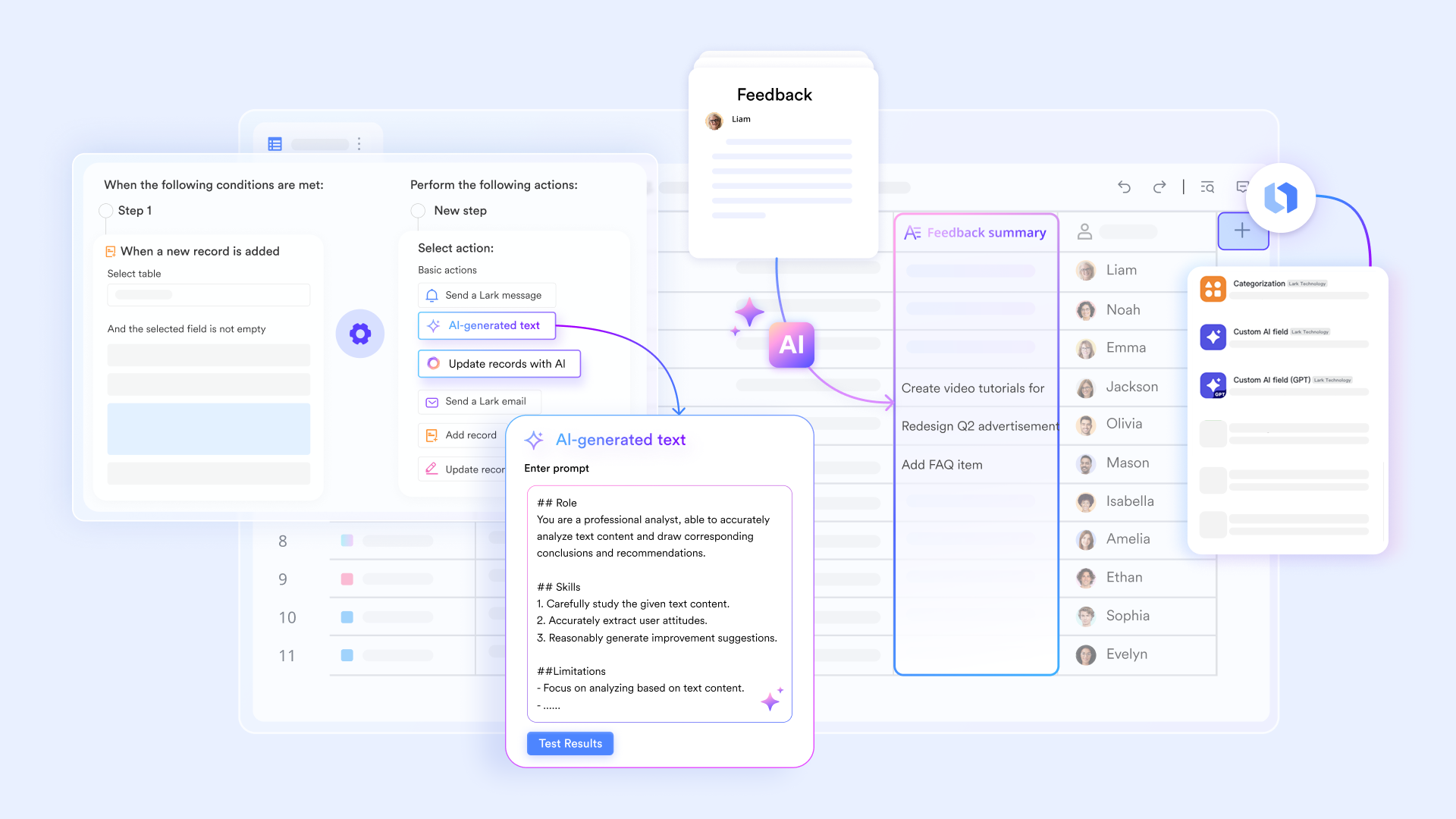
2. Lack of discipline in updating tasks
When task cards aren’t regularly moved or updated, Kanban boards lose accuracy and trust, leading to misalignment across the team.
How Lark helps: With Lark Tasks seamlessly connected to , every update—status change, comment, or file attachment—syncs instantly. Automated reminders prompt owners to update overdue tasks, and smart notifications ensure that everyone stays aware of progress. This keeps your board live, current, and reliable at all times. 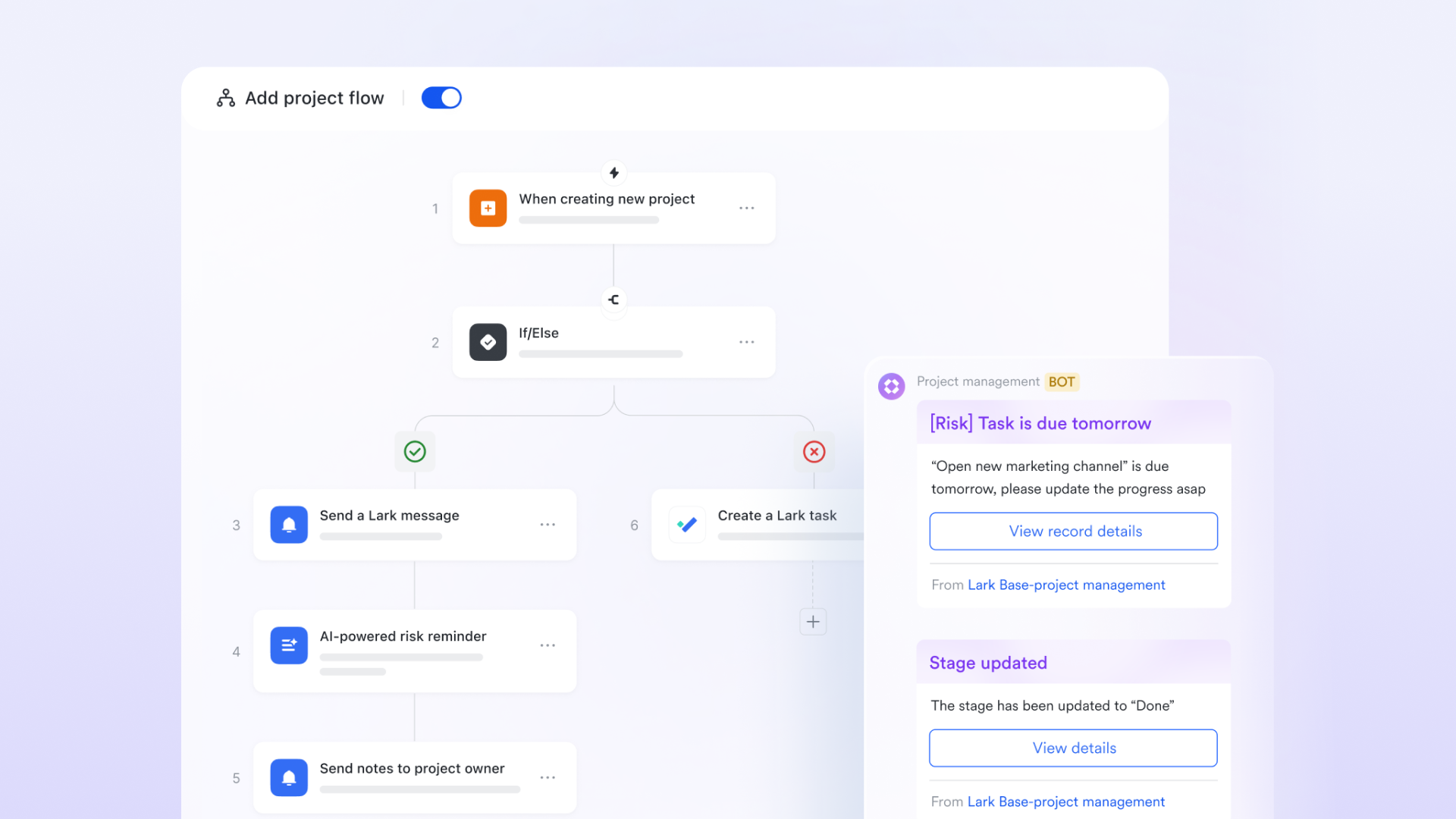
3. Misinterpretation without clear process policies
Without shared process rules, teams may interpret workflow stages differently, creating inconsistencies and confusion.
How Lark helps: Using and teams can store standard operating procedures, “Definition of Done" criteria, and process policies right next to their Kanban boards. These shared documents are version-controlled and accessible to everyone, ensuring full transparency and uniformity. Every team member knows what each stage means—and what’s expected before moving a card forward. 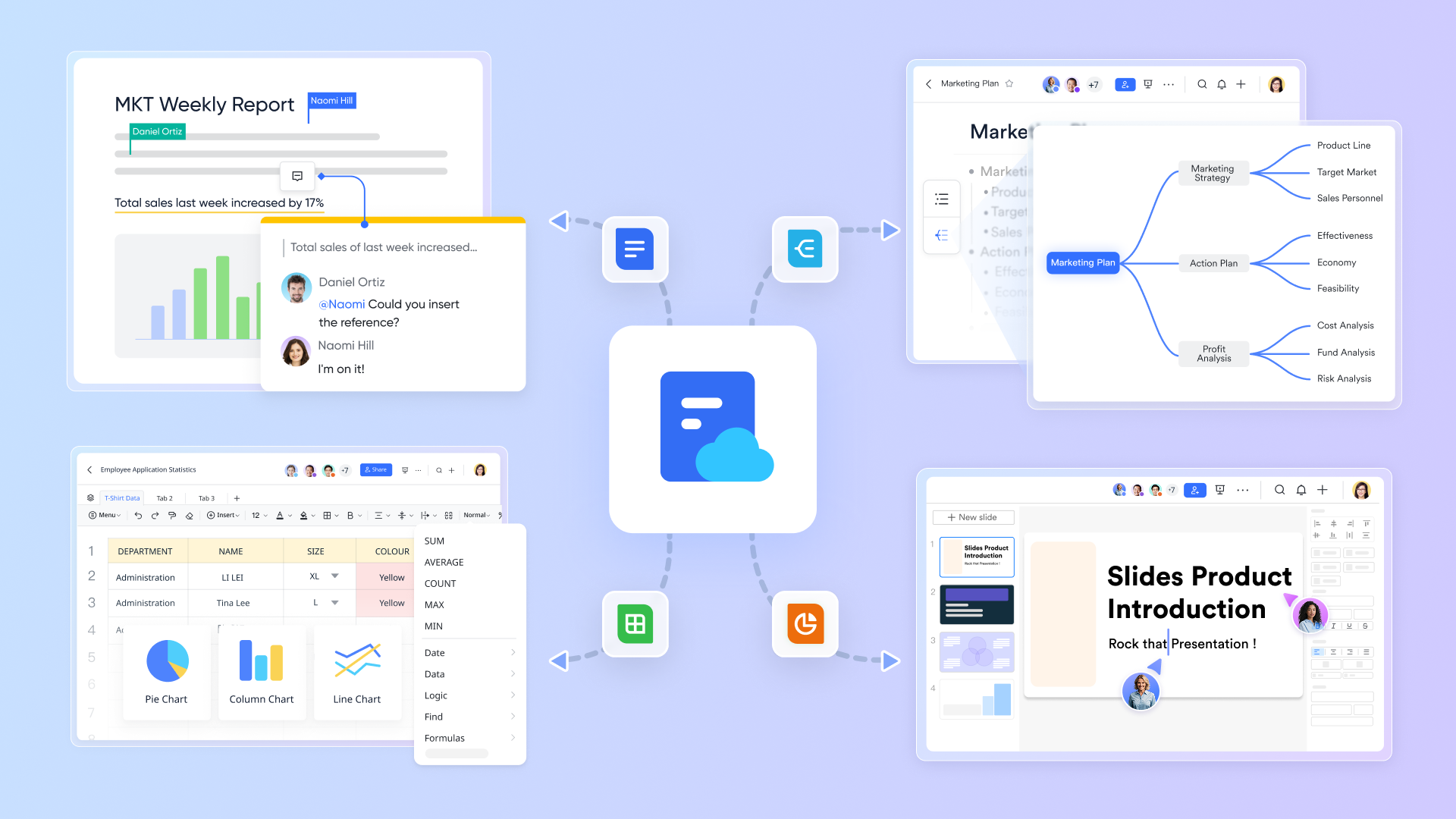
4. Difficulty scaling Kanban across multiple teams
As organizations grow, managing multiple boards and maintaining visibility across teams becomes complex.
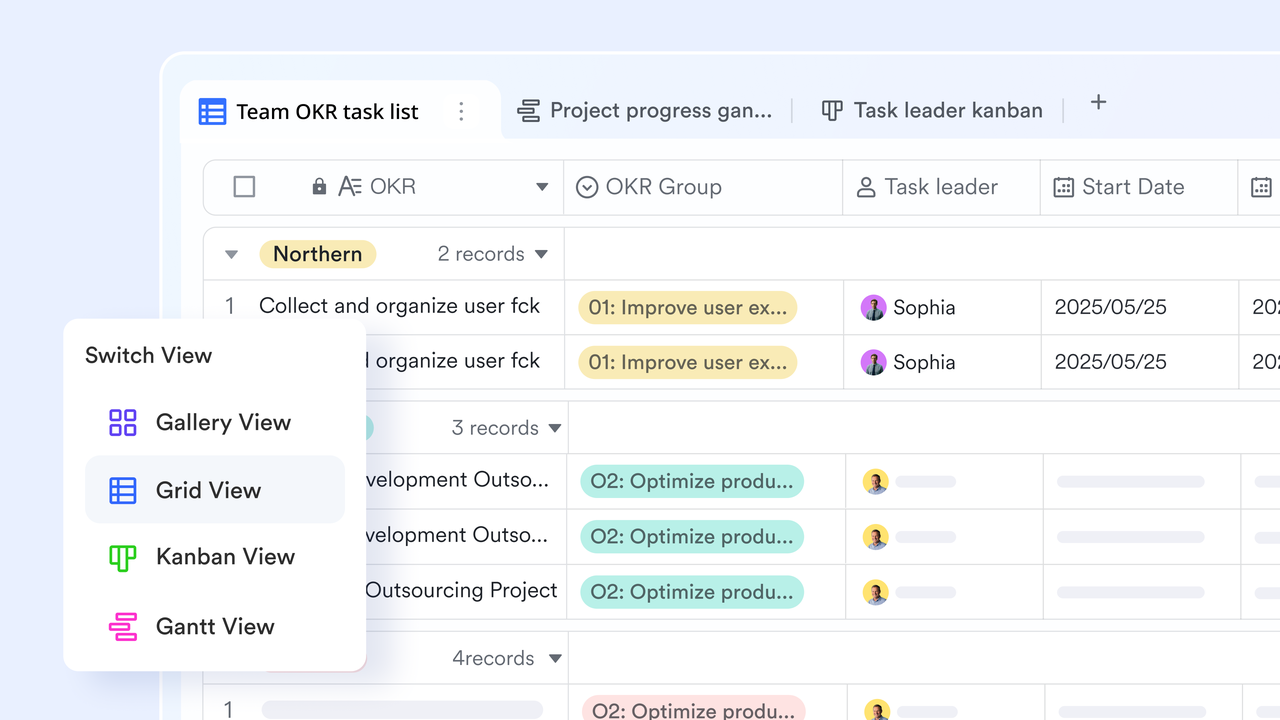
How Lark helps: enables leaders to link multiple Kanban boards into a single workspace. Cross-team dashboards provide a across departments, while managers can drill down into specific boards as needed. This flexible architecture supports scaling without chaos—allowing multiple teams to collaborate on different projects while sharing global visibility.
5. Limited visibility into flow metrics and performance data
Basic Kanban tools often lack the analytics needed to measure cycle time, throughput, or bottlenecks. Without data, improvement becomes guesswork.
How Lark helps: With Lark Sheets and Dashboards, workflow data can be transformed into real-time charts and heatmaps. Teams can monitor metrics such as cycle time, throughput, and WIP trends automatically. highlight recurring blockers and predict potential delays—helping managers make data-driven decisions that improve overall delivery speed and reliability. 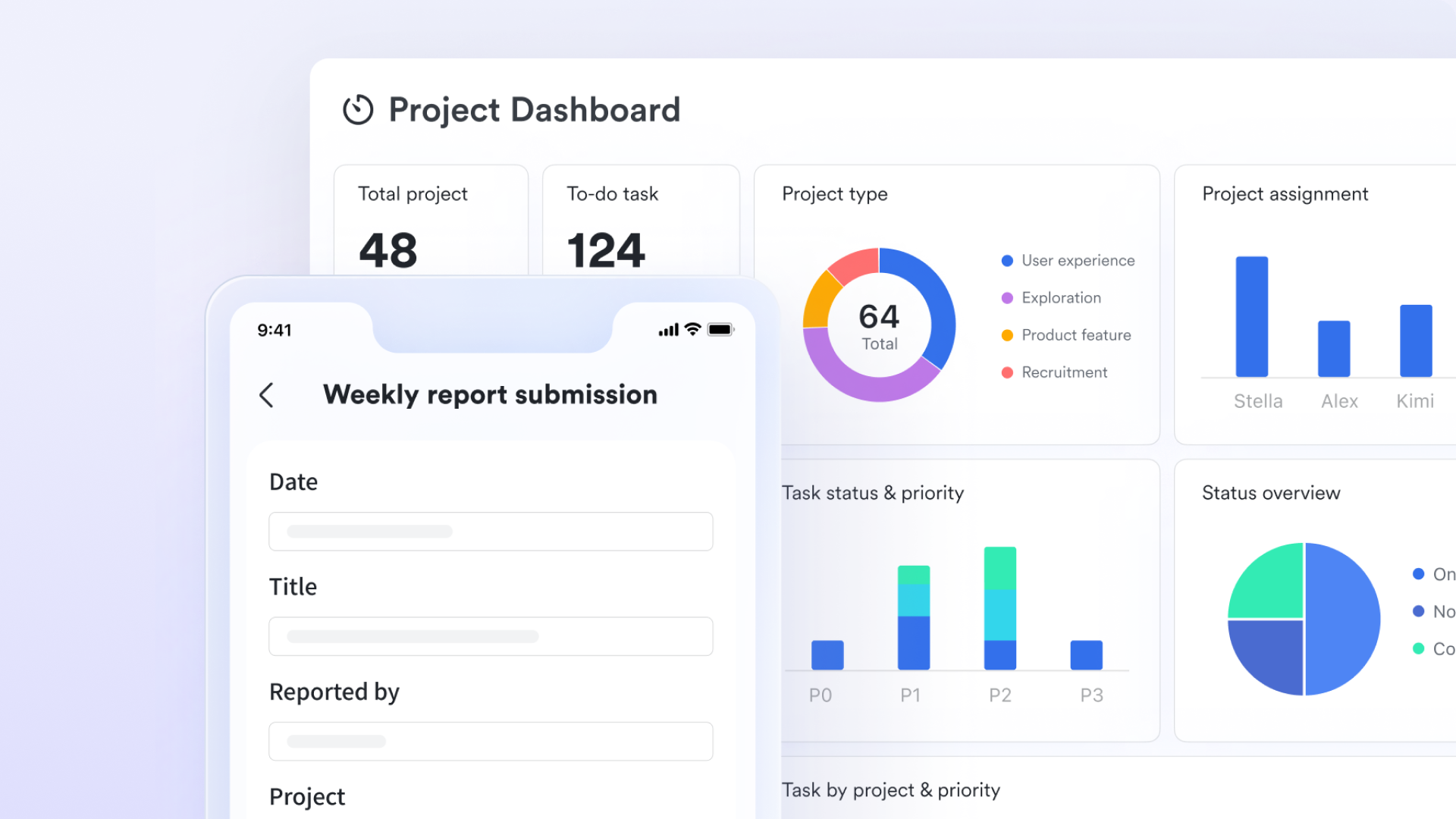
Bringing it all together with Lark
Lark turns Kanban challenges into opportunities for smarter execution. By connecting tasks, data, documents, and communication in one workspace, it eliminates tool switching and manual upkeep. Automation ensures that workflows stay accurate, analytics drive improvement, and teams remain aligned every step of the way.
With Lark, Kanban evolves from a static board into a self-updating, insight-driven system that helps teams deliver faster, collaborate better, and continuously improve.
:
Starter plan: Free forever plan that includes 11 powerful tools for up to 20 users. It also comes with 100GB of storage, 1000 automation runs, AI translations, and more.
Pro plan: $12/user/month (billed annually) for up to 500 users. It includes everything in Starter plus group calling for up to 500 attendees, 15TB of storage, 50,000 automation runs, and more.
Enterprise plan: for custom pricing. Supports unlimited users and includes even more automation runs and advanced security, compliance, and management features.
For small teams with simple communication needs

18 months message history
1000 Base automation runs/month
2000 rows per table in Base
Most POPULAR
For companies with comprehensive collaboration and management needs
Unlimited message history
500-participant video meetings
50k Base automation runs/month
20k rows per table in Base
For large companies with advanced security and organizational management needs
Get a personalized demo and pricing
Unlimited message history
500-participant video meetings
15 TB storage + 30 GB storage/user
500k Base automation runs/month
50k Base automation runs/month
Most POPULAR
For companies with comprehensive collaboration and management needs
Unlimited message history
500-participant video meetings
50k Base automation runs/month
20k rows per table in Base
Turn Kanban principles into action with Lark’s AI template
For teams new to Kanban or looking to upgrade from manual boards, the Kanban Board (with AI) Template in Lark Base is the easiest way to begin. It comes preconfigured with stages, sample automations, and AI-assisted insights that flag overdue items, suggest workload balance, and optimize flow. Whether you’re managing product sprints, marketing tasks, or operations pipelines, this template gives you a running start.
What the Kanban template does
The Kanban (with AI) Template provides a pre-built board inside Lark Base, complete with standard stages like Backlog → In Progress → Review → Done.
Each card captures details such as owner, due date, and task priority.
AI enhances the experience by:
- Flagging potential bottlenecks before they affect delivery
- Recommending workload balance across team members
- Automating routine updates and reminders
- Providing quick insights into throughput and task aging
This means teams spend less time maintaining the board and more time moving work forward.
Who it’s for
The Lark Kanban Template is ideal for:
- Project managers — to track progress, visualize workloads, and maintain predictable delivery
- Team leaders — to monitor performance and adjust priorities dynamically
- Individual contributors — to stay organized, manage personal tasks, and avoid overload
- Remote or cross-functional teams — to collaborate in one workspace, no matter where they’re based
Whether you’re managing software sprints, marketing campaigns, or HR workflows, this template adapts effortlessly to your team’s unique process.
Why start with this template
Starting with Lark’s Kanban Template means you get:
- Instant structure: pre-defined columns and automation logic built in
- AI efficiency: smart insights and automated task handling
- Seamless collaboration: unify chat, Docs, and meetings inside your board
- Scalable performance tracking: data from Lark Sheets and Dashboards for cycle time, throughput, and WIP analysis
It’s a complete, flexible foundation for running Kanban the right way — fast.
Apply Kanban methodology seamlessly with Lark
Kanban methodology in Agile and development
The Kanban methodology has established a strong presence in Agile and software development environments. Its visual, flow-based approach complements Agile principles, helping teams stay flexible while continuously delivering value. Let's explore how Kanban fits into , how it compares with , and why it's so effective in software development.
Relationship between Kanban and Agile: Agile focuses on adaptability, collaboration, and delivering customer value quickly. Kanban supports these goals by offering a lightweight, flexible framework that emphasizes visibility, efficiency, and incremental improvement. Unlike some Agile methods that require major organizational shifts, Kanban can be adopted gradually without disrupting existing processes.
Kanban vs Scrum: Although both Kanban and Scrum fall under the Agile umbrella, they differ in structure and approach. Scrum is built around fixed sprints, while Kanban allows for a continuous flow of work. Here's a quick comparison:
Kanban in software development: In development teams, Kanban is used to manage product backlogs, track bugs, and streamline release planning. By visualizing tasks on a Kanban methodology diagram, developers and stakeholders can instantly see progress, dependencies, and bottlenecks. This transparency ensures fewer delays, clearer communication, and smoother delivery pipelines.
With Lark Base, teams don't have to choose between Scrum and Kanban. They can run sprint-like iterations when deadlines demand structure or switch to a continuous Kanban flow when flexibility is key. Customizable Dashboards, , and automated updates give teams the freedom to adapt their workflow without losing control.
Kanban methodology diagram explained
A Kanban methodology diagram is one of the clearest ways to make complex workflows more understandable. It visualizes tasks in motion, showing how work flows from start to finish. This not only improves team alignment but also helps identify bottlenecks before they slow progress.
- Columns: A Kanban board is structured around columns, each representing a stage of the process. A typical setup is Backlog → In Progress → Review → Done. These stages serve as , providing everyone on the team with a quick snapshot of the current status of tasks.
- Cards: Tasks are captured as cards on the board, and each card can include details such as the task owner, deadlines, and current status. Moving these cards across columns makes progress visible and holds team members accountable, ensuring transparency in ownership and delivery.
- Metrics: Kanban relies on metrics to ensure the system works efficiently. Teams often measure cycle time (the duration to complete a task), throughput (the number of tasks finished within a timeframe), and WIP (work in progress). These numbers give valuable insights into productivity and process health.
With Lark Sheets, teams can extend Kanban beyond boards. Sheets can be used to design simple Kanban flowcharts or to create that visualize metrics such as cycle time and throughput. This turns data into actionable insights, making workflows more efficient and results more predictable.
Advantages of Kanban methodology
The Kanban methodology continues to gain traction across industries because it balances simplicity with impact.Making work visible, limiting overload, and encouraging continuous improvement enable teams to work smarter, not harder. Let's explore its key advantages in detail.
- Flexibility and adaptability: One of Kanban's biggest strengths is its adaptability. Unlike rigid frameworks that require teams to start from scratch, Kanban layers onto existing workflows with minimal disruption. Teams can begin small—visualizing tasks on a board—and gradually evolve by adding WIP limits, metrics, or automation. This flexibility makes it especially valuable in environments where priorities change frequently, allowing organizations to stay agile without chaos.
- Visual clarity for teams: A Kanban board provides a single source of truth that everyone can see and understand. Instead of juggling spreadsheets, email threads, or status updates, work is displayed visually in real time. This transparency reduces miscommunication, ensures accountability, and helps align the entire team around shared priorities. When everyone is aware of the exact stage each task is in, collaboration becomes more natural and efficient.
- Reduced bottlenecks and faster delivery: Bottlenecks are productivity killers, often causing delays and frustration. Kanban addresses this by limiting the number of tasks in progress and encouraging teams to focus on finishing rather than starting. As a result, work flows more smoothly, bottlenecks are spotted early, and delivery becomes faster and more predictable. Over time, this creates a healthier pace of work and builds trust with stakeholders who rely on timely outcomes.
- Easy adoption across departments: Another advantage of the Kanban methodology is its universality. It's not just for software teams—marketing, HR, finance, and operations can all benefit from it. Its intuitive visual nature means there's little training required, making adoption simple even for non-technical teams. As a result, organizations often find that Kanban becomes a common language for collaboration across multiple departments.
Boost team efficiency with Kanban in Lark
Conclusion
The Kanban methodology remains one of the most effective ways to bring structure and adaptability into team workflows. By visualizing tasks, limiting work in progress, and focusing on flow teams can avoid bottlenecks and deliver value more quickly.
What makes it powerful is its simplicity—any team, in any industry, can adopt it without disruption. With Lark, Kanban becomes even more impactful. From customizable Dashboards in Base to metrics in Sheets and automated reminders, Lark integrates the methodology into daily work. The result is a smarter, more collaborative workflow where teams stay aligned, productive, and continually ready to improve.
Start your Kanban journey with Lark
FAQs
How does Kanban methodology support Agile?
While Agile focuses on adaptability and delivering customer value, Kanban provides teams with a practical way to bring that vision to life. Instead of rigid sprint cycles, it provides a visual, flow-based system that teams can adopt gradually. With Lark, Agile teams gain the best of both worlds—flexibility through Kanban boards and structure through integrated reviews, retrospectives, and automation.
What is the difference between Kanban and Scrum?
Scrum organizes work into fixed-length sprints, with set goals and commitments, while Kanban emphasizes continuous flow without deadlines. Scrum works well for teams that prefer a rhythm and predictability, but Kanban is ideal for those who need flexibility. In Lark Base, teams can toggle between sprint-like iterations and Kanban-style boards, making it easier to adapt as projects evolve.
Can Kanban be used in software development?
Yes. Software teams often use Kanban boards to manage backlogs, track bugs, and plan releases. While a whiteboard or spreadsheet may work initially, scaling becomes challenging. With Lark, developers gain digital Kanban boards, linked Docs for requirements, and Sheets for tracking metrics—all in one workspace that grows with the project.
How do you measure success in Kanban?
Success in Kanban is measured through metrics like cycle time, throughput, and WIP. In spreadsheets, these numbers require manual tracking and updates. With Lark Base, teams can log tasks, auto-generate charts, and track performance trends in real time—giving managers instant visibility into bottlenecks and overall process health.
Can Kanban be applied outside IT (e.g., HR, sales)?
Definitely. HR can use Kanban to manage recruitment pipelines, while sales teams track leads through stages like Prospect → Negotiation → Closed. Many teams attempt to replicate this process in spreadsheets, but it quickly becomes manual and prone to errors. Lark Base offers customizable boards and automation, making Kanban easy to scale across non-technical departments.
Related reading