














Lean vs Six Sigma: Key Differences, Principles, and Applications

Ryan Tanner
Product Marketing Specialist
Sep 8, 2026
Ryan Tanner
Sep 8, 2026

12 min read


Businesses across industries are constantly looking for ways to improve efficiency, reduce waste, and boost quality. Two of the most powerful frameworks to achieve this are Lean vs Six Sigma. Lean focuses on removing inefficiencies and speeding up workflows, while Six Sigma reduces variation and defects through data-driven precision.
Many organizations compare Lean vs Six Sigma when deciding which to adopt, but increasingly they combine both into Lean Six Sigma for maximum impact. Beyond frameworks, modern teams also rely on digital tools like Lark to put these principles into action—mapping processes, collaborating in real time, and automating repetitive steps.

What is Lean?
Lean is a methodology focused on eliminating waste, streamlining processes, and delivering maximum value to customers. Originating in manufacturing, Lean has since been adopted across industries such as healthcare, IT, and services. By emphasizing efficiency and reducing unnecessary steps, Lean enables organizations to improve productivity without sacrificing quality.
The core Lean principles include defining value, mapping the value stream, creating continuous flow, establishing a pull system, and fostering continuous improvement. These principles help organizations identify inefficiencies, cut down on bottlenecks, and empower employees to participate in problem-solving. This structured yet adaptable approach has made Lean one of the most widely adopted methods for operational excellence.
In practice, Lean is often compared to Six Sigma, leading to the popular combination known as Lean 6 Sigma. While Lean focuses on waste elimination, Six Sigma emphasizes defect reduction. Together, they create a powerful framework for process improvement, blending speed with quality.
What is Six Sigma?
Six Sigma is a data-driven methodology designed to reduce process variation and eliminate defects, ultimately improving the quality and consistency of products and services. It originated at Motorola in the 1980s and has since been adopted across industries ranging from manufacturing to healthcare and finance. By focusing on precision and measurable results, Six Sigma helps organizations deliver outcomes that meet or exceed customer expectations.
The core of Six Sigma lies in the DMAIC framework: Define the problem, Measure current performance, Analyze the causes of variation, Improve the process, and Control outcomes to sustain improvements. This structured approach ensures organizations address root causes rather than surface-level issues, making it one of the most rigorous frameworks for process optimization.
In practice, Six Sigma is often compared to Lean, creating discussions like 6 Sigma vs Lean. While Lean emphasizes speed and waste reduction, Six Sigma ensures defect-free results, and together they form the foundation of Lean Six Sigma.
Lean vs Six Sigma: What's the difference?
Although both Lean and Six Sigma aim to improve processes, they take different paths. Lean focuses on eliminating waste and ensuring smooth flow, while Six Sigma emphasizes reducing variation and defects through data-driven analysis. Many businesses evaluate Lean vs Six Sigma when deciding which methodology to adopt, depending on whether speed or precision is more critical.
How Lark helps: Lark supports both approaches by combining collaboration with structured execution. Teams can apply Lean practices using Base and Tasks to streamline handovers, while Six Sigma projects benefit from Sheets for data collection, measurement, and tracking.
What is Lean Six Sigma?
Lean Six Sigma is a combined methodology that merges the speed and efficiency of Lean with the precision and defect reduction of Six Sigma. By bringing the two together, organizations can eliminate waste, improve process flow, and ensure consistent, high-quality results. This makes Lean Six Sigma especially powerful for industries where both efficiency and accuracy are critical.
The principles of Lean Six Sigma emphasize customer focus, continuous process improvement, and data-driven decision-making. Teams not only work to streamline workflows but also use analysis and measurement to remove variation and defects. This balance allows businesses to improve service delivery while maintaining strict quality standards.
In practice, Lean Six Sigma becomes even more effective when paired with digital project management tools. With Lark Base, teams can design structured improvement projects; Tasks ensures responsibilities and deadlines are clear; and automated workflow can handle repetitive reporting, freeing teams to focus on innovation and long-term improvements.
Benefits of Lean, Six Sigma, and Lean Six Sigma
Organizations adopt Lean, Six Sigma, or a hybrid Lean Six Sigma to achieve operational excellence. Each offers unique strengths, but their benefits are amplified when combined with a digital enabler like Lark, where workflows, communication, and data live in one place.
- Reduced waste and improved efficiency: Lean principles help businesses streamline workflows, eliminate unnecessary steps, and deliver value faster. For example, using Lark Tasks to simplify handovers reduces delays across teams.
- Defect-free products and services: Six Sigma ensures consistency by identifying and removing variation. With Lark Sheets, teams can collect performance data and monitor quality metrics to sustain improvements.
- Stronger customer satisfaction: By improving both speed and quality, organizations deliver reliable outcomes that meet customer expectations. Tools like Lark Base ensure transparency in progress tracking.
When to use Lean vs Six Sigma vs Lean Six Sigma
Tools and techniques in Lean and Six Sigma
Improvement frameworks are powered by the tools behind them. Lean emphasizes simplicity and waste reduction, while Six Sigma brings statistical precision. In practice, many organizations use a hybrid Lean Six Sigma approach, blending both sets of tools and enabling them with digital platforms like Lark.
- Lean tools:
- 5S: Sort, Set in order, Shine, Standardize, Sustain—organize and maintain efficient workspaces.
- Kanban: Visual workflow boards that track work in progress (supported in Lark Base for clear task flow).
- Kaizen: Continuous small improvements that drive cultural change.
- Value Stream Mapping: A method to visualize the entire process flow and identify waste, easily documented in Lark Docs.
- Six Sigma tools:
- DMAIC: Define, Measure, Analyze, Improve, Control—the structured problem-solving cycle.
- Control Charts: Statistical tools to monitor process stability and detect deviations.
- Root Cause Analysis: Techniques like fishbone diagrams or the “5 Whys” to uncover underlying issues.
- Lark Sheets: Useful for collecting data, tracking metrics, and creating reports that inform Six Sigma analysis.
- Lean Six Sigma hybrid:
- Combines Lean's flow optimization with Six Sigma's defect reduction.
- With Lark as the digital foundation, teams can manage projects in Base, track KPIs in Sheets, collaborate in Messenger, and schedule reviews in Calendar—turning mapped improvements into execution.
Lark as your Lean and Six Sigma enabler (in depth analysis)
While Lean and Six Sigma provide proven frameworks for improvement, their success depends on how effectively teams put them into practice. This is where Lark plays a vital role—acting as the digital foundation that connects continuous improvement principles with day-to-day execution.
Manage continuous improvement projects in Lark Base
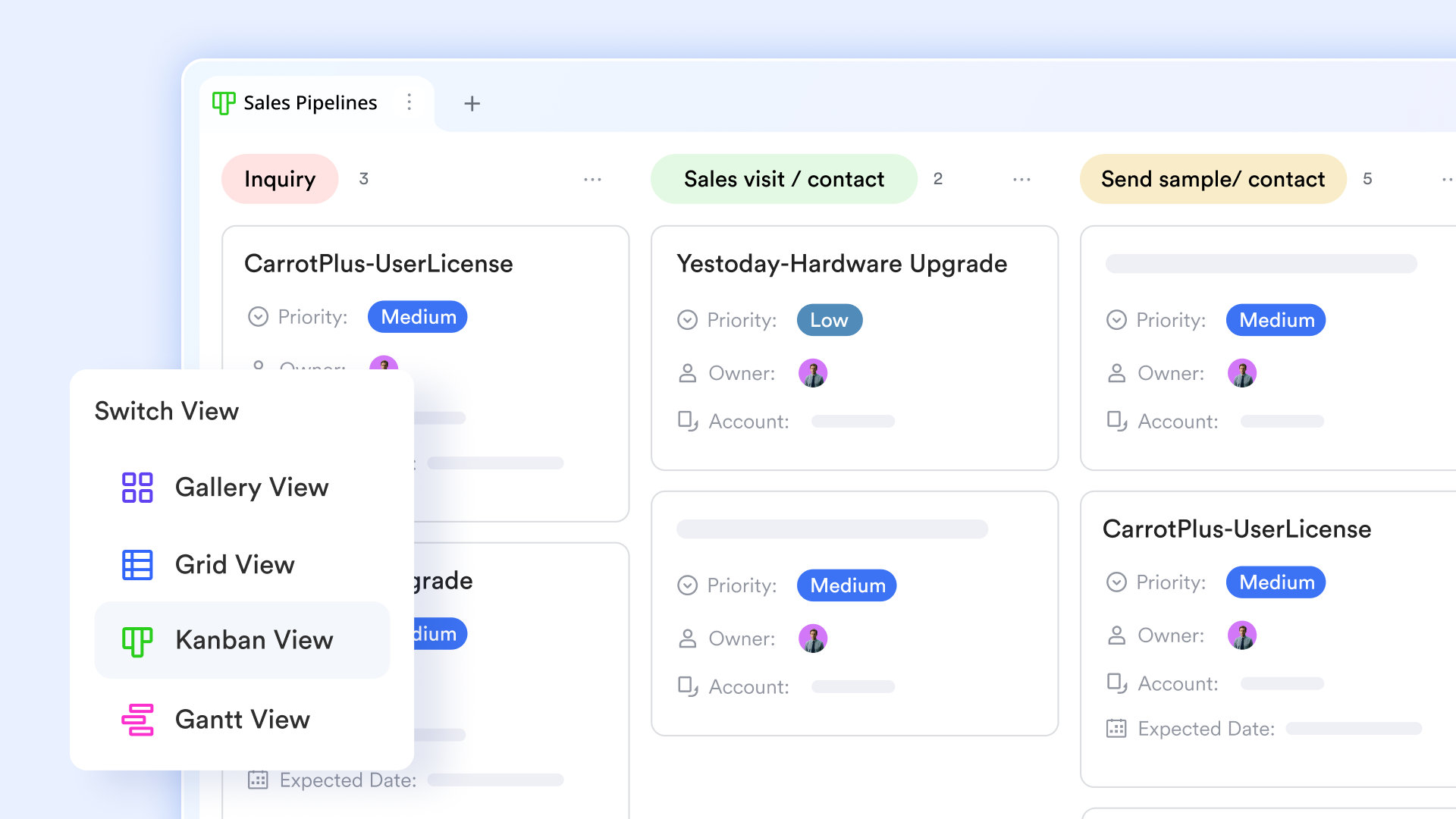
Lean projects often start with mapping value streams or identifying waste, while Six Sigma projects follow DMAIC. Lark Base allows teams to manage these projects with tables, Kanban boards, and Gantt views. For example, a Lean team can visualize workflows in Kanban to monitor handovers, while a Six Sigma team can use Base tables to track DMAIC phases and ownership. Dependencies and milestones ensure improvements don't stall midway.
Use Messenger and Calendar for communication and reviews
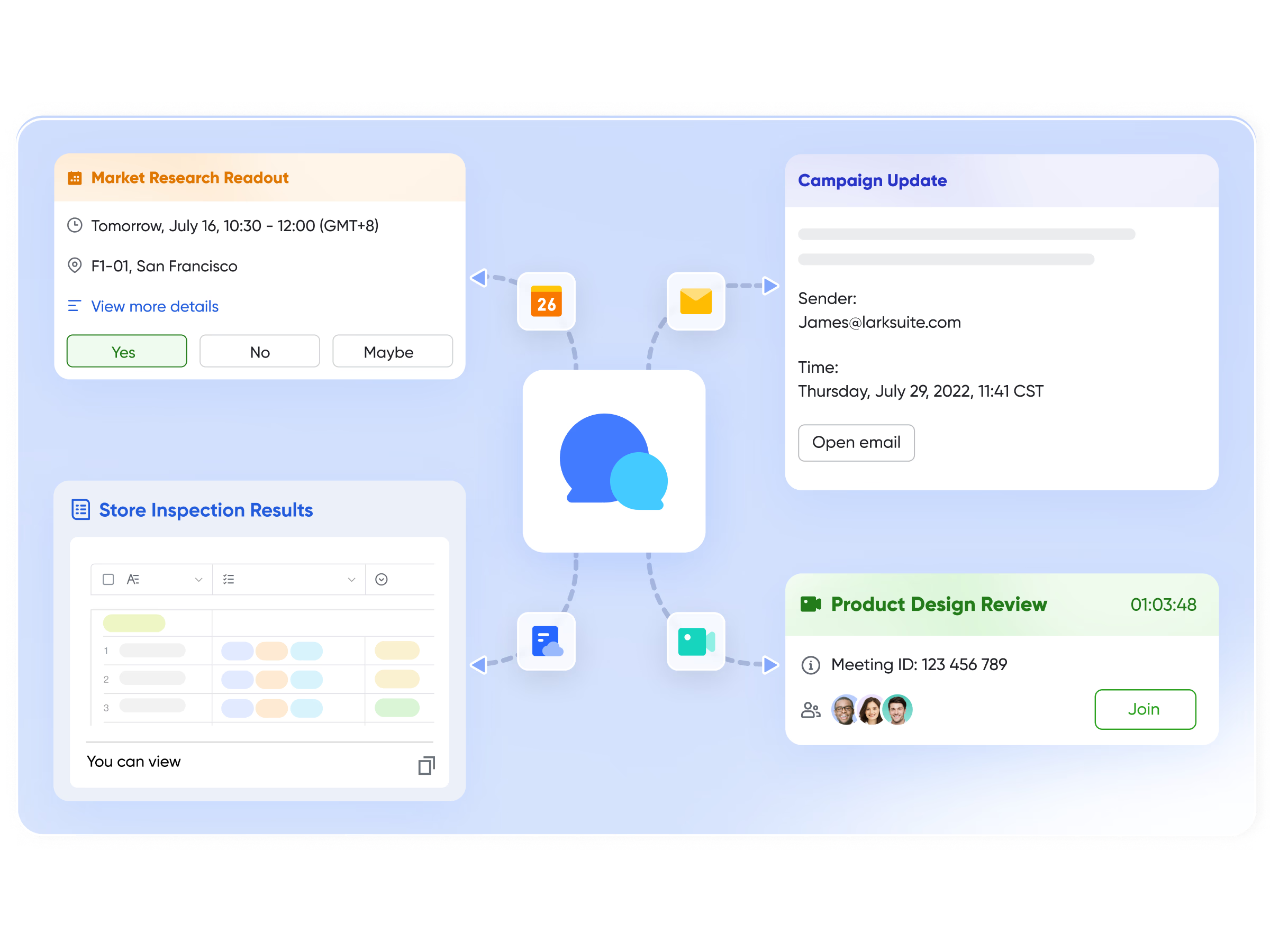
Collaboration is central to both Lean and Six Sigma—whether running Kaizen workshops or reviewing DMAIC progress. With Lark Messenger, teams can hold threaded discussions tied to specific Lark Base records or Docs, keeping context intact. Lark Calendar then makes it easy to schedule recurring review meetings or milestone check-ins, ensuring accountability and alignment throughout the project lifecycle.
Automate repetitive updates with automated workflows
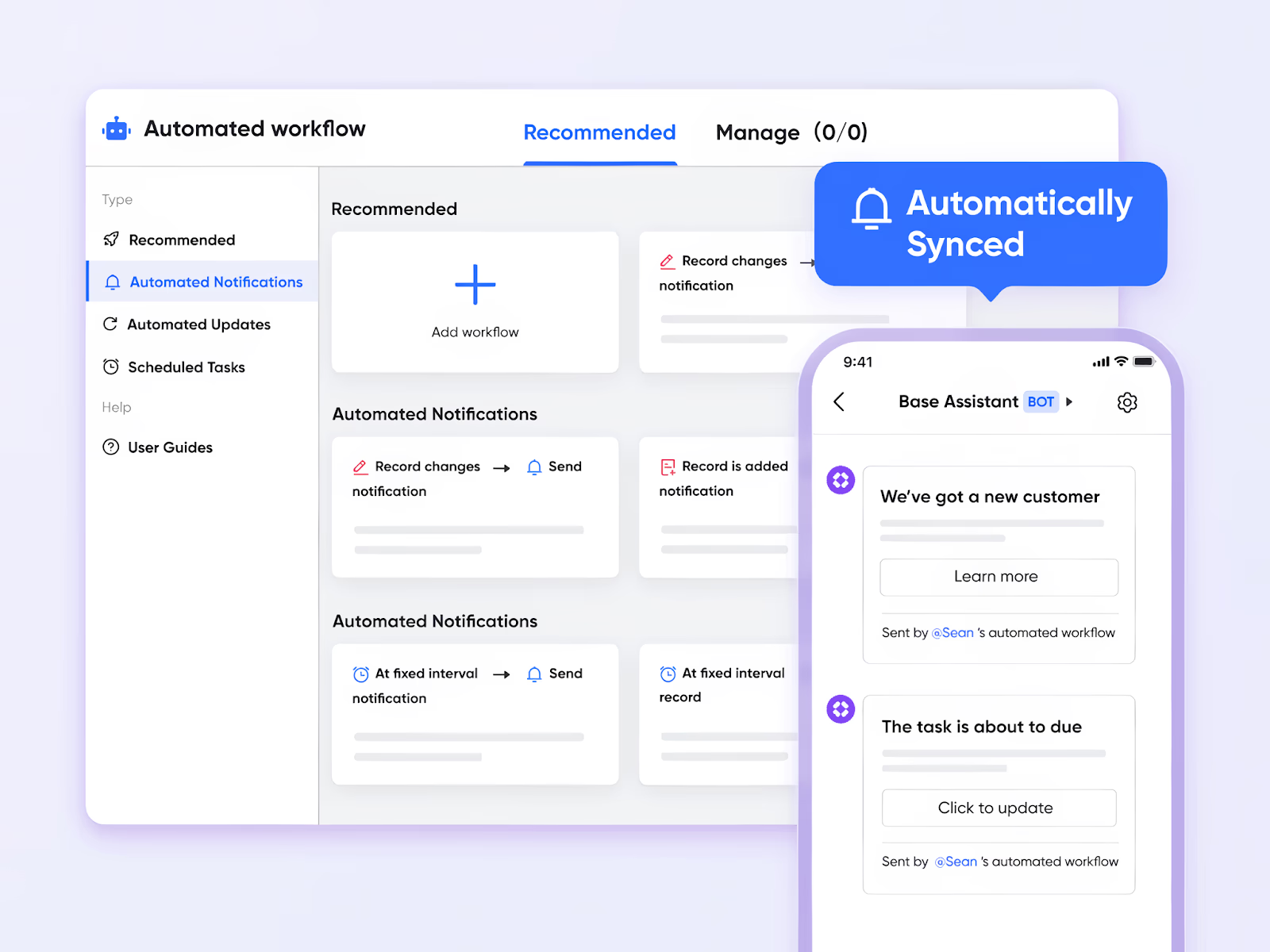
A core Lean principle is eliminating non-value-added work, while Six Sigma emphasizes control and consistency. Lark's automated workflow capabilities ensure repetitive updates, notifications, and automated approvals happen without manual intervention. For example, when a Six Sigma metric in Sheets falls below a threshold, Base can trigger an automated alert in Messenger or create a corrective Task, ensuring fast response without extra admin work.
Six Sigma relies heavily on measurement and analysis, while Lean emphasizes visibility of value streams. Lark Sheets can be used to track defect rates, cycle times, and control charts, while Lark Docs and Lark Wiki centralize reports, SOPs, and visual value stream maps. This creates a single source of truth where both Lean and Six Sigma teams can access real-time data and improvement documentation.

- Starter plan: Free forever plan that includes 11 powerful tools for up to 20 users. It also comes with 100GB of storage, 1000 automation runs, AI translations, and more.
- Pro plan: $12/user/month (billed annually) for up to 500 users. It includes everything in Starter plus group calling for up to 500 attendees, 15TB of storage, 50,000 automation runs, and more.
- Enterprise plan: Contact sales for custom pricing. Supports unlimited users and includes even more automation runs and advanced security, compliance, and management features.
Conclusion
Lean and Six Sigma are two of the most powerful methodologies for driving continuous improvement. Lean eliminates waste and speeds up processes, while Six Sigma reduces variation and defects to ensure high quality. Together, Lean Six Sigma balances both efficiency and precision, making it one of the most comprehensive frameworks for operational excellence.
But while frameworks provide methodology, execution is where success is won. That's where Lark stands out. With tools like Base, Tasks, Docs, Sheets, Messenger, and Calendar, Lark gives teams the ability to turn Lean and Six Sigma principles into actionable workflows, measurable KPIs, and real-time collaboration. From value stream mapping to DMAIC reporting, everything lives in one connected hub.
FAQs
Can Lean and Six Sigma be used together?
Yes—this combination is known as Lean Six Sigma. It merges Lean's speed with Six Sigma's precision. In Lark Base, teams can manage Lean Six Sigma projects end-to-end, tracking both workflow efficiency and quality control in one place.
What are Lean Six Sigma principles?
Key principles include customer focus, data-driven decision-making, and continuous improvement. With Lark Docs and Wiki, teams can document these principles and share them, while Base and Tasks ensure they are applied consistently across projects.
Is Lean Six Sigma better than Six Sigma alone?
It depends on the organization's priorities. Six Sigma focuses on precision, while Lean Six Sigma adds efficiency. With Lark Sheets, you can measure variation, and with Base, you can manage process flow—making it easy to tailor either approach to your needs.
What industries use Lean and Six Sigma most?
Manufacturing, healthcare, finance, IT, and logistics are the most common. In these industries, Lark provides a digital workspace to streamline process mapping, track KPIs, and automate workflows, ensuring Lean and Six Sigma projects succeed.
Which is easier to implement: Lean or Six Sigma?
Lean is usually easier to start because it focuses on obvious waste reduction. Six Sigma requires statistical analysis, which can be more complex. With Lark, both approaches are easier—Lean workflows can be managed in Tasks and Base, while Six Sigma data is tracked in Sheets.
Related reading
Table of contents
Start using Lark today

Manage all your work in one place
Boost team efficiency by 10x
Save up to 70% on software costs
Table of contents
Start using Lark today
Manage all your work in one place
Boost team efficiency by 10x
Save up to 70% on software costs
Keep reading


Lark recognized in 2023 Gartner® Collaborative Content Workspaces and Meeting Solutions reports
Lark, the global superapp for productivity, is delighted to announce it receives recognition in the Gartner's 2023 Innovation Insight for Collaborative Content Workspaces and Market Guide for Meeting Solutions.





2026 Lark Technologies Pte. Ltd.
Headquartered in Singapore with offices worldwide.






Explore: