














Project Management for Healthcare: Top Tools, Benefits and Best Practices

Ryan Tanner
Product Marketing Specialist
Sep 18, 2026
Ryan Tanner
Sep 18, 2026

31 min read


In the healthcare environment, hospitals, clinics, and medical organisations face increasing complexity, from managing patient data securely to coordinating multidisciplinary teams under strict compliance standards. Inefficient communication and fragmented workflows can lead to costly errors and reduced patient satisfaction.
Project management for healthcare provides a structured approach to planning, tracking, and executing initiatives that enhance care quality, improve efficiency, and ensure compliance. This article explores the benefits, key methodologies, and the best project management tools for healthcare. Here is a list of the best project management tools for healthcare:
1. Lark: Best for all-in-one healthcare collaboration and project management
2. Wrike: Best for enterprise-grade healthcare project tracking
3. Asana: Best for simple clinical and administrative task coordination
4. Smartsheet: Best data-driven and compliance-focused healthcare projects
5. ClickUp: Best customizable healthcare IT and innovation workflows
6. Monday.com: Best for visual planning across healthcare departments
7. Teamwork: Best for managing external healthcare vendors and consultants
8. Microsoft Project: Best traditional hospital infrastructure and facility projects

What is project management in healthcare?
Project management in healthcare is the structured application of planning, organizing, and monitoring techniques to achieve specific objectives within healthcare settings. These projects can range from improving patient care processes to introducing new technologies or expanding medical facilities. At its core, healthcare project management ensures that every initiative, no matter how complex, is completed efficiently, within budget, and in compliance with industry regulations.
Healthcare organizations operate in an environment where precision, compliance, and collaboration are essential. Managing a single project often involves multiple teams — doctors, nurses, administrators, IT professionals, and external vendors — all of whom must coordinate seamlessly. Project management provides a unified framework to align these diverse stakeholders around common goals, defined timelines, and measurable outcomes.
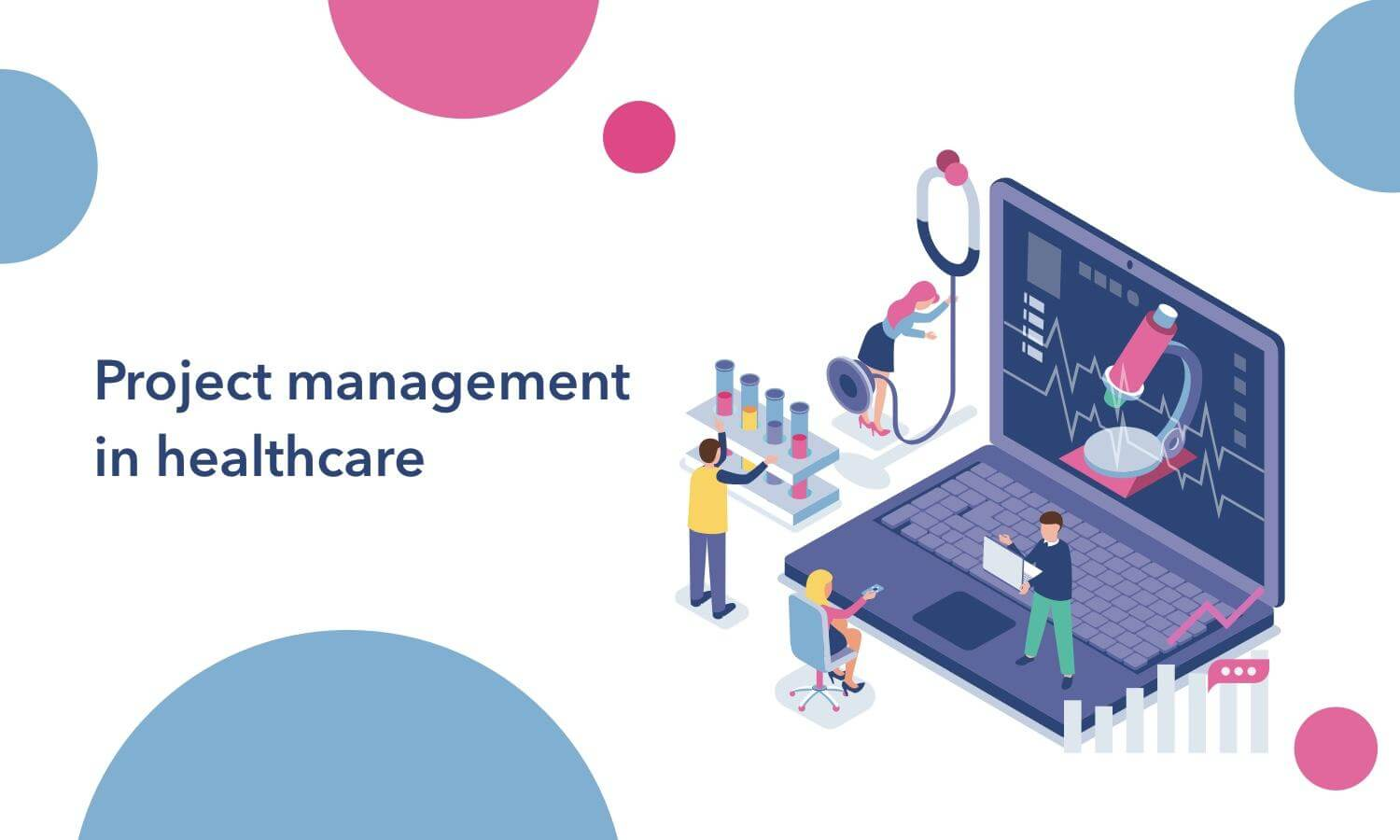
Image source: hygger.com
Scope of project management in healthcare
The scope of healthcare project management is vast, encompassing everything from digital transformation to clinical process optimization. Projects might involve:
- Implementing electronic health record (EHR) systems to streamline data access.
- Developing telehealth platforms to expand patient reach and reduce appointment delays.
- Redesigning hospital workflows to improve patient throughput and staff productivity.
- Upgrading medical equipment or facilities to meet safety and regulatory standards.
- Launching public health initiatives or training programs for staff development.
Every project whether it's IT-driven or patient-centered requires careful planning, budget management, risk assessment, and quality assurance. Effective project management ensures that each initiative delivers tangible improvements in both operational efficiency and patient outcomes.
Key objectives of healthcare project management
The primary goal of healthcare project management is to bring structure, efficiency, and accountability to an industry where precision and coordination are critical. Every project — whether clinical, administrative, or technological — must deliver measurable improvements in care quality, compliance, and operational efficiency. Below are the core objectives that guide successful healthcare project management.
- Improve care quality: One of the most important objectives of project management in healthcare is to enhance the overall quality of patient care. By introducing standardized procedures, defined workflows, and performance tracking, project management helps reduce medical errors and ensure consistent treatment across departments. It enables healthcare teams to align their efforts around evidence-based practices and measurable outcomes. When patient care initiatives are structured and monitored, hospitals can deliver safer, faster, and more effective healthcare services improving both patient satisfaction and long-term outcomes.
- Ensure regulatory compliance: Healthcare organizations must adhere to strict regulations such as HIPAA, ISO, and FDA standards to ensure patient safety and data protection.Effective project management provides the documentation, audit trails, and reporting systems necessary to stay compliant with these laws.By defining clear responsibilities and implementing standardized workflows, project managers ensure that every step of the process meets regulatory expectations.This structured approach minimizes the risk of penalties or data breaches while fostering a culture of accountability and transparency.Modern project management software for healthcare further simplifies compliance tracking through automation and real-time reporting.
- Optimize costs and workflows: Healthcare institutions often operate under limited budgets, making cost optimization a critical objective. Project management allows leaders to allocate resources more strategically, ensuring funds and manpower are directed where they generate the greatest impact. It identifies inefficiencies and bottlenecks, helping teams streamline repetitive tasks and automate administrative processes. Through tools like Lark Base or Smartsheet, managers can track expenditures, manage inventory, and forecast costs with greater precision. The result is a leaner, more efficient organization that maintains quality care while reducing unnecessary spending.
- Enhance collaboration among healthcare staff: Healthcare relies on seamless communication between clinical, administrative, and technical teams. Project management creates a framework that promotes collaboration, transparency, and accountability at every level of an organization. By centralizing updates, documents, and task assignments in one system, it ensures all stakeholders stay aligned on project goals and progress. Platforms like Lark facilitate real-time collaboration through chat, meetings, and shared docs breaking down silos that often slow down decision-making. Stronger collaboration not only improves workflow efficiency but also enhances patient experiences by ensuring every department operates in sync.
Benefits of project management in healthcare
In an evolving medical environment, hospitals and healthcare organizations must balance patient care, operational efficiency, and compliance often under tight budgets and timelines. Project management for healthcare provides a structured approach to align goals, manage teams effectively, and ensure measurable results. By adopting formal project management practices, healthcare institutions can improve communication, enhance accountability, and deliver better outcomes across all departments. Here are the key benefits that highlight why project management is essential in healthcare.
- Operational efficiency: Project management introduces discipline and organization into healthcare processes, reducing redundancy and wasted effort. It helps streamline workflows, standardize procedures, and allocate resources efficiently across departments. By tracking tasks and deadlines systematically, hospitals can avoid delays and improve throughput. This structured approach ensures that both clinical and administrative projects run smoothly, on time, and within budget.
- Better patient outcomes: A well-managed healthcare project directly translates to improved patient care. With clear communication, defined roles, and transparent tracking, project management reduces miscommunication and procedural errors. Healthcare teams can respond faster to patient needs and emergencies, ensuring timely interventions. By improving workflow visibility, project management helps deliver safer, faster, and more coordinated care that enhances overall patient satisfaction.
- Data-driven decisions: Modern project management software for healthcare provides analytics and reporting tools that transform raw data into actionable insights. Managers gain visibility into key performance metrics — such as cost efficiency, timelines, and team productivity. This data-driven approach supports evidence-based decision-making, allowing hospitals to adjust resources or priorities before issues escalate. Ultimately, it leads to smarter strategy execution and continuous process improvement.
- Regulatory compliance: Healthcare is one of the most regulated industries, and project management ensures that compliance is built into every initiative. It provides detailed documentation, audit trails, and risk management processes that help organizations meet standards like HIPAA, ISO, and FDA requirements. Project tracking tools help maintain transparency and accountability, minimizing compliance risks. As a result, healthcare facilities can confidently pass inspections and maintain patient data security.
- Team collaboration: Healthcare projects involve multiple departments from clinical and IT teams to finance and administration. Project management platforms create a unified workspace where all stakeholders can communicate, share documents, and track updates in real time. This transparency breaks down silos, strengthens accountability, and promotes teamwork. When everyone works from a shared source of truth, coordination improves, and projects move forward faster with fewer conflicts or misunderstandings.
Core methodologies used in healthcare project management
Every healthcare project is unique whether it's implementing a new patient record system, expanding hospital infrastructure, or optimizing operational workflows. Because of this, selecting the right project management methodology is critical. The right framework helps healthcare organizations balance structure with flexibility, ensuring compliance without slowing down innovation. Healthcare teams typically adopt one or more of the following five proven methodologies. Each offers distinct advantages depending on project complexity, regulatory needs, and stakeholder involvement.
- Waterfall: The Waterfall methodology follows a linear, step-by-step approach, making it ideal for structured and compliance-driven healthcare projects. Each phase — planning, execution, testing, and delivery — must be completed before the next begins. This method works best for hospital construction, policy implementation, or medical equipment installation, where requirements are clearly defined from the start. Its strength lies in documentation, predictability, and control — all crucial when handling regulated healthcare environments that demand traceability and approval at every stage. However, it is less flexible for projects that require frequent adjustments or feedback cycles.
- Agile: Agile project management emphasizes flexibility, iteration, and collaboration. Instead of one long project phase, work is divided into smaller "sprints" that deliver incremental progress. This approach is ideal for healthcare IT projects, such as telehealth platforms, EHR software, or patient portal development, where continuous improvement and adaptability are key. Agile empowers healthcare teams to respond quickly to feedback, test new ideas, and refine processes without disrupting larger operations. It promotes teamwork, transparency, and frequent critical communication when dealing with rapidly evolving technology or patient needs.
- Lean and Six Sigma: Both Lean and Six Sigma are process improvement methodologies focused on eliminating inefficiency and ensuring quality. Lean aims to maximize value by reducing waste such as redundant processes, waiting times, or unnecessary paperwork, while Six Sigma focuses on reducing errors and variation through data-driven analysis. In healthcare, this methodology is commonly used to streamline patient admissions, optimize surgical scheduling, or improve lab workflows. By applying Lean and Six Sigma principles, healthcare organizations can improve patient experiences, lower operational costs, and enhance compliance with clinical standards.
- Hybrid: The Hybrid methodology combines the structured planning of Waterfall with the flexibility and adaptability of Agile. This makes it one of the most practical approaches for healthcare, where both regulation and innovation coexist. For instance, when implementing a hospital-wide information system, regulatory documentation might follow a Waterfall structure, while software development or user feedback cycles adopt Agile practices. Hybrid models allow healthcare leaders to maintain compliance and governance while encouraging agility in problem-solving. It's ideal for multidisciplinary hospital environments managing both administrative and clinical objectives simultaneously.
- Critical Path Method (CPM): The Critical Path Method is a scheduling technique that identifies the most crucial sequence of tasks necessary to complete a project on time. It helps project managers determine dependencies, allocate resources effectively, and pinpoint tasks that could delay delivery if not completed as scheduled. In healthcare, CPM is often used for facility construction, large-scale procurement, or multi-phase operational rollouts, where timing and interdependencies are critical.
By visualizing the entire project timeline, healthcare administrators can foresee bottlenecks, manage resources more strategically, and ensure projects meet deadlines without compromising quality or compliance.
Each methodology brings unique strengths — Waterfall ensures precision and compliance, Agile fosters adaptability, Lean and Six Sigma drive efficiency, Hybrid balances both worlds, and CPM guarantees effective scheduling.Successful project management in healthcare often involves combining these methods to fit the organization's goals, regulatory requirements, and team dynamics. These project management methodologies are also widely taught and applied in academic and clinical training environments, including institutions such as St Kitts University, where healthcare professionals learn to manage complex, regulated projects effectively.
Comparison table for the best 8 project management tools for healthcare teams
Best project management tools for healthcare teams:
1. Lark: Unified collaboration platform for modern healthcare teams
Lark is a next-generation project management and collaboration platform for healthcare organizations, built to simplify operations, communication, and compliance within one secure ecosystem. Unlike traditional tools that separate project tracking from communication, Lark merges everything from messaging and meetings to workflows, analytics, and approvals into one connected workspace. Whether it's managing clinical projects, coordinating patient care, or improving hospital workflows, Lark empowers teams to work smarter, faster, and more securely.
Key features:
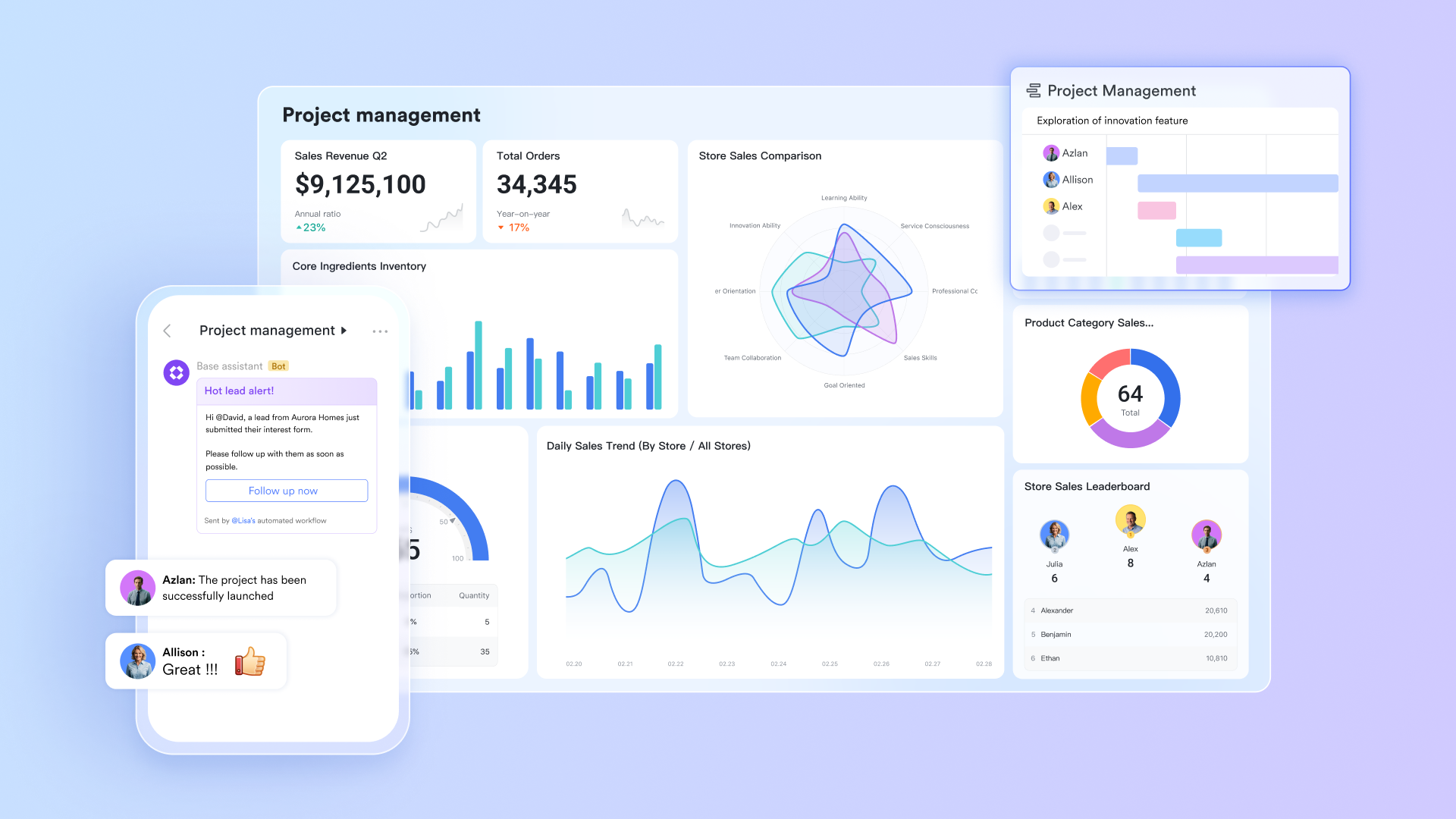
- Lark Base for automated and organized healthcare workflows: Lark Base acts as the operational hub for healthcare teams. It allows you to create customized workflows for clinical trials, patient management, or resource allocation using forms, fields, and logic rules. Automations help reduce manual data entry automatically assigning tasks, updating statuses, and sending notifications. For example, appointment reminders, follow-up surveys, and compliance audits can be fully automated, saving hours of administrative time. All data is securely stored and easily filtered, ensuring transparency across departments while maintaining regulatory compliance.
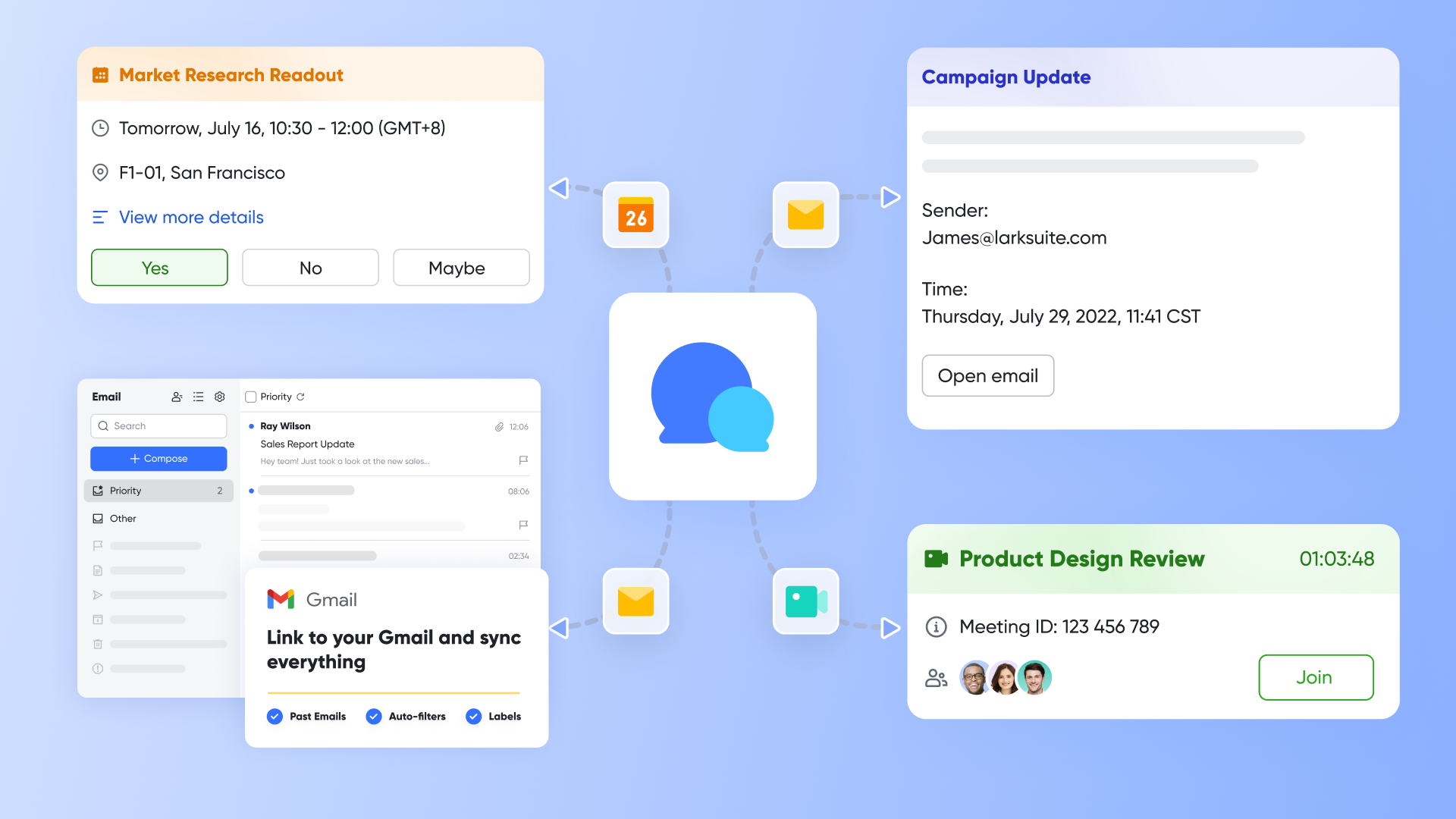
- Lark Messenger for secure communication and instant updates: Lark Messenger replaces scattered chats and emails with an encrypted, real-time messaging system. Doctors, nurses, and administrative staff can collaborate instantly using group threads, file sharing, and in-line document previews. With built-in AI translation, multilingual teams can communicate effortlessly across locations and regions — ideal for global healthcare organizations. Lark's HIPAA-aligned security ensures every conversation, file, and message remains private and compliant. Pinned messages, smart search, and integrated task creation make team communication more actionable than ever.
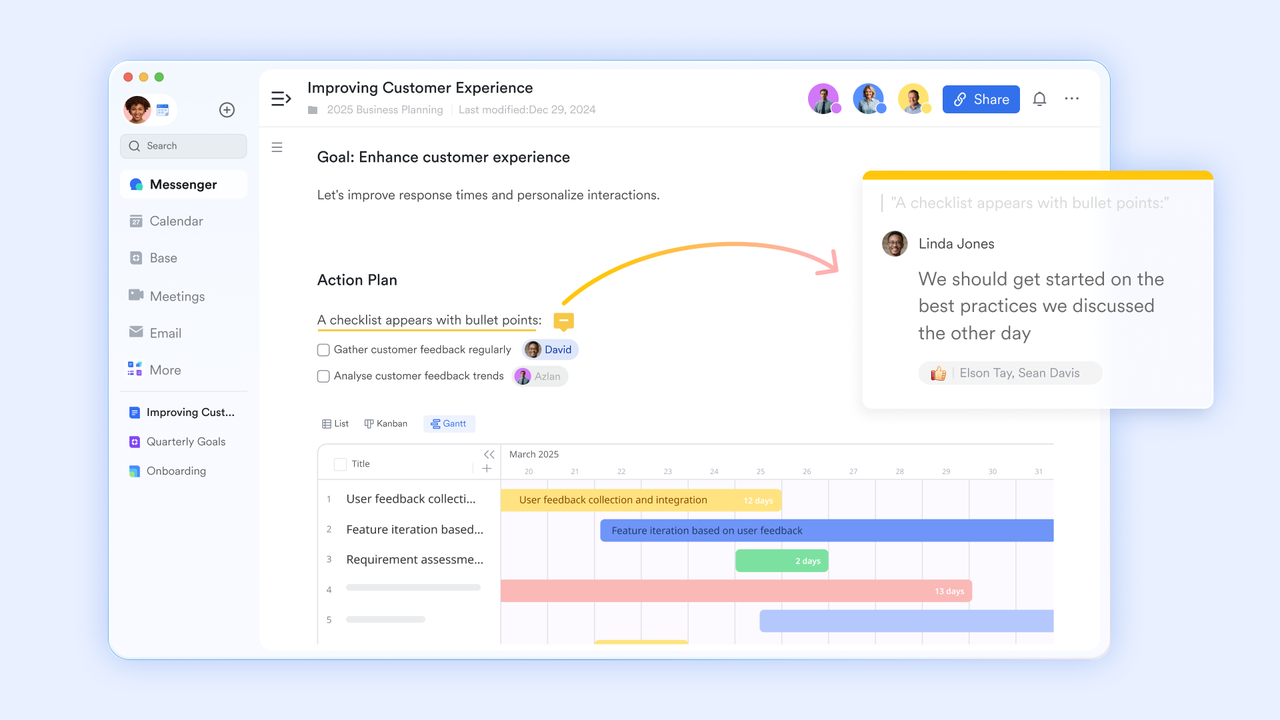
- Lark Docs & Sheets for collaborative and compliant documentation: Healthcare teams can co-author reports, patient treatment plans, and compliance documents in Lark Docs, just like in Google Docs — but with stronger permissions and audit trails. Each version is automatically saved, ensuring a complete history of edits and authorship. Lark Sheets integrates live data from workflows or third-party systems (like billing or scheduling), creating dynamic reports for management or compliance reviews. This collaborative environment replaces endless document versions and email attachments with a single, synchronized source of truth.
- Lark Meetings virtual collaboration for care and management: Lark Meetings enables healthcare professionals to hold secure video conferences, telehealth consultations, and project syncs directly within the platform. Teams can share screens, review documents, and take live meeting notes in Lark Docs, eliminating the need to switch between apps. Meetings are protected by end-to-end encryption, ensuring that patient data and internal discussions remain confidential. This feature is particularly effective for coordinating multidisciplinary teams across hospital branches or during remote healthcare operations.
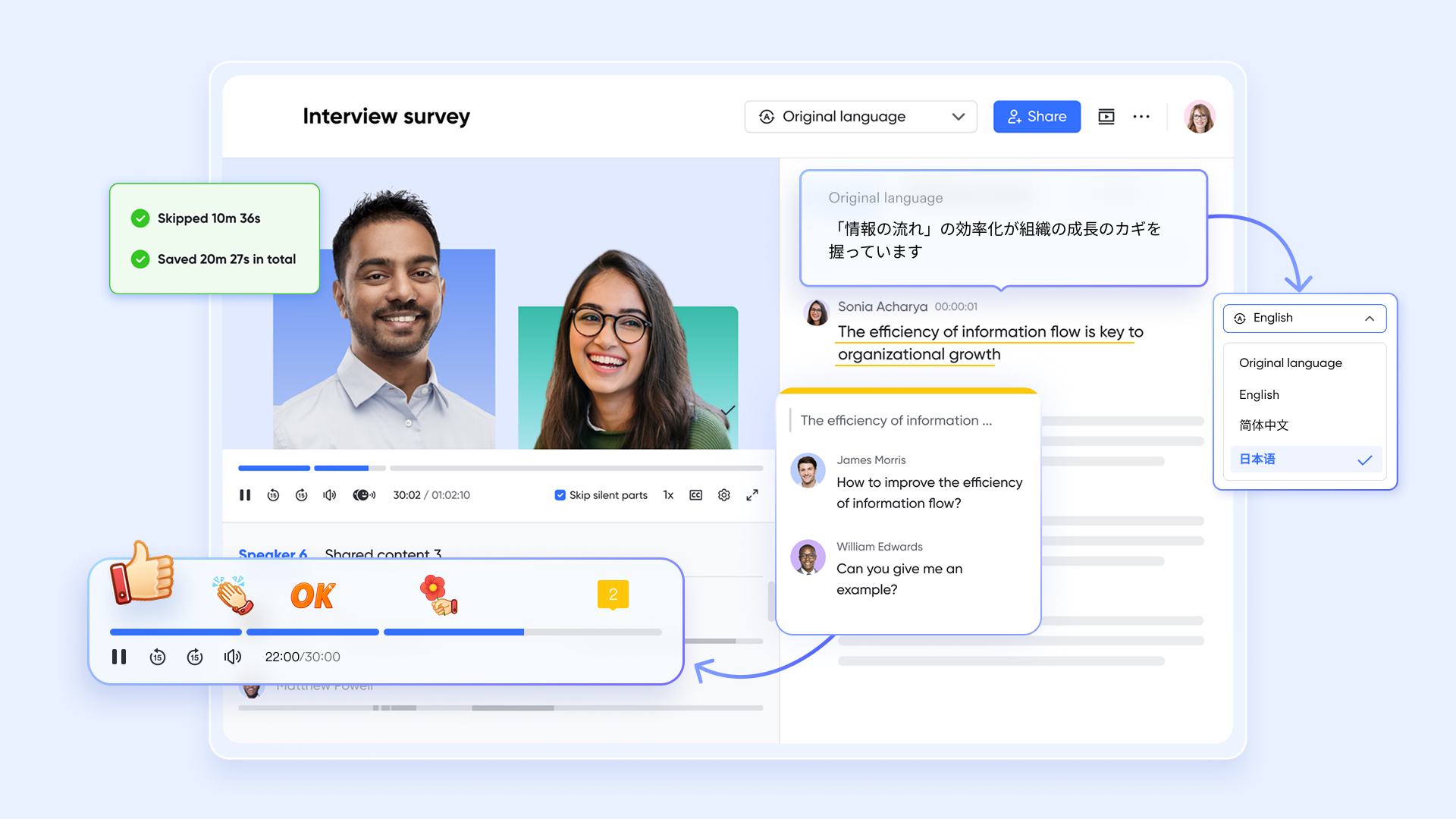
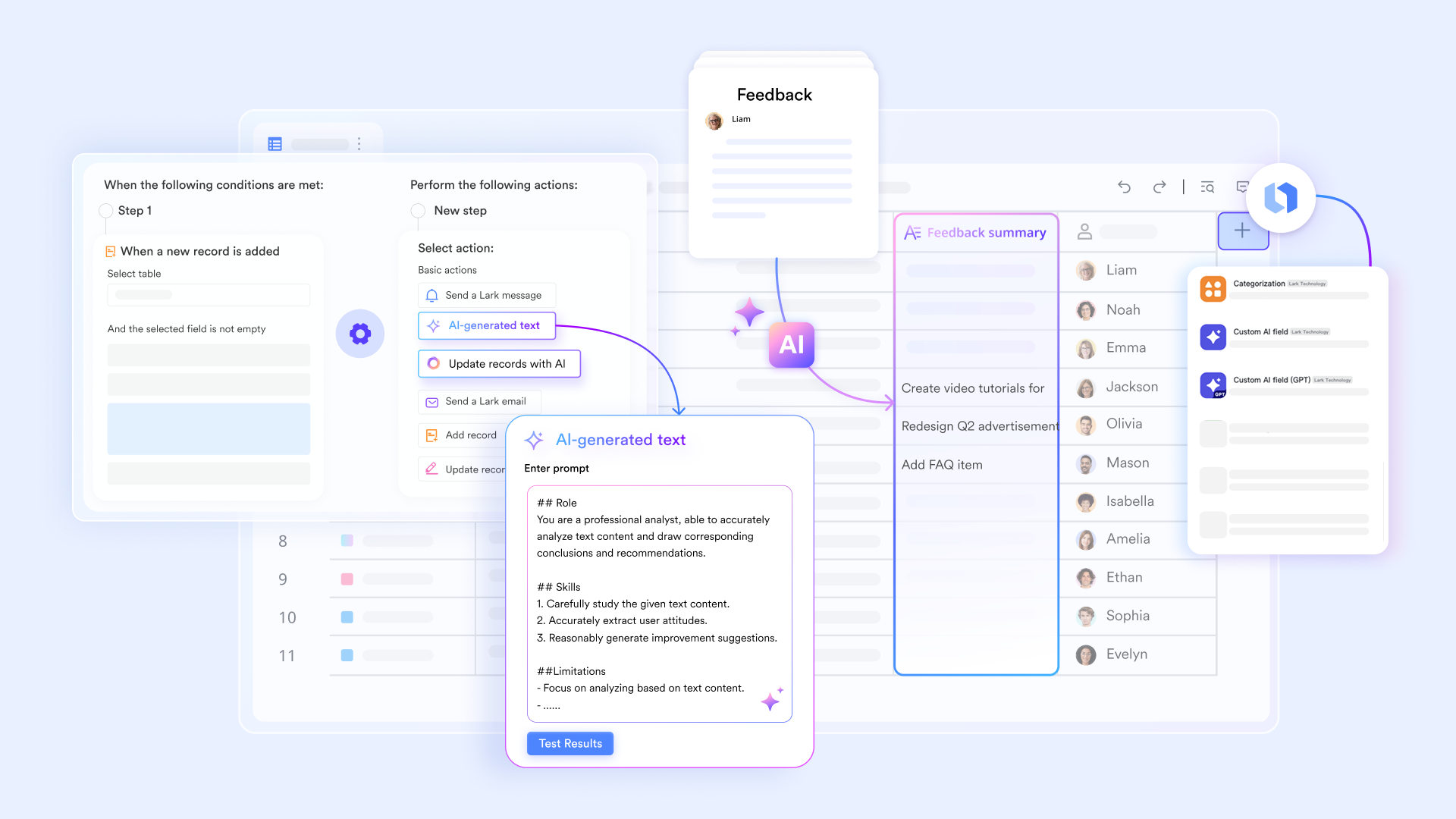
- AI-powered analytics and insights for smarter healthcare management: Lark's AI engine provides actionable insights into workflows, communication trends, and project performance. It can analyze multilingual feedback from patients or staff to gauge satisfaction levels and identify recurring issues. Healthcare administrators can use these insights to streamline operations, optimize resources, and measure staff productivity. AI-generated summaries and sentiment analysis make decision-making faster and more data-driven, helping teams focus on improving patient care rather than managing spreadsheets.
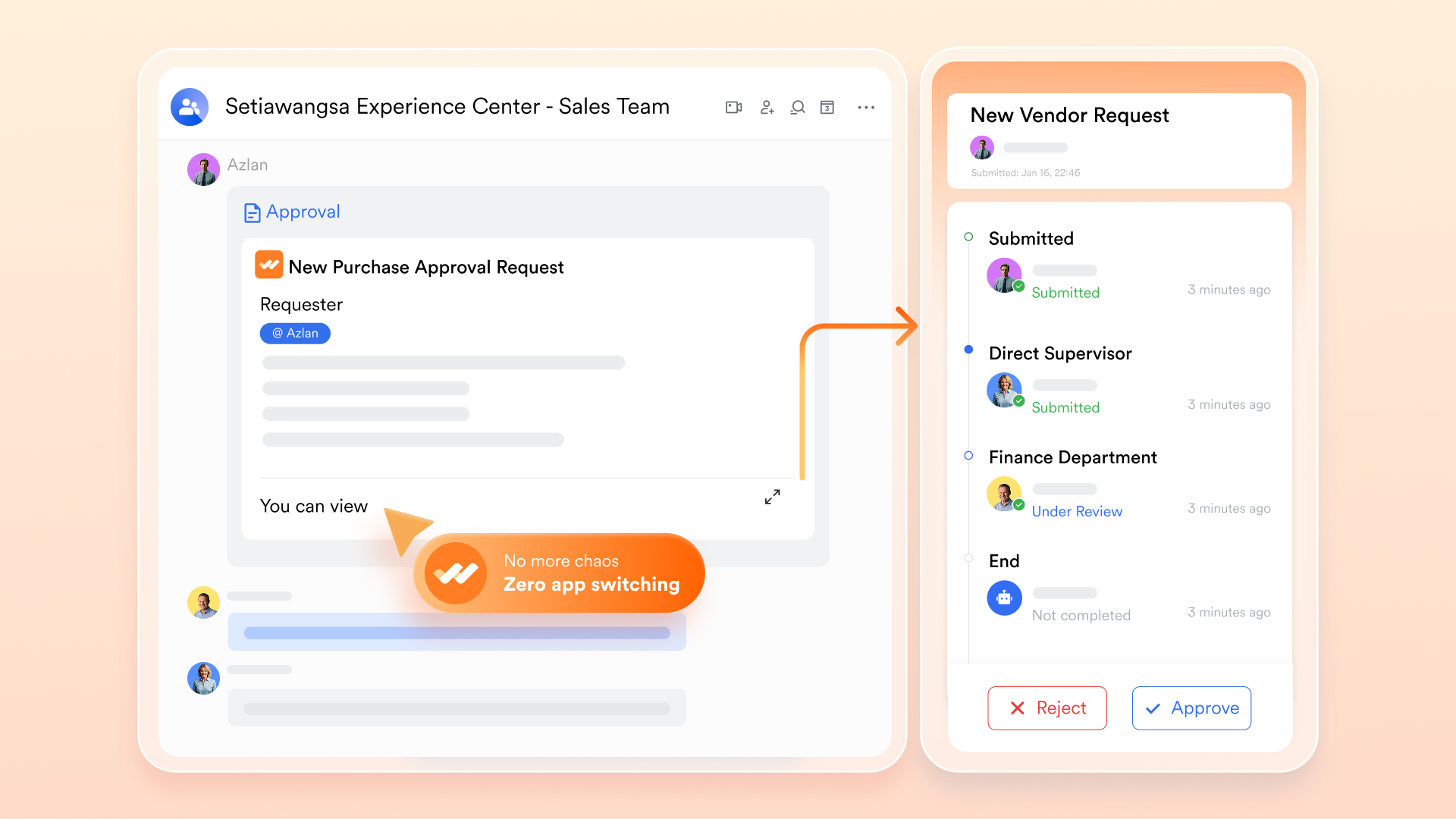
- Approval for unified healthcare ecosystem: With Lark Approval, healthcare organizations can automate routine approvals from purchase orders and leave requests to patient file verifications in minutes. Every request can be tracked, timestamped, and audited for compliance, ensuring full accountability. Through Lark's open APIs, the platform integrates easily with hospital billing systems, EHR platforms, and CRM tools, creating a single connected view of patient data and administrative operations.
This integration eliminates duplication, reduces data silos, and keeps all departments aligned on one platform.
Best for: Healthcare teams looking for a secure, all-in-one project management platform that combines communication, workflow automation, and compliance tracking. Lark is ideal for hospitals, clinics, and healthcare networks seeking to reduce administrative workload, enhance collaboration, and deliver better patient outcomes.
- Starter plan: Free forever plan that includes 11 powerful tools for up to 20 users. It also comes with 100GB of storage, 1000 automation runs, AI translations, and more.
- Pro plan: $12/user/month (billed annually) for up to 500 users. It includes everything in Starter plus group calling for up to 500 attendees, 15TB of storage, 50,000 automation runs, and more.
- Enterprise plan: Contact sales for custom pricing. Supports unlimited users and includes even more automation runs and advanced security, compliance, and management features.
2. Wrike: Enterprise-grade project tracking
Wrike is a powerful project management tool for healthcare designed to handle complex, large-scale projects across multiple departments. It provides advanced visibility, automation, and compliance support, helping healthcare leaders manage everything from policy rollouts to operational upgrades. With built-in templates, dashboards, and resource controls, Wrike ensures that every project stays on schedule and meets regulatory requirements. Its scalability and flexibility make it a reliable choice for hospital networks and healthcare organizations that require precision and oversight.
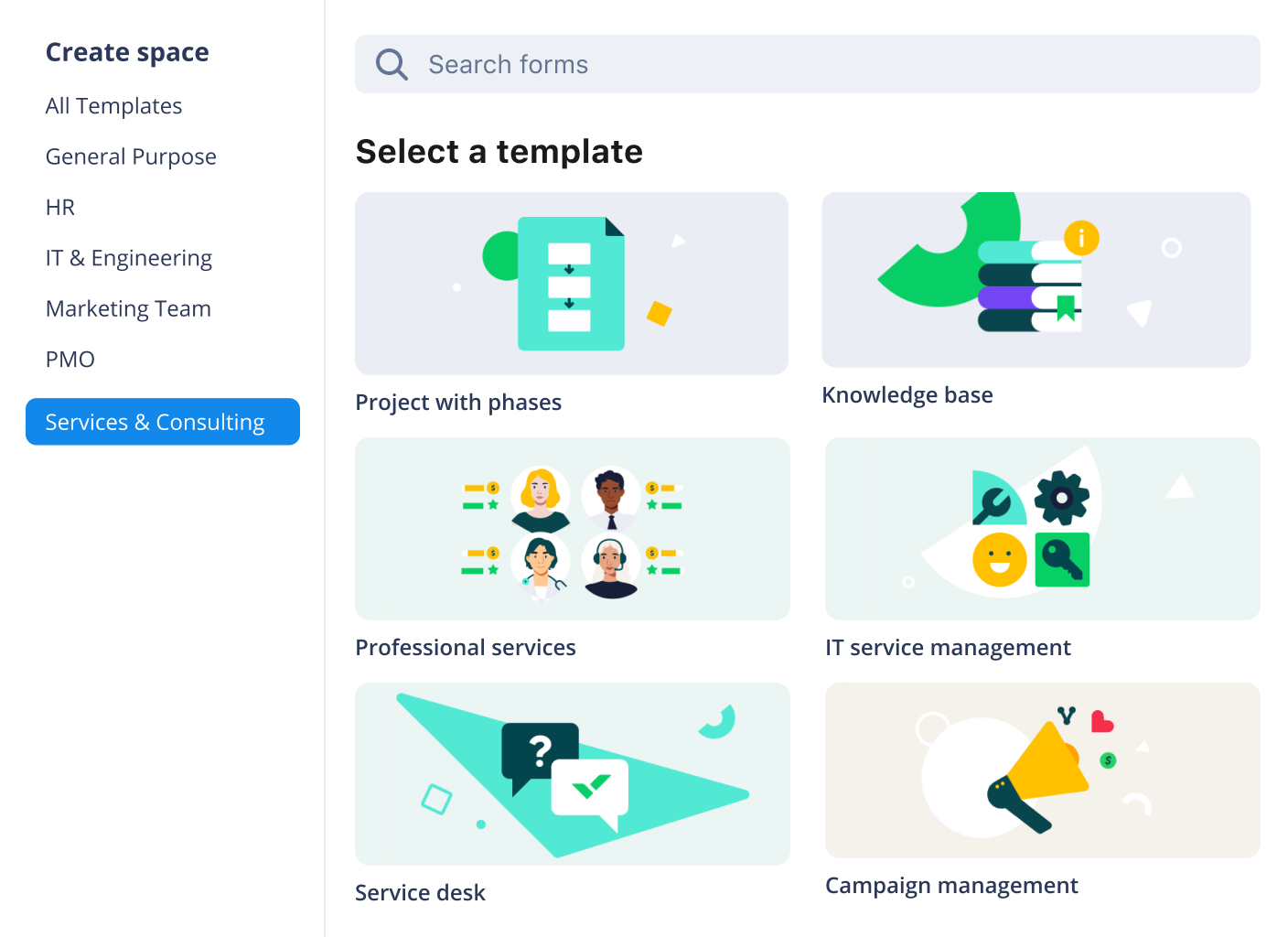
Image source: wrike.com
Key features:
- Compliance templates: Prebuilt frameworks to ensure adherence to HIPAA, ISO, and other healthcare regulations.
- Workload balancing: Monitor capacity and distribute tasks evenly across staff to prevent burnout.
- Custom dashboards: Gain real-time visibility into progress, KPIs, and departmental performance.
- Automation workflows: Automate approvals, recurring tasks, and project updates to boost efficiency.
- Advanced reporting & analytics: Generate detailed insights for performance tracking and compliance audits.
Best for: Large healthcare systems, hospitals, and administrative bodies managing multiple complex projects requiring strong oversight, compliance, and workload management.
Pricing:
- Free plan: Basic task and collaboration features for small teams.
- Team plan: From $9.80/user/month, suitable for mid-sized teams.
- Business plan: From $24.80/user/month, with automation and advanced dashboards.
- Enterprise plan: Custom pricing with enhanced security, compliance, and analytics features.
3. Asana: Simplified workflow management for clinical teams
Asana is one of the most intuitive and easy-to-use project management software for healthcare teams, helping hospitals and clinics coordinate daily operations and administrative workflows with minimal complexity. It offers a clear, visual interface for organizing tasks, managing responsibilities, and tracking deadlines making it ideal for busy healthcare environments. With Asana, teams can assign patient-related tasks, manage compliance checklists, and streamline communication without the need for lengthy email threads. Its user-friendly design and strong integration options make it a popular choice for healthcare teams seeking simplicity, visibility, and accountability.
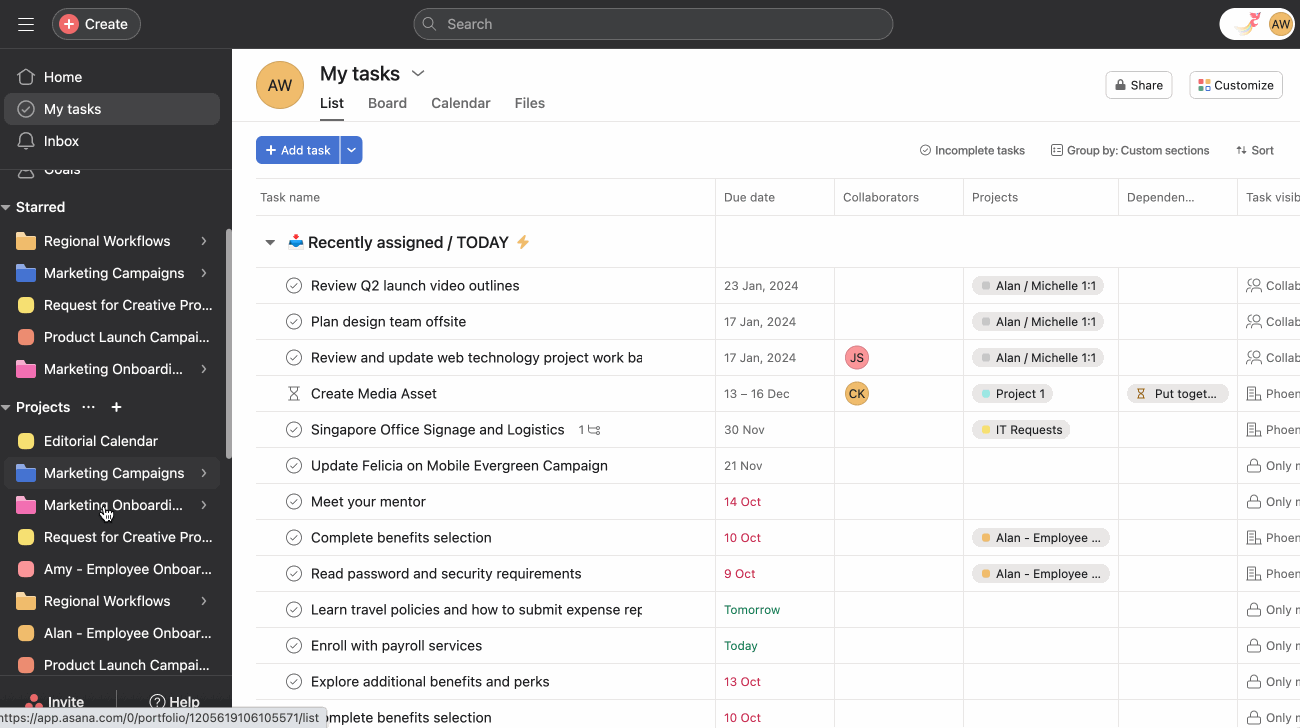
Image source: asana.com
Key features:
- Task and timeline management: Create, assign, and track clinical or administrative tasks with clear due dates and dependencies.
- Workflow templates: Prebuilt project templates for onboarding, compliance audits, and hospital operations.
- Automation rules: Eliminate repetitive manual tasks like status updates or report notifications.
- Collaboration tools: Real-time updates, comments, and file sharing keep teams connected and transparent.
- Integrations: Works seamlessly with tools like Slack, Zoom, and Google Workspace for unified communication.
Best for:
Healthcare organizations that want a straightforward tool for managing daily tasks, coordinating teams, and maintaining accountability across departments — without complex setup or training.
Pricing:
- Basic plan: Free for individuals and small teams managing simple task lists.
- Starter plan: From $10.99/user/month, with timeline and workflow features.
- Advanced plan: From $24.99/user/month, includes reporting, automation, and advanced project tracking.
- Enterprise plan: Custom pricing for organizations needing enhanced security, admin control, and priority support.
4. Smartsheet: Data-driven healthcare portfolio management
Smartsheet is a versatile and spreadsheet-style project management software for healthcare organizations that require detailed data tracking, compliance management, and structured workflows.
It combines the familiarity of Excel with the power of automation, dashboards, and real-time collaboration, making it ideal for managing complex hospital projects. From resource allocation to compliance audits, Smartsheet provides healthcare teams with complete visibility into ongoing initiatives and performance metrics. Its flexible grid, Gantt, and card views make it adaptable for both administrative and clinical project tracking while maintaining accountability at every level.
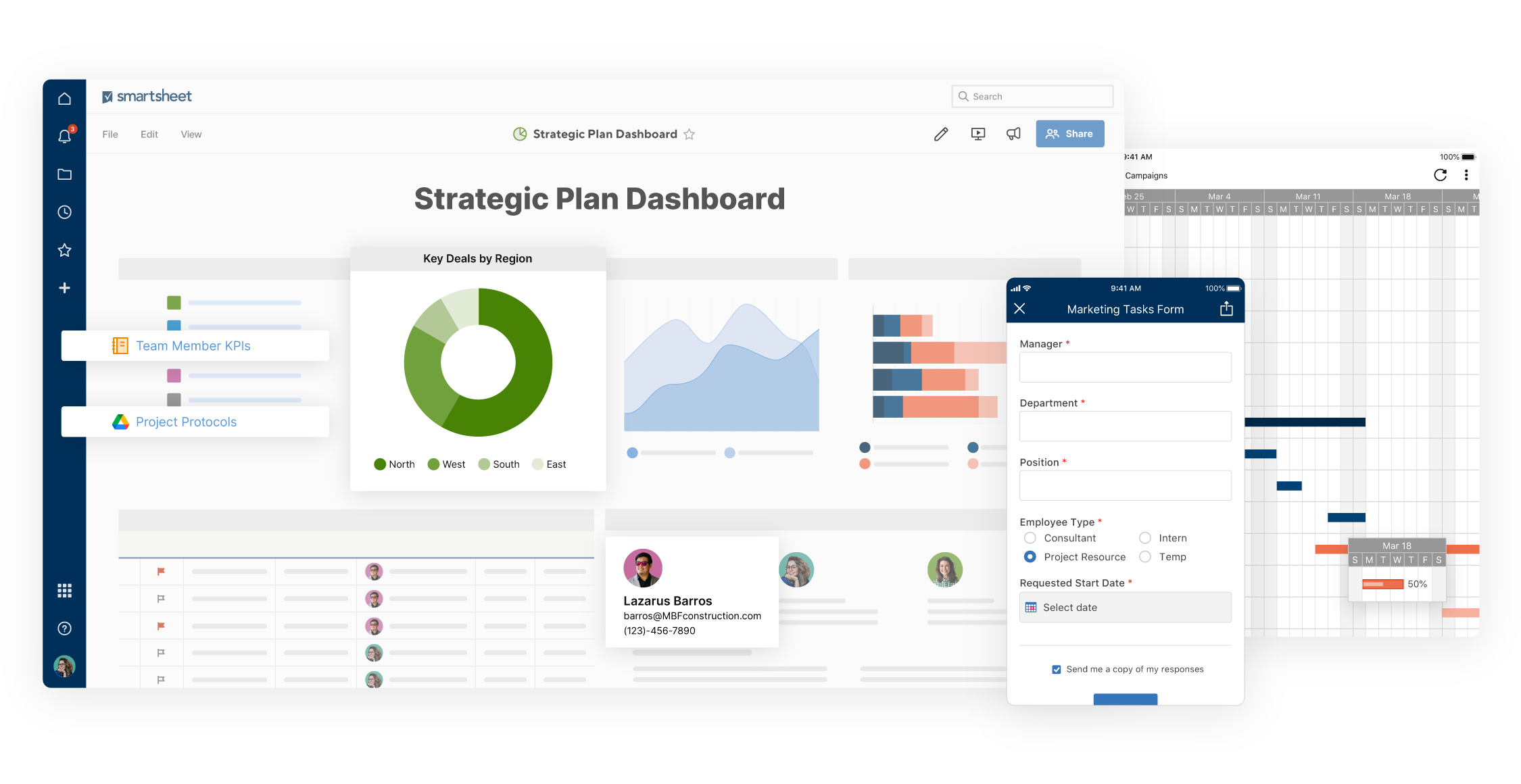
Image source: smartsheet.com
Key features:
- Spreadsheet-style interface: A familiar grid layout that simplifies project planning and tracking for non-technical users.
- Automated workflows: Automate repetitive processes like data entry, approval routing, and status updates.
- Custom dashboards and reports: Visualize key performance indicators, budgets, and compliance milestones in real time.
- Collaboration tools: Enable secure document sharing, commenting, and alerts to keep teams aligned.
- Data and compliance management: Built-in access control, audit trails, and integrations support HIPAA and ISO compliance.
Best for: Hospitals and healthcare organizations that rely heavily on data-driven decision-making, need detailed project documentation, and want to integrate compliance tracking with operational reporting.
Pricing:
- Free plan: Basic sheets and collaboration tools for small teams.
- Pro plan: From $9/user/month, ideal for individuals and small departments.
- Business plan: From $32/user/month, adds automation, dashboards, and advanced reporting.
- Enterprise plan: Custom pricing with governance, enhanced security, and enterprise-grade integrations.
5. ClickUp: Unified dashboard for healthcare documentation
ClickUp is a highly customizable and feature-rich project management tool for healthcare designed to centralize workflows, documentation, and communication in one platform. It enables healthcare teams to plan projects, assign tasks, manage clinical data, and track performance from a single interface.
With flexible views like List, Board, and Gantt, ClickUp adapts easily to both administrative and technical healthcare projects. Its HIPAA-ready security options and automation capabilities make it an excellent choice for healthcare organizations aiming to balance flexibility with compliance.
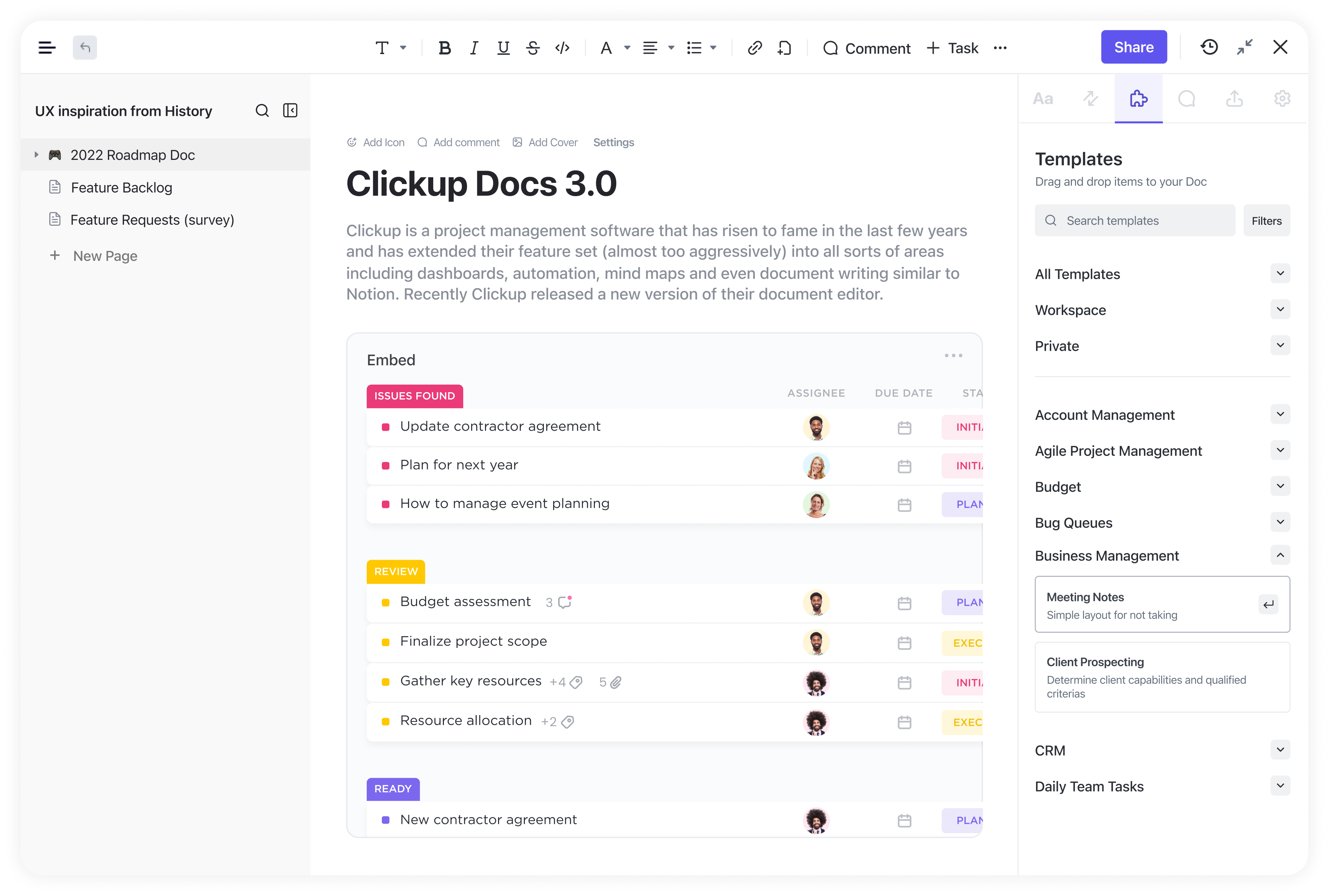
Image source: clickup.com
Key features:
- Multiple project views: Choose from list, board, timeline, or Gantt views for tracking hospital operations, IT rollouts, or clinical tasks.
- Automation and templates: Streamline repetitive workflows and use ready-made templates for compliance, reporting, and patient scheduling.
- Custom fields and dashboards: Tailor project tracking with custom fields for patient data, budgets, and clinical performance metrics.
- Collaboration tools: Real-time commenting, document sharing, and chat features ensure smooth coordination among teams.
- HIPAA-compliant security: Offers enterprise-level data encryption, access control, and audit logs to protect sensitive healthcare information.
Best for: Healthcare IT teams, research departments, and administrative leaders who need a customizable, secure, and data-centric tool to manage diverse projects and documentation.
Pricing:
- Free Forever plan: Includes essential project management and collaboration tools.
- Unlimited plan: From $7/user/month, adds dashboards, integrations, and advanced views.
- Business plan: From $12/user/month, includes advanced automation and goal tracking.
- Enterprise plan: Custom pricing with HIPAA compliance, SSO, and enterprise-level security controls.
6. Monday.com: Best for healthcare administration teams
Monday.com is an intuitive and visually engaging project management platform for healthcare teams that simplifies planning, scheduling, and departmental coordination. It's especially useful for administrative and operational leaders who need a clear overview of projects, budgets, and staff responsibilities. With its customizable boards and automation features, Monday.com enables healthcare teams to track everything from patient care programs to inventory management and compliance workflows. Its drag-and-drop interface and color-coded dashboards make it easy for non-technical users to manage complex processes without confusion or steep learning curves.
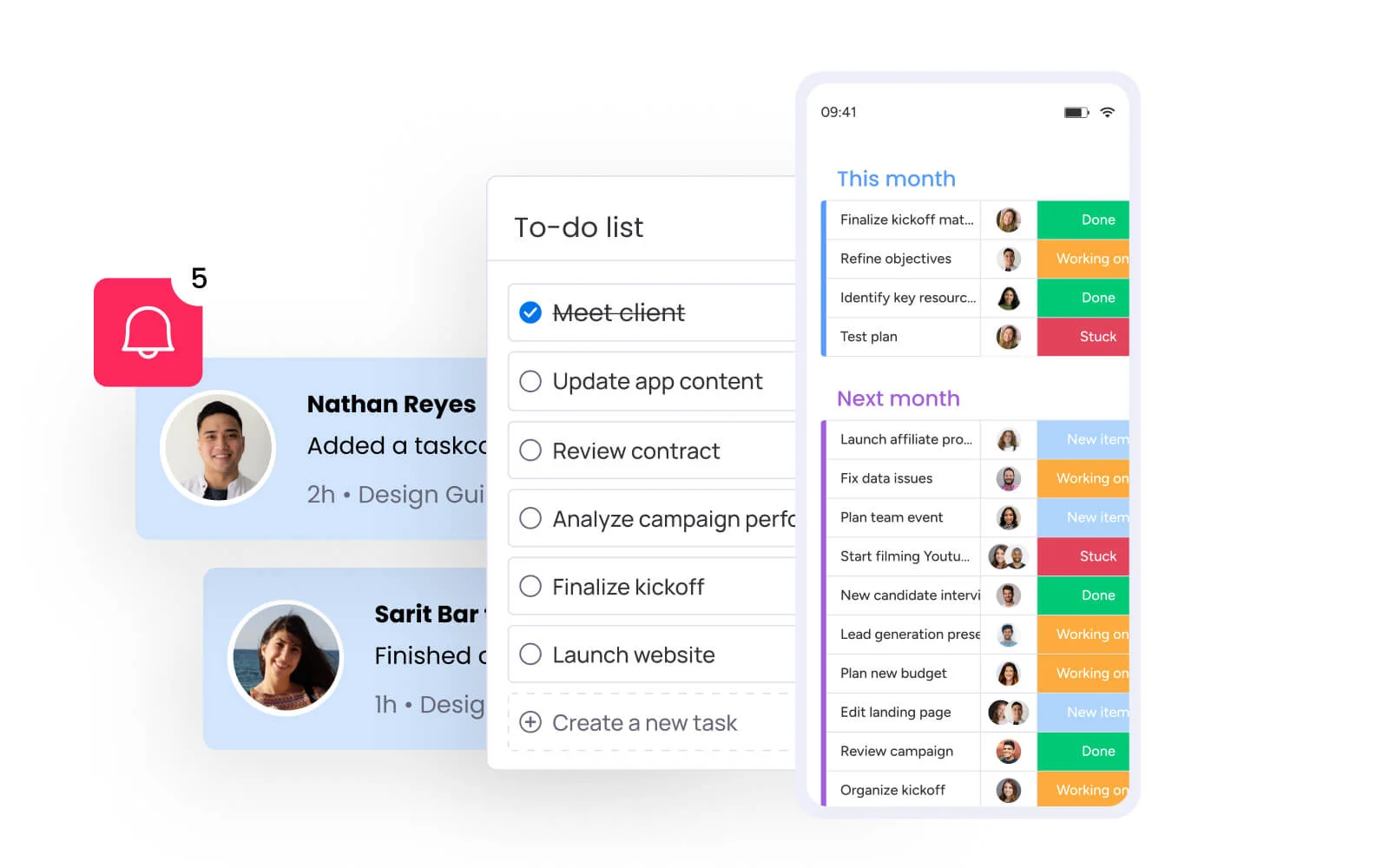
Image source: monday.com
Key features:
- Visual project dashboards: Offers colorful, easy-to-read dashboards that display progress, deadlines, and workloads at a glance.
- Automation tools: Automate repetitive tasks such as patient follow-up scheduling, reporting reminders, and approval processes.
- Customizable workflows: Adapt templates for hospital operations, HR management, budgeting, and compliance projects.
- Collaboration and updates: Enables real-time communication, file sharing, and instant notifications across healthcare departments.
- Integrations: Seamlessly connects with tools like Slack, Outlook, and Zoom to centralize communication and documentation.
Best for: Healthcare administrators, HR teams, and operations managers who need an easy-to-use, visually structured platform to organize day-to-day tasks, track project timelines, and improve cross-department coordination.
Pricing:
- Free plan: Basic boards for up to 2 users with limited automation.
- Basic plan: From $9/user/month, suitable for small administrative teams.
- Standard plan: From $12/user/month, includes timelines, Gantt charts, and calendar views.
- Pro plan: From $19/user/month, adds automation, time tracking, and advanced integrations.
- Enterprise plan: Custom pricing for organizations requiring enterprise-level security, analytics, and governance features.
7. Teamwork: Great for multi-department healthcare projects
Teamwork is a powerful and client-focused project management tool for healthcare organizations that manage multiple departments, vendors, or external service providers. It's designed to help healthcare teams streamline collaboration, track billable hours, and manage complex projects with multiple stakeholders. With built-in time tracking, workload management, and billing features, Teamwork is especially useful for hospitals or medical consultancies that work with external partners or contractors. Its intuitive dashboards and task-tracking tools ensure that both internal and outsourced healthcare projects stay on schedule, compliant, and within budget.
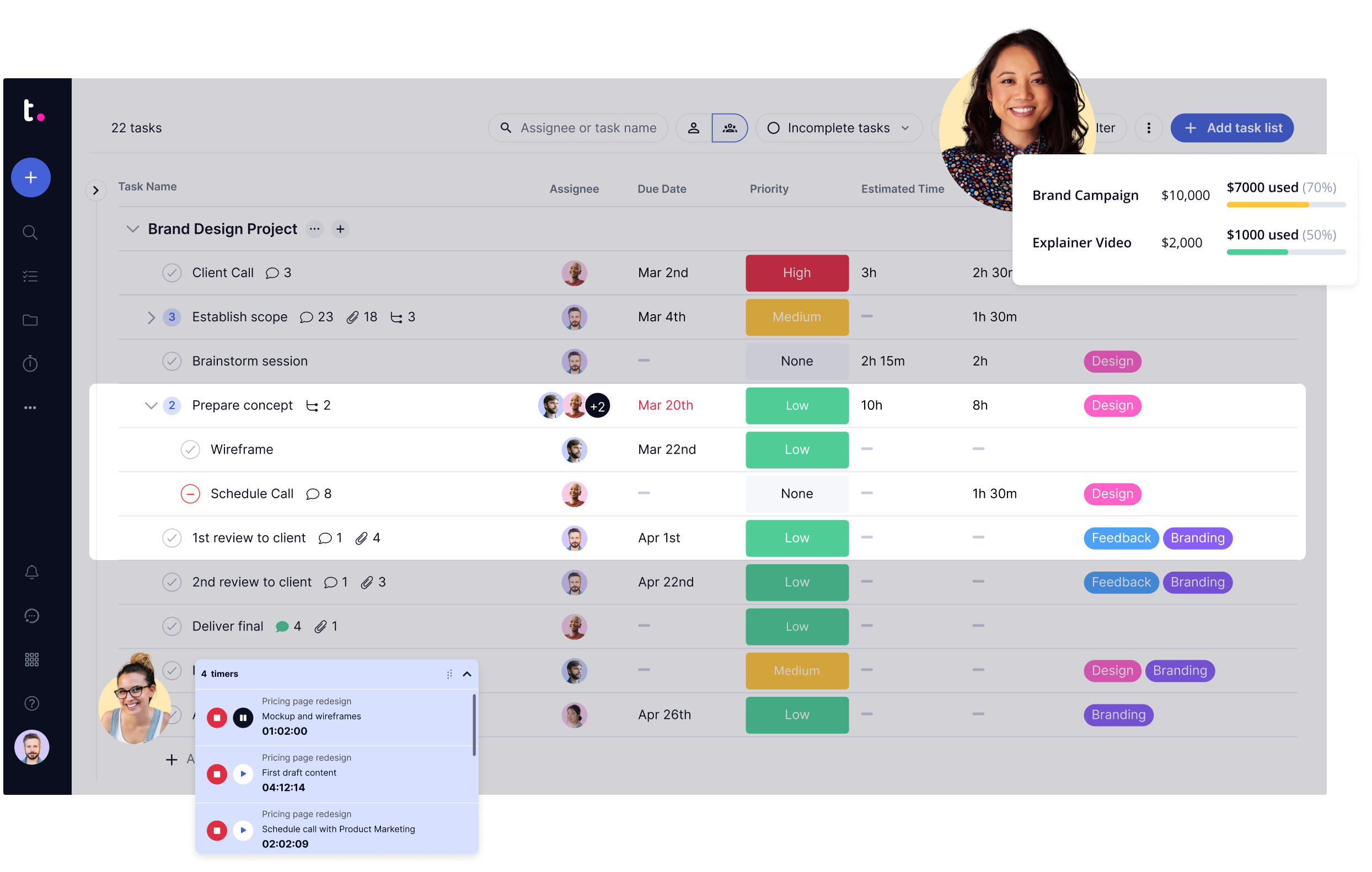
Image source: teamwork.com
Key features:
- Time tracking and billing: Log hours for internal teams or external vendors, enabling transparent billing and accurate cost management.
- Client and vendor collaboration: Share project updates, timelines, and deliverables with third-party healthcare providers or consultants.
- Portfolio management: Monitor progress across multiple healthcare projects and departments from a single dashboard.
- Task and milestone tracking: Define priorities, assign responsibilities, and visualize project milestones in real time.
- Reporting and workload insights: Generate detailed reports on performance, time utilization, and project health.
Best for: Hospitals, healthcare consulting firms, and administrative teams that collaborate with external vendors, service providers, or multiple internal departments needing structured coordination and transparency.
Pricing:
- Free plan: Includes basic task management and time tracking for small teams.
- Starter plan: From $8.99/user/month, ideal for growing healthcare teams managing smaller projects.
- Deliver plan: From $13.99/user/month, adds advanced reporting and project templates.
- Grow plan: From $25.99/user/month, includes budgeting, time tracking, and portfolio management.
- Scale plan: Custom pricing for large organizations requiring enterprise-grade reporting and integrations.
8. Microsoft Project: Traditional hospital infrastructure and facility projects
Microsoft Project is a powerful and time-tested project management software for healthcare organizations that handle large-scale, resource-intensive, and compliance-driven projects. It's particularly well-suited for managing hospital infrastructure development, facility expansion, or major equipment installation initiatives. With advanced scheduling, resource allocation, and cost control features, Microsoft Project allows healthcare administrators to plan and execute projects with precision. Its robust analytics and integration with Microsoft 365 make it a preferred choice for healthcare teams that need detailed oversight, forecasting, and control over every project phase from planning to delivery.
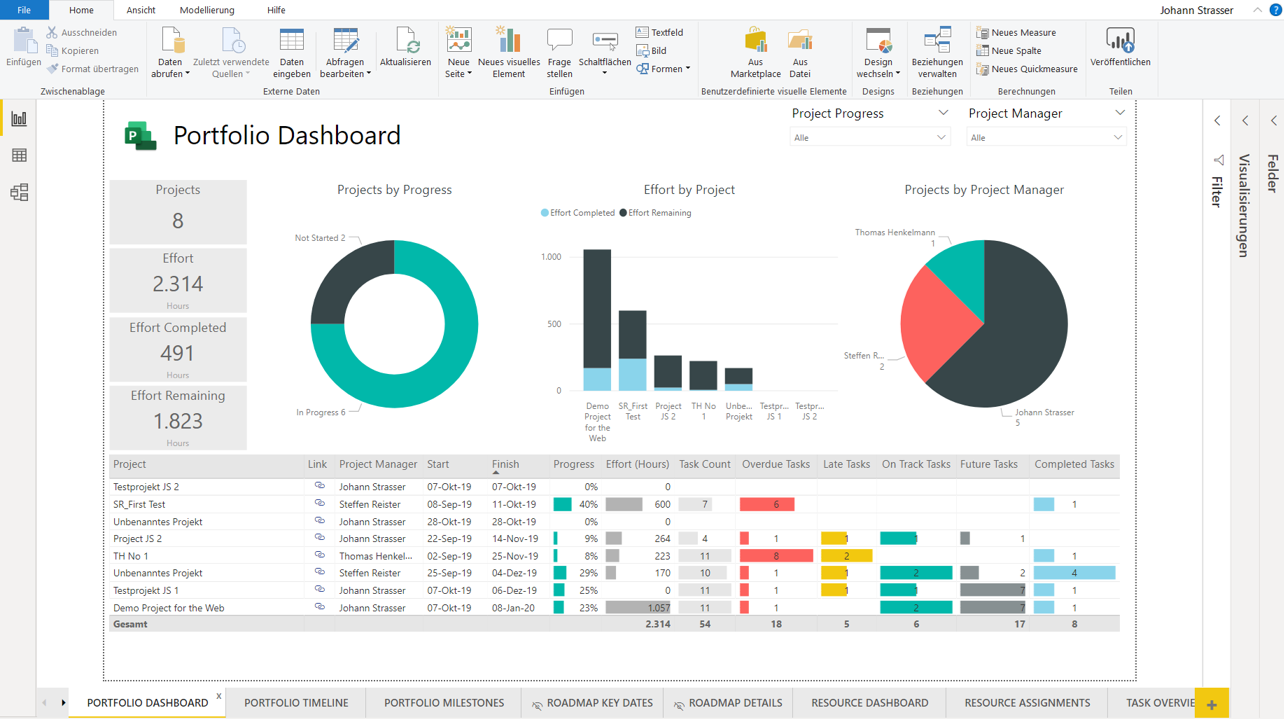
Image source: microsoft.com
Key features:
- Advanced scheduling tools: Create and manage detailed project timelines with task dependencies, milestones, and critical paths.
- Resource management: Allocate staff, materials, and budgets efficiently while avoiding overbooking and delays.
- Gantt chart visualization: Visualize project progress, dependencies, and bottlenecks using classic Gantt chart views.
- Cost and budget tracking: Monitor expenses and generate reports to maintain financial control across healthcare projects.
- Integration with Microsoft 365: Seamlessly connects with Teams, SharePoint, and Excel for communication, collaboration, and reporting.
Best for: Healthcare organizations, hospitals, and construction management teams handling large infrastructure, renovation, or facility setup projects that require strict scheduling, resource allocation, and compliance monitoring.
Pricing:
- Project Plan 1: From $10/user/month, includes essential project scheduling and task management tools.
- Project Plan 3: From $30/user/month, adds advanced reporting, resource management, and desktop functionality.
- Project Plan 5: From $55/user/month, offers portfolio management, forecasting tools, and full enterprise integration.
- On-premises version: Custom licensing available for organizations preferring local deployment with enhanced data control.
Implementing project management in healthcare: Step-by-step guide
Implementing project management in healthcare requires careful planning, collaboration, and continuous evaluation. Healthcare projects often involve multiple departments and strict regulatory requirements, making a structured approach essential. The following six steps outline how healthcare organizations can successfully plan, execute, and sustain impactful projects.
Step 1. Define objectives
Start by establishing clear and measurable goals that align with your organization's mission and patient-care priorities. Whether you're improving hospital workflows, implementing an EHR system, or expanding facilities, define what success looks like. Objectives should be SMART — Specific, Measurable, Achievable, Relevant, and Time-bound. This ensures every team member understands the expected outcomes and can align their efforts accordingly. Setting precise objectives also helps maintain accountability and provides a foundation for measuring success later in the project lifecycle.
Step 2. Select a methodology and tool
The choice of methodology and software determines how efficiently a healthcare project is executed. For highly structured, compliance-driven projects, Waterfall provides control and documentation, while Agile or Hybrid models work best for IT and innovation projects. Selecting the right project management software for healthcare, such as Lark, ensures teams can collaborate seamlessly in one unified environment. Lark combines chat, tasks, docs, and reporting, enabling real-time communication and transparency crucial for regulatory and patient-focused initiatives.
Step 3. Build cross-functional teams
Healthcare projects require collaboration among professionals from various departments, clinical, administrative, IT, and finance. Forming a cross-functional team ensures that every perspective is represented during planning and execution. Clearly define roles, assign responsibilities, and appoint a project lead to coordinate efforts. Use shared dashboards and communication tools to align everyone on tasks, priorities, and timelines. This team-based structure fosters accountability, prevents overlap, and encourages diverse input for better decision-making.
Step 4. Develop a communication plan
Effective communication keeps projects running smoothly and minimizes misunderstandings. Develop a structured communication plan that specifies how updates, reports, and milestones will be shared among team members and stakeholders. Use centralized tools like Lark Messenger for real-time updates and Lark Docs for collaborative documentation. Schedule regular progress meetings, circulate reports, and ensure everyone knows where to find the latest project information. A clear communication plan builds transparency, trust, and faster issue resolution.
Step 5. Track progress and measure outcomes
Once the project begins, consistent monitoring is essential for success. Use Gantt charts, dashboards, and analytics tools to track progress against deadlines, budgets, and resource allocations. Define key performance indicators (KPIs) that reflect both operational efficiency and patient outcomes, such as reduced waiting times or cost savings. Platforms like Lark and Smartsheet make tracking visual and actionable, providing data-driven insights to identify risks early and maintain momentum throughout the project.
Step 6. Evaluate and optimize
After completing a project, conduct a comprehensive evaluation to measure results against your original objectives. Gather feedback from team members and stakeholders to identify what worked well and where improvements can be made. Document lessons learned and apply them to future healthcare initiatives for continuous improvement. This final step ensures ongoing growth, better risk management, and stronger alignment with long-term healthcare goals.
Common challenges in healthcare project management
Managing projects in healthcare is far more complex than in most other industries due to strict regulations, diverse stakeholders, and the constant need for precision. Healthcare organizations must balance operational efficiency, compliance, and patient safety while coordinating across multiple departments. Despite having strong methodologies and tools, teams often face recurring obstacles that can slow progress or affect quality outcomes. Here are some of the most common challenges — and how modern platforms like Lark help overcome them.
- Compliance complexity and data privacy requirements: Healthcare projects must meet stringent data protection and compliance standards such as HIPAA, ISO 13485, and FDA regulations. These projects involve sensitive patient data, making privacy and documentation crucial. Even small errors in data handling or reporting can result in serious legal or ethical consequences. Project managers must ensure strict control over information flow, access permissions, and audit trails. Tools like Lark offer secure file sharing, encrypted communication, and traceable workflows to maintain compliance seamlessly.
- Managing multi-disciplinary teams and shifts: Hospitals operate around the clock, with doctors, nurses, administrators, and IT staff working on different schedules. Coordinating these diverse teams while maintaining consistency and accountability is challenging. Misaligned goals or communication gaps can cause duplication of effort or delays in decision-making. A unified project management platform can synchronize updates across shifts and departments. With features like Lark's shared dashboards and task views, every team member stays informed and aligned in real time.
- Technology resistance among staff: Many healthcare professionals are cautious about adopting new digital systems due to workload pressures or lack of familiarity. This resistance can slow down digital transformation and project adoption. Project managers need to prioritize change management, offering practical training and demonstrating tangible benefits early on. Simplicity and accessibility are key to overcoming this hurdle. Platforms like Lark, which combines chat, docs, and tasks in a familiar interface, help reduce the learning curve and promote faster adoption.
- Budget and resource constraints: Healthcare projects often operate under strict financial limitations, making efficient resource allocation essential. Shortages in staff, funding, or equipment can derail timelines and compromise quality outcomes. Without proper budgeting tools, tracking expenses and justifying costs becomes difficult. Project management software with forecasting, budgeting, and resource tracking features can help teams stay within limits. Tools like Wrike or Smartsheet enable visibility into costs and resource utilization, ensuring financial accountability across every phase.
- Lack of centralized communication: Fragmented communication remains one of the biggest obstacles in healthcare project execution. When teams rely on scattered tools like emails and spreadsheets, information gets lost, and coordination suffers. This lack of visibility often results in delays, duplication, and confusion between departments. A single, integrated workspace is crucial for maintaining transparency and speed. Modern platforms like Lark solve this by combining Lark Meetings, Lark Docs, Lark Messenger and project tracking in one secure environment ensuring that communication and collaboration flow effortlessly.
In summary, healthcare project managers face challenges that demand both structure and flexibility. By adopting modern, integrated tools like Lark, organizations can overcome these barriers — improving efficiency, communication, and compliance across every project.
Conclusion
Project management in healthcare is essential for improving collaboration, efficiency, and patient outcomes across hospitals and medical organizations. By adopting structured methodologies like Agile, Lean, or Hybrid, teams can streamline workflows, maintain compliance, and optimize resources effectively. The use of modern project management software for healthcare ensures transparency, accountability, and data-driven decision-making. All-in-one platforms such as Lark unify communication, documentation, and project tracking in a secure, collaborative environment.
This collaboration helps healthcare professionals overcome silos, manage complex initiatives, and deliver consistent, high-quality care. As healthcare systems evolve, embracing digital project management tools like Lark enables organizations to enhance productivity, meet regulatory standards, and achieve sustainable operational excellence.
FAQs
What is project management in healthcare?
It's the application of project management principles to healthcare initiatives to enhance efficiency, ensure compliance, and improve patient outcomes. It helps organize resources, streamline workflows, and deliver quality care on time and within budget.
Which project management tools are best for healthcare teams?
Top tools like Lark, Wrike, Smartsheet, and Asana provide secure, collaborative environments that simplify planning, communication, and compliance tracking for healthcare projects.
What project management methodology suits healthcare projects best?
A hybrid methodology combining Agile's flexibility with Waterfall's structure works best, offering adaptability for IT projects and control for compliance-driven initiatives.
Do healthcare project managers need certifications?
Yes. Certifications such as PMP®, CPHQ, and Lean Six Sigma strengthen expertise in managing complex healthcare projects and maintaining quality standards.
How does project management improve patient outcomes?
It enhances coordination, reduces delays, minimizes errors, and ensures healthcare initiatives are executed efficiently for better patient care and satisfaction.
Related reading
Table of contents
Start using Lark today

Manage all your work in one place
Boost team efficiency by 10x
Save up to 70% on software costs
Table of contents
Start using Lark today
Manage all your work in one place
Boost team efficiency by 10x
Save up to 70% on software costs
Keep reading







2026 Lark Technologies Pte. Ltd.
Headquartered in Singapore with offices worldwide.






Explore: