














Sales Enablement Guide: Strategy, Best Tools & Training Tips

Ryan Tanner
Product Marketing Specialist
Sep 18, 2026
Ryan Tanner
Sep 18, 2026

23 min read


Sales teams today face more complex buying journeys and higher expectations than ever before. To keep up, they need the right support, content, and technology at their fingertips—exactly when they need it. That's where sales enablement comes in. By equipping reps with training, knowledge, and digital tools, businesses can remove friction, accelerate deals, and boost win rates. This guide explores what sales enablement means, why it matters right now, and which tools help sales teams perform at their best—starting with Lark.
1. Lark: All-in-one sales enablement and collaboration platform
2. Highspot: AI-powered sales content and coaching
3. Seismic: Enterprise sales enablement and content delivery
4. Mindtickle: Sales readiness and performance enablement
5. HubSpot Sales Hub: CRM with Sales enablement tools
6. Showpad: Sales content and training platform
7. Gong: Conversation intelligence for sales effectiveness
8. SalesLoft: Sales engagement and enablement platform
9. Dock: Buyer collaboration and enablement workspace
10. Spekit: In-flow sales enablement and knowledge support

What is sales enablement?
Sales enablement is the strategic process of equipping sales teams with the right content, tools, and training they need to engage buyers effectively and close more deals. It focuses on removing barriers that slow sellers down while ensuring they always have access to the latest product knowledge, sales playbooks, competitive insights, and messaging guidance.
Rather than being a one-time initiative, sales enablement is continuous—evolving as products, customers, and markets change. It brings together marketing, sales, product, and operations teams to align on value propositions and improve customer conversations. Modern sales enablement also relies on technology to streamline content management, track performance, and deliver coaching in real time. When done well, it shortens onboarding time, increases win rates, and builds confidence across the sales team. Sales enablement ultimately ensures every seller is ready and able to create value in every buyer interaction.
Image source: unsplash.com
Sales enablement tools overview table: Quick review
Top 10 sales enablement tools you must try
1. Lark: All-in-one sales enablement and collaboration platform
Lark stands out as the only platform in this list that combines content management, team communication, and workflow automation into one workspace. It gives sales teams everything they need to access knowledge, stay aligned, and move deals forward faster—without juggling multiple tools. Here's how Lark supports sales enablement end-to-end:
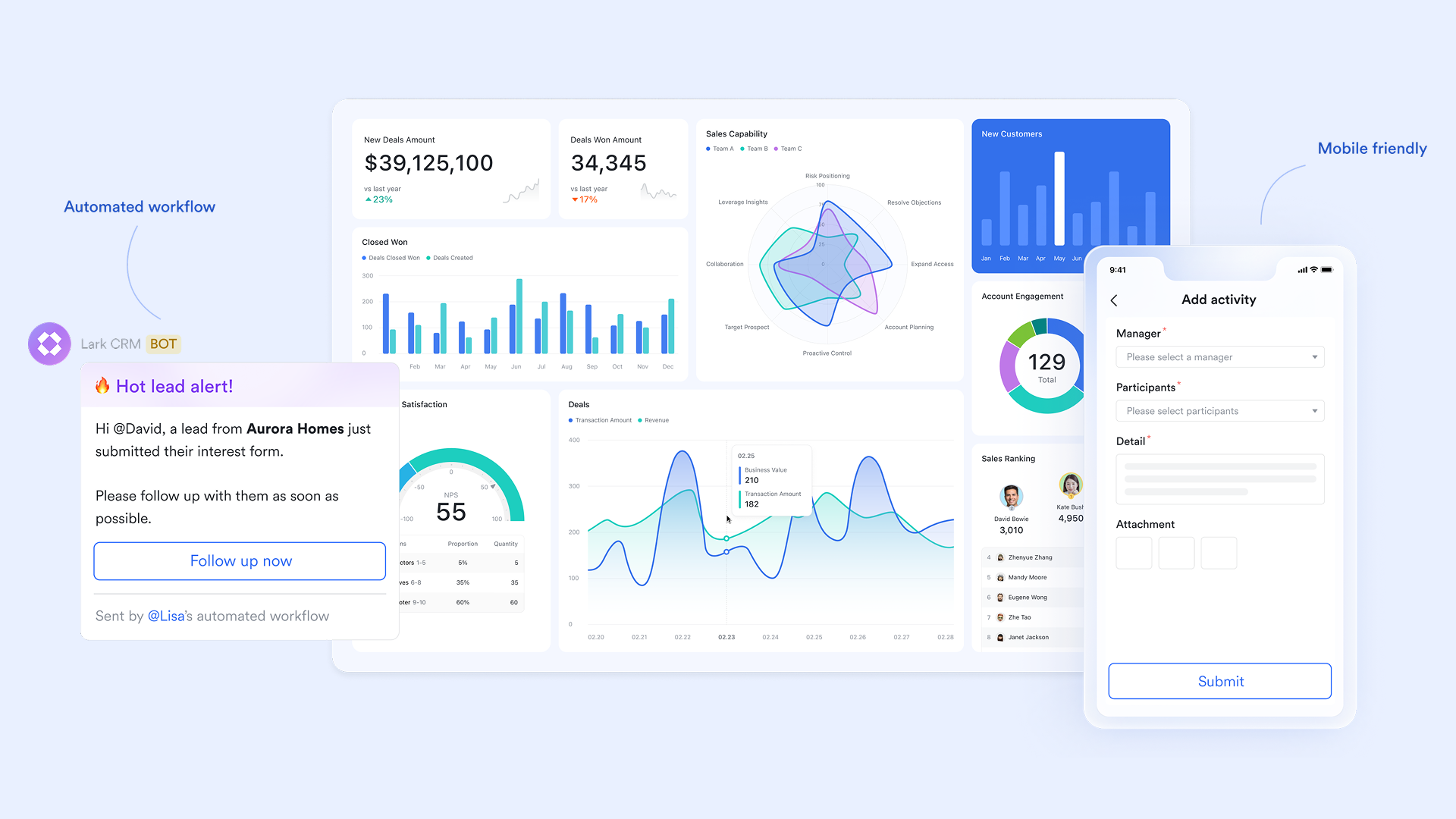
- Unified workspace: Docs, Meetings, Messenger, Approval & Base
- Lark brings Lark Messenger, document collaboration with Lark Docs, video conferencing in Lark Meetings, approvals in Lark Approval, and project/database management with Lark Base into one platform. Rather than switching between multiple tools for sales content, training, workflows, and communication, teams stay in one place.
- Example: A sales enablement manager writes a playbook in Lark Docs, shares it in Messenger for peer feedback, schedules a training session via Meetings, and then tracks content adoption via Base—all without leaving Lark.
- Lark Base: Multiple views of data & workflow automation
- Base lets teams build custom tables, templates, and views (grid, Kanban, Gantt) to manage sales enablement workflows—like onboarding, content lifecycle, and training metrics. Automations can change statuses, notify owners, or trigger follow-ups when records update.
- Example: The enablement team creates a Lark Base table to track "Sales Asset Lifecycle" with columns like "Draft," "Reviewed," "Published," "Retired." When a reviewer marks an asset "Reviewed," an automation moves it to "Published" and notifies the sales team.
- Real-time collaboration in Docs + Sheets + Wiki
- Lark Docs lets multiple users edit content simultaneously (sales scripts, playbooks, case studies). Wiki serves as a centralized repository for enablement materials, SOPs, and a knowledge base for sellers. Sheets support tracking KPIs, content usage, and training progress within the same ecosystem.
- Example: A trainer co-edits a "Handling Buyer Objections" Doc with senior sellers in real time, then publishes it to the Wiki so all reps can access it later.
- Dashboards & smart analysis in Lark Base to monitor adoption, flow, and impact
- Lark provides dashboards in Base and analytics in other modules, so enablement leaders can track usage (how many reps viewed a document), flow (how many assets moved from draft to published), and training KPIs (time to competency, completion rates). Meanwhile, smart analysis provides quick insights into sales data through AI-powered tools, allowing teams to understand trends and performance efficiently.
- Example: The enablement head sees a dashboard showing that only 40% of new hires completed the onboarding modules within 30 days, and uses that insight to adjust training resources.
- Automated request in Lark Approval
- Lark Approval supports building automatic approval flows, which help reduce delays in content publishing or sales process updates. For example, when a new product playbook is ready, an approval can be routed to the marketing lead, then the sales enablement director, and once approved, automatically logged with a finish.
- Example: A sales promotion request is submitted via a form and routed through Approval to legal, marketing, and sales operations in sequence; once approved, the asset's status updates in Base, and pertinent reps are notified in Lark Messenger.
- Starter plan: Free forever plan that includes 11 powerful tools for up to 20 users. It also comes with 100GB of storage, 1000 automation runs, AI translations, and more.
- Pro plan: $12/user/month (billed annually) for up to 500 users. It includes everything in Starter plus group calling for up to 500 attendees, 15TB of storage, 50,000 automation runs, and more.
- Enterprise plan: Contact sales for custom pricing. Supports unlimited users and includes even more automation runs and advanced security, compliance, and management features.
2. Highspot: AI-powered sales content and coaching
Highspot is known for advanced content organization and recommendations that help reps find the right material for every stage of the buyer journey. It includes coaching and scorecards that reinforce selling skills. Teams gain visibility into what content leads to stronger conversions. Its buyer engagement insights help refine messaging based on behavior. It's a fit for organizations focused heavily on content-driven selling.
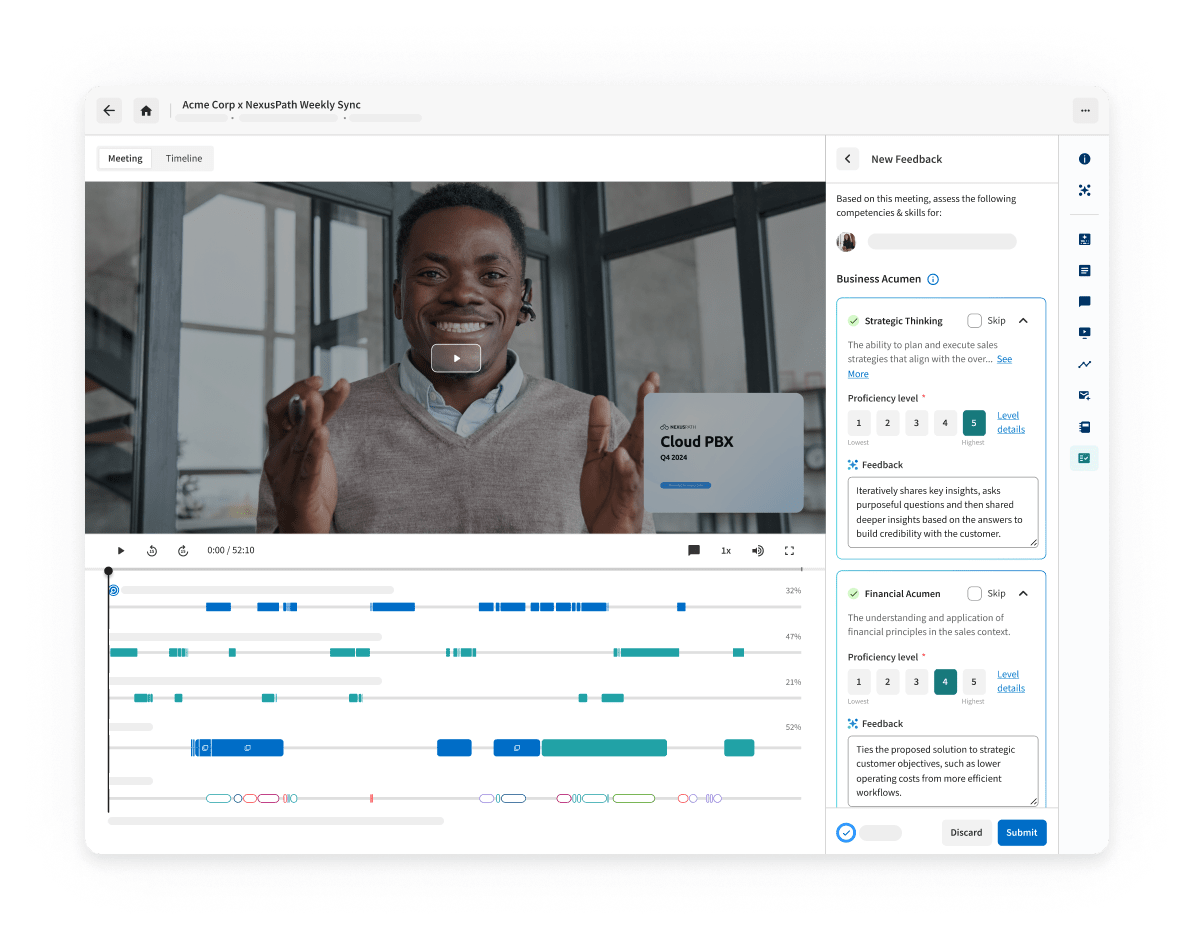
Image source: highspot.com
Feature:
- Centralised content management & content-usage analytics.
- AI-driven content recommendations and playbook suggestions.
- Onboarding/training modules with seller readiness tracking.
- Engagement analytics: how content influences deals and buyer actions.
- CRM and system connections to track usage inside sales workflows.
Pros:
- Strong content and coaching focus tailored to sales enablement.
- Good analytics to measure content effectiveness and seller engagement.
- Intuitive interface noted by many users.
- Helps align marketing and sales via shared content & data.
Cons:
- Pricing is typically custom and may be high for smaller teams.
- Some users note a learning curve and difficulties in navigation/search.
Pricing:
- Not publicly standardised; users generally "talk to sales" for a quote.
3. Seismic: Enterprise sales enablement and content delivery
Seismic supports large, global revenue teams with personalized content delivery and deep analytics. It helps ensure every seller uses the most accurate, compliant materials. Advanced automation helps scale go-to-market programs across multiple regions. It pairs training and content insights to improve both performance and consistency. Seismic works best for enterprises with complex content and compliance needs.
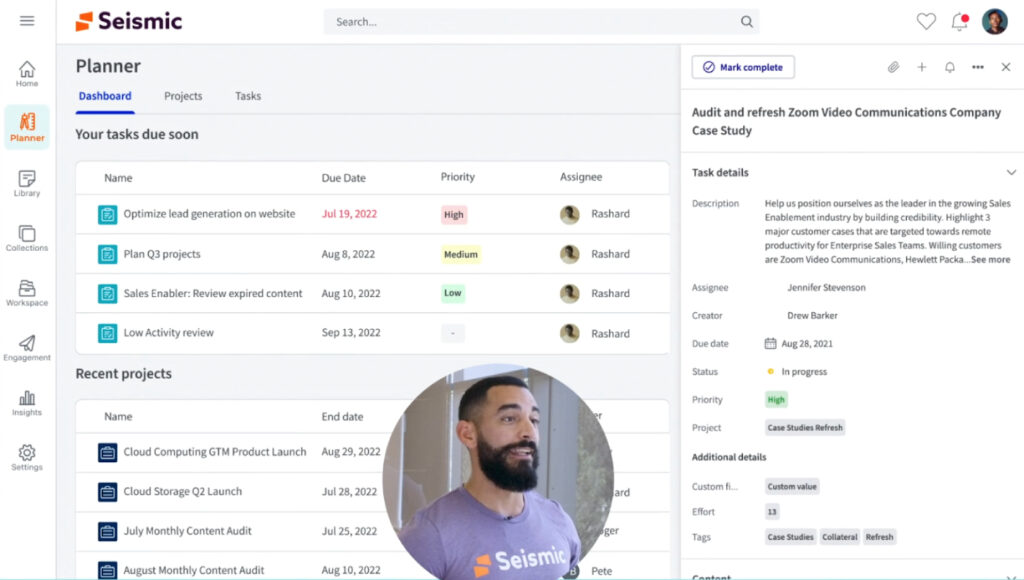
Image source: seismic.com
Features:
- LiveDocs & personalisation: dynamic content creation for sellers.
- Content usage insights & analytics for enablement teams.
- Compliance and governance tools for regulated industries.
- Global content delivery for multi-region organisations.
- Training, onboarding, and certification modules embedded within the platform.
Pros:
- Highly capable for large, complex organisations with global reach.
- Strong analytics and governance for regulated industries.
- Enables marketing & sales alignment at scale.
- Tailored personalisation of content increases seller effectiveness.
Cons:
- High cost and potentially heavy implementation burden.
- May require significant change-management and time to ramp.
Pricing:
- Pricing is custom / enterprise-level; contact vendor for quote.
4. Mindtickle: Sales readiness and performance enablement
Mindtickle focuses on improving onboarding speed and skill development for reps. With training paths, assessments, and coaching insights, leaders can measure readiness before sellers hit the field. Playbooks and learning programs evolve as products change. AI-powered analytics identify behavior patterns that lead to better outcomes. Ideal for teams prioritizing skill enablement at scale.
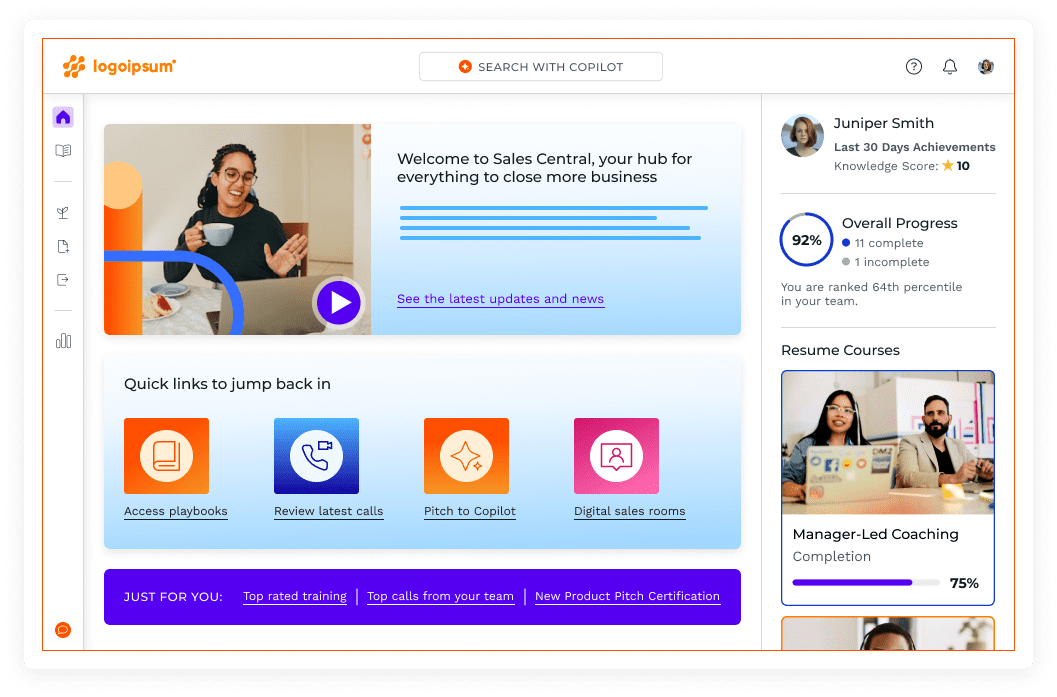
Image source: mindtickle.com
Features:
- Onboarding and continuous training modules with assessments.
- Gamification and leaderboards to boost seller engagement.
- Analytics to measure skill acquisition and behaviour change.
- Simulation/role-play capabilities for sales scenarios.
- Integrations with CRM/training systems to reflect real-world selling environments.
Pros:
- Strong focus on seller readiness and skill improvement.
- Engaging training features and user experience appreciated.
- Helps reduce ramp-time and improve performance.
- Good for teams prioritising training and development.
Cons:
- May be less suited for very small teams due to cost/complexity.
- Implementation and content creation may require dedicated resources.
Pricing:
- Not publicly listed; custom pricing.
5. HubSpot sales hub: CRM with sales enablement tools
HubSpot combines CRM, email tools, pipeline tracking, and enablement features under one roof. It gives marketing and sales better alignment through shared content and insights. Playbooks and templates support repeatable selling motions. It's accessible for mid-market teams and fast to deploy. Best for teams already invested in HubSpot's marketing ecosystem.
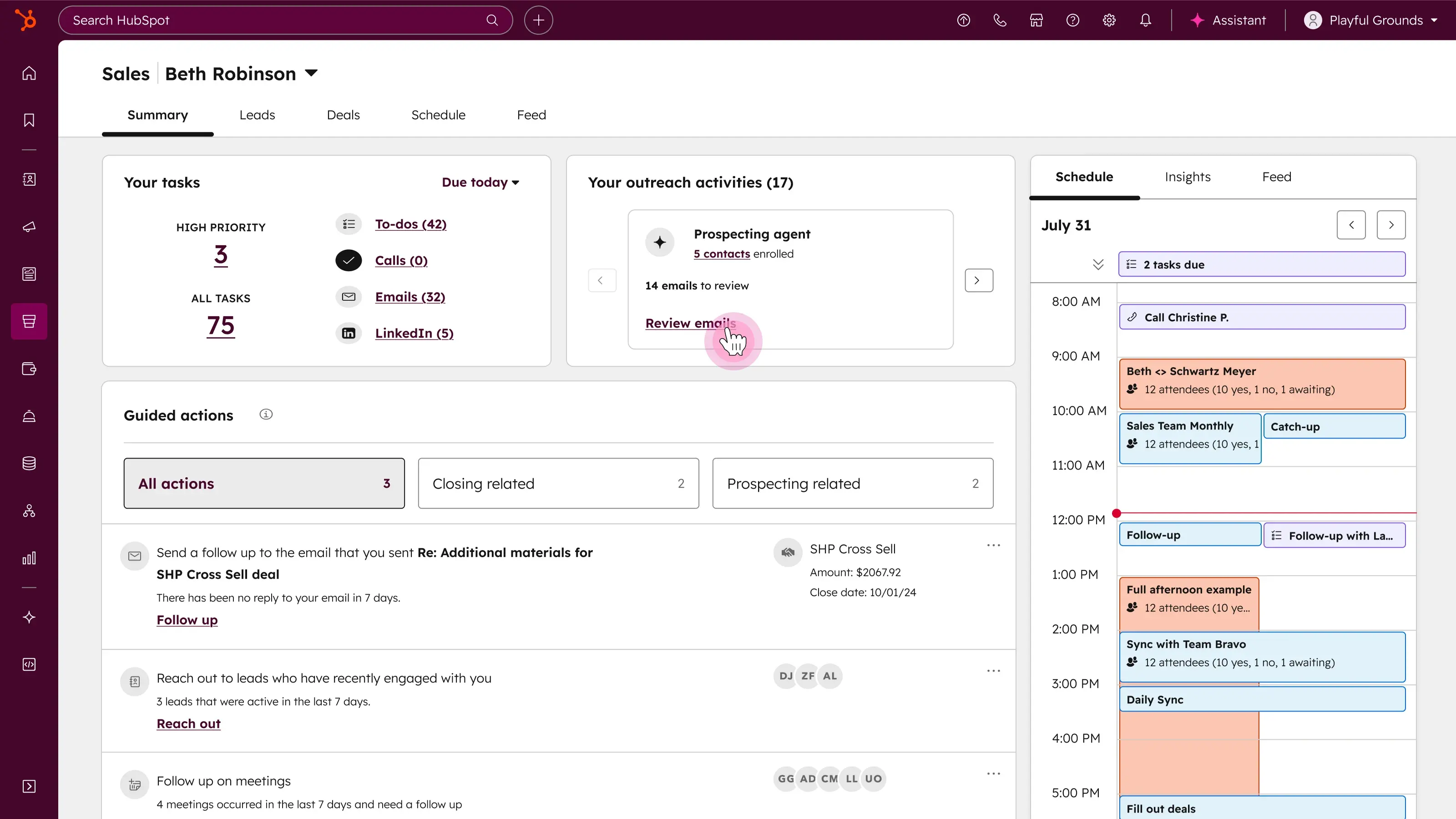
Image source: hubspot.com
Features:
- Pipeline and CRM management integrated with enablement tools.
- Content and template libraries for sales outreach.
- Email sequencing, meeting scheduling, and engagement tracking.
- Reporting dashboards for pipeline performance and rep activity.
- Integration with marketing and service hubs for full funnel alignment.
Pros:
- Familiar interface and strong market presence; quick to adopt.
- Good for teams already using HubSpot in marketing.
- Plug-and-play enablement features with CRM.
- Scalable for SMB to mid-market organisations.
Cons:
- Some enablement features locked behind higher tiers.
- May require additional add-ons/modules for full enablement functionality.
Pricing:
- Starter plan: starts at ~ US $45/month for 2 users.
- Professional/Enterprise tiers: $450/month for 5 users and up.
6. Showpad: Sales content and training platform
Showpad helps sellers deliver engaging content and training experiences to buyers. With a polished interface, sellers can confidently share the right asset in meetings or follow-ups. Built-in coaching improves consistency and positioning. Showpad emphasizes visualization and ease of use for field and hybrid teams. It fits organizations that rely heavily on rich content in the sales cycle.
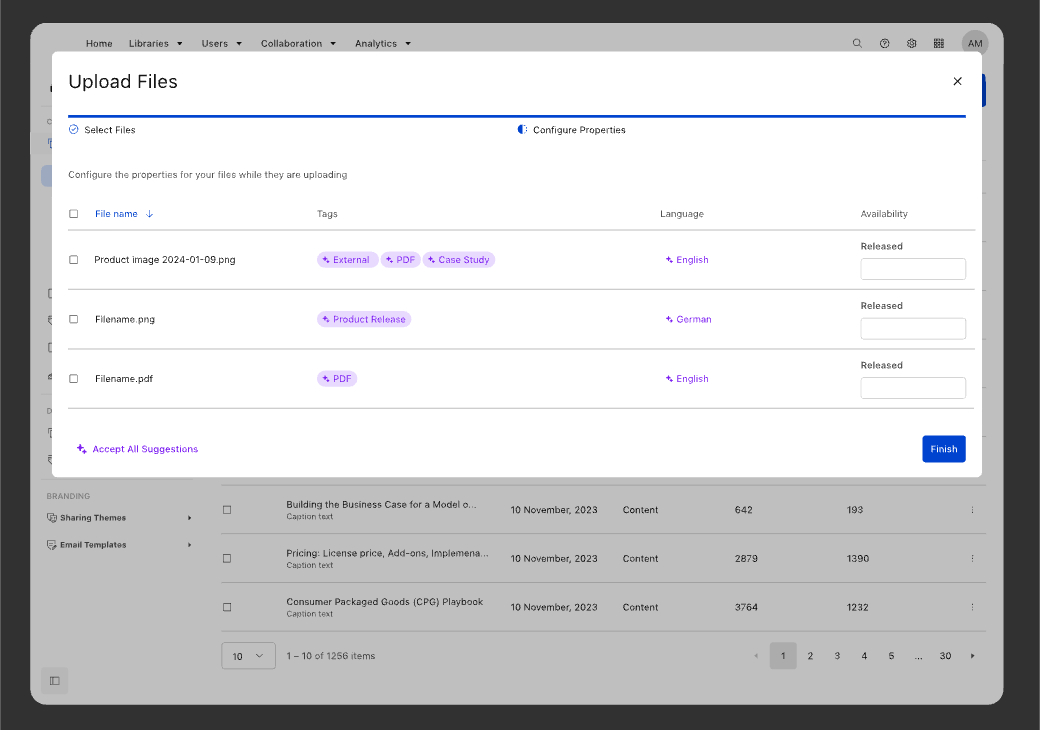
Image source: showpad.com
Features:
- Centralised content repository and distribution for sellers.
- Buyer-facing shareable content portals.
- Training modules and seller enablement content.
- Engagement analytics: how buyers and sellers use content.
- Mobile accessibility for field or remote sellers.
Pros:
- Strong content usability and buyer-facing features.
- Good for visual and media-rich selling environments.
- Enables consistent seller experiences with content.
- Helps field-based or hybrid teams access materials on the go.
Cons:
- Implementation may require significant content preparation.
- Could be expensive or overly focused on content vs full coaching.
Pricing:
- Not publicly standardised; contact provider. (Mentioned in tool list reviews)
7. Gong: Conversation intelligence for sales effectiveness
Gong analyzes sales calls and meetings to reveal what top sellers do differently. Managers gain insights into messaging, pricing objections, and competitive trends. Data-driven coaching shortens onboarding time and improves win rates. It also helps teams identify deals at risk early. Gong is a strong fit for revenue teams committed to continuous improvement in communication.
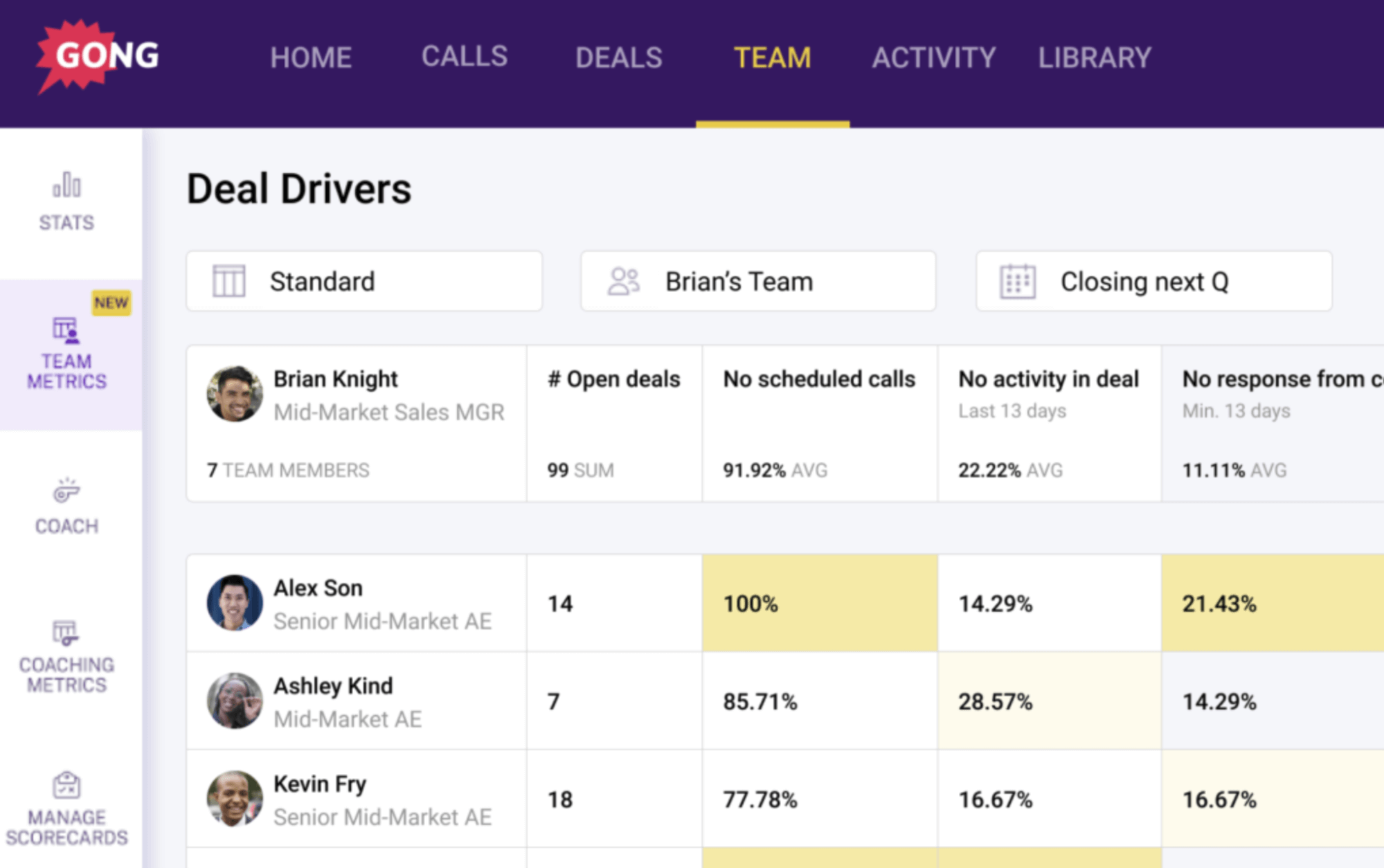
Image source: gong.com
Features:
- Call and meeting recording with transcription and analysis.
- AI-driven insights from sales conversations (e.g., talk-to-listen ratio).
- Highlighting trends and coaching opportunities based on real behaviour.
- Deal risk and win-probability insights.
- Integration with CRM and outreach tools for workflow context.
Pros:
- Deep insights into seller behaviour and messaging effectiveness.
- Helps coaching and performance improvement via data.
- Identifies at-risk deals early.
- Strong for organisations committed to continuous selling improvement.
Cons:
- Cost may be high; ROI depends on usage.
- Requires cultural adoption of recording and analysis which may raise resistance.
Pricing:
- Typically custom quote; not publicly standardised.
8. SalesLoft: Sales engagement and enablement platform
SalesLoft supports multi-channel outreach with emails, calls, and cadences that keep sellers consistent. Reps get contextual guidance while prospecting to strengthen messaging. Pipeline inspection features help leaders detect where opportunities are stuck. Coaching tools reinforce best practices throughout the sales cycle. Best for outbound-focused teams needing scalable engagement.
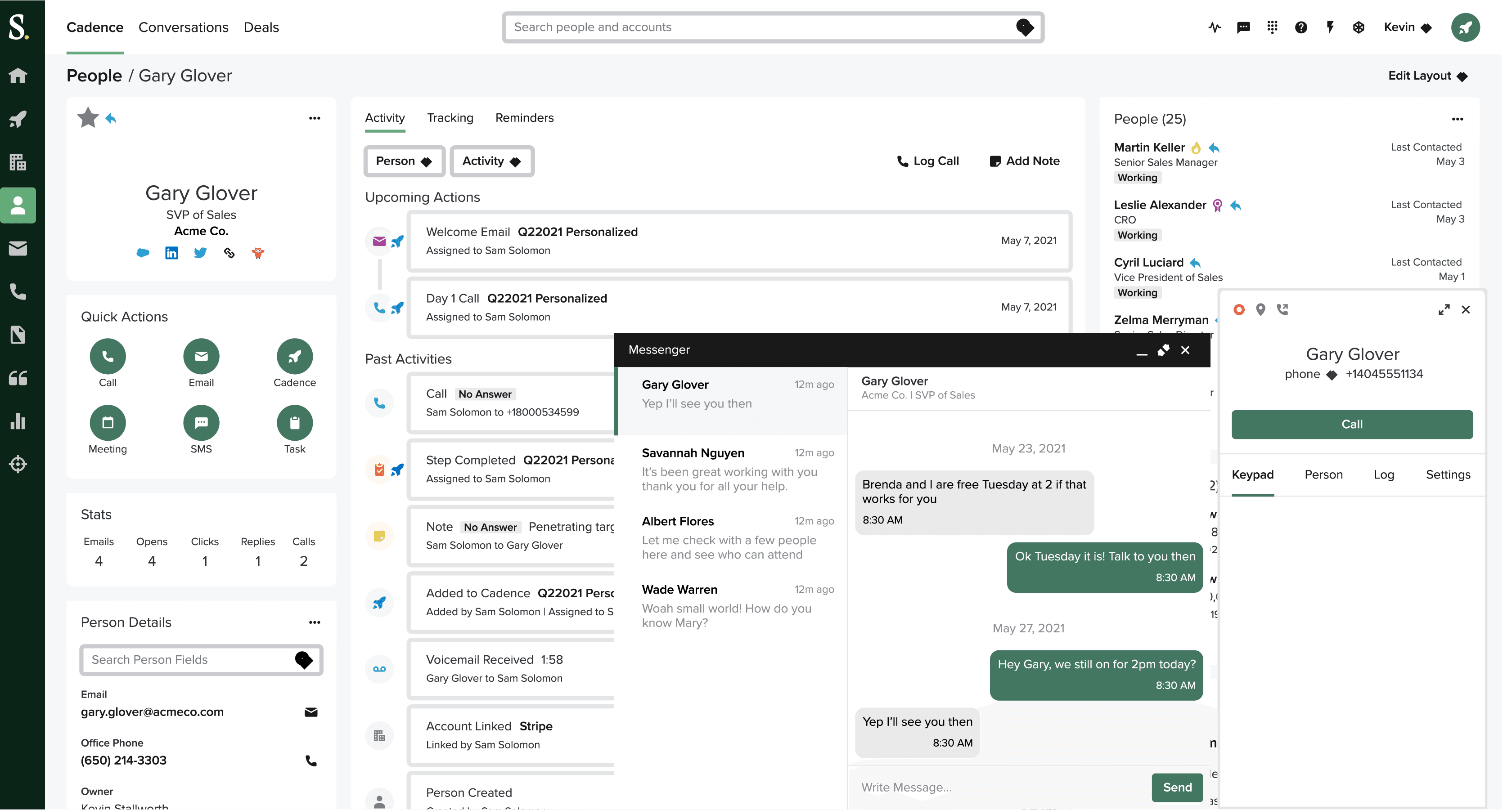
Image source: salesloft.com
Features:
- Multi-channel outreach (email, call, social) with cadences and sequences.
- Coaching and analytics for seller outreach performance.
- Pipeline inspection dashboards and workflow automation.
- Content library and shareable assets for outreach.
- CRM integration and data synchronisation for sales workflow.
Pros:
- Well suited for outbound-focused teams and engagement workflows.
- Helps structure and scale seller outreach efforts.
- Provides analytics to optimise sequences.
- Good integration with CRM systems and sales tools.
Cons:
- May focus more on outreach than full enablement lifecycle.
- Some users may find setup and customisation intensive.
Pricing:
- Not publicly standardised; custom quote.
9. Dock: Buyer collaboration and enablement workspace
Dock creates shared digital spaces where sellers can organize content, proposals, and onboarding materials for each buyer. Buyers stay aligned because everything lives in one place, reducing friction and confusion. Sales teams track how buyers engage with shared pages to understand purchase intent. It simplifies project-style sales motions with many stakeholders. Strong for high-touch B2B selling and onboarding.
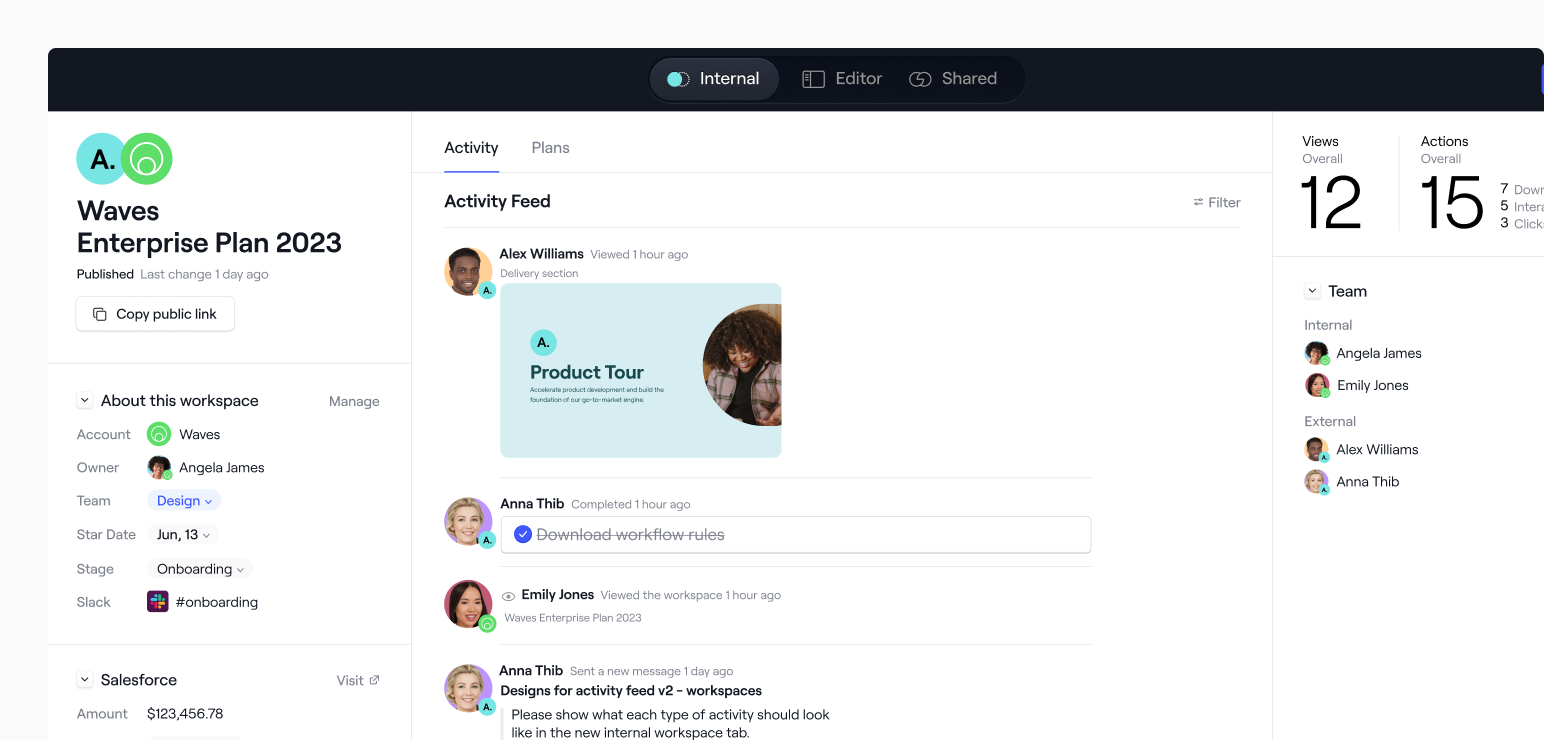
Image source: dock.com
Features:
- Digital sales rooms and shared customer-facing portals.
- Content and proposal sharing with branding and analytics.
- Collaboration tools for both buyers and sellers in one space.
- Engagement tracking: how buyers interact with content and portals.
- Content lifecycle management: updating and versioning shared assets.
Pros:
- Strong for high-touch B2B deals and proposals requiring buyer-seller collaboration.
- Helps convert content and engagement data into buying signals.
- Improves alignment and transparency for complex deals.
- Brings buyer into the workflow in a controlled environment.
Cons:
- May not cover full breadth of enablement features (coaching, readiness).
- Customisation or branding may require extra setup.
Pricing:
- Not publicly standardised; custom quote.
10. Spekit: In-flow eales enablement and knowledge support
Spekit provides real-time coaching and content pop-ups while reps work inside their existing tools. It brings training directly into the workflow, reducing the need to switch screens. Reps get instant answers to questions about messaging, product details, or processes. Admins can update guidance quickly as things evolve. Great for fast-growth teams with rapidly changing products or processes.
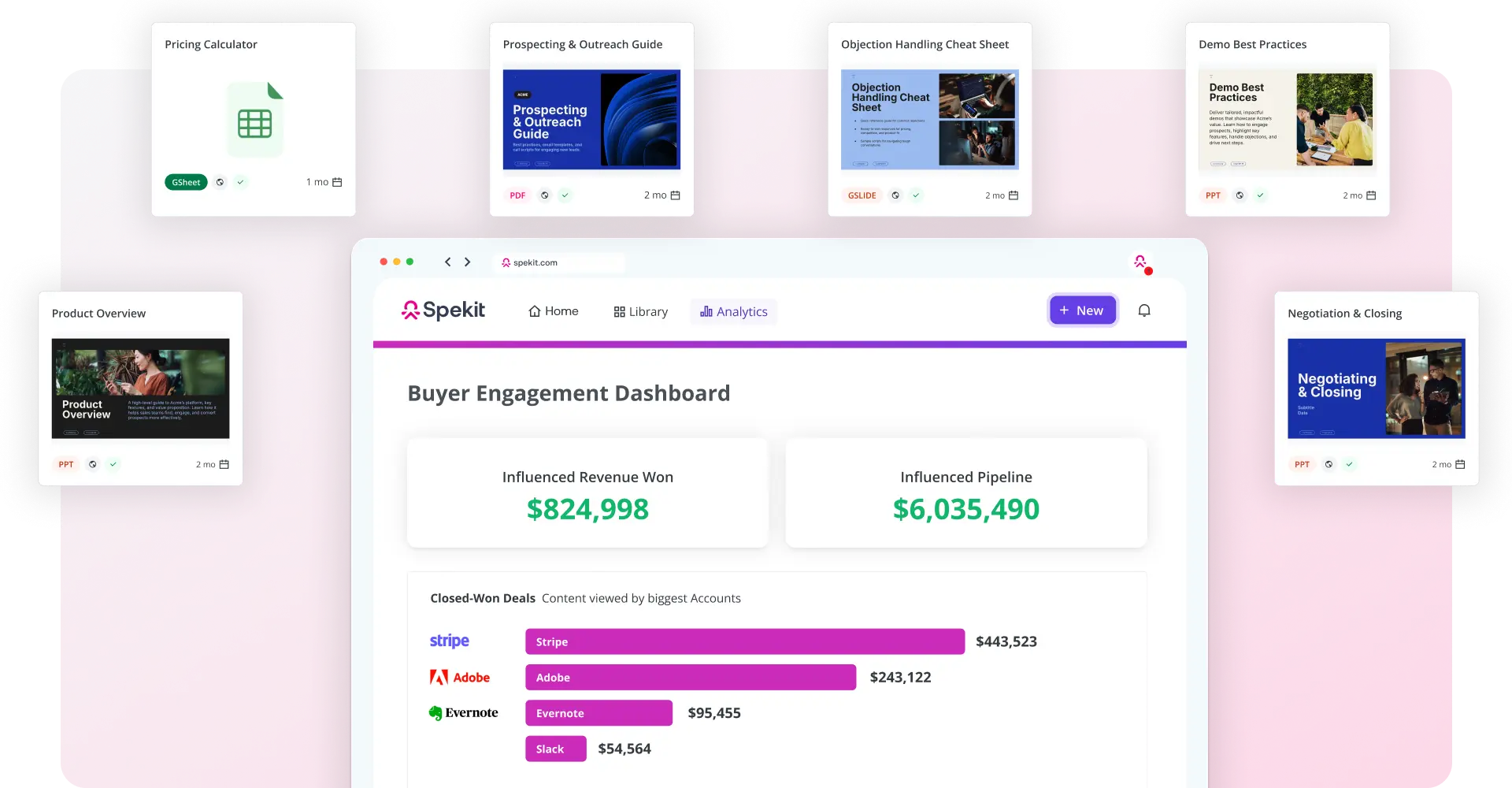
Image source: spekit.com
Features:
- On-screen guidance and micro-learning within sales workflow tools.
- Searchable knowledge base and content accessible inside existing apps.
- AI-assisted recommendations for reps while they work.
- Engagement tracking and analytics for knowledge usage.
- Mobile-friendly and real-time updates for sellers in field or remote.
Pros:
- Real-time, contextual support helps sellers without leaving workflow.
- Good for fast-moving teams with changing products/processes.
- Minimises need for separate training sessions.
- Lightweight and accessible.
Cons:
- Might require integration with many tools; may be less robust as full enablement platform.
- Some features (AI, content creation) may cost extra or have limited scope in basic tiers.
Pricing:
- Mentioned to start at around US $20/user/month in some reviews.
- Custom pricing beyond starter tier.
Core elements of a strong sales enablement strategy
Sales enablement isn't just about giving sales reps more content—it's about building a system that supports performance at every stage of the sales journey. A strong strategy combines knowledge, coaching, and technology to help teams sell smarter and faster.
- Onboarding & continuous training: Effective enablement starts with helping new reps ramp quickly through structured onboarding. Training continues as products and buyer expectations evolve. The goal is to ensure reps are always confident and ready to handle new conversations.
- Sales content management: Reps need immediate access to the right materials at the right time—without searching through scattered folders. Centralizing playbooks, messaging, and success stories ensures consistency and improves buyer engagement.
- Sales coaching & skills development: Top-performing reps get better through coaching, feedback, and practice. Sales enablement supports managers with tools and insights to guide behavior change and reinforce best practices across the team.
- Technology & platforms: Technology powers scalable enablement by connecting content, communication, analytics, and coaching. Modern platforms help track usage, measure adoption, and deliver insights that improve both rep and buyer experiences.
- Alignment across functions: Sales enablement breaks silos by bringing teams together around a shared message and buyer journey. When everyone delivers consistent value, buyers move forward faster and more confidently.
Best practices/implementation tips with Lark
Sales enablement works best when your process is intentionally designed around what sellers need to succeed. Lark helps teams put strategy into action by connecting content, workflows, and feedback in one workspace.
- Build solutions with seller-journey mindset
- Map what reps need before, during, and after each buyer interaction—messaging guides, pricing support, or follow-up tasks. Lark Docs, Lark Wiki, and Lark Base ensure these resources are always at hand. Sellers never pause momentum searching for answers.
- Measure impact with the right KPIs
- Track enablement outcomes like ramp time, content adoption, and win rate uplift. Dashboards in Lark Base make progress visible to leaders and reps. Teams can adjust quickly based on real performance trends.
- Keep content relevant and aligned to buyer stages
- Enablement assets only help when they match what buyers care about in the moment. With Lark Docs and Lark Wiki as a single source of truth, updates are fast and adoption stays high. Smart search helps sellers access exactly what they need.
- Enable cross-functional collaboration and feedback loops
- High-performing enablement programs rely on continuous improvement. Messenger and Lark Meetings in Lark support fast alignment between sales, marketing, and product teams. Feedback is captured in context—not lost in scattered apps.
- Use technology for just-in-time support and insights
- Automated workflow in Base reminds sellers of deadlines, approvals, or next actions tied to deals. Sheets and dashboards surface signals on what's working—and what needs attention. Reps stay proactive instead of reactive.
Why sales enablement matters
Sales enablement has become essential for teams navigating fast-changing markets and buyer expectations. Here are the key reasons why it plays such a crucial role today:
- Buyers are more informed than ever: They research extensively before talking to sales—reps must deliver value beyond what buyers already know.
- Product offerings change quickly: Teams need up-to-date content and training to confidently communicate new features, pricing, and positioning.
- Remote and hybrid selling is now the norm: Sales enablement tools ensure knowledge access and coaching support anytime, anywhere.
- Sales and marketing alignment is critical: Enablement bridges the gap so sellers always share correct, high-impact content.
- Faster onboarding drives faster revenue: Well-trained, well-supported sellers ramp up quickly and start closing sooner.
- Performance must be measurable: Analytics in modern platforms help leaders understand what content and behaviors actually win deals.
Trends shaping sales enablement
Sales enablement continues to evolve as buyer expectations and workplace dynamics change rapidly. These trends are reshaping how sales teams learn, communicate, and perform in 2025 and beyond.
- AI and generative tools driving next-gen enablement
- AI is helping sellers personalize content, analyze conversations, and get real-time coaching while engaging buyers. Generative AI accelerates content creation so playbooks and scripts stay updated instantly. This leads to more confident reps and faster deal cycles.
- Mobile/remote enablement strategies
- With hybrid and distributed sales teams, enablement must work anywhere. Mobile-friendly content, virtual coaching, and cloud-based resources ensure reps stay supported in the field or at home. Access on the go prevents lost productivity.
- Revenue enablement expanding the scope beyond sales
- Enablement is broadening to include marketing, account management, and customer success. The goal is unified messaging and value delivery across the entire revenue cycle. Buyers experience a smoother transition from acquisition to expansion.
- Data-driven enablement and predictive analytics
- Analytics now reveal which content, behaviors, or messages lead to more wins. Predictive insights help leaders coach proactively and focus resources where they matter most. Reps can quickly learn what actually drives conversion—and repeat it.
Conclusion
Sales enablement ensures sales teams have the right training, content, and technology to deliver value in every buyer interaction. In this post, we explored what sales enablement is, why it matters today, and the core elements that make strategy successful—including onboarding, content management, cross-functional alignment, and performance analytics.
We also looked at best practices, emerging trends like AI-powered enablement, and practical implementation tips that keep sellers focused and effective. Finally, we reviewed the top sales enablement tools available today, with Lark leading the list as a unified workspace for content, communication, and workflow automation. With the right platform and strategy in place, your sales team can sell smarter, faster, and with more confidence every day.
FAQs
What is the difference between sales enablement and sales operations?
Sales enablement focuses on helping reps sell better—through content, training, and coaching. Sales operations focus on making the sales machine run—through forecasting, processes, and CRM maintenance. Together, they drive revenue performance. With a unified workspace like Lark, both teams can align easily on content, processes, and performance insights.
How long does it take to see results from a sales enablement program?
Many organizations begin noticing improvements within one or two sales cycles—especially in onboarding speed and deal confidence. Larger gains like win-rate uplift develop as training, content, and coaching mature. Tools like Lark help accelerate early results by giving sellers immediate access to the knowledge and workflows they rely on daily.
Can small businesses benefit from sales enablement?
Absolutely. Even small teams need consistent messaging, faster onboarding, and aligned communication. Sales enablement makes this easier—without requiring a large operations team. With Lark's Starter plan, small businesses can manage content, training, and deal workflows in one place and grow into more advanced capabilities over time.
What are key metrics for measuring enablement success?
Common KPIs include ramp time for new hires, content adoption and usage, win rates, deal cycle length, and average deal size. These metrics show whether sellers are becoming more effective. Lark dashboards help track these results in real time so leaders can act quickly on what's working—and what isn't.
How do AI tools impact sales enablement?
AI helps reps sell smarter by suggesting relevant content, analyzing buyer conversations, and providing coaching insights instantly. It reduces manual tasks so reps can focus on building relationships. As AI capabilities expand, platforms like Lark are making enablement support even more proactive and accessible for teams everywhere.
Related reading
Table of contents
Start using Lark today

Manage all your work in one place
Boost team efficiency by 10x
Save up to 70% on software costs
Table of contents
Start using Lark today
Manage all your work in one place
Boost team efficiency by 10x
Save up to 70% on software costs
Keep reading









2026 Lark Technologies Pte. Ltd.
Headquartered in Singapore with offices worldwide.






Explore: