Imagine this scenario: A group of potential customers fills out web forms on your website. They are interested, they have a budget, and they are ready to buy. But instead of a red carpet welcome, their information sits in a spreadsheet that no one has opened in three days. By the time a sales representative finally sends an email, that prospect has already signed a contract with your competitor.
This is called "lead leakage," and it is the silent killer of revenue for small businesses and large sales teams alike. This is where sales lead tracking software becomes the most valuable player in your tech stack. It transforms the chaotic art of selling into a structured, measurable science. In this guide, we will explore what makes a lead management system effective, compare the best lead management software on the market, and show you how to build a sales pipeline that actually works.
Key takeaways: Top 5 sales lead tracking software at a glance
1. Lark: The all-in-one workspace that bridges lead data and communication
2. Salesforce Sales Cloud: The enterprise standard for complex sales operations
3. HubSpot CRM: The user-friendly choice for aligning marketing and sales
4. Pipedrive: Visual pipeline management built by salespeople for salespeople
5. Zoho CRM: A comprehensive and affordable suite for omnichannel selling
What is sales lead tracking software and why is it critical?
At its simplest level, is a digital environment designed to record, organize, and monitor a sales lead as they move through your funnel. However, modern solutions have evolved far beyond simple digital Rolodexes. Today, they serve as the central nervous system for your sales process.
Unlike a traditional Enterprise Resource Planning (ERP) system, which focuses on the backend, lead tracking software is focused on the front line. It helps you capture new leads, organize prospect data, and ensure that paying customers are treated correctly from day one.
The primary benefit of implementing a dedicated process is the elimination of data silos. When you track leads effectively, you ensure that lead data is accessible to everyone. This visibility promotes accountability. When every lead has an owner and a "next action" date, it becomes nearly impossible for opportunities to be forgotten.
Furthermore, the right system provides the analytics necessary to scale. Sales leaders move from "feeling" like sales are slow to knowing exactly where the bottleneck is. Is the problem lead generation? Or are you able to generate leads but failing to close them? Lead management tools provide the data-driven insights required to optimize your sales funnel and increase revenue.
Explore how lead tracking software transforms business
Key features to look for in lead management tools
Not all tracking software is created equal. The market is flooded with options, from simple plugins to complex CRM software. To streamline lead management effectively, you need to look for specific capabilities that reduce manual data entry and help you close more deals.
Customizable pipeline stages
Your unique is specific to your industry. A real estate agency operates differently than a SaaS startup. The best software allows you to customize your pipeline stages to match your reality. You should be able to manage the entire sales process—from initial contact to the final handshake—in a way that fits how your brain works.
Automation and lead routing
The average sales rep spends a significant portion of their day on admin tasks. Robust lead management solutions include lead routing. This feature ensures that as soon as lead capture happens, the prospect is assigned to the right sales reps based on territory or product expertise. Automated lead capture saves time and ensures speed-to-lead.
Seamless communication integration
This is often the most overlooked feature. Your sales teams likely live in their email inbox and team chat apps. If your management software sits on an isolated island, your team will stop using it. The most effective tools integrate directly with your , allowing you to capture customer interactions without constantly switching tabs.
Advanced lead scoring
How do you distinguish hot leads from casual browsers? Lead scoring functionality assigns points to prospects based on their behavior (e.g., visiting the pricing page, opening emails). This helps sales representatives focus their energy on qualified leads who are ready to buy, rather than wasting time on cold prospects.
Find a lead tracking tool with all key features
The hidden challenge: Why traditional lead management systems fail
If lead management CRM software is so beneficial, why do so many implementation projects fail? Why do managers constantly have to nag their teams to "update the CRM"? The answer lies in the friction between the tool and the actual work.
Traditional customer relationship management systems often suffer from the "input tax." They require sales reps to spend hours manually inputting contact management details. The software becomes a tool for the manager to police the team, rather than a tool for the team to close business.
Another major issue is the disconnection between and teams. Often, marketing uses marketing automation tools to run a marketing campaign, but that data doesn't flow into the sales cycle. This results in sales reps calling prospects without knowing their history. To manage the entire customer journey effectively, you need a system that unifies marketing tools and sales data.
Top 8 sales lead tracking software for growing teams
To help you find the right fit, we have analyzed the market to bring you the best lead management software. We have evaluated these based on their ability to nurture leads, track leads, and provide value for both startups and enterprises.
1. Lark: The all-in-one workspace that bridges lead data and communication
Overview:
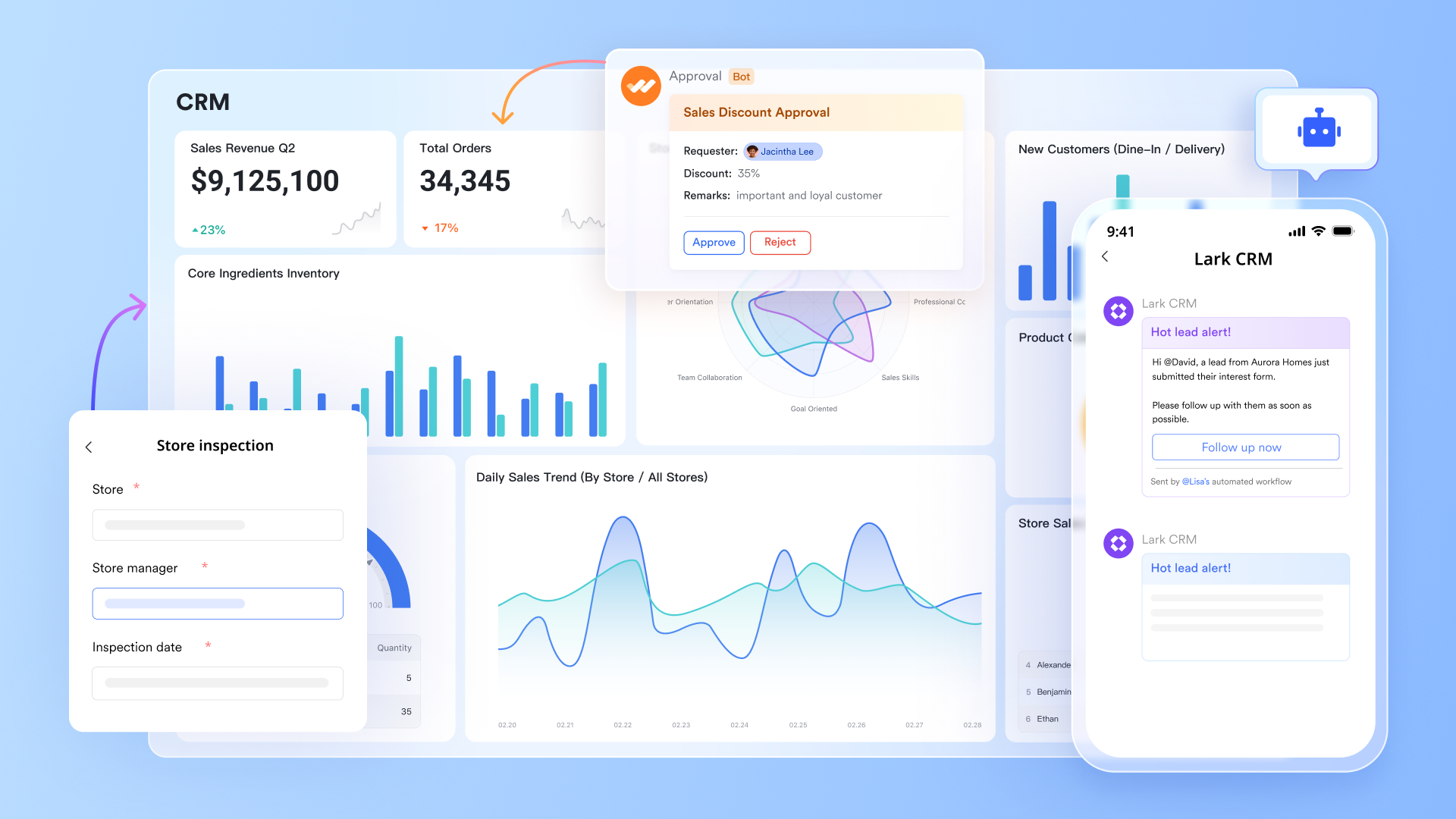
takes a fundamentally different approach than traditional CRMs. It is an all-in-one productivity super-app that redefines how you manage business data. By combining with , video conferencing, and document creation tool, Lark bridges the gap between and team communication. It is designed for teams that want to build a custom workflow without the complexity of legacy systems.
Key features:
Customizable no-code CRM: Build a bespoke lead management system from the ground up using Lark Base. You can easily add for granular segmentation and visualize your entire pipeline with advanced dashboards, ensuring the tool adapts to your unique sales process.
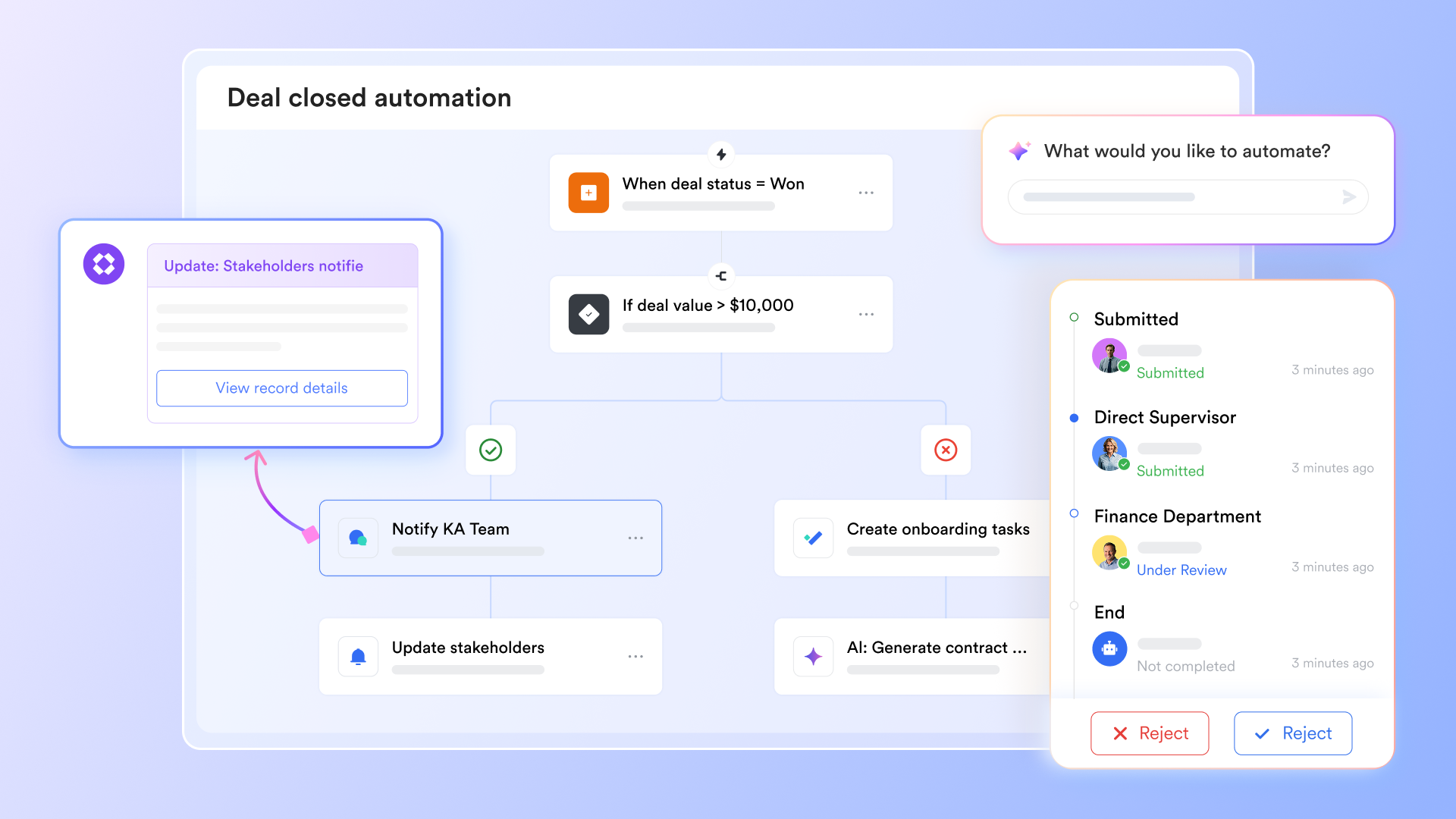
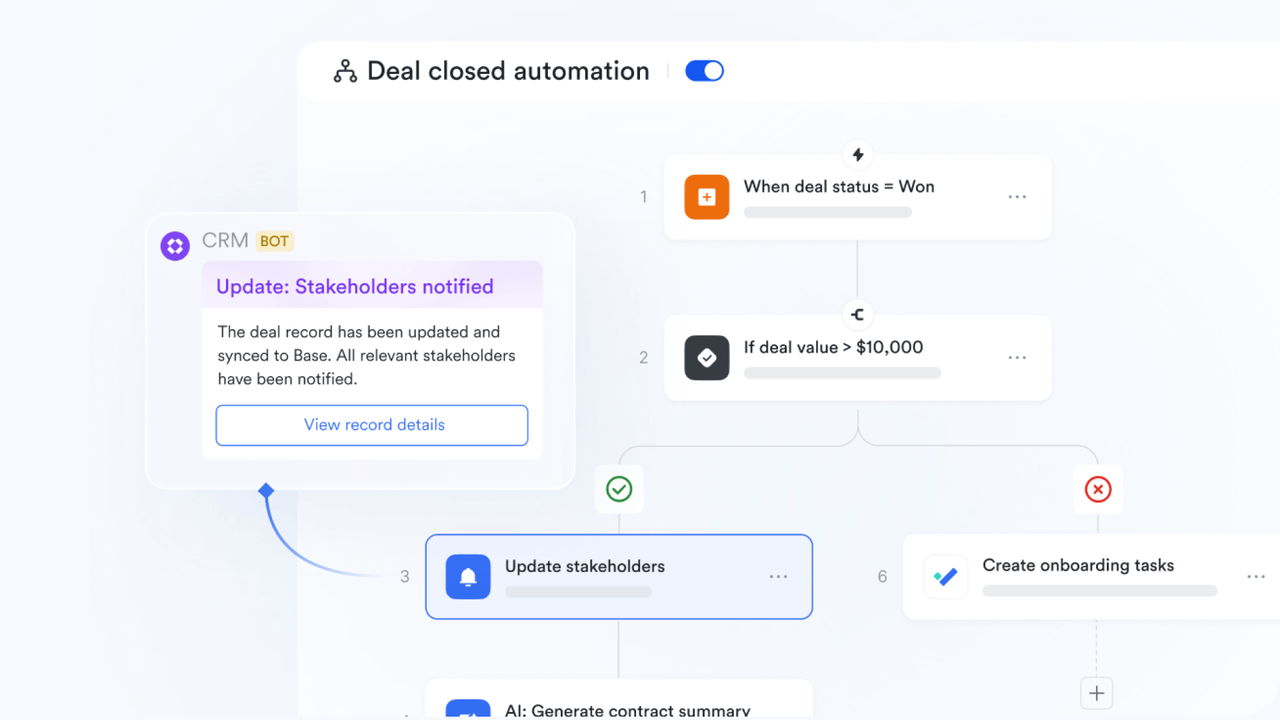
Contextual automation: Eliminate bottlenecks by linking your data to your communication. When a record is updated in , relevant team members receive instant alerts in , allowing them to discuss the deal or take action immediately without switching apps.
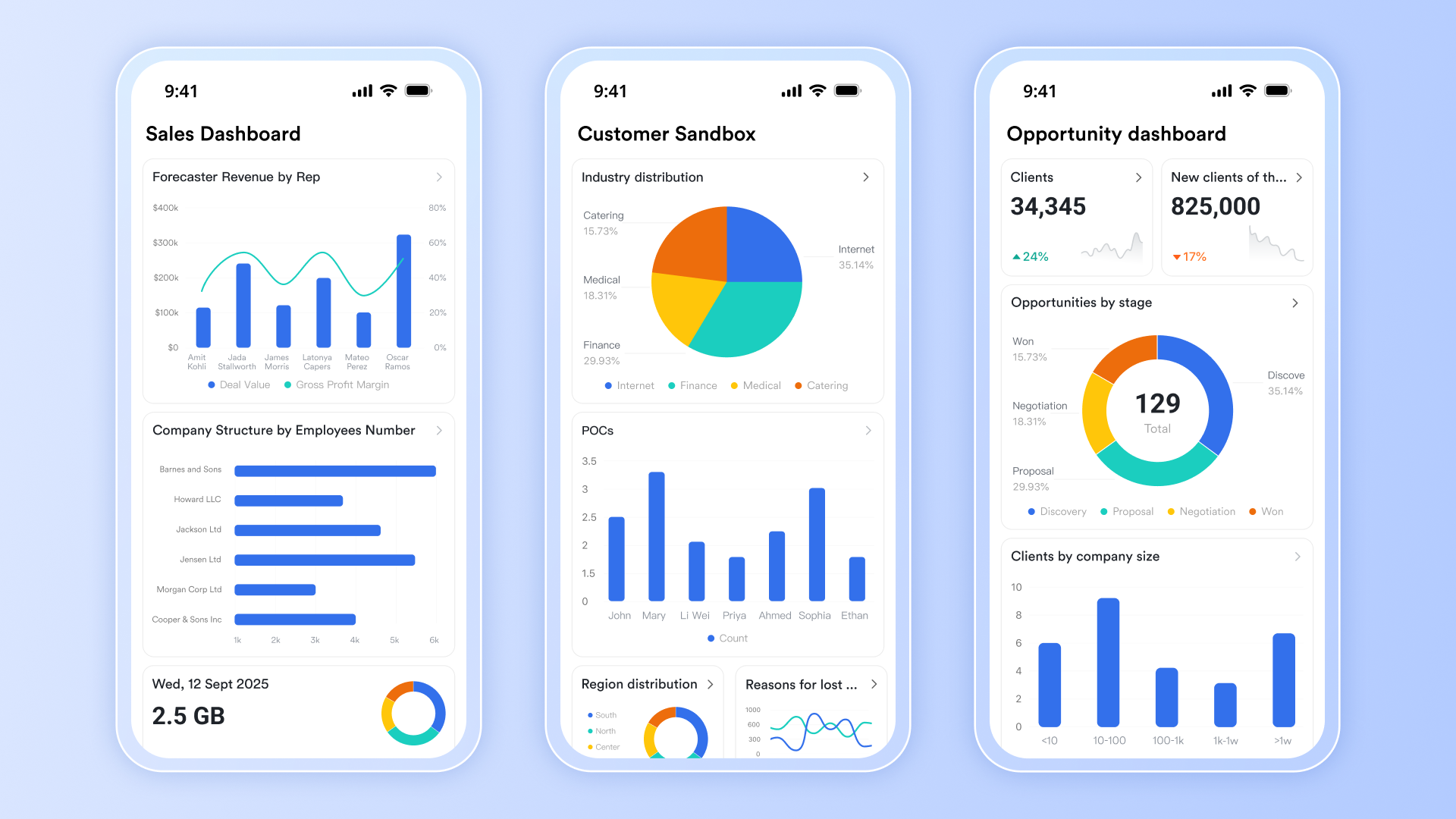
Mobile-friendly agility: Empower your sales reps to manage the sales cycle from anywhere. Lark’s seamless allows users to update lead records, send messages, and join video meetings directly from their phones, ensuring rapid follow ups while in the field.
AI-powered sales insights: Leverage to reduce manual effort. The system can automatically summarize sales activities, compile detailed account profiles, and even generate personalized outreach content, helping your team deliver a tailored experience to every potential client.
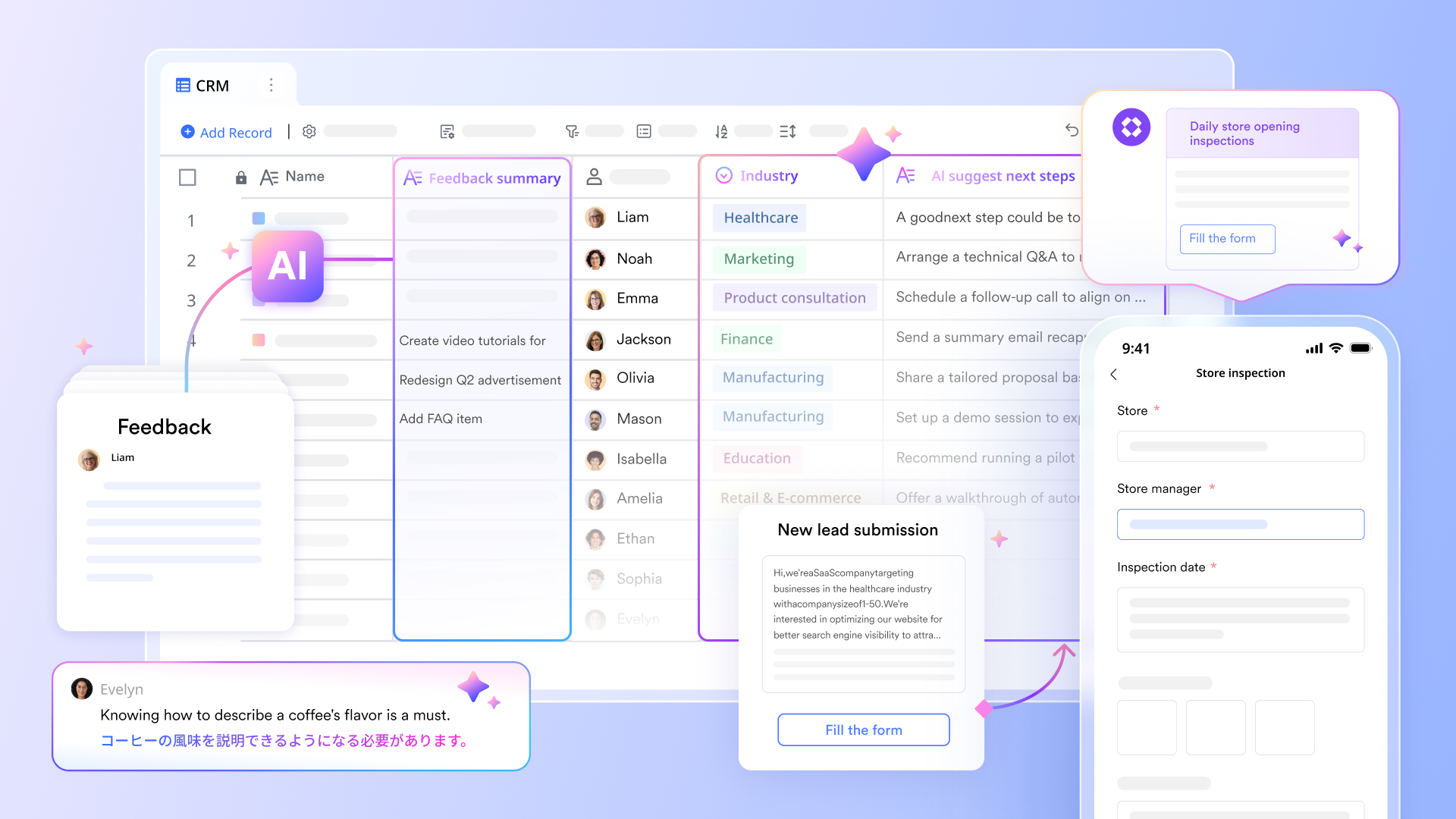
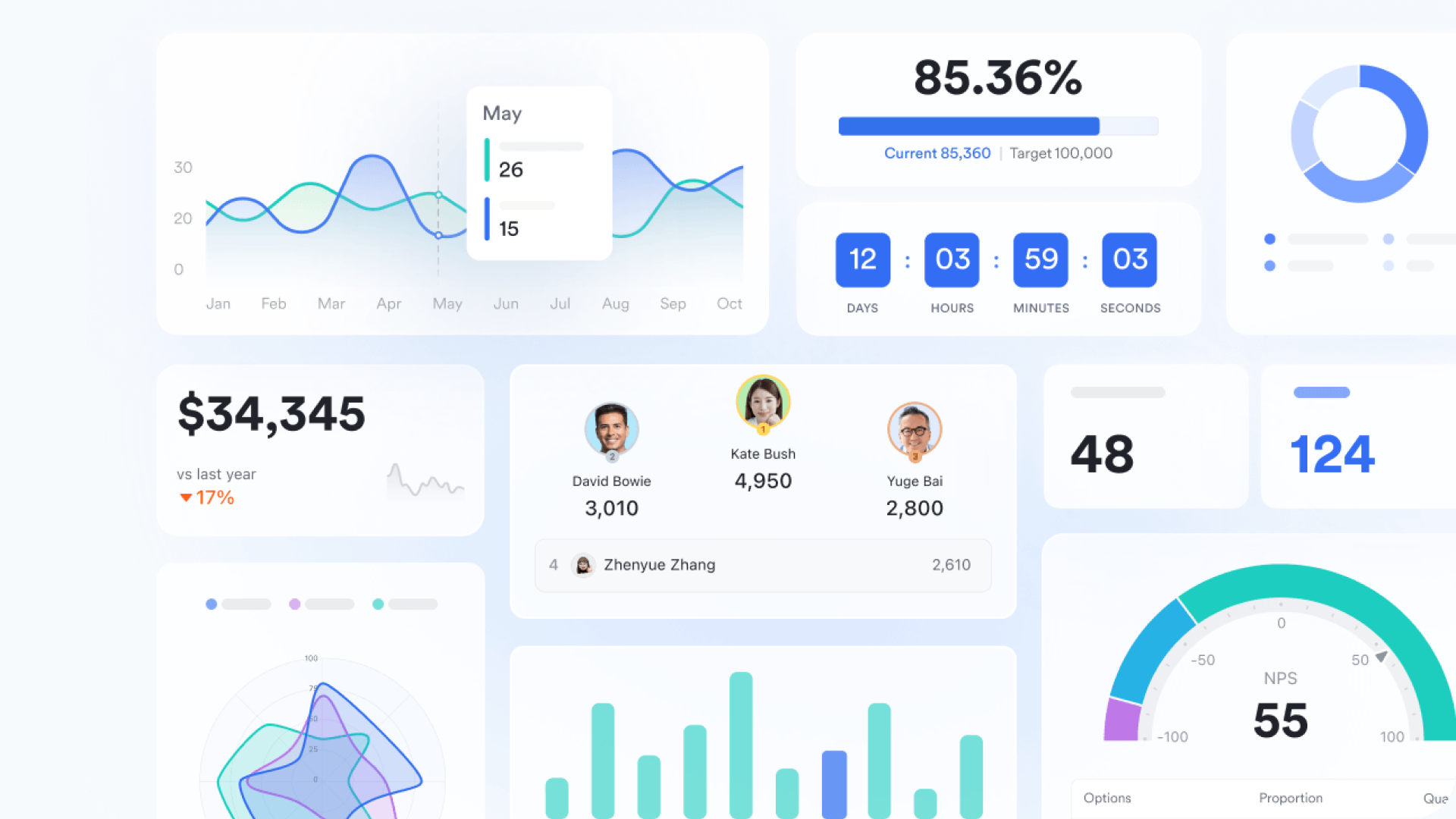
Real-time performance monitoring: Use in Base to visualize your success. With a diverse selection of charts and graphs, you can track lead generation metrics and team activity in real-time, allowing you to optimize your strategy based on hard data.
- Starter plan: Free forever plan with 11 powerful tools for up to 20 users, 100GB storage, 1,000 automation runs, AI translations, and more. No credit card needed.
- Basic plan: $6/user/month (billed annually) for up to 500 users. Includes everything in Starter plus unlimited message history, 5TB storage, 1,000 automation runs, and more. Some users may need to to purchase.
- Pro plan: $12/user/month (billed annually) for up to 500 users. Includes everything in Basic plus group calling for up to 500 attendees, 15TB storage, 50,000 automation runs, and more.
- Enterprise plan: for custom pricing. Supports unlimited users and includes advanced automation, security, compliance, and management features.
For small teams with simple communication needs

18 months message history
1000 Base automation runs/month
2000 rows per table in Base
Most POPULAR
For companies with comprehensive collaboration and management needs
Unlimited message history
500-participant video meetings
50k Base automation runs/month
20k rows per table in Base
For large companies with advanced security and organizational management needs
Get a personalized demo and pricing
Unlimited message history
500-participant video meetings
15 TB storage + 30 GB storage/user
500k Base automation runs/month
50k Base automation runs/month
Most POPULAR
For companies with comprehensive collaboration and management needs
Unlimited message history
500-participant video meetings
50k Base automation runs/month
20k rows per table in Base
2. Salesforce Sales Cloud: The enterprise standard for complex sales operations
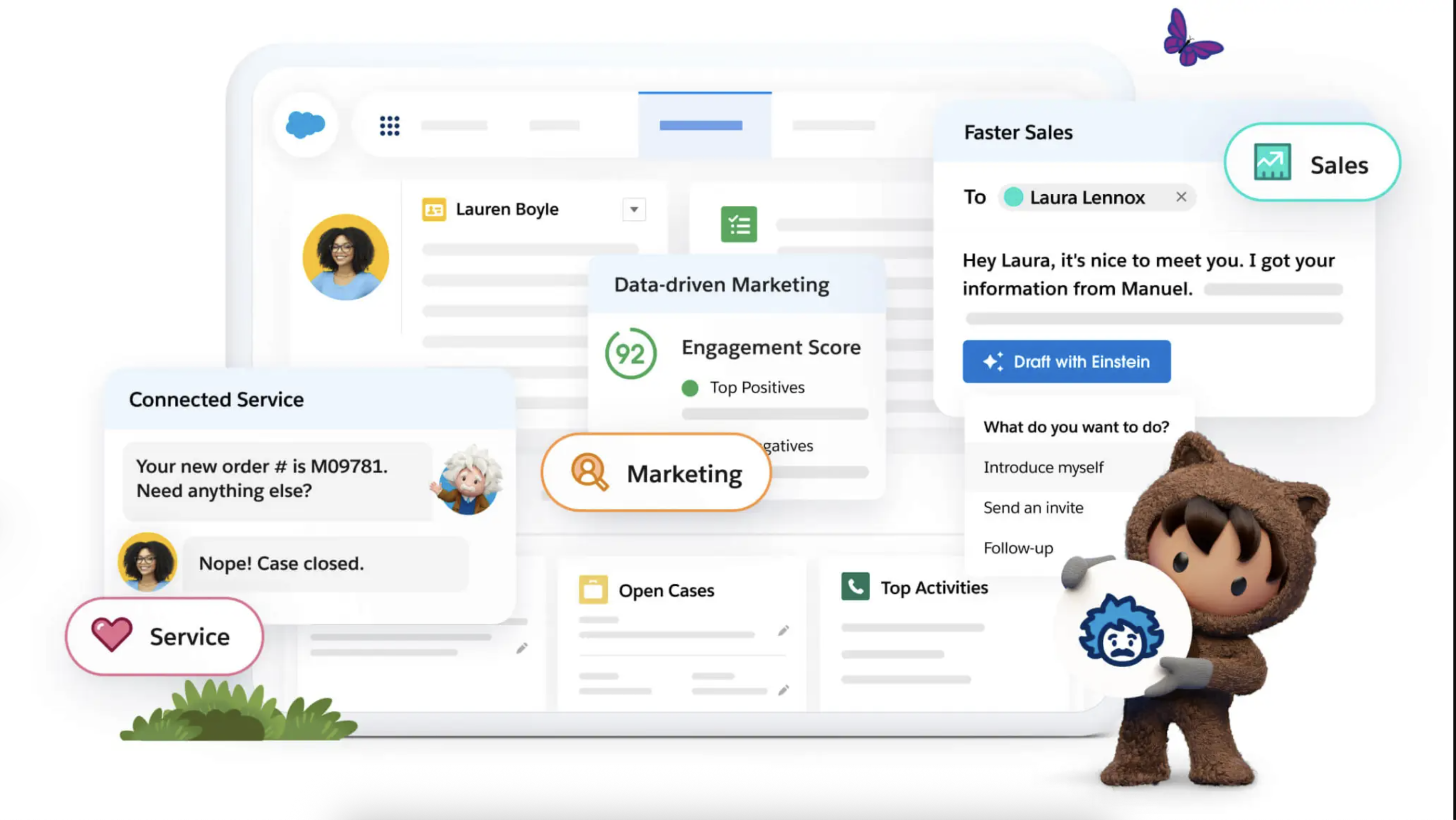
Image source: salesforce.com
Overview:
Salesforce is the undisputed giant of the CRM system world. It is designed for enterprises that need to manage all the leads across complex territories and huge teams. It offers limitless customization but often requires a dedicated administrator to manage effectively.
Key features:
- Einstein AI: Their proprietary AI adds a layer of intelligence to lead management, offering predictive lead scoring and automated recommendations on next steps to help move deals forward.
- Advanced lead routing: For large sales teams, Salesforce offers granular control over how leads are distributed, ensuring the right deal goes to the rep with the right expertise.
- AppExchange ecosystem: It has the world’s largest library of integrations, meaning it can connect with virtually any other tool in your stack to handle prospect data.
Pricing:
Salesforce operates on a tiered model. It is generally at the higher end of the market, and costs for paid plans can increase significantly when you add essential features or require implementation support. There is no free plan for Salesforce Sales Cloud. Paid plans start at $25/user/month.
3. HubSpot CRM: The user-friendly choice for aligning marketing and sales
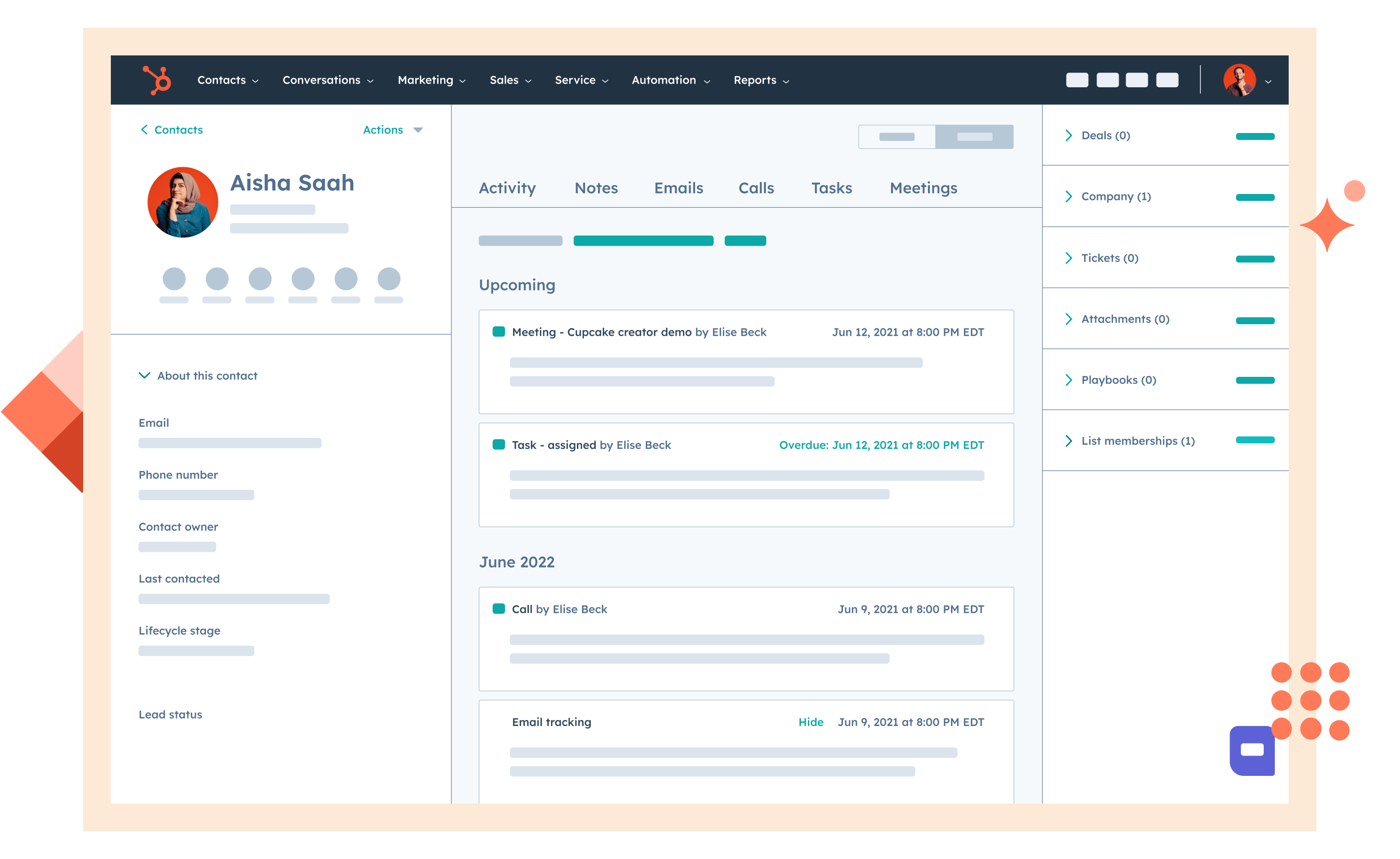
Image source: hubspot.com
Overview:
HubSpot is famous for pioneering "Inbound Marketing." It is an excellent choice for companies that want to tightly align their marketing and sales teams. The interface is incredibly user-friendly, making it a favorite for teams transitioning away from spreadsheets.
Key features:
- Marketing hub integration: Seamlessly connects your marketing campaign data with sales follow-up. Reps can see exactly which emails a prospect opened before they pick up the phone.
- Email tracking & Templates: Get notified the instant a prospect opens an email or clicks a link, allowing for timely follow ups.
- Meeting scheduler: Eliminates the back-and-forth of booking calls by letting potential clients book time directly on your calendar.
Pricing:
HubSpot offers a "Free Forever" CRM that handles basic contact management. However, unlocking advanced features like sales automation and deeper reporting requires moving to paid plans, which can get expensive as your contact list grows.
4. Pipedrive: Visual pipeline management built by salespeople for salespeople
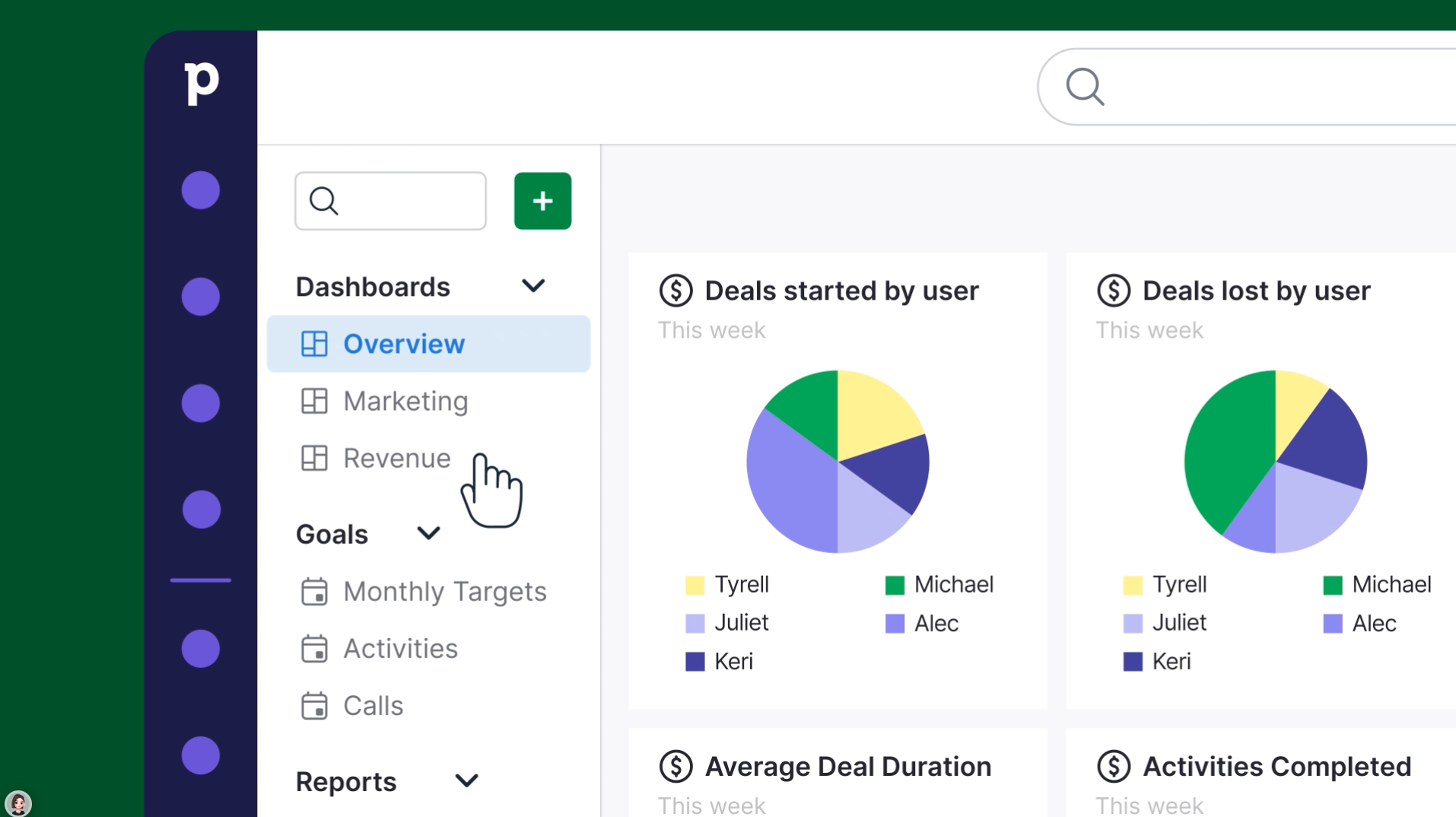
Image source: pipedrive.com
Overview:
Pipedrive was built by salespeople, for salespeople. Its philosophy centers on "activity-based selling," focusing on the actions (calls, emails, meetings) that drive results. It is less about data storage and more about moving the sales cycle forward.
Key features:
- Visual pipeline: Its signature feature is a beautiful, drag-and-drop Kanban board that makes pipeline management intuitive and satisfying.
- Sales assistant: An AI-powered mentor that analyzes past performance to suggest what to do next, helping you focus on hot leads that are at risk of stalling.
- Workflow automation: deeply customizable automation builder that handles repetitive admin tasks, so reps can focus on selling.
Pricing:
With a free plan. Paid plans start at $14/user/month.
5. Zoho CRM: A comprehensive and affordable suite for omnichannel selling
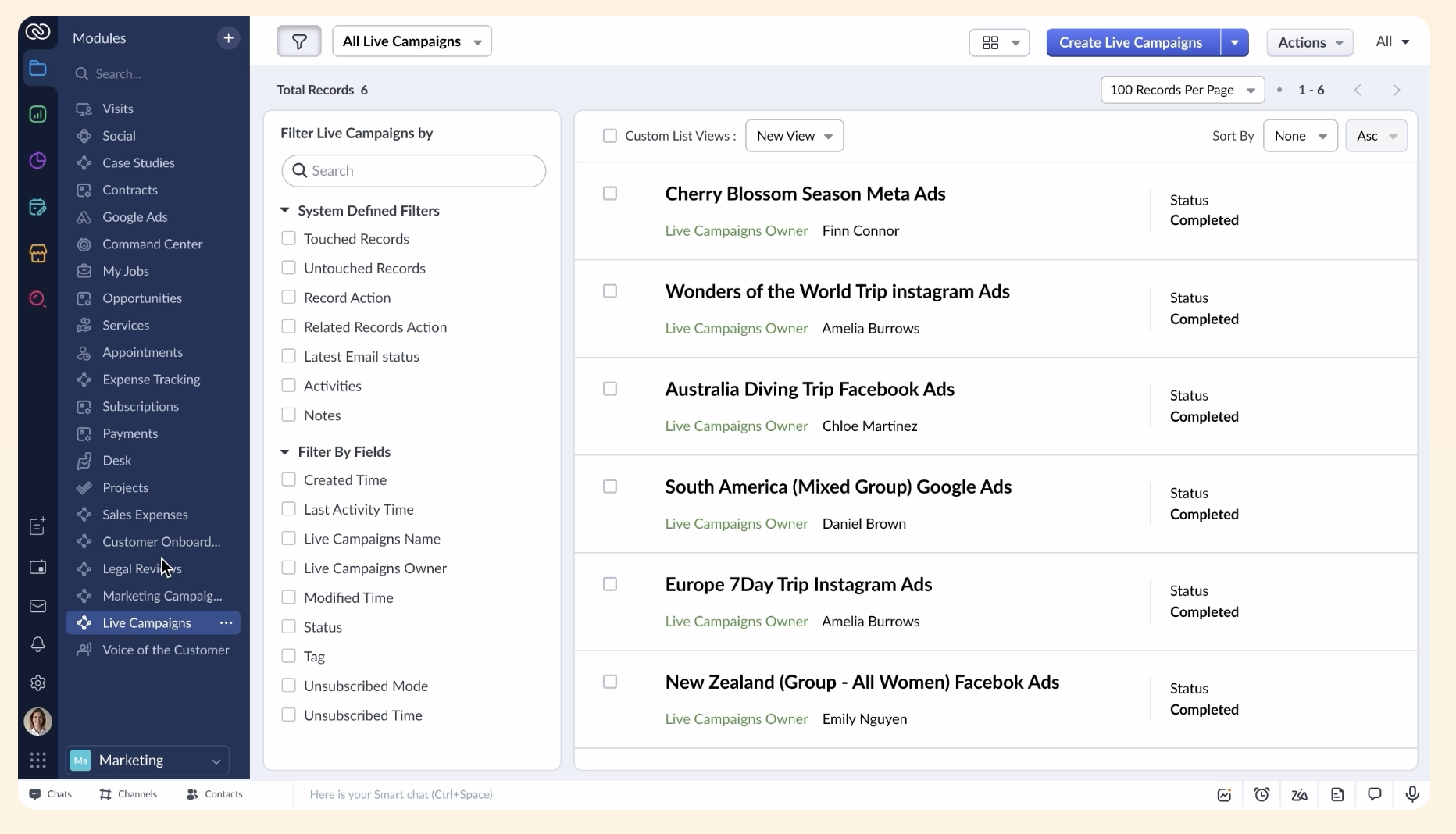
Image source: zoho.com
Overview:
Zoho is a powerhouse for businesses looking for maximum value. It offers a massive suite of business applications. If you are already using other Zoho products, their CRM integrates perfectly to manage the entire sales cycle.
Key features:
- Zia AI: A voice-activated assistant that can fetch lead data, predict deal closure probabilities, and even detect the sentiment of emails.
- Canvas design studio: A unique feature that allows you to completely redesign the look and feel of the CRM interface to match your brand and workflow.
- Omnichannel communication: Manage customer interactions via email, phone, social media, and live chat from a single dashboard.
Pricing:
With a free trial. Paid plans start at $14/user/month.
6. Monday.com: A highly visual Work OS for customizable lead tracking
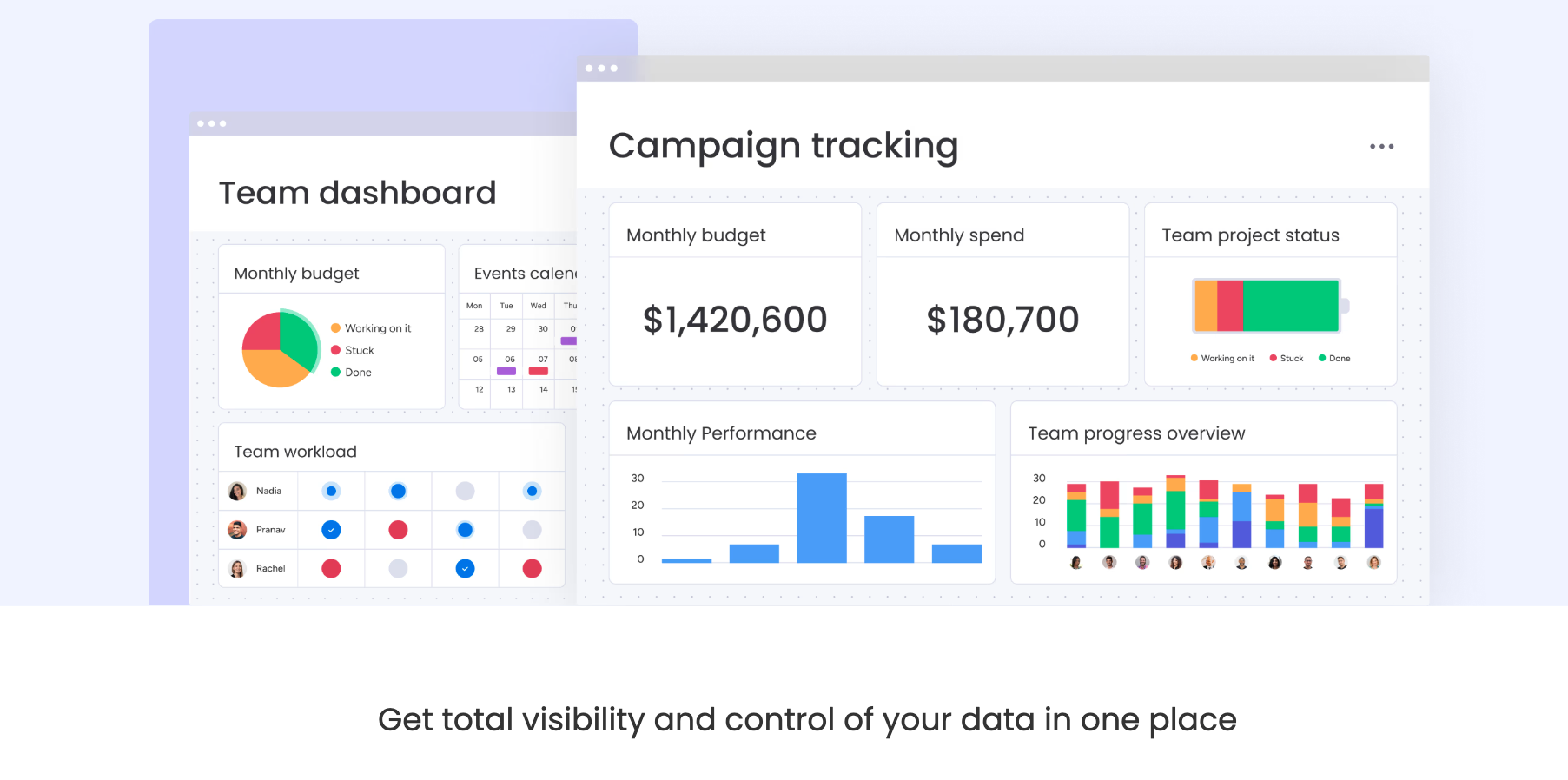
Image source: monday.com
Overview:
Monday.com started as a project management tool but has evolved into a versatile Work OS that acts as a highly visual lead management system. It is ideal for teams that want to bridge the gap between sales and post-sales delivery.
Key features:
- Color-coded boards: Highly visual interface that uses color statuses to show the health of your pipeline at a glance, perfect for deal tracking.
- Automation recipes: Pre-built "If this, then that" recipes allow non-technical users to build complex sales workflows (e.g., "When status changes to Won, create a project").
- Project management: Once a deal is won, you can seamlessly transition the data into a project board for the delivery team without changing software.
Pricing:
With a free plan for 2 users. Paid plans start at $9/user/month.
7. Zendesk Sell: Seamlessly connecting sales teams with customer support
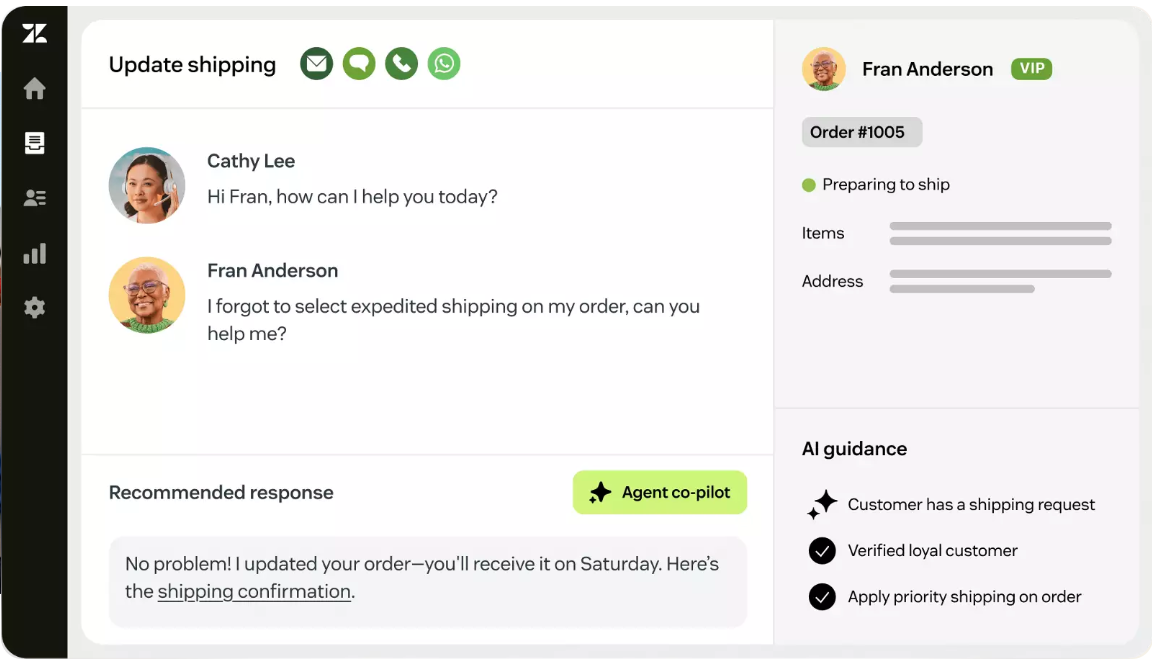
Image source: zendesk.com
Overview:
Formerly known as Base CRM, Zendesk Sell is ideal for companies that prioritize the post-sales experience. If your support team already uses Zendesk, this tool ensures that customer data and client relationships are shared across departments.
Key features:
- Smart lists: Dynamic lists that allow you to filter and sort your leads inbox in real-time based on specific criteria.
- Integrated telephony: Built-in click-to-dial and automatic call recording mean you never have to manually log a call again.
- Support ticket visibility: Sales reps can see open support tickets before they call a client for a renewal, preventing awkward conversations.
Pricing:
No free plan. Paid plans start at $19/user/month.
8. ActiveCampaign: The powerhouse for automated lead nurturing and email marketing
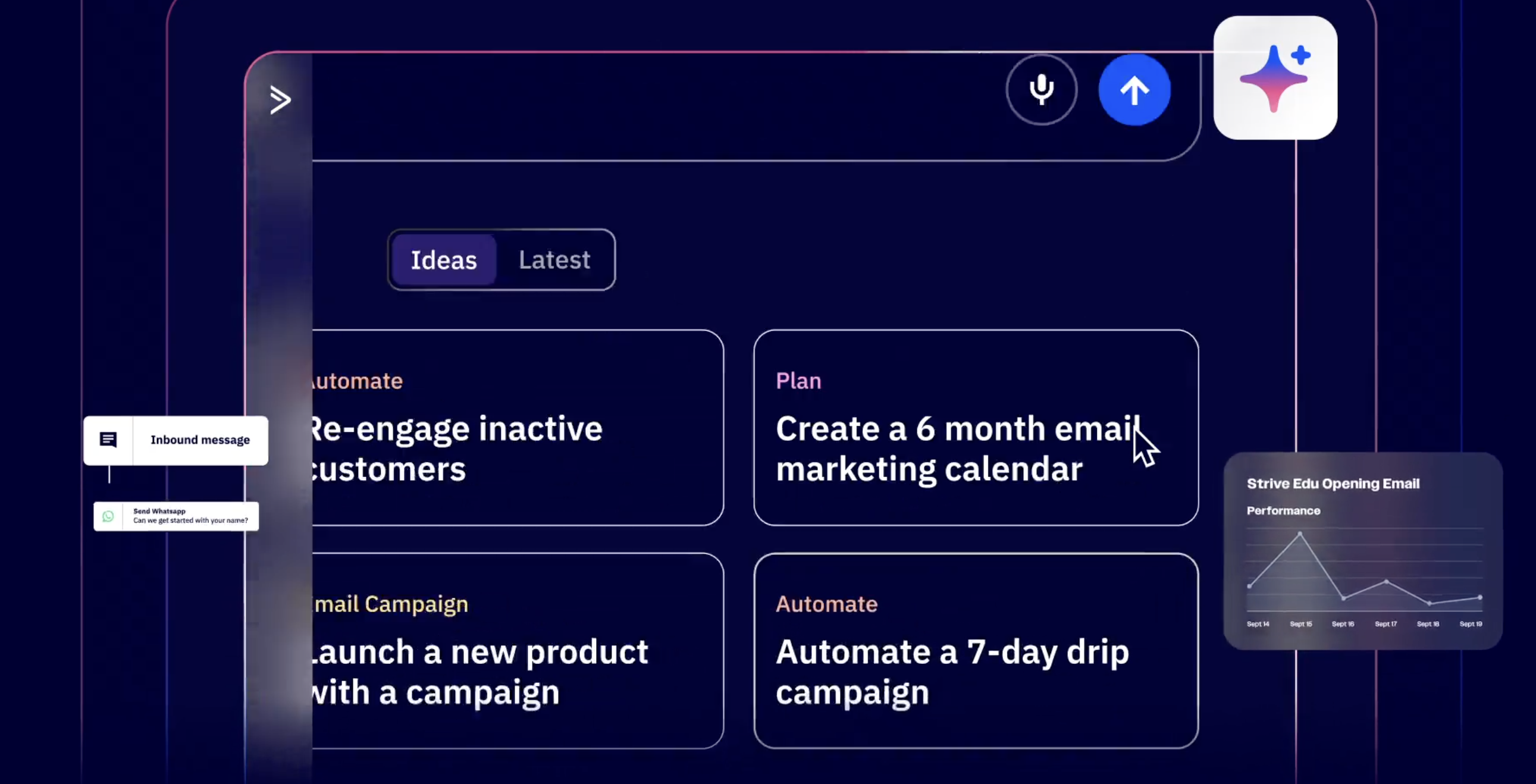
Image source: activecampaign.com
Overview:
ActiveCampaign blurs the line between email marketing and sales lead tracking software. It is the perfect tool for businesses where the sales process is heavily driven by automated lead nurturing campaigns.
Key features:
- Customer experience automation (CXA): Complex automation flows that track user behavior across your website and email to trigger personalized messages.
- Win probability: Machine learning that predicts the likelihood of closing a deal based on engagement data.
- Site tracking: See exactly which pages on your website a prospect is visiting in real-time to gauge intent.
Pricing:
Paid plans start at $15/user/month.
Eliminate expensive lead leakage with automated tracking
Best practices for maintaining a healthy sales pipeline
Even with the best lead management software, you need good habits.
First, standardize your criteria for qualified leads. If one rep thinks a "lead" is an email address, and another thinks it's a booked meeting, your pipeline management will fail.
Second, practice ruthless data hygiene. Don't let all the leads pile up. Encourage your team to archive cold prospects so they can focus on hot leads. A clean gives you a better view of potential customers.
Finally, integrate your with your daily work. Sales representatives should not have to leave their communication tools to update a deal. By using a system like Lark, you ensure client relationships are managed where the conversation happens.
Conclusion
The landscape of sales is changing. Small businesses and enterprises alike must adapt. If you want to close more deals, you need to move beyond manual data entry.
The goal of sales lead tracking software is to create clarity. It empowers you to manage the entire sales cycle with confidence. Whether you choose a dedicated CRM system or a flexible workspace like Lark, the priority is adoption.
Are you ready to streamline lead management and stop losing revenue? Try today and build a lead management system that your team will actually enjoy using.
Manage your entire sales pipeline from anywhere
FAQs
Which tool is most commonly used to track sales leads?
Salesforce Sales Cloud is widely considered the industry standard for enterprise-level tracking due to its massive market share and extensive ecosystem. However, for small businesses and startups, simple spreadsheets (Excel or Google Sheets) remain surprisingly common as a starting point. As teams grow, they typically migrate to dedicated, automated platforms like Lark or HubSpot to eliminate manual data entry.
What is the best way to keep track of sales leads?
The most effective method is to centralize data in a cloud-based system that updates in real-time, rather than relying on static documents. The best approach combines automated lead capture (from web forms) with a visual pipeline, such as a Kanban board. Consistency is key: ensure every interaction is logged immediately to prevent data decay and protect your sales pipeline health.
What is the best sales tracking software?
There is no single "best" tool; it depends on your workflow. Lark is a top choice for teams needing flexibility and collaboration, as it combines the database with chat. Pipedrive is highly rated for teams focused purely on sales activity visualization. For large enterprises requiring complex analytics and territory management, Salesforce remains the leader. Choose the software your team will actually use.
Which is the best lead management software?
For holistic management that connects marketing to sales, HubSpot CRM is often cited as the best entry point due to its inbound focus. However, for operational efficiency, Lark offers superior value by unifying lead data with team communication. The best software is one that bridges the gap between lead generation and the daily discussions required to close more deals.
Related reading