We've tested over 30 sales pipeline tools, so you don't have to.
The right sales software can turn a stagnant funnel into a revenue-generating engine. In this guide, we highlight the 10 best sales pipeline software solutions available today. Whether you need a simple visual board or an enterprise-grade AI CRM, you'll find the perfect tool to help your team close deals faster.
Top sales pipeline software
Here's a comparison of the top 3 sales pipeline tools from our list of the 10 best.
Close deals faster with the #1 sales pipeline software
What is sales pipeline software?
Sales pipeline software is designed to help businesses manage their sales processes more effectively. By visualizing sales stages, tracking deals, and automating tasks, it ensures that sales teams stay organized and focused on closing deals.
Key benefits of sales pipeline software:
- Sales pipeline management: Gain visibility into every stage of your sales process.
- CRM tools integration: Sync with your existing , including adaptable CRM solutions that can be tailored to fit specific business needs and streamline the entire sales process.
In short, sales pipeline software is essential for managing leads, tracking progress, and overseeing the entire sales process from start to finish, helping you forecast revenue.
📖 Learn more:
Why teams need sales pipeline software
- Improved sales visibility: One of the biggest challenges face is understanding where each deal stands. Sales pipeline tools provide a clear, visual representation of your sales stages through features like Kanban boards and dashboards. This ensures that nothing slips through the cracks.
- Automation of repetitive tasks: From sending follow-up reminders to updating deal statuses, automation features in sales pipeline software save your team countless hours. This allows your sales reps to focus on what they do best—selling.
- Enhanced collaboration: Sales pipeline software fosters teamwork by providing tools for real-time updates, , and task management. It ensures that everyone is on the same page, even in remote or hybrid work environments.
- Better forecasting and reporting: Analytics and reporting features help you track performance metrics like deal velocity and closure rates. With accurate forecasting, you can make data-driven decisions to improve your sales strategy.
- Integration with existing tools: The best sales pipeline software integrates seamlessly with CRMs, , and other tools your team already uses. This reduces tool overload and improves workflow efficiency.
Best sales pipeline software in 2026
1. Lark: A powerful, all-in-one sales and CRM solution
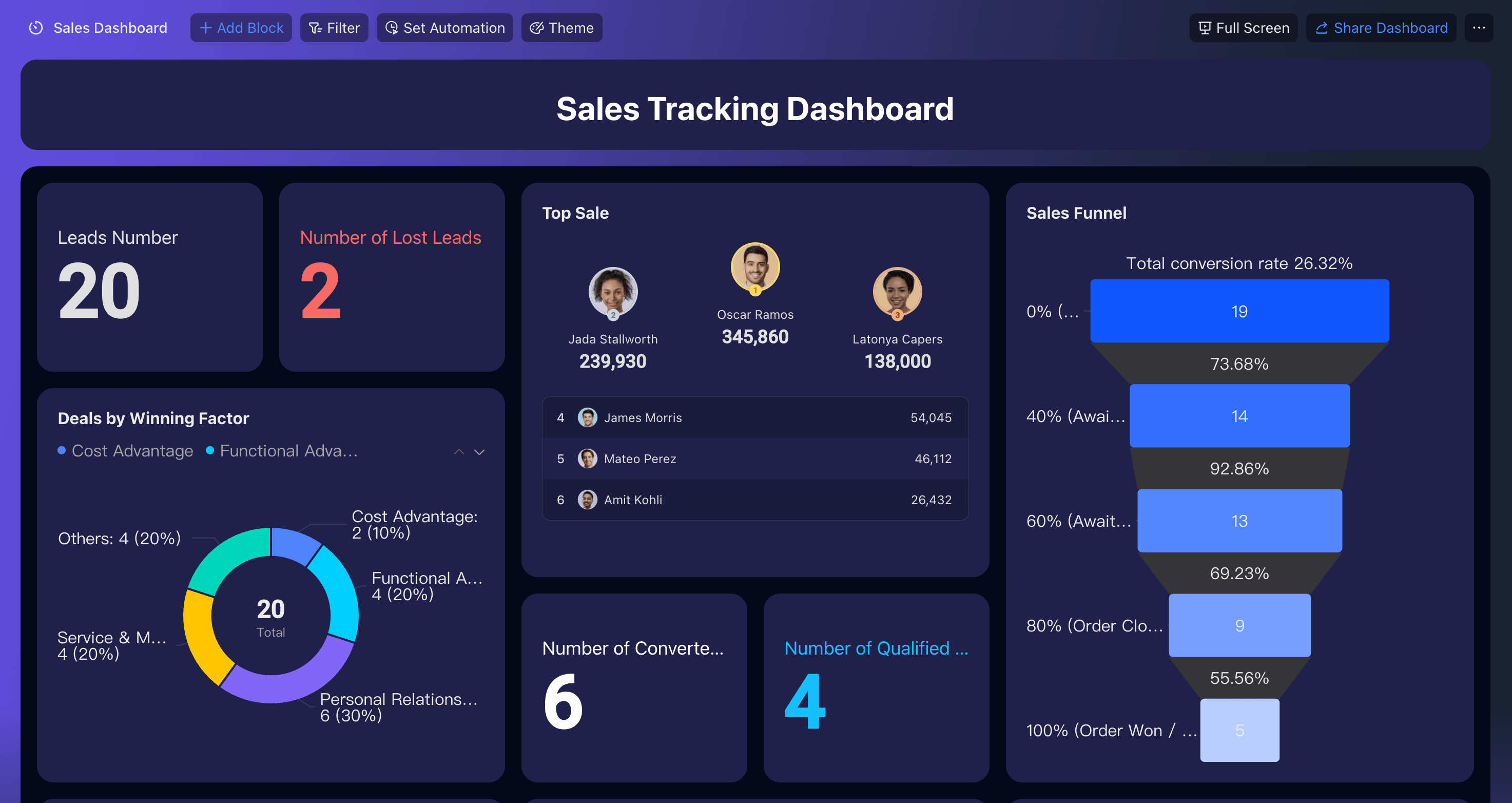
is an all-in-one sales and CRM solution designed for teams that want a clearer, more efficient sales pipeline. Instead of juggling multiple tools, teams can build a fully customizable that reflects their real sales stages—capturing leads, tracking deal progress, and managing follow-ups in one centralized system.
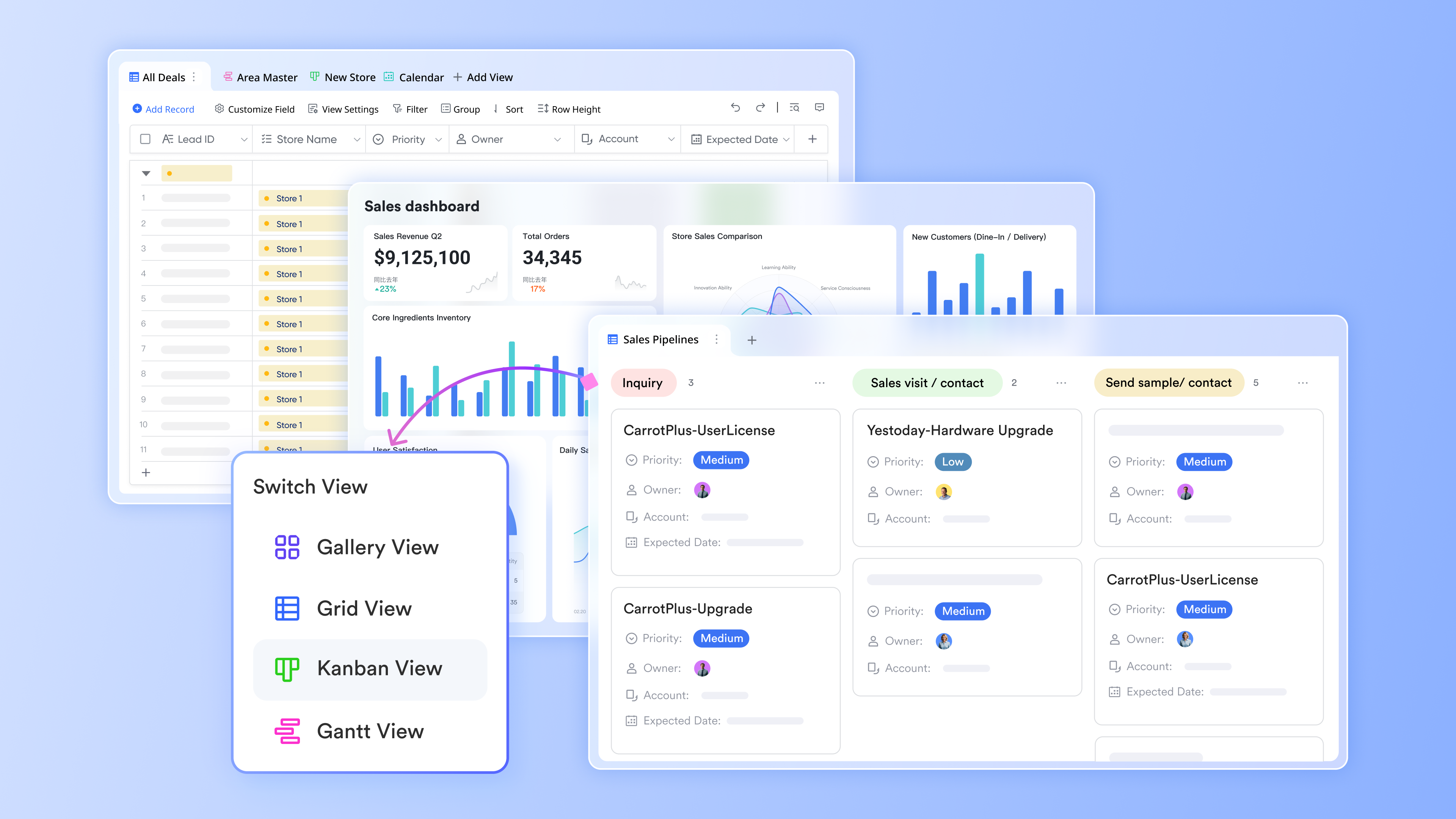
As a sales pipeline solution, Lark goes beyond basic deal tracking. Sales reps can message teammates, call prospects, schedule meetings, and manage tasks directly from each opportunity—keeping every conversation and action tied to the pipeline. Managers gain real-time visibility into deal health, pipeline movement, and team activity without relying on manual updates or disconnected reports, all from their mobile devices.
Key features:
- Build your own CRM: At the core of Lark’s sales pipeline capabilities is , a flexible tool that lets teams create a fully customized CRM. Unlike rigid, pre-built systems, Lark Base allows you to design workflows, data fields, and dashboards that align perfectly with your sales stages, helping you manage leads and deals more effectively.
- Multiple views for pipeline management: Visualize your pipeline in the way that works best for your team. Kanban boards, list views, and other options make it easy to monitor deals, identify bottlenecks, and keep your pipeline moving.
- Automated workflows to save time: Automate repetitive tasks and trigger actions based on deal stage, lead status, or other conditions, ensuring your sales process moves forward efficiently without manual intervention.
- Data visualization and dashboards: Track key pipeline metrics—like deal progress, sales velocity, closure rates, and revenue forecasts—with custom dashboards and reports that give your insights to prioritize opportunities and close deals faster.
- Built-in AI: Give your team a competitive edge by using the latest sales and CRM AI capabilities with predictive lead scoring, , content generation, data analysis, and action items assigned after every call.
- Built-in collaboration tools: Lark combines CRM functionality with built-in , , and , so teams can discuss deals, share updates, and make decisions without leaving the platform.
- Access anytime, anywhere: With mobile, web, and desktop apps, your sales team can manage their pipeline and collaborate from anywhere—ensuring no deal gets stalled, whether they’re in the office or on the go.
- Template library: Need help getting started? Lark provides for teams that let you start managing your sales pipeline in minutes.
Customer reviews:
"With Lark, we can manage everything on one platform and easily connect with related departments and deliver solutions that drive real value."
- Hendrik Sugondo, Head of E-commerce, Everbest
Best for:
Teams looking for that combines communication, collaboration, and sales pipeline management.
Why it stands out:
Lark addresses common pain points like tool overload by offering a unified platform. Its feature provides unparalleled flexibility, allowing businesses to design a CRM that grows with them. With a free plan for up to 20 users, it’s an excellent choice for startups and small businesses.
Pricing:
- Starter plan: that includes 11 powerful tools for up to 20 users. It also comes with 100GB of storage space, 1000 automation runs, AI translations, and more. No credit card needed.
- Basic plan: (billed annually) for up to 500 users. It includes everything in Starter and unlimited message history, 5TB of storage space, 1,000 automation runs, and more. Some users may need to to purchase this plan.
- Pro plan: (billed annually) for up to 500 users. It includes everything in Basic plus group calling for up to 500 attendees, 15TB of storage space, 50,000 automation runs, and more.
- Enterprise plan: for custom pricing. Supports unlimited users and includes even more automation runs and advanced security, compliance, and management features.
For small teams with simple communication needs

18 months message history
1000 Base automation runs/month
2000 rows per table in Base
Most POPULAR
For companies with comprehensive collaboration and management needs
Unlimited message history
500-participant video meetings
50k Base automation runs/month
20k rows per table in Base
For large companies with advanced security and organizational management needs
Get a personalized demo and pricing
Unlimited message history
500-participant video meetings
15 TB storage + 30 GB storage/user
500k Base automation runs/month
50k Base automation runs/month
Most POPULAR
For companies with comprehensive collaboration and management needs
Unlimited message history
500-participant video meetings
50k Base automation runs/month
20k rows per table in Base
2. Salesforce: The market-leading CRM ecosystem
Salesforce is the world’s leading cloud-based Customer Relationship Management (CRM) platform, and its Sales Cloud product is an unparalleled solution for sales pipeline management. More than just a simple pipeline visualization tool, Salesforce provides a comprehensive, 360-degree view of the customer journey, making it the bedrock for sales teams aiming for deep data insight and revenue growth.
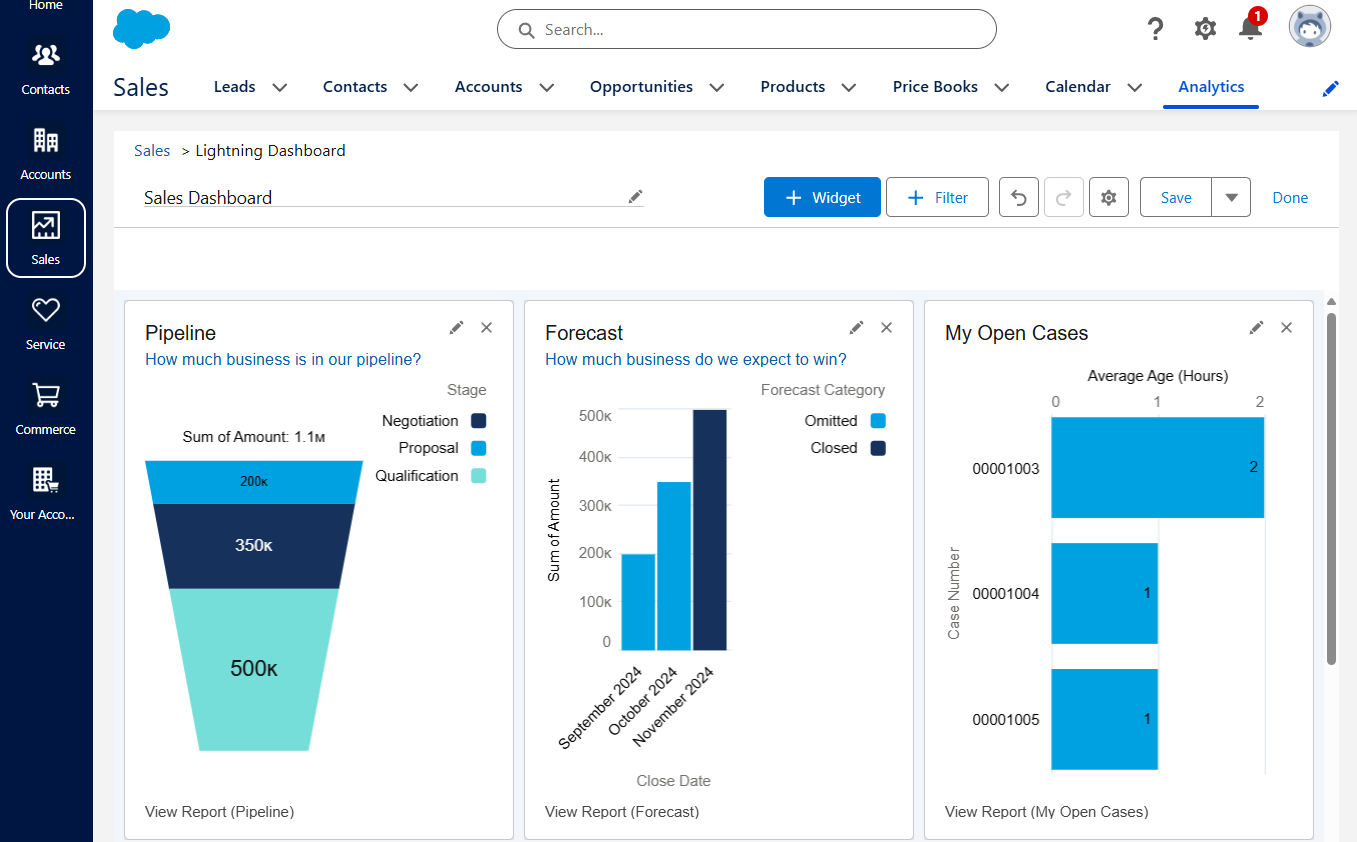
Image source:
Key features:
- Offers a highly customizable, drag-and-drop visual pipeline view (Kanban or list) that allows sales reps to track, sort, filter, and update opportunities in real time.
- Salesforce's built-in AI, Einstein, provides predictive lead scoring, opportunity insights (like next-best actions), and forecasting recommendations.
- Consolidates all customer data—from sales interactions and marketing engagement to service history—into a single record.
Customer reviews:
Best for:
Large enterprises and growing mid-market companies that require a powerful, highly customizable, and scalable platform that can handle complex, multi-stage sales processes.
Why it stands out:
Salesforce stands apart due to its unmatched ecosystem, scalability, and integration power. While it requires an investment, no other platform offers the same depth of customization for complex sales organizations or the breadth of the AppExchange marketplace, which features thousands of third-party sales, marketing, and business apps.
Pricing:
varies based on which product you need. For their CRM suite, prices start at $25 per user per month.
3. Freshsales: Seamless productivity and AI for modern sales teams
Freshsales, a part of the Freshworks platform, redefines the CRM experience by putting speed and simplicity first. Unlike legacy systems that are often complex, Freshsales is engineered for the fast-paced life of a sales rep. It offers a unified, intelligent hub where sales teams can manage their entire pipeline, communicate with prospects across channels, and leverage predictive AI without having to jump between different apps.
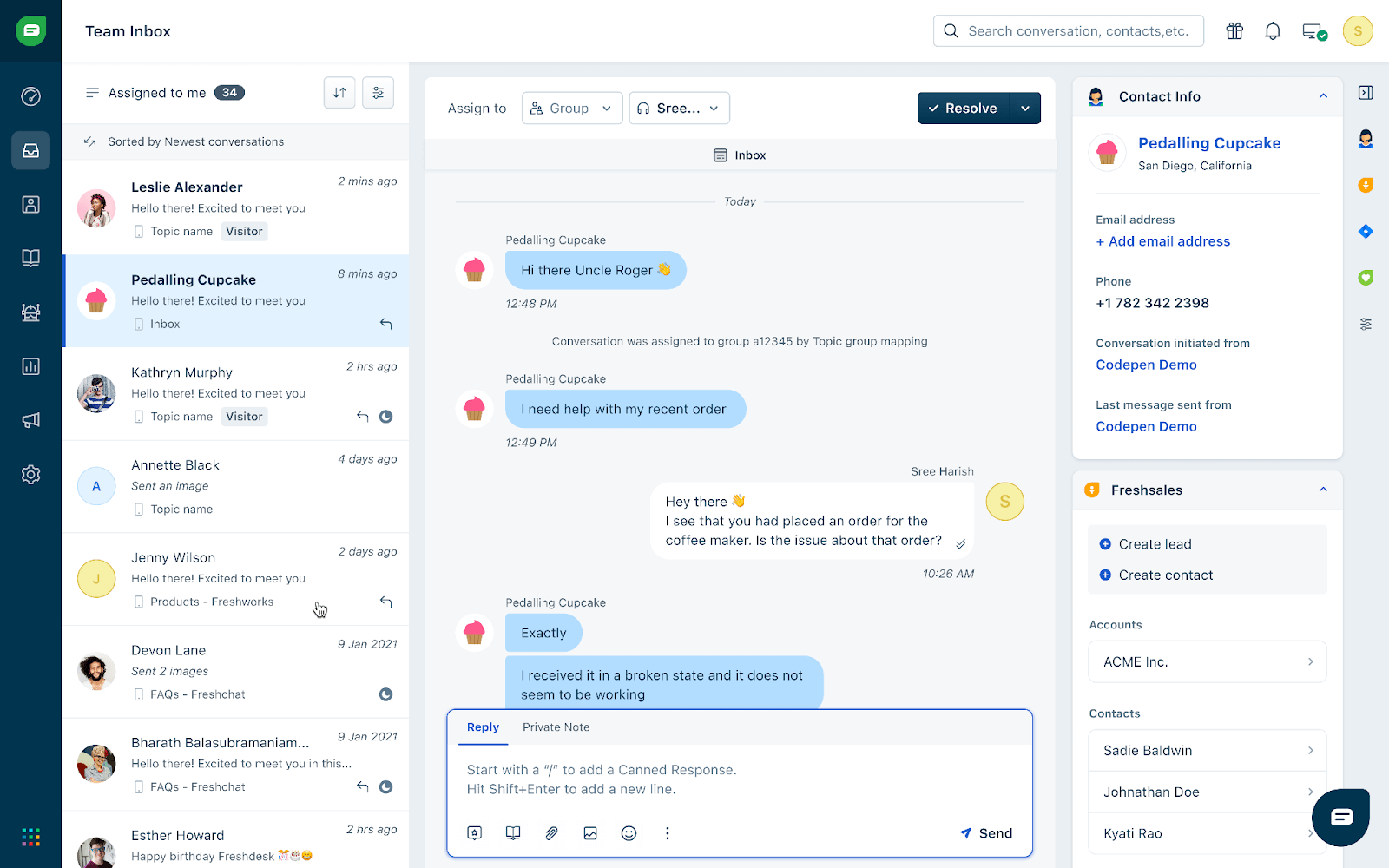
Image source: freshworks.com
Key features:
- All essential communication tools—including a built-in phone system, native email integration, and live chat—reside directly within the CRM.
- The platform's proprietary AI, Freddy, works silently in the background, automatically scoring leads based on engagement, identifying key moments in the buyer's journey, and alerting reps when a deal shows signs of stalling.
- Simple, point-and-click tools allow teams to set up multi-step sequences for follow-ups, reminders, and data entry. This takes the drudgery out of administrative tasks.
Customer reviews:
Best for:
Growth-oriented Startups and mid-market businesses that need a feature-rich, scalable CRM solution but want to avoid the high cost and complexity of traditional enterprise systems.
Why it stands out:
Freshsales’ major differentiating factor is its elegant usability and integration of communication. It delivers the powerful capabilities—like AI, automation, and advanced reporting—that businesses expect from a top-tier CRM, but without the steep learning curve or high implementation costs typically associated with enterprise solutions.
Pricing:
Freshsales pricing starts at $9 per user per month.
4. HubSpot CRM: A free and robust solution for growing businesses
HubSpot CRM has long been a favorite among sales teams, and for good reason. It combines powerful sales pipeline management tools with a user-friendly interface, making it ideal for small to medium-sized businesses. HubSpot’s free plan is particularly appealing, offering extensive features at no cost.
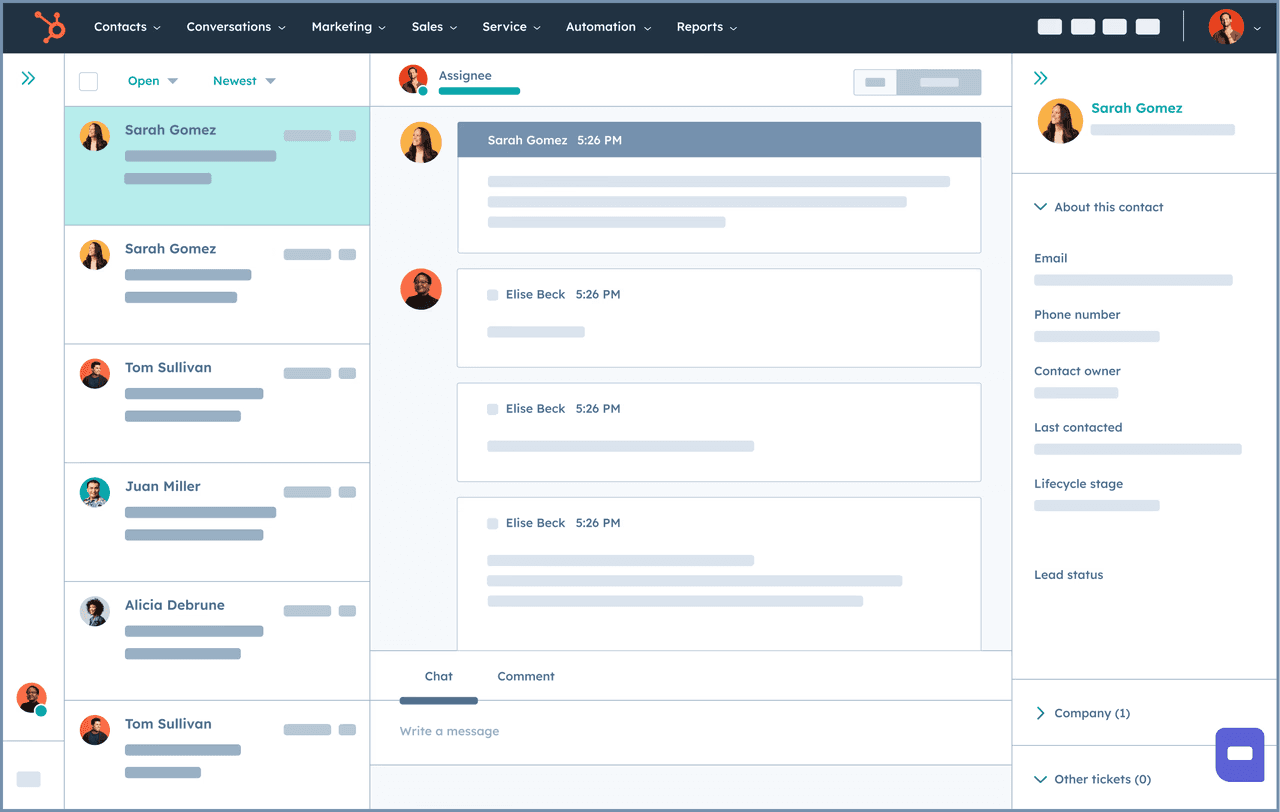
Image source: hubspot.com
Key features:
- Intuitive pipeline visualization with drag-and-drop functionality for easy deal management.
- Automated data entry and task reminders to reduce manual work.
- In-depth reporting and analytics to track sales performance and forecast revenue.
- Seamless integration with HubSpot's marketing and customer service tools for a unified platform.
Customer reviews:
Best for:
Small to medium-sized businesses that want a robust, free CRM with powerful sales pipeline capabilities.
Why it stands out:
HubSpot CRM’s free plan is unmatched in the industry, providing access to essential tools without hidden fees. Its intuitive interface ensures a quick learning curve, enabling teams to get started immediately.
Pricing:
HubSpot CRM includes a generous free plan. For a more complete experience, prices start at $15 per user per month.
5. Pipedrive: A sales-focused CRM for deal management
Pipedrive is specifically designed for sales teams that prioritize simplicity and efficiency. Its visual pipeline and sales-focused features make it an excellent choice for businesses that want to streamline deal management and forecasting.
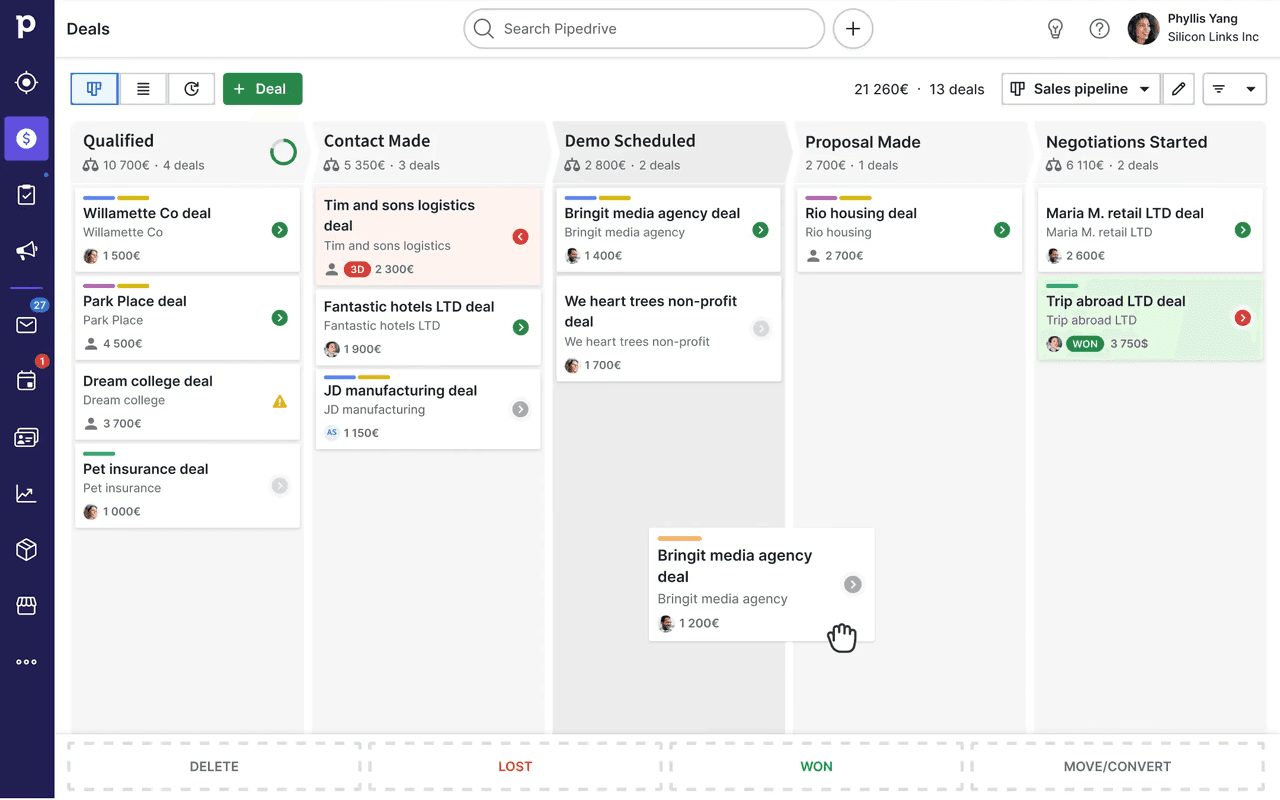
Image source: pipedrive.com
Key features:
- Customizable sales pipeline with a visual interface to track deals at every stage.
- AI-powered sales assistant that provides actionable insights to improve performance.
- Email tracking and automation to enhance communication with prospects.
- A mobile app for managing deals on the go, ensuring productivity anywhere.
Customer reviews:
Best for:
Sales teams focused on deal management, forecasting, and simplifying their sales processes.
Why it stands out:
Pipedrive’s ease of use and focus on sales make it a favorite among sales reps. Its AI-powered assistant and mobile capabilities help teams save time and close deals faster.
Pricing:
Pipedrive pricing starts at $14 per user per month.
6. Salesmate: Affordable sales automation for small businesses
Salesmate combines CRM functionality with sales automation to help small businesses work smarter. It’s a cost-effective solution for teams looking to streamline their sales pipeline and communication processes.
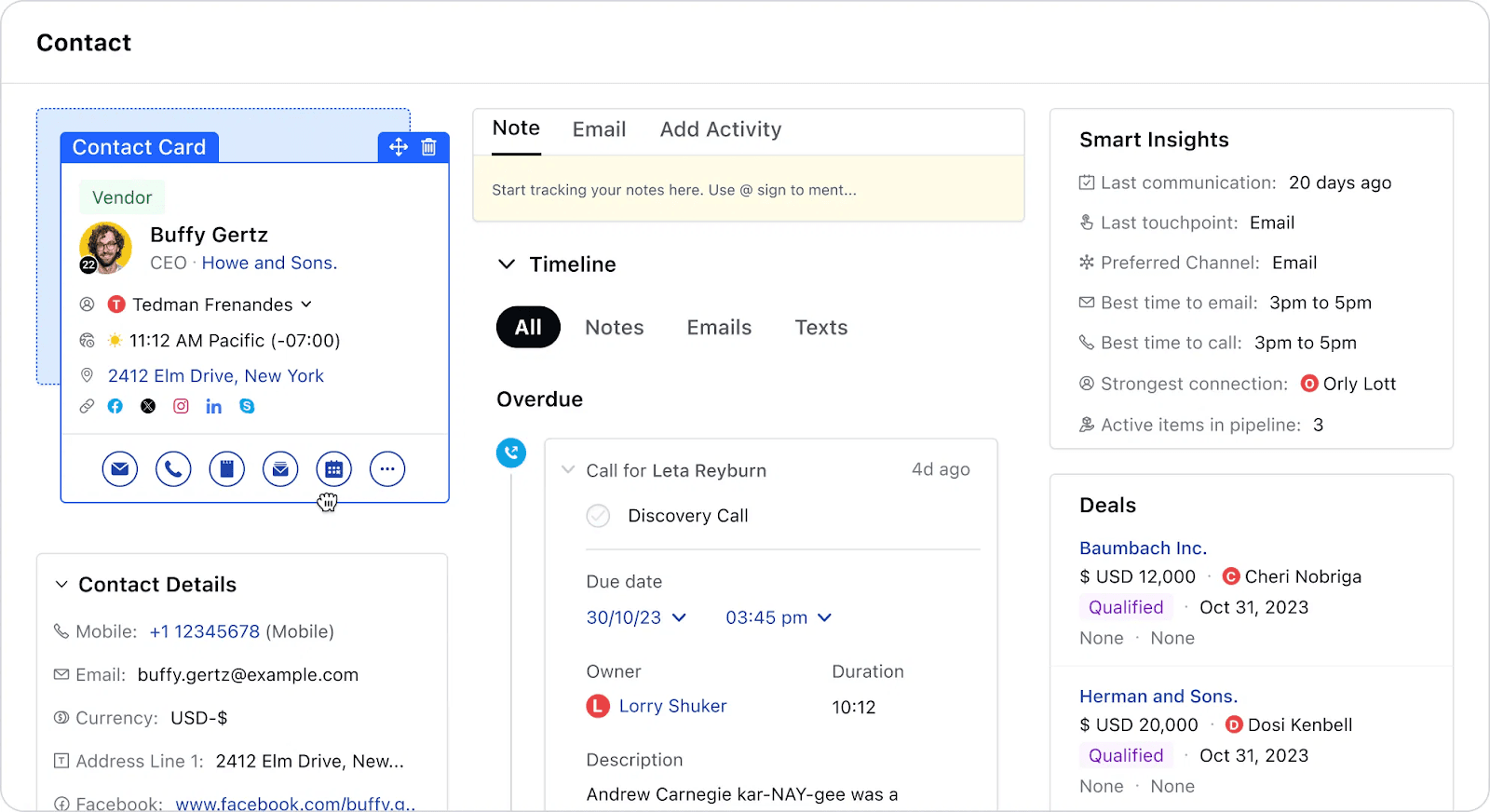
Image source: salesmate.io
Key features:
- Comprehensive sales automation to reduce repetitive tasks and improve efficiency.
- Built-in communication tools, including phone, email, and text messaging.
- Customizable pipeline views to match your team’s workflow.
- Advanced reporting and analytics to monitor team performance and sales trends.
Customer reviews:
Best for:
Small businesses that need an affordable, all-in-one solution for managing sales and communication.
Why it stands out:
Salesmate’s affordability and robust feature set make it a perfect choice for budget-conscious businesses. It’s especially useful for teams that want to manage multiple communication channels within one platform.
Pricing:
Salesmate pricing starts at $23 per user per month.
7. Scratchpad: Simplifying Salesforce workflows for sales teams
Scratchpad is a unique tool that enhances Salesforce workflows, making it ideal for teams already using Salesforce but looking for a more streamlined experience. It simplifies data entry and collaboration, helping sales teams save time.
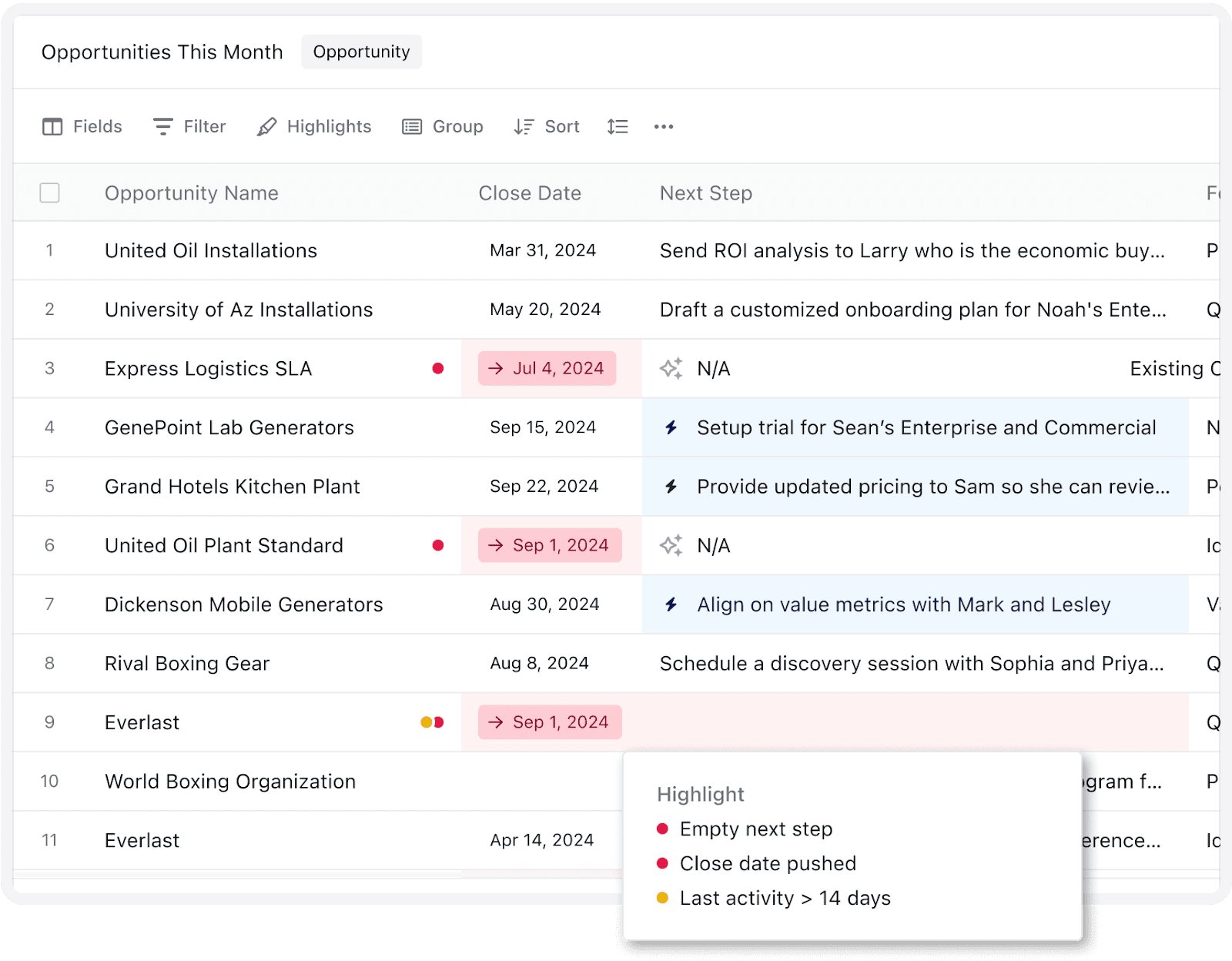
Image source: scratchpad.com
Key features:
- Real-time updates to Salesforce data without switching tabs or interfaces.
- A collaborative workspace for managing notes, tasks, and pipeline tracking.
- Integration with tools like Slack and Google Calendar for seamless workflow management.
Customer reviews:
Best for:
Sales teams that rely on Salesforce and want to improve their efficiency and productivity.
Why it stands out:
Scratchpad eliminates the complexity of Salesforce by offering a simplified, user-friendly interface. It’s a must-have for teams looking to enhance their Salesforce experience without sacrificing functionality.
Pricing:
Scratchpad pricing starts at $19 per user per month.
8. Cognism: Lead generation and sales intelligence redefined
Cognism is a powerhouse for lead generation and sales intelligence, making it an ideal choice for businesses focused on finding and nurturing high-quality leads. Its advanced tools help sales teams identify prospects and engage with them effectively.
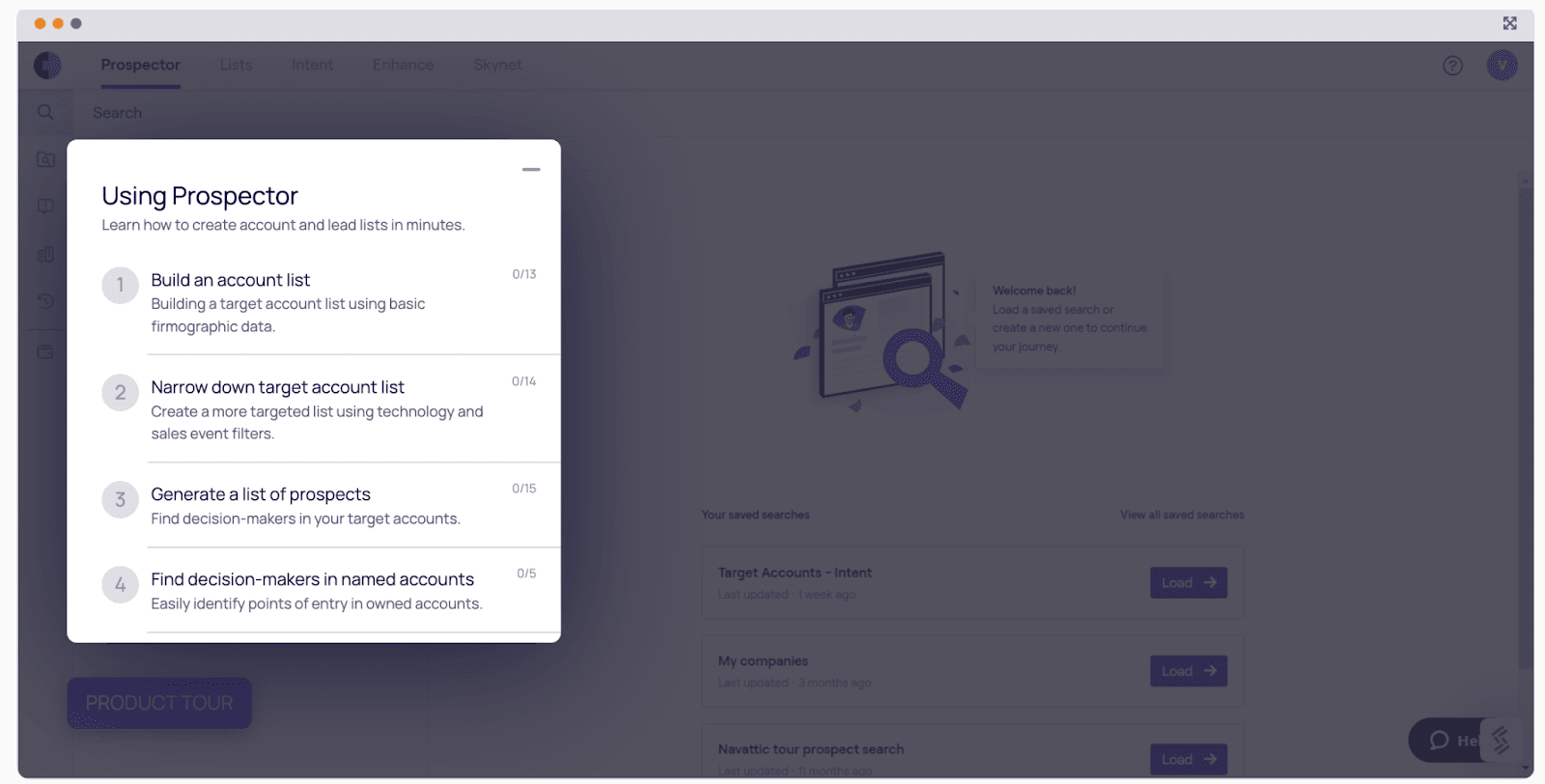
Image source: cognism.com
Key features:
- AI-powered lead generation tools that identify high-quality prospects.
- Access to a global database of business contacts for targeted outreach.
- Sales pipeline tracking with detailed analytics to measure performance.
Customer reviews:
Best for:
Businesses that prioritize lead generation and sales intelligence to fuel their sales pipeline.
Why it stands out:
Cognism’s focus on data and intelligence sets it apart from traditional sales pipeline tools. Its ability to uncover valuable leads makes it a critical asset for sales teams looking to grow their client base.
Pricing:
Cognism does not disclose how much it costs online. Users must contact their sales team for a custom quote.
9. Flowlu: The best free CRM for startups
Flowlu is a free CRM that offers robust sales pipeline management features, making it an excellent option for startups and small businesses. Its all-in-one approach combines CRM, project management, and financial tracking.
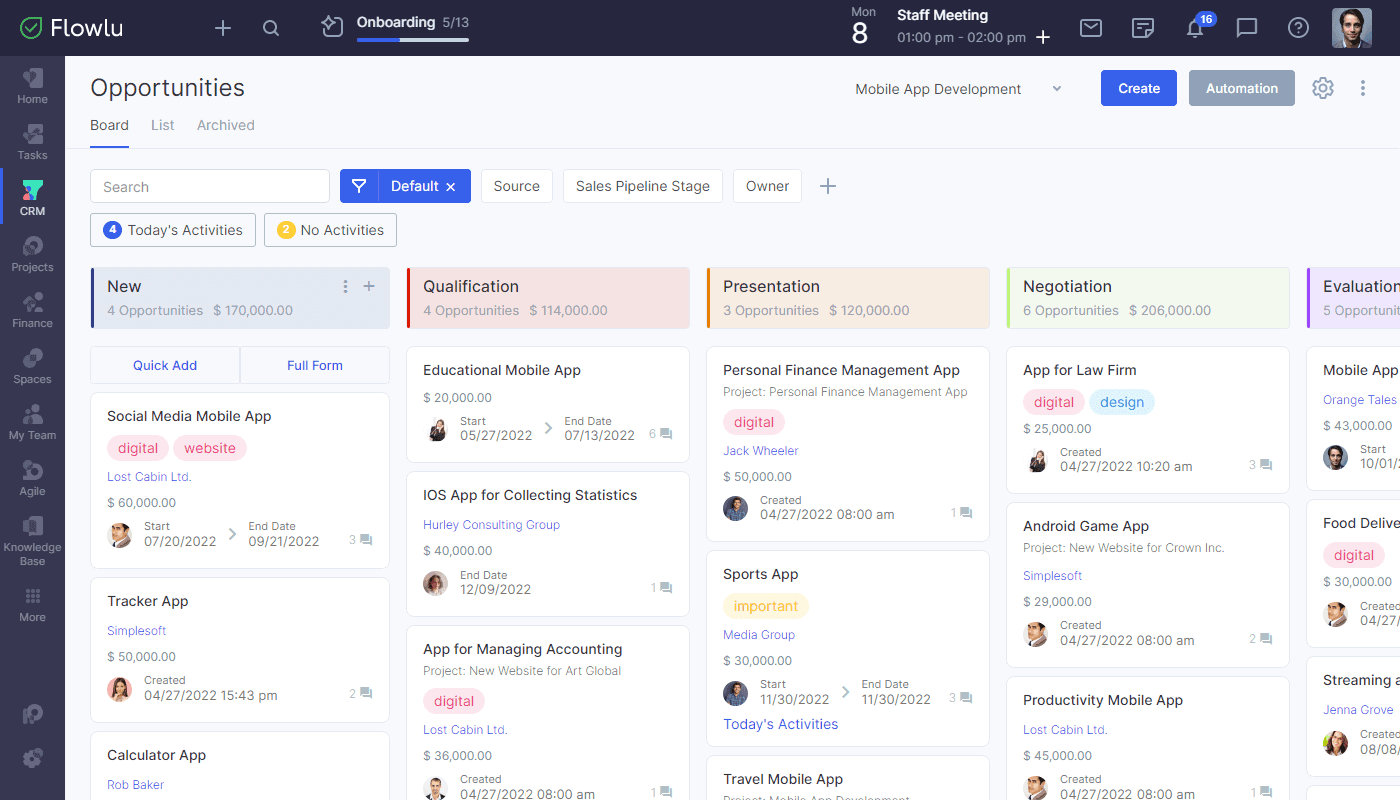
Image source: flowlu.com
Key features:
- Drag-and-drop visual pipeline for intuitive deal management.
- Task and project management tools to keep teams organized.
- Financial tracking for invoices, payments, and budgeting.
Customer reviews:
Best for:
Startups and small businesses that need a free, comprehensive CRM solution.
Why it stands out:
Flowlu’s free plan includes features that many competitors offer only in paid versions. Its ability to combine sales, project, and financial management makes it a versatile tool for growing businesses.
Pricing:
Flowlu offers a free plan. For a more complete experience, pricing starts at $9 per user per month.
10. SalesLoft: Advanced engagement tools for enterprise teams
SalesLoft is designed for enterprise-level sales teams that need advanced tools to engage with prospects and track pipeline performance. Its multi-channel approach ensures that sales reps can connect with leads wherever they are.
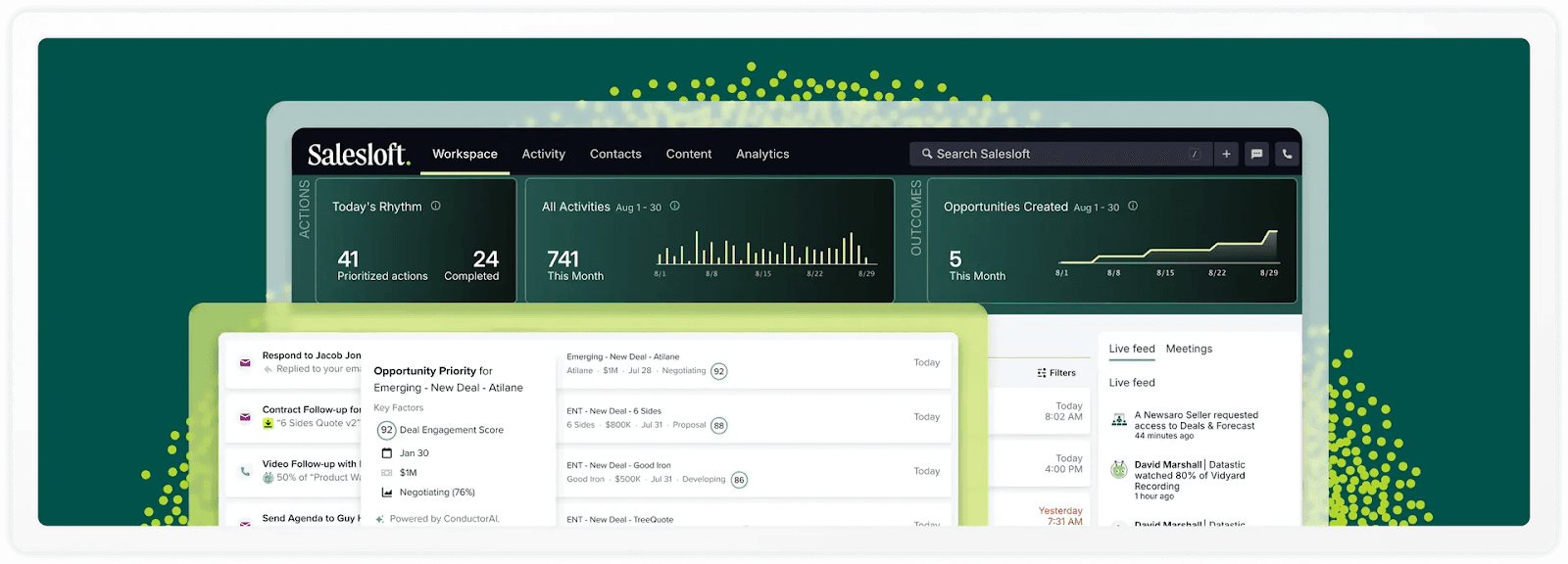
Image source: salesloft.com
Key features:
- Multi-channel communication tools, including email, phone, and social media.
- Advanced analytics to track engagement and pipeline performance.
- Integration with CRMs like Salesforce and HubSpot for seamless workflows.
Customer reviews:
Best for:
Enterprise-level sales teams that need powerful engagement tools and detailed analytics.
Why it stands out:
SalesLoft’s focus on engagement and relationship-building makes it a critical tool for scaling businesses. Its analytics capabilities provide deep insights into sales performance, helping teams optimize their strategies.
Pricing:
SalesLoft does not disclose how much it costs online. Users must contact their sales team for a custom quote.
Other sales pipeline tools
Beyond the top-ranked CRM platforms, there are several tools that provide strong sales pipeline management and unique features for different team needs. Here are four noteworthy options:
- Monday CRM: Offers a highly visual and customizable platform for managing sales pipelines. Its drag-and-drop interface and workflow automation make it easy for teams to track deals, assign tasks, and monitor performance.
- Keap: Designed for small businesses looking to combine CRM, marketing automation, and sales pipelines. It simplifies follow-ups, lead nurturing, and invoicing, helping teams close deals faster.
- Weflow: Focuses on pipeline visibility and forecasting, giving sales teams a clear picture of deal progress. Its intuitive dashboards and analytics tools help teams prioritize high-value opportunities and stay organized.
- Zendesk Sell: Integrates pipeline management with customer support features, ideal for teams that want sales and service in one platform. Its automation and reporting tools streamline communication and track every stage of the deal.
Looking for sales management tools? Visit .
How we select and assess software in our reviews
Our editorial team follows a transparent, repeatable methodology. Every review is based on using experience in realistic working scenarios, and we always stick to a set of consistent scoring criteria.
- Features and functionality
- Security, privacy, and compliance
- Integrations and compatibility
Our team reviews and assesses tools using consistent datasets and real-world scenarios, focusing on the things users care about most—such as sales pipelines, marketing automation, collaboration, and knowledge management. We confirm the official pricing and release notes of each product we review, and gather user feedback from across different channels. We do not accept paid placements and ensure our reviews are completely unbiased and fair. Additionally, as software and digital work environments constantly evolve, we review our content at least quarterly and update articles whenever products undergo significant changes. For more information about our review methodology, read the full rundown of.
Key features to look for in sales pipeline software
When choosing sales pipeline software, keep an eye out for these essential features:
- Pipeline visualization: Tools like Kanban boards and make it easy to track deals.
- Automation capabilities: Save time by automating repetitive tasks.
- Reporting and analytics: Gain insights into your sales performance.
- Integration options: Ensure compatibility with your existing tools.
- Customization: Tailor the software to fit your unique business needs.
- Scalability: Choose a tool that grows with your business.
How to choose the right sales pipeline software
Assess your sales team's needs
Identify the specific challenges your faces. Do you struggle with tracking deals through multiple stages, forecasting revenue, or managing follow-ups? Focus on pipeline software features that directly address these needs, such as visual sales pipelines, automated deal reminders, performance reporting, and workflow automation.
Check integration with existing sales tools
Your pipeline software should connect seamlessly with your , email platforms, lead generation tools, and . Proper integrations prevent duplicate data, streamline handoffs between team members, and create a single source of truth for all deal-related information.
Evaluate ease of use for sales workflows
A sales pipeline tool should make your team’s workflow smoother, not more complicated. Look for intuitive interfaces, drag-and-drop pipeline management, automated notifications, and minimal setup requirements, so your team can adopt it quickly and start closing deals faster.
Test with free plans or trials
Most sales pipeline software providers offer or trials. Take advantage of these to evaluate the software’s usability, features, and compatibility with your workflow before committing. Encourage your sales team to test the platform to gain a clearer sense of how it works for everyone.
Compare pricing
Before deciding, compare sales pipeline tools to determine which offers the best value. Do you really need to spend $100+ per user per month on an enterprise tool like Salesforce when you can manage your sales pipeline with Lark for just $6 per user per month?
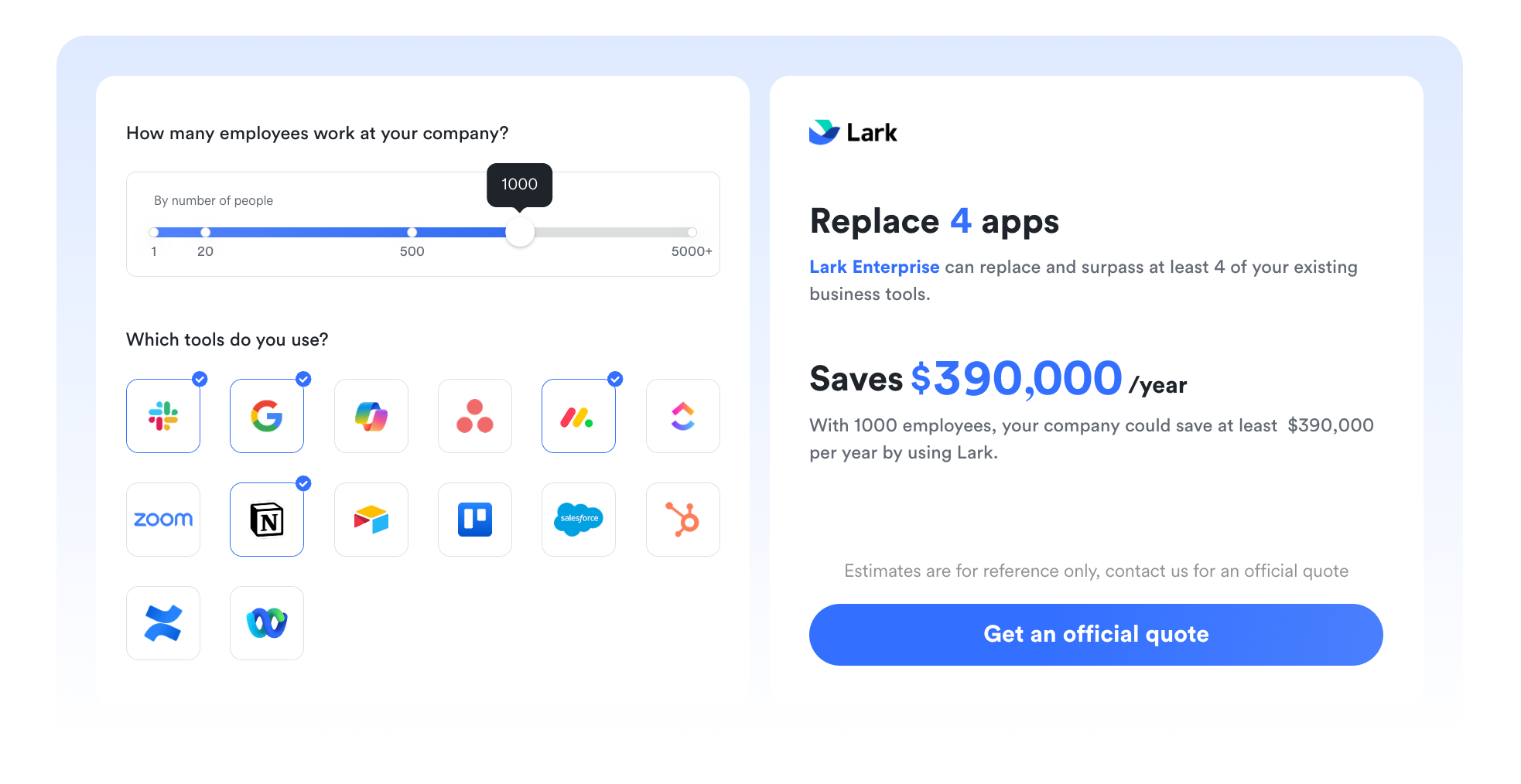
Many platforms offer pricing calculators to simplify comparisons. For example, Lark’s lets you enter the tools you currently use to see how much you could save by switching.
Tips for optimizing your sales pipeline management
Even the best software won’t deliver results without proper pipeline management. Here are some tips:
- Regularly update your pipeline: Keep deal statuses and stages accurate.
- Use automation wisely: Automate repetitive tasks but maintain a personal touch with clients.
- Analyze performance metrics: Track KPIs like deal velocity and closure rates.
- Foster team collaboration: Encourage open communication and shared accountability.
📖 Learn more:
Conclusion
Sales pipeline software simplifies your sales process, improves visibility, and drives revenue growth. Platforms like HubSpot, Salesforce, and Freshsales help teams track progress, identify opportunities, and close deals efficiently with automation and insights. Yet, we found in our testing that none offer the comprehensive functionality that Lark provides.
Lark's all-in-one platform enhances productivity and teamwork with contact management, integrated communication tools, real-time collaboration, and so much more. Sales teams can stay aligned, updated, and focused on closing deals faster.
So, why wait any longer? or to see how sales pipeline management is made easier.
FAQs
What is the best sales pipeline software for small businesses?
Lark, Salesforce, and Freshsales are excellent options for small businesses due to their affordability and ease of use.
Can I use free sales pipeline tools?
Yes, tools like Lark and HubSpot offer comprehensive free plans that are perfect for startups and small teams.
How does sales pipeline software improve forecasting?
By providing analytics and reporting features, sales pipeline tools help you make data-driven decisions and predict revenue accurately.
What's the difference between CRM software and sales pipeline software?
While CRM software focuses on managing customer relationships, sales pipeline software is specifically designed to track and manage deals through the sales process.
What is the best CRM system for sales?
The best CRM for sales depends on your team’s size, budget, and needs. Large enterprises often use Salesforce, while mid-sized teams and small businesses prefer Lark or HubSpot.
What is a CRM pipeline?
A CRM pipeline is a visual overview of all your deals, showing which stage each opportunity is in. It helps sales teams track progress, plan next steps, and forecast revenue more accurately.
What is the best open-source sales pipeline software?
Top open-source options include Odoo, SuiteCRM, and EspoCRM. These platforms give you more control and customization than commercial software but may require more setup and maintenance.
How to set up a sales pipeline in CRM software?
Start by mapping your sales process and defining clear stages from lead to close. Add fields and tasks for each stage, set up automated follow-ups, and create reports to track performance. Review and adjust the pipeline regularly to match real-world results.
Which tool is best for implementing a sales pipeline?
For teams focused on visual pipelines, Lark, HubSpot, and Pipedrive are easy to use and intuitive. For more complex processes with advanced reporting needs, Salesforce is often the preferred choice.
What is a sales pipeline tool?
A sales pipeline tool helps track deals as they move through the sales process. It provides reminders, visual deal boards, and reporting to help teams stay organized and improve forecasting. Tools like Lark help you track deals throughout the sales process with built in features and native AI.
What are the 7 stages of a sales pipeline?
A typical 7-stage sales pipeline includes: lead generation, lead nurturing, marketing-qualified lead, sales-accepted lead, sales-qualified lead, deal close (won or lost), and post-sale follow-up or onboarding. You can adjust these stages to fit your business model and CRM setup.
Related reading