














Kanban vs Scrum: Key Differences, Pros, and Use Cases Explained

Ryan Tanner
Product Marketing Specialist
Sep 18, 2026
Ryan Tanner
Sep 18, 2026

16 min read


Both Scrum and Kanban are popular agile methodologies designed to help teams deliver projects efficiently, but they follow very different approaches. Scrum focuses on short, structured sprints with clearly defined goals, while Kanban emphasizes continuous delivery and flexibility. Choosing between them depends on how your team plans, prioritizes, and executes work.
In this guide, we'll break down the key differences between Scrum and Kanban, explore their boards, pros and cons, and real-world use cases—and look at how modern platforms like Lark help teams apply agile methods more effectively.

What is Scrum?
Scrum is an agile framework that organizes work into short, repeatable cycles called sprints, typically lasting one to four weeks. Each sprint focuses on a defined set of tasks from the product backlog, with the goal of delivering a usable increment by the end of the cycle. This approach promotes continuous improvement, transparency, and collaboration among team members.
Key elements of Scrum:
- Sprints: Time-boxed work periods where teams focus on specific goals, ensuring consistent progress and predictable delivery.
- Scrum roles:
- Product Owner: Defines the vision, manages the backlog, and prioritizes tasks.
- Scrum Master: Facilitates the process, removes roadblocks, and ensures Scrum principles are followed.
- Development Team: Executes sprint tasks and delivers working results at the end of each iteration.
- Scrum board: A visual tool that tracks tasks through stages like To Do, In Progress, and Done, helping teams stay aligned and identify blockers quickly.
Best suited for: Teams that prefer structure, frequent feedback loops, and iterative delivery, such as software development, product design, or complex project environments where goals evolve over time.
What is Kanban?
Kanban is an agile workflow method that focuses on visualizing tasks, improving efficiency, and promoting continuous delivery. Instead of working in fixed sprints, Kanban enables teams to move tasks fluidly from one stage to another as capacity allows. This approach helps teams reduce bottlenecks, balance workloads, and maintain a steady pace of progress without rigid time constraints.
Key elements of Kanban:
- Workflow visualization: Tasks are displayed on a Kanban board as cards that move across columns such as To Do, In Progress, Review, and Done, providing real-time visibility into project status.
- Work in Progress (WIP) limits: Teams set limits on how many tasks can be active at once, preventing overload and encouraging focus on completing work before starting new items.
- Continuous delivery: Work is released as soon as it's ready, creating a smooth, ongoing flow rather than waiting for sprint cycles.
Best suited for: Teams that need flexibility, quick adaptation to change, and a continuous workflow, such as marketing, operations, customer support, or maintenance teams managing ongoing tasks.
Scrum vs Kanban: Key differences
While Scrum and Kanban share agile principles like transparency and continuous improvement, they differ in how work is planned, tracked, and delivered. Scrum follows a structured approach centered on sprints and defined roles, while Kanban offers continuous flow and flexibility without fixed iterations. Understanding these distinctions helps teams choose the method that best fits their workflow and goals.
In short, Scrum works best for teams that value structure and iterative delivery, while Kanban fits those needing flexibility and steady output. Both approaches can help teams achieve agility, especially when supported by modern project management tools like Lark, which enables sprint-based and flow-based work management in one platform.
Pros and cons of Scrum vs Kanban
Both Scrum and Kanban help teams improve productivity and transparency, but they offer different strengths and trade-offs. Scrum brings structure and predictability, while Kanban emphasizes flexibility and flow. Understanding these advantages and limitations helps teams choose the method that best aligns with their goals and pace.
In Lark, teams can combine the strengths of both frameworks, using Scrum boards for planned sprints and Kanban views for ongoing work. This hybrid approach helps balance structure with adaptability, giving teams full control and real-time visibility across every project.
Lark: Smart platform combining Scrum and Kanban
Lark brings together everything agile teams need, task boards, communication, documentation, and automation, in one connected workspace. Whether your team runs structured sprints under Scrum or continuous workflows under Kanban, Lark makes planning, tracking, and collaboration effortless and transparent.
Lark Base
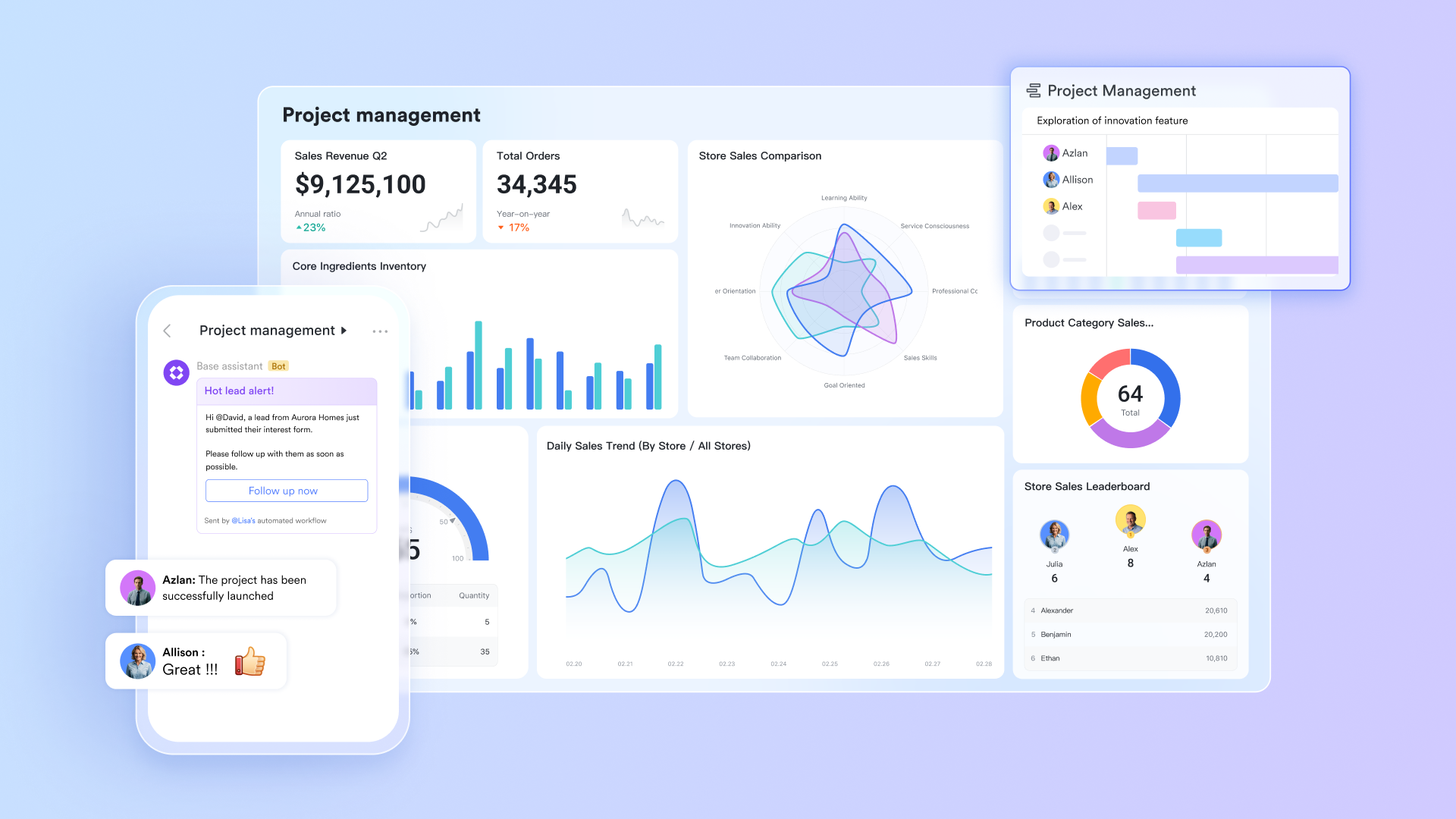
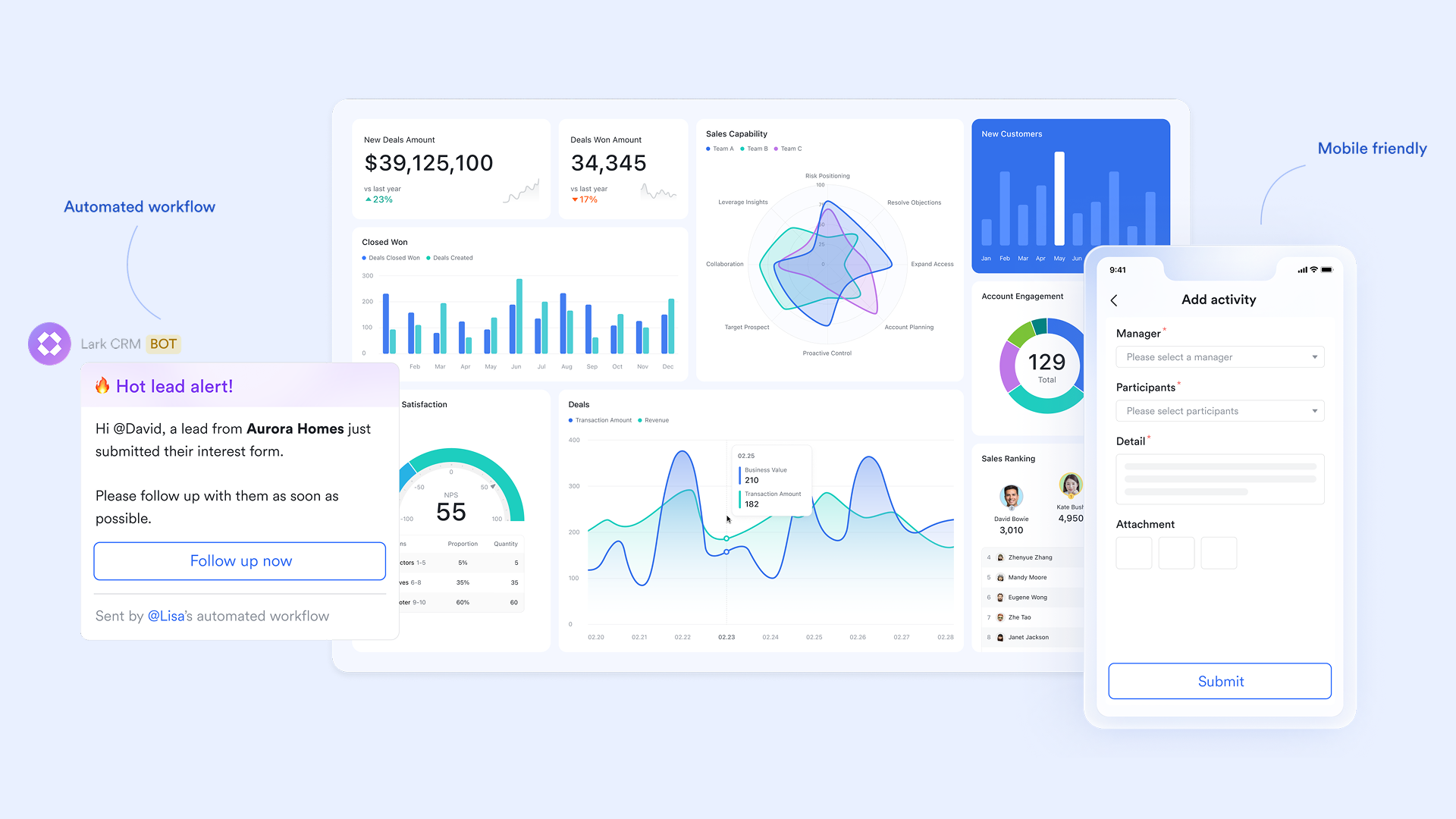
Teams can build customizable Scrum and Kanban boards in Lark Base using simple drag-and-drop functionality. Tasks move smoothly across columns, helping teams visualize progress and maintain full workflow clarity. With Dashboards, administrators can monitor sprint velocity, throughput, and cycle times in real time to measure team performance. By Automation, managers can set up automatic reminders for sprint deadlines, task handoffs, or WIP limits to keep projects on track without manual follow-ups.
Lark Tasks
For teams that prefer a lighter, intuitive task management view, Lark Tasks provides a Kanban-style interface directly integrated with daily workflows. Users can create, assign, and track tasks visually, switching between list and board views instantly. With built-in notifications, due date tracking, and cross-project visibility, Lark Tasks simplifies coordination and ensures every team member stays aligned, whether in a sprint or a continuous delivery cycle.
Lark Messenger & Lark Meetings
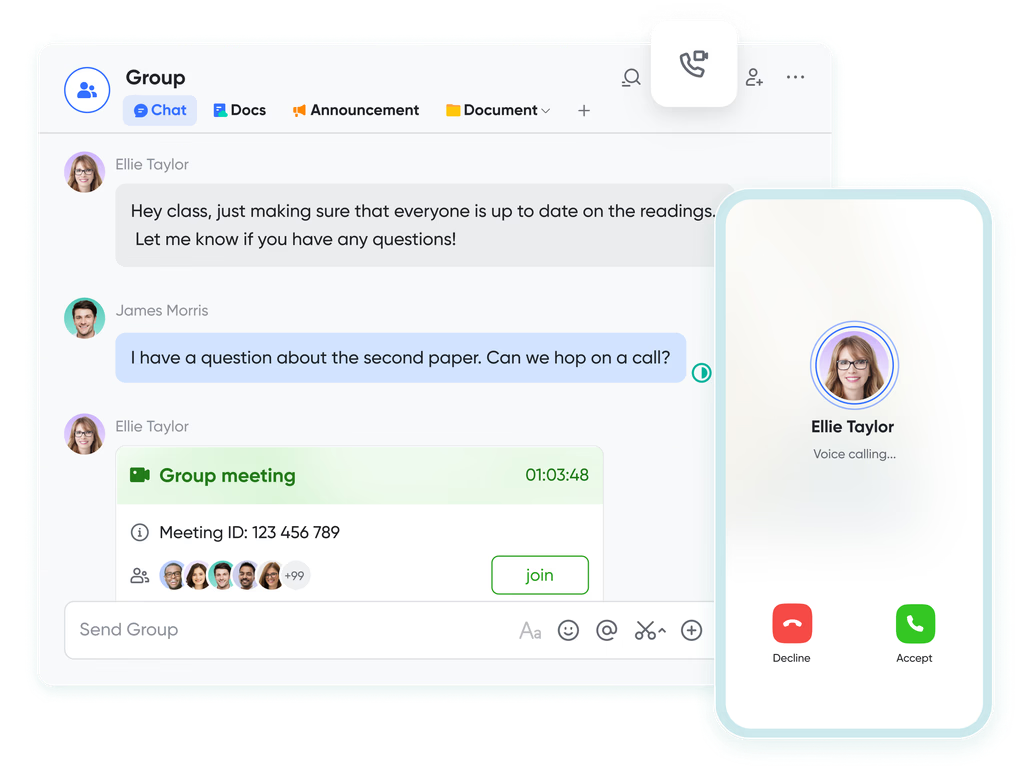
Daily stand-ups, sprint retrospectives, and planning sessions can all happen right inside Lark Messenger or Lark Meetings, connected directly to the relevant tasks or boards. Teams can discuss updates, make decisions in real time, and instantly convert action points into new tasks, keeping communication and execution in one seamless flow.
Lark Docs & Lark Wiki
With Lark Docs and Lark Wiki, teams can store product backlogs, sprint playbooks, and definitions of done in shared spaces. Documents stay version-controlled and accessible, making it easy for new members to get context and for teams to maintain a single source of truth for every agile process.
By centralizing agile operations in one workspace, Lark eliminates tool-switching and brings teams closer, from planning and collaboration to delivery and retrospectives. It's the smarter, faster way to manage both Scrum and Kanban workflows in a truly connected environment.
- Starter plan: Free forever plan that includes 11 powerful tools for up to 20 users. It also comes with 100GB of storage, 1000 automation runs, AI translations, and more.
- Pro plan: $12/user/month (billed annually) for up to 500 users. It includes everything in Starter plus group calling for up to 500 attendees, 15TB of storage, 50,000 automation runs, and more.
- Enterprise plan: Contact sales for custom pricing. Supports unlimited users and includes even more automation runs and advanced security, compliance, and management features.
Use cases: When to choose Scrum or Kanban
Choosing between Scrum and Kanban depends on your team's workflow, project type, and goals. While both follow agile principles, each serves a distinct purpose depending on how your team operates and delivers results.
Scrum is best suited for software development, product iterations, and large cross-functional teams that rely on structure and predictable delivery. The framework's sprint-based approach encourages consistent progress, clear milestones, and measurable outcomes, ideal for complex projects that require coordination and regular stakeholder feedback.
Kanban works well for support teams, marketing departments, operations, and smaller projects where flexibility and speed are priorities. Its continuous flow helps teams respond to changing tasks, manage workloads visually, and maintain steady delivery without fixed sprint boundaries.
For teams that want the best of both worlds, a hybrid model like Scrumban combines Scrum's discipline with Kanban's adaptability. It allows teams to plan in sprints while keeping a visual, flow-based approach for ongoing tasks.
In Lark, teams can easily switch between Scrum and Kanban views, or blend them into a unified workflow. Whether you're managing product releases or daily operations, Lark Base gives you the flexibility to plan, track, and deliver work seamlessly from one connected workspace.
Conclusion
Both Scrum and Kanban empower agile teams to deliver value faster, but in different ways. Scrum brings focus and structure through sprints, while Kanban offers flexibility and continuous improvement. The best choice depends on your team's workflow, goals, and pace of change.
With Lark, you don't have to choose one over the other. Teams can plan structured sprints using Scrum boards or manage flexible workflows through Kanban views, all within one connected workspace. From task tracking to communication and automation, Lark helps teams stay aligned, efficient, and agile at every stage of their projects.
FAQs
Scrum vs Kanban: Which is faster?
Speed depends on the nature of the work. Scrum delivers results in focused sprints, while Kanban maintains continuous progress with faster adaptability. In Lark, teams can use dashboards to monitor both sprint velocity and cycle time, ensuring steady improvement no matter the approach.
Can a team switch from Scrum to Kanban?
Yes. Many teams begin with Scrum for structure and later adopt Kanban for flexibility as processes mature. With Lark, switching between the two is seamless, teams can simply adjust workflows in Lark Base or toggle views between sprint-based and continuous task boards.
What is a Scrum board vs Kanban board?
A Scrum board tracks tasks during a sprint cycle, resetting after each iteration. A Kanban board visualizes ongoing work in a continuous flow. In Lark, teams can create both board types in one workspace, offering real-time visibility and unified progress tracking.
Is Kanban part of Agile or separate?
Kanban is a core part of the Agile methodology. It focuses on visualizing work and optimizing flow, complementing other Agile frameworks like Scrum. Lark supports both methods, helping teams apply Agile principles with clear visibility, automation, and connected collaboration.
Related reading
Table of contents
Start using Lark today

Manage all your work in one place
Boost team efficiency by 10x
Save up to 70% on software costs
Table of contents
Start using Lark today
Manage all your work in one place
Boost team efficiency by 10x
Save up to 70% on software costs
Keep reading







2026 Lark Technologies Pte. Ltd.
Headquartered in Singapore with offices worldwide.






Explore: