














Best Travel Agency CRM Software: Boost Bookings & Client Care

Ryan Tanner
Product Marketing Specialist
Sep 18, 2026
Ryan Tanner
Sep 18, 2026

14 min read


Travel agencies juggle bookings, itineraries, group trips, supplier coordination, and client payments daily. When these processes rely on manual spreadsheets or scattered data, it becomes difficult to deliver the personalized service travelers expect. That’s where a travel agency CRM makes the difference. By centralizing client details, automating follow-ups, and simplifying itinerary sharing, CRM software for the travel industry helps agencies run smoothly and improve client satisfaction.
In this guide, we’ll compare the best CRM software for travel agents and agencies, highlighting features, pros and cons, and pricing. From established tools like Salesforce, Zoho, and HubSpot to modern platforms like Lark, we'll help you choose the right solution for your agency.
- Lark CRM: The all-in-one CRM & collaboration hub
- TravelWorks CRM: Booking & accounting management for agencies
- Freshsales CRM: Travel agent-friendly automation
- Salesforce Travel CRM: Enterprise-grade customization
- Zoho Travel CRM: Affordable tools for agencies
- Kapture Travel CRM: Itinerary tracking & support
- Pipedrive CRM: Visual pipelines for travel sales
- HubSpot CRM: Free starter for travel agencies
- Travel MidOffice CRM: Back-office management
- OTRAMS Travel CRM: All-in-one travel booking software

What is a travel agency CRM?
A CRM for travel agents is a customer relationship management platform built to handle industry-specific needs like bookings, itineraries, supplier coordination, and post-travel engagement. Unlike generic CRM systems, a travel agent CRM software centralizes trip details alongside client preferences, payment histories, and communications. This ensures agencies can manage the full client journey—from inquiry to post-trip follow-up—within one connected system.
Challenges travel agencies face in managing clients
Running a travel agency means handling multiple moving parts at once—clients, suppliers, payments, and itineraries. Without the right tools, these processes can become overwhelming and lead to missed opportunities.
High inquiry volume: Travel agencies often juggle a constant stream of phone calls, walk-ins, and online requests. Without a centralized system, it’s easy for leads to slip through the cracks, resulting in lost sales and dissatisfied customers.
Itinerary complexity: Managing multi-leg trips, group tours, and last-minute itinerary changes requires precision. Relying on spreadsheets or makes it harder to keep everyone updated, increasing the risk of mistakes.
Payment & invoicing: Tracking deposits, outstanding balances, and refunds across different customers and trips can quickly become chaotic. A lack of proper tools often leads to errors, delays, or revenue leakage.
Customer expectations: Modern travelers expect instant responses and tailored recommendations. Without a CRM for travel agents, it becomes difficult to personalize offers and deliver a consistent client experience.
Supplier coordination: Agencies must constantly interact with hotels, airlines, and tour operators. Poor coordination leads to miscommunication, delays, and errors in reservations or confirmations.
Post-travel engagement: Following up after trips is essential for feedback, reviews, and repeat bookings. Many agencies neglect this stage, missing opportunities to build loyalty and long-term client relationships.
Why travel agencies need a CRM
A CRM for travel agency operations helps streamline complex workflows and ensures agents can focus on delivering great client experiences. Instead of relying on manual processes, travel CRM software brings everything into one connected system.
- Centralized client & booking data: All client profiles, itineraries, and booking details are stored in one place, reducing the risk of lost information and making it easy for agents to access complete histories instantly.
- Automated communication (reminders, confirmations): CRMs send automatic reminders for payments, confirmations for bookings, and notifications for itinerary changes, ensuring clients are always updated without manual follow-ups.
- Easy pipeline tracking from inquiry to booking: From the first inquiry to final payment, agents can track progress in real time. This visibility helps agencies avoid missed opportunities and improve conversion rates.
- Dashboards to measure agent performance: Performance dashboards highlight how many inquiries are being converted, which agents are performing best, and where improvements are needed, helping agencies optimize resources.
- Better client experience through personalization: By storing preferences and past trip data, CRMs allow agencies to recommend tailored packages, upsell relevant services, and build stronger client relationships. This level of personalization is what distinguishes premium travel providers like TravelEssence, which focus on crafting highly tailored travel experiences based on individual client preferences.
Compare travel CRM software features in one view
10 best CRM software for travel agents & agencies
1. Lark: The all-in-one CRM for travel agencies
Lark is more than a traditional travel agency CRM—it’s a complete collaboration and customer management hub. Designed for agencies managing clients, bookings, and suppliers, Lark centralizes everything in one platform. With Lark Base, you can build booking databases and automate travel workflows; with Messenger and Meetings, teams coordinate seamlessly with clients and suppliers. Its mobile-friendly design and built-in AI tools make it especially powerful for agencies that want to scale without adding complexity.
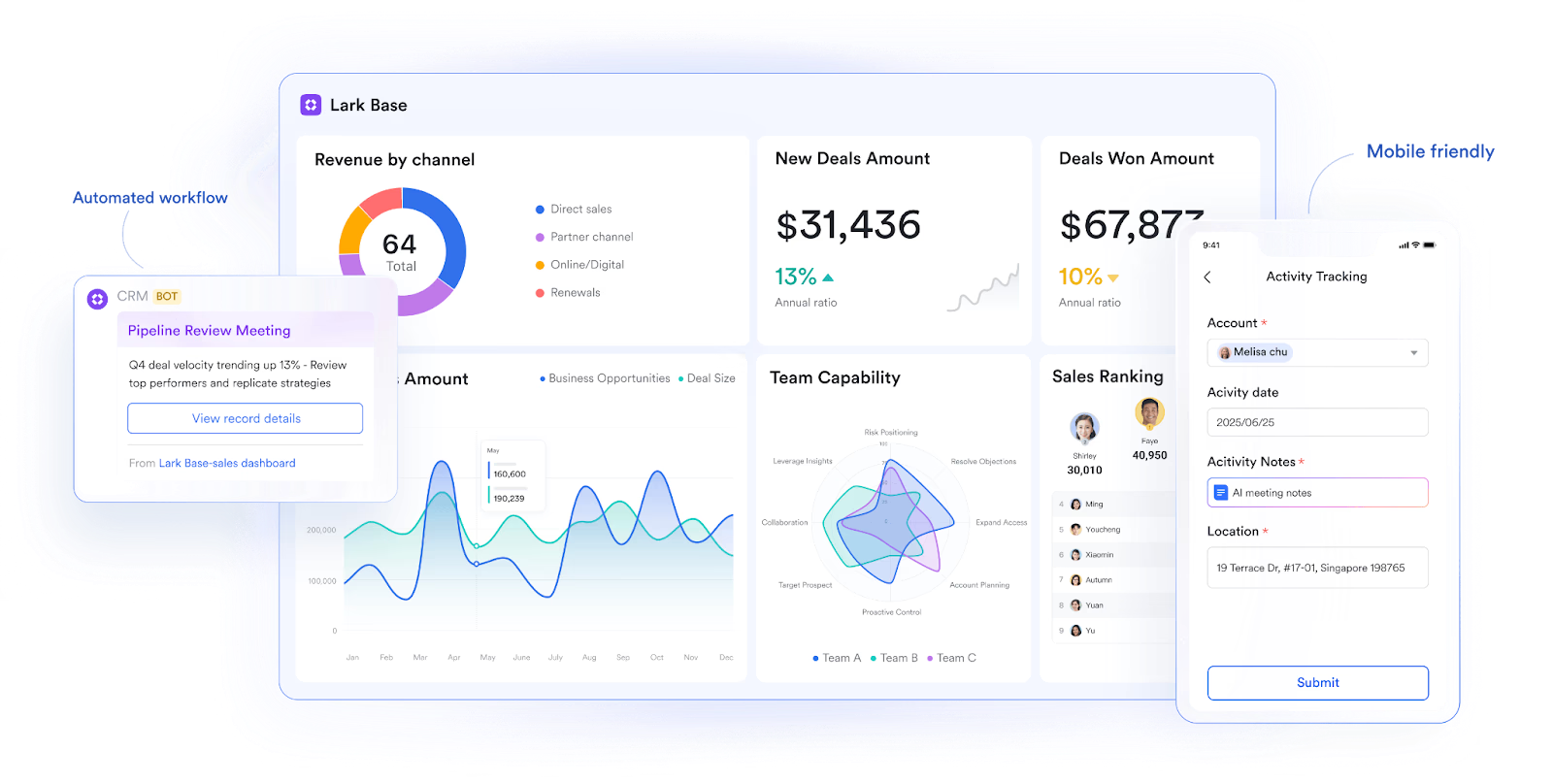
Customizable database to manage clients & bookings:
Lark Base lets travel agencies build tailored databases to track client profiles, trips, payments, and itineraries in one place. Agents can organize leads, inquiries, and confirmed bookings without needing complex IT support. With flexible fields and templates, your team can create custom workflows that scale as your agency grows.
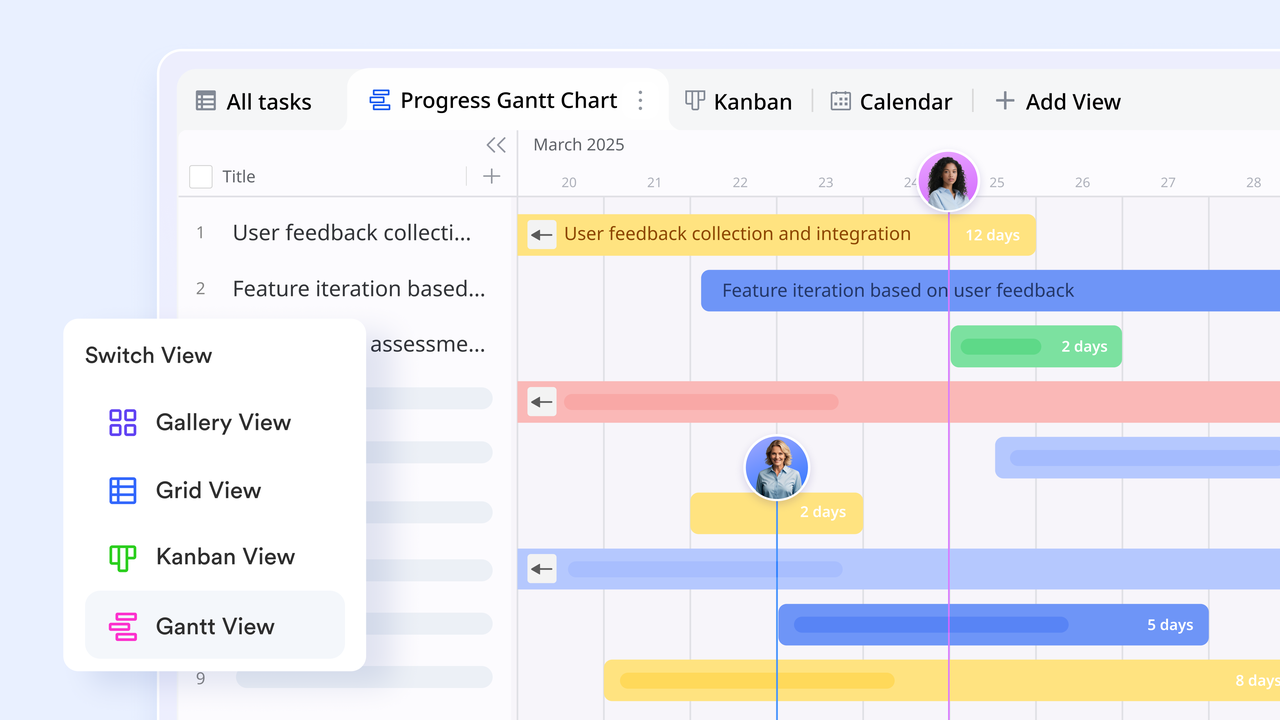
Booking pipeline visualization:
Using Base, agencies can view the full booking journey in real time, from first inquiry to post-travel feedback. Kanban, table, and timeline views make it easy to manage group tours, deposits, cancellations, and confirmations. Pre-built templates, like “Travel CRM & Bookings,” accelerate setup with fields for passenger info, trip type, and payment milestones.
Automated workflows for travel operations:
Lark Base supports automated reminders for deposit deadlines, visa submissions, or supplier confirmations. You can auto-assign inquiries to the right travel agents based on trip type, location, or service level. Notifications keep everyone updated on booking changes, reducing errors and ensuring smooth communication with clients and suppliers.
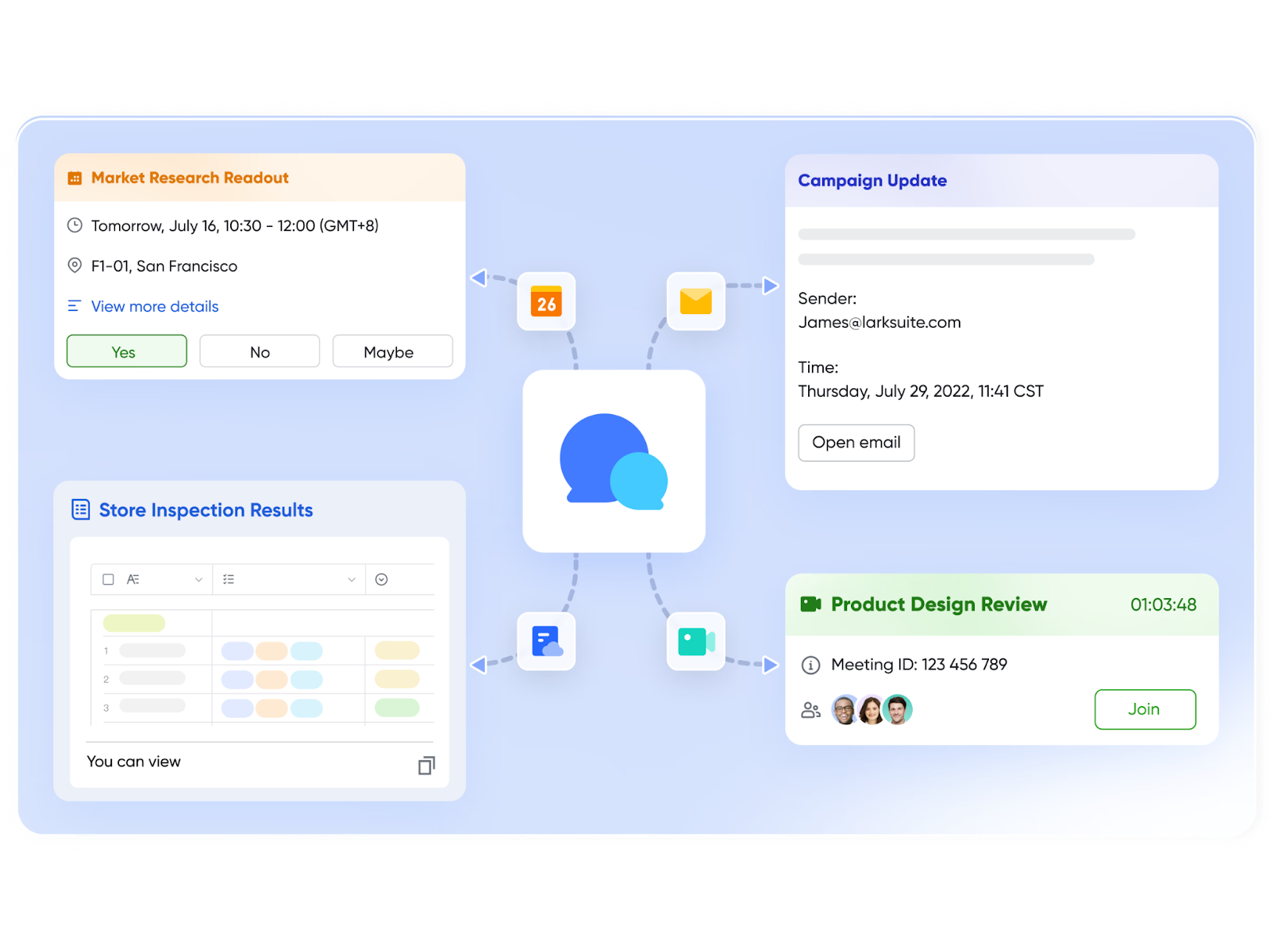
Unified communication for client & supplier coordination:
With Lark Messenger and Lark Meetings, teams can quickly sync with airlines, hotels, and tour operators while keeping the client looped in. Group chats, video calls, and shared notes enable sales and operations teams to collaborate in real time, ensuring itineraries and adjustments are handled seamlessly.
Mobile-friendly design for on-the-go agents:
Frontline travel agents can log client details, update bookings, or approve payments directly from their mobile devices. The mobile-friendly interface ensures your team can work effectively, even while traveling or meeting clients in person.
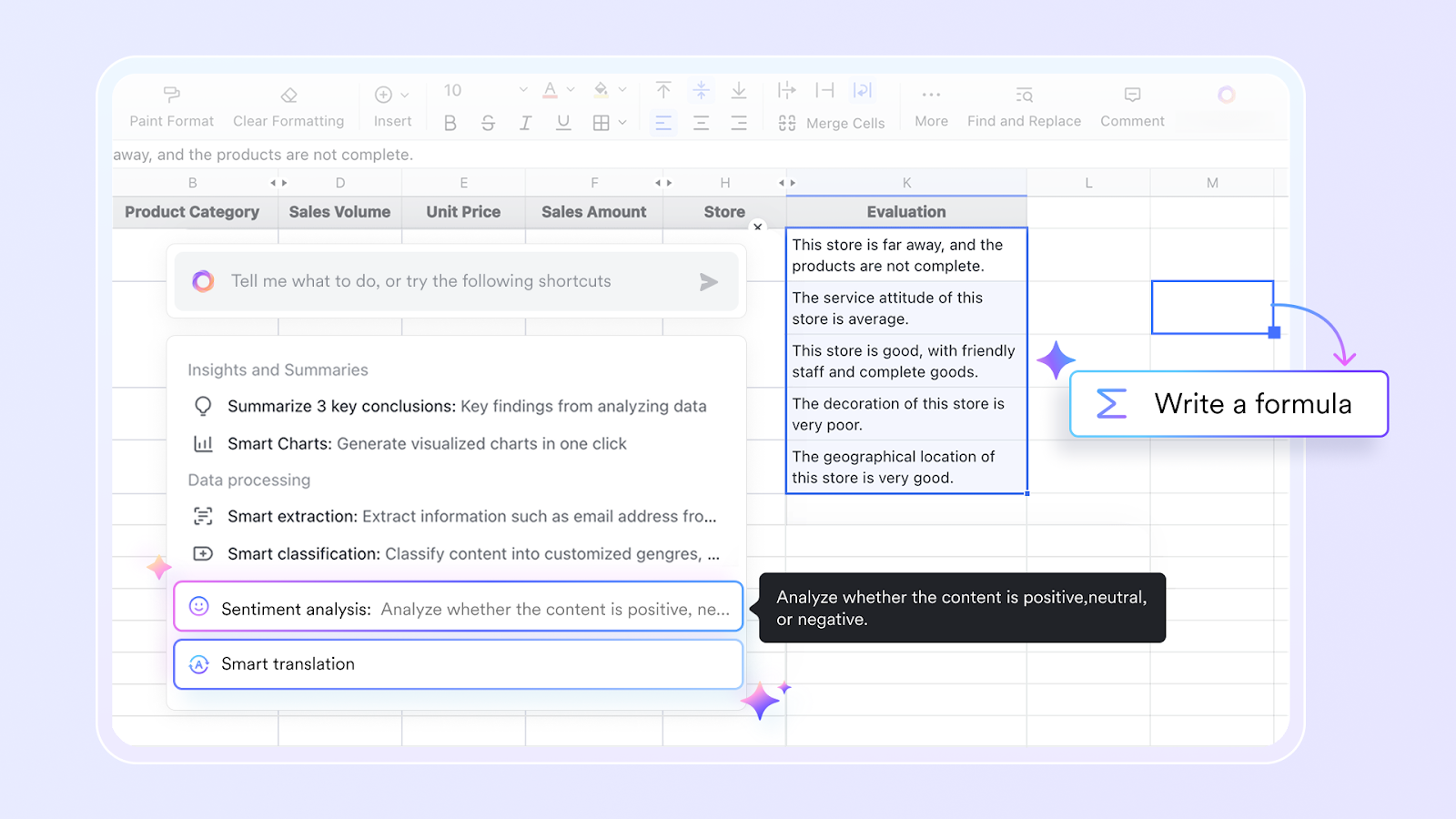
AI assistance for smarter travel insights:
Lark’s AI tools help agencies analyze booking patterns, client preferences, and supplier performance. AI Classify can tag and organize client data automatically, while AI-powered formulas in Sheets simplify revenue forecasts and margin analysis. This ensures agencies can make data-driven decisions and deliver personalized travel recommendations.
Pros:
- Combines CRM, communication, and workflows in one platform
- Highly customizable with travel-ready templates
- Free plan available, with affordable paid tiers
- Strong mobile support for on-the-go agents
Cons:
- Learning curve for advanced automations
- Starter plan: Free forever plan that includes 11 powerful tools for up to 20 users. It also comes with 100GB of storage, 1000 automation runs, AI translations, and more.
- Pro plan: $12/user/month (billed annually) for up to 500 users. It includes everything in Starter plus group calling for up to 500 attendees, 15TB of storage, 50,000 automation runs, and more.
- Enterprise plan: Contact sales for custom pricing. Supports unlimited users and includes even more automation runs and advanced security, compliance, and management features.
2. TravelWorksSolution CRM: Booking management for agencies
TravelWorks is a robust travel agency CRM software built to support reservation, accounting, and CRM needs all in one cloud-based package. Geared toward agencies of varying sizes, it handles bookings, supplier operations, and customer communications from web or mobile. Because it integrates with major GDS systems (Sabre, Amadeus, Galileo, etc.), TravelWorks helps travel agents centralize operations and reduce manual work.
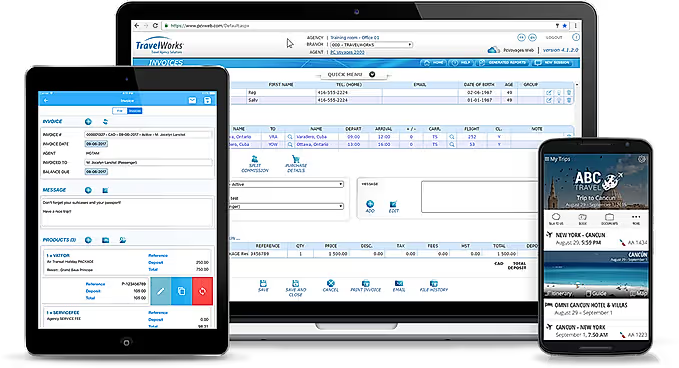
Image source: travelworkssolution.com
Features:
- Reservation & booking system with GDS/OTA integration
- Accounting and invoicing with receivables/payables tracking
- Automated reminders for payments, confirmations, and deadlines
- Supplier and inventory management for tours/packages
- Dashboards and financial reporting for agent and branch performance
Pros:
- Strong GDS and supplier integrations
- Comprehensive booking + accounting in one platform
- Mobile access and client-facing “Trip N’ Touch” app
- Robust reporting and dashboards
Cons:
- No free plan or trial
- Steeper learning curve for smaller agencies
Pricing: Starts at $133 per user/year (no free version).
3. Freshsales CRM: Travel agent-friendly automation
Freshsales is a popular tool in the travel CRM software landscape, built to help travel agents efficiently manage leads, bookings, and customer interactions with smart automation and AI assistance. It supports capturing inquiries from multiple channels, automating follow-ups, and prioritizing high-value leads — crucial for travel agencies dealing with seasonal surges. Its multichannel communication, built-in phone & chat tools, and travel-industry customizations let agents respond fast and stay organized.
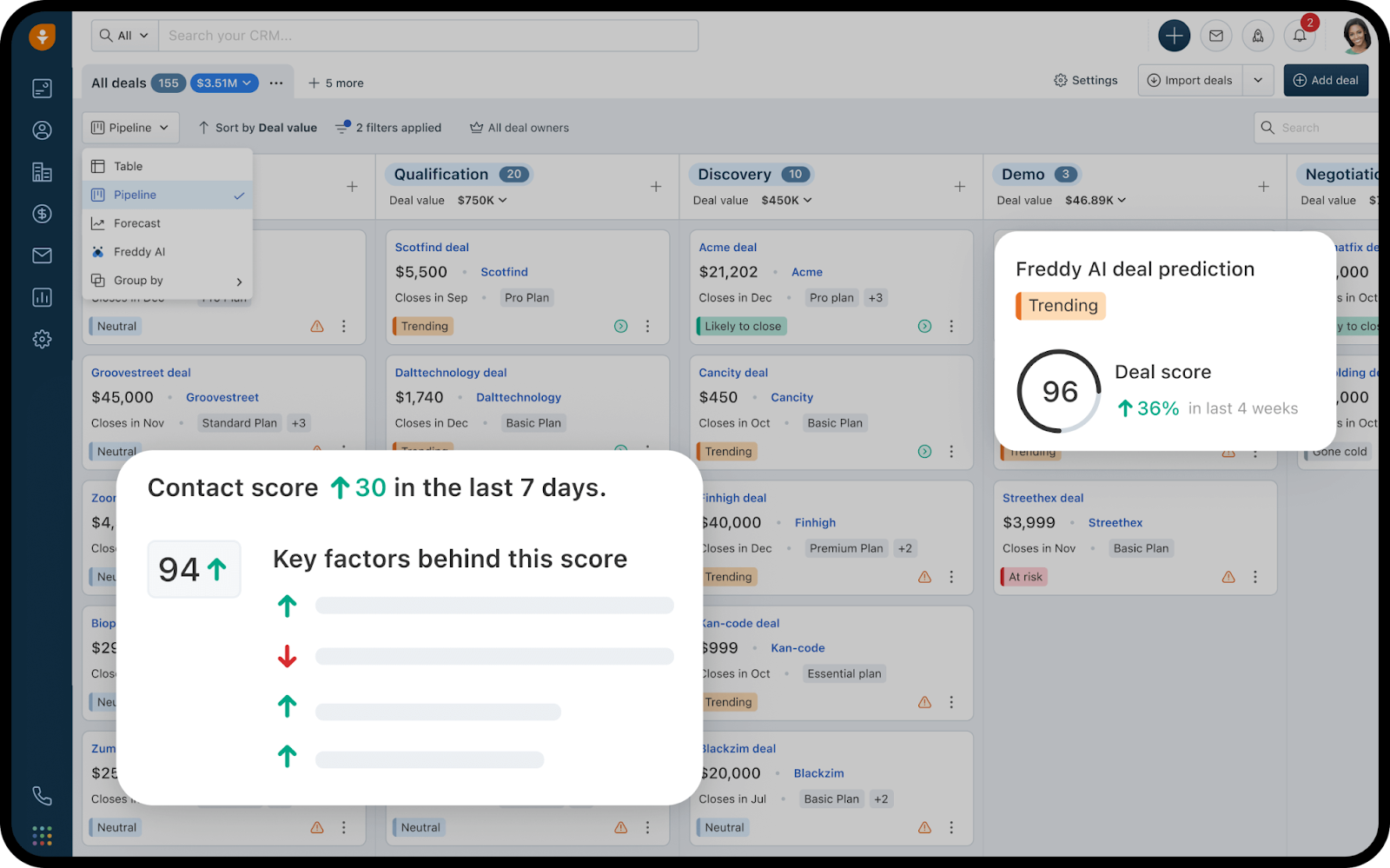
Image source:freshworks.com
Features:
- Freddy AI lead scoring & predictive insights for prioritizing leads
- Multichannel engagement: built-in phone, email, chat, and SMS
- Workflow automation for reminders, follow-ups, and lead routing
- Visual sales pipelines to track inquiries through to bookings
- Reporting dashboards for conversions, revenue, and agent performance
Pros:
- User-friendly interface and simple onboarding
- AI-powered features that help boost productivity
- Affordable entry-level pricing for SMEs
- Strong multichannel communication options
Cons:
- Advanced automation and analytics require higher-tier plans
- Free plan is limited for growing agencies
Pricing:
- Free plan (up to 3 users)
- Growth: $9/user/month (annual billing)
- Pro: $39/user/month
- Enterprise: $59/user/month
4. Salesforce travel CRM: Enterprise-grade customization
Salesforce is a top crm cloud solution built for large travel agencies and operators who need deep customization, complex workflows, and global scale. Its travel, hospitality & transportation modules provide 360-degree traveler profiles, itinerary mapping, and AI-powered insights to help agencies stay ahead. With its wide integration ecosystem (including Agentforce for travel/hospitality), Salesforce enables agencies to personalize traveler journeys and automate many manual tasks. While powerful, its extensive configuration and cost make it more suited to agencies with established technical capacity.
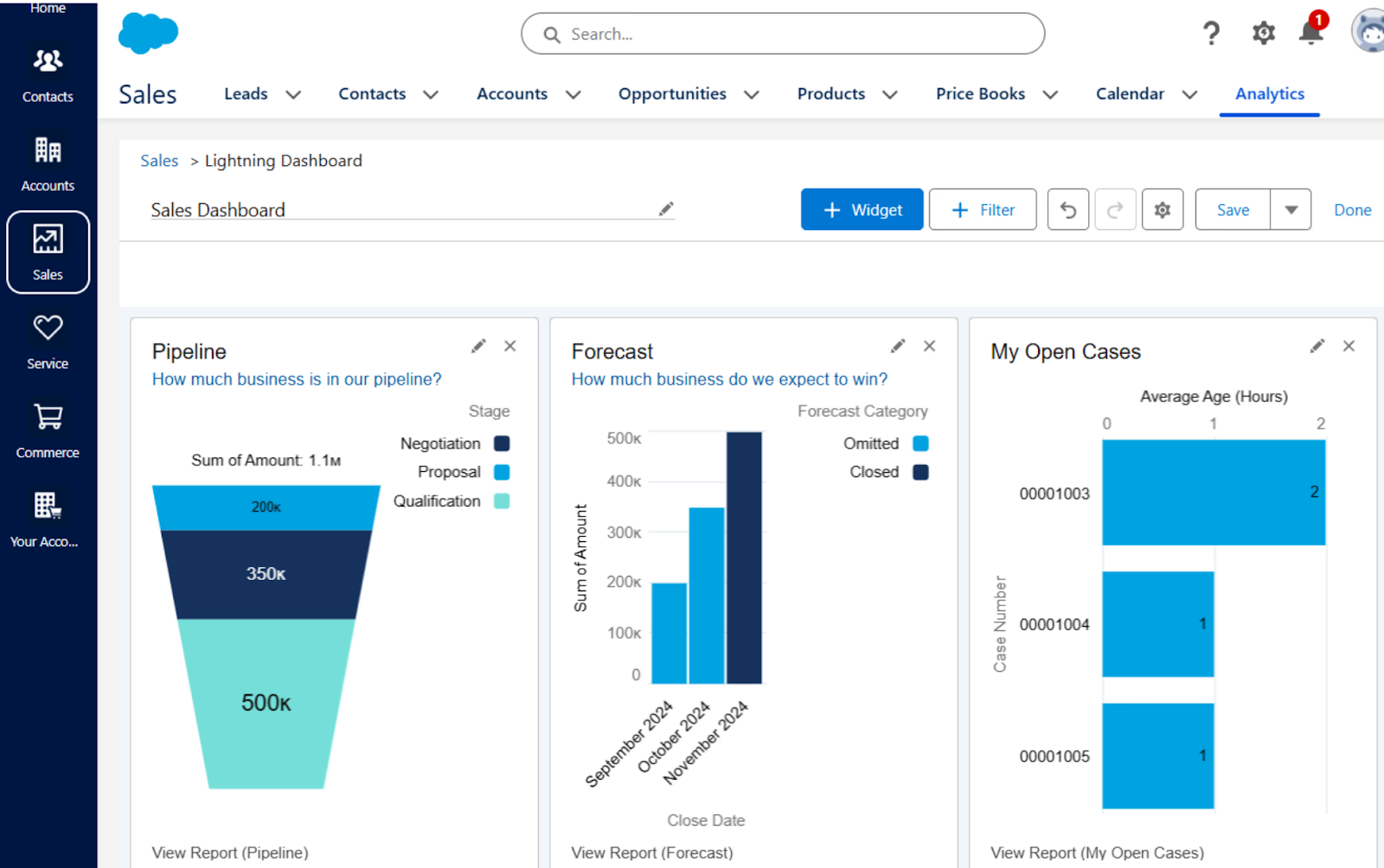
Image source:salesforce.com
Features:
- Agentforce tools for personalized traveler experiences
- Custom modules for bookings, itineraries, and supplier data
- Advanced analytics and AI forecasting for bookings and sales
- Automated journey mapping for confirmations and cancellations
- Mobile access and unified dashboards for global teams
Pros:
- Highly customizable for complex travel operations
- Powerful AI and predictive analytics
- Large integration ecosystem via AppExchange
- Scales well for enterprise-level agencies
Cons:
- Expensive compared to smaller travel CRMs
- Complex setup; may require dedicated IT or consultants
Pricing:
- Starter Suite: $25/user/month
- Pro Suite: $100/user/month
- Enterprise: $165/user/month
- Unlimited: $330/user/month
5. Zoho travel CRM: Affordable tools for agencies
Zoho is one of the most popular cloud based CRM systems, known for delivering powerful features at affordable pricing. For travel agencies, it offers booking tracking, payment integration, and customizable workflows to handle inquiries, reservations, and client communications. Its AI assistant “Zia” provides predictive insights, helping agents prioritize leads and detect anomalies. With a free plan for small teams and scalable tiers, Zoho is a strong option for agencies looking to balance cost and functionality.
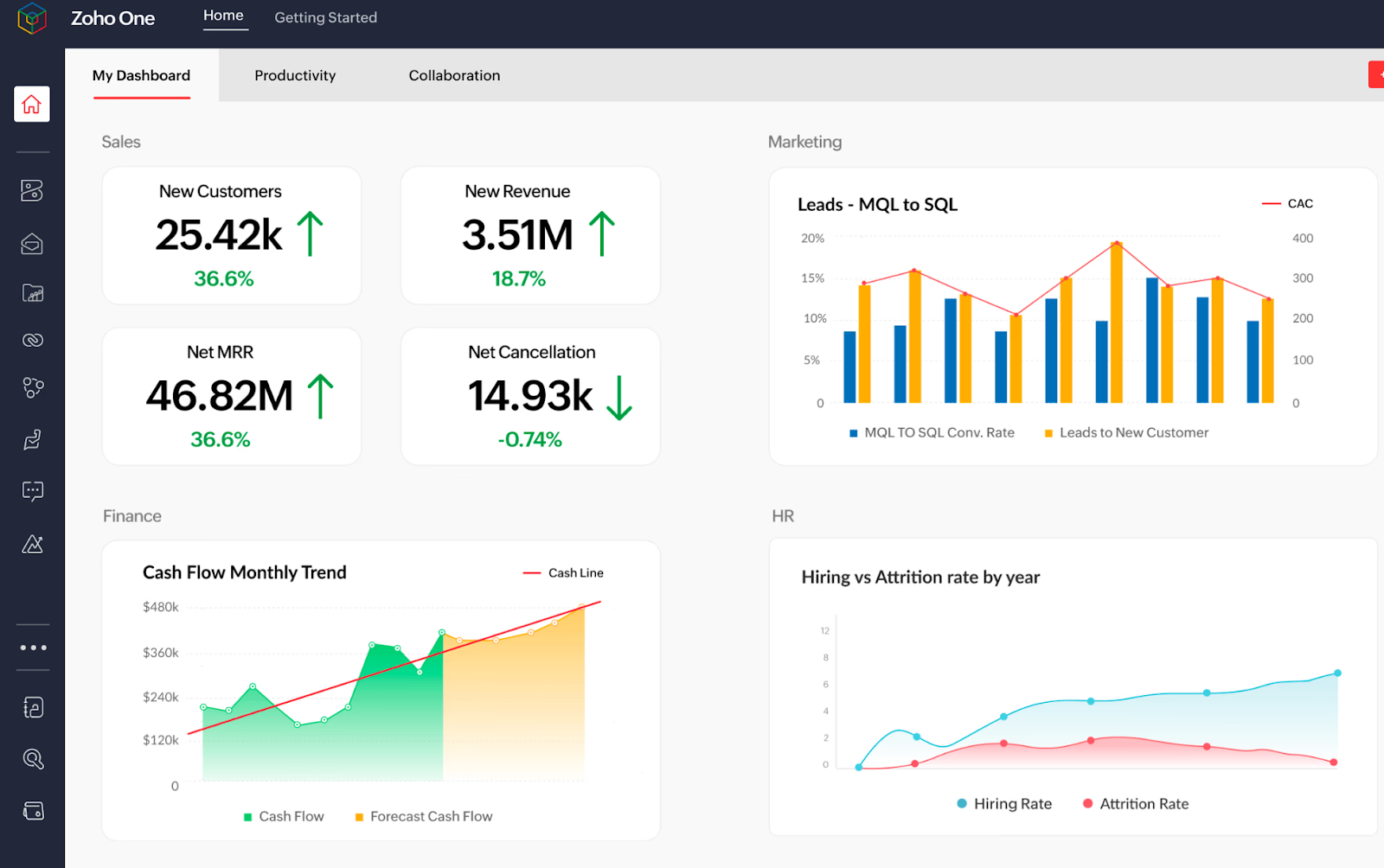
Image source:zoho.com
Features:
- Lead and contact management with customizable fields and pipelines
- Workflow automation for reminders, lead routing, and notifications
- AI assistant “Zia” for predictive insights and lead scoring
- Multichannel support: email, chat, calendar, social media
- Customizable reporting dashboards and analytics
Pros:
- Affordable entry-level pricing with robust features
- Strong customization options for travel workflows
- Wide integration ecosystem via APIs and add-ons
- Free plan available for up to 3 users
Cons:
- Can feel overwhelming for beginners due to feature richness
- Advanced functions like AI and portals require higher-tier plans
Pricing:
- Free plan: up to 3 users
- Standard: $14/user/month (annual)
- Professional: $23/user/month
- Enterprise: $40/user/month
- Ultimate: $52/user/month
6. Kapture travel CRM: Itinerary tracking & support
Kapture is a feature-rich travel agency CRM built for agencies that need strong client support, automated ticketing, and omnichannel communication. It excels in handling traveler queries, cancellations, itinerary updates, and supplier coordination through unified workflows. With onboard AI tools and live analytics, it helps agents respond faster and with more context. Ideal for travel companies looking to scale operations without losing customer care quality.
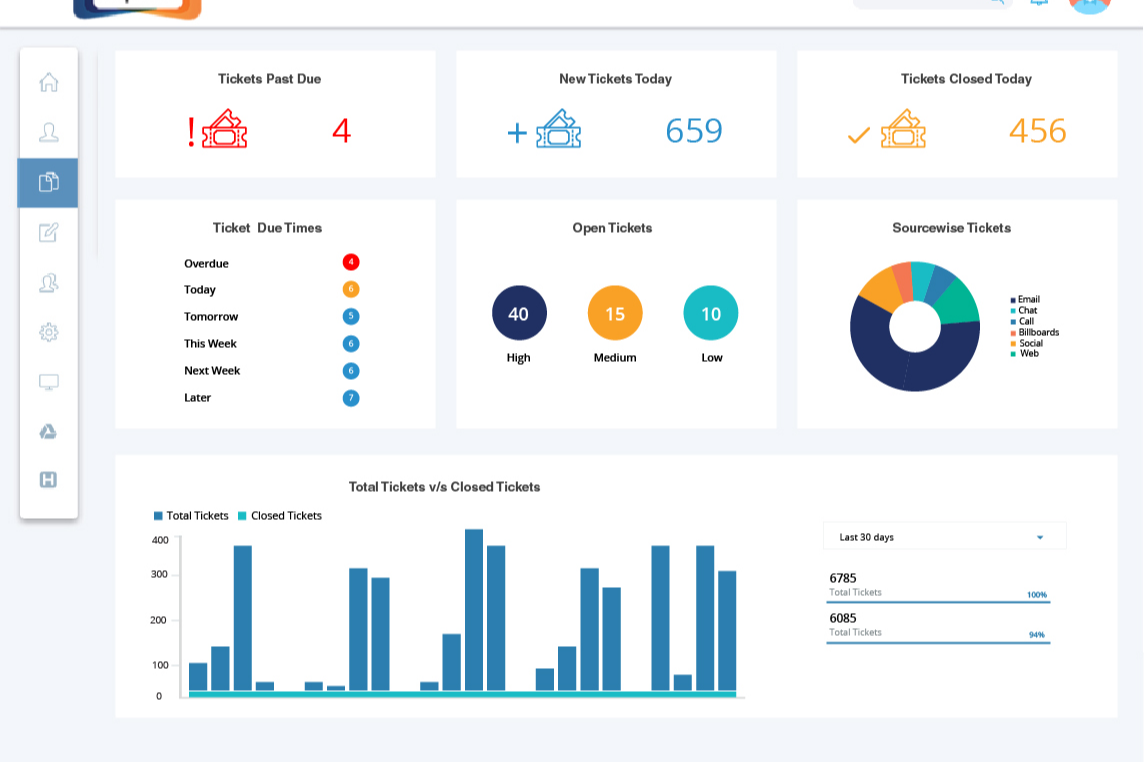
Image source: kapture.com
Features:
- Omnichannel ticketing across email, chat, voice, WhatsApp, and social media
- Smart ticket routing with automated assignment rules
- Analytics dashboards for agent performance and resolution times
- AI chatbots and sentiment analysis for faster responses
- API integrations with booking engines and customizable fields
Pros:
- Strong automation reduces repetitive tasks
- Omnichannel support improves customer accessibility
- Detailed reporting for process and agent efficiency
- Flexible modular features that scale with agency needs
Cons:
- No transparent pricing—requires a custom quote
- Interface can feel complex for new users
Pricing:
- Custom pricing based on users, features, and interaction volume
7. Pipedrive CRM: Visual pipelines for travel sales
Pipedrive is a popular crm cloud option with a strong visual pipeline interface, making it user-friendly for travel sales teams. Its clean drag-and-drop design helps agents monitor deal stages and follow up efficiently. While it doesn’t include deep travel-specific booking tools, it integrates well with external systems to fill gaps. For agencies focused on sales pipeline clarity and simplicity, Pipedrive offers solid functionality with scalability.
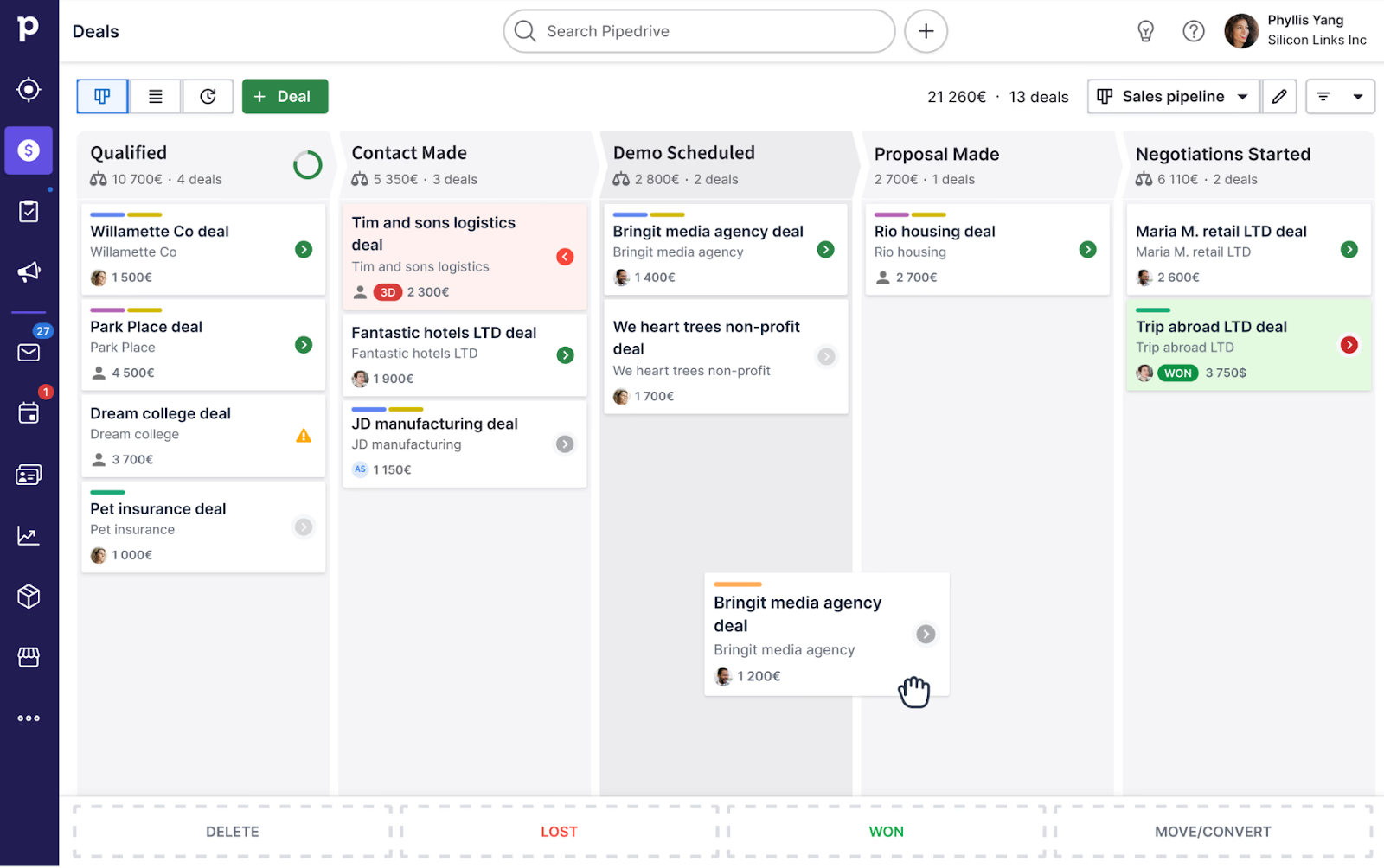
Image source: pipedrive.com
Features:
- Visual, drag-and-drop pipeline views to track deal stages
- Workflow automation (e.g. reminders, task routing)
- Email sync, templates, and tracking
- Reporting dashboards on deals, conversions, and activities
- Integrations via apps & API (CRM tools, booking systems, etc.)
Pros:
- Very intuitive and easy to use for managing sales leads
- Good value for small to mid-sized teams
- Strong visual clarity of sales pipelines
- Wide integration options
Cons:
- Lacks in-depth travel-specific features like itinerary or booking management
- No free plan (only free trial available)
Pricing:
- Lite: ~$24/user/month (annual billing)
- Growth: ~$39/user/month
- Premium: ~$64/user/month
- Ultimate: ~$99/user/month
8. HubSpot CRM: Free starter for travel agencies
HubSpot CRM is one of the most popular cloud CRM solutions that offers a generous free tier, making it an attractive option for travel agencies just getting started. It helps agencies track leads, manage pipelines, and centralize contact data without upfront costs. Over time, you can upgrade to paid Sales, Marketing, or Service Hubs to unlock more advanced automation, AI, and reporting. For agencies that want to scale gradually, HubSpot’s modular approach means you can expand features as your business grows.
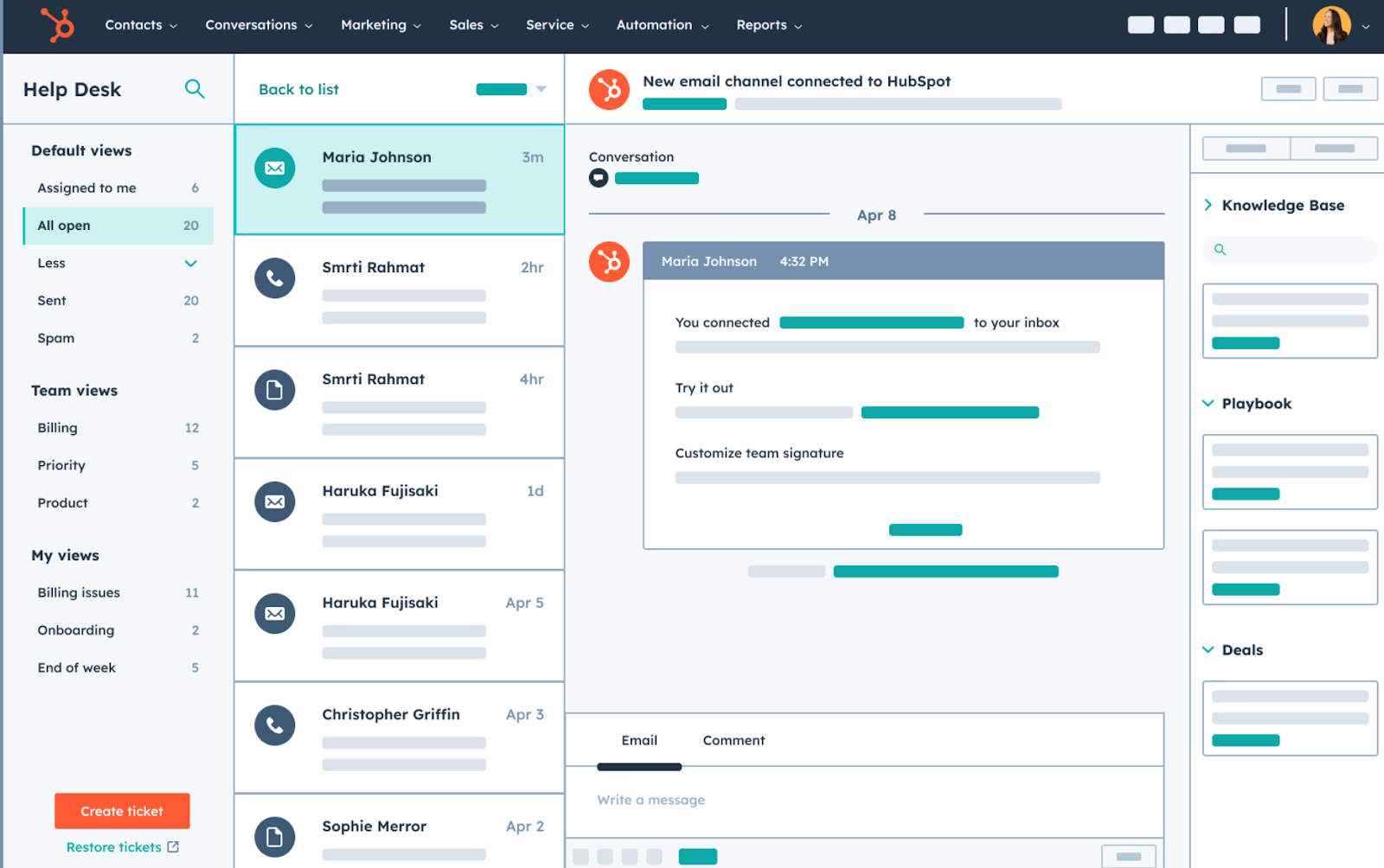
Image source: hubspot.com
Features:
- Contact and deal management with pipeline views
- Email tracking, templates, and 1-to-1 productivity tools
- Basic reporting dashboards and conversion analytics
- Lead capture via forms and live chat
- Integration with Office, Gmail, and marketing tools
Pros:
- Fully functional free CRM with no immediate cost for core features
- Easy to use with strong documentation and community support
- Modular—can add Marketing, Sales, Service Hubs later
- Good integration ecosystem and app marketplace
Cons:
- Advanced automation and reporting reserved for paid tiers
- Free plan has limits on certain features and branding
Pricing:
- Professional / Enterprise tiers: much more expensive, with advanced capabilities
9. Travel MidOffice CRM: Back-office management
Travel MidOffice CRM—also known as a travel back-office or mid-office system—is a specialized travel CRM solution focused on handling operational and financial workflows behind the scenes. It complements front-end booking CRMs by managing supplier reconciliation, invoices, approvals, and post-booking changes. For travel agencies that deal with complex bookings, accounting, and document processing, the midoffice system is essential to connect bookings, client data, and back-office operations reliably.
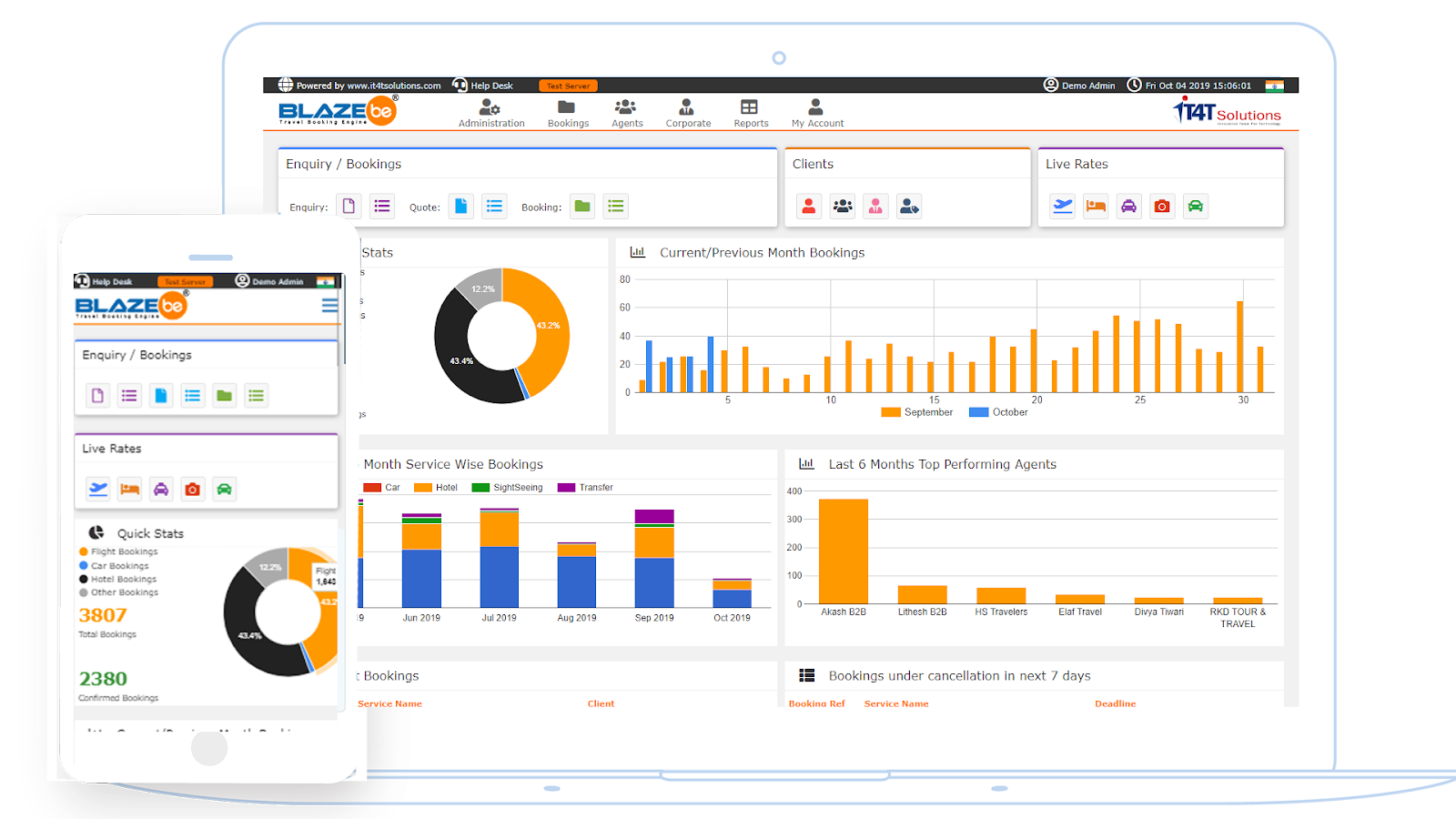
Image source: travelmidoffice.com
Features:
- Booking operations & quotation management (from inquiries to confirmed bookings)
- Integrated accounting & invoicing for payments, receivables, reconciliation
- Supplier & itinerary management with vouchers and ticket generation
- Approval workflows with role-based permissions
- Branded document, invoice, and itinerary generation
Pros:
- Automates key back-office functions for smoother operations
- Reduces financial errors with strong accounting tools
- Scales well for agencies handling large booking volumes
- Provides better control through structured approval flows
Cons:
- Limited customer-facing CRM features
- Often requires customization and setup support
Pricing:
- Custom pricing (quote on request; not publicly listed)
10. OTRAMS travel CRM: All-in-one travel booking software
OTRAMS is a comprehensive travel agency CRM and booking engine solution that combines inventory, reservations, and client management into a single platform. Designed for travel agencies, tour operators, and resellers, OTRAMS supports flights, hotels, transfers, and activities with real-time supplier integration. It offers customization, white-labeling, and modules for both B2B and B2C operations. With strong features across operations and bookings, it aims to be a one-stop travel CRM solution for larger agencies and multi-service operations.
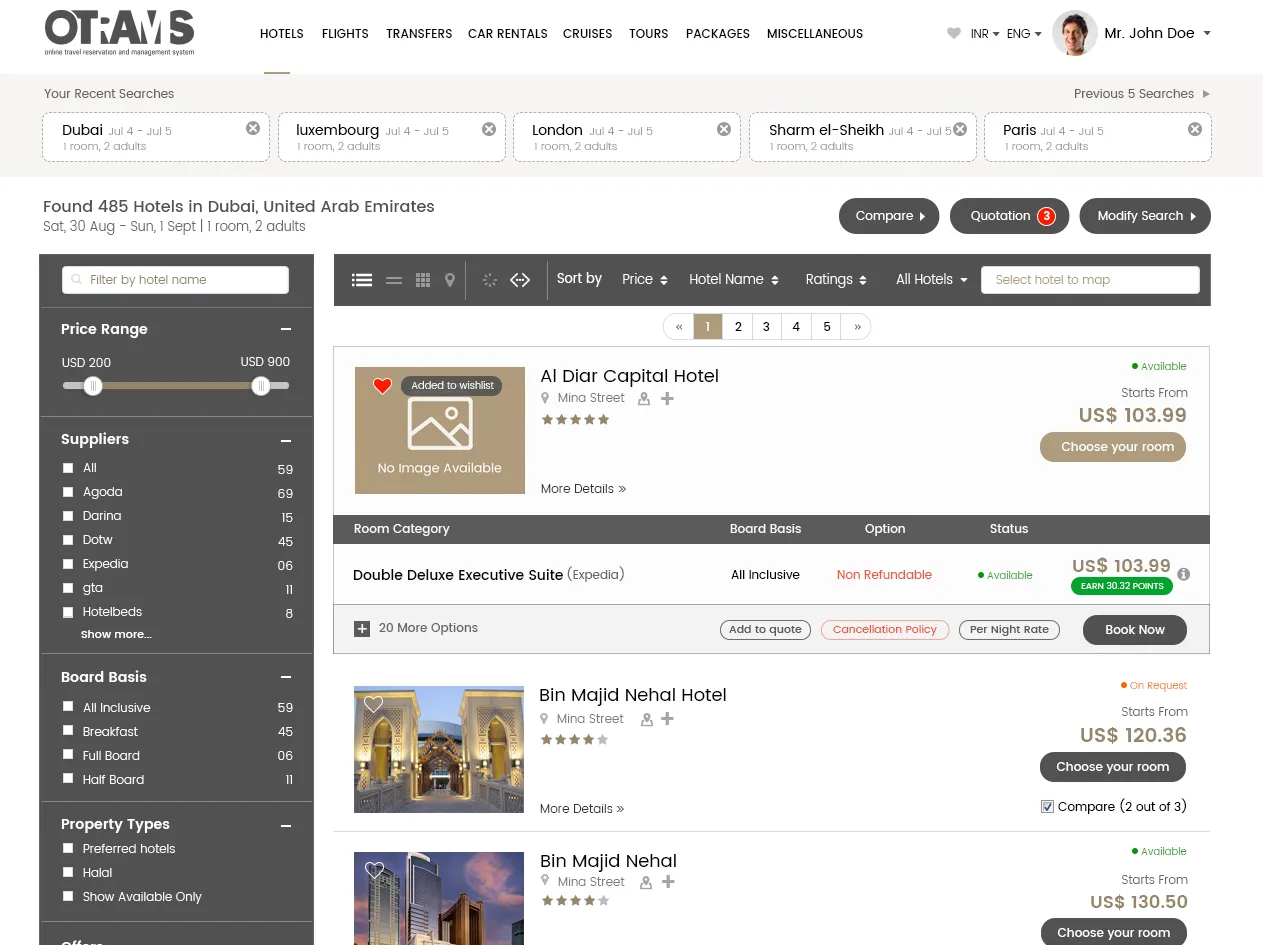
Image source: otrams.com
Features:
- Multi-service booking engine (flights, hotels, transfers, activities)
- 190+ supplier & GDS integrations with dynamic pricing and markups
- Real-time availability and booking management
- Centralized client database with itinerary creation and booking history
- Reporting dashboards for sales, margins, and agent performance
Pros:
- Strong supplier and GDS integrations reduce manual reconciliation
- All-in-one platform for bookings, CRM, and operations
- White-label and customization options for branding
- Scalable for agencies of different sizes and markets
Cons:
- Higher cost makes it less suitable for small agencies
- Steeper learning curve due to extensive configuration options
Pricing:
- From $1,000/month (basic subscription)
- OTRAMS GO: 1.5% per non-air transaction + $1 per air ticket
- Free trial available
Conclusion
Travel agencies deal with unique challenges—managing high inquiry volumes, complex itineraries, multiple suppliers, and post-travel engagement. These demands require more than just a traditional CRM. Modern solutions need to centralize bookings, automate reminders, and improve communication across teams and partners.
Lark goes beyond typical travel agent CRM software by uniting client management with collaboration and workflow automation. With tools like Lark Base for bookings, Docs & Wiki for itineraries, and Messenger & Meetings for supplier coordination, it offers a complete workspace for agencies to scale faster and serve clients better.
FAQs
What is a travel agency CRM, and how is it different from a regular CRM?
A travel agency CRM is tailored to industry needs like bookings, itineraries, supplier coordination, and payments. Unlike generic CRMs, it manages the full client journey from inquiry to post-travel follow-up. Lark adds collaboration features to make these workflows even smoother.
Which CRM is best for small travel agencies or independent agents?
Cost-effective options include Lark (free plan + scalable paid tiers), Zoho CRM (affordable with customization), and HubSpot CRM (strong free version). These tools help smaller agencies manage clients without high upfront costs.
Can a CRM help manage group bookings and complex itineraries?
Yes. Tools like Lark Base + Docs let agencies track group trips, share itineraries, and update clients in real time, reducing errors and last-minute confusion.
Do travel agency CRMs integrate with booking engines and payment systems?
Most CRMs support booking and payment modules. Lark enables workflow automation for deposits, confirmations, and approvals, while advanced tools like OTRAMS connect directly to global booking systems.
Is there a free CRM option for travel agencies to start with?
Yes. Lark offers a free plan with collaboration tools, HubSpot CRM has a strong free tier, and Zoho CRM provides a free edition for up to 3 users—making them great starting points for smaller agencies.
Related reading
Table of contents
Start using Lark today

Manage all your work in one place
Boost team efficiency by 10x
Save up to 70% on software costs
Table of contents
Start using Lark today
Manage all your work in one place
Boost team efficiency by 10x
Save up to 70% on software costs
Keep reading









2026 Lark Technologies Pte. Ltd.
Headquartered in Singapore with offices worldwide.






Explore: