Supply chain volatility is the new normal, and traditional ordering methods often struggle to keep pace. Managing stock levels efficiently requires a paradigm shift, and a vendor managed inventory system offers exactly that. Instead of the buyer shouldering the burden of ordering, the supplier takes the reins. This strategic approach reduces stockouts and optimizes costs for both parties. In this article, we will explore the definition, mechanics, benefits, and critical best practices of implementing VMI to streamline your operations.
What is vendor managed inventory system?
To understand the vendor managed inventory system definition, we must look at how traditional supply chains operate and then flip that model on its head. In a standard inventory model, the buyer (a retailer or manufacturer) monitors their own stock, creates a forecast, and when they believe they need more products. The risk and administrative burden sit squarely with the buyer.
What is vendor managed inventory system? It is a streamlined supply chain model where the buyer provides the supplier with access to critical inventory data—such as current stock levels and sales forecasts—and the supplier assumes full responsibility for maintaining that inventory. The vendor, not the buyer, decides when to replenish stock and how much to ship. This approach transforms the relationship from a transactional one into a collaborative partnership. It is important to clarify a common point of confusion: vendor managed inventory vs consignment. While they often overlap, they are not identical. VMI refers to who manages the replenishment logic (the vendor), whereas consignment refers to ownership (the buyer doesn't pay until the item is sold). A vendor managed inventory system can operate with or without consignment terms, though they frequently go hand-in-hand to align incentives.
The core philosophy here is visibility. By removing the "blind spots" that vendors usually have regarding end-customer demand, the entire chain becomes more efficient. The vendor is no longer guessing what the buyer might order next week; they know exactly what is on the shelf and can plan production accordingly.
How does vendor managed inventory system work?
Implementing a VMI model requires a robust technical and operational framework. It is not merely a handshake agreement; it is a data-driven process that relies on constant communication. The workflow of a vendor managed inventory system can be broken down into several distinct phases, moving from initial setup to daily execution.
The foundation: Data integration
The system relies entirely on accurate, timely data. Without transparency, the vendor cannot manage the inventory effectively. The process typically begins with establishing a vendor managed inventory agreement that dictates the parameters of the relationship.
- Electronic data interchange (EDI): This is the traditional standard for VMI. The buyer's ERP system automatically sends EDI messages (such as the EDI 852 "Product Activity Data") to the supplier. This data includes on-hand inventory, sales history, and goods in transit.
- Real-time API connections: Modern systems may bypass older EDI standards in favor of real-time cloud-based dashboards, allowing vendors to see stock levels instantly.
Setting the parameters
Before the first shipment is automated, both parties must agree on the "rules of engagement."
- Min/max thresholds: The buyer and supplier agree on minimum and maximum stock levels for each SKU. If stock dips below the minimum, a replenishment is triggered. If it hits the maximum, shipments stop to prevent overstocking.
- Fill rate targets: The agreement usually specifies a target service level, such as maintaining a 98% in-stock rate.
The replenishment cycle
Once the pipes are connected and the rules are set, the daily cycle begins.
- Data transmission: The buyer's system sends a daily (or weekly) report of inventory positions and sales data to the vendor.
- : The vendor's software analyzes this data against the agreed-upon thresholds. Instead of waiting for a Purchase Order (PO), the vendor generates a "Replenishment Order" internally.
- Purchase order acknowledgement: In some workflows, the vendor sends a Purchase Order Acknowledgement (POA) back to the buyer for confirmation, though in fully mature VMI systems, this step is often automated or skipped to increase speed.
- Shipment and notification: The vendor picks, packs, and ships the goods. They send an Advanced Shipping Notice (ASN) to the buyer, so knows what is coming.
- Invoicing: Upon receipt (or upon usage, in consignment models), the invoice is generated.
This cycle drastically reduces the "Bullwhip Effect." In a traditional model, slight changes in consumer demand cause panic ordering upstream, leading to massive inefficiencies. Because the vendor sees the actual consumer demand data in a VMI setup, they can smooth out their production and shipping, avoiding the boom-and-bust cycles of inventory.
Implement your VMI model with the right tool
Benefits of a vendor managed inventory system
The vendor managed market is expanding rapidly because the advantages typically outweigh the setup costs for both parties involved. When executed correctly, VMI creates a "win-win" scenario that optimizes the entire supply chain rather than just one link in it. Here is a breakdown of the specific benefits of a vendor managed inventory system for both the buyer and the supplier.
Advantages for the buyer (retailer/distributor)
For the company receiving the goods, VMI offloads a significant amount of operational pressure.
- Reduced stockouts: Because the vendor has a vested interest in selling their product and has visibility into actual sales data, they are often faster at replenishing stock than a buyer's internal purchasing team, leading to higher customer satisfaction.
- Lower carrying costs: With a more precise flow of goods, buyers can maintain lower safety stock levels. This frees up working capital and that would otherwise be tied up in excess inventory.
- Decreased administrative burden: Purchasing teams no longer need to spend hours calculating reorder points or generating purchase orders for routine items. This allows them to focus on strategic sourcing and high-value negotiations.
Advantages for the vendor (supplier/manufacturer)
While it might seem like the vendor is taking on extra work, the strategic payoffs are immense.
- Improved demand visibility: This is the Holy Grail for manufacturers. Seeing actual sell-through data allows vendors to plan their production schedules more accurately, reducing overtime costs and rush orders.
- Stronger customer relationships: A vendor managed inventory system creates a high barrier to exit. By becoming deeply integrated into the customer's operations, the vendor becomes an indispensable partner rather than just a commodity supplier.
- Optimized logistics: The vendor can consolidate shipments. Instead of responding to sporadic, erratic orders from the buyer, the vendor can plan truckloads more efficiently, reducing freight costs.
These factors collectively illustrate the vendor managed inventory advantages and disadvantages skew heavily toward the "advantage" side when trust is established. The system fosters a level of collaboration that drives waste out of the supply chain, ultimately resulting in a more competitive price for the end consumer.
Align and deliver your inventory system effortlessly
Risks of a vendor managed inventory system
While the upsides are compelling, we must address the realities of the vendor managed inventory advantages and disadvantages. A VMI implementation is not without its perils. It requires a high degree of trust, technological compatibility, and process alignment. If these elements are missing, the system can fail, leading to friction and lost revenue.
Vulnerability and control
The most immediate risk is the shift in control.
- Loss of control for the buyer: By handing over the keys to the inventory, the buyer trusts the vendor to do the job right. If the vendor lacks sophistication or fails to monitor the data, the buyer could end up with empty shelves and no immediate way to fix it internally.
- Supplier dependency: Over time, the buyer's internal team may lose the "tribal knowledge" of how to order those specific products. If the relationship sours, transitioning back to a traditional model can be painful and disruptive.
- Data security concerns: VMI requires sharing sensitive sales and inventory data. If the communication channels are not secure, or if the vendor has poor cybersecurity practices, proprietary business intelligence could be compromised.
Operational challenges
Even with good intentions, operational hurdles can derail a vendor managed inventory system.
- Technological integration gaps: If the buyer uses a modern cloud ERP and the vendor relies on legacy spreadsheets, integration will be a nightmare. Data discrepancies can lead to the vendor shipping product based on "ghost inventory" records, causing massive overstocking.
- Inflexible inventory agreements: If the vendor managed inventory agreement is too rigid, it may not account for seasonality or promotions. For example, if a retailer runs a sudden marketing campaign but forgets to inform the VMI partner, the vendor's standard replenishment algorithms will be too slow to react, resulting in immediate stockouts.
- Communication breakdowns: VMI is often sold as "automated," but it still requires human oversight. If the vendor changes packaging or the buyer changes shelf layouts without communicating, the physical logistics can break down instantly at the receiving dock.
The vendor managed inventory system market is full of case studies where these risks were not managed, leading to the dissolution of partnerships. Success requires constant vigilance and a realization that software alone cannot fix a broken relationship.
Vendor managed inventory example
To fully grasp the concept, it helps to look at real-world scenarios. A vendor managed inventory example can range from simple bin restocking to complex, AI-driven global supply chain. Retail sector: The classic consumer goods model
The most famous example, often cited in business schools, involves large retailers and massive consumer goods companies. Consider a large "Big Box" retailer and a detergent manufacturer.
- The scenario: Instead of the retailer's purchasing manager checking the detergent aisle every week, the Point of Sale (POS) data is fed directly to the manufacturer.
- The action: The manufacturer sees that the retailer sold 500 units on Saturday. Their system calculates that the store will run out by Tuesday.
- The result: The manufacturer's truck arrives Monday morning with exactly 550 units—enough to restock the shelf and the backroom—without the retailer ever lifting a finger.
Manufacturing sector: Just-in-Time (JIT)
VMI is also critical in industrial manufacturing.
- The scenario: An automotive plant needs thousands of fasteners (screws, bolts) daily.
- The action: The fastener supplier monitors the "bins" on the assembly line using sensors or barcode scans.
- The result: As a bin gets low, the supplier is alerted and dispatches a replenishment shipment immediately. The auto manufacturer holds almost zero inventory, freeing up cash and floor space.
Technology and software
Many vendor managed inventory companies rely on sophisticated software to manage these flows. For instance, SAP vendor-Managed inventory functionalities allow large enterprises to integrate these complex data streams directly into their ERPs. SAP allows the vendor to monitor the stock/requirements list of the customer and generate sales orders automatically. This level of integration is what separates a modern, scalable vendor managed inventory system from a manual spreadsheet process.
Start your vendor managed inventory system with Lark
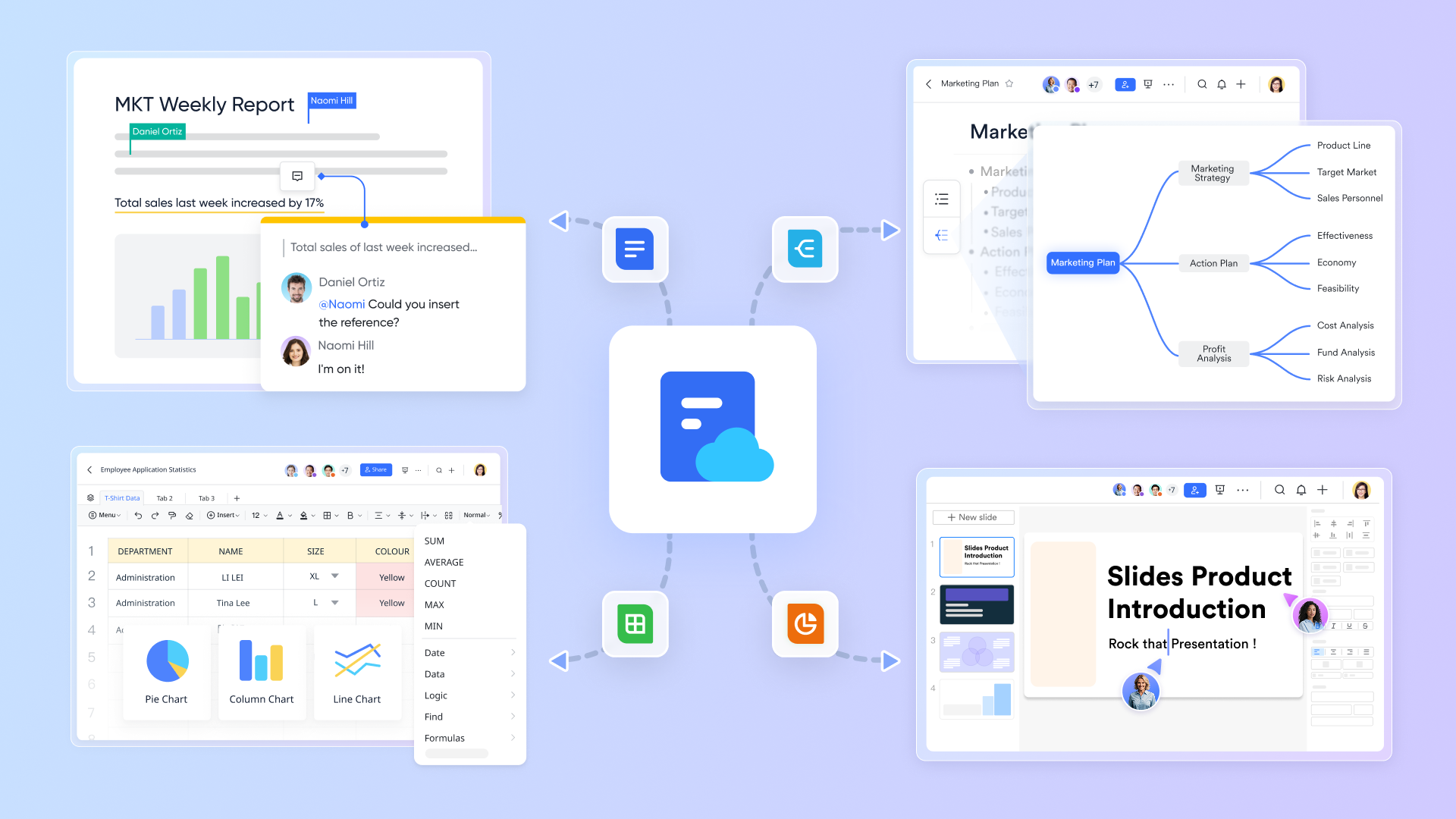
Implementing a VMI model doesn't always require rigid, expensive enterprise software. offers a flexible, collaborative platform that bridges the gap between and your vendor's planning team, creating the transparency required for success.
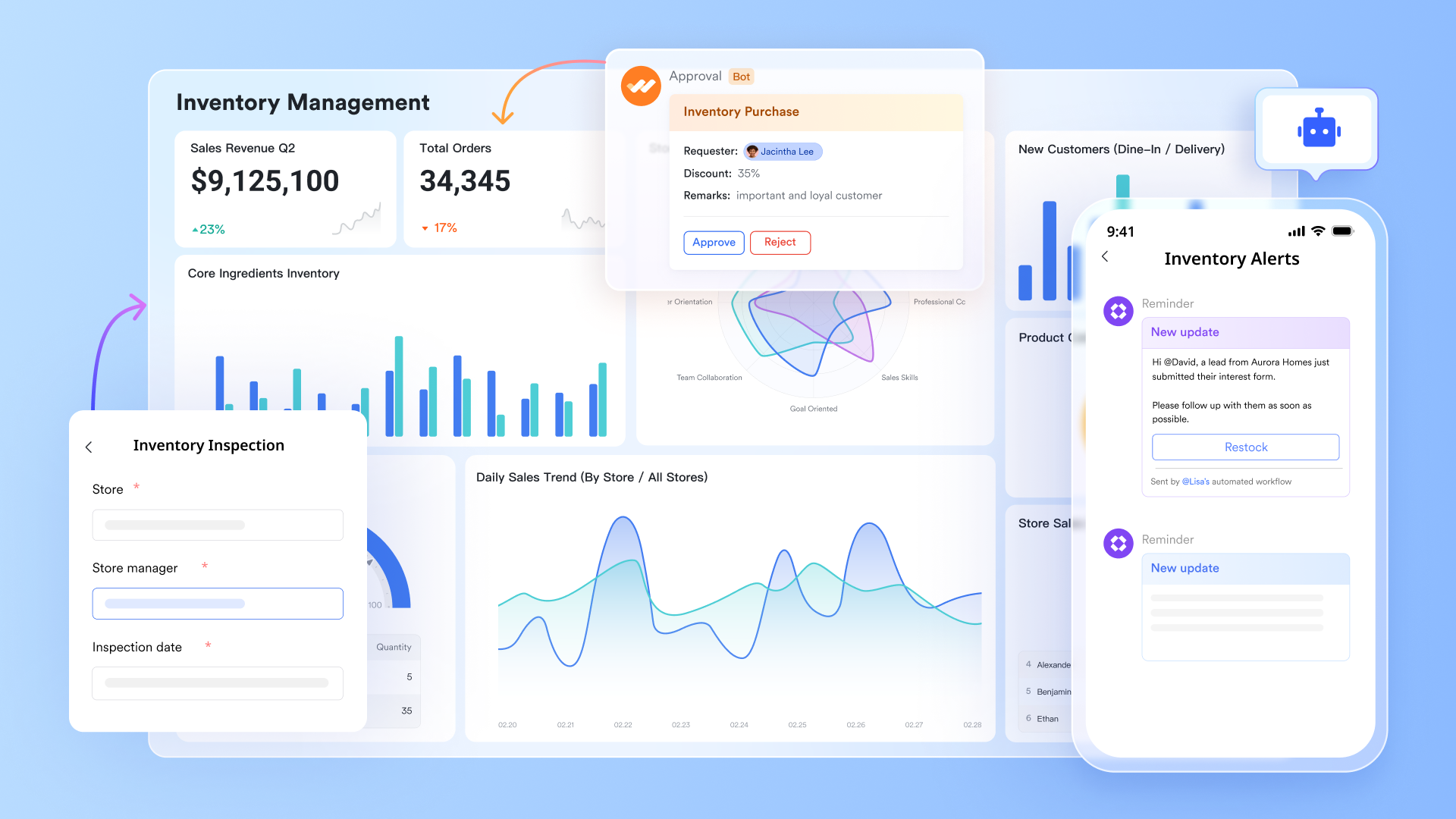
Create a shared source of truth with Lark Base
The biggest hurdle in VMI is giving vendors visibility without compromising your internal security. solves this by allowing you to build a custom inventory tracker that acts as a secure bridge.
Shared inventory dashboards: You can create a master database of your stock but generate a specific "Vendor View" that displays only the necessary stock levels and sales data. This grants your supplier restricted permissions to see exactly what they need to replenish without accessing your sensitive financial data.
Real-time data synchronization: Instead of emailing static spreadsheets back and forth, both parties access . When a sale is recorded or a shipment arrives, the numbers update instantly for everyone, eliminating the "ghost inventory" discrepancies that often plague manual VMI setups.
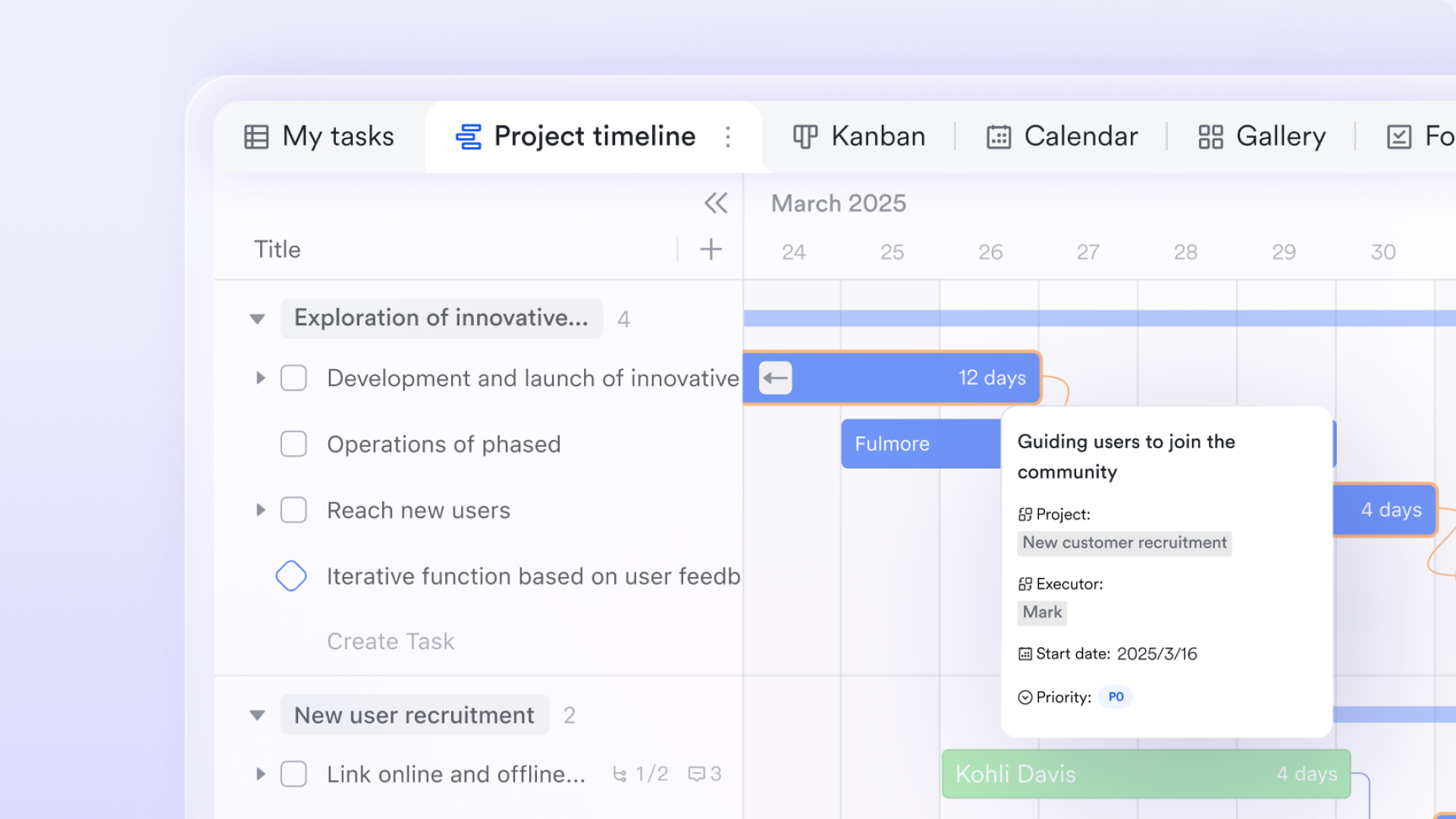
Automated replenishment triggers
Speed is the essence of a successful vendor managed inventory system, and Lark automates critical handoffs.
Automated low-stock alerts: Configure workflows in to monitor inventory thresholds. When stock dips below the agreed minimum, the system can automatically tag the vendor in a group chat or generate a specific task card, prompting immediate action.
Shipment tracking visibility: Vendors can update status fields directly in the Base when they dispatch a shipment. This can trigger an automatic notification for your receiving team, ensuring they know exactly when to expect the next delivery and can staff the dock accordingly.
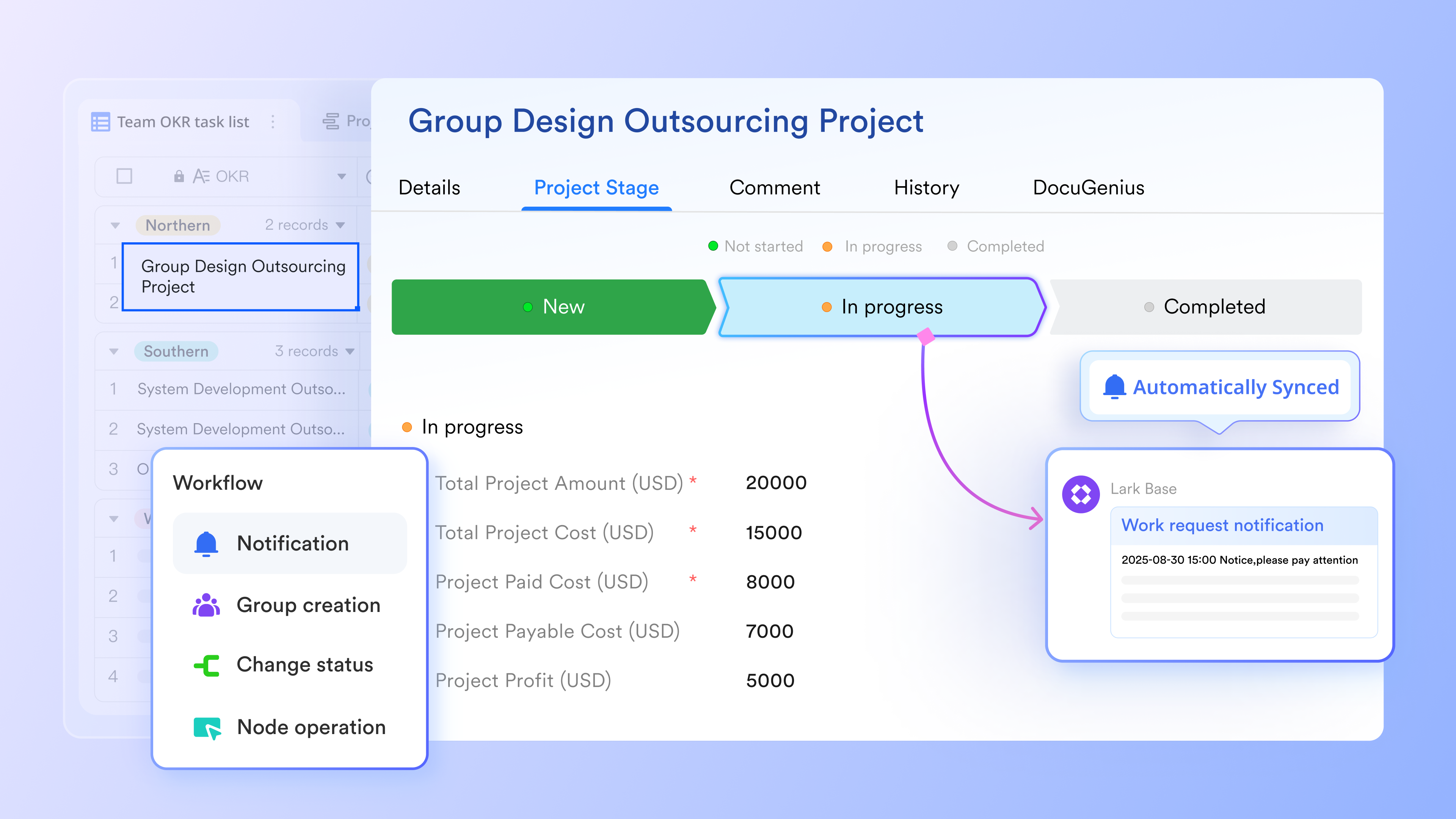
Streamline cross-organizational communication
VMI is a partnership, and partnerships run on clear communication. Lark Messenger and Docs keep the human element aligned with the data.
Dedicated collaboration channels: Use to create secure groups with your external partners. Whether it is clarifying a sudden spike in demand or resolving a shipping discrepancy, you can solve problems in real-time rather than waiting for email replies.
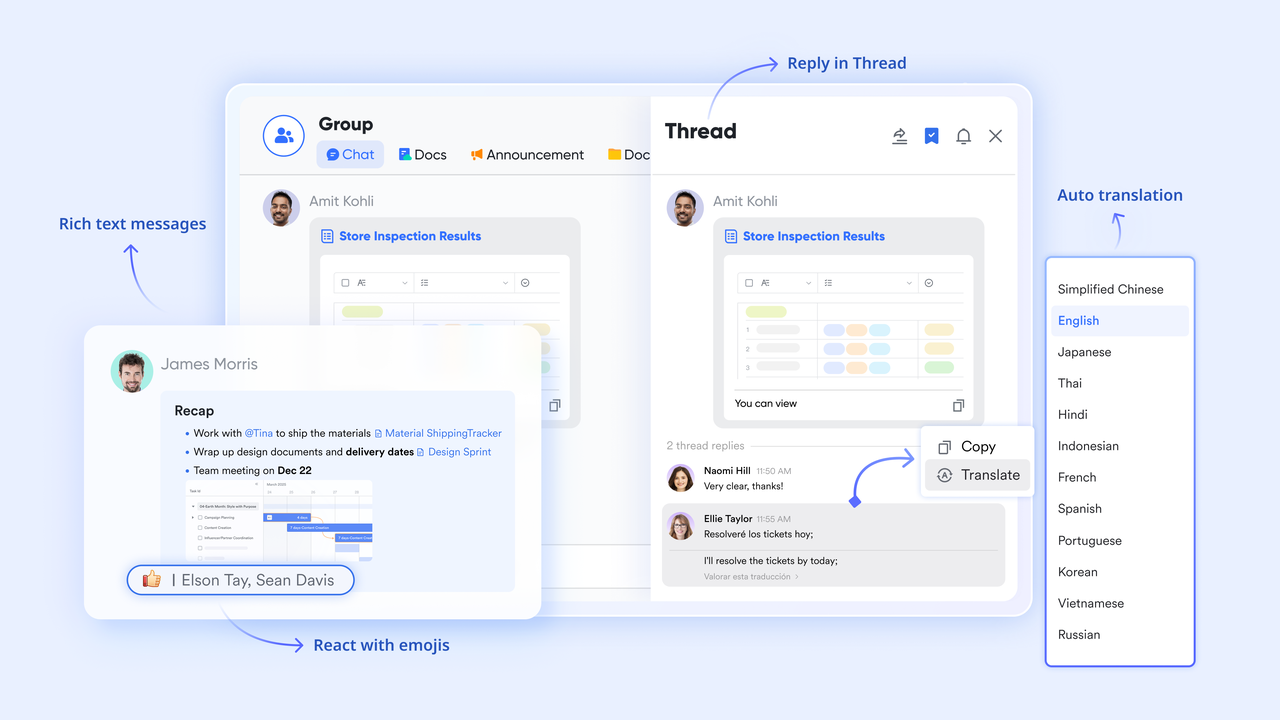
Collaborative agreements: Store your vendor managed inventory agreement and Standard Operating Procedures (SOPs) in . Both parties can co-edit and comment, ensuring that the rules of engagement are always clear, up-to-date, and accessible to authorized personnel on both sides.
- Starter plan: Free forever plan that includes 11 powerful tools for up to 20 users. It also comes with 100GB of storage, 1000 automation runs, AI translations, and more.
- Pro plan: $12/user/month (billed annually) for up to 500 users. It includes everything in Starter plus group calling for up to 500 attendees, 15TB of storage, 50,000 automation runs, and more.
- Enterprise plan: for custom pricing. Supports unlimited users and includes even more automation runs and advanced security, compliance, and management features.
For small teams with simple communication needs

18 months message history
1000 Base automation runs/month
2000 rows per table in Base
Most POPULAR
For companies with comprehensive collaboration and management needs
Unlimited message history
500-participant video meetings
50k Base automation runs/month
20k rows per table in Base
For large companies with advanced security and organizational management needs
Get a personalized demo and pricing
Unlimited message history
500-participant video meetings
15 TB storage + 30 GB storage/user
500k Base automation runs/month
50k Base automation runs/month
Most POPULAR
For companies with comprehensive collaboration and management needs
Unlimited message history
500-participant video meetings
50k Base automation runs/month
20k rows per table in Base
Best practices for vendor managed inventory system
Launching a VMI program is a strategic initiative that requires careful planning. Whether you are a buyer or a supplier, following these best practices will significantly increase your chances of success.
Establish a solid foundation
The success of VMI lives and dies by the initial agreement.
- Define clear metrics: Your vendor managed inventory agreement must include specific Key Performance Indicators (KPIs). Common metrics include inventory turnover rate, fill rate (percentage of orders shipped in full), and days sales of inventory (DSI). Both parties must agree on what "success" looks like.
- Invest in the right technology: Do not rely on email and spreadsheets. Use a platform that acts as a single source of truth. This is where tools like Lark can be transformative, offering a shared workspace where databases and alerts can be synchronized between companies.
- Clean your data: Before turning on the system, audit your data. If your inventory records show 100 units but you physically have 80, the vendor's algorithm will fail immediately. Data hygiene is non-negotiable.
Maintain the partnership
VMI is a relationship, not a "set it and forget it" tool.
- Regular reviews: Schedule monthly or quarterly business reviews. Discuss what is working, address any recent stockouts, and adjust forecasts based on upcoming market trends.
- Share information beyond data: Algorithms cannot predict everything. If the buyer knows a competitor is opening a store nearby, or if the vendor knows a raw material shortage is looming, this qualitative information must be shared proactively.
- Start small: Do not try to move your entire catalog to a vendor managed inventory system overnight. Start with a few high-volume, stable SKUs (Stock Keeping Units). Once the process is proven and the kinks are worked out, you can gradually expand to more complex or volatile products.
By adhering to these standards, you move beyond a simple transactional relationship and build a resilient, responsive supply chain capable of weathering market fluctuations.
Practice the smart VMI system
Conclusion
Adopting a vendor managed inventory system is a transformative step that redefines the traditional buyer-supplier relationship. It moves supply chain management from a reactive game of catch-up to a proactive, data-driven partnership. While the shift requires letting go of some control and establishing deep trust, the rewards—reduced stockouts, lower carrying costs, and optimized logistics—are undeniable. Success ultimately hinges on transparency; both parties must share a single version of the truth to navigate market fluctuations effectively.
However, a strategy is only as good as the tools used to execute it. Seamless data sharing and real-time communication are the lifeblood of any VMI arrangement. To build a resilient and collaborative supply chain that benefits both you and your suppliers, we encourage you to try Lark as your central hub for inventory visibility and partnership management.
FAQs
What is a vendor managed inventory system?
A Vendor Managed Inventory (VMI) system is a supply chain model where the supplier assumes the responsibility for maintaining inventory levels at the customer's location, rather than the retailer or manufacturer doing so themselves. This system relies on shared, real-time data to optimize stock levels, minimize shortages, and lower costs for both parties involved. It is considered a key component of lean manufacturing because it helps reduce waste and improve overall efficiency.
How does VMI work?
VMI operates through a four-step process. First, the buyer shares data regarding inventory, sales, and demand forecasts with the vendor, typically via Electronic Data Interchange (EDI). Second, the vendor uses this data to manage inventory levels and decide on replenishment timing and quantities. Third, the vendor ships products directly to the buyer's location as needed or on a schedule. Finally, the vendor optimizes inventory levels to meet specific goals, which reduces safety stock requirements and prevents stockouts.
What companies use VMI?
VMI is used across various industries. In the retail sector, Walmart is a notable user, having pioneered supplier-partner programs for decades. Large-scale retailers like Walmart also rely on solutions such as a to identify and recover losses related to inventory discrepancies, making their supply chain operations even more efficient. In the manufacturing sector, the automotive industry frequently utilizes VMI for sourcing components such as tires, engines, and seats. Additionally, within the healthcare industry, hospitals often employ VMI systems to manage critical supplies like syringes and medication.
Is VMI part of lean manufacturing?
Yes, VMI is heavily involved in lean manufacturing as it supports lean procurement and inventory strategies. By outsourcing to the supplier, companies can reduce "just-in-case" inventory, lower carrying costs, and decrease waste caused by overstocking or stockouts. This system enables a "just-in-time" approach, ensuring that necessary parts are available when needed without the burden of holding excessive inventory on site.
Related reading