WhatsApp has become one of the most powerful communication channels for businesses worldwide. With billions of active users, it enables customer support, notifications, and marketing at massive scale. However, once companies move beyond the free WhatsApp Business App and adopt the Business Platform (API), WhatsApp pricing becomes more complex. Instead of per-user fees, costs are based on conversations and message categories, varying by region, volume, and use case. This model suits external customer engagement but can feel unpredictable as messaging scales. This guide explains what businesses actually pay, how pricing works behind the scenes, hidden costs to consider, and why tools like Lark are often used for more predictable internal communication.
Try modern approaches to business messaging
Overview of WhatsApp business pricing
WhatsApp business pricing is built around a conversation-based model rather than traditional per-user subscriptions. Businesses using the WhatsApp Business Platform are charged based on conversations opened with customers, which last for a defined messaging window. Pricing varies depending on the type of message sent, such as marketing, utility, authentication, or service messages, each designed for different . Costs also differ by country, reflecting local market and telecom factors, and adjusting automatically as message volumes increase through tiered discounts.
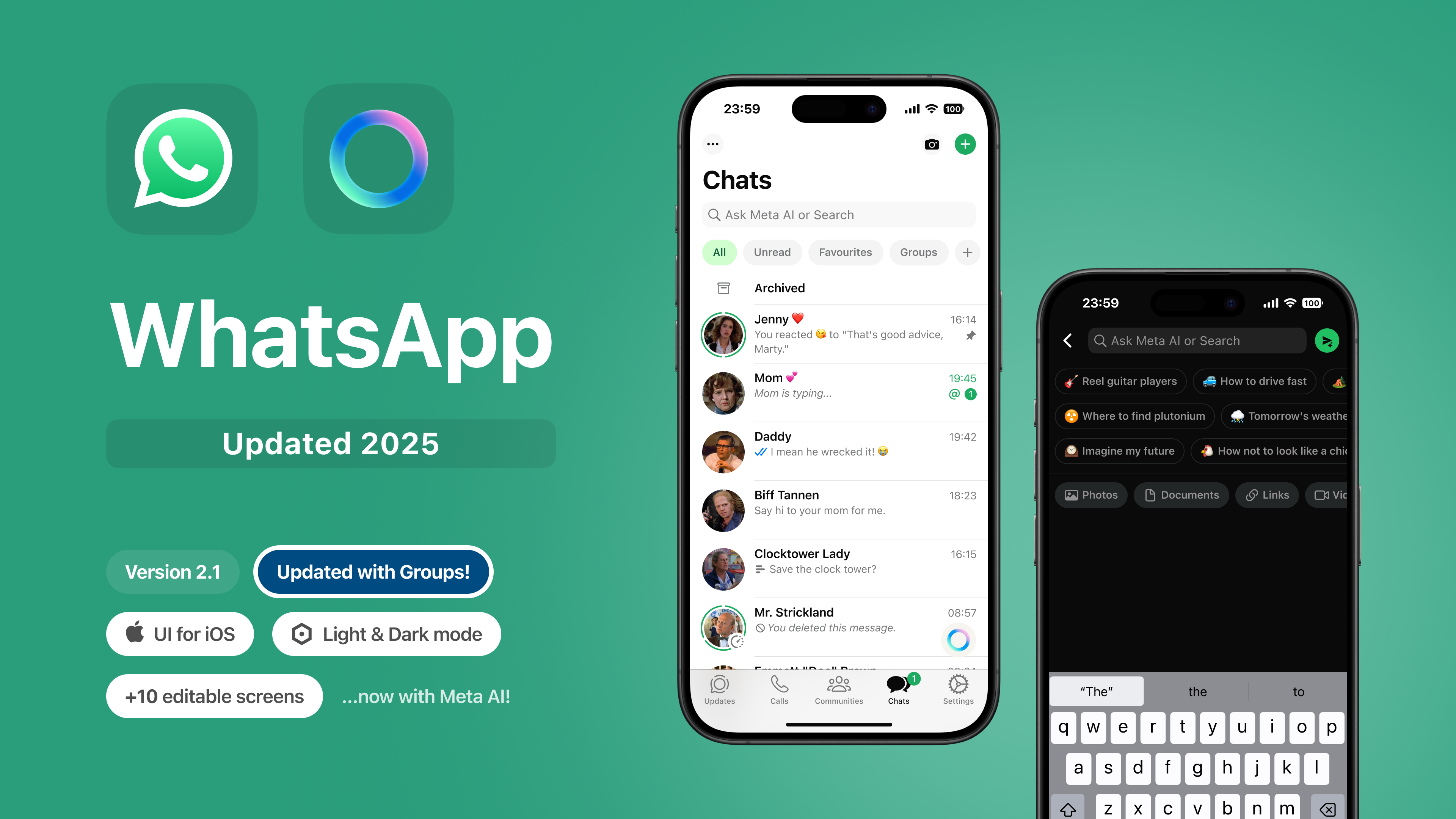
Image source: whatsapp.com
WhatsApp business per-message pricing explained
WhatsApp messaging service is designed to support , such as support requests, inquiries, or issue resolution. This plan follows a conversation-based pricing model rather than charging per user or per subscription. Service messages are primarily intended for real-time customer support and operational communication. The structure encourages timely responses while keeping customer service interactions cost-efficient and scalable for businesses.
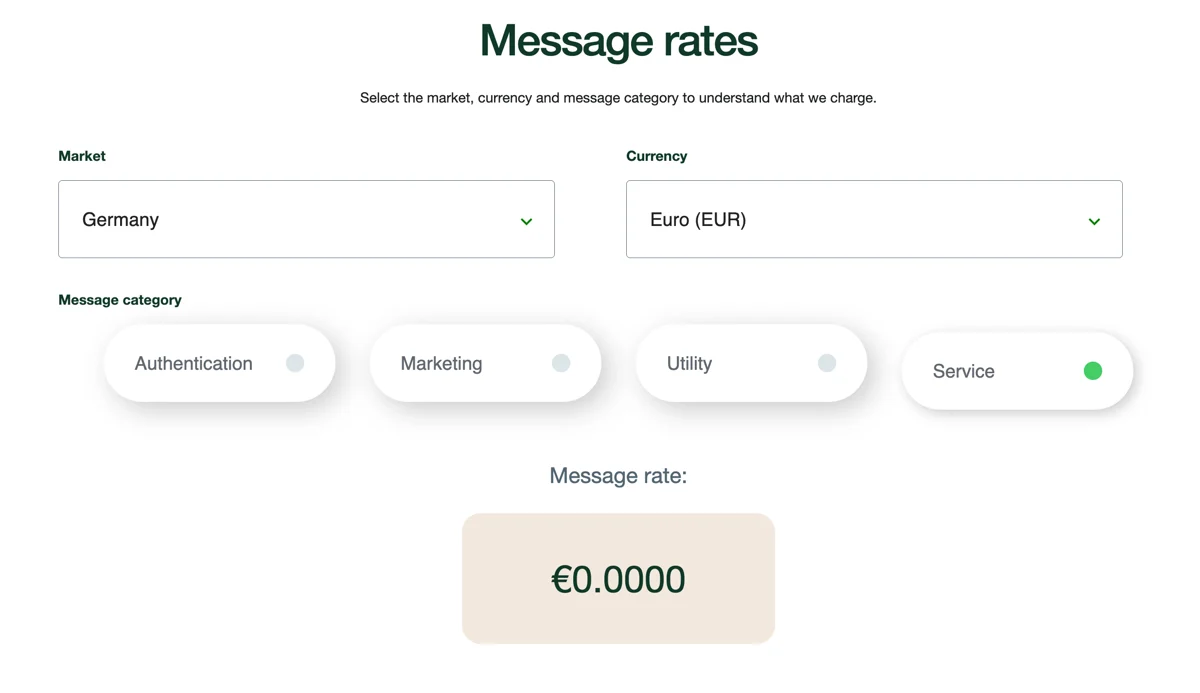
Image source: whatsapp.com
Key features:
- Market-based pricing structure: WhatsApp applies different message rates based on customers' countries. This approach reflects regional telecom costs, regulatory requirements, and market conditions. Businesses operating in multiple regions may see different rates for the same message type. As a result, global teams need to account for regional variation when planning messaging operations.
- Currency-aligned billing model: Message rates are displayed and billed in the local or selected currency to . This reduces the need for manual currency conversions during budgeting and reporting. It also helps finance teams forecast expenses more accurately. Currency alignment improves transparency across international operations.
- Service message category logic: Service messages apply only to customer-initiated conversations, typically within a defined response window. These messages are intended strictly for support and issue resolution, not promotions. Proper classification is essential to remain compliant with WhatsApp policies. Misuse can lead to reclassification and unexpected charges.
- Free service conversation window: Service messages sent within the allowed response window are not charged. This encourages quick customer responses without incurring cost penalties. Once the window expires, or message categories may incur charges. Timely responses are therefore critical to maintaining cost efficiency.
How WhatsApp Business API pricing works
WhatsApp Business API pricing is based on a conversation-driven model rather than fixed subscriptions or per-user fees. Charges depend on who initiates the conversation, the type of message sent, and the customer's country or region. This structure allows businesses to pay for actual engagement but as usage scales across markets and message categories.
- Charges are based on delivery: Businesses are billed only when a message successfully reaches the customer, not when it's sent. This ensures you pay for actual message delivery rather than attempted communication.
- Lower costs at higher volumes: As messaging volume increases, businesses become eligible for more favorable pricing tiers. This makes more cost-efficient over time.
- No charge for service replies within 24 hours: When customers initiate a conversation, any service messages you send in response during the first 24 hours are free. This encourages timely replies without adding to messaging costs.
- Free conversations from entry points: If a customer connects with your brand through a free entry channel—such as a click-to-chat ad or a WhatsApp button on your website—you can begin the conversation without immediate charges.
- Extended free messaging window: Once you reply within the initial 24-hour window, a 72-hour free messaging period is activated. During this time, you can send messages across all categories without incurring per-message fees.
Four categories of WhatsApp messages
WhatsApp classifies business messages into four categories to define usage intent and pricing logic. Each category applies to a specific type of customer interaction and must be used correctly to stay compliant.
- Marketing messages: These messages are used for promotions, discounts, product announcements, and . They are business-initiated and typically carry higher costs due to their commercial nature.
- Utility messages: Utility messages are triggered by user actions such as order confirmations, shipping updates, or appointment reminders. They support transactional communication and are priced lower than marketing messages.
- Authentication messages: Authentication messages are sent to verify user identity through OTPs or login confirmations. They are time-sensitive and designed to support secure access and account protection.
- Service messages: Service messages apply when customers initiate conversations for support or inquiries. Replies sent within the 24-hour service window are free, encouraging timely customer assistance.
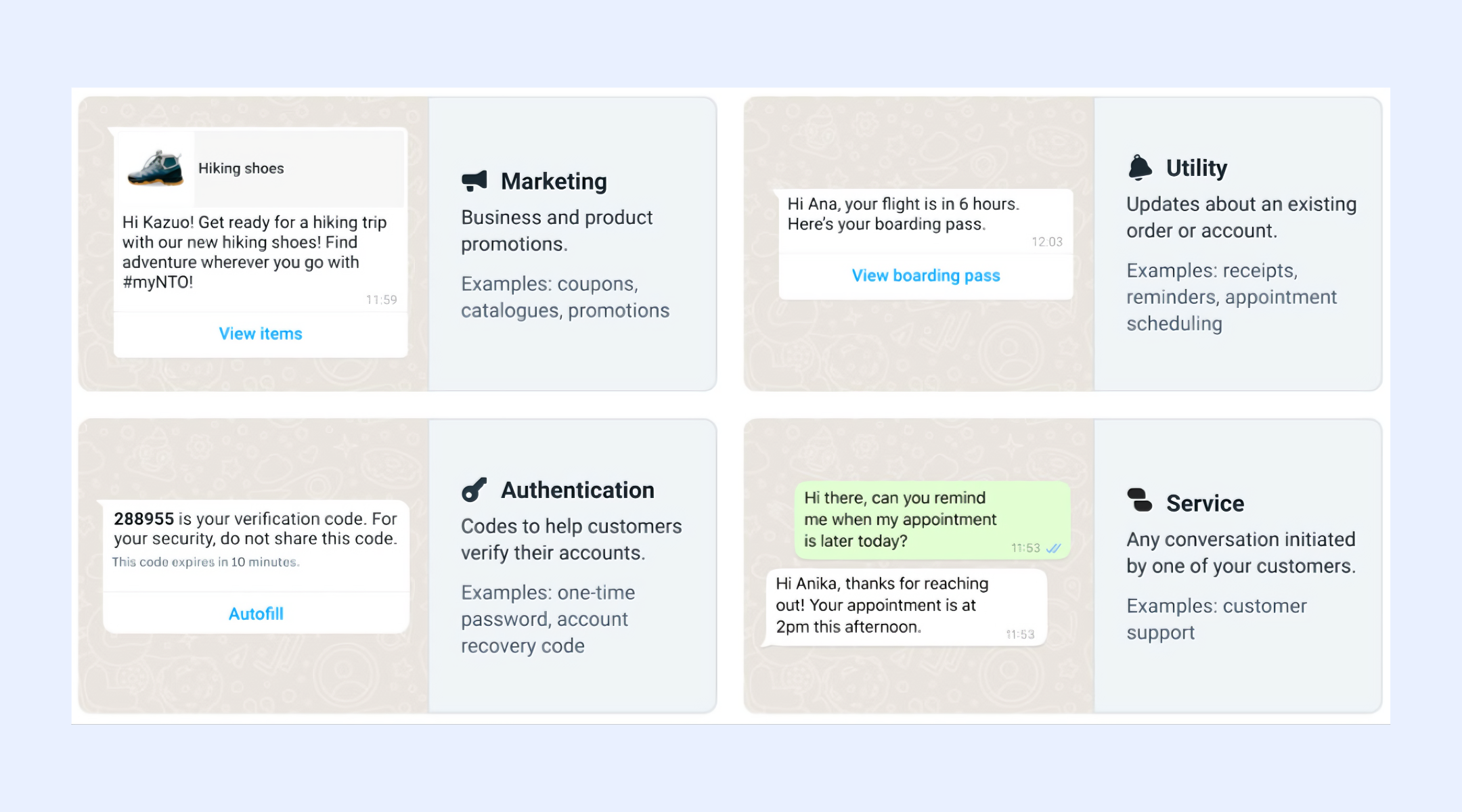
Image source: whatsapp.com
WhatsApp API pricing tiers and scaling benefits
WhatsApp API pricing tiers are designed to support businesses as their messaging volumes grow. As usage increases, WhatsApp automatically applies lower per-conversation rates across eligible message categories. This tiered structure helps companies to scale customer communication more efficiently while improving long-term cost predictability.
- Lower per-message rates at higher volumes: As message traffic grows, WhatsApp applies tiered pricing that reduces the cost per delivered message, making large-scale communication more economical.
- Automatic tier upgrades based on usage: Businesses don't need to apply manually—pricing tiers adjust automatically as monthly message volumes increase.
- Consistent savings across message categories: Volume-based discounts apply across supported message categories, helping brands control costs even when sending a mix of service, utility, or marketing messages.
- Better cost predictability for growing teams: Tiered pricing makes it easier to forecast spend as usage scales, reducing billing surprises during high-engagement periods or campaigns.
- Supports long-term scaling strategies: Volume tiers reward sustained usage, allowing businesses to without a proportional increase in messaging costs.
Hidden cost considerations businesses should watch
While WhatsApp publishes clear per-message or per-conversation rates, businesses rarely pay only these base fees. Here are some of the cost considerations you should notice before making decisions:
- Provider charges: Most companies access the API through solution providers, which often add fees for platform access, hosting, or individual phone numbers.
- Technical ecosystem: Additional expenses often arise from CRM integrations, analytics tools, and the development of custom automation workflows.
- Total cost of ownership: These combined layers can significantly drive up the long-term cost of maintaining the service.
- Upfront fees: Some providers require one-time setup or onboarding charges before any messaging starts.
- Recurring costs: Many platforms charge monthly subscriptions for dashboard access and support, regardless of how many messages are actually sent.
- Inactivity costs: Fixed monthly fees persist even during periods of low usage or seasonal downtime.
- Contract vigilance: It is essential for businesses to carefully audit provider contracts to distinguish between fixed overhead and volume-based expenses.
As WhatsApp messaging scales, many businesses begin to notice the limits of usage-based communication models for internal coordination. Costs, message restrictions, and workflow gaps can make everyday team conversations harder to manage efficiently. This often leads teams to separate customer messaging from internal collaboration. Whether organizations are trying to optimize or actively searching for unified , that's where platforms like Lark come into the picture as a structured alternative.
See how communication fits into daily workflows
How Lark offers a predictable alternative for team communication
Lark offers a predictable approach to by using subscription-based plans instead of usage-based messaging fees. Teams can message freely without worrying about volume-driven cost increases as work scales. Conversations stay connected to documents, tasks, and calendars, keeping discussions tied to execution rather than scattered chats. Built-in visibility features like read status and message editing improve clarity and accountability. This structure makes Lark better suited for consistent internal collaboration where communication intensity changes daily.
Unlimited internal messaging without usage-based charges
supports unlimited text, voice, and media messaging within the workspace, with no per-message or per-conversation fees. across projects, departments, and time zones without worrying that message volume will affect costs. This makes budgeting predictable and straightforward, even as communication intensity increases during launches, campaigns, or peak workloads.
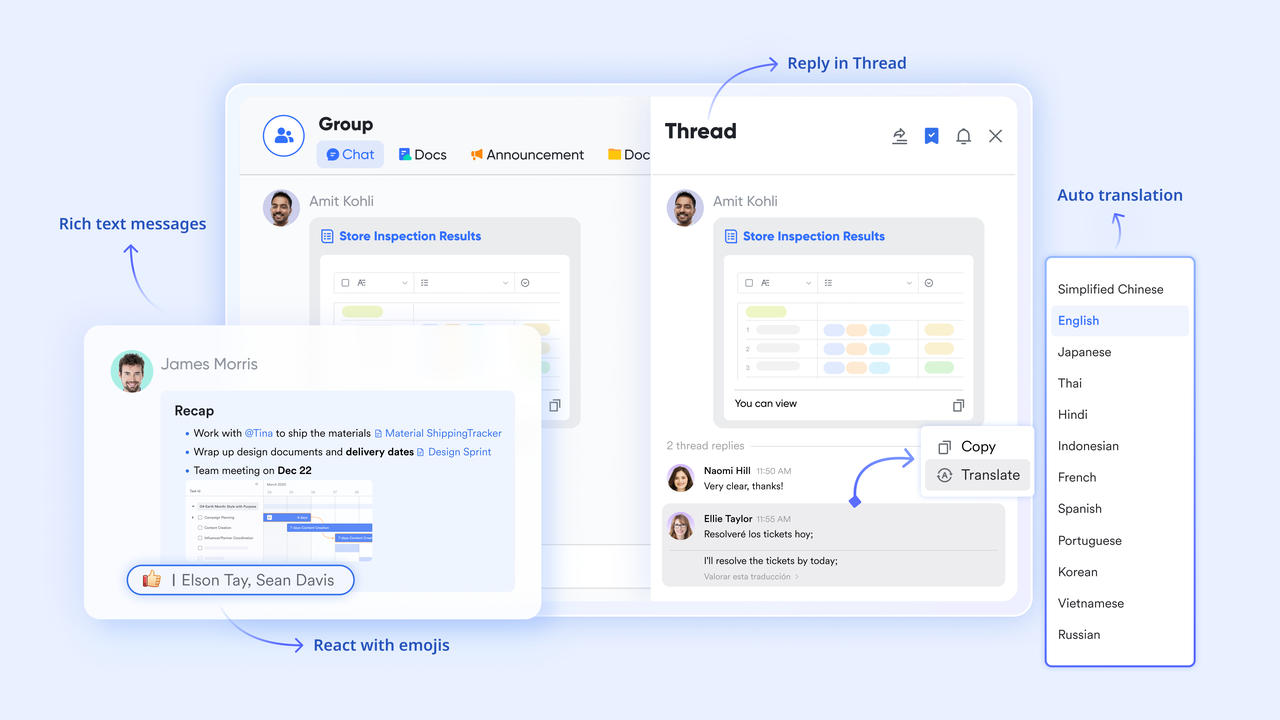
Conversations connected directly to the work context
Lark Messenger is tightly connected with other Lark features such as , Lark Tasks, , and . Messages can reference specific documents, records, or tasks, ensuring discussions stay tied to honest work instead of living in isolated . This reduces duplicated explanations and keeps decisions easy to trace as teams scale. 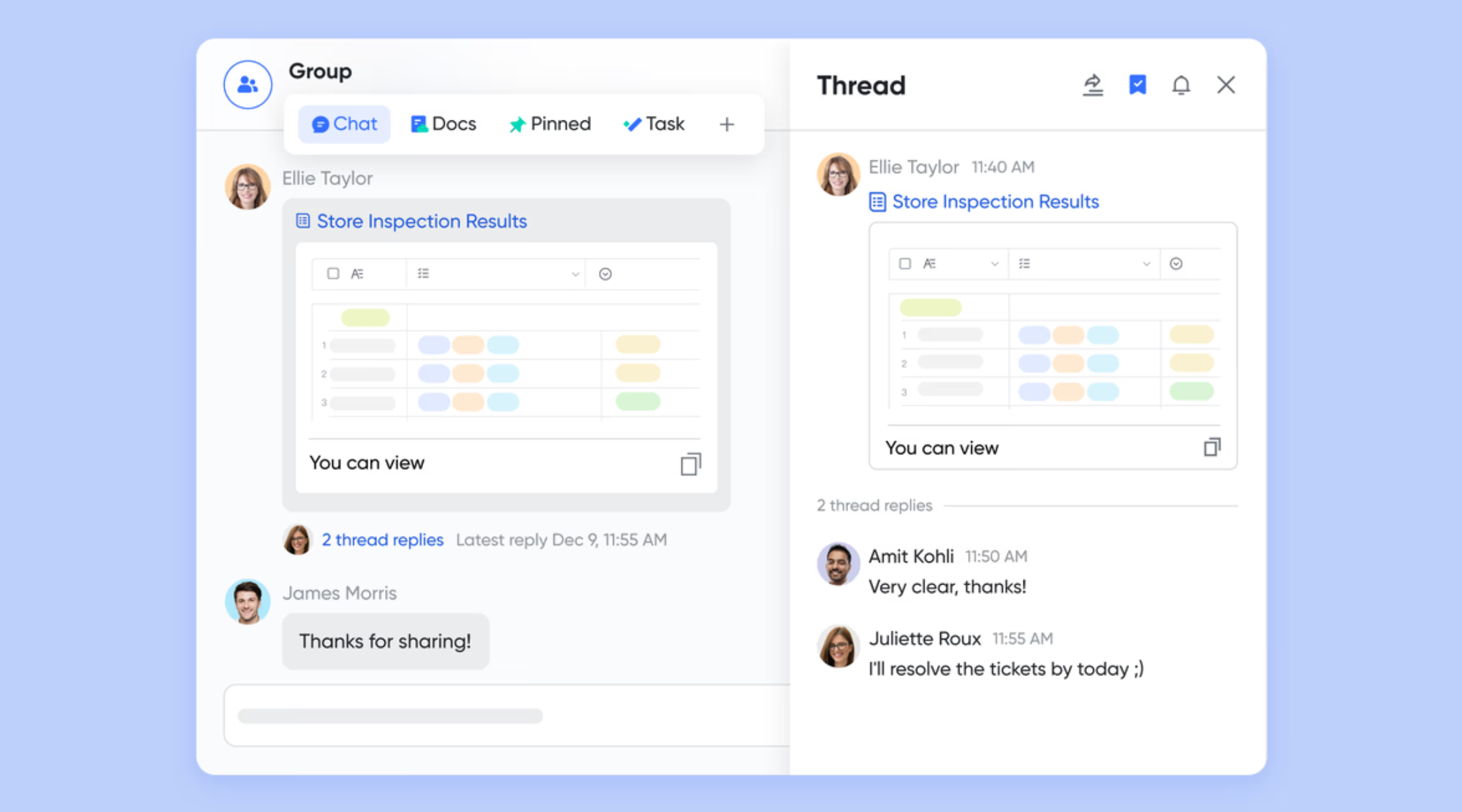
Edit sent messages to maintain clarity
Users can edit messages after sending to correct errors, update instructions, or clarify details. This avoids confusion caused by follow-up corrections and keeps conversation history accurate. In operational environments where instructions change quickly, this function helps maintain a clean and reliable communication trail. 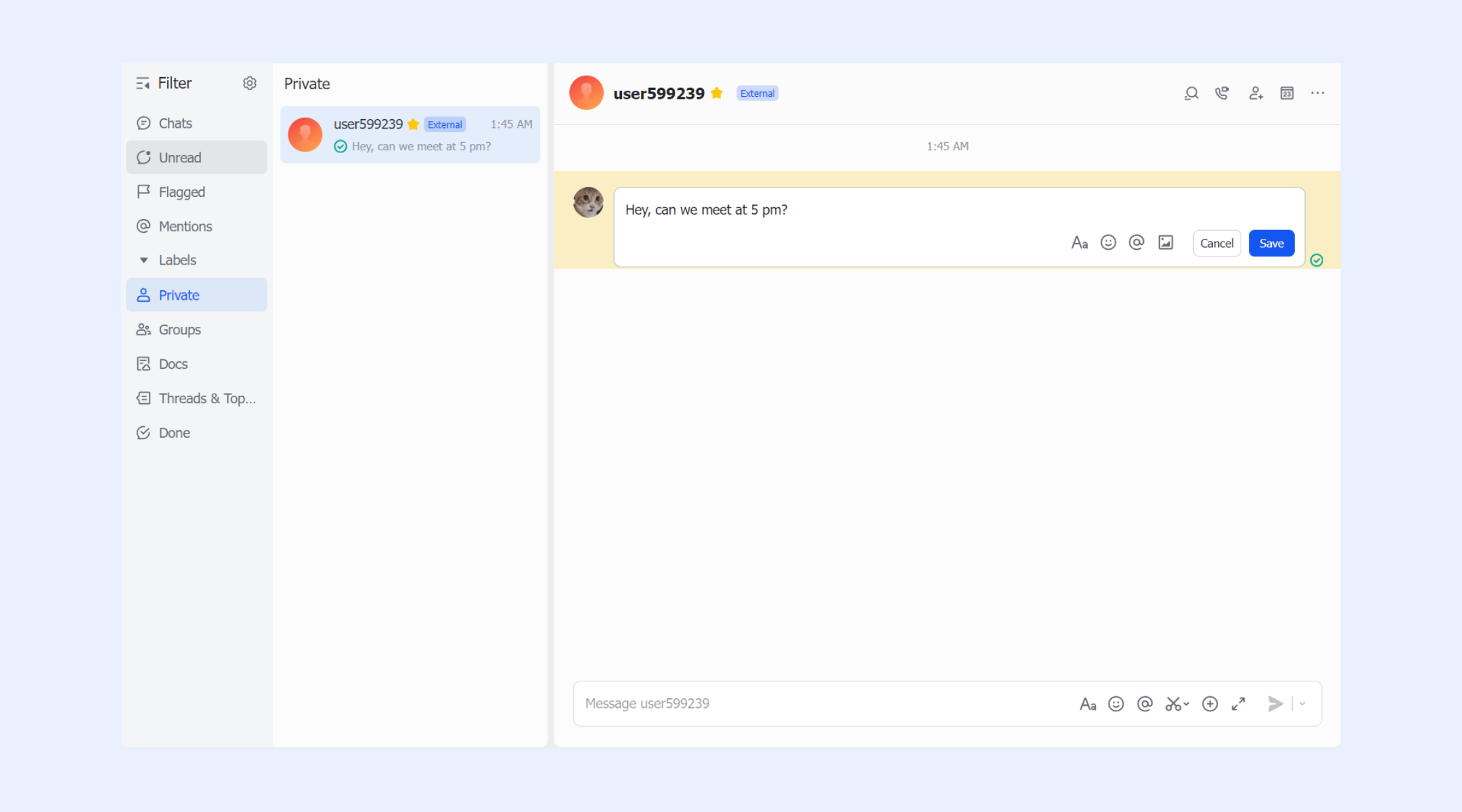
Read and unread status for reliable follow-ups
Lark Messenger shows whether recipients have read a message, giving senders confidence that information has been seen. This reduces the need for repeated nudges or unnecessary follow-ups, helping teams communicate efficiently without inflating message volume. 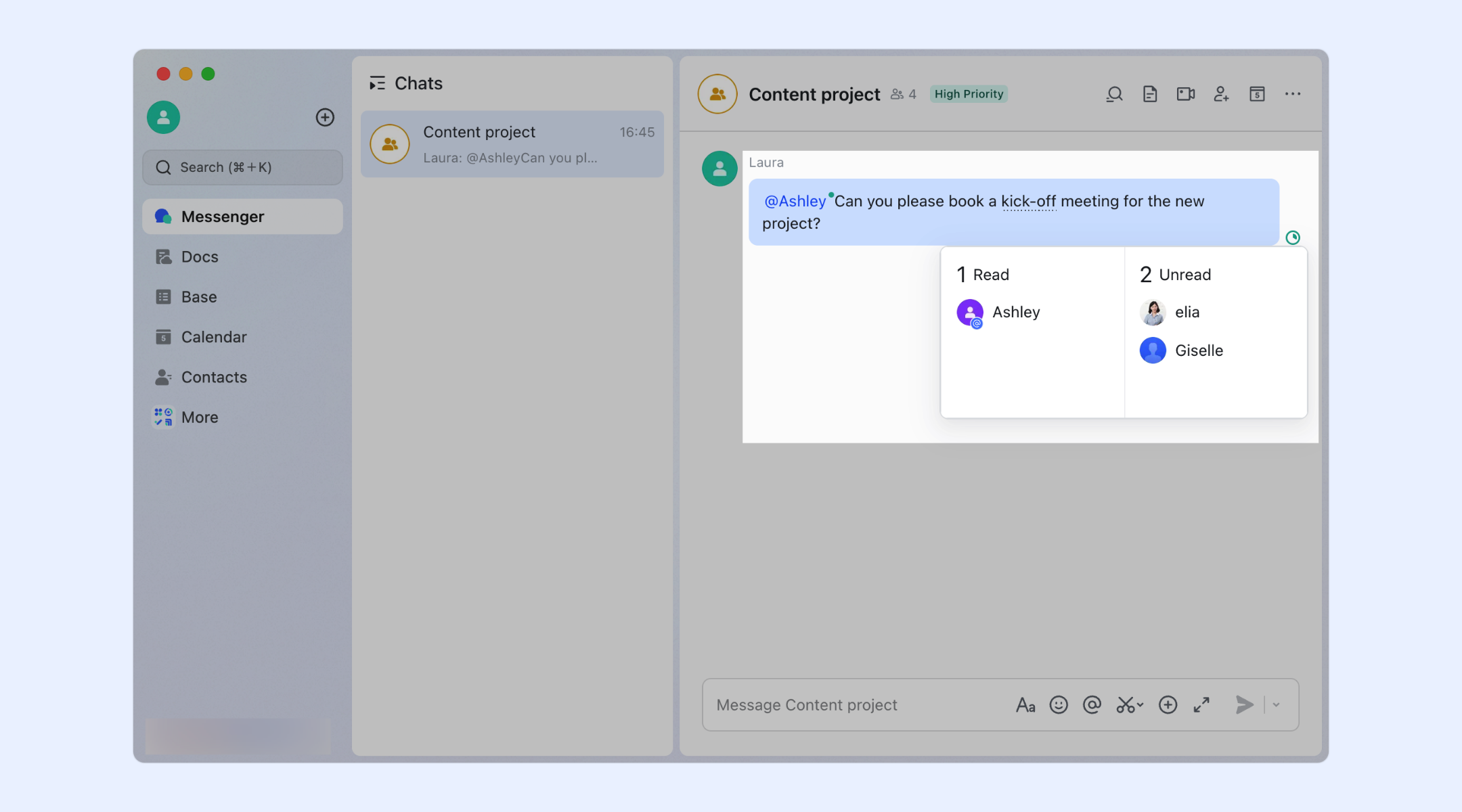
Advanced filtering for message management
Filters in Lark Messenger allow users to by type, status, or importance. Teams can quickly focus on unread messages, mentions, or priority chats without manually sorting conversations. This improves responsiveness and prevents meaningful discussions from being buried as communication scales. 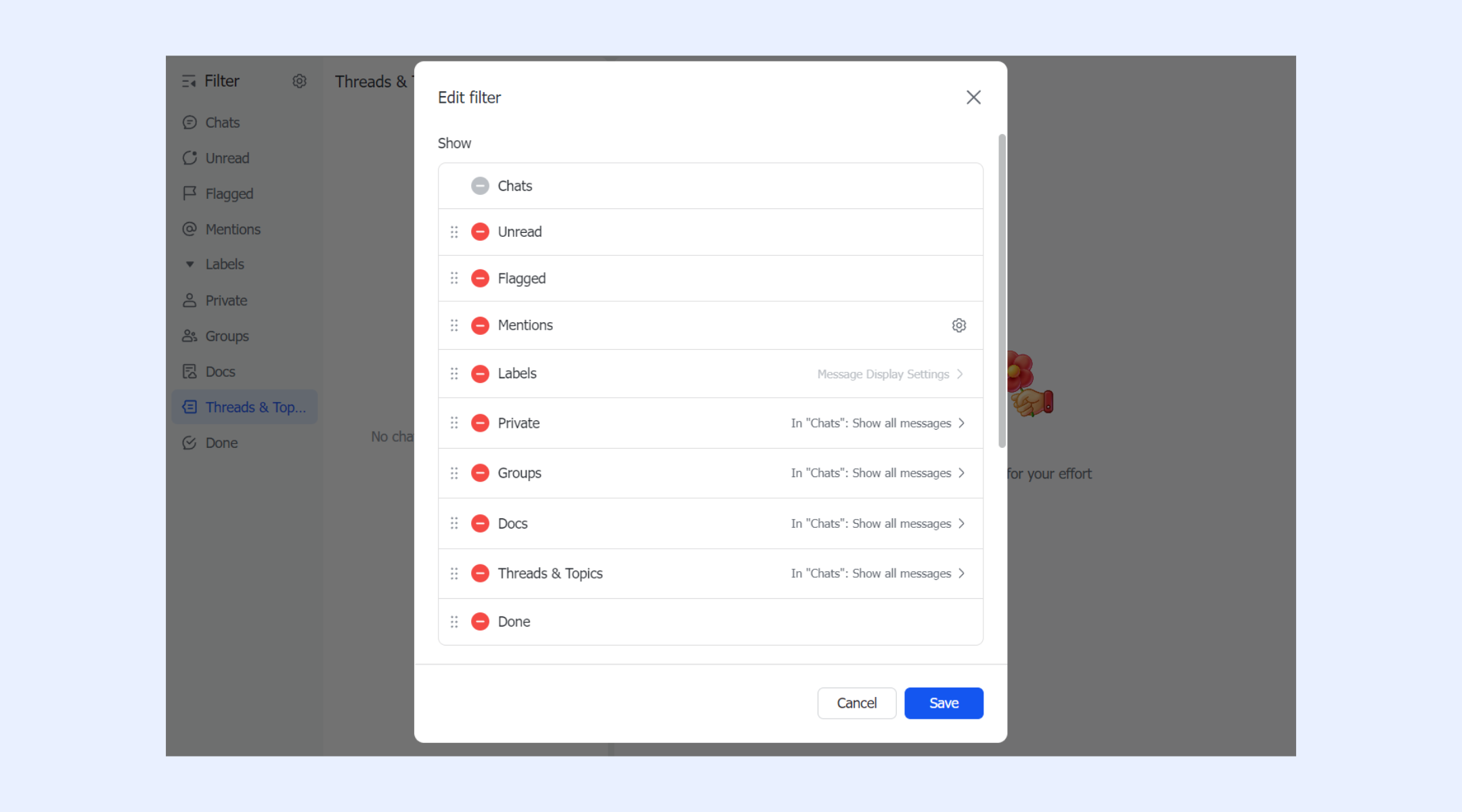
Voice messaging with automatic transcription
Lark Messenger supports voice messages that are automatically transcribed into text, while preserving written records. This is especially useful for mobile users or cross-language teams, as transcripts make messages searchable and accessible without increasing message clutter. 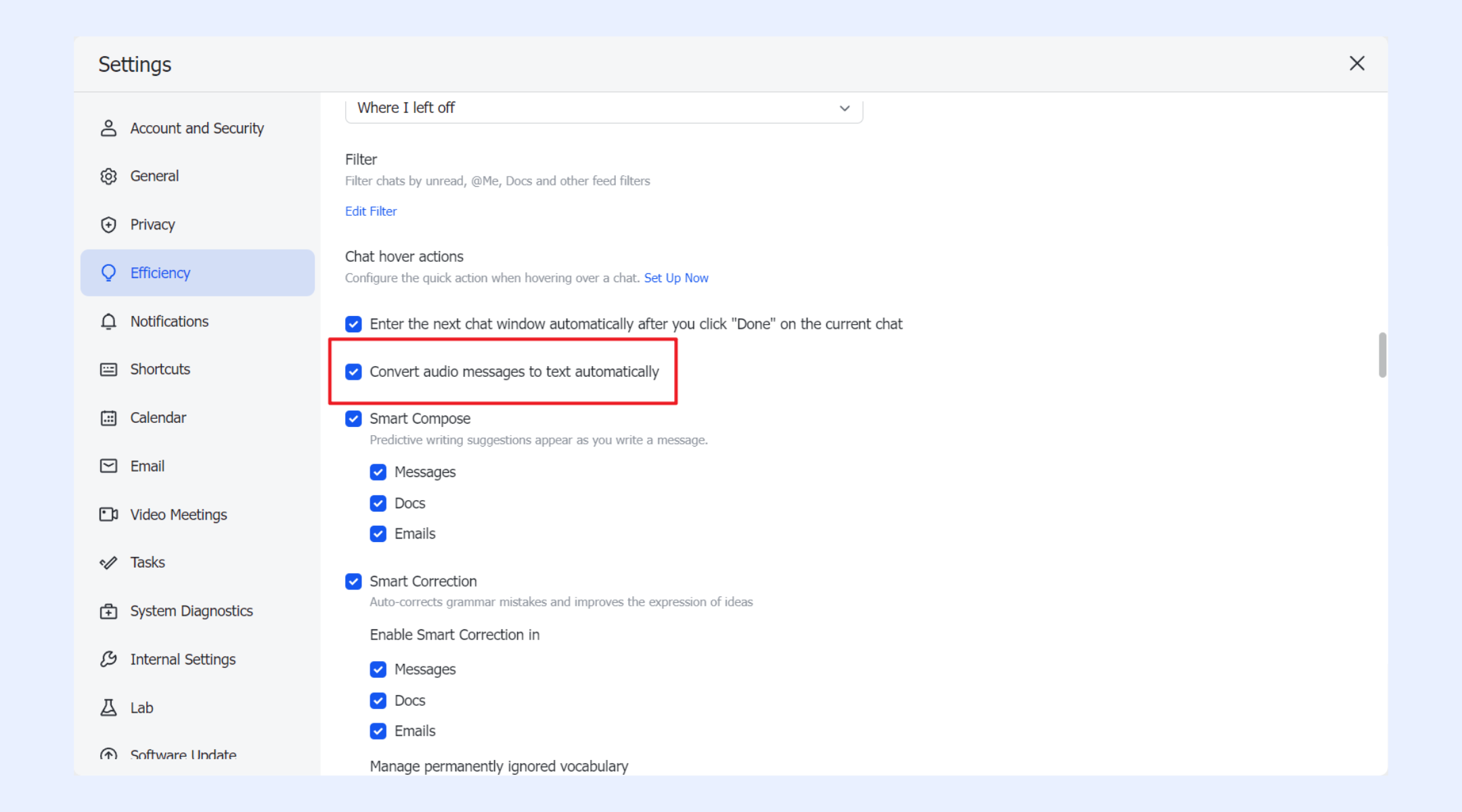
Export conversations into structured documents
Key discussions in Messenger can be exported directly into documents. Teams can convert chat history into meeting notes, decision logs, or without retyping content. This ensures essential information remains accessible long after conversations move on. 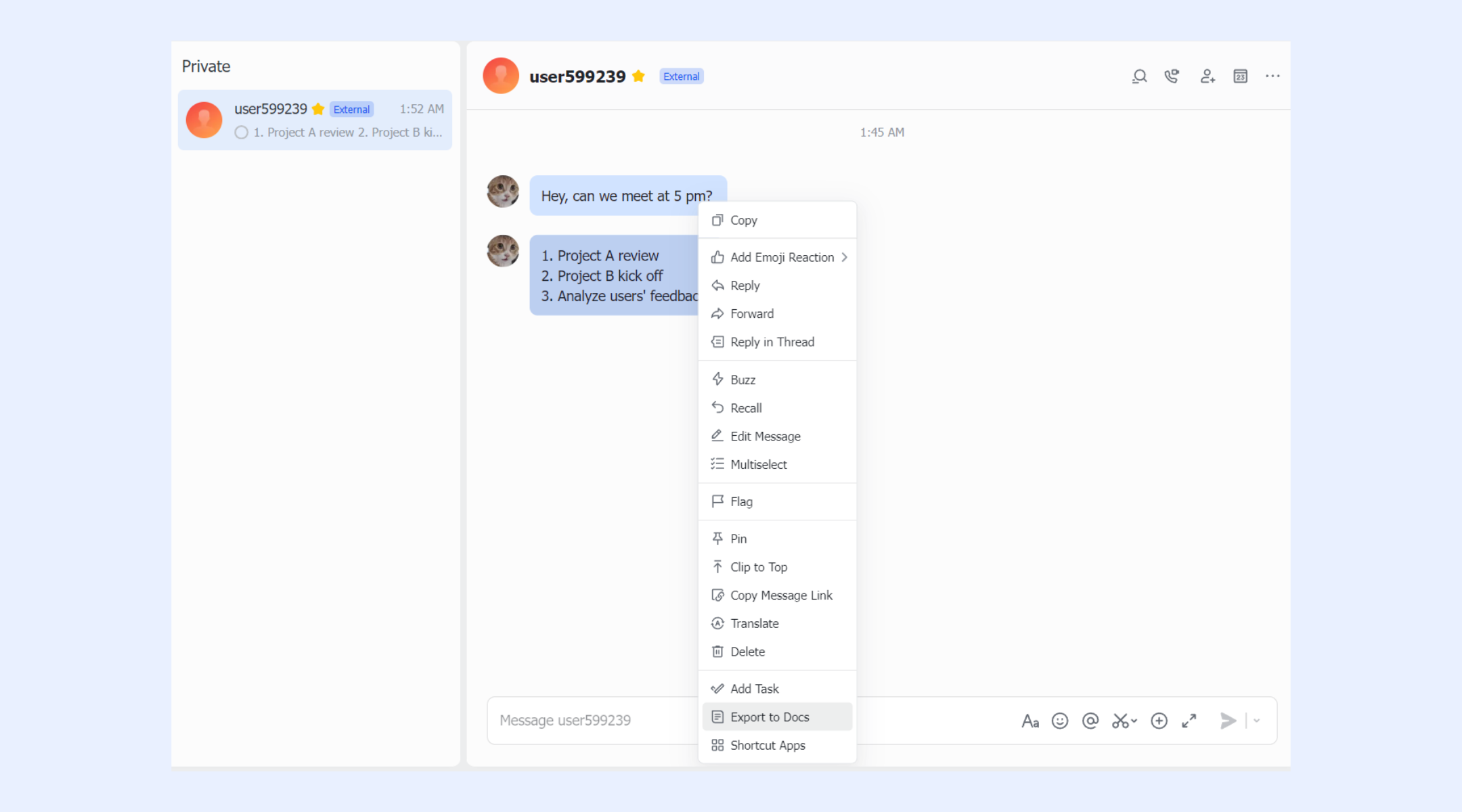
Quick replies on mobile for faster coordination
The mobile quick-reply feature allows users to respond instantly from notifications without opening the whole app. This during time-sensitive situations while keeping message exchanges concise and intentional. :
- Starter plan: Free forever plan that includes 11 powerful tools for up to 20 users. It also comes with 100GB of storage, 1000 automation runs, AI translations, and more.
- Pro plan: $12/user/month (billed annually) for up to 500 users. It includes everything in Starter plus group calling for up to 500 attendees, 15TB of storage, 50,000 automation runs, and more.
- Enterprise plan: for custom pricing. Supports unlimited users and includes even more automation runs and advanced security, compliance, and management features.
For small teams with simple communication needs

18 months message history
1000 Base automation runs/month
2000 rows per table in Base
Most POPULAR
For companies with comprehensive collaboration and management needs
Unlimited message history
500-participant video meetings
50k Base automation runs/month
20k rows per table in Base
For large companies with advanced security and organizational management needs
Get a personalized demo and pricing
Unlimited message history
500-participant video meetings
15 TB storage + 30 GB storage/user
500k Base automation runs/month
50k Base automation runs/month
Most POPULAR
For companies with comprehensive collaboration and management needs
Unlimited message history
500-participant video meetings
50k Base automation runs/month
20k rows per table in Base
Lark vs WhatsApp for business communication workflows
WhatsApp works well for , especially for support, notifications, and time-sensitive updates. However, when used for internal coordination, conversations often become fragmented and more complex to manage at scale. Usage-based messaging and limited workflow context can also make costs and accountability difficult to track.
Lark is designed for predictable, , with messaging not tied to volume. Conversations stay connected to tasks, documents, and decisions, allowing teams to grow without increasing complexity or communication costs.
Conclusion
WhatsApp Business Platform offers powerful reach for customer communication, but its conversation-based pricing, regional rates, and message categories make cost planning more complex as usage grows. While the model works well for external engagement, such as support, notifications, and transactional updates, it is not designed to handle . Hidden provider fees, automation costs, and unpredictable message volumes can further complicate long-term planning.
This is why many businesses separate customer messaging from internal communication workflows. provides a more predictable foundation for team communication by keeping conversations focused on work, not on message counts. With structured collaboration across chat, documents, tasks, and workflows, teams can operate efficiently without worrying about usage-based costs. If your organization is looking to simplify internal communication while maintaining clarity, accountability, and scalability, Lark is worth exploring as a long-term collaboration platform.
Explore smarter ways to keep conversations organized
FAQs
How do regional or country-specific WhatsApp message rates compare globally?
WhatsApp message rates vary by country due to local telecom costs and regulations, so that the same message can cost more in one region than another. Businesses operating globally often see uneven spending across markets. Using Lark for internal communication helps avoid region-based cost differences entirely.
Can automated fallback messages during workflows cause unexpected billing spikes?
Yes, automated workflows can trigger fallback or retry messages that rapidly increase conversation counts. These spikes are easy to miss until billing cycles close. With Lark, internal automation and messaging do not create usage-based billing risks.
How does WhatsApp pricing interact with customer service SLAs?
Faster responses help teams stay within free service windows, supporting SLA targets while controlling costs. Delays can push conversations into paid categories. Lark supports SLA tracking and coordination without message-based penalties.
Is there a way to set usage caps to avoid high WhatsApp message bills?
Some providers offer spending limits or alerts, but these can restrict critical communication. Teams often need internal channels that are not usage-restricted. Lark allows unlimited internal messaging without usage caps.
How does customer-initiated vs business-initiated messaging affect pricing over time?
Customer-initiated messages are typically cheaper due to free service windows, while business-initiated messages incur higher costs. As outreach grows, this difference becomes more noticeable in monthly spend. Lark removes this distinction for internal team communication.
Related reading