














What Is Account Management? Benefits, Challenges and Best Tools

Ryan Tanner
Product Marketing Specialist
Sep 18, 2026
Ryan Tanner
Sep 18, 2026

20 min read


Account management sits at the heart of long-term business growth. It bridges the gap between initial sales and ongoing customer success by ensuring that every client receives continuous value, proactive support, and meaningful partnership. When executed well, account management turns satisfied customers into loyal advocates who drive renewals, referrals, and revenue expansion.
Modern businesses, however, face complex account ecosystems. Teams juggle multiple clients, track performance across tools, and handle renewal discussions without always sharing a single source of truth. That's where collaborative platforms like Lark change the game. Lark helps teams manage accounts more clearly combining communication, project tracking, and shared visibility in one connected workspace.
The following are some of the most widely used solutions today:
1. Lark: All-in-one team workspace for proactive account success
2. HubSpot CRM: Inbox-friendly account visibility
3. Salesforce Sales Cloud: Enterprise engine for complex accounts
4. Zoho CRM: Affordable control and flexible pipelines
5. Pipedrive: Visual deal flow for action-driven teams
6. Microsoft Dynamics 365: CRM meets operations for connected organizations
7. Kapta: Strategic relationship management for key accounts

What is account management?
Account management refers to the process of maintaining and growing relationships with existing clients or accounts. It focuses on customer satisfaction, renewal, and upsell opportunities after an initial sale.
In different industries, account management can mean different things:
- In sales and CRM, it's about managing key accounts through personalized attention and long-term planning.
- In finance, account management often covers cash or asset management accounts where institutions handle customer portfolios securely and efficiently.
- Online services include managing digital account settings, preferences, and user data through online dashboards or platforms.
Across all contexts, the goal remains consistent: nurturing trust, delivering value, and ensuring continued satisfaction.
Image source: unsplash.com
Why account management matters for business performance
Strong account management directly impacts a company's stability and growth. It drives retention, creates upsell opportunities, and ensures customer happiness.
- Protecting revenue and upsell with strategic key accounts: Loyal customers are cheaper to retain and easier to grow. Well-managed accounts create compounding returns over time.
- Reducing churn through proactive oversight: Account managers can detect disengagement early and take steps to restore value before issues escalate.
- Driving efficiency in financial contexts: Cash or asset management accounts thrive on accuracy, transparency, and oversight. Structured management ensures smooth handling of resources.
- Enhancing satisfaction through dedicated teams: Customers feel supported when they have a consistent point of contact who understands their goals and challenges.
Modern account management challenges
Even the most capable teams struggle when their systems and communication channels are disconnected. Modern account management demands speed, coordination, and data accuracy, yet many organizations still rely on manual updates and scattered tools.
Common obstacles include:
- Fragmented internal communication across departments
- Scattered customer information is spread across multiple apps
- Inconsistent follow-ups during handoffs
- Difficulty staying proactive without automated reminders
When these challenges accumulate, customers experience delays, lose context, and reduce confidence. That's why teams increasingly look for unified workspaces that streamline collaboration, where communication, data, and execution come together seamlessly.
Top 7 tools in account management
1. Lark: All-in-one team workspace for proactive account success
Account management teams often lose valuable time switching between chat, CRM tools, and spreadsheets. Lark brings these workflows together so that customer data, communication, and collaboration exist in one environment. From client histories and documents to discussions and task assignments, accessible on one platform, accounting teams can work more efficiently, maintain accurate records, and respond to client needs faster.
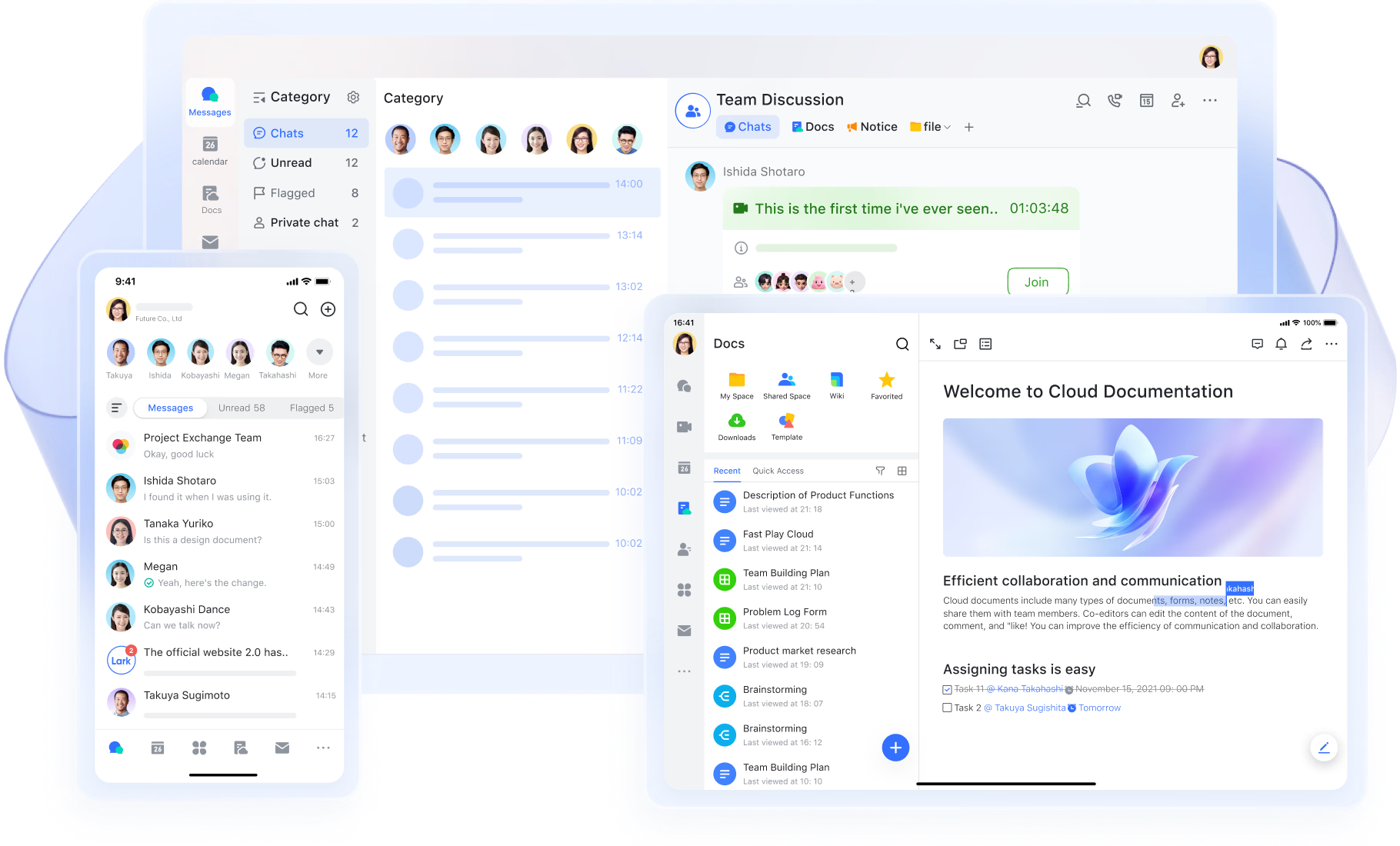
- Lark Base: Centralized account hub with full visibility and proactive health monitoring
Account managers lose valuable time when customer information is scattered across tools. Lark Base gives every account a dedicated workspace that displays goals, lifecycle stage, deal history, success metrics, and renewal timelines, so sales, success, and product teams always share the same up-to-date context. Live dashboards highlight which accounts are growing, which need support, and which are primed for expansion.
To prevent churn before it happens, Account Health indicators surface early warning signs like reduced usage, stalled onboarding, or unresolved issues, and can trigger follow-up workflows automatically. This combination of visibility and proactive alerts helps teams protect relationships, reduce revenue risk, and turn struggling accounts into long-term success stories.
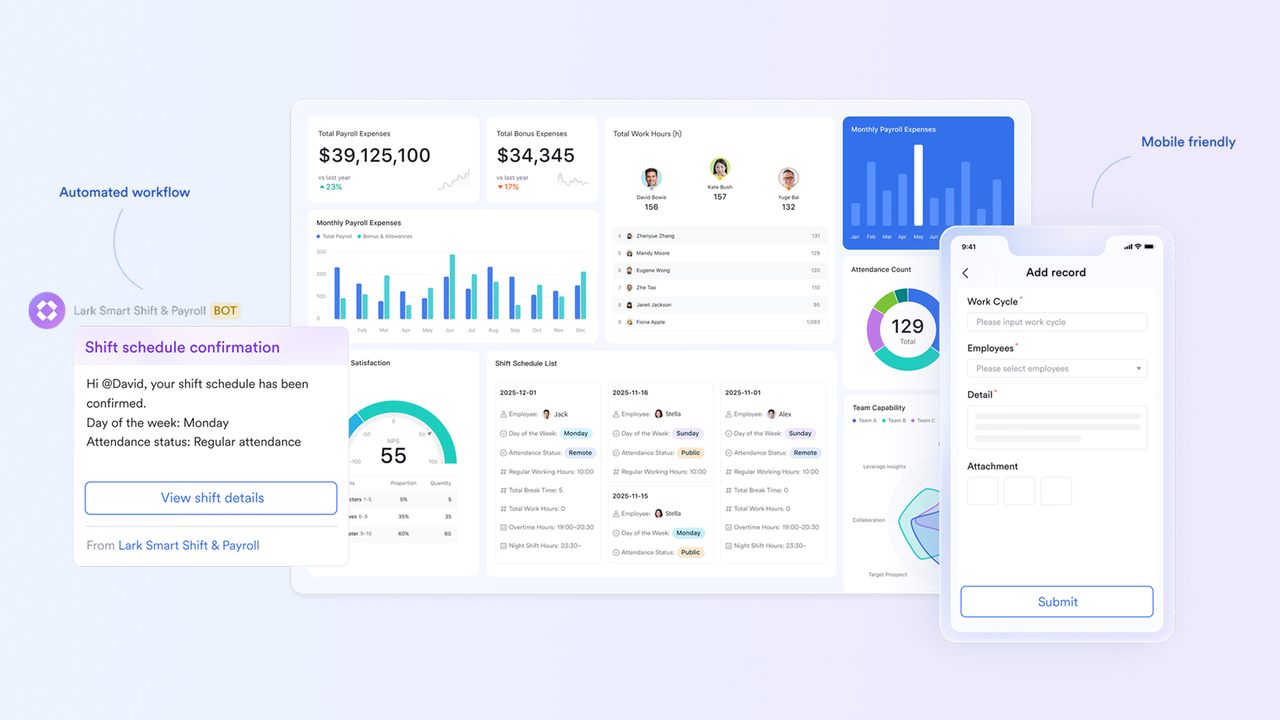
- Lark Docs & Wiki: Shared playbooks for consistent account success
Using Lark Docs and Lark Wiki, teams can create and store standardized success playbooks, onboarding checklists, QBR templates, contract handover notes,and renewal planning frameworks. New account managers ramp faster by learning proven approaches, while experienced teams avoid reinventing processes for every customer. Knowledge becomes a strategic asset, not tribal memory.
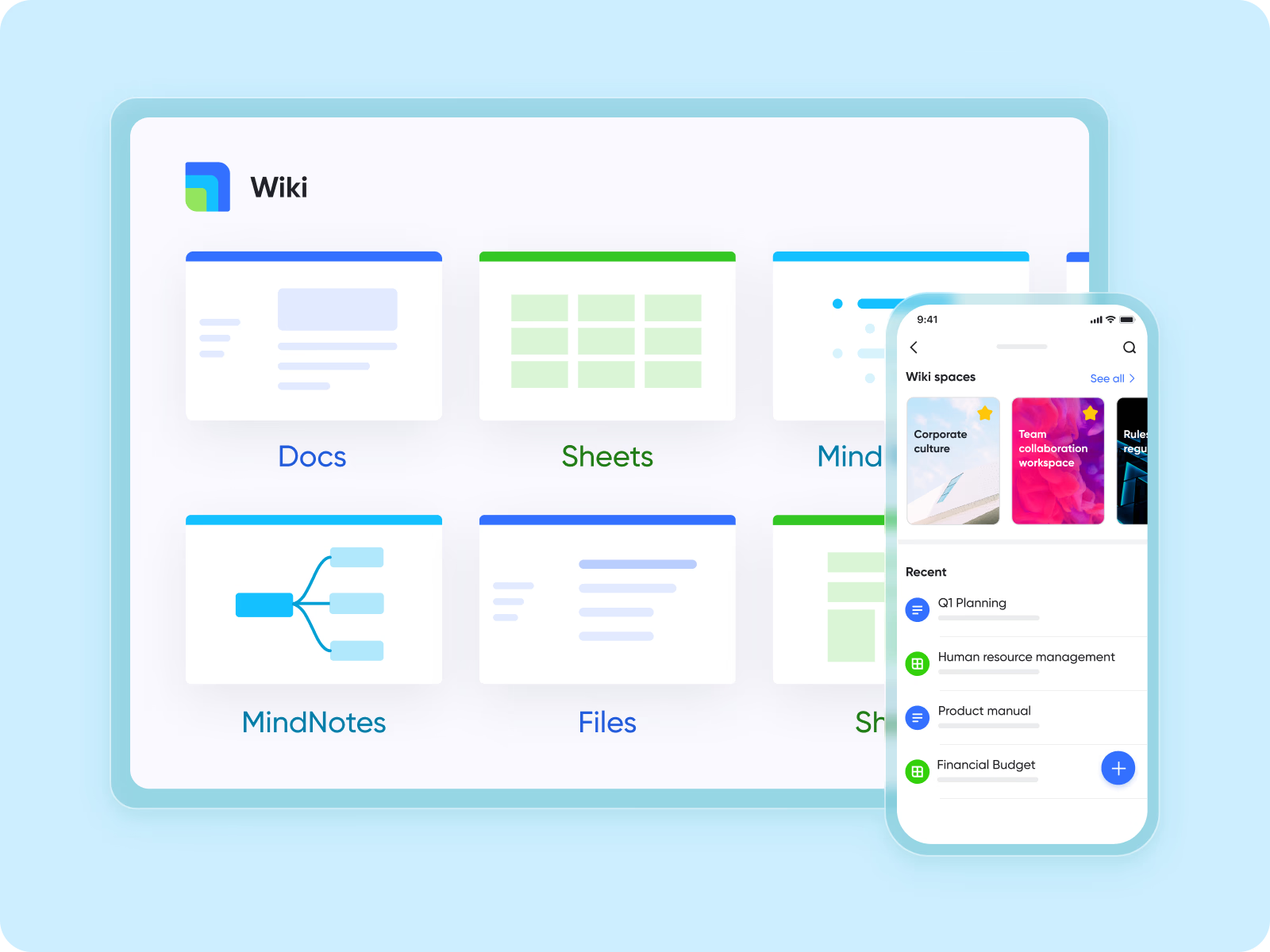
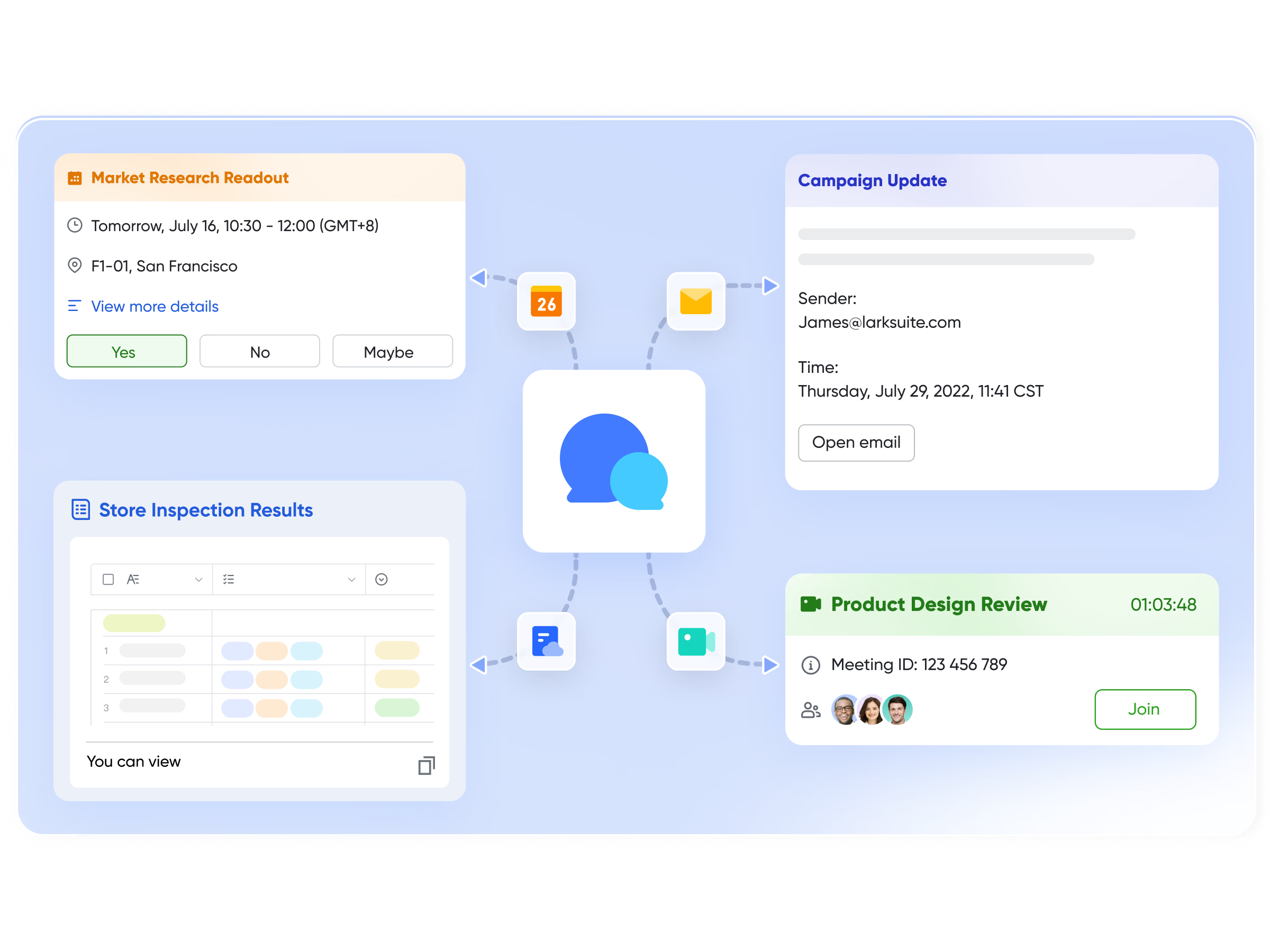
- Lark Messenger: Fast internal responses for better customer outcomes
The slower teams respond internally, the slower customers feel cared for. Lark Messenger connects conversations directly to account work, customer details, success goals, and escalation tickets. When a sponsor asks for a feature ETA, the AM tags the product instantly and gets a clarified response within seconds, not days.
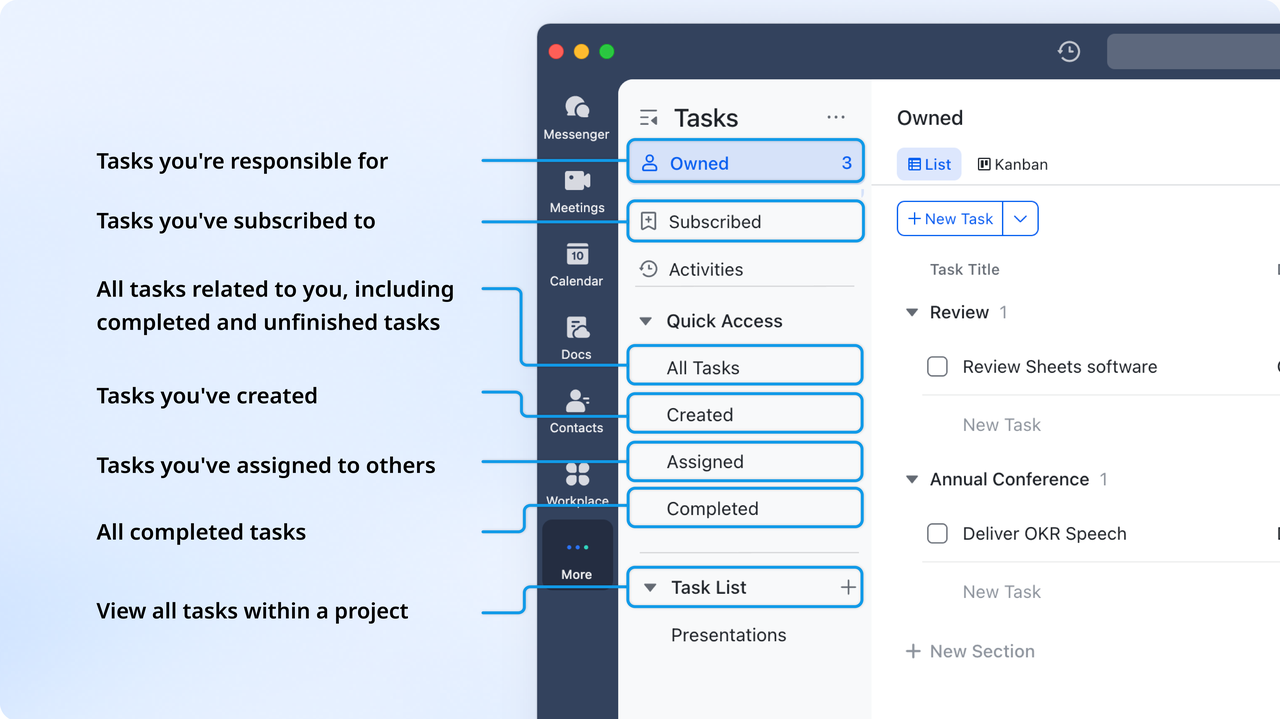
- Lark Tasks: Follow-through on every customer commitment
Account promises are powerful and damaging when forgotten. Lark Tasks gives every action item ownership, due dates, and automated reminders. In this way, renewal prep tasks are automatically assigned certain days in advance, feature follow-ups are flagged for the product team with clear next-step tracking, and nothing slips through the cracks, ensuring customers experience a consistently reliable partnership.
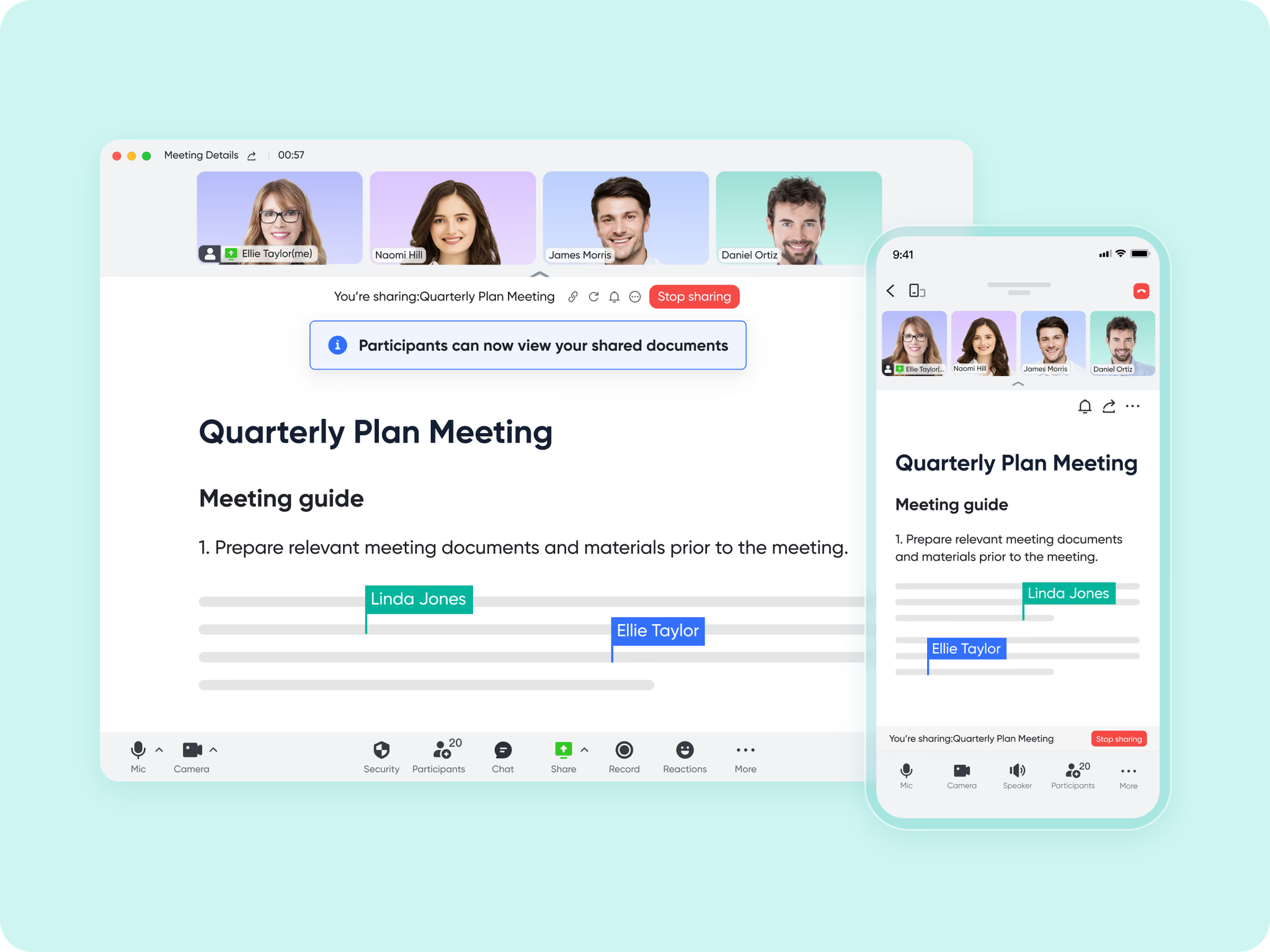
- Lark Meetings + Magic Share: Real-time account review collaboration
QBRs and renewal meetings rely on absolute clarity. With Magic Share, teams open account dashboards, docs, or action plans inside Lark Meetings, editing live while discussing next moves. No screen-share confusion, no outdated files. Decisions are faster, agreements clearer, and customers see alignment in real time.
Pros:
- Brings communication and execution together in one platform
- Provides real-time visibility into customer performance and engagement
- Supports automation for reminders and renewal preparation
- Reduces manual tracking and delays during account handoffs
- Encourages cross-functional collaboration among teams
Cons:
- Require a learning curve for new users who are first exposed to a feature-rich app
- Starter plan: Free forever plan that includes 11 powerful tools for up to 20 users. It also comes with 100GB of storage, 1000 automation runs, AI translations, and more.
- Pro plan: $12/user/month (billed annually) for up to 500 users. It includes everything in Starter plus group calling for up to 500 attendees, 15TB of storage, 50,000 automation runs, and more.
- Enterprise plan: Contact sales for custom pricing. Supports unlimited users and includes even more automation runs and advanced security, compliance, and management features.
2. HubSpot CRM: Inbox-friendly account visibility
HubSpot CRM is a popular choice among small to medium-sized businesses seeking a simple yet capable account management platform. It focuses on giving teams a unified view of all customer communications. The CRM connects directly with inboxes and calendars, making it easy for teams to manage follow-ups, monitor deals, and organize workflows in one place.
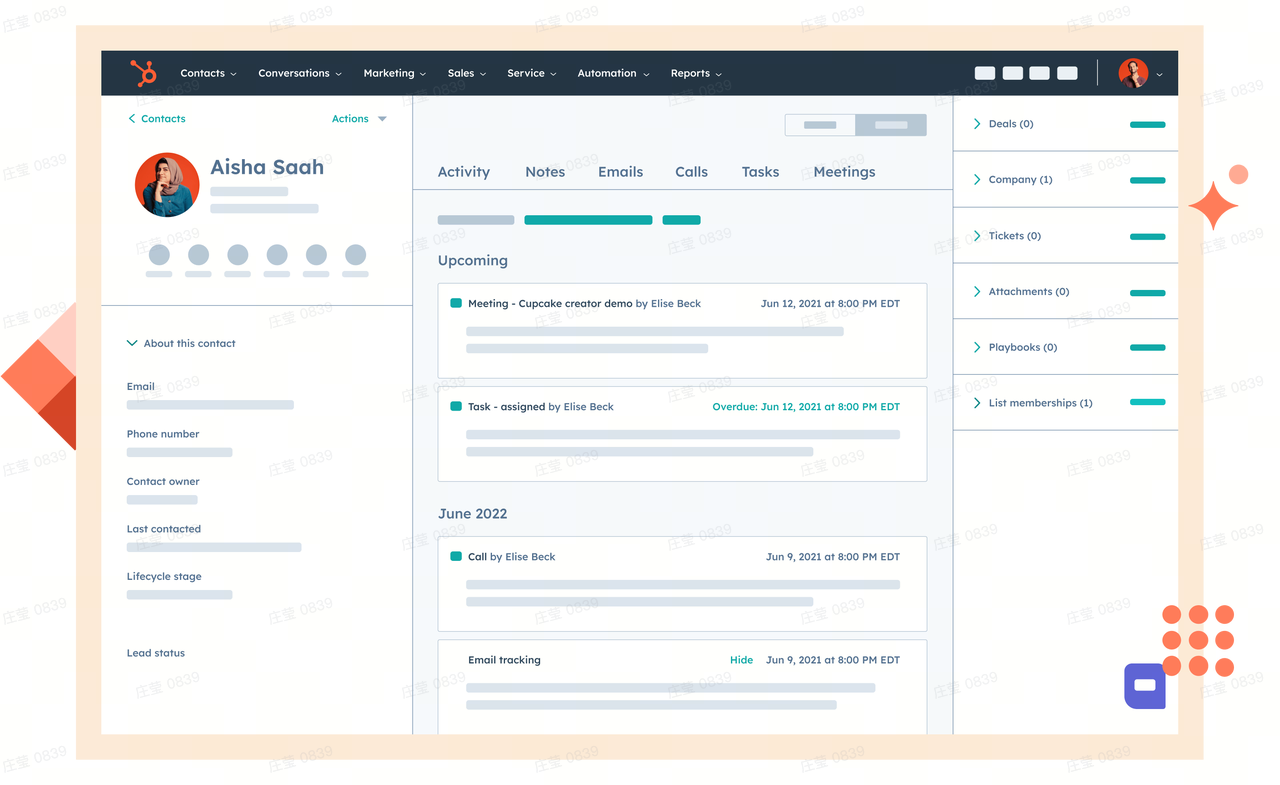
Image source: hubspot.com
Features:
- Central contact database with timeline views for every customer
- Email and calendar sync for communication tracking
- Custom pipelines and workflows to organize deals
- Basic task automation for reminders and follow-ups
- Reporting dashboards to view performance metrics
- Integration with HubSpot's marketing tools for lead nurturing
Pros:
- User-friendly and simple to adopt for new teams
- Free core version available with solid CRM functions
- Provides email visibility directly within the platform
- Strong reporting options for early-stage account management
- Works well with sales-driven workflows
Cons:
- Advanced analytics and automation require higher-tier plans
- Limited customization for complex enterprise environments
Pricing:
- Starter: $9/user/mo (annual commitment)
- Professional: $90/user/mo
- Enterprise: $150/user/mo
3. Salesforce Sales Cloud: Enterprise engine for complex accounts
Salesforce Sales Cloud is built for organizations that manage large, complex client relationships across multiple departments. It offers powerful automation, reporting, and customization options that allow teams to design detailed account workflows. The platform is best suited for enterprises that require deep analytics and system-level control over customer management.
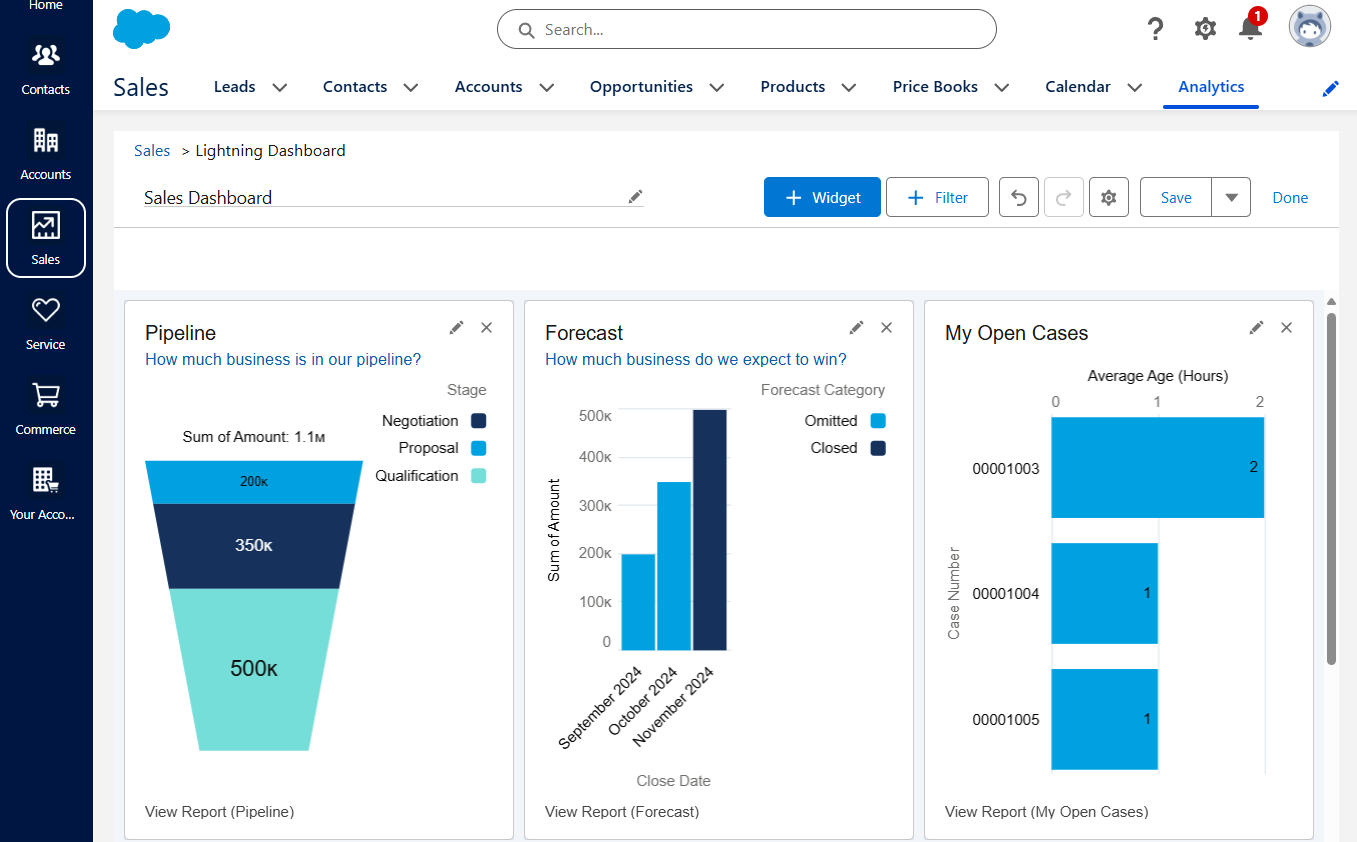
Image source: salesforce.com
Features:
- Robust CRM database with detailed customer records
- Advanced workflow automation and approval systems
- AI-powered recommendations for sales and retention strategies
- Forecasting and analytics tools for revenue planning
- Extensive reporting and dashboard customization
- Wide ecosystem of apps and extensions
Pros:
- Highly configurable for enterprise account workflows
- Scales easily for large teams managing global clients
- Powerful analytics and forecasting capabilities
- Enables personalized communication at every stage
- Secure and reliable cloud infrastructure
Cons:
- Requires training for teams new to the platform
- Expensive for smaller organizations or startups
Pricing:
- Starter: $25/user/mo
- Pro: $100/user/mo
- Enterprise: $175/user/mo
- Unlimited: $300/user/mo
4. Zoho CRM: Affordable control and flexible pipelines
Zoho CRM serves as a cost-effective option for teams looking to manage accounts and customer interactions without heavy spending. It provides flexibility in customizing pipelines, automating workflows, and managing communications across multiple channels. Zoho's modular design makes it easy for small businesses to expand features as they grow.
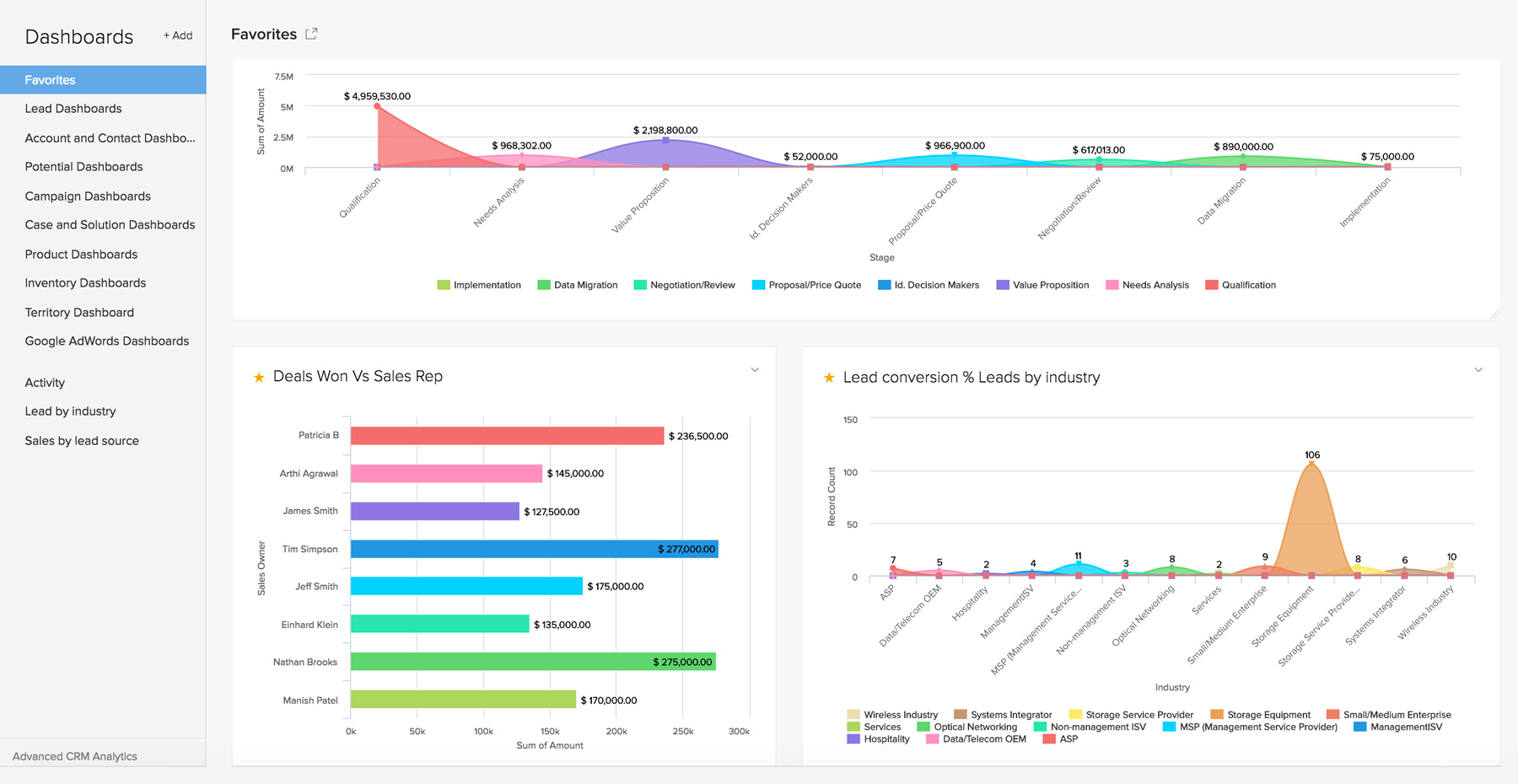
Image source: zoho.com
Features:
- Customizable pipelines and modules for different client types
- AI assistant for insights, task suggestions, and follow-ups
- Workflow automation for repetitive processes
- Multichannel communication across chat, email, and social
- Reporting and performance dashboards for management
- Integration with Zoho's ecosystem of productivity tools
Pros:
- Affordable plans suitable for scaling teams
- Easy to set up and modify without technical support
- Helpful AI assistant that guides daily tasks
- Good balance between features and simplicity
- Offers cross-channel communication with clients
Cons:
- Interface design feels dated compared to modern CRMs
- Collaboration features are limited to messaging tools
Pricing:
- Standard: $14/user/mo
- Professional: $23/user/mo
- Enterprise: $40/user/mo
- Ultimate: $52/user/mo
5. Pipedrive: Visual deal flow for action-driven teams
Pipedrive focuses on simplifying sales and account workflows through a highly visual interface. Teams can view deals, activities, and progress at a glance, making it easier to stay organized. It's ideal for companies that want to track opportunities clearly while maintaining steady communication and timely updates for their accounts.
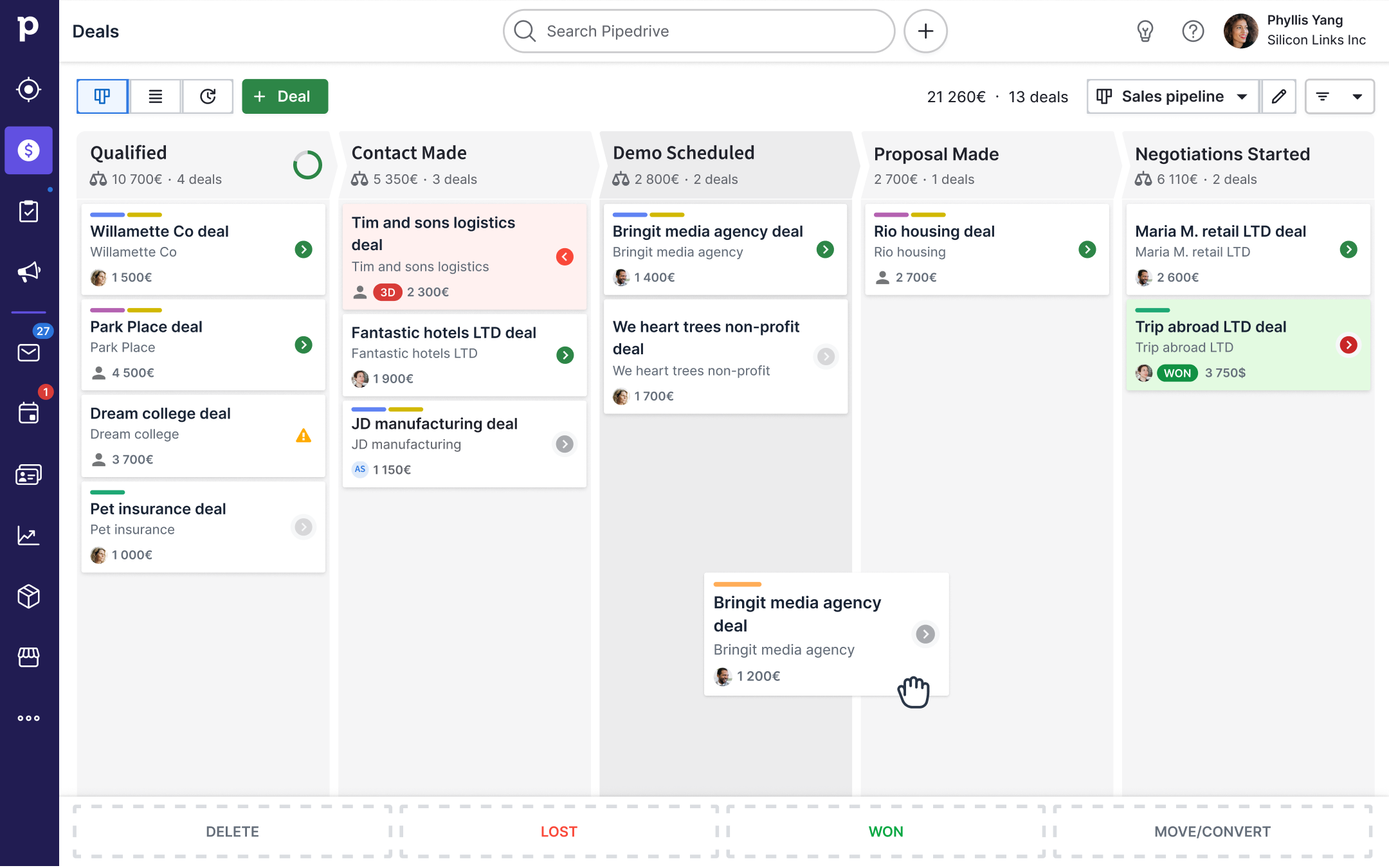
Image source: pipedrive.com
Features:
- Drag-and-drop deal pipelines with customizable stages
- Email synchronization for contextual client tracking
- Goal tracking and performance measurement dashboards
- Deal probability indicators to prioritize high-value clients
- Mobile app for account updates on the go
- Workflow automation for repetitive sales actions
Pros:
- Very intuitive and visual interface
- Keeps sales and account teams organized with clear stages
- Affordable for small and mid-sized teams
- Strong mobile performance and offline support
- Helps prioritize actions through automated scoring
Cons:
- Lacks deeper features for post-sale account management
- Limited reporting customization beyond pipelines
Pricing:
- Trial only (14 days)
- Essential: $12/user/mo
- Advanced: $24/user/mo
- Professional: $49/user/mo
- Power: $59/user/mo
- Enterprise: $79/user/mo
6. Microsoft Dynamics 365: CRM meets operations for connected organizations
Microsoft Dynamics 365 combines customer relationship management with business operations. It's built for enterprises that want unified access to sales, marketing, and finance data. The platform connects seamlessly with Microsoft 365 tools, offering consistency across email, documents, and analytics.
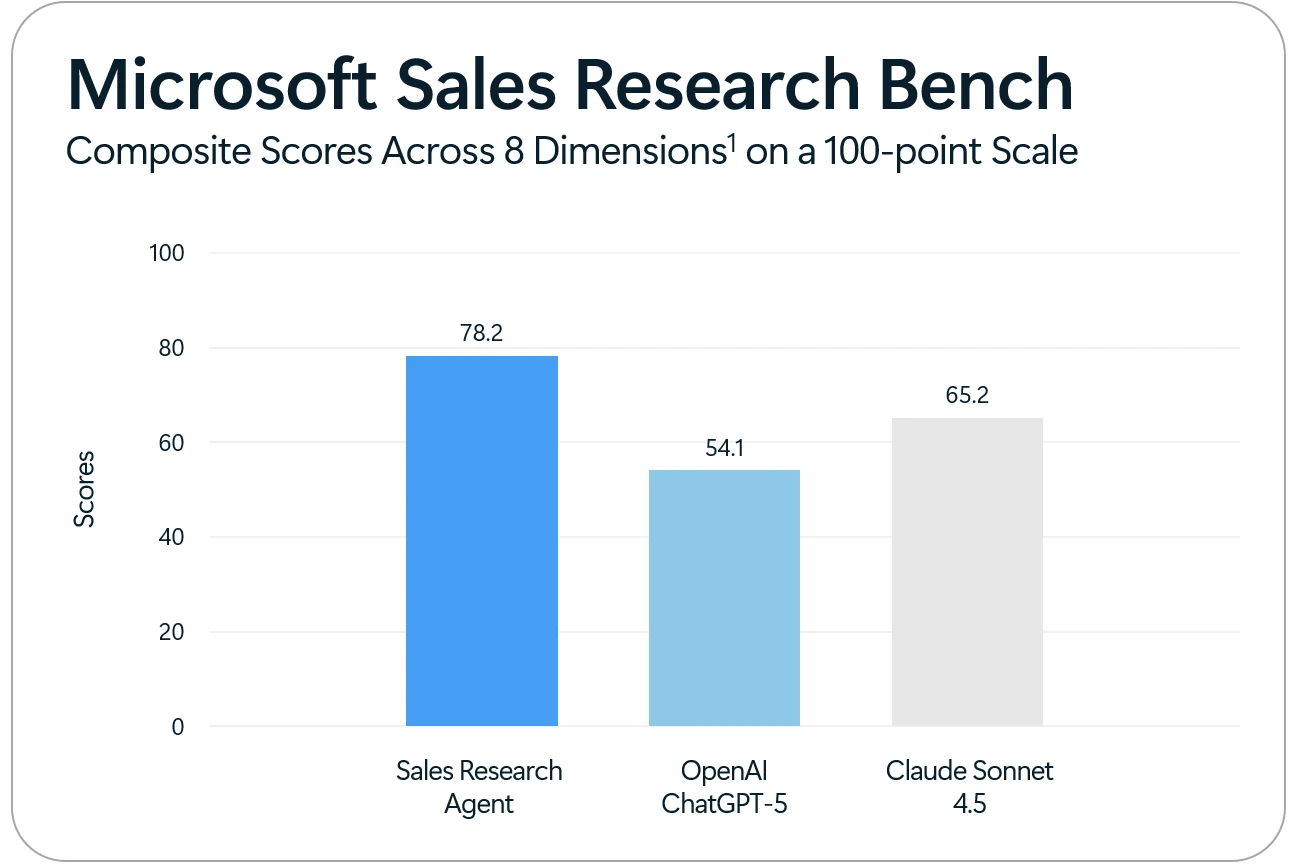
Image source: microsoft.com
Features:
- Unified sales, marketing, and service modules
- Financial and operational data combined in one environment
- Real-time insights through Power BI dashboards
- Relationship insights using Microsoft AI
- Seamless access across Outlook, Teams, and Excel
- Strong compliance and security features
Pros:
- Comprehensive system for large-scale operations
- Deep connection with the Microsoft ecosystem
- Robust analytics for data-driven account strategies
- Scalable for global organizations
- Secure platform with enterprise-level governance
Cons:
- Complex setup requiring technical expertise
- It can be overwhelming for smaller companies with limited IT support
Pricing:
- Professional: $65/user/mo
- Enterprise: $105/user/mo
7. Kapta: Strategic relationship management for key accounts
Kapta specializes in key account management, focusing on goal alignment, client engagement, and strategic relationship growth. It helps teams structure client plans, track outcomes, and maintain consistent communication. Kapta works best for organizations that rely heavily on high-value accounts and long-term partnerships.
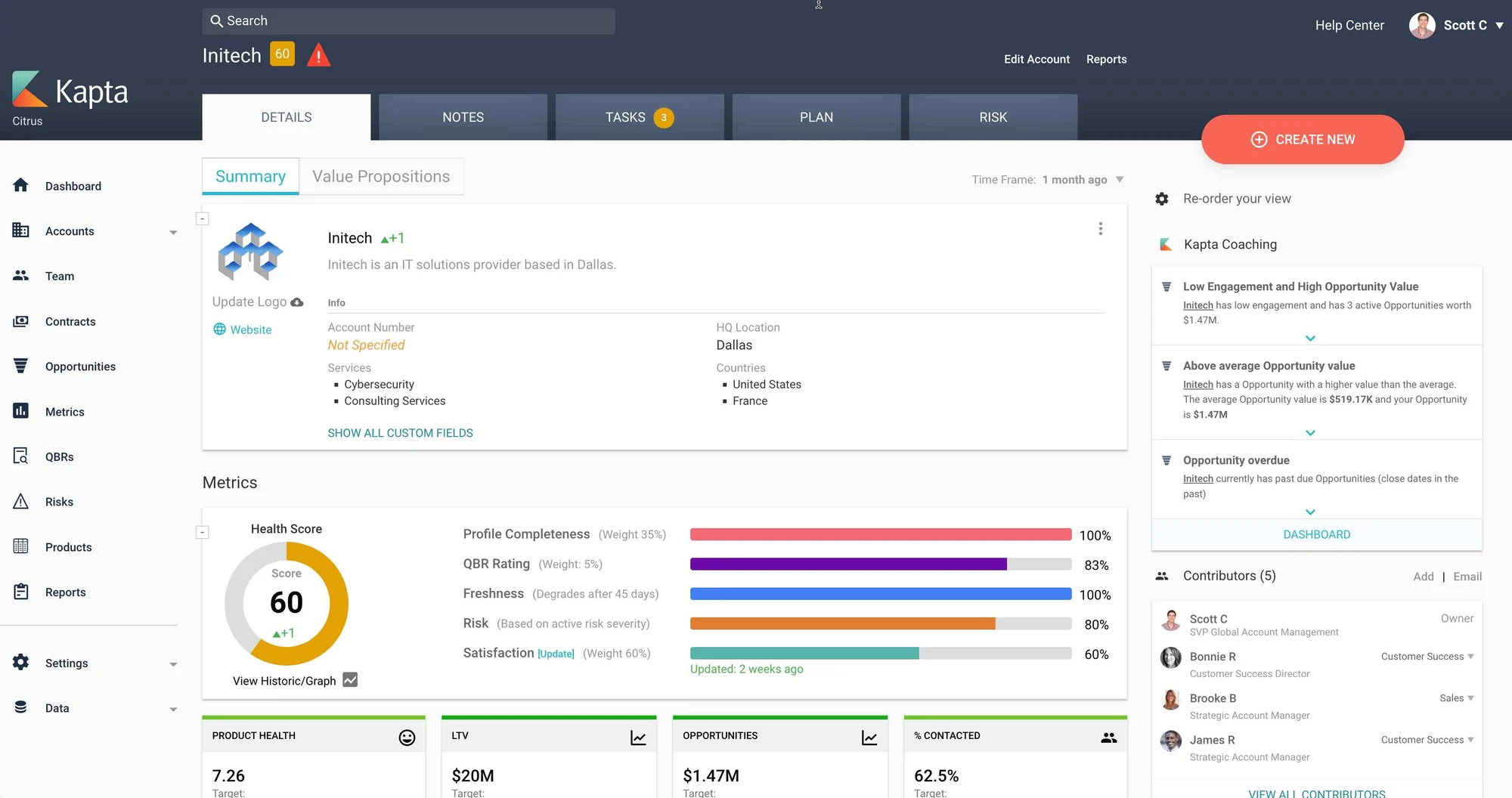
Image source: kapta.com
Features:
- Key account planning templates and progress tracking
- Voice of customer feedback capture
- Goal alignment dashboards and milestone tracking
- Relationship mapping to identify key decision-makers
- Built-in review schedules and check-in reminders
- Custom reports to analyze client health
Pros:
- Tailored specifically for key account management use cases
- Encourages structured goal setting and proactive review cycles
- Improves client visibility with relationship maps
- Simplifies communication between account and leadership teams
- Focused design that promotes retention and satisfaction
Cons:
- Limited for teams that need broader CRM functions
- Not suitable for managing smaller or transactional clients
Pricing:
- From $1,000/month (custom pricing)
Effective account management strategies
Account management goes beyond keeping customers satisfied. It's about creating structured systems that allow teams to anticipate needs, measure outcomes, and deliver consistent value. The best account managers use a combination of data, planning, and collaboration to strengthen client relationships. These strategies help teams move from reactive firefighting to proactive success planning.
- Segmenting accounts by value and risk
Not all accounts require the same level of attention or resources. Segmenting helps teams classify customers by revenue potential, growth opportunity, or churn risk. High-value accounts can receive strategic plans, while lower-risk ones can follow automated check-ins or standardized workflows. With Lark Base, teams can build dashboards that categorize accounts based on financial data, usage trends, or engagement levels. This ensures each client gets the right level of care without overextending resources.
- Creating account plans with objectives and KPIs
Successful account management thrives on structured planning. Account plans outline goals, key metrics, renewal timelines, and customer milestones. These plans help align internal teams around measurable objectives, from increasing product adoption to improving satisfaction scores. Using Lark Docs, managers can store and share account plans that track progress across teams, ensuring updates are always current. This approach turns goals into clear, actionable outcomes rather than abstract intentions.
- Regular business reviews with key clients
Quarterly or semi-annual business reviews provide opportunities to evaluate progress, address challenges, and reaffirm value. These sessions help maintain transparency and demonstrate ongoing commitment to client success. Lark Meetings with Magic Share allow teams to display live dashboards, performance charts, and renewal forecasts directly during the call. Every participant can co-edit documents in real time, avoiding outdated slides and creating more collaborative review sessions.
- Using dashboards to monitor account health
Account health tracking helps teams identify potential issues early. Dashboards visualize indicators like activity levels, support requests, or satisfaction trends. With Lark Base, these insights can update automatically, flagging accounts that may need extra support or re-engagement. Managers can filter views by client type, lifecycle stage, or revenue segment to pinpoint patterns. Regularly reviewing these dashboards keeps account performance visible and prevents small problems from turning into larger ones.
- Cross-functional collaboration for client success
Account management depends on communication between multiple departments, from product and marketing to support. When teams share insights freely, clients benefit from faster solutions and more cohesive service. Lark Messenger and Tasks make collaboration seamless by linking discussions directly to account items, tickets, and follow-ups. This ensures everyone stays aligned and every customer request receives timely attention. Strong cross-functional teamwork transforms account management from an individual task into a unified organizational effort.
Common account management pitfalls and solutions
Even experienced account teams face challenges that slow growth and affect customer satisfaction. Many of these pitfalls stem from fragmented communication, inconsistent follow-ups, and lack of visibility. Recognizing these issues early and addressing them through structured tools can drastically improve retention and efficiency. Here's how modern teams can overcome these common account management challenges.
- Reactive approach → automated proactive reminders
A reactive approach means teams only act when problems arise. This often leads to last-minute renewals or missed follow-ups. Lark's automated reminders and alert systems shift teams toward a proactive mindset. For instance, when a renewal date nears or account engagement drops, Lark Tasks automatically assigns check-ins or sends notifications. This helps account managers stay ahead, ensuring customers receive attention before issues escalate.
- Scattered data → single workspace
When client data is stored across multiple apps or spreadsheets, critical information gets lost. Lark solves this by offering a centralized workspace where account details, contracts, and updates coexist. Every team member can access current information without switching between tools. This unified visibility prevents miscommunication and ensures that every department works from the same accurate data source, strengthening decision-making and client confidence.
- Misalignment → shared visibility and AI summaries
Without shared visibility, teams may act on outdated or incomplete data. Lark addresses this challenge through real-time dashboards and AI-powered summaries that capture recent discussions and updates. When a customer requests an update, everyone from sales to support already has context. This shared understanding eliminates duplicate work and ensures all communication stays consistent across touchpoints.
- Drop in communication → Messenger and Tasks keep cadence
Irregular communication weakens relationships and creates uncertainty. Lark Messenger and Lark Tasks maintain steady interaction by embedding reminders, check-ins, and updates within team workflows. Account managers can schedule recurring touchpoints, track message responses, and assign action items instantly. This system keeps customer conversations active, transparent, and well-documented. Regular contact not only improves satisfaction but also reinforces long-term loyalty.
Conclusion
Account management is more than maintaining relationships, it's about continuously creating value for customers. When businesses nurture accounts with structure, transparency, and care, they turn satisfied clients into long-term partners. Effective account managers combine strategic planning with regular reviews and clear communication to keep every customer engaged.
As markets become more competitive, relying on scattered tools and disconnected updates can hold teams back. Modern account management requires shared visibility, faster decision-making, and a consistent rhythm of collaboration. That's where connected digital workspaces make a difference.
Lark brings these elements together by giving teams one place to communicate, track progress, and manage client relationships without switching tools. It helps organizations move from reactive follow-ups to proactive account growth supporting every stage from onboarding to renewal. By aligning people, processes, and performance, Lark enables teams to deliver exceptional account experiences and drive sustainable business growth.
FAQs
Is account management only for key or high-value customers?
Account management is valuable for all customers, not just high-value ones. While key accounts often receive dedicated planning, every client benefits from structured attention and follow-up. Smaller customers can also develop into strategic partners when supported consistently. Platforms like Lark help teams manage all account types from one workspace, ensuring that every relationship receives proper visibility and care.
Which metrics should account managers track?
The most important account management metrics include renewal rate, customer satisfaction score, account health, and revenue growth. Tracking these indicators helps teams identify opportunities and respond before challenges become serious. Many teams use Lark Base to create shared dashboards for these metrics, allowing everyone to stay aligned and review progress in real time. This shared visibility keeps both performance and customer outcomes measurable.
How does account management support revenue growth?
Strong account management ensures customers continue finding value in the product or service. When account managers maintain regular communication, monitor goals, and identify upsell opportunities, revenue naturally grows over time. With Lark, teams can centralize these interactions, track renewal milestones, and automate reminders for follow-ups. This approach strengthens long-term partnerships and helps turn satisfied clients into consistent revenue sources.
Can small teams or startups benefit from account management?
Yes. Even small teams gain from structured account management practices. A clear process for tracking renewals, documenting interactions, and following up can prevent churn and improve customer trust. Lark's free Starter plan helps startups manage communication, meetings, and customer data in one platform. This gives smaller organizations the same clarity and coordination that larger teams use to build loyalty and retention.
Related reading
Table of contents
Start using Lark today

Manage all your work in one place
Boost team efficiency by 10x
Save up to 70% on software costs
Table of contents
Start using Lark today
Manage all your work in one place
Boost team efficiency by 10x
Save up to 70% on software costs
Keep reading







2026 Lark Technologies Pte. Ltd.
Headquartered in Singapore with offices worldwide.






Explore: