














Agile Project Management: A Complete Guide

Ryan Tanner
Product Marketing Specialist
Sep 18, 2026
Ryan Tanner
Sep 18, 2026

14 min read


Agile project management is one of the most widely adopted approaches in software, marketing, and product development. Its strength lies in adaptability, collaboration, and continuous improvement, making it ideal for fast-changing environments. Unlike traditional project management, Agile empowers teams to respond quickly to shifting priorities while still delivering value consistently.
In this guide, we'll define Agile, explore its core principles of agile project management, key practices, and popular methodologies. We'll also look at real-world examples and challenges before showing how Lark enables Agile teams to plan, execute, and collaborate more effectively.

What is Agile project management and its methodologies?
Agile project management is an iterative and flexible approach to delivering projects. Instead of planning everything upfront and following a rigid sequence, Agile breaks work into smaller increments, allowing teams to adapt as they go. This flexibility makes Agile well-suited for fast-changing industries like software, marketing, and product development.
In contrast, traditional waterfall project management follows a linear path—requirements are gathered first, then design, development, and testing occur sequentially. While predictable, Waterfall struggles when requirements change late in the process. Modern project management tools often reflect this difference, supporting either the structured flow of Waterfall or the adaptive nature of Agile.
The core purpose of Agile is to respond quickly to change while delivering value continuously. Teams can pivot mid-project without wasting months of work, ensuring that customers and stakeholders see working results sooner.
Agile project management methodologies
- Scrum: Perhaps the most popular agile project management methodology, Scrum organizes work into short, time-boxed sprints (usually 2–4 weeks). Roles such as the Scrum Master, Product Owner, and development team keep the process structured. Daily standups, sprint reviews, and retrospectives encourage transparency and continuous improvement. It's ideal for complex projects with shifting requirements.
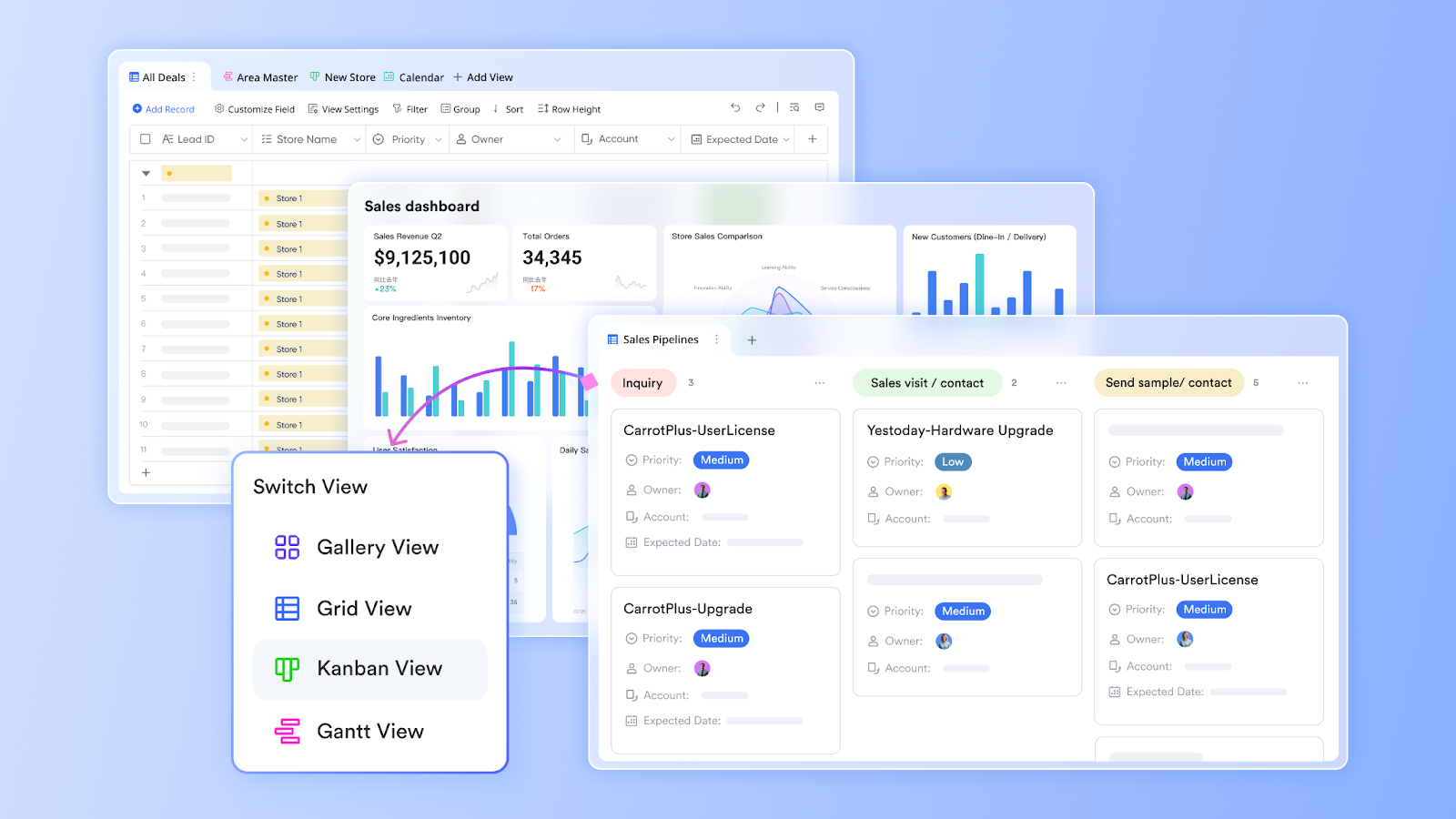
- Kanban: A visual agile project management style that uses boards and cards to track work. Teams move tasks across columns like "To Do," "In Progress," and "Done," making bottlenecks easy to spot. Kanban focuses on limiting work-in-progress to improve flow and efficiency. It works well in both software and non-tech industries where teams handle ongoing tasks.
- Lean: This agile project management approach emphasizes eliminating waste and maximizing customer value. Inspired by lean manufacturing, it helps teams deliver faster by cutting unnecessary steps, reducing delays, and focusing only on activities that add value. Lean works particularly well for organizations aiming to streamline processes.
- XP (Extreme programming): A methodology focused on software quality and testing. XP encourages practices like pair programming, continuous integration, and test-driven development. Its goal is to improve code quality while maintaining agility. This method is highly effective in environments where reliability and frequent releases are critical.
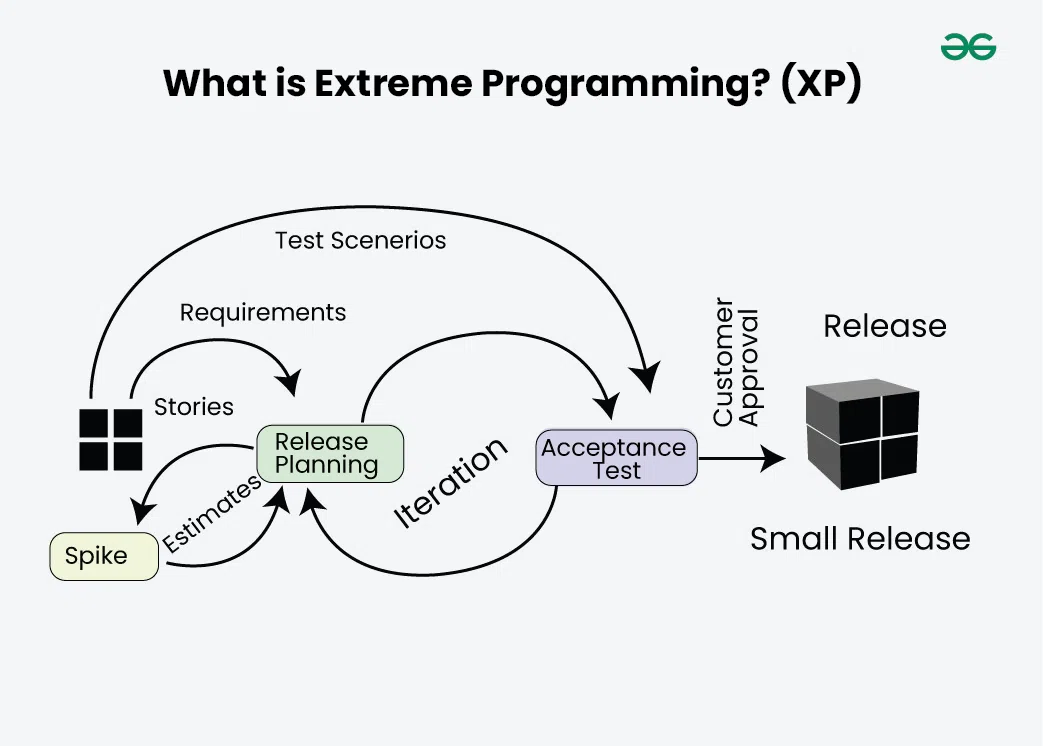
Image source: geeksforgeeks.org
- Hybrid Agile: A flexible agile project management method that blends Agile principles with traditional approaches. For example, a construction or marketing team might combine Waterfall's structured planning with Agile's adaptability. Hybrid Agile is common outside tech, where businesses want the benefits of agility without abandoning established processes.
12 principles of Agile project management
The 12 principles of Agile project management guide how teams deliver value, adapt to change, and collaborate effectively. Here's a detailed look at each one:
1. Customer satisfaction through early and continuous delivery: Agile focuses on giving customers working solutions as soon as possible, instead of waiting months for a final product. Frequent delivery creates visible progress and real value at every stage. It also builds trust, as customers see their needs being met continuously. This principle ensures customer satisfaction is always at the center.
2. Welcome changing requirements: Agile embraces change, even if it comes late in the project. Unlike rigid methods, this flexibility helps teams adapt to evolving customer needs or market trends. By adjusting quickly, the final product stays relevant and competitive. Change isn't seen as a setback—it's an opportunity for improvement.
3. Deliver frequently: Work is broken into short cycles, often two to four weeks, instead of long phases. Frequent delivery keeps momentum high and stakeholders engaged with steady progress. Teams can quickly gather feedback after each release. This rhythm reduces risk and ensures continuous alignment with customer goals.
4. Business and developers work together daily: Collaboration is central to Agile, with daily alignment between business leaders and developers. Regular interaction prevents misunderstandings and keeps priorities clear. This close partnership ensures both strategic goals and technical execution stay in sync. Continuous dialogue reduces delays and wasted effort.
5. Motivate individuals and trust them: Agile teams succeed when individuals feel trusted, empowered, and accountable. Managers focus on creating supportive environments where people thrive. Motivated team members take ownership of results and deliver high-quality work. Trust builds commitment, and commitment drives performance.
6. Face-to-face conversation is most effective: Direct, real-time communication builds clarity and reduces misinterpretation. Whether in person or virtual, conversations are more efficient than long reports. Agile values speed and accuracy in sharing information. Strong communication keeps teams aligned and collaborative.
7. Working outcomes are the measure of progress: Instead of valuing documentation or plans, Agile prioritizes tangible results. A working feature or product demonstrates true progress. This keeps teams focused on delivering usable solutions, not paperwork. Stakeholders see outcomes, not just promises.
8. Sustainable development pace: Agile encourages teams to maintain a consistent, healthy work rhythm. Burnout undermines long-term success, so balance is essential. A sustainable pace allows teams to stay productive without sacrificing quality. Steady progress beats short bursts of overwork.
9. Technical excellence and good design enhance agility: Strong technical foundations make projects easier to adapt. Clean design and quality code reduce the cost of change. Agile prioritizes building solutions that last and evolve. This principle ensures flexibility doesn't compromise quality.
10. Simplicity is essential: Agile values doing less, but better. Teams avoid over-engineering or unnecessary features that add little value. Simplicity saves time and effort while keeping solutions clear. The focus stays on delivering what customers truly need.
11. Self-organizing teams produce the best results: Agile trusts teams to decide how to complete their work. Self-organization fuels innovation and accountability. With autonomy, members use their strengths to solve problems effectively. This freedom results in faster and better outcomes.
12. Regular reflection and adaptation: Agile teams pause often to review their progress and process. Retrospectives encourage open discussion about what worked and what didn't. By learning continuously, teams improve with every cycle. Adaptation ensures long-term growth and resilience.
How Lark supports Agile project management
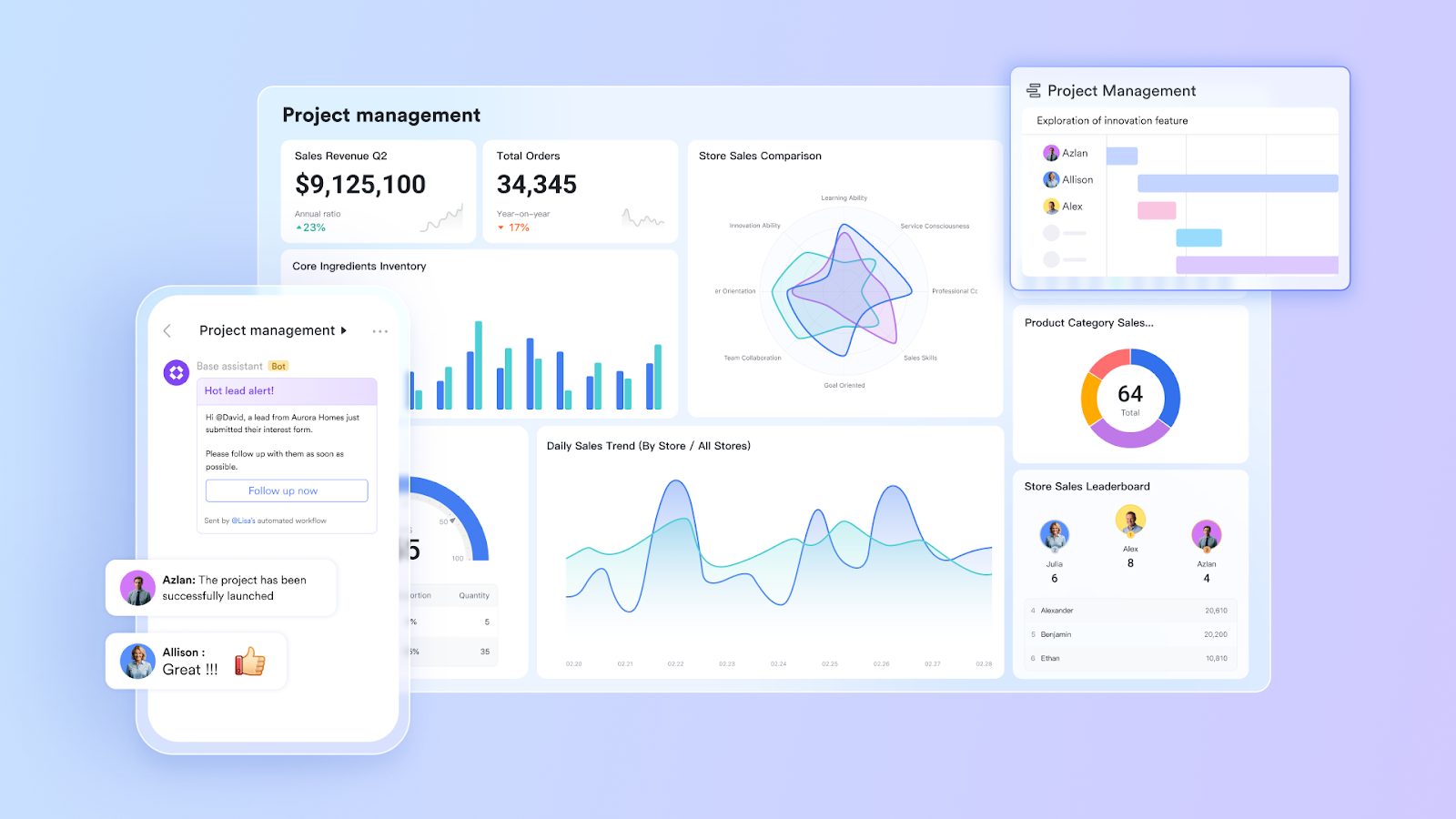
Agile works best when planning, execution, and collaboration happen in one place. Lark brings this together with tools designed to support every stage of the agile project management process—from backlog planning to sprint reviews. With features like Lark Base, Tasks, Approvals, Docs, Messenger, and Dashboards, teams can stay aligned without juggling multiple apps. This makes Agile faster, simpler, and more collaborative at scale.
Smart project management with Lark Base
Agile teams thrive on visibility and adaptability. With Lark Base , you can build program boards, manage backlogs, and track dependencies using customizable views like Kanban and Gantt. This makes it easier to plan Program Increments, align cross-team work, and monitor progress in real time—keeping everyone on the same page throughout the Agile cycle. Automation for continuous flow. With automations in Lark Base's, you can set triggers for notifications, automate reminders for sprint deadlines, and update task statuses automatically. This keeps the flow uninterrupted and reduces manual effort, reinforcing Agile's principle of efficiency.
Real-time collaboration in Lark Doc
Agile requires shared ownership of plans, risks, and objectives. Lark Docs enables teams to co-create PI objectives, risk assessments, and sprint plans in real time. With task embedding, colleague mentions, and rich content support, Docs becomes a living knowledge base for your Agile program.
Seamless team communication with Lark Messenger
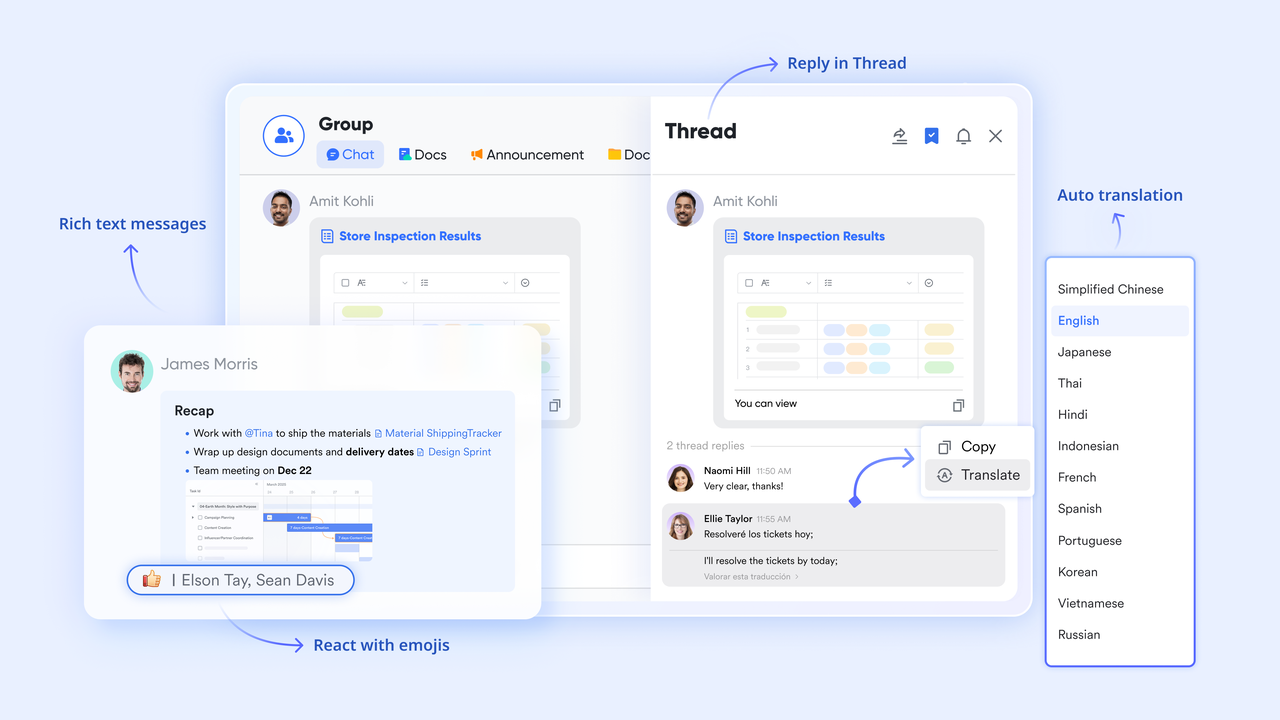
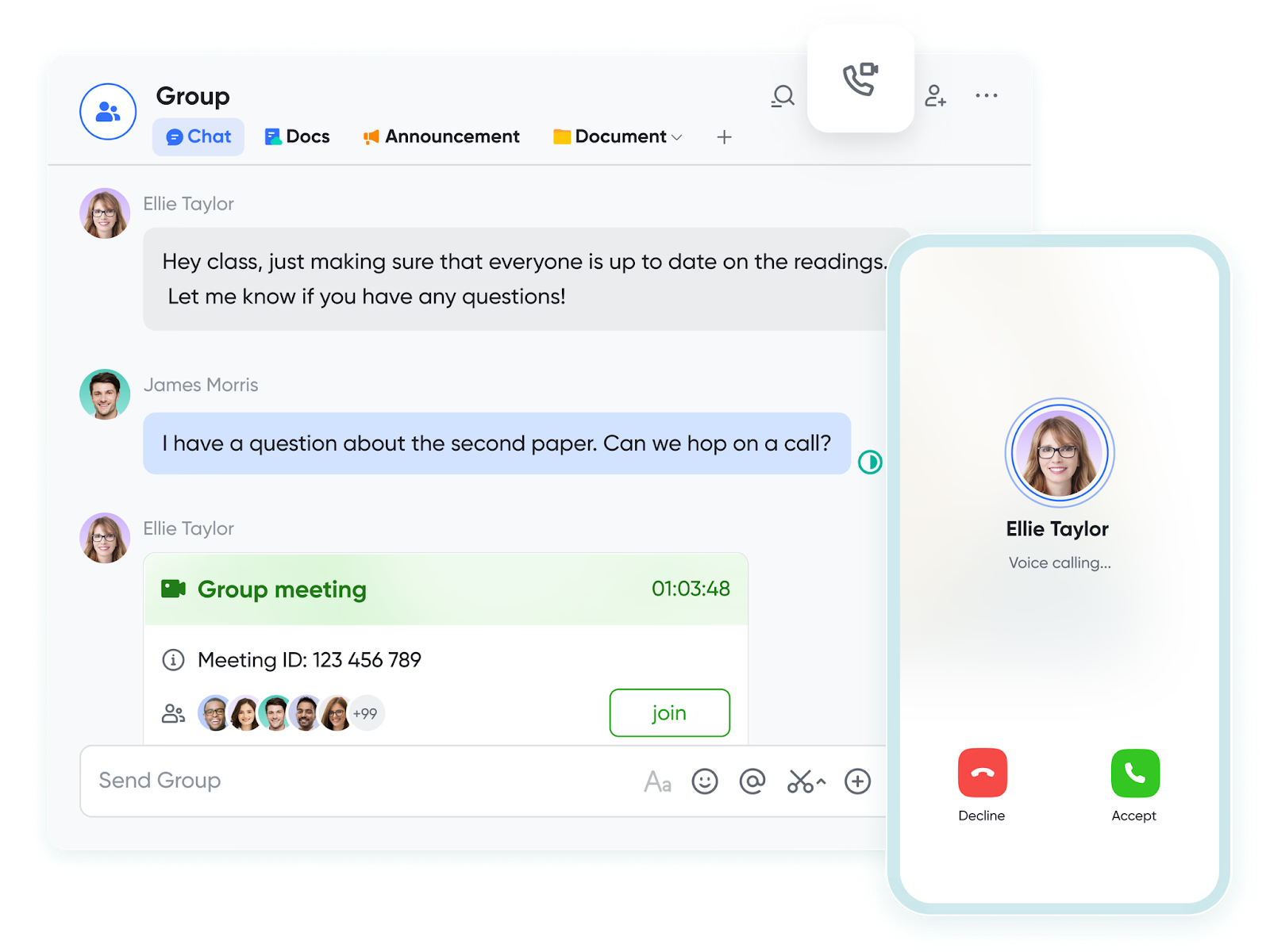
Effective Agile execution depends on continuous, transparent communication. Lark Messenger provides a central hub where teams can create topic-based chats, spin up quick video calls, and use threaded conversations to resolve issues without derailing the main channel. This ensures smoother collaboration during fast-paced Agile ceremonies.
Powerful Agile ceremonies with Lark Meetings
From sprint reviews to large-scale PI planning, Lark Meetings keeps Agile events engaging and productive. Teams can brainstorm on virtual whiteboards, present with Magic Share, and rely on AI-powered transcripts for searchable, translatable notes—ensuring no decision or action item gets lost.
Task breakdown and ownership with Lark Tasks
In Agile, large features must be broken into smaller, actionable items. Lark Tasks allows you to create tasks from chats or Docs, assign them instantly, and track their completion with deadlines. This accountability ensures every backlog item translates into real, measurable progress. This creates a smooth flow from planning to execution, a core part of Agile project management practices.
- Starter plan: Free forever plan that includes 11 powerful tools for up to 20 users. It also comes with 100GB of storage, 1000 automation runs, AI translations, and more.
- Pro plan: $12/user/month (billed annually) for up to 500 users. It includes everything in Starter plus group calling for up to 500 attendees, 15TB of storage, 50,000 automation runs, and more.
- Enterprise plan: Contact sales for custom pricing. Supports unlimited users and includes even more automation runs and advanced security, compliance, and management features.
Agile project management practices, techniques & examples
Agile is not just a methodology—it's a set of everyday practices that bring its principles to life. These agile project management techniques help teams stay focused, adaptable, and productive.
- Daily standups: Short, time-boxed meetings where team members share what they've done, what they plan to do, and any blockers. Standups create transparency and encourage quick problem-solving. They also reinforce alignment, keeping the team focused on sprint goals without wasting time in long meetings.
- Sprint planning and retrospectives: Sprint planning ensures that the team commits to realistic work for each cycle, while retrospectives drive continuous improvement. In retrospectives, teams discuss what went well, what didn't, and how to improve. This combination balances structure with adaptability and fosters accountability.
- Backlog grooming: Also known as backlog refinement, this practice keeps the product backlog organized and up to date. Teams review tasks, clarify requirements, and re-prioritize based on customer needs. Grooming prevents confusion during sprint planning and ensures the backlog always reflects current priorities.
- Burndown charts & velocity tracking: Agile teams measure progress using burndown charts and velocity. Burndown charts track how much work remains in a sprint, while velocity shows how much work a team can complete over time. Together, they give clear insights into performance and help forecast future delivery.
- Cross-functional team collaboration: Agile thrives when people with different expertise—designers, developers, marketers, or analysts—work closely together. Collaboration across roles prevents silos and ensures diverse perspectives shape the product. This practice mirrors the Agile principle that self-organizing, multi-skilled teams deliver the best results.
Agile project management examples
- Software development team: managing sprint backlogs
A development team uses sprints to deliver features incrementally. Backlogs in tools like Kanban boards help track tasks, while retrospectives keep improving coding practices. Agile ensures faster releases and higher-quality software.
- Marketing campaign team: planning content sprints
Marketing teams can treat campaigns like sprints, planning blogs, ads, and social posts in cycles. This approach adapts quickly to customer feedback and market changes, keeping campaigns relevant and responsive.
- Product launch team: iterative rollouts
Instead of one big release, product teams launch in stages, collecting feedback at each step. Agile's iterative approach reduces risk and builds customer confidence as improvements happen continuously.
- HR team: Agile for recruitment or onboarding workflows
HR departments apply Agile by treating hiring and onboarding as iterative projects. Backlogs of roles, interviews, and tasks help recruiters prioritize. Standups and reviews ensure smooth, transparent progress for new hires.
Challenges of Agile project management
While Agile is powerful, it isn't without hurdles. Teams often face challenges that require both cultural and practical adjustments. Here are the most common obstacles:
Requires cultural shift in teams
Agile demands a mindset shift from rigid planning to flexibility and collaboration. Teams used to top-down control may struggle with self-organization. This cultural adjustment can take time and training. Tools like Lark ease the transition by making collaboration and accountability transparent through shared boards, tasks, and dashboards.
Risk of scope creep
Because Agile welcomes change, projects sometimes face scope creep if requirements expand too often. Without clear priorities, teams can lose focus and deadlines may slip. Using Lark Base for backlog management ensures scope changes are logged, prioritized, and visible to everyone—keeping projects aligned.
Needs strong communication discipline
Agile relies on constant communication, from daily standups to sprint reviews. Without discipline, miscommunication can derail projects. With Lark Messenger and Meetings, teams can run standups in real time, capture notes in Minutes, and link discussions directly to tasks—reducing misalignment.
Can overwhelm teams without the right tools
Agile generates a lot of moving parts: backlogs, tasks, metrics, retrospectives, and approvals. Without the right tools, teams can feel overwhelmed by the process itself. Lark brings all these elements into one workspace, so Agile feels simpler and more collaborative instead of chaotic.
Conclusion
Agile project management is more than a methodology—it's a flexible, collaborative approach that delivers value faster and adapts to change. By working in small increments and emphasizing feedback, Agile helps teams stay customer-focused and resilient. Its strength lies in practices like sprints, standups, and retrospectives, guided by the 12 principles of Agile project management. But Agile works best when supported by tools that simplify collaboration, visibility, and accountability.
That's where Lark makes the difference—with Lark Base for backlogs, Lark Tasks for accountability, Lark Approval for decisions, and Docs, Wiki, Messenger, and Meetings for collaboration. Dashboards and analytics in Lark keep sprints aligned with goals, turning Agile from theory into practice.
FAQs
Which Agile methodology is most popular?
Scrum is the most widely used because of its sprint-based structure and clear roles like Product Owner and Scrum Master. Many teams also use Kanban for visual task management. With Lark Base, teams can run both Scrum sprints and Kanban boards in the same workspace, making it easy to adapt methods.
Can Agile be used outside of software?
Yes—Agile is applied in marketing, HR, product launches, and even event planning. Its adaptability makes it useful in any fast-moving field. Lark Tasks and Base help non-technical teams apply Agile by organizing backlogs, automating reminders, and tracking progress.
How does Lark compare to traditional Agile project management tools?
Traditional tools like Jira or Trello focus mainly on tasks and boards. Lark goes further by embedding communication and knowledge management directly into Agile workflows. Features like Lark Messenger, Docs, Wiki, and Meetings mean teams don't need extra apps for collaboration.
Which industries can benefit from Agile beyond software development?
Industries like marketing, healthcare, HR, and education have all adopted Agile for flexibility and faster delivery. For example, HR can use Agile for onboarding workflows. Lark's agile project management style supports these industries by combining backlog management with communication tools.
What are the most common Agile project management tools?
Popular tools include Jira, Trello, Monday.com, and Zoho Sprints. While effective, they often require add-ons for full collaboration. Lark combines task boards, chat, docs, and meetings in one place, offering an all-in-one Agile solution.
How do you measure success in Agile projects?
Agile success is measured with metrics like velocity, burndown charts, customer satisfaction, and delivered value. Retrospectives also help track continuous improvement. With Lark Dashboards, teams can monitor sprint velocity, progress, and workloads in real time, ensuring data-driven improvements.
Related reading
Table of contents
Start using Lark today

Manage all your work in one place
Boost team efficiency by 10x
Save up to 70% on software costs
Table of contents
Start using Lark today
Manage all your work in one place
Boost team efficiency by 10x
Save up to 70% on software costs



2026 Lark Technologies Pte. Ltd.
Headquartered in Singapore with offices worldwide.






Explore: