Healthcare managers know the daily reality of clinic operations: the industry is stretched thin. Medical providers often spend hours on documentation and scheduling rather than direct patient care, driving severe caregiver burnout. While high-tech clinical AI grabs the ai in healthcare news headlines, a quieter, more practical transformation is happening behind the scenes. We are seeing a major shift where the use of ai in healthcare tackles operational bottlenecks directly. You do not need an advanced ai in healthcare course to understand this shift. This guide explores how to adopt these tools effectively, moving your organization from a messy web of single purpose apps to a unified workflow that actually supports your staff.
Redefining practical AI for modern clinic operations
If you follow ai in healthcare news today, the conversation usually jumps straight to surgical robots or complex disease prediction models. But for administrators running a hospital or clinic, the most impactful definition of AI is much more grounded. Today, it means using technology to solve the overwhelming administrative burden that exhausts your workforce.
The landscape is currently driven by a mix of technologies. Machine learning handles heavy data analysis, natural language processing structures messy clinical notes, and agentic ai in healthcare . Unlike older software that just answered queries, deploying ai agents in healthcare can take autonomous actions based entirely on your organization's predefined rules. For example, it can automatically cross reference available staff with overtime limits to fill a sudden shift vacancy.
This practical shift explains why the focus in 2026 has changed. Healthcare leaders are no longer asking if AI works in a lab. Instead, the central challenge is figuring out how to scale these ai applications in healthcare across different departments without breaking existing administrative processes or creating new compliance risks.
Explore Lark for scalable healthcare operations today
How is AI used in healthcare? Key use cases in 2026
If you are wondering how is ai used in healthcare practically, successful facilities apply across both clinical and administrative domains.
Clinical and patient support: Machine learning algorithms analyze X-rays and MRIs to give radiologists a reliable second opinion, speeding up diagnostics during long shifts. Simultaneously, smart chatbots handle the front lines of patient communication. They manage routine appointment bookings and provide basic triage, significantly reducing call center volumes.
Knowledge and document processing: Medical guidelines change rapidly. Some of the best generative ai in healthcare examples focus on document processing. Using generative AI in healthcare, organizations can instantly summarize lengthy new protocols. When paired with AI translation tools, hospitals ensure diverse, multilingual teams understand safety procedures immediately. Managing shift coverage: When a ward loses a night shift nurse, managers no longer spend hours calling replacements. Using a unified collaboration workspace, the system cross references staff availability, overtime limits, and required certifications, then automatically sends targeted coverage requests to eligible staff via team chat.
Accelerating patient transfers: Moving a patient from the ER to an inpatient ward often results in lost information. By utilizing a centralized database application, the ER team submits a transfer request that automatically pulls necessary non clinical data. AI summarizes the administrative status and alerts the receiving ward, ensuring beds and cleaning staff are ready simultaneously. Benefits of AI in healthcare
Moving toward an automated operational model carries distinct advantages that directly impact the bottom line.
- Reduced administrative burnout: Automating repetitive tasks gives staff their time back, directly improving job satisfaction and reducing turnover.
- Clinical support acceleration: Providing doctors with instant diagnostic second opinions reduces the chance of human error during long shifts.
- Enhanced patient experience: reduce wait times for scheduling and answer basic triage questions instantly, improving patient satisfaction scores.
- Operational scalability: Smart workflows predict staffing needs and track inventory levels, preventing shortages before they impact care.
- Clear ROI: Reducing manual data entry directly cuts operational costs and decreases billing errors.
The hidden friction behind new technology rollouts
Despite the clear benefits of AI in healthcare, rolling out these tools often creates immediate friction. The daily ai use in healthcare faces environmental challenges. The problem usually is not the AI model itself; the problem is the environment it enters.
Fragmented tools
Most healthcare organizations suffer from software bloat. A clinic might use one app for team chat, another for shift scheduling, a third for document storage, and a separate vendor for video meetings. Adding a standalone AI tool into this mix just creates another data silo. When staff have to constantly switch between tabs to find information, you increase their cognitive load rather than reduce it.
Unclear ownership
Deploying new technology requires alignment between clinical leads, IT security, and administrative management. When these via scattered email threads and isolated spreadsheets, miscommunications happen. IT might prioritize security, while operations just wants a tool that works fast. Without a shared workspace, projects stall.
Compliance pressure
Patient data privacy is non-negotiable. Many clinics hesitate to adopt advanced AI because they fear the data might leak or violate regulations. If an organization lacks strict, transparent controls over who can view and share specific files, adding AI feels too risky.
High coordination costs
Implementing AI is a change management project. It requires training materials, feedback loops, and daily adjustments. If your team collaboration layer is broken, simply distributing the training manual for the new AI system becomes an administrative nightmare. To succeed, hospitals must simplify how their teams work together before they .
Top AI in healthcare trends for 2026
The focus for healthcare leaders has shifted dramatically this year. We are seeing a maturation in how these tools are deployed across large organizations.
- Deepening generative AI: The best generative ai in healthcare examples now involve complex document processing and summarization rather than simple chat interfaces.
- Rise of : Tools are moving from passive answering to taking autonomous actions based on set parameters, like automatically booking follow up appointments.
- Upgraded governance: IT departments are demanding centralized platforms to monitor AI usage rather than allowing individual departments to buy fragmented apps.
- Operational priority: Hospitals are prioritizing tools that fix back office billing, shift scheduling, and data entry over experimental clinical algorithms.
Structuring a secure transition to automated workflows
Introducing new technology to a busy hospital or clinic requires structure. If you simply give staff a new software login and hope for the best, adoption will fail. Leaders need a pragmatic framework to guide their teams through the transition securely.
Setting pilot scope
Start small. Do not attempt to overhaul your core electronic health records (EHR) system on day one. Instead, identify a low-risk, high-reward administrative bottleneck.
Mini-scenario: A clinic operations director notices that processing vacation requests takes an average of four days due to manual back-and-forth between HR and department heads. They set up a pilot using an AI-assisted approval workflow specifically for time-off requests. The scope is limited to one nursing unit for 30 days. This controlled environment allows the team to fix errors safely before rolling it out facility-wide.
Permissions and approvals
Before any data moves into an AI system, you must establish strict access controls. Decide exactly who holds the authority to , who can edit the underlying data, and who can only view the results. Setting these boundaries early prevents sensitive information from being mishandled and builds trust with your IT security team.
Collaboration and project tracking
Your rollout team needs a central hub. Instead of tracking the pilot’s progress in isolated spreadsheets and scattered emails, move the project into a shared digital space. Use goal-tracking tools, like OKRs (Objectives and Key Results), to make sure clinical leads, IT, and administrative staff are all working toward the same measurable outcomes.
Documentation and knowledge retention
Every lesson learned during the pilot must be documented. Create a central, easily searchable wiki for your staff. When a nurse figures out the most efficient way to prompt the new scheduling assistant, they should immediately log that method. This turns individual discoveries into reusable institutional knowledge, drastically cutting down future training time. Review and expansion
At the end of the pilot, review the metrics. Did the new workflow actually reduce the time spent on administrative tasks? Gather direct feedback from the staff who used it. If the results are positive, use the documented processes to safely expand the solution to the next department.
Simplify healthcare collaboration
How collaboration infrastructure supports AI adoption
Solving the fragmented software problem is the prerequisite for successful AI adoption. As clinics and hospitals introduce more AI-assisted tools into their operations, the management complexity naturally spikes. Medical, IT, operations, and compliance teams suddenly need to coordinate closer than ever before. This is where an all-in-one suite like becomes the essential organizational foundation for governing your AI rollout.
Cross-department collaboration for AI pilots
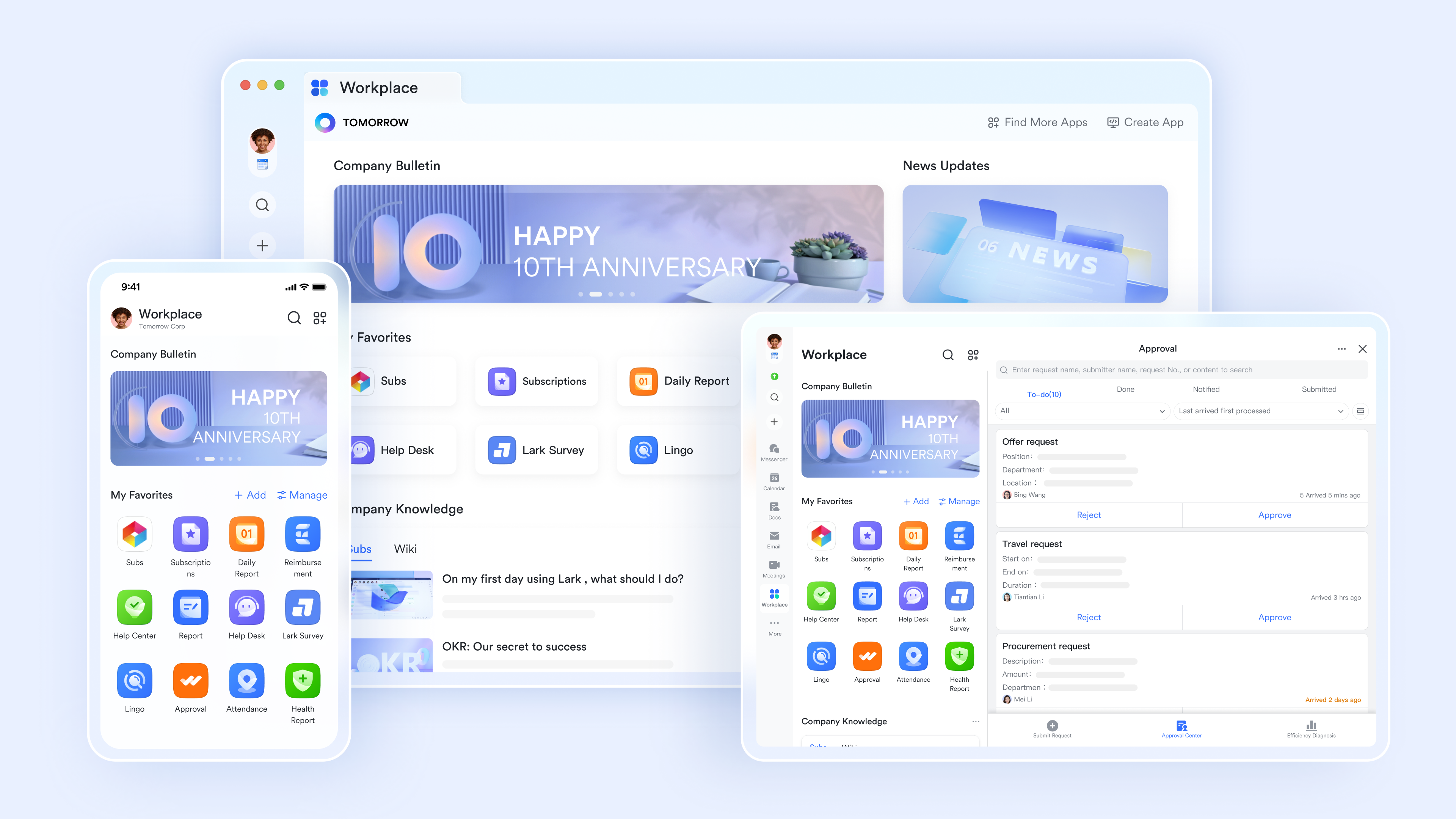
When launching an AI pilot, your medical leads, IT specialists, and legal teams need to stay aligned. provides a unified workspace where these distinct groups can communicate, share feedback, and adjust protocols without losing context across disconnected apps.
Structured project governance and approvals
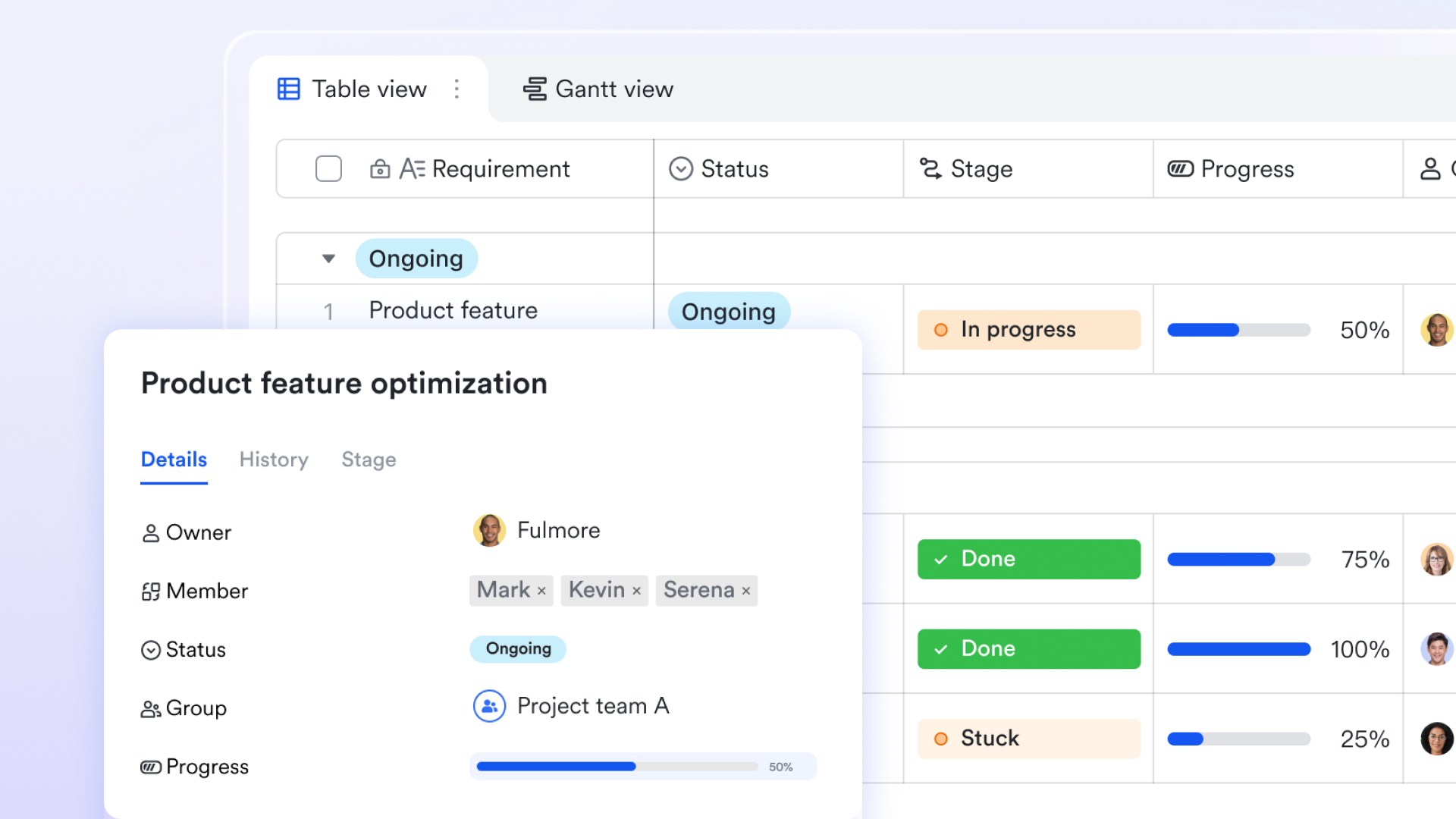
Managing the adoption of new tools requires strict oversight. Clinic managers use to structure project timelines, track pilot outcomes, and automate the approval flows needed when requesting new software licenses or setting data permissions.
Automated meeting summaries for clinical reviews
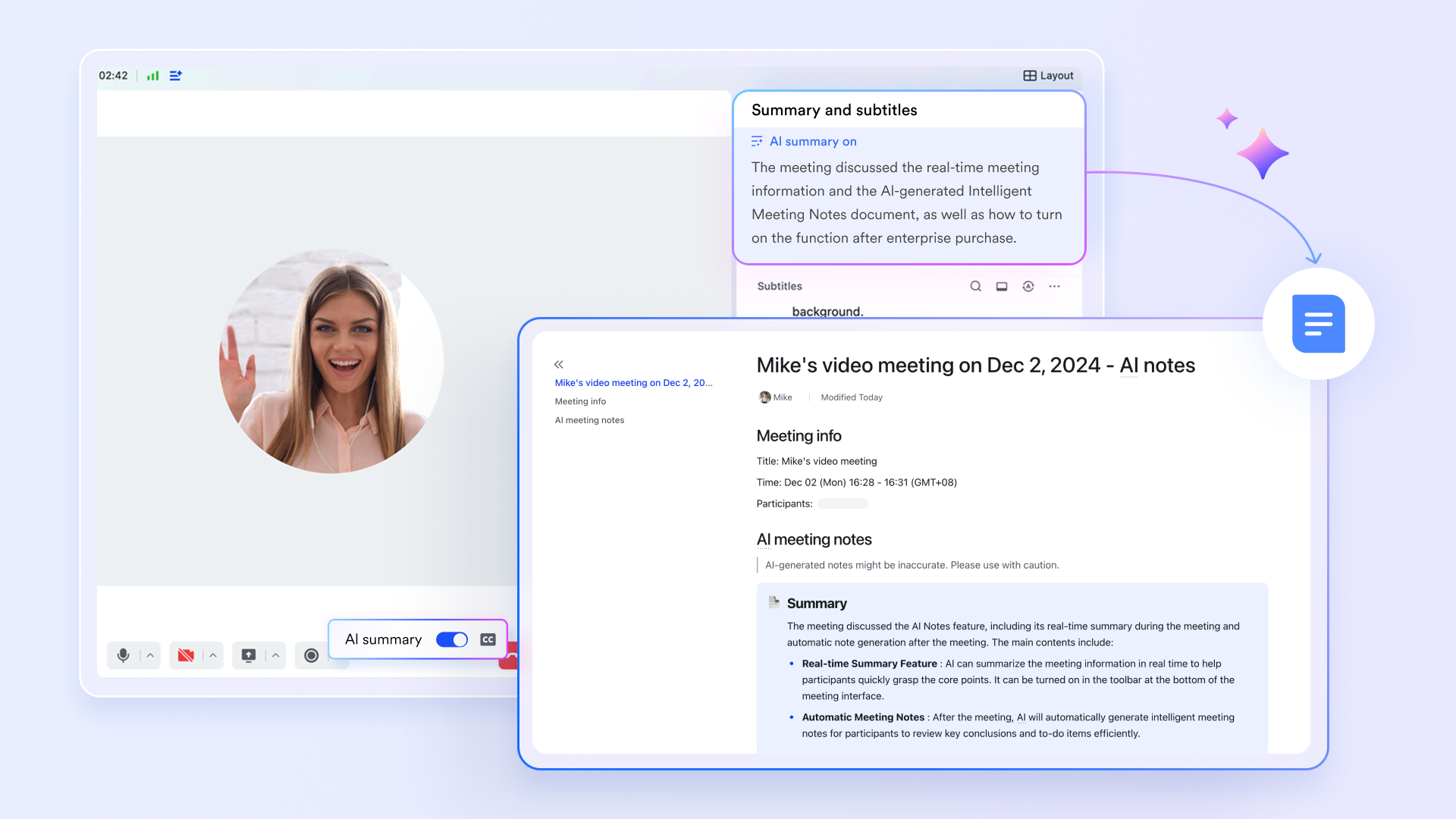
Evaluating a new AI vendor or running a multidisciplinary review generates a lot of critical discussion. Using , built-in AI tools capture these conversations and automatically generate minutes, ensuring that action items and risk assessments are instantly available to all stakeholders.
Centralized knowledge and compliance wikis
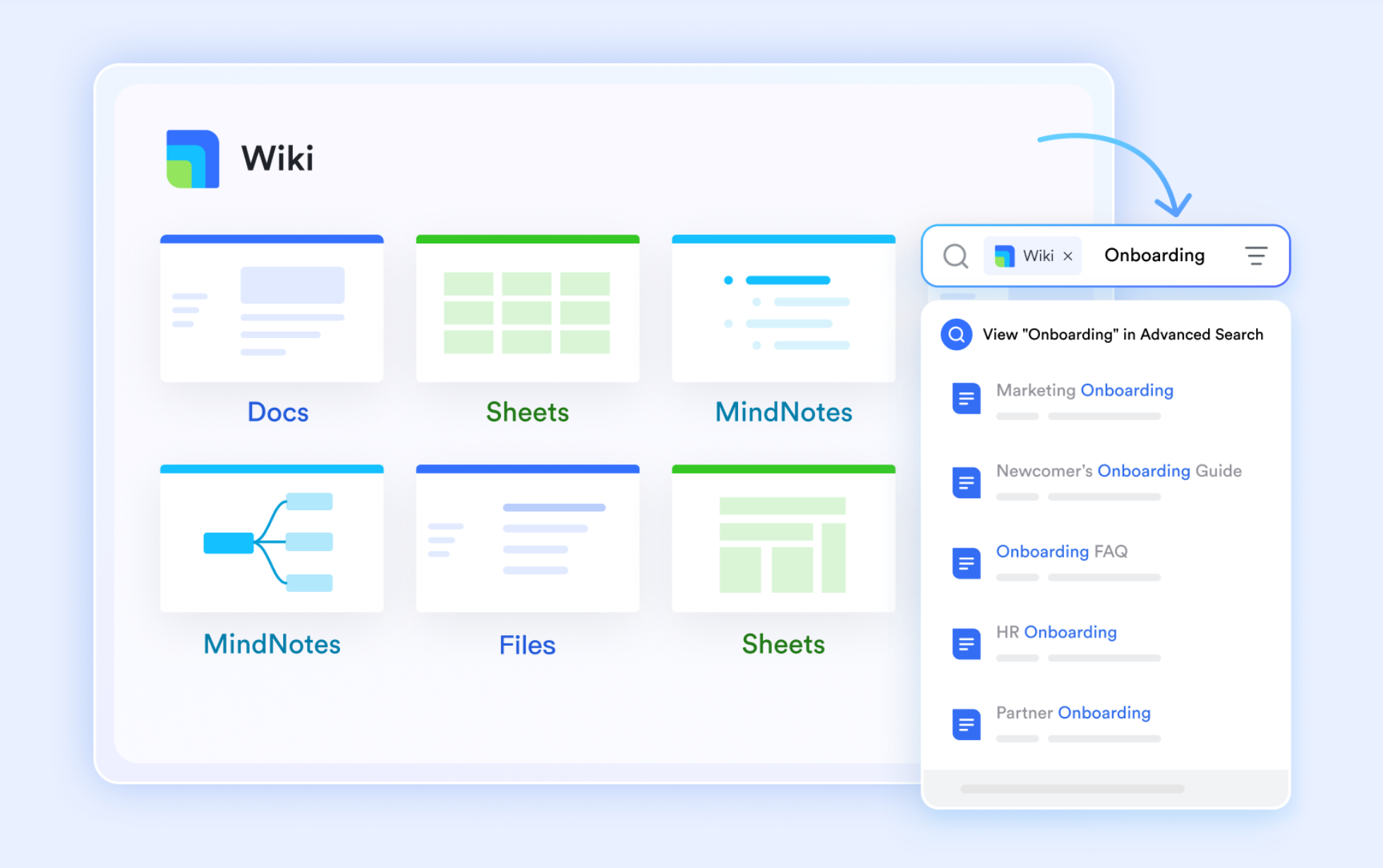
Rolling out new technology requires clear rules. Using , administrators can build a searchable knowledge base that stores your clinic's AI usage guidelines, standard operating procedures, and compliance requirements, complete with AI translation for multilingual teams.
By centralizing project governance, meeting records, and document collaboration, Lark removes the friction of daily management. It provides healthcare leaders with the secure, transparent infrastructure necessary to evaluate and deploy new technologies safely. Best of all, testing this infrastructure is completely risk-free for small operational teams. With a robust Free Starter plan and scalable, cost-effective options for expanding across entire hospitals, organizations can choose the exact level of support they need to build their AI governance foundation.
:
- Starter plan: that includes 11 powerful tools for up to 20 users. It also comes with 100GB of storage space, 1000 automation runs, AI translations, and more. No credit card needed.
- Basic plan: (billed annually) for up to 500 users. It includes everything in Starter and unlimited message history, 5TB of storage space, 1,000 automation runs, and more. Some users may need to to purchase this plan.
- Pro plan: (billed annually) for up to 500 users. It includes everything in Basic plus group calling for up to 500 attendees, 15TB of storage space, 50,000 automation runs, and more.
- Enterprise plan: for custom pricing. Supports unlimited users and includes even more automation runs and advanced security, compliance, and management features.
For small teams with simple communication needs

18 months message history
1000 Base automation runs/month
2000 rows per table in Base
Most POPULAR
For companies with comprehensive collaboration and management needs
Unlimited message history
500-participant video meetings
50k Base automation runs/month
20k rows per table in Base
For large companies with advanced security and organizational management needs
Get a personalized demo and pricing
Unlimited message history
500-participant video meetings
15 TB storage + 30 GB storage/user
500k Base automation runs/month
50k Base automation runs/month
Most POPULAR
For companies with comprehensive collaboration and management needs
Unlimited message history
500-participant video meetings
50k Base automation runs/month
20k rows per table in Base
Preparing for proactive clinic management
Fixing your basic software infrastructure today sets you up for what comes next. Right now, most clinics use automation just to fix immediate problems, like filling a shift when someone calls in sick.
In the near future, these tools will move from reacting to predicting. Instead of scrambling to find a nurse at midnight, the system will review historical absence patterns, current patient admissions, and local flu data to suggest a backup schedule three days in advance.
But a predictive system cannot work if your data is scattered. If HR uses one program for schedules, operations uses another for patient counts, and staff text each other on personal phones, the automation fails. Consolidating your communication and data into one workspace right now is the only way to ensure your clinic is ready to use those advanced predictive tools when they arrive.
Conclusion
Successful AI adoption in healthcare is rarely about buying the most advanced algorithm; it is about fixing the underlying operational infrastructure. The future of AI in healthcare depends on this stable foundation. When administrators focus on solving the overwhelming administrative burden first, they give their clinical staff the time and mental energy needed to deliver better patient care. By unifying communication, documentation, and automation within a single workspace like , healthcare leaders can confidently scale AI tools without losing control or increasing staff burnout.
Explore Lark's unified workspace solutions for healthcare teams
FAQs
What is AI in healthcare?
AI in healthcare refers to the use of machine learning, natural language processing, and automation technologies to support clinical diagnostics, patient services, and administrative operations. For management, it increasingly means using agentic AI to automate complex daily workflows, such as scheduling and resource allocation.
How is AI currently used in healthcare organizations?
It is used across multiple domains. Clinically, it assists in medical imaging analysis and anomaly detection. Operationally, it automates patient onboarding, insurance verification, and internal approval flows, significantly reducing manual data entry for staff.
What are the main risks of AI in healthcare?
The primary risks involve patient data privacy, compliance with medical regulations, and the potential for fragmented data silos if tools are not integrated properly. Poorly implemented AI can also increase cognitive load on staff if it requires them to constantly switch between disconnected applications.
How can healthcare leaders adopt AI responsibly?
Leaders should start with small, controlled pilots focused on low-risk administrative workflows rather than core clinical systems. They must establish strict access permissions, document all new processes in a central wiki, and ensure every automated action has a clear, transparent audit trail.
What should organizations manage beyond the AI model itself?
Organizations must manage the change process by focusing on workflow adaptability and team collaboration. The AI tools must sit inside the platform where staff already communicate, ensuring that alerts, approvals, and data are shared seamlessly without disrupting daily operations.
Related reading