














CRM Software Canada: The Complete Guide for Your Business

Fecilia Clarke
Solutions Marketing Specialist
Sep 18, 2026
Fecilia Clarke
Sep 18, 2026

20 min read


Running a business in Canada brings unique opportunities – and challenges. From managing customer relationships across different provinces to staying competitive in a diverse marketplace, the need to operate efficiently has never been greater. You've likely heard that a CRM is the answer, a tool to organize contacts and streamline sales. But this view barely scratches the surface. In reality, a powerful CRM software solution is the very heart of a scalable business, pumping life into your sales, marketing, and customer support efforts.
However, the path to finding the right fit can feel overwhelming. With so many options, how do you know which CRM software in Canada will truly work for your sales team and your specific goals? This isn't just another list. We've created a comprehensive guide to help Canadian small business owners navigate the landscape of CRM tools. We'll explore how to choose the right solution, implement it for maximum impact, and transform it from a simple database into a central hub for sustainable growth, all while keeping your operations streamlined and collaborative.
Key takeaways: Top 10 CRM software in Canada for 2026
1. Lark: The all-in-one suite to build your own collaborative CRM.
2. Salesforce Sales Cloud: The enterprise-grade platform for complex sales organizations.
3. Sage CRM: The finance-focused CRM for businesses using Sage accounting.
4. Maximizer CRM: The Canadian-based CRM with a focus on simplicity.
5. Keap: The CRM and marketing automation tool for entrepreneurs.
6. Method:CRM: The top-rated CRM for QuickBooks users.
7. Zoho CRM: The scalable, feature-rich CRM for businesses of all sizes.
8. HubSpot CRM: The user-friendly CRM with a powerful free offering.
9. Freshsales: The intuitive CRM with built-in communication tools.
10. Pipedrive: The activity-based CRM designed for salespeople.

A comparison of the top 10 CRM software Canada tools
To help you navigate the market, we’ve analyzed some of the most popular and effective CRM solutions available to Canadian businesses. This list is designed to give you a clear starting point in your search for a great CRM for small businesses and large enterprises alike.
1. Lark: The all-in-one suite to build your own collaborative CRM
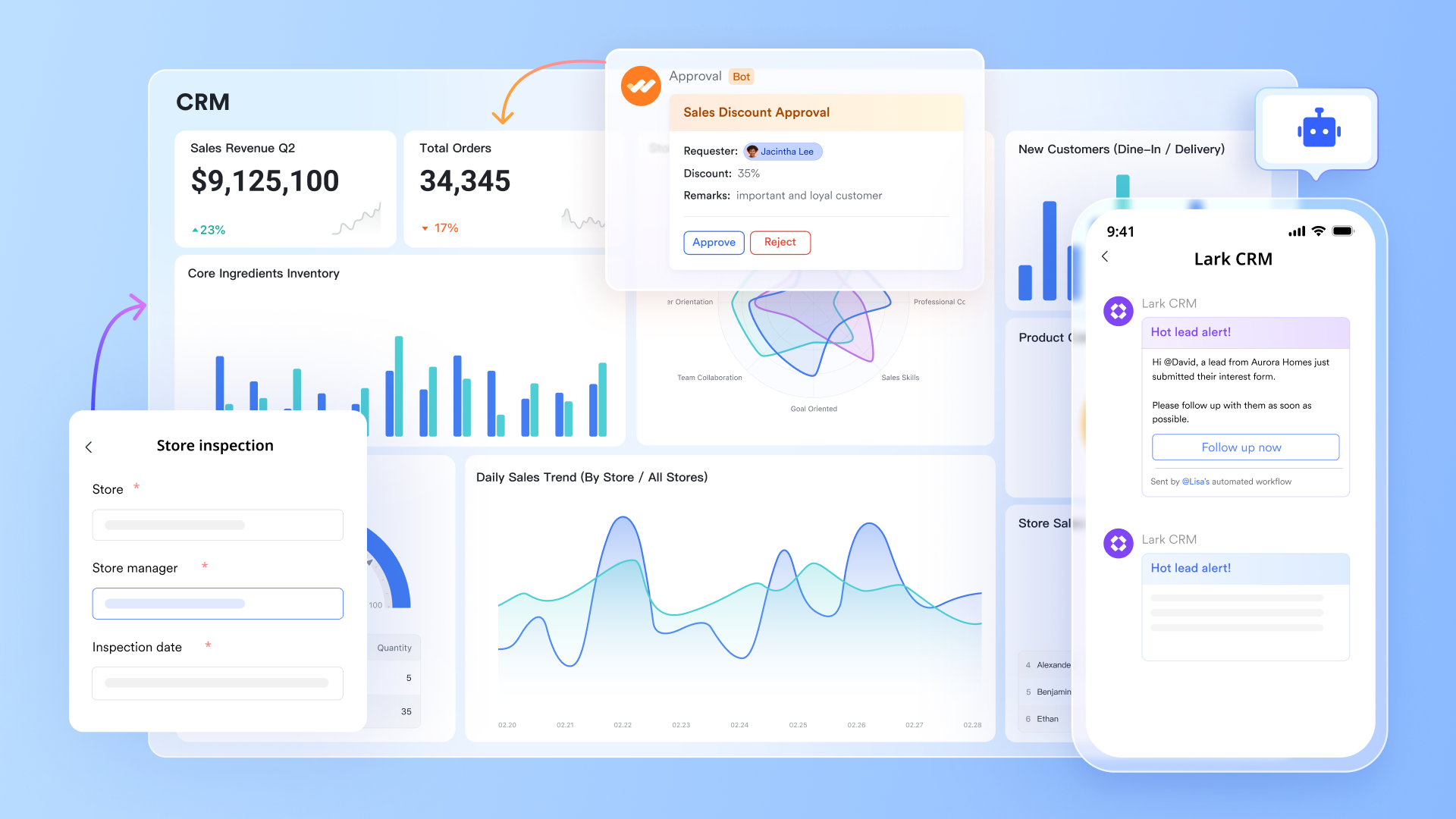
Overview: Lark is more than just a CRM; it's an all-in-one CRM and collaborative suite that empowers teams to build their own flexible solutions. Instead of a rigid, standalone tool, Lark uses its powerful Base feature to create custom dashboards for contact management, deal tracking, and project management. This allows Canadian small businesses to design a CRM that perfectly matches their unique workflow, fostering team collaboration. It’s designed for businesses that want to break down silos and create a single source of truth for all customer-facing activities, from lead qualification to customer onboarding.
Key features:
- Fully customizable CRM database builder in Lark Base for complete customer management.
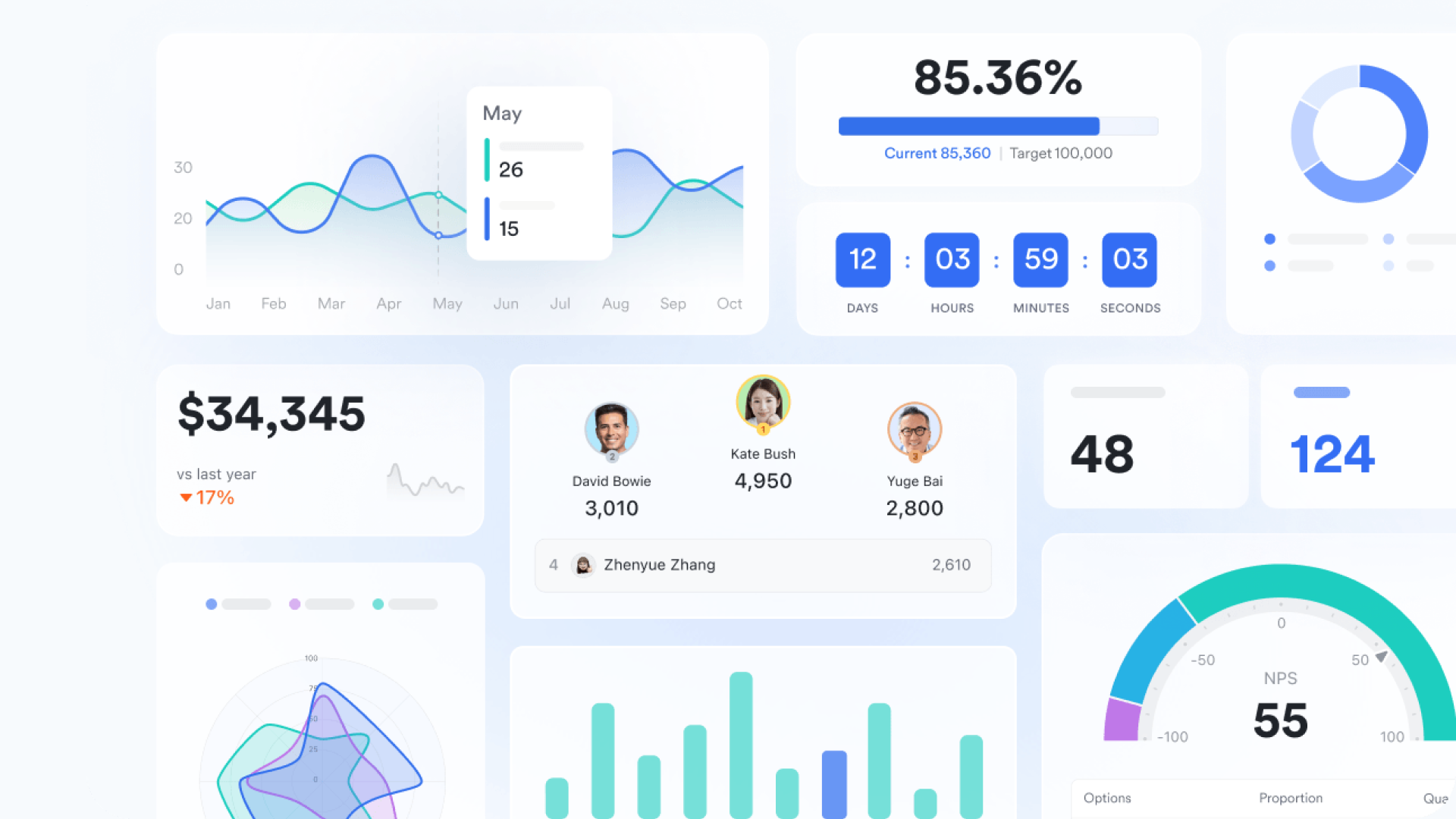
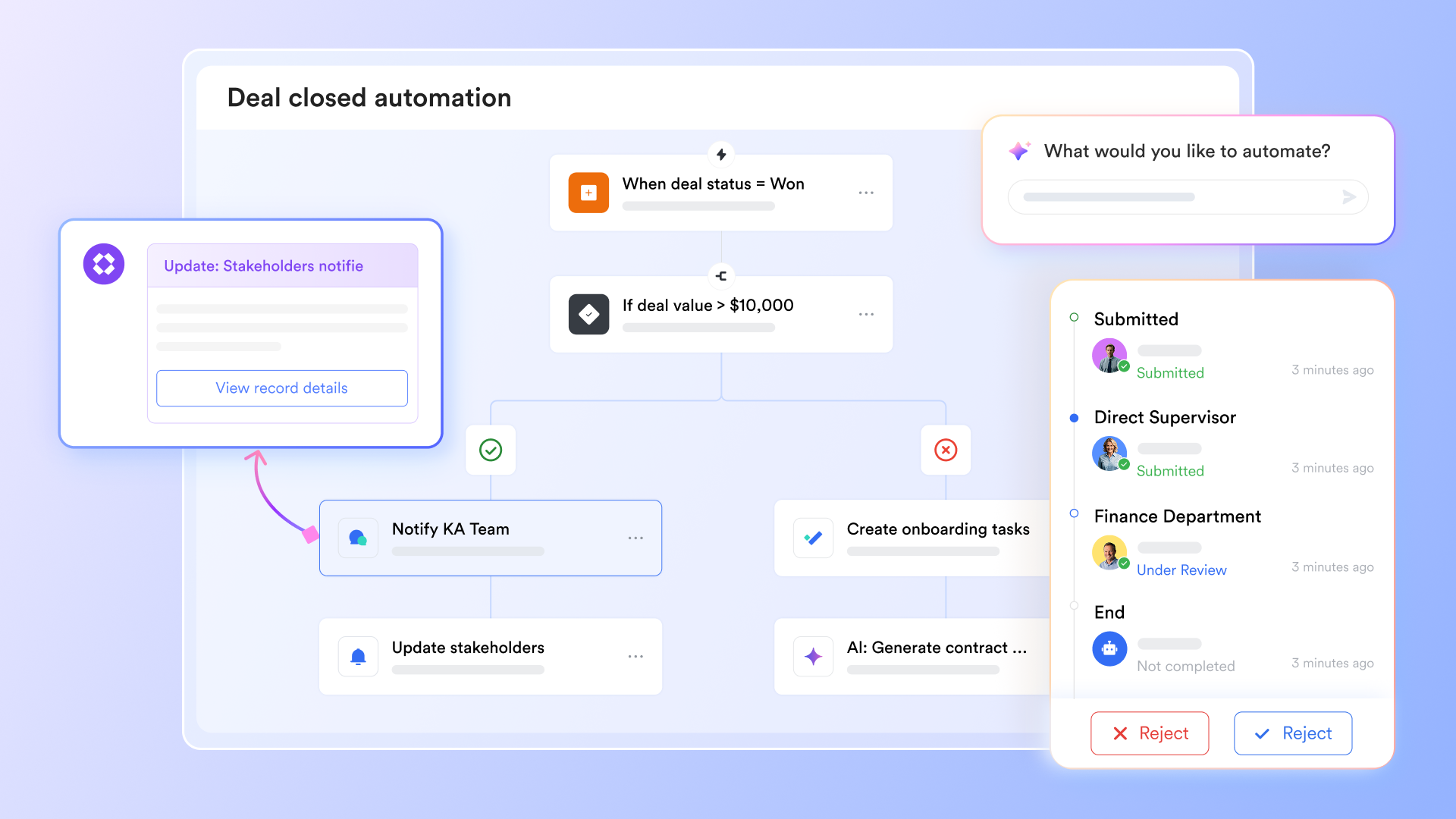
- Workflow automation to streamline follow-up.
- Built-in communication hub with Lark Messenger and Mail for team conversations.
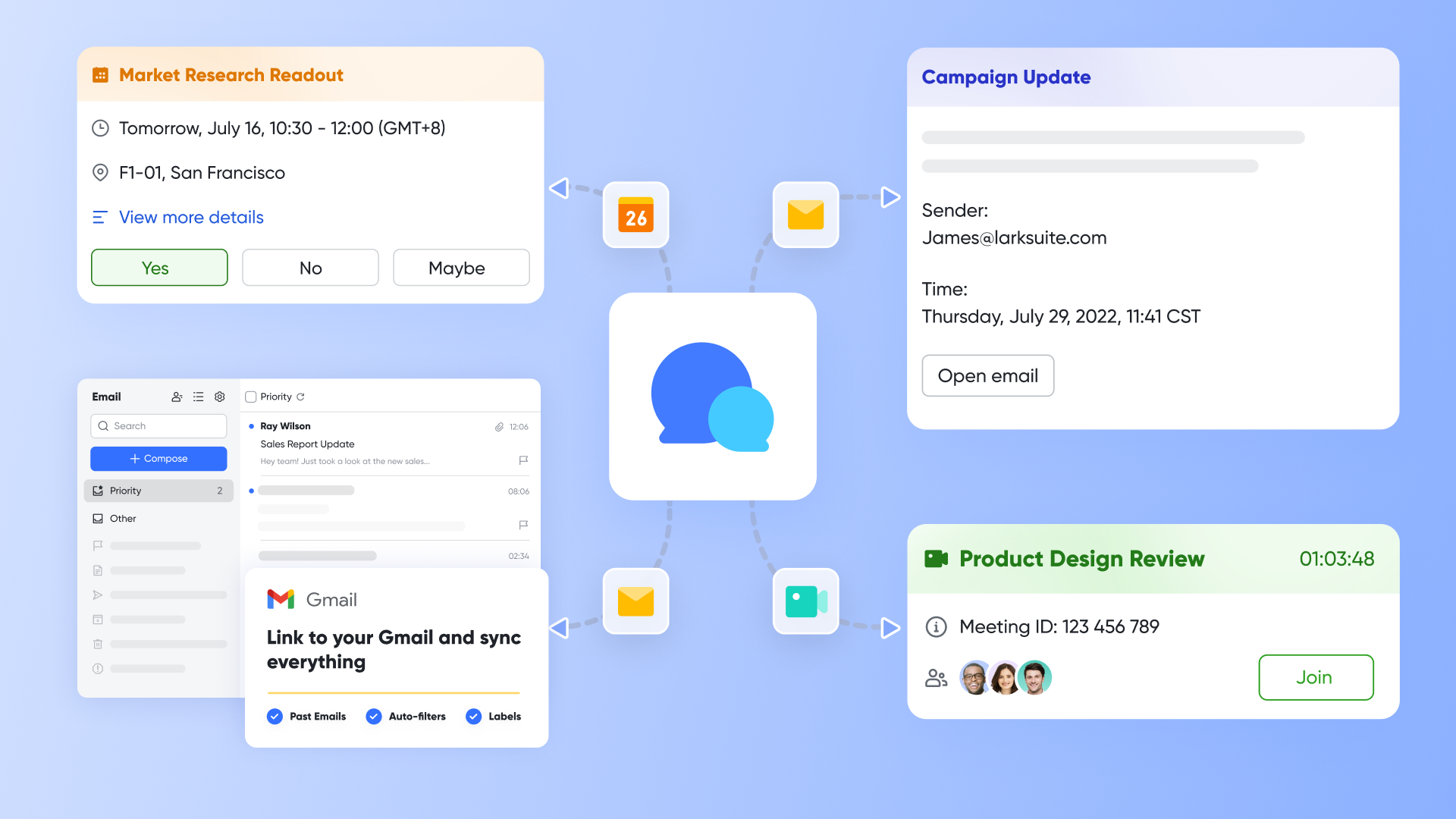
- AI-powered meeting summaries to automatically log notes from customer interactions.
- Centralized document management and knowledge base with Lark Docs and Wiki.
Pricing:
- Free plan: Includes 11 powerful products, supporting up to 20 users, 100 GB storage, 1,000 automation runs and unlimited AI translation in chats, docs and email.
- Paid plans: Starts at $12/user/month, supporting up to 500 users. Includes unlimited message history, 50,000 automated Base workflow executions per month.
- Enterprise plan: custom pricing.
Many teams also consider Google Workspace pricing and ClickUp pricing when assessing the value of alternative workplace solutions.
2. Salesforce Sales Cloud: The enterprise-grade platform for complex sales organizations.
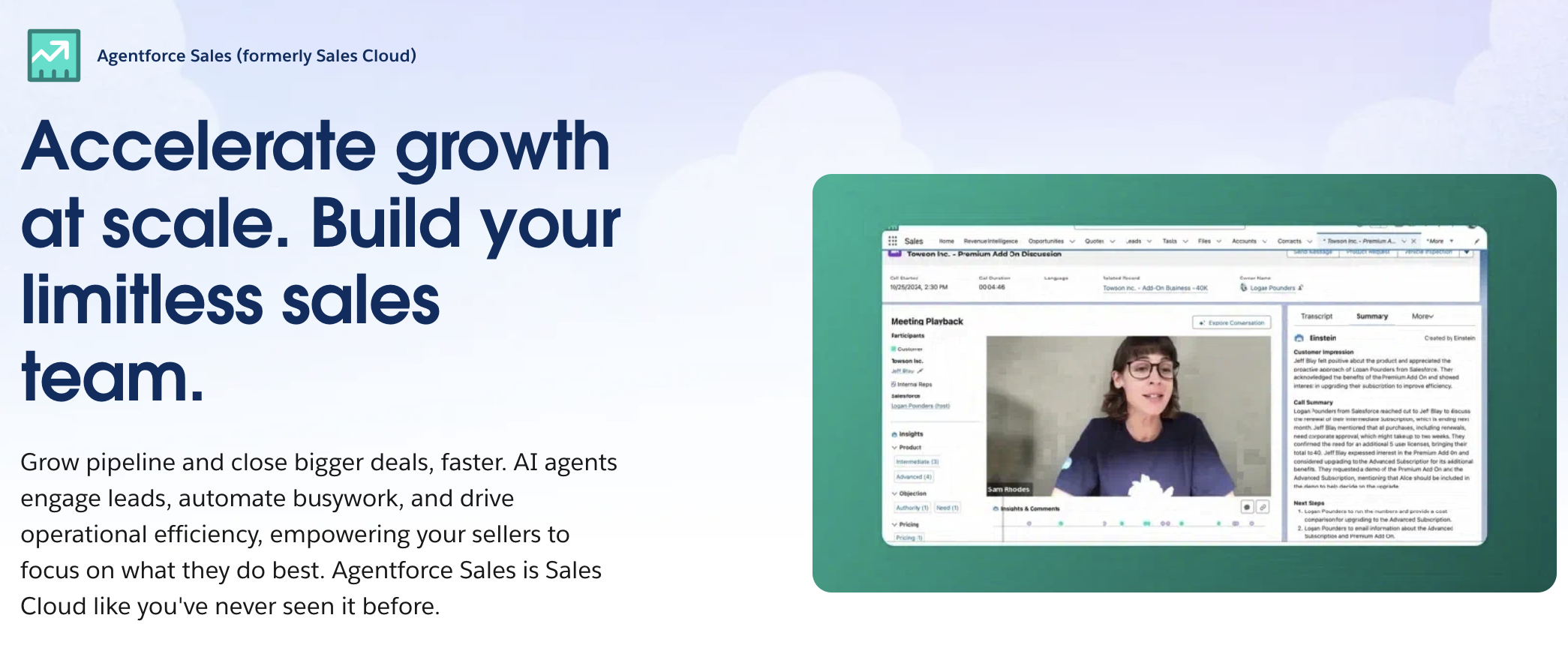
Image source: salesforce.com
Overview: A global leader, Salesforce offers a powerful and highly scalable platform. It is known for its extensive CRM features covering sales, service, and marketing, and its vast ecosystem of third-party apps. Salesforce is a top choice for companies looking for a robust solution with nearly limitless customization, though this can come with a steeper learning curve for smaller teams looking for simple pipeline management.
Key features:
- Advanced lead management, contact, and opportunity tracking.
- In-depth forecasting and analytics to monitor team performance.
- Robust sales automation and workflow capabilities.
Pricing: Offers various tiers starting with a basic plan, with costs increasing for more advanced features and customization.
3. Sage CRM: The finance-focused CRM for businesses using Sage accounting.

Image source: sagecrm.com
Overview: Sage CRM is designed to work seamlessly with Sage's popular accounting software, making it a strong choice for businesses already in their financial ecosystem. It focuses on providing a complete view of the sales process, from initial contact to final invoice. Its strength lies in its ability to connect front-office and back-office operations, providing a unified source of data for both sales and finance teams.
Key features:
- Deep integration with Sage accounting software.
- Centralized customer data and communication history.
- Targeted email marketing campaign management tools.
Pricing: Pricing is available on request and can be deployed in the cloud or on-premise, offering flexibility for different IT strategies.
4. Maximizer CRM: The Canadian-based CRM with a focus on simplicity.
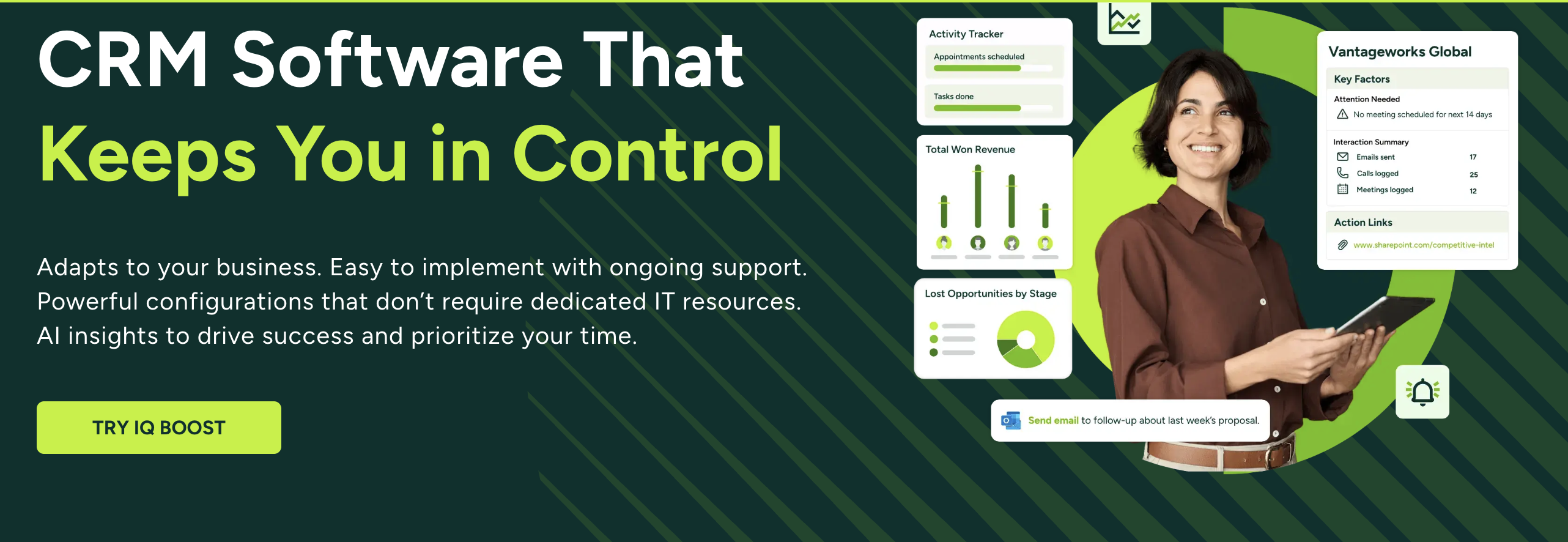
Image source: maximizer.com
Overview: As a Canadian-based company, Maximizer offers a solution that understands the local market. It emphasizes a central lead management system to help businesses consolidate information and improve their sales pipeline. Maximizer is a solid, all-around option that has been trusted by Canadian businesses for decades, providing core CRM functionality with a focus on straightforward implementation and reliable support, making it accessible for teams without dedicated IT staff.
Key features:
- Centralized database for contacts, leads, and customers.
- Sales pipeline and quota management tools.
- Choice of cloud or on-premise deployment.
Pricing: No free plan. Paid plans start at $65/user/month.
5. Keap: The CRM and marketing automation tool for entrepreneurs.

Image source: keap.com
Overview: Formerly Infusionsoft, Keap is a CRM and marketing automation platform built to help small businesses succeed. It excels at automating follow-up, helping you nurture leads, and managing client communication in one place. Keap's "Easy Automations" builder is designed for owners who want to set up powerful workflows to automate workflows without needing a background in coding, making it a strong contender for service-based businesses looking to scale their marketing activities.
Key features:
- Powerful marketing and sales automation campaigns.
- Integrated invoicing and payment processing.
- Appointment scheduling and forms on landing pages.
Pricing: Provides different plans based on the number of contacts and feature complexity, geared towards growing companies.
6. Method:CRM: The top-rated CRM for QuickBooks users.
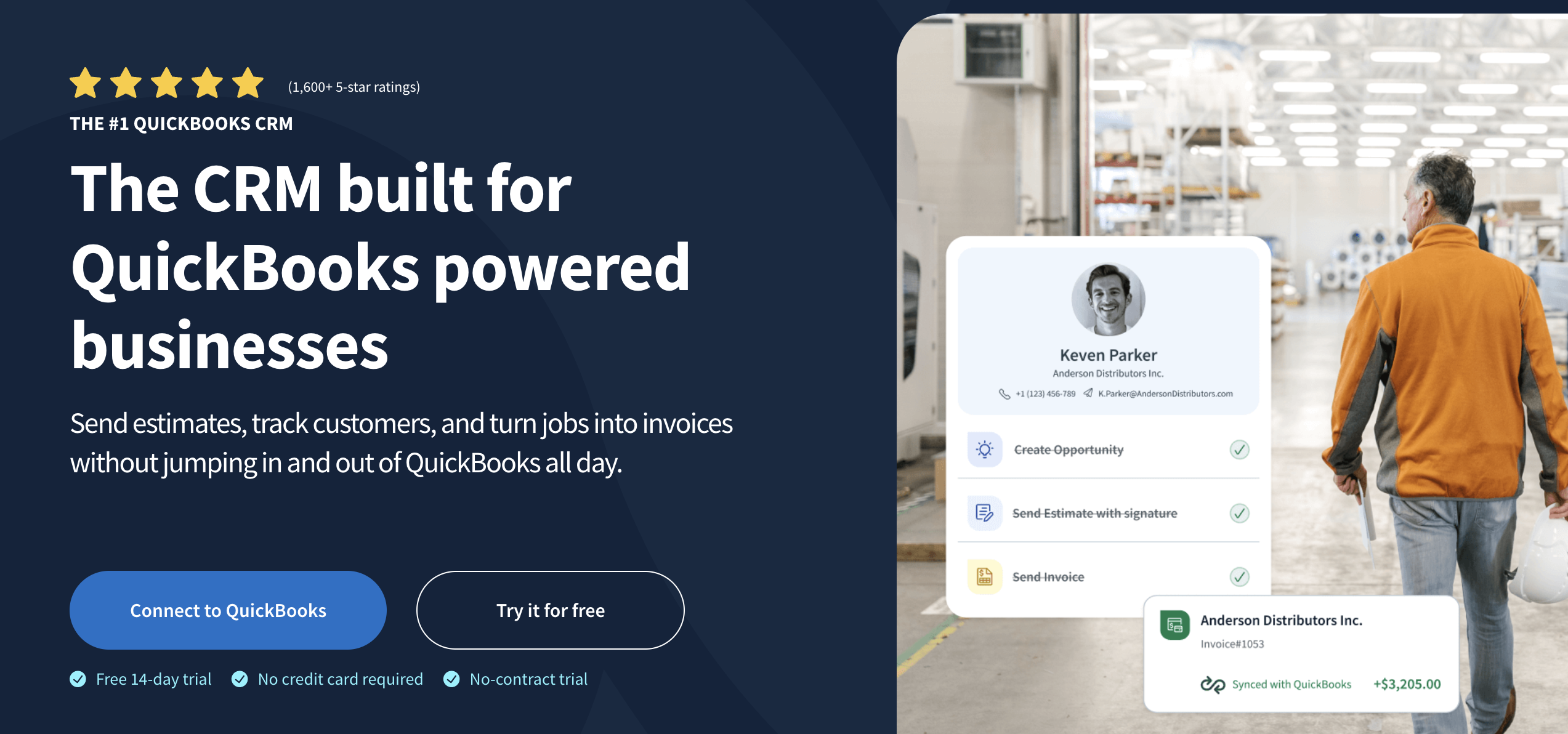
Image source: method.me
Overview: Method:CRM is the leading choice for businesses that run on QuickBooks. Its standout feature is its real-time, two-way sync, which eliminates double data entry and provides sales teams with up-to-date customer financial history. This makes it an incredibly powerful tool for any Canadian business that relies on QuickBooks. It’s designed to give a complete customer view by combining sales data with financial data in one interface.
Key features:
- Real-time synchronization with QuickBooks Desktop and Online.
- Customizable workflows, fields, and reporting.
- Web-to-lead forms and customer portals.
Pricing: Offers tiered plans based on the level of customization and features required, with a focus on QuickBooks users.
7. Zoho CRM: The scalable, feature-rich CRM for businesses of all sizes.
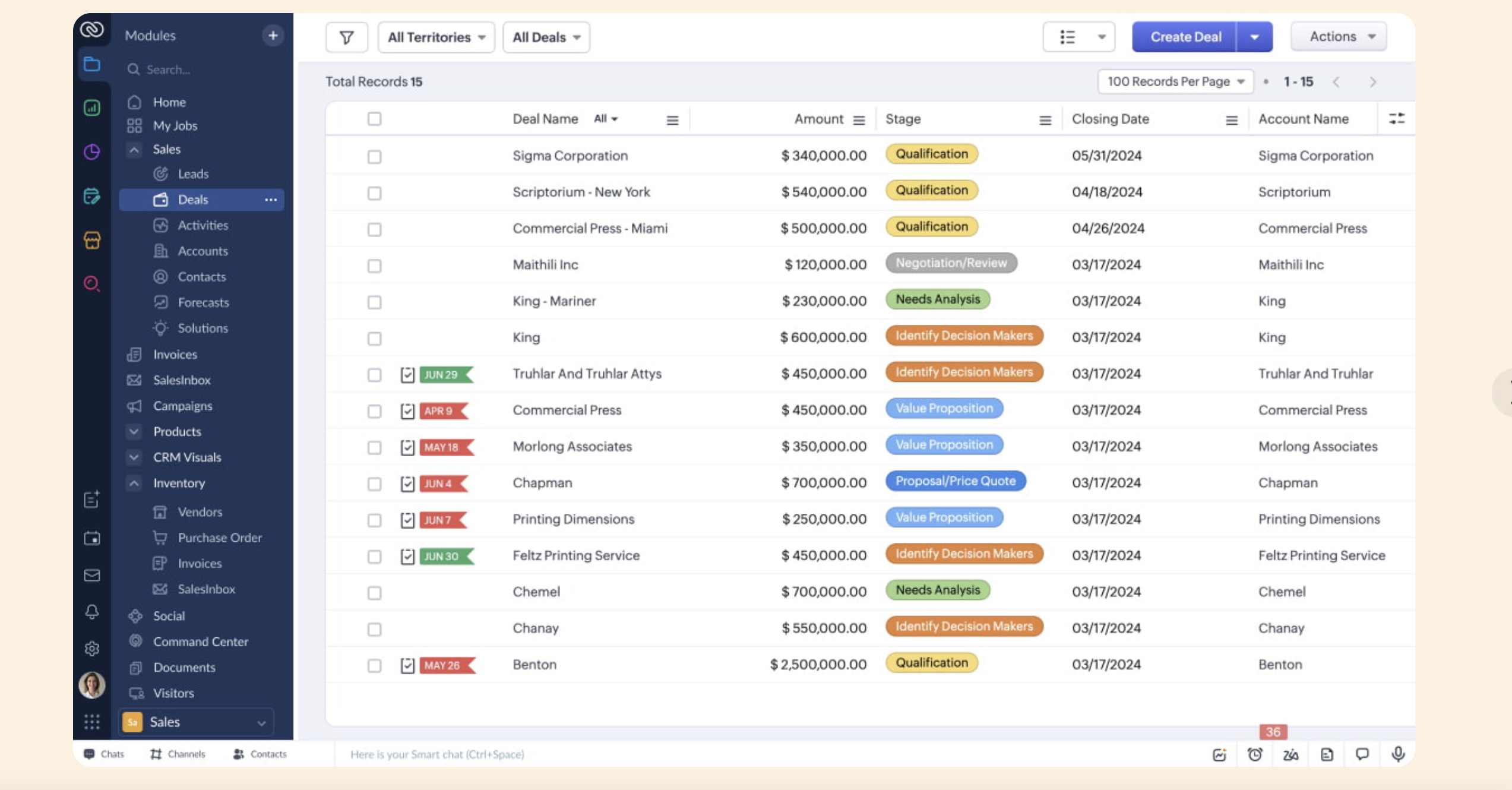
Image source: zoho.com
Overview: Zoho CRM is a popular choice known for its broad functionality and competitive pricing. It is part of a larger suite of business applications, offering the potential for an all-in-one management platform. Zoho CRM provides a comprehensive solution for sales, marketing, and support, with strong customization options. It's a scalable option that can serve businesses from the solopreneur stage up to the enterprise level, helping teams track progress against sales goals.
Key features:
- Multichannel communication tools (email, phone, social media).
- AI-powered sales assistant named Zia.
- Advanced analytics and reporting dashboards.
Pricing: Paid plans start at $14/user/month.
8. HubSpot CRM: The user-friendly CRM with a powerful free offering.
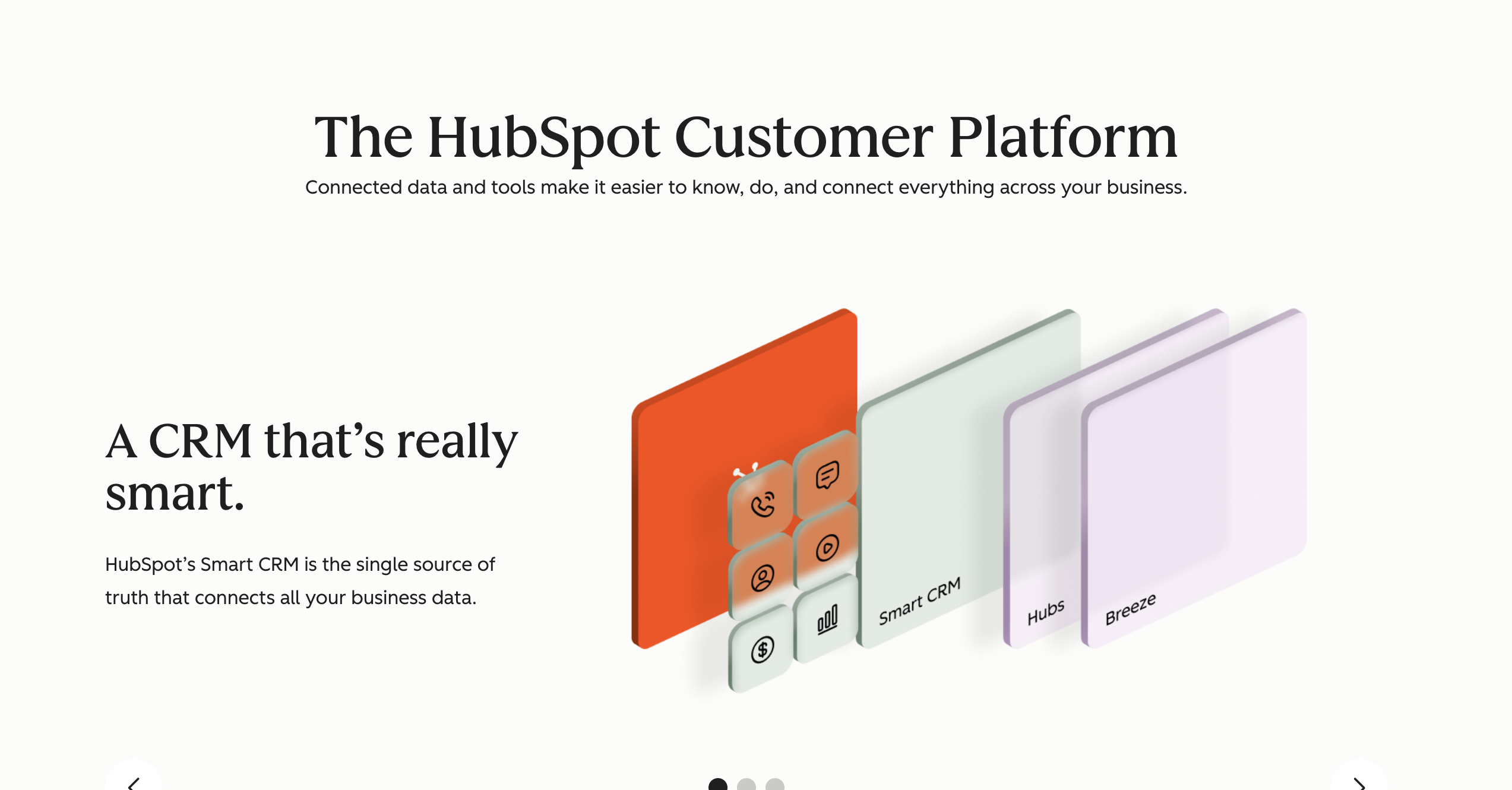
Image source: hubspot.com
Overview: HubSpot is famous for its powerful free CRM platform, making it an attractive starting point for startups. The platform is built on the principles of inbound marketing and is designed to be exceptionally user-friendly. While the free version is robust, HubSpot's true power is unlocked through its paid "Hubs" for Marketing, Sales, and Service, which offer advanced automation. Its clean interface and extensive educational resources make it a favourite among marketers for running email campaigns.
Key features:
- Generous free CRM with unlimited users.
- Excellent tools for sales emails and tracking.
- A clean visual sales pipeline.
Pricing: Fundamental tools are free, with paid plans available for Marketing, Sales, and Service Hubs.
9. Freshsales: The intuitive CRM with built-in communication tools.
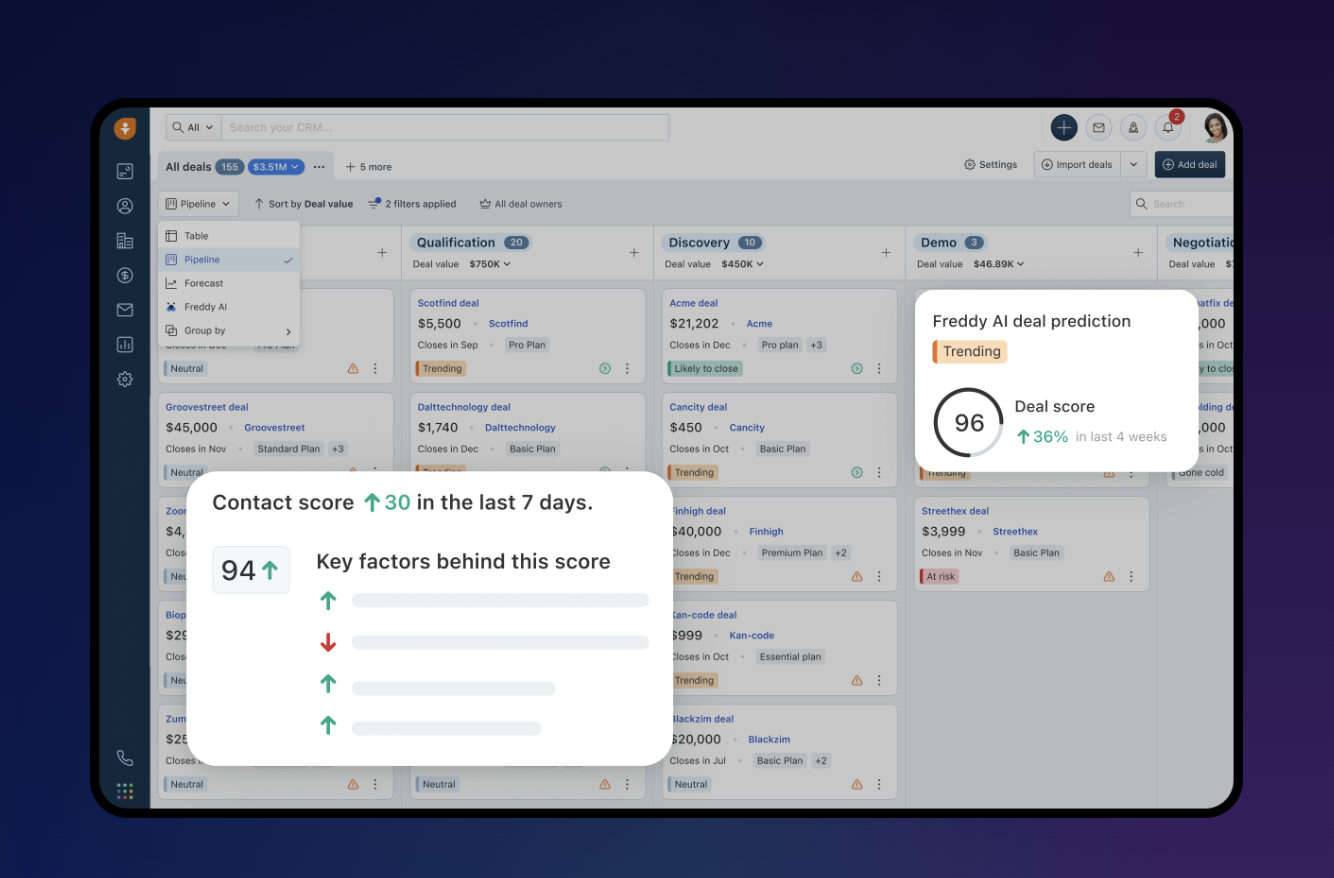
Image source: freshworks.com
Overview: Freshsales is the sales-focused CRM from the Freshworks suite. It aims to provide a simple yet powerful solution with a clean interface. Freshsales integrates AI-powered lead scoring to help sales teams prioritize their efforts on the most promising opportunities. It also includes built-in phone and email capabilities, allowing reps to manage much of their communication directly from within the platform, which helps improve efficiency and data tracking.
Key features:
- AI-based lead scoring and deal insights.
- Built-in phone, email, and chat functionalities.
- Visual pipeline and workflow automation.
Pricing: With a free plan. Paid plans start at $9/user/month.
10. Pipedrive: The activity-based CRM designed for salespeople.
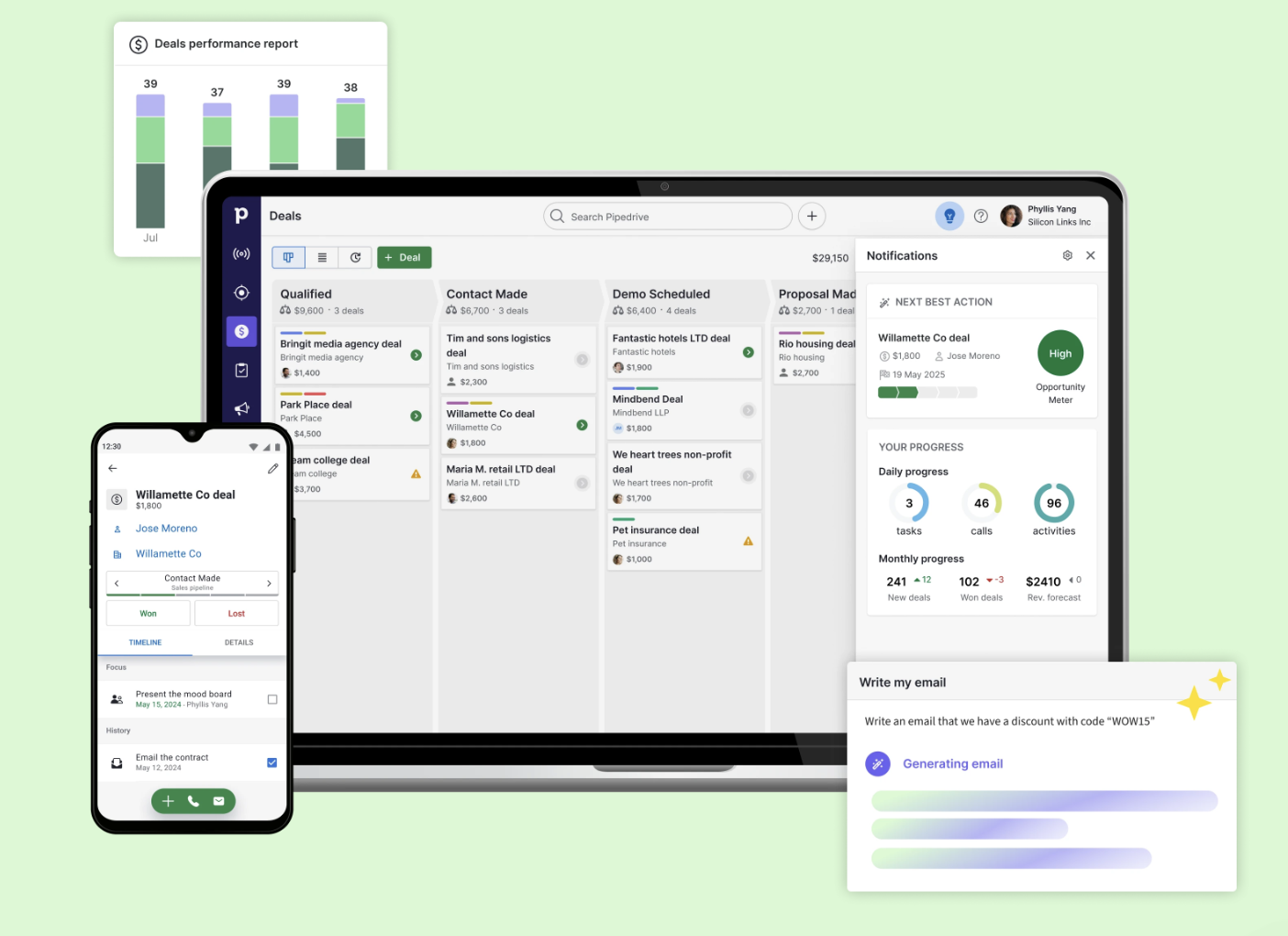
Image source: pipedrive.com
Overview: Pipedrive is a CRM designed by salespeople, for salespeople. Its philosophy is built around activity-based selling, prompting reps to focus on the actions that drive deals forward. The platform is highly visual, with a clean, drag-and-drop pipeline interface that makes it easy to track deal progress. Pipedrive is known for its simplicity and strong focus on the sales process, making it a great choice for teams that want a no-fuss tool.
Key features:
- Highly intuitive, visual sales pipeline.
- Activity-based selling workflow prompts.
- Chatbot and live chat features for lead capture.
Pricing: Offers several straightforward pricing tiers based on the level of features, with no free plan but a 14-day trial.
What is a CRM and why is it essential for your business in Canada?
At its core, CRM stands for Customer Relationship Management. But let's move beyond the acronym. Think of it as your business's central nervous system for every customer interaction. It’s a unified platform where you can store and manage every piece of crucial customer information. A good CRM system provides a single source of truth that ensures everyone on your team, from sales to support, is on the same page and has the context they need to create exceptional experiences for both new and existing customers.
For many growing businesses in Canada, operations can feel chaotic. Customer data is scattered across spreadsheets, email inboxes, and sticky notes. Follow-ups are missed, valuable insights are lost, and sales opportunities slip through the cracks. CRM replaces this chaos with clarity. It provides a structured, accessible, and reliable way of managing data, ensuring that as your business grows, the quality of your customer engagement doesn't just keep up—it gets better. This strategic shift is fundamental to building a loyal customer base from coast to coast.
The specific advantages of adopting a CRM are particularly relevant for a Canadian business. The right system allows you to manage a diverse, geographically dispersed customer base with ease, personalizing your approach whether your client is in Toronto or Tofino. It empowers your sales team by automating repetitive tasks and streamlining sales activities, giving them more time to focus on what they do best: building relationships and closing more deals. Furthermore, a CRM delivers the data-driven insights you need for better sales forecasting and more confident business decisions, helping you achieve a deeper understanding of market trends to fuel scalable and predictable growth.
Key factors when choosing the best CRM software in Canada
Selecting a CRM is a significant decision that will impact your daily operations and long-term growth. To find the best CRM software, it's essential to look beyond flashy features and evaluate solutions based on a few core principles. Think of this as your practical checklist for assessing any potential CRM. By focusing on these key features, you can ensure you invest in a platform that not only meets your needs today but also grows with you tomorrow, becoming a true asset for your business.
Cost and scalability: Planning for today and tomorrow
The price tag is often the first thing businesses look at, but it's crucial to understand the full picture. Many CRM providers use a per-user subscription plan, which can add up quickly. Look for hidden costs related to data storage, support tools, or access to premium features in different paid plans. More importantly, consider your five-year plan. Will the starter suite or free version support your future needs, or will you be forced into an expensive professional plan or standard plan? The ideal solution offers transparent pricing and a clear, affordable path to scale.
👉Try Lark’s Savings Calculator: Switching to Lark’s Pro plan can lead to significant cost savings— for example, a 100-employee company using Slack, Google Workspace, and Airtable could save approximately $25,200 annually by consolidating their tools with Lark.
Integration capabilities: Creating a connected tech stack
Your CRM doesn't operate in a vacuum. It needs to communicate seamlessly with the multiple tools you rely on every day, such as your email, calendar, and accounting software like QuickBooks Online. A CRM with robust integration prevents information silos and eliminates manual data entry. This creates a connected "tech stack" where information flows automatically, saving countless hours. Moreover, if you choose an all-in-one tool like Lark, this truly unified system provides a single view of your entire business operation, bringing all the tools you need together.
Ease of use and team adoption
The best CRM in the world is useless if your team finds it too complicated. User adoption is arguably the most critical factor for a successful CRM implementation. Look for a clean, user-friendly interface that feels natural to navigate. A solution that requires minimal training will get your team up and running faster, leading to a quicker return on your investment. Involve your team in the selection process and prioritize a platform that they are genuinely excited to use, as their daily engagement is what will ultimately drive results and help you stay organized.
Canadian compliance and data sovereignty
For any business operating in Canada, managing CRM data comes with significant responsibility. Compliance with privacy legislation like PIPEDA is non-negotiable. When evaluating a CRM, it's vital to ask where your data will be stored. Choosing a provider that understands Canadian regulations and offers options for data residency within Canada can be a crucial factor in mitigating risk and building trust with your customers. Prioritizing data security isn't just a legal requirement; it's a cornerstone of a reputable brand and essential for proper account management.
A step-by-step guide to implementing your CRM for success
A successful CRM implementation is about more than just technology; it's about people and processes. A thoughtful rollout can make the difference between a tool that gathers dust and one that becomes indispensable to your team. By following a structured plan, you can ensure a smooth transition and a rapid return on your investment, setting your Canadian business up for long-term success and growth. This practical action plan will guide you through the critical steps after you've made your selection.
Step 1: Define your goals and key processes
Before you import a single contact, take a step back and define what success looks like. What specific business challenge are you trying to solve? Do you want to reduce your lead response time, improve your sales forecasting accuracy, or increase customer retention? Clearly define your primary goals. Then, map out your ideal sales and customer service processes from start to finish. This roadmap will serve as the blueprint for configuring your new CRM to work exactly the way your business does.
Step 2: Prepare and migrate your data cleanly
Your CRM is only as good as the data inside it. This is the perfect opportunity to perform a "data cleanse." Consolidate your customer information from all those scattered spreadsheets, email contacts, and other sources. Remove duplicates, correct outdated information, and standardize your data formats. It may seem like a tedious step, but starting with a clean, organized, and reliable dataset is one of the most important things you can do to ensure your team trusts and adopts the new system from day one.
Step 3: Train your team and drive adoption
Your team’s buy-in is everything. Instead of just showing them how to use the software, show them what’s in it for them—less administrative work, easier access to information, and a clearer path to hitting their targets. Conduct hands-on training sessions focused on their specific daily workflows. To ensure ongoing success, create a central knowledge base with how-to guides, video tutorials, and best practices. This empowers your team to find answers independently and reinforces consistent usage across the organization.
Step 4: Measure, analyze, and optimize
A CRM is not a "set it and forget it" tool. Your implementation is just the beginning. Schedule a review 90 days after launch to assess your progress against the goals you defined in step one. Use the CRM's reporting and analytics dashboards to identify what's working and what's not. Are your sales cycles getting shorter? Are you converting more leads? Use these insights to fine-tune your processes, provide additional training where needed, and continuously optimize your use of the platform.
Conclusion
We've covered a lot of ground, from understanding the fundamentals of CRM to comparing specific tools and outlining a plan for successful implementation. The key takeaway is this: a CRM is far more than just a digital address book. When chosen thoughtfully and implemented strategically, it becomes the very heart of your business—a central, collaborative engine that drives efficiency, deepens customer relationships, and unlocks sustainable growth. For Canadian businesses looking to thrive, it is an essential investment.
The search for the best CRM software in Canada has to offer should lead you to a solution that not only meets your feature requirements but also aligns with your company's collaborative culture. The right platform will break down silos, empower your team with actionable data, and adapt to your unique processes. It's time to move beyond scattered data and disconnected teams. Ready to build a more connected and efficient business? See how a modern, collaborative work platform like Lark can become the engine that powers your customer relationships and fuels your success.
FAQs
What are the key factors when choosing CRM software in Canada?
When selecting CRM software in Canada, prioritize a solution with a user-friendly interface to ensure team adoption. Key features to look for include strong contact management, sales automation, and robust analytics. Also, verify that the provider offers options for Canadian data residency to help comply with PIPEDA and build customer trust, ensuring your customer information is secure.
How can a CRM specifically benefit my small business in Canada?
A CRM centralizes customer data, helping you manage relationships efficiently across Canada’s diverse market. It automates tedious tasks, freeing your team to focus on closing more deals and fostering customer retention. With features like a visual sales pipeline and marketing automation, you gain clear insights to drive growth while easily managing compliance with local privacy regulations.
Why is data sovereignty important for Canadian businesses using a CRM?
Data sovereignty ensures your customer data is stored within Canada and is subject to national privacy laws like PIPEDA. Choosing a CRM that offers Canadian data residency reduces legal risks associated with foreign jurisdictions and builds significant customer trust. It demonstrates a commitment to protecting sensitive information according to Canada's high standards for security and privacy protection.
What’s the best way to ensure a successful CRM implementation?
Successful CRM implementation starts with clear goals and a clean data import. Provide hands-on training to drive team adoption and create a central knowledge base for ongoing support. Begin with a simple configuration, focus on core features like pipeline management, and then expand. Measure team performance and gather feedback to continuously optimize the system for your sales process.
Related reading
Table of contents
Start using Lark today

Manage all your work in one place
Boost team efficiency by 10x
Save up to 70% on software costs
Table of contents
Start using Lark today
Manage all your work in one place
Boost team efficiency by 10x
Save up to 70% on software costs
Keep reading









2026 Lark Technologies Pte. Ltd.
Headquartered in Singapore with offices worldwide.






Explore: