














Delphi Method Explained: Steps, Examples & Tools

Ryan Tanner
Product Marketing Specialist
Sep 18, 2026
Ryan Tanner
Sep 18, 2026

15 min read


In complex business environments, decisions often hinge on expert insights rather than hard data alone. The Delphi Technique provides a structured, iterative method to gather expert opinions, reduce bias, and achieve well-founded consensus—even when information is limited or uncertain. Developed by the RAND Corporation in the 1950s, it remains a trusted approach for research, forecasting, and strategic planning.
Today, modern collaboration platforms like Lark make the process more efficient, enabling facilitators to manage expert panels, automate surveys, and track consensus digitally. In this guide, we'll explore how the Delphi Technique works, its benefits, limitations, and practical digital applications.

What is the Delphi Technique?
The Delphi Technique is a proven way to turn expert opinion into actionable insight. Instead of long meetings or open debates, it uses a series of anonymous surveys where specialists share their views, review summarized feedback, and refine their responses over multiple rounds. This process strips away bias and hierarchy, ensuring that every perspective carries equal weight.
By design, the Delphi Technique encourages critical thinking and steady convergence toward well-reasoned decisions. In project management, it's often used to forecast risks, estimate timelines, or evaluate strategic options when reliable data is scarce. Each iteration helps sharpen the group's understanding until a clear consensus emerges—not through persuasion, but through evidence and reflection. It's collective intelligence in action, offering a structured, impartial path to decisions that are both data-informed and expert-driven.
Image source: unsplash.com
Key characteristics of the Delphi Technique
The Delphi Technique stands out for its structured and unbiased approach to group decision-making. These core characteristics make it especially powerful in research, forecasting, and project management settings.
- Anonymity: Experts share their opinions independently, free from the influence of hierarchy or group pressure. This ensures honest input and prevents dominant voices from steering the discussion. As a result, every participant's expertise carries equal importance in shaping the outcome.
- Iteration: The process unfolds across multiple rounds of feedback and revision. Each round allows experts to reflect on summarized responses and refine their views, gradually narrowing differences and strengthening the final consensus.
- Controlled feedback: After each survey round, the facilitator provides an anonymized summary highlighting key insights and divergences. This structured feedback loop encourages thoughtful reconsideration without emotional or political bias.
- Statistical aggregation: Responses are quantified—using metrics like averages, medians, or agreement percentages—to measure how closely experts' opinions align. This adds transparency and turns qualitative feedback into measurable, data-driven insights.
How the Delphi Technique works (step-by-step)
The Delphi Technique follows a structured, iterative process that transforms expert opinion into collective consensus. Each stage plays a vital role in refining insights, eliminating bias, and ensuring well-informed decision-making.
Step 1: Identify the problem
The process begins with clearly defining the question or issue that requires expert insight. A focused, well-scoped problem statement ensures participants understand the goal and provide relevant input. Clarity here sets the tone for every subsequent Delphi round.
Step 2: Select panel experts
Choosing the right experts is crucial. Participants can be internal specialists, industry professionals, or academics—ideally representing diverse perspectives. A balanced mix of experience ensures richer, more credible results.
Step 3: Conduct first-round survey
Experts independently respond to an initial questionnaire, sharing opinions, forecasts, or recommendations. Their responses form the foundation for future rounds. Anonymity at this stage encourages honest and unbiased contributions.
Step 4: Summarize and share results
The facilitator reviews all responses and compiles an anonymized summary. This document highlights areas of agreement, disagreement, and emerging patterns. Sharing this synthesis helps participants reflect on collective trends without knowing who said what.
Step 5: Conduct subsequent rounds
Experts receive the summarized results and a revised set of questions for the next round. They reconsider their answers in light of the group feedback. Over successive rounds, viewpoints begin to align and become more data-driven.
Step 6: Reach consensus or stability
The Delphi process concludes when opinions stabilize—meaning minimal changes occur between rounds. At this stage, the facilitator compiles a final report capturing the group's collective judgment or consensus. The outcome represents the most balanced and informed perspective possible.
Act on your own: Use Lark to practice the Delphi Technique
Executing the Delphi Technique across diverse teams—be it software development, design, marketing, or operations—requires seamless coordination, expert collaboration, and structured workflows. Lark's all-in-one platform supports asynchronous communication alongside data management, and automation, streamlining each Delphi round from expert selection to final consensus.
By centralizing tools like Base, Messenger, Tasks, Sheets, Docs, and Approval, Lark empowers facilitators to manage iterative feedback loops efficiently, ensuring transparency, anonymity, and timely decision-making across all functional teams. Whether refining software estimates, aligning marketing strategies, or optimizing operational processes, Lark transforms the Delphi process into a cohesive, cross-functional collaboration hub.
Lark Base: Expert database and survey tracking
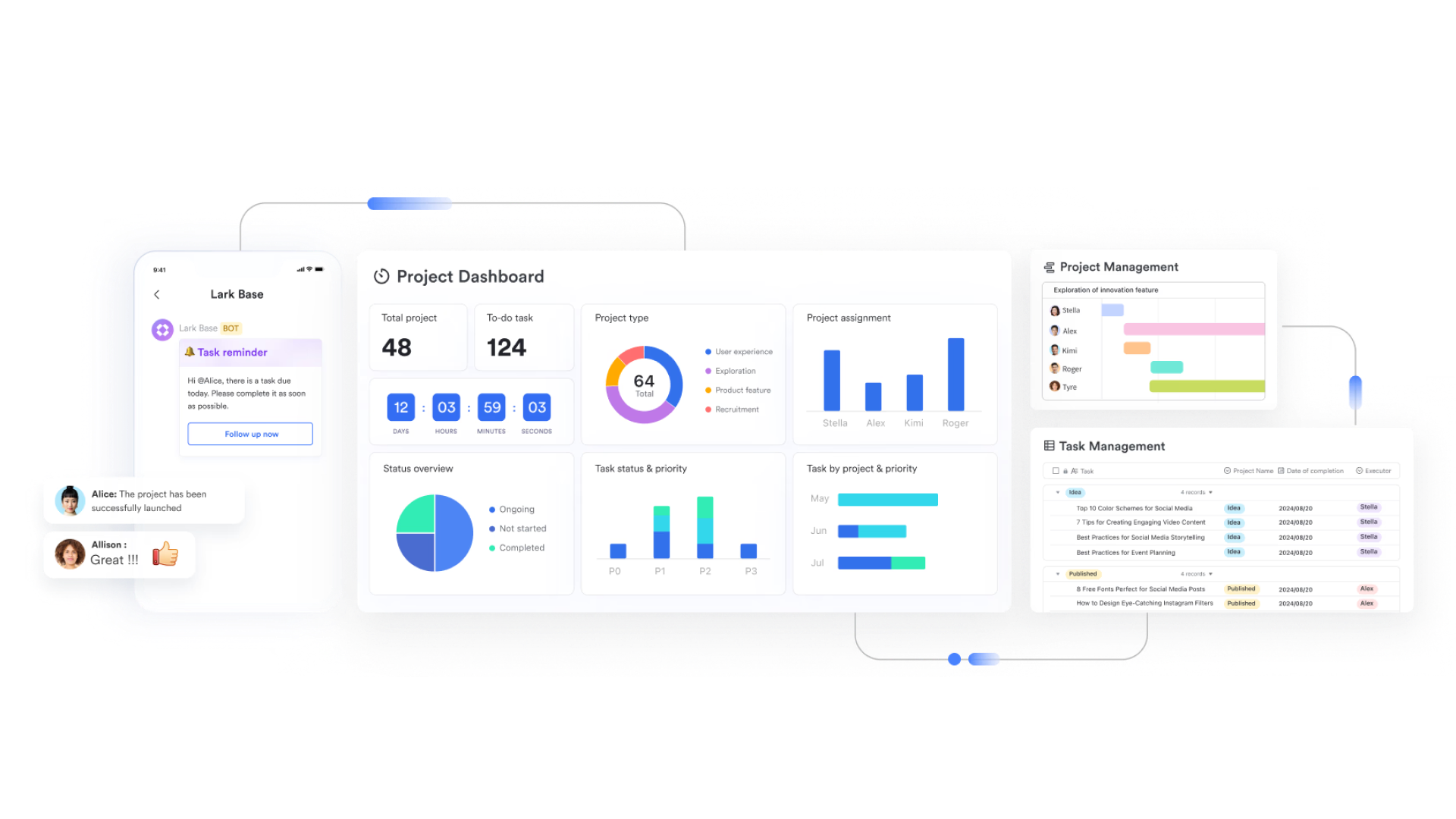
Lark Base acts as your Delphi control hub, storing expert lists, survey questions, and response data in one place. Facilitators can build dashboards to track participation rates and visualize consensus trends after each round. With automation rules, Base can notify experts when a new survey round opens and generate summary tables once all responses are received.
Example: A market research lead uses Lark Base to manage 25 experts evaluating future consumer trends. Once all feedback for Round 1 is submitted, Base automatically compiles average scores and comments, alerting the facilitator that results are ready for synthesis in Round 2.
Lark Messenger: Transparent yet controlled communication
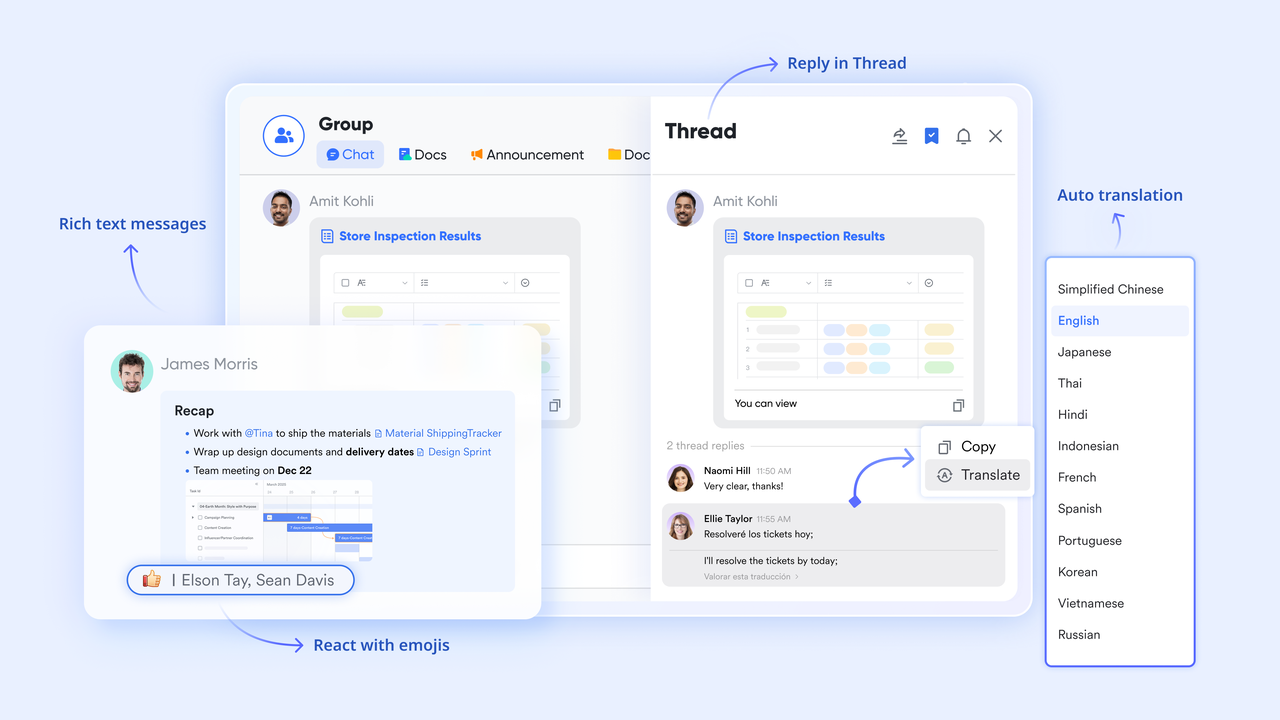
Lark Messenger allows facilitators to share updates, round summaries, or clarifications instantly—all while maintaining anonymity among experts. Facilitators can post aggregated findings or instructions on private channels and set automated alerts for new survey launches or approaching deadlines.
Example: After summarizing Round 2 results, the facilitator posts an anonymized summary in Messenger: "Median agreement = 82%. Please review and revise inputs for Round 3 by Friday." Experts receive the notification automatically without seeing each other's identities.
Lark Tasks: Structured round management
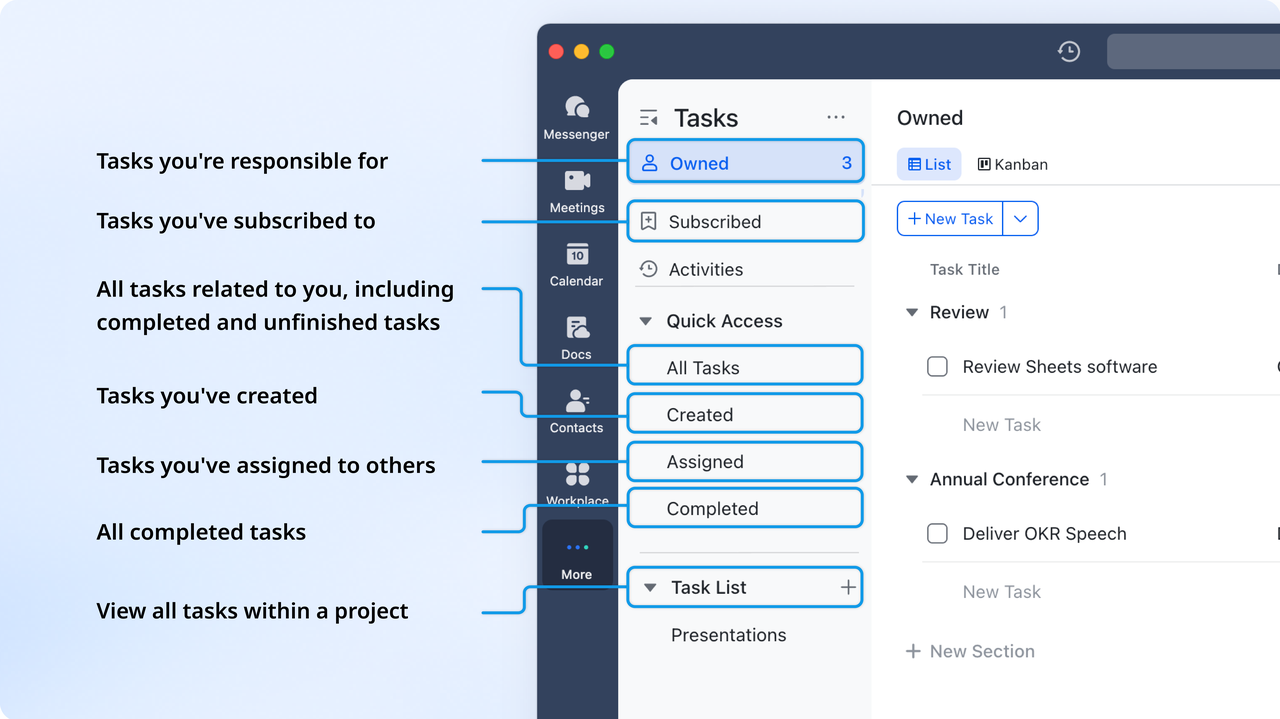
Lark Tasks keeps every Delphi round on schedule. Each stage—from drafting questions to aggregating responses—may be assigned as a task with deadlines, owners, and reminders. This ensures no activity falls behind, especially across multiple experts or projects.
Example: When Round 3 begins, a task "Collect Round 3 Responses" is auto-created with subtasks for "Send reminders" and "Summarize data." Progress is visible to the facilitator, who can monitor completion in real time
Lark Docs & Lark Sheets: Data analysis and reporting
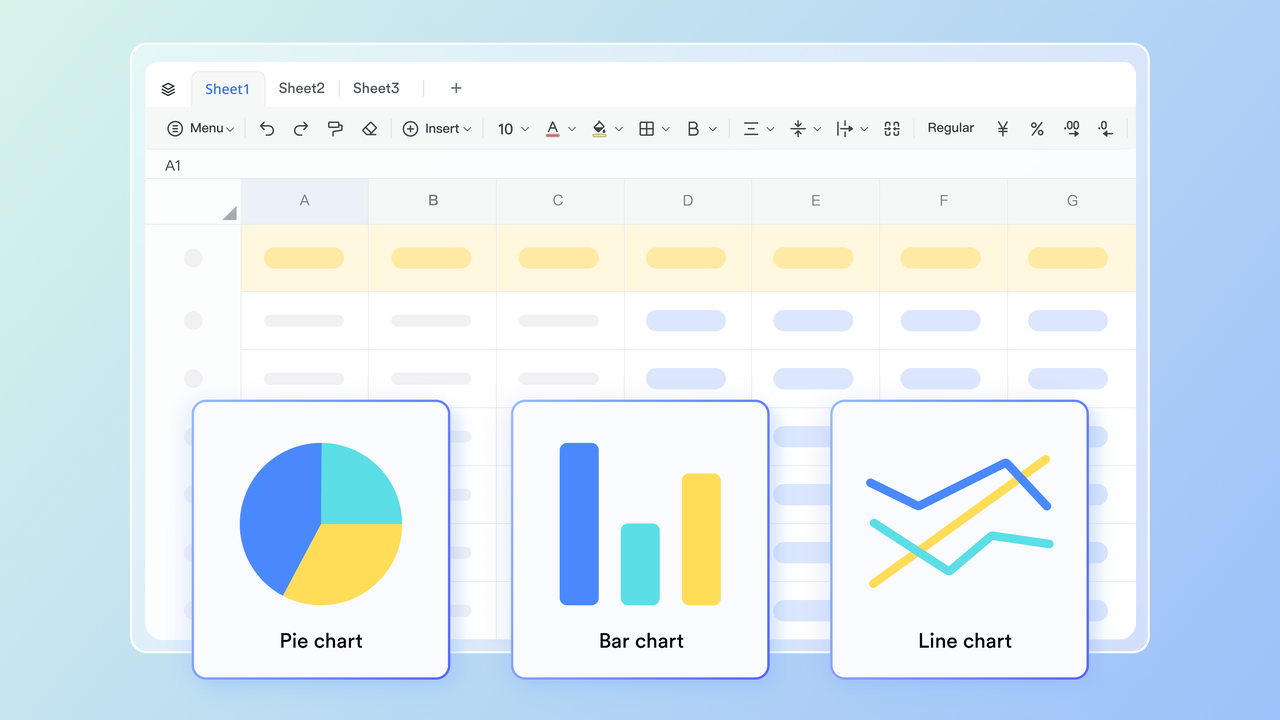
Lark Sheets enable facilitators to calculate consensus metrics like median, variance, and percent agreement across rounds, while Docs helps compile these findings into structured reports. Both update live, so collaborators can view evolving insights instantly.
Example: A project manager uses Lark Sheets to compute response averages from three Delphi rounds, then embeds those charts in a Lark Docs summarizing the group's final recommendations. The Doc is shared with leadership for immediate review.
Lark Approval: Decision validation and sign-off
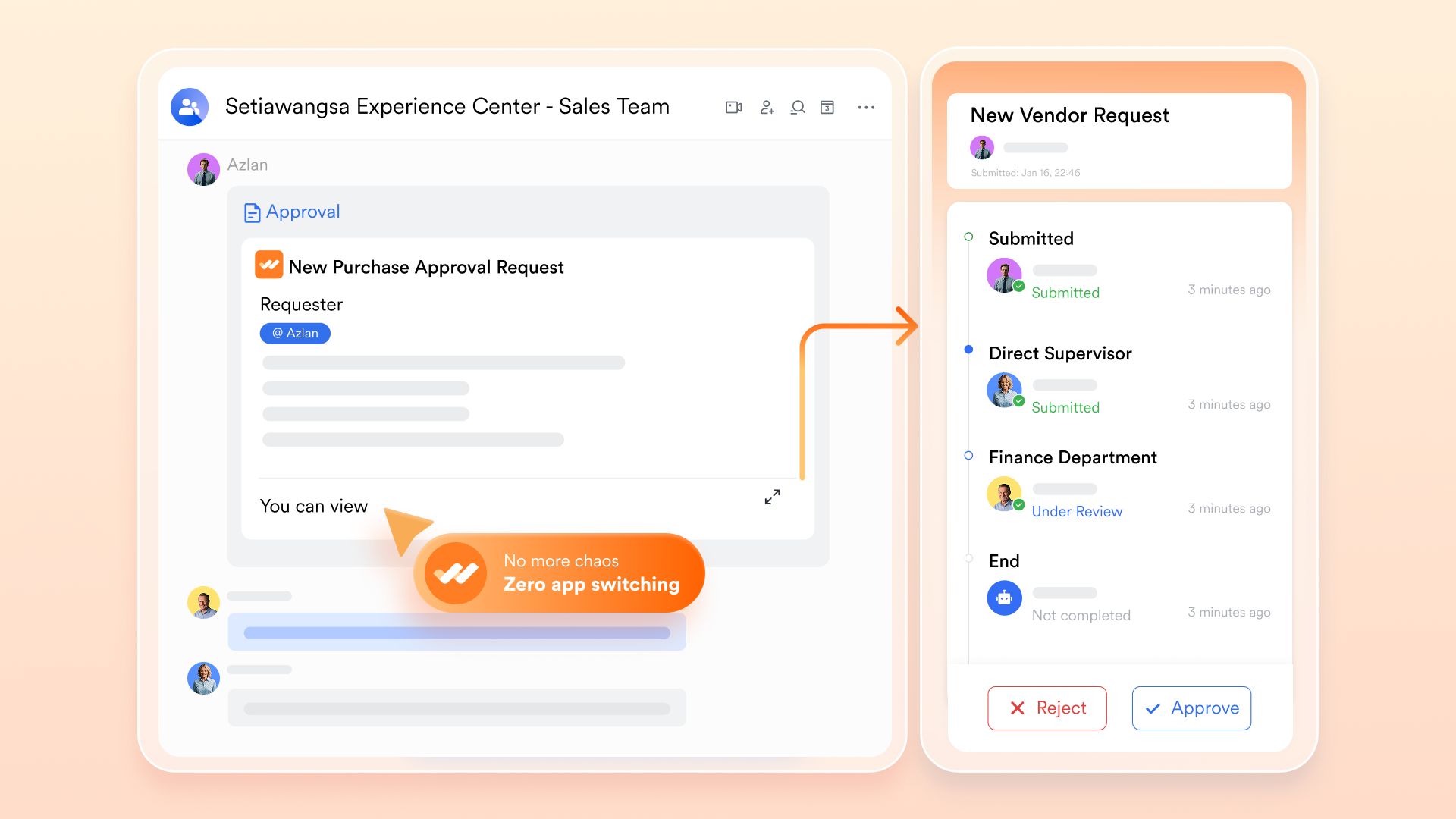
Once the expert panel reaches consensus, Lark Approval manages formal endorsement and accountability. Facilitators can route the final Delphi recommendation through a multi-step approval process—ensuring transparency before implementation.
Example: After completing all survey rounds, the facilitator submits a "Final Recommendation Approval" form through Lark Approval. It routes automatically to department heads and project sponsors, capturing sign-offs and comments for the official project record.
- Starter plan: Free forever plan that includes 11 powerful tools for up to 20 users. It also comes with 100GB of storage, 1000 automation runs, AI translations, and more.
- Pro plan: $12/user/month (billed annually) for up to 500 users. It includes everything in Starter plus group calling for up to 500 attendees, 15TB of storage, 50,000 automation runs, and more.
- Enterprise plan: Contact sales for custom pricing. Supports unlimited users and includes even more automation runs and advanced security, compliance, and management features.
Practical tips & best practices—and how Lark supports them
1. Select the right panel of experts: A diverse group of qualified experts ensures balanced and credible consensus, representing multiple viewpoints and areas of expertise.
- Best practice: Choose a diverse group of qualified experts who represent multiple viewpoints and areas of expertise. This ensures the final consensus is well-rounded and credible.
- How Lark supports it: Use Lark Base to create an expert directory with custom fields like domain, experience, organization, and availability. Tag experts by category or specialization and filter them for each Delphi round. Automate invitations through Base—when an expert is assigned to a new round, Base can send a notification via Lark Messenger automatically.
2. Maintain anonymity to reduce bias: Anonymity lets experts provide honest feedback without peer pressure or hierarchy influencing their responses.
- Best practice: Ensure responses remain anonymous so participants are not influenced by peer pressure or hierarchy.
- How Lark supports it: Store participant names in a restricted Base view visible only to facilitators. Use Forms linked to Base to collect input anonymously—respondents only see the questions, not each other's names. Summaries can be shared via Messenger channels that display aggregated insights, not individual answers.
3. Keep survey rounds focused and time-bound: Limiting questions and setting clear deadlines prevents participant fatigue and ensures timely completion of rounds.
- Best practice: Limit each Delphi round to key questions and enforce clear timelines to prevent fatigue or delays.
- How Lark supports it: Create a Task board for each round, with subtasks like "Distribute survey," "Aggregate responses," and "Publish summary." Set deadlines and automatic reminders. Lark's automated workflow ensures participants get notified when rounds open or close.
4. Use data visualization to clarify feedback: Visual charts and metrics help participants track trends and evolving opinions across rounds.
- Best practice: Present response trends visually so participants can easily see how opinions evolve across rounds.
- How Lark supports it: Use Lark Sheets to calculate consensus metrics such as median, range, and percent agreement, then insert charts directly into Docs or Dashboards in Base.
5. Document and validate every decision: Recording all feedback, outcomes, and reasoning maintains transparency and accountability in decision-making.
- Best practice: Record all outcomes, feedback, and consensus reasoning to maintain transparency and accountability.
- How Lark supports it: Finalize recommendations in Lark Docs, link the supporting data from Sheets, and route them through Lark Approval for formal sign-off. Approval logs and timestamps ensure decisions are traceable.
Advantages and limitations of the Delphi Technique
The Delphi Technique is a powerful method for gathering expert insights and reaching consensus on complex issues. Using multiple rounds of anonymous feedback, it helps organizations make informed decisions even when data is incomplete or uncertain. However, like any structured process, it comes with both strengths and challenges that must be balanced carefully.
Advantages:
- Reduces bias and peer pressure: Because responses are anonymous, experts can share honest opinions without being influenced by hierarchy or dominant personalities. This creates a fair, unbiased environment that values expertise over seniority or group dynamics.
- Enables structured expert input: The Delphi Technique follows a clear, step-by-step process—from questionnaire design to controlled feedback and iterative refinement. This structure ensures every insight is thoughtfully gathered, evaluated, and synthesized into actionable conclusions.
- Ideal for remote, cross-functional teams: Since communication occurs asynchronously, experts can participate from different time zones and departments without scheduling conflicts. This makes the Delphi Method highly effective for distributed or hybrid teams that rely on digital collaboration.
- Useful when data is uncertain or incomplete: When historical data or empirical evidence is lacking, expert judgment becomes invaluable. The Delphi Technique helps organizations make informed decisions in complex, uncertain, or emerging fields where reliable data isn't yet available.
Limitations:
- Time-consuming (multiple rounds): Each Delphi cycle involves several rounds of surveys, feedback, and revisions. While this iterative process enhances accuracy, it also requires patience and extended timelines—particularly for large or complex studies.
- Requires expert participation and skilled facilitation: The quality of outcomes depends on the expertise of participants and the facilitator's ability to design balanced questions, manage feedback, and synthesize results objectively. Poor facilitation can lead to confusion or bias in interpretation.
- May still produce moderate agreement, not full consensus: Even after several rounds, experts may not fully agree on certain issues. The Delphi Technique aims for convergence, not unanimity—meaning the final consensus may represent the most balanced rather than the unanimous view.
Uses of the Delphi Technique in business & project management
The Delphi Technique is widely used in business and project management to forecast trends, assess risks, and make data-informed strategic decisions. Its structured, expert-driven approach helps organizations plan confidently even amid uncertainty.
- Project risk assessment: Project managers use the Delphi Technique to identify and evaluate potential risks before they escalate. By gathering expert insights from engineering, finance, and operations teams, organizations can prioritize threats and develop effective mitigation strategies. The result is a proactive, data-backed risk management plan.
- Strategic planning: In strategic planning, the Delphi Method helps leadership teams forecast market trends and prepare for future scenarios. Experts contribute perspectives on economic shifts, customer behavior, or competitive landscapes. This collective foresight enables better long-term planning and agile decision-making.
- Policy or budget planning: Organizations and government bodies use the Delphi Method to align on funding priorities or policy directions. Experts evaluate competing needs, share projections, and collectively recommend balanced strategies. This structured input ensures transparency and reduces bias in resource allocation.
- Human resource planning: HR leaders apply the Delphi Technique to predict future talent requirements and skill gaps. Experts from various departments assess upcoming role evolutions and workforce trends. The resulting consensus supports informed hiring, training, and succession planning strategies.
Conclusion
The Delphi Technique remains a powerful approach for structured expert forecasting and achieving consensus, especially when decisions must be made amid uncertainty. Its iterative, anonymous, and data-driven process ensures balanced insights from diverse experts.
Using tools like Lark Base, Tasks, Messenger, Sheets, and Approval makes managing the Delphi process seamless—from coordinating experts and collecting feedback to analyzing data and validating decisions. By centralizing these steps, Lark transforms what was once a manual, time-intensive workflow into a streamlined, collaborative system.
With Lark, project managers and teams can execute the Delphi Technique more efficiently, maintain transparency, and reach reliable consensus faster—turning expert insights into actionable, confident decisions.
FAQs
How is anonymity maintained in the Delphi Technique?
Anonymity is ensured by keeping expert identities confidential throughout the process. Responses are collected individually and shared only in summarized form by the facilitator. This prevents peer pressure or dominance by senior members. Anonymity encourages honest, unbiased opinions from all participants.
How many rounds are typical in the Delphi Technique?
Most Delphi studies involve two to four rounds, depending on how quickly consensus is reached. The process continues until participant opinions stabilize or show minimal variation. Too few rounds may lead to incomplete insights, while too many can cause fatigue. Facilitators balance both to maintain engagement and accuracy.
Is the Delphi Technique qualitative or quantitative?
The Delphi Technique is a blend of both. It begins with qualitative feedback from experts and evolves into quantitative analysis through rating scales, consensus scores, and statistical summaries. This hybrid approach allows teams to interpret expert judgment using measurable data while retaining contextual insight.
When should managers not use the Delphi Technique?
Avoid the Delphi Technique when issues require immediate decisions or when expert availability is limited. It's also less effective for topics with clear, data-backed answers that don't need subjective judgment. Since it involves multiple rounds, it may not suit fast-paced or low-priority projects.
Related reading
Table of contents
Start using Lark today

Manage all your work in one place
Boost team efficiency by 10x
Save up to 70% on software costs
Table of contents
Start using Lark today
Manage all your work in one place
Boost team efficiency by 10x
Save up to 70% on software costs
Keep reading







2026 Lark Technologies Pte. Ltd.
Headquartered in Singapore with offices worldwide.






Explore: